

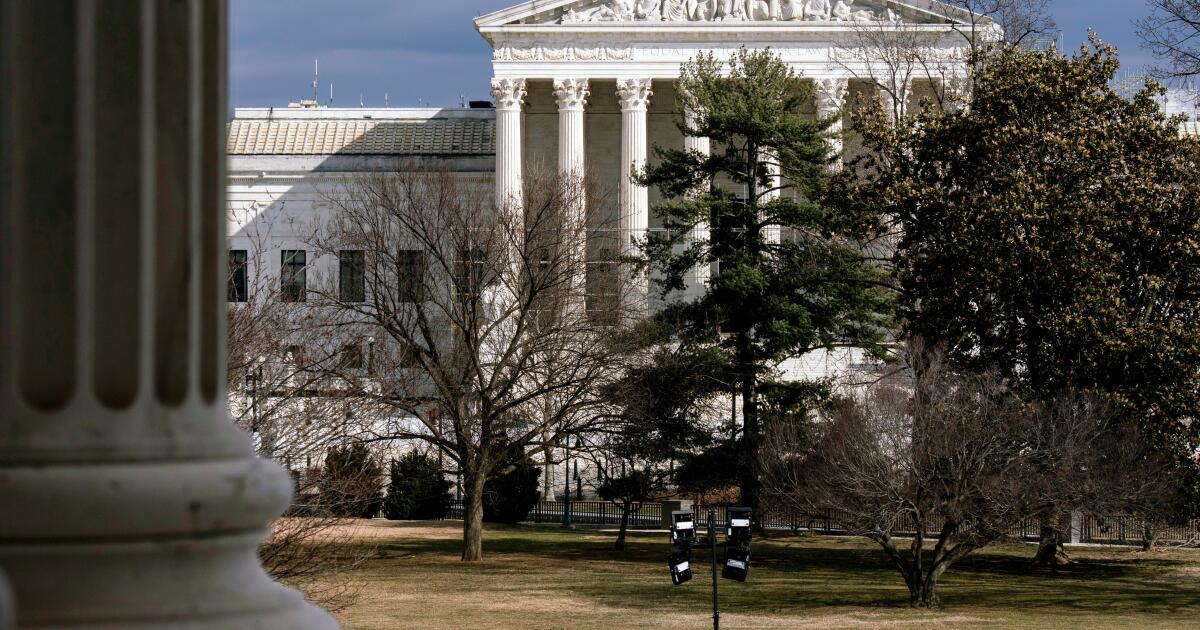
WASHINGTON — The Supreme Court agreed Monday to decide if “habitual drug users” lose their gun rights under the 2nd Amendment.
The Trump administration is defending a federal gun control law dating to 1968 and challenging the rulings of two conservative appeals court that struck down the ban on gun possession by any “unlawful user” of illegal drugs, including marijuana.
Trump’s lawyers say this limit on gun rights comports with early American history when “common drunkards” were prohibited from having guns.
And they argue this “modest, modern” limit make sense because well-armed drug addicts “present unique dangers to society — especially because they pose a grave risk of armed, hostile encounters with police officers while impaired.”
The government says the ban applies only to addicts and “habitual users of illegal drugs,” not to all those who have used drugs on occasion or in the past.
Under this interpretation, the law “imposes a limited, inherently temporary restriction — one which the individual can remove at any time simply by ceasing his unlawful drug use,” the administration’s attorneys told the court.
The appeal noted that California and 31 other states have laws restricting gun possession by drug users and drug addicts, all of which could be nullified by a broad reading of the 2nd Amendment
The court said it will hear the case of a Texas man and a Pakistani native who came under investigation by the FBI for allegedly working with the Iranian Revolutionary Guard Corps, a designated foreign terrorist organization.
When agents with warrant searched the home of Ali Denali Hemani, they found a Glock pistol, 60 grams of marijuana, and 4.7 grams of cocaine. He told the agents he used marijuana about every other day.
He was charged with violating the federal gun control law, but the 5th Circuit Court in New Orleans ruled this ban on gun possession violates the 2nd Amendment unless the defendant was under the influence of drugs when he was arrested.
The 8th Circuit Court based in St. Louis adopted a similar view that gun ban for drug users is unconstitutional.
The Trump administration asked the justices to hear the case of U.S. vs. Hemani and to reverse the two lower courts. Arguments are likely to be heard in January.
Last year, the justices rejected a gun rights claim in another case from Texas and ruled that a man charged with domestic violence can lose his rights to have firearms.
Historically, people who “threaten physical harm to others” have lost their legal rights to guns, Chief Justice John G. Roberts said in an 8-1 decision.

WASHINGTON — The Supreme Court agreed Monday to decide if “habitual drug users” lose their gun rights under the 2nd Amendment.
The Trump administration is defending a federal gun control law dating to 1968 and challenging the rulings of two conservative appeals court that struck down the ban on gun possession by any “unlawful user” of illegal drugs, including marijuana.
Trump’s lawyers say this limit on gun rights comports with early American history when “common drunkards” were prohibited from having guns.
And they argue this “modest, modern” limit make sense because well-armed drug addicts “present unique dangers to society — especially because they pose a grave risk of armed, hostile encounters with police officers while impaired.”
The government says the ban applies only to addicts and “habitual users of illegal drugs,” not to all those who have used drugs on occasion or in the past.
Under this interpretation, the law “imposes a limited, inherently temporary restriction — one which the individual can remove at any time simply by ceasing his unlawful drug use,” the administration’s attorneys told the court.
The appeal noted that California and 31 other states have laws restricting gun possession by drug users and drug addicts, all of which could be nullified by a broad reading of the 2nd Amendment
The court said it will hear the case of a Texas man and a Pakistani native who came under investigation by the FBI for allegedly working with the Iranian Revolutionary Guard Corps, a designated foreign terrorist organization.
When agents with warrant searched the home of Ali Denali Hemani, they found a Glock pistol, 60 grams of marijuana, and 4.7 grams of cocaine. He told the agents he used marijuana about every other day.
He was charged with violating the federal gun control law, but the 5th Circuit Court in New Orleans ruled this ban on gun possession violates the 2nd Amendment unless the defendant was under the influence of drugs when he was arrested.
The 8th Circuit Court based in St. Louis adopted a similar view that gun ban for drug users is unconstitutional.
The Trump administration asked the justices to hear the case of U.S. vs. Hemani and to reverse the two lower courts. Arguments are likely to be heard in January.
Last year, the justices rejected a gun rights claim in another case from Texas and ruled that a man charged with domestic violence can lose his rights to have firearms.
Historically, people who “threaten physical harm to others” have lost their legal rights to guns, Chief Justice John G. Roberts said in an 8-1 decision.

WASHINGTON — The Supreme Court agreed Monday to decide if “habitual drug users” lose their gun rights under the 2nd Amendment.
The Trump administration is defending a federal gun control law dating to 1968 and challenging the rulings of two conservative appeals court that struck down the ban on gun possession by any “unlawful user” of illegal drugs, including marijuana.
Trump’s lawyers say this limit on gun rights comports with early American history when “common drunkards” were prohibited from having guns.
And they argue this “modest, modern” limit make sense because well-armed drug addicts “present unique dangers to society — especially because they pose a grave risk of armed, hostile encounters with police officers while impaired.”
The government says the ban applies only to addicts and “habitual users of illegal drugs,” not to all those who have used drugs on occasion or in the past.
Under this interpretation, the law “imposes a limited, inherently temporary restriction — one which the individual can remove at any time simply by ceasing his unlawful drug use,” the administration’s attorneys told the court.
The appeal noted that California and 31 other states have laws restricting gun possession by drug users and drug addicts, all of which could be nullified by a broad reading of the 2nd Amendment
The court said it will hear the case of a Texas man and a Pakistani native who came under investigation by the FBI for allegedly working with the Iranian Revolutionary Guard Corps, a designated foreign terrorist organization.
When agents with warrant searched the home of Ali Denali Hemani, they found a Glock pistol, 60 grams of marijuana, and 4.7 grams of cocaine. He told the agents he used marijuana about every other day.
He was charged with violating the federal gun control law, but the 5th Circuit Court in New Orleans ruled this ban on gun possession violates the 2nd Amendment unless the defendant was under the influence of drugs when he was arrested.
The 8th Circuit Court based in St. Louis adopted a similar view that gun ban for drug users is unconstitutional.
The Trump administration asked the justices to hear the case of U.S. vs. Hemani and to reverse the two lower courts. Arguments are likely to be heard in January.
Last year, the justices rejected a gun rights claim in another case from Texas and ruled that a man charged with domestic violence can lose his rights to have firearms.
Historically, people who “threaten physical harm to others” have lost their legal rights to guns, Chief Justice John G. Roberts said in an 8-1 decision.
WASHINGTON — The Supreme Court agreed Monday to decide if “habitual drug users” lose their gun rights under the 2nd Amendment.
The Trump administration is defending a federal gun control law dating to 1968 and challenging the rulings of two conservative appeals court that struck down the ban on gun possession by any “unlawful user” of illegal drugs, including marijuana.
Trump’s lawyers say this limit on gun rights comports with early American history when “common drunkards” were prohibited from having guns.
And they argue this “modest, modern” limit make sense because well-armed drug addicts “present unique dangers to society — especially because they pose a grave risk of armed, hostile encounters with police officers while impaired.”
The government says the ban applies only to addicts and “habitual users of illegal drugs,” not to all those who have used drugs on occasion or in the past.
Under this interpretation, the law “imposes a limited, inherently temporary restriction — one which the individual can remove at any time simply by ceasing his unlawful drug use,” the administration’s attorneys told the court.
The appeal noted that California and 31 other states have laws restricting gun possession by drug users and drug addicts, all of which could be nullified by a broad reading of the 2nd Amendment
The court said it will hear the case of a Texas man and a Pakistani native who came under investigation by the FBI for allegedly working with the Iranian Revolutionary Guard Corps, a designated foreign terrorist organization.
When agents with warrant searched the home of Ali Denali Hemani, they found a Glock pistol, 60 grams of marijuana, and 4.7 grams of cocaine. He told the agents he used marijuana about every other day.
He was charged with violating the federal gun control law, but the 5th Circuit Court in New Orleans ruled this ban on gun possession violates the 2nd Amendment unless the defendant was under the influence of drugs when he was arrested.
The 8th Circuit Court based in St. Louis adopted a similar view that gun ban for drug users is unconstitutional.
The Trump administration asked the justices to hear the case of U.S. vs. Hemani and to reverse the two lower courts. Arguments are likely to be heard in January.
Last year, the justices rejected a gun rights claim in another case from Texas and ruled that a man charged with domestic violence can lose his rights to have firearms.
Historically, people who “threaten physical harm to others” have lost their legal rights to guns, Chief Justice John G. Roberts said in an 8-1 decision.

WASHINGTON — The Supreme Court agreed Monday to decide if “habitual drug users” lose their gun rights under the 2nd Amendment.
The Trump administration is defending a federal gun control law dating to 1968 and challenging the rulings of two conservative appeals court that struck down the ban on gun possession by any “unlawful user” of illegal drugs, including marijuana.
Trump’s lawyers say this limit on gun rights comports with early American history when “common drunkards” were prohibited from having guns.
And they argue this “modest, modern” limit make sense because well-armed drug addicts “present unique dangers to society — especially because they pose a grave risk of armed, hostile encounters with police officers while impaired.”
The government says the ban applies only to addicts and “habitual users of illegal drugs,” not to all those who have used drugs on occasion or in the past.
Under this interpretation, the law “imposes a limited, inherently temporary restriction — one which the individual can remove at any time simply by ceasing his unlawful drug use,” the administration’s attorneys told the court.
The appeal noted that California and 31 other states have laws restricting gun possession by drug users and drug addicts, all of which could be nullified by a broad reading of the 2nd Amendment
The court said it will hear the case of a Texas man and a Pakistani native who came under investigation by the FBI for allegedly working with the Iranian Revolutionary Guard Corps, a designated foreign terrorist organization.
When agents with warrant searched the home of Ali Denali Hemani, they found a Glock pistol, 60 grams of marijuana, and 4.7 grams of cocaine. He told the agents he used marijuana about every other day.
He was charged with violating the federal gun control law, but the 5th Circuit Court in New Orleans ruled this ban on gun possession violates the 2nd Amendment unless the defendant was under the influence of drugs when he was arrested.
The 8th Circuit Court based in St. Louis adopted a similar view that gun ban for drug users is unconstitutional.
The Trump administration asked the justices to hear the case of U.S. vs. Hemani and to reverse the two lower courts. Arguments are likely to be heard in January.
Last year, the justices rejected a gun rights claim in another case from Texas and ruled that a man charged with domestic violence can lose his rights to have firearms.
Historically, people who “threaten physical harm to others” have lost their legal rights to guns, Chief Justice John G. Roberts said in an 8-1 decision.
WASHINGTON — The Supreme Court agreed Monday to decide if “habitual drug users” lose their gun rights under the 2nd Amendment.
The Trump administration is defending a federal gun control law dating to 1968 and challenging the rulings of two conservative appeals court that struck down the ban on gun possession by any “unlawful user” of illegal drugs, including marijuana.
Trump’s lawyers say this limit on gun rights comports with early American history when “common drunkards” were prohibited from having guns.
And they argue this “modest, modern” limit make sense because well-armed drug addicts “present unique dangers to society — especially because they pose a grave risk of armed, hostile encounters with police officers while impaired.”
The government says the ban applies only to addicts and “habitual users of illegal drugs,” not to all those who have used drugs on occasion or in the past.
Under this interpretation, the law “imposes a limited, inherently temporary restriction — one which the individual can remove at any time simply by ceasing his unlawful drug use,” the administration’s attorneys told the court.
The appeal noted that California and 31 other states have laws restricting gun possession by drug users and drug addicts, all of which could be nullified by a broad reading of the 2nd Amendment
The court said it will hear the case of a Texas man and a Pakistani native who came under investigation by the FBI for allegedly working with the Iranian Revolutionary Guard Corps, a designated foreign terrorist organization.
When agents with warrant searched the home of Ali Denali Hemani, they found a Glock pistol, 60 grams of marijuana, and 4.7 grams of cocaine. He told the agents he used marijuana about every other day.
He was charged with violating the federal gun control law, but the 5th Circuit Court in New Orleans ruled this ban on gun possession violates the 2nd Amendment unless the defendant was under the influence of drugs when he was arrested.
The 8th Circuit Court based in St. Louis adopted a similar view that gun ban for drug users is unconstitutional.
The Trump administration asked the justices to hear the case of U.S. vs. Hemani and to reverse the two lower courts. Arguments are likely to be heard in January.
Last year, the justices rejected a gun rights claim in another case from Texas and ruled that a man charged with domestic violence can lose his rights to have firearms.
Historically, people who “threaten physical harm to others” have lost their legal rights to guns, Chief Justice John G. Roberts said in an 8-1 decision.
WASHINGTON — The Supreme Court agreed Monday to decide if “habitual drug users” lose their gun rights under the 2nd Amendment.
The Trump administration is defending a federal gun control law dating to 1968 and challenging the rulings of two conservative appeals court that struck down the ban on gun possession by any “unlawful user” of illegal drugs, including marijuana.
Trump’s lawyers say this limit on gun rights comports with early American history when “common drunkards” were prohibited from having guns.
And they argue this “modest, modern” limit make sense because well-armed drug addicts “present unique dangers to society — especially because they pose a grave risk of armed, hostile encounters with police officers while impaired.”
The government says the ban applies only to addicts and “habitual users of illegal drugs,” not to all those who have used drugs on occasion or in the past.
Under this interpretation, the law “imposes a limited, inherently temporary restriction — one which the individual can remove at any time simply by ceasing his unlawful drug use,” the administration’s attorneys told the court.
The appeal noted that California and 31 other states have laws restricting gun possession by drug users and drug addicts, all of which could be nullified by a broad reading of the 2nd Amendment
The court said it will hear the case of a Texas man and a Pakistani native who came under investigation by the FBI for allegedly working with the Iranian Revolutionary Guard Corps, a designated foreign terrorist organization.
When agents with warrant searched the home of Ali Denali Hemani, they found a Glock pistol, 60 grams of marijuana, and 4.7 grams of cocaine. He told the agents he used marijuana about every other day.
He was charged with violating the federal gun control law, but the 5th Circuit Court in New Orleans ruled this ban on gun possession violates the 2nd Amendment unless the defendant was under the influence of drugs when he was arrested.
The 8th Circuit Court based in St. Louis adopted a similar view that gun ban for drug users is unconstitutional.
The Trump administration asked the justices to hear the case of U.S. vs. Hemani and to reverse the two lower courts. Arguments are likely to be heard in January.
Last year, the justices rejected a gun rights claim in another case from Texas and ruled that a man charged with domestic violence can lose his rights to have firearms.
Historically, people who “threaten physical harm to others” have lost their legal rights to guns, Chief Justice John G. Roberts said in an 8-1 decision.
WASHINGTON — The Supreme Court agreed Monday to decide if “habitual drug users” lose their gun rights under the 2nd Amendment.
The Trump administration is defending a federal gun control law dating to 1968 and challenging the rulings of two conservative appeals court that struck down the ban on gun possession by any “unlawful user” of illegal drugs, including marijuana.
Trump’s lawyers say this limit on gun rights comports with early American history when “common drunkards” were prohibited from having guns.
And they argue this “modest, modern” limit make sense because well-armed drug addicts “present unique dangers to society — especially because they pose a grave risk of armed, hostile encounters with police officers while impaired.”
The government says the ban applies only to addicts and “habitual users of illegal drugs,” not to all those who have used drugs on occasion or in the past.
Under this interpretation, the law “imposes a limited, inherently temporary restriction — one which the individual can remove at any time simply by ceasing his unlawful drug use,” the administration’s attorneys told the court.
The appeal noted that California and 31 other states have laws restricting gun possession by drug users and drug addicts, all of which could be nullified by a broad reading of the 2nd Amendment
The court said it will hear the case of a Texas man and a Pakistani native who came under investigation by the FBI for allegedly working with the Iranian Revolutionary Guard Corps, a designated foreign terrorist organization.
When agents with warrant searched the home of Ali Denali Hemani, they found a Glock pistol, 60 grams of marijuana, and 4.7 grams of cocaine. He told the agents he used marijuana about every other day.
He was charged with violating the federal gun control law, but the 5th Circuit Court in New Orleans ruled this ban on gun possession violates the 2nd Amendment unless the defendant was under the influence of drugs when he was arrested.
The 8th Circuit Court based in St. Louis adopted a similar view that gun ban for drug users is unconstitutional.
The Trump administration asked the justices to hear the case of U.S. vs. Hemani and to reverse the two lower courts. Arguments are likely to be heard in January.
Last year, the justices rejected a gun rights claim in another case from Texas and ruled that a man charged with domestic violence can lose his rights to have firearms.
Historically, people who “threaten physical harm to others” have lost their legal rights to guns, Chief Justice John G. Roberts said in an 8-1 decision.

WASHINGTON — The Supreme Court agreed Monday to decide if “habitual drug users” lose their gun rights under the 2nd Amendment.
The Trump administration is defending a federal gun control law dating to 1968 and challenging the rulings of two conservative appeals court that struck down the ban on gun possession by any “unlawful user” of illegal drugs, including marijuana.
Trump’s lawyers say this limit on gun rights comports with early American history when “common drunkards” were prohibited from having guns.
And they argue this “modest, modern” limit make sense because well-armed drug addicts “present unique dangers to society — especially because they pose a grave risk of armed, hostile encounters with police officers while impaired.”
The government says the ban applies only to addicts and “habitual users of illegal drugs,” not to all those who have used drugs on occasion or in the past.
Under this interpretation, the law “imposes a limited, inherently temporary restriction — one which the individual can remove at any time simply by ceasing his unlawful drug use,” the administration’s attorneys told the court.
The appeal noted that California and 31 other states have laws restricting gun possession by drug users and drug addicts, all of which could be nullified by a broad reading of the 2nd Amendment
The court said it will hear the case of a Texas man and a Pakistani native who came under investigation by the FBI for allegedly working with the Iranian Revolutionary Guard Corps, a designated foreign terrorist organization.
When agents with warrant searched the home of Ali Denali Hemani, they found a Glock pistol, 60 grams of marijuana, and 4.7 grams of cocaine. He told the agents he used marijuana about every other day.
He was charged with violating the federal gun control law, but the 5th Circuit Court in New Orleans ruled this ban on gun possession violates the 2nd Amendment unless the defendant was under the influence of drugs when he was arrested.
The 8th Circuit Court based in St. Louis adopted a similar view that gun ban for drug users is unconstitutional.
The Trump administration asked the justices to hear the case of U.S. vs. Hemani and to reverse the two lower courts. Arguments are likely to be heard in January.
Last year, the justices rejected a gun rights claim in another case from Texas and ruled that a man charged with domestic violence can lose his rights to have firearms.
Historically, people who “threaten physical harm to others” have lost their legal rights to guns, Chief Justice John G. Roberts said in an 8-1 decision.
WASHINGTON — The Supreme Court agreed Monday to decide if “habitual drug users” lose their gun rights under the 2nd Amendment.
The Trump administration is defending a federal gun control law dating to 1968 and challenging the rulings of two conservative appeals court that struck down the ban on gun possession by any “unlawful user” of illegal drugs, including marijuana.
Trump’s lawyers say this limit on gun rights comports with early American history when “common drunkards” were prohibited from having guns.
And they argue this “modest, modern” limit make sense because well-armed drug addicts “present unique dangers to society — especially because they pose a grave risk of armed, hostile encounters with police officers while impaired.”
The government says the ban applies only to addicts and “habitual users of illegal drugs,” not to all those who have used drugs on occasion or in the past.
Under this interpretation, the law “imposes a limited, inherently temporary restriction — one which the individual can remove at any time simply by ceasing his unlawful drug use,” the administration’s attorneys told the court.
The appeal noted that California and 31 other states have laws restricting gun possession by drug users and drug addicts, all of which could be nullified by a broad reading of the 2nd Amendment
The court said it will hear the case of a Texas man and a Pakistani native who came under investigation by the FBI for allegedly working with the Iranian Revolutionary Guard Corps, a designated foreign terrorist organization.
When agents with warrant searched the home of Ali Denali Hemani, they found a Glock pistol, 60 grams of marijuana, and 4.7 grams of cocaine. He told the agents he used marijuana about every other day.
He was charged with violating the federal gun control law, but the 5th Circuit Court in New Orleans ruled this ban on gun possession violates the 2nd Amendment unless the defendant was under the influence of drugs when he was arrested.
The 8th Circuit Court based in St. Louis adopted a similar view that gun ban for drug users is unconstitutional.
The Trump administration asked the justices to hear the case of U.S. vs. Hemani and to reverse the two lower courts. Arguments are likely to be heard in January.
Last year, the justices rejected a gun rights claim in another case from Texas and ruled that a man charged with domestic violence can lose his rights to have firearms.
Historically, people who “threaten physical harm to others” have lost their legal rights to guns, Chief Justice John G. Roberts said in an 8-1 decision.
WASHINGTON — The Supreme Court agreed Monday to decide if “habitual drug users” lose their gun rights under the 2nd Amendment.
The Trump administration is defending a federal gun control law dating to 1968 and challenging the rulings of two conservative appeals court that struck down the ban on gun possession by any “unlawful user” of illegal drugs, including marijuana.
Trump’s lawyers say this limit on gun rights comports with early American history when “common drunkards” were prohibited from having guns.
And they argue this “modest, modern” limit make sense because well-armed drug addicts “present unique dangers to society — especially because they pose a grave risk of armed, hostile encounters with police officers while impaired.”
The government says the ban applies only to addicts and “habitual users of illegal drugs,” not to all those who have used drugs on occasion or in the past.
Under this interpretation, the law “imposes a limited, inherently temporary restriction — one which the individual can remove at any time simply by ceasing his unlawful drug use,” the administration’s attorneys told the court.
The appeal noted that California and 31 other states have laws restricting gun possession by drug users and drug addicts, all of which could be nullified by a broad reading of the 2nd Amendment
The court said it will hear the case of a Texas man and a Pakistani native who came under investigation by the FBI for allegedly working with the Iranian Revolutionary Guard Corps, a designated foreign terrorist organization.
When agents with warrant searched the home of Ali Denali Hemani, they found a Glock pistol, 60 grams of marijuana, and 4.7 grams of cocaine. He told the agents he used marijuana about every other day.
He was charged with violating the federal gun control law, but the 5th Circuit Court in New Orleans ruled this ban on gun possession violates the 2nd Amendment unless the defendant was under the influence of drugs when he was arrested.
The 8th Circuit Court based in St. Louis adopted a similar view that gun ban for drug users is unconstitutional.
The Trump administration asked the justices to hear the case of U.S. vs. Hemani and to reverse the two lower courts. Arguments are likely to be heard in January.
Last year, the justices rejected a gun rights claim in another case from Texas and ruled that a man charged with domestic violence can lose his rights to have firearms.
Historically, people who “threaten physical harm to others” have lost their legal rights to guns, Chief Justice John G. Roberts said in an 8-1 decision.
WASHINGTON — The Supreme Court agreed Monday to decide if “habitual drug users” lose their gun rights under the 2nd Amendment.
The Trump administration is defending a federal gun control law dating to 1968 and challenging the rulings of two conservative appeals court that struck down the ban on gun possession by any “unlawful user” of illegal drugs, including marijuana.
Trump’s lawyers say this limit on gun rights comports with early American history when “common drunkards” were prohibited from having guns.
And they argue this “modest, modern” limit make sense because well-armed drug addicts “present unique dangers to society — especially because they pose a grave risk of armed, hostile encounters with police officers while impaired.”
The government says the ban applies only to addicts and “habitual users of illegal drugs,” not to all those who have used drugs on occasion or in the past.
Under this interpretation, the law “imposes a limited, inherently temporary restriction — one which the individual can remove at any time simply by ceasing his unlawful drug use,” the administration’s attorneys told the court.
The appeal noted that California and 31 other states have laws restricting gun possession by drug users and drug addicts, all of which could be nullified by a broad reading of the 2nd Amendment
The court said it will hear the case of a Texas man and a Pakistani native who came under investigation by the FBI for allegedly working with the Iranian Revolutionary Guard Corps, a designated foreign terrorist organization.
When agents with warrant searched the home of Ali Denali Hemani, they found a Glock pistol, 60 grams of marijuana, and 4.7 grams of cocaine. He told the agents he used marijuana about every other day.
He was charged with violating the federal gun control law, but the 5th Circuit Court in New Orleans ruled this ban on gun possession violates the 2nd Amendment unless the defendant was under the influence of drugs when he was arrested.
The 8th Circuit Court based in St. Louis adopted a similar view that gun ban for drug users is unconstitutional.
The Trump administration asked the justices to hear the case of U.S. vs. Hemani and to reverse the two lower courts. Arguments are likely to be heard in January.
Last year, the justices rejected a gun rights claim in another case from Texas and ruled that a man charged with domestic violence can lose his rights to have firearms.
Historically, people who “threaten physical harm to others” have lost their legal rights to guns, Chief Justice John G. Roberts said in an 8-1 decision.
WASHINGTON — The Supreme Court agreed Monday to decide if “habitual drug users” lose their gun rights under the 2nd Amendment.
The Trump administration is defending a federal gun control law dating to 1968 and challenging the rulings of two conservative appeals court that struck down the ban on gun possession by any “unlawful user” of illegal drugs, including marijuana.
Trump’s lawyers say this limit on gun rights comports with early American history when “common drunkards” were prohibited from having guns.
And they argue this “modest, modern” limit make sense because well-armed drug addicts “present unique dangers to society — especially because they pose a grave risk of armed, hostile encounters with police officers while impaired.”
The government says the ban applies only to addicts and “habitual users of illegal drugs,” not to all those who have used drugs on occasion or in the past.
Under this interpretation, the law “imposes a limited, inherently temporary restriction — one which the individual can remove at any time simply by ceasing his unlawful drug use,” the administration’s attorneys told the court.
The appeal noted that California and 31 other states have laws restricting gun possession by drug users and drug addicts, all of which could be nullified by a broad reading of the 2nd Amendment
The court said it will hear the case of a Texas man and a Pakistani native who came under investigation by the FBI for allegedly working with the Iranian Revolutionary Guard Corps, a designated foreign terrorist organization.
When agents with warrant searched the home of Ali Denali Hemani, they found a Glock pistol, 60 grams of marijuana, and 4.7 grams of cocaine. He told the agents he used marijuana about every other day.
He was charged with violating the federal gun control law, but the 5th Circuit Court in New Orleans ruled this ban on gun possession violates the 2nd Amendment unless the defendant was under the influence of drugs when he was arrested.
The 8th Circuit Court based in St. Louis adopted a similar view that gun ban for drug users is unconstitutional.
The Trump administration asked the justices to hear the case of U.S. vs. Hemani and to reverse the two lower courts. Arguments are likely to be heard in January.
Last year, the justices rejected a gun rights claim in another case from Texas and ruled that a man charged with domestic violence can lose his rights to have firearms.
Historically, people who “threaten physical harm to others” have lost their legal rights to guns, Chief Justice John G. Roberts said in an 8-1 decision.
WASHINGTON — The Supreme Court agreed Monday to decide if “habitual drug users” lose their gun rights under the 2nd Amendment.
The Trump administration is defending a federal gun control law dating to 1968 and challenging the rulings of two conservative appeals court that struck down the ban on gun possession by any “unlawful user” of illegal drugs, including marijuana.
Trump’s lawyers say this limit on gun rights comports with early American history when “common drunkards” were prohibited from having guns.
And they argue this “modest, modern” limit make sense because well-armed drug addicts “present unique dangers to society — especially because they pose a grave risk of armed, hostile encounters with police officers while impaired.”
The government says the ban applies only to addicts and “habitual users of illegal drugs,” not to all those who have used drugs on occasion or in the past.
Under this interpretation, the law “imposes a limited, inherently temporary restriction — one which the individual can remove at any time simply by ceasing his unlawful drug use,” the administration’s attorneys told the court.
The appeal noted that California and 31 other states have laws restricting gun possession by drug users and drug addicts, all of which could be nullified by a broad reading of the 2nd Amendment
The court said it will hear the case of a Texas man and a Pakistani native who came under investigation by the FBI for allegedly working with the Iranian Revolutionary Guard Corps, a designated foreign terrorist organization.
When agents with warrant searched the home of Ali Denali Hemani, they found a Glock pistol, 60 grams of marijuana, and 4.7 grams of cocaine. He told the agents he used marijuana about every other day.
He was charged with violating the federal gun control law, but the 5th Circuit Court in New Orleans ruled this ban on gun possession violates the 2nd Amendment unless the defendant was under the influence of drugs when he was arrested.
The 8th Circuit Court based in St. Louis adopted a similar view that gun ban for drug users is unconstitutional.
The Trump administration asked the justices to hear the case of U.S. vs. Hemani and to reverse the two lower courts. Arguments are likely to be heard in January.
Last year, the justices rejected a gun rights claim in another case from Texas and ruled that a man charged with domestic violence can lose his rights to have firearms.
Historically, people who “threaten physical harm to others” have lost their legal rights to guns, Chief Justice John G. Roberts said in an 8-1 decision.
WASHINGTON — The Supreme Court agreed Monday to decide if “habitual drug users” lose their gun rights under the 2nd Amendment.
The Trump administration is defending a federal gun control law dating to 1968 and challenging the rulings of two conservative appeals court that struck down the ban on gun possession by any “unlawful user” of illegal drugs, including marijuana.
Trump’s lawyers say this limit on gun rights comports with early American history when “common drunkards” were prohibited from having guns.
And they argue this “modest, modern” limit make sense because well-armed drug addicts “present unique dangers to society — especially because they pose a grave risk of armed, hostile encounters with police officers while impaired.”
The government says the ban applies only to addicts and “habitual users of illegal drugs,” not to all those who have used drugs on occasion or in the past.
Under this interpretation, the law “imposes a limited, inherently temporary restriction — one which the individual can remove at any time simply by ceasing his unlawful drug use,” the administration’s attorneys told the court.
The appeal noted that California and 31 other states have laws restricting gun possession by drug users and drug addicts, all of which could be nullified by a broad reading of the 2nd Amendment
The court said it will hear the case of a Texas man and a Pakistani native who came under investigation by the FBI for allegedly working with the Iranian Revolutionary Guard Corps, a designated foreign terrorist organization.
When agents with warrant searched the home of Ali Denali Hemani, they found a Glock pistol, 60 grams of marijuana, and 4.7 grams of cocaine. He told the agents he used marijuana about every other day.
He was charged with violating the federal gun control law, but the 5th Circuit Court in New Orleans ruled this ban on gun possession violates the 2nd Amendment unless the defendant was under the influence of drugs when he was arrested.
The 8th Circuit Court based in St. Louis adopted a similar view that gun ban for drug users is unconstitutional.
The Trump administration asked the justices to hear the case of U.S. vs. Hemani and to reverse the two lower courts. Arguments are likely to be heard in January.
Last year, the justices rejected a gun rights claim in another case from Texas and ruled that a man charged with domestic violence can lose his rights to have firearms.
Historically, people who “threaten physical harm to others” have lost their legal rights to guns, Chief Justice John G. Roberts said in an 8-1 decision.
WASHINGTON — The Supreme Court agreed Monday to decide if “habitual drug users” lose their gun rights under the 2nd Amendment.
The Trump administration is defending a federal gun control law dating to 1968 and challenging the rulings of two conservative appeals court that struck down the ban on gun possession by any “unlawful user” of illegal drugs, including marijuana.
Trump’s lawyers say this limit on gun rights comports with early American history when “common drunkards” were prohibited from having guns.
And they argue this “modest, modern” limit make sense because well-armed drug addicts “present unique dangers to society — especially because they pose a grave risk of armed, hostile encounters with police officers while impaired.”
The government says the ban applies only to addicts and “habitual users of illegal drugs,” not to all those who have used drugs on occasion or in the past.
Under this interpretation, the law “imposes a limited, inherently temporary restriction — one which the individual can remove at any time simply by ceasing his unlawful drug use,” the administration’s attorneys told the court.
The appeal noted that California and 31 other states have laws restricting gun possession by drug users and drug addicts, all of which could be nullified by a broad reading of the 2nd Amendment
The court said it will hear the case of a Texas man and a Pakistani native who came under investigation by the FBI for allegedly working with the Iranian Revolutionary Guard Corps, a designated foreign terrorist organization.
When agents with warrant searched the home of Ali Denali Hemani, they found a Glock pistol, 60 grams of marijuana, and 4.7 grams of cocaine. He told the agents he used marijuana about every other day.
He was charged with violating the federal gun control law, but the 5th Circuit Court in New Orleans ruled this ban on gun possession violates the 2nd Amendment unless the defendant was under the influence of drugs when he was arrested.
The 8th Circuit Court based in St. Louis adopted a similar view that gun ban for drug users is unconstitutional.
The Trump administration asked the justices to hear the case of U.S. vs. Hemani and to reverse the two lower courts. Arguments are likely to be heard in January.
Last year, the justices rejected a gun rights claim in another case from Texas and ruled that a man charged with domestic violence can lose his rights to have firearms.
Historically, people who “threaten physical harm to others” have lost their legal rights to guns, Chief Justice John G. Roberts said in an 8-1 decision.

