

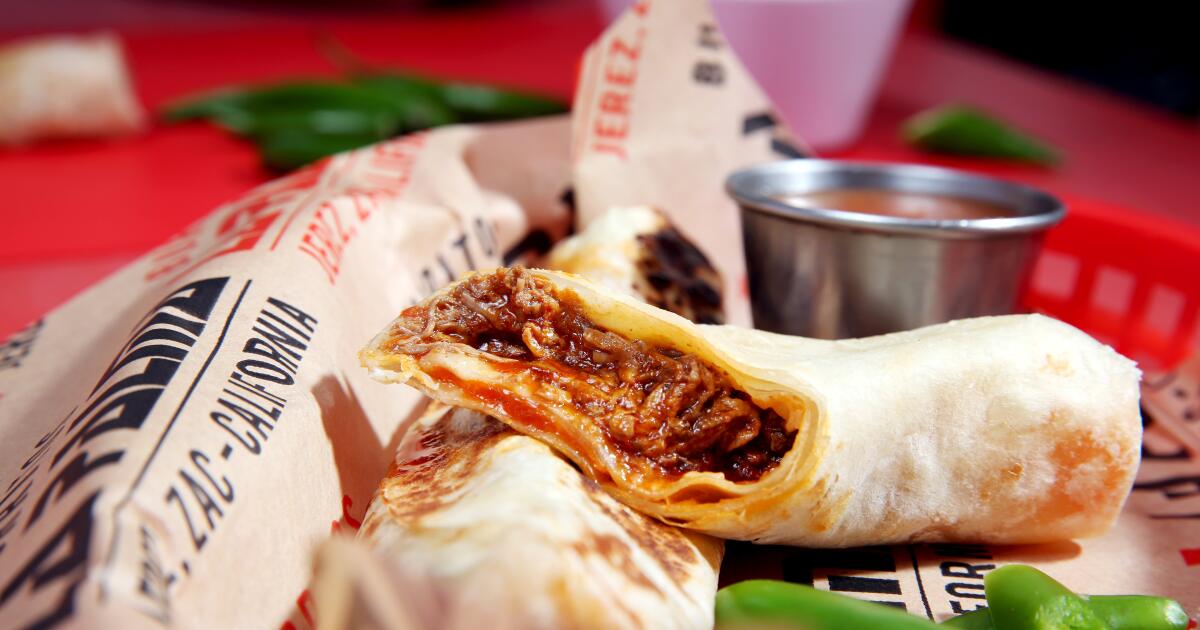


A slew of online discourse unfolded last week after Turning Point USA spokesman Andrew Kolvet shared that a college-aged member of the conservative nonprofit told him, “A burrito shouldn’t cost $20.”
“Yeah, a lot of this is a hangover from COVID and Biden-era inflation, but the lived experience is the same: It just feels like basic things cost too much,” Kolvet wrote in the viral X post, which has racked up more than 3 million views.
The online controversy highlights a deep frustration for young adults in Los Angeles. While politicians appear to be debating inflation for their own ends, students are struggling with the reality of not being able to afford food.
A $20 burrito sounds “unjustifiable” to Klarissa Palacios, who graduated from USC in May with bachelor’s and master’s degrees in law, history and culture. While in school, Palacios interned at various city hall offices and said her hourly salary eventually reached $25 — a key consideration for college students, she said, because many young people determine a meal’s affordability based on how many work hours can pay it off.
With minimum wage in L.A. at $18.42 per hour as of July, college students earning this rate would need to work for more than an hour in order to pay for just one burrito, Palacios pointed out.
“I’m Mexican, so I grew up with free burritos at home, anytime I wanted. $20 is pretty steep,” she said. “I’m expected to eat three times a day. If I’m spending $20 per meal and I work eight hours, then that means I’m only really getting paid five hours.”
Noticing a need for affordable meals, Palacios and fellow USC student Josiah Herfurth spent this past semester hosting $10-per-person lunches at their college apartments, dubbing the offering Cafe 10:31. The idea budded from a survey they sent to fellow members of their campus ministry, which found that the leading reason students weren’t attending post-church lunches at restaurants ranging from In-N-Out to sit-down ramen spots was because they wanted to save money, not for a lack of transportation or time.
So Palacios and Herfurth began paying out of pocket for bulk Costco runs that fed as many as 40 people per event. On the menu? Tacos, chili, hot dogs and conversation.
“It started with being just a USC college student thing, and ended up being just a general young adults thing,” Herfurth said, referring to how word quickly spread to UCLA and Cal State Long Beach students, as well as the young adult community at their church.
Herfurth is used to meal prepping in bulk, and said it’s a common practice among college students hoping to cut costs. He and his roommates would use up to six stove burners at a time to prepare meals together, he said.
“It was always more fun for me when I could share something with someone else, and it also made things cheaper,” Herfurth said. “That was the key to me.”
As the online conversation around food affordability evolved, Rep. Dan Crenshaw (R-Texas) chimed in on X.
“Just hearing about this dumb $20 burrito debate so just thought I’d make the losers on social media angry before going to bed,” Crenshaw wrote. “Stop whining, get a job, eat ramen like the rest of us did in college, on a budget with four roommates.”
But Megan Monroe, who graduated from UCLA in June, said it’s unrealistic to eat packaged ramen like the iconic Cup Noodles brand for every meal.
“Just because someone else did it, doesn’t mean that was the right thing to do,” Monroe said. “Nutrition has come such a long way. … I think it’s for the best that we’re steering toward a better, nutritional diet.”
Still, Monroe is a stickler for keeping her diet affordable.
Even though UCLA’s dining halls are recognized as the best in the country, Monroe opted out of the campus meal plan her junior year. Her required freshman and sophomore year plans came out to about $9 per visit, but when she moved to an off-campus, university-owned housing complex, she had the choice to opt into a plan that would cost about $15 per visit. She deemed it too expensive.
“I was like, I can cook for less than that,” Monroe said.
Since her dining hall days, Monroe now makes one Trader Joe’s trip per week, which usually comes out to about $45. She typically has milk and cereal for breakfast and is known among friends to eat a homemade take on a classic deli combination “360 days of the year”: a cold sandwich, a piece of fruit and a bag of chips.
Monroe does dine out once per week, including for burritos — she favors the $11 burrito at Brother’s Cousins Tacos in Sawtelle.
In a burrito city like L.A., prices can range dramatically, such as Burritos La Palma’s $5 homestyle burritos, where the menu recommends ordering two or three per person for a satisfying meal. When former taco stand El Ruso opened its flagship in Studio City last month, burritos wrapped in 18-inch Sonoran flour tortillas and stuffed with rib-eye or chile Colorado were priced at $20 each. It’s not uncommon to find breakfast burritos that exceed $20, like the $24 wrap with beef machaca and shrimp offered on Daisy Margarita Bar’s weekend brunch menu.
For students at other universities, campus dining varies in affordability.
When Joshua Min started at Cal State Long Beach in 2025, a $315-million renovation project had just shut down its University Student Union through 2028.
In light of the closure shuttering certain food options on campus, the university gathered an array of local food trucks — with most meals within the $15 to $20 range, Min said. Not wanting to spend additional funds, he opted into a meal plan offered for commuter students like himself, with 50 meals for the 16-week semester that came to about $10 per meal.
Min said he had minimal complaints of the food itself; he often filled up his plate with chicken, rice, fruit and vegetables. But he found himself rationing the meal swipes, starting the semester conservatively and ending with extras, which he used by inviting his friends to come with him.
After that semester, Min opted to pack turkey or tuna salad sandwiches for school, using bulk ingredients that his family buys from Costco.
Min said he ultimately was disappointed at Cal State Long Beach’s selection of food trucks, as a student who prioritizes cutting his cost of living.
“It seemed like they just cobbled up these ideas at the last minute,” he said. “I respect the effort, but I think a lot of students were left unheard and hungry.”

A slew of online discourse unfolded last week after Turning Point USA spokesman Andrew Kolvet shared that a college-aged member of the conservative nonprofit told him, “A burrito shouldn’t cost $20.”
“Yeah, a lot of this is a hangover from COVID and Biden-era inflation, but the lived experience is the same: It just feels like basic things cost too much,” Kolvet wrote in the viral X post, which has racked up more than 3 million views.
The online controversy highlights a deep frustration for young adults in Los Angeles. While politicians appear to be debating inflation for their own ends, students are struggling with the reality of not being able to afford food.
A $20 burrito sounds “unjustifiable” to Klarissa Palacios, who graduated from USC in May with bachelor’s and master’s degrees in law, history and culture. While in school, Palacios interned at various city hall offices and said her hourly salary eventually reached $25 — a key consideration for college students, she said, because many young people determine a meal’s affordability based on how many work hours can pay it off.
With minimum wage in L.A. at $18.42 per hour as of July, college students earning this rate would need to work for more than an hour in order to pay for just one burrito, Palacios pointed out.
“I’m Mexican, so I grew up with free burritos at home, anytime I wanted. $20 is pretty steep,” she said. “I’m expected to eat three times a day. If I’m spending $20 per meal and I work eight hours, then that means I’m only really getting paid five hours.”
Noticing a need for affordable meals, Palacios and fellow USC student Josiah Herfurth spent this past semester hosting $10-per-person lunches at their college apartments, dubbing the offering Cafe 10:31. The idea budded from a survey they sent to fellow members of their campus ministry, which found that the leading reason students weren’t attending post-church lunches at restaurants ranging from In-N-Out to sit-down ramen spots was because they wanted to save money, not for a lack of transportation or time.
So Palacios and Herfurth began paying out of pocket for bulk Costco runs that fed as many as 40 people per event. On the menu? Tacos, chili, hot dogs and conversation.
“It started with being just a USC college student thing, and ended up being just a general young adults thing,” Herfurth said, referring to how word quickly spread to UCLA and Cal State Long Beach students, as well as the young adult community at their church.
Herfurth is used to meal prepping in bulk, and said it’s a common practice among college students hoping to cut costs. He and his roommates would use up to six stove burners at a time to prepare meals together, he said.
“It was always more fun for me when I could share something with someone else, and it also made things cheaper,” Herfurth said. “That was the key to me.”
As the online conversation around food affordability evolved, Rep. Dan Crenshaw (R-Texas) chimed in on X.
“Just hearing about this dumb $20 burrito debate so just thought I’d make the losers on social media angry before going to bed,” Crenshaw wrote. “Stop whining, get a job, eat ramen like the rest of us did in college, on a budget with four roommates.”
But Megan Monroe, who graduated from UCLA in June, said it’s unrealistic to eat packaged ramen like the iconic Cup Noodles brand for every meal.
“Just because someone else did it, doesn’t mean that was the right thing to do,” Monroe said. “Nutrition has come such a long way. … I think it’s for the best that we’re steering toward a better, nutritional diet.”
Still, Monroe is a stickler for keeping her diet affordable.
Even though UCLA’s dining halls are recognized as the best in the country, Monroe opted out of the campus meal plan her junior year. Her required freshman and sophomore year plans came out to about $9 per visit, but when she moved to an off-campus, university-owned housing complex, she had the choice to opt into a plan that would cost about $15 per visit. She deemed it too expensive.
“I was like, I can cook for less than that,” Monroe said.
Since her dining hall days, Monroe now makes one Trader Joe’s trip per week, which usually comes out to about $45. She typically has milk and cereal for breakfast and is known among friends to eat a homemade take on a classic deli combination “360 days of the year”: a cold sandwich, a piece of fruit and a bag of chips.
Monroe does dine out once per week, including for burritos — she favors the $11 burrito at Brother’s Cousins Tacos in Sawtelle.
In a burrito city like L.A., prices can range dramatically, such as Burritos La Palma’s $5 homestyle burritos, where the menu recommends ordering two or three per person for a satisfying meal. When former taco stand El Ruso opened its flagship in Studio City last month, burritos wrapped in 18-inch Sonoran flour tortillas and stuffed with rib-eye or chile Colorado were priced at $20 each. It’s not uncommon to find breakfast burritos that exceed $20, like the $24 wrap with beef machaca and shrimp offered on Daisy Margarita Bar’s weekend brunch menu.
For students at other universities, campus dining varies in affordability.
When Joshua Min started at Cal State Long Beach in 2025, a $315-million renovation project had just shut down its University Student Union through 2028.
In light of the closure shuttering certain food options on campus, the university gathered an array of local food trucks — with most meals within the $15 to $20 range, Min said. Not wanting to spend additional funds, he opted into a meal plan offered for commuter students like himself, with 50 meals for the 16-week semester that came to about $10 per meal.
Min said he had minimal complaints of the food itself; he often filled up his plate with chicken, rice, fruit and vegetables. But he found himself rationing the meal swipes, starting the semester conservatively and ending with extras, which he used by inviting his friends to come with him.
After that semester, Min opted to pack turkey or tuna salad sandwiches for school, using bulk ingredients that his family buys from Costco.
Min said he ultimately was disappointed at Cal State Long Beach’s selection of food trucks, as a student who prioritizes cutting his cost of living.
“It seemed like they just cobbled up these ideas at the last minute,” he said. “I respect the effort, but I think a lot of students were left unheard and hungry.”

A slew of online discourse unfolded last week after Turning Point USA spokesman Andrew Kolvet shared that a college-aged member of the conservative nonprofit told him, “A burrito shouldn’t cost $20.”
“Yeah, a lot of this is a hangover from COVID and Biden-era inflation, but the lived experience is the same: It just feels like basic things cost too much,” Kolvet wrote in the viral X post, which has racked up more than 3 million views.
The online controversy highlights a deep frustration for young adults in Los Angeles. While politicians appear to be debating inflation for their own ends, students are struggling with the reality of not being able to afford food.
A $20 burrito sounds “unjustifiable” to Klarissa Palacios, who graduated from USC in May with bachelor’s and master’s degrees in law, history and culture. While in school, Palacios interned at various city hall offices and said her hourly salary eventually reached $25 — a key consideration for college students, she said, because many young people determine a meal’s affordability based on how many work hours can pay it off.
With minimum wage in L.A. at $18.42 per hour as of July, college students earning this rate would need to work for more than an hour in order to pay for just one burrito, Palacios pointed out.
“I’m Mexican, so I grew up with free burritos at home, anytime I wanted. $20 is pretty steep,” she said. “I’m expected to eat three times a day. If I’m spending $20 per meal and I work eight hours, then that means I’m only really getting paid five hours.”
Noticing a need for affordable meals, Palacios and fellow USC student Josiah Herfurth spent this past semester hosting $10-per-person lunches at their college apartments, dubbing the offering Cafe 10:31. The idea budded from a survey they sent to fellow members of their campus ministry, which found that the leading reason students weren’t attending post-church lunches at restaurants ranging from In-N-Out to sit-down ramen spots was because they wanted to save money, not for a lack of transportation or time.
So Palacios and Herfurth began paying out of pocket for bulk Costco runs that fed as many as 40 people per event. On the menu? Tacos, chili, hot dogs and conversation.
“It started with being just a USC college student thing, and ended up being just a general young adults thing,” Herfurth said, referring to how word quickly spread to UCLA and Cal State Long Beach students, as well as the young adult community at their church.
Herfurth is used to meal prepping in bulk, and said it’s a common practice among college students hoping to cut costs. He and his roommates would use up to six stove burners at a time to prepare meals together, he said.
“It was always more fun for me when I could share something with someone else, and it also made things cheaper,” Herfurth said. “That was the key to me.”
As the online conversation around food affordability evolved, Rep. Dan Crenshaw (R-Texas) chimed in on X.
“Just hearing about this dumb $20 burrito debate so just thought I’d make the losers on social media angry before going to bed,” Crenshaw wrote. “Stop whining, get a job, eat ramen like the rest of us did in college, on a budget with four roommates.”
But Megan Monroe, who graduated from UCLA in June, said it’s unrealistic to eat packaged ramen like the iconic Cup Noodles brand for every meal.
“Just because someone else did it, doesn’t mean that was the right thing to do,” Monroe said. “Nutrition has come such a long way. … I think it’s for the best that we’re steering toward a better, nutritional diet.”
Still, Monroe is a stickler for keeping her diet affordable.
Even though UCLA’s dining halls are recognized as the best in the country, Monroe opted out of the campus meal plan her junior year. Her required freshman and sophomore year plans came out to about $9 per visit, but when she moved to an off-campus, university-owned housing complex, she had the choice to opt into a plan that would cost about $15 per visit. She deemed it too expensive.
“I was like, I can cook for less than that,” Monroe said.
Since her dining hall days, Monroe now makes one Trader Joe’s trip per week, which usually comes out to about $45. She typically has milk and cereal for breakfast and is known among friends to eat a homemade take on a classic deli combination “360 days of the year”: a cold sandwich, a piece of fruit and a bag of chips.
Monroe does dine out once per week, including for burritos — she favors the $11 burrito at Brother’s Cousins Tacos in Sawtelle.
In a burrito city like L.A., prices can range dramatically, such as Burritos La Palma’s $5 homestyle burritos, where the menu recommends ordering two or three per person for a satisfying meal. When former taco stand El Ruso opened its flagship in Studio City last month, burritos wrapped in 18-inch Sonoran flour tortillas and stuffed with rib-eye or chile Colorado were priced at $20 each. It’s not uncommon to find breakfast burritos that exceed $20, like the $24 wrap with beef machaca and shrimp offered on Daisy Margarita Bar’s weekend brunch menu.
For students at other universities, campus dining varies in affordability.
When Joshua Min started at Cal State Long Beach in 2025, a $315-million renovation project had just shut down its University Student Union through 2028.
In light of the closure shuttering certain food options on campus, the university gathered an array of local food trucks — with most meals within the $15 to $20 range, Min said. Not wanting to spend additional funds, he opted into a meal plan offered for commuter students like himself, with 50 meals for the 16-week semester that came to about $10 per meal.
Min said he had minimal complaints of the food itself; he often filled up his plate with chicken, rice, fruit and vegetables. But he found himself rationing the meal swipes, starting the semester conservatively and ending with extras, which he used by inviting his friends to come with him.
After that semester, Min opted to pack turkey or tuna salad sandwiches for school, using bulk ingredients that his family buys from Costco.
Min said he ultimately was disappointed at Cal State Long Beach’s selection of food trucks, as a student who prioritizes cutting his cost of living.
“It seemed like they just cobbled up these ideas at the last minute,” he said. “I respect the effort, but I think a lot of students were left unheard and hungry.”
A slew of online discourse unfolded last week after Turning Point USA spokesman Andrew Kolvet shared that a college-aged member of the conservative nonprofit told him, “A burrito shouldn’t cost $20.”
“Yeah, a lot of this is a hangover from COVID and Biden-era inflation, but the lived experience is the same: It just feels like basic things cost too much,” Kolvet wrote in the viral X post, which has racked up more than 3 million views.
The online controversy highlights a deep frustration for young adults in Los Angeles. While politicians appear to be debating inflation for their own ends, students are struggling with the reality of not being able to afford food.
A $20 burrito sounds “unjustifiable” to Klarissa Palacios, who graduated from USC in May with bachelor’s and master’s degrees in law, history and culture. While in school, Palacios interned at various city hall offices and said her hourly salary eventually reached $25 — a key consideration for college students, she said, because many young people determine a meal’s affordability based on how many work hours can pay it off.
With minimum wage in L.A. at $18.42 per hour as of July, college students earning this rate would need to work for more than an hour in order to pay for just one burrito, Palacios pointed out.
“I’m Mexican, so I grew up with free burritos at home, anytime I wanted. $20 is pretty steep,” she said. “I’m expected to eat three times a day. If I’m spending $20 per meal and I work eight hours, then that means I’m only really getting paid five hours.”
Noticing a need for affordable meals, Palacios and fellow USC student Josiah Herfurth spent this past semester hosting $10-per-person lunches at their college apartments, dubbing the offering Cafe 10:31. The idea budded from a survey they sent to fellow members of their campus ministry, which found that the leading reason students weren’t attending post-church lunches at restaurants ranging from In-N-Out to sit-down ramen spots was because they wanted to save money, not for a lack of transportation or time.
So Palacios and Herfurth began paying out of pocket for bulk Costco runs that fed as many as 40 people per event. On the menu? Tacos, chili, hot dogs and conversation.
“It started with being just a USC college student thing, and ended up being just a general young adults thing,” Herfurth said, referring to how word quickly spread to UCLA and Cal State Long Beach students, as well as the young adult community at their church.
Herfurth is used to meal prepping in bulk, and said it’s a common practice among college students hoping to cut costs. He and his roommates would use up to six stove burners at a time to prepare meals together, he said.
“It was always more fun for me when I could share something with someone else, and it also made things cheaper,” Herfurth said. “That was the key to me.”
As the online conversation around food affordability evolved, Rep. Dan Crenshaw (R-Texas) chimed in on X.
“Just hearing about this dumb $20 burrito debate so just thought I’d make the losers on social media angry before going to bed,” Crenshaw wrote. “Stop whining, get a job, eat ramen like the rest of us did in college, on a budget with four roommates.”
But Megan Monroe, who graduated from UCLA in June, said it’s unrealistic to eat packaged ramen like the iconic Cup Noodles brand for every meal.
“Just because someone else did it, doesn’t mean that was the right thing to do,” Monroe said. “Nutrition has come such a long way. … I think it’s for the best that we’re steering toward a better, nutritional diet.”
Still, Monroe is a stickler for keeping her diet affordable.
Even though UCLA’s dining halls are recognized as the best in the country, Monroe opted out of the campus meal plan her junior year. Her required freshman and sophomore year plans came out to about $9 per visit, but when she moved to an off-campus, university-owned housing complex, she had the choice to opt into a plan that would cost about $15 per visit. She deemed it too expensive.
“I was like, I can cook for less than that,” Monroe said.
Since her dining hall days, Monroe now makes one Trader Joe’s trip per week, which usually comes out to about $45. She typically has milk and cereal for breakfast and is known among friends to eat a homemade take on a classic deli combination “360 days of the year”: a cold sandwich, a piece of fruit and a bag of chips.
Monroe does dine out once per week, including for burritos — she favors the $11 burrito at Brother’s Cousins Tacos in Sawtelle.
In a burrito city like L.A., prices can range dramatically, such as Burritos La Palma’s $5 homestyle burritos, where the menu recommends ordering two or three per person for a satisfying meal. When former taco stand El Ruso opened its flagship in Studio City last month, burritos wrapped in 18-inch Sonoran flour tortillas and stuffed with rib-eye or chile Colorado were priced at $20 each. It’s not uncommon to find breakfast burritos that exceed $20, like the $24 wrap with beef machaca and shrimp offered on Daisy Margarita Bar’s weekend brunch menu.
For students at other universities, campus dining varies in affordability.
When Joshua Min started at Cal State Long Beach in 2025, a $315-million renovation project had just shut down its University Student Union through 2028.
In light of the closure shuttering certain food options on campus, the university gathered an array of local food trucks — with most meals within the $15 to $20 range, Min said. Not wanting to spend additional funds, he opted into a meal plan offered for commuter students like himself, with 50 meals for the 16-week semester that came to about $10 per meal.
Min said he had minimal complaints of the food itself; he often filled up his plate with chicken, rice, fruit and vegetables. But he found himself rationing the meal swipes, starting the semester conservatively and ending with extras, which he used by inviting his friends to come with him.
After that semester, Min opted to pack turkey or tuna salad sandwiches for school, using bulk ingredients that his family buys from Costco.
Min said he ultimately was disappointed at Cal State Long Beach’s selection of food trucks, as a student who prioritizes cutting his cost of living.
“It seemed like they just cobbled up these ideas at the last minute,” he said. “I respect the effort, but I think a lot of students were left unheard and hungry.”

