

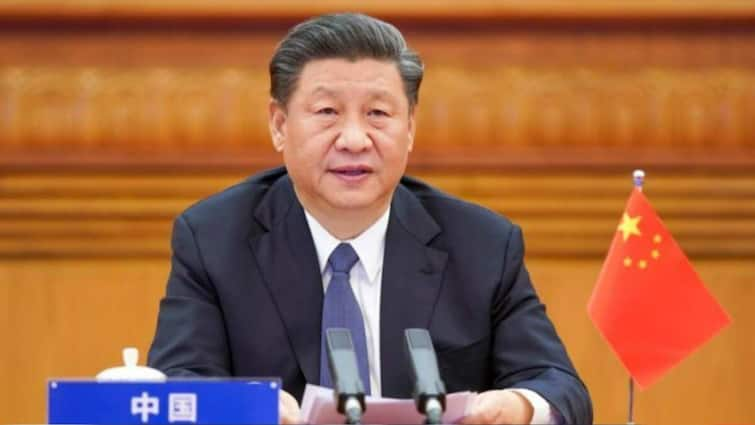
Beijing: Chinese President Xi Jinping will attend the 24th summit of the Shanghai Cooperation Organization (SCO) in Kazakhstan’s capital Astana this week, the Chinese Foreign Ministry announced on Sunday.
He will also pay a state visit to Tajikistan, it said.
From July 2 to 6, President Xi will attend the 24th Meeting of the Council of Heads of State of the SCO in Astana, the ministry said.
Officials say the situation in Afghanistan, the Ukraine conflict and boosting overall security cooperation among the SCO member countries are expected to figure in the summit.
The SCO, comprising India, China, Russia, Pakistan, Kazakhstan, Kyrgyzstan, Tajikistan and Uzbekistan, is an influential economic and security bloc that has emerged as one of the largest transregional international organisations.
India will be represented by External Affairs Minister S Jaishankar, the Ministry of External Affairs (MEA) earlier said.
Officials say there is a likelihood of a meeting on the sidelines of the summit between Jaishankar and Chinese Foreign Minister Wang Yi, who is expected to accompany Xi.
If it takes place, it will be the first high-level meeting between Indian and Chinese officials after the formation of Prime Minister Narendra Modi’s 3.0 government following the recent general elections in India.
Generally, the Indian prime minister participates in the SCO summit, providing an opportunity for Indian and Chinese leaders on the sidelines of the heads of the state meeting of the eight-member bloc.
But since Modi has decided to skip it, significance is attached to the likely meeting between Jaishankar and Wang in the light of a four-year-long frozen relations between the two countries over the standoff in Eastern Ladakh.
Relations between the two countries hit a low except for trade ever since the eastern Ladakh border standoff erupted on May 5, 2020, following a violent clash in the Pangong Tso (lake) area near Galwan.
Since the May 2020 clashes, the two sides have so far held 21 rounds of Corps Commander-level talks to resolve the standoff. The 22nd meeting is due to be held. According to the Chinese military, the two sides have so far agreed to disengage from four points namely the Galwan Valley, the Pangong Lake, Hot Springs, and Jianan Daban (Gogra) in eastern Ladakh.
India is pressing the People’s Liberation Army (PLA) to disengage from the Depsang and Demchok areas, maintaining that there cannot be restoration of normalcy in its relations with China as long as the state of the borders remains abnormal.
For its part, China continues to maintain that the boundary question does not represent the entirety of China-India relations, and it should be placed appropriately in bilateral relations and managed properly.
Kazakhstan is hosting the summit in its capacity as the current chair of the grouping.
India was the chair of the SCO last year. It hosted the SCO summit in the virtual format in July last year.
India has shown a keen interest in deepening its security-related cooperation with the SCO and its Regional Anti-Terrorism Structure (RATS), which specifically deals with issues relating to security and defence.
The SCO was founded at a summit in Shanghai in 2001 by the presidents of Russia, China, the Kyrgyz Republic, Kazakhstan, Tajikistan and Uzbekistan.
Pakistan became its permanent member along with India in 2017.
(This report has been published as part of an auto-generated syndicate wire feed. Apart from the headline, no editing has been done in the copy by ABP Live.)

Beijing: Chinese President Xi Jinping will attend the 24th summit of the Shanghai Cooperation Organization (SCO) in Kazakhstan’s capital Astana this week, the Chinese Foreign Ministry announced on Sunday.
He will also pay a state visit to Tajikistan, it said.
From July 2 to 6, President Xi will attend the 24th Meeting of the Council of Heads of State of the SCO in Astana, the ministry said.
Officials say the situation in Afghanistan, the Ukraine conflict and boosting overall security cooperation among the SCO member countries are expected to figure in the summit.
The SCO, comprising India, China, Russia, Pakistan, Kazakhstan, Kyrgyzstan, Tajikistan and Uzbekistan, is an influential economic and security bloc that has emerged as one of the largest transregional international organisations.
India will be represented by External Affairs Minister S Jaishankar, the Ministry of External Affairs (MEA) earlier said.
Officials say there is a likelihood of a meeting on the sidelines of the summit between Jaishankar and Chinese Foreign Minister Wang Yi, who is expected to accompany Xi.
If it takes place, it will be the first high-level meeting between Indian and Chinese officials after the formation of Prime Minister Narendra Modi’s 3.0 government following the recent general elections in India.
Generally, the Indian prime minister participates in the SCO summit, providing an opportunity for Indian and Chinese leaders on the sidelines of the heads of the state meeting of the eight-member bloc.
But since Modi has decided to skip it, significance is attached to the likely meeting between Jaishankar and Wang in the light of a four-year-long frozen relations between the two countries over the standoff in Eastern Ladakh.
Relations between the two countries hit a low except for trade ever since the eastern Ladakh border standoff erupted on May 5, 2020, following a violent clash in the Pangong Tso (lake) area near Galwan.
Since the May 2020 clashes, the two sides have so far held 21 rounds of Corps Commander-level talks to resolve the standoff. The 22nd meeting is due to be held. According to the Chinese military, the two sides have so far agreed to disengage from four points namely the Galwan Valley, the Pangong Lake, Hot Springs, and Jianan Daban (Gogra) in eastern Ladakh.
India is pressing the People’s Liberation Army (PLA) to disengage from the Depsang and Demchok areas, maintaining that there cannot be restoration of normalcy in its relations with China as long as the state of the borders remains abnormal.
For its part, China continues to maintain that the boundary question does not represent the entirety of China-India relations, and it should be placed appropriately in bilateral relations and managed properly.
Kazakhstan is hosting the summit in its capacity as the current chair of the grouping.
India was the chair of the SCO last year. It hosted the SCO summit in the virtual format in July last year.
India has shown a keen interest in deepening its security-related cooperation with the SCO and its Regional Anti-Terrorism Structure (RATS), which specifically deals with issues relating to security and defence.
The SCO was founded at a summit in Shanghai in 2001 by the presidents of Russia, China, the Kyrgyz Republic, Kazakhstan, Tajikistan and Uzbekistan.
Pakistan became its permanent member along with India in 2017.
(This report has been published as part of an auto-generated syndicate wire feed. Apart from the headline, no editing has been done in the copy by ABP Live.)

Beijing: Chinese President Xi Jinping will attend the 24th summit of the Shanghai Cooperation Organization (SCO) in Kazakhstan’s capital Astana this week, the Chinese Foreign Ministry announced on Sunday.
He will also pay a state visit to Tajikistan, it said.
From July 2 to 6, President Xi will attend the 24th Meeting of the Council of Heads of State of the SCO in Astana, the ministry said.
Officials say the situation in Afghanistan, the Ukraine conflict and boosting overall security cooperation among the SCO member countries are expected to figure in the summit.
The SCO, comprising India, China, Russia, Pakistan, Kazakhstan, Kyrgyzstan, Tajikistan and Uzbekistan, is an influential economic and security bloc that has emerged as one of the largest transregional international organisations.
India will be represented by External Affairs Minister S Jaishankar, the Ministry of External Affairs (MEA) earlier said.
Officials say there is a likelihood of a meeting on the sidelines of the summit between Jaishankar and Chinese Foreign Minister Wang Yi, who is expected to accompany Xi.
If it takes place, it will be the first high-level meeting between Indian and Chinese officials after the formation of Prime Minister Narendra Modi’s 3.0 government following the recent general elections in India.
Generally, the Indian prime minister participates in the SCO summit, providing an opportunity for Indian and Chinese leaders on the sidelines of the heads of the state meeting of the eight-member bloc.
But since Modi has decided to skip it, significance is attached to the likely meeting between Jaishankar and Wang in the light of a four-year-long frozen relations between the two countries over the standoff in Eastern Ladakh.
Relations between the two countries hit a low except for trade ever since the eastern Ladakh border standoff erupted on May 5, 2020, following a violent clash in the Pangong Tso (lake) area near Galwan.
Since the May 2020 clashes, the two sides have so far held 21 rounds of Corps Commander-level talks to resolve the standoff. The 22nd meeting is due to be held. According to the Chinese military, the two sides have so far agreed to disengage from four points namely the Galwan Valley, the Pangong Lake, Hot Springs, and Jianan Daban (Gogra) in eastern Ladakh.
India is pressing the People’s Liberation Army (PLA) to disengage from the Depsang and Demchok areas, maintaining that there cannot be restoration of normalcy in its relations with China as long as the state of the borders remains abnormal.
For its part, China continues to maintain that the boundary question does not represent the entirety of China-India relations, and it should be placed appropriately in bilateral relations and managed properly.
Kazakhstan is hosting the summit in its capacity as the current chair of the grouping.
India was the chair of the SCO last year. It hosted the SCO summit in the virtual format in July last year.
India has shown a keen interest in deepening its security-related cooperation with the SCO and its Regional Anti-Terrorism Structure (RATS), which specifically deals with issues relating to security and defence.
The SCO was founded at a summit in Shanghai in 2001 by the presidents of Russia, China, the Kyrgyz Republic, Kazakhstan, Tajikistan and Uzbekistan.
Pakistan became its permanent member along with India in 2017.
(This report has been published as part of an auto-generated syndicate wire feed. Apart from the headline, no editing has been done in the copy by ABP Live.)
Beijing: Chinese President Xi Jinping will attend the 24th summit of the Shanghai Cooperation Organization (SCO) in Kazakhstan’s capital Astana this week, the Chinese Foreign Ministry announced on Sunday.
He will also pay a state visit to Tajikistan, it said.
From July 2 to 6, President Xi will attend the 24th Meeting of the Council of Heads of State of the SCO in Astana, the ministry said.
Officials say the situation in Afghanistan, the Ukraine conflict and boosting overall security cooperation among the SCO member countries are expected to figure in the summit.
The SCO, comprising India, China, Russia, Pakistan, Kazakhstan, Kyrgyzstan, Tajikistan and Uzbekistan, is an influential economic and security bloc that has emerged as one of the largest transregional international organisations.
India will be represented by External Affairs Minister S Jaishankar, the Ministry of External Affairs (MEA) earlier said.
Officials say there is a likelihood of a meeting on the sidelines of the summit between Jaishankar and Chinese Foreign Minister Wang Yi, who is expected to accompany Xi.
If it takes place, it will be the first high-level meeting between Indian and Chinese officials after the formation of Prime Minister Narendra Modi’s 3.0 government following the recent general elections in India.
Generally, the Indian prime minister participates in the SCO summit, providing an opportunity for Indian and Chinese leaders on the sidelines of the heads of the state meeting of the eight-member bloc.
But since Modi has decided to skip it, significance is attached to the likely meeting between Jaishankar and Wang in the light of a four-year-long frozen relations between the two countries over the standoff in Eastern Ladakh.
Relations between the two countries hit a low except for trade ever since the eastern Ladakh border standoff erupted on May 5, 2020, following a violent clash in the Pangong Tso (lake) area near Galwan.
Since the May 2020 clashes, the two sides have so far held 21 rounds of Corps Commander-level talks to resolve the standoff. The 22nd meeting is due to be held. According to the Chinese military, the two sides have so far agreed to disengage from four points namely the Galwan Valley, the Pangong Lake, Hot Springs, and Jianan Daban (Gogra) in eastern Ladakh.
India is pressing the People’s Liberation Army (PLA) to disengage from the Depsang and Demchok areas, maintaining that there cannot be restoration of normalcy in its relations with China as long as the state of the borders remains abnormal.
For its part, China continues to maintain that the boundary question does not represent the entirety of China-India relations, and it should be placed appropriately in bilateral relations and managed properly.
Kazakhstan is hosting the summit in its capacity as the current chair of the grouping.
India was the chair of the SCO last year. It hosted the SCO summit in the virtual format in July last year.
India has shown a keen interest in deepening its security-related cooperation with the SCO and its Regional Anti-Terrorism Structure (RATS), which specifically deals with issues relating to security and defence.
The SCO was founded at a summit in Shanghai in 2001 by the presidents of Russia, China, the Kyrgyz Republic, Kazakhstan, Tajikistan and Uzbekistan.
Pakistan became its permanent member along with India in 2017.
(This report has been published as part of an auto-generated syndicate wire feed. Apart from the headline, no editing has been done in the copy by ABP Live.)

Beijing: Chinese President Xi Jinping will attend the 24th summit of the Shanghai Cooperation Organization (SCO) in Kazakhstan’s capital Astana this week, the Chinese Foreign Ministry announced on Sunday.
He will also pay a state visit to Tajikistan, it said.
From July 2 to 6, President Xi will attend the 24th Meeting of the Council of Heads of State of the SCO in Astana, the ministry said.
Officials say the situation in Afghanistan, the Ukraine conflict and boosting overall security cooperation among the SCO member countries are expected to figure in the summit.
The SCO, comprising India, China, Russia, Pakistan, Kazakhstan, Kyrgyzstan, Tajikistan and Uzbekistan, is an influential economic and security bloc that has emerged as one of the largest transregional international organisations.
India will be represented by External Affairs Minister S Jaishankar, the Ministry of External Affairs (MEA) earlier said.
Officials say there is a likelihood of a meeting on the sidelines of the summit between Jaishankar and Chinese Foreign Minister Wang Yi, who is expected to accompany Xi.
If it takes place, it will be the first high-level meeting between Indian and Chinese officials after the formation of Prime Minister Narendra Modi’s 3.0 government following the recent general elections in India.
Generally, the Indian prime minister participates in the SCO summit, providing an opportunity for Indian and Chinese leaders on the sidelines of the heads of the state meeting of the eight-member bloc.
But since Modi has decided to skip it, significance is attached to the likely meeting between Jaishankar and Wang in the light of a four-year-long frozen relations between the two countries over the standoff in Eastern Ladakh.
Relations between the two countries hit a low except for trade ever since the eastern Ladakh border standoff erupted on May 5, 2020, following a violent clash in the Pangong Tso (lake) area near Galwan.
Since the May 2020 clashes, the two sides have so far held 21 rounds of Corps Commander-level talks to resolve the standoff. The 22nd meeting is due to be held. According to the Chinese military, the two sides have so far agreed to disengage from four points namely the Galwan Valley, the Pangong Lake, Hot Springs, and Jianan Daban (Gogra) in eastern Ladakh.
India is pressing the People’s Liberation Army (PLA) to disengage from the Depsang and Demchok areas, maintaining that there cannot be restoration of normalcy in its relations with China as long as the state of the borders remains abnormal.
For its part, China continues to maintain that the boundary question does not represent the entirety of China-India relations, and it should be placed appropriately in bilateral relations and managed properly.
Kazakhstan is hosting the summit in its capacity as the current chair of the grouping.
India was the chair of the SCO last year. It hosted the SCO summit in the virtual format in July last year.
India has shown a keen interest in deepening its security-related cooperation with the SCO and its Regional Anti-Terrorism Structure (RATS), which specifically deals with issues relating to security and defence.
The SCO was founded at a summit in Shanghai in 2001 by the presidents of Russia, China, the Kyrgyz Republic, Kazakhstan, Tajikistan and Uzbekistan.
Pakistan became its permanent member along with India in 2017.
(This report has been published as part of an auto-generated syndicate wire feed. Apart from the headline, no editing has been done in the copy by ABP Live.)
Beijing: Chinese President Xi Jinping will attend the 24th summit of the Shanghai Cooperation Organization (SCO) in Kazakhstan’s capital Astana this week, the Chinese Foreign Ministry announced on Sunday.
He will also pay a state visit to Tajikistan, it said.
From July 2 to 6, President Xi will attend the 24th Meeting of the Council of Heads of State of the SCO in Astana, the ministry said.
Officials say the situation in Afghanistan, the Ukraine conflict and boosting overall security cooperation among the SCO member countries are expected to figure in the summit.
The SCO, comprising India, China, Russia, Pakistan, Kazakhstan, Kyrgyzstan, Tajikistan and Uzbekistan, is an influential economic and security bloc that has emerged as one of the largest transregional international organisations.
India will be represented by External Affairs Minister S Jaishankar, the Ministry of External Affairs (MEA) earlier said.
Officials say there is a likelihood of a meeting on the sidelines of the summit between Jaishankar and Chinese Foreign Minister Wang Yi, who is expected to accompany Xi.
If it takes place, it will be the first high-level meeting between Indian and Chinese officials after the formation of Prime Minister Narendra Modi’s 3.0 government following the recent general elections in India.
Generally, the Indian prime minister participates in the SCO summit, providing an opportunity for Indian and Chinese leaders on the sidelines of the heads of the state meeting of the eight-member bloc.
But since Modi has decided to skip it, significance is attached to the likely meeting between Jaishankar and Wang in the light of a four-year-long frozen relations between the two countries over the standoff in Eastern Ladakh.
Relations between the two countries hit a low except for trade ever since the eastern Ladakh border standoff erupted on May 5, 2020, following a violent clash in the Pangong Tso (lake) area near Galwan.
Since the May 2020 clashes, the two sides have so far held 21 rounds of Corps Commander-level talks to resolve the standoff. The 22nd meeting is due to be held. According to the Chinese military, the two sides have so far agreed to disengage from four points namely the Galwan Valley, the Pangong Lake, Hot Springs, and Jianan Daban (Gogra) in eastern Ladakh.
India is pressing the People’s Liberation Army (PLA) to disengage from the Depsang and Demchok areas, maintaining that there cannot be restoration of normalcy in its relations with China as long as the state of the borders remains abnormal.
For its part, China continues to maintain that the boundary question does not represent the entirety of China-India relations, and it should be placed appropriately in bilateral relations and managed properly.
Kazakhstan is hosting the summit in its capacity as the current chair of the grouping.
India was the chair of the SCO last year. It hosted the SCO summit in the virtual format in July last year.
India has shown a keen interest in deepening its security-related cooperation with the SCO and its Regional Anti-Terrorism Structure (RATS), which specifically deals with issues relating to security and defence.
The SCO was founded at a summit in Shanghai in 2001 by the presidents of Russia, China, the Kyrgyz Republic, Kazakhstan, Tajikistan and Uzbekistan.
Pakistan became its permanent member along with India in 2017.
(This report has been published as part of an auto-generated syndicate wire feed. Apart from the headline, no editing has been done in the copy by ABP Live.)
Beijing: Chinese President Xi Jinping will attend the 24th summit of the Shanghai Cooperation Organization (SCO) in Kazakhstan’s capital Astana this week, the Chinese Foreign Ministry announced on Sunday.
He will also pay a state visit to Tajikistan, it said.
From July 2 to 6, President Xi will attend the 24th Meeting of the Council of Heads of State of the SCO in Astana, the ministry said.
Officials say the situation in Afghanistan, the Ukraine conflict and boosting overall security cooperation among the SCO member countries are expected to figure in the summit.
The SCO, comprising India, China, Russia, Pakistan, Kazakhstan, Kyrgyzstan, Tajikistan and Uzbekistan, is an influential economic and security bloc that has emerged as one of the largest transregional international organisations.
India will be represented by External Affairs Minister S Jaishankar, the Ministry of External Affairs (MEA) earlier said.
Officials say there is a likelihood of a meeting on the sidelines of the summit between Jaishankar and Chinese Foreign Minister Wang Yi, who is expected to accompany Xi.
If it takes place, it will be the first high-level meeting between Indian and Chinese officials after the formation of Prime Minister Narendra Modi’s 3.0 government following the recent general elections in India.
Generally, the Indian prime minister participates in the SCO summit, providing an opportunity for Indian and Chinese leaders on the sidelines of the heads of the state meeting of the eight-member bloc.
But since Modi has decided to skip it, significance is attached to the likely meeting between Jaishankar and Wang in the light of a four-year-long frozen relations between the two countries over the standoff in Eastern Ladakh.
Relations between the two countries hit a low except for trade ever since the eastern Ladakh border standoff erupted on May 5, 2020, following a violent clash in the Pangong Tso (lake) area near Galwan.
Since the May 2020 clashes, the two sides have so far held 21 rounds of Corps Commander-level talks to resolve the standoff. The 22nd meeting is due to be held. According to the Chinese military, the two sides have so far agreed to disengage from four points namely the Galwan Valley, the Pangong Lake, Hot Springs, and Jianan Daban (Gogra) in eastern Ladakh.
India is pressing the People’s Liberation Army (PLA) to disengage from the Depsang and Demchok areas, maintaining that there cannot be restoration of normalcy in its relations with China as long as the state of the borders remains abnormal.
For its part, China continues to maintain that the boundary question does not represent the entirety of China-India relations, and it should be placed appropriately in bilateral relations and managed properly.
Kazakhstan is hosting the summit in its capacity as the current chair of the grouping.
India was the chair of the SCO last year. It hosted the SCO summit in the virtual format in July last year.
India has shown a keen interest in deepening its security-related cooperation with the SCO and its Regional Anti-Terrorism Structure (RATS), which specifically deals with issues relating to security and defence.
The SCO was founded at a summit in Shanghai in 2001 by the presidents of Russia, China, the Kyrgyz Republic, Kazakhstan, Tajikistan and Uzbekistan.
Pakistan became its permanent member along with India in 2017.
(This report has been published as part of an auto-generated syndicate wire feed. Apart from the headline, no editing has been done in the copy by ABP Live.)
Beijing: Chinese President Xi Jinping will attend the 24th summit of the Shanghai Cooperation Organization (SCO) in Kazakhstan’s capital Astana this week, the Chinese Foreign Ministry announced on Sunday.
He will also pay a state visit to Tajikistan, it said.
From July 2 to 6, President Xi will attend the 24th Meeting of the Council of Heads of State of the SCO in Astana, the ministry said.
Officials say the situation in Afghanistan, the Ukraine conflict and boosting overall security cooperation among the SCO member countries are expected to figure in the summit.
The SCO, comprising India, China, Russia, Pakistan, Kazakhstan, Kyrgyzstan, Tajikistan and Uzbekistan, is an influential economic and security bloc that has emerged as one of the largest transregional international organisations.
India will be represented by External Affairs Minister S Jaishankar, the Ministry of External Affairs (MEA) earlier said.
Officials say there is a likelihood of a meeting on the sidelines of the summit between Jaishankar and Chinese Foreign Minister Wang Yi, who is expected to accompany Xi.
If it takes place, it will be the first high-level meeting between Indian and Chinese officials after the formation of Prime Minister Narendra Modi’s 3.0 government following the recent general elections in India.
Generally, the Indian prime minister participates in the SCO summit, providing an opportunity for Indian and Chinese leaders on the sidelines of the heads of the state meeting of the eight-member bloc.
But since Modi has decided to skip it, significance is attached to the likely meeting between Jaishankar and Wang in the light of a four-year-long frozen relations between the two countries over the standoff in Eastern Ladakh.
Relations between the two countries hit a low except for trade ever since the eastern Ladakh border standoff erupted on May 5, 2020, following a violent clash in the Pangong Tso (lake) area near Galwan.
Since the May 2020 clashes, the two sides have so far held 21 rounds of Corps Commander-level talks to resolve the standoff. The 22nd meeting is due to be held. According to the Chinese military, the two sides have so far agreed to disengage from four points namely the Galwan Valley, the Pangong Lake, Hot Springs, and Jianan Daban (Gogra) in eastern Ladakh.
India is pressing the People’s Liberation Army (PLA) to disengage from the Depsang and Demchok areas, maintaining that there cannot be restoration of normalcy in its relations with China as long as the state of the borders remains abnormal.
For its part, China continues to maintain that the boundary question does not represent the entirety of China-India relations, and it should be placed appropriately in bilateral relations and managed properly.
Kazakhstan is hosting the summit in its capacity as the current chair of the grouping.
India was the chair of the SCO last year. It hosted the SCO summit in the virtual format in July last year.
India has shown a keen interest in deepening its security-related cooperation with the SCO and its Regional Anti-Terrorism Structure (RATS), which specifically deals with issues relating to security and defence.
The SCO was founded at a summit in Shanghai in 2001 by the presidents of Russia, China, the Kyrgyz Republic, Kazakhstan, Tajikistan and Uzbekistan.
Pakistan became its permanent member along with India in 2017.
(This report has been published as part of an auto-generated syndicate wire feed. Apart from the headline, no editing has been done in the copy by ABP Live.)

Beijing: Chinese President Xi Jinping will attend the 24th summit of the Shanghai Cooperation Organization (SCO) in Kazakhstan’s capital Astana this week, the Chinese Foreign Ministry announced on Sunday.
He will also pay a state visit to Tajikistan, it said.
From July 2 to 6, President Xi will attend the 24th Meeting of the Council of Heads of State of the SCO in Astana, the ministry said.
Officials say the situation in Afghanistan, the Ukraine conflict and boosting overall security cooperation among the SCO member countries are expected to figure in the summit.
The SCO, comprising India, China, Russia, Pakistan, Kazakhstan, Kyrgyzstan, Tajikistan and Uzbekistan, is an influential economic and security bloc that has emerged as one of the largest transregional international organisations.
India will be represented by External Affairs Minister S Jaishankar, the Ministry of External Affairs (MEA) earlier said.
Officials say there is a likelihood of a meeting on the sidelines of the summit between Jaishankar and Chinese Foreign Minister Wang Yi, who is expected to accompany Xi.
If it takes place, it will be the first high-level meeting between Indian and Chinese officials after the formation of Prime Minister Narendra Modi’s 3.0 government following the recent general elections in India.
Generally, the Indian prime minister participates in the SCO summit, providing an opportunity for Indian and Chinese leaders on the sidelines of the heads of the state meeting of the eight-member bloc.
But since Modi has decided to skip it, significance is attached to the likely meeting between Jaishankar and Wang in the light of a four-year-long frozen relations between the two countries over the standoff in Eastern Ladakh.
Relations between the two countries hit a low except for trade ever since the eastern Ladakh border standoff erupted on May 5, 2020, following a violent clash in the Pangong Tso (lake) area near Galwan.
Since the May 2020 clashes, the two sides have so far held 21 rounds of Corps Commander-level talks to resolve the standoff. The 22nd meeting is due to be held. According to the Chinese military, the two sides have so far agreed to disengage from four points namely the Galwan Valley, the Pangong Lake, Hot Springs, and Jianan Daban (Gogra) in eastern Ladakh.
India is pressing the People’s Liberation Army (PLA) to disengage from the Depsang and Demchok areas, maintaining that there cannot be restoration of normalcy in its relations with China as long as the state of the borders remains abnormal.
For its part, China continues to maintain that the boundary question does not represent the entirety of China-India relations, and it should be placed appropriately in bilateral relations and managed properly.
Kazakhstan is hosting the summit in its capacity as the current chair of the grouping.
India was the chair of the SCO last year. It hosted the SCO summit in the virtual format in July last year.
India has shown a keen interest in deepening its security-related cooperation with the SCO and its Regional Anti-Terrorism Structure (RATS), which specifically deals with issues relating to security and defence.
The SCO was founded at a summit in Shanghai in 2001 by the presidents of Russia, China, the Kyrgyz Republic, Kazakhstan, Tajikistan and Uzbekistan.
Pakistan became its permanent member along with India in 2017.
(This report has been published as part of an auto-generated syndicate wire feed. Apart from the headline, no editing has been done in the copy by ABP Live.)
Beijing: Chinese President Xi Jinping will attend the 24th summit of the Shanghai Cooperation Organization (SCO) in Kazakhstan’s capital Astana this week, the Chinese Foreign Ministry announced on Sunday.
He will also pay a state visit to Tajikistan, it said.
From July 2 to 6, President Xi will attend the 24th Meeting of the Council of Heads of State of the SCO in Astana, the ministry said.
Officials say the situation in Afghanistan, the Ukraine conflict and boosting overall security cooperation among the SCO member countries are expected to figure in the summit.
The SCO, comprising India, China, Russia, Pakistan, Kazakhstan, Kyrgyzstan, Tajikistan and Uzbekistan, is an influential economic and security bloc that has emerged as one of the largest transregional international organisations.
India will be represented by External Affairs Minister S Jaishankar, the Ministry of External Affairs (MEA) earlier said.
Officials say there is a likelihood of a meeting on the sidelines of the summit between Jaishankar and Chinese Foreign Minister Wang Yi, who is expected to accompany Xi.
If it takes place, it will be the first high-level meeting between Indian and Chinese officials after the formation of Prime Minister Narendra Modi’s 3.0 government following the recent general elections in India.
Generally, the Indian prime minister participates in the SCO summit, providing an opportunity for Indian and Chinese leaders on the sidelines of the heads of the state meeting of the eight-member bloc.
But since Modi has decided to skip it, significance is attached to the likely meeting between Jaishankar and Wang in the light of a four-year-long frozen relations between the two countries over the standoff in Eastern Ladakh.
Relations between the two countries hit a low except for trade ever since the eastern Ladakh border standoff erupted on May 5, 2020, following a violent clash in the Pangong Tso (lake) area near Galwan.
Since the May 2020 clashes, the two sides have so far held 21 rounds of Corps Commander-level talks to resolve the standoff. The 22nd meeting is due to be held. According to the Chinese military, the two sides have so far agreed to disengage from four points namely the Galwan Valley, the Pangong Lake, Hot Springs, and Jianan Daban (Gogra) in eastern Ladakh.
India is pressing the People’s Liberation Army (PLA) to disengage from the Depsang and Demchok areas, maintaining that there cannot be restoration of normalcy in its relations with China as long as the state of the borders remains abnormal.
For its part, China continues to maintain that the boundary question does not represent the entirety of China-India relations, and it should be placed appropriately in bilateral relations and managed properly.
Kazakhstan is hosting the summit in its capacity as the current chair of the grouping.
India was the chair of the SCO last year. It hosted the SCO summit in the virtual format in July last year.
India has shown a keen interest in deepening its security-related cooperation with the SCO and its Regional Anti-Terrorism Structure (RATS), which specifically deals with issues relating to security and defence.
The SCO was founded at a summit in Shanghai in 2001 by the presidents of Russia, China, the Kyrgyz Republic, Kazakhstan, Tajikistan and Uzbekistan.
Pakistan became its permanent member along with India in 2017.
(This report has been published as part of an auto-generated syndicate wire feed. Apart from the headline, no editing has been done in the copy by ABP Live.)
Beijing: Chinese President Xi Jinping will attend the 24th summit of the Shanghai Cooperation Organization (SCO) in Kazakhstan’s capital Astana this week, the Chinese Foreign Ministry announced on Sunday.
He will also pay a state visit to Tajikistan, it said.
From July 2 to 6, President Xi will attend the 24th Meeting of the Council of Heads of State of the SCO in Astana, the ministry said.
Officials say the situation in Afghanistan, the Ukraine conflict and boosting overall security cooperation among the SCO member countries are expected to figure in the summit.
The SCO, comprising India, China, Russia, Pakistan, Kazakhstan, Kyrgyzstan, Tajikistan and Uzbekistan, is an influential economic and security bloc that has emerged as one of the largest transregional international organisations.
India will be represented by External Affairs Minister S Jaishankar, the Ministry of External Affairs (MEA) earlier said.
Officials say there is a likelihood of a meeting on the sidelines of the summit between Jaishankar and Chinese Foreign Minister Wang Yi, who is expected to accompany Xi.
If it takes place, it will be the first high-level meeting between Indian and Chinese officials after the formation of Prime Minister Narendra Modi’s 3.0 government following the recent general elections in India.
Generally, the Indian prime minister participates in the SCO summit, providing an opportunity for Indian and Chinese leaders on the sidelines of the heads of the state meeting of the eight-member bloc.
But since Modi has decided to skip it, significance is attached to the likely meeting between Jaishankar and Wang in the light of a four-year-long frozen relations between the two countries over the standoff in Eastern Ladakh.
Relations between the two countries hit a low except for trade ever since the eastern Ladakh border standoff erupted on May 5, 2020, following a violent clash in the Pangong Tso (lake) area near Galwan.
Since the May 2020 clashes, the two sides have so far held 21 rounds of Corps Commander-level talks to resolve the standoff. The 22nd meeting is due to be held. According to the Chinese military, the two sides have so far agreed to disengage from four points namely the Galwan Valley, the Pangong Lake, Hot Springs, and Jianan Daban (Gogra) in eastern Ladakh.
India is pressing the People’s Liberation Army (PLA) to disengage from the Depsang and Demchok areas, maintaining that there cannot be restoration of normalcy in its relations with China as long as the state of the borders remains abnormal.
For its part, China continues to maintain that the boundary question does not represent the entirety of China-India relations, and it should be placed appropriately in bilateral relations and managed properly.
Kazakhstan is hosting the summit in its capacity as the current chair of the grouping.
India was the chair of the SCO last year. It hosted the SCO summit in the virtual format in July last year.
India has shown a keen interest in deepening its security-related cooperation with the SCO and its Regional Anti-Terrorism Structure (RATS), which specifically deals with issues relating to security and defence.
The SCO was founded at a summit in Shanghai in 2001 by the presidents of Russia, China, the Kyrgyz Republic, Kazakhstan, Tajikistan and Uzbekistan.
Pakistan became its permanent member along with India in 2017.
(This report has been published as part of an auto-generated syndicate wire feed. Apart from the headline, no editing has been done in the copy by ABP Live.)
Beijing: Chinese President Xi Jinping will attend the 24th summit of the Shanghai Cooperation Organization (SCO) in Kazakhstan’s capital Astana this week, the Chinese Foreign Ministry announced on Sunday.
He will also pay a state visit to Tajikistan, it said.
From July 2 to 6, President Xi will attend the 24th Meeting of the Council of Heads of State of the SCO in Astana, the ministry said.
Officials say the situation in Afghanistan, the Ukraine conflict and boosting overall security cooperation among the SCO member countries are expected to figure in the summit.
The SCO, comprising India, China, Russia, Pakistan, Kazakhstan, Kyrgyzstan, Tajikistan and Uzbekistan, is an influential economic and security bloc that has emerged as one of the largest transregional international organisations.
India will be represented by External Affairs Minister S Jaishankar, the Ministry of External Affairs (MEA) earlier said.
Officials say there is a likelihood of a meeting on the sidelines of the summit between Jaishankar and Chinese Foreign Minister Wang Yi, who is expected to accompany Xi.
If it takes place, it will be the first high-level meeting between Indian and Chinese officials after the formation of Prime Minister Narendra Modi’s 3.0 government following the recent general elections in India.
Generally, the Indian prime minister participates in the SCO summit, providing an opportunity for Indian and Chinese leaders on the sidelines of the heads of the state meeting of the eight-member bloc.
But since Modi has decided to skip it, significance is attached to the likely meeting between Jaishankar and Wang in the light of a four-year-long frozen relations between the two countries over the standoff in Eastern Ladakh.
Relations between the two countries hit a low except for trade ever since the eastern Ladakh border standoff erupted on May 5, 2020, following a violent clash in the Pangong Tso (lake) area near Galwan.
Since the May 2020 clashes, the two sides have so far held 21 rounds of Corps Commander-level talks to resolve the standoff. The 22nd meeting is due to be held. According to the Chinese military, the two sides have so far agreed to disengage from four points namely the Galwan Valley, the Pangong Lake, Hot Springs, and Jianan Daban (Gogra) in eastern Ladakh.
India is pressing the People’s Liberation Army (PLA) to disengage from the Depsang and Demchok areas, maintaining that there cannot be restoration of normalcy in its relations with China as long as the state of the borders remains abnormal.
For its part, China continues to maintain that the boundary question does not represent the entirety of China-India relations, and it should be placed appropriately in bilateral relations and managed properly.
Kazakhstan is hosting the summit in its capacity as the current chair of the grouping.
India was the chair of the SCO last year. It hosted the SCO summit in the virtual format in July last year.
India has shown a keen interest in deepening its security-related cooperation with the SCO and its Regional Anti-Terrorism Structure (RATS), which specifically deals with issues relating to security and defence.
The SCO was founded at a summit in Shanghai in 2001 by the presidents of Russia, China, the Kyrgyz Republic, Kazakhstan, Tajikistan and Uzbekistan.
Pakistan became its permanent member along with India in 2017.
(This report has been published as part of an auto-generated syndicate wire feed. Apart from the headline, no editing has been done in the copy by ABP Live.)
Beijing: Chinese President Xi Jinping will attend the 24th summit of the Shanghai Cooperation Organization (SCO) in Kazakhstan’s capital Astana this week, the Chinese Foreign Ministry announced on Sunday.
He will also pay a state visit to Tajikistan, it said.
From July 2 to 6, President Xi will attend the 24th Meeting of the Council of Heads of State of the SCO in Astana, the ministry said.
Officials say the situation in Afghanistan, the Ukraine conflict and boosting overall security cooperation among the SCO member countries are expected to figure in the summit.
The SCO, comprising India, China, Russia, Pakistan, Kazakhstan, Kyrgyzstan, Tajikistan and Uzbekistan, is an influential economic and security bloc that has emerged as one of the largest transregional international organisations.
India will be represented by External Affairs Minister S Jaishankar, the Ministry of External Affairs (MEA) earlier said.
Officials say there is a likelihood of a meeting on the sidelines of the summit between Jaishankar and Chinese Foreign Minister Wang Yi, who is expected to accompany Xi.
If it takes place, it will be the first high-level meeting between Indian and Chinese officials after the formation of Prime Minister Narendra Modi’s 3.0 government following the recent general elections in India.
Generally, the Indian prime minister participates in the SCO summit, providing an opportunity for Indian and Chinese leaders on the sidelines of the heads of the state meeting of the eight-member bloc.
But since Modi has decided to skip it, significance is attached to the likely meeting between Jaishankar and Wang in the light of a four-year-long frozen relations between the two countries over the standoff in Eastern Ladakh.
Relations between the two countries hit a low except for trade ever since the eastern Ladakh border standoff erupted on May 5, 2020, following a violent clash in the Pangong Tso (lake) area near Galwan.
Since the May 2020 clashes, the two sides have so far held 21 rounds of Corps Commander-level talks to resolve the standoff. The 22nd meeting is due to be held. According to the Chinese military, the two sides have so far agreed to disengage from four points namely the Galwan Valley, the Pangong Lake, Hot Springs, and Jianan Daban (Gogra) in eastern Ladakh.
India is pressing the People’s Liberation Army (PLA) to disengage from the Depsang and Demchok areas, maintaining that there cannot be restoration of normalcy in its relations with China as long as the state of the borders remains abnormal.
For its part, China continues to maintain that the boundary question does not represent the entirety of China-India relations, and it should be placed appropriately in bilateral relations and managed properly.
Kazakhstan is hosting the summit in its capacity as the current chair of the grouping.
India was the chair of the SCO last year. It hosted the SCO summit in the virtual format in July last year.
India has shown a keen interest in deepening its security-related cooperation with the SCO and its Regional Anti-Terrorism Structure (RATS), which specifically deals with issues relating to security and defence.
The SCO was founded at a summit in Shanghai in 2001 by the presidents of Russia, China, the Kyrgyz Republic, Kazakhstan, Tajikistan and Uzbekistan.
Pakistan became its permanent member along with India in 2017.
(This report has been published as part of an auto-generated syndicate wire feed. Apart from the headline, no editing has been done in the copy by ABP Live.)
Beijing: Chinese President Xi Jinping will attend the 24th summit of the Shanghai Cooperation Organization (SCO) in Kazakhstan’s capital Astana this week, the Chinese Foreign Ministry announced on Sunday.
He will also pay a state visit to Tajikistan, it said.
From July 2 to 6, President Xi will attend the 24th Meeting of the Council of Heads of State of the SCO in Astana, the ministry said.
Officials say the situation in Afghanistan, the Ukraine conflict and boosting overall security cooperation among the SCO member countries are expected to figure in the summit.
The SCO, comprising India, China, Russia, Pakistan, Kazakhstan, Kyrgyzstan, Tajikistan and Uzbekistan, is an influential economic and security bloc that has emerged as one of the largest transregional international organisations.
India will be represented by External Affairs Minister S Jaishankar, the Ministry of External Affairs (MEA) earlier said.
Officials say there is a likelihood of a meeting on the sidelines of the summit between Jaishankar and Chinese Foreign Minister Wang Yi, who is expected to accompany Xi.
If it takes place, it will be the first high-level meeting between Indian and Chinese officials after the formation of Prime Minister Narendra Modi’s 3.0 government following the recent general elections in India.
Generally, the Indian prime minister participates in the SCO summit, providing an opportunity for Indian and Chinese leaders on the sidelines of the heads of the state meeting of the eight-member bloc.
But since Modi has decided to skip it, significance is attached to the likely meeting between Jaishankar and Wang in the light of a four-year-long frozen relations between the two countries over the standoff in Eastern Ladakh.
Relations between the two countries hit a low except for trade ever since the eastern Ladakh border standoff erupted on May 5, 2020, following a violent clash in the Pangong Tso (lake) area near Galwan.
Since the May 2020 clashes, the two sides have so far held 21 rounds of Corps Commander-level talks to resolve the standoff. The 22nd meeting is due to be held. According to the Chinese military, the two sides have so far agreed to disengage from four points namely the Galwan Valley, the Pangong Lake, Hot Springs, and Jianan Daban (Gogra) in eastern Ladakh.
India is pressing the People’s Liberation Army (PLA) to disengage from the Depsang and Demchok areas, maintaining that there cannot be restoration of normalcy in its relations with China as long as the state of the borders remains abnormal.
For its part, China continues to maintain that the boundary question does not represent the entirety of China-India relations, and it should be placed appropriately in bilateral relations and managed properly.
Kazakhstan is hosting the summit in its capacity as the current chair of the grouping.
India was the chair of the SCO last year. It hosted the SCO summit in the virtual format in July last year.
India has shown a keen interest in deepening its security-related cooperation with the SCO and its Regional Anti-Terrorism Structure (RATS), which specifically deals with issues relating to security and defence.
The SCO was founded at a summit in Shanghai in 2001 by the presidents of Russia, China, the Kyrgyz Republic, Kazakhstan, Tajikistan and Uzbekistan.
Pakistan became its permanent member along with India in 2017.
(This report has been published as part of an auto-generated syndicate wire feed. Apart from the headline, no editing has been done in the copy by ABP Live.)
Beijing: Chinese President Xi Jinping will attend the 24th summit of the Shanghai Cooperation Organization (SCO) in Kazakhstan’s capital Astana this week, the Chinese Foreign Ministry announced on Sunday.
He will also pay a state visit to Tajikistan, it said.
From July 2 to 6, President Xi will attend the 24th Meeting of the Council of Heads of State of the SCO in Astana, the ministry said.
Officials say the situation in Afghanistan, the Ukraine conflict and boosting overall security cooperation among the SCO member countries are expected to figure in the summit.
The SCO, comprising India, China, Russia, Pakistan, Kazakhstan, Kyrgyzstan, Tajikistan and Uzbekistan, is an influential economic and security bloc that has emerged as one of the largest transregional international organisations.
India will be represented by External Affairs Minister S Jaishankar, the Ministry of External Affairs (MEA) earlier said.
Officials say there is a likelihood of a meeting on the sidelines of the summit between Jaishankar and Chinese Foreign Minister Wang Yi, who is expected to accompany Xi.
If it takes place, it will be the first high-level meeting between Indian and Chinese officials after the formation of Prime Minister Narendra Modi’s 3.0 government following the recent general elections in India.
Generally, the Indian prime minister participates in the SCO summit, providing an opportunity for Indian and Chinese leaders on the sidelines of the heads of the state meeting of the eight-member bloc.
But since Modi has decided to skip it, significance is attached to the likely meeting between Jaishankar and Wang in the light of a four-year-long frozen relations between the two countries over the standoff in Eastern Ladakh.
Relations between the two countries hit a low except for trade ever since the eastern Ladakh border standoff erupted on May 5, 2020, following a violent clash in the Pangong Tso (lake) area near Galwan.
Since the May 2020 clashes, the two sides have so far held 21 rounds of Corps Commander-level talks to resolve the standoff. The 22nd meeting is due to be held. According to the Chinese military, the two sides have so far agreed to disengage from four points namely the Galwan Valley, the Pangong Lake, Hot Springs, and Jianan Daban (Gogra) in eastern Ladakh.
India is pressing the People’s Liberation Army (PLA) to disengage from the Depsang and Demchok areas, maintaining that there cannot be restoration of normalcy in its relations with China as long as the state of the borders remains abnormal.
For its part, China continues to maintain that the boundary question does not represent the entirety of China-India relations, and it should be placed appropriately in bilateral relations and managed properly.
Kazakhstan is hosting the summit in its capacity as the current chair of the grouping.
India was the chair of the SCO last year. It hosted the SCO summit in the virtual format in July last year.
India has shown a keen interest in deepening its security-related cooperation with the SCO and its Regional Anti-Terrorism Structure (RATS), which specifically deals with issues relating to security and defence.
The SCO was founded at a summit in Shanghai in 2001 by the presidents of Russia, China, the Kyrgyz Republic, Kazakhstan, Tajikistan and Uzbekistan.
Pakistan became its permanent member along with India in 2017.
(This report has been published as part of an auto-generated syndicate wire feed. Apart from the headline, no editing has been done in the copy by ABP Live.)
Beijing: Chinese President Xi Jinping will attend the 24th summit of the Shanghai Cooperation Organization (SCO) in Kazakhstan’s capital Astana this week, the Chinese Foreign Ministry announced on Sunday.
He will also pay a state visit to Tajikistan, it said.
From July 2 to 6, President Xi will attend the 24th Meeting of the Council of Heads of State of the SCO in Astana, the ministry said.
Officials say the situation in Afghanistan, the Ukraine conflict and boosting overall security cooperation among the SCO member countries are expected to figure in the summit.
The SCO, comprising India, China, Russia, Pakistan, Kazakhstan, Kyrgyzstan, Tajikistan and Uzbekistan, is an influential economic and security bloc that has emerged as one of the largest transregional international organisations.
India will be represented by External Affairs Minister S Jaishankar, the Ministry of External Affairs (MEA) earlier said.
Officials say there is a likelihood of a meeting on the sidelines of the summit between Jaishankar and Chinese Foreign Minister Wang Yi, who is expected to accompany Xi.
If it takes place, it will be the first high-level meeting between Indian and Chinese officials after the formation of Prime Minister Narendra Modi’s 3.0 government following the recent general elections in India.
Generally, the Indian prime minister participates in the SCO summit, providing an opportunity for Indian and Chinese leaders on the sidelines of the heads of the state meeting of the eight-member bloc.
But since Modi has decided to skip it, significance is attached to the likely meeting between Jaishankar and Wang in the light of a four-year-long frozen relations between the two countries over the standoff in Eastern Ladakh.
Relations between the two countries hit a low except for trade ever since the eastern Ladakh border standoff erupted on May 5, 2020, following a violent clash in the Pangong Tso (lake) area near Galwan.
Since the May 2020 clashes, the two sides have so far held 21 rounds of Corps Commander-level talks to resolve the standoff. The 22nd meeting is due to be held. According to the Chinese military, the two sides have so far agreed to disengage from four points namely the Galwan Valley, the Pangong Lake, Hot Springs, and Jianan Daban (Gogra) in eastern Ladakh.
India is pressing the People’s Liberation Army (PLA) to disengage from the Depsang and Demchok areas, maintaining that there cannot be restoration of normalcy in its relations with China as long as the state of the borders remains abnormal.
For its part, China continues to maintain that the boundary question does not represent the entirety of China-India relations, and it should be placed appropriately in bilateral relations and managed properly.
Kazakhstan is hosting the summit in its capacity as the current chair of the grouping.
India was the chair of the SCO last year. It hosted the SCO summit in the virtual format in July last year.
India has shown a keen interest in deepening its security-related cooperation with the SCO and its Regional Anti-Terrorism Structure (RATS), which specifically deals with issues relating to security and defence.
The SCO was founded at a summit in Shanghai in 2001 by the presidents of Russia, China, the Kyrgyz Republic, Kazakhstan, Tajikistan and Uzbekistan.
Pakistan became its permanent member along with India in 2017.
(This report has been published as part of an auto-generated syndicate wire feed. Apart from the headline, no editing has been done in the copy by ABP Live.)

