

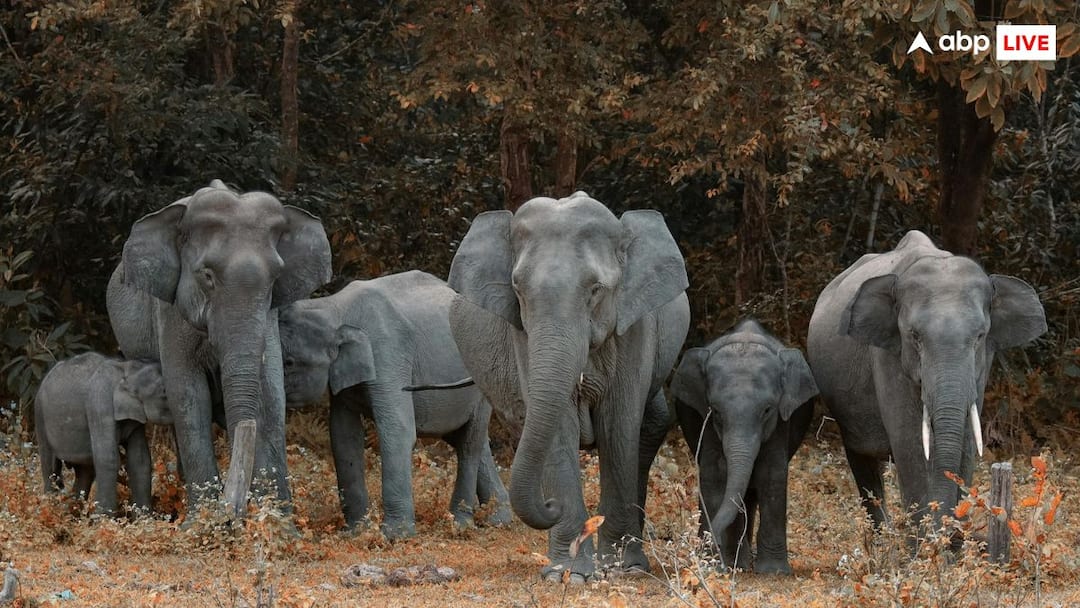
As many as 200 elephants will be slaughtered in Zimbabwe to feed the people left hungry by the worst drought in the country in decades. “Nearly half of the country’s population facing the risk of acute hunger,” Tinashe Farawo, a spokesperson for the Zimbabwe Parks and Wildlife Authority, told CNN.
The decision to kill the elephants follows a similar action in Namibia, which has planned to kill 700 wild animals — including 83 elephants. Farawo said permits would be issued in needy communities to hunt elephants. “We will start culling as soon as we have finished issuing out permits,” he added.
The hunting will be done in an area where the elephants’ population has become unsustainable. Hwange National Park in the country’s arid west is one such area where there has been increasing competition between humans and wildlife for food and water. Hwange has more than 45,000 elephants, but now has the capacity to sustain only 15,000. Zimbabwe’s overall population of about 100,000 elephants is double what the country’s national parks can sustain, park officials say.
We Have More Elephants Than We Need: Environment Minister
Zimbabwe’s Environment Minister Sithembiso Nyoni last week told Parliament that she had given the approval for the culling program. “Indeed Zimbabwe has more elephants than we need, more elephants than our forestry can accommodate,” Nyoni said. She said the country was preparing to do like what Namibia has done “so that we can cull the elephants and mobilise the women to dry the meat, package it and ensure that it gets to some communities that need the protein”.
Namibia Killing Hippos, Zebras, Elephants
Namibia has planned to kill 723 animals, including 83 elephants, 30 hippos, 60 buffalos, 50 impalas, 300 zebras and 100 elands. More than 150 animals have already been killed, Namibia’s Ministry of Environment, Forestry and Tourism said.
“The culling is being conducted by professional hunters and safari outfitters contracted by the Ministry and conservancies in specific areas. So far, 157 animals comprising different species were hunted in Mangetti National Park, 20 in Mahango, 70 in Kwando, six in Bufallo, and nine in Mudumo, delivering 56,875 kg of meat,” the government said.
Countries across southern Africa are suffering a severe drought caused by El Niño — a natural climate pattern that has resulted in very little rainfall in the region since the start of the year.

As many as 200 elephants will be slaughtered in Zimbabwe to feed the people left hungry by the worst drought in the country in decades. “Nearly half of the country’s population facing the risk of acute hunger,” Tinashe Farawo, a spokesperson for the Zimbabwe Parks and Wildlife Authority, told CNN.
The decision to kill the elephants follows a similar action in Namibia, which has planned to kill 700 wild animals — including 83 elephants. Farawo said permits would be issued in needy communities to hunt elephants. “We will start culling as soon as we have finished issuing out permits,” he added.
The hunting will be done in an area where the elephants’ population has become unsustainable. Hwange National Park in the country’s arid west is one such area where there has been increasing competition between humans and wildlife for food and water. Hwange has more than 45,000 elephants, but now has the capacity to sustain only 15,000. Zimbabwe’s overall population of about 100,000 elephants is double what the country’s national parks can sustain, park officials say.
We Have More Elephants Than We Need: Environment Minister
Zimbabwe’s Environment Minister Sithembiso Nyoni last week told Parliament that she had given the approval for the culling program. “Indeed Zimbabwe has more elephants than we need, more elephants than our forestry can accommodate,” Nyoni said. She said the country was preparing to do like what Namibia has done “so that we can cull the elephants and mobilise the women to dry the meat, package it and ensure that it gets to some communities that need the protein”.
Namibia Killing Hippos, Zebras, Elephants
Namibia has planned to kill 723 animals, including 83 elephants, 30 hippos, 60 buffalos, 50 impalas, 300 zebras and 100 elands. More than 150 animals have already been killed, Namibia’s Ministry of Environment, Forestry and Tourism said.
“The culling is being conducted by professional hunters and safari outfitters contracted by the Ministry and conservancies in specific areas. So far, 157 animals comprising different species were hunted in Mangetti National Park, 20 in Mahango, 70 in Kwando, six in Bufallo, and nine in Mudumo, delivering 56,875 kg of meat,” the government said.
Countries across southern Africa are suffering a severe drought caused by El Niño — a natural climate pattern that has resulted in very little rainfall in the region since the start of the year.

As many as 200 elephants will be slaughtered in Zimbabwe to feed the people left hungry by the worst drought in the country in decades. “Nearly half of the country’s population facing the risk of acute hunger,” Tinashe Farawo, a spokesperson for the Zimbabwe Parks and Wildlife Authority, told CNN.
The decision to kill the elephants follows a similar action in Namibia, which has planned to kill 700 wild animals — including 83 elephants. Farawo said permits would be issued in needy communities to hunt elephants. “We will start culling as soon as we have finished issuing out permits,” he added.
The hunting will be done in an area where the elephants’ population has become unsustainable. Hwange National Park in the country’s arid west is one such area where there has been increasing competition between humans and wildlife for food and water. Hwange has more than 45,000 elephants, but now has the capacity to sustain only 15,000. Zimbabwe’s overall population of about 100,000 elephants is double what the country’s national parks can sustain, park officials say.
We Have More Elephants Than We Need: Environment Minister
Zimbabwe’s Environment Minister Sithembiso Nyoni last week told Parliament that she had given the approval for the culling program. “Indeed Zimbabwe has more elephants than we need, more elephants than our forestry can accommodate,” Nyoni said. She said the country was preparing to do like what Namibia has done “so that we can cull the elephants and mobilise the women to dry the meat, package it and ensure that it gets to some communities that need the protein”.
Namibia Killing Hippos, Zebras, Elephants
Namibia has planned to kill 723 animals, including 83 elephants, 30 hippos, 60 buffalos, 50 impalas, 300 zebras and 100 elands. More than 150 animals have already been killed, Namibia’s Ministry of Environment, Forestry and Tourism said.
“The culling is being conducted by professional hunters and safari outfitters contracted by the Ministry and conservancies in specific areas. So far, 157 animals comprising different species were hunted in Mangetti National Park, 20 in Mahango, 70 in Kwando, six in Bufallo, and nine in Mudumo, delivering 56,875 kg of meat,” the government said.
Countries across southern Africa are suffering a severe drought caused by El Niño — a natural climate pattern that has resulted in very little rainfall in the region since the start of the year.
As many as 200 elephants will be slaughtered in Zimbabwe to feed the people left hungry by the worst drought in the country in decades. “Nearly half of the country’s population facing the risk of acute hunger,” Tinashe Farawo, a spokesperson for the Zimbabwe Parks and Wildlife Authority, told CNN.
The decision to kill the elephants follows a similar action in Namibia, which has planned to kill 700 wild animals — including 83 elephants. Farawo said permits would be issued in needy communities to hunt elephants. “We will start culling as soon as we have finished issuing out permits,” he added.
The hunting will be done in an area where the elephants’ population has become unsustainable. Hwange National Park in the country’s arid west is one such area where there has been increasing competition between humans and wildlife for food and water. Hwange has more than 45,000 elephants, but now has the capacity to sustain only 15,000. Zimbabwe’s overall population of about 100,000 elephants is double what the country’s national parks can sustain, park officials say.
We Have More Elephants Than We Need: Environment Minister
Zimbabwe’s Environment Minister Sithembiso Nyoni last week told Parliament that she had given the approval for the culling program. “Indeed Zimbabwe has more elephants than we need, more elephants than our forestry can accommodate,” Nyoni said. She said the country was preparing to do like what Namibia has done “so that we can cull the elephants and mobilise the women to dry the meat, package it and ensure that it gets to some communities that need the protein”.
Namibia Killing Hippos, Zebras, Elephants
Namibia has planned to kill 723 animals, including 83 elephants, 30 hippos, 60 buffalos, 50 impalas, 300 zebras and 100 elands. More than 150 animals have already been killed, Namibia’s Ministry of Environment, Forestry and Tourism said.
“The culling is being conducted by professional hunters and safari outfitters contracted by the Ministry and conservancies in specific areas. So far, 157 animals comprising different species were hunted in Mangetti National Park, 20 in Mahango, 70 in Kwando, six in Bufallo, and nine in Mudumo, delivering 56,875 kg of meat,” the government said.
Countries across southern Africa are suffering a severe drought caused by El Niño — a natural climate pattern that has resulted in very little rainfall in the region since the start of the year.

As many as 200 elephants will be slaughtered in Zimbabwe to feed the people left hungry by the worst drought in the country in decades. “Nearly half of the country’s population facing the risk of acute hunger,” Tinashe Farawo, a spokesperson for the Zimbabwe Parks and Wildlife Authority, told CNN.
The decision to kill the elephants follows a similar action in Namibia, which has planned to kill 700 wild animals — including 83 elephants. Farawo said permits would be issued in needy communities to hunt elephants. “We will start culling as soon as we have finished issuing out permits,” he added.
The hunting will be done in an area where the elephants’ population has become unsustainable. Hwange National Park in the country’s arid west is one such area where there has been increasing competition between humans and wildlife for food and water. Hwange has more than 45,000 elephants, but now has the capacity to sustain only 15,000. Zimbabwe’s overall population of about 100,000 elephants is double what the country’s national parks can sustain, park officials say.
We Have More Elephants Than We Need: Environment Minister
Zimbabwe’s Environment Minister Sithembiso Nyoni last week told Parliament that she had given the approval for the culling program. “Indeed Zimbabwe has more elephants than we need, more elephants than our forestry can accommodate,” Nyoni said. She said the country was preparing to do like what Namibia has done “so that we can cull the elephants and mobilise the women to dry the meat, package it and ensure that it gets to some communities that need the protein”.
Namibia Killing Hippos, Zebras, Elephants
Namibia has planned to kill 723 animals, including 83 elephants, 30 hippos, 60 buffalos, 50 impalas, 300 zebras and 100 elands. More than 150 animals have already been killed, Namibia’s Ministry of Environment, Forestry and Tourism said.
“The culling is being conducted by professional hunters and safari outfitters contracted by the Ministry and conservancies in specific areas. So far, 157 animals comprising different species were hunted in Mangetti National Park, 20 in Mahango, 70 in Kwando, six in Bufallo, and nine in Mudumo, delivering 56,875 kg of meat,” the government said.
Countries across southern Africa are suffering a severe drought caused by El Niño — a natural climate pattern that has resulted in very little rainfall in the region since the start of the year.
As many as 200 elephants will be slaughtered in Zimbabwe to feed the people left hungry by the worst drought in the country in decades. “Nearly half of the country’s population facing the risk of acute hunger,” Tinashe Farawo, a spokesperson for the Zimbabwe Parks and Wildlife Authority, told CNN.
The decision to kill the elephants follows a similar action in Namibia, which has planned to kill 700 wild animals — including 83 elephants. Farawo said permits would be issued in needy communities to hunt elephants. “We will start culling as soon as we have finished issuing out permits,” he added.
The hunting will be done in an area where the elephants’ population has become unsustainable. Hwange National Park in the country’s arid west is one such area where there has been increasing competition between humans and wildlife for food and water. Hwange has more than 45,000 elephants, but now has the capacity to sustain only 15,000. Zimbabwe’s overall population of about 100,000 elephants is double what the country’s national parks can sustain, park officials say.
We Have More Elephants Than We Need: Environment Minister
Zimbabwe’s Environment Minister Sithembiso Nyoni last week told Parliament that she had given the approval for the culling program. “Indeed Zimbabwe has more elephants than we need, more elephants than our forestry can accommodate,” Nyoni said. She said the country was preparing to do like what Namibia has done “so that we can cull the elephants and mobilise the women to dry the meat, package it and ensure that it gets to some communities that need the protein”.
Namibia Killing Hippos, Zebras, Elephants
Namibia has planned to kill 723 animals, including 83 elephants, 30 hippos, 60 buffalos, 50 impalas, 300 zebras and 100 elands. More than 150 animals have already been killed, Namibia’s Ministry of Environment, Forestry and Tourism said.
“The culling is being conducted by professional hunters and safari outfitters contracted by the Ministry and conservancies in specific areas. So far, 157 animals comprising different species were hunted in Mangetti National Park, 20 in Mahango, 70 in Kwando, six in Bufallo, and nine in Mudumo, delivering 56,875 kg of meat,” the government said.
Countries across southern Africa are suffering a severe drought caused by El Niño — a natural climate pattern that has resulted in very little rainfall in the region since the start of the year.
As many as 200 elephants will be slaughtered in Zimbabwe to feed the people left hungry by the worst drought in the country in decades. “Nearly half of the country’s population facing the risk of acute hunger,” Tinashe Farawo, a spokesperson for the Zimbabwe Parks and Wildlife Authority, told CNN.
The decision to kill the elephants follows a similar action in Namibia, which has planned to kill 700 wild animals — including 83 elephants. Farawo said permits would be issued in needy communities to hunt elephants. “We will start culling as soon as we have finished issuing out permits,” he added.
The hunting will be done in an area where the elephants’ population has become unsustainable. Hwange National Park in the country’s arid west is one such area where there has been increasing competition between humans and wildlife for food and water. Hwange has more than 45,000 elephants, but now has the capacity to sustain only 15,000. Zimbabwe’s overall population of about 100,000 elephants is double what the country’s national parks can sustain, park officials say.
We Have More Elephants Than We Need: Environment Minister
Zimbabwe’s Environment Minister Sithembiso Nyoni last week told Parliament that she had given the approval for the culling program. “Indeed Zimbabwe has more elephants than we need, more elephants than our forestry can accommodate,” Nyoni said. She said the country was preparing to do like what Namibia has done “so that we can cull the elephants and mobilise the women to dry the meat, package it and ensure that it gets to some communities that need the protein”.
Namibia Killing Hippos, Zebras, Elephants
Namibia has planned to kill 723 animals, including 83 elephants, 30 hippos, 60 buffalos, 50 impalas, 300 zebras and 100 elands. More than 150 animals have already been killed, Namibia’s Ministry of Environment, Forestry and Tourism said.
“The culling is being conducted by professional hunters and safari outfitters contracted by the Ministry and conservancies in specific areas. So far, 157 animals comprising different species were hunted in Mangetti National Park, 20 in Mahango, 70 in Kwando, six in Bufallo, and nine in Mudumo, delivering 56,875 kg of meat,” the government said.
Countries across southern Africa are suffering a severe drought caused by El Niño — a natural climate pattern that has resulted in very little rainfall in the region since the start of the year.
As many as 200 elephants will be slaughtered in Zimbabwe to feed the people left hungry by the worst drought in the country in decades. “Nearly half of the country’s population facing the risk of acute hunger,” Tinashe Farawo, a spokesperson for the Zimbabwe Parks and Wildlife Authority, told CNN.
The decision to kill the elephants follows a similar action in Namibia, which has planned to kill 700 wild animals — including 83 elephants. Farawo said permits would be issued in needy communities to hunt elephants. “We will start culling as soon as we have finished issuing out permits,” he added.
The hunting will be done in an area where the elephants’ population has become unsustainable. Hwange National Park in the country’s arid west is one such area where there has been increasing competition between humans and wildlife for food and water. Hwange has more than 45,000 elephants, but now has the capacity to sustain only 15,000. Zimbabwe’s overall population of about 100,000 elephants is double what the country’s national parks can sustain, park officials say.
We Have More Elephants Than We Need: Environment Minister
Zimbabwe’s Environment Minister Sithembiso Nyoni last week told Parliament that she had given the approval for the culling program. “Indeed Zimbabwe has more elephants than we need, more elephants than our forestry can accommodate,” Nyoni said. She said the country was preparing to do like what Namibia has done “so that we can cull the elephants and mobilise the women to dry the meat, package it and ensure that it gets to some communities that need the protein”.
Namibia Killing Hippos, Zebras, Elephants
Namibia has planned to kill 723 animals, including 83 elephants, 30 hippos, 60 buffalos, 50 impalas, 300 zebras and 100 elands. More than 150 animals have already been killed, Namibia’s Ministry of Environment, Forestry and Tourism said.
“The culling is being conducted by professional hunters and safari outfitters contracted by the Ministry and conservancies in specific areas. So far, 157 animals comprising different species were hunted in Mangetti National Park, 20 in Mahango, 70 in Kwando, six in Bufallo, and nine in Mudumo, delivering 56,875 kg of meat,” the government said.
Countries across southern Africa are suffering a severe drought caused by El Niño — a natural climate pattern that has resulted in very little rainfall in the region since the start of the year.

As many as 200 elephants will be slaughtered in Zimbabwe to feed the people left hungry by the worst drought in the country in decades. “Nearly half of the country’s population facing the risk of acute hunger,” Tinashe Farawo, a spokesperson for the Zimbabwe Parks and Wildlife Authority, told CNN.
The decision to kill the elephants follows a similar action in Namibia, which has planned to kill 700 wild animals — including 83 elephants. Farawo said permits would be issued in needy communities to hunt elephants. “We will start culling as soon as we have finished issuing out permits,” he added.
The hunting will be done in an area where the elephants’ population has become unsustainable. Hwange National Park in the country’s arid west is one such area where there has been increasing competition between humans and wildlife for food and water. Hwange has more than 45,000 elephants, but now has the capacity to sustain only 15,000. Zimbabwe’s overall population of about 100,000 elephants is double what the country’s national parks can sustain, park officials say.
We Have More Elephants Than We Need: Environment Minister
Zimbabwe’s Environment Minister Sithembiso Nyoni last week told Parliament that she had given the approval for the culling program. “Indeed Zimbabwe has more elephants than we need, more elephants than our forestry can accommodate,” Nyoni said. She said the country was preparing to do like what Namibia has done “so that we can cull the elephants and mobilise the women to dry the meat, package it and ensure that it gets to some communities that need the protein”.
Namibia Killing Hippos, Zebras, Elephants
Namibia has planned to kill 723 animals, including 83 elephants, 30 hippos, 60 buffalos, 50 impalas, 300 zebras and 100 elands. More than 150 animals have already been killed, Namibia’s Ministry of Environment, Forestry and Tourism said.
“The culling is being conducted by professional hunters and safari outfitters contracted by the Ministry and conservancies in specific areas. So far, 157 animals comprising different species were hunted in Mangetti National Park, 20 in Mahango, 70 in Kwando, six in Bufallo, and nine in Mudumo, delivering 56,875 kg of meat,” the government said.
Countries across southern Africa are suffering a severe drought caused by El Niño — a natural climate pattern that has resulted in very little rainfall in the region since the start of the year.
As many as 200 elephants will be slaughtered in Zimbabwe to feed the people left hungry by the worst drought in the country in decades. “Nearly half of the country’s population facing the risk of acute hunger,” Tinashe Farawo, a spokesperson for the Zimbabwe Parks and Wildlife Authority, told CNN.
The decision to kill the elephants follows a similar action in Namibia, which has planned to kill 700 wild animals — including 83 elephants. Farawo said permits would be issued in needy communities to hunt elephants. “We will start culling as soon as we have finished issuing out permits,” he added.
The hunting will be done in an area where the elephants’ population has become unsustainable. Hwange National Park in the country’s arid west is one such area where there has been increasing competition between humans and wildlife for food and water. Hwange has more than 45,000 elephants, but now has the capacity to sustain only 15,000. Zimbabwe’s overall population of about 100,000 elephants is double what the country’s national parks can sustain, park officials say.
We Have More Elephants Than We Need: Environment Minister
Zimbabwe’s Environment Minister Sithembiso Nyoni last week told Parliament that she had given the approval for the culling program. “Indeed Zimbabwe has more elephants than we need, more elephants than our forestry can accommodate,” Nyoni said. She said the country was preparing to do like what Namibia has done “so that we can cull the elephants and mobilise the women to dry the meat, package it and ensure that it gets to some communities that need the protein”.
Namibia Killing Hippos, Zebras, Elephants
Namibia has planned to kill 723 animals, including 83 elephants, 30 hippos, 60 buffalos, 50 impalas, 300 zebras and 100 elands. More than 150 animals have already been killed, Namibia’s Ministry of Environment, Forestry and Tourism said.
“The culling is being conducted by professional hunters and safari outfitters contracted by the Ministry and conservancies in specific areas. So far, 157 animals comprising different species were hunted in Mangetti National Park, 20 in Mahango, 70 in Kwando, six in Bufallo, and nine in Mudumo, delivering 56,875 kg of meat,” the government said.
Countries across southern Africa are suffering a severe drought caused by El Niño — a natural climate pattern that has resulted in very little rainfall in the region since the start of the year.
As many as 200 elephants will be slaughtered in Zimbabwe to feed the people left hungry by the worst drought in the country in decades. “Nearly half of the country’s population facing the risk of acute hunger,” Tinashe Farawo, a spokesperson for the Zimbabwe Parks and Wildlife Authority, told CNN.
The decision to kill the elephants follows a similar action in Namibia, which has planned to kill 700 wild animals — including 83 elephants. Farawo said permits would be issued in needy communities to hunt elephants. “We will start culling as soon as we have finished issuing out permits,” he added.
The hunting will be done in an area where the elephants’ population has become unsustainable. Hwange National Park in the country’s arid west is one such area where there has been increasing competition between humans and wildlife for food and water. Hwange has more than 45,000 elephants, but now has the capacity to sustain only 15,000. Zimbabwe’s overall population of about 100,000 elephants is double what the country’s national parks can sustain, park officials say.
We Have More Elephants Than We Need: Environment Minister
Zimbabwe’s Environment Minister Sithembiso Nyoni last week told Parliament that she had given the approval for the culling program. “Indeed Zimbabwe has more elephants than we need, more elephants than our forestry can accommodate,” Nyoni said. She said the country was preparing to do like what Namibia has done “so that we can cull the elephants and mobilise the women to dry the meat, package it and ensure that it gets to some communities that need the protein”.
Namibia Killing Hippos, Zebras, Elephants
Namibia has planned to kill 723 animals, including 83 elephants, 30 hippos, 60 buffalos, 50 impalas, 300 zebras and 100 elands. More than 150 animals have already been killed, Namibia’s Ministry of Environment, Forestry and Tourism said.
“The culling is being conducted by professional hunters and safari outfitters contracted by the Ministry and conservancies in specific areas. So far, 157 animals comprising different species were hunted in Mangetti National Park, 20 in Mahango, 70 in Kwando, six in Bufallo, and nine in Mudumo, delivering 56,875 kg of meat,” the government said.
Countries across southern Africa are suffering a severe drought caused by El Niño — a natural climate pattern that has resulted in very little rainfall in the region since the start of the year.
As many as 200 elephants will be slaughtered in Zimbabwe to feed the people left hungry by the worst drought in the country in decades. “Nearly half of the country’s population facing the risk of acute hunger,” Tinashe Farawo, a spokesperson for the Zimbabwe Parks and Wildlife Authority, told CNN.
The decision to kill the elephants follows a similar action in Namibia, which has planned to kill 700 wild animals — including 83 elephants. Farawo said permits would be issued in needy communities to hunt elephants. “We will start culling as soon as we have finished issuing out permits,” he added.
The hunting will be done in an area where the elephants’ population has become unsustainable. Hwange National Park in the country’s arid west is one such area where there has been increasing competition between humans and wildlife for food and water. Hwange has more than 45,000 elephants, but now has the capacity to sustain only 15,000. Zimbabwe’s overall population of about 100,000 elephants is double what the country’s national parks can sustain, park officials say.
We Have More Elephants Than We Need: Environment Minister
Zimbabwe’s Environment Minister Sithembiso Nyoni last week told Parliament that she had given the approval for the culling program. “Indeed Zimbabwe has more elephants than we need, more elephants than our forestry can accommodate,” Nyoni said. She said the country was preparing to do like what Namibia has done “so that we can cull the elephants and mobilise the women to dry the meat, package it and ensure that it gets to some communities that need the protein”.
Namibia Killing Hippos, Zebras, Elephants
Namibia has planned to kill 723 animals, including 83 elephants, 30 hippos, 60 buffalos, 50 impalas, 300 zebras and 100 elands. More than 150 animals have already been killed, Namibia’s Ministry of Environment, Forestry and Tourism said.
“The culling is being conducted by professional hunters and safari outfitters contracted by the Ministry and conservancies in specific areas. So far, 157 animals comprising different species were hunted in Mangetti National Park, 20 in Mahango, 70 in Kwando, six in Bufallo, and nine in Mudumo, delivering 56,875 kg of meat,” the government said.
Countries across southern Africa are suffering a severe drought caused by El Niño — a natural climate pattern that has resulted in very little rainfall in the region since the start of the year.
As many as 200 elephants will be slaughtered in Zimbabwe to feed the people left hungry by the worst drought in the country in decades. “Nearly half of the country’s population facing the risk of acute hunger,” Tinashe Farawo, a spokesperson for the Zimbabwe Parks and Wildlife Authority, told CNN.
The decision to kill the elephants follows a similar action in Namibia, which has planned to kill 700 wild animals — including 83 elephants. Farawo said permits would be issued in needy communities to hunt elephants. “We will start culling as soon as we have finished issuing out permits,” he added.
The hunting will be done in an area where the elephants’ population has become unsustainable. Hwange National Park in the country’s arid west is one such area where there has been increasing competition between humans and wildlife for food and water. Hwange has more than 45,000 elephants, but now has the capacity to sustain only 15,000. Zimbabwe’s overall population of about 100,000 elephants is double what the country’s national parks can sustain, park officials say.
We Have More Elephants Than We Need: Environment Minister
Zimbabwe’s Environment Minister Sithembiso Nyoni last week told Parliament that she had given the approval for the culling program. “Indeed Zimbabwe has more elephants than we need, more elephants than our forestry can accommodate,” Nyoni said. She said the country was preparing to do like what Namibia has done “so that we can cull the elephants and mobilise the women to dry the meat, package it and ensure that it gets to some communities that need the protein”.
Namibia Killing Hippos, Zebras, Elephants
Namibia has planned to kill 723 animals, including 83 elephants, 30 hippos, 60 buffalos, 50 impalas, 300 zebras and 100 elands. More than 150 animals have already been killed, Namibia’s Ministry of Environment, Forestry and Tourism said.
“The culling is being conducted by professional hunters and safari outfitters contracted by the Ministry and conservancies in specific areas. So far, 157 animals comprising different species were hunted in Mangetti National Park, 20 in Mahango, 70 in Kwando, six in Bufallo, and nine in Mudumo, delivering 56,875 kg of meat,” the government said.
Countries across southern Africa are suffering a severe drought caused by El Niño — a natural climate pattern that has resulted in very little rainfall in the region since the start of the year.
As many as 200 elephants will be slaughtered in Zimbabwe to feed the people left hungry by the worst drought in the country in decades. “Nearly half of the country’s population facing the risk of acute hunger,” Tinashe Farawo, a spokesperson for the Zimbabwe Parks and Wildlife Authority, told CNN.
The decision to kill the elephants follows a similar action in Namibia, which has planned to kill 700 wild animals — including 83 elephants. Farawo said permits would be issued in needy communities to hunt elephants. “We will start culling as soon as we have finished issuing out permits,” he added.
The hunting will be done in an area where the elephants’ population has become unsustainable. Hwange National Park in the country’s arid west is one such area where there has been increasing competition between humans and wildlife for food and water. Hwange has more than 45,000 elephants, but now has the capacity to sustain only 15,000. Zimbabwe’s overall population of about 100,000 elephants is double what the country’s national parks can sustain, park officials say.
We Have More Elephants Than We Need: Environment Minister
Zimbabwe’s Environment Minister Sithembiso Nyoni last week told Parliament that she had given the approval for the culling program. “Indeed Zimbabwe has more elephants than we need, more elephants than our forestry can accommodate,” Nyoni said. She said the country was preparing to do like what Namibia has done “so that we can cull the elephants and mobilise the women to dry the meat, package it and ensure that it gets to some communities that need the protein”.
Namibia Killing Hippos, Zebras, Elephants
Namibia has planned to kill 723 animals, including 83 elephants, 30 hippos, 60 buffalos, 50 impalas, 300 zebras and 100 elands. More than 150 animals have already been killed, Namibia’s Ministry of Environment, Forestry and Tourism said.
“The culling is being conducted by professional hunters and safari outfitters contracted by the Ministry and conservancies in specific areas. So far, 157 animals comprising different species were hunted in Mangetti National Park, 20 in Mahango, 70 in Kwando, six in Bufallo, and nine in Mudumo, delivering 56,875 kg of meat,” the government said.
Countries across southern Africa are suffering a severe drought caused by El Niño — a natural climate pattern that has resulted in very little rainfall in the region since the start of the year.
As many as 200 elephants will be slaughtered in Zimbabwe to feed the people left hungry by the worst drought in the country in decades. “Nearly half of the country’s population facing the risk of acute hunger,” Tinashe Farawo, a spokesperson for the Zimbabwe Parks and Wildlife Authority, told CNN.
The decision to kill the elephants follows a similar action in Namibia, which has planned to kill 700 wild animals — including 83 elephants. Farawo said permits would be issued in needy communities to hunt elephants. “We will start culling as soon as we have finished issuing out permits,” he added.
The hunting will be done in an area where the elephants’ population has become unsustainable. Hwange National Park in the country’s arid west is one such area where there has been increasing competition between humans and wildlife for food and water. Hwange has more than 45,000 elephants, but now has the capacity to sustain only 15,000. Zimbabwe’s overall population of about 100,000 elephants is double what the country’s national parks can sustain, park officials say.
We Have More Elephants Than We Need: Environment Minister
Zimbabwe’s Environment Minister Sithembiso Nyoni last week told Parliament that she had given the approval for the culling program. “Indeed Zimbabwe has more elephants than we need, more elephants than our forestry can accommodate,” Nyoni said. She said the country was preparing to do like what Namibia has done “so that we can cull the elephants and mobilise the women to dry the meat, package it and ensure that it gets to some communities that need the protein”.
Namibia Killing Hippos, Zebras, Elephants
Namibia has planned to kill 723 animals, including 83 elephants, 30 hippos, 60 buffalos, 50 impalas, 300 zebras and 100 elands. More than 150 animals have already been killed, Namibia’s Ministry of Environment, Forestry and Tourism said.
“The culling is being conducted by professional hunters and safari outfitters contracted by the Ministry and conservancies in specific areas. So far, 157 animals comprising different species were hunted in Mangetti National Park, 20 in Mahango, 70 in Kwando, six in Bufallo, and nine in Mudumo, delivering 56,875 kg of meat,” the government said.
Countries across southern Africa are suffering a severe drought caused by El Niño — a natural climate pattern that has resulted in very little rainfall in the region since the start of the year.
As many as 200 elephants will be slaughtered in Zimbabwe to feed the people left hungry by the worst drought in the country in decades. “Nearly half of the country’s population facing the risk of acute hunger,” Tinashe Farawo, a spokesperson for the Zimbabwe Parks and Wildlife Authority, told CNN.
The decision to kill the elephants follows a similar action in Namibia, which has planned to kill 700 wild animals — including 83 elephants. Farawo said permits would be issued in needy communities to hunt elephants. “We will start culling as soon as we have finished issuing out permits,” he added.
The hunting will be done in an area where the elephants’ population has become unsustainable. Hwange National Park in the country’s arid west is one such area where there has been increasing competition between humans and wildlife for food and water. Hwange has more than 45,000 elephants, but now has the capacity to sustain only 15,000. Zimbabwe’s overall population of about 100,000 elephants is double what the country’s national parks can sustain, park officials say.
We Have More Elephants Than We Need: Environment Minister
Zimbabwe’s Environment Minister Sithembiso Nyoni last week told Parliament that she had given the approval for the culling program. “Indeed Zimbabwe has more elephants than we need, more elephants than our forestry can accommodate,” Nyoni said. She said the country was preparing to do like what Namibia has done “so that we can cull the elephants and mobilise the women to dry the meat, package it and ensure that it gets to some communities that need the protein”.
Namibia Killing Hippos, Zebras, Elephants
Namibia has planned to kill 723 animals, including 83 elephants, 30 hippos, 60 buffalos, 50 impalas, 300 zebras and 100 elands. More than 150 animals have already been killed, Namibia’s Ministry of Environment, Forestry and Tourism said.
“The culling is being conducted by professional hunters and safari outfitters contracted by the Ministry and conservancies in specific areas. So far, 157 animals comprising different species were hunted in Mangetti National Park, 20 in Mahango, 70 in Kwando, six in Bufallo, and nine in Mudumo, delivering 56,875 kg of meat,” the government said.
Countries across southern Africa are suffering a severe drought caused by El Niño — a natural climate pattern that has resulted in very little rainfall in the region since the start of the year.

