

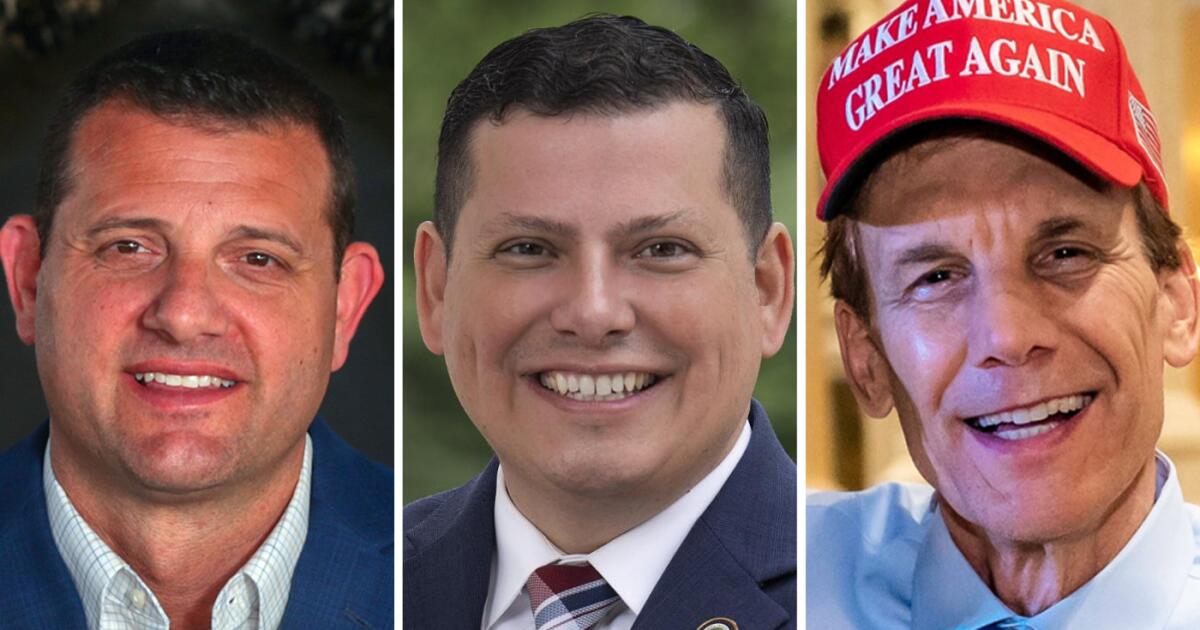


- Rep. David Valadao, Republican, incumbent
Valadao is defending his seat in the heavily agricultural district. He was one of 10 House Republicans who voted in 2021 to impeach former President Trump for his role as a “driving force” behind the Jan. 6 attack on the Capitol. Valadao was first elected to Congress in 2012 after one term in the state Assembly. He served in Congress for three straight terms before losing his 2018 reelection bid. But he returned to Congress in 2020, and was reelected in 2022, defeating Democratic challenger Rudy Salas by a 3% margin.
- Rudy Salas, Democrat, former member of the state Assembly
Salas is challenging Valadao once again. The son of farmworkers, in 2010 he became the first Latino elected to the Bakersfield City Council. Salas served five terms in the Assembly. He has been endorsed by the California Democratic Party, Gov. Gavin Newsom and the United Farm Workers union. Salas told the Times he is running “to continue delivering for Valley families.”
- Melissa Hurtado, Democrat, state senator
Hurtado declared her intention to run in August, setting up a potentially competitive primary. Hurtado has branded herself as part of a new generation of Latina political leaders; in 2018, at age 30, she became the youngest woman ever elected to the state Senate. Previously, she served on the Sanger City Council.
- Chris Mathys, Republican, former Fresno City Council member
Mathys also is challenging Valadao, framing himself as being further to the political right than the congressman. The cattle ranch owner told The Times he is running because he believes Valadao “betrayed voters” when he voted to impeach Trump. “I will fight for our conservative values and will always put Americans first,” he said.
Under California’s top-two primary system, the two candidates who receive the most votes in the March primary will advance to November’s general election, regardless of their political party.

- Rep. David Valadao, Republican, incumbent
Valadao is defending his seat in the heavily agricultural district. He was one of 10 House Republicans who voted in 2021 to impeach former President Trump for his role as a “driving force” behind the Jan. 6 attack on the Capitol. Valadao was first elected to Congress in 2012 after one term in the state Assembly. He served in Congress for three straight terms before losing his 2018 reelection bid. But he returned to Congress in 2020, and was reelected in 2022, defeating Democratic challenger Rudy Salas by a 3% margin.
- Rudy Salas, Democrat, former member of the state Assembly
Salas is challenging Valadao once again. The son of farmworkers, in 2010 he became the first Latino elected to the Bakersfield City Council. Salas served five terms in the Assembly. He has been endorsed by the California Democratic Party, Gov. Gavin Newsom and the United Farm Workers union. Salas told the Times he is running “to continue delivering for Valley families.”
- Melissa Hurtado, Democrat, state senator
Hurtado declared her intention to run in August, setting up a potentially competitive primary. Hurtado has branded herself as part of a new generation of Latina political leaders; in 2018, at age 30, she became the youngest woman ever elected to the state Senate. Previously, she served on the Sanger City Council.
- Chris Mathys, Republican, former Fresno City Council member
Mathys also is challenging Valadao, framing himself as being further to the political right than the congressman. The cattle ranch owner told The Times he is running because he believes Valadao “betrayed voters” when he voted to impeach Trump. “I will fight for our conservative values and will always put Americans first,” he said.
Under California’s top-two primary system, the two candidates who receive the most votes in the March primary will advance to November’s general election, regardless of their political party.

- Rep. David Valadao, Republican, incumbent
Valadao is defending his seat in the heavily agricultural district. He was one of 10 House Republicans who voted in 2021 to impeach former President Trump for his role as a “driving force” behind the Jan. 6 attack on the Capitol. Valadao was first elected to Congress in 2012 after one term in the state Assembly. He served in Congress for three straight terms before losing his 2018 reelection bid. But he returned to Congress in 2020, and was reelected in 2022, defeating Democratic challenger Rudy Salas by a 3% margin.
- Rudy Salas, Democrat, former member of the state Assembly
Salas is challenging Valadao once again. The son of farmworkers, in 2010 he became the first Latino elected to the Bakersfield City Council. Salas served five terms in the Assembly. He has been endorsed by the California Democratic Party, Gov. Gavin Newsom and the United Farm Workers union. Salas told the Times he is running “to continue delivering for Valley families.”
- Melissa Hurtado, Democrat, state senator
Hurtado declared her intention to run in August, setting up a potentially competitive primary. Hurtado has branded herself as part of a new generation of Latina political leaders; in 2018, at age 30, she became the youngest woman ever elected to the state Senate. Previously, she served on the Sanger City Council.
- Chris Mathys, Republican, former Fresno City Council member
Mathys also is challenging Valadao, framing himself as being further to the political right than the congressman. The cattle ranch owner told The Times he is running because he believes Valadao “betrayed voters” when he voted to impeach Trump. “I will fight for our conservative values and will always put Americans first,” he said.
Under California’s top-two primary system, the two candidates who receive the most votes in the March primary will advance to November’s general election, regardless of their political party.
- Rep. David Valadao, Republican, incumbent
Valadao is defending his seat in the heavily agricultural district. He was one of 10 House Republicans who voted in 2021 to impeach former President Trump for his role as a “driving force” behind the Jan. 6 attack on the Capitol. Valadao was first elected to Congress in 2012 after one term in the state Assembly. He served in Congress for three straight terms before losing his 2018 reelection bid. But he returned to Congress in 2020, and was reelected in 2022, defeating Democratic challenger Rudy Salas by a 3% margin.
- Rudy Salas, Democrat, former member of the state Assembly
Salas is challenging Valadao once again. The son of farmworkers, in 2010 he became the first Latino elected to the Bakersfield City Council. Salas served five terms in the Assembly. He has been endorsed by the California Democratic Party, Gov. Gavin Newsom and the United Farm Workers union. Salas told the Times he is running “to continue delivering for Valley families.”
- Melissa Hurtado, Democrat, state senator
Hurtado declared her intention to run in August, setting up a potentially competitive primary. Hurtado has branded herself as part of a new generation of Latina political leaders; in 2018, at age 30, she became the youngest woman ever elected to the state Senate. Previously, she served on the Sanger City Council.
- Chris Mathys, Republican, former Fresno City Council member
Mathys also is challenging Valadao, framing himself as being further to the political right than the congressman. The cattle ranch owner told The Times he is running because he believes Valadao “betrayed voters” when he voted to impeach Trump. “I will fight for our conservative values and will always put Americans first,” he said.
Under California’s top-two primary system, the two candidates who receive the most votes in the March primary will advance to November’s general election, regardless of their political party.

