


Japan is preparing to land a spacecraft on the Moon on Tuesday, April 25, 2023, at around 10:10 pm IST, as part of what could become the world’s first private lunar landing. Private Japanese robotic spacecraft company ispace launched a lunar lander called the Series 1 Lander, atop a SpaceX Falcon 9 rocket, as part of the HAKUTO-R Mission 1 (M1). The spacecraft took off from Cape Canaveral, Florida, in December 2022.
It has been over 135 days since the lander was launched.
Where will the lunar landing take place?
The Atlas Crater, located in the northeastern quadrant of the Moon, is the primary landing site for the HAKUTO-R Mission 1 Lander.
The Atlas Crater has been chosen as the primary landing site because it meets the technical specifications of the lander technology demonstration mission and the mission requirements for the different customers of ispace.
ALSO READ | NASA InSight Study Reveals Mysteries About Mars’ Liquid Iron Core, Gives Its Clearest Look Ever
What are the different milestones set by HAKUTO-R Mission 1?
The firm had set 10 milestones to be completed as part of the mission. HAKUTO-R Mission 1 has achieved eight milestones so far, according to ispace.
The first milestone, called ‘Success 1’, was the completion of launch preparations, the second milestone, or ‘Success 2’, was the completion of launch and deployment, the third milestone, or ‘Success 3’, was the establishment of a steady operation state, or the establishment of a communication link between the lander and the mission control centre, the fourth milestone, or ‘Success 4’, was the completion of the first orbital control manoeuvre, which set the lander on a course toward the Moon, the fifth milestone, or ‘Success 5’, was the completion of stable deep-space flight operations for one month, the sixth milestone, or ‘Success 6’, was the completion of all planned deep space orbital control manoeuvres before lunar orbit insertion, by utilising gravity assist effects, the seventh milestone, or ‘Success 7’, was the completion of the first lunar orbit insertion manoeuvre as a result of which the lander reached a lunar orbit, and the eighth milestone, or ‘Success 8’, was the completion of all orbit control manoeuvres in lunar orbit before the landing sequence.
On April 14, 2023, the lander completed ‘Success 8’.
The completion of lunar landing, which will verify key landing abilities for future missions, will be the ninth milestone, or ‘Success 9’.
The tenth milestone, or ‘Success 10’, will be the establishment of a steady telecommunication and power supply on the lunar surface after lunar landing to support surface operations of customer payloads.
The Series 1 Lander is light-weight, and has a small size.
Lunar landing sequence of HAKUTO-R Mission 1
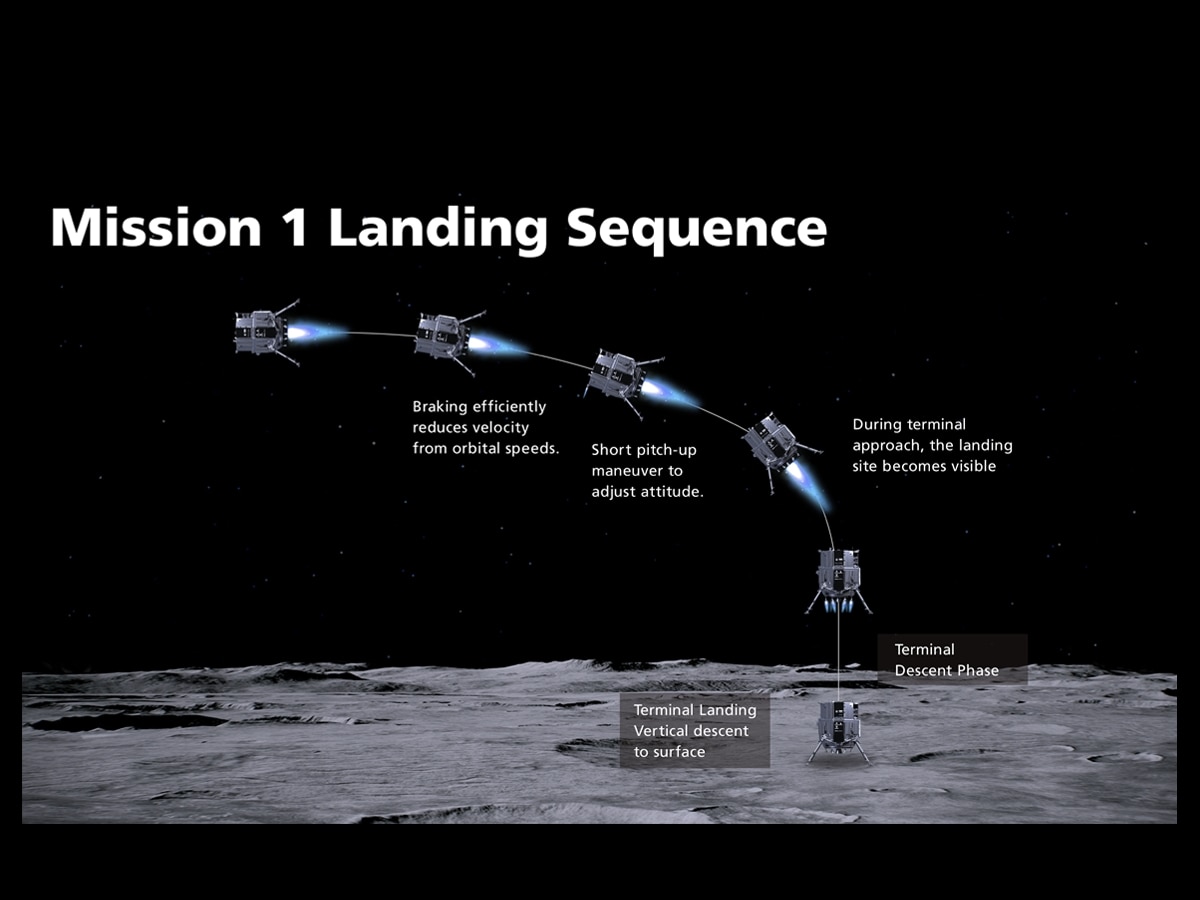
As the lander approaches the Moon, it will brake efficiently to reduce its velocity from orbital speeds. There will be a short pitch-up manoeuvre to adjust altitude.
During the terminal approach phase, the landing site on the Moon will become visible. This will be followed by the terminal descent phase.
The final stage is terminal landing, in which the lander will make a vertical descent to the lunar surface.
Pictures captured by the Series 1 Lander
On April 20, 2023, a rare hybrid solar eclipse occurred. The camera onboard the HAKUTO-R Mission 1 lander captured a picture of the lunar Earthrise during the solar eclipse at an altitude of about 100 kilometres from the lunar surface.
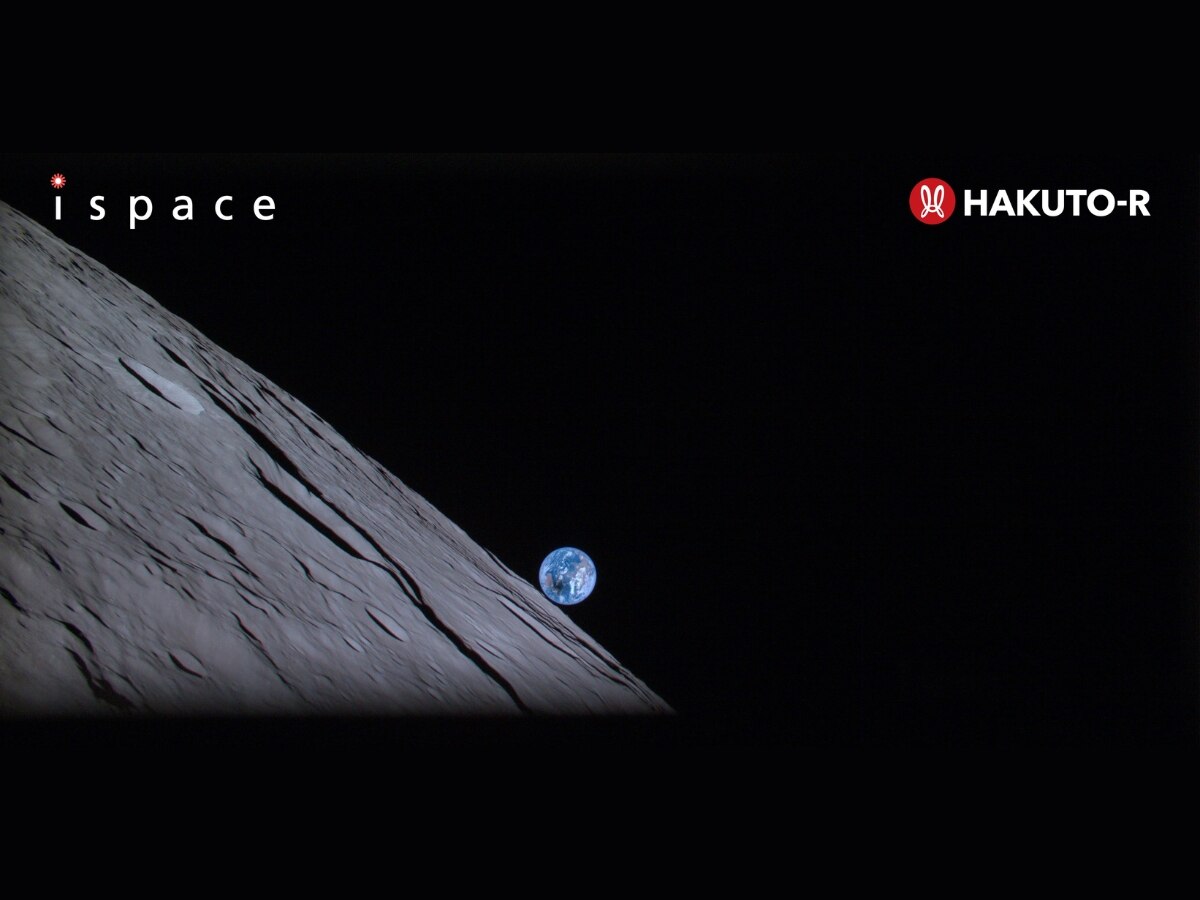
At that moment, the Moon hung perfectly between the Sun and Earth.
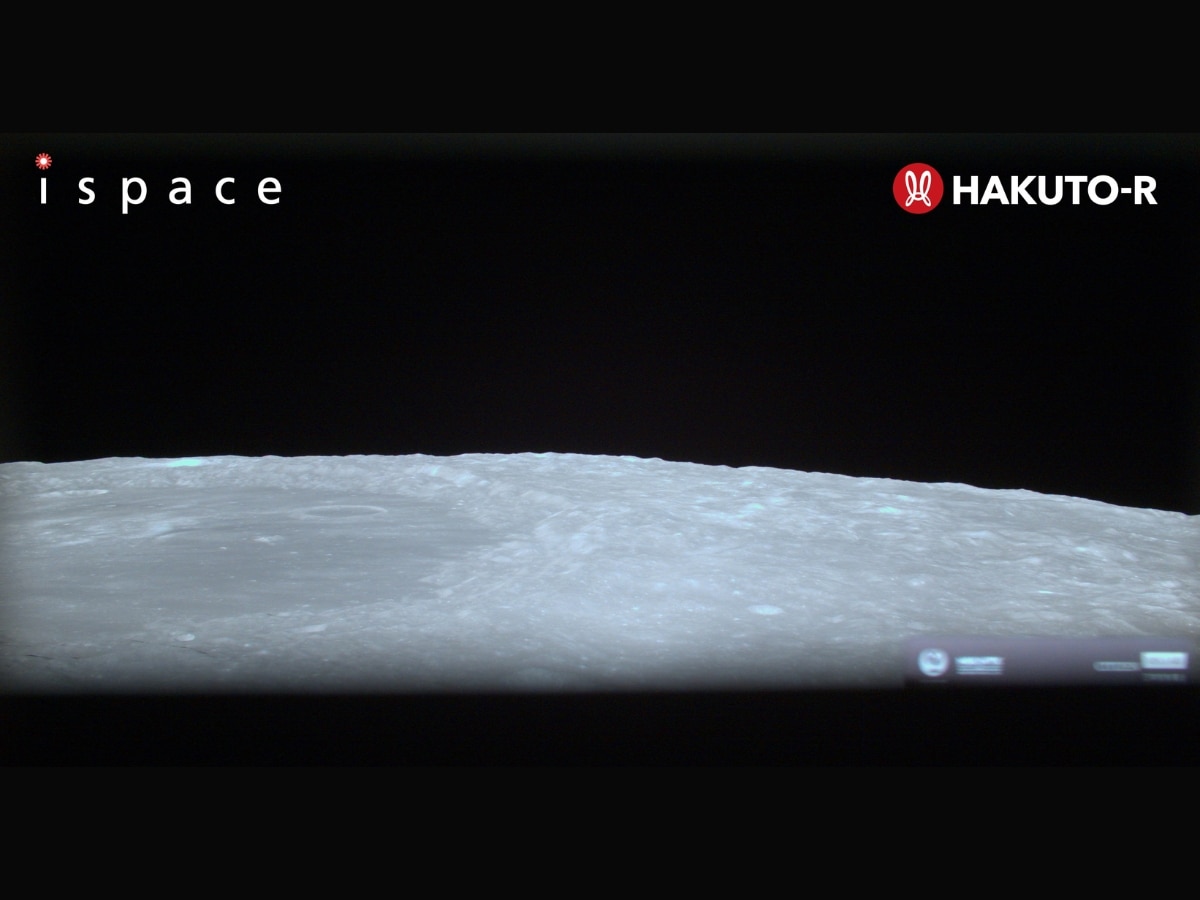
On April 15, 2023, the camera onboard the lander captured a picture of the Moon at an altitude of about 100 kilometres above the lunar surface.
How to watch the lunar landing online
People can watch the HAKUTO-R Mission 1 spacecraft land on the Moon on the official YouTube channel of ispace.

Japan is preparing to land a spacecraft on the Moon on Tuesday, April 25, 2023, at around 10:10 pm IST, as part of what could become the world’s first private lunar landing. Private Japanese robotic spacecraft company ispace launched a lunar lander called the Series 1 Lander, atop a SpaceX Falcon 9 rocket, as part of the HAKUTO-R Mission 1 (M1). The spacecraft took off from Cape Canaveral, Florida, in December 2022.
It has been over 135 days since the lander was launched.
Where will the lunar landing take place?
The Atlas Crater, located in the northeastern quadrant of the Moon, is the primary landing site for the HAKUTO-R Mission 1 Lander.
The Atlas Crater has been chosen as the primary landing site because it meets the technical specifications of the lander technology demonstration mission and the mission requirements for the different customers of ispace.
ALSO READ | NASA InSight Study Reveals Mysteries About Mars’ Liquid Iron Core, Gives Its Clearest Look Ever
What are the different milestones set by HAKUTO-R Mission 1?
The firm had set 10 milestones to be completed as part of the mission. HAKUTO-R Mission 1 has achieved eight milestones so far, according to ispace.
The first milestone, called ‘Success 1’, was the completion of launch preparations, the second milestone, or ‘Success 2’, was the completion of launch and deployment, the third milestone, or ‘Success 3’, was the establishment of a steady operation state, or the establishment of a communication link between the lander and the mission control centre, the fourth milestone, or ‘Success 4’, was the completion of the first orbital control manoeuvre, which set the lander on a course toward the Moon, the fifth milestone, or ‘Success 5’, was the completion of stable deep-space flight operations for one month, the sixth milestone, or ‘Success 6’, was the completion of all planned deep space orbital control manoeuvres before lunar orbit insertion, by utilising gravity assist effects, the seventh milestone, or ‘Success 7’, was the completion of the first lunar orbit insertion manoeuvre as a result of which the lander reached a lunar orbit, and the eighth milestone, or ‘Success 8’, was the completion of all orbit control manoeuvres in lunar orbit before the landing sequence.
On April 14, 2023, the lander completed ‘Success 8’.
The completion of lunar landing, which will verify key landing abilities for future missions, will be the ninth milestone, or ‘Success 9’.
The tenth milestone, or ‘Success 10’, will be the establishment of a steady telecommunication and power supply on the lunar surface after lunar landing to support surface operations of customer payloads.
The Series 1 Lander is light-weight, and has a small size.
Lunar landing sequence of HAKUTO-R Mission 1
As the lander approaches the Moon, it will brake efficiently to reduce its velocity from orbital speeds. There will be a short pitch-up manoeuvre to adjust altitude.
During the terminal approach phase, the landing site on the Moon will become visible. This will be followed by the terminal descent phase.
The final stage is terminal landing, in which the lander will make a vertical descent to the lunar surface.
Pictures captured by the Series 1 Lander
On April 20, 2023, a rare hybrid solar eclipse occurred. The camera onboard the HAKUTO-R Mission 1 lander captured a picture of the lunar Earthrise during the solar eclipse at an altitude of about 100 kilometres from the lunar surface.
At that moment, the Moon hung perfectly between the Sun and Earth.
On April 15, 2023, the camera onboard the lander captured a picture of the Moon at an altitude of about 100 kilometres above the lunar surface.
How to watch the lunar landing online
People can watch the HAKUTO-R Mission 1 spacecraft land on the Moon on the official YouTube channel of ispace.

Japan is preparing to land a spacecraft on the Moon on Tuesday, April 25, 2023, at around 10:10 pm IST, as part of what could become the world’s first private lunar landing. Private Japanese robotic spacecraft company ispace launched a lunar lander called the Series 1 Lander, atop a SpaceX Falcon 9 rocket, as part of the HAKUTO-R Mission 1 (M1). The spacecraft took off from Cape Canaveral, Florida, in December 2022.
It has been over 135 days since the lander was launched.
Where will the lunar landing take place?
The Atlas Crater, located in the northeastern quadrant of the Moon, is the primary landing site for the HAKUTO-R Mission 1 Lander.
The Atlas Crater has been chosen as the primary landing site because it meets the technical specifications of the lander technology demonstration mission and the mission requirements for the different customers of ispace.
ALSO READ | NASA InSight Study Reveals Mysteries About Mars’ Liquid Iron Core, Gives Its Clearest Look Ever
What are the different milestones set by HAKUTO-R Mission 1?
The firm had set 10 milestones to be completed as part of the mission. HAKUTO-R Mission 1 has achieved eight milestones so far, according to ispace.
The first milestone, called ‘Success 1’, was the completion of launch preparations, the second milestone, or ‘Success 2’, was the completion of launch and deployment, the third milestone, or ‘Success 3’, was the establishment of a steady operation state, or the establishment of a communication link between the lander and the mission control centre, the fourth milestone, or ‘Success 4’, was the completion of the first orbital control manoeuvre, which set the lander on a course toward the Moon, the fifth milestone, or ‘Success 5’, was the completion of stable deep-space flight operations for one month, the sixth milestone, or ‘Success 6’, was the completion of all planned deep space orbital control manoeuvres before lunar orbit insertion, by utilising gravity assist effects, the seventh milestone, or ‘Success 7’, was the completion of the first lunar orbit insertion manoeuvre as a result of which the lander reached a lunar orbit, and the eighth milestone, or ‘Success 8’, was the completion of all orbit control manoeuvres in lunar orbit before the landing sequence.
On April 14, 2023, the lander completed ‘Success 8’.
The completion of lunar landing, which will verify key landing abilities for future missions, will be the ninth milestone, or ‘Success 9’.
The tenth milestone, or ‘Success 10’, will be the establishment of a steady telecommunication and power supply on the lunar surface after lunar landing to support surface operations of customer payloads.
The Series 1 Lander is light-weight, and has a small size.
Lunar landing sequence of HAKUTO-R Mission 1
As the lander approaches the Moon, it will brake efficiently to reduce its velocity from orbital speeds. There will be a short pitch-up manoeuvre to adjust altitude.
During the terminal approach phase, the landing site on the Moon will become visible. This will be followed by the terminal descent phase.
The final stage is terminal landing, in which the lander will make a vertical descent to the lunar surface.
Pictures captured by the Series 1 Lander
On April 20, 2023, a rare hybrid solar eclipse occurred. The camera onboard the HAKUTO-R Mission 1 lander captured a picture of the lunar Earthrise during the solar eclipse at an altitude of about 100 kilometres from the lunar surface.
At that moment, the Moon hung perfectly between the Sun and Earth.
On April 15, 2023, the camera onboard the lander captured a picture of the Moon at an altitude of about 100 kilometres above the lunar surface.
How to watch the lunar landing online
People can watch the HAKUTO-R Mission 1 spacecraft land on the Moon on the official YouTube channel of ispace.
Japan is preparing to land a spacecraft on the Moon on Tuesday, April 25, 2023, at around 10:10 pm IST, as part of what could become the world’s first private lunar landing. Private Japanese robotic spacecraft company ispace launched a lunar lander called the Series 1 Lander, atop a SpaceX Falcon 9 rocket, as part of the HAKUTO-R Mission 1 (M1). The spacecraft took off from Cape Canaveral, Florida, in December 2022.
It has been over 135 days since the lander was launched.
Where will the lunar landing take place?
The Atlas Crater, located in the northeastern quadrant of the Moon, is the primary landing site for the HAKUTO-R Mission 1 Lander.
The Atlas Crater has been chosen as the primary landing site because it meets the technical specifications of the lander technology demonstration mission and the mission requirements for the different customers of ispace.
ALSO READ | NASA InSight Study Reveals Mysteries About Mars’ Liquid Iron Core, Gives Its Clearest Look Ever
What are the different milestones set by HAKUTO-R Mission 1?
The firm had set 10 milestones to be completed as part of the mission. HAKUTO-R Mission 1 has achieved eight milestones so far, according to ispace.
The first milestone, called ‘Success 1’, was the completion of launch preparations, the second milestone, or ‘Success 2’, was the completion of launch and deployment, the third milestone, or ‘Success 3’, was the establishment of a steady operation state, or the establishment of a communication link between the lander and the mission control centre, the fourth milestone, or ‘Success 4’, was the completion of the first orbital control manoeuvre, which set the lander on a course toward the Moon, the fifth milestone, or ‘Success 5’, was the completion of stable deep-space flight operations for one month, the sixth milestone, or ‘Success 6’, was the completion of all planned deep space orbital control manoeuvres before lunar orbit insertion, by utilising gravity assist effects, the seventh milestone, or ‘Success 7’, was the completion of the first lunar orbit insertion manoeuvre as a result of which the lander reached a lunar orbit, and the eighth milestone, or ‘Success 8’, was the completion of all orbit control manoeuvres in lunar orbit before the landing sequence.
On April 14, 2023, the lander completed ‘Success 8’.
The completion of lunar landing, which will verify key landing abilities for future missions, will be the ninth milestone, or ‘Success 9’.
The tenth milestone, or ‘Success 10’, will be the establishment of a steady telecommunication and power supply on the lunar surface after lunar landing to support surface operations of customer payloads.
The Series 1 Lander is light-weight, and has a small size.
Lunar landing sequence of HAKUTO-R Mission 1
As the lander approaches the Moon, it will brake efficiently to reduce its velocity from orbital speeds. There will be a short pitch-up manoeuvre to adjust altitude.
During the terminal approach phase, the landing site on the Moon will become visible. This will be followed by the terminal descent phase.
The final stage is terminal landing, in which the lander will make a vertical descent to the lunar surface.
Pictures captured by the Series 1 Lander
On April 20, 2023, a rare hybrid solar eclipse occurred. The camera onboard the HAKUTO-R Mission 1 lander captured a picture of the lunar Earthrise during the solar eclipse at an altitude of about 100 kilometres from the lunar surface.
At that moment, the Moon hung perfectly between the Sun and Earth.
On April 15, 2023, the camera onboard the lander captured a picture of the Moon at an altitude of about 100 kilometres above the lunar surface.
How to watch the lunar landing online
People can watch the HAKUTO-R Mission 1 spacecraft land on the Moon on the official YouTube channel of ispace.

Japan is preparing to land a spacecraft on the Moon on Tuesday, April 25, 2023, at around 10:10 pm IST, as part of what could become the world’s first private lunar landing. Private Japanese robotic spacecraft company ispace launched a lunar lander called the Series 1 Lander, atop a SpaceX Falcon 9 rocket, as part of the HAKUTO-R Mission 1 (M1). The spacecraft took off from Cape Canaveral, Florida, in December 2022.
It has been over 135 days since the lander was launched.
Where will the lunar landing take place?
The Atlas Crater, located in the northeastern quadrant of the Moon, is the primary landing site for the HAKUTO-R Mission 1 Lander.
The Atlas Crater has been chosen as the primary landing site because it meets the technical specifications of the lander technology demonstration mission and the mission requirements for the different customers of ispace.
ALSO READ | NASA InSight Study Reveals Mysteries About Mars’ Liquid Iron Core, Gives Its Clearest Look Ever
What are the different milestones set by HAKUTO-R Mission 1?
The firm had set 10 milestones to be completed as part of the mission. HAKUTO-R Mission 1 has achieved eight milestones so far, according to ispace.
The first milestone, called ‘Success 1’, was the completion of launch preparations, the second milestone, or ‘Success 2’, was the completion of launch and deployment, the third milestone, or ‘Success 3’, was the establishment of a steady operation state, or the establishment of a communication link between the lander and the mission control centre, the fourth milestone, or ‘Success 4’, was the completion of the first orbital control manoeuvre, which set the lander on a course toward the Moon, the fifth milestone, or ‘Success 5’, was the completion of stable deep-space flight operations for one month, the sixth milestone, or ‘Success 6’, was the completion of all planned deep space orbital control manoeuvres before lunar orbit insertion, by utilising gravity assist effects, the seventh milestone, or ‘Success 7’, was the completion of the first lunar orbit insertion manoeuvre as a result of which the lander reached a lunar orbit, and the eighth milestone, or ‘Success 8’, was the completion of all orbit control manoeuvres in lunar orbit before the landing sequence.
On April 14, 2023, the lander completed ‘Success 8’.
The completion of lunar landing, which will verify key landing abilities for future missions, will be the ninth milestone, or ‘Success 9’.
The tenth milestone, or ‘Success 10’, will be the establishment of a steady telecommunication and power supply on the lunar surface after lunar landing to support surface operations of customer payloads.
The Series 1 Lander is light-weight, and has a small size.
Lunar landing sequence of HAKUTO-R Mission 1
As the lander approaches the Moon, it will brake efficiently to reduce its velocity from orbital speeds. There will be a short pitch-up manoeuvre to adjust altitude.
During the terminal approach phase, the landing site on the Moon will become visible. This will be followed by the terminal descent phase.
The final stage is terminal landing, in which the lander will make a vertical descent to the lunar surface.
Pictures captured by the Series 1 Lander
On April 20, 2023, a rare hybrid solar eclipse occurred. The camera onboard the HAKUTO-R Mission 1 lander captured a picture of the lunar Earthrise during the solar eclipse at an altitude of about 100 kilometres from the lunar surface.
At that moment, the Moon hung perfectly between the Sun and Earth.
On April 15, 2023, the camera onboard the lander captured a picture of the Moon at an altitude of about 100 kilometres above the lunar surface.
How to watch the lunar landing online
People can watch the HAKUTO-R Mission 1 spacecraft land on the Moon on the official YouTube channel of ispace.
Japan is preparing to land a spacecraft on the Moon on Tuesday, April 25, 2023, at around 10:10 pm IST, as part of what could become the world’s first private lunar landing. Private Japanese robotic spacecraft company ispace launched a lunar lander called the Series 1 Lander, atop a SpaceX Falcon 9 rocket, as part of the HAKUTO-R Mission 1 (M1). The spacecraft took off from Cape Canaveral, Florida, in December 2022.
It has been over 135 days since the lander was launched.
Where will the lunar landing take place?
The Atlas Crater, located in the northeastern quadrant of the Moon, is the primary landing site for the HAKUTO-R Mission 1 Lander.
The Atlas Crater has been chosen as the primary landing site because it meets the technical specifications of the lander technology demonstration mission and the mission requirements for the different customers of ispace.
ALSO READ | NASA InSight Study Reveals Mysteries About Mars’ Liquid Iron Core, Gives Its Clearest Look Ever
What are the different milestones set by HAKUTO-R Mission 1?
The firm had set 10 milestones to be completed as part of the mission. HAKUTO-R Mission 1 has achieved eight milestones so far, according to ispace.
The first milestone, called ‘Success 1’, was the completion of launch preparations, the second milestone, or ‘Success 2’, was the completion of launch and deployment, the third milestone, or ‘Success 3’, was the establishment of a steady operation state, or the establishment of a communication link between the lander and the mission control centre, the fourth milestone, or ‘Success 4’, was the completion of the first orbital control manoeuvre, which set the lander on a course toward the Moon, the fifth milestone, or ‘Success 5’, was the completion of stable deep-space flight operations for one month, the sixth milestone, or ‘Success 6’, was the completion of all planned deep space orbital control manoeuvres before lunar orbit insertion, by utilising gravity assist effects, the seventh milestone, or ‘Success 7’, was the completion of the first lunar orbit insertion manoeuvre as a result of which the lander reached a lunar orbit, and the eighth milestone, or ‘Success 8’, was the completion of all orbit control manoeuvres in lunar orbit before the landing sequence.
On April 14, 2023, the lander completed ‘Success 8’.
The completion of lunar landing, which will verify key landing abilities for future missions, will be the ninth milestone, or ‘Success 9’.
The tenth milestone, or ‘Success 10’, will be the establishment of a steady telecommunication and power supply on the lunar surface after lunar landing to support surface operations of customer payloads.
The Series 1 Lander is light-weight, and has a small size.
Lunar landing sequence of HAKUTO-R Mission 1
As the lander approaches the Moon, it will brake efficiently to reduce its velocity from orbital speeds. There will be a short pitch-up manoeuvre to adjust altitude.
During the terminal approach phase, the landing site on the Moon will become visible. This will be followed by the terminal descent phase.
The final stage is terminal landing, in which the lander will make a vertical descent to the lunar surface.
Pictures captured by the Series 1 Lander
On April 20, 2023, a rare hybrid solar eclipse occurred. The camera onboard the HAKUTO-R Mission 1 lander captured a picture of the lunar Earthrise during the solar eclipse at an altitude of about 100 kilometres from the lunar surface.
At that moment, the Moon hung perfectly between the Sun and Earth.
On April 15, 2023, the camera onboard the lander captured a picture of the Moon at an altitude of about 100 kilometres above the lunar surface.
How to watch the lunar landing online
People can watch the HAKUTO-R Mission 1 spacecraft land on the Moon on the official YouTube channel of ispace.
Japan is preparing to land a spacecraft on the Moon on Tuesday, April 25, 2023, at around 10:10 pm IST, as part of what could become the world’s first private lunar landing. Private Japanese robotic spacecraft company ispace launched a lunar lander called the Series 1 Lander, atop a SpaceX Falcon 9 rocket, as part of the HAKUTO-R Mission 1 (M1). The spacecraft took off from Cape Canaveral, Florida, in December 2022.
It has been over 135 days since the lander was launched.
Where will the lunar landing take place?
The Atlas Crater, located in the northeastern quadrant of the Moon, is the primary landing site for the HAKUTO-R Mission 1 Lander.
The Atlas Crater has been chosen as the primary landing site because it meets the technical specifications of the lander technology demonstration mission and the mission requirements for the different customers of ispace.
ALSO READ | NASA InSight Study Reveals Mysteries About Mars’ Liquid Iron Core, Gives Its Clearest Look Ever
What are the different milestones set by HAKUTO-R Mission 1?
The firm had set 10 milestones to be completed as part of the mission. HAKUTO-R Mission 1 has achieved eight milestones so far, according to ispace.
The first milestone, called ‘Success 1’, was the completion of launch preparations, the second milestone, or ‘Success 2’, was the completion of launch and deployment, the third milestone, or ‘Success 3’, was the establishment of a steady operation state, or the establishment of a communication link between the lander and the mission control centre, the fourth milestone, or ‘Success 4’, was the completion of the first orbital control manoeuvre, which set the lander on a course toward the Moon, the fifth milestone, or ‘Success 5’, was the completion of stable deep-space flight operations for one month, the sixth milestone, or ‘Success 6’, was the completion of all planned deep space orbital control manoeuvres before lunar orbit insertion, by utilising gravity assist effects, the seventh milestone, or ‘Success 7’, was the completion of the first lunar orbit insertion manoeuvre as a result of which the lander reached a lunar orbit, and the eighth milestone, or ‘Success 8’, was the completion of all orbit control manoeuvres in lunar orbit before the landing sequence.
On April 14, 2023, the lander completed ‘Success 8’.
The completion of lunar landing, which will verify key landing abilities for future missions, will be the ninth milestone, or ‘Success 9’.
The tenth milestone, or ‘Success 10’, will be the establishment of a steady telecommunication and power supply on the lunar surface after lunar landing to support surface operations of customer payloads.
The Series 1 Lander is light-weight, and has a small size.
Lunar landing sequence of HAKUTO-R Mission 1
As the lander approaches the Moon, it will brake efficiently to reduce its velocity from orbital speeds. There will be a short pitch-up manoeuvre to adjust altitude.
During the terminal approach phase, the landing site on the Moon will become visible. This will be followed by the terminal descent phase.
The final stage is terminal landing, in which the lander will make a vertical descent to the lunar surface.
Pictures captured by the Series 1 Lander
On April 20, 2023, a rare hybrid solar eclipse occurred. The camera onboard the HAKUTO-R Mission 1 lander captured a picture of the lunar Earthrise during the solar eclipse at an altitude of about 100 kilometres from the lunar surface.
At that moment, the Moon hung perfectly between the Sun and Earth.
On April 15, 2023, the camera onboard the lander captured a picture of the Moon at an altitude of about 100 kilometres above the lunar surface.
How to watch the lunar landing online
People can watch the HAKUTO-R Mission 1 spacecraft land on the Moon on the official YouTube channel of ispace.
Japan is preparing to land a spacecraft on the Moon on Tuesday, April 25, 2023, at around 10:10 pm IST, as part of what could become the world’s first private lunar landing. Private Japanese robotic spacecraft company ispace launched a lunar lander called the Series 1 Lander, atop a SpaceX Falcon 9 rocket, as part of the HAKUTO-R Mission 1 (M1). The spacecraft took off from Cape Canaveral, Florida, in December 2022.
It has been over 135 days since the lander was launched.
Where will the lunar landing take place?
The Atlas Crater, located in the northeastern quadrant of the Moon, is the primary landing site for the HAKUTO-R Mission 1 Lander.
The Atlas Crater has been chosen as the primary landing site because it meets the technical specifications of the lander technology demonstration mission and the mission requirements for the different customers of ispace.
ALSO READ | NASA InSight Study Reveals Mysteries About Mars’ Liquid Iron Core, Gives Its Clearest Look Ever
What are the different milestones set by HAKUTO-R Mission 1?
The firm had set 10 milestones to be completed as part of the mission. HAKUTO-R Mission 1 has achieved eight milestones so far, according to ispace.
The first milestone, called ‘Success 1’, was the completion of launch preparations, the second milestone, or ‘Success 2’, was the completion of launch and deployment, the third milestone, or ‘Success 3’, was the establishment of a steady operation state, or the establishment of a communication link between the lander and the mission control centre, the fourth milestone, or ‘Success 4’, was the completion of the first orbital control manoeuvre, which set the lander on a course toward the Moon, the fifth milestone, or ‘Success 5’, was the completion of stable deep-space flight operations for one month, the sixth milestone, or ‘Success 6’, was the completion of all planned deep space orbital control manoeuvres before lunar orbit insertion, by utilising gravity assist effects, the seventh milestone, or ‘Success 7’, was the completion of the first lunar orbit insertion manoeuvre as a result of which the lander reached a lunar orbit, and the eighth milestone, or ‘Success 8’, was the completion of all orbit control manoeuvres in lunar orbit before the landing sequence.
On April 14, 2023, the lander completed ‘Success 8’.
The completion of lunar landing, which will verify key landing abilities for future missions, will be the ninth milestone, or ‘Success 9’.
The tenth milestone, or ‘Success 10’, will be the establishment of a steady telecommunication and power supply on the lunar surface after lunar landing to support surface operations of customer payloads.
The Series 1 Lander is light-weight, and has a small size.
Lunar landing sequence of HAKUTO-R Mission 1
As the lander approaches the Moon, it will brake efficiently to reduce its velocity from orbital speeds. There will be a short pitch-up manoeuvre to adjust altitude.
During the terminal approach phase, the landing site on the Moon will become visible. This will be followed by the terminal descent phase.
The final stage is terminal landing, in which the lander will make a vertical descent to the lunar surface.
Pictures captured by the Series 1 Lander
On April 20, 2023, a rare hybrid solar eclipse occurred. The camera onboard the HAKUTO-R Mission 1 lander captured a picture of the lunar Earthrise during the solar eclipse at an altitude of about 100 kilometres from the lunar surface.
At that moment, the Moon hung perfectly between the Sun and Earth.
On April 15, 2023, the camera onboard the lander captured a picture of the Moon at an altitude of about 100 kilometres above the lunar surface.
How to watch the lunar landing online
People can watch the HAKUTO-R Mission 1 spacecraft land on the Moon on the official YouTube channel of ispace.

Japan is preparing to land a spacecraft on the Moon on Tuesday, April 25, 2023, at around 10:10 pm IST, as part of what could become the world’s first private lunar landing. Private Japanese robotic spacecraft company ispace launched a lunar lander called the Series 1 Lander, atop a SpaceX Falcon 9 rocket, as part of the HAKUTO-R Mission 1 (M1). The spacecraft took off from Cape Canaveral, Florida, in December 2022.
It has been over 135 days since the lander was launched.
Where will the lunar landing take place?
The Atlas Crater, located in the northeastern quadrant of the Moon, is the primary landing site for the HAKUTO-R Mission 1 Lander.
The Atlas Crater has been chosen as the primary landing site because it meets the technical specifications of the lander technology demonstration mission and the mission requirements for the different customers of ispace.
ALSO READ | NASA InSight Study Reveals Mysteries About Mars’ Liquid Iron Core, Gives Its Clearest Look Ever
What are the different milestones set by HAKUTO-R Mission 1?
The firm had set 10 milestones to be completed as part of the mission. HAKUTO-R Mission 1 has achieved eight milestones so far, according to ispace.
The first milestone, called ‘Success 1’, was the completion of launch preparations, the second milestone, or ‘Success 2’, was the completion of launch and deployment, the third milestone, or ‘Success 3’, was the establishment of a steady operation state, or the establishment of a communication link between the lander and the mission control centre, the fourth milestone, or ‘Success 4’, was the completion of the first orbital control manoeuvre, which set the lander on a course toward the Moon, the fifth milestone, or ‘Success 5’, was the completion of stable deep-space flight operations for one month, the sixth milestone, or ‘Success 6’, was the completion of all planned deep space orbital control manoeuvres before lunar orbit insertion, by utilising gravity assist effects, the seventh milestone, or ‘Success 7’, was the completion of the first lunar orbit insertion manoeuvre as a result of which the lander reached a lunar orbit, and the eighth milestone, or ‘Success 8’, was the completion of all orbit control manoeuvres in lunar orbit before the landing sequence.
On April 14, 2023, the lander completed ‘Success 8’.
The completion of lunar landing, which will verify key landing abilities for future missions, will be the ninth milestone, or ‘Success 9’.
The tenth milestone, or ‘Success 10’, will be the establishment of a steady telecommunication and power supply on the lunar surface after lunar landing to support surface operations of customer payloads.
The Series 1 Lander is light-weight, and has a small size.
Lunar landing sequence of HAKUTO-R Mission 1
As the lander approaches the Moon, it will brake efficiently to reduce its velocity from orbital speeds. There will be a short pitch-up manoeuvre to adjust altitude.
During the terminal approach phase, the landing site on the Moon will become visible. This will be followed by the terminal descent phase.
The final stage is terminal landing, in which the lander will make a vertical descent to the lunar surface.
Pictures captured by the Series 1 Lander
On April 20, 2023, a rare hybrid solar eclipse occurred. The camera onboard the HAKUTO-R Mission 1 lander captured a picture of the lunar Earthrise during the solar eclipse at an altitude of about 100 kilometres from the lunar surface.
At that moment, the Moon hung perfectly between the Sun and Earth.
On April 15, 2023, the camera onboard the lander captured a picture of the Moon at an altitude of about 100 kilometres above the lunar surface.
How to watch the lunar landing online
People can watch the HAKUTO-R Mission 1 spacecraft land on the Moon on the official YouTube channel of ispace.
Japan is preparing to land a spacecraft on the Moon on Tuesday, April 25, 2023, at around 10:10 pm IST, as part of what could become the world’s first private lunar landing. Private Japanese robotic spacecraft company ispace launched a lunar lander called the Series 1 Lander, atop a SpaceX Falcon 9 rocket, as part of the HAKUTO-R Mission 1 (M1). The spacecraft took off from Cape Canaveral, Florida, in December 2022.
It has been over 135 days since the lander was launched.
Where will the lunar landing take place?
The Atlas Crater, located in the northeastern quadrant of the Moon, is the primary landing site for the HAKUTO-R Mission 1 Lander.
The Atlas Crater has been chosen as the primary landing site because it meets the technical specifications of the lander technology demonstration mission and the mission requirements for the different customers of ispace.
ALSO READ | NASA InSight Study Reveals Mysteries About Mars’ Liquid Iron Core, Gives Its Clearest Look Ever
What are the different milestones set by HAKUTO-R Mission 1?
The firm had set 10 milestones to be completed as part of the mission. HAKUTO-R Mission 1 has achieved eight milestones so far, according to ispace.
The first milestone, called ‘Success 1’, was the completion of launch preparations, the second milestone, or ‘Success 2’, was the completion of launch and deployment, the third milestone, or ‘Success 3’, was the establishment of a steady operation state, or the establishment of a communication link between the lander and the mission control centre, the fourth milestone, or ‘Success 4’, was the completion of the first orbital control manoeuvre, which set the lander on a course toward the Moon, the fifth milestone, or ‘Success 5’, was the completion of stable deep-space flight operations for one month, the sixth milestone, or ‘Success 6’, was the completion of all planned deep space orbital control manoeuvres before lunar orbit insertion, by utilising gravity assist effects, the seventh milestone, or ‘Success 7’, was the completion of the first lunar orbit insertion manoeuvre as a result of which the lander reached a lunar orbit, and the eighth milestone, or ‘Success 8’, was the completion of all orbit control manoeuvres in lunar orbit before the landing sequence.
On April 14, 2023, the lander completed ‘Success 8’.
The completion of lunar landing, which will verify key landing abilities for future missions, will be the ninth milestone, or ‘Success 9’.
The tenth milestone, or ‘Success 10’, will be the establishment of a steady telecommunication and power supply on the lunar surface after lunar landing to support surface operations of customer payloads.
The Series 1 Lander is light-weight, and has a small size.
Lunar landing sequence of HAKUTO-R Mission 1
As the lander approaches the Moon, it will brake efficiently to reduce its velocity from orbital speeds. There will be a short pitch-up manoeuvre to adjust altitude.
During the terminal approach phase, the landing site on the Moon will become visible. This will be followed by the terminal descent phase.
The final stage is terminal landing, in which the lander will make a vertical descent to the lunar surface.
Pictures captured by the Series 1 Lander
On April 20, 2023, a rare hybrid solar eclipse occurred. The camera onboard the HAKUTO-R Mission 1 lander captured a picture of the lunar Earthrise during the solar eclipse at an altitude of about 100 kilometres from the lunar surface.
At that moment, the Moon hung perfectly between the Sun and Earth.
On April 15, 2023, the camera onboard the lander captured a picture of the Moon at an altitude of about 100 kilometres above the lunar surface.
How to watch the lunar landing online
People can watch the HAKUTO-R Mission 1 spacecraft land on the Moon on the official YouTube channel of ispace.
Japan is preparing to land a spacecraft on the Moon on Tuesday, April 25, 2023, at around 10:10 pm IST, as part of what could become the world’s first private lunar landing. Private Japanese robotic spacecraft company ispace launched a lunar lander called the Series 1 Lander, atop a SpaceX Falcon 9 rocket, as part of the HAKUTO-R Mission 1 (M1). The spacecraft took off from Cape Canaveral, Florida, in December 2022.
It has been over 135 days since the lander was launched.
Where will the lunar landing take place?
The Atlas Crater, located in the northeastern quadrant of the Moon, is the primary landing site for the HAKUTO-R Mission 1 Lander.
The Atlas Crater has been chosen as the primary landing site because it meets the technical specifications of the lander technology demonstration mission and the mission requirements for the different customers of ispace.
ALSO READ | NASA InSight Study Reveals Mysteries About Mars’ Liquid Iron Core, Gives Its Clearest Look Ever
What are the different milestones set by HAKUTO-R Mission 1?
The firm had set 10 milestones to be completed as part of the mission. HAKUTO-R Mission 1 has achieved eight milestones so far, according to ispace.
The first milestone, called ‘Success 1’, was the completion of launch preparations, the second milestone, or ‘Success 2’, was the completion of launch and deployment, the third milestone, or ‘Success 3’, was the establishment of a steady operation state, or the establishment of a communication link between the lander and the mission control centre, the fourth milestone, or ‘Success 4’, was the completion of the first orbital control manoeuvre, which set the lander on a course toward the Moon, the fifth milestone, or ‘Success 5’, was the completion of stable deep-space flight operations for one month, the sixth milestone, or ‘Success 6’, was the completion of all planned deep space orbital control manoeuvres before lunar orbit insertion, by utilising gravity assist effects, the seventh milestone, or ‘Success 7’, was the completion of the first lunar orbit insertion manoeuvre as a result of which the lander reached a lunar orbit, and the eighth milestone, or ‘Success 8’, was the completion of all orbit control manoeuvres in lunar orbit before the landing sequence.
On April 14, 2023, the lander completed ‘Success 8’.
The completion of lunar landing, which will verify key landing abilities for future missions, will be the ninth milestone, or ‘Success 9’.
The tenth milestone, or ‘Success 10’, will be the establishment of a steady telecommunication and power supply on the lunar surface after lunar landing to support surface operations of customer payloads.
The Series 1 Lander is light-weight, and has a small size.
Lunar landing sequence of HAKUTO-R Mission 1
As the lander approaches the Moon, it will brake efficiently to reduce its velocity from orbital speeds. There will be a short pitch-up manoeuvre to adjust altitude.
During the terminal approach phase, the landing site on the Moon will become visible. This will be followed by the terminal descent phase.
The final stage is terminal landing, in which the lander will make a vertical descent to the lunar surface.
Pictures captured by the Series 1 Lander
On April 20, 2023, a rare hybrid solar eclipse occurred. The camera onboard the HAKUTO-R Mission 1 lander captured a picture of the lunar Earthrise during the solar eclipse at an altitude of about 100 kilometres from the lunar surface.
At that moment, the Moon hung perfectly between the Sun and Earth.
On April 15, 2023, the camera onboard the lander captured a picture of the Moon at an altitude of about 100 kilometres above the lunar surface.
How to watch the lunar landing online
People can watch the HAKUTO-R Mission 1 spacecraft land on the Moon on the official YouTube channel of ispace.
Japan is preparing to land a spacecraft on the Moon on Tuesday, April 25, 2023, at around 10:10 pm IST, as part of what could become the world’s first private lunar landing. Private Japanese robotic spacecraft company ispace launched a lunar lander called the Series 1 Lander, atop a SpaceX Falcon 9 rocket, as part of the HAKUTO-R Mission 1 (M1). The spacecraft took off from Cape Canaveral, Florida, in December 2022.
It has been over 135 days since the lander was launched.
Where will the lunar landing take place?
The Atlas Crater, located in the northeastern quadrant of the Moon, is the primary landing site for the HAKUTO-R Mission 1 Lander.
The Atlas Crater has been chosen as the primary landing site because it meets the technical specifications of the lander technology demonstration mission and the mission requirements for the different customers of ispace.
ALSO READ | NASA InSight Study Reveals Mysteries About Mars’ Liquid Iron Core, Gives Its Clearest Look Ever
What are the different milestones set by HAKUTO-R Mission 1?
The firm had set 10 milestones to be completed as part of the mission. HAKUTO-R Mission 1 has achieved eight milestones so far, according to ispace.
The first milestone, called ‘Success 1’, was the completion of launch preparations, the second milestone, or ‘Success 2’, was the completion of launch and deployment, the third milestone, or ‘Success 3’, was the establishment of a steady operation state, or the establishment of a communication link between the lander and the mission control centre, the fourth milestone, or ‘Success 4’, was the completion of the first orbital control manoeuvre, which set the lander on a course toward the Moon, the fifth milestone, or ‘Success 5’, was the completion of stable deep-space flight operations for one month, the sixth milestone, or ‘Success 6’, was the completion of all planned deep space orbital control manoeuvres before lunar orbit insertion, by utilising gravity assist effects, the seventh milestone, or ‘Success 7’, was the completion of the first lunar orbit insertion manoeuvre as a result of which the lander reached a lunar orbit, and the eighth milestone, or ‘Success 8’, was the completion of all orbit control manoeuvres in lunar orbit before the landing sequence.
On April 14, 2023, the lander completed ‘Success 8’.
The completion of lunar landing, which will verify key landing abilities for future missions, will be the ninth milestone, or ‘Success 9’.
The tenth milestone, or ‘Success 10’, will be the establishment of a steady telecommunication and power supply on the lunar surface after lunar landing to support surface operations of customer payloads.
The Series 1 Lander is light-weight, and has a small size.
Lunar landing sequence of HAKUTO-R Mission 1
As the lander approaches the Moon, it will brake efficiently to reduce its velocity from orbital speeds. There will be a short pitch-up manoeuvre to adjust altitude.
During the terminal approach phase, the landing site on the Moon will become visible. This will be followed by the terminal descent phase.
The final stage is terminal landing, in which the lander will make a vertical descent to the lunar surface.
Pictures captured by the Series 1 Lander
On April 20, 2023, a rare hybrid solar eclipse occurred. The camera onboard the HAKUTO-R Mission 1 lander captured a picture of the lunar Earthrise during the solar eclipse at an altitude of about 100 kilometres from the lunar surface.
At that moment, the Moon hung perfectly between the Sun and Earth.
On April 15, 2023, the camera onboard the lander captured a picture of the Moon at an altitude of about 100 kilometres above the lunar surface.
How to watch the lunar landing online
People can watch the HAKUTO-R Mission 1 spacecraft land on the Moon on the official YouTube channel of ispace.
Japan is preparing to land a spacecraft on the Moon on Tuesday, April 25, 2023, at around 10:10 pm IST, as part of what could become the world’s first private lunar landing. Private Japanese robotic spacecraft company ispace launched a lunar lander called the Series 1 Lander, atop a SpaceX Falcon 9 rocket, as part of the HAKUTO-R Mission 1 (M1). The spacecraft took off from Cape Canaveral, Florida, in December 2022.
It has been over 135 days since the lander was launched.
Where will the lunar landing take place?
The Atlas Crater, located in the northeastern quadrant of the Moon, is the primary landing site for the HAKUTO-R Mission 1 Lander.
The Atlas Crater has been chosen as the primary landing site because it meets the technical specifications of the lander technology demonstration mission and the mission requirements for the different customers of ispace.
ALSO READ | NASA InSight Study Reveals Mysteries About Mars’ Liquid Iron Core, Gives Its Clearest Look Ever
What are the different milestones set by HAKUTO-R Mission 1?
The firm had set 10 milestones to be completed as part of the mission. HAKUTO-R Mission 1 has achieved eight milestones so far, according to ispace.
The first milestone, called ‘Success 1’, was the completion of launch preparations, the second milestone, or ‘Success 2’, was the completion of launch and deployment, the third milestone, or ‘Success 3’, was the establishment of a steady operation state, or the establishment of a communication link between the lander and the mission control centre, the fourth milestone, or ‘Success 4’, was the completion of the first orbital control manoeuvre, which set the lander on a course toward the Moon, the fifth milestone, or ‘Success 5’, was the completion of stable deep-space flight operations for one month, the sixth milestone, or ‘Success 6’, was the completion of all planned deep space orbital control manoeuvres before lunar orbit insertion, by utilising gravity assist effects, the seventh milestone, or ‘Success 7’, was the completion of the first lunar orbit insertion manoeuvre as a result of which the lander reached a lunar orbit, and the eighth milestone, or ‘Success 8’, was the completion of all orbit control manoeuvres in lunar orbit before the landing sequence.
On April 14, 2023, the lander completed ‘Success 8’.
The completion of lunar landing, which will verify key landing abilities for future missions, will be the ninth milestone, or ‘Success 9’.
The tenth milestone, or ‘Success 10’, will be the establishment of a steady telecommunication and power supply on the lunar surface after lunar landing to support surface operations of customer payloads.
The Series 1 Lander is light-weight, and has a small size.
Lunar landing sequence of HAKUTO-R Mission 1
As the lander approaches the Moon, it will brake efficiently to reduce its velocity from orbital speeds. There will be a short pitch-up manoeuvre to adjust altitude.
During the terminal approach phase, the landing site on the Moon will become visible. This will be followed by the terminal descent phase.
The final stage is terminal landing, in which the lander will make a vertical descent to the lunar surface.
Pictures captured by the Series 1 Lander
On April 20, 2023, a rare hybrid solar eclipse occurred. The camera onboard the HAKUTO-R Mission 1 lander captured a picture of the lunar Earthrise during the solar eclipse at an altitude of about 100 kilometres from the lunar surface.
At that moment, the Moon hung perfectly between the Sun and Earth.
On April 15, 2023, the camera onboard the lander captured a picture of the Moon at an altitude of about 100 kilometres above the lunar surface.
How to watch the lunar landing online
People can watch the HAKUTO-R Mission 1 spacecraft land on the Moon on the official YouTube channel of ispace.
Japan is preparing to land a spacecraft on the Moon on Tuesday, April 25, 2023, at around 10:10 pm IST, as part of what could become the world’s first private lunar landing. Private Japanese robotic spacecraft company ispace launched a lunar lander called the Series 1 Lander, atop a SpaceX Falcon 9 rocket, as part of the HAKUTO-R Mission 1 (M1). The spacecraft took off from Cape Canaveral, Florida, in December 2022.
It has been over 135 days since the lander was launched.
Where will the lunar landing take place?
The Atlas Crater, located in the northeastern quadrant of the Moon, is the primary landing site for the HAKUTO-R Mission 1 Lander.
The Atlas Crater has been chosen as the primary landing site because it meets the technical specifications of the lander technology demonstration mission and the mission requirements for the different customers of ispace.
ALSO READ | NASA InSight Study Reveals Mysteries About Mars’ Liquid Iron Core, Gives Its Clearest Look Ever
What are the different milestones set by HAKUTO-R Mission 1?
The firm had set 10 milestones to be completed as part of the mission. HAKUTO-R Mission 1 has achieved eight milestones so far, according to ispace.
The first milestone, called ‘Success 1’, was the completion of launch preparations, the second milestone, or ‘Success 2’, was the completion of launch and deployment, the third milestone, or ‘Success 3’, was the establishment of a steady operation state, or the establishment of a communication link between the lander and the mission control centre, the fourth milestone, or ‘Success 4’, was the completion of the first orbital control manoeuvre, which set the lander on a course toward the Moon, the fifth milestone, or ‘Success 5’, was the completion of stable deep-space flight operations for one month, the sixth milestone, or ‘Success 6’, was the completion of all planned deep space orbital control manoeuvres before lunar orbit insertion, by utilising gravity assist effects, the seventh milestone, or ‘Success 7’, was the completion of the first lunar orbit insertion manoeuvre as a result of which the lander reached a lunar orbit, and the eighth milestone, or ‘Success 8’, was the completion of all orbit control manoeuvres in lunar orbit before the landing sequence.
On April 14, 2023, the lander completed ‘Success 8’.
The completion of lunar landing, which will verify key landing abilities for future missions, will be the ninth milestone, or ‘Success 9’.
The tenth milestone, or ‘Success 10’, will be the establishment of a steady telecommunication and power supply on the lunar surface after lunar landing to support surface operations of customer payloads.
The Series 1 Lander is light-weight, and has a small size.
Lunar landing sequence of HAKUTO-R Mission 1
As the lander approaches the Moon, it will brake efficiently to reduce its velocity from orbital speeds. There will be a short pitch-up manoeuvre to adjust altitude.
During the terminal approach phase, the landing site on the Moon will become visible. This will be followed by the terminal descent phase.
The final stage is terminal landing, in which the lander will make a vertical descent to the lunar surface.
Pictures captured by the Series 1 Lander
On April 20, 2023, a rare hybrid solar eclipse occurred. The camera onboard the HAKUTO-R Mission 1 lander captured a picture of the lunar Earthrise during the solar eclipse at an altitude of about 100 kilometres from the lunar surface.
At that moment, the Moon hung perfectly between the Sun and Earth.
On April 15, 2023, the camera onboard the lander captured a picture of the Moon at an altitude of about 100 kilometres above the lunar surface.
How to watch the lunar landing online
People can watch the HAKUTO-R Mission 1 spacecraft land on the Moon on the official YouTube channel of ispace.
Japan is preparing to land a spacecraft on the Moon on Tuesday, April 25, 2023, at around 10:10 pm IST, as part of what could become the world’s first private lunar landing. Private Japanese robotic spacecraft company ispace launched a lunar lander called the Series 1 Lander, atop a SpaceX Falcon 9 rocket, as part of the HAKUTO-R Mission 1 (M1). The spacecraft took off from Cape Canaveral, Florida, in December 2022.
It has been over 135 days since the lander was launched.
Where will the lunar landing take place?
The Atlas Crater, located in the northeastern quadrant of the Moon, is the primary landing site for the HAKUTO-R Mission 1 Lander.
The Atlas Crater has been chosen as the primary landing site because it meets the technical specifications of the lander technology demonstration mission and the mission requirements for the different customers of ispace.
ALSO READ | NASA InSight Study Reveals Mysteries About Mars’ Liquid Iron Core, Gives Its Clearest Look Ever
What are the different milestones set by HAKUTO-R Mission 1?
The firm had set 10 milestones to be completed as part of the mission. HAKUTO-R Mission 1 has achieved eight milestones so far, according to ispace.
The first milestone, called ‘Success 1’, was the completion of launch preparations, the second milestone, or ‘Success 2’, was the completion of launch and deployment, the third milestone, or ‘Success 3’, was the establishment of a steady operation state, or the establishment of a communication link between the lander and the mission control centre, the fourth milestone, or ‘Success 4’, was the completion of the first orbital control manoeuvre, which set the lander on a course toward the Moon, the fifth milestone, or ‘Success 5’, was the completion of stable deep-space flight operations for one month, the sixth milestone, or ‘Success 6’, was the completion of all planned deep space orbital control manoeuvres before lunar orbit insertion, by utilising gravity assist effects, the seventh milestone, or ‘Success 7’, was the completion of the first lunar orbit insertion manoeuvre as a result of which the lander reached a lunar orbit, and the eighth milestone, or ‘Success 8’, was the completion of all orbit control manoeuvres in lunar orbit before the landing sequence.
On April 14, 2023, the lander completed ‘Success 8’.
The completion of lunar landing, which will verify key landing abilities for future missions, will be the ninth milestone, or ‘Success 9’.
The tenth milestone, or ‘Success 10’, will be the establishment of a steady telecommunication and power supply on the lunar surface after lunar landing to support surface operations of customer payloads.
The Series 1 Lander is light-weight, and has a small size.
Lunar landing sequence of HAKUTO-R Mission 1
As the lander approaches the Moon, it will brake efficiently to reduce its velocity from orbital speeds. There will be a short pitch-up manoeuvre to adjust altitude.
During the terminal approach phase, the landing site on the Moon will become visible. This will be followed by the terminal descent phase.
The final stage is terminal landing, in which the lander will make a vertical descent to the lunar surface.
Pictures captured by the Series 1 Lander
On April 20, 2023, a rare hybrid solar eclipse occurred. The camera onboard the HAKUTO-R Mission 1 lander captured a picture of the lunar Earthrise during the solar eclipse at an altitude of about 100 kilometres from the lunar surface.
At that moment, the Moon hung perfectly between the Sun and Earth.
On April 15, 2023, the camera onboard the lander captured a picture of the Moon at an altitude of about 100 kilometres above the lunar surface.
How to watch the lunar landing online
People can watch the HAKUTO-R Mission 1 spacecraft land on the Moon on the official YouTube channel of ispace.
Japan is preparing to land a spacecraft on the Moon on Tuesday, April 25, 2023, at around 10:10 pm IST, as part of what could become the world’s first private lunar landing. Private Japanese robotic spacecraft company ispace launched a lunar lander called the Series 1 Lander, atop a SpaceX Falcon 9 rocket, as part of the HAKUTO-R Mission 1 (M1). The spacecraft took off from Cape Canaveral, Florida, in December 2022.
It has been over 135 days since the lander was launched.
Where will the lunar landing take place?
The Atlas Crater, located in the northeastern quadrant of the Moon, is the primary landing site for the HAKUTO-R Mission 1 Lander.
The Atlas Crater has been chosen as the primary landing site because it meets the technical specifications of the lander technology demonstration mission and the mission requirements for the different customers of ispace.
ALSO READ | NASA InSight Study Reveals Mysteries About Mars’ Liquid Iron Core, Gives Its Clearest Look Ever
What are the different milestones set by HAKUTO-R Mission 1?
The firm had set 10 milestones to be completed as part of the mission. HAKUTO-R Mission 1 has achieved eight milestones so far, according to ispace.
The first milestone, called ‘Success 1’, was the completion of launch preparations, the second milestone, or ‘Success 2’, was the completion of launch and deployment, the third milestone, or ‘Success 3’, was the establishment of a steady operation state, or the establishment of a communication link between the lander and the mission control centre, the fourth milestone, or ‘Success 4’, was the completion of the first orbital control manoeuvre, which set the lander on a course toward the Moon, the fifth milestone, or ‘Success 5’, was the completion of stable deep-space flight operations for one month, the sixth milestone, or ‘Success 6’, was the completion of all planned deep space orbital control manoeuvres before lunar orbit insertion, by utilising gravity assist effects, the seventh milestone, or ‘Success 7’, was the completion of the first lunar orbit insertion manoeuvre as a result of which the lander reached a lunar orbit, and the eighth milestone, or ‘Success 8’, was the completion of all orbit control manoeuvres in lunar orbit before the landing sequence.
On April 14, 2023, the lander completed ‘Success 8’.
The completion of lunar landing, which will verify key landing abilities for future missions, will be the ninth milestone, or ‘Success 9’.
The tenth milestone, or ‘Success 10’, will be the establishment of a steady telecommunication and power supply on the lunar surface after lunar landing to support surface operations of customer payloads.
The Series 1 Lander is light-weight, and has a small size.
Lunar landing sequence of HAKUTO-R Mission 1
As the lander approaches the Moon, it will brake efficiently to reduce its velocity from orbital speeds. There will be a short pitch-up manoeuvre to adjust altitude.
During the terminal approach phase, the landing site on the Moon will become visible. This will be followed by the terminal descent phase.
The final stage is terminal landing, in which the lander will make a vertical descent to the lunar surface.
Pictures captured by the Series 1 Lander
On April 20, 2023, a rare hybrid solar eclipse occurred. The camera onboard the HAKUTO-R Mission 1 lander captured a picture of the lunar Earthrise during the solar eclipse at an altitude of about 100 kilometres from the lunar surface.
At that moment, the Moon hung perfectly between the Sun and Earth.
On April 15, 2023, the camera onboard the lander captured a picture of the Moon at an altitude of about 100 kilometres above the lunar surface.
How to watch the lunar landing online
People can watch the HAKUTO-R Mission 1 spacecraft land on the Moon on the official YouTube channel of ispace.

