

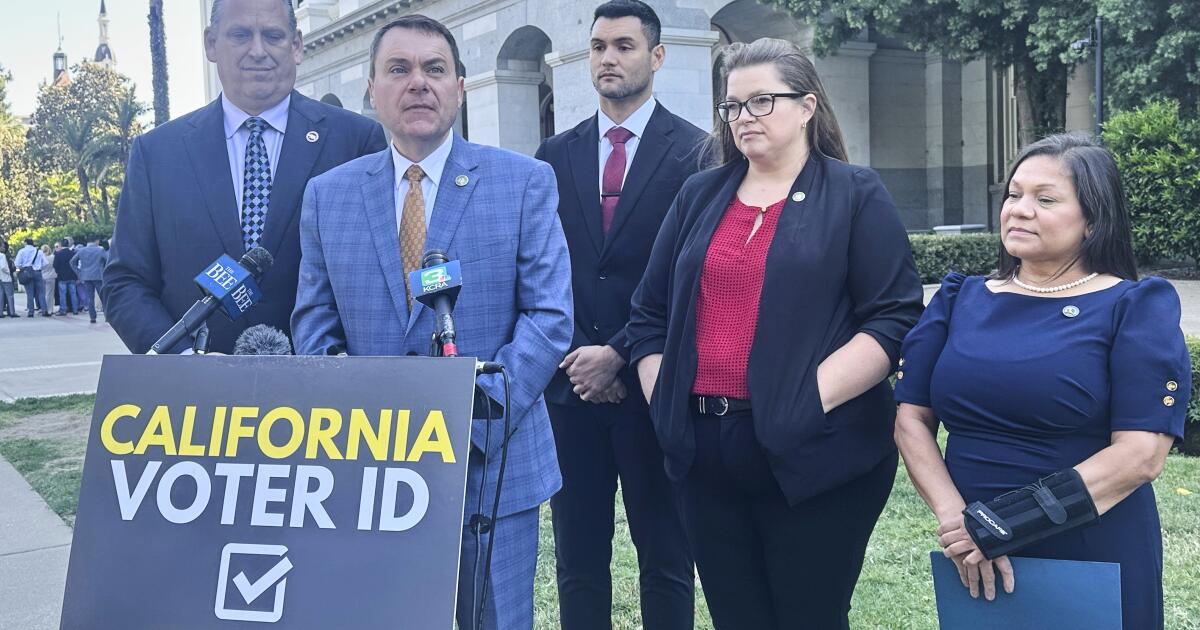
SACRAMENTO — Backers of a November ballot measure that would require Californians to verify their identity when voting sued state officials on Monday, alleging bias in how the ballot’s summary is written.
A group led by California State Assemblymember Carl DeMaio (R-San Diego) allege in a 10-page lawsuit filed in Sacramento Superior Court that Atty. Gen. Rob Bonta violated election laws that require the “impartial” labeling of a measure’s purpose.
DeMaio accused Bonta of trying “to rig the vote” against the measure with “a false title claiming it prohibits citizens from voting” in California elections.
He also said the measure, which will appear as Proposition 39 on the November ballot, is “a bipartisan solution to Voter ID and is supported by a supermajority of Democratic, independent, and Republican voters.”
“We take our duty to prepare a title and summary and ballot label seriously, and we are confident the court will agree we have faithfully executed that duty here,” said a spokesperson for Bonta.
Proposition 39 would require voters to present government-issued identification, such as a state driver’s license, every time they vote in person.
Voters who use mail-in ballots — by far the most popular method of voting in California — would be required to write a four-digit number, essentially a PIN, on their ballot envelopes. The PIN would come from ID such as a driver’s license or could be generated from the county.
The measure also requires that the secretary of state and county elections officials to maintain accurate voter registration lists, verify citizenship, and report annually the percentage of each county’s voter roll that have been citizenship-verified.
Under current law, Californians are required to provide identification when registering to vote and must swear under penalty of perjury, a felony, that they are eligible to vote and are U.S. citizens.
They are not required to show or provide identification when casting a ballot in person or by mail.
The lawsuit, filed by Californians for Voter ID, Yes on 39 and Donald DiCostanzo, a registered voter who lives Orange County, argues that the attorney general office’s summary “is not a true and impartial statement of the measure’s purpose” and violates California Elections Code 9051, which requires neutrality.
The suit claims the language used for the summary during the signature-gathering process — a required step to get the measure on the ballot — was “neutral” and named both of the measure’s chief purposes.
The final language omits the measure’s mandate to maintain accurate voter rolls and and verify citizenship, and describes the measure in “prohibitive terms,” according to the suit.
The original language said the measure “establishes additional voters identification and citizenship verification requirements.”
“This measure would amend the California Constitution to further require that voters present government-issued identification at the polls or the last four digits of a government-issued identification number when voting by mail; the State provide voter identification cards on request; and elections officials annually report percentage of each county’s voters whose citizenship they have verified.”
The summary language now states that the measure: “Prohibits citizens from voting unless they present government-issued identification.”
“Invalidates mail ballots that do not have last four digits of designated government-issued identification number written on envelope. Prohibits in-person voting without presenting government-issued identification.”
Election law expert Fred Woocher said that the law allows the ballot measure summary to be different than the description of the measure in circulation.
UCLA law professor Rick Hasen declined to weigh in on the arguments in the lawsuit, but said that “it’s common practice for the AG to write things in ways that that align with the political interests of the Attorney General.”
Hasen previously called the ballot measure a “disaster,” writing in a blog post that its requirements are vague and it would be costly and difficult for agencies to verify citizenship.
Proponents of an initiative to repeal gas tax increases in California sued then-Atty. Gen. Xavier Becerra, now a candidate for governor, in 2017 over a state-drafted title and summary which they argued was misleading and negative.
A judge sided with proponents, but an appellate court later rule in Becerra’s favor.

SACRAMENTO — Backers of a November ballot measure that would require Californians to verify their identity when voting sued state officials on Monday, alleging bias in how the ballot’s summary is written.
A group led by California State Assemblymember Carl DeMaio (R-San Diego) allege in a 10-page lawsuit filed in Sacramento Superior Court that Atty. Gen. Rob Bonta violated election laws that require the “impartial” labeling of a measure’s purpose.
DeMaio accused Bonta of trying “to rig the vote” against the measure with “a false title claiming it prohibits citizens from voting” in California elections.
He also said the measure, which will appear as Proposition 39 on the November ballot, is “a bipartisan solution to Voter ID and is supported by a supermajority of Democratic, independent, and Republican voters.”
“We take our duty to prepare a title and summary and ballot label seriously, and we are confident the court will agree we have faithfully executed that duty here,” said a spokesperson for Bonta.
Proposition 39 would require voters to present government-issued identification, such as a state driver’s license, every time they vote in person.
Voters who use mail-in ballots — by far the most popular method of voting in California — would be required to write a four-digit number, essentially a PIN, on their ballot envelopes. The PIN would come from ID such as a driver’s license or could be generated from the county.
The measure also requires that the secretary of state and county elections officials to maintain accurate voter registration lists, verify citizenship, and report annually the percentage of each county’s voter roll that have been citizenship-verified.
Under current law, Californians are required to provide identification when registering to vote and must swear under penalty of perjury, a felony, that they are eligible to vote and are U.S. citizens.
They are not required to show or provide identification when casting a ballot in person or by mail.
The lawsuit, filed by Californians for Voter ID, Yes on 39 and Donald DiCostanzo, a registered voter who lives Orange County, argues that the attorney general office’s summary “is not a true and impartial statement of the measure’s purpose” and violates California Elections Code 9051, which requires neutrality.
The suit claims the language used for the summary during the signature-gathering process — a required step to get the measure on the ballot — was “neutral” and named both of the measure’s chief purposes.
The final language omits the measure’s mandate to maintain accurate voter rolls and and verify citizenship, and describes the measure in “prohibitive terms,” according to the suit.
The original language said the measure “establishes additional voters identification and citizenship verification requirements.”
“This measure would amend the California Constitution to further require that voters present government-issued identification at the polls or the last four digits of a government-issued identification number when voting by mail; the State provide voter identification cards on request; and elections officials annually report percentage of each county’s voters whose citizenship they have verified.”
The summary language now states that the measure: “Prohibits citizens from voting unless they present government-issued identification.”
“Invalidates mail ballots that do not have last four digits of designated government-issued identification number written on envelope. Prohibits in-person voting without presenting government-issued identification.”
Election law expert Fred Woocher said that the law allows the ballot measure summary to be different than the description of the measure in circulation.
UCLA law professor Rick Hasen declined to weigh in on the arguments in the lawsuit, but said that “it’s common practice for the AG to write things in ways that that align with the political interests of the Attorney General.”
Hasen previously called the ballot measure a “disaster,” writing in a blog post that its requirements are vague and it would be costly and difficult for agencies to verify citizenship.
Proponents of an initiative to repeal gas tax increases in California sued then-Atty. Gen. Xavier Becerra, now a candidate for governor, in 2017 over a state-drafted title and summary which they argued was misleading and negative.
A judge sided with proponents, but an appellate court later rule in Becerra’s favor.

SACRAMENTO — Backers of a November ballot measure that would require Californians to verify their identity when voting sued state officials on Monday, alleging bias in how the ballot’s summary is written.
A group led by California State Assemblymember Carl DeMaio (R-San Diego) allege in a 10-page lawsuit filed in Sacramento Superior Court that Atty. Gen. Rob Bonta violated election laws that require the “impartial” labeling of a measure’s purpose.
DeMaio accused Bonta of trying “to rig the vote” against the measure with “a false title claiming it prohibits citizens from voting” in California elections.
He also said the measure, which will appear as Proposition 39 on the November ballot, is “a bipartisan solution to Voter ID and is supported by a supermajority of Democratic, independent, and Republican voters.”
“We take our duty to prepare a title and summary and ballot label seriously, and we are confident the court will agree we have faithfully executed that duty here,” said a spokesperson for Bonta.
Proposition 39 would require voters to present government-issued identification, such as a state driver’s license, every time they vote in person.
Voters who use mail-in ballots — by far the most popular method of voting in California — would be required to write a four-digit number, essentially a PIN, on their ballot envelopes. The PIN would come from ID such as a driver’s license or could be generated from the county.
The measure also requires that the secretary of state and county elections officials to maintain accurate voter registration lists, verify citizenship, and report annually the percentage of each county’s voter roll that have been citizenship-verified.
Under current law, Californians are required to provide identification when registering to vote and must swear under penalty of perjury, a felony, that they are eligible to vote and are U.S. citizens.
They are not required to show or provide identification when casting a ballot in person or by mail.
The lawsuit, filed by Californians for Voter ID, Yes on 39 and Donald DiCostanzo, a registered voter who lives Orange County, argues that the attorney general office’s summary “is not a true and impartial statement of the measure’s purpose” and violates California Elections Code 9051, which requires neutrality.
The suit claims the language used for the summary during the signature-gathering process — a required step to get the measure on the ballot — was “neutral” and named both of the measure’s chief purposes.
The final language omits the measure’s mandate to maintain accurate voter rolls and and verify citizenship, and describes the measure in “prohibitive terms,” according to the suit.
The original language said the measure “establishes additional voters identification and citizenship verification requirements.”
“This measure would amend the California Constitution to further require that voters present government-issued identification at the polls or the last four digits of a government-issued identification number when voting by mail; the State provide voter identification cards on request; and elections officials annually report percentage of each county’s voters whose citizenship they have verified.”
The summary language now states that the measure: “Prohibits citizens from voting unless they present government-issued identification.”
“Invalidates mail ballots that do not have last four digits of designated government-issued identification number written on envelope. Prohibits in-person voting without presenting government-issued identification.”
Election law expert Fred Woocher said that the law allows the ballot measure summary to be different than the description of the measure in circulation.
UCLA law professor Rick Hasen declined to weigh in on the arguments in the lawsuit, but said that “it’s common practice for the AG to write things in ways that that align with the political interests of the Attorney General.”
Hasen previously called the ballot measure a “disaster,” writing in a blog post that its requirements are vague and it would be costly and difficult for agencies to verify citizenship.
Proponents of an initiative to repeal gas tax increases in California sued then-Atty. Gen. Xavier Becerra, now a candidate for governor, in 2017 over a state-drafted title and summary which they argued was misleading and negative.
A judge sided with proponents, but an appellate court later rule in Becerra’s favor.
SACRAMENTO — Backers of a November ballot measure that would require Californians to verify their identity when voting sued state officials on Monday, alleging bias in how the ballot’s summary is written.
A group led by California State Assemblymember Carl DeMaio (R-San Diego) allege in a 10-page lawsuit filed in Sacramento Superior Court that Atty. Gen. Rob Bonta violated election laws that require the “impartial” labeling of a measure’s purpose.
DeMaio accused Bonta of trying “to rig the vote” against the measure with “a false title claiming it prohibits citizens from voting” in California elections.
He also said the measure, which will appear as Proposition 39 on the November ballot, is “a bipartisan solution to Voter ID and is supported by a supermajority of Democratic, independent, and Republican voters.”
“We take our duty to prepare a title and summary and ballot label seriously, and we are confident the court will agree we have faithfully executed that duty here,” said a spokesperson for Bonta.
Proposition 39 would require voters to present government-issued identification, such as a state driver’s license, every time they vote in person.
Voters who use mail-in ballots — by far the most popular method of voting in California — would be required to write a four-digit number, essentially a PIN, on their ballot envelopes. The PIN would come from ID such as a driver’s license or could be generated from the county.
The measure also requires that the secretary of state and county elections officials to maintain accurate voter registration lists, verify citizenship, and report annually the percentage of each county’s voter roll that have been citizenship-verified.
Under current law, Californians are required to provide identification when registering to vote and must swear under penalty of perjury, a felony, that they are eligible to vote and are U.S. citizens.
They are not required to show or provide identification when casting a ballot in person or by mail.
The lawsuit, filed by Californians for Voter ID, Yes on 39 and Donald DiCostanzo, a registered voter who lives Orange County, argues that the attorney general office’s summary “is not a true and impartial statement of the measure’s purpose” and violates California Elections Code 9051, which requires neutrality.
The suit claims the language used for the summary during the signature-gathering process — a required step to get the measure on the ballot — was “neutral” and named both of the measure’s chief purposes.
The final language omits the measure’s mandate to maintain accurate voter rolls and and verify citizenship, and describes the measure in “prohibitive terms,” according to the suit.
The original language said the measure “establishes additional voters identification and citizenship verification requirements.”
“This measure would amend the California Constitution to further require that voters present government-issued identification at the polls or the last four digits of a government-issued identification number when voting by mail; the State provide voter identification cards on request; and elections officials annually report percentage of each county’s voters whose citizenship they have verified.”
The summary language now states that the measure: “Prohibits citizens from voting unless they present government-issued identification.”
“Invalidates mail ballots that do not have last four digits of designated government-issued identification number written on envelope. Prohibits in-person voting without presenting government-issued identification.”
Election law expert Fred Woocher said that the law allows the ballot measure summary to be different than the description of the measure in circulation.
UCLA law professor Rick Hasen declined to weigh in on the arguments in the lawsuit, but said that “it’s common practice for the AG to write things in ways that that align with the political interests of the Attorney General.”
Hasen previously called the ballot measure a “disaster,” writing in a blog post that its requirements are vague and it would be costly and difficult for agencies to verify citizenship.
Proponents of an initiative to repeal gas tax increases in California sued then-Atty. Gen. Xavier Becerra, now a candidate for governor, in 2017 over a state-drafted title and summary which they argued was misleading and negative.
A judge sided with proponents, but an appellate court later rule in Becerra’s favor.

SACRAMENTO — Backers of a November ballot measure that would require Californians to verify their identity when voting sued state officials on Monday, alleging bias in how the ballot’s summary is written.
A group led by California State Assemblymember Carl DeMaio (R-San Diego) allege in a 10-page lawsuit filed in Sacramento Superior Court that Atty. Gen. Rob Bonta violated election laws that require the “impartial” labeling of a measure’s purpose.
DeMaio accused Bonta of trying “to rig the vote” against the measure with “a false title claiming it prohibits citizens from voting” in California elections.
He also said the measure, which will appear as Proposition 39 on the November ballot, is “a bipartisan solution to Voter ID and is supported by a supermajority of Democratic, independent, and Republican voters.”
“We take our duty to prepare a title and summary and ballot label seriously, and we are confident the court will agree we have faithfully executed that duty here,” said a spokesperson for Bonta.
Proposition 39 would require voters to present government-issued identification, such as a state driver’s license, every time they vote in person.
Voters who use mail-in ballots — by far the most popular method of voting in California — would be required to write a four-digit number, essentially a PIN, on their ballot envelopes. The PIN would come from ID such as a driver’s license or could be generated from the county.
The measure also requires that the secretary of state and county elections officials to maintain accurate voter registration lists, verify citizenship, and report annually the percentage of each county’s voter roll that have been citizenship-verified.
Under current law, Californians are required to provide identification when registering to vote and must swear under penalty of perjury, a felony, that they are eligible to vote and are U.S. citizens.
They are not required to show or provide identification when casting a ballot in person or by mail.
The lawsuit, filed by Californians for Voter ID, Yes on 39 and Donald DiCostanzo, a registered voter who lives Orange County, argues that the attorney general office’s summary “is not a true and impartial statement of the measure’s purpose” and violates California Elections Code 9051, which requires neutrality.
The suit claims the language used for the summary during the signature-gathering process — a required step to get the measure on the ballot — was “neutral” and named both of the measure’s chief purposes.
The final language omits the measure’s mandate to maintain accurate voter rolls and and verify citizenship, and describes the measure in “prohibitive terms,” according to the suit.
The original language said the measure “establishes additional voters identification and citizenship verification requirements.”
“This measure would amend the California Constitution to further require that voters present government-issued identification at the polls or the last four digits of a government-issued identification number when voting by mail; the State provide voter identification cards on request; and elections officials annually report percentage of each county’s voters whose citizenship they have verified.”
The summary language now states that the measure: “Prohibits citizens from voting unless they present government-issued identification.”
“Invalidates mail ballots that do not have last four digits of designated government-issued identification number written on envelope. Prohibits in-person voting without presenting government-issued identification.”
Election law expert Fred Woocher said that the law allows the ballot measure summary to be different than the description of the measure in circulation.
UCLA law professor Rick Hasen declined to weigh in on the arguments in the lawsuit, but said that “it’s common practice for the AG to write things in ways that that align with the political interests of the Attorney General.”
Hasen previously called the ballot measure a “disaster,” writing in a blog post that its requirements are vague and it would be costly and difficult for agencies to verify citizenship.
Proponents of an initiative to repeal gas tax increases in California sued then-Atty. Gen. Xavier Becerra, now a candidate for governor, in 2017 over a state-drafted title and summary which they argued was misleading and negative.
A judge sided with proponents, but an appellate court later rule in Becerra’s favor.
SACRAMENTO — Backers of a November ballot measure that would require Californians to verify their identity when voting sued state officials on Monday, alleging bias in how the ballot’s summary is written.
A group led by California State Assemblymember Carl DeMaio (R-San Diego) allege in a 10-page lawsuit filed in Sacramento Superior Court that Atty. Gen. Rob Bonta violated election laws that require the “impartial” labeling of a measure’s purpose.
DeMaio accused Bonta of trying “to rig the vote” against the measure with “a false title claiming it prohibits citizens from voting” in California elections.
He also said the measure, which will appear as Proposition 39 on the November ballot, is “a bipartisan solution to Voter ID and is supported by a supermajority of Democratic, independent, and Republican voters.”
“We take our duty to prepare a title and summary and ballot label seriously, and we are confident the court will agree we have faithfully executed that duty here,” said a spokesperson for Bonta.
Proposition 39 would require voters to present government-issued identification, such as a state driver’s license, every time they vote in person.
Voters who use mail-in ballots — by far the most popular method of voting in California — would be required to write a four-digit number, essentially a PIN, on their ballot envelopes. The PIN would come from ID such as a driver’s license or could be generated from the county.
The measure also requires that the secretary of state and county elections officials to maintain accurate voter registration lists, verify citizenship, and report annually the percentage of each county’s voter roll that have been citizenship-verified.
Under current law, Californians are required to provide identification when registering to vote and must swear under penalty of perjury, a felony, that they are eligible to vote and are U.S. citizens.
They are not required to show or provide identification when casting a ballot in person or by mail.
The lawsuit, filed by Californians for Voter ID, Yes on 39 and Donald DiCostanzo, a registered voter who lives Orange County, argues that the attorney general office’s summary “is not a true and impartial statement of the measure’s purpose” and violates California Elections Code 9051, which requires neutrality.
The suit claims the language used for the summary during the signature-gathering process — a required step to get the measure on the ballot — was “neutral” and named both of the measure’s chief purposes.
The final language omits the measure’s mandate to maintain accurate voter rolls and and verify citizenship, and describes the measure in “prohibitive terms,” according to the suit.
The original language said the measure “establishes additional voters identification and citizenship verification requirements.”
“This measure would amend the California Constitution to further require that voters present government-issued identification at the polls or the last four digits of a government-issued identification number when voting by mail; the State provide voter identification cards on request; and elections officials annually report percentage of each county’s voters whose citizenship they have verified.”
The summary language now states that the measure: “Prohibits citizens from voting unless they present government-issued identification.”
“Invalidates mail ballots that do not have last four digits of designated government-issued identification number written on envelope. Prohibits in-person voting without presenting government-issued identification.”
Election law expert Fred Woocher said that the law allows the ballot measure summary to be different than the description of the measure in circulation.
UCLA law professor Rick Hasen declined to weigh in on the arguments in the lawsuit, but said that “it’s common practice for the AG to write things in ways that that align with the political interests of the Attorney General.”
Hasen previously called the ballot measure a “disaster,” writing in a blog post that its requirements are vague and it would be costly and difficult for agencies to verify citizenship.
Proponents of an initiative to repeal gas tax increases in California sued then-Atty. Gen. Xavier Becerra, now a candidate for governor, in 2017 over a state-drafted title and summary which they argued was misleading and negative.
A judge sided with proponents, but an appellate court later rule in Becerra’s favor.
SACRAMENTO — Backers of a November ballot measure that would require Californians to verify their identity when voting sued state officials on Monday, alleging bias in how the ballot’s summary is written.
A group led by California State Assemblymember Carl DeMaio (R-San Diego) allege in a 10-page lawsuit filed in Sacramento Superior Court that Atty. Gen. Rob Bonta violated election laws that require the “impartial” labeling of a measure’s purpose.
DeMaio accused Bonta of trying “to rig the vote” against the measure with “a false title claiming it prohibits citizens from voting” in California elections.
He also said the measure, which will appear as Proposition 39 on the November ballot, is “a bipartisan solution to Voter ID and is supported by a supermajority of Democratic, independent, and Republican voters.”
“We take our duty to prepare a title and summary and ballot label seriously, and we are confident the court will agree we have faithfully executed that duty here,” said a spokesperson for Bonta.
Proposition 39 would require voters to present government-issued identification, such as a state driver’s license, every time they vote in person.
Voters who use mail-in ballots — by far the most popular method of voting in California — would be required to write a four-digit number, essentially a PIN, on their ballot envelopes. The PIN would come from ID such as a driver’s license or could be generated from the county.
The measure also requires that the secretary of state and county elections officials to maintain accurate voter registration lists, verify citizenship, and report annually the percentage of each county’s voter roll that have been citizenship-verified.
Under current law, Californians are required to provide identification when registering to vote and must swear under penalty of perjury, a felony, that they are eligible to vote and are U.S. citizens.
They are not required to show or provide identification when casting a ballot in person or by mail.
The lawsuit, filed by Californians for Voter ID, Yes on 39 and Donald DiCostanzo, a registered voter who lives Orange County, argues that the attorney general office’s summary “is not a true and impartial statement of the measure’s purpose” and violates California Elections Code 9051, which requires neutrality.
The suit claims the language used for the summary during the signature-gathering process — a required step to get the measure on the ballot — was “neutral” and named both of the measure’s chief purposes.
The final language omits the measure’s mandate to maintain accurate voter rolls and and verify citizenship, and describes the measure in “prohibitive terms,” according to the suit.
The original language said the measure “establishes additional voters identification and citizenship verification requirements.”
“This measure would amend the California Constitution to further require that voters present government-issued identification at the polls or the last four digits of a government-issued identification number when voting by mail; the State provide voter identification cards on request; and elections officials annually report percentage of each county’s voters whose citizenship they have verified.”
The summary language now states that the measure: “Prohibits citizens from voting unless they present government-issued identification.”
“Invalidates mail ballots that do not have last four digits of designated government-issued identification number written on envelope. Prohibits in-person voting without presenting government-issued identification.”
Election law expert Fred Woocher said that the law allows the ballot measure summary to be different than the description of the measure in circulation.
UCLA law professor Rick Hasen declined to weigh in on the arguments in the lawsuit, but said that “it’s common practice for the AG to write things in ways that that align with the political interests of the Attorney General.”
Hasen previously called the ballot measure a “disaster,” writing in a blog post that its requirements are vague and it would be costly and difficult for agencies to verify citizenship.
Proponents of an initiative to repeal gas tax increases in California sued then-Atty. Gen. Xavier Becerra, now a candidate for governor, in 2017 over a state-drafted title and summary which they argued was misleading and negative.
A judge sided with proponents, but an appellate court later rule in Becerra’s favor.
SACRAMENTO — Backers of a November ballot measure that would require Californians to verify their identity when voting sued state officials on Monday, alleging bias in how the ballot’s summary is written.
A group led by California State Assemblymember Carl DeMaio (R-San Diego) allege in a 10-page lawsuit filed in Sacramento Superior Court that Atty. Gen. Rob Bonta violated election laws that require the “impartial” labeling of a measure’s purpose.
DeMaio accused Bonta of trying “to rig the vote” against the measure with “a false title claiming it prohibits citizens from voting” in California elections.
He also said the measure, which will appear as Proposition 39 on the November ballot, is “a bipartisan solution to Voter ID and is supported by a supermajority of Democratic, independent, and Republican voters.”
“We take our duty to prepare a title and summary and ballot label seriously, and we are confident the court will agree we have faithfully executed that duty here,” said a spokesperson for Bonta.
Proposition 39 would require voters to present government-issued identification, such as a state driver’s license, every time they vote in person.
Voters who use mail-in ballots — by far the most popular method of voting in California — would be required to write a four-digit number, essentially a PIN, on their ballot envelopes. The PIN would come from ID such as a driver’s license or could be generated from the county.
The measure also requires that the secretary of state and county elections officials to maintain accurate voter registration lists, verify citizenship, and report annually the percentage of each county’s voter roll that have been citizenship-verified.
Under current law, Californians are required to provide identification when registering to vote and must swear under penalty of perjury, a felony, that they are eligible to vote and are U.S. citizens.
They are not required to show or provide identification when casting a ballot in person or by mail.
The lawsuit, filed by Californians for Voter ID, Yes on 39 and Donald DiCostanzo, a registered voter who lives Orange County, argues that the attorney general office’s summary “is not a true and impartial statement of the measure’s purpose” and violates California Elections Code 9051, which requires neutrality.
The suit claims the language used for the summary during the signature-gathering process — a required step to get the measure on the ballot — was “neutral” and named both of the measure’s chief purposes.
The final language omits the measure’s mandate to maintain accurate voter rolls and and verify citizenship, and describes the measure in “prohibitive terms,” according to the suit.
The original language said the measure “establishes additional voters identification and citizenship verification requirements.”
“This measure would amend the California Constitution to further require that voters present government-issued identification at the polls or the last four digits of a government-issued identification number when voting by mail; the State provide voter identification cards on request; and elections officials annually report percentage of each county’s voters whose citizenship they have verified.”
The summary language now states that the measure: “Prohibits citizens from voting unless they present government-issued identification.”
“Invalidates mail ballots that do not have last four digits of designated government-issued identification number written on envelope. Prohibits in-person voting without presenting government-issued identification.”
Election law expert Fred Woocher said that the law allows the ballot measure summary to be different than the description of the measure in circulation.
UCLA law professor Rick Hasen declined to weigh in on the arguments in the lawsuit, but said that “it’s common practice for the AG to write things in ways that that align with the political interests of the Attorney General.”
Hasen previously called the ballot measure a “disaster,” writing in a blog post that its requirements are vague and it would be costly and difficult for agencies to verify citizenship.
Proponents of an initiative to repeal gas tax increases in California sued then-Atty. Gen. Xavier Becerra, now a candidate for governor, in 2017 over a state-drafted title and summary which they argued was misleading and negative.
A judge sided with proponents, but an appellate court later rule in Becerra’s favor.

SACRAMENTO — Backers of a November ballot measure that would require Californians to verify their identity when voting sued state officials on Monday, alleging bias in how the ballot’s summary is written.
A group led by California State Assemblymember Carl DeMaio (R-San Diego) allege in a 10-page lawsuit filed in Sacramento Superior Court that Atty. Gen. Rob Bonta violated election laws that require the “impartial” labeling of a measure’s purpose.
DeMaio accused Bonta of trying “to rig the vote” against the measure with “a false title claiming it prohibits citizens from voting” in California elections.
He also said the measure, which will appear as Proposition 39 on the November ballot, is “a bipartisan solution to Voter ID and is supported by a supermajority of Democratic, independent, and Republican voters.”
“We take our duty to prepare a title and summary and ballot label seriously, and we are confident the court will agree we have faithfully executed that duty here,” said a spokesperson for Bonta.
Proposition 39 would require voters to present government-issued identification, such as a state driver’s license, every time they vote in person.
Voters who use mail-in ballots — by far the most popular method of voting in California — would be required to write a four-digit number, essentially a PIN, on their ballot envelopes. The PIN would come from ID such as a driver’s license or could be generated from the county.
The measure also requires that the secretary of state and county elections officials to maintain accurate voter registration lists, verify citizenship, and report annually the percentage of each county’s voter roll that have been citizenship-verified.
Under current law, Californians are required to provide identification when registering to vote and must swear under penalty of perjury, a felony, that they are eligible to vote and are U.S. citizens.
They are not required to show or provide identification when casting a ballot in person or by mail.
The lawsuit, filed by Californians for Voter ID, Yes on 39 and Donald DiCostanzo, a registered voter who lives Orange County, argues that the attorney general office’s summary “is not a true and impartial statement of the measure’s purpose” and violates California Elections Code 9051, which requires neutrality.
The suit claims the language used for the summary during the signature-gathering process — a required step to get the measure on the ballot — was “neutral” and named both of the measure’s chief purposes.
The final language omits the measure’s mandate to maintain accurate voter rolls and and verify citizenship, and describes the measure in “prohibitive terms,” according to the suit.
The original language said the measure “establishes additional voters identification and citizenship verification requirements.”
“This measure would amend the California Constitution to further require that voters present government-issued identification at the polls or the last four digits of a government-issued identification number when voting by mail; the State provide voter identification cards on request; and elections officials annually report percentage of each county’s voters whose citizenship they have verified.”
The summary language now states that the measure: “Prohibits citizens from voting unless they present government-issued identification.”
“Invalidates mail ballots that do not have last four digits of designated government-issued identification number written on envelope. Prohibits in-person voting without presenting government-issued identification.”
Election law expert Fred Woocher said that the law allows the ballot measure summary to be different than the description of the measure in circulation.
UCLA law professor Rick Hasen declined to weigh in on the arguments in the lawsuit, but said that “it’s common practice for the AG to write things in ways that that align with the political interests of the Attorney General.”
Hasen previously called the ballot measure a “disaster,” writing in a blog post that its requirements are vague and it would be costly and difficult for agencies to verify citizenship.
Proponents of an initiative to repeal gas tax increases in California sued then-Atty. Gen. Xavier Becerra, now a candidate for governor, in 2017 over a state-drafted title and summary which they argued was misleading and negative.
A judge sided with proponents, but an appellate court later rule in Becerra’s favor.
SACRAMENTO — Backers of a November ballot measure that would require Californians to verify their identity when voting sued state officials on Monday, alleging bias in how the ballot’s summary is written.
A group led by California State Assemblymember Carl DeMaio (R-San Diego) allege in a 10-page lawsuit filed in Sacramento Superior Court that Atty. Gen. Rob Bonta violated election laws that require the “impartial” labeling of a measure’s purpose.
DeMaio accused Bonta of trying “to rig the vote” against the measure with “a false title claiming it prohibits citizens from voting” in California elections.
He also said the measure, which will appear as Proposition 39 on the November ballot, is “a bipartisan solution to Voter ID and is supported by a supermajority of Democratic, independent, and Republican voters.”
“We take our duty to prepare a title and summary and ballot label seriously, and we are confident the court will agree we have faithfully executed that duty here,” said a spokesperson for Bonta.
Proposition 39 would require voters to present government-issued identification, such as a state driver’s license, every time they vote in person.
Voters who use mail-in ballots — by far the most popular method of voting in California — would be required to write a four-digit number, essentially a PIN, on their ballot envelopes. The PIN would come from ID such as a driver’s license or could be generated from the county.
The measure also requires that the secretary of state and county elections officials to maintain accurate voter registration lists, verify citizenship, and report annually the percentage of each county’s voter roll that have been citizenship-verified.
Under current law, Californians are required to provide identification when registering to vote and must swear under penalty of perjury, a felony, that they are eligible to vote and are U.S. citizens.
They are not required to show or provide identification when casting a ballot in person or by mail.
The lawsuit, filed by Californians for Voter ID, Yes on 39 and Donald DiCostanzo, a registered voter who lives Orange County, argues that the attorney general office’s summary “is not a true and impartial statement of the measure’s purpose” and violates California Elections Code 9051, which requires neutrality.
The suit claims the language used for the summary during the signature-gathering process — a required step to get the measure on the ballot — was “neutral” and named both of the measure’s chief purposes.
The final language omits the measure’s mandate to maintain accurate voter rolls and and verify citizenship, and describes the measure in “prohibitive terms,” according to the suit.
The original language said the measure “establishes additional voters identification and citizenship verification requirements.”
“This measure would amend the California Constitution to further require that voters present government-issued identification at the polls or the last four digits of a government-issued identification number when voting by mail; the State provide voter identification cards on request; and elections officials annually report percentage of each county’s voters whose citizenship they have verified.”
The summary language now states that the measure: “Prohibits citizens from voting unless they present government-issued identification.”
“Invalidates mail ballots that do not have last four digits of designated government-issued identification number written on envelope. Prohibits in-person voting without presenting government-issued identification.”
Election law expert Fred Woocher said that the law allows the ballot measure summary to be different than the description of the measure in circulation.
UCLA law professor Rick Hasen declined to weigh in on the arguments in the lawsuit, but said that “it’s common practice for the AG to write things in ways that that align with the political interests of the Attorney General.”
Hasen previously called the ballot measure a “disaster,” writing in a blog post that its requirements are vague and it would be costly and difficult for agencies to verify citizenship.
Proponents of an initiative to repeal gas tax increases in California sued then-Atty. Gen. Xavier Becerra, now a candidate for governor, in 2017 over a state-drafted title and summary which they argued was misleading and negative.
A judge sided with proponents, but an appellate court later rule in Becerra’s favor.
SACRAMENTO — Backers of a November ballot measure that would require Californians to verify their identity when voting sued state officials on Monday, alleging bias in how the ballot’s summary is written.
A group led by California State Assemblymember Carl DeMaio (R-San Diego) allege in a 10-page lawsuit filed in Sacramento Superior Court that Atty. Gen. Rob Bonta violated election laws that require the “impartial” labeling of a measure’s purpose.
DeMaio accused Bonta of trying “to rig the vote” against the measure with “a false title claiming it prohibits citizens from voting” in California elections.
He also said the measure, which will appear as Proposition 39 on the November ballot, is “a bipartisan solution to Voter ID and is supported by a supermajority of Democratic, independent, and Republican voters.”
“We take our duty to prepare a title and summary and ballot label seriously, and we are confident the court will agree we have faithfully executed that duty here,” said a spokesperson for Bonta.
Proposition 39 would require voters to present government-issued identification, such as a state driver’s license, every time they vote in person.
Voters who use mail-in ballots — by far the most popular method of voting in California — would be required to write a four-digit number, essentially a PIN, on their ballot envelopes. The PIN would come from ID such as a driver’s license or could be generated from the county.
The measure also requires that the secretary of state and county elections officials to maintain accurate voter registration lists, verify citizenship, and report annually the percentage of each county’s voter roll that have been citizenship-verified.
Under current law, Californians are required to provide identification when registering to vote and must swear under penalty of perjury, a felony, that they are eligible to vote and are U.S. citizens.
They are not required to show or provide identification when casting a ballot in person or by mail.
The lawsuit, filed by Californians for Voter ID, Yes on 39 and Donald DiCostanzo, a registered voter who lives Orange County, argues that the attorney general office’s summary “is not a true and impartial statement of the measure’s purpose” and violates California Elections Code 9051, which requires neutrality.
The suit claims the language used for the summary during the signature-gathering process — a required step to get the measure on the ballot — was “neutral” and named both of the measure’s chief purposes.
The final language omits the measure’s mandate to maintain accurate voter rolls and and verify citizenship, and describes the measure in “prohibitive terms,” according to the suit.
The original language said the measure “establishes additional voters identification and citizenship verification requirements.”
“This measure would amend the California Constitution to further require that voters present government-issued identification at the polls or the last four digits of a government-issued identification number when voting by mail; the State provide voter identification cards on request; and elections officials annually report percentage of each county’s voters whose citizenship they have verified.”
The summary language now states that the measure: “Prohibits citizens from voting unless they present government-issued identification.”
“Invalidates mail ballots that do not have last four digits of designated government-issued identification number written on envelope. Prohibits in-person voting without presenting government-issued identification.”
Election law expert Fred Woocher said that the law allows the ballot measure summary to be different than the description of the measure in circulation.
UCLA law professor Rick Hasen declined to weigh in on the arguments in the lawsuit, but said that “it’s common practice for the AG to write things in ways that that align with the political interests of the Attorney General.”
Hasen previously called the ballot measure a “disaster,” writing in a blog post that its requirements are vague and it would be costly and difficult for agencies to verify citizenship.
Proponents of an initiative to repeal gas tax increases in California sued then-Atty. Gen. Xavier Becerra, now a candidate for governor, in 2017 over a state-drafted title and summary which they argued was misleading and negative.
A judge sided with proponents, but an appellate court later rule in Becerra’s favor.
SACRAMENTO — Backers of a November ballot measure that would require Californians to verify their identity when voting sued state officials on Monday, alleging bias in how the ballot’s summary is written.
A group led by California State Assemblymember Carl DeMaio (R-San Diego) allege in a 10-page lawsuit filed in Sacramento Superior Court that Atty. Gen. Rob Bonta violated election laws that require the “impartial” labeling of a measure’s purpose.
DeMaio accused Bonta of trying “to rig the vote” against the measure with “a false title claiming it prohibits citizens from voting” in California elections.
He also said the measure, which will appear as Proposition 39 on the November ballot, is “a bipartisan solution to Voter ID and is supported by a supermajority of Democratic, independent, and Republican voters.”
“We take our duty to prepare a title and summary and ballot label seriously, and we are confident the court will agree we have faithfully executed that duty here,” said a spokesperson for Bonta.
Proposition 39 would require voters to present government-issued identification, such as a state driver’s license, every time they vote in person.
Voters who use mail-in ballots — by far the most popular method of voting in California — would be required to write a four-digit number, essentially a PIN, on their ballot envelopes. The PIN would come from ID such as a driver’s license or could be generated from the county.
The measure also requires that the secretary of state and county elections officials to maintain accurate voter registration lists, verify citizenship, and report annually the percentage of each county’s voter roll that have been citizenship-verified.
Under current law, Californians are required to provide identification when registering to vote and must swear under penalty of perjury, a felony, that they are eligible to vote and are U.S. citizens.
They are not required to show or provide identification when casting a ballot in person or by mail.
The lawsuit, filed by Californians for Voter ID, Yes on 39 and Donald DiCostanzo, a registered voter who lives Orange County, argues that the attorney general office’s summary “is not a true and impartial statement of the measure’s purpose” and violates California Elections Code 9051, which requires neutrality.
The suit claims the language used for the summary during the signature-gathering process — a required step to get the measure on the ballot — was “neutral” and named both of the measure’s chief purposes.
The final language omits the measure’s mandate to maintain accurate voter rolls and and verify citizenship, and describes the measure in “prohibitive terms,” according to the suit.
The original language said the measure “establishes additional voters identification and citizenship verification requirements.”
“This measure would amend the California Constitution to further require that voters present government-issued identification at the polls or the last four digits of a government-issued identification number when voting by mail; the State provide voter identification cards on request; and elections officials annually report percentage of each county’s voters whose citizenship they have verified.”
The summary language now states that the measure: “Prohibits citizens from voting unless they present government-issued identification.”
“Invalidates mail ballots that do not have last four digits of designated government-issued identification number written on envelope. Prohibits in-person voting without presenting government-issued identification.”
Election law expert Fred Woocher said that the law allows the ballot measure summary to be different than the description of the measure in circulation.
UCLA law professor Rick Hasen declined to weigh in on the arguments in the lawsuit, but said that “it’s common practice for the AG to write things in ways that that align with the political interests of the Attorney General.”
Hasen previously called the ballot measure a “disaster,” writing in a blog post that its requirements are vague and it would be costly and difficult for agencies to verify citizenship.
Proponents of an initiative to repeal gas tax increases in California sued then-Atty. Gen. Xavier Becerra, now a candidate for governor, in 2017 over a state-drafted title and summary which they argued was misleading and negative.
A judge sided with proponents, but an appellate court later rule in Becerra’s favor.
SACRAMENTO — Backers of a November ballot measure that would require Californians to verify their identity when voting sued state officials on Monday, alleging bias in how the ballot’s summary is written.
A group led by California State Assemblymember Carl DeMaio (R-San Diego) allege in a 10-page lawsuit filed in Sacramento Superior Court that Atty. Gen. Rob Bonta violated election laws that require the “impartial” labeling of a measure’s purpose.
DeMaio accused Bonta of trying “to rig the vote” against the measure with “a false title claiming it prohibits citizens from voting” in California elections.
He also said the measure, which will appear as Proposition 39 on the November ballot, is “a bipartisan solution to Voter ID and is supported by a supermajority of Democratic, independent, and Republican voters.”
“We take our duty to prepare a title and summary and ballot label seriously, and we are confident the court will agree we have faithfully executed that duty here,” said a spokesperson for Bonta.
Proposition 39 would require voters to present government-issued identification, such as a state driver’s license, every time they vote in person.
Voters who use mail-in ballots — by far the most popular method of voting in California — would be required to write a four-digit number, essentially a PIN, on their ballot envelopes. The PIN would come from ID such as a driver’s license or could be generated from the county.
The measure also requires that the secretary of state and county elections officials to maintain accurate voter registration lists, verify citizenship, and report annually the percentage of each county’s voter roll that have been citizenship-verified.
Under current law, Californians are required to provide identification when registering to vote and must swear under penalty of perjury, a felony, that they are eligible to vote and are U.S. citizens.
They are not required to show or provide identification when casting a ballot in person or by mail.
The lawsuit, filed by Californians for Voter ID, Yes on 39 and Donald DiCostanzo, a registered voter who lives Orange County, argues that the attorney general office’s summary “is not a true and impartial statement of the measure’s purpose” and violates California Elections Code 9051, which requires neutrality.
The suit claims the language used for the summary during the signature-gathering process — a required step to get the measure on the ballot — was “neutral” and named both of the measure’s chief purposes.
The final language omits the measure’s mandate to maintain accurate voter rolls and and verify citizenship, and describes the measure in “prohibitive terms,” according to the suit.
The original language said the measure “establishes additional voters identification and citizenship verification requirements.”
“This measure would amend the California Constitution to further require that voters present government-issued identification at the polls or the last four digits of a government-issued identification number when voting by mail; the State provide voter identification cards on request; and elections officials annually report percentage of each county’s voters whose citizenship they have verified.”
The summary language now states that the measure: “Prohibits citizens from voting unless they present government-issued identification.”
“Invalidates mail ballots that do not have last four digits of designated government-issued identification number written on envelope. Prohibits in-person voting without presenting government-issued identification.”
Election law expert Fred Woocher said that the law allows the ballot measure summary to be different than the description of the measure in circulation.
UCLA law professor Rick Hasen declined to weigh in on the arguments in the lawsuit, but said that “it’s common practice for the AG to write things in ways that that align with the political interests of the Attorney General.”
Hasen previously called the ballot measure a “disaster,” writing in a blog post that its requirements are vague and it would be costly and difficult for agencies to verify citizenship.
Proponents of an initiative to repeal gas tax increases in California sued then-Atty. Gen. Xavier Becerra, now a candidate for governor, in 2017 over a state-drafted title and summary which they argued was misleading and negative.
A judge sided with proponents, but an appellate court later rule in Becerra’s favor.
SACRAMENTO — Backers of a November ballot measure that would require Californians to verify their identity when voting sued state officials on Monday, alleging bias in how the ballot’s summary is written.
A group led by California State Assemblymember Carl DeMaio (R-San Diego) allege in a 10-page lawsuit filed in Sacramento Superior Court that Atty. Gen. Rob Bonta violated election laws that require the “impartial” labeling of a measure’s purpose.
DeMaio accused Bonta of trying “to rig the vote” against the measure with “a false title claiming it prohibits citizens from voting” in California elections.
He also said the measure, which will appear as Proposition 39 on the November ballot, is “a bipartisan solution to Voter ID and is supported by a supermajority of Democratic, independent, and Republican voters.”
“We take our duty to prepare a title and summary and ballot label seriously, and we are confident the court will agree we have faithfully executed that duty here,” said a spokesperson for Bonta.
Proposition 39 would require voters to present government-issued identification, such as a state driver’s license, every time they vote in person.
Voters who use mail-in ballots — by far the most popular method of voting in California — would be required to write a four-digit number, essentially a PIN, on their ballot envelopes. The PIN would come from ID such as a driver’s license or could be generated from the county.
The measure also requires that the secretary of state and county elections officials to maintain accurate voter registration lists, verify citizenship, and report annually the percentage of each county’s voter roll that have been citizenship-verified.
Under current law, Californians are required to provide identification when registering to vote and must swear under penalty of perjury, a felony, that they are eligible to vote and are U.S. citizens.
They are not required to show or provide identification when casting a ballot in person or by mail.
The lawsuit, filed by Californians for Voter ID, Yes on 39 and Donald DiCostanzo, a registered voter who lives Orange County, argues that the attorney general office’s summary “is not a true and impartial statement of the measure’s purpose” and violates California Elections Code 9051, which requires neutrality.
The suit claims the language used for the summary during the signature-gathering process — a required step to get the measure on the ballot — was “neutral” and named both of the measure’s chief purposes.
The final language omits the measure’s mandate to maintain accurate voter rolls and and verify citizenship, and describes the measure in “prohibitive terms,” according to the suit.
The original language said the measure “establishes additional voters identification and citizenship verification requirements.”
“This measure would amend the California Constitution to further require that voters present government-issued identification at the polls or the last four digits of a government-issued identification number when voting by mail; the State provide voter identification cards on request; and elections officials annually report percentage of each county’s voters whose citizenship they have verified.”
The summary language now states that the measure: “Prohibits citizens from voting unless they present government-issued identification.”
“Invalidates mail ballots that do not have last four digits of designated government-issued identification number written on envelope. Prohibits in-person voting without presenting government-issued identification.”
Election law expert Fred Woocher said that the law allows the ballot measure summary to be different than the description of the measure in circulation.
UCLA law professor Rick Hasen declined to weigh in on the arguments in the lawsuit, but said that “it’s common practice for the AG to write things in ways that that align with the political interests of the Attorney General.”
Hasen previously called the ballot measure a “disaster,” writing in a blog post that its requirements are vague and it would be costly and difficult for agencies to verify citizenship.
Proponents of an initiative to repeal gas tax increases in California sued then-Atty. Gen. Xavier Becerra, now a candidate for governor, in 2017 over a state-drafted title and summary which they argued was misleading and negative.
A judge sided with proponents, but an appellate court later rule in Becerra’s favor.
SACRAMENTO — Backers of a November ballot measure that would require Californians to verify their identity when voting sued state officials on Monday, alleging bias in how the ballot’s summary is written.
A group led by California State Assemblymember Carl DeMaio (R-San Diego) allege in a 10-page lawsuit filed in Sacramento Superior Court that Atty. Gen. Rob Bonta violated election laws that require the “impartial” labeling of a measure’s purpose.
DeMaio accused Bonta of trying “to rig the vote” against the measure with “a false title claiming it prohibits citizens from voting” in California elections.
He also said the measure, which will appear as Proposition 39 on the November ballot, is “a bipartisan solution to Voter ID and is supported by a supermajority of Democratic, independent, and Republican voters.”
“We take our duty to prepare a title and summary and ballot label seriously, and we are confident the court will agree we have faithfully executed that duty here,” said a spokesperson for Bonta.
Proposition 39 would require voters to present government-issued identification, such as a state driver’s license, every time they vote in person.
Voters who use mail-in ballots — by far the most popular method of voting in California — would be required to write a four-digit number, essentially a PIN, on their ballot envelopes. The PIN would come from ID such as a driver’s license or could be generated from the county.
The measure also requires that the secretary of state and county elections officials to maintain accurate voter registration lists, verify citizenship, and report annually the percentage of each county’s voter roll that have been citizenship-verified.
Under current law, Californians are required to provide identification when registering to vote and must swear under penalty of perjury, a felony, that they are eligible to vote and are U.S. citizens.
They are not required to show or provide identification when casting a ballot in person or by mail.
The lawsuit, filed by Californians for Voter ID, Yes on 39 and Donald DiCostanzo, a registered voter who lives Orange County, argues that the attorney general office’s summary “is not a true and impartial statement of the measure’s purpose” and violates California Elections Code 9051, which requires neutrality.
The suit claims the language used for the summary during the signature-gathering process — a required step to get the measure on the ballot — was “neutral” and named both of the measure’s chief purposes.
The final language omits the measure’s mandate to maintain accurate voter rolls and and verify citizenship, and describes the measure in “prohibitive terms,” according to the suit.
The original language said the measure “establishes additional voters identification and citizenship verification requirements.”
“This measure would amend the California Constitution to further require that voters present government-issued identification at the polls or the last four digits of a government-issued identification number when voting by mail; the State provide voter identification cards on request; and elections officials annually report percentage of each county’s voters whose citizenship they have verified.”
The summary language now states that the measure: “Prohibits citizens from voting unless they present government-issued identification.”
“Invalidates mail ballots that do not have last four digits of designated government-issued identification number written on envelope. Prohibits in-person voting without presenting government-issued identification.”
Election law expert Fred Woocher said that the law allows the ballot measure summary to be different than the description of the measure in circulation.
UCLA law professor Rick Hasen declined to weigh in on the arguments in the lawsuit, but said that “it’s common practice for the AG to write things in ways that that align with the political interests of the Attorney General.”
Hasen previously called the ballot measure a “disaster,” writing in a blog post that its requirements are vague and it would be costly and difficult for agencies to verify citizenship.
Proponents of an initiative to repeal gas tax increases in California sued then-Atty. Gen. Xavier Becerra, now a candidate for governor, in 2017 over a state-drafted title and summary which they argued was misleading and negative.
A judge sided with proponents, but an appellate court later rule in Becerra’s favor.
SACRAMENTO — Backers of a November ballot measure that would require Californians to verify their identity when voting sued state officials on Monday, alleging bias in how the ballot’s summary is written.
A group led by California State Assemblymember Carl DeMaio (R-San Diego) allege in a 10-page lawsuit filed in Sacramento Superior Court that Atty. Gen. Rob Bonta violated election laws that require the “impartial” labeling of a measure’s purpose.
DeMaio accused Bonta of trying “to rig the vote” against the measure with “a false title claiming it prohibits citizens from voting” in California elections.
He also said the measure, which will appear as Proposition 39 on the November ballot, is “a bipartisan solution to Voter ID and is supported by a supermajority of Democratic, independent, and Republican voters.”
“We take our duty to prepare a title and summary and ballot label seriously, and we are confident the court will agree we have faithfully executed that duty here,” said a spokesperson for Bonta.
Proposition 39 would require voters to present government-issued identification, such as a state driver’s license, every time they vote in person.
Voters who use mail-in ballots — by far the most popular method of voting in California — would be required to write a four-digit number, essentially a PIN, on their ballot envelopes. The PIN would come from ID such as a driver’s license or could be generated from the county.
The measure also requires that the secretary of state and county elections officials to maintain accurate voter registration lists, verify citizenship, and report annually the percentage of each county’s voter roll that have been citizenship-verified.
Under current law, Californians are required to provide identification when registering to vote and must swear under penalty of perjury, a felony, that they are eligible to vote and are U.S. citizens.
They are not required to show or provide identification when casting a ballot in person or by mail.
The lawsuit, filed by Californians for Voter ID, Yes on 39 and Donald DiCostanzo, a registered voter who lives Orange County, argues that the attorney general office’s summary “is not a true and impartial statement of the measure’s purpose” and violates California Elections Code 9051, which requires neutrality.
The suit claims the language used for the summary during the signature-gathering process — a required step to get the measure on the ballot — was “neutral” and named both of the measure’s chief purposes.
The final language omits the measure’s mandate to maintain accurate voter rolls and and verify citizenship, and describes the measure in “prohibitive terms,” according to the suit.
The original language said the measure “establishes additional voters identification and citizenship verification requirements.”
“This measure would amend the California Constitution to further require that voters present government-issued identification at the polls or the last four digits of a government-issued identification number when voting by mail; the State provide voter identification cards on request; and elections officials annually report percentage of each county’s voters whose citizenship they have verified.”
The summary language now states that the measure: “Prohibits citizens from voting unless they present government-issued identification.”
“Invalidates mail ballots that do not have last four digits of designated government-issued identification number written on envelope. Prohibits in-person voting without presenting government-issued identification.”
Election law expert Fred Woocher said that the law allows the ballot measure summary to be different than the description of the measure in circulation.
UCLA law professor Rick Hasen declined to weigh in on the arguments in the lawsuit, but said that “it’s common practice for the AG to write things in ways that that align with the political interests of the Attorney General.”
Hasen previously called the ballot measure a “disaster,” writing in a blog post that its requirements are vague and it would be costly and difficult for agencies to verify citizenship.
Proponents of an initiative to repeal gas tax increases in California sued then-Atty. Gen. Xavier Becerra, now a candidate for governor, in 2017 over a state-drafted title and summary which they argued was misleading and negative.
A judge sided with proponents, but an appellate court later rule in Becerra’s favor.

