

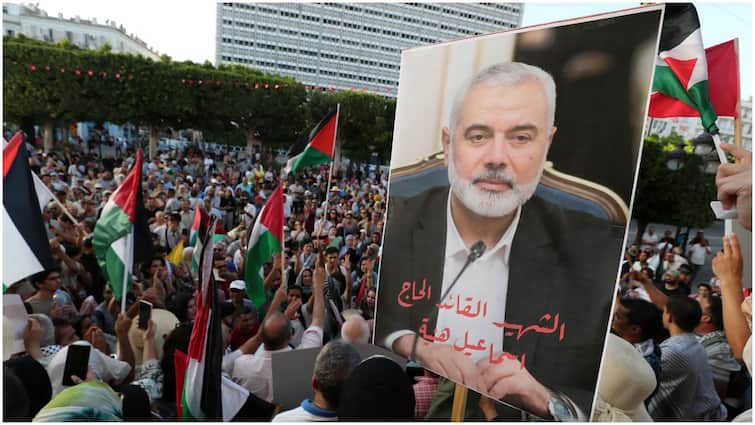
The United States has said that it will bolster its military presence in the Middle East by deploying additional warships and fighter jets. The Pentagon’s announcement comes on Friday (local time) after Iran and its regional allies vowed retaliation for the killings of a Hamas leader in Tehran and a Hezbollah commander in Beirut.
“The Department of Defense continues to take steps to mitigate the possibility of regional escalation by Iran or Iran’s partners and proxies,” Deputy Pentagon Press Secretary Sabrina Singh said in a statement.
“Since the horrific Hamas attack on Israel on October 7, the Secretary of Defense has reiterated that the United States will protect our personnel and interests in the region, including our ironclad commitment to the defense of Israel… The aircraft carrier strike group led by the USS Abraham Lincoln will replace one helmed by the USS Theodore Roosevelt in the region,” Singh said.
As per a report by news agency AFP, US Defense Secretary Lloyd Austin has also ordered additional ballistic missile defense-capable cruisers and destroyers to the Middle East and areas under US European Command, as well as a new fighter squadron to the Middle East.
What Fuelled The Tension?
Israel killed Hezbollah commander Fuad Shukr in Beirut on Tuesday, a move it said was a response to deadly rocket fire last week on the annexed Golan Heights. Hours later, Hamas leader Ismail Haniyeh was killed in the Iranian capital — an attack on which Israel has not yet commented.
Quoting a source close to Hezbollah, AFP reported that Iranian officials met in Tehran on Wednesday with representatives of the so-called “axis of resistance,” a loose alliance of Tehran-backed groups hostile to Israel, to discuss their next steps.
“Two scenarios were discussed: a simultaneous response from Iran and its allies or a staggered response from each party,” said the source, who had been briefed on the meeting, requesting anonymity to discuss sensitive matters.
In April, Iran carried out its first direct attack on Israeli soil, firing a barrage of drones and missiles after a strike blamed on Israel killed Revolutionary Guards at Tehran’s consulate in Damascus. American forces helped defend Israel against the attack.
“As we have demonstrated since October and again in April, the United States’ global defense is dynamic and the Department of Defense retains the capability to deploy on short notice to meet evolving national security threats,” Singh said.
“The United States also remains intently focused on de-escalating tensions in the region and pushing for a ceasefire as part of a hostage deal to bring the hostages home and end the war in Gaza,” she added.

The United States has said that it will bolster its military presence in the Middle East by deploying additional warships and fighter jets. The Pentagon’s announcement comes on Friday (local time) after Iran and its regional allies vowed retaliation for the killings of a Hamas leader in Tehran and a Hezbollah commander in Beirut.
“The Department of Defense continues to take steps to mitigate the possibility of regional escalation by Iran or Iran’s partners and proxies,” Deputy Pentagon Press Secretary Sabrina Singh said in a statement.
“Since the horrific Hamas attack on Israel on October 7, the Secretary of Defense has reiterated that the United States will protect our personnel and interests in the region, including our ironclad commitment to the defense of Israel… The aircraft carrier strike group led by the USS Abraham Lincoln will replace one helmed by the USS Theodore Roosevelt in the region,” Singh said.
As per a report by news agency AFP, US Defense Secretary Lloyd Austin has also ordered additional ballistic missile defense-capable cruisers and destroyers to the Middle East and areas under US European Command, as well as a new fighter squadron to the Middle East.
What Fuelled The Tension?
Israel killed Hezbollah commander Fuad Shukr in Beirut on Tuesday, a move it said was a response to deadly rocket fire last week on the annexed Golan Heights. Hours later, Hamas leader Ismail Haniyeh was killed in the Iranian capital — an attack on which Israel has not yet commented.
Quoting a source close to Hezbollah, AFP reported that Iranian officials met in Tehran on Wednesday with representatives of the so-called “axis of resistance,” a loose alliance of Tehran-backed groups hostile to Israel, to discuss their next steps.
“Two scenarios were discussed: a simultaneous response from Iran and its allies or a staggered response from each party,” said the source, who had been briefed on the meeting, requesting anonymity to discuss sensitive matters.
In April, Iran carried out its first direct attack on Israeli soil, firing a barrage of drones and missiles after a strike blamed on Israel killed Revolutionary Guards at Tehran’s consulate in Damascus. American forces helped defend Israel against the attack.
“As we have demonstrated since October and again in April, the United States’ global defense is dynamic and the Department of Defense retains the capability to deploy on short notice to meet evolving national security threats,” Singh said.
“The United States also remains intently focused on de-escalating tensions in the region and pushing for a ceasefire as part of a hostage deal to bring the hostages home and end the war in Gaza,” she added.

The United States has said that it will bolster its military presence in the Middle East by deploying additional warships and fighter jets. The Pentagon’s announcement comes on Friday (local time) after Iran and its regional allies vowed retaliation for the killings of a Hamas leader in Tehran and a Hezbollah commander in Beirut.
“The Department of Defense continues to take steps to mitigate the possibility of regional escalation by Iran or Iran’s partners and proxies,” Deputy Pentagon Press Secretary Sabrina Singh said in a statement.
“Since the horrific Hamas attack on Israel on October 7, the Secretary of Defense has reiterated that the United States will protect our personnel and interests in the region, including our ironclad commitment to the defense of Israel… The aircraft carrier strike group led by the USS Abraham Lincoln will replace one helmed by the USS Theodore Roosevelt in the region,” Singh said.
As per a report by news agency AFP, US Defense Secretary Lloyd Austin has also ordered additional ballistic missile defense-capable cruisers and destroyers to the Middle East and areas under US European Command, as well as a new fighter squadron to the Middle East.
What Fuelled The Tension?
Israel killed Hezbollah commander Fuad Shukr in Beirut on Tuesday, a move it said was a response to deadly rocket fire last week on the annexed Golan Heights. Hours later, Hamas leader Ismail Haniyeh was killed in the Iranian capital — an attack on which Israel has not yet commented.
Quoting a source close to Hezbollah, AFP reported that Iranian officials met in Tehran on Wednesday with representatives of the so-called “axis of resistance,” a loose alliance of Tehran-backed groups hostile to Israel, to discuss their next steps.
“Two scenarios were discussed: a simultaneous response from Iran and its allies or a staggered response from each party,” said the source, who had been briefed on the meeting, requesting anonymity to discuss sensitive matters.
In April, Iran carried out its first direct attack on Israeli soil, firing a barrage of drones and missiles after a strike blamed on Israel killed Revolutionary Guards at Tehran’s consulate in Damascus. American forces helped defend Israel against the attack.
“As we have demonstrated since October and again in April, the United States’ global defense is dynamic and the Department of Defense retains the capability to deploy on short notice to meet evolving national security threats,” Singh said.
“The United States also remains intently focused on de-escalating tensions in the region and pushing for a ceasefire as part of a hostage deal to bring the hostages home and end the war in Gaza,” she added.
The United States has said that it will bolster its military presence in the Middle East by deploying additional warships and fighter jets. The Pentagon’s announcement comes on Friday (local time) after Iran and its regional allies vowed retaliation for the killings of a Hamas leader in Tehran and a Hezbollah commander in Beirut.
“The Department of Defense continues to take steps to mitigate the possibility of regional escalation by Iran or Iran’s partners and proxies,” Deputy Pentagon Press Secretary Sabrina Singh said in a statement.
“Since the horrific Hamas attack on Israel on October 7, the Secretary of Defense has reiterated that the United States will protect our personnel and interests in the region, including our ironclad commitment to the defense of Israel… The aircraft carrier strike group led by the USS Abraham Lincoln will replace one helmed by the USS Theodore Roosevelt in the region,” Singh said.
As per a report by news agency AFP, US Defense Secretary Lloyd Austin has also ordered additional ballistic missile defense-capable cruisers and destroyers to the Middle East and areas under US European Command, as well as a new fighter squadron to the Middle East.
What Fuelled The Tension?
Israel killed Hezbollah commander Fuad Shukr in Beirut on Tuesday, a move it said was a response to deadly rocket fire last week on the annexed Golan Heights. Hours later, Hamas leader Ismail Haniyeh was killed in the Iranian capital — an attack on which Israel has not yet commented.
Quoting a source close to Hezbollah, AFP reported that Iranian officials met in Tehran on Wednesday with representatives of the so-called “axis of resistance,” a loose alliance of Tehran-backed groups hostile to Israel, to discuss their next steps.
“Two scenarios were discussed: a simultaneous response from Iran and its allies or a staggered response from each party,” said the source, who had been briefed on the meeting, requesting anonymity to discuss sensitive matters.
In April, Iran carried out its first direct attack on Israeli soil, firing a barrage of drones and missiles after a strike blamed on Israel killed Revolutionary Guards at Tehran’s consulate in Damascus. American forces helped defend Israel against the attack.
“As we have demonstrated since October and again in April, the United States’ global defense is dynamic and the Department of Defense retains the capability to deploy on short notice to meet evolving national security threats,” Singh said.
“The United States also remains intently focused on de-escalating tensions in the region and pushing for a ceasefire as part of a hostage deal to bring the hostages home and end the war in Gaza,” she added.

The United States has said that it will bolster its military presence in the Middle East by deploying additional warships and fighter jets. The Pentagon’s announcement comes on Friday (local time) after Iran and its regional allies vowed retaliation for the killings of a Hamas leader in Tehran and a Hezbollah commander in Beirut.
“The Department of Defense continues to take steps to mitigate the possibility of regional escalation by Iran or Iran’s partners and proxies,” Deputy Pentagon Press Secretary Sabrina Singh said in a statement.
“Since the horrific Hamas attack on Israel on October 7, the Secretary of Defense has reiterated that the United States will protect our personnel and interests in the region, including our ironclad commitment to the defense of Israel… The aircraft carrier strike group led by the USS Abraham Lincoln will replace one helmed by the USS Theodore Roosevelt in the region,” Singh said.
As per a report by news agency AFP, US Defense Secretary Lloyd Austin has also ordered additional ballistic missile defense-capable cruisers and destroyers to the Middle East and areas under US European Command, as well as a new fighter squadron to the Middle East.
What Fuelled The Tension?
Israel killed Hezbollah commander Fuad Shukr in Beirut on Tuesday, a move it said was a response to deadly rocket fire last week on the annexed Golan Heights. Hours later, Hamas leader Ismail Haniyeh was killed in the Iranian capital — an attack on which Israel has not yet commented.
Quoting a source close to Hezbollah, AFP reported that Iranian officials met in Tehran on Wednesday with representatives of the so-called “axis of resistance,” a loose alliance of Tehran-backed groups hostile to Israel, to discuss their next steps.
“Two scenarios were discussed: a simultaneous response from Iran and its allies or a staggered response from each party,” said the source, who had been briefed on the meeting, requesting anonymity to discuss sensitive matters.
In April, Iran carried out its first direct attack on Israeli soil, firing a barrage of drones and missiles after a strike blamed on Israel killed Revolutionary Guards at Tehran’s consulate in Damascus. American forces helped defend Israel against the attack.
“As we have demonstrated since October and again in April, the United States’ global defense is dynamic and the Department of Defense retains the capability to deploy on short notice to meet evolving national security threats,” Singh said.
“The United States also remains intently focused on de-escalating tensions in the region and pushing for a ceasefire as part of a hostage deal to bring the hostages home and end the war in Gaza,” she added.
The United States has said that it will bolster its military presence in the Middle East by deploying additional warships and fighter jets. The Pentagon’s announcement comes on Friday (local time) after Iran and its regional allies vowed retaliation for the killings of a Hamas leader in Tehran and a Hezbollah commander in Beirut.
“The Department of Defense continues to take steps to mitigate the possibility of regional escalation by Iran or Iran’s partners and proxies,” Deputy Pentagon Press Secretary Sabrina Singh said in a statement.
“Since the horrific Hamas attack on Israel on October 7, the Secretary of Defense has reiterated that the United States will protect our personnel and interests in the region, including our ironclad commitment to the defense of Israel… The aircraft carrier strike group led by the USS Abraham Lincoln will replace one helmed by the USS Theodore Roosevelt in the region,” Singh said.
As per a report by news agency AFP, US Defense Secretary Lloyd Austin has also ordered additional ballistic missile defense-capable cruisers and destroyers to the Middle East and areas under US European Command, as well as a new fighter squadron to the Middle East.
What Fuelled The Tension?
Israel killed Hezbollah commander Fuad Shukr in Beirut on Tuesday, a move it said was a response to deadly rocket fire last week on the annexed Golan Heights. Hours later, Hamas leader Ismail Haniyeh was killed in the Iranian capital — an attack on which Israel has not yet commented.
Quoting a source close to Hezbollah, AFP reported that Iranian officials met in Tehran on Wednesday with representatives of the so-called “axis of resistance,” a loose alliance of Tehran-backed groups hostile to Israel, to discuss their next steps.
“Two scenarios were discussed: a simultaneous response from Iran and its allies or a staggered response from each party,” said the source, who had been briefed on the meeting, requesting anonymity to discuss sensitive matters.
In April, Iran carried out its first direct attack on Israeli soil, firing a barrage of drones and missiles after a strike blamed on Israel killed Revolutionary Guards at Tehran’s consulate in Damascus. American forces helped defend Israel against the attack.
“As we have demonstrated since October and again in April, the United States’ global defense is dynamic and the Department of Defense retains the capability to deploy on short notice to meet evolving national security threats,” Singh said.
“The United States also remains intently focused on de-escalating tensions in the region and pushing for a ceasefire as part of a hostage deal to bring the hostages home and end the war in Gaza,” she added.
The United States has said that it will bolster its military presence in the Middle East by deploying additional warships and fighter jets. The Pentagon’s announcement comes on Friday (local time) after Iran and its regional allies vowed retaliation for the killings of a Hamas leader in Tehran and a Hezbollah commander in Beirut.
“The Department of Defense continues to take steps to mitigate the possibility of regional escalation by Iran or Iran’s partners and proxies,” Deputy Pentagon Press Secretary Sabrina Singh said in a statement.
“Since the horrific Hamas attack on Israel on October 7, the Secretary of Defense has reiterated that the United States will protect our personnel and interests in the region, including our ironclad commitment to the defense of Israel… The aircraft carrier strike group led by the USS Abraham Lincoln will replace one helmed by the USS Theodore Roosevelt in the region,” Singh said.
As per a report by news agency AFP, US Defense Secretary Lloyd Austin has also ordered additional ballistic missile defense-capable cruisers and destroyers to the Middle East and areas under US European Command, as well as a new fighter squadron to the Middle East.
What Fuelled The Tension?
Israel killed Hezbollah commander Fuad Shukr in Beirut on Tuesday, a move it said was a response to deadly rocket fire last week on the annexed Golan Heights. Hours later, Hamas leader Ismail Haniyeh was killed in the Iranian capital — an attack on which Israel has not yet commented.
Quoting a source close to Hezbollah, AFP reported that Iranian officials met in Tehran on Wednesday with representatives of the so-called “axis of resistance,” a loose alliance of Tehran-backed groups hostile to Israel, to discuss their next steps.
“Two scenarios were discussed: a simultaneous response from Iran and its allies or a staggered response from each party,” said the source, who had been briefed on the meeting, requesting anonymity to discuss sensitive matters.
In April, Iran carried out its first direct attack on Israeli soil, firing a barrage of drones and missiles after a strike blamed on Israel killed Revolutionary Guards at Tehran’s consulate in Damascus. American forces helped defend Israel against the attack.
“As we have demonstrated since October and again in April, the United States’ global defense is dynamic and the Department of Defense retains the capability to deploy on short notice to meet evolving national security threats,” Singh said.
“The United States also remains intently focused on de-escalating tensions in the region and pushing for a ceasefire as part of a hostage deal to bring the hostages home and end the war in Gaza,” she added.
The United States has said that it will bolster its military presence in the Middle East by deploying additional warships and fighter jets. The Pentagon’s announcement comes on Friday (local time) after Iran and its regional allies vowed retaliation for the killings of a Hamas leader in Tehran and a Hezbollah commander in Beirut.
“The Department of Defense continues to take steps to mitigate the possibility of regional escalation by Iran or Iran’s partners and proxies,” Deputy Pentagon Press Secretary Sabrina Singh said in a statement.
“Since the horrific Hamas attack on Israel on October 7, the Secretary of Defense has reiterated that the United States will protect our personnel and interests in the region, including our ironclad commitment to the defense of Israel… The aircraft carrier strike group led by the USS Abraham Lincoln will replace one helmed by the USS Theodore Roosevelt in the region,” Singh said.
As per a report by news agency AFP, US Defense Secretary Lloyd Austin has also ordered additional ballistic missile defense-capable cruisers and destroyers to the Middle East and areas under US European Command, as well as a new fighter squadron to the Middle East.
What Fuelled The Tension?
Israel killed Hezbollah commander Fuad Shukr in Beirut on Tuesday, a move it said was a response to deadly rocket fire last week on the annexed Golan Heights. Hours later, Hamas leader Ismail Haniyeh was killed in the Iranian capital — an attack on which Israel has not yet commented.
Quoting a source close to Hezbollah, AFP reported that Iranian officials met in Tehran on Wednesday with representatives of the so-called “axis of resistance,” a loose alliance of Tehran-backed groups hostile to Israel, to discuss their next steps.
“Two scenarios were discussed: a simultaneous response from Iran and its allies or a staggered response from each party,” said the source, who had been briefed on the meeting, requesting anonymity to discuss sensitive matters.
In April, Iran carried out its first direct attack on Israeli soil, firing a barrage of drones and missiles after a strike blamed on Israel killed Revolutionary Guards at Tehran’s consulate in Damascus. American forces helped defend Israel against the attack.
“As we have demonstrated since October and again in April, the United States’ global defense is dynamic and the Department of Defense retains the capability to deploy on short notice to meet evolving national security threats,” Singh said.
“The United States also remains intently focused on de-escalating tensions in the region and pushing for a ceasefire as part of a hostage deal to bring the hostages home and end the war in Gaza,” she added.

The United States has said that it will bolster its military presence in the Middle East by deploying additional warships and fighter jets. The Pentagon’s announcement comes on Friday (local time) after Iran and its regional allies vowed retaliation for the killings of a Hamas leader in Tehran and a Hezbollah commander in Beirut.
“The Department of Defense continues to take steps to mitigate the possibility of regional escalation by Iran or Iran’s partners and proxies,” Deputy Pentagon Press Secretary Sabrina Singh said in a statement.
“Since the horrific Hamas attack on Israel on October 7, the Secretary of Defense has reiterated that the United States will protect our personnel and interests in the region, including our ironclad commitment to the defense of Israel… The aircraft carrier strike group led by the USS Abraham Lincoln will replace one helmed by the USS Theodore Roosevelt in the region,” Singh said.
As per a report by news agency AFP, US Defense Secretary Lloyd Austin has also ordered additional ballistic missile defense-capable cruisers and destroyers to the Middle East and areas under US European Command, as well as a new fighter squadron to the Middle East.
What Fuelled The Tension?
Israel killed Hezbollah commander Fuad Shukr in Beirut on Tuesday, a move it said was a response to deadly rocket fire last week on the annexed Golan Heights. Hours later, Hamas leader Ismail Haniyeh was killed in the Iranian capital — an attack on which Israel has not yet commented.
Quoting a source close to Hezbollah, AFP reported that Iranian officials met in Tehran on Wednesday with representatives of the so-called “axis of resistance,” a loose alliance of Tehran-backed groups hostile to Israel, to discuss their next steps.
“Two scenarios were discussed: a simultaneous response from Iran and its allies or a staggered response from each party,” said the source, who had been briefed on the meeting, requesting anonymity to discuss sensitive matters.
In April, Iran carried out its first direct attack on Israeli soil, firing a barrage of drones and missiles after a strike blamed on Israel killed Revolutionary Guards at Tehran’s consulate in Damascus. American forces helped defend Israel against the attack.
“As we have demonstrated since October and again in April, the United States’ global defense is dynamic and the Department of Defense retains the capability to deploy on short notice to meet evolving national security threats,” Singh said.
“The United States also remains intently focused on de-escalating tensions in the region and pushing for a ceasefire as part of a hostage deal to bring the hostages home and end the war in Gaza,” she added.
The United States has said that it will bolster its military presence in the Middle East by deploying additional warships and fighter jets. The Pentagon’s announcement comes on Friday (local time) after Iran and its regional allies vowed retaliation for the killings of a Hamas leader in Tehran and a Hezbollah commander in Beirut.
“The Department of Defense continues to take steps to mitigate the possibility of regional escalation by Iran or Iran’s partners and proxies,” Deputy Pentagon Press Secretary Sabrina Singh said in a statement.
“Since the horrific Hamas attack on Israel on October 7, the Secretary of Defense has reiterated that the United States will protect our personnel and interests in the region, including our ironclad commitment to the defense of Israel… The aircraft carrier strike group led by the USS Abraham Lincoln will replace one helmed by the USS Theodore Roosevelt in the region,” Singh said.
As per a report by news agency AFP, US Defense Secretary Lloyd Austin has also ordered additional ballistic missile defense-capable cruisers and destroyers to the Middle East and areas under US European Command, as well as a new fighter squadron to the Middle East.
What Fuelled The Tension?
Israel killed Hezbollah commander Fuad Shukr in Beirut on Tuesday, a move it said was a response to deadly rocket fire last week on the annexed Golan Heights. Hours later, Hamas leader Ismail Haniyeh was killed in the Iranian capital — an attack on which Israel has not yet commented.
Quoting a source close to Hezbollah, AFP reported that Iranian officials met in Tehran on Wednesday with representatives of the so-called “axis of resistance,” a loose alliance of Tehran-backed groups hostile to Israel, to discuss their next steps.
“Two scenarios were discussed: a simultaneous response from Iran and its allies or a staggered response from each party,” said the source, who had been briefed on the meeting, requesting anonymity to discuss sensitive matters.
In April, Iran carried out its first direct attack on Israeli soil, firing a barrage of drones and missiles after a strike blamed on Israel killed Revolutionary Guards at Tehran’s consulate in Damascus. American forces helped defend Israel against the attack.
“As we have demonstrated since October and again in April, the United States’ global defense is dynamic and the Department of Defense retains the capability to deploy on short notice to meet evolving national security threats,” Singh said.
“The United States also remains intently focused on de-escalating tensions in the region and pushing for a ceasefire as part of a hostage deal to bring the hostages home and end the war in Gaza,” she added.
The United States has said that it will bolster its military presence in the Middle East by deploying additional warships and fighter jets. The Pentagon’s announcement comes on Friday (local time) after Iran and its regional allies vowed retaliation for the killings of a Hamas leader in Tehran and a Hezbollah commander in Beirut.
“The Department of Defense continues to take steps to mitigate the possibility of regional escalation by Iran or Iran’s partners and proxies,” Deputy Pentagon Press Secretary Sabrina Singh said in a statement.
“Since the horrific Hamas attack on Israel on October 7, the Secretary of Defense has reiterated that the United States will protect our personnel and interests in the region, including our ironclad commitment to the defense of Israel… The aircraft carrier strike group led by the USS Abraham Lincoln will replace one helmed by the USS Theodore Roosevelt in the region,” Singh said.
As per a report by news agency AFP, US Defense Secretary Lloyd Austin has also ordered additional ballistic missile defense-capable cruisers and destroyers to the Middle East and areas under US European Command, as well as a new fighter squadron to the Middle East.
What Fuelled The Tension?
Israel killed Hezbollah commander Fuad Shukr in Beirut on Tuesday, a move it said was a response to deadly rocket fire last week on the annexed Golan Heights. Hours later, Hamas leader Ismail Haniyeh was killed in the Iranian capital — an attack on which Israel has not yet commented.
Quoting a source close to Hezbollah, AFP reported that Iranian officials met in Tehran on Wednesday with representatives of the so-called “axis of resistance,” a loose alliance of Tehran-backed groups hostile to Israel, to discuss their next steps.
“Two scenarios were discussed: a simultaneous response from Iran and its allies or a staggered response from each party,” said the source, who had been briefed on the meeting, requesting anonymity to discuss sensitive matters.
In April, Iran carried out its first direct attack on Israeli soil, firing a barrage of drones and missiles after a strike blamed on Israel killed Revolutionary Guards at Tehran’s consulate in Damascus. American forces helped defend Israel against the attack.
“As we have demonstrated since October and again in April, the United States’ global defense is dynamic and the Department of Defense retains the capability to deploy on short notice to meet evolving national security threats,” Singh said.
“The United States also remains intently focused on de-escalating tensions in the region and pushing for a ceasefire as part of a hostage deal to bring the hostages home and end the war in Gaza,” she added.
The United States has said that it will bolster its military presence in the Middle East by deploying additional warships and fighter jets. The Pentagon’s announcement comes on Friday (local time) after Iran and its regional allies vowed retaliation for the killings of a Hamas leader in Tehran and a Hezbollah commander in Beirut.
“The Department of Defense continues to take steps to mitigate the possibility of regional escalation by Iran or Iran’s partners and proxies,” Deputy Pentagon Press Secretary Sabrina Singh said in a statement.
“Since the horrific Hamas attack on Israel on October 7, the Secretary of Defense has reiterated that the United States will protect our personnel and interests in the region, including our ironclad commitment to the defense of Israel… The aircraft carrier strike group led by the USS Abraham Lincoln will replace one helmed by the USS Theodore Roosevelt in the region,” Singh said.
As per a report by news agency AFP, US Defense Secretary Lloyd Austin has also ordered additional ballistic missile defense-capable cruisers and destroyers to the Middle East and areas under US European Command, as well as a new fighter squadron to the Middle East.
What Fuelled The Tension?
Israel killed Hezbollah commander Fuad Shukr in Beirut on Tuesday, a move it said was a response to deadly rocket fire last week on the annexed Golan Heights. Hours later, Hamas leader Ismail Haniyeh was killed in the Iranian capital — an attack on which Israel has not yet commented.
Quoting a source close to Hezbollah, AFP reported that Iranian officials met in Tehran on Wednesday with representatives of the so-called “axis of resistance,” a loose alliance of Tehran-backed groups hostile to Israel, to discuss their next steps.
“Two scenarios were discussed: a simultaneous response from Iran and its allies or a staggered response from each party,” said the source, who had been briefed on the meeting, requesting anonymity to discuss sensitive matters.
In April, Iran carried out its first direct attack on Israeli soil, firing a barrage of drones and missiles after a strike blamed on Israel killed Revolutionary Guards at Tehran’s consulate in Damascus. American forces helped defend Israel against the attack.
“As we have demonstrated since October and again in April, the United States’ global defense is dynamic and the Department of Defense retains the capability to deploy on short notice to meet evolving national security threats,” Singh said.
“The United States also remains intently focused on de-escalating tensions in the region and pushing for a ceasefire as part of a hostage deal to bring the hostages home and end the war in Gaza,” she added.
The United States has said that it will bolster its military presence in the Middle East by deploying additional warships and fighter jets. The Pentagon’s announcement comes on Friday (local time) after Iran and its regional allies vowed retaliation for the killings of a Hamas leader in Tehran and a Hezbollah commander in Beirut.
“The Department of Defense continues to take steps to mitigate the possibility of regional escalation by Iran or Iran’s partners and proxies,” Deputy Pentagon Press Secretary Sabrina Singh said in a statement.
“Since the horrific Hamas attack on Israel on October 7, the Secretary of Defense has reiterated that the United States will protect our personnel and interests in the region, including our ironclad commitment to the defense of Israel… The aircraft carrier strike group led by the USS Abraham Lincoln will replace one helmed by the USS Theodore Roosevelt in the region,” Singh said.
As per a report by news agency AFP, US Defense Secretary Lloyd Austin has also ordered additional ballistic missile defense-capable cruisers and destroyers to the Middle East and areas under US European Command, as well as a new fighter squadron to the Middle East.
What Fuelled The Tension?
Israel killed Hezbollah commander Fuad Shukr in Beirut on Tuesday, a move it said was a response to deadly rocket fire last week on the annexed Golan Heights. Hours later, Hamas leader Ismail Haniyeh was killed in the Iranian capital — an attack on which Israel has not yet commented.
Quoting a source close to Hezbollah, AFP reported that Iranian officials met in Tehran on Wednesday with representatives of the so-called “axis of resistance,” a loose alliance of Tehran-backed groups hostile to Israel, to discuss their next steps.
“Two scenarios were discussed: a simultaneous response from Iran and its allies or a staggered response from each party,” said the source, who had been briefed on the meeting, requesting anonymity to discuss sensitive matters.
In April, Iran carried out its first direct attack on Israeli soil, firing a barrage of drones and missiles after a strike blamed on Israel killed Revolutionary Guards at Tehran’s consulate in Damascus. American forces helped defend Israel against the attack.
“As we have demonstrated since October and again in April, the United States’ global defense is dynamic and the Department of Defense retains the capability to deploy on short notice to meet evolving national security threats,” Singh said.
“The United States also remains intently focused on de-escalating tensions in the region and pushing for a ceasefire as part of a hostage deal to bring the hostages home and end the war in Gaza,” she added.
The United States has said that it will bolster its military presence in the Middle East by deploying additional warships and fighter jets. The Pentagon’s announcement comes on Friday (local time) after Iran and its regional allies vowed retaliation for the killings of a Hamas leader in Tehran and a Hezbollah commander in Beirut.
“The Department of Defense continues to take steps to mitigate the possibility of regional escalation by Iran or Iran’s partners and proxies,” Deputy Pentagon Press Secretary Sabrina Singh said in a statement.
“Since the horrific Hamas attack on Israel on October 7, the Secretary of Defense has reiterated that the United States will protect our personnel and interests in the region, including our ironclad commitment to the defense of Israel… The aircraft carrier strike group led by the USS Abraham Lincoln will replace one helmed by the USS Theodore Roosevelt in the region,” Singh said.
As per a report by news agency AFP, US Defense Secretary Lloyd Austin has also ordered additional ballistic missile defense-capable cruisers and destroyers to the Middle East and areas under US European Command, as well as a new fighter squadron to the Middle East.
What Fuelled The Tension?
Israel killed Hezbollah commander Fuad Shukr in Beirut on Tuesday, a move it said was a response to deadly rocket fire last week on the annexed Golan Heights. Hours later, Hamas leader Ismail Haniyeh was killed in the Iranian capital — an attack on which Israel has not yet commented.
Quoting a source close to Hezbollah, AFP reported that Iranian officials met in Tehran on Wednesday with representatives of the so-called “axis of resistance,” a loose alliance of Tehran-backed groups hostile to Israel, to discuss their next steps.
“Two scenarios were discussed: a simultaneous response from Iran and its allies or a staggered response from each party,” said the source, who had been briefed on the meeting, requesting anonymity to discuss sensitive matters.
In April, Iran carried out its first direct attack on Israeli soil, firing a barrage of drones and missiles after a strike blamed on Israel killed Revolutionary Guards at Tehran’s consulate in Damascus. American forces helped defend Israel against the attack.
“As we have demonstrated since October and again in April, the United States’ global defense is dynamic and the Department of Defense retains the capability to deploy on short notice to meet evolving national security threats,” Singh said.
“The United States also remains intently focused on de-escalating tensions in the region and pushing for a ceasefire as part of a hostage deal to bring the hostages home and end the war in Gaza,” she added.
The United States has said that it will bolster its military presence in the Middle East by deploying additional warships and fighter jets. The Pentagon’s announcement comes on Friday (local time) after Iran and its regional allies vowed retaliation for the killings of a Hamas leader in Tehran and a Hezbollah commander in Beirut.
“The Department of Defense continues to take steps to mitigate the possibility of regional escalation by Iran or Iran’s partners and proxies,” Deputy Pentagon Press Secretary Sabrina Singh said in a statement.
“Since the horrific Hamas attack on Israel on October 7, the Secretary of Defense has reiterated that the United States will protect our personnel and interests in the region, including our ironclad commitment to the defense of Israel… The aircraft carrier strike group led by the USS Abraham Lincoln will replace one helmed by the USS Theodore Roosevelt in the region,” Singh said.
As per a report by news agency AFP, US Defense Secretary Lloyd Austin has also ordered additional ballistic missile defense-capable cruisers and destroyers to the Middle East and areas under US European Command, as well as a new fighter squadron to the Middle East.
What Fuelled The Tension?
Israel killed Hezbollah commander Fuad Shukr in Beirut on Tuesday, a move it said was a response to deadly rocket fire last week on the annexed Golan Heights. Hours later, Hamas leader Ismail Haniyeh was killed in the Iranian capital — an attack on which Israel has not yet commented.
Quoting a source close to Hezbollah, AFP reported that Iranian officials met in Tehran on Wednesday with representatives of the so-called “axis of resistance,” a loose alliance of Tehran-backed groups hostile to Israel, to discuss their next steps.
“Two scenarios were discussed: a simultaneous response from Iran and its allies or a staggered response from each party,” said the source, who had been briefed on the meeting, requesting anonymity to discuss sensitive matters.
In April, Iran carried out its first direct attack on Israeli soil, firing a barrage of drones and missiles after a strike blamed on Israel killed Revolutionary Guards at Tehran’s consulate in Damascus. American forces helped defend Israel against the attack.
“As we have demonstrated since October and again in April, the United States’ global defense is dynamic and the Department of Defense retains the capability to deploy on short notice to meet evolving national security threats,” Singh said.
“The United States also remains intently focused on de-escalating tensions in the region and pushing for a ceasefire as part of a hostage deal to bring the hostages home and end the war in Gaza,” she added.
The United States has said that it will bolster its military presence in the Middle East by deploying additional warships and fighter jets. The Pentagon’s announcement comes on Friday (local time) after Iran and its regional allies vowed retaliation for the killings of a Hamas leader in Tehran and a Hezbollah commander in Beirut.
“The Department of Defense continues to take steps to mitigate the possibility of regional escalation by Iran or Iran’s partners and proxies,” Deputy Pentagon Press Secretary Sabrina Singh said in a statement.
“Since the horrific Hamas attack on Israel on October 7, the Secretary of Defense has reiterated that the United States will protect our personnel and interests in the region, including our ironclad commitment to the defense of Israel… The aircraft carrier strike group led by the USS Abraham Lincoln will replace one helmed by the USS Theodore Roosevelt in the region,” Singh said.
As per a report by news agency AFP, US Defense Secretary Lloyd Austin has also ordered additional ballistic missile defense-capable cruisers and destroyers to the Middle East and areas under US European Command, as well as a new fighter squadron to the Middle East.
What Fuelled The Tension?
Israel killed Hezbollah commander Fuad Shukr in Beirut on Tuesday, a move it said was a response to deadly rocket fire last week on the annexed Golan Heights. Hours later, Hamas leader Ismail Haniyeh was killed in the Iranian capital — an attack on which Israel has not yet commented.
Quoting a source close to Hezbollah, AFP reported that Iranian officials met in Tehran on Wednesday with representatives of the so-called “axis of resistance,” a loose alliance of Tehran-backed groups hostile to Israel, to discuss their next steps.
“Two scenarios were discussed: a simultaneous response from Iran and its allies or a staggered response from each party,” said the source, who had been briefed on the meeting, requesting anonymity to discuss sensitive matters.
In April, Iran carried out its first direct attack on Israeli soil, firing a barrage of drones and missiles after a strike blamed on Israel killed Revolutionary Guards at Tehran’s consulate in Damascus. American forces helped defend Israel against the attack.
“As we have demonstrated since October and again in April, the United States’ global defense is dynamic and the Department of Defense retains the capability to deploy on short notice to meet evolving national security threats,” Singh said.
“The United States also remains intently focused on de-escalating tensions in the region and pushing for a ceasefire as part of a hostage deal to bring the hostages home and end the war in Gaza,” she added.

