

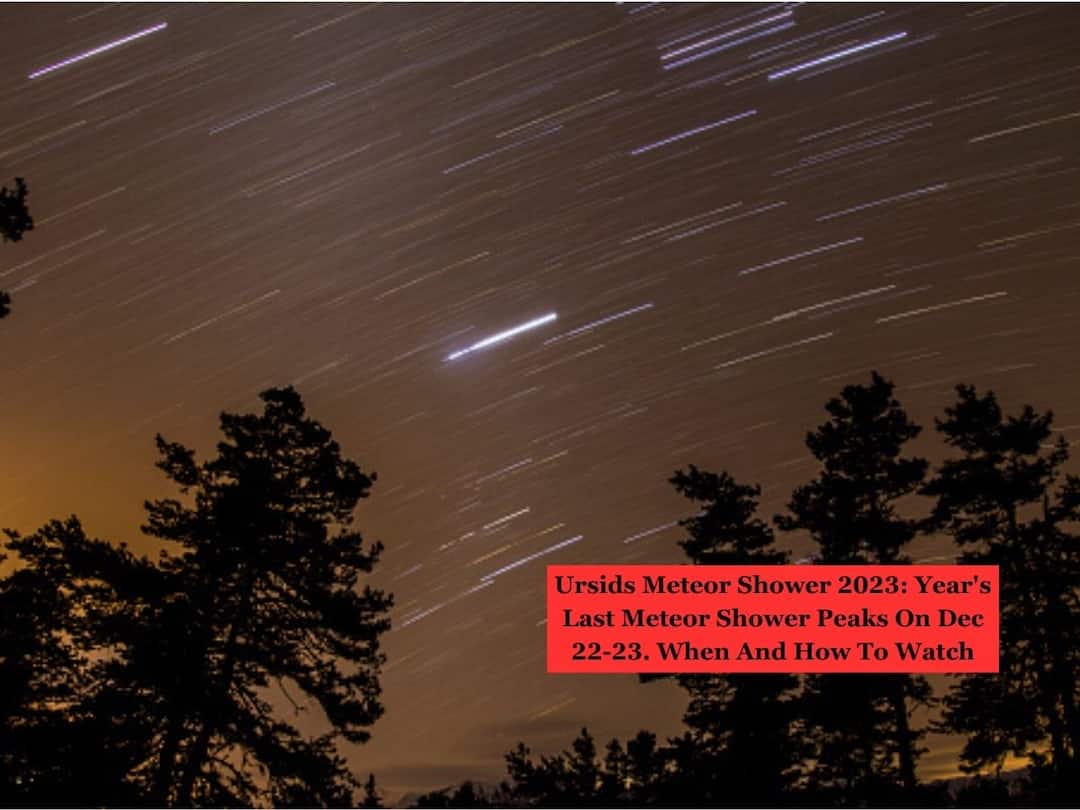

Ursids Meteor Shower 2023: The Ursids meteor shower, the last meteor shower of the year, is set to peak on the night between December 22 and 23. Every year, the Ursids meteor shower is active between December 17 and 24, and peaks around December 23. One can spot about 10 meteors per hour when the Ursids peak. In India, the Ursids meteor shower can be spotted from around 5:30 pm IST to around 7:30 am the next day, from December 21 to December 23.
According to Earth Sky, this year, the Ursids meteor shower is predicted to peak at 4 UTC on December 23 (9:30 am IST). One must look for the Ursids in the early morning hours.
Since the meteor shower appears to radiate from the direction of the constellation Ursa Minor, also known as the Little Dipper, in the sky, it is called the Ursid meteor shower. These meteor showers are associated with the Tuttle or 8P comet.
The Ursids meteor shower always peaks around the December Solstice.
When and how to watch Ursids meteor shower
This year, the waxing gibbous Moon, which is the phase between the half Moon and the full Moon, may interview with the Ursids because the Moon has 85 per cent illumination.
In order to spot the Ursids meteor shower in the night sky, one must go to an open field located away from the city, so that light pollution is minimal. People must reach the location an hour ahead of the peaking time in order to let their eyes adjust to the dark.
The Tuttle comet, responsible for the Ursids meteor shower, was discovered on January 9, 1790, by French astronomer Pierre Méchain. In 1790, Méchain observed the comet, and calculated an approximate orbit. However, he could not obtain enough data points to indicate that the comet Tuttle would return.
On January 5, 1858, American astronomer Horace Parnell Tuttle observed the comet for several months, and calculated an orbit. He found that the comet would return in 13.7 years.
MUST READ | NASA Features Orange Tabby Cat In First Video Sent From Deep Space To Earth Via Laser. WATCH
The path of the comet extends from near the Sun to the orbit of Saturn. Tuttle’s comet is tilted to Earth’s orbit, and therefore, one observes the materials released by the comet when it descends from above the planet’s orbit. August 2021 was the last time comet Tuttle visited the inner solar system.
However, the Ursids meteor shower is not linked to when the comet appears in the inner solar system. This is because the materials create their own path, and lag behind the comet.
People can watch the Ursids meteor shower online on a YouTube channel called Astro Amateur.

Ursids Meteor Shower 2023: The Ursids meteor shower, the last meteor shower of the year, is set to peak on the night between December 22 and 23. Every year, the Ursids meteor shower is active between December 17 and 24, and peaks around December 23. One can spot about 10 meteors per hour when the Ursids peak. In India, the Ursids meteor shower can be spotted from around 5:30 pm IST to around 7:30 am the next day, from December 21 to December 23.
According to Earth Sky, this year, the Ursids meteor shower is predicted to peak at 4 UTC on December 23 (9:30 am IST). One must look for the Ursids in the early morning hours.
Since the meteor shower appears to radiate from the direction of the constellation Ursa Minor, also known as the Little Dipper, in the sky, it is called the Ursid meteor shower. These meteor showers are associated with the Tuttle or 8P comet.
The Ursids meteor shower always peaks around the December Solstice.
When and how to watch Ursids meteor shower
This year, the waxing gibbous Moon, which is the phase between the half Moon and the full Moon, may interview with the Ursids because the Moon has 85 per cent illumination.
In order to spot the Ursids meteor shower in the night sky, one must go to an open field located away from the city, so that light pollution is minimal. People must reach the location an hour ahead of the peaking time in order to let their eyes adjust to the dark.
The Tuttle comet, responsible for the Ursids meteor shower, was discovered on January 9, 1790, by French astronomer Pierre Méchain. In 1790, Méchain observed the comet, and calculated an approximate orbit. However, he could not obtain enough data points to indicate that the comet Tuttle would return.
On January 5, 1858, American astronomer Horace Parnell Tuttle observed the comet for several months, and calculated an orbit. He found that the comet would return in 13.7 years.
MUST READ | NASA Features Orange Tabby Cat In First Video Sent From Deep Space To Earth Via Laser. WATCH
The path of the comet extends from near the Sun to the orbit of Saturn. Tuttle’s comet is tilted to Earth’s orbit, and therefore, one observes the materials released by the comet when it descends from above the planet’s orbit. August 2021 was the last time comet Tuttle visited the inner solar system.
However, the Ursids meteor shower is not linked to when the comet appears in the inner solar system. This is because the materials create their own path, and lag behind the comet.
People can watch the Ursids meteor shower online on a YouTube channel called Astro Amateur.

Ursids Meteor Shower 2023: The Ursids meteor shower, the last meteor shower of the year, is set to peak on the night between December 22 and 23. Every year, the Ursids meteor shower is active between December 17 and 24, and peaks around December 23. One can spot about 10 meteors per hour when the Ursids peak. In India, the Ursids meteor shower can be spotted from around 5:30 pm IST to around 7:30 am the next day, from December 21 to December 23.
According to Earth Sky, this year, the Ursids meteor shower is predicted to peak at 4 UTC on December 23 (9:30 am IST). One must look for the Ursids in the early morning hours.
Since the meteor shower appears to radiate from the direction of the constellation Ursa Minor, also known as the Little Dipper, in the sky, it is called the Ursid meteor shower. These meteor showers are associated with the Tuttle or 8P comet.
The Ursids meteor shower always peaks around the December Solstice.
When and how to watch Ursids meteor shower
This year, the waxing gibbous Moon, which is the phase between the half Moon and the full Moon, may interview with the Ursids because the Moon has 85 per cent illumination.
In order to spot the Ursids meteor shower in the night sky, one must go to an open field located away from the city, so that light pollution is minimal. People must reach the location an hour ahead of the peaking time in order to let their eyes adjust to the dark.
The Tuttle comet, responsible for the Ursids meteor shower, was discovered on January 9, 1790, by French astronomer Pierre Méchain. In 1790, Méchain observed the comet, and calculated an approximate orbit. However, he could not obtain enough data points to indicate that the comet Tuttle would return.
On January 5, 1858, American astronomer Horace Parnell Tuttle observed the comet for several months, and calculated an orbit. He found that the comet would return in 13.7 years.
MUST READ | NASA Features Orange Tabby Cat In First Video Sent From Deep Space To Earth Via Laser. WATCH
The path of the comet extends from near the Sun to the orbit of Saturn. Tuttle’s comet is tilted to Earth’s orbit, and therefore, one observes the materials released by the comet when it descends from above the planet’s orbit. August 2021 was the last time comet Tuttle visited the inner solar system.
However, the Ursids meteor shower is not linked to when the comet appears in the inner solar system. This is because the materials create their own path, and lag behind the comet.
People can watch the Ursids meteor shower online on a YouTube channel called Astro Amateur.
Ursids Meteor Shower 2023: The Ursids meteor shower, the last meteor shower of the year, is set to peak on the night between December 22 and 23. Every year, the Ursids meteor shower is active between December 17 and 24, and peaks around December 23. One can spot about 10 meteors per hour when the Ursids peak. In India, the Ursids meteor shower can be spotted from around 5:30 pm IST to around 7:30 am the next day, from December 21 to December 23.
According to Earth Sky, this year, the Ursids meteor shower is predicted to peak at 4 UTC on December 23 (9:30 am IST). One must look for the Ursids in the early morning hours.
Since the meteor shower appears to radiate from the direction of the constellation Ursa Minor, also known as the Little Dipper, in the sky, it is called the Ursid meteor shower. These meteor showers are associated with the Tuttle or 8P comet.
The Ursids meteor shower always peaks around the December Solstice.
When and how to watch Ursids meteor shower
This year, the waxing gibbous Moon, which is the phase between the half Moon and the full Moon, may interview with the Ursids because the Moon has 85 per cent illumination.
In order to spot the Ursids meteor shower in the night sky, one must go to an open field located away from the city, so that light pollution is minimal. People must reach the location an hour ahead of the peaking time in order to let their eyes adjust to the dark.
The Tuttle comet, responsible for the Ursids meteor shower, was discovered on January 9, 1790, by French astronomer Pierre Méchain. In 1790, Méchain observed the comet, and calculated an approximate orbit. However, he could not obtain enough data points to indicate that the comet Tuttle would return.
On January 5, 1858, American astronomer Horace Parnell Tuttle observed the comet for several months, and calculated an orbit. He found that the comet would return in 13.7 years.
MUST READ | NASA Features Orange Tabby Cat In First Video Sent From Deep Space To Earth Via Laser. WATCH
The path of the comet extends from near the Sun to the orbit of Saturn. Tuttle’s comet is tilted to Earth’s orbit, and therefore, one observes the materials released by the comet when it descends from above the planet’s orbit. August 2021 was the last time comet Tuttle visited the inner solar system.
However, the Ursids meteor shower is not linked to when the comet appears in the inner solar system. This is because the materials create their own path, and lag behind the comet.
People can watch the Ursids meteor shower online on a YouTube channel called Astro Amateur.

Ursids Meteor Shower 2023: The Ursids meteor shower, the last meteor shower of the year, is set to peak on the night between December 22 and 23. Every year, the Ursids meteor shower is active between December 17 and 24, and peaks around December 23. One can spot about 10 meteors per hour when the Ursids peak. In India, the Ursids meteor shower can be spotted from around 5:30 pm IST to around 7:30 am the next day, from December 21 to December 23.
According to Earth Sky, this year, the Ursids meteor shower is predicted to peak at 4 UTC on December 23 (9:30 am IST). One must look for the Ursids in the early morning hours.
Since the meteor shower appears to radiate from the direction of the constellation Ursa Minor, also known as the Little Dipper, in the sky, it is called the Ursid meteor shower. These meteor showers are associated with the Tuttle or 8P comet.
The Ursids meteor shower always peaks around the December Solstice.
When and how to watch Ursids meteor shower
This year, the waxing gibbous Moon, which is the phase between the half Moon and the full Moon, may interview with the Ursids because the Moon has 85 per cent illumination.
In order to spot the Ursids meteor shower in the night sky, one must go to an open field located away from the city, so that light pollution is minimal. People must reach the location an hour ahead of the peaking time in order to let their eyes adjust to the dark.
The Tuttle comet, responsible for the Ursids meteor shower, was discovered on January 9, 1790, by French astronomer Pierre Méchain. In 1790, Méchain observed the comet, and calculated an approximate orbit. However, he could not obtain enough data points to indicate that the comet Tuttle would return.
On January 5, 1858, American astronomer Horace Parnell Tuttle observed the comet for several months, and calculated an orbit. He found that the comet would return in 13.7 years.
MUST READ | NASA Features Orange Tabby Cat In First Video Sent From Deep Space To Earth Via Laser. WATCH
The path of the comet extends from near the Sun to the orbit of Saturn. Tuttle’s comet is tilted to Earth’s orbit, and therefore, one observes the materials released by the comet when it descends from above the planet’s orbit. August 2021 was the last time comet Tuttle visited the inner solar system.
However, the Ursids meteor shower is not linked to when the comet appears in the inner solar system. This is because the materials create their own path, and lag behind the comet.
People can watch the Ursids meteor shower online on a YouTube channel called Astro Amateur.
Ursids Meteor Shower 2023: The Ursids meteor shower, the last meteor shower of the year, is set to peak on the night between December 22 and 23. Every year, the Ursids meteor shower is active between December 17 and 24, and peaks around December 23. One can spot about 10 meteors per hour when the Ursids peak. In India, the Ursids meteor shower can be spotted from around 5:30 pm IST to around 7:30 am the next day, from December 21 to December 23.
According to Earth Sky, this year, the Ursids meteor shower is predicted to peak at 4 UTC on December 23 (9:30 am IST). One must look for the Ursids in the early morning hours.
Since the meteor shower appears to radiate from the direction of the constellation Ursa Minor, also known as the Little Dipper, in the sky, it is called the Ursid meteor shower. These meteor showers are associated with the Tuttle or 8P comet.
The Ursids meteor shower always peaks around the December Solstice.
When and how to watch Ursids meteor shower
This year, the waxing gibbous Moon, which is the phase between the half Moon and the full Moon, may interview with the Ursids because the Moon has 85 per cent illumination.
In order to spot the Ursids meteor shower in the night sky, one must go to an open field located away from the city, so that light pollution is minimal. People must reach the location an hour ahead of the peaking time in order to let their eyes adjust to the dark.
The Tuttle comet, responsible for the Ursids meteor shower, was discovered on January 9, 1790, by French astronomer Pierre Méchain. In 1790, Méchain observed the comet, and calculated an approximate orbit. However, he could not obtain enough data points to indicate that the comet Tuttle would return.
On January 5, 1858, American astronomer Horace Parnell Tuttle observed the comet for several months, and calculated an orbit. He found that the comet would return in 13.7 years.
MUST READ | NASA Features Orange Tabby Cat In First Video Sent From Deep Space To Earth Via Laser. WATCH
The path of the comet extends from near the Sun to the orbit of Saturn. Tuttle’s comet is tilted to Earth’s orbit, and therefore, one observes the materials released by the comet when it descends from above the planet’s orbit. August 2021 was the last time comet Tuttle visited the inner solar system.
However, the Ursids meteor shower is not linked to when the comet appears in the inner solar system. This is because the materials create their own path, and lag behind the comet.
People can watch the Ursids meteor shower online on a YouTube channel called Astro Amateur.
Ursids Meteor Shower 2023: The Ursids meteor shower, the last meteor shower of the year, is set to peak on the night between December 22 and 23. Every year, the Ursids meteor shower is active between December 17 and 24, and peaks around December 23. One can spot about 10 meteors per hour when the Ursids peak. In India, the Ursids meteor shower can be spotted from around 5:30 pm IST to around 7:30 am the next day, from December 21 to December 23.
According to Earth Sky, this year, the Ursids meteor shower is predicted to peak at 4 UTC on December 23 (9:30 am IST). One must look for the Ursids in the early morning hours.
Since the meteor shower appears to radiate from the direction of the constellation Ursa Minor, also known as the Little Dipper, in the sky, it is called the Ursid meteor shower. These meteor showers are associated with the Tuttle or 8P comet.
The Ursids meteor shower always peaks around the December Solstice.
When and how to watch Ursids meteor shower
This year, the waxing gibbous Moon, which is the phase between the half Moon and the full Moon, may interview with the Ursids because the Moon has 85 per cent illumination.
In order to spot the Ursids meteor shower in the night sky, one must go to an open field located away from the city, so that light pollution is minimal. People must reach the location an hour ahead of the peaking time in order to let their eyes adjust to the dark.
The Tuttle comet, responsible for the Ursids meteor shower, was discovered on January 9, 1790, by French astronomer Pierre Méchain. In 1790, Méchain observed the comet, and calculated an approximate orbit. However, he could not obtain enough data points to indicate that the comet Tuttle would return.
On January 5, 1858, American astronomer Horace Parnell Tuttle observed the comet for several months, and calculated an orbit. He found that the comet would return in 13.7 years.
MUST READ | NASA Features Orange Tabby Cat In First Video Sent From Deep Space To Earth Via Laser. WATCH
The path of the comet extends from near the Sun to the orbit of Saturn. Tuttle’s comet is tilted to Earth’s orbit, and therefore, one observes the materials released by the comet when it descends from above the planet’s orbit. August 2021 was the last time comet Tuttle visited the inner solar system.
However, the Ursids meteor shower is not linked to when the comet appears in the inner solar system. This is because the materials create their own path, and lag behind the comet.
People can watch the Ursids meteor shower online on a YouTube channel called Astro Amateur.
Ursids Meteor Shower 2023: The Ursids meteor shower, the last meteor shower of the year, is set to peak on the night between December 22 and 23. Every year, the Ursids meteor shower is active between December 17 and 24, and peaks around December 23. One can spot about 10 meteors per hour when the Ursids peak. In India, the Ursids meteor shower can be spotted from around 5:30 pm IST to around 7:30 am the next day, from December 21 to December 23.
According to Earth Sky, this year, the Ursids meteor shower is predicted to peak at 4 UTC on December 23 (9:30 am IST). One must look for the Ursids in the early morning hours.
Since the meteor shower appears to radiate from the direction of the constellation Ursa Minor, also known as the Little Dipper, in the sky, it is called the Ursid meteor shower. These meteor showers are associated with the Tuttle or 8P comet.
The Ursids meteor shower always peaks around the December Solstice.
When and how to watch Ursids meteor shower
This year, the waxing gibbous Moon, which is the phase between the half Moon and the full Moon, may interview with the Ursids because the Moon has 85 per cent illumination.
In order to spot the Ursids meteor shower in the night sky, one must go to an open field located away from the city, so that light pollution is minimal. People must reach the location an hour ahead of the peaking time in order to let their eyes adjust to the dark.
The Tuttle comet, responsible for the Ursids meteor shower, was discovered on January 9, 1790, by French astronomer Pierre Méchain. In 1790, Méchain observed the comet, and calculated an approximate orbit. However, he could not obtain enough data points to indicate that the comet Tuttle would return.
On January 5, 1858, American astronomer Horace Parnell Tuttle observed the comet for several months, and calculated an orbit. He found that the comet would return in 13.7 years.
MUST READ | NASA Features Orange Tabby Cat In First Video Sent From Deep Space To Earth Via Laser. WATCH
The path of the comet extends from near the Sun to the orbit of Saturn. Tuttle’s comet is tilted to Earth’s orbit, and therefore, one observes the materials released by the comet when it descends from above the planet’s orbit. August 2021 was the last time comet Tuttle visited the inner solar system.
However, the Ursids meteor shower is not linked to when the comet appears in the inner solar system. This is because the materials create their own path, and lag behind the comet.
People can watch the Ursids meteor shower online on a YouTube channel called Astro Amateur.

