

A former political prisoner who said he was tortured for leading protests against Nicaragua’s authoritarian government was arrested and jailed immediately after he was deported there from the United States last week, according to relatives and human rights advocates.
Jeffrey Jarquín, 35, was taken directly from the deportation flight to Nicaragua’s notorious Modelo prison, where he had been held previously for participating in pro-democracy marches that were violently repressed by President Daniel Ortega.
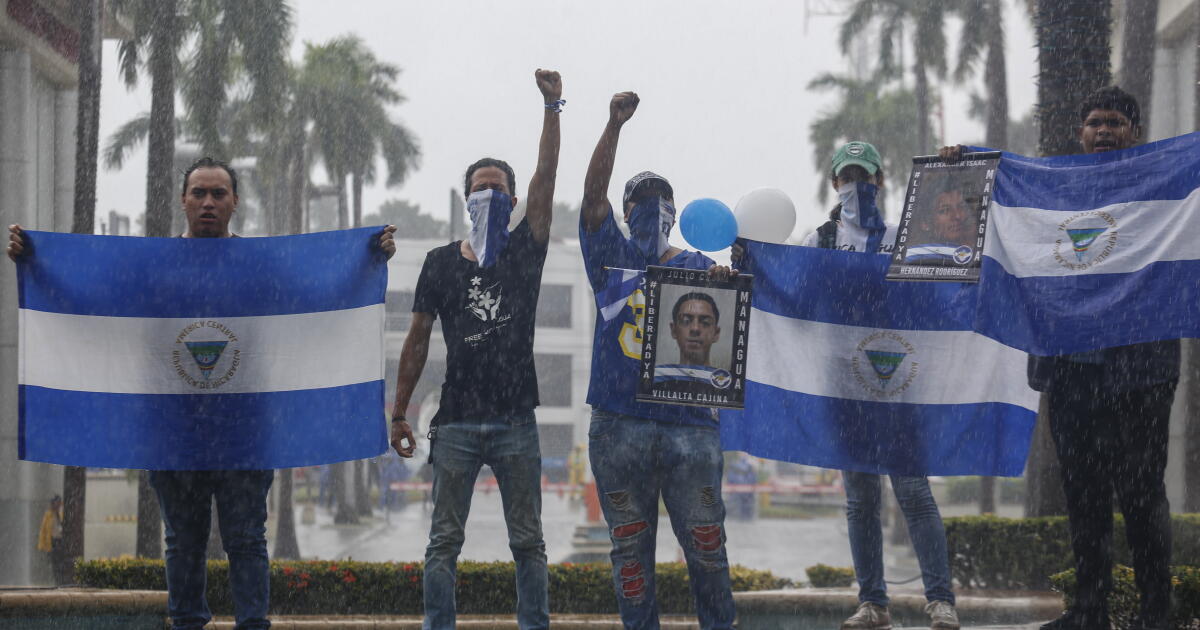
Jarquín was among thousands of Nicaraguans who took to the streets in 2018 to demand Ortega’s resignation and free elections. He helped occupy two public universities, and later took refugee inside a small Catholic church as it came under fire from pro-government militia forces — an incident that became emblematic of the country’s embattled protest movement.
Jarquín was imprisoned for nine months, and later told journalists and human rights investigators that guards burned his genitals with cigarette butts. He was released in 2019, spent a short period in Costa Rica and later sought political asylum in the United States.
The Trump administration has levied sanctions on Ortega and his family members and has repeatedly criticized his government, with Juan Pablo Segura, deputy assistant secretary of State for Western Hemisphere affairs, describing it recently as a “brutal dictatorship that is stealing, lying and murdering.”
Nicaraguan citizens wave from a bus after being released from a Nicaraguan jail and landing at the airport in Guatemala City in 2024.
(Moises Castillo / Associated Press)
Yet journalists, human rights advocates and political dissidents who were persecuted for promoting democracy in Nicaragua are increasingly being targeted for deportation as the Trump administration narrows access to asylum and expands the pool of migrants eligible for removal.
U.S. immigration agents have recently begun arresting members of a high-profile group of Nicaraguan political prisoners who were freed in a 2023 State Department deal, flown to the U.S. and granted temporary humanitarian parole and the chance to apply for asylum.
The U.S. has sent some Nicaraguan migrants as far away as Africa under a Trump administration program that deports asylum seekers and others to “third countries” where they have no ties.
But other Nicaraguans are being sent home, despite warnings from human rights advocates that such deportations may violate the international ban on “refoulement” — returning someone to a country where they face persecution or torture.
“The United States sent him to the very prisons where he had already been tortured,” said Muriel Sáenz, an activist who represented Jarquín during an immigration bond hearing.
Jarquín, she said, is a victim of political persecution who has been sent “back into the hands of his tormentors.”

Nicaraguan co-Presidents Daniel Ortega and Rosario Murillo at a rally in Managua.
(Associated Press)
Jarquín was arrested in Miami in February after being accused of assault. A judge dismissed the case, but while Jarquín was detained, immigration agents initiated deportation proceedings against him. An immigration judge denied him asylum, according to his advocates.
They said Jarquín agreed to be deported but asked to be sent to a third country. Instead he was put on a plane to Managua last week.
U.S. deportations to Nicaragua have risen sharply under Trump. An analysis of government data by Human Rights Watch found that the U.S. deported more than 6,300 Nicaraguans between January and July of this year, compared with 3,323 during the same period in 2025.
In Miami’s Nicaraguan community, Jarquín was known as a vocal opponent of the Sandinista regime, often carrying a megaphone to protests. He posted photos on social media of himself alongside U.S. Republican leaders who have also criticized Ortega, including U.S. Secretary of State Marco Rubio.
At 81, Ortega is the longest-serving leader in the Americas. He rules the country with his co-president and wife, Rosario Murillo.
The pair, former revolutionaries who decades ago helped overthrow a brutal right-wing dictatorship, have tightened their grip on power in recent years, closing media outlets and nongovernmental organizations and jailing or expelling virtually all of their political opponents. Nicaragua’s government did not respond to inquiries about the Jarquín case.
His friends and family members say they don’t know when they will see him again.
“His life is in danger back in Nicaragua,” said Ronmell López, a friend. “We demand that the dictatorship … respect his life and safety.”
“For Nicaraguan deportees, the risk of persecution is real,” said Juan Pappier, deputy director of the Americas division at Human Rights Watch. “The United States government knows Nicaragua is one of the most authoritarian governments in the hemisphere and should take robust steps to ensure nobody is sent back to torture or abuse.”
Linthicum reported from Mexico City. López reported from Jacksonville, Fla.

A former political prisoner who said he was tortured for leading protests against Nicaragua’s authoritarian government was arrested and jailed immediately after he was deported there from the United States last week, according to relatives and human rights advocates.
Jeffrey Jarquín, 35, was taken directly from the deportation flight to Nicaragua’s notorious Modelo prison, where he had been held previously for participating in pro-democracy marches that were violently repressed by President Daniel Ortega.
Jarquín was among thousands of Nicaraguans who took to the streets in 2018 to demand Ortega’s resignation and free elections. He helped occupy two public universities, and later took refugee inside a small Catholic church as it came under fire from pro-government militia forces — an incident that became emblematic of the country’s embattled protest movement.
Jarquín was imprisoned for nine months, and later told journalists and human rights investigators that guards burned his genitals with cigarette butts. He was released in 2019, spent a short period in Costa Rica and later sought political asylum in the United States.
The Trump administration has levied sanctions on Ortega and his family members and has repeatedly criticized his government, with Juan Pablo Segura, deputy assistant secretary of State for Western Hemisphere affairs, describing it recently as a “brutal dictatorship that is stealing, lying and murdering.”
Nicaraguan citizens wave from a bus after being released from a Nicaraguan jail and landing at the airport in Guatemala City in 2024.
(Moises Castillo / Associated Press)
Yet journalists, human rights advocates and political dissidents who were persecuted for promoting democracy in Nicaragua are increasingly being targeted for deportation as the Trump administration narrows access to asylum and expands the pool of migrants eligible for removal.
U.S. immigration agents have recently begun arresting members of a high-profile group of Nicaraguan political prisoners who were freed in a 2023 State Department deal, flown to the U.S. and granted temporary humanitarian parole and the chance to apply for asylum.
The U.S. has sent some Nicaraguan migrants as far away as Africa under a Trump administration program that deports asylum seekers and others to “third countries” where they have no ties.
But other Nicaraguans are being sent home, despite warnings from human rights advocates that such deportations may violate the international ban on “refoulement” — returning someone to a country where they face persecution or torture.
“The United States sent him to the very prisons where he had already been tortured,” said Muriel Sáenz, an activist who represented Jarquín during an immigration bond hearing.
Jarquín, she said, is a victim of political persecution who has been sent “back into the hands of his tormentors.”
Nicaraguan co-Presidents Daniel Ortega and Rosario Murillo at a rally in Managua.
(Associated Press)
Jarquín was arrested in Miami in February after being accused of assault. A judge dismissed the case, but while Jarquín was detained, immigration agents initiated deportation proceedings against him. An immigration judge denied him asylum, according to his advocates.
They said Jarquín agreed to be deported but asked to be sent to a third country. Instead he was put on a plane to Managua last week.
U.S. deportations to Nicaragua have risen sharply under Trump. An analysis of government data by Human Rights Watch found that the U.S. deported more than 6,300 Nicaraguans between January and July of this year, compared with 3,323 during the same period in 2025.
In Miami’s Nicaraguan community, Jarquín was known as a vocal opponent of the Sandinista regime, often carrying a megaphone to protests. He posted photos on social media of himself alongside U.S. Republican leaders who have also criticized Ortega, including U.S. Secretary of State Marco Rubio.
At 81, Ortega is the longest-serving leader in the Americas. He rules the country with his co-president and wife, Rosario Murillo.
The pair, former revolutionaries who decades ago helped overthrow a brutal right-wing dictatorship, have tightened their grip on power in recent years, closing media outlets and nongovernmental organizations and jailing or expelling virtually all of their political opponents. Nicaragua’s government did not respond to inquiries about the Jarquín case.
His friends and family members say they don’t know when they will see him again.
“His life is in danger back in Nicaragua,” said Ronmell López, a friend. “We demand that the dictatorship … respect his life and safety.”
“For Nicaraguan deportees, the risk of persecution is real,” said Juan Pappier, deputy director of the Americas division at Human Rights Watch. “The United States government knows Nicaragua is one of the most authoritarian governments in the hemisphere and should take robust steps to ensure nobody is sent back to torture or abuse.”
Linthicum reported from Mexico City. López reported from Jacksonville, Fla.

A former political prisoner who said he was tortured for leading protests against Nicaragua’s authoritarian government was arrested and jailed immediately after he was deported there from the United States last week, according to relatives and human rights advocates.
Jeffrey Jarquín, 35, was taken directly from the deportation flight to Nicaragua’s notorious Modelo prison, where he had been held previously for participating in pro-democracy marches that were violently repressed by President Daniel Ortega.
Jarquín was among thousands of Nicaraguans who took to the streets in 2018 to demand Ortega’s resignation and free elections. He helped occupy two public universities, and later took refugee inside a small Catholic church as it came under fire from pro-government militia forces — an incident that became emblematic of the country’s embattled protest movement.
Jarquín was imprisoned for nine months, and later told journalists and human rights investigators that guards burned his genitals with cigarette butts. He was released in 2019, spent a short period in Costa Rica and later sought political asylum in the United States.
The Trump administration has levied sanctions on Ortega and his family members and has repeatedly criticized his government, with Juan Pablo Segura, deputy assistant secretary of State for Western Hemisphere affairs, describing it recently as a “brutal dictatorship that is stealing, lying and murdering.”
Nicaraguan citizens wave from a bus after being released from a Nicaraguan jail and landing at the airport in Guatemala City in 2024.
(Moises Castillo / Associated Press)
Yet journalists, human rights advocates and political dissidents who were persecuted for promoting democracy in Nicaragua are increasingly being targeted for deportation as the Trump administration narrows access to asylum and expands the pool of migrants eligible for removal.
U.S. immigration agents have recently begun arresting members of a high-profile group of Nicaraguan political prisoners who were freed in a 2023 State Department deal, flown to the U.S. and granted temporary humanitarian parole and the chance to apply for asylum.
The U.S. has sent some Nicaraguan migrants as far away as Africa under a Trump administration program that deports asylum seekers and others to “third countries” where they have no ties.
But other Nicaraguans are being sent home, despite warnings from human rights advocates that such deportations may violate the international ban on “refoulement” — returning someone to a country where they face persecution or torture.
“The United States sent him to the very prisons where he had already been tortured,” said Muriel Sáenz, an activist who represented Jarquín during an immigration bond hearing.
Jarquín, she said, is a victim of political persecution who has been sent “back into the hands of his tormentors.”
Nicaraguan co-Presidents Daniel Ortega and Rosario Murillo at a rally in Managua.
(Associated Press)
Jarquín was arrested in Miami in February after being accused of assault. A judge dismissed the case, but while Jarquín was detained, immigration agents initiated deportation proceedings against him. An immigration judge denied him asylum, according to his advocates.
They said Jarquín agreed to be deported but asked to be sent to a third country. Instead he was put on a plane to Managua last week.
U.S. deportations to Nicaragua have risen sharply under Trump. An analysis of government data by Human Rights Watch found that the U.S. deported more than 6,300 Nicaraguans between January and July of this year, compared with 3,323 during the same period in 2025.
In Miami’s Nicaraguan community, Jarquín was known as a vocal opponent of the Sandinista regime, often carrying a megaphone to protests. He posted photos on social media of himself alongside U.S. Republican leaders who have also criticized Ortega, including U.S. Secretary of State Marco Rubio.
At 81, Ortega is the longest-serving leader in the Americas. He rules the country with his co-president and wife, Rosario Murillo.
The pair, former revolutionaries who decades ago helped overthrow a brutal right-wing dictatorship, have tightened their grip on power in recent years, closing media outlets and nongovernmental organizations and jailing or expelling virtually all of their political opponents. Nicaragua’s government did not respond to inquiries about the Jarquín case.
His friends and family members say they don’t know when they will see him again.
“His life is in danger back in Nicaragua,” said Ronmell López, a friend. “We demand that the dictatorship … respect his life and safety.”
“For Nicaraguan deportees, the risk of persecution is real,” said Juan Pappier, deputy director of the Americas division at Human Rights Watch. “The United States government knows Nicaragua is one of the most authoritarian governments in the hemisphere and should take robust steps to ensure nobody is sent back to torture or abuse.”
Linthicum reported from Mexico City. López reported from Jacksonville, Fla.
A former political prisoner who said he was tortured for leading protests against Nicaragua’s authoritarian government was arrested and jailed immediately after he was deported there from the United States last week, according to relatives and human rights advocates.
Jeffrey Jarquín, 35, was taken directly from the deportation flight to Nicaragua’s notorious Modelo prison, where he had been held previously for participating in pro-democracy marches that were violently repressed by President Daniel Ortega.
Jarquín was among thousands of Nicaraguans who took to the streets in 2018 to demand Ortega’s resignation and free elections. He helped occupy two public universities, and later took refugee inside a small Catholic church as it came under fire from pro-government militia forces — an incident that became emblematic of the country’s embattled protest movement.
Jarquín was imprisoned for nine months, and later told journalists and human rights investigators that guards burned his genitals with cigarette butts. He was released in 2019, spent a short period in Costa Rica and later sought political asylum in the United States.
The Trump administration has levied sanctions on Ortega and his family members and has repeatedly criticized his government, with Juan Pablo Segura, deputy assistant secretary of State for Western Hemisphere affairs, describing it recently as a “brutal dictatorship that is stealing, lying and murdering.”
Nicaraguan citizens wave from a bus after being released from a Nicaraguan jail and landing at the airport in Guatemala City in 2024.
(Moises Castillo / Associated Press)
Yet journalists, human rights advocates and political dissidents who were persecuted for promoting democracy in Nicaragua are increasingly being targeted for deportation as the Trump administration narrows access to asylum and expands the pool of migrants eligible for removal.
U.S. immigration agents have recently begun arresting members of a high-profile group of Nicaraguan political prisoners who were freed in a 2023 State Department deal, flown to the U.S. and granted temporary humanitarian parole and the chance to apply for asylum.
The U.S. has sent some Nicaraguan migrants as far away as Africa under a Trump administration program that deports asylum seekers and others to “third countries” where they have no ties.
But other Nicaraguans are being sent home, despite warnings from human rights advocates that such deportations may violate the international ban on “refoulement” — returning someone to a country where they face persecution or torture.
“The United States sent him to the very prisons where he had already been tortured,” said Muriel Sáenz, an activist who represented Jarquín during an immigration bond hearing.
Jarquín, she said, is a victim of political persecution who has been sent “back into the hands of his tormentors.”
Nicaraguan co-Presidents Daniel Ortega and Rosario Murillo at a rally in Managua.
(Associated Press)
Jarquín was arrested in Miami in February after being accused of assault. A judge dismissed the case, but while Jarquín was detained, immigration agents initiated deportation proceedings against him. An immigration judge denied him asylum, according to his advocates.
They said Jarquín agreed to be deported but asked to be sent to a third country. Instead he was put on a plane to Managua last week.
U.S. deportations to Nicaragua have risen sharply under Trump. An analysis of government data by Human Rights Watch found that the U.S. deported more than 6,300 Nicaraguans between January and July of this year, compared with 3,323 during the same period in 2025.
In Miami’s Nicaraguan community, Jarquín was known as a vocal opponent of the Sandinista regime, often carrying a megaphone to protests. He posted photos on social media of himself alongside U.S. Republican leaders who have also criticized Ortega, including U.S. Secretary of State Marco Rubio.
At 81, Ortega is the longest-serving leader in the Americas. He rules the country with his co-president and wife, Rosario Murillo.
The pair, former revolutionaries who decades ago helped overthrow a brutal right-wing dictatorship, have tightened their grip on power in recent years, closing media outlets and nongovernmental organizations and jailing or expelling virtually all of their political opponents. Nicaragua’s government did not respond to inquiries about the Jarquín case.
His friends and family members say they don’t know when they will see him again.
“His life is in danger back in Nicaragua,” said Ronmell López, a friend. “We demand that the dictatorship … respect his life and safety.”
“For Nicaraguan deportees, the risk of persecution is real,” said Juan Pappier, deputy director of the Americas division at Human Rights Watch. “The United States government knows Nicaragua is one of the most authoritarian governments in the hemisphere and should take robust steps to ensure nobody is sent back to torture or abuse.”
Linthicum reported from Mexico City. López reported from Jacksonville, Fla.

A former political prisoner who said he was tortured for leading protests against Nicaragua’s authoritarian government was arrested and jailed immediately after he was deported there from the United States last week, according to relatives and human rights advocates.
Jeffrey Jarquín, 35, was taken directly from the deportation flight to Nicaragua’s notorious Modelo prison, where he had been held previously for participating in pro-democracy marches that were violently repressed by President Daniel Ortega.
Jarquín was among thousands of Nicaraguans who took to the streets in 2018 to demand Ortega’s resignation and free elections. He helped occupy two public universities, and later took refugee inside a small Catholic church as it came under fire from pro-government militia forces — an incident that became emblematic of the country’s embattled protest movement.
Jarquín was imprisoned for nine months, and later told journalists and human rights investigators that guards burned his genitals with cigarette butts. He was released in 2019, spent a short period in Costa Rica and later sought political asylum in the United States.
The Trump administration has levied sanctions on Ortega and his family members and has repeatedly criticized his government, with Juan Pablo Segura, deputy assistant secretary of State for Western Hemisphere affairs, describing it recently as a “brutal dictatorship that is stealing, lying and murdering.”
Nicaraguan citizens wave from a bus after being released from a Nicaraguan jail and landing at the airport in Guatemala City in 2024.
(Moises Castillo / Associated Press)
Yet journalists, human rights advocates and political dissidents who were persecuted for promoting democracy in Nicaragua are increasingly being targeted for deportation as the Trump administration narrows access to asylum and expands the pool of migrants eligible for removal.
U.S. immigration agents have recently begun arresting members of a high-profile group of Nicaraguan political prisoners who were freed in a 2023 State Department deal, flown to the U.S. and granted temporary humanitarian parole and the chance to apply for asylum.
The U.S. has sent some Nicaraguan migrants as far away as Africa under a Trump administration program that deports asylum seekers and others to “third countries” where they have no ties.
But other Nicaraguans are being sent home, despite warnings from human rights advocates that such deportations may violate the international ban on “refoulement” — returning someone to a country where they face persecution or torture.
“The United States sent him to the very prisons where he had already been tortured,” said Muriel Sáenz, an activist who represented Jarquín during an immigration bond hearing.
Jarquín, she said, is a victim of political persecution who has been sent “back into the hands of his tormentors.”
Nicaraguan co-Presidents Daniel Ortega and Rosario Murillo at a rally in Managua.
(Associated Press)
Jarquín was arrested in Miami in February after being accused of assault. A judge dismissed the case, but while Jarquín was detained, immigration agents initiated deportation proceedings against him. An immigration judge denied him asylum, according to his advocates.
They said Jarquín agreed to be deported but asked to be sent to a third country. Instead he was put on a plane to Managua last week.
U.S. deportations to Nicaragua have risen sharply under Trump. An analysis of government data by Human Rights Watch found that the U.S. deported more than 6,300 Nicaraguans between January and July of this year, compared with 3,323 during the same period in 2025.
In Miami’s Nicaraguan community, Jarquín was known as a vocal opponent of the Sandinista regime, often carrying a megaphone to protests. He posted photos on social media of himself alongside U.S. Republican leaders who have also criticized Ortega, including U.S. Secretary of State Marco Rubio.
At 81, Ortega is the longest-serving leader in the Americas. He rules the country with his co-president and wife, Rosario Murillo.
The pair, former revolutionaries who decades ago helped overthrow a brutal right-wing dictatorship, have tightened their grip on power in recent years, closing media outlets and nongovernmental organizations and jailing or expelling virtually all of their political opponents. Nicaragua’s government did not respond to inquiries about the Jarquín case.
His friends and family members say they don’t know when they will see him again.
“His life is in danger back in Nicaragua,” said Ronmell López, a friend. “We demand that the dictatorship … respect his life and safety.”
“For Nicaraguan deportees, the risk of persecution is real,” said Juan Pappier, deputy director of the Americas division at Human Rights Watch. “The United States government knows Nicaragua is one of the most authoritarian governments in the hemisphere and should take robust steps to ensure nobody is sent back to torture or abuse.”
Linthicum reported from Mexico City. López reported from Jacksonville, Fla.
A former political prisoner who said he was tortured for leading protests against Nicaragua’s authoritarian government was arrested and jailed immediately after he was deported there from the United States last week, according to relatives and human rights advocates.
Jeffrey Jarquín, 35, was taken directly from the deportation flight to Nicaragua’s notorious Modelo prison, where he had been held previously for participating in pro-democracy marches that were violently repressed by President Daniel Ortega.
Jarquín was among thousands of Nicaraguans who took to the streets in 2018 to demand Ortega’s resignation and free elections. He helped occupy two public universities, and later took refugee inside a small Catholic church as it came under fire from pro-government militia forces — an incident that became emblematic of the country’s embattled protest movement.
Jarquín was imprisoned for nine months, and later told journalists and human rights investigators that guards burned his genitals with cigarette butts. He was released in 2019, spent a short period in Costa Rica and later sought political asylum in the United States.
The Trump administration has levied sanctions on Ortega and his family members and has repeatedly criticized his government, with Juan Pablo Segura, deputy assistant secretary of State for Western Hemisphere affairs, describing it recently as a “brutal dictatorship that is stealing, lying and murdering.”
Nicaraguan citizens wave from a bus after being released from a Nicaraguan jail and landing at the airport in Guatemala City in 2024.
(Moises Castillo / Associated Press)
Yet journalists, human rights advocates and political dissidents who were persecuted for promoting democracy in Nicaragua are increasingly being targeted for deportation as the Trump administration narrows access to asylum and expands the pool of migrants eligible for removal.
U.S. immigration agents have recently begun arresting members of a high-profile group of Nicaraguan political prisoners who were freed in a 2023 State Department deal, flown to the U.S. and granted temporary humanitarian parole and the chance to apply for asylum.
The U.S. has sent some Nicaraguan migrants as far away as Africa under a Trump administration program that deports asylum seekers and others to “third countries” where they have no ties.
But other Nicaraguans are being sent home, despite warnings from human rights advocates that such deportations may violate the international ban on “refoulement” — returning someone to a country where they face persecution or torture.
“The United States sent him to the very prisons where he had already been tortured,” said Muriel Sáenz, an activist who represented Jarquín during an immigration bond hearing.
Jarquín, she said, is a victim of political persecution who has been sent “back into the hands of his tormentors.”
Nicaraguan co-Presidents Daniel Ortega and Rosario Murillo at a rally in Managua.
(Associated Press)
Jarquín was arrested in Miami in February after being accused of assault. A judge dismissed the case, but while Jarquín was detained, immigration agents initiated deportation proceedings against him. An immigration judge denied him asylum, according to his advocates.
They said Jarquín agreed to be deported but asked to be sent to a third country. Instead he was put on a plane to Managua last week.
U.S. deportations to Nicaragua have risen sharply under Trump. An analysis of government data by Human Rights Watch found that the U.S. deported more than 6,300 Nicaraguans between January and July of this year, compared with 3,323 during the same period in 2025.
In Miami’s Nicaraguan community, Jarquín was known as a vocal opponent of the Sandinista regime, often carrying a megaphone to protests. He posted photos on social media of himself alongside U.S. Republican leaders who have also criticized Ortega, including U.S. Secretary of State Marco Rubio.
At 81, Ortega is the longest-serving leader in the Americas. He rules the country with his co-president and wife, Rosario Murillo.
The pair, former revolutionaries who decades ago helped overthrow a brutal right-wing dictatorship, have tightened their grip on power in recent years, closing media outlets and nongovernmental organizations and jailing or expelling virtually all of their political opponents. Nicaragua’s government did not respond to inquiries about the Jarquín case.
His friends and family members say they don’t know when they will see him again.
“His life is in danger back in Nicaragua,” said Ronmell López, a friend. “We demand that the dictatorship … respect his life and safety.”
“For Nicaraguan deportees, the risk of persecution is real,” said Juan Pappier, deputy director of the Americas division at Human Rights Watch. “The United States government knows Nicaragua is one of the most authoritarian governments in the hemisphere and should take robust steps to ensure nobody is sent back to torture or abuse.”
Linthicum reported from Mexico City. López reported from Jacksonville, Fla.
A former political prisoner who said he was tortured for leading protests against Nicaragua’s authoritarian government was arrested and jailed immediately after he was deported there from the United States last week, according to relatives and human rights advocates.
Jeffrey Jarquín, 35, was taken directly from the deportation flight to Nicaragua’s notorious Modelo prison, where he had been held previously for participating in pro-democracy marches that were violently repressed by President Daniel Ortega.
Jarquín was among thousands of Nicaraguans who took to the streets in 2018 to demand Ortega’s resignation and free elections. He helped occupy two public universities, and later took refugee inside a small Catholic church as it came under fire from pro-government militia forces — an incident that became emblematic of the country’s embattled protest movement.
Jarquín was imprisoned for nine months, and later told journalists and human rights investigators that guards burned his genitals with cigarette butts. He was released in 2019, spent a short period in Costa Rica and later sought political asylum in the United States.
The Trump administration has levied sanctions on Ortega and his family members and has repeatedly criticized his government, with Juan Pablo Segura, deputy assistant secretary of State for Western Hemisphere affairs, describing it recently as a “brutal dictatorship that is stealing, lying and murdering.”
Nicaraguan citizens wave from a bus after being released from a Nicaraguan jail and landing at the airport in Guatemala City in 2024.
(Moises Castillo / Associated Press)
Yet journalists, human rights advocates and political dissidents who were persecuted for promoting democracy in Nicaragua are increasingly being targeted for deportation as the Trump administration narrows access to asylum and expands the pool of migrants eligible for removal.
U.S. immigration agents have recently begun arresting members of a high-profile group of Nicaraguan political prisoners who were freed in a 2023 State Department deal, flown to the U.S. and granted temporary humanitarian parole and the chance to apply for asylum.
The U.S. has sent some Nicaraguan migrants as far away as Africa under a Trump administration program that deports asylum seekers and others to “third countries” where they have no ties.
But other Nicaraguans are being sent home, despite warnings from human rights advocates that such deportations may violate the international ban on “refoulement” — returning someone to a country where they face persecution or torture.
“The United States sent him to the very prisons where he had already been tortured,” said Muriel Sáenz, an activist who represented Jarquín during an immigration bond hearing.
Jarquín, she said, is a victim of political persecution who has been sent “back into the hands of his tormentors.”
Nicaraguan co-Presidents Daniel Ortega and Rosario Murillo at a rally in Managua.
(Associated Press)
Jarquín was arrested in Miami in February after being accused of assault. A judge dismissed the case, but while Jarquín was detained, immigration agents initiated deportation proceedings against him. An immigration judge denied him asylum, according to his advocates.
They said Jarquín agreed to be deported but asked to be sent to a third country. Instead he was put on a plane to Managua last week.
U.S. deportations to Nicaragua have risen sharply under Trump. An analysis of government data by Human Rights Watch found that the U.S. deported more than 6,300 Nicaraguans between January and July of this year, compared with 3,323 during the same period in 2025.
In Miami’s Nicaraguan community, Jarquín was known as a vocal opponent of the Sandinista regime, often carrying a megaphone to protests. He posted photos on social media of himself alongside U.S. Republican leaders who have also criticized Ortega, including U.S. Secretary of State Marco Rubio.
At 81, Ortega is the longest-serving leader in the Americas. He rules the country with his co-president and wife, Rosario Murillo.
The pair, former revolutionaries who decades ago helped overthrow a brutal right-wing dictatorship, have tightened their grip on power in recent years, closing media outlets and nongovernmental organizations and jailing or expelling virtually all of their political opponents. Nicaragua’s government did not respond to inquiries about the Jarquín case.
His friends and family members say they don’t know when they will see him again.
“His life is in danger back in Nicaragua,” said Ronmell López, a friend. “We demand that the dictatorship … respect his life and safety.”
“For Nicaraguan deportees, the risk of persecution is real,” said Juan Pappier, deputy director of the Americas division at Human Rights Watch. “The United States government knows Nicaragua is one of the most authoritarian governments in the hemisphere and should take robust steps to ensure nobody is sent back to torture or abuse.”
Linthicum reported from Mexico City. López reported from Jacksonville, Fla.
A former political prisoner who said he was tortured for leading protests against Nicaragua’s authoritarian government was arrested and jailed immediately after he was deported there from the United States last week, according to relatives and human rights advocates.
Jeffrey Jarquín, 35, was taken directly from the deportation flight to Nicaragua’s notorious Modelo prison, where he had been held previously for participating in pro-democracy marches that were violently repressed by President Daniel Ortega.
Jarquín was among thousands of Nicaraguans who took to the streets in 2018 to demand Ortega’s resignation and free elections. He helped occupy two public universities, and later took refugee inside a small Catholic church as it came under fire from pro-government militia forces — an incident that became emblematic of the country’s embattled protest movement.
Jarquín was imprisoned for nine months, and later told journalists and human rights investigators that guards burned his genitals with cigarette butts. He was released in 2019, spent a short period in Costa Rica and later sought political asylum in the United States.
The Trump administration has levied sanctions on Ortega and his family members and has repeatedly criticized his government, with Juan Pablo Segura, deputy assistant secretary of State for Western Hemisphere affairs, describing it recently as a “brutal dictatorship that is stealing, lying and murdering.”
Nicaraguan citizens wave from a bus after being released from a Nicaraguan jail and landing at the airport in Guatemala City in 2024.
(Moises Castillo / Associated Press)
Yet journalists, human rights advocates and political dissidents who were persecuted for promoting democracy in Nicaragua are increasingly being targeted for deportation as the Trump administration narrows access to asylum and expands the pool of migrants eligible for removal.
U.S. immigration agents have recently begun arresting members of a high-profile group of Nicaraguan political prisoners who were freed in a 2023 State Department deal, flown to the U.S. and granted temporary humanitarian parole and the chance to apply for asylum.
The U.S. has sent some Nicaraguan migrants as far away as Africa under a Trump administration program that deports asylum seekers and others to “third countries” where they have no ties.
But other Nicaraguans are being sent home, despite warnings from human rights advocates that such deportations may violate the international ban on “refoulement” — returning someone to a country where they face persecution or torture.
“The United States sent him to the very prisons where he had already been tortured,” said Muriel Sáenz, an activist who represented Jarquín during an immigration bond hearing.
Jarquín, she said, is a victim of political persecution who has been sent “back into the hands of his tormentors.”
Nicaraguan co-Presidents Daniel Ortega and Rosario Murillo at a rally in Managua.
(Associated Press)
Jarquín was arrested in Miami in February after being accused of assault. A judge dismissed the case, but while Jarquín was detained, immigration agents initiated deportation proceedings against him. An immigration judge denied him asylum, according to his advocates.
They said Jarquín agreed to be deported but asked to be sent to a third country. Instead he was put on a plane to Managua last week.
U.S. deportations to Nicaragua have risen sharply under Trump. An analysis of government data by Human Rights Watch found that the U.S. deported more than 6,300 Nicaraguans between January and July of this year, compared with 3,323 during the same period in 2025.
In Miami’s Nicaraguan community, Jarquín was known as a vocal opponent of the Sandinista regime, often carrying a megaphone to protests. He posted photos on social media of himself alongside U.S. Republican leaders who have also criticized Ortega, including U.S. Secretary of State Marco Rubio.
At 81, Ortega is the longest-serving leader in the Americas. He rules the country with his co-president and wife, Rosario Murillo.
The pair, former revolutionaries who decades ago helped overthrow a brutal right-wing dictatorship, have tightened their grip on power in recent years, closing media outlets and nongovernmental organizations and jailing or expelling virtually all of their political opponents. Nicaragua’s government did not respond to inquiries about the Jarquín case.
His friends and family members say they don’t know when they will see him again.
“His life is in danger back in Nicaragua,” said Ronmell López, a friend. “We demand that the dictatorship … respect his life and safety.”
“For Nicaraguan deportees, the risk of persecution is real,” said Juan Pappier, deputy director of the Americas division at Human Rights Watch. “The United States government knows Nicaragua is one of the most authoritarian governments in the hemisphere and should take robust steps to ensure nobody is sent back to torture or abuse.”
Linthicum reported from Mexico City. López reported from Jacksonville, Fla.

A former political prisoner who said he was tortured for leading protests against Nicaragua’s authoritarian government was arrested and jailed immediately after he was deported there from the United States last week, according to relatives and human rights advocates.
Jeffrey Jarquín, 35, was taken directly from the deportation flight to Nicaragua’s notorious Modelo prison, where he had been held previously for participating in pro-democracy marches that were violently repressed by President Daniel Ortega.
Jarquín was among thousands of Nicaraguans who took to the streets in 2018 to demand Ortega’s resignation and free elections. He helped occupy two public universities, and later took refugee inside a small Catholic church as it came under fire from pro-government militia forces — an incident that became emblematic of the country’s embattled protest movement.
Jarquín was imprisoned for nine months, and later told journalists and human rights investigators that guards burned his genitals with cigarette butts. He was released in 2019, spent a short period in Costa Rica and later sought political asylum in the United States.
The Trump administration has levied sanctions on Ortega and his family members and has repeatedly criticized his government, with Juan Pablo Segura, deputy assistant secretary of State for Western Hemisphere affairs, describing it recently as a “brutal dictatorship that is stealing, lying and murdering.”
Nicaraguan citizens wave from a bus after being released from a Nicaraguan jail and landing at the airport in Guatemala City in 2024.
(Moises Castillo / Associated Press)
Yet journalists, human rights advocates and political dissidents who were persecuted for promoting democracy in Nicaragua are increasingly being targeted for deportation as the Trump administration narrows access to asylum and expands the pool of migrants eligible for removal.
U.S. immigration agents have recently begun arresting members of a high-profile group of Nicaraguan political prisoners who were freed in a 2023 State Department deal, flown to the U.S. and granted temporary humanitarian parole and the chance to apply for asylum.
The U.S. has sent some Nicaraguan migrants as far away as Africa under a Trump administration program that deports asylum seekers and others to “third countries” where they have no ties.
But other Nicaraguans are being sent home, despite warnings from human rights advocates that such deportations may violate the international ban on “refoulement” — returning someone to a country where they face persecution or torture.
“The United States sent him to the very prisons where he had already been tortured,” said Muriel Sáenz, an activist who represented Jarquín during an immigration bond hearing.
Jarquín, she said, is a victim of political persecution who has been sent “back into the hands of his tormentors.”
Nicaraguan co-Presidents Daniel Ortega and Rosario Murillo at a rally in Managua.
(Associated Press)
Jarquín was arrested in Miami in February after being accused of assault. A judge dismissed the case, but while Jarquín was detained, immigration agents initiated deportation proceedings against him. An immigration judge denied him asylum, according to his advocates.
They said Jarquín agreed to be deported but asked to be sent to a third country. Instead he was put on a plane to Managua last week.
U.S. deportations to Nicaragua have risen sharply under Trump. An analysis of government data by Human Rights Watch found that the U.S. deported more than 6,300 Nicaraguans between January and July of this year, compared with 3,323 during the same period in 2025.
In Miami’s Nicaraguan community, Jarquín was known as a vocal opponent of the Sandinista regime, often carrying a megaphone to protests. He posted photos on social media of himself alongside U.S. Republican leaders who have also criticized Ortega, including U.S. Secretary of State Marco Rubio.
At 81, Ortega is the longest-serving leader in the Americas. He rules the country with his co-president and wife, Rosario Murillo.
The pair, former revolutionaries who decades ago helped overthrow a brutal right-wing dictatorship, have tightened their grip on power in recent years, closing media outlets and nongovernmental organizations and jailing or expelling virtually all of their political opponents. Nicaragua’s government did not respond to inquiries about the Jarquín case.
His friends and family members say they don’t know when they will see him again.
“His life is in danger back in Nicaragua,” said Ronmell López, a friend. “We demand that the dictatorship … respect his life and safety.”
“For Nicaraguan deportees, the risk of persecution is real,” said Juan Pappier, deputy director of the Americas division at Human Rights Watch. “The United States government knows Nicaragua is one of the most authoritarian governments in the hemisphere and should take robust steps to ensure nobody is sent back to torture or abuse.”
Linthicum reported from Mexico City. López reported from Jacksonville, Fla.
A former political prisoner who said he was tortured for leading protests against Nicaragua’s authoritarian government was arrested and jailed immediately after he was deported there from the United States last week, according to relatives and human rights advocates.
Jeffrey Jarquín, 35, was taken directly from the deportation flight to Nicaragua’s notorious Modelo prison, where he had been held previously for participating in pro-democracy marches that were violently repressed by President Daniel Ortega.
Jarquín was among thousands of Nicaraguans who took to the streets in 2018 to demand Ortega’s resignation and free elections. He helped occupy two public universities, and later took refugee inside a small Catholic church as it came under fire from pro-government militia forces — an incident that became emblematic of the country’s embattled protest movement.
Jarquín was imprisoned for nine months, and later told journalists and human rights investigators that guards burned his genitals with cigarette butts. He was released in 2019, spent a short period in Costa Rica and later sought political asylum in the United States.
The Trump administration has levied sanctions on Ortega and his family members and has repeatedly criticized his government, with Juan Pablo Segura, deputy assistant secretary of State for Western Hemisphere affairs, describing it recently as a “brutal dictatorship that is stealing, lying and murdering.”
Nicaraguan citizens wave from a bus after being released from a Nicaraguan jail and landing at the airport in Guatemala City in 2024.
(Moises Castillo / Associated Press)
Yet journalists, human rights advocates and political dissidents who were persecuted for promoting democracy in Nicaragua are increasingly being targeted for deportation as the Trump administration narrows access to asylum and expands the pool of migrants eligible for removal.
U.S. immigration agents have recently begun arresting members of a high-profile group of Nicaraguan political prisoners who were freed in a 2023 State Department deal, flown to the U.S. and granted temporary humanitarian parole and the chance to apply for asylum.
The U.S. has sent some Nicaraguan migrants as far away as Africa under a Trump administration program that deports asylum seekers and others to “third countries” where they have no ties.
But other Nicaraguans are being sent home, despite warnings from human rights advocates that such deportations may violate the international ban on “refoulement” — returning someone to a country where they face persecution or torture.
“The United States sent him to the very prisons where he had already been tortured,” said Muriel Sáenz, an activist who represented Jarquín during an immigration bond hearing.
Jarquín, she said, is a victim of political persecution who has been sent “back into the hands of his tormentors.”
Nicaraguan co-Presidents Daniel Ortega and Rosario Murillo at a rally in Managua.
(Associated Press)
Jarquín was arrested in Miami in February after being accused of assault. A judge dismissed the case, but while Jarquín was detained, immigration agents initiated deportation proceedings against him. An immigration judge denied him asylum, according to his advocates.
They said Jarquín agreed to be deported but asked to be sent to a third country. Instead he was put on a plane to Managua last week.
U.S. deportations to Nicaragua have risen sharply under Trump. An analysis of government data by Human Rights Watch found that the U.S. deported more than 6,300 Nicaraguans between January and July of this year, compared with 3,323 during the same period in 2025.
In Miami’s Nicaraguan community, Jarquín was known as a vocal opponent of the Sandinista regime, often carrying a megaphone to protests. He posted photos on social media of himself alongside U.S. Republican leaders who have also criticized Ortega, including U.S. Secretary of State Marco Rubio.
At 81, Ortega is the longest-serving leader in the Americas. He rules the country with his co-president and wife, Rosario Murillo.
The pair, former revolutionaries who decades ago helped overthrow a brutal right-wing dictatorship, have tightened their grip on power in recent years, closing media outlets and nongovernmental organizations and jailing or expelling virtually all of their political opponents. Nicaragua’s government did not respond to inquiries about the Jarquín case.
His friends and family members say they don’t know when they will see him again.
“His life is in danger back in Nicaragua,” said Ronmell López, a friend. “We demand that the dictatorship … respect his life and safety.”
“For Nicaraguan deportees, the risk of persecution is real,” said Juan Pappier, deputy director of the Americas division at Human Rights Watch. “The United States government knows Nicaragua is one of the most authoritarian governments in the hemisphere and should take robust steps to ensure nobody is sent back to torture or abuse.”
Linthicum reported from Mexico City. López reported from Jacksonville, Fla.
A former political prisoner who said he was tortured for leading protests against Nicaragua’s authoritarian government was arrested and jailed immediately after he was deported there from the United States last week, according to relatives and human rights advocates.
Jeffrey Jarquín, 35, was taken directly from the deportation flight to Nicaragua’s notorious Modelo prison, where he had been held previously for participating in pro-democracy marches that were violently repressed by President Daniel Ortega.
Jarquín was among thousands of Nicaraguans who took to the streets in 2018 to demand Ortega’s resignation and free elections. He helped occupy two public universities, and later took refugee inside a small Catholic church as it came under fire from pro-government militia forces — an incident that became emblematic of the country’s embattled protest movement.
Jarquín was imprisoned for nine months, and later told journalists and human rights investigators that guards burned his genitals with cigarette butts. He was released in 2019, spent a short period in Costa Rica and later sought political asylum in the United States.
The Trump administration has levied sanctions on Ortega and his family members and has repeatedly criticized his government, with Juan Pablo Segura, deputy assistant secretary of State for Western Hemisphere affairs, describing it recently as a “brutal dictatorship that is stealing, lying and murdering.”
Nicaraguan citizens wave from a bus after being released from a Nicaraguan jail and landing at the airport in Guatemala City in 2024.
(Moises Castillo / Associated Press)
Yet journalists, human rights advocates and political dissidents who were persecuted for promoting democracy in Nicaragua are increasingly being targeted for deportation as the Trump administration narrows access to asylum and expands the pool of migrants eligible for removal.
U.S. immigration agents have recently begun arresting members of a high-profile group of Nicaraguan political prisoners who were freed in a 2023 State Department deal, flown to the U.S. and granted temporary humanitarian parole and the chance to apply for asylum.
The U.S. has sent some Nicaraguan migrants as far away as Africa under a Trump administration program that deports asylum seekers and others to “third countries” where they have no ties.
But other Nicaraguans are being sent home, despite warnings from human rights advocates that such deportations may violate the international ban on “refoulement” — returning someone to a country where they face persecution or torture.
“The United States sent him to the very prisons where he had already been tortured,” said Muriel Sáenz, an activist who represented Jarquín during an immigration bond hearing.
Jarquín, she said, is a victim of political persecution who has been sent “back into the hands of his tormentors.”
Nicaraguan co-Presidents Daniel Ortega and Rosario Murillo at a rally in Managua.
(Associated Press)
Jarquín was arrested in Miami in February after being accused of assault. A judge dismissed the case, but while Jarquín was detained, immigration agents initiated deportation proceedings against him. An immigration judge denied him asylum, according to his advocates.
They said Jarquín agreed to be deported but asked to be sent to a third country. Instead he was put on a plane to Managua last week.
U.S. deportations to Nicaragua have risen sharply under Trump. An analysis of government data by Human Rights Watch found that the U.S. deported more than 6,300 Nicaraguans between January and July of this year, compared with 3,323 during the same period in 2025.
In Miami’s Nicaraguan community, Jarquín was known as a vocal opponent of the Sandinista regime, often carrying a megaphone to protests. He posted photos on social media of himself alongside U.S. Republican leaders who have also criticized Ortega, including U.S. Secretary of State Marco Rubio.
At 81, Ortega is the longest-serving leader in the Americas. He rules the country with his co-president and wife, Rosario Murillo.
The pair, former revolutionaries who decades ago helped overthrow a brutal right-wing dictatorship, have tightened their grip on power in recent years, closing media outlets and nongovernmental organizations and jailing or expelling virtually all of their political opponents. Nicaragua’s government did not respond to inquiries about the Jarquín case.
His friends and family members say they don’t know when they will see him again.
“His life is in danger back in Nicaragua,” said Ronmell López, a friend. “We demand that the dictatorship … respect his life and safety.”
“For Nicaraguan deportees, the risk of persecution is real,” said Juan Pappier, deputy director of the Americas division at Human Rights Watch. “The United States government knows Nicaragua is one of the most authoritarian governments in the hemisphere and should take robust steps to ensure nobody is sent back to torture or abuse.”
Linthicum reported from Mexico City. López reported from Jacksonville, Fla.
A former political prisoner who said he was tortured for leading protests against Nicaragua’s authoritarian government was arrested and jailed immediately after he was deported there from the United States last week, according to relatives and human rights advocates.
Jeffrey Jarquín, 35, was taken directly from the deportation flight to Nicaragua’s notorious Modelo prison, where he had been held previously for participating in pro-democracy marches that were violently repressed by President Daniel Ortega.
Jarquín was among thousands of Nicaraguans who took to the streets in 2018 to demand Ortega’s resignation and free elections. He helped occupy two public universities, and later took refugee inside a small Catholic church as it came under fire from pro-government militia forces — an incident that became emblematic of the country’s embattled protest movement.
Jarquín was imprisoned for nine months, and later told journalists and human rights investigators that guards burned his genitals with cigarette butts. He was released in 2019, spent a short period in Costa Rica and later sought political asylum in the United States.
The Trump administration has levied sanctions on Ortega and his family members and has repeatedly criticized his government, with Juan Pablo Segura, deputy assistant secretary of State for Western Hemisphere affairs, describing it recently as a “brutal dictatorship that is stealing, lying and murdering.”
Nicaraguan citizens wave from a bus after being released from a Nicaraguan jail and landing at the airport in Guatemala City in 2024.
(Moises Castillo / Associated Press)
Yet journalists, human rights advocates and political dissidents who were persecuted for promoting democracy in Nicaragua are increasingly being targeted for deportation as the Trump administration narrows access to asylum and expands the pool of migrants eligible for removal.
U.S. immigration agents have recently begun arresting members of a high-profile group of Nicaraguan political prisoners who were freed in a 2023 State Department deal, flown to the U.S. and granted temporary humanitarian parole and the chance to apply for asylum.
The U.S. has sent some Nicaraguan migrants as far away as Africa under a Trump administration program that deports asylum seekers and others to “third countries” where they have no ties.
But other Nicaraguans are being sent home, despite warnings from human rights advocates that such deportations may violate the international ban on “refoulement” — returning someone to a country where they face persecution or torture.
“The United States sent him to the very prisons where he had already been tortured,” said Muriel Sáenz, an activist who represented Jarquín during an immigration bond hearing.
Jarquín, she said, is a victim of political persecution who has been sent “back into the hands of his tormentors.”
Nicaraguan co-Presidents Daniel Ortega and Rosario Murillo at a rally in Managua.
(Associated Press)
Jarquín was arrested in Miami in February after being accused of assault. A judge dismissed the case, but while Jarquín was detained, immigration agents initiated deportation proceedings against him. An immigration judge denied him asylum, according to his advocates.
They said Jarquín agreed to be deported but asked to be sent to a third country. Instead he was put on a plane to Managua last week.
U.S. deportations to Nicaragua have risen sharply under Trump. An analysis of government data by Human Rights Watch found that the U.S. deported more than 6,300 Nicaraguans between January and July of this year, compared with 3,323 during the same period in 2025.
In Miami’s Nicaraguan community, Jarquín was known as a vocal opponent of the Sandinista regime, often carrying a megaphone to protests. He posted photos on social media of himself alongside U.S. Republican leaders who have also criticized Ortega, including U.S. Secretary of State Marco Rubio.
At 81, Ortega is the longest-serving leader in the Americas. He rules the country with his co-president and wife, Rosario Murillo.
The pair, former revolutionaries who decades ago helped overthrow a brutal right-wing dictatorship, have tightened their grip on power in recent years, closing media outlets and nongovernmental organizations and jailing or expelling virtually all of their political opponents. Nicaragua’s government did not respond to inquiries about the Jarquín case.
His friends and family members say they don’t know when they will see him again.
“His life is in danger back in Nicaragua,” said Ronmell López, a friend. “We demand that the dictatorship … respect his life and safety.”
“For Nicaraguan deportees, the risk of persecution is real,” said Juan Pappier, deputy director of the Americas division at Human Rights Watch. “The United States government knows Nicaragua is one of the most authoritarian governments in the hemisphere and should take robust steps to ensure nobody is sent back to torture or abuse.”
Linthicum reported from Mexico City. López reported from Jacksonville, Fla.
A former political prisoner who said he was tortured for leading protests against Nicaragua’s authoritarian government was arrested and jailed immediately after he was deported there from the United States last week, according to relatives and human rights advocates.
Jeffrey Jarquín, 35, was taken directly from the deportation flight to Nicaragua’s notorious Modelo prison, where he had been held previously for participating in pro-democracy marches that were violently repressed by President Daniel Ortega.
Jarquín was among thousands of Nicaraguans who took to the streets in 2018 to demand Ortega’s resignation and free elections. He helped occupy two public universities, and later took refugee inside a small Catholic church as it came under fire from pro-government militia forces — an incident that became emblematic of the country’s embattled protest movement.
Jarquín was imprisoned for nine months, and later told journalists and human rights investigators that guards burned his genitals with cigarette butts. He was released in 2019, spent a short period in Costa Rica and later sought political asylum in the United States.
The Trump administration has levied sanctions on Ortega and his family members and has repeatedly criticized his government, with Juan Pablo Segura, deputy assistant secretary of State for Western Hemisphere affairs, describing it recently as a “brutal dictatorship that is stealing, lying and murdering.”
Nicaraguan citizens wave from a bus after being released from a Nicaraguan jail and landing at the airport in Guatemala City in 2024.
(Moises Castillo / Associated Press)
Yet journalists, human rights advocates and political dissidents who were persecuted for promoting democracy in Nicaragua are increasingly being targeted for deportation as the Trump administration narrows access to asylum and expands the pool of migrants eligible for removal.
U.S. immigration agents have recently begun arresting members of a high-profile group of Nicaraguan political prisoners who were freed in a 2023 State Department deal, flown to the U.S. and granted temporary humanitarian parole and the chance to apply for asylum.
The U.S. has sent some Nicaraguan migrants as far away as Africa under a Trump administration program that deports asylum seekers and others to “third countries” where they have no ties.
But other Nicaraguans are being sent home, despite warnings from human rights advocates that such deportations may violate the international ban on “refoulement” — returning someone to a country where they face persecution or torture.
“The United States sent him to the very prisons where he had already been tortured,” said Muriel Sáenz, an activist who represented Jarquín during an immigration bond hearing.
Jarquín, she said, is a victim of political persecution who has been sent “back into the hands of his tormentors.”
Nicaraguan co-Presidents Daniel Ortega and Rosario Murillo at a rally in Managua.
(Associated Press)
Jarquín was arrested in Miami in February after being accused of assault. A judge dismissed the case, but while Jarquín was detained, immigration agents initiated deportation proceedings against him. An immigration judge denied him asylum, according to his advocates.
They said Jarquín agreed to be deported but asked to be sent to a third country. Instead he was put on a plane to Managua last week.
U.S. deportations to Nicaragua have risen sharply under Trump. An analysis of government data by Human Rights Watch found that the U.S. deported more than 6,300 Nicaraguans between January and July of this year, compared with 3,323 during the same period in 2025.
In Miami’s Nicaraguan community, Jarquín was known as a vocal opponent of the Sandinista regime, often carrying a megaphone to protests. He posted photos on social media of himself alongside U.S. Republican leaders who have also criticized Ortega, including U.S. Secretary of State Marco Rubio.
At 81, Ortega is the longest-serving leader in the Americas. He rules the country with his co-president and wife, Rosario Murillo.
The pair, former revolutionaries who decades ago helped overthrow a brutal right-wing dictatorship, have tightened their grip on power in recent years, closing media outlets and nongovernmental organizations and jailing or expelling virtually all of their political opponents. Nicaragua’s government did not respond to inquiries about the Jarquín case.
His friends and family members say they don’t know when they will see him again.
“His life is in danger back in Nicaragua,” said Ronmell López, a friend. “We demand that the dictatorship … respect his life and safety.”
“For Nicaraguan deportees, the risk of persecution is real,” said Juan Pappier, deputy director of the Americas division at Human Rights Watch. “The United States government knows Nicaragua is one of the most authoritarian governments in the hemisphere and should take robust steps to ensure nobody is sent back to torture or abuse.”
Linthicum reported from Mexico City. López reported from Jacksonville, Fla.
A former political prisoner who said he was tortured for leading protests against Nicaragua’s authoritarian government was arrested and jailed immediately after he was deported there from the United States last week, according to relatives and human rights advocates.
Jeffrey Jarquín, 35, was taken directly from the deportation flight to Nicaragua’s notorious Modelo prison, where he had been held previously for participating in pro-democracy marches that were violently repressed by President Daniel Ortega.
Jarquín was among thousands of Nicaraguans who took to the streets in 2018 to demand Ortega’s resignation and free elections. He helped occupy two public universities, and later took refugee inside a small Catholic church as it came under fire from pro-government militia forces — an incident that became emblematic of the country’s embattled protest movement.
Jarquín was imprisoned for nine months, and later told journalists and human rights investigators that guards burned his genitals with cigarette butts. He was released in 2019, spent a short period in Costa Rica and later sought political asylum in the United States.
The Trump administration has levied sanctions on Ortega and his family members and has repeatedly criticized his government, with Juan Pablo Segura, deputy assistant secretary of State for Western Hemisphere affairs, describing it recently as a “brutal dictatorship that is stealing, lying and murdering.”
Nicaraguan citizens wave from a bus after being released from a Nicaraguan jail and landing at the airport in Guatemala City in 2024.
(Moises Castillo / Associated Press)
Yet journalists, human rights advocates and political dissidents who were persecuted for promoting democracy in Nicaragua are increasingly being targeted for deportation as the Trump administration narrows access to asylum and expands the pool of migrants eligible for removal.
U.S. immigration agents have recently begun arresting members of a high-profile group of Nicaraguan political prisoners who were freed in a 2023 State Department deal, flown to the U.S. and granted temporary humanitarian parole and the chance to apply for asylum.
The U.S. has sent some Nicaraguan migrants as far away as Africa under a Trump administration program that deports asylum seekers and others to “third countries” where they have no ties.
But other Nicaraguans are being sent home, despite warnings from human rights advocates that such deportations may violate the international ban on “refoulement” — returning someone to a country where they face persecution or torture.
“The United States sent him to the very prisons where he had already been tortured,” said Muriel Sáenz, an activist who represented Jarquín during an immigration bond hearing.
Jarquín, she said, is a victim of political persecution who has been sent “back into the hands of his tormentors.”
Nicaraguan co-Presidents Daniel Ortega and Rosario Murillo at a rally in Managua.
(Associated Press)
Jarquín was arrested in Miami in February after being accused of assault. A judge dismissed the case, but while Jarquín was detained, immigration agents initiated deportation proceedings against him. An immigration judge denied him asylum, according to his advocates.
They said Jarquín agreed to be deported but asked to be sent to a third country. Instead he was put on a plane to Managua last week.
U.S. deportations to Nicaragua have risen sharply under Trump. An analysis of government data by Human Rights Watch found that the U.S. deported more than 6,300 Nicaraguans between January and July of this year, compared with 3,323 during the same period in 2025.
In Miami’s Nicaraguan community, Jarquín was known as a vocal opponent of the Sandinista regime, often carrying a megaphone to protests. He posted photos on social media of himself alongside U.S. Republican leaders who have also criticized Ortega, including U.S. Secretary of State Marco Rubio.
At 81, Ortega is the longest-serving leader in the Americas. He rules the country with his co-president and wife, Rosario Murillo.
The pair, former revolutionaries who decades ago helped overthrow a brutal right-wing dictatorship, have tightened their grip on power in recent years, closing media outlets and nongovernmental organizations and jailing or expelling virtually all of their political opponents. Nicaragua’s government did not respond to inquiries about the Jarquín case.
His friends and family members say they don’t know when they will see him again.
“His life is in danger back in Nicaragua,” said Ronmell López, a friend. “We demand that the dictatorship … respect his life and safety.”
“For Nicaraguan deportees, the risk of persecution is real,” said Juan Pappier, deputy director of the Americas division at Human Rights Watch. “The United States government knows Nicaragua is one of the most authoritarian governments in the hemisphere and should take robust steps to ensure nobody is sent back to torture or abuse.”
Linthicum reported from Mexico City. López reported from Jacksonville, Fla.
A former political prisoner who said he was tortured for leading protests against Nicaragua’s authoritarian government was arrested and jailed immediately after he was deported there from the United States last week, according to relatives and human rights advocates.
Jeffrey Jarquín, 35, was taken directly from the deportation flight to Nicaragua’s notorious Modelo prison, where he had been held previously for participating in pro-democracy marches that were violently repressed by President Daniel Ortega.
Jarquín was among thousands of Nicaraguans who took to the streets in 2018 to demand Ortega’s resignation and free elections. He helped occupy two public universities, and later took refugee inside a small Catholic church as it came under fire from pro-government militia forces — an incident that became emblematic of the country’s embattled protest movement.
Jarquín was imprisoned for nine months, and later told journalists and human rights investigators that guards burned his genitals with cigarette butts. He was released in 2019, spent a short period in Costa Rica and later sought political asylum in the United States.
The Trump administration has levied sanctions on Ortega and his family members and has repeatedly criticized his government, with Juan Pablo Segura, deputy assistant secretary of State for Western Hemisphere affairs, describing it recently as a “brutal dictatorship that is stealing, lying and murdering.”
Nicaraguan citizens wave from a bus after being released from a Nicaraguan jail and landing at the airport in Guatemala City in 2024.
(Moises Castillo / Associated Press)
Yet journalists, human rights advocates and political dissidents who were persecuted for promoting democracy in Nicaragua are increasingly being targeted for deportation as the Trump administration narrows access to asylum and expands the pool of migrants eligible for removal.
U.S. immigration agents have recently begun arresting members of a high-profile group of Nicaraguan political prisoners who were freed in a 2023 State Department deal, flown to the U.S. and granted temporary humanitarian parole and the chance to apply for asylum.
The U.S. has sent some Nicaraguan migrants as far away as Africa under a Trump administration program that deports asylum seekers and others to “third countries” where they have no ties.
But other Nicaraguans are being sent home, despite warnings from human rights advocates that such deportations may violate the international ban on “refoulement” — returning someone to a country where they face persecution or torture.
“The United States sent him to the very prisons where he had already been tortured,” said Muriel Sáenz, an activist who represented Jarquín during an immigration bond hearing.
Jarquín, she said, is a victim of political persecution who has been sent “back into the hands of his tormentors.”
Nicaraguan co-Presidents Daniel Ortega and Rosario Murillo at a rally in Managua.
(Associated Press)
Jarquín was arrested in Miami in February after being accused of assault. A judge dismissed the case, but while Jarquín was detained, immigration agents initiated deportation proceedings against him. An immigration judge denied him asylum, according to his advocates.
They said Jarquín agreed to be deported but asked to be sent to a third country. Instead he was put on a plane to Managua last week.
U.S. deportations to Nicaragua have risen sharply under Trump. An analysis of government data by Human Rights Watch found that the U.S. deported more than 6,300 Nicaraguans between January and July of this year, compared with 3,323 during the same period in 2025.
In Miami’s Nicaraguan community, Jarquín was known as a vocal opponent of the Sandinista regime, often carrying a megaphone to protests. He posted photos on social media of himself alongside U.S. Republican leaders who have also criticized Ortega, including U.S. Secretary of State Marco Rubio.
At 81, Ortega is the longest-serving leader in the Americas. He rules the country with his co-president and wife, Rosario Murillo.
The pair, former revolutionaries who decades ago helped overthrow a brutal right-wing dictatorship, have tightened their grip on power in recent years, closing media outlets and nongovernmental organizations and jailing or expelling virtually all of their political opponents. Nicaragua’s government did not respond to inquiries about the Jarquín case.
His friends and family members say they don’t know when they will see him again.
“His life is in danger back in Nicaragua,” said Ronmell López, a friend. “We demand that the dictatorship … respect his life and safety.”
“For Nicaraguan deportees, the risk of persecution is real,” said Juan Pappier, deputy director of the Americas division at Human Rights Watch. “The United States government knows Nicaragua is one of the most authoritarian governments in the hemisphere and should take robust steps to ensure nobody is sent back to torture or abuse.”
Linthicum reported from Mexico City. López reported from Jacksonville, Fla.
A former political prisoner who said he was tortured for leading protests against Nicaragua’s authoritarian government was arrested and jailed immediately after he was deported there from the United States last week, according to relatives and human rights advocates.
Jeffrey Jarquín, 35, was taken directly from the deportation flight to Nicaragua’s notorious Modelo prison, where he had been held previously for participating in pro-democracy marches that were violently repressed by President Daniel Ortega.
Jarquín was among thousands of Nicaraguans who took to the streets in 2018 to demand Ortega’s resignation and free elections. He helped occupy two public universities, and later took refugee inside a small Catholic church as it came under fire from pro-government militia forces — an incident that became emblematic of the country’s embattled protest movement.
Jarquín was imprisoned for nine months, and later told journalists and human rights investigators that guards burned his genitals with cigarette butts. He was released in 2019, spent a short period in Costa Rica and later sought political asylum in the United States.
The Trump administration has levied sanctions on Ortega and his family members and has repeatedly criticized his government, with Juan Pablo Segura, deputy assistant secretary of State for Western Hemisphere affairs, describing it recently as a “brutal dictatorship that is stealing, lying and murdering.”
Nicaraguan citizens wave from a bus after being released from a Nicaraguan jail and landing at the airport in Guatemala City in 2024.
(Moises Castillo / Associated Press)
Yet journalists, human rights advocates and political dissidents who were persecuted for promoting democracy in Nicaragua are increasingly being targeted for deportation as the Trump administration narrows access to asylum and expands the pool of migrants eligible for removal.
U.S. immigration agents have recently begun arresting members of a high-profile group of Nicaraguan political prisoners who were freed in a 2023 State Department deal, flown to the U.S. and granted temporary humanitarian parole and the chance to apply for asylum.
The U.S. has sent some Nicaraguan migrants as far away as Africa under a Trump administration program that deports asylum seekers and others to “third countries” where they have no ties.
But other Nicaraguans are being sent home, despite warnings from human rights advocates that such deportations may violate the international ban on “refoulement” — returning someone to a country where they face persecution or torture.
“The United States sent him to the very prisons where he had already been tortured,” said Muriel Sáenz, an activist who represented Jarquín during an immigration bond hearing.
Jarquín, she said, is a victim of political persecution who has been sent “back into the hands of his tormentors.”
Nicaraguan co-Presidents Daniel Ortega and Rosario Murillo at a rally in Managua.
(Associated Press)
Jarquín was arrested in Miami in February after being accused of assault. A judge dismissed the case, but while Jarquín was detained, immigration agents initiated deportation proceedings against him. An immigration judge denied him asylum, according to his advocates.
They said Jarquín agreed to be deported but asked to be sent to a third country. Instead he was put on a plane to Managua last week.
U.S. deportations to Nicaragua have risen sharply under Trump. An analysis of government data by Human Rights Watch found that the U.S. deported more than 6,300 Nicaraguans between January and July of this year, compared with 3,323 during the same period in 2025.
In Miami’s Nicaraguan community, Jarquín was known as a vocal opponent of the Sandinista regime, often carrying a megaphone to protests. He posted photos on social media of himself alongside U.S. Republican leaders who have also criticized Ortega, including U.S. Secretary of State Marco Rubio.
At 81, Ortega is the longest-serving leader in the Americas. He rules the country with his co-president and wife, Rosario Murillo.
The pair, former revolutionaries who decades ago helped overthrow a brutal right-wing dictatorship, have tightened their grip on power in recent years, closing media outlets and nongovernmental organizations and jailing or expelling virtually all of their political opponents. Nicaragua’s government did not respond to inquiries about the Jarquín case.
His friends and family members say they don’t know when they will see him again.
“His life is in danger back in Nicaragua,” said Ronmell López, a friend. “We demand that the dictatorship … respect his life and safety.”
“For Nicaraguan deportees, the risk of persecution is real,” said Juan Pappier, deputy director of the Americas division at Human Rights Watch. “The United States government knows Nicaragua is one of the most authoritarian governments in the hemisphere and should take robust steps to ensure nobody is sent back to torture or abuse.”
Linthicum reported from Mexico City. López reported from Jacksonville, Fla.

