

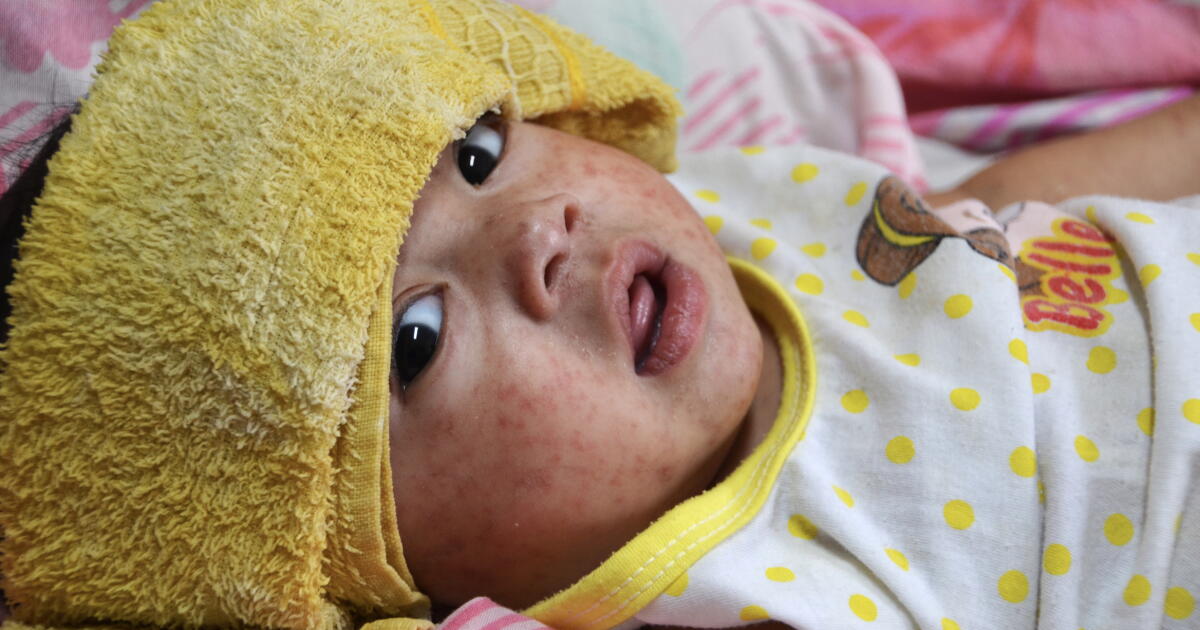
In 2000, the U.S. became the first country in the world to officially eliminate measles, a public health triumph that took decades of work and set a new standard for disease prevention efforts worldwide.
Maintaining that status turned out to be a harder challenge than the nation was willing to take on.
On Tuesday, the Pan American Health Organization, an offshoot of the World Health Organization, confirmed that measles is once again endemic in the United States.
Elimination means that a disease has become rare enough, and immunity to it widespread enough, that local transmission dwindles quickly if a case or two emerges.
That is no longer the case here.
The Pan American Health Organization confirmed that the same virus strain was able to circulate uninterrupted in the U.S. for at least 12 months since it was first recorded in west Texas on Jan. 20, 2025, a sign that herd immunity is no longer sufficient to guard against a disease that once killed hundreds of people and hospitalized thousands each year.
The organization stripped Bolivia and Mexico of elimination status at the same time.
According to the Centers for Disease Control and Prevention, there were fewer than 4,500 confirmed measles cases in the U.S. in the 25 years in which measles was eliminated. There were more than 2,200 cases in 2025, the highest annual case count since the early 1990s, and more than 5,400 cases so far this year.
This is a developing story.

In 2000, the U.S. became the first country in the world to officially eliminate measles, a public health triumph that took decades of work and set a new standard for disease prevention efforts worldwide.
Maintaining that status turned out to be a harder challenge than the nation was willing to take on.
On Tuesday, the Pan American Health Organization, an offshoot of the World Health Organization, confirmed that measles is once again endemic in the United States.
Elimination means that a disease has become rare enough, and immunity to it widespread enough, that local transmission dwindles quickly if a case or two emerges.
That is no longer the case here.
The Pan American Health Organization confirmed that the same virus strain was able to circulate uninterrupted in the U.S. for at least 12 months since it was first recorded in west Texas on Jan. 20, 2025, a sign that herd immunity is no longer sufficient to guard against a disease that once killed hundreds of people and hospitalized thousands each year.
The organization stripped Bolivia and Mexico of elimination status at the same time.
According to the Centers for Disease Control and Prevention, there were fewer than 4,500 confirmed measles cases in the U.S. in the 25 years in which measles was eliminated. There were more than 2,200 cases in 2025, the highest annual case count since the early 1990s, and more than 5,400 cases so far this year.
This is a developing story.

In 2000, the U.S. became the first country in the world to officially eliminate measles, a public health triumph that took decades of work and set a new standard for disease prevention efforts worldwide.
Maintaining that status turned out to be a harder challenge than the nation was willing to take on.
On Tuesday, the Pan American Health Organization, an offshoot of the World Health Organization, confirmed that measles is once again endemic in the United States.
Elimination means that a disease has become rare enough, and immunity to it widespread enough, that local transmission dwindles quickly if a case or two emerges.
That is no longer the case here.
The Pan American Health Organization confirmed that the same virus strain was able to circulate uninterrupted in the U.S. for at least 12 months since it was first recorded in west Texas on Jan. 20, 2025, a sign that herd immunity is no longer sufficient to guard against a disease that once killed hundreds of people and hospitalized thousands each year.
The organization stripped Bolivia and Mexico of elimination status at the same time.
According to the Centers for Disease Control and Prevention, there were fewer than 4,500 confirmed measles cases in the U.S. in the 25 years in which measles was eliminated. There were more than 2,200 cases in 2025, the highest annual case count since the early 1990s, and more than 5,400 cases so far this year.
This is a developing story.

In 2000, the U.S. became the first country in the world to officially eliminate measles, a public health triumph that took decades of work and set a new standard for disease prevention efforts worldwide.
Maintaining that status turned out to be a harder challenge than the nation was willing to take on.
On Tuesday, the Pan American Health Organization, an offshoot of the World Health Organization, confirmed that measles is once again endemic in the United States.
Elimination means that a disease has become rare enough, and immunity to it widespread enough, that local transmission dwindles quickly if a case or two emerges.
That is no longer the case here.
The Pan American Health Organization confirmed that the same virus strain was able to circulate uninterrupted in the U.S. for at least 12 months since it was first recorded in west Texas on Jan. 20, 2025, a sign that herd immunity is no longer sufficient to guard against a disease that once killed hundreds of people and hospitalized thousands each year.
The organization stripped Bolivia and Mexico of elimination status at the same time.
According to the Centers for Disease Control and Prevention, there were fewer than 4,500 confirmed measles cases in the U.S. in the 25 years in which measles was eliminated. There were more than 2,200 cases in 2025, the highest annual case count since the early 1990s, and more than 5,400 cases so far this year.
This is a developing story.

In 2000, the U.S. became the first country in the world to officially eliminate measles, a public health triumph that took decades of work and set a new standard for disease prevention efforts worldwide.
Maintaining that status turned out to be a harder challenge than the nation was willing to take on.
On Tuesday, the Pan American Health Organization, an offshoot of the World Health Organization, confirmed that measles is once again endemic in the United States.
Elimination means that a disease has become rare enough, and immunity to it widespread enough, that local transmission dwindles quickly if a case or two emerges.
That is no longer the case here.
The Pan American Health Organization confirmed that the same virus strain was able to circulate uninterrupted in the U.S. for at least 12 months since it was first recorded in west Texas on Jan. 20, 2025, a sign that herd immunity is no longer sufficient to guard against a disease that once killed hundreds of people and hospitalized thousands each year.
The organization stripped Bolivia and Mexico of elimination status at the same time.
According to the Centers for Disease Control and Prevention, there were fewer than 4,500 confirmed measles cases in the U.S. in the 25 years in which measles was eliminated. There were more than 2,200 cases in 2025, the highest annual case count since the early 1990s, and more than 5,400 cases so far this year.
This is a developing story.

