

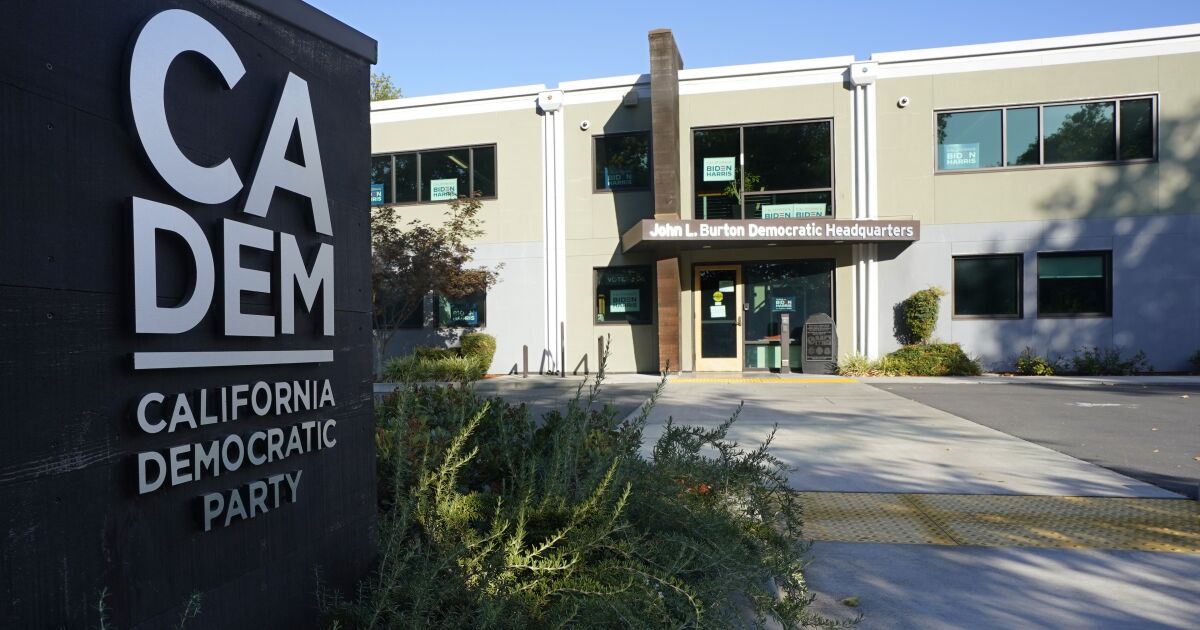

Two alleged militia members in Northern California who plotted to bomb the state Democratic headquarters in Sacramento and “go to war” over the 2020 presidential election have been sentenced to prison, federal prosecutors said.
Had law enforcement not intervened and foiled the attack, the men would have carried out an “act of terrorism,” U.S. District Judge Charles R. Breyer said during the sentencing hearing Thursday.
“There was a plan, a design, an opportunity and ability to carry out the firebombing of the Democratic headquarters located in Sacramento,” Breyer said.
Ian Benjamin Rogers, 46, of Napa was sentenced to nine years, and Jarrod Copeland, 39, of Vallejo was sentenced to four and a half years after both men pleaded guilty as part of plea agreements with prosecutors.
Rogers and Copeland hatched their plot because they were upset with President Trump’s election loss in November 2020, federal officials alleged.
The two men admitted that after the election they began to discuss a plan to destroy the Democratic headquarters, using cans of gasoline to burn down the building.
They looked online to study the building’s location and talked about its proximity to the fire department and law enforcement to devise their plan, according to a statement by federal prosecutors.
Rogers and Copeland agreed to wait until after the presidential inauguration on Jan. 20, 2021, before carrying out the attack.
“Their decision to ‘go to war’ was based on their thought that they would rather destroy their political opponents’ building than acknowledge they lost an election and rely on the political process to make change,” U.S. Atty. Stephanie M. Hinds said in a statement. “Prosecution and imprisonment await those who attempt to supplant the political process with fear and violence.”
According to an initial indictment, the two men also discussed other targets to attack, including the governor’s mansion and the headquarters for Twitter and Facebook, which had locked Trump’s accounts after the Jan. 6, 2021, insurrection at the U.S. Capitol.
Federal authorities seized dozens of firearms and five pipe bombs from the home and business of Ian Benjamin Rogers after his arrest.
(Napa County Sheriff’s Office)
Rogers’ arrest came just days after the deadly riot, where right-wing and extremist groups, including militias, were found to have played a role in trying to overturn the results of the presidential election.
Much of that anger was also pointed toward governors for restrictions that were put in place during the COVID-19 pandemic and social media companies for their decisions to limit posts that spread unfounded conspiracies of election fraud — and later temporarily ban Trump.
Prosecutors alleged that both men were members of a militia group and that Copeland contacted the group asking for advice after Rogers was arrested. A leader of the group suggested Copeland erase his communications with Rogers.
The violent plot came to light only after a person close to Rogers reported him to law enforcement.
As part of their investigation, federal officials seized a cache of weapons and explosives from Rogers’ home and business, including more than 45 firearms, thousands of ammunition rounds and five pipe bombs. Rogers also admitted that he owned at least three fully automatic machine guns, which are illegal.
Rogers pleaded guilty to one count of conspiracy to destroy a building by explosive, one count of possession of an unregistered destructive device and one count of possessing an illegal machine gun as part of his plea agreement.
Copeland pleaded guilty to one count of conspiracy to destroy a building by explosive and one count of obstruction of justice.

Two alleged militia members in Northern California who plotted to bomb the state Democratic headquarters in Sacramento and “go to war” over the 2020 presidential election have been sentenced to prison, federal prosecutors said.
Had law enforcement not intervened and foiled the attack, the men would have carried out an “act of terrorism,” U.S. District Judge Charles R. Breyer said during the sentencing hearing Thursday.
“There was a plan, a design, an opportunity and ability to carry out the firebombing of the Democratic headquarters located in Sacramento,” Breyer said.
Ian Benjamin Rogers, 46, of Napa was sentenced to nine years, and Jarrod Copeland, 39, of Vallejo was sentenced to four and a half years after both men pleaded guilty as part of plea agreements with prosecutors.
Rogers and Copeland hatched their plot because they were upset with President Trump’s election loss in November 2020, federal officials alleged.
The two men admitted that after the election they began to discuss a plan to destroy the Democratic headquarters, using cans of gasoline to burn down the building.
They looked online to study the building’s location and talked about its proximity to the fire department and law enforcement to devise their plan, according to a statement by federal prosecutors.
Rogers and Copeland agreed to wait until after the presidential inauguration on Jan. 20, 2021, before carrying out the attack.
“Their decision to ‘go to war’ was based on their thought that they would rather destroy their political opponents’ building than acknowledge they lost an election and rely on the political process to make change,” U.S. Atty. Stephanie M. Hinds said in a statement. “Prosecution and imprisonment await those who attempt to supplant the political process with fear and violence.”
According to an initial indictment, the two men also discussed other targets to attack, including the governor’s mansion and the headquarters for Twitter and Facebook, which had locked Trump’s accounts after the Jan. 6, 2021, insurrection at the U.S. Capitol.
Federal authorities seized dozens of firearms and five pipe bombs from the home and business of Ian Benjamin Rogers after his arrest.
(Napa County Sheriff’s Office)
Rogers’ arrest came just days after the deadly riot, where right-wing and extremist groups, including militias, were found to have played a role in trying to overturn the results of the presidential election.
Much of that anger was also pointed toward governors for restrictions that were put in place during the COVID-19 pandemic and social media companies for their decisions to limit posts that spread unfounded conspiracies of election fraud — and later temporarily ban Trump.
Prosecutors alleged that both men were members of a militia group and that Copeland contacted the group asking for advice after Rogers was arrested. A leader of the group suggested Copeland erase his communications with Rogers.
The violent plot came to light only after a person close to Rogers reported him to law enforcement.
As part of their investigation, federal officials seized a cache of weapons and explosives from Rogers’ home and business, including more than 45 firearms, thousands of ammunition rounds and five pipe bombs. Rogers also admitted that he owned at least three fully automatic machine guns, which are illegal.
Rogers pleaded guilty to one count of conspiracy to destroy a building by explosive, one count of possession of an unregistered destructive device and one count of possessing an illegal machine gun as part of his plea agreement.
Copeland pleaded guilty to one count of conspiracy to destroy a building by explosive and one count of obstruction of justice.

Two alleged militia members in Northern California who plotted to bomb the state Democratic headquarters in Sacramento and “go to war” over the 2020 presidential election have been sentenced to prison, federal prosecutors said.
Had law enforcement not intervened and foiled the attack, the men would have carried out an “act of terrorism,” U.S. District Judge Charles R. Breyer said during the sentencing hearing Thursday.
“There was a plan, a design, an opportunity and ability to carry out the firebombing of the Democratic headquarters located in Sacramento,” Breyer said.
Ian Benjamin Rogers, 46, of Napa was sentenced to nine years, and Jarrod Copeland, 39, of Vallejo was sentenced to four and a half years after both men pleaded guilty as part of plea agreements with prosecutors.
Rogers and Copeland hatched their plot because they were upset with President Trump’s election loss in November 2020, federal officials alleged.
The two men admitted that after the election they began to discuss a plan to destroy the Democratic headquarters, using cans of gasoline to burn down the building.
They looked online to study the building’s location and talked about its proximity to the fire department and law enforcement to devise their plan, according to a statement by federal prosecutors.
Rogers and Copeland agreed to wait until after the presidential inauguration on Jan. 20, 2021, before carrying out the attack.
“Their decision to ‘go to war’ was based on their thought that they would rather destroy their political opponents’ building than acknowledge they lost an election and rely on the political process to make change,” U.S. Atty. Stephanie M. Hinds said in a statement. “Prosecution and imprisonment await those who attempt to supplant the political process with fear and violence.”
According to an initial indictment, the two men also discussed other targets to attack, including the governor’s mansion and the headquarters for Twitter and Facebook, which had locked Trump’s accounts after the Jan. 6, 2021, insurrection at the U.S. Capitol.
Federal authorities seized dozens of firearms and five pipe bombs from the home and business of Ian Benjamin Rogers after his arrest.
(Napa County Sheriff’s Office)
Rogers’ arrest came just days after the deadly riot, where right-wing and extremist groups, including militias, were found to have played a role in trying to overturn the results of the presidential election.
Much of that anger was also pointed toward governors for restrictions that were put in place during the COVID-19 pandemic and social media companies for their decisions to limit posts that spread unfounded conspiracies of election fraud — and later temporarily ban Trump.
Prosecutors alleged that both men were members of a militia group and that Copeland contacted the group asking for advice after Rogers was arrested. A leader of the group suggested Copeland erase his communications with Rogers.
The violent plot came to light only after a person close to Rogers reported him to law enforcement.
As part of their investigation, federal officials seized a cache of weapons and explosives from Rogers’ home and business, including more than 45 firearms, thousands of ammunition rounds and five pipe bombs. Rogers also admitted that he owned at least three fully automatic machine guns, which are illegal.
Rogers pleaded guilty to one count of conspiracy to destroy a building by explosive, one count of possession of an unregistered destructive device and one count of possessing an illegal machine gun as part of his plea agreement.
Copeland pleaded guilty to one count of conspiracy to destroy a building by explosive and one count of obstruction of justice.
Two alleged militia members in Northern California who plotted to bomb the state Democratic headquarters in Sacramento and “go to war” over the 2020 presidential election have been sentenced to prison, federal prosecutors said.
Had law enforcement not intervened and foiled the attack, the men would have carried out an “act of terrorism,” U.S. District Judge Charles R. Breyer said during the sentencing hearing Thursday.
“There was a plan, a design, an opportunity and ability to carry out the firebombing of the Democratic headquarters located in Sacramento,” Breyer said.
Ian Benjamin Rogers, 46, of Napa was sentenced to nine years, and Jarrod Copeland, 39, of Vallejo was sentenced to four and a half years after both men pleaded guilty as part of plea agreements with prosecutors.
Rogers and Copeland hatched their plot because they were upset with President Trump’s election loss in November 2020, federal officials alleged.
The two men admitted that after the election they began to discuss a plan to destroy the Democratic headquarters, using cans of gasoline to burn down the building.
They looked online to study the building’s location and talked about its proximity to the fire department and law enforcement to devise their plan, according to a statement by federal prosecutors.
Rogers and Copeland agreed to wait until after the presidential inauguration on Jan. 20, 2021, before carrying out the attack.
“Their decision to ‘go to war’ was based on their thought that they would rather destroy their political opponents’ building than acknowledge they lost an election and rely on the political process to make change,” U.S. Atty. Stephanie M. Hinds said in a statement. “Prosecution and imprisonment await those who attempt to supplant the political process with fear and violence.”
According to an initial indictment, the two men also discussed other targets to attack, including the governor’s mansion and the headquarters for Twitter and Facebook, which had locked Trump’s accounts after the Jan. 6, 2021, insurrection at the U.S. Capitol.
Federal authorities seized dozens of firearms and five pipe bombs from the home and business of Ian Benjamin Rogers after his arrest.
(Napa County Sheriff’s Office)
Rogers’ arrest came just days after the deadly riot, where right-wing and extremist groups, including militias, were found to have played a role in trying to overturn the results of the presidential election.
Much of that anger was also pointed toward governors for restrictions that were put in place during the COVID-19 pandemic and social media companies for their decisions to limit posts that spread unfounded conspiracies of election fraud — and later temporarily ban Trump.
Prosecutors alleged that both men were members of a militia group and that Copeland contacted the group asking for advice after Rogers was arrested. A leader of the group suggested Copeland erase his communications with Rogers.
The violent plot came to light only after a person close to Rogers reported him to law enforcement.
As part of their investigation, federal officials seized a cache of weapons and explosives from Rogers’ home and business, including more than 45 firearms, thousands of ammunition rounds and five pipe bombs. Rogers also admitted that he owned at least three fully automatic machine guns, which are illegal.
Rogers pleaded guilty to one count of conspiracy to destroy a building by explosive, one count of possession of an unregistered destructive device and one count of possessing an illegal machine gun as part of his plea agreement.
Copeland pleaded guilty to one count of conspiracy to destroy a building by explosive and one count of obstruction of justice.

Two alleged militia members in Northern California who plotted to bomb the state Democratic headquarters in Sacramento and “go to war” over the 2020 presidential election have been sentenced to prison, federal prosecutors said.
Had law enforcement not intervened and foiled the attack, the men would have carried out an “act of terrorism,” U.S. District Judge Charles R. Breyer said during the sentencing hearing Thursday.
“There was a plan, a design, an opportunity and ability to carry out the firebombing of the Democratic headquarters located in Sacramento,” Breyer said.
Ian Benjamin Rogers, 46, of Napa was sentenced to nine years, and Jarrod Copeland, 39, of Vallejo was sentenced to four and a half years after both men pleaded guilty as part of plea agreements with prosecutors.
Rogers and Copeland hatched their plot because they were upset with President Trump’s election loss in November 2020, federal officials alleged.
The two men admitted that after the election they began to discuss a plan to destroy the Democratic headquarters, using cans of gasoline to burn down the building.
They looked online to study the building’s location and talked about its proximity to the fire department and law enforcement to devise their plan, according to a statement by federal prosecutors.
Rogers and Copeland agreed to wait until after the presidential inauguration on Jan. 20, 2021, before carrying out the attack.
“Their decision to ‘go to war’ was based on their thought that they would rather destroy their political opponents’ building than acknowledge they lost an election and rely on the political process to make change,” U.S. Atty. Stephanie M. Hinds said in a statement. “Prosecution and imprisonment await those who attempt to supplant the political process with fear and violence.”
According to an initial indictment, the two men also discussed other targets to attack, including the governor’s mansion and the headquarters for Twitter and Facebook, which had locked Trump’s accounts after the Jan. 6, 2021, insurrection at the U.S. Capitol.
Federal authorities seized dozens of firearms and five pipe bombs from the home and business of Ian Benjamin Rogers after his arrest.
(Napa County Sheriff’s Office)
Rogers’ arrest came just days after the deadly riot, where right-wing and extremist groups, including militias, were found to have played a role in trying to overturn the results of the presidential election.
Much of that anger was also pointed toward governors for restrictions that were put in place during the COVID-19 pandemic and social media companies for their decisions to limit posts that spread unfounded conspiracies of election fraud — and later temporarily ban Trump.
Prosecutors alleged that both men were members of a militia group and that Copeland contacted the group asking for advice after Rogers was arrested. A leader of the group suggested Copeland erase his communications with Rogers.
The violent plot came to light only after a person close to Rogers reported him to law enforcement.
As part of their investigation, federal officials seized a cache of weapons and explosives from Rogers’ home and business, including more than 45 firearms, thousands of ammunition rounds and five pipe bombs. Rogers also admitted that he owned at least three fully automatic machine guns, which are illegal.
Rogers pleaded guilty to one count of conspiracy to destroy a building by explosive, one count of possession of an unregistered destructive device and one count of possessing an illegal machine gun as part of his plea agreement.
Copeland pleaded guilty to one count of conspiracy to destroy a building by explosive and one count of obstruction of justice.
Two alleged militia members in Northern California who plotted to bomb the state Democratic headquarters in Sacramento and “go to war” over the 2020 presidential election have been sentenced to prison, federal prosecutors said.
Had law enforcement not intervened and foiled the attack, the men would have carried out an “act of terrorism,” U.S. District Judge Charles R. Breyer said during the sentencing hearing Thursday.
“There was a plan, a design, an opportunity and ability to carry out the firebombing of the Democratic headquarters located in Sacramento,” Breyer said.
Ian Benjamin Rogers, 46, of Napa was sentenced to nine years, and Jarrod Copeland, 39, of Vallejo was sentenced to four and a half years after both men pleaded guilty as part of plea agreements with prosecutors.
Rogers and Copeland hatched their plot because they were upset with President Trump’s election loss in November 2020, federal officials alleged.
The two men admitted that after the election they began to discuss a plan to destroy the Democratic headquarters, using cans of gasoline to burn down the building.
They looked online to study the building’s location and talked about its proximity to the fire department and law enforcement to devise their plan, according to a statement by federal prosecutors.
Rogers and Copeland agreed to wait until after the presidential inauguration on Jan. 20, 2021, before carrying out the attack.
“Their decision to ‘go to war’ was based on their thought that they would rather destroy their political opponents’ building than acknowledge they lost an election and rely on the political process to make change,” U.S. Atty. Stephanie M. Hinds said in a statement. “Prosecution and imprisonment await those who attempt to supplant the political process with fear and violence.”
According to an initial indictment, the two men also discussed other targets to attack, including the governor’s mansion and the headquarters for Twitter and Facebook, which had locked Trump’s accounts after the Jan. 6, 2021, insurrection at the U.S. Capitol.
Federal authorities seized dozens of firearms and five pipe bombs from the home and business of Ian Benjamin Rogers after his arrest.
(Napa County Sheriff’s Office)
Rogers’ arrest came just days after the deadly riot, where right-wing and extremist groups, including militias, were found to have played a role in trying to overturn the results of the presidential election.
Much of that anger was also pointed toward governors for restrictions that were put in place during the COVID-19 pandemic and social media companies for their decisions to limit posts that spread unfounded conspiracies of election fraud — and later temporarily ban Trump.
Prosecutors alleged that both men were members of a militia group and that Copeland contacted the group asking for advice after Rogers was arrested. A leader of the group suggested Copeland erase his communications with Rogers.
The violent plot came to light only after a person close to Rogers reported him to law enforcement.
As part of their investigation, federal officials seized a cache of weapons and explosives from Rogers’ home and business, including more than 45 firearms, thousands of ammunition rounds and five pipe bombs. Rogers also admitted that he owned at least three fully automatic machine guns, which are illegal.
Rogers pleaded guilty to one count of conspiracy to destroy a building by explosive, one count of possession of an unregistered destructive device and one count of possessing an illegal machine gun as part of his plea agreement.
Copeland pleaded guilty to one count of conspiracy to destroy a building by explosive and one count of obstruction of justice.
Two alleged militia members in Northern California who plotted to bomb the state Democratic headquarters in Sacramento and “go to war” over the 2020 presidential election have been sentenced to prison, federal prosecutors said.
Had law enforcement not intervened and foiled the attack, the men would have carried out an “act of terrorism,” U.S. District Judge Charles R. Breyer said during the sentencing hearing Thursday.
“There was a plan, a design, an opportunity and ability to carry out the firebombing of the Democratic headquarters located in Sacramento,” Breyer said.
Ian Benjamin Rogers, 46, of Napa was sentenced to nine years, and Jarrod Copeland, 39, of Vallejo was sentenced to four and a half years after both men pleaded guilty as part of plea agreements with prosecutors.
Rogers and Copeland hatched their plot because they were upset with President Trump’s election loss in November 2020, federal officials alleged.
The two men admitted that after the election they began to discuss a plan to destroy the Democratic headquarters, using cans of gasoline to burn down the building.
They looked online to study the building’s location and talked about its proximity to the fire department and law enforcement to devise their plan, according to a statement by federal prosecutors.
Rogers and Copeland agreed to wait until after the presidential inauguration on Jan. 20, 2021, before carrying out the attack.
“Their decision to ‘go to war’ was based on their thought that they would rather destroy their political opponents’ building than acknowledge they lost an election and rely on the political process to make change,” U.S. Atty. Stephanie M. Hinds said in a statement. “Prosecution and imprisonment await those who attempt to supplant the political process with fear and violence.”
According to an initial indictment, the two men also discussed other targets to attack, including the governor’s mansion and the headquarters for Twitter and Facebook, which had locked Trump’s accounts after the Jan. 6, 2021, insurrection at the U.S. Capitol.
Federal authorities seized dozens of firearms and five pipe bombs from the home and business of Ian Benjamin Rogers after his arrest.
(Napa County Sheriff’s Office)
Rogers’ arrest came just days after the deadly riot, where right-wing and extremist groups, including militias, were found to have played a role in trying to overturn the results of the presidential election.
Much of that anger was also pointed toward governors for restrictions that were put in place during the COVID-19 pandemic and social media companies for their decisions to limit posts that spread unfounded conspiracies of election fraud — and later temporarily ban Trump.
Prosecutors alleged that both men were members of a militia group and that Copeland contacted the group asking for advice after Rogers was arrested. A leader of the group suggested Copeland erase his communications with Rogers.
The violent plot came to light only after a person close to Rogers reported him to law enforcement.
As part of their investigation, federal officials seized a cache of weapons and explosives from Rogers’ home and business, including more than 45 firearms, thousands of ammunition rounds and five pipe bombs. Rogers also admitted that he owned at least three fully automatic machine guns, which are illegal.
Rogers pleaded guilty to one count of conspiracy to destroy a building by explosive, one count of possession of an unregistered destructive device and one count of possessing an illegal machine gun as part of his plea agreement.
Copeland pleaded guilty to one count of conspiracy to destroy a building by explosive and one count of obstruction of justice.
Two alleged militia members in Northern California who plotted to bomb the state Democratic headquarters in Sacramento and “go to war” over the 2020 presidential election have been sentenced to prison, federal prosecutors said.
Had law enforcement not intervened and foiled the attack, the men would have carried out an “act of terrorism,” U.S. District Judge Charles R. Breyer said during the sentencing hearing Thursday.
“There was a plan, a design, an opportunity and ability to carry out the firebombing of the Democratic headquarters located in Sacramento,” Breyer said.
Ian Benjamin Rogers, 46, of Napa was sentenced to nine years, and Jarrod Copeland, 39, of Vallejo was sentenced to four and a half years after both men pleaded guilty as part of plea agreements with prosecutors.
Rogers and Copeland hatched their plot because they were upset with President Trump’s election loss in November 2020, federal officials alleged.
The two men admitted that after the election they began to discuss a plan to destroy the Democratic headquarters, using cans of gasoline to burn down the building.
They looked online to study the building’s location and talked about its proximity to the fire department and law enforcement to devise their plan, according to a statement by federal prosecutors.
Rogers and Copeland agreed to wait until after the presidential inauguration on Jan. 20, 2021, before carrying out the attack.
“Their decision to ‘go to war’ was based on their thought that they would rather destroy their political opponents’ building than acknowledge they lost an election and rely on the political process to make change,” U.S. Atty. Stephanie M. Hinds said in a statement. “Prosecution and imprisonment await those who attempt to supplant the political process with fear and violence.”
According to an initial indictment, the two men also discussed other targets to attack, including the governor’s mansion and the headquarters for Twitter and Facebook, which had locked Trump’s accounts after the Jan. 6, 2021, insurrection at the U.S. Capitol.
Federal authorities seized dozens of firearms and five pipe bombs from the home and business of Ian Benjamin Rogers after his arrest.
(Napa County Sheriff’s Office)
Rogers’ arrest came just days after the deadly riot, where right-wing and extremist groups, including militias, were found to have played a role in trying to overturn the results of the presidential election.
Much of that anger was also pointed toward governors for restrictions that were put in place during the COVID-19 pandemic and social media companies for their decisions to limit posts that spread unfounded conspiracies of election fraud — and later temporarily ban Trump.
Prosecutors alleged that both men were members of a militia group and that Copeland contacted the group asking for advice after Rogers was arrested. A leader of the group suggested Copeland erase his communications with Rogers.
The violent plot came to light only after a person close to Rogers reported him to law enforcement.
As part of their investigation, federal officials seized a cache of weapons and explosives from Rogers’ home and business, including more than 45 firearms, thousands of ammunition rounds and five pipe bombs. Rogers also admitted that he owned at least three fully automatic machine guns, which are illegal.
Rogers pleaded guilty to one count of conspiracy to destroy a building by explosive, one count of possession of an unregistered destructive device and one count of possessing an illegal machine gun as part of his plea agreement.
Copeland pleaded guilty to one count of conspiracy to destroy a building by explosive and one count of obstruction of justice.

