


Washington DC
New York
Toronto
Distribution: (800) 510 9863
Press ID
  • Login
Binghamton Herald
Advertisement
Friday, May 8, 2026
  • Home
  • World
  • Politics
  • Business
  • Technology
  • Culture
  • Health
  • Entertainment
  • Trending
No Result
View All Result
Binghamton Herald
No Result
View All Result
Home Health

Tourte De Blettes Sucrée (Sweet Swiss Chard Pie)

by Binghamton Herald Report
April 12, 2024
in Health
Share on FacebookShare on Twitter

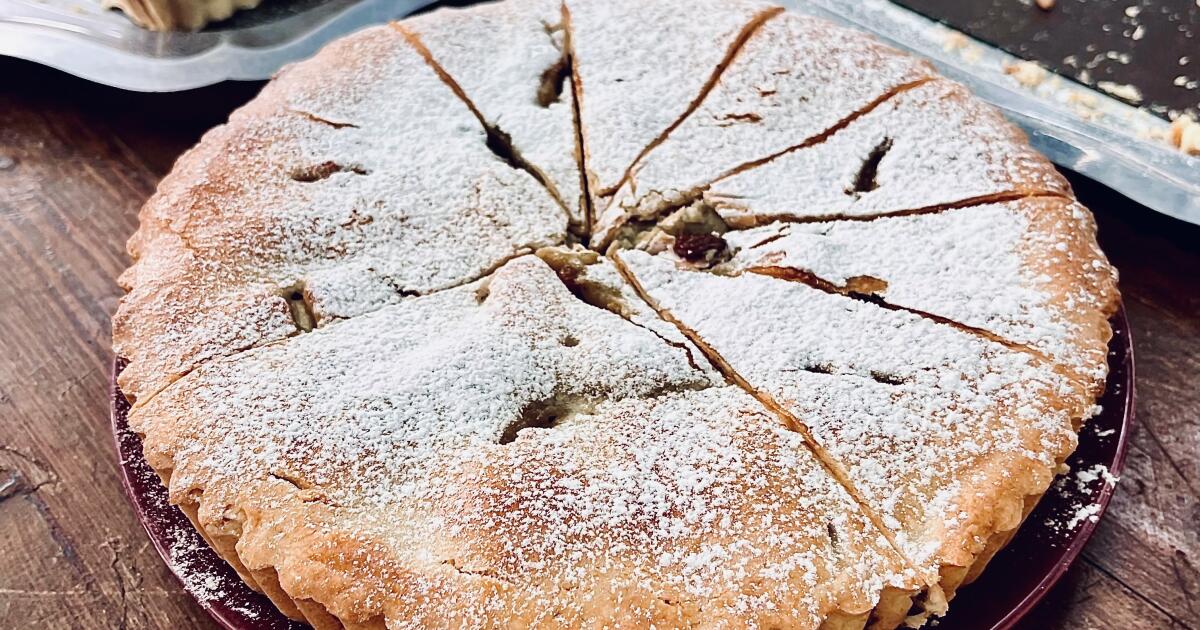
When I first moved to Nice, France, I lived upstairs from the now-defunct bakery Espuno, which had been run by the same family for generations. This bakery had none of the elaborate pastries I had grown used to seeing in Paris; instead, next to the croissants and brioches, it showcased square slabs of pie with a dark green filling, the top crust sprinkled with a thick coating of sugar.

This was my first exposure to tourte de blettes sucrée, the iconic Niçoise dessert that is sold in most local bakeries and is, for many children, including my son, a primary source of greens in their diet. Filled with a sweetened mixture of Swiss chard, rum-soaked raisins, pine nuts, apple, and perhaps grated Parmesan or Sbrinz (an aged Swiss cheese), this dessert does not appear anywhere else in France, although Tuscan cooks make a similar pie using vin santo instead of rum.

It was born of an abundance of Swiss chard; in winter, when local fruit was scarce, cooks used what they had available to satisfy a sweet craving. The coating of sugar — originally granulated, but now almost always powdered — distinguishes it from the savory tourte de blettes salée, which is filled with a mixture of Swiss chard, rice, bacon, Parmesan and egg.

There are as many variations on this dessert as there are families in Nice, but I like this one adapted from a recipe by Hélène Barale, who once ran a famous Niçoise restaurant named after her. Her use of apricot jam adds another fruity element besides the apple, without oversweetening the pie.

If you’re serving this to children, don’t worry about the rum — the alcohol cooks off in the oven. The quality of the rum does make a difference in the final taste of the pie, though, so use one that you would happily drink. And soak the raisins overnight if you can.

When I first moved to Nice, France, I lived upstairs from the now-defunct bakery Espuno, which had been run by the same family for generations. This bakery had none of the elaborate pastries I had grown used to seeing in Paris; instead, next to the croissants and brioches, it showcased square slabs of pie with a dark green filling, the top crust sprinkled with a thick coating of sugar.

This was my first exposure to tourte de blettes sucrée, the iconic Niçoise dessert that is sold in most local bakeries and is, for many children, including my son, a primary source of greens in their diet. Filled with a sweetened mixture of Swiss chard, rum-soaked raisins, pine nuts, apple, and perhaps grated Parmesan or Sbrinz (an aged Swiss cheese), this dessert does not appear anywhere else in France, although Tuscan cooks make a similar pie using vin santo instead of rum.

It was born of an abundance of Swiss chard; in winter, when local fruit was scarce, cooks used what they had available to satisfy a sweet craving. The coating of sugar — originally granulated, but now almost always powdered — distinguishes it from the savory tourte de blettes salée, which is filled with a mixture of Swiss chard, rice, bacon, Parmesan and egg.

There are as many variations on this dessert as there are families in Nice, but I like this one adapted from a recipe by Hélène Barale, who once ran a famous Niçoise restaurant named after her. Her use of apricot jam adds another fruity element besides the apple, without oversweetening the pie.

If you’re serving this to children, don’t worry about the rum — the alcohol cooks off in the oven. The quality of the rum does make a difference in the final taste of the pie, though, so use one that you would happily drink. And soak the raisins overnight if you can.

When I first moved to Nice, France, I lived upstairs from the now-defunct bakery Espuno, which had been run by the same family for generations. This bakery had none of the elaborate pastries I had grown used to seeing in Paris; instead, next to the croissants and brioches, it showcased square slabs of pie with a dark green filling, the top crust sprinkled with a thick coating of sugar.

This was my first exposure to tourte de blettes sucrée, the iconic Niçoise dessert that is sold in most local bakeries and is, for many children, including my son, a primary source of greens in their diet. Filled with a sweetened mixture of Swiss chard, rum-soaked raisins, pine nuts, apple, and perhaps grated Parmesan or Sbrinz (an aged Swiss cheese), this dessert does not appear anywhere else in France, although Tuscan cooks make a similar pie using vin santo instead of rum.

It was born of an abundance of Swiss chard; in winter, when local fruit was scarce, cooks used what they had available to satisfy a sweet craving. The coating of sugar — originally granulated, but now almost always powdered — distinguishes it from the savory tourte de blettes salée, which is filled with a mixture of Swiss chard, rice, bacon, Parmesan and egg.

There are as many variations on this dessert as there are families in Nice, but I like this one adapted from a recipe by Hélène Barale, who once ran a famous Niçoise restaurant named after her. Her use of apricot jam adds another fruity element besides the apple, without oversweetening the pie.

If you’re serving this to children, don’t worry about the rum — the alcohol cooks off in the oven. The quality of the rum does make a difference in the final taste of the pie, though, so use one that you would happily drink. And soak the raisins overnight if you can.

When I first moved to Nice, France, I lived upstairs from the now-defunct bakery Espuno, which had been run by the same family for generations. This bakery had none of the elaborate pastries I had grown used to seeing in Paris; instead, next to the croissants and brioches, it showcased square slabs of pie with a dark green filling, the top crust sprinkled with a thick coating of sugar.

This was my first exposure to tourte de blettes sucrée, the iconic Niçoise dessert that is sold in most local bakeries and is, for many children, including my son, a primary source of greens in their diet. Filled with a sweetened mixture of Swiss chard, rum-soaked raisins, pine nuts, apple, and perhaps grated Parmesan or Sbrinz (an aged Swiss cheese), this dessert does not appear anywhere else in France, although Tuscan cooks make a similar pie using vin santo instead of rum.

It was born of an abundance of Swiss chard; in winter, when local fruit was scarce, cooks used what they had available to satisfy a sweet craving. The coating of sugar — originally granulated, but now almost always powdered — distinguishes it from the savory tourte de blettes salée, which is filled with a mixture of Swiss chard, rice, bacon, Parmesan and egg.

There are as many variations on this dessert as there are families in Nice, but I like this one adapted from a recipe by Hélène Barale, who once ran a famous Niçoise restaurant named after her. Her use of apricot jam adds another fruity element besides the apple, without oversweetening the pie.

If you’re serving this to children, don’t worry about the rum — the alcohol cooks off in the oven. The quality of the rum does make a difference in the final taste of the pie, though, so use one that you would happily drink. And soak the raisins overnight if you can.


When I first moved to Nice, France, I lived upstairs from the now-defunct bakery Espuno, which had been run by the same family for generations. This bakery had none of the elaborate pastries I had grown used to seeing in Paris; instead, next to the croissants and brioches, it showcased square slabs of pie with a dark green filling, the top crust sprinkled with a thick coating of sugar.

This was my first exposure to tourte de blettes sucrée, the iconic Niçoise dessert that is sold in most local bakeries and is, for many children, including my son, a primary source of greens in their diet. Filled with a sweetened mixture of Swiss chard, rum-soaked raisins, pine nuts, apple, and perhaps grated Parmesan or Sbrinz (an aged Swiss cheese), this dessert does not appear anywhere else in France, although Tuscan cooks make a similar pie using vin santo instead of rum.

It was born of an abundance of Swiss chard; in winter, when local fruit was scarce, cooks used what they had available to satisfy a sweet craving. The coating of sugar — originally granulated, but now almost always powdered — distinguishes it from the savory tourte de blettes salée, which is filled with a mixture of Swiss chard, rice, bacon, Parmesan and egg.

There are as many variations on this dessert as there are families in Nice, but I like this one adapted from a recipe by Hélène Barale, who once ran a famous Niçoise restaurant named after her. Her use of apricot jam adds another fruity element besides the apple, without oversweetening the pie.

If you’re serving this to children, don’t worry about the rum — the alcohol cooks off in the oven. The quality of the rum does make a difference in the final taste of the pie, though, so use one that you would happily drink. And soak the raisins overnight if you can.

When I first moved to Nice, France, I lived upstairs from the now-defunct bakery Espuno, which had been run by the same family for generations. This bakery had none of the elaborate pastries I had grown used to seeing in Paris; instead, next to the croissants and brioches, it showcased square slabs of pie with a dark green filling, the top crust sprinkled with a thick coating of sugar.

This was my first exposure to tourte de blettes sucrée, the iconic Niçoise dessert that is sold in most local bakeries and is, for many children, including my son, a primary source of greens in their diet. Filled with a sweetened mixture of Swiss chard, rum-soaked raisins, pine nuts, apple, and perhaps grated Parmesan or Sbrinz (an aged Swiss cheese), this dessert does not appear anywhere else in France, although Tuscan cooks make a similar pie using vin santo instead of rum.

It was born of an abundance of Swiss chard; in winter, when local fruit was scarce, cooks used what they had available to satisfy a sweet craving. The coating of sugar — originally granulated, but now almost always powdered — distinguishes it from the savory tourte de blettes salée, which is filled with a mixture of Swiss chard, rice, bacon, Parmesan and egg.

There are as many variations on this dessert as there are families in Nice, but I like this one adapted from a recipe by Hélène Barale, who once ran a famous Niçoise restaurant named after her. Her use of apricot jam adds another fruity element besides the apple, without oversweetening the pie.

If you’re serving this to children, don’t worry about the rum — the alcohol cooks off in the oven. The quality of the rum does make a difference in the final taste of the pie, though, so use one that you would happily drink. And soak the raisins overnight if you can.

When I first moved to Nice, France, I lived upstairs from the now-defunct bakery Espuno, which had been run by the same family for generations. This bakery had none of the elaborate pastries I had grown used to seeing in Paris; instead, next to the croissants and brioches, it showcased square slabs of pie with a dark green filling, the top crust sprinkled with a thick coating of sugar.

This was my first exposure to tourte de blettes sucrée, the iconic Niçoise dessert that is sold in most local bakeries and is, for many children, including my son, a primary source of greens in their diet. Filled with a sweetened mixture of Swiss chard, rum-soaked raisins, pine nuts, apple, and perhaps grated Parmesan or Sbrinz (an aged Swiss cheese), this dessert does not appear anywhere else in France, although Tuscan cooks make a similar pie using vin santo instead of rum.

It was born of an abundance of Swiss chard; in winter, when local fruit was scarce, cooks used what they had available to satisfy a sweet craving. The coating of sugar — originally granulated, but now almost always powdered — distinguishes it from the savory tourte de blettes salée, which is filled with a mixture of Swiss chard, rice, bacon, Parmesan and egg.

There are as many variations on this dessert as there are families in Nice, but I like this one adapted from a recipe by Hélène Barale, who once ran a famous Niçoise restaurant named after her. Her use of apricot jam adds another fruity element besides the apple, without oversweetening the pie.

If you’re serving this to children, don’t worry about the rum — the alcohol cooks off in the oven. The quality of the rum does make a difference in the final taste of the pie, though, so use one that you would happily drink. And soak the raisins overnight if you can.

When I first moved to Nice, France, I lived upstairs from the now-defunct bakery Espuno, which had been run by the same family for generations. This bakery had none of the elaborate pastries I had grown used to seeing in Paris; instead, next to the croissants and brioches, it showcased square slabs of pie with a dark green filling, the top crust sprinkled with a thick coating of sugar.

This was my first exposure to tourte de blettes sucrée, the iconic Niçoise dessert that is sold in most local bakeries and is, for many children, including my son, a primary source of greens in their diet. Filled with a sweetened mixture of Swiss chard, rum-soaked raisins, pine nuts, apple, and perhaps grated Parmesan or Sbrinz (an aged Swiss cheese), this dessert does not appear anywhere else in France, although Tuscan cooks make a similar pie using vin santo instead of rum.

It was born of an abundance of Swiss chard; in winter, when local fruit was scarce, cooks used what they had available to satisfy a sweet craving. The coating of sugar — originally granulated, but now almost always powdered — distinguishes it from the savory tourte de blettes salée, which is filled with a mixture of Swiss chard, rice, bacon, Parmesan and egg.

There are as many variations on this dessert as there are families in Nice, but I like this one adapted from a recipe by Hélène Barale, who once ran a famous Niçoise restaurant named after her. Her use of apricot jam adds another fruity element besides the apple, without oversweetening the pie.

If you’re serving this to children, don’t worry about the rum — the alcohol cooks off in the oven. The quality of the rum does make a difference in the final taste of the pie, though, so use one that you would happily drink. And soak the raisins overnight if you can.

When I first moved to Nice, France, I lived upstairs from the now-defunct bakery Espuno, which had been run by the same family for generations. This bakery had none of the elaborate pastries I had grown used to seeing in Paris; instead, next to the croissants and brioches, it showcased square slabs of pie with a dark green filling, the top crust sprinkled with a thick coating of sugar.

This was my first exposure to tourte de blettes sucrée, the iconic Niçoise dessert that is sold in most local bakeries and is, for many children, including my son, a primary source of greens in their diet. Filled with a sweetened mixture of Swiss chard, rum-soaked raisins, pine nuts, apple, and perhaps grated Parmesan or Sbrinz (an aged Swiss cheese), this dessert does not appear anywhere else in France, although Tuscan cooks make a similar pie using vin santo instead of rum.

It was born of an abundance of Swiss chard; in winter, when local fruit was scarce, cooks used what they had available to satisfy a sweet craving. The coating of sugar — originally granulated, but now almost always powdered — distinguishes it from the savory tourte de blettes salée, which is filled with a mixture of Swiss chard, rice, bacon, Parmesan and egg.

There are as many variations on this dessert as there are families in Nice, but I like this one adapted from a recipe by Hélène Barale, who once ran a famous Niçoise restaurant named after her. Her use of apricot jam adds another fruity element besides the apple, without oversweetening the pie.

If you’re serving this to children, don’t worry about the rum — the alcohol cooks off in the oven. The quality of the rum does make a difference in the final taste of the pie, though, so use one that you would happily drink. And soak the raisins overnight if you can.

When I first moved to Nice, France, I lived upstairs from the now-defunct bakery Espuno, which had been run by the same family for generations. This bakery had none of the elaborate pastries I had grown used to seeing in Paris; instead, next to the croissants and brioches, it showcased square slabs of pie with a dark green filling, the top crust sprinkled with a thick coating of sugar.

This was my first exposure to tourte de blettes sucrée, the iconic Niçoise dessert that is sold in most local bakeries and is, for many children, including my son, a primary source of greens in their diet. Filled with a sweetened mixture of Swiss chard, rum-soaked raisins, pine nuts, apple, and perhaps grated Parmesan or Sbrinz (an aged Swiss cheese), this dessert does not appear anywhere else in France, although Tuscan cooks make a similar pie using vin santo instead of rum.

It was born of an abundance of Swiss chard; in winter, when local fruit was scarce, cooks used what they had available to satisfy a sweet craving. The coating of sugar — originally granulated, but now almost always powdered — distinguishes it from the savory tourte de blettes salée, which is filled with a mixture of Swiss chard, rice, bacon, Parmesan and egg.

There are as many variations on this dessert as there are families in Nice, but I like this one adapted from a recipe by Hélène Barale, who once ran a famous Niçoise restaurant named after her. Her use of apricot jam adds another fruity element besides the apple, without oversweetening the pie.

If you’re serving this to children, don’t worry about the rum — the alcohol cooks off in the oven. The quality of the rum does make a difference in the final taste of the pie, though, so use one that you would happily drink. And soak the raisins overnight if you can.

When I first moved to Nice, France, I lived upstairs from the now-defunct bakery Espuno, which had been run by the same family for generations. This bakery had none of the elaborate pastries I had grown used to seeing in Paris; instead, next to the croissants and brioches, it showcased square slabs of pie with a dark green filling, the top crust sprinkled with a thick coating of sugar.

This was my first exposure to tourte de blettes sucrée, the iconic Niçoise dessert that is sold in most local bakeries and is, for many children, including my son, a primary source of greens in their diet. Filled with a sweetened mixture of Swiss chard, rum-soaked raisins, pine nuts, apple, and perhaps grated Parmesan or Sbrinz (an aged Swiss cheese), this dessert does not appear anywhere else in France, although Tuscan cooks make a similar pie using vin santo instead of rum.

It was born of an abundance of Swiss chard; in winter, when local fruit was scarce, cooks used what they had available to satisfy a sweet craving. The coating of sugar — originally granulated, but now almost always powdered — distinguishes it from the savory tourte de blettes salée, which is filled with a mixture of Swiss chard, rice, bacon, Parmesan and egg.

There are as many variations on this dessert as there are families in Nice, but I like this one adapted from a recipe by Hélène Barale, who once ran a famous Niçoise restaurant named after her. Her use of apricot jam adds another fruity element besides the apple, without oversweetening the pie.

If you’re serving this to children, don’t worry about the rum — the alcohol cooks off in the oven. The quality of the rum does make a difference in the final taste of the pie, though, so use one that you would happily drink. And soak the raisins overnight if you can.

When I first moved to Nice, France, I lived upstairs from the now-defunct bakery Espuno, which had been run by the same family for generations. This bakery had none of the elaborate pastries I had grown used to seeing in Paris; instead, next to the croissants and brioches, it showcased square slabs of pie with a dark green filling, the top crust sprinkled with a thick coating of sugar.

This was my first exposure to tourte de blettes sucrée, the iconic Niçoise dessert that is sold in most local bakeries and is, for many children, including my son, a primary source of greens in their diet. Filled with a sweetened mixture of Swiss chard, rum-soaked raisins, pine nuts, apple, and perhaps grated Parmesan or Sbrinz (an aged Swiss cheese), this dessert does not appear anywhere else in France, although Tuscan cooks make a similar pie using vin santo instead of rum.

It was born of an abundance of Swiss chard; in winter, when local fruit was scarce, cooks used what they had available to satisfy a sweet craving. The coating of sugar — originally granulated, but now almost always powdered — distinguishes it from the savory tourte de blettes salée, which is filled with a mixture of Swiss chard, rice, bacon, Parmesan and egg.

There are as many variations on this dessert as there are families in Nice, but I like this one adapted from a recipe by Hélène Barale, who once ran a famous Niçoise restaurant named after her. Her use of apricot jam adds another fruity element besides the apple, without oversweetening the pie.

If you’re serving this to children, don’t worry about the rum — the alcohol cooks off in the oven. The quality of the rum does make a difference in the final taste of the pie, though, so use one that you would happily drink. And soak the raisins overnight if you can.

When I first moved to Nice, France, I lived upstairs from the now-defunct bakery Espuno, which had been run by the same family for generations. This bakery had none of the elaborate pastries I had grown used to seeing in Paris; instead, next to the croissants and brioches, it showcased square slabs of pie with a dark green filling, the top crust sprinkled with a thick coating of sugar.

This was my first exposure to tourte de blettes sucrée, the iconic Niçoise dessert that is sold in most local bakeries and is, for many children, including my son, a primary source of greens in their diet. Filled with a sweetened mixture of Swiss chard, rum-soaked raisins, pine nuts, apple, and perhaps grated Parmesan or Sbrinz (an aged Swiss cheese), this dessert does not appear anywhere else in France, although Tuscan cooks make a similar pie using vin santo instead of rum.

It was born of an abundance of Swiss chard; in winter, when local fruit was scarce, cooks used what they had available to satisfy a sweet craving. The coating of sugar — originally granulated, but now almost always powdered — distinguishes it from the savory tourte de blettes salée, which is filled with a mixture of Swiss chard, rice, bacon, Parmesan and egg.

There are as many variations on this dessert as there are families in Nice, but I like this one adapted from a recipe by Hélène Barale, who once ran a famous Niçoise restaurant named after her. Her use of apricot jam adds another fruity element besides the apple, without oversweetening the pie.

If you’re serving this to children, don’t worry about the rum — the alcohol cooks off in the oven. The quality of the rum does make a difference in the final taste of the pie, though, so use one that you would happily drink. And soak the raisins overnight if you can.

When I first moved to Nice, France, I lived upstairs from the now-defunct bakery Espuno, which had been run by the same family for generations. This bakery had none of the elaborate pastries I had grown used to seeing in Paris; instead, next to the croissants and brioches, it showcased square slabs of pie with a dark green filling, the top crust sprinkled with a thick coating of sugar.

This was my first exposure to tourte de blettes sucrée, the iconic Niçoise dessert that is sold in most local bakeries and is, for many children, including my son, a primary source of greens in their diet. Filled with a sweetened mixture of Swiss chard, rum-soaked raisins, pine nuts, apple, and perhaps grated Parmesan or Sbrinz (an aged Swiss cheese), this dessert does not appear anywhere else in France, although Tuscan cooks make a similar pie using vin santo instead of rum.

It was born of an abundance of Swiss chard; in winter, when local fruit was scarce, cooks used what they had available to satisfy a sweet craving. The coating of sugar — originally granulated, but now almost always powdered — distinguishes it from the savory tourte de blettes salée, which is filled with a mixture of Swiss chard, rice, bacon, Parmesan and egg.

There are as many variations on this dessert as there are families in Nice, but I like this one adapted from a recipe by Hélène Barale, who once ran a famous Niçoise restaurant named after her. Her use of apricot jam adds another fruity element besides the apple, without oversweetening the pie.

If you’re serving this to children, don’t worry about the rum — the alcohol cooks off in the oven. The quality of the rum does make a difference in the final taste of the pie, though, so use one that you would happily drink. And soak the raisins overnight if you can.

When I first moved to Nice, France, I lived upstairs from the now-defunct bakery Espuno, which had been run by the same family for generations. This bakery had none of the elaborate pastries I had grown used to seeing in Paris; instead, next to the croissants and brioches, it showcased square slabs of pie with a dark green filling, the top crust sprinkled with a thick coating of sugar.

This was my first exposure to tourte de blettes sucrée, the iconic Niçoise dessert that is sold in most local bakeries and is, for many children, including my son, a primary source of greens in their diet. Filled with a sweetened mixture of Swiss chard, rum-soaked raisins, pine nuts, apple, and perhaps grated Parmesan or Sbrinz (an aged Swiss cheese), this dessert does not appear anywhere else in France, although Tuscan cooks make a similar pie using vin santo instead of rum.

It was born of an abundance of Swiss chard; in winter, when local fruit was scarce, cooks used what they had available to satisfy a sweet craving. The coating of sugar — originally granulated, but now almost always powdered — distinguishes it from the savory tourte de blettes salée, which is filled with a mixture of Swiss chard, rice, bacon, Parmesan and egg.

There are as many variations on this dessert as there are families in Nice, but I like this one adapted from a recipe by Hélène Barale, who once ran a famous Niçoise restaurant named after her. Her use of apricot jam adds another fruity element besides the apple, without oversweetening the pie.

If you’re serving this to children, don’t worry about the rum — the alcohol cooks off in the oven. The quality of the rum does make a difference in the final taste of the pie, though, so use one that you would happily drink. And soak the raisins overnight if you can.

When I first moved to Nice, France, I lived upstairs from the now-defunct bakery Espuno, which had been run by the same family for generations. This bakery had none of the elaborate pastries I had grown used to seeing in Paris; instead, next to the croissants and brioches, it showcased square slabs of pie with a dark green filling, the top crust sprinkled with a thick coating of sugar.

This was my first exposure to tourte de blettes sucrée, the iconic Niçoise dessert that is sold in most local bakeries and is, for many children, including my son, a primary source of greens in their diet. Filled with a sweetened mixture of Swiss chard, rum-soaked raisins, pine nuts, apple, and perhaps grated Parmesan or Sbrinz (an aged Swiss cheese), this dessert does not appear anywhere else in France, although Tuscan cooks make a similar pie using vin santo instead of rum.

It was born of an abundance of Swiss chard; in winter, when local fruit was scarce, cooks used what they had available to satisfy a sweet craving. The coating of sugar — originally granulated, but now almost always powdered — distinguishes it from the savory tourte de blettes salée, which is filled with a mixture of Swiss chard, rice, bacon, Parmesan and egg.

There are as many variations on this dessert as there are families in Nice, but I like this one adapted from a recipe by Hélène Barale, who once ran a famous Niçoise restaurant named after her. Her use of apricot jam adds another fruity element besides the apple, without oversweetening the pie.

If you’re serving this to children, don’t worry about the rum — the alcohol cooks off in the oven. The quality of the rum does make a difference in the final taste of the pie, though, so use one that you would happily drink. And soak the raisins overnight if you can.

Previous Post

Decoding Iran’s ‘Axis Of Resistance’ As Tehran’s Threat Against Israel Ratchets Up Middle East

Next Post

How Rosa Jackson found real Niçoise cooking amid the beachside glamour

Leave a Reply Cancel reply

Your email address will not be published. Required fields are marked *

BROWSE BY CATEGORIES

  • Business
  • Culture
  • Entertainment
  • Health
  • Politics
  • Technology
  • Trending
  • Uncategorized
  • World
Binghamton Herald

© 2024 Binghamton Herald or its affiliated companies.

Navigate Site

  • About
  • Advertise
  • Terms & Conditions
  • Privacy Policy
  • Disclaimer
  • Contact

Follow Us

No Result
View All Result
  • Home
  • World
  • Politics
  • Business
  • Technology
  • Culture
  • Health
  • Entertainment
  • Trending

© 2024 Binghamton Herald or its affiliated companies.

Welcome Back!

Login to your account below

Forgotten Password?

Retrieve your password

Please enter your username or email address to reset your password.

Log In