



Washington DC
New York
Toronto
Distribution: (800) 510 9863
Press ID
  • Login
Binghamton Herald
Advertisement
Monday, April 20, 2026
  • Home
  • World
  • Politics
  • Business
  • Technology
  • Culture
  • Health
  • Entertainment
  • Trending
No Result
View All Result
Binghamton Herald
No Result
View All Result
Home Politics

Supreme Court’s liberals mount defense of Voting Rights Act, but outcome of challenge is unclear

by Binghamton Herald Report
October 4, 2022
in Politics
Share on FacebookShare on Twitter

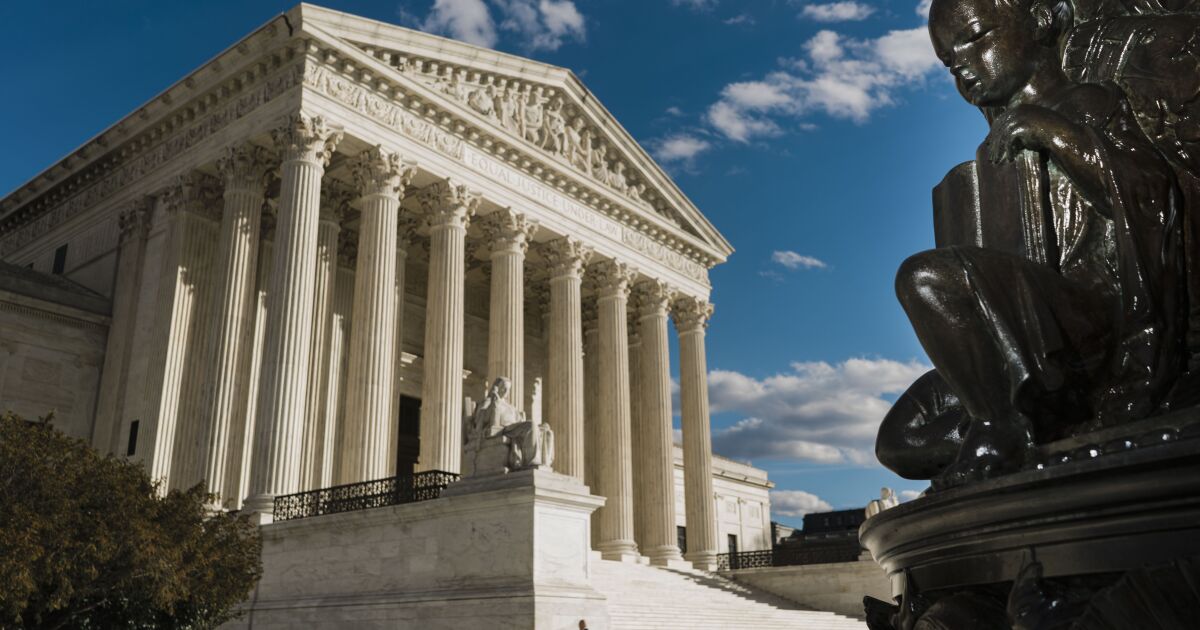
WASHINGTON — 

The Supreme Court’s liberals, including new Justice Ketanji Brown Jackson, strongly defended the Voting Rights Act on Tuesday, arguing Alabama should be required to draw election maps that give Black voters a chance at equal representation.

The court faces a showdown this term over whether race may be considered in drawing election districts or for college admissions to improve equality and diversity, or whether considering race for any reason is illegal.

The court’s conservatives, in a 5-4 vote, intervened for Alabama in February and blocked judges who required the state to draw a second congressional district with a near majority for African Americans. About 27% of the state’s population is Black, but only one of its seven districts has elected a Black candidate.

Raising the stakes, Alabama’s state attorneys on Tuesday urged the justices to rule broadly that the Constitution and Voting Rights Act forbid the state from taking any steps to give Black residents more equal representation.

Elections in Alabama are “equally open to all voters,” said state solicitor Edmund LaCour. It would be wrong to “discriminate in favor of one group” by intentionally drawing an election district where Black residents made up the majority.

He had barely begun his argument when Justices Elena Kagan and Jackson interrupted to assert that the Voting Rights Act understood that racial fairness required considering race at times.

Kagan said the Voting Rights Act was “one of the great achievements of American democracy,” and its aim was to end the era of racial exclusion with a rule of equal opportunity.

“You are asking us to cut back on 40 years of precedent,” she said, and to make it extremely hard for Black candidates to win elections in places like Alabama, where voting is “incredibly polarized” based on race.

Jackson took on conservatives’ claim that the Constitution itself is “race blind,” noting the post-Civil War amendments at issue in the case were adopted in response to slavery.

“The framers adopted the 14th and 15th Amendments in a race conscious way,” because people had been discriminated against because of their race. “That was not a race neutral or race blind idea,” she said.

Justices Sonia Sotomayor sounded the same theme, and the liberals were joined for much of the argument by conservative Justice Brett M. Kavanaugh. He said the evidence showed that Alabama could create a second Black-majority district that would not be oddly shaped or “bizarre.”

But it was unclear from the argument how the court is likely to rule. Most of the conservative justices said little.

Only Justice Samuel A. Alito Jr. appeared to take Alabama’s side. He said the map makers would have to focus on race to draw a second Black-majority district, and that was questionable under the law.

Civil rights advocates fear the court’s conservative majority is prepared to make it much harder for Black and Latino voters to win representation in Congress, state legislatures and city councils.

Congress bolstered the Voting Rights Act in 1982 to prohibit election maps that denied racial minorities an equal chance to “elect representatives of their choice.” That in turn had forced states to draw election districts, where possible, that would have a majority or near majority of Black or Latino voters.

But Alabama’s lawyers argue that using race as a factor in drawing election districts is an illegal “racial gerrymander.”

The case is Merrill vs. Milligan.

If the high court rules in favor of Alabama, it could benefit Republicans across the South by making it harder for Black Democrats to win seats in Congress and the statehouse.

WASHINGTON — 

The Supreme Court’s liberals, including new Justice Ketanji Brown Jackson, strongly defended the Voting Rights Act on Tuesday, arguing Alabama should be required to draw election maps that give Black voters a chance at equal representation.

The court faces a showdown this term over whether race may be considered in drawing election districts or for college admissions to improve equality and diversity, or whether considering race for any reason is illegal.

The court’s conservatives, in a 5-4 vote, intervened for Alabama in February and blocked judges who required the state to draw a second congressional district with a near majority for African Americans. About 27% of the state’s population is Black, but only one of its seven districts has elected a Black candidate.

Raising the stakes, Alabama’s state attorneys on Tuesday urged the justices to rule broadly that the Constitution and Voting Rights Act forbid the state from taking any steps to give Black residents more equal representation.

Elections in Alabama are “equally open to all voters,” said state solicitor Edmund LaCour. It would be wrong to “discriminate in favor of one group” by intentionally drawing an election district where Black residents made up the majority.

He had barely begun his argument when Justices Elena Kagan and Jackson interrupted to assert that the Voting Rights Act understood that racial fairness required considering race at times.

Kagan said the Voting Rights Act was “one of the great achievements of American democracy,” and its aim was to end the era of racial exclusion with a rule of equal opportunity.

“You are asking us to cut back on 40 years of precedent,” she said, and to make it extremely hard for Black candidates to win elections in places like Alabama, where voting is “incredibly polarized” based on race.

Jackson took on conservatives’ claim that the Constitution itself is “race blind,” noting the post-Civil War amendments at issue in the case were adopted in response to slavery.

“The framers adopted the 14th and 15th Amendments in a race conscious way,” because people had been discriminated against because of their race. “That was not a race neutral or race blind idea,” she said.

Justices Sonia Sotomayor sounded the same theme, and the liberals were joined for much of the argument by conservative Justice Brett M. Kavanaugh. He said the evidence showed that Alabama could create a second Black-majority district that would not be oddly shaped or “bizarre.”

But it was unclear from the argument how the court is likely to rule. Most of the conservative justices said little.

Only Justice Samuel A. Alito Jr. appeared to take Alabama’s side. He said the map makers would have to focus on race to draw a second Black-majority district, and that was questionable under the law.

Civil rights advocates fear the court’s conservative majority is prepared to make it much harder for Black and Latino voters to win representation in Congress, state legislatures and city councils.

Congress bolstered the Voting Rights Act in 1982 to prohibit election maps that denied racial minorities an equal chance to “elect representatives of their choice.” That in turn had forced states to draw election districts, where possible, that would have a majority or near majority of Black or Latino voters.

But Alabama’s lawyers argue that using race as a factor in drawing election districts is an illegal “racial gerrymander.”

The case is Merrill vs. Milligan.

If the high court rules in favor of Alabama, it could benefit Republicans across the South by making it harder for Black Democrats to win seats in Congress and the statehouse.

WASHINGTON — 

The Supreme Court’s liberals, including new Justice Ketanji Brown Jackson, strongly defended the Voting Rights Act on Tuesday, arguing Alabama should be required to draw election maps that give Black voters a chance at equal representation.

The court faces a showdown this term over whether race may be considered in drawing election districts or for college admissions to improve equality and diversity, or whether considering race for any reason is illegal.

The court’s conservatives, in a 5-4 vote, intervened for Alabama in February and blocked judges who required the state to draw a second congressional district with a near majority for African Americans. About 27% of the state’s population is Black, but only one of its seven districts has elected a Black candidate.

Raising the stakes, Alabama’s state attorneys on Tuesday urged the justices to rule broadly that the Constitution and Voting Rights Act forbid the state from taking any steps to give Black residents more equal representation.

Elections in Alabama are “equally open to all voters,” said state solicitor Edmund LaCour. It would be wrong to “discriminate in favor of one group” by intentionally drawing an election district where Black residents made up the majority.

He had barely begun his argument when Justices Elena Kagan and Jackson interrupted to assert that the Voting Rights Act understood that racial fairness required considering race at times.

Kagan said the Voting Rights Act was “one of the great achievements of American democracy,” and its aim was to end the era of racial exclusion with a rule of equal opportunity.

“You are asking us to cut back on 40 years of precedent,” she said, and to make it extremely hard for Black candidates to win elections in places like Alabama, where voting is “incredibly polarized” based on race.

Jackson took on conservatives’ claim that the Constitution itself is “race blind,” noting the post-Civil War amendments at issue in the case were adopted in response to slavery.

“The framers adopted the 14th and 15th Amendments in a race conscious way,” because people had been discriminated against because of their race. “That was not a race neutral or race blind idea,” she said.

Justices Sonia Sotomayor sounded the same theme, and the liberals were joined for much of the argument by conservative Justice Brett M. Kavanaugh. He said the evidence showed that Alabama could create a second Black-majority district that would not be oddly shaped or “bizarre.”

But it was unclear from the argument how the court is likely to rule. Most of the conservative justices said little.

Only Justice Samuel A. Alito Jr. appeared to take Alabama’s side. He said the map makers would have to focus on race to draw a second Black-majority district, and that was questionable under the law.

Civil rights advocates fear the court’s conservative majority is prepared to make it much harder for Black and Latino voters to win representation in Congress, state legislatures and city councils.

Congress bolstered the Voting Rights Act in 1982 to prohibit election maps that denied racial minorities an equal chance to “elect representatives of their choice.” That in turn had forced states to draw election districts, where possible, that would have a majority or near majority of Black or Latino voters.

But Alabama’s lawyers argue that using race as a factor in drawing election districts is an illegal “racial gerrymander.”

The case is Merrill vs. Milligan.

If the high court rules in favor of Alabama, it could benefit Republicans across the South by making it harder for Black Democrats to win seats in Congress and the statehouse.


WASHINGTON — 

The Supreme Court’s liberals, including new Justice Ketanji Brown Jackson, strongly defended the Voting Rights Act on Tuesday, arguing Alabama should be required to draw election maps that give Black voters a chance at equal representation.

The court faces a showdown this term over whether race may be considered in drawing election districts or for college admissions to improve equality and diversity, or whether considering race for any reason is illegal.

The court’s conservatives, in a 5-4 vote, intervened for Alabama in February and blocked judges who required the state to draw a second congressional district with a near majority for African Americans. About 27% of the state’s population is Black, but only one of its seven districts has elected a Black candidate.

Raising the stakes, Alabama’s state attorneys on Tuesday urged the justices to rule broadly that the Constitution and Voting Rights Act forbid the state from taking any steps to give Black residents more equal representation.

Elections in Alabama are “equally open to all voters,” said state solicitor Edmund LaCour. It would be wrong to “discriminate in favor of one group” by intentionally drawing an election district where Black residents made up the majority.

He had barely begun his argument when Justices Elena Kagan and Jackson interrupted to assert that the Voting Rights Act understood that racial fairness required considering race at times.

Kagan said the Voting Rights Act was “one of the great achievements of American democracy,” and its aim was to end the era of racial exclusion with a rule of equal opportunity.

“You are asking us to cut back on 40 years of precedent,” she said, and to make it extremely hard for Black candidates to win elections in places like Alabama, where voting is “incredibly polarized” based on race.

Jackson took on conservatives’ claim that the Constitution itself is “race blind,” noting the post-Civil War amendments at issue in the case were adopted in response to slavery.

“The framers adopted the 14th and 15th Amendments in a race conscious way,” because people had been discriminated against because of their race. “That was not a race neutral or race blind idea,” she said.

Justices Sonia Sotomayor sounded the same theme, and the liberals were joined for much of the argument by conservative Justice Brett M. Kavanaugh. He said the evidence showed that Alabama could create a second Black-majority district that would not be oddly shaped or “bizarre.”

But it was unclear from the argument how the court is likely to rule. Most of the conservative justices said little.

Only Justice Samuel A. Alito Jr. appeared to take Alabama’s side. He said the map makers would have to focus on race to draw a second Black-majority district, and that was questionable under the law.

Civil rights advocates fear the court’s conservative majority is prepared to make it much harder for Black and Latino voters to win representation in Congress, state legislatures and city councils.

Congress bolstered the Voting Rights Act in 1982 to prohibit election maps that denied racial minorities an equal chance to “elect representatives of their choice.” That in turn had forced states to draw election districts, where possible, that would have a majority or near majority of Black or Latino voters.

But Alabama’s lawyers argue that using race as a factor in drawing election districts is an illegal “racial gerrymander.”

The case is Merrill vs. Milligan.

If the high court rules in favor of Alabama, it could benefit Republicans across the South by making it harder for Black Democrats to win seats in Congress and the statehouse.

WASHINGTON — 

The Supreme Court’s liberals, including new Justice Ketanji Brown Jackson, strongly defended the Voting Rights Act on Tuesday, arguing Alabama should be required to draw election maps that give Black voters a chance at equal representation.

The court faces a showdown this term over whether race may be considered in drawing election districts or for college admissions to improve equality and diversity, or whether considering race for any reason is illegal.

The court’s conservatives, in a 5-4 vote, intervened for Alabama in February and blocked judges who required the state to draw a second congressional district with a near majority for African Americans. About 27% of the state’s population is Black, but only one of its seven districts has elected a Black candidate.

Raising the stakes, Alabama’s state attorneys on Tuesday urged the justices to rule broadly that the Constitution and Voting Rights Act forbid the state from taking any steps to give Black residents more equal representation.

Elections in Alabama are “equally open to all voters,” said state solicitor Edmund LaCour. It would be wrong to “discriminate in favor of one group” by intentionally drawing an election district where Black residents made up the majority.

He had barely begun his argument when Justices Elena Kagan and Jackson interrupted to assert that the Voting Rights Act understood that racial fairness required considering race at times.

Kagan said the Voting Rights Act was “one of the great achievements of American democracy,” and its aim was to end the era of racial exclusion with a rule of equal opportunity.

“You are asking us to cut back on 40 years of precedent,” she said, and to make it extremely hard for Black candidates to win elections in places like Alabama, where voting is “incredibly polarized” based on race.

Jackson took on conservatives’ claim that the Constitution itself is “race blind,” noting the post-Civil War amendments at issue in the case were adopted in response to slavery.

“The framers adopted the 14th and 15th Amendments in a race conscious way,” because people had been discriminated against because of their race. “That was not a race neutral or race blind idea,” she said.

Justices Sonia Sotomayor sounded the same theme, and the liberals were joined for much of the argument by conservative Justice Brett M. Kavanaugh. He said the evidence showed that Alabama could create a second Black-majority district that would not be oddly shaped or “bizarre.”

But it was unclear from the argument how the court is likely to rule. Most of the conservative justices said little.

Only Justice Samuel A. Alito Jr. appeared to take Alabama’s side. He said the map makers would have to focus on race to draw a second Black-majority district, and that was questionable under the law.

Civil rights advocates fear the court’s conservative majority is prepared to make it much harder for Black and Latino voters to win representation in Congress, state legislatures and city councils.

Congress bolstered the Voting Rights Act in 1982 to prohibit election maps that denied racial minorities an equal chance to “elect representatives of their choice.” That in turn had forced states to draw election districts, where possible, that would have a majority or near majority of Black or Latino voters.

But Alabama’s lawyers argue that using race as a factor in drawing election districts is an illegal “racial gerrymander.”

The case is Merrill vs. Milligan.

If the high court rules in favor of Alabama, it could benefit Republicans across the South by making it harder for Black Democrats to win seats in Congress and the statehouse.

WASHINGTON — 

The Supreme Court’s liberals, including new Justice Ketanji Brown Jackson, strongly defended the Voting Rights Act on Tuesday, arguing Alabama should be required to draw election maps that give Black voters a chance at equal representation.

The court faces a showdown this term over whether race may be considered in drawing election districts or for college admissions to improve equality and diversity, or whether considering race for any reason is illegal.

The court’s conservatives, in a 5-4 vote, intervened for Alabama in February and blocked judges who required the state to draw a second congressional district with a near majority for African Americans. About 27% of the state’s population is Black, but only one of its seven districts has elected a Black candidate.

Raising the stakes, Alabama’s state attorneys on Tuesday urged the justices to rule broadly that the Constitution and Voting Rights Act forbid the state from taking any steps to give Black residents more equal representation.

Elections in Alabama are “equally open to all voters,” said state solicitor Edmund LaCour. It would be wrong to “discriminate in favor of one group” by intentionally drawing an election district where Black residents made up the majority.

He had barely begun his argument when Justices Elena Kagan and Jackson interrupted to assert that the Voting Rights Act understood that racial fairness required considering race at times.

Kagan said the Voting Rights Act was “one of the great achievements of American democracy,” and its aim was to end the era of racial exclusion with a rule of equal opportunity.

“You are asking us to cut back on 40 years of precedent,” she said, and to make it extremely hard for Black candidates to win elections in places like Alabama, where voting is “incredibly polarized” based on race.

Jackson took on conservatives’ claim that the Constitution itself is “race blind,” noting the post-Civil War amendments at issue in the case were adopted in response to slavery.

“The framers adopted the 14th and 15th Amendments in a race conscious way,” because people had been discriminated against because of their race. “That was not a race neutral or race blind idea,” she said.

Justices Sonia Sotomayor sounded the same theme, and the liberals were joined for much of the argument by conservative Justice Brett M. Kavanaugh. He said the evidence showed that Alabama could create a second Black-majority district that would not be oddly shaped or “bizarre.”

But it was unclear from the argument how the court is likely to rule. Most of the conservative justices said little.

Only Justice Samuel A. Alito Jr. appeared to take Alabama’s side. He said the map makers would have to focus on race to draw a second Black-majority district, and that was questionable under the law.

Civil rights advocates fear the court’s conservative majority is prepared to make it much harder for Black and Latino voters to win representation in Congress, state legislatures and city councils.

Congress bolstered the Voting Rights Act in 1982 to prohibit election maps that denied racial minorities an equal chance to “elect representatives of their choice.” That in turn had forced states to draw election districts, where possible, that would have a majority or near majority of Black or Latino voters.

But Alabama’s lawyers argue that using race as a factor in drawing election districts is an illegal “racial gerrymander.”

The case is Merrill vs. Milligan.

If the high court rules in favor of Alabama, it could benefit Republicans across the South by making it harder for Black Democrats to win seats in Congress and the statehouse.

WASHINGTON — 

The Supreme Court’s liberals, including new Justice Ketanji Brown Jackson, strongly defended the Voting Rights Act on Tuesday, arguing Alabama should be required to draw election maps that give Black voters a chance at equal representation.

The court faces a showdown this term over whether race may be considered in drawing election districts or for college admissions to improve equality and diversity, or whether considering race for any reason is illegal.

The court’s conservatives, in a 5-4 vote, intervened for Alabama in February and blocked judges who required the state to draw a second congressional district with a near majority for African Americans. About 27% of the state’s population is Black, but only one of its seven districts has elected a Black candidate.

Raising the stakes, Alabama’s state attorneys on Tuesday urged the justices to rule broadly that the Constitution and Voting Rights Act forbid the state from taking any steps to give Black residents more equal representation.

Elections in Alabama are “equally open to all voters,” said state solicitor Edmund LaCour. It would be wrong to “discriminate in favor of one group” by intentionally drawing an election district where Black residents made up the majority.

He had barely begun his argument when Justices Elena Kagan and Jackson interrupted to assert that the Voting Rights Act understood that racial fairness required considering race at times.

Kagan said the Voting Rights Act was “one of the great achievements of American democracy,” and its aim was to end the era of racial exclusion with a rule of equal opportunity.

“You are asking us to cut back on 40 years of precedent,” she said, and to make it extremely hard for Black candidates to win elections in places like Alabama, where voting is “incredibly polarized” based on race.

Jackson took on conservatives’ claim that the Constitution itself is “race blind,” noting the post-Civil War amendments at issue in the case were adopted in response to slavery.

“The framers adopted the 14th and 15th Amendments in a race conscious way,” because people had been discriminated against because of their race. “That was not a race neutral or race blind idea,” she said.

Justices Sonia Sotomayor sounded the same theme, and the liberals were joined for much of the argument by conservative Justice Brett M. Kavanaugh. He said the evidence showed that Alabama could create a second Black-majority district that would not be oddly shaped or “bizarre.”

But it was unclear from the argument how the court is likely to rule. Most of the conservative justices said little.

Only Justice Samuel A. Alito Jr. appeared to take Alabama’s side. He said the map makers would have to focus on race to draw a second Black-majority district, and that was questionable under the law.

Civil rights advocates fear the court’s conservative majority is prepared to make it much harder for Black and Latino voters to win representation in Congress, state legislatures and city councils.

Congress bolstered the Voting Rights Act in 1982 to prohibit election maps that denied racial minorities an equal chance to “elect representatives of their choice.” That in turn had forced states to draw election districts, where possible, that would have a majority or near majority of Black or Latino voters.

But Alabama’s lawyers argue that using race as a factor in drawing election districts is an illegal “racial gerrymander.”

The case is Merrill vs. Milligan.

If the high court rules in favor of Alabama, it could benefit Republicans across the South by making it harder for Black Democrats to win seats in Congress and the statehouse.

WASHINGTON — 

The Supreme Court’s liberals, including new Justice Ketanji Brown Jackson, strongly defended the Voting Rights Act on Tuesday, arguing Alabama should be required to draw election maps that give Black voters a chance at equal representation.

The court faces a showdown this term over whether race may be considered in drawing election districts or for college admissions to improve equality and diversity, or whether considering race for any reason is illegal.

The court’s conservatives, in a 5-4 vote, intervened for Alabama in February and blocked judges who required the state to draw a second congressional district with a near majority for African Americans. About 27% of the state’s population is Black, but only one of its seven districts has elected a Black candidate.

Raising the stakes, Alabama’s state attorneys on Tuesday urged the justices to rule broadly that the Constitution and Voting Rights Act forbid the state from taking any steps to give Black residents more equal representation.

Elections in Alabama are “equally open to all voters,” said state solicitor Edmund LaCour. It would be wrong to “discriminate in favor of one group” by intentionally drawing an election district where Black residents made up the majority.

He had barely begun his argument when Justices Elena Kagan and Jackson interrupted to assert that the Voting Rights Act understood that racial fairness required considering race at times.

Kagan said the Voting Rights Act was “one of the great achievements of American democracy,” and its aim was to end the era of racial exclusion with a rule of equal opportunity.

“You are asking us to cut back on 40 years of precedent,” she said, and to make it extremely hard for Black candidates to win elections in places like Alabama, where voting is “incredibly polarized” based on race.

Jackson took on conservatives’ claim that the Constitution itself is “race blind,” noting the post-Civil War amendments at issue in the case were adopted in response to slavery.

“The framers adopted the 14th and 15th Amendments in a race conscious way,” because people had been discriminated against because of their race. “That was not a race neutral or race blind idea,” she said.

Justices Sonia Sotomayor sounded the same theme, and the liberals were joined for much of the argument by conservative Justice Brett M. Kavanaugh. He said the evidence showed that Alabama could create a second Black-majority district that would not be oddly shaped or “bizarre.”

But it was unclear from the argument how the court is likely to rule. Most of the conservative justices said little.

Only Justice Samuel A. Alito Jr. appeared to take Alabama’s side. He said the map makers would have to focus on race to draw a second Black-majority district, and that was questionable under the law.

Civil rights advocates fear the court’s conservative majority is prepared to make it much harder for Black and Latino voters to win representation in Congress, state legislatures and city councils.

Congress bolstered the Voting Rights Act in 1982 to prohibit election maps that denied racial minorities an equal chance to “elect representatives of their choice.” That in turn had forced states to draw election districts, where possible, that would have a majority or near majority of Black or Latino voters.

But Alabama’s lawyers argue that using race as a factor in drawing election districts is an illegal “racial gerrymander.”

The case is Merrill vs. Milligan.

If the high court rules in favor of Alabama, it could benefit Republicans across the South by making it harder for Black Democrats to win seats in Congress and the statehouse.

WASHINGTON — 

The Supreme Court’s liberals, including new Justice Ketanji Brown Jackson, strongly defended the Voting Rights Act on Tuesday, arguing Alabama should be required to draw election maps that give Black voters a chance at equal representation.

The court faces a showdown this term over whether race may be considered in drawing election districts or for college admissions to improve equality and diversity, or whether considering race for any reason is illegal.

The court’s conservatives, in a 5-4 vote, intervened for Alabama in February and blocked judges who required the state to draw a second congressional district with a near majority for African Americans. About 27% of the state’s population is Black, but only one of its seven districts has elected a Black candidate.

Raising the stakes, Alabama’s state attorneys on Tuesday urged the justices to rule broadly that the Constitution and Voting Rights Act forbid the state from taking any steps to give Black residents more equal representation.

Elections in Alabama are “equally open to all voters,” said state solicitor Edmund LaCour. It would be wrong to “discriminate in favor of one group” by intentionally drawing an election district where Black residents made up the majority.

He had barely begun his argument when Justices Elena Kagan and Jackson interrupted to assert that the Voting Rights Act understood that racial fairness required considering race at times.

Kagan said the Voting Rights Act was “one of the great achievements of American democracy,” and its aim was to end the era of racial exclusion with a rule of equal opportunity.

“You are asking us to cut back on 40 years of precedent,” she said, and to make it extremely hard for Black candidates to win elections in places like Alabama, where voting is “incredibly polarized” based on race.

Jackson took on conservatives’ claim that the Constitution itself is “race blind,” noting the post-Civil War amendments at issue in the case were adopted in response to slavery.

“The framers adopted the 14th and 15th Amendments in a race conscious way,” because people had been discriminated against because of their race. “That was not a race neutral or race blind idea,” she said.

Justices Sonia Sotomayor sounded the same theme, and the liberals were joined for much of the argument by conservative Justice Brett M. Kavanaugh. He said the evidence showed that Alabama could create a second Black-majority district that would not be oddly shaped or “bizarre.”

But it was unclear from the argument how the court is likely to rule. Most of the conservative justices said little.

Only Justice Samuel A. Alito Jr. appeared to take Alabama’s side. He said the map makers would have to focus on race to draw a second Black-majority district, and that was questionable under the law.

Civil rights advocates fear the court’s conservative majority is prepared to make it much harder for Black and Latino voters to win representation in Congress, state legislatures and city councils.

Congress bolstered the Voting Rights Act in 1982 to prohibit election maps that denied racial minorities an equal chance to “elect representatives of their choice.” That in turn had forced states to draw election districts, where possible, that would have a majority or near majority of Black or Latino voters.

But Alabama’s lawyers argue that using race as a factor in drawing election districts is an illegal “racial gerrymander.”

The case is Merrill vs. Milligan.

If the high court rules in favor of Alabama, it could benefit Republicans across the South by making it harder for Black Democrats to win seats in Congress and the statehouse.

WASHINGTON — 

The Supreme Court’s liberals, including new Justice Ketanji Brown Jackson, strongly defended the Voting Rights Act on Tuesday, arguing Alabama should be required to draw election maps that give Black voters a chance at equal representation.

The court faces a showdown this term over whether race may be considered in drawing election districts or for college admissions to improve equality and diversity, or whether considering race for any reason is illegal.

The court’s conservatives, in a 5-4 vote, intervened for Alabama in February and blocked judges who required the state to draw a second congressional district with a near majority for African Americans. About 27% of the state’s population is Black, but only one of its seven districts has elected a Black candidate.

Raising the stakes, Alabama’s state attorneys on Tuesday urged the justices to rule broadly that the Constitution and Voting Rights Act forbid the state from taking any steps to give Black residents more equal representation.

Elections in Alabama are “equally open to all voters,” said state solicitor Edmund LaCour. It would be wrong to “discriminate in favor of one group” by intentionally drawing an election district where Black residents made up the majority.

He had barely begun his argument when Justices Elena Kagan and Jackson interrupted to assert that the Voting Rights Act understood that racial fairness required considering race at times.

Kagan said the Voting Rights Act was “one of the great achievements of American democracy,” and its aim was to end the era of racial exclusion with a rule of equal opportunity.

“You are asking us to cut back on 40 years of precedent,” she said, and to make it extremely hard for Black candidates to win elections in places like Alabama, where voting is “incredibly polarized” based on race.

Jackson took on conservatives’ claim that the Constitution itself is “race blind,” noting the post-Civil War amendments at issue in the case were adopted in response to slavery.

“The framers adopted the 14th and 15th Amendments in a race conscious way,” because people had been discriminated against because of their race. “That was not a race neutral or race blind idea,” she said.

Justices Sonia Sotomayor sounded the same theme, and the liberals were joined for much of the argument by conservative Justice Brett M. Kavanaugh. He said the evidence showed that Alabama could create a second Black-majority district that would not be oddly shaped or “bizarre.”

But it was unclear from the argument how the court is likely to rule. Most of the conservative justices said little.

Only Justice Samuel A. Alito Jr. appeared to take Alabama’s side. He said the map makers would have to focus on race to draw a second Black-majority district, and that was questionable under the law.

Civil rights advocates fear the court’s conservative majority is prepared to make it much harder for Black and Latino voters to win representation in Congress, state legislatures and city councils.

Congress bolstered the Voting Rights Act in 1982 to prohibit election maps that denied racial minorities an equal chance to “elect representatives of their choice.” That in turn had forced states to draw election districts, where possible, that would have a majority or near majority of Black or Latino voters.

But Alabama’s lawyers argue that using race as a factor in drawing election districts is an illegal “racial gerrymander.”

The case is Merrill vs. Milligan.

If the high court rules in favor of Alabama, it could benefit Republicans across the South by making it harder for Black Democrats to win seats in Congress and the statehouse.

WASHINGTON — 

The Supreme Court’s liberals, including new Justice Ketanji Brown Jackson, strongly defended the Voting Rights Act on Tuesday, arguing Alabama should be required to draw election maps that give Black voters a chance at equal representation.

The court faces a showdown this term over whether race may be considered in drawing election districts or for college admissions to improve equality and diversity, or whether considering race for any reason is illegal.

The court’s conservatives, in a 5-4 vote, intervened for Alabama in February and blocked judges who required the state to draw a second congressional district with a near majority for African Americans. About 27% of the state’s population is Black, but only one of its seven districts has elected a Black candidate.

Raising the stakes, Alabama’s state attorneys on Tuesday urged the justices to rule broadly that the Constitution and Voting Rights Act forbid the state from taking any steps to give Black residents more equal representation.

Elections in Alabama are “equally open to all voters,” said state solicitor Edmund LaCour. It would be wrong to “discriminate in favor of one group” by intentionally drawing an election district where Black residents made up the majority.

He had barely begun his argument when Justices Elena Kagan and Jackson interrupted to assert that the Voting Rights Act understood that racial fairness required considering race at times.

Kagan said the Voting Rights Act was “one of the great achievements of American democracy,” and its aim was to end the era of racial exclusion with a rule of equal opportunity.

“You are asking us to cut back on 40 years of precedent,” she said, and to make it extremely hard for Black candidates to win elections in places like Alabama, where voting is “incredibly polarized” based on race.

Jackson took on conservatives’ claim that the Constitution itself is “race blind,” noting the post-Civil War amendments at issue in the case were adopted in response to slavery.

“The framers adopted the 14th and 15th Amendments in a race conscious way,” because people had been discriminated against because of their race. “That was not a race neutral or race blind idea,” she said.

Justices Sonia Sotomayor sounded the same theme, and the liberals were joined for much of the argument by conservative Justice Brett M. Kavanaugh. He said the evidence showed that Alabama could create a second Black-majority district that would not be oddly shaped or “bizarre.”

But it was unclear from the argument how the court is likely to rule. Most of the conservative justices said little.

Only Justice Samuel A. Alito Jr. appeared to take Alabama’s side. He said the map makers would have to focus on race to draw a second Black-majority district, and that was questionable under the law.

Civil rights advocates fear the court’s conservative majority is prepared to make it much harder for Black and Latino voters to win representation in Congress, state legislatures and city councils.

Congress bolstered the Voting Rights Act in 1982 to prohibit election maps that denied racial minorities an equal chance to “elect representatives of their choice.” That in turn had forced states to draw election districts, where possible, that would have a majority or near majority of Black or Latino voters.

But Alabama’s lawyers argue that using race as a factor in drawing election districts is an illegal “racial gerrymander.”

The case is Merrill vs. Milligan.

If the high court rules in favor of Alabama, it could benefit Republicans across the South by making it harder for Black Democrats to win seats in Congress and the statehouse.

WASHINGTON — 

The Supreme Court’s liberals, including new Justice Ketanji Brown Jackson, strongly defended the Voting Rights Act on Tuesday, arguing Alabama should be required to draw election maps that give Black voters a chance at equal representation.

The court faces a showdown this term over whether race may be considered in drawing election districts or for college admissions to improve equality and diversity, or whether considering race for any reason is illegal.

The court’s conservatives, in a 5-4 vote, intervened for Alabama in February and blocked judges who required the state to draw a second congressional district with a near majority for African Americans. About 27% of the state’s population is Black, but only one of its seven districts has elected a Black candidate.

Raising the stakes, Alabama’s state attorneys on Tuesday urged the justices to rule broadly that the Constitution and Voting Rights Act forbid the state from taking any steps to give Black residents more equal representation.

Elections in Alabama are “equally open to all voters,” said state solicitor Edmund LaCour. It would be wrong to “discriminate in favor of one group” by intentionally drawing an election district where Black residents made up the majority.

He had barely begun his argument when Justices Elena Kagan and Jackson interrupted to assert that the Voting Rights Act understood that racial fairness required considering race at times.

Kagan said the Voting Rights Act was “one of the great achievements of American democracy,” and its aim was to end the era of racial exclusion with a rule of equal opportunity.

“You are asking us to cut back on 40 years of precedent,” she said, and to make it extremely hard for Black candidates to win elections in places like Alabama, where voting is “incredibly polarized” based on race.

Jackson took on conservatives’ claim that the Constitution itself is “race blind,” noting the post-Civil War amendments at issue in the case were adopted in response to slavery.

“The framers adopted the 14th and 15th Amendments in a race conscious way,” because people had been discriminated against because of their race. “That was not a race neutral or race blind idea,” she said.

Justices Sonia Sotomayor sounded the same theme, and the liberals were joined for much of the argument by conservative Justice Brett M. Kavanaugh. He said the evidence showed that Alabama could create a second Black-majority district that would not be oddly shaped or “bizarre.”

But it was unclear from the argument how the court is likely to rule. Most of the conservative justices said little.

Only Justice Samuel A. Alito Jr. appeared to take Alabama’s side. He said the map makers would have to focus on race to draw a second Black-majority district, and that was questionable under the law.

Civil rights advocates fear the court’s conservative majority is prepared to make it much harder for Black and Latino voters to win representation in Congress, state legislatures and city councils.

Congress bolstered the Voting Rights Act in 1982 to prohibit election maps that denied racial minorities an equal chance to “elect representatives of their choice.” That in turn had forced states to draw election districts, where possible, that would have a majority or near majority of Black or Latino voters.

But Alabama’s lawyers argue that using race as a factor in drawing election districts is an illegal “racial gerrymander.”

The case is Merrill vs. Milligan.

If the high court rules in favor of Alabama, it could benefit Republicans across the South by making it harder for Black Democrats to win seats in Congress and the statehouse.

WASHINGTON — 

The Supreme Court’s liberals, including new Justice Ketanji Brown Jackson, strongly defended the Voting Rights Act on Tuesday, arguing Alabama should be required to draw election maps that give Black voters a chance at equal representation.

The court faces a showdown this term over whether race may be considered in drawing election districts or for college admissions to improve equality and diversity, or whether considering race for any reason is illegal.

The court’s conservatives, in a 5-4 vote, intervened for Alabama in February and blocked judges who required the state to draw a second congressional district with a near majority for African Americans. About 27% of the state’s population is Black, but only one of its seven districts has elected a Black candidate.

Raising the stakes, Alabama’s state attorneys on Tuesday urged the justices to rule broadly that the Constitution and Voting Rights Act forbid the state from taking any steps to give Black residents more equal representation.

Elections in Alabama are “equally open to all voters,” said state solicitor Edmund LaCour. It would be wrong to “discriminate in favor of one group” by intentionally drawing an election district where Black residents made up the majority.

He had barely begun his argument when Justices Elena Kagan and Jackson interrupted to assert that the Voting Rights Act understood that racial fairness required considering race at times.

Kagan said the Voting Rights Act was “one of the great achievements of American democracy,” and its aim was to end the era of racial exclusion with a rule of equal opportunity.

“You are asking us to cut back on 40 years of precedent,” she said, and to make it extremely hard for Black candidates to win elections in places like Alabama, where voting is “incredibly polarized” based on race.

Jackson took on conservatives’ claim that the Constitution itself is “race blind,” noting the post-Civil War amendments at issue in the case were adopted in response to slavery.

“The framers adopted the 14th and 15th Amendments in a race conscious way,” because people had been discriminated against because of their race. “That was not a race neutral or race blind idea,” she said.

Justices Sonia Sotomayor sounded the same theme, and the liberals were joined for much of the argument by conservative Justice Brett M. Kavanaugh. He said the evidence showed that Alabama could create a second Black-majority district that would not be oddly shaped or “bizarre.”

But it was unclear from the argument how the court is likely to rule. Most of the conservative justices said little.

Only Justice Samuel A. Alito Jr. appeared to take Alabama’s side. He said the map makers would have to focus on race to draw a second Black-majority district, and that was questionable under the law.

Civil rights advocates fear the court’s conservative majority is prepared to make it much harder for Black and Latino voters to win representation in Congress, state legislatures and city councils.

Congress bolstered the Voting Rights Act in 1982 to prohibit election maps that denied racial minorities an equal chance to “elect representatives of their choice.” That in turn had forced states to draw election districts, where possible, that would have a majority or near majority of Black or Latino voters.

But Alabama’s lawyers argue that using race as a factor in drawing election districts is an illegal “racial gerrymander.”

The case is Merrill vs. Milligan.

If the high court rules in favor of Alabama, it could benefit Republicans across the South by making it harder for Black Democrats to win seats in Congress and the statehouse.

WASHINGTON — 

The Supreme Court’s liberals, including new Justice Ketanji Brown Jackson, strongly defended the Voting Rights Act on Tuesday, arguing Alabama should be required to draw election maps that give Black voters a chance at equal representation.

The court faces a showdown this term over whether race may be considered in drawing election districts or for college admissions to improve equality and diversity, or whether considering race for any reason is illegal.

The court’s conservatives, in a 5-4 vote, intervened for Alabama in February and blocked judges who required the state to draw a second congressional district with a near majority for African Americans. About 27% of the state’s population is Black, but only one of its seven districts has elected a Black candidate.

Raising the stakes, Alabama’s state attorneys on Tuesday urged the justices to rule broadly that the Constitution and Voting Rights Act forbid the state from taking any steps to give Black residents more equal representation.

Elections in Alabama are “equally open to all voters,” said state solicitor Edmund LaCour. It would be wrong to “discriminate in favor of one group” by intentionally drawing an election district where Black residents made up the majority.

He had barely begun his argument when Justices Elena Kagan and Jackson interrupted to assert that the Voting Rights Act understood that racial fairness required considering race at times.

Kagan said the Voting Rights Act was “one of the great achievements of American democracy,” and its aim was to end the era of racial exclusion with a rule of equal opportunity.

“You are asking us to cut back on 40 years of precedent,” she said, and to make it extremely hard for Black candidates to win elections in places like Alabama, where voting is “incredibly polarized” based on race.

Jackson took on conservatives’ claim that the Constitution itself is “race blind,” noting the post-Civil War amendments at issue in the case were adopted in response to slavery.

“The framers adopted the 14th and 15th Amendments in a race conscious way,” because people had been discriminated against because of their race. “That was not a race neutral or race blind idea,” she said.

Justices Sonia Sotomayor sounded the same theme, and the liberals were joined for much of the argument by conservative Justice Brett M. Kavanaugh. He said the evidence showed that Alabama could create a second Black-majority district that would not be oddly shaped or “bizarre.”

But it was unclear from the argument how the court is likely to rule. Most of the conservative justices said little.

Only Justice Samuel A. Alito Jr. appeared to take Alabama’s side. He said the map makers would have to focus on race to draw a second Black-majority district, and that was questionable under the law.

Civil rights advocates fear the court’s conservative majority is prepared to make it much harder for Black and Latino voters to win representation in Congress, state legislatures and city councils.

Congress bolstered the Voting Rights Act in 1982 to prohibit election maps that denied racial minorities an equal chance to “elect representatives of their choice.” That in turn had forced states to draw election districts, where possible, that would have a majority or near majority of Black or Latino voters.

But Alabama’s lawyers argue that using race as a factor in drawing election districts is an illegal “racial gerrymander.”

The case is Merrill vs. Milligan.

If the high court rules in favor of Alabama, it could benefit Republicans across the South by making it harder for Black Democrats to win seats in Congress and the statehouse.

WASHINGTON — 

The Supreme Court’s liberals, including new Justice Ketanji Brown Jackson, strongly defended the Voting Rights Act on Tuesday, arguing Alabama should be required to draw election maps that give Black voters a chance at equal representation.

The court faces a showdown this term over whether race may be considered in drawing election districts or for college admissions to improve equality and diversity, or whether considering race for any reason is illegal.

The court’s conservatives, in a 5-4 vote, intervened for Alabama in February and blocked judges who required the state to draw a second congressional district with a near majority for African Americans. About 27% of the state’s population is Black, but only one of its seven districts has elected a Black candidate.

Raising the stakes, Alabama’s state attorneys on Tuesday urged the justices to rule broadly that the Constitution and Voting Rights Act forbid the state from taking any steps to give Black residents more equal representation.

Elections in Alabama are “equally open to all voters,” said state solicitor Edmund LaCour. It would be wrong to “discriminate in favor of one group” by intentionally drawing an election district where Black residents made up the majority.

He had barely begun his argument when Justices Elena Kagan and Jackson interrupted to assert that the Voting Rights Act understood that racial fairness required considering race at times.

Kagan said the Voting Rights Act was “one of the great achievements of American democracy,” and its aim was to end the era of racial exclusion with a rule of equal opportunity.

“You are asking us to cut back on 40 years of precedent,” she said, and to make it extremely hard for Black candidates to win elections in places like Alabama, where voting is “incredibly polarized” based on race.

Jackson took on conservatives’ claim that the Constitution itself is “race blind,” noting the post-Civil War amendments at issue in the case were adopted in response to slavery.

“The framers adopted the 14th and 15th Amendments in a race conscious way,” because people had been discriminated against because of their race. “That was not a race neutral or race blind idea,” she said.

Justices Sonia Sotomayor sounded the same theme, and the liberals were joined for much of the argument by conservative Justice Brett M. Kavanaugh. He said the evidence showed that Alabama could create a second Black-majority district that would not be oddly shaped or “bizarre.”

But it was unclear from the argument how the court is likely to rule. Most of the conservative justices said little.

Only Justice Samuel A. Alito Jr. appeared to take Alabama’s side. He said the map makers would have to focus on race to draw a second Black-majority district, and that was questionable under the law.

Civil rights advocates fear the court’s conservative majority is prepared to make it much harder for Black and Latino voters to win representation in Congress, state legislatures and city councils.

Congress bolstered the Voting Rights Act in 1982 to prohibit election maps that denied racial minorities an equal chance to “elect representatives of their choice.” That in turn had forced states to draw election districts, where possible, that would have a majority or near majority of Black or Latino voters.

But Alabama’s lawyers argue that using race as a factor in drawing election districts is an illegal “racial gerrymander.”

The case is Merrill vs. Milligan.

If the high court rules in favor of Alabama, it could benefit Republicans across the South by making it harder for Black Democrats to win seats in Congress and the statehouse.

WASHINGTON — 

The Supreme Court’s liberals, including new Justice Ketanji Brown Jackson, strongly defended the Voting Rights Act on Tuesday, arguing Alabama should be required to draw election maps that give Black voters a chance at equal representation.

The court faces a showdown this term over whether race may be considered in drawing election districts or for college admissions to improve equality and diversity, or whether considering race for any reason is illegal.

The court’s conservatives, in a 5-4 vote, intervened for Alabama in February and blocked judges who required the state to draw a second congressional district with a near majority for African Americans. About 27% of the state’s population is Black, but only one of its seven districts has elected a Black candidate.

Raising the stakes, Alabama’s state attorneys on Tuesday urged the justices to rule broadly that the Constitution and Voting Rights Act forbid the state from taking any steps to give Black residents more equal representation.

Elections in Alabama are “equally open to all voters,” said state solicitor Edmund LaCour. It would be wrong to “discriminate in favor of one group” by intentionally drawing an election district where Black residents made up the majority.

He had barely begun his argument when Justices Elena Kagan and Jackson interrupted to assert that the Voting Rights Act understood that racial fairness required considering race at times.

Kagan said the Voting Rights Act was “one of the great achievements of American democracy,” and its aim was to end the era of racial exclusion with a rule of equal opportunity.

“You are asking us to cut back on 40 years of precedent,” she said, and to make it extremely hard for Black candidates to win elections in places like Alabama, where voting is “incredibly polarized” based on race.

Jackson took on conservatives’ claim that the Constitution itself is “race blind,” noting the post-Civil War amendments at issue in the case were adopted in response to slavery.

“The framers adopted the 14th and 15th Amendments in a race conscious way,” because people had been discriminated against because of their race. “That was not a race neutral or race blind idea,” she said.

Justices Sonia Sotomayor sounded the same theme, and the liberals were joined for much of the argument by conservative Justice Brett M. Kavanaugh. He said the evidence showed that Alabama could create a second Black-majority district that would not be oddly shaped or “bizarre.”

But it was unclear from the argument how the court is likely to rule. Most of the conservative justices said little.

Only Justice Samuel A. Alito Jr. appeared to take Alabama’s side. He said the map makers would have to focus on race to draw a second Black-majority district, and that was questionable under the law.

Civil rights advocates fear the court’s conservative majority is prepared to make it much harder for Black and Latino voters to win representation in Congress, state legislatures and city councils.

Congress bolstered the Voting Rights Act in 1982 to prohibit election maps that denied racial minorities an equal chance to “elect representatives of their choice.” That in turn had forced states to draw election districts, where possible, that would have a majority or near majority of Black or Latino voters.

But Alabama’s lawyers argue that using race as a factor in drawing election districts is an illegal “racial gerrymander.”

The case is Merrill vs. Milligan.

If the high court rules in favor of Alabama, it could benefit Republicans across the South by making it harder for Black Democrats to win seats in Congress and the statehouse.

Previous Post

Depeche Mode announces first album and tour since Andy Fletcher’s death

Next Post

New Cyberpunk and Witcher video games announced by CD Projekt RED

Leave a Reply Cancel reply

Your email address will not be published. Required fields are marked *

BROWSE BY CATEGORIES

  • Business
  • Culture
  • Entertainment
  • Health
  • Politics
  • Technology
  • Trending
  • Uncategorized
  • World
Binghamton Herald

© 2024 Binghamton Herald or its affiliated companies.

Navigate Site

  • About
  • Advertise
  • Terms & Conditions
  • Privacy Policy
  • Disclaimer
  • Contact

Follow Us

No Result
View All Result
  • Home
  • World
  • Politics
  • Business
  • Technology
  • Culture
  • Health
  • Entertainment
  • Trending

© 2024 Binghamton Herald or its affiliated companies.

Welcome Back!

Login to your account below

Forgotten Password?

Retrieve your password

Please enter your username or email address to reset your password.

Log In