



The Supreme Court on Thursday turned down a California attorney’s bid to trademark the phrase “Trump Too Small” for his exclusive use on T-shirts.
The justices said trademark law forbids the use of a living person’s name, including former President Trump.
The vote was 9-0.
Trump was not a party to the case of Vidal vs. Elster, but in the past he objected when businesses and others tried to make use of his name.
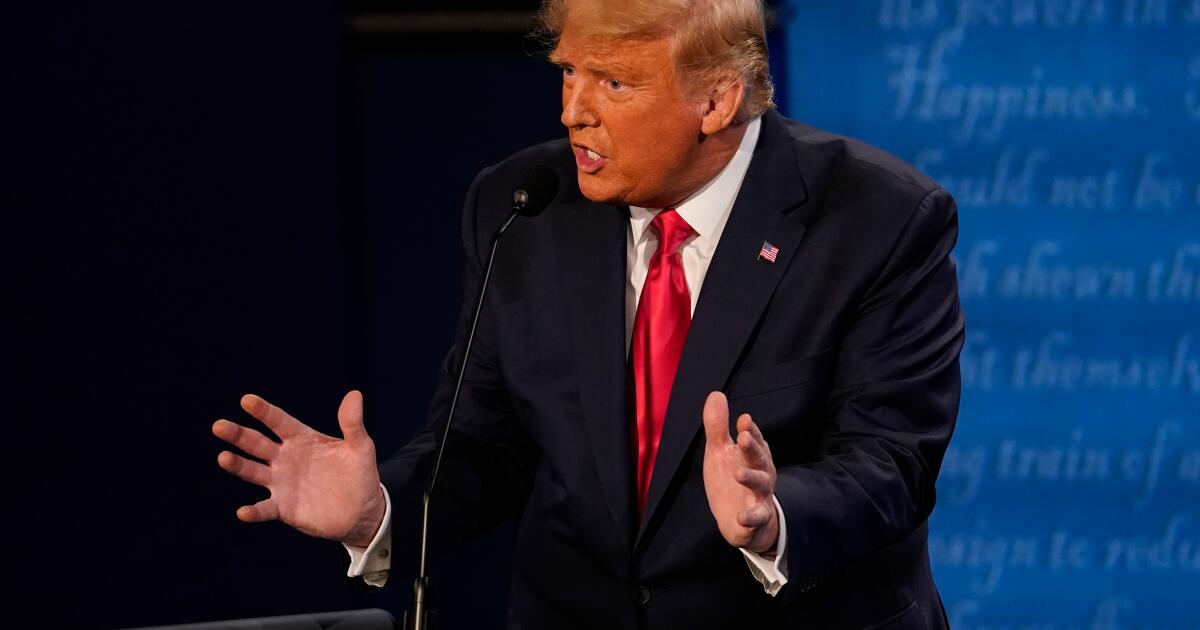
Concord, Calif., attorney Steve Elster said he was amused in 2016 when Republican presidential candidates exchanged comments about the size of Trump’s hands during a debate. Florida Sen. Marco Rubio, whom Trump had mocked as “Little Marco,” asked Trump to hold up his hands, which he did. “You know what they say about guys with small hands,” Rubio said.
After Trump won the election, Elster decided to sell T-shirts with the phrase “Trump Too Small,” which he said was meant to criticize Trump’s lack of accomplishments on civil rights, the environment and other issues.
Legally he was free to do so, but the U.S. Patent and Copyright Office denied his request to trademark the phrase for his exclusive use.
When he appealed the denial, he won a ruling from a federal appeals court which said his “Trump Too Small” slogan was political commentary protected by the 1st Amendment.
The Biden administration’s Solicitor Gen. Elizabeth Prelogar appealed and urged the Supreme Court to reject the trademark request.
She acknowledged that Elster had a free-speech right to mock the former president, but argued he did not have the right to “assert property rights in another person’s name.”
“For more than 75 years, Congress has directed the U.S. Patent and Trademark Office to refuse the registration of trademarks that use the name of a particular living individual without his written consent,” she said.
Writing for the court, Justice Clarence Thomas said Thursday: “Elster contends that this prohibition violates his 1st Amendment right to free speech. We hold that it does not,”

The Supreme Court on Thursday turned down a California attorney’s bid to trademark the phrase “Trump Too Small” for his exclusive use on T-shirts.
The justices said trademark law forbids the use of a living person’s name, including former President Trump.
The vote was 9-0.
Trump was not a party to the case of Vidal vs. Elster, but in the past he objected when businesses and others tried to make use of his name.
Concord, Calif., attorney Steve Elster said he was amused in 2016 when Republican presidential candidates exchanged comments about the size of Trump’s hands during a debate. Florida Sen. Marco Rubio, whom Trump had mocked as “Little Marco,” asked Trump to hold up his hands, which he did. “You know what they say about guys with small hands,” Rubio said.
After Trump won the election, Elster decided to sell T-shirts with the phrase “Trump Too Small,” which he said was meant to criticize Trump’s lack of accomplishments on civil rights, the environment and other issues.
Legally he was free to do so, but the U.S. Patent and Copyright Office denied his request to trademark the phrase for his exclusive use.
When he appealed the denial, he won a ruling from a federal appeals court which said his “Trump Too Small” slogan was political commentary protected by the 1st Amendment.
The Biden administration’s Solicitor Gen. Elizabeth Prelogar appealed and urged the Supreme Court to reject the trademark request.
She acknowledged that Elster had a free-speech right to mock the former president, but argued he did not have the right to “assert property rights in another person’s name.”
“For more than 75 years, Congress has directed the U.S. Patent and Trademark Office to refuse the registration of trademarks that use the name of a particular living individual without his written consent,” she said.
Writing for the court, Justice Clarence Thomas said Thursday: “Elster contends that this prohibition violates his 1st Amendment right to free speech. We hold that it does not,”

The Supreme Court on Thursday turned down a California attorney’s bid to trademark the phrase “Trump Too Small” for his exclusive use on T-shirts.
The justices said trademark law forbids the use of a living person’s name, including former President Trump.
The vote was 9-0.
Trump was not a party to the case of Vidal vs. Elster, but in the past he objected when businesses and others tried to make use of his name.
Concord, Calif., attorney Steve Elster said he was amused in 2016 when Republican presidential candidates exchanged comments about the size of Trump’s hands during a debate. Florida Sen. Marco Rubio, whom Trump had mocked as “Little Marco,” asked Trump to hold up his hands, which he did. “You know what they say about guys with small hands,” Rubio said.
After Trump won the election, Elster decided to sell T-shirts with the phrase “Trump Too Small,” which he said was meant to criticize Trump’s lack of accomplishments on civil rights, the environment and other issues.
Legally he was free to do so, but the U.S. Patent and Copyright Office denied his request to trademark the phrase for his exclusive use.
When he appealed the denial, he won a ruling from a federal appeals court which said his “Trump Too Small” slogan was political commentary protected by the 1st Amendment.
The Biden administration’s Solicitor Gen. Elizabeth Prelogar appealed and urged the Supreme Court to reject the trademark request.
She acknowledged that Elster had a free-speech right to mock the former president, but argued he did not have the right to “assert property rights in another person’s name.”
“For more than 75 years, Congress has directed the U.S. Patent and Trademark Office to refuse the registration of trademarks that use the name of a particular living individual without his written consent,” she said.
Writing for the court, Justice Clarence Thomas said Thursday: “Elster contends that this prohibition violates his 1st Amendment right to free speech. We hold that it does not,”
The Supreme Court on Thursday turned down a California attorney’s bid to trademark the phrase “Trump Too Small” for his exclusive use on T-shirts.
The justices said trademark law forbids the use of a living person’s name, including former President Trump.
The vote was 9-0.
Trump was not a party to the case of Vidal vs. Elster, but in the past he objected when businesses and others tried to make use of his name.
Concord, Calif., attorney Steve Elster said he was amused in 2016 when Republican presidential candidates exchanged comments about the size of Trump’s hands during a debate. Florida Sen. Marco Rubio, whom Trump had mocked as “Little Marco,” asked Trump to hold up his hands, which he did. “You know what they say about guys with small hands,” Rubio said.
After Trump won the election, Elster decided to sell T-shirts with the phrase “Trump Too Small,” which he said was meant to criticize Trump’s lack of accomplishments on civil rights, the environment and other issues.
Legally he was free to do so, but the U.S. Patent and Copyright Office denied his request to trademark the phrase for his exclusive use.
When he appealed the denial, he won a ruling from a federal appeals court which said his “Trump Too Small” slogan was political commentary protected by the 1st Amendment.
The Biden administration’s Solicitor Gen. Elizabeth Prelogar appealed and urged the Supreme Court to reject the trademark request.
She acknowledged that Elster had a free-speech right to mock the former president, but argued he did not have the right to “assert property rights in another person’s name.”
“For more than 75 years, Congress has directed the U.S. Patent and Trademark Office to refuse the registration of trademarks that use the name of a particular living individual without his written consent,” she said.
Writing for the court, Justice Clarence Thomas said Thursday: “Elster contends that this prohibition violates his 1st Amendment right to free speech. We hold that it does not,”

