

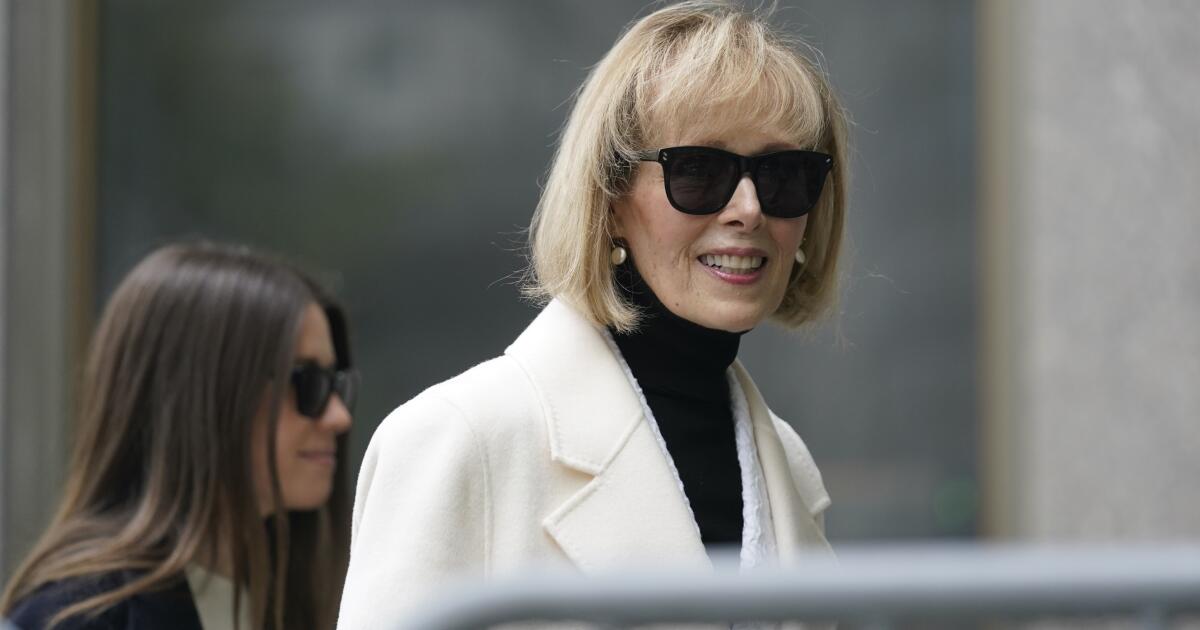
WASHINGTON — The Supreme Court on Monday turned down without comment President Trump’s appeal of a $5-million jury verdict for sexually abusing E. Jean Carroll in the dressing room of a Bergdorf Goodman store in Manhattan nearly 30 years ago.
None of the justices registered a dissent.
When Carroll reported the incident in a book, Trump called it “a hoax and a lie,” prompting her to file a second claim for defamation.
Trump and his lawyers argued he was unfairly held liable because the jurors heard from two other women who said Trump groped them. And they listened to Trump’s own words on his willingness to abuse women.
“When you’re a star … you can do anything,” Trump said on the “Access Hollywood” tape from 2005 that the jurors heard.
Trump defended those comments in a 2022 deposition that was used during the trial.
“Historically, that’s true with stars,” he said. “If you look over the last million years, I guess that’s been largely true. Unfortunately, or fortunately.”
Usually, a defendant’s prior bad acts are excluded from a jury trial.
But in 1994, Congress amended the federal rules of evidence to make an exception for civil suits involving alleged sexual abuse. Rule 415 says the judge “may admit evidence that the party committed any other sexual assault.”
In Trump’s case, the U.S. appeals court in New York said the rule “permits a jury to consider evidence of a different sexual assault precisely to show that a defendant has a pattern or propensity for committing sexual assault.”
Two women testified that Carroll had told them about the dressing room assault shortly after it happened. And two other women testified Trump had assaulted and groped them.
Carroll testified over three days at the trial. Trump did not attend and chose not to testify.
The federal rules say judges may exclude “propensity evidence” if they decide its value is “substantially outweighed by a danger of … unfair prejudice, confusing the issues or misleading the jury.”
U.S. District Judge Lewis Kaplan, who presided over the trial, permitted the use of the propensity evidence, and the 2nd Circuit Court of Appeals upheld his decision in December 2024, shortly after Trump won election to a second term.
Lawyers for a Missouri law firm founded by Solicitor Gen. D. John Sauer filed an appeal petition in November urging the court to review the case of Trump vs. Carroll and order a new trial.
They said Carroll’s claims were “facially implausible and politically motivated” and her trial “rested fundamentally on improper propensity evidence that courts ordinarily disavow.”
They devoted most of their appeal to arguing that the court should take up the case because judges are divided on when propensity evidence should be excluded.
But they also urged the court to intervene because they said Trump was being mistreated by the judges in New York.
“It is deeply damaging to the fabric of our Republic for President Trump, in the midst of a historic presidency, to have to take his focus away from his singular and unique duties as Chief Executive to continue fighting against decades-old, false allegations and the myriad wrongs throughout this baseless case,” they wrote.
Trump is also appealing a separate but related defamation verdict that ordered him to pay Carroll $83 million.

WASHINGTON — The Supreme Court on Monday turned down without comment President Trump’s appeal of a $5-million jury verdict for sexually abusing E. Jean Carroll in the dressing room of a Bergdorf Goodman store in Manhattan nearly 30 years ago.
None of the justices registered a dissent.
When Carroll reported the incident in a book, Trump called it “a hoax and a lie,” prompting her to file a second claim for defamation.
Trump and his lawyers argued he was unfairly held liable because the jurors heard from two other women who said Trump groped them. And they listened to Trump’s own words on his willingness to abuse women.
“When you’re a star … you can do anything,” Trump said on the “Access Hollywood” tape from 2005 that the jurors heard.
Trump defended those comments in a 2022 deposition that was used during the trial.
“Historically, that’s true with stars,” he said. “If you look over the last million years, I guess that’s been largely true. Unfortunately, or fortunately.”
Usually, a defendant’s prior bad acts are excluded from a jury trial.
But in 1994, Congress amended the federal rules of evidence to make an exception for civil suits involving alleged sexual abuse. Rule 415 says the judge “may admit evidence that the party committed any other sexual assault.”
In Trump’s case, the U.S. appeals court in New York said the rule “permits a jury to consider evidence of a different sexual assault precisely to show that a defendant has a pattern or propensity for committing sexual assault.”
Two women testified that Carroll had told them about the dressing room assault shortly after it happened. And two other women testified Trump had assaulted and groped them.
Carroll testified over three days at the trial. Trump did not attend and chose not to testify.
The federal rules say judges may exclude “propensity evidence” if they decide its value is “substantially outweighed by a danger of … unfair prejudice, confusing the issues or misleading the jury.”
U.S. District Judge Lewis Kaplan, who presided over the trial, permitted the use of the propensity evidence, and the 2nd Circuit Court of Appeals upheld his decision in December 2024, shortly after Trump won election to a second term.
Lawyers for a Missouri law firm founded by Solicitor Gen. D. John Sauer filed an appeal petition in November urging the court to review the case of Trump vs. Carroll and order a new trial.
They said Carroll’s claims were “facially implausible and politically motivated” and her trial “rested fundamentally on improper propensity evidence that courts ordinarily disavow.”
They devoted most of their appeal to arguing that the court should take up the case because judges are divided on when propensity evidence should be excluded.
But they also urged the court to intervene because they said Trump was being mistreated by the judges in New York.
“It is deeply damaging to the fabric of our Republic for President Trump, in the midst of a historic presidency, to have to take his focus away from his singular and unique duties as Chief Executive to continue fighting against decades-old, false allegations and the myriad wrongs throughout this baseless case,” they wrote.
Trump is also appealing a separate but related defamation verdict that ordered him to pay Carroll $83 million.

WASHINGTON — The Supreme Court on Monday turned down without comment President Trump’s appeal of a $5-million jury verdict for sexually abusing E. Jean Carroll in the dressing room of a Bergdorf Goodman store in Manhattan nearly 30 years ago.
None of the justices registered a dissent.
When Carroll reported the incident in a book, Trump called it “a hoax and a lie,” prompting her to file a second claim for defamation.
Trump and his lawyers argued he was unfairly held liable because the jurors heard from two other women who said Trump groped them. And they listened to Trump’s own words on his willingness to abuse women.
“When you’re a star … you can do anything,” Trump said on the “Access Hollywood” tape from 2005 that the jurors heard.
Trump defended those comments in a 2022 deposition that was used during the trial.
“Historically, that’s true with stars,” he said. “If you look over the last million years, I guess that’s been largely true. Unfortunately, or fortunately.”
Usually, a defendant’s prior bad acts are excluded from a jury trial.
But in 1994, Congress amended the federal rules of evidence to make an exception for civil suits involving alleged sexual abuse. Rule 415 says the judge “may admit evidence that the party committed any other sexual assault.”
In Trump’s case, the U.S. appeals court in New York said the rule “permits a jury to consider evidence of a different sexual assault precisely to show that a defendant has a pattern or propensity for committing sexual assault.”
Two women testified that Carroll had told them about the dressing room assault shortly after it happened. And two other women testified Trump had assaulted and groped them.
Carroll testified over three days at the trial. Trump did not attend and chose not to testify.
The federal rules say judges may exclude “propensity evidence” if they decide its value is “substantially outweighed by a danger of … unfair prejudice, confusing the issues or misleading the jury.”
U.S. District Judge Lewis Kaplan, who presided over the trial, permitted the use of the propensity evidence, and the 2nd Circuit Court of Appeals upheld his decision in December 2024, shortly after Trump won election to a second term.
Lawyers for a Missouri law firm founded by Solicitor Gen. D. John Sauer filed an appeal petition in November urging the court to review the case of Trump vs. Carroll and order a new trial.
They said Carroll’s claims were “facially implausible and politically motivated” and her trial “rested fundamentally on improper propensity evidence that courts ordinarily disavow.”
They devoted most of their appeal to arguing that the court should take up the case because judges are divided on when propensity evidence should be excluded.
But they also urged the court to intervene because they said Trump was being mistreated by the judges in New York.
“It is deeply damaging to the fabric of our Republic for President Trump, in the midst of a historic presidency, to have to take his focus away from his singular and unique duties as Chief Executive to continue fighting against decades-old, false allegations and the myriad wrongs throughout this baseless case,” they wrote.
Trump is also appealing a separate but related defamation verdict that ordered him to pay Carroll $83 million.
WASHINGTON — The Supreme Court on Monday turned down without comment President Trump’s appeal of a $5-million jury verdict for sexually abusing E. Jean Carroll in the dressing room of a Bergdorf Goodman store in Manhattan nearly 30 years ago.
None of the justices registered a dissent.
When Carroll reported the incident in a book, Trump called it “a hoax and a lie,” prompting her to file a second claim for defamation.
Trump and his lawyers argued he was unfairly held liable because the jurors heard from two other women who said Trump groped them. And they listened to Trump’s own words on his willingness to abuse women.
“When you’re a star … you can do anything,” Trump said on the “Access Hollywood” tape from 2005 that the jurors heard.
Trump defended those comments in a 2022 deposition that was used during the trial.
“Historically, that’s true with stars,” he said. “If you look over the last million years, I guess that’s been largely true. Unfortunately, or fortunately.”
Usually, a defendant’s prior bad acts are excluded from a jury trial.
But in 1994, Congress amended the federal rules of evidence to make an exception for civil suits involving alleged sexual abuse. Rule 415 says the judge “may admit evidence that the party committed any other sexual assault.”
In Trump’s case, the U.S. appeals court in New York said the rule “permits a jury to consider evidence of a different sexual assault precisely to show that a defendant has a pattern or propensity for committing sexual assault.”
Two women testified that Carroll had told them about the dressing room assault shortly after it happened. And two other women testified Trump had assaulted and groped them.
Carroll testified over three days at the trial. Trump did not attend and chose not to testify.
The federal rules say judges may exclude “propensity evidence” if they decide its value is “substantially outweighed by a danger of … unfair prejudice, confusing the issues or misleading the jury.”
U.S. District Judge Lewis Kaplan, who presided over the trial, permitted the use of the propensity evidence, and the 2nd Circuit Court of Appeals upheld his decision in December 2024, shortly after Trump won election to a second term.
Lawyers for a Missouri law firm founded by Solicitor Gen. D. John Sauer filed an appeal petition in November urging the court to review the case of Trump vs. Carroll and order a new trial.
They said Carroll’s claims were “facially implausible and politically motivated” and her trial “rested fundamentally on improper propensity evidence that courts ordinarily disavow.”
They devoted most of their appeal to arguing that the court should take up the case because judges are divided on when propensity evidence should be excluded.
But they also urged the court to intervene because they said Trump was being mistreated by the judges in New York.
“It is deeply damaging to the fabric of our Republic for President Trump, in the midst of a historic presidency, to have to take his focus away from his singular and unique duties as Chief Executive to continue fighting against decades-old, false allegations and the myriad wrongs throughout this baseless case,” they wrote.
Trump is also appealing a separate but related defamation verdict that ordered him to pay Carroll $83 million.

WASHINGTON — The Supreme Court on Monday turned down without comment President Trump’s appeal of a $5-million jury verdict for sexually abusing E. Jean Carroll in the dressing room of a Bergdorf Goodman store in Manhattan nearly 30 years ago.
None of the justices registered a dissent.
When Carroll reported the incident in a book, Trump called it “a hoax and a lie,” prompting her to file a second claim for defamation.
Trump and his lawyers argued he was unfairly held liable because the jurors heard from two other women who said Trump groped them. And they listened to Trump’s own words on his willingness to abuse women.
“When you’re a star … you can do anything,” Trump said on the “Access Hollywood” tape from 2005 that the jurors heard.
Trump defended those comments in a 2022 deposition that was used during the trial.
“Historically, that’s true with stars,” he said. “If you look over the last million years, I guess that’s been largely true. Unfortunately, or fortunately.”
Usually, a defendant’s prior bad acts are excluded from a jury trial.
But in 1994, Congress amended the federal rules of evidence to make an exception for civil suits involving alleged sexual abuse. Rule 415 says the judge “may admit evidence that the party committed any other sexual assault.”
In Trump’s case, the U.S. appeals court in New York said the rule “permits a jury to consider evidence of a different sexual assault precisely to show that a defendant has a pattern or propensity for committing sexual assault.”
Two women testified that Carroll had told them about the dressing room assault shortly after it happened. And two other women testified Trump had assaulted and groped them.
Carroll testified over three days at the trial. Trump did not attend and chose not to testify.
The federal rules say judges may exclude “propensity evidence” if they decide its value is “substantially outweighed by a danger of … unfair prejudice, confusing the issues or misleading the jury.”
U.S. District Judge Lewis Kaplan, who presided over the trial, permitted the use of the propensity evidence, and the 2nd Circuit Court of Appeals upheld his decision in December 2024, shortly after Trump won election to a second term.
Lawyers for a Missouri law firm founded by Solicitor Gen. D. John Sauer filed an appeal petition in November urging the court to review the case of Trump vs. Carroll and order a new trial.
They said Carroll’s claims were “facially implausible and politically motivated” and her trial “rested fundamentally on improper propensity evidence that courts ordinarily disavow.”
They devoted most of their appeal to arguing that the court should take up the case because judges are divided on when propensity evidence should be excluded.
But they also urged the court to intervene because they said Trump was being mistreated by the judges in New York.
“It is deeply damaging to the fabric of our Republic for President Trump, in the midst of a historic presidency, to have to take his focus away from his singular and unique duties as Chief Executive to continue fighting against decades-old, false allegations and the myriad wrongs throughout this baseless case,” they wrote.
Trump is also appealing a separate but related defamation verdict that ordered him to pay Carroll $83 million.
WASHINGTON — The Supreme Court on Monday turned down without comment President Trump’s appeal of a $5-million jury verdict for sexually abusing E. Jean Carroll in the dressing room of a Bergdorf Goodman store in Manhattan nearly 30 years ago.
None of the justices registered a dissent.
When Carroll reported the incident in a book, Trump called it “a hoax and a lie,” prompting her to file a second claim for defamation.
Trump and his lawyers argued he was unfairly held liable because the jurors heard from two other women who said Trump groped them. And they listened to Trump’s own words on his willingness to abuse women.
“When you’re a star … you can do anything,” Trump said on the “Access Hollywood” tape from 2005 that the jurors heard.
Trump defended those comments in a 2022 deposition that was used during the trial.
“Historically, that’s true with stars,” he said. “If you look over the last million years, I guess that’s been largely true. Unfortunately, or fortunately.”
Usually, a defendant’s prior bad acts are excluded from a jury trial.
But in 1994, Congress amended the federal rules of evidence to make an exception for civil suits involving alleged sexual abuse. Rule 415 says the judge “may admit evidence that the party committed any other sexual assault.”
In Trump’s case, the U.S. appeals court in New York said the rule “permits a jury to consider evidence of a different sexual assault precisely to show that a defendant has a pattern or propensity for committing sexual assault.”
Two women testified that Carroll had told them about the dressing room assault shortly after it happened. And two other women testified Trump had assaulted and groped them.
Carroll testified over three days at the trial. Trump did not attend and chose not to testify.
The federal rules say judges may exclude “propensity evidence” if they decide its value is “substantially outweighed by a danger of … unfair prejudice, confusing the issues or misleading the jury.”
U.S. District Judge Lewis Kaplan, who presided over the trial, permitted the use of the propensity evidence, and the 2nd Circuit Court of Appeals upheld his decision in December 2024, shortly after Trump won election to a second term.
Lawyers for a Missouri law firm founded by Solicitor Gen. D. John Sauer filed an appeal petition in November urging the court to review the case of Trump vs. Carroll and order a new trial.
They said Carroll’s claims were “facially implausible and politically motivated” and her trial “rested fundamentally on improper propensity evidence that courts ordinarily disavow.”
They devoted most of their appeal to arguing that the court should take up the case because judges are divided on when propensity evidence should be excluded.
But they also urged the court to intervene because they said Trump was being mistreated by the judges in New York.
“It is deeply damaging to the fabric of our Republic for President Trump, in the midst of a historic presidency, to have to take his focus away from his singular and unique duties as Chief Executive to continue fighting against decades-old, false allegations and the myriad wrongs throughout this baseless case,” they wrote.
Trump is also appealing a separate but related defamation verdict that ordered him to pay Carroll $83 million.
WASHINGTON — The Supreme Court on Monday turned down without comment President Trump’s appeal of a $5-million jury verdict for sexually abusing E. Jean Carroll in the dressing room of a Bergdorf Goodman store in Manhattan nearly 30 years ago.
None of the justices registered a dissent.
When Carroll reported the incident in a book, Trump called it “a hoax and a lie,” prompting her to file a second claim for defamation.
Trump and his lawyers argued he was unfairly held liable because the jurors heard from two other women who said Trump groped them. And they listened to Trump’s own words on his willingness to abuse women.
“When you’re a star … you can do anything,” Trump said on the “Access Hollywood” tape from 2005 that the jurors heard.
Trump defended those comments in a 2022 deposition that was used during the trial.
“Historically, that’s true with stars,” he said. “If you look over the last million years, I guess that’s been largely true. Unfortunately, or fortunately.”
Usually, a defendant’s prior bad acts are excluded from a jury trial.
But in 1994, Congress amended the federal rules of evidence to make an exception for civil suits involving alleged sexual abuse. Rule 415 says the judge “may admit evidence that the party committed any other sexual assault.”
In Trump’s case, the U.S. appeals court in New York said the rule “permits a jury to consider evidence of a different sexual assault precisely to show that a defendant has a pattern or propensity for committing sexual assault.”
Two women testified that Carroll had told them about the dressing room assault shortly after it happened. And two other women testified Trump had assaulted and groped them.
Carroll testified over three days at the trial. Trump did not attend and chose not to testify.
The federal rules say judges may exclude “propensity evidence” if they decide its value is “substantially outweighed by a danger of … unfair prejudice, confusing the issues or misleading the jury.”
U.S. District Judge Lewis Kaplan, who presided over the trial, permitted the use of the propensity evidence, and the 2nd Circuit Court of Appeals upheld his decision in December 2024, shortly after Trump won election to a second term.
Lawyers for a Missouri law firm founded by Solicitor Gen. D. John Sauer filed an appeal petition in November urging the court to review the case of Trump vs. Carroll and order a new trial.
They said Carroll’s claims were “facially implausible and politically motivated” and her trial “rested fundamentally on improper propensity evidence that courts ordinarily disavow.”
They devoted most of their appeal to arguing that the court should take up the case because judges are divided on when propensity evidence should be excluded.
But they also urged the court to intervene because they said Trump was being mistreated by the judges in New York.
“It is deeply damaging to the fabric of our Republic for President Trump, in the midst of a historic presidency, to have to take his focus away from his singular and unique duties as Chief Executive to continue fighting against decades-old, false allegations and the myriad wrongs throughout this baseless case,” they wrote.
Trump is also appealing a separate but related defamation verdict that ordered him to pay Carroll $83 million.
WASHINGTON — The Supreme Court on Monday turned down without comment President Trump’s appeal of a $5-million jury verdict for sexually abusing E. Jean Carroll in the dressing room of a Bergdorf Goodman store in Manhattan nearly 30 years ago.
None of the justices registered a dissent.
When Carroll reported the incident in a book, Trump called it “a hoax and a lie,” prompting her to file a second claim for defamation.
Trump and his lawyers argued he was unfairly held liable because the jurors heard from two other women who said Trump groped them. And they listened to Trump’s own words on his willingness to abuse women.
“When you’re a star … you can do anything,” Trump said on the “Access Hollywood” tape from 2005 that the jurors heard.
Trump defended those comments in a 2022 deposition that was used during the trial.
“Historically, that’s true with stars,” he said. “If you look over the last million years, I guess that’s been largely true. Unfortunately, or fortunately.”
Usually, a defendant’s prior bad acts are excluded from a jury trial.
But in 1994, Congress amended the federal rules of evidence to make an exception for civil suits involving alleged sexual abuse. Rule 415 says the judge “may admit evidence that the party committed any other sexual assault.”
In Trump’s case, the U.S. appeals court in New York said the rule “permits a jury to consider evidence of a different sexual assault precisely to show that a defendant has a pattern or propensity for committing sexual assault.”
Two women testified that Carroll had told them about the dressing room assault shortly after it happened. And two other women testified Trump had assaulted and groped them.
Carroll testified over three days at the trial. Trump did not attend and chose not to testify.
The federal rules say judges may exclude “propensity evidence” if they decide its value is “substantially outweighed by a danger of … unfair prejudice, confusing the issues or misleading the jury.”
U.S. District Judge Lewis Kaplan, who presided over the trial, permitted the use of the propensity evidence, and the 2nd Circuit Court of Appeals upheld his decision in December 2024, shortly after Trump won election to a second term.
Lawyers for a Missouri law firm founded by Solicitor Gen. D. John Sauer filed an appeal petition in November urging the court to review the case of Trump vs. Carroll and order a new trial.
They said Carroll’s claims were “facially implausible and politically motivated” and her trial “rested fundamentally on improper propensity evidence that courts ordinarily disavow.”
They devoted most of their appeal to arguing that the court should take up the case because judges are divided on when propensity evidence should be excluded.
But they also urged the court to intervene because they said Trump was being mistreated by the judges in New York.
“It is deeply damaging to the fabric of our Republic for President Trump, in the midst of a historic presidency, to have to take his focus away from his singular and unique duties as Chief Executive to continue fighting against decades-old, false allegations and the myriad wrongs throughout this baseless case,” they wrote.
Trump is also appealing a separate but related defamation verdict that ordered him to pay Carroll $83 million.

WASHINGTON — The Supreme Court on Monday turned down without comment President Trump’s appeal of a $5-million jury verdict for sexually abusing E. Jean Carroll in the dressing room of a Bergdorf Goodman store in Manhattan nearly 30 years ago.
None of the justices registered a dissent.
When Carroll reported the incident in a book, Trump called it “a hoax and a lie,” prompting her to file a second claim for defamation.
Trump and his lawyers argued he was unfairly held liable because the jurors heard from two other women who said Trump groped them. And they listened to Trump’s own words on his willingness to abuse women.
“When you’re a star … you can do anything,” Trump said on the “Access Hollywood” tape from 2005 that the jurors heard.
Trump defended those comments in a 2022 deposition that was used during the trial.
“Historically, that’s true with stars,” he said. “If you look over the last million years, I guess that’s been largely true. Unfortunately, or fortunately.”
Usually, a defendant’s prior bad acts are excluded from a jury trial.
But in 1994, Congress amended the federal rules of evidence to make an exception for civil suits involving alleged sexual abuse. Rule 415 says the judge “may admit evidence that the party committed any other sexual assault.”
In Trump’s case, the U.S. appeals court in New York said the rule “permits a jury to consider evidence of a different sexual assault precisely to show that a defendant has a pattern or propensity for committing sexual assault.”
Two women testified that Carroll had told them about the dressing room assault shortly after it happened. And two other women testified Trump had assaulted and groped them.
Carroll testified over three days at the trial. Trump did not attend and chose not to testify.
The federal rules say judges may exclude “propensity evidence” if they decide its value is “substantially outweighed by a danger of … unfair prejudice, confusing the issues or misleading the jury.”
U.S. District Judge Lewis Kaplan, who presided over the trial, permitted the use of the propensity evidence, and the 2nd Circuit Court of Appeals upheld his decision in December 2024, shortly after Trump won election to a second term.
Lawyers for a Missouri law firm founded by Solicitor Gen. D. John Sauer filed an appeal petition in November urging the court to review the case of Trump vs. Carroll and order a new trial.
They said Carroll’s claims were “facially implausible and politically motivated” and her trial “rested fundamentally on improper propensity evidence that courts ordinarily disavow.”
They devoted most of their appeal to arguing that the court should take up the case because judges are divided on when propensity evidence should be excluded.
But they also urged the court to intervene because they said Trump was being mistreated by the judges in New York.
“It is deeply damaging to the fabric of our Republic for President Trump, in the midst of a historic presidency, to have to take his focus away from his singular and unique duties as Chief Executive to continue fighting against decades-old, false allegations and the myriad wrongs throughout this baseless case,” they wrote.
Trump is also appealing a separate but related defamation verdict that ordered him to pay Carroll $83 million.
WASHINGTON — The Supreme Court on Monday turned down without comment President Trump’s appeal of a $5-million jury verdict for sexually abusing E. Jean Carroll in the dressing room of a Bergdorf Goodman store in Manhattan nearly 30 years ago.
None of the justices registered a dissent.
When Carroll reported the incident in a book, Trump called it “a hoax and a lie,” prompting her to file a second claim for defamation.
Trump and his lawyers argued he was unfairly held liable because the jurors heard from two other women who said Trump groped them. And they listened to Trump’s own words on his willingness to abuse women.
“When you’re a star … you can do anything,” Trump said on the “Access Hollywood” tape from 2005 that the jurors heard.
Trump defended those comments in a 2022 deposition that was used during the trial.
“Historically, that’s true with stars,” he said. “If you look over the last million years, I guess that’s been largely true. Unfortunately, or fortunately.”
Usually, a defendant’s prior bad acts are excluded from a jury trial.
But in 1994, Congress amended the federal rules of evidence to make an exception for civil suits involving alleged sexual abuse. Rule 415 says the judge “may admit evidence that the party committed any other sexual assault.”
In Trump’s case, the U.S. appeals court in New York said the rule “permits a jury to consider evidence of a different sexual assault precisely to show that a defendant has a pattern or propensity for committing sexual assault.”
Two women testified that Carroll had told them about the dressing room assault shortly after it happened. And two other women testified Trump had assaulted and groped them.
Carroll testified over three days at the trial. Trump did not attend and chose not to testify.
The federal rules say judges may exclude “propensity evidence” if they decide its value is “substantially outweighed by a danger of … unfair prejudice, confusing the issues or misleading the jury.”
U.S. District Judge Lewis Kaplan, who presided over the trial, permitted the use of the propensity evidence, and the 2nd Circuit Court of Appeals upheld his decision in December 2024, shortly after Trump won election to a second term.
Lawyers for a Missouri law firm founded by Solicitor Gen. D. John Sauer filed an appeal petition in November urging the court to review the case of Trump vs. Carroll and order a new trial.
They said Carroll’s claims were “facially implausible and politically motivated” and her trial “rested fundamentally on improper propensity evidence that courts ordinarily disavow.”
They devoted most of their appeal to arguing that the court should take up the case because judges are divided on when propensity evidence should be excluded.
But they also urged the court to intervene because they said Trump was being mistreated by the judges in New York.
“It is deeply damaging to the fabric of our Republic for President Trump, in the midst of a historic presidency, to have to take his focus away from his singular and unique duties as Chief Executive to continue fighting against decades-old, false allegations and the myriad wrongs throughout this baseless case,” they wrote.
Trump is also appealing a separate but related defamation verdict that ordered him to pay Carroll $83 million.
WASHINGTON — The Supreme Court on Monday turned down without comment President Trump’s appeal of a $5-million jury verdict for sexually abusing E. Jean Carroll in the dressing room of a Bergdorf Goodman store in Manhattan nearly 30 years ago.
None of the justices registered a dissent.
When Carroll reported the incident in a book, Trump called it “a hoax and a lie,” prompting her to file a second claim for defamation.
Trump and his lawyers argued he was unfairly held liable because the jurors heard from two other women who said Trump groped them. And they listened to Trump’s own words on his willingness to abuse women.
“When you’re a star … you can do anything,” Trump said on the “Access Hollywood” tape from 2005 that the jurors heard.
Trump defended those comments in a 2022 deposition that was used during the trial.
“Historically, that’s true with stars,” he said. “If you look over the last million years, I guess that’s been largely true. Unfortunately, or fortunately.”
Usually, a defendant’s prior bad acts are excluded from a jury trial.
But in 1994, Congress amended the federal rules of evidence to make an exception for civil suits involving alleged sexual abuse. Rule 415 says the judge “may admit evidence that the party committed any other sexual assault.”
In Trump’s case, the U.S. appeals court in New York said the rule “permits a jury to consider evidence of a different sexual assault precisely to show that a defendant has a pattern or propensity for committing sexual assault.”
Two women testified that Carroll had told them about the dressing room assault shortly after it happened. And two other women testified Trump had assaulted and groped them.
Carroll testified over three days at the trial. Trump did not attend and chose not to testify.
The federal rules say judges may exclude “propensity evidence” if they decide its value is “substantially outweighed by a danger of … unfair prejudice, confusing the issues or misleading the jury.”
U.S. District Judge Lewis Kaplan, who presided over the trial, permitted the use of the propensity evidence, and the 2nd Circuit Court of Appeals upheld his decision in December 2024, shortly after Trump won election to a second term.
Lawyers for a Missouri law firm founded by Solicitor Gen. D. John Sauer filed an appeal petition in November urging the court to review the case of Trump vs. Carroll and order a new trial.
They said Carroll’s claims were “facially implausible and politically motivated” and her trial “rested fundamentally on improper propensity evidence that courts ordinarily disavow.”
They devoted most of their appeal to arguing that the court should take up the case because judges are divided on when propensity evidence should be excluded.
But they also urged the court to intervene because they said Trump was being mistreated by the judges in New York.
“It is deeply damaging to the fabric of our Republic for President Trump, in the midst of a historic presidency, to have to take his focus away from his singular and unique duties as Chief Executive to continue fighting against decades-old, false allegations and the myriad wrongs throughout this baseless case,” they wrote.
Trump is also appealing a separate but related defamation verdict that ordered him to pay Carroll $83 million.
WASHINGTON — The Supreme Court on Monday turned down without comment President Trump’s appeal of a $5-million jury verdict for sexually abusing E. Jean Carroll in the dressing room of a Bergdorf Goodman store in Manhattan nearly 30 years ago.
None of the justices registered a dissent.
When Carroll reported the incident in a book, Trump called it “a hoax and a lie,” prompting her to file a second claim for defamation.
Trump and his lawyers argued he was unfairly held liable because the jurors heard from two other women who said Trump groped them. And they listened to Trump’s own words on his willingness to abuse women.
“When you’re a star … you can do anything,” Trump said on the “Access Hollywood” tape from 2005 that the jurors heard.
Trump defended those comments in a 2022 deposition that was used during the trial.
“Historically, that’s true with stars,” he said. “If you look over the last million years, I guess that’s been largely true. Unfortunately, or fortunately.”
Usually, a defendant’s prior bad acts are excluded from a jury trial.
But in 1994, Congress amended the federal rules of evidence to make an exception for civil suits involving alleged sexual abuse. Rule 415 says the judge “may admit evidence that the party committed any other sexual assault.”
In Trump’s case, the U.S. appeals court in New York said the rule “permits a jury to consider evidence of a different sexual assault precisely to show that a defendant has a pattern or propensity for committing sexual assault.”
Two women testified that Carroll had told them about the dressing room assault shortly after it happened. And two other women testified Trump had assaulted and groped them.
Carroll testified over three days at the trial. Trump did not attend and chose not to testify.
The federal rules say judges may exclude “propensity evidence” if they decide its value is “substantially outweighed by a danger of … unfair prejudice, confusing the issues or misleading the jury.”
U.S. District Judge Lewis Kaplan, who presided over the trial, permitted the use of the propensity evidence, and the 2nd Circuit Court of Appeals upheld his decision in December 2024, shortly after Trump won election to a second term.
Lawyers for a Missouri law firm founded by Solicitor Gen. D. John Sauer filed an appeal petition in November urging the court to review the case of Trump vs. Carroll and order a new trial.
They said Carroll’s claims were “facially implausible and politically motivated” and her trial “rested fundamentally on improper propensity evidence that courts ordinarily disavow.”
They devoted most of their appeal to arguing that the court should take up the case because judges are divided on when propensity evidence should be excluded.
But they also urged the court to intervene because they said Trump was being mistreated by the judges in New York.
“It is deeply damaging to the fabric of our Republic for President Trump, in the midst of a historic presidency, to have to take his focus away from his singular and unique duties as Chief Executive to continue fighting against decades-old, false allegations and the myriad wrongs throughout this baseless case,” they wrote.
Trump is also appealing a separate but related defamation verdict that ordered him to pay Carroll $83 million.
WASHINGTON — The Supreme Court on Monday turned down without comment President Trump’s appeal of a $5-million jury verdict for sexually abusing E. Jean Carroll in the dressing room of a Bergdorf Goodman store in Manhattan nearly 30 years ago.
None of the justices registered a dissent.
When Carroll reported the incident in a book, Trump called it “a hoax and a lie,” prompting her to file a second claim for defamation.
Trump and his lawyers argued he was unfairly held liable because the jurors heard from two other women who said Trump groped them. And they listened to Trump’s own words on his willingness to abuse women.
“When you’re a star … you can do anything,” Trump said on the “Access Hollywood” tape from 2005 that the jurors heard.
Trump defended those comments in a 2022 deposition that was used during the trial.
“Historically, that’s true with stars,” he said. “If you look over the last million years, I guess that’s been largely true. Unfortunately, or fortunately.”
Usually, a defendant’s prior bad acts are excluded from a jury trial.
But in 1994, Congress amended the federal rules of evidence to make an exception for civil suits involving alleged sexual abuse. Rule 415 says the judge “may admit evidence that the party committed any other sexual assault.”
In Trump’s case, the U.S. appeals court in New York said the rule “permits a jury to consider evidence of a different sexual assault precisely to show that a defendant has a pattern or propensity for committing sexual assault.”
Two women testified that Carroll had told them about the dressing room assault shortly after it happened. And two other women testified Trump had assaulted and groped them.
Carroll testified over three days at the trial. Trump did not attend and chose not to testify.
The federal rules say judges may exclude “propensity evidence” if they decide its value is “substantially outweighed by a danger of … unfair prejudice, confusing the issues or misleading the jury.”
U.S. District Judge Lewis Kaplan, who presided over the trial, permitted the use of the propensity evidence, and the 2nd Circuit Court of Appeals upheld his decision in December 2024, shortly after Trump won election to a second term.
Lawyers for a Missouri law firm founded by Solicitor Gen. D. John Sauer filed an appeal petition in November urging the court to review the case of Trump vs. Carroll and order a new trial.
They said Carroll’s claims were “facially implausible and politically motivated” and her trial “rested fundamentally on improper propensity evidence that courts ordinarily disavow.”
They devoted most of their appeal to arguing that the court should take up the case because judges are divided on when propensity evidence should be excluded.
But they also urged the court to intervene because they said Trump was being mistreated by the judges in New York.
“It is deeply damaging to the fabric of our Republic for President Trump, in the midst of a historic presidency, to have to take his focus away from his singular and unique duties as Chief Executive to continue fighting against decades-old, false allegations and the myriad wrongs throughout this baseless case,” they wrote.
Trump is also appealing a separate but related defamation verdict that ordered him to pay Carroll $83 million.
WASHINGTON — The Supreme Court on Monday turned down without comment President Trump’s appeal of a $5-million jury verdict for sexually abusing E. Jean Carroll in the dressing room of a Bergdorf Goodman store in Manhattan nearly 30 years ago.
None of the justices registered a dissent.
When Carroll reported the incident in a book, Trump called it “a hoax and a lie,” prompting her to file a second claim for defamation.
Trump and his lawyers argued he was unfairly held liable because the jurors heard from two other women who said Trump groped them. And they listened to Trump’s own words on his willingness to abuse women.
“When you’re a star … you can do anything,” Trump said on the “Access Hollywood” tape from 2005 that the jurors heard.
Trump defended those comments in a 2022 deposition that was used during the trial.
“Historically, that’s true with stars,” he said. “If you look over the last million years, I guess that’s been largely true. Unfortunately, or fortunately.”
Usually, a defendant’s prior bad acts are excluded from a jury trial.
But in 1994, Congress amended the federal rules of evidence to make an exception for civil suits involving alleged sexual abuse. Rule 415 says the judge “may admit evidence that the party committed any other sexual assault.”
In Trump’s case, the U.S. appeals court in New York said the rule “permits a jury to consider evidence of a different sexual assault precisely to show that a defendant has a pattern or propensity for committing sexual assault.”
Two women testified that Carroll had told them about the dressing room assault shortly after it happened. And two other women testified Trump had assaulted and groped them.
Carroll testified over three days at the trial. Trump did not attend and chose not to testify.
The federal rules say judges may exclude “propensity evidence” if they decide its value is “substantially outweighed by a danger of … unfair prejudice, confusing the issues or misleading the jury.”
U.S. District Judge Lewis Kaplan, who presided over the trial, permitted the use of the propensity evidence, and the 2nd Circuit Court of Appeals upheld his decision in December 2024, shortly after Trump won election to a second term.
Lawyers for a Missouri law firm founded by Solicitor Gen. D. John Sauer filed an appeal petition in November urging the court to review the case of Trump vs. Carroll and order a new trial.
They said Carroll’s claims were “facially implausible and politically motivated” and her trial “rested fundamentally on improper propensity evidence that courts ordinarily disavow.”
They devoted most of their appeal to arguing that the court should take up the case because judges are divided on when propensity evidence should be excluded.
But they also urged the court to intervene because they said Trump was being mistreated by the judges in New York.
“It is deeply damaging to the fabric of our Republic for President Trump, in the midst of a historic presidency, to have to take his focus away from his singular and unique duties as Chief Executive to continue fighting against decades-old, false allegations and the myriad wrongs throughout this baseless case,” they wrote.
Trump is also appealing a separate but related defamation verdict that ordered him to pay Carroll $83 million.
WASHINGTON — The Supreme Court on Monday turned down without comment President Trump’s appeal of a $5-million jury verdict for sexually abusing E. Jean Carroll in the dressing room of a Bergdorf Goodman store in Manhattan nearly 30 years ago.
None of the justices registered a dissent.
When Carroll reported the incident in a book, Trump called it “a hoax and a lie,” prompting her to file a second claim for defamation.
Trump and his lawyers argued he was unfairly held liable because the jurors heard from two other women who said Trump groped them. And they listened to Trump’s own words on his willingness to abuse women.
“When you’re a star … you can do anything,” Trump said on the “Access Hollywood” tape from 2005 that the jurors heard.
Trump defended those comments in a 2022 deposition that was used during the trial.
“Historically, that’s true with stars,” he said. “If you look over the last million years, I guess that’s been largely true. Unfortunately, or fortunately.”
Usually, a defendant’s prior bad acts are excluded from a jury trial.
But in 1994, Congress amended the federal rules of evidence to make an exception for civil suits involving alleged sexual abuse. Rule 415 says the judge “may admit evidence that the party committed any other sexual assault.”
In Trump’s case, the U.S. appeals court in New York said the rule “permits a jury to consider evidence of a different sexual assault precisely to show that a defendant has a pattern or propensity for committing sexual assault.”
Two women testified that Carroll had told them about the dressing room assault shortly after it happened. And two other women testified Trump had assaulted and groped them.
Carroll testified over three days at the trial. Trump did not attend and chose not to testify.
The federal rules say judges may exclude “propensity evidence” if they decide its value is “substantially outweighed by a danger of … unfair prejudice, confusing the issues or misleading the jury.”
U.S. District Judge Lewis Kaplan, who presided over the trial, permitted the use of the propensity evidence, and the 2nd Circuit Court of Appeals upheld his decision in December 2024, shortly after Trump won election to a second term.
Lawyers for a Missouri law firm founded by Solicitor Gen. D. John Sauer filed an appeal petition in November urging the court to review the case of Trump vs. Carroll and order a new trial.
They said Carroll’s claims were “facially implausible and politically motivated” and her trial “rested fundamentally on improper propensity evidence that courts ordinarily disavow.”
They devoted most of their appeal to arguing that the court should take up the case because judges are divided on when propensity evidence should be excluded.
But they also urged the court to intervene because they said Trump was being mistreated by the judges in New York.
“It is deeply damaging to the fabric of our Republic for President Trump, in the midst of a historic presidency, to have to take his focus away from his singular and unique duties as Chief Executive to continue fighting against decades-old, false allegations and the myriad wrongs throughout this baseless case,” they wrote.
Trump is also appealing a separate but related defamation verdict that ordered him to pay Carroll $83 million.
WASHINGTON — The Supreme Court on Monday turned down without comment President Trump’s appeal of a $5-million jury verdict for sexually abusing E. Jean Carroll in the dressing room of a Bergdorf Goodman store in Manhattan nearly 30 years ago.
None of the justices registered a dissent.
When Carroll reported the incident in a book, Trump called it “a hoax and a lie,” prompting her to file a second claim for defamation.
Trump and his lawyers argued he was unfairly held liable because the jurors heard from two other women who said Trump groped them. And they listened to Trump’s own words on his willingness to abuse women.
“When you’re a star … you can do anything,” Trump said on the “Access Hollywood” tape from 2005 that the jurors heard.
Trump defended those comments in a 2022 deposition that was used during the trial.
“Historically, that’s true with stars,” he said. “If you look over the last million years, I guess that’s been largely true. Unfortunately, or fortunately.”
Usually, a defendant’s prior bad acts are excluded from a jury trial.
But in 1994, Congress amended the federal rules of evidence to make an exception for civil suits involving alleged sexual abuse. Rule 415 says the judge “may admit evidence that the party committed any other sexual assault.”
In Trump’s case, the U.S. appeals court in New York said the rule “permits a jury to consider evidence of a different sexual assault precisely to show that a defendant has a pattern or propensity for committing sexual assault.”
Two women testified that Carroll had told them about the dressing room assault shortly after it happened. And two other women testified Trump had assaulted and groped them.
Carroll testified over three days at the trial. Trump did not attend and chose not to testify.
The federal rules say judges may exclude “propensity evidence” if they decide its value is “substantially outweighed by a danger of … unfair prejudice, confusing the issues or misleading the jury.”
U.S. District Judge Lewis Kaplan, who presided over the trial, permitted the use of the propensity evidence, and the 2nd Circuit Court of Appeals upheld his decision in December 2024, shortly after Trump won election to a second term.
Lawyers for a Missouri law firm founded by Solicitor Gen. D. John Sauer filed an appeal petition in November urging the court to review the case of Trump vs. Carroll and order a new trial.
They said Carroll’s claims were “facially implausible and politically motivated” and her trial “rested fundamentally on improper propensity evidence that courts ordinarily disavow.”
They devoted most of their appeal to arguing that the court should take up the case because judges are divided on when propensity evidence should be excluded.
But they also urged the court to intervene because they said Trump was being mistreated by the judges in New York.
“It is deeply damaging to the fabric of our Republic for President Trump, in the midst of a historic presidency, to have to take his focus away from his singular and unique duties as Chief Executive to continue fighting against decades-old, false allegations and the myriad wrongs throughout this baseless case,” they wrote.
Trump is also appealing a separate but related defamation verdict that ordered him to pay Carroll $83 million.

