

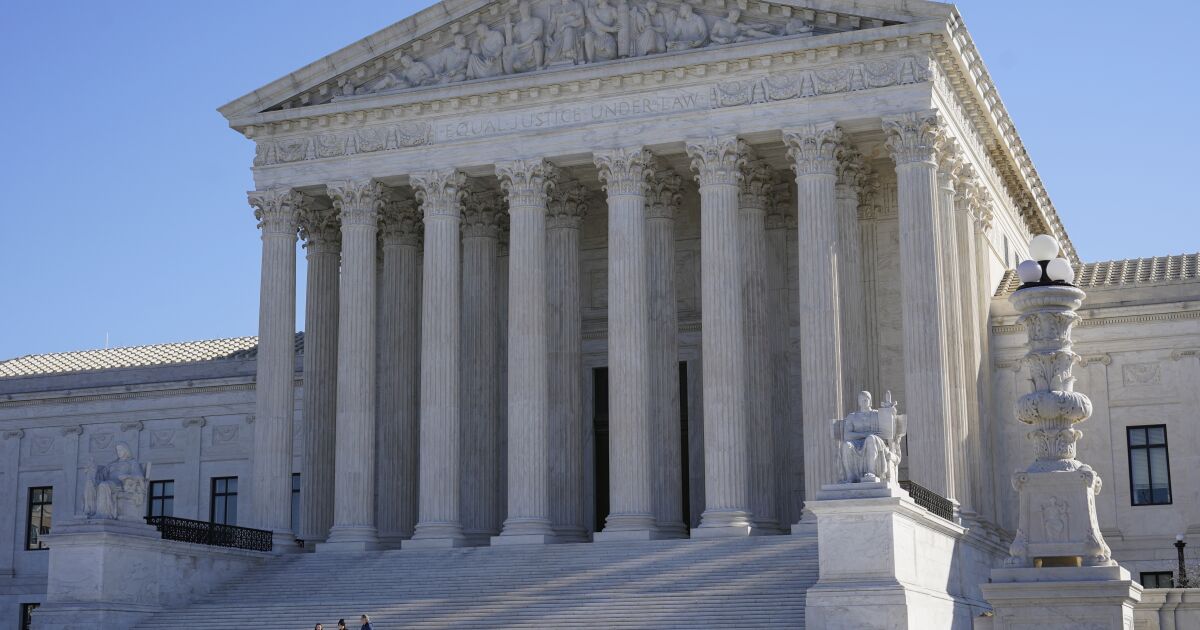
The Supreme Court by a 5-4 vote said Wednesday that it will not shield Yeshiva University from a state court order that requires it to recognize a LGBTQ student group on campus.
The temporary order allows the legal battle to continue in New York.
On Friday evening, Justice Sonia Sotomayor issued an administrative order that temporarily shielded the Orthodox Jewish university, which objects to recognizing the YU Pride Alliance. She acted on her own as the justice who handles emergency appeals from New York.
But when the full court considered the appeal, the majority decided the university should have lodged an appeal with the New York state courts, rather than seeking emergency relief from the justices.
If those appeals fail, the university may return to the high court, the justices said. “If applicants seek and receive neither expedited review nor interim relief from the New York courts, they may return to this court,” they said.
The order in Yeshiva University vs. YU Pride Alliance spoke for Chief Justice John G. Roberts Jr. and Justices Sotomayor, Elena Kagan, Brett M. Kavanaugh and Kentanji Brown Jackson.
Justice Samuel A. Alito Jr. filed a dissent joined by Justices Clarence Thomas, Neil M. Gorsuch and Amy Coney Barrett.
“I doubt that Yeshiva’s return to state court will be fruitful, and I see no reason why we should not grant a stay at this time,” Alito wrote. “It is our duty to stand up for the Constitution even when doing so is controversial.”

The Supreme Court by a 5-4 vote said Wednesday that it will not shield Yeshiva University from a state court order that requires it to recognize a LGBTQ student group on campus.
The temporary order allows the legal battle to continue in New York.
On Friday evening, Justice Sonia Sotomayor issued an administrative order that temporarily shielded the Orthodox Jewish university, which objects to recognizing the YU Pride Alliance. She acted on her own as the justice who handles emergency appeals from New York.
But when the full court considered the appeal, the majority decided the university should have lodged an appeal with the New York state courts, rather than seeking emergency relief from the justices.
If those appeals fail, the university may return to the high court, the justices said. “If applicants seek and receive neither expedited review nor interim relief from the New York courts, they may return to this court,” they said.
The order in Yeshiva University vs. YU Pride Alliance spoke for Chief Justice John G. Roberts Jr. and Justices Sotomayor, Elena Kagan, Brett M. Kavanaugh and Kentanji Brown Jackson.
Justice Samuel A. Alito Jr. filed a dissent joined by Justices Clarence Thomas, Neil M. Gorsuch and Amy Coney Barrett.
“I doubt that Yeshiva’s return to state court will be fruitful, and I see no reason why we should not grant a stay at this time,” Alito wrote. “It is our duty to stand up for the Constitution even when doing so is controversial.”

The Supreme Court by a 5-4 vote said Wednesday that it will not shield Yeshiva University from a state court order that requires it to recognize a LGBTQ student group on campus.
The temporary order allows the legal battle to continue in New York.
On Friday evening, Justice Sonia Sotomayor issued an administrative order that temporarily shielded the Orthodox Jewish university, which objects to recognizing the YU Pride Alliance. She acted on her own as the justice who handles emergency appeals from New York.
But when the full court considered the appeal, the majority decided the university should have lodged an appeal with the New York state courts, rather than seeking emergency relief from the justices.
If those appeals fail, the university may return to the high court, the justices said. “If applicants seek and receive neither expedited review nor interim relief from the New York courts, they may return to this court,” they said.
The order in Yeshiva University vs. YU Pride Alliance spoke for Chief Justice John G. Roberts Jr. and Justices Sotomayor, Elena Kagan, Brett M. Kavanaugh and Kentanji Brown Jackson.
Justice Samuel A. Alito Jr. filed a dissent joined by Justices Clarence Thomas, Neil M. Gorsuch and Amy Coney Barrett.
“I doubt that Yeshiva’s return to state court will be fruitful, and I see no reason why we should not grant a stay at this time,” Alito wrote. “It is our duty to stand up for the Constitution even when doing so is controversial.”
The Supreme Court by a 5-4 vote said Wednesday that it will not shield Yeshiva University from a state court order that requires it to recognize a LGBTQ student group on campus.
The temporary order allows the legal battle to continue in New York.
On Friday evening, Justice Sonia Sotomayor issued an administrative order that temporarily shielded the Orthodox Jewish university, which objects to recognizing the YU Pride Alliance. She acted on her own as the justice who handles emergency appeals from New York.
But when the full court considered the appeal, the majority decided the university should have lodged an appeal with the New York state courts, rather than seeking emergency relief from the justices.
If those appeals fail, the university may return to the high court, the justices said. “If applicants seek and receive neither expedited review nor interim relief from the New York courts, they may return to this court,” they said.
The order in Yeshiva University vs. YU Pride Alliance spoke for Chief Justice John G. Roberts Jr. and Justices Sotomayor, Elena Kagan, Brett M. Kavanaugh and Kentanji Brown Jackson.
Justice Samuel A. Alito Jr. filed a dissent joined by Justices Clarence Thomas, Neil M. Gorsuch and Amy Coney Barrett.
“I doubt that Yeshiva’s return to state court will be fruitful, and I see no reason why we should not grant a stay at this time,” Alito wrote. “It is our duty to stand up for the Constitution even when doing so is controversial.”

The Supreme Court by a 5-4 vote said Wednesday that it will not shield Yeshiva University from a state court order that requires it to recognize a LGBTQ student group on campus.
The temporary order allows the legal battle to continue in New York.
On Friday evening, Justice Sonia Sotomayor issued an administrative order that temporarily shielded the Orthodox Jewish university, which objects to recognizing the YU Pride Alliance. She acted on her own as the justice who handles emergency appeals from New York.
But when the full court considered the appeal, the majority decided the university should have lodged an appeal with the New York state courts, rather than seeking emergency relief from the justices.
If those appeals fail, the university may return to the high court, the justices said. “If applicants seek and receive neither expedited review nor interim relief from the New York courts, they may return to this court,” they said.
The order in Yeshiva University vs. YU Pride Alliance spoke for Chief Justice John G. Roberts Jr. and Justices Sotomayor, Elena Kagan, Brett M. Kavanaugh and Kentanji Brown Jackson.
Justice Samuel A. Alito Jr. filed a dissent joined by Justices Clarence Thomas, Neil M. Gorsuch and Amy Coney Barrett.
“I doubt that Yeshiva’s return to state court will be fruitful, and I see no reason why we should not grant a stay at this time,” Alito wrote. “It is our duty to stand up for the Constitution even when doing so is controversial.”
The Supreme Court by a 5-4 vote said Wednesday that it will not shield Yeshiva University from a state court order that requires it to recognize a LGBTQ student group on campus.
The temporary order allows the legal battle to continue in New York.
On Friday evening, Justice Sonia Sotomayor issued an administrative order that temporarily shielded the Orthodox Jewish university, which objects to recognizing the YU Pride Alliance. She acted on her own as the justice who handles emergency appeals from New York.
But when the full court considered the appeal, the majority decided the university should have lodged an appeal with the New York state courts, rather than seeking emergency relief from the justices.
If those appeals fail, the university may return to the high court, the justices said. “If applicants seek and receive neither expedited review nor interim relief from the New York courts, they may return to this court,” they said.
The order in Yeshiva University vs. YU Pride Alliance spoke for Chief Justice John G. Roberts Jr. and Justices Sotomayor, Elena Kagan, Brett M. Kavanaugh and Kentanji Brown Jackson.
Justice Samuel A. Alito Jr. filed a dissent joined by Justices Clarence Thomas, Neil M. Gorsuch and Amy Coney Barrett.
“I doubt that Yeshiva’s return to state court will be fruitful, and I see no reason why we should not grant a stay at this time,” Alito wrote. “It is our duty to stand up for the Constitution even when doing so is controversial.”
The Supreme Court by a 5-4 vote said Wednesday that it will not shield Yeshiva University from a state court order that requires it to recognize a LGBTQ student group on campus.
The temporary order allows the legal battle to continue in New York.
On Friday evening, Justice Sonia Sotomayor issued an administrative order that temporarily shielded the Orthodox Jewish university, which objects to recognizing the YU Pride Alliance. She acted on her own as the justice who handles emergency appeals from New York.
But when the full court considered the appeal, the majority decided the university should have lodged an appeal with the New York state courts, rather than seeking emergency relief from the justices.
If those appeals fail, the university may return to the high court, the justices said. “If applicants seek and receive neither expedited review nor interim relief from the New York courts, they may return to this court,” they said.
The order in Yeshiva University vs. YU Pride Alliance spoke for Chief Justice John G. Roberts Jr. and Justices Sotomayor, Elena Kagan, Brett M. Kavanaugh and Kentanji Brown Jackson.
Justice Samuel A. Alito Jr. filed a dissent joined by Justices Clarence Thomas, Neil M. Gorsuch and Amy Coney Barrett.
“I doubt that Yeshiva’s return to state court will be fruitful, and I see no reason why we should not grant a stay at this time,” Alito wrote. “It is our duty to stand up for the Constitution even when doing so is controversial.”
The Supreme Court by a 5-4 vote said Wednesday that it will not shield Yeshiva University from a state court order that requires it to recognize a LGBTQ student group on campus.
The temporary order allows the legal battle to continue in New York.
On Friday evening, Justice Sonia Sotomayor issued an administrative order that temporarily shielded the Orthodox Jewish university, which objects to recognizing the YU Pride Alliance. She acted on her own as the justice who handles emergency appeals from New York.
But when the full court considered the appeal, the majority decided the university should have lodged an appeal with the New York state courts, rather than seeking emergency relief from the justices.
If those appeals fail, the university may return to the high court, the justices said. “If applicants seek and receive neither expedited review nor interim relief from the New York courts, they may return to this court,” they said.
The order in Yeshiva University vs. YU Pride Alliance spoke for Chief Justice John G. Roberts Jr. and Justices Sotomayor, Elena Kagan, Brett M. Kavanaugh and Kentanji Brown Jackson.
Justice Samuel A. Alito Jr. filed a dissent joined by Justices Clarence Thomas, Neil M. Gorsuch and Amy Coney Barrett.
“I doubt that Yeshiva’s return to state court will be fruitful, and I see no reason why we should not grant a stay at this time,” Alito wrote. “It is our duty to stand up for the Constitution even when doing so is controversial.”

The Supreme Court by a 5-4 vote said Wednesday that it will not shield Yeshiva University from a state court order that requires it to recognize a LGBTQ student group on campus.
The temporary order allows the legal battle to continue in New York.
On Friday evening, Justice Sonia Sotomayor issued an administrative order that temporarily shielded the Orthodox Jewish university, which objects to recognizing the YU Pride Alliance. She acted on her own as the justice who handles emergency appeals from New York.
But when the full court considered the appeal, the majority decided the university should have lodged an appeal with the New York state courts, rather than seeking emergency relief from the justices.
If those appeals fail, the university may return to the high court, the justices said. “If applicants seek and receive neither expedited review nor interim relief from the New York courts, they may return to this court,” they said.
The order in Yeshiva University vs. YU Pride Alliance spoke for Chief Justice John G. Roberts Jr. and Justices Sotomayor, Elena Kagan, Brett M. Kavanaugh and Kentanji Brown Jackson.
Justice Samuel A. Alito Jr. filed a dissent joined by Justices Clarence Thomas, Neil M. Gorsuch and Amy Coney Barrett.
“I doubt that Yeshiva’s return to state court will be fruitful, and I see no reason why we should not grant a stay at this time,” Alito wrote. “It is our duty to stand up for the Constitution even when doing so is controversial.”
The Supreme Court by a 5-4 vote said Wednesday that it will not shield Yeshiva University from a state court order that requires it to recognize a LGBTQ student group on campus.
The temporary order allows the legal battle to continue in New York.
On Friday evening, Justice Sonia Sotomayor issued an administrative order that temporarily shielded the Orthodox Jewish university, which objects to recognizing the YU Pride Alliance. She acted on her own as the justice who handles emergency appeals from New York.
But when the full court considered the appeal, the majority decided the university should have lodged an appeal with the New York state courts, rather than seeking emergency relief from the justices.
If those appeals fail, the university may return to the high court, the justices said. “If applicants seek and receive neither expedited review nor interim relief from the New York courts, they may return to this court,” they said.
The order in Yeshiva University vs. YU Pride Alliance spoke for Chief Justice John G. Roberts Jr. and Justices Sotomayor, Elena Kagan, Brett M. Kavanaugh and Kentanji Brown Jackson.
Justice Samuel A. Alito Jr. filed a dissent joined by Justices Clarence Thomas, Neil M. Gorsuch and Amy Coney Barrett.
“I doubt that Yeshiva’s return to state court will be fruitful, and I see no reason why we should not grant a stay at this time,” Alito wrote. “It is our duty to stand up for the Constitution even when doing so is controversial.”
The Supreme Court by a 5-4 vote said Wednesday that it will not shield Yeshiva University from a state court order that requires it to recognize a LGBTQ student group on campus.
The temporary order allows the legal battle to continue in New York.
On Friday evening, Justice Sonia Sotomayor issued an administrative order that temporarily shielded the Orthodox Jewish university, which objects to recognizing the YU Pride Alliance. She acted on her own as the justice who handles emergency appeals from New York.
But when the full court considered the appeal, the majority decided the university should have lodged an appeal with the New York state courts, rather than seeking emergency relief from the justices.
If those appeals fail, the university may return to the high court, the justices said. “If applicants seek and receive neither expedited review nor interim relief from the New York courts, they may return to this court,” they said.
The order in Yeshiva University vs. YU Pride Alliance spoke for Chief Justice John G. Roberts Jr. and Justices Sotomayor, Elena Kagan, Brett M. Kavanaugh and Kentanji Brown Jackson.
Justice Samuel A. Alito Jr. filed a dissent joined by Justices Clarence Thomas, Neil M. Gorsuch and Amy Coney Barrett.
“I doubt that Yeshiva’s return to state court will be fruitful, and I see no reason why we should not grant a stay at this time,” Alito wrote. “It is our duty to stand up for the Constitution even when doing so is controversial.”
The Supreme Court by a 5-4 vote said Wednesday that it will not shield Yeshiva University from a state court order that requires it to recognize a LGBTQ student group on campus.
The temporary order allows the legal battle to continue in New York.
On Friday evening, Justice Sonia Sotomayor issued an administrative order that temporarily shielded the Orthodox Jewish university, which objects to recognizing the YU Pride Alliance. She acted on her own as the justice who handles emergency appeals from New York.
But when the full court considered the appeal, the majority decided the university should have lodged an appeal with the New York state courts, rather than seeking emergency relief from the justices.
If those appeals fail, the university may return to the high court, the justices said. “If applicants seek and receive neither expedited review nor interim relief from the New York courts, they may return to this court,” they said.
The order in Yeshiva University vs. YU Pride Alliance spoke for Chief Justice John G. Roberts Jr. and Justices Sotomayor, Elena Kagan, Brett M. Kavanaugh and Kentanji Brown Jackson.
Justice Samuel A. Alito Jr. filed a dissent joined by Justices Clarence Thomas, Neil M. Gorsuch and Amy Coney Barrett.
“I doubt that Yeshiva’s return to state court will be fruitful, and I see no reason why we should not grant a stay at this time,” Alito wrote. “It is our duty to stand up for the Constitution even when doing so is controversial.”
The Supreme Court by a 5-4 vote said Wednesday that it will not shield Yeshiva University from a state court order that requires it to recognize a LGBTQ student group on campus.
The temporary order allows the legal battle to continue in New York.
On Friday evening, Justice Sonia Sotomayor issued an administrative order that temporarily shielded the Orthodox Jewish university, which objects to recognizing the YU Pride Alliance. She acted on her own as the justice who handles emergency appeals from New York.
But when the full court considered the appeal, the majority decided the university should have lodged an appeal with the New York state courts, rather than seeking emergency relief from the justices.
If those appeals fail, the university may return to the high court, the justices said. “If applicants seek and receive neither expedited review nor interim relief from the New York courts, they may return to this court,” they said.
The order in Yeshiva University vs. YU Pride Alliance spoke for Chief Justice John G. Roberts Jr. and Justices Sotomayor, Elena Kagan, Brett M. Kavanaugh and Kentanji Brown Jackson.
Justice Samuel A. Alito Jr. filed a dissent joined by Justices Clarence Thomas, Neil M. Gorsuch and Amy Coney Barrett.
“I doubt that Yeshiva’s return to state court will be fruitful, and I see no reason why we should not grant a stay at this time,” Alito wrote. “It is our duty to stand up for the Constitution even when doing so is controversial.”
The Supreme Court by a 5-4 vote said Wednesday that it will not shield Yeshiva University from a state court order that requires it to recognize a LGBTQ student group on campus.
The temporary order allows the legal battle to continue in New York.
On Friday evening, Justice Sonia Sotomayor issued an administrative order that temporarily shielded the Orthodox Jewish university, which objects to recognizing the YU Pride Alliance. She acted on her own as the justice who handles emergency appeals from New York.
But when the full court considered the appeal, the majority decided the university should have lodged an appeal with the New York state courts, rather than seeking emergency relief from the justices.
If those appeals fail, the university may return to the high court, the justices said. “If applicants seek and receive neither expedited review nor interim relief from the New York courts, they may return to this court,” they said.
The order in Yeshiva University vs. YU Pride Alliance spoke for Chief Justice John G. Roberts Jr. and Justices Sotomayor, Elena Kagan, Brett M. Kavanaugh and Kentanji Brown Jackson.
Justice Samuel A. Alito Jr. filed a dissent joined by Justices Clarence Thomas, Neil M. Gorsuch and Amy Coney Barrett.
“I doubt that Yeshiva’s return to state court will be fruitful, and I see no reason why we should not grant a stay at this time,” Alito wrote. “It is our duty to stand up for the Constitution even when doing so is controversial.”
The Supreme Court by a 5-4 vote said Wednesday that it will not shield Yeshiva University from a state court order that requires it to recognize a LGBTQ student group on campus.
The temporary order allows the legal battle to continue in New York.
On Friday evening, Justice Sonia Sotomayor issued an administrative order that temporarily shielded the Orthodox Jewish university, which objects to recognizing the YU Pride Alliance. She acted on her own as the justice who handles emergency appeals from New York.
But when the full court considered the appeal, the majority decided the university should have lodged an appeal with the New York state courts, rather than seeking emergency relief from the justices.
If those appeals fail, the university may return to the high court, the justices said. “If applicants seek and receive neither expedited review nor interim relief from the New York courts, they may return to this court,” they said.
The order in Yeshiva University vs. YU Pride Alliance spoke for Chief Justice John G. Roberts Jr. and Justices Sotomayor, Elena Kagan, Brett M. Kavanaugh and Kentanji Brown Jackson.
Justice Samuel A. Alito Jr. filed a dissent joined by Justices Clarence Thomas, Neil M. Gorsuch and Amy Coney Barrett.
“I doubt that Yeshiva’s return to state court will be fruitful, and I see no reason why we should not grant a stay at this time,” Alito wrote. “It is our duty to stand up for the Constitution even when doing so is controversial.”
The Supreme Court by a 5-4 vote said Wednesday that it will not shield Yeshiva University from a state court order that requires it to recognize a LGBTQ student group on campus.
The temporary order allows the legal battle to continue in New York.
On Friday evening, Justice Sonia Sotomayor issued an administrative order that temporarily shielded the Orthodox Jewish university, which objects to recognizing the YU Pride Alliance. She acted on her own as the justice who handles emergency appeals from New York.
But when the full court considered the appeal, the majority decided the university should have lodged an appeal with the New York state courts, rather than seeking emergency relief from the justices.
If those appeals fail, the university may return to the high court, the justices said. “If applicants seek and receive neither expedited review nor interim relief from the New York courts, they may return to this court,” they said.
The order in Yeshiva University vs. YU Pride Alliance spoke for Chief Justice John G. Roberts Jr. and Justices Sotomayor, Elena Kagan, Brett M. Kavanaugh and Kentanji Brown Jackson.
Justice Samuel A. Alito Jr. filed a dissent joined by Justices Clarence Thomas, Neil M. Gorsuch and Amy Coney Barrett.
“I doubt that Yeshiva’s return to state court will be fruitful, and I see no reason why we should not grant a stay at this time,” Alito wrote. “It is our duty to stand up for the Constitution even when doing so is controversial.”

