

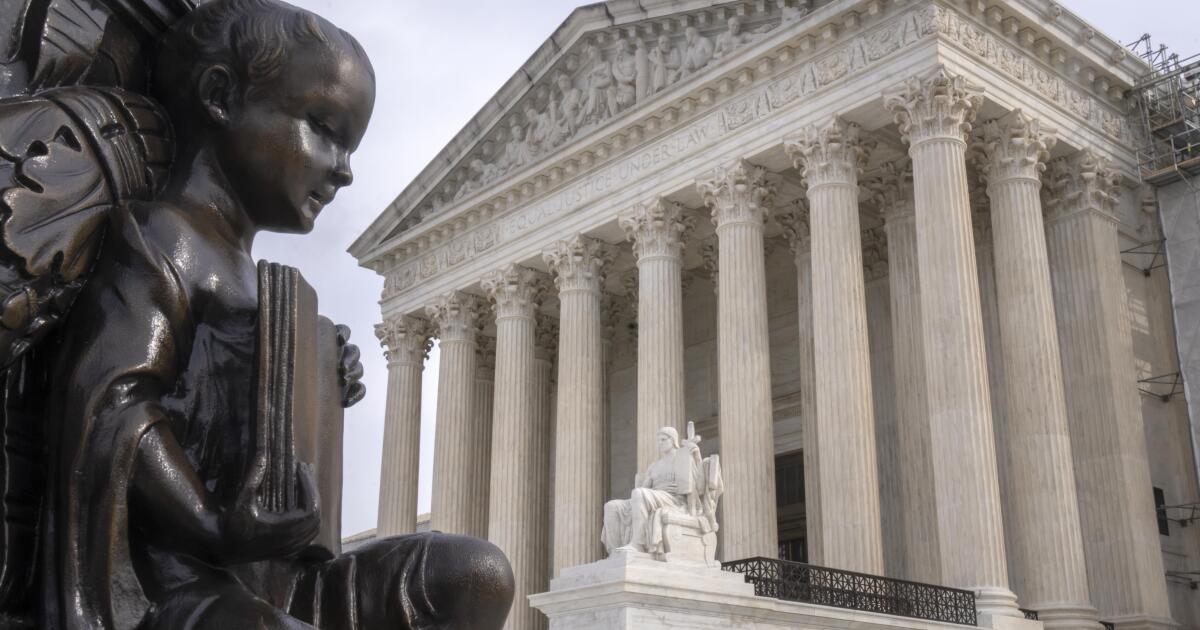
WASHINGTON — Supreme Court Chief Justice John G. Roberts Jr. on Wednesday evening issued an order pausing a judge’s deadline requiring the Trump administration to send out nearly $2 billion in funds promised for health and humanitarian aid across the globe.
President Trump’s lawyers said the new administration is reviewing those grant programs and that the judge’s order “has thrown what should be an orderly review by the government into chaos.”
Trump’s acting Solicitor General Sarah M. Harris said the administration is not claiming the power to refuse to pay what had been promised.
“To be very clear, the government is committed to paying legitimate claims for work that was properly completed pursuant to intact obligations and supported by proper documentation.”
U.S. District Judge Amir Ali in Washington, a Biden appointee, had grown frustrated with the administration’s delays. He issued an order Feb. 13 requiring the administration to lift its funding freeze at the U.S. Agency for International Development.
Earlier this week, he gave the government 48 hours to immediately “pay all invoices” and contracts “for work completed” before Feb. 13.
That order prompted the emergency appeal to Roberts just hours before the Wednesday midnight deadline.
Roberts issued an administrative order, which puts the case on hold.
The chief justice asked for a response by Friday from the AIDS Vaccine Advocacy Coalition and Global Health Council, which had sued over the funding delays.
The Supreme Court now faces fast-track appeals on two legal fronts:
Can the Trump administration refuse to spend money that has been approved by Congress?
And can Trump fire agency officials who were given fixed terms by Congress?
The court has given U.S. District Judge Amy Berman Jackson until Saturday to decide on whether Hampton Dellinger, the appointed head of a whistleblower agency called the Office of Special Counsel, can be fired by Trump.
Last week, Roberts and the Supreme Court agreed to give Jackson a few more days to issue a legal ruling.
In the past, the court’s conservatives have said the president has the executive authority to remove agency officials, even if Congress had given them fixed terms.
But the justices may have a different view on funding. The court in the past has ruled that Congress decides on federal spending, and the president is obliged to spend funds that were appropriated by Congress.
Lawyers for the global healthcare alliance said the administration should not be permitted to renege on the government’s promises.
“While the administration refuses to comply with the district court’s order, the irreparable harm to our clients increases each day, as does the suffering of millions of people across the world who depend on the work performed with these grants,” said Lauren Bateman, an attorney for Public Citizen.

WASHINGTON — Supreme Court Chief Justice John G. Roberts Jr. on Wednesday evening issued an order pausing a judge’s deadline requiring the Trump administration to send out nearly $2 billion in funds promised for health and humanitarian aid across the globe.
President Trump’s lawyers said the new administration is reviewing those grant programs and that the judge’s order “has thrown what should be an orderly review by the government into chaos.”
Trump’s acting Solicitor General Sarah M. Harris said the administration is not claiming the power to refuse to pay what had been promised.
“To be very clear, the government is committed to paying legitimate claims for work that was properly completed pursuant to intact obligations and supported by proper documentation.”
U.S. District Judge Amir Ali in Washington, a Biden appointee, had grown frustrated with the administration’s delays. He issued an order Feb. 13 requiring the administration to lift its funding freeze at the U.S. Agency for International Development.
Earlier this week, he gave the government 48 hours to immediately “pay all invoices” and contracts “for work completed” before Feb. 13.
That order prompted the emergency appeal to Roberts just hours before the Wednesday midnight deadline.
Roberts issued an administrative order, which puts the case on hold.
The chief justice asked for a response by Friday from the AIDS Vaccine Advocacy Coalition and Global Health Council, which had sued over the funding delays.
The Supreme Court now faces fast-track appeals on two legal fronts:
Can the Trump administration refuse to spend money that has been approved by Congress?
And can Trump fire agency officials who were given fixed terms by Congress?
The court has given U.S. District Judge Amy Berman Jackson until Saturday to decide on whether Hampton Dellinger, the appointed head of a whistleblower agency called the Office of Special Counsel, can be fired by Trump.
Last week, Roberts and the Supreme Court agreed to give Jackson a few more days to issue a legal ruling.
In the past, the court’s conservatives have said the president has the executive authority to remove agency officials, even if Congress had given them fixed terms.
But the justices may have a different view on funding. The court in the past has ruled that Congress decides on federal spending, and the president is obliged to spend funds that were appropriated by Congress.
Lawyers for the global healthcare alliance said the administration should not be permitted to renege on the government’s promises.
“While the administration refuses to comply with the district court’s order, the irreparable harm to our clients increases each day, as does the suffering of millions of people across the world who depend on the work performed with these grants,” said Lauren Bateman, an attorney for Public Citizen.

WASHINGTON — Supreme Court Chief Justice John G. Roberts Jr. on Wednesday evening issued an order pausing a judge’s deadline requiring the Trump administration to send out nearly $2 billion in funds promised for health and humanitarian aid across the globe.
President Trump’s lawyers said the new administration is reviewing those grant programs and that the judge’s order “has thrown what should be an orderly review by the government into chaos.”
Trump’s acting Solicitor General Sarah M. Harris said the administration is not claiming the power to refuse to pay what had been promised.
“To be very clear, the government is committed to paying legitimate claims for work that was properly completed pursuant to intact obligations and supported by proper documentation.”
U.S. District Judge Amir Ali in Washington, a Biden appointee, had grown frustrated with the administration’s delays. He issued an order Feb. 13 requiring the administration to lift its funding freeze at the U.S. Agency for International Development.
Earlier this week, he gave the government 48 hours to immediately “pay all invoices” and contracts “for work completed” before Feb. 13.
That order prompted the emergency appeal to Roberts just hours before the Wednesday midnight deadline.
Roberts issued an administrative order, which puts the case on hold.
The chief justice asked for a response by Friday from the AIDS Vaccine Advocacy Coalition and Global Health Council, which had sued over the funding delays.
The Supreme Court now faces fast-track appeals on two legal fronts:
Can the Trump administration refuse to spend money that has been approved by Congress?
And can Trump fire agency officials who were given fixed terms by Congress?
The court has given U.S. District Judge Amy Berman Jackson until Saturday to decide on whether Hampton Dellinger, the appointed head of a whistleblower agency called the Office of Special Counsel, can be fired by Trump.
Last week, Roberts and the Supreme Court agreed to give Jackson a few more days to issue a legal ruling.
In the past, the court’s conservatives have said the president has the executive authority to remove agency officials, even if Congress had given them fixed terms.
But the justices may have a different view on funding. The court in the past has ruled that Congress decides on federal spending, and the president is obliged to spend funds that were appropriated by Congress.
Lawyers for the global healthcare alliance said the administration should not be permitted to renege on the government’s promises.
“While the administration refuses to comply with the district court’s order, the irreparable harm to our clients increases each day, as does the suffering of millions of people across the world who depend on the work performed with these grants,” said Lauren Bateman, an attorney for Public Citizen.
WASHINGTON — Supreme Court Chief Justice John G. Roberts Jr. on Wednesday evening issued an order pausing a judge’s deadline requiring the Trump administration to send out nearly $2 billion in funds promised for health and humanitarian aid across the globe.
President Trump’s lawyers said the new administration is reviewing those grant programs and that the judge’s order “has thrown what should be an orderly review by the government into chaos.”
Trump’s acting Solicitor General Sarah M. Harris said the administration is not claiming the power to refuse to pay what had been promised.
“To be very clear, the government is committed to paying legitimate claims for work that was properly completed pursuant to intact obligations and supported by proper documentation.”
U.S. District Judge Amir Ali in Washington, a Biden appointee, had grown frustrated with the administration’s delays. He issued an order Feb. 13 requiring the administration to lift its funding freeze at the U.S. Agency for International Development.
Earlier this week, he gave the government 48 hours to immediately “pay all invoices” and contracts “for work completed” before Feb. 13.
That order prompted the emergency appeal to Roberts just hours before the Wednesday midnight deadline.
Roberts issued an administrative order, which puts the case on hold.
The chief justice asked for a response by Friday from the AIDS Vaccine Advocacy Coalition and Global Health Council, which had sued over the funding delays.
The Supreme Court now faces fast-track appeals on two legal fronts:
Can the Trump administration refuse to spend money that has been approved by Congress?
And can Trump fire agency officials who were given fixed terms by Congress?
The court has given U.S. District Judge Amy Berman Jackson until Saturday to decide on whether Hampton Dellinger, the appointed head of a whistleblower agency called the Office of Special Counsel, can be fired by Trump.
Last week, Roberts and the Supreme Court agreed to give Jackson a few more days to issue a legal ruling.
In the past, the court’s conservatives have said the president has the executive authority to remove agency officials, even if Congress had given them fixed terms.
But the justices may have a different view on funding. The court in the past has ruled that Congress decides on federal spending, and the president is obliged to spend funds that were appropriated by Congress.
Lawyers for the global healthcare alliance said the administration should not be permitted to renege on the government’s promises.
“While the administration refuses to comply with the district court’s order, the irreparable harm to our clients increases each day, as does the suffering of millions of people across the world who depend on the work performed with these grants,” said Lauren Bateman, an attorney for Public Citizen.

WASHINGTON — Supreme Court Chief Justice John G. Roberts Jr. on Wednesday evening issued an order pausing a judge’s deadline requiring the Trump administration to send out nearly $2 billion in funds promised for health and humanitarian aid across the globe.
President Trump’s lawyers said the new administration is reviewing those grant programs and that the judge’s order “has thrown what should be an orderly review by the government into chaos.”
Trump’s acting Solicitor General Sarah M. Harris said the administration is not claiming the power to refuse to pay what had been promised.
“To be very clear, the government is committed to paying legitimate claims for work that was properly completed pursuant to intact obligations and supported by proper documentation.”
U.S. District Judge Amir Ali in Washington, a Biden appointee, had grown frustrated with the administration’s delays. He issued an order Feb. 13 requiring the administration to lift its funding freeze at the U.S. Agency for International Development.
Earlier this week, he gave the government 48 hours to immediately “pay all invoices” and contracts “for work completed” before Feb. 13.
That order prompted the emergency appeal to Roberts just hours before the Wednesday midnight deadline.
Roberts issued an administrative order, which puts the case on hold.
The chief justice asked for a response by Friday from the AIDS Vaccine Advocacy Coalition and Global Health Council, which had sued over the funding delays.
The Supreme Court now faces fast-track appeals on two legal fronts:
Can the Trump administration refuse to spend money that has been approved by Congress?
And can Trump fire agency officials who were given fixed terms by Congress?
The court has given U.S. District Judge Amy Berman Jackson until Saturday to decide on whether Hampton Dellinger, the appointed head of a whistleblower agency called the Office of Special Counsel, can be fired by Trump.
Last week, Roberts and the Supreme Court agreed to give Jackson a few more days to issue a legal ruling.
In the past, the court’s conservatives have said the president has the executive authority to remove agency officials, even if Congress had given them fixed terms.
But the justices may have a different view on funding. The court in the past has ruled that Congress decides on federal spending, and the president is obliged to spend funds that were appropriated by Congress.
Lawyers for the global healthcare alliance said the administration should not be permitted to renege on the government’s promises.
“While the administration refuses to comply with the district court’s order, the irreparable harm to our clients increases each day, as does the suffering of millions of people across the world who depend on the work performed with these grants,” said Lauren Bateman, an attorney for Public Citizen.
WASHINGTON — Supreme Court Chief Justice John G. Roberts Jr. on Wednesday evening issued an order pausing a judge’s deadline requiring the Trump administration to send out nearly $2 billion in funds promised for health and humanitarian aid across the globe.
President Trump’s lawyers said the new administration is reviewing those grant programs and that the judge’s order “has thrown what should be an orderly review by the government into chaos.”
Trump’s acting Solicitor General Sarah M. Harris said the administration is not claiming the power to refuse to pay what had been promised.
“To be very clear, the government is committed to paying legitimate claims for work that was properly completed pursuant to intact obligations and supported by proper documentation.”
U.S. District Judge Amir Ali in Washington, a Biden appointee, had grown frustrated with the administration’s delays. He issued an order Feb. 13 requiring the administration to lift its funding freeze at the U.S. Agency for International Development.
Earlier this week, he gave the government 48 hours to immediately “pay all invoices” and contracts “for work completed” before Feb. 13.
That order prompted the emergency appeal to Roberts just hours before the Wednesday midnight deadline.
Roberts issued an administrative order, which puts the case on hold.
The chief justice asked for a response by Friday from the AIDS Vaccine Advocacy Coalition and Global Health Council, which had sued over the funding delays.
The Supreme Court now faces fast-track appeals on two legal fronts:
Can the Trump administration refuse to spend money that has been approved by Congress?
And can Trump fire agency officials who were given fixed terms by Congress?
The court has given U.S. District Judge Amy Berman Jackson until Saturday to decide on whether Hampton Dellinger, the appointed head of a whistleblower agency called the Office of Special Counsel, can be fired by Trump.
Last week, Roberts and the Supreme Court agreed to give Jackson a few more days to issue a legal ruling.
In the past, the court’s conservatives have said the president has the executive authority to remove agency officials, even if Congress had given them fixed terms.
But the justices may have a different view on funding. The court in the past has ruled that Congress decides on federal spending, and the president is obliged to spend funds that were appropriated by Congress.
Lawyers for the global healthcare alliance said the administration should not be permitted to renege on the government’s promises.
“While the administration refuses to comply with the district court’s order, the irreparable harm to our clients increases each day, as does the suffering of millions of people across the world who depend on the work performed with these grants,” said Lauren Bateman, an attorney for Public Citizen.
WASHINGTON — Supreme Court Chief Justice John G. Roberts Jr. on Wednesday evening issued an order pausing a judge’s deadline requiring the Trump administration to send out nearly $2 billion in funds promised for health and humanitarian aid across the globe.
President Trump’s lawyers said the new administration is reviewing those grant programs and that the judge’s order “has thrown what should be an orderly review by the government into chaos.”
Trump’s acting Solicitor General Sarah M. Harris said the administration is not claiming the power to refuse to pay what had been promised.
“To be very clear, the government is committed to paying legitimate claims for work that was properly completed pursuant to intact obligations and supported by proper documentation.”
U.S. District Judge Amir Ali in Washington, a Biden appointee, had grown frustrated with the administration’s delays. He issued an order Feb. 13 requiring the administration to lift its funding freeze at the U.S. Agency for International Development.
Earlier this week, he gave the government 48 hours to immediately “pay all invoices” and contracts “for work completed” before Feb. 13.
That order prompted the emergency appeal to Roberts just hours before the Wednesday midnight deadline.
Roberts issued an administrative order, which puts the case on hold.
The chief justice asked for a response by Friday from the AIDS Vaccine Advocacy Coalition and Global Health Council, which had sued over the funding delays.
The Supreme Court now faces fast-track appeals on two legal fronts:
Can the Trump administration refuse to spend money that has been approved by Congress?
And can Trump fire agency officials who were given fixed terms by Congress?
The court has given U.S. District Judge Amy Berman Jackson until Saturday to decide on whether Hampton Dellinger, the appointed head of a whistleblower agency called the Office of Special Counsel, can be fired by Trump.
Last week, Roberts and the Supreme Court agreed to give Jackson a few more days to issue a legal ruling.
In the past, the court’s conservatives have said the president has the executive authority to remove agency officials, even if Congress had given them fixed terms.
But the justices may have a different view on funding. The court in the past has ruled that Congress decides on federal spending, and the president is obliged to spend funds that were appropriated by Congress.
Lawyers for the global healthcare alliance said the administration should not be permitted to renege on the government’s promises.
“While the administration refuses to comply with the district court’s order, the irreparable harm to our clients increases each day, as does the suffering of millions of people across the world who depend on the work performed with these grants,” said Lauren Bateman, an attorney for Public Citizen.
WASHINGTON — Supreme Court Chief Justice John G. Roberts Jr. on Wednesday evening issued an order pausing a judge’s deadline requiring the Trump administration to send out nearly $2 billion in funds promised for health and humanitarian aid across the globe.
President Trump’s lawyers said the new administration is reviewing those grant programs and that the judge’s order “has thrown what should be an orderly review by the government into chaos.”
Trump’s acting Solicitor General Sarah M. Harris said the administration is not claiming the power to refuse to pay what had been promised.
“To be very clear, the government is committed to paying legitimate claims for work that was properly completed pursuant to intact obligations and supported by proper documentation.”
U.S. District Judge Amir Ali in Washington, a Biden appointee, had grown frustrated with the administration’s delays. He issued an order Feb. 13 requiring the administration to lift its funding freeze at the U.S. Agency for International Development.
Earlier this week, he gave the government 48 hours to immediately “pay all invoices” and contracts “for work completed” before Feb. 13.
That order prompted the emergency appeal to Roberts just hours before the Wednesday midnight deadline.
Roberts issued an administrative order, which puts the case on hold.
The chief justice asked for a response by Friday from the AIDS Vaccine Advocacy Coalition and Global Health Council, which had sued over the funding delays.
The Supreme Court now faces fast-track appeals on two legal fronts:
Can the Trump administration refuse to spend money that has been approved by Congress?
And can Trump fire agency officials who were given fixed terms by Congress?
The court has given U.S. District Judge Amy Berman Jackson until Saturday to decide on whether Hampton Dellinger, the appointed head of a whistleblower agency called the Office of Special Counsel, can be fired by Trump.
Last week, Roberts and the Supreme Court agreed to give Jackson a few more days to issue a legal ruling.
In the past, the court’s conservatives have said the president has the executive authority to remove agency officials, even if Congress had given them fixed terms.
But the justices may have a different view on funding. The court in the past has ruled that Congress decides on federal spending, and the president is obliged to spend funds that were appropriated by Congress.
Lawyers for the global healthcare alliance said the administration should not be permitted to renege on the government’s promises.
“While the administration refuses to comply with the district court’s order, the irreparable harm to our clients increases each day, as does the suffering of millions of people across the world who depend on the work performed with these grants,” said Lauren Bateman, an attorney for Public Citizen.

WASHINGTON — Supreme Court Chief Justice John G. Roberts Jr. on Wednesday evening issued an order pausing a judge’s deadline requiring the Trump administration to send out nearly $2 billion in funds promised for health and humanitarian aid across the globe.
President Trump’s lawyers said the new administration is reviewing those grant programs and that the judge’s order “has thrown what should be an orderly review by the government into chaos.”
Trump’s acting Solicitor General Sarah M. Harris said the administration is not claiming the power to refuse to pay what had been promised.
“To be very clear, the government is committed to paying legitimate claims for work that was properly completed pursuant to intact obligations and supported by proper documentation.”
U.S. District Judge Amir Ali in Washington, a Biden appointee, had grown frustrated with the administration’s delays. He issued an order Feb. 13 requiring the administration to lift its funding freeze at the U.S. Agency for International Development.
Earlier this week, he gave the government 48 hours to immediately “pay all invoices” and contracts “for work completed” before Feb. 13.
That order prompted the emergency appeal to Roberts just hours before the Wednesday midnight deadline.
Roberts issued an administrative order, which puts the case on hold.
The chief justice asked for a response by Friday from the AIDS Vaccine Advocacy Coalition and Global Health Council, which had sued over the funding delays.
The Supreme Court now faces fast-track appeals on two legal fronts:
Can the Trump administration refuse to spend money that has been approved by Congress?
And can Trump fire agency officials who were given fixed terms by Congress?
The court has given U.S. District Judge Amy Berman Jackson until Saturday to decide on whether Hampton Dellinger, the appointed head of a whistleblower agency called the Office of Special Counsel, can be fired by Trump.
Last week, Roberts and the Supreme Court agreed to give Jackson a few more days to issue a legal ruling.
In the past, the court’s conservatives have said the president has the executive authority to remove agency officials, even if Congress had given them fixed terms.
But the justices may have a different view on funding. The court in the past has ruled that Congress decides on federal spending, and the president is obliged to spend funds that were appropriated by Congress.
Lawyers for the global healthcare alliance said the administration should not be permitted to renege on the government’s promises.
“While the administration refuses to comply with the district court’s order, the irreparable harm to our clients increases each day, as does the suffering of millions of people across the world who depend on the work performed with these grants,” said Lauren Bateman, an attorney for Public Citizen.
WASHINGTON — Supreme Court Chief Justice John G. Roberts Jr. on Wednesday evening issued an order pausing a judge’s deadline requiring the Trump administration to send out nearly $2 billion in funds promised for health and humanitarian aid across the globe.
President Trump’s lawyers said the new administration is reviewing those grant programs and that the judge’s order “has thrown what should be an orderly review by the government into chaos.”
Trump’s acting Solicitor General Sarah M. Harris said the administration is not claiming the power to refuse to pay what had been promised.
“To be very clear, the government is committed to paying legitimate claims for work that was properly completed pursuant to intact obligations and supported by proper documentation.”
U.S. District Judge Amir Ali in Washington, a Biden appointee, had grown frustrated with the administration’s delays. He issued an order Feb. 13 requiring the administration to lift its funding freeze at the U.S. Agency for International Development.
Earlier this week, he gave the government 48 hours to immediately “pay all invoices” and contracts “for work completed” before Feb. 13.
That order prompted the emergency appeal to Roberts just hours before the Wednesday midnight deadline.
Roberts issued an administrative order, which puts the case on hold.
The chief justice asked for a response by Friday from the AIDS Vaccine Advocacy Coalition and Global Health Council, which had sued over the funding delays.
The Supreme Court now faces fast-track appeals on two legal fronts:
Can the Trump administration refuse to spend money that has been approved by Congress?
And can Trump fire agency officials who were given fixed terms by Congress?
The court has given U.S. District Judge Amy Berman Jackson until Saturday to decide on whether Hampton Dellinger, the appointed head of a whistleblower agency called the Office of Special Counsel, can be fired by Trump.
Last week, Roberts and the Supreme Court agreed to give Jackson a few more days to issue a legal ruling.
In the past, the court’s conservatives have said the president has the executive authority to remove agency officials, even if Congress had given them fixed terms.
But the justices may have a different view on funding. The court in the past has ruled that Congress decides on federal spending, and the president is obliged to spend funds that were appropriated by Congress.
Lawyers for the global healthcare alliance said the administration should not be permitted to renege on the government’s promises.
“While the administration refuses to comply with the district court’s order, the irreparable harm to our clients increases each day, as does the suffering of millions of people across the world who depend on the work performed with these grants,” said Lauren Bateman, an attorney for Public Citizen.
WASHINGTON — Supreme Court Chief Justice John G. Roberts Jr. on Wednesday evening issued an order pausing a judge’s deadline requiring the Trump administration to send out nearly $2 billion in funds promised for health and humanitarian aid across the globe.
President Trump’s lawyers said the new administration is reviewing those grant programs and that the judge’s order “has thrown what should be an orderly review by the government into chaos.”
Trump’s acting Solicitor General Sarah M. Harris said the administration is not claiming the power to refuse to pay what had been promised.
“To be very clear, the government is committed to paying legitimate claims for work that was properly completed pursuant to intact obligations and supported by proper documentation.”
U.S. District Judge Amir Ali in Washington, a Biden appointee, had grown frustrated with the administration’s delays. He issued an order Feb. 13 requiring the administration to lift its funding freeze at the U.S. Agency for International Development.
Earlier this week, he gave the government 48 hours to immediately “pay all invoices” and contracts “for work completed” before Feb. 13.
That order prompted the emergency appeal to Roberts just hours before the Wednesday midnight deadline.
Roberts issued an administrative order, which puts the case on hold.
The chief justice asked for a response by Friday from the AIDS Vaccine Advocacy Coalition and Global Health Council, which had sued over the funding delays.
The Supreme Court now faces fast-track appeals on two legal fronts:
Can the Trump administration refuse to spend money that has been approved by Congress?
And can Trump fire agency officials who were given fixed terms by Congress?
The court has given U.S. District Judge Amy Berman Jackson until Saturday to decide on whether Hampton Dellinger, the appointed head of a whistleblower agency called the Office of Special Counsel, can be fired by Trump.
Last week, Roberts and the Supreme Court agreed to give Jackson a few more days to issue a legal ruling.
In the past, the court’s conservatives have said the president has the executive authority to remove agency officials, even if Congress had given them fixed terms.
But the justices may have a different view on funding. The court in the past has ruled that Congress decides on federal spending, and the president is obliged to spend funds that were appropriated by Congress.
Lawyers for the global healthcare alliance said the administration should not be permitted to renege on the government’s promises.
“While the administration refuses to comply with the district court’s order, the irreparable harm to our clients increases each day, as does the suffering of millions of people across the world who depend on the work performed with these grants,” said Lauren Bateman, an attorney for Public Citizen.
WASHINGTON — Supreme Court Chief Justice John G. Roberts Jr. on Wednesday evening issued an order pausing a judge’s deadline requiring the Trump administration to send out nearly $2 billion in funds promised for health and humanitarian aid across the globe.
President Trump’s lawyers said the new administration is reviewing those grant programs and that the judge’s order “has thrown what should be an orderly review by the government into chaos.”
Trump’s acting Solicitor General Sarah M. Harris said the administration is not claiming the power to refuse to pay what had been promised.
“To be very clear, the government is committed to paying legitimate claims for work that was properly completed pursuant to intact obligations and supported by proper documentation.”
U.S. District Judge Amir Ali in Washington, a Biden appointee, had grown frustrated with the administration’s delays. He issued an order Feb. 13 requiring the administration to lift its funding freeze at the U.S. Agency for International Development.
Earlier this week, he gave the government 48 hours to immediately “pay all invoices” and contracts “for work completed” before Feb. 13.
That order prompted the emergency appeal to Roberts just hours before the Wednesday midnight deadline.
Roberts issued an administrative order, which puts the case on hold.
The chief justice asked for a response by Friday from the AIDS Vaccine Advocacy Coalition and Global Health Council, which had sued over the funding delays.
The Supreme Court now faces fast-track appeals on two legal fronts:
Can the Trump administration refuse to spend money that has been approved by Congress?
And can Trump fire agency officials who were given fixed terms by Congress?
The court has given U.S. District Judge Amy Berman Jackson until Saturday to decide on whether Hampton Dellinger, the appointed head of a whistleblower agency called the Office of Special Counsel, can be fired by Trump.
Last week, Roberts and the Supreme Court agreed to give Jackson a few more days to issue a legal ruling.
In the past, the court’s conservatives have said the president has the executive authority to remove agency officials, even if Congress had given them fixed terms.
But the justices may have a different view on funding. The court in the past has ruled that Congress decides on federal spending, and the president is obliged to spend funds that were appropriated by Congress.
Lawyers for the global healthcare alliance said the administration should not be permitted to renege on the government’s promises.
“While the administration refuses to comply with the district court’s order, the irreparable harm to our clients increases each day, as does the suffering of millions of people across the world who depend on the work performed with these grants,” said Lauren Bateman, an attorney for Public Citizen.
WASHINGTON — Supreme Court Chief Justice John G. Roberts Jr. on Wednesday evening issued an order pausing a judge’s deadline requiring the Trump administration to send out nearly $2 billion in funds promised for health and humanitarian aid across the globe.
President Trump’s lawyers said the new administration is reviewing those grant programs and that the judge’s order “has thrown what should be an orderly review by the government into chaos.”
Trump’s acting Solicitor General Sarah M. Harris said the administration is not claiming the power to refuse to pay what had been promised.
“To be very clear, the government is committed to paying legitimate claims for work that was properly completed pursuant to intact obligations and supported by proper documentation.”
U.S. District Judge Amir Ali in Washington, a Biden appointee, had grown frustrated with the administration’s delays. He issued an order Feb. 13 requiring the administration to lift its funding freeze at the U.S. Agency for International Development.
Earlier this week, he gave the government 48 hours to immediately “pay all invoices” and contracts “for work completed” before Feb. 13.
That order prompted the emergency appeal to Roberts just hours before the Wednesday midnight deadline.
Roberts issued an administrative order, which puts the case on hold.
The chief justice asked for a response by Friday from the AIDS Vaccine Advocacy Coalition and Global Health Council, which had sued over the funding delays.
The Supreme Court now faces fast-track appeals on two legal fronts:
Can the Trump administration refuse to spend money that has been approved by Congress?
And can Trump fire agency officials who were given fixed terms by Congress?
The court has given U.S. District Judge Amy Berman Jackson until Saturday to decide on whether Hampton Dellinger, the appointed head of a whistleblower agency called the Office of Special Counsel, can be fired by Trump.
Last week, Roberts and the Supreme Court agreed to give Jackson a few more days to issue a legal ruling.
In the past, the court’s conservatives have said the president has the executive authority to remove agency officials, even if Congress had given them fixed terms.
But the justices may have a different view on funding. The court in the past has ruled that Congress decides on federal spending, and the president is obliged to spend funds that were appropriated by Congress.
Lawyers for the global healthcare alliance said the administration should not be permitted to renege on the government’s promises.
“While the administration refuses to comply with the district court’s order, the irreparable harm to our clients increases each day, as does the suffering of millions of people across the world who depend on the work performed with these grants,” said Lauren Bateman, an attorney for Public Citizen.
WASHINGTON — Supreme Court Chief Justice John G. Roberts Jr. on Wednesday evening issued an order pausing a judge’s deadline requiring the Trump administration to send out nearly $2 billion in funds promised for health and humanitarian aid across the globe.
President Trump’s lawyers said the new administration is reviewing those grant programs and that the judge’s order “has thrown what should be an orderly review by the government into chaos.”
Trump’s acting Solicitor General Sarah M. Harris said the administration is not claiming the power to refuse to pay what had been promised.
“To be very clear, the government is committed to paying legitimate claims for work that was properly completed pursuant to intact obligations and supported by proper documentation.”
U.S. District Judge Amir Ali in Washington, a Biden appointee, had grown frustrated with the administration’s delays. He issued an order Feb. 13 requiring the administration to lift its funding freeze at the U.S. Agency for International Development.
Earlier this week, he gave the government 48 hours to immediately “pay all invoices” and contracts “for work completed” before Feb. 13.
That order prompted the emergency appeal to Roberts just hours before the Wednesday midnight deadline.
Roberts issued an administrative order, which puts the case on hold.
The chief justice asked for a response by Friday from the AIDS Vaccine Advocacy Coalition and Global Health Council, which had sued over the funding delays.
The Supreme Court now faces fast-track appeals on two legal fronts:
Can the Trump administration refuse to spend money that has been approved by Congress?
And can Trump fire agency officials who were given fixed terms by Congress?
The court has given U.S. District Judge Amy Berman Jackson until Saturday to decide on whether Hampton Dellinger, the appointed head of a whistleblower agency called the Office of Special Counsel, can be fired by Trump.
Last week, Roberts and the Supreme Court agreed to give Jackson a few more days to issue a legal ruling.
In the past, the court’s conservatives have said the president has the executive authority to remove agency officials, even if Congress had given them fixed terms.
But the justices may have a different view on funding. The court in the past has ruled that Congress decides on federal spending, and the president is obliged to spend funds that were appropriated by Congress.
Lawyers for the global healthcare alliance said the administration should not be permitted to renege on the government’s promises.
“While the administration refuses to comply with the district court’s order, the irreparable harm to our clients increases each day, as does the suffering of millions of people across the world who depend on the work performed with these grants,” said Lauren Bateman, an attorney for Public Citizen.
WASHINGTON — Supreme Court Chief Justice John G. Roberts Jr. on Wednesday evening issued an order pausing a judge’s deadline requiring the Trump administration to send out nearly $2 billion in funds promised for health and humanitarian aid across the globe.
President Trump’s lawyers said the new administration is reviewing those grant programs and that the judge’s order “has thrown what should be an orderly review by the government into chaos.”
Trump’s acting Solicitor General Sarah M. Harris said the administration is not claiming the power to refuse to pay what had been promised.
“To be very clear, the government is committed to paying legitimate claims for work that was properly completed pursuant to intact obligations and supported by proper documentation.”
U.S. District Judge Amir Ali in Washington, a Biden appointee, had grown frustrated with the administration’s delays. He issued an order Feb. 13 requiring the administration to lift its funding freeze at the U.S. Agency for International Development.
Earlier this week, he gave the government 48 hours to immediately “pay all invoices” and contracts “for work completed” before Feb. 13.
That order prompted the emergency appeal to Roberts just hours before the Wednesday midnight deadline.
Roberts issued an administrative order, which puts the case on hold.
The chief justice asked for a response by Friday from the AIDS Vaccine Advocacy Coalition and Global Health Council, which had sued over the funding delays.
The Supreme Court now faces fast-track appeals on two legal fronts:
Can the Trump administration refuse to spend money that has been approved by Congress?
And can Trump fire agency officials who were given fixed terms by Congress?
The court has given U.S. District Judge Amy Berman Jackson until Saturday to decide on whether Hampton Dellinger, the appointed head of a whistleblower agency called the Office of Special Counsel, can be fired by Trump.
Last week, Roberts and the Supreme Court agreed to give Jackson a few more days to issue a legal ruling.
In the past, the court’s conservatives have said the president has the executive authority to remove agency officials, even if Congress had given them fixed terms.
But the justices may have a different view on funding. The court in the past has ruled that Congress decides on federal spending, and the president is obliged to spend funds that were appropriated by Congress.
Lawyers for the global healthcare alliance said the administration should not be permitted to renege on the government’s promises.
“While the administration refuses to comply with the district court’s order, the irreparable harm to our clients increases each day, as does the suffering of millions of people across the world who depend on the work performed with these grants,” said Lauren Bateman, an attorney for Public Citizen.
WASHINGTON — Supreme Court Chief Justice John G. Roberts Jr. on Wednesday evening issued an order pausing a judge’s deadline requiring the Trump administration to send out nearly $2 billion in funds promised for health and humanitarian aid across the globe.
President Trump’s lawyers said the new administration is reviewing those grant programs and that the judge’s order “has thrown what should be an orderly review by the government into chaos.”
Trump’s acting Solicitor General Sarah M. Harris said the administration is not claiming the power to refuse to pay what had been promised.
“To be very clear, the government is committed to paying legitimate claims for work that was properly completed pursuant to intact obligations and supported by proper documentation.”
U.S. District Judge Amir Ali in Washington, a Biden appointee, had grown frustrated with the administration’s delays. He issued an order Feb. 13 requiring the administration to lift its funding freeze at the U.S. Agency for International Development.
Earlier this week, he gave the government 48 hours to immediately “pay all invoices” and contracts “for work completed” before Feb. 13.
That order prompted the emergency appeal to Roberts just hours before the Wednesday midnight deadline.
Roberts issued an administrative order, which puts the case on hold.
The chief justice asked for a response by Friday from the AIDS Vaccine Advocacy Coalition and Global Health Council, which had sued over the funding delays.
The Supreme Court now faces fast-track appeals on two legal fronts:
Can the Trump administration refuse to spend money that has been approved by Congress?
And can Trump fire agency officials who were given fixed terms by Congress?
The court has given U.S. District Judge Amy Berman Jackson until Saturday to decide on whether Hampton Dellinger, the appointed head of a whistleblower agency called the Office of Special Counsel, can be fired by Trump.
Last week, Roberts and the Supreme Court agreed to give Jackson a few more days to issue a legal ruling.
In the past, the court’s conservatives have said the president has the executive authority to remove agency officials, even if Congress had given them fixed terms.
But the justices may have a different view on funding. The court in the past has ruled that Congress decides on federal spending, and the president is obliged to spend funds that were appropriated by Congress.
Lawyers for the global healthcare alliance said the administration should not be permitted to renege on the government’s promises.
“While the administration refuses to comply with the district court’s order, the irreparable harm to our clients increases each day, as does the suffering of millions of people across the world who depend on the work performed with these grants,” said Lauren Bateman, an attorney for Public Citizen.

