

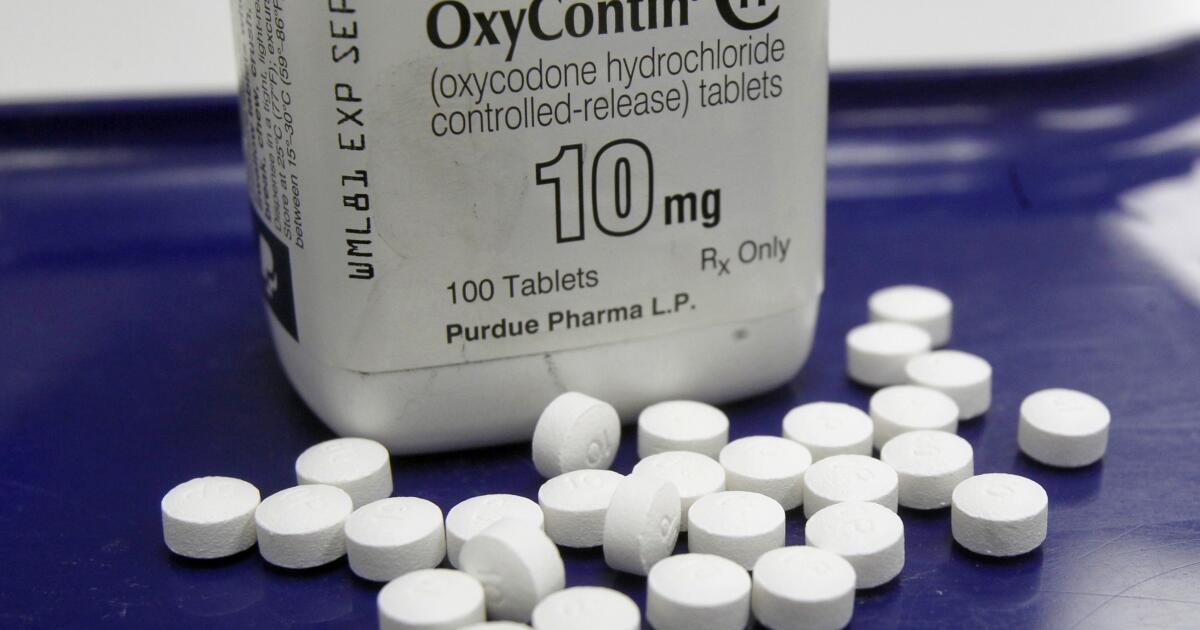
The Supreme Court justices sounded ready on Monday to uphold a huge bankruptcy deal that includes $6 billion from the Sackler family to help the nation and tens of thousands of victims recover from the opioid crisis.
Most of the justices said the deal looked to be the best possible outcome, even though it gave the Sacklers a shield from future lawsuits.
Most of their questions were critical of the Biden administration’s claim that the deal should not go forward because the Sacklers are not bankrupt.
Justice Brett M. Kavanaugh said tens of thousands of families directly affected by OxyContin “overwhelmingly approve of this settlement,” he told a Justice Department lawyer. “The federal government which has no stake in this is telling the families we will not give you a prompt payment and to allow this money to go to the states.”
Justice Elena Kagan agreed and said the federal government seeks “to blow up the deal” that has the overwhelming support from all sides. “They say this is the best deal they can get… And they say if this deal is blown up, they may end up with nothing.”
State attorneys from all 50 states agreed to the deal on the grounds it would provide money for addiction treatment programs.
But the Justice Department raised a last-minute objection and argued that wealthy people like the Sacklers should not be allowed to use the bankruptcy system to shield themselves from future lawsuits. While their company Purdue Pharma has filed for bankruptcy, the same is not true for all the members of the Sackler family.
They originally offered about $4 billion to settle all the claims and later raised the total to $6 billion.
Justice Samuel A. Alito Jr. said it may not be realistic to obtain more. Their assets may not be “reachable,” he said, since they live outside the United States now.
Not all the justices were in agreement, however. Justices Neil M. Gorsuch and Ketanji Brown Jackson focused on the bankruptcy law and questioned how it can be extended to people who are not bankrupt.
“It would raise serious due process claims,” Gorsuch said, to tell victims of OxyContin that they may not sue the Sacklers for the damage done by the opioids that were aggressively marketed by Purdue Pharma.

The Supreme Court justices sounded ready on Monday to uphold a huge bankruptcy deal that includes $6 billion from the Sackler family to help the nation and tens of thousands of victims recover from the opioid crisis.
Most of the justices said the deal looked to be the best possible outcome, even though it gave the Sacklers a shield from future lawsuits.
Most of their questions were critical of the Biden administration’s claim that the deal should not go forward because the Sacklers are not bankrupt.
Justice Brett M. Kavanaugh said tens of thousands of families directly affected by OxyContin “overwhelmingly approve of this settlement,” he told a Justice Department lawyer. “The federal government which has no stake in this is telling the families we will not give you a prompt payment and to allow this money to go to the states.”
Justice Elena Kagan agreed and said the federal government seeks “to blow up the deal” that has the overwhelming support from all sides. “They say this is the best deal they can get… And they say if this deal is blown up, they may end up with nothing.”
State attorneys from all 50 states agreed to the deal on the grounds it would provide money for addiction treatment programs.
But the Justice Department raised a last-minute objection and argued that wealthy people like the Sacklers should not be allowed to use the bankruptcy system to shield themselves from future lawsuits. While their company Purdue Pharma has filed for bankruptcy, the same is not true for all the members of the Sackler family.
They originally offered about $4 billion to settle all the claims and later raised the total to $6 billion.
Justice Samuel A. Alito Jr. said it may not be realistic to obtain more. Their assets may not be “reachable,” he said, since they live outside the United States now.
Not all the justices were in agreement, however. Justices Neil M. Gorsuch and Ketanji Brown Jackson focused on the bankruptcy law and questioned how it can be extended to people who are not bankrupt.
“It would raise serious due process claims,” Gorsuch said, to tell victims of OxyContin that they may not sue the Sacklers for the damage done by the opioids that were aggressively marketed by Purdue Pharma.

The Supreme Court justices sounded ready on Monday to uphold a huge bankruptcy deal that includes $6 billion from the Sackler family to help the nation and tens of thousands of victims recover from the opioid crisis.
Most of the justices said the deal looked to be the best possible outcome, even though it gave the Sacklers a shield from future lawsuits.
Most of their questions were critical of the Biden administration’s claim that the deal should not go forward because the Sacklers are not bankrupt.
Justice Brett M. Kavanaugh said tens of thousands of families directly affected by OxyContin “overwhelmingly approve of this settlement,” he told a Justice Department lawyer. “The federal government which has no stake in this is telling the families we will not give you a prompt payment and to allow this money to go to the states.”
Justice Elena Kagan agreed and said the federal government seeks “to blow up the deal” that has the overwhelming support from all sides. “They say this is the best deal they can get… And they say if this deal is blown up, they may end up with nothing.”
State attorneys from all 50 states agreed to the deal on the grounds it would provide money for addiction treatment programs.
But the Justice Department raised a last-minute objection and argued that wealthy people like the Sacklers should not be allowed to use the bankruptcy system to shield themselves from future lawsuits. While their company Purdue Pharma has filed for bankruptcy, the same is not true for all the members of the Sackler family.
They originally offered about $4 billion to settle all the claims and later raised the total to $6 billion.
Justice Samuel A. Alito Jr. said it may not be realistic to obtain more. Their assets may not be “reachable,” he said, since they live outside the United States now.
Not all the justices were in agreement, however. Justices Neil M. Gorsuch and Ketanji Brown Jackson focused on the bankruptcy law and questioned how it can be extended to people who are not bankrupt.
“It would raise serious due process claims,” Gorsuch said, to tell victims of OxyContin that they may not sue the Sacklers for the damage done by the opioids that were aggressively marketed by Purdue Pharma.
The Supreme Court justices sounded ready on Monday to uphold a huge bankruptcy deal that includes $6 billion from the Sackler family to help the nation and tens of thousands of victims recover from the opioid crisis.
Most of the justices said the deal looked to be the best possible outcome, even though it gave the Sacklers a shield from future lawsuits.
Most of their questions were critical of the Biden administration’s claim that the deal should not go forward because the Sacklers are not bankrupt.
Justice Brett M. Kavanaugh said tens of thousands of families directly affected by OxyContin “overwhelmingly approve of this settlement,” he told a Justice Department lawyer. “The federal government which has no stake in this is telling the families we will not give you a prompt payment and to allow this money to go to the states.”
Justice Elena Kagan agreed and said the federal government seeks “to blow up the deal” that has the overwhelming support from all sides. “They say this is the best deal they can get… And they say if this deal is blown up, they may end up with nothing.”
State attorneys from all 50 states agreed to the deal on the grounds it would provide money for addiction treatment programs.
But the Justice Department raised a last-minute objection and argued that wealthy people like the Sacklers should not be allowed to use the bankruptcy system to shield themselves from future lawsuits. While their company Purdue Pharma has filed for bankruptcy, the same is not true for all the members of the Sackler family.
They originally offered about $4 billion to settle all the claims and later raised the total to $6 billion.
Justice Samuel A. Alito Jr. said it may not be realistic to obtain more. Their assets may not be “reachable,” he said, since they live outside the United States now.
Not all the justices were in agreement, however. Justices Neil M. Gorsuch and Ketanji Brown Jackson focused on the bankruptcy law and questioned how it can be extended to people who are not bankrupt.
“It would raise serious due process claims,” Gorsuch said, to tell victims of OxyContin that they may not sue the Sacklers for the damage done by the opioids that were aggressively marketed by Purdue Pharma.

The Supreme Court justices sounded ready on Monday to uphold a huge bankruptcy deal that includes $6 billion from the Sackler family to help the nation and tens of thousands of victims recover from the opioid crisis.
Most of the justices said the deal looked to be the best possible outcome, even though it gave the Sacklers a shield from future lawsuits.
Most of their questions were critical of the Biden administration’s claim that the deal should not go forward because the Sacklers are not bankrupt.
Justice Brett M. Kavanaugh said tens of thousands of families directly affected by OxyContin “overwhelmingly approve of this settlement,” he told a Justice Department lawyer. “The federal government which has no stake in this is telling the families we will not give you a prompt payment and to allow this money to go to the states.”
Justice Elena Kagan agreed and said the federal government seeks “to blow up the deal” that has the overwhelming support from all sides. “They say this is the best deal they can get… And they say if this deal is blown up, they may end up with nothing.”
State attorneys from all 50 states agreed to the deal on the grounds it would provide money for addiction treatment programs.
But the Justice Department raised a last-minute objection and argued that wealthy people like the Sacklers should not be allowed to use the bankruptcy system to shield themselves from future lawsuits. While their company Purdue Pharma has filed for bankruptcy, the same is not true for all the members of the Sackler family.
They originally offered about $4 billion to settle all the claims and later raised the total to $6 billion.
Justice Samuel A. Alito Jr. said it may not be realistic to obtain more. Their assets may not be “reachable,” he said, since they live outside the United States now.
Not all the justices were in agreement, however. Justices Neil M. Gorsuch and Ketanji Brown Jackson focused on the bankruptcy law and questioned how it can be extended to people who are not bankrupt.
“It would raise serious due process claims,” Gorsuch said, to tell victims of OxyContin that they may not sue the Sacklers for the damage done by the opioids that were aggressively marketed by Purdue Pharma.
The Supreme Court justices sounded ready on Monday to uphold a huge bankruptcy deal that includes $6 billion from the Sackler family to help the nation and tens of thousands of victims recover from the opioid crisis.
Most of the justices said the deal looked to be the best possible outcome, even though it gave the Sacklers a shield from future lawsuits.
Most of their questions were critical of the Biden administration’s claim that the deal should not go forward because the Sacklers are not bankrupt.
Justice Brett M. Kavanaugh said tens of thousands of families directly affected by OxyContin “overwhelmingly approve of this settlement,” he told a Justice Department lawyer. “The federal government which has no stake in this is telling the families we will not give you a prompt payment and to allow this money to go to the states.”
Justice Elena Kagan agreed and said the federal government seeks “to blow up the deal” that has the overwhelming support from all sides. “They say this is the best deal they can get… And they say if this deal is blown up, they may end up with nothing.”
State attorneys from all 50 states agreed to the deal on the grounds it would provide money for addiction treatment programs.
But the Justice Department raised a last-minute objection and argued that wealthy people like the Sacklers should not be allowed to use the bankruptcy system to shield themselves from future lawsuits. While their company Purdue Pharma has filed for bankruptcy, the same is not true for all the members of the Sackler family.
They originally offered about $4 billion to settle all the claims and later raised the total to $6 billion.
Justice Samuel A. Alito Jr. said it may not be realistic to obtain more. Their assets may not be “reachable,” he said, since they live outside the United States now.
Not all the justices were in agreement, however. Justices Neil M. Gorsuch and Ketanji Brown Jackson focused on the bankruptcy law and questioned how it can be extended to people who are not bankrupt.
“It would raise serious due process claims,” Gorsuch said, to tell victims of OxyContin that they may not sue the Sacklers for the damage done by the opioids that were aggressively marketed by Purdue Pharma.
The Supreme Court justices sounded ready on Monday to uphold a huge bankruptcy deal that includes $6 billion from the Sackler family to help the nation and tens of thousands of victims recover from the opioid crisis.
Most of the justices said the deal looked to be the best possible outcome, even though it gave the Sacklers a shield from future lawsuits.
Most of their questions were critical of the Biden administration’s claim that the deal should not go forward because the Sacklers are not bankrupt.
Justice Brett M. Kavanaugh said tens of thousands of families directly affected by OxyContin “overwhelmingly approve of this settlement,” he told a Justice Department lawyer. “The federal government which has no stake in this is telling the families we will not give you a prompt payment and to allow this money to go to the states.”
Justice Elena Kagan agreed and said the federal government seeks “to blow up the deal” that has the overwhelming support from all sides. “They say this is the best deal they can get… And they say if this deal is blown up, they may end up with nothing.”
State attorneys from all 50 states agreed to the deal on the grounds it would provide money for addiction treatment programs.
But the Justice Department raised a last-minute objection and argued that wealthy people like the Sacklers should not be allowed to use the bankruptcy system to shield themselves from future lawsuits. While their company Purdue Pharma has filed for bankruptcy, the same is not true for all the members of the Sackler family.
They originally offered about $4 billion to settle all the claims and later raised the total to $6 billion.
Justice Samuel A. Alito Jr. said it may not be realistic to obtain more. Their assets may not be “reachable,” he said, since they live outside the United States now.
Not all the justices were in agreement, however. Justices Neil M. Gorsuch and Ketanji Brown Jackson focused on the bankruptcy law and questioned how it can be extended to people who are not bankrupt.
“It would raise serious due process claims,” Gorsuch said, to tell victims of OxyContin that they may not sue the Sacklers for the damage done by the opioids that were aggressively marketed by Purdue Pharma.
The Supreme Court justices sounded ready on Monday to uphold a huge bankruptcy deal that includes $6 billion from the Sackler family to help the nation and tens of thousands of victims recover from the opioid crisis.
Most of the justices said the deal looked to be the best possible outcome, even though it gave the Sacklers a shield from future lawsuits.
Most of their questions were critical of the Biden administration’s claim that the deal should not go forward because the Sacklers are not bankrupt.
Justice Brett M. Kavanaugh said tens of thousands of families directly affected by OxyContin “overwhelmingly approve of this settlement,” he told a Justice Department lawyer. “The federal government which has no stake in this is telling the families we will not give you a prompt payment and to allow this money to go to the states.”
Justice Elena Kagan agreed and said the federal government seeks “to blow up the deal” that has the overwhelming support from all sides. “They say this is the best deal they can get… And they say if this deal is blown up, they may end up with nothing.”
State attorneys from all 50 states agreed to the deal on the grounds it would provide money for addiction treatment programs.
But the Justice Department raised a last-minute objection and argued that wealthy people like the Sacklers should not be allowed to use the bankruptcy system to shield themselves from future lawsuits. While their company Purdue Pharma has filed for bankruptcy, the same is not true for all the members of the Sackler family.
They originally offered about $4 billion to settle all the claims and later raised the total to $6 billion.
Justice Samuel A. Alito Jr. said it may not be realistic to obtain more. Their assets may not be “reachable,” he said, since they live outside the United States now.
Not all the justices were in agreement, however. Justices Neil M. Gorsuch and Ketanji Brown Jackson focused on the bankruptcy law and questioned how it can be extended to people who are not bankrupt.
“It would raise serious due process claims,” Gorsuch said, to tell victims of OxyContin that they may not sue the Sacklers for the damage done by the opioids that were aggressively marketed by Purdue Pharma.

The Supreme Court justices sounded ready on Monday to uphold a huge bankruptcy deal that includes $6 billion from the Sackler family to help the nation and tens of thousands of victims recover from the opioid crisis.
Most of the justices said the deal looked to be the best possible outcome, even though it gave the Sacklers a shield from future lawsuits.
Most of their questions were critical of the Biden administration’s claim that the deal should not go forward because the Sacklers are not bankrupt.
Justice Brett M. Kavanaugh said tens of thousands of families directly affected by OxyContin “overwhelmingly approve of this settlement,” he told a Justice Department lawyer. “The federal government which has no stake in this is telling the families we will not give you a prompt payment and to allow this money to go to the states.”
Justice Elena Kagan agreed and said the federal government seeks “to blow up the deal” that has the overwhelming support from all sides. “They say this is the best deal they can get… And they say if this deal is blown up, they may end up with nothing.”
State attorneys from all 50 states agreed to the deal on the grounds it would provide money for addiction treatment programs.
But the Justice Department raised a last-minute objection and argued that wealthy people like the Sacklers should not be allowed to use the bankruptcy system to shield themselves from future lawsuits. While their company Purdue Pharma has filed for bankruptcy, the same is not true for all the members of the Sackler family.
They originally offered about $4 billion to settle all the claims and later raised the total to $6 billion.
Justice Samuel A. Alito Jr. said it may not be realistic to obtain more. Their assets may not be “reachable,” he said, since they live outside the United States now.
Not all the justices were in agreement, however. Justices Neil M. Gorsuch and Ketanji Brown Jackson focused on the bankruptcy law and questioned how it can be extended to people who are not bankrupt.
“It would raise serious due process claims,” Gorsuch said, to tell victims of OxyContin that they may not sue the Sacklers for the damage done by the opioids that were aggressively marketed by Purdue Pharma.
The Supreme Court justices sounded ready on Monday to uphold a huge bankruptcy deal that includes $6 billion from the Sackler family to help the nation and tens of thousands of victims recover from the opioid crisis.
Most of the justices said the deal looked to be the best possible outcome, even though it gave the Sacklers a shield from future lawsuits.
Most of their questions were critical of the Biden administration’s claim that the deal should not go forward because the Sacklers are not bankrupt.
Justice Brett M. Kavanaugh said tens of thousands of families directly affected by OxyContin “overwhelmingly approve of this settlement,” he told a Justice Department lawyer. “The federal government which has no stake in this is telling the families we will not give you a prompt payment and to allow this money to go to the states.”
Justice Elena Kagan agreed and said the federal government seeks “to blow up the deal” that has the overwhelming support from all sides. “They say this is the best deal they can get… And they say if this deal is blown up, they may end up with nothing.”
State attorneys from all 50 states agreed to the deal on the grounds it would provide money for addiction treatment programs.
But the Justice Department raised a last-minute objection and argued that wealthy people like the Sacklers should not be allowed to use the bankruptcy system to shield themselves from future lawsuits. While their company Purdue Pharma has filed for bankruptcy, the same is not true for all the members of the Sackler family.
They originally offered about $4 billion to settle all the claims and later raised the total to $6 billion.
Justice Samuel A. Alito Jr. said it may not be realistic to obtain more. Their assets may not be “reachable,” he said, since they live outside the United States now.
Not all the justices were in agreement, however. Justices Neil M. Gorsuch and Ketanji Brown Jackson focused on the bankruptcy law and questioned how it can be extended to people who are not bankrupt.
“It would raise serious due process claims,” Gorsuch said, to tell victims of OxyContin that they may not sue the Sacklers for the damage done by the opioids that were aggressively marketed by Purdue Pharma.
The Supreme Court justices sounded ready on Monday to uphold a huge bankruptcy deal that includes $6 billion from the Sackler family to help the nation and tens of thousands of victims recover from the opioid crisis.
Most of the justices said the deal looked to be the best possible outcome, even though it gave the Sacklers a shield from future lawsuits.
Most of their questions were critical of the Biden administration’s claim that the deal should not go forward because the Sacklers are not bankrupt.
Justice Brett M. Kavanaugh said tens of thousands of families directly affected by OxyContin “overwhelmingly approve of this settlement,” he told a Justice Department lawyer. “The federal government which has no stake in this is telling the families we will not give you a prompt payment and to allow this money to go to the states.”
Justice Elena Kagan agreed and said the federal government seeks “to blow up the deal” that has the overwhelming support from all sides. “They say this is the best deal they can get… And they say if this deal is blown up, they may end up with nothing.”
State attorneys from all 50 states agreed to the deal on the grounds it would provide money for addiction treatment programs.
But the Justice Department raised a last-minute objection and argued that wealthy people like the Sacklers should not be allowed to use the bankruptcy system to shield themselves from future lawsuits. While their company Purdue Pharma has filed for bankruptcy, the same is not true for all the members of the Sackler family.
They originally offered about $4 billion to settle all the claims and later raised the total to $6 billion.
Justice Samuel A. Alito Jr. said it may not be realistic to obtain more. Their assets may not be “reachable,” he said, since they live outside the United States now.
Not all the justices were in agreement, however. Justices Neil M. Gorsuch and Ketanji Brown Jackson focused on the bankruptcy law and questioned how it can be extended to people who are not bankrupt.
“It would raise serious due process claims,” Gorsuch said, to tell victims of OxyContin that they may not sue the Sacklers for the damage done by the opioids that were aggressively marketed by Purdue Pharma.
The Supreme Court justices sounded ready on Monday to uphold a huge bankruptcy deal that includes $6 billion from the Sackler family to help the nation and tens of thousands of victims recover from the opioid crisis.
Most of the justices said the deal looked to be the best possible outcome, even though it gave the Sacklers a shield from future lawsuits.
Most of their questions were critical of the Biden administration’s claim that the deal should not go forward because the Sacklers are not bankrupt.
Justice Brett M. Kavanaugh said tens of thousands of families directly affected by OxyContin “overwhelmingly approve of this settlement,” he told a Justice Department lawyer. “The federal government which has no stake in this is telling the families we will not give you a prompt payment and to allow this money to go to the states.”
Justice Elena Kagan agreed and said the federal government seeks “to blow up the deal” that has the overwhelming support from all sides. “They say this is the best deal they can get… And they say if this deal is blown up, they may end up with nothing.”
State attorneys from all 50 states agreed to the deal on the grounds it would provide money for addiction treatment programs.
But the Justice Department raised a last-minute objection and argued that wealthy people like the Sacklers should not be allowed to use the bankruptcy system to shield themselves from future lawsuits. While their company Purdue Pharma has filed for bankruptcy, the same is not true for all the members of the Sackler family.
They originally offered about $4 billion to settle all the claims and later raised the total to $6 billion.
Justice Samuel A. Alito Jr. said it may not be realistic to obtain more. Their assets may not be “reachable,” he said, since they live outside the United States now.
Not all the justices were in agreement, however. Justices Neil M. Gorsuch and Ketanji Brown Jackson focused on the bankruptcy law and questioned how it can be extended to people who are not bankrupt.
“It would raise serious due process claims,” Gorsuch said, to tell victims of OxyContin that they may not sue the Sacklers for the damage done by the opioids that were aggressively marketed by Purdue Pharma.
The Supreme Court justices sounded ready on Monday to uphold a huge bankruptcy deal that includes $6 billion from the Sackler family to help the nation and tens of thousands of victims recover from the opioid crisis.
Most of the justices said the deal looked to be the best possible outcome, even though it gave the Sacklers a shield from future lawsuits.
Most of their questions were critical of the Biden administration’s claim that the deal should not go forward because the Sacklers are not bankrupt.
Justice Brett M. Kavanaugh said tens of thousands of families directly affected by OxyContin “overwhelmingly approve of this settlement,” he told a Justice Department lawyer. “The federal government which has no stake in this is telling the families we will not give you a prompt payment and to allow this money to go to the states.”
Justice Elena Kagan agreed and said the federal government seeks “to blow up the deal” that has the overwhelming support from all sides. “They say this is the best deal they can get… And they say if this deal is blown up, they may end up with nothing.”
State attorneys from all 50 states agreed to the deal on the grounds it would provide money for addiction treatment programs.
But the Justice Department raised a last-minute objection and argued that wealthy people like the Sacklers should not be allowed to use the bankruptcy system to shield themselves from future lawsuits. While their company Purdue Pharma has filed for bankruptcy, the same is not true for all the members of the Sackler family.
They originally offered about $4 billion to settle all the claims and later raised the total to $6 billion.
Justice Samuel A. Alito Jr. said it may not be realistic to obtain more. Their assets may not be “reachable,” he said, since they live outside the United States now.
Not all the justices were in agreement, however. Justices Neil M. Gorsuch and Ketanji Brown Jackson focused on the bankruptcy law and questioned how it can be extended to people who are not bankrupt.
“It would raise serious due process claims,” Gorsuch said, to tell victims of OxyContin that they may not sue the Sacklers for the damage done by the opioids that were aggressively marketed by Purdue Pharma.
The Supreme Court justices sounded ready on Monday to uphold a huge bankruptcy deal that includes $6 billion from the Sackler family to help the nation and tens of thousands of victims recover from the opioid crisis.
Most of the justices said the deal looked to be the best possible outcome, even though it gave the Sacklers a shield from future lawsuits.
Most of their questions were critical of the Biden administration’s claim that the deal should not go forward because the Sacklers are not bankrupt.
Justice Brett M. Kavanaugh said tens of thousands of families directly affected by OxyContin “overwhelmingly approve of this settlement,” he told a Justice Department lawyer. “The federal government which has no stake in this is telling the families we will not give you a prompt payment and to allow this money to go to the states.”
Justice Elena Kagan agreed and said the federal government seeks “to blow up the deal” that has the overwhelming support from all sides. “They say this is the best deal they can get… And they say if this deal is blown up, they may end up with nothing.”
State attorneys from all 50 states agreed to the deal on the grounds it would provide money for addiction treatment programs.
But the Justice Department raised a last-minute objection and argued that wealthy people like the Sacklers should not be allowed to use the bankruptcy system to shield themselves from future lawsuits. While their company Purdue Pharma has filed for bankruptcy, the same is not true for all the members of the Sackler family.
They originally offered about $4 billion to settle all the claims and later raised the total to $6 billion.
Justice Samuel A. Alito Jr. said it may not be realistic to obtain more. Their assets may not be “reachable,” he said, since they live outside the United States now.
Not all the justices were in agreement, however. Justices Neil M. Gorsuch and Ketanji Brown Jackson focused on the bankruptcy law and questioned how it can be extended to people who are not bankrupt.
“It would raise serious due process claims,” Gorsuch said, to tell victims of OxyContin that they may not sue the Sacklers for the damage done by the opioids that were aggressively marketed by Purdue Pharma.
The Supreme Court justices sounded ready on Monday to uphold a huge bankruptcy deal that includes $6 billion from the Sackler family to help the nation and tens of thousands of victims recover from the opioid crisis.
Most of the justices said the deal looked to be the best possible outcome, even though it gave the Sacklers a shield from future lawsuits.
Most of their questions were critical of the Biden administration’s claim that the deal should not go forward because the Sacklers are not bankrupt.
Justice Brett M. Kavanaugh said tens of thousands of families directly affected by OxyContin “overwhelmingly approve of this settlement,” he told a Justice Department lawyer. “The federal government which has no stake in this is telling the families we will not give you a prompt payment and to allow this money to go to the states.”
Justice Elena Kagan agreed and said the federal government seeks “to blow up the deal” that has the overwhelming support from all sides. “They say this is the best deal they can get… And they say if this deal is blown up, they may end up with nothing.”
State attorneys from all 50 states agreed to the deal on the grounds it would provide money for addiction treatment programs.
But the Justice Department raised a last-minute objection and argued that wealthy people like the Sacklers should not be allowed to use the bankruptcy system to shield themselves from future lawsuits. While their company Purdue Pharma has filed for bankruptcy, the same is not true for all the members of the Sackler family.
They originally offered about $4 billion to settle all the claims and later raised the total to $6 billion.
Justice Samuel A. Alito Jr. said it may not be realistic to obtain more. Their assets may not be “reachable,” he said, since they live outside the United States now.
Not all the justices were in agreement, however. Justices Neil M. Gorsuch and Ketanji Brown Jackson focused on the bankruptcy law and questioned how it can be extended to people who are not bankrupt.
“It would raise serious due process claims,” Gorsuch said, to tell victims of OxyContin that they may not sue the Sacklers for the damage done by the opioids that were aggressively marketed by Purdue Pharma.
The Supreme Court justices sounded ready on Monday to uphold a huge bankruptcy deal that includes $6 billion from the Sackler family to help the nation and tens of thousands of victims recover from the opioid crisis.
Most of the justices said the deal looked to be the best possible outcome, even though it gave the Sacklers a shield from future lawsuits.
Most of their questions were critical of the Biden administration’s claim that the deal should not go forward because the Sacklers are not bankrupt.
Justice Brett M. Kavanaugh said tens of thousands of families directly affected by OxyContin “overwhelmingly approve of this settlement,” he told a Justice Department lawyer. “The federal government which has no stake in this is telling the families we will not give you a prompt payment and to allow this money to go to the states.”
Justice Elena Kagan agreed and said the federal government seeks “to blow up the deal” that has the overwhelming support from all sides. “They say this is the best deal they can get… And they say if this deal is blown up, they may end up with nothing.”
State attorneys from all 50 states agreed to the deal on the grounds it would provide money for addiction treatment programs.
But the Justice Department raised a last-minute objection and argued that wealthy people like the Sacklers should not be allowed to use the bankruptcy system to shield themselves from future lawsuits. While their company Purdue Pharma has filed for bankruptcy, the same is not true for all the members of the Sackler family.
They originally offered about $4 billion to settle all the claims and later raised the total to $6 billion.
Justice Samuel A. Alito Jr. said it may not be realistic to obtain more. Their assets may not be “reachable,” he said, since they live outside the United States now.
Not all the justices were in agreement, however. Justices Neil M. Gorsuch and Ketanji Brown Jackson focused on the bankruptcy law and questioned how it can be extended to people who are not bankrupt.
“It would raise serious due process claims,” Gorsuch said, to tell victims of OxyContin that they may not sue the Sacklers for the damage done by the opioids that were aggressively marketed by Purdue Pharma.

