

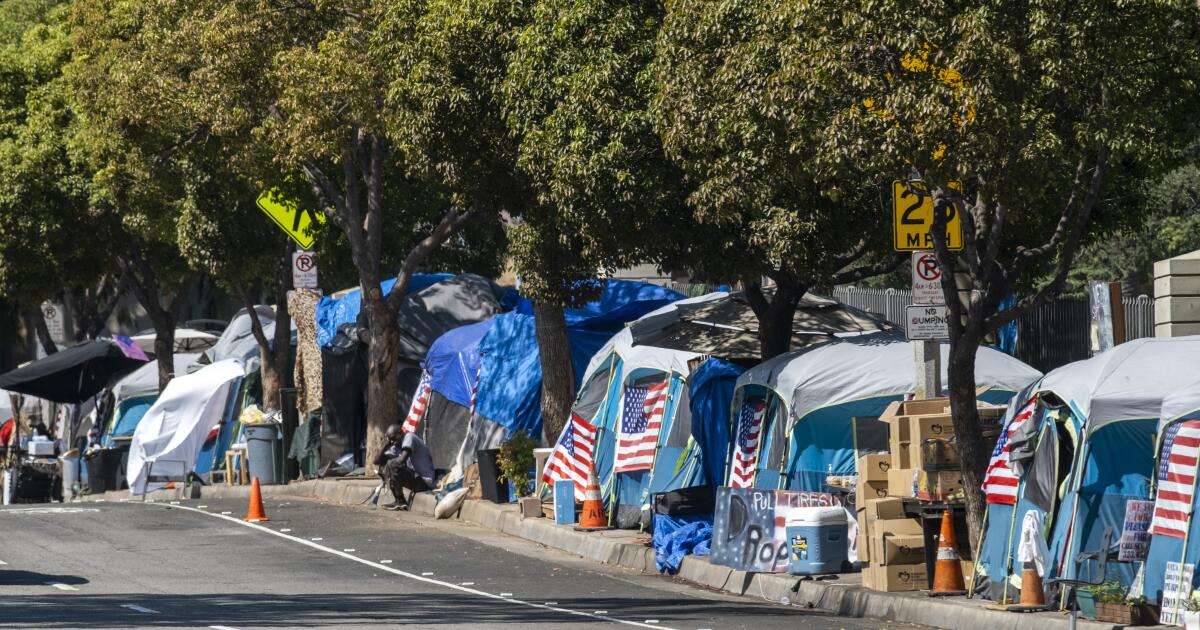

WASHINGTON — The U.S. Supreme Court on Monday hears what could be its most important case ever on the homelessness crisis.
The outcome could determine whether cities in California and the West may enforce their local laws against camping on sidewalks or other public property.
Homelessness has often been cited as the most intractable problem for cities in the West, and it has grown worse in the last decade.
Since 2007, the states with the largest increases in the number of people “experiencing chronic patterns of homelessness” were California, Washington, Oregon, Nevada and Hawaii, according to last year’s “annual homelessness assessment report” by the U.S. Department of Housing and Urban Development.
“California accounts for nearly six in 10 of all unsheltered individuals experiencing chronic patterns of homelessness in the United States,” the report said. HUD reported that the largest decreases in homelessness during that period were in two warm-weather states: Texas and Florida.
Experts and advocates disagree on why homelessness is worse in the West. Many point to the high cost of housing.
But city and state attorneys also point to differences in state laws.
The 9th U.S. Circuit Court of Appeals, whose jurisdiction covers nine states in the West, has recognized constitutional protections for those who are homeless and have no place to sleep. It remains the only federal appellate court in the nation to do so.
In a series of rulings, the 9th Circuit has held that cities and their police violate the 8th Amendment’s ban on cruel and unusual punishment when they arrest or fine people who have no access to shelter.
The 9th Circuit first invoked this rule in 2006 to protect people sleeping on the sidewalks of Skid Row in Los Angeles, and has since extended that doctrine to strike down anti-camping ordinances in Boise, Idaho, and Grants Pass, Ore.
The Supreme Court will hear an appeal Monday in Grants Pass vs. Johnson.

WASHINGTON — The U.S. Supreme Court on Monday hears what could be its most important case ever on the homelessness crisis.
The outcome could determine whether cities in California and the West may enforce their local laws against camping on sidewalks or other public property.
Homelessness has often been cited as the most intractable problem for cities in the West, and it has grown worse in the last decade.
Since 2007, the states with the largest increases in the number of people “experiencing chronic patterns of homelessness” were California, Washington, Oregon, Nevada and Hawaii, according to last year’s “annual homelessness assessment report” by the U.S. Department of Housing and Urban Development.
“California accounts for nearly six in 10 of all unsheltered individuals experiencing chronic patterns of homelessness in the United States,” the report said. HUD reported that the largest decreases in homelessness during that period were in two warm-weather states: Texas and Florida.
Experts and advocates disagree on why homelessness is worse in the West. Many point to the high cost of housing.
But city and state attorneys also point to differences in state laws.
The 9th U.S. Circuit Court of Appeals, whose jurisdiction covers nine states in the West, has recognized constitutional protections for those who are homeless and have no place to sleep. It remains the only federal appellate court in the nation to do so.
In a series of rulings, the 9th Circuit has held that cities and their police violate the 8th Amendment’s ban on cruel and unusual punishment when they arrest or fine people who have no access to shelter.
The 9th Circuit first invoked this rule in 2006 to protect people sleeping on the sidewalks of Skid Row in Los Angeles, and has since extended that doctrine to strike down anti-camping ordinances in Boise, Idaho, and Grants Pass, Ore.
The Supreme Court will hear an appeal Monday in Grants Pass vs. Johnson.

WASHINGTON — The U.S. Supreme Court on Monday hears what could be its most important case ever on the homelessness crisis.
The outcome could determine whether cities in California and the West may enforce their local laws against camping on sidewalks or other public property.
Homelessness has often been cited as the most intractable problem for cities in the West, and it has grown worse in the last decade.
Since 2007, the states with the largest increases in the number of people “experiencing chronic patterns of homelessness” were California, Washington, Oregon, Nevada and Hawaii, according to last year’s “annual homelessness assessment report” by the U.S. Department of Housing and Urban Development.
“California accounts for nearly six in 10 of all unsheltered individuals experiencing chronic patterns of homelessness in the United States,” the report said. HUD reported that the largest decreases in homelessness during that period were in two warm-weather states: Texas and Florida.
Experts and advocates disagree on why homelessness is worse in the West. Many point to the high cost of housing.
But city and state attorneys also point to differences in state laws.
The 9th U.S. Circuit Court of Appeals, whose jurisdiction covers nine states in the West, has recognized constitutional protections for those who are homeless and have no place to sleep. It remains the only federal appellate court in the nation to do so.
In a series of rulings, the 9th Circuit has held that cities and their police violate the 8th Amendment’s ban on cruel and unusual punishment when they arrest or fine people who have no access to shelter.
The 9th Circuit first invoked this rule in 2006 to protect people sleeping on the sidewalks of Skid Row in Los Angeles, and has since extended that doctrine to strike down anti-camping ordinances in Boise, Idaho, and Grants Pass, Ore.
The Supreme Court will hear an appeal Monday in Grants Pass vs. Johnson.
WASHINGTON — The U.S. Supreme Court on Monday hears what could be its most important case ever on the homelessness crisis.
The outcome could determine whether cities in California and the West may enforce their local laws against camping on sidewalks or other public property.
Homelessness has often been cited as the most intractable problem for cities in the West, and it has grown worse in the last decade.
Since 2007, the states with the largest increases in the number of people “experiencing chronic patterns of homelessness” were California, Washington, Oregon, Nevada and Hawaii, according to last year’s “annual homelessness assessment report” by the U.S. Department of Housing and Urban Development.
“California accounts for nearly six in 10 of all unsheltered individuals experiencing chronic patterns of homelessness in the United States,” the report said. HUD reported that the largest decreases in homelessness during that period were in two warm-weather states: Texas and Florida.
Experts and advocates disagree on why homelessness is worse in the West. Many point to the high cost of housing.
But city and state attorneys also point to differences in state laws.
The 9th U.S. Circuit Court of Appeals, whose jurisdiction covers nine states in the West, has recognized constitutional protections for those who are homeless and have no place to sleep. It remains the only federal appellate court in the nation to do so.
In a series of rulings, the 9th Circuit has held that cities and their police violate the 8th Amendment’s ban on cruel and unusual punishment when they arrest or fine people who have no access to shelter.
The 9th Circuit first invoked this rule in 2006 to protect people sleeping on the sidewalks of Skid Row in Los Angeles, and has since extended that doctrine to strike down anti-camping ordinances in Boise, Idaho, and Grants Pass, Ore.
The Supreme Court will hear an appeal Monday in Grants Pass vs. Johnson.

WASHINGTON — The U.S. Supreme Court on Monday hears what could be its most important case ever on the homelessness crisis.
The outcome could determine whether cities in California and the West may enforce their local laws against camping on sidewalks or other public property.
Homelessness has often been cited as the most intractable problem for cities in the West, and it has grown worse in the last decade.
Since 2007, the states with the largest increases in the number of people “experiencing chronic patterns of homelessness” were California, Washington, Oregon, Nevada and Hawaii, according to last year’s “annual homelessness assessment report” by the U.S. Department of Housing and Urban Development.
“California accounts for nearly six in 10 of all unsheltered individuals experiencing chronic patterns of homelessness in the United States,” the report said. HUD reported that the largest decreases in homelessness during that period were in two warm-weather states: Texas and Florida.
Experts and advocates disagree on why homelessness is worse in the West. Many point to the high cost of housing.
But city and state attorneys also point to differences in state laws.
The 9th U.S. Circuit Court of Appeals, whose jurisdiction covers nine states in the West, has recognized constitutional protections for those who are homeless and have no place to sleep. It remains the only federal appellate court in the nation to do so.
In a series of rulings, the 9th Circuit has held that cities and their police violate the 8th Amendment’s ban on cruel and unusual punishment when they arrest or fine people who have no access to shelter.
The 9th Circuit first invoked this rule in 2006 to protect people sleeping on the sidewalks of Skid Row in Los Angeles, and has since extended that doctrine to strike down anti-camping ordinances in Boise, Idaho, and Grants Pass, Ore.
The Supreme Court will hear an appeal Monday in Grants Pass vs. Johnson.
WASHINGTON — The U.S. Supreme Court on Monday hears what could be its most important case ever on the homelessness crisis.
The outcome could determine whether cities in California and the West may enforce their local laws against camping on sidewalks or other public property.
Homelessness has often been cited as the most intractable problem for cities in the West, and it has grown worse in the last decade.
Since 2007, the states with the largest increases in the number of people “experiencing chronic patterns of homelessness” were California, Washington, Oregon, Nevada and Hawaii, according to last year’s “annual homelessness assessment report” by the U.S. Department of Housing and Urban Development.
“California accounts for nearly six in 10 of all unsheltered individuals experiencing chronic patterns of homelessness in the United States,” the report said. HUD reported that the largest decreases in homelessness during that period were in two warm-weather states: Texas and Florida.
Experts and advocates disagree on why homelessness is worse in the West. Many point to the high cost of housing.
But city and state attorneys also point to differences in state laws.
The 9th U.S. Circuit Court of Appeals, whose jurisdiction covers nine states in the West, has recognized constitutional protections for those who are homeless and have no place to sleep. It remains the only federal appellate court in the nation to do so.
In a series of rulings, the 9th Circuit has held that cities and their police violate the 8th Amendment’s ban on cruel and unusual punishment when they arrest or fine people who have no access to shelter.
The 9th Circuit first invoked this rule in 2006 to protect people sleeping on the sidewalks of Skid Row in Los Angeles, and has since extended that doctrine to strike down anti-camping ordinances in Boise, Idaho, and Grants Pass, Ore.
The Supreme Court will hear an appeal Monday in Grants Pass vs. Johnson.
WASHINGTON — The U.S. Supreme Court on Monday hears what could be its most important case ever on the homelessness crisis.
The outcome could determine whether cities in California and the West may enforce their local laws against camping on sidewalks or other public property.
Homelessness has often been cited as the most intractable problem for cities in the West, and it has grown worse in the last decade.
Since 2007, the states with the largest increases in the number of people “experiencing chronic patterns of homelessness” were California, Washington, Oregon, Nevada and Hawaii, according to last year’s “annual homelessness assessment report” by the U.S. Department of Housing and Urban Development.
“California accounts for nearly six in 10 of all unsheltered individuals experiencing chronic patterns of homelessness in the United States,” the report said. HUD reported that the largest decreases in homelessness during that period were in two warm-weather states: Texas and Florida.
Experts and advocates disagree on why homelessness is worse in the West. Many point to the high cost of housing.
But city and state attorneys also point to differences in state laws.
The 9th U.S. Circuit Court of Appeals, whose jurisdiction covers nine states in the West, has recognized constitutional protections for those who are homeless and have no place to sleep. It remains the only federal appellate court in the nation to do so.
In a series of rulings, the 9th Circuit has held that cities and their police violate the 8th Amendment’s ban on cruel and unusual punishment when they arrest or fine people who have no access to shelter.
The 9th Circuit first invoked this rule in 2006 to protect people sleeping on the sidewalks of Skid Row in Los Angeles, and has since extended that doctrine to strike down anti-camping ordinances in Boise, Idaho, and Grants Pass, Ore.
The Supreme Court will hear an appeal Monday in Grants Pass vs. Johnson.
WASHINGTON — The U.S. Supreme Court on Monday hears what could be its most important case ever on the homelessness crisis.
The outcome could determine whether cities in California and the West may enforce their local laws against camping on sidewalks or other public property.
Homelessness has often been cited as the most intractable problem for cities in the West, and it has grown worse in the last decade.
Since 2007, the states with the largest increases in the number of people “experiencing chronic patterns of homelessness” were California, Washington, Oregon, Nevada and Hawaii, according to last year’s “annual homelessness assessment report” by the U.S. Department of Housing and Urban Development.
“California accounts for nearly six in 10 of all unsheltered individuals experiencing chronic patterns of homelessness in the United States,” the report said. HUD reported that the largest decreases in homelessness during that period were in two warm-weather states: Texas and Florida.
Experts and advocates disagree on why homelessness is worse in the West. Many point to the high cost of housing.
But city and state attorneys also point to differences in state laws.
The 9th U.S. Circuit Court of Appeals, whose jurisdiction covers nine states in the West, has recognized constitutional protections for those who are homeless and have no place to sleep. It remains the only federal appellate court in the nation to do so.
In a series of rulings, the 9th Circuit has held that cities and their police violate the 8th Amendment’s ban on cruel and unusual punishment when they arrest or fine people who have no access to shelter.
The 9th Circuit first invoked this rule in 2006 to protect people sleeping on the sidewalks of Skid Row in Los Angeles, and has since extended that doctrine to strike down anti-camping ordinances in Boise, Idaho, and Grants Pass, Ore.
The Supreme Court will hear an appeal Monday in Grants Pass vs. Johnson.

