

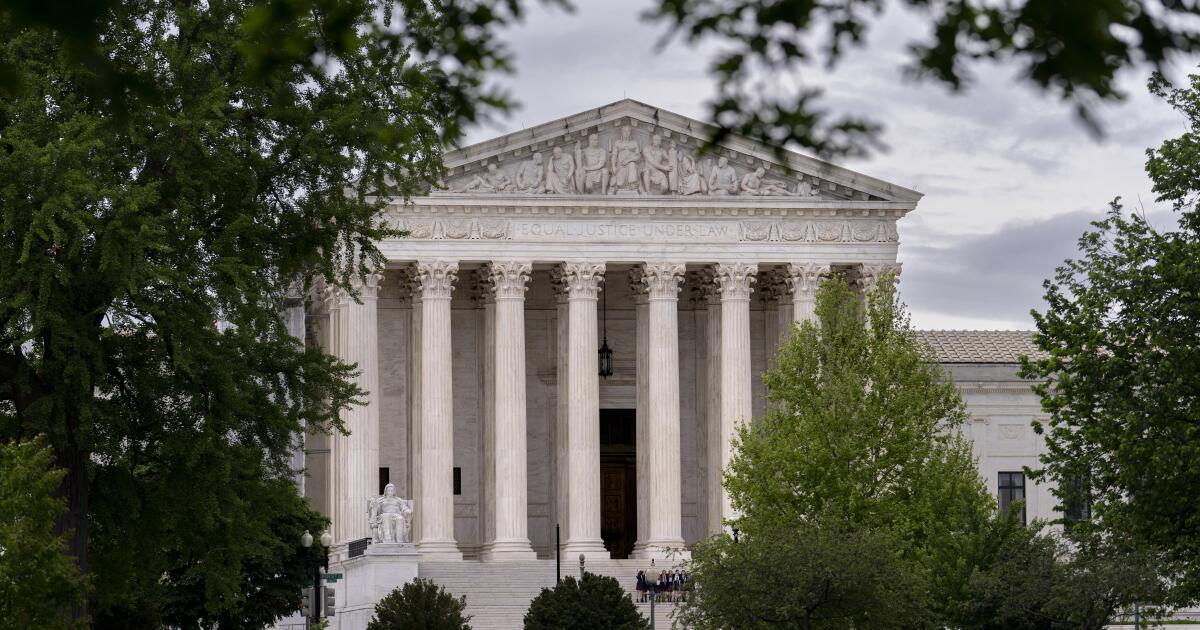
The Supreme Court heard arguments Tuesday over whether the 1st Amendment helps or hurts public officials who use their personal Facebook pages to communicate with constituents — and sometimes block their critics.
The justices heard an appeal from two San Diego-area school board members who were sued for violating the free-speech rights of a parent. The board members had blocked the parent, Christopher Garnier, from their Facebook and Twitter accounts, saying he had posted dozens of repetitive comments to their personal Twitter and Facebook accounts.
Federal courts in California sided with Garnier and ruled the 1st Amendment barred officials from excluding their critics if the board members used their personal pages for public business.
Three years ago, President Trump suffered a similar defeat when federal courts in New York ruled he violated the 1st Amendment by blocking his critics from his Twitter account. The Supreme Court later dismissed his appeal because he was then out of office.
Now the issue is before the court in the case of Michelle O’Connor-Ratcliff, a school member from the Poway Unified School District, and T.J. Zane, a former member who was also sued.
Their case was paired with one from a city manager in Port Huron, Mich., who won a ruling blocking an online critic.
The legal issue before the high court is whether public officials “engage in state action” when they use their personal pages to communicate with the public.
The 9th Circuit Court in San Francisco ruled the school board members took official action and were bound by the 1st Amendment. “They clothed their pages in the authority of their offices and used their pages to communicate about their official duties,” said Judge Marsha Berzon.
The board members appealed and urged the justices to overturn the 9th Circuit’s ruling, which sets the law for public officials throughout California and the Western states.
They argued they were expressing their personal views on social media, and their Facebook or Twitter accounts did not speak for the school district.
A ruling in favor of Garnier “will have the unintended consequence of creating less speech if the social-media pages of public officials are overrun with harassment, trolling, and hate speech, which officials will be powerless to filter,” they said.
In the Michigan case, by contrast, the 6th Circuit Court ruled the city manager’s Facebook page was his personal account and was not part of his job or official duties.
Usually the 1st Amendment protects the rights of writers or speakers, but in cases such as these, it may give others a right to reply to the speaker.
The pair of cases heard Tuesday present the first of three disputes before the Supreme Court over how the 1st Amendment applies to social media.
The justices will also rule on whether states such as Texas and Florida violate the 1st Amendment if they penalize school media platforms for allegedly discriminating against conservatives. They will also decide whether the Biden administration violated the 1st Amendment by pressing Facebook and other platforms to remove “disinformation” about COVID-19 and vaccines.

The Supreme Court heard arguments Tuesday over whether the 1st Amendment helps or hurts public officials who use their personal Facebook pages to communicate with constituents — and sometimes block their critics.
The justices heard an appeal from two San Diego-area school board members who were sued for violating the free-speech rights of a parent. The board members had blocked the parent, Christopher Garnier, from their Facebook and Twitter accounts, saying he had posted dozens of repetitive comments to their personal Twitter and Facebook accounts.
Federal courts in California sided with Garnier and ruled the 1st Amendment barred officials from excluding their critics if the board members used their personal pages for public business.
Three years ago, President Trump suffered a similar defeat when federal courts in New York ruled he violated the 1st Amendment by blocking his critics from his Twitter account. The Supreme Court later dismissed his appeal because he was then out of office.
Now the issue is before the court in the case of Michelle O’Connor-Ratcliff, a school member from the Poway Unified School District, and T.J. Zane, a former member who was also sued.
Their case was paired with one from a city manager in Port Huron, Mich., who won a ruling blocking an online critic.
The legal issue before the high court is whether public officials “engage in state action” when they use their personal pages to communicate with the public.
The 9th Circuit Court in San Francisco ruled the school board members took official action and were bound by the 1st Amendment. “They clothed their pages in the authority of their offices and used their pages to communicate about their official duties,” said Judge Marsha Berzon.
The board members appealed and urged the justices to overturn the 9th Circuit’s ruling, which sets the law for public officials throughout California and the Western states.
They argued they were expressing their personal views on social media, and their Facebook or Twitter accounts did not speak for the school district.
A ruling in favor of Garnier “will have the unintended consequence of creating less speech if the social-media pages of public officials are overrun with harassment, trolling, and hate speech, which officials will be powerless to filter,” they said.
In the Michigan case, by contrast, the 6th Circuit Court ruled the city manager’s Facebook page was his personal account and was not part of his job or official duties.
Usually the 1st Amendment protects the rights of writers or speakers, but in cases such as these, it may give others a right to reply to the speaker.
The pair of cases heard Tuesday present the first of three disputes before the Supreme Court over how the 1st Amendment applies to social media.
The justices will also rule on whether states such as Texas and Florida violate the 1st Amendment if they penalize school media platforms for allegedly discriminating against conservatives. They will also decide whether the Biden administration violated the 1st Amendment by pressing Facebook and other platforms to remove “disinformation” about COVID-19 and vaccines.

The Supreme Court heard arguments Tuesday over whether the 1st Amendment helps or hurts public officials who use their personal Facebook pages to communicate with constituents — and sometimes block their critics.
The justices heard an appeal from two San Diego-area school board members who were sued for violating the free-speech rights of a parent. The board members had blocked the parent, Christopher Garnier, from their Facebook and Twitter accounts, saying he had posted dozens of repetitive comments to their personal Twitter and Facebook accounts.
Federal courts in California sided with Garnier and ruled the 1st Amendment barred officials from excluding their critics if the board members used their personal pages for public business.
Three years ago, President Trump suffered a similar defeat when federal courts in New York ruled he violated the 1st Amendment by blocking his critics from his Twitter account. The Supreme Court later dismissed his appeal because he was then out of office.
Now the issue is before the court in the case of Michelle O’Connor-Ratcliff, a school member from the Poway Unified School District, and T.J. Zane, a former member who was also sued.
Their case was paired with one from a city manager in Port Huron, Mich., who won a ruling blocking an online critic.
The legal issue before the high court is whether public officials “engage in state action” when they use their personal pages to communicate with the public.
The 9th Circuit Court in San Francisco ruled the school board members took official action and were bound by the 1st Amendment. “They clothed their pages in the authority of their offices and used their pages to communicate about their official duties,” said Judge Marsha Berzon.
The board members appealed and urged the justices to overturn the 9th Circuit’s ruling, which sets the law for public officials throughout California and the Western states.
They argued they were expressing their personal views on social media, and their Facebook or Twitter accounts did not speak for the school district.
A ruling in favor of Garnier “will have the unintended consequence of creating less speech if the social-media pages of public officials are overrun with harassment, trolling, and hate speech, which officials will be powerless to filter,” they said.
In the Michigan case, by contrast, the 6th Circuit Court ruled the city manager’s Facebook page was his personal account and was not part of his job or official duties.
Usually the 1st Amendment protects the rights of writers or speakers, but in cases such as these, it may give others a right to reply to the speaker.
The pair of cases heard Tuesday present the first of three disputes before the Supreme Court over how the 1st Amendment applies to social media.
The justices will also rule on whether states such as Texas and Florida violate the 1st Amendment if they penalize school media platforms for allegedly discriminating against conservatives. They will also decide whether the Biden administration violated the 1st Amendment by pressing Facebook and other platforms to remove “disinformation” about COVID-19 and vaccines.
The Supreme Court heard arguments Tuesday over whether the 1st Amendment helps or hurts public officials who use their personal Facebook pages to communicate with constituents — and sometimes block their critics.
The justices heard an appeal from two San Diego-area school board members who were sued for violating the free-speech rights of a parent. The board members had blocked the parent, Christopher Garnier, from their Facebook and Twitter accounts, saying he had posted dozens of repetitive comments to their personal Twitter and Facebook accounts.
Federal courts in California sided with Garnier and ruled the 1st Amendment barred officials from excluding their critics if the board members used their personal pages for public business.
Three years ago, President Trump suffered a similar defeat when federal courts in New York ruled he violated the 1st Amendment by blocking his critics from his Twitter account. The Supreme Court later dismissed his appeal because he was then out of office.
Now the issue is before the court in the case of Michelle O’Connor-Ratcliff, a school member from the Poway Unified School District, and T.J. Zane, a former member who was also sued.
Their case was paired with one from a city manager in Port Huron, Mich., who won a ruling blocking an online critic.
The legal issue before the high court is whether public officials “engage in state action” when they use their personal pages to communicate with the public.
The 9th Circuit Court in San Francisco ruled the school board members took official action and were bound by the 1st Amendment. “They clothed their pages in the authority of their offices and used their pages to communicate about their official duties,” said Judge Marsha Berzon.
The board members appealed and urged the justices to overturn the 9th Circuit’s ruling, which sets the law for public officials throughout California and the Western states.
They argued they were expressing their personal views on social media, and their Facebook or Twitter accounts did not speak for the school district.
A ruling in favor of Garnier “will have the unintended consequence of creating less speech if the social-media pages of public officials are overrun with harassment, trolling, and hate speech, which officials will be powerless to filter,” they said.
In the Michigan case, by contrast, the 6th Circuit Court ruled the city manager’s Facebook page was his personal account and was not part of his job or official duties.
Usually the 1st Amendment protects the rights of writers or speakers, but in cases such as these, it may give others a right to reply to the speaker.
The pair of cases heard Tuesday present the first of three disputes before the Supreme Court over how the 1st Amendment applies to social media.
The justices will also rule on whether states such as Texas and Florida violate the 1st Amendment if they penalize school media platforms for allegedly discriminating against conservatives. They will also decide whether the Biden administration violated the 1st Amendment by pressing Facebook and other platforms to remove “disinformation” about COVID-19 and vaccines.

The Supreme Court heard arguments Tuesday over whether the 1st Amendment helps or hurts public officials who use their personal Facebook pages to communicate with constituents — and sometimes block their critics.
The justices heard an appeal from two San Diego-area school board members who were sued for violating the free-speech rights of a parent. The board members had blocked the parent, Christopher Garnier, from their Facebook and Twitter accounts, saying he had posted dozens of repetitive comments to their personal Twitter and Facebook accounts.
Federal courts in California sided with Garnier and ruled the 1st Amendment barred officials from excluding their critics if the board members used their personal pages for public business.
Three years ago, President Trump suffered a similar defeat when federal courts in New York ruled he violated the 1st Amendment by blocking his critics from his Twitter account. The Supreme Court later dismissed his appeal because he was then out of office.
Now the issue is before the court in the case of Michelle O’Connor-Ratcliff, a school member from the Poway Unified School District, and T.J. Zane, a former member who was also sued.
Their case was paired with one from a city manager in Port Huron, Mich., who won a ruling blocking an online critic.
The legal issue before the high court is whether public officials “engage in state action” when they use their personal pages to communicate with the public.
The 9th Circuit Court in San Francisco ruled the school board members took official action and were bound by the 1st Amendment. “They clothed their pages in the authority of their offices and used their pages to communicate about their official duties,” said Judge Marsha Berzon.
The board members appealed and urged the justices to overturn the 9th Circuit’s ruling, which sets the law for public officials throughout California and the Western states.
They argued they were expressing their personal views on social media, and their Facebook or Twitter accounts did not speak for the school district.
A ruling in favor of Garnier “will have the unintended consequence of creating less speech if the social-media pages of public officials are overrun with harassment, trolling, and hate speech, which officials will be powerless to filter,” they said.
In the Michigan case, by contrast, the 6th Circuit Court ruled the city manager’s Facebook page was his personal account and was not part of his job or official duties.
Usually the 1st Amendment protects the rights of writers or speakers, but in cases such as these, it may give others a right to reply to the speaker.
The pair of cases heard Tuesday present the first of three disputes before the Supreme Court over how the 1st Amendment applies to social media.
The justices will also rule on whether states such as Texas and Florida violate the 1st Amendment if they penalize school media platforms for allegedly discriminating against conservatives. They will also decide whether the Biden administration violated the 1st Amendment by pressing Facebook and other platforms to remove “disinformation” about COVID-19 and vaccines.
The Supreme Court heard arguments Tuesday over whether the 1st Amendment helps or hurts public officials who use their personal Facebook pages to communicate with constituents — and sometimes block their critics.
The justices heard an appeal from two San Diego-area school board members who were sued for violating the free-speech rights of a parent. The board members had blocked the parent, Christopher Garnier, from their Facebook and Twitter accounts, saying he had posted dozens of repetitive comments to their personal Twitter and Facebook accounts.
Federal courts in California sided with Garnier and ruled the 1st Amendment barred officials from excluding their critics if the board members used their personal pages for public business.
Three years ago, President Trump suffered a similar defeat when federal courts in New York ruled he violated the 1st Amendment by blocking his critics from his Twitter account. The Supreme Court later dismissed his appeal because he was then out of office.
Now the issue is before the court in the case of Michelle O’Connor-Ratcliff, a school member from the Poway Unified School District, and T.J. Zane, a former member who was also sued.
Their case was paired with one from a city manager in Port Huron, Mich., who won a ruling blocking an online critic.
The legal issue before the high court is whether public officials “engage in state action” when they use their personal pages to communicate with the public.
The 9th Circuit Court in San Francisco ruled the school board members took official action and were bound by the 1st Amendment. “They clothed their pages in the authority of their offices and used their pages to communicate about their official duties,” said Judge Marsha Berzon.
The board members appealed and urged the justices to overturn the 9th Circuit’s ruling, which sets the law for public officials throughout California and the Western states.
They argued they were expressing their personal views on social media, and their Facebook or Twitter accounts did not speak for the school district.
A ruling in favor of Garnier “will have the unintended consequence of creating less speech if the social-media pages of public officials are overrun with harassment, trolling, and hate speech, which officials will be powerless to filter,” they said.
In the Michigan case, by contrast, the 6th Circuit Court ruled the city manager’s Facebook page was his personal account and was not part of his job or official duties.
Usually the 1st Amendment protects the rights of writers or speakers, but in cases such as these, it may give others a right to reply to the speaker.
The pair of cases heard Tuesday present the first of three disputes before the Supreme Court over how the 1st Amendment applies to social media.
The justices will also rule on whether states such as Texas and Florida violate the 1st Amendment if they penalize school media platforms for allegedly discriminating against conservatives. They will also decide whether the Biden administration violated the 1st Amendment by pressing Facebook and other platforms to remove “disinformation” about COVID-19 and vaccines.
The Supreme Court heard arguments Tuesday over whether the 1st Amendment helps or hurts public officials who use their personal Facebook pages to communicate with constituents — and sometimes block their critics.
The justices heard an appeal from two San Diego-area school board members who were sued for violating the free-speech rights of a parent. The board members had blocked the parent, Christopher Garnier, from their Facebook and Twitter accounts, saying he had posted dozens of repetitive comments to their personal Twitter and Facebook accounts.
Federal courts in California sided with Garnier and ruled the 1st Amendment barred officials from excluding their critics if the board members used their personal pages for public business.
Three years ago, President Trump suffered a similar defeat when federal courts in New York ruled he violated the 1st Amendment by blocking his critics from his Twitter account. The Supreme Court later dismissed his appeal because he was then out of office.
Now the issue is before the court in the case of Michelle O’Connor-Ratcliff, a school member from the Poway Unified School District, and T.J. Zane, a former member who was also sued.
Their case was paired with one from a city manager in Port Huron, Mich., who won a ruling blocking an online critic.
The legal issue before the high court is whether public officials “engage in state action” when they use their personal pages to communicate with the public.
The 9th Circuit Court in San Francisco ruled the school board members took official action and were bound by the 1st Amendment. “They clothed their pages in the authority of their offices and used their pages to communicate about their official duties,” said Judge Marsha Berzon.
The board members appealed and urged the justices to overturn the 9th Circuit’s ruling, which sets the law for public officials throughout California and the Western states.
They argued they were expressing their personal views on social media, and their Facebook or Twitter accounts did not speak for the school district.
A ruling in favor of Garnier “will have the unintended consequence of creating less speech if the social-media pages of public officials are overrun with harassment, trolling, and hate speech, which officials will be powerless to filter,” they said.
In the Michigan case, by contrast, the 6th Circuit Court ruled the city manager’s Facebook page was his personal account and was not part of his job or official duties.
Usually the 1st Amendment protects the rights of writers or speakers, but in cases such as these, it may give others a right to reply to the speaker.
The pair of cases heard Tuesday present the first of three disputes before the Supreme Court over how the 1st Amendment applies to social media.
The justices will also rule on whether states such as Texas and Florida violate the 1st Amendment if they penalize school media platforms for allegedly discriminating against conservatives. They will also decide whether the Biden administration violated the 1st Amendment by pressing Facebook and other platforms to remove “disinformation” about COVID-19 and vaccines.
The Supreme Court heard arguments Tuesday over whether the 1st Amendment helps or hurts public officials who use their personal Facebook pages to communicate with constituents — and sometimes block their critics.
The justices heard an appeal from two San Diego-area school board members who were sued for violating the free-speech rights of a parent. The board members had blocked the parent, Christopher Garnier, from their Facebook and Twitter accounts, saying he had posted dozens of repetitive comments to their personal Twitter and Facebook accounts.
Federal courts in California sided with Garnier and ruled the 1st Amendment barred officials from excluding their critics if the board members used their personal pages for public business.
Three years ago, President Trump suffered a similar defeat when federal courts in New York ruled he violated the 1st Amendment by blocking his critics from his Twitter account. The Supreme Court later dismissed his appeal because he was then out of office.
Now the issue is before the court in the case of Michelle O’Connor-Ratcliff, a school member from the Poway Unified School District, and T.J. Zane, a former member who was also sued.
Their case was paired with one from a city manager in Port Huron, Mich., who won a ruling blocking an online critic.
The legal issue before the high court is whether public officials “engage in state action” when they use their personal pages to communicate with the public.
The 9th Circuit Court in San Francisco ruled the school board members took official action and were bound by the 1st Amendment. “They clothed their pages in the authority of their offices and used their pages to communicate about their official duties,” said Judge Marsha Berzon.
The board members appealed and urged the justices to overturn the 9th Circuit’s ruling, which sets the law for public officials throughout California and the Western states.
They argued they were expressing their personal views on social media, and their Facebook or Twitter accounts did not speak for the school district.
A ruling in favor of Garnier “will have the unintended consequence of creating less speech if the social-media pages of public officials are overrun with harassment, trolling, and hate speech, which officials will be powerless to filter,” they said.
In the Michigan case, by contrast, the 6th Circuit Court ruled the city manager’s Facebook page was his personal account and was not part of his job or official duties.
Usually the 1st Amendment protects the rights of writers or speakers, but in cases such as these, it may give others a right to reply to the speaker.
The pair of cases heard Tuesday present the first of three disputes before the Supreme Court over how the 1st Amendment applies to social media.
The justices will also rule on whether states such as Texas and Florida violate the 1st Amendment if they penalize school media platforms for allegedly discriminating against conservatives. They will also decide whether the Biden administration violated the 1st Amendment by pressing Facebook and other platforms to remove “disinformation” about COVID-19 and vaccines.

The Supreme Court heard arguments Tuesday over whether the 1st Amendment helps or hurts public officials who use their personal Facebook pages to communicate with constituents — and sometimes block their critics.
The justices heard an appeal from two San Diego-area school board members who were sued for violating the free-speech rights of a parent. The board members had blocked the parent, Christopher Garnier, from their Facebook and Twitter accounts, saying he had posted dozens of repetitive comments to their personal Twitter and Facebook accounts.
Federal courts in California sided with Garnier and ruled the 1st Amendment barred officials from excluding their critics if the board members used their personal pages for public business.
Three years ago, President Trump suffered a similar defeat when federal courts in New York ruled he violated the 1st Amendment by blocking his critics from his Twitter account. The Supreme Court later dismissed his appeal because he was then out of office.
Now the issue is before the court in the case of Michelle O’Connor-Ratcliff, a school member from the Poway Unified School District, and T.J. Zane, a former member who was also sued.
Their case was paired with one from a city manager in Port Huron, Mich., who won a ruling blocking an online critic.
The legal issue before the high court is whether public officials “engage in state action” when they use their personal pages to communicate with the public.
The 9th Circuit Court in San Francisco ruled the school board members took official action and were bound by the 1st Amendment. “They clothed their pages in the authority of their offices and used their pages to communicate about their official duties,” said Judge Marsha Berzon.
The board members appealed and urged the justices to overturn the 9th Circuit’s ruling, which sets the law for public officials throughout California and the Western states.
They argued they were expressing their personal views on social media, and their Facebook or Twitter accounts did not speak for the school district.
A ruling in favor of Garnier “will have the unintended consequence of creating less speech if the social-media pages of public officials are overrun with harassment, trolling, and hate speech, which officials will be powerless to filter,” they said.
In the Michigan case, by contrast, the 6th Circuit Court ruled the city manager’s Facebook page was his personal account and was not part of his job or official duties.
Usually the 1st Amendment protects the rights of writers or speakers, but in cases such as these, it may give others a right to reply to the speaker.
The pair of cases heard Tuesday present the first of three disputes before the Supreme Court over how the 1st Amendment applies to social media.
The justices will also rule on whether states such as Texas and Florida violate the 1st Amendment if they penalize school media platforms for allegedly discriminating against conservatives. They will also decide whether the Biden administration violated the 1st Amendment by pressing Facebook and other platforms to remove “disinformation” about COVID-19 and vaccines.
The Supreme Court heard arguments Tuesday over whether the 1st Amendment helps or hurts public officials who use their personal Facebook pages to communicate with constituents — and sometimes block their critics.
The justices heard an appeal from two San Diego-area school board members who were sued for violating the free-speech rights of a parent. The board members had blocked the parent, Christopher Garnier, from their Facebook and Twitter accounts, saying he had posted dozens of repetitive comments to their personal Twitter and Facebook accounts.
Federal courts in California sided with Garnier and ruled the 1st Amendment barred officials from excluding their critics if the board members used their personal pages for public business.
Three years ago, President Trump suffered a similar defeat when federal courts in New York ruled he violated the 1st Amendment by blocking his critics from his Twitter account. The Supreme Court later dismissed his appeal because he was then out of office.
Now the issue is before the court in the case of Michelle O’Connor-Ratcliff, a school member from the Poway Unified School District, and T.J. Zane, a former member who was also sued.
Their case was paired with one from a city manager in Port Huron, Mich., who won a ruling blocking an online critic.
The legal issue before the high court is whether public officials “engage in state action” when they use their personal pages to communicate with the public.
The 9th Circuit Court in San Francisco ruled the school board members took official action and were bound by the 1st Amendment. “They clothed their pages in the authority of their offices and used their pages to communicate about their official duties,” said Judge Marsha Berzon.
The board members appealed and urged the justices to overturn the 9th Circuit’s ruling, which sets the law for public officials throughout California and the Western states.
They argued they were expressing their personal views on social media, and their Facebook or Twitter accounts did not speak for the school district.
A ruling in favor of Garnier “will have the unintended consequence of creating less speech if the social-media pages of public officials are overrun with harassment, trolling, and hate speech, which officials will be powerless to filter,” they said.
In the Michigan case, by contrast, the 6th Circuit Court ruled the city manager’s Facebook page was his personal account and was not part of his job or official duties.
Usually the 1st Amendment protects the rights of writers or speakers, but in cases such as these, it may give others a right to reply to the speaker.
The pair of cases heard Tuesday present the first of three disputes before the Supreme Court over how the 1st Amendment applies to social media.
The justices will also rule on whether states such as Texas and Florida violate the 1st Amendment if they penalize school media platforms for allegedly discriminating against conservatives. They will also decide whether the Biden administration violated the 1st Amendment by pressing Facebook and other platforms to remove “disinformation” about COVID-19 and vaccines.
The Supreme Court heard arguments Tuesday over whether the 1st Amendment helps or hurts public officials who use their personal Facebook pages to communicate with constituents — and sometimes block their critics.
The justices heard an appeal from two San Diego-area school board members who were sued for violating the free-speech rights of a parent. The board members had blocked the parent, Christopher Garnier, from their Facebook and Twitter accounts, saying he had posted dozens of repetitive comments to their personal Twitter and Facebook accounts.
Federal courts in California sided with Garnier and ruled the 1st Amendment barred officials from excluding their critics if the board members used their personal pages for public business.
Three years ago, President Trump suffered a similar defeat when federal courts in New York ruled he violated the 1st Amendment by blocking his critics from his Twitter account. The Supreme Court later dismissed his appeal because he was then out of office.
Now the issue is before the court in the case of Michelle O’Connor-Ratcliff, a school member from the Poway Unified School District, and T.J. Zane, a former member who was also sued.
Their case was paired with one from a city manager in Port Huron, Mich., who won a ruling blocking an online critic.
The legal issue before the high court is whether public officials “engage in state action” when they use their personal pages to communicate with the public.
The 9th Circuit Court in San Francisco ruled the school board members took official action and were bound by the 1st Amendment. “They clothed their pages in the authority of their offices and used their pages to communicate about their official duties,” said Judge Marsha Berzon.
The board members appealed and urged the justices to overturn the 9th Circuit’s ruling, which sets the law for public officials throughout California and the Western states.
They argued they were expressing their personal views on social media, and their Facebook or Twitter accounts did not speak for the school district.
A ruling in favor of Garnier “will have the unintended consequence of creating less speech if the social-media pages of public officials are overrun with harassment, trolling, and hate speech, which officials will be powerless to filter,” they said.
In the Michigan case, by contrast, the 6th Circuit Court ruled the city manager’s Facebook page was his personal account and was not part of his job or official duties.
Usually the 1st Amendment protects the rights of writers or speakers, but in cases such as these, it may give others a right to reply to the speaker.
The pair of cases heard Tuesday present the first of three disputes before the Supreme Court over how the 1st Amendment applies to social media.
The justices will also rule on whether states such as Texas and Florida violate the 1st Amendment if they penalize school media platforms for allegedly discriminating against conservatives. They will also decide whether the Biden administration violated the 1st Amendment by pressing Facebook and other platforms to remove “disinformation” about COVID-19 and vaccines.
The Supreme Court heard arguments Tuesday over whether the 1st Amendment helps or hurts public officials who use their personal Facebook pages to communicate with constituents — and sometimes block their critics.
The justices heard an appeal from two San Diego-area school board members who were sued for violating the free-speech rights of a parent. The board members had blocked the parent, Christopher Garnier, from their Facebook and Twitter accounts, saying he had posted dozens of repetitive comments to their personal Twitter and Facebook accounts.
Federal courts in California sided with Garnier and ruled the 1st Amendment barred officials from excluding their critics if the board members used their personal pages for public business.
Three years ago, President Trump suffered a similar defeat when federal courts in New York ruled he violated the 1st Amendment by blocking his critics from his Twitter account. The Supreme Court later dismissed his appeal because he was then out of office.
Now the issue is before the court in the case of Michelle O’Connor-Ratcliff, a school member from the Poway Unified School District, and T.J. Zane, a former member who was also sued.
Their case was paired with one from a city manager in Port Huron, Mich., who won a ruling blocking an online critic.
The legal issue before the high court is whether public officials “engage in state action” when they use their personal pages to communicate with the public.
The 9th Circuit Court in San Francisco ruled the school board members took official action and were bound by the 1st Amendment. “They clothed their pages in the authority of their offices and used their pages to communicate about their official duties,” said Judge Marsha Berzon.
The board members appealed and urged the justices to overturn the 9th Circuit’s ruling, which sets the law for public officials throughout California and the Western states.
They argued they were expressing their personal views on social media, and their Facebook or Twitter accounts did not speak for the school district.
A ruling in favor of Garnier “will have the unintended consequence of creating less speech if the social-media pages of public officials are overrun with harassment, trolling, and hate speech, which officials will be powerless to filter,” they said.
In the Michigan case, by contrast, the 6th Circuit Court ruled the city manager’s Facebook page was his personal account and was not part of his job or official duties.
Usually the 1st Amendment protects the rights of writers or speakers, but in cases such as these, it may give others a right to reply to the speaker.
The pair of cases heard Tuesday present the first of three disputes before the Supreme Court over how the 1st Amendment applies to social media.
The justices will also rule on whether states such as Texas and Florida violate the 1st Amendment if they penalize school media platforms for allegedly discriminating against conservatives. They will also decide whether the Biden administration violated the 1st Amendment by pressing Facebook and other platforms to remove “disinformation” about COVID-19 and vaccines.
The Supreme Court heard arguments Tuesday over whether the 1st Amendment helps or hurts public officials who use their personal Facebook pages to communicate with constituents — and sometimes block their critics.
The justices heard an appeal from two San Diego-area school board members who were sued for violating the free-speech rights of a parent. The board members had blocked the parent, Christopher Garnier, from their Facebook and Twitter accounts, saying he had posted dozens of repetitive comments to their personal Twitter and Facebook accounts.
Federal courts in California sided with Garnier and ruled the 1st Amendment barred officials from excluding their critics if the board members used their personal pages for public business.
Three years ago, President Trump suffered a similar defeat when federal courts in New York ruled he violated the 1st Amendment by blocking his critics from his Twitter account. The Supreme Court later dismissed his appeal because he was then out of office.
Now the issue is before the court in the case of Michelle O’Connor-Ratcliff, a school member from the Poway Unified School District, and T.J. Zane, a former member who was also sued.
Their case was paired with one from a city manager in Port Huron, Mich., who won a ruling blocking an online critic.
The legal issue before the high court is whether public officials “engage in state action” when they use their personal pages to communicate with the public.
The 9th Circuit Court in San Francisco ruled the school board members took official action and were bound by the 1st Amendment. “They clothed their pages in the authority of their offices and used their pages to communicate about their official duties,” said Judge Marsha Berzon.
The board members appealed and urged the justices to overturn the 9th Circuit’s ruling, which sets the law for public officials throughout California and the Western states.
They argued they were expressing their personal views on social media, and their Facebook or Twitter accounts did not speak for the school district.
A ruling in favor of Garnier “will have the unintended consequence of creating less speech if the social-media pages of public officials are overrun with harassment, trolling, and hate speech, which officials will be powerless to filter,” they said.
In the Michigan case, by contrast, the 6th Circuit Court ruled the city manager’s Facebook page was his personal account and was not part of his job or official duties.
Usually the 1st Amendment protects the rights of writers or speakers, but in cases such as these, it may give others a right to reply to the speaker.
The pair of cases heard Tuesday present the first of three disputes before the Supreme Court over how the 1st Amendment applies to social media.
The justices will also rule on whether states such as Texas and Florida violate the 1st Amendment if they penalize school media platforms for allegedly discriminating against conservatives. They will also decide whether the Biden administration violated the 1st Amendment by pressing Facebook and other platforms to remove “disinformation” about COVID-19 and vaccines.
The Supreme Court heard arguments Tuesday over whether the 1st Amendment helps or hurts public officials who use their personal Facebook pages to communicate with constituents — and sometimes block their critics.
The justices heard an appeal from two San Diego-area school board members who were sued for violating the free-speech rights of a parent. The board members had blocked the parent, Christopher Garnier, from their Facebook and Twitter accounts, saying he had posted dozens of repetitive comments to their personal Twitter and Facebook accounts.
Federal courts in California sided with Garnier and ruled the 1st Amendment barred officials from excluding their critics if the board members used their personal pages for public business.
Three years ago, President Trump suffered a similar defeat when federal courts in New York ruled he violated the 1st Amendment by blocking his critics from his Twitter account. The Supreme Court later dismissed his appeal because he was then out of office.
Now the issue is before the court in the case of Michelle O’Connor-Ratcliff, a school member from the Poway Unified School District, and T.J. Zane, a former member who was also sued.
Their case was paired with one from a city manager in Port Huron, Mich., who won a ruling blocking an online critic.
The legal issue before the high court is whether public officials “engage in state action” when they use their personal pages to communicate with the public.
The 9th Circuit Court in San Francisco ruled the school board members took official action and were bound by the 1st Amendment. “They clothed their pages in the authority of their offices and used their pages to communicate about their official duties,” said Judge Marsha Berzon.
The board members appealed and urged the justices to overturn the 9th Circuit’s ruling, which sets the law for public officials throughout California and the Western states.
They argued they were expressing their personal views on social media, and their Facebook or Twitter accounts did not speak for the school district.
A ruling in favor of Garnier “will have the unintended consequence of creating less speech if the social-media pages of public officials are overrun with harassment, trolling, and hate speech, which officials will be powerless to filter,” they said.
In the Michigan case, by contrast, the 6th Circuit Court ruled the city manager’s Facebook page was his personal account and was not part of his job or official duties.
Usually the 1st Amendment protects the rights of writers or speakers, but in cases such as these, it may give others a right to reply to the speaker.
The pair of cases heard Tuesday present the first of three disputes before the Supreme Court over how the 1st Amendment applies to social media.
The justices will also rule on whether states such as Texas and Florida violate the 1st Amendment if they penalize school media platforms for allegedly discriminating against conservatives. They will also decide whether the Biden administration violated the 1st Amendment by pressing Facebook and other platforms to remove “disinformation” about COVID-19 and vaccines.
The Supreme Court heard arguments Tuesday over whether the 1st Amendment helps or hurts public officials who use their personal Facebook pages to communicate with constituents — and sometimes block their critics.
The justices heard an appeal from two San Diego-area school board members who were sued for violating the free-speech rights of a parent. The board members had blocked the parent, Christopher Garnier, from their Facebook and Twitter accounts, saying he had posted dozens of repetitive comments to their personal Twitter and Facebook accounts.
Federal courts in California sided with Garnier and ruled the 1st Amendment barred officials from excluding their critics if the board members used their personal pages for public business.
Three years ago, President Trump suffered a similar defeat when federal courts in New York ruled he violated the 1st Amendment by blocking his critics from his Twitter account. The Supreme Court later dismissed his appeal because he was then out of office.
Now the issue is before the court in the case of Michelle O’Connor-Ratcliff, a school member from the Poway Unified School District, and T.J. Zane, a former member who was also sued.
Their case was paired with one from a city manager in Port Huron, Mich., who won a ruling blocking an online critic.
The legal issue before the high court is whether public officials “engage in state action” when they use their personal pages to communicate with the public.
The 9th Circuit Court in San Francisco ruled the school board members took official action and were bound by the 1st Amendment. “They clothed their pages in the authority of their offices and used their pages to communicate about their official duties,” said Judge Marsha Berzon.
The board members appealed and urged the justices to overturn the 9th Circuit’s ruling, which sets the law for public officials throughout California and the Western states.
They argued they were expressing their personal views on social media, and their Facebook or Twitter accounts did not speak for the school district.
A ruling in favor of Garnier “will have the unintended consequence of creating less speech if the social-media pages of public officials are overrun with harassment, trolling, and hate speech, which officials will be powerless to filter,” they said.
In the Michigan case, by contrast, the 6th Circuit Court ruled the city manager’s Facebook page was his personal account and was not part of his job or official duties.
Usually the 1st Amendment protects the rights of writers or speakers, but in cases such as these, it may give others a right to reply to the speaker.
The pair of cases heard Tuesday present the first of three disputes before the Supreme Court over how the 1st Amendment applies to social media.
The justices will also rule on whether states such as Texas and Florida violate the 1st Amendment if they penalize school media platforms for allegedly discriminating against conservatives. They will also decide whether the Biden administration violated the 1st Amendment by pressing Facebook and other platforms to remove “disinformation” about COVID-19 and vaccines.
The Supreme Court heard arguments Tuesday over whether the 1st Amendment helps or hurts public officials who use their personal Facebook pages to communicate with constituents — and sometimes block their critics.
The justices heard an appeal from two San Diego-area school board members who were sued for violating the free-speech rights of a parent. The board members had blocked the parent, Christopher Garnier, from their Facebook and Twitter accounts, saying he had posted dozens of repetitive comments to their personal Twitter and Facebook accounts.
Federal courts in California sided with Garnier and ruled the 1st Amendment barred officials from excluding their critics if the board members used their personal pages for public business.
Three years ago, President Trump suffered a similar defeat when federal courts in New York ruled he violated the 1st Amendment by blocking his critics from his Twitter account. The Supreme Court later dismissed his appeal because he was then out of office.
Now the issue is before the court in the case of Michelle O’Connor-Ratcliff, a school member from the Poway Unified School District, and T.J. Zane, a former member who was also sued.
Their case was paired with one from a city manager in Port Huron, Mich., who won a ruling blocking an online critic.
The legal issue before the high court is whether public officials “engage in state action” when they use their personal pages to communicate with the public.
The 9th Circuit Court in San Francisco ruled the school board members took official action and were bound by the 1st Amendment. “They clothed their pages in the authority of their offices and used their pages to communicate about their official duties,” said Judge Marsha Berzon.
The board members appealed and urged the justices to overturn the 9th Circuit’s ruling, which sets the law for public officials throughout California and the Western states.
They argued they were expressing their personal views on social media, and their Facebook or Twitter accounts did not speak for the school district.
A ruling in favor of Garnier “will have the unintended consequence of creating less speech if the social-media pages of public officials are overrun with harassment, trolling, and hate speech, which officials will be powerless to filter,” they said.
In the Michigan case, by contrast, the 6th Circuit Court ruled the city manager’s Facebook page was his personal account and was not part of his job or official duties.
Usually the 1st Amendment protects the rights of writers or speakers, but in cases such as these, it may give others a right to reply to the speaker.
The pair of cases heard Tuesday present the first of three disputes before the Supreme Court over how the 1st Amendment applies to social media.
The justices will also rule on whether states such as Texas and Florida violate the 1st Amendment if they penalize school media platforms for allegedly discriminating against conservatives. They will also decide whether the Biden administration violated the 1st Amendment by pressing Facebook and other platforms to remove “disinformation” about COVID-19 and vaccines.

