


Washington DC
New York
Toronto
Distribution: (800) 510 9863
Press ID
  • Login
Binghamton Herald
Advertisement
Wednesday, May 6, 2026
  • Home
  • World
  • Politics
  • Business
  • Technology
  • Culture
  • Health
  • Entertainment
  • Trending
No Result
View All Result
Binghamton Herald
No Result
View All Result
Home World

Study shows widespread bird flu infection in cattle

by Binghamton Herald Report
March 12, 2025
in World
Share on FacebookShare on Twitter

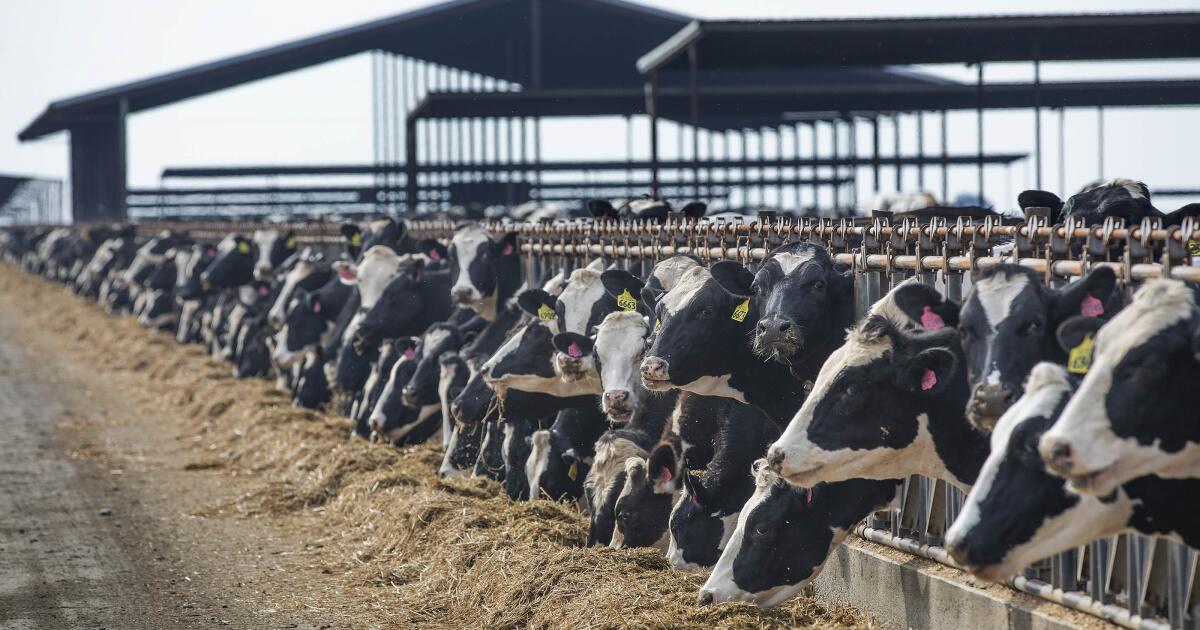
Scientists are sounding alarms about a genetic mutation that was recently identified in four dairy cow herds, nearly one year after H5N1 bird flu was first reported in Texas dairy cattle.

The change is one that researchers have dreaded finding because it is associated with increased mammal-to-mammal transmission and disease severity.

“That is the mutation found in the first human case, which was extremely pathogenic in ferrets,” said Yoshihiro Kawaoka, an infectious disease expert at the University of Wisconsin, Madison and the University of Tokyo. “Finding the same mutation in cows is significant.”

The mutation is called PB2 E627K, and it was seen in a Texas dairy worker last March. It was not seen again until these sequences were uploaded late Tuesday. The data was uploaded by the USDA’s National Veterinary Laboratory Services to a public access genetic repository known as GISAID.

Henry Niman, an evolutionary molecular biologist with Recombinomics Inc., a virus and vaccine research company in Pittsburgh, reviewed the sequence data and reported the results to The Times and on social media Wednesday.

Last summer, Kawaoka exposed ferrets in his laboratory to that viral strain. He found the ferrets were able to transmit the virus to one another via respiratory droplets, and it killed 100% of the infected animals.

The Texas dairy worker complained only of conjunctivitis; he didn’t have a fever or show signs of respiratory dysfunction.

The data provided to GISAID don’t include location data, so scientists often use other information to identify the herds.

In this case, because the sequence data was added Tuesday, it is likely from herds that were only recently reported by the USDA. In the last week, herds from Idaho and California have been added to the USDA’s tally.

The herds in California have the more common B3.13 strain, which has been associated with dairy cows since last year. The strain circulating in Idaho is D1.1, which spilled over from wild birds earlier this year.

Therefore, the new sequence data added on Tuesday — which were of the B3.13 variety — are likely from infected California herds.

Since the outbreak was first reported in dairy cows last March, 70 people have been infected and one person has died. According to the USDA, 985 dairy herds have been infected, with 754 of those located in California.

Scientists are sounding alarms about a genetic mutation that was recently identified in four dairy cow herds, nearly one year after H5N1 bird flu was first reported in Texas dairy cattle.

The change is one that researchers have dreaded finding because it is associated with increased mammal-to-mammal transmission and disease severity.

“That is the mutation found in the first human case, which was extremely pathogenic in ferrets,” said Yoshihiro Kawaoka, an infectious disease expert at the University of Wisconsin, Madison and the University of Tokyo. “Finding the same mutation in cows is significant.”

The mutation is called PB2 E627K, and it was seen in a Texas dairy worker last March. It was not seen again until these sequences were uploaded late Tuesday. The data was uploaded by the USDA’s National Veterinary Laboratory Services to a public access genetic repository known as GISAID.

Henry Niman, an evolutionary molecular biologist with Recombinomics Inc., a virus and vaccine research company in Pittsburgh, reviewed the sequence data and reported the results to The Times and on social media Wednesday.

Last summer, Kawaoka exposed ferrets in his laboratory to that viral strain. He found the ferrets were able to transmit the virus to one another via respiratory droplets, and it killed 100% of the infected animals.

The Texas dairy worker complained only of conjunctivitis; he didn’t have a fever or show signs of respiratory dysfunction.

The data provided to GISAID don’t include location data, so scientists often use other information to identify the herds.

In this case, because the sequence data was added Tuesday, it is likely from herds that were only recently reported by the USDA. In the last week, herds from Idaho and California have been added to the USDA’s tally.

The herds in California have the more common B3.13 strain, which has been associated with dairy cows since last year. The strain circulating in Idaho is D1.1, which spilled over from wild birds earlier this year.

Therefore, the new sequence data added on Tuesday — which were of the B3.13 variety — are likely from infected California herds.

Since the outbreak was first reported in dairy cows last March, 70 people have been infected and one person has died. According to the USDA, 985 dairy herds have been infected, with 754 of those located in California.

Scientists are sounding alarms about a genetic mutation that was recently identified in four dairy cow herds, nearly one year after H5N1 bird flu was first reported in Texas dairy cattle.

The change is one that researchers have dreaded finding because it is associated with increased mammal-to-mammal transmission and disease severity.

“That is the mutation found in the first human case, which was extremely pathogenic in ferrets,” said Yoshihiro Kawaoka, an infectious disease expert at the University of Wisconsin, Madison and the University of Tokyo. “Finding the same mutation in cows is significant.”

The mutation is called PB2 E627K, and it was seen in a Texas dairy worker last March. It was not seen again until these sequences were uploaded late Tuesday. The data was uploaded by the USDA’s National Veterinary Laboratory Services to a public access genetic repository known as GISAID.

Henry Niman, an evolutionary molecular biologist with Recombinomics Inc., a virus and vaccine research company in Pittsburgh, reviewed the sequence data and reported the results to The Times and on social media Wednesday.

Last summer, Kawaoka exposed ferrets in his laboratory to that viral strain. He found the ferrets were able to transmit the virus to one another via respiratory droplets, and it killed 100% of the infected animals.

The Texas dairy worker complained only of conjunctivitis; he didn’t have a fever or show signs of respiratory dysfunction.

The data provided to GISAID don’t include location data, so scientists often use other information to identify the herds.

In this case, because the sequence data was added Tuesday, it is likely from herds that were only recently reported by the USDA. In the last week, herds from Idaho and California have been added to the USDA’s tally.

The herds in California have the more common B3.13 strain, which has been associated with dairy cows since last year. The strain circulating in Idaho is D1.1, which spilled over from wild birds earlier this year.

Therefore, the new sequence data added on Tuesday — which were of the B3.13 variety — are likely from infected California herds.

Since the outbreak was first reported in dairy cows last March, 70 people have been infected and one person has died. According to the USDA, 985 dairy herds have been infected, with 754 of those located in California.

Scientists are sounding alarms about a genetic mutation that was recently identified in four dairy cow herds, nearly one year after H5N1 bird flu was first reported in Texas dairy cattle.

The change is one that researchers have dreaded finding because it is associated with increased mammal-to-mammal transmission and disease severity.

“That is the mutation found in the first human case, which was extremely pathogenic in ferrets,” said Yoshihiro Kawaoka, an infectious disease expert at the University of Wisconsin, Madison and the University of Tokyo. “Finding the same mutation in cows is significant.”

The mutation is called PB2 E627K, and it was seen in a Texas dairy worker last March. It was not seen again until these sequences were uploaded late Tuesday. The data was uploaded by the USDA’s National Veterinary Laboratory Services to a public access genetic repository known as GISAID.

Henry Niman, an evolutionary molecular biologist with Recombinomics Inc., a virus and vaccine research company in Pittsburgh, reviewed the sequence data and reported the results to The Times and on social media Wednesday.

Last summer, Kawaoka exposed ferrets in his laboratory to that viral strain. He found the ferrets were able to transmit the virus to one another via respiratory droplets, and it killed 100% of the infected animals.

The Texas dairy worker complained only of conjunctivitis; he didn’t have a fever or show signs of respiratory dysfunction.

The data provided to GISAID don’t include location data, so scientists often use other information to identify the herds.

In this case, because the sequence data was added Tuesday, it is likely from herds that were only recently reported by the USDA. In the last week, herds from Idaho and California have been added to the USDA’s tally.

The herds in California have the more common B3.13 strain, which has been associated with dairy cows since last year. The strain circulating in Idaho is D1.1, which spilled over from wild birds earlier this year.

Therefore, the new sequence data added on Tuesday — which were of the B3.13 variety — are likely from infected California herds.

Since the outbreak was first reported in dairy cows last March, 70 people have been infected and one person has died. According to the USDA, 985 dairy herds have been infected, with 754 of those located in California.


Scientists are sounding alarms about a genetic mutation that was recently identified in four dairy cow herds, nearly one year after H5N1 bird flu was first reported in Texas dairy cattle.

The change is one that researchers have dreaded finding because it is associated with increased mammal-to-mammal transmission and disease severity.

“That is the mutation found in the first human case, which was extremely pathogenic in ferrets,” said Yoshihiro Kawaoka, an infectious disease expert at the University of Wisconsin, Madison and the University of Tokyo. “Finding the same mutation in cows is significant.”

The mutation is called PB2 E627K, and it was seen in a Texas dairy worker last March. It was not seen again until these sequences were uploaded late Tuesday. The data was uploaded by the USDA’s National Veterinary Laboratory Services to a public access genetic repository known as GISAID.

Henry Niman, an evolutionary molecular biologist with Recombinomics Inc., a virus and vaccine research company in Pittsburgh, reviewed the sequence data and reported the results to The Times and on social media Wednesday.

Last summer, Kawaoka exposed ferrets in his laboratory to that viral strain. He found the ferrets were able to transmit the virus to one another via respiratory droplets, and it killed 100% of the infected animals.

The Texas dairy worker complained only of conjunctivitis; he didn’t have a fever or show signs of respiratory dysfunction.

The data provided to GISAID don’t include location data, so scientists often use other information to identify the herds.

In this case, because the sequence data was added Tuesday, it is likely from herds that were only recently reported by the USDA. In the last week, herds from Idaho and California have been added to the USDA’s tally.

The herds in California have the more common B3.13 strain, which has been associated with dairy cows since last year. The strain circulating in Idaho is D1.1, which spilled over from wild birds earlier this year.

Therefore, the new sequence data added on Tuesday — which were of the B3.13 variety — are likely from infected California herds.

Since the outbreak was first reported in dairy cows last March, 70 people have been infected and one person has died. According to the USDA, 985 dairy herds have been infected, with 754 of those located in California.

Scientists are sounding alarms about a genetic mutation that was recently identified in four dairy cow herds, nearly one year after H5N1 bird flu was first reported in Texas dairy cattle.

The change is one that researchers have dreaded finding because it is associated with increased mammal-to-mammal transmission and disease severity.

“That is the mutation found in the first human case, which was extremely pathogenic in ferrets,” said Yoshihiro Kawaoka, an infectious disease expert at the University of Wisconsin, Madison and the University of Tokyo. “Finding the same mutation in cows is significant.”

The mutation is called PB2 E627K, and it was seen in a Texas dairy worker last March. It was not seen again until these sequences were uploaded late Tuesday. The data was uploaded by the USDA’s National Veterinary Laboratory Services to a public access genetic repository known as GISAID.

Henry Niman, an evolutionary molecular biologist with Recombinomics Inc., a virus and vaccine research company in Pittsburgh, reviewed the sequence data and reported the results to The Times and on social media Wednesday.

Last summer, Kawaoka exposed ferrets in his laboratory to that viral strain. He found the ferrets were able to transmit the virus to one another via respiratory droplets, and it killed 100% of the infected animals.

The Texas dairy worker complained only of conjunctivitis; he didn’t have a fever or show signs of respiratory dysfunction.

The data provided to GISAID don’t include location data, so scientists often use other information to identify the herds.

In this case, because the sequence data was added Tuesday, it is likely from herds that were only recently reported by the USDA. In the last week, herds from Idaho and California have been added to the USDA’s tally.

The herds in California have the more common B3.13 strain, which has been associated with dairy cows since last year. The strain circulating in Idaho is D1.1, which spilled over from wild birds earlier this year.

Therefore, the new sequence data added on Tuesday — which were of the B3.13 variety — are likely from infected California herds.

Since the outbreak was first reported in dairy cows last March, 70 people have been infected and one person has died. According to the USDA, 985 dairy herds have been infected, with 754 of those located in California.

Scientists are sounding alarms about a genetic mutation that was recently identified in four dairy cow herds, nearly one year after H5N1 bird flu was first reported in Texas dairy cattle.

The change is one that researchers have dreaded finding because it is associated with increased mammal-to-mammal transmission and disease severity.

“That is the mutation found in the first human case, which was extremely pathogenic in ferrets,” said Yoshihiro Kawaoka, an infectious disease expert at the University of Wisconsin, Madison and the University of Tokyo. “Finding the same mutation in cows is significant.”

The mutation is called PB2 E627K, and it was seen in a Texas dairy worker last March. It was not seen again until these sequences were uploaded late Tuesday. The data was uploaded by the USDA’s National Veterinary Laboratory Services to a public access genetic repository known as GISAID.

Henry Niman, an evolutionary molecular biologist with Recombinomics Inc., a virus and vaccine research company in Pittsburgh, reviewed the sequence data and reported the results to The Times and on social media Wednesday.

Last summer, Kawaoka exposed ferrets in his laboratory to that viral strain. He found the ferrets were able to transmit the virus to one another via respiratory droplets, and it killed 100% of the infected animals.

The Texas dairy worker complained only of conjunctivitis; he didn’t have a fever or show signs of respiratory dysfunction.

The data provided to GISAID don’t include location data, so scientists often use other information to identify the herds.

In this case, because the sequence data was added Tuesday, it is likely from herds that were only recently reported by the USDA. In the last week, herds from Idaho and California have been added to the USDA’s tally.

The herds in California have the more common B3.13 strain, which has been associated with dairy cows since last year. The strain circulating in Idaho is D1.1, which spilled over from wild birds earlier this year.

Therefore, the new sequence data added on Tuesday — which were of the B3.13 variety — are likely from infected California herds.

Since the outbreak was first reported in dairy cows last March, 70 people have been infected and one person has died. According to the USDA, 985 dairy herds have been infected, with 754 of those located in California.

Scientists are sounding alarms about a genetic mutation that was recently identified in four dairy cow herds, nearly one year after H5N1 bird flu was first reported in Texas dairy cattle.

The change is one that researchers have dreaded finding because it is associated with increased mammal-to-mammal transmission and disease severity.

“That is the mutation found in the first human case, which was extremely pathogenic in ferrets,” said Yoshihiro Kawaoka, an infectious disease expert at the University of Wisconsin, Madison and the University of Tokyo. “Finding the same mutation in cows is significant.”

The mutation is called PB2 E627K, and it was seen in a Texas dairy worker last March. It was not seen again until these sequences were uploaded late Tuesday. The data was uploaded by the USDA’s National Veterinary Laboratory Services to a public access genetic repository known as GISAID.

Henry Niman, an evolutionary molecular biologist with Recombinomics Inc., a virus and vaccine research company in Pittsburgh, reviewed the sequence data and reported the results to The Times and on social media Wednesday.

Last summer, Kawaoka exposed ferrets in his laboratory to that viral strain. He found the ferrets were able to transmit the virus to one another via respiratory droplets, and it killed 100% of the infected animals.

The Texas dairy worker complained only of conjunctivitis; he didn’t have a fever or show signs of respiratory dysfunction.

The data provided to GISAID don’t include location data, so scientists often use other information to identify the herds.

In this case, because the sequence data was added Tuesday, it is likely from herds that were only recently reported by the USDA. In the last week, herds from Idaho and California have been added to the USDA’s tally.

The herds in California have the more common B3.13 strain, which has been associated with dairy cows since last year. The strain circulating in Idaho is D1.1, which spilled over from wild birds earlier this year.

Therefore, the new sequence data added on Tuesday — which were of the B3.13 variety — are likely from infected California herds.

Since the outbreak was first reported in dairy cows last March, 70 people have been infected and one person has died. According to the USDA, 985 dairy herds have been infected, with 754 of those located in California.

Scientists are sounding alarms about a genetic mutation that was recently identified in four dairy cow herds, nearly one year after H5N1 bird flu was first reported in Texas dairy cattle.

The change is one that researchers have dreaded finding because it is associated with increased mammal-to-mammal transmission and disease severity.

“That is the mutation found in the first human case, which was extremely pathogenic in ferrets,” said Yoshihiro Kawaoka, an infectious disease expert at the University of Wisconsin, Madison and the University of Tokyo. “Finding the same mutation in cows is significant.”

The mutation is called PB2 E627K, and it was seen in a Texas dairy worker last March. It was not seen again until these sequences were uploaded late Tuesday. The data was uploaded by the USDA’s National Veterinary Laboratory Services to a public access genetic repository known as GISAID.

Henry Niman, an evolutionary molecular biologist with Recombinomics Inc., a virus and vaccine research company in Pittsburgh, reviewed the sequence data and reported the results to The Times and on social media Wednesday.

Last summer, Kawaoka exposed ferrets in his laboratory to that viral strain. He found the ferrets were able to transmit the virus to one another via respiratory droplets, and it killed 100% of the infected animals.

The Texas dairy worker complained only of conjunctivitis; he didn’t have a fever or show signs of respiratory dysfunction.

The data provided to GISAID don’t include location data, so scientists often use other information to identify the herds.

In this case, because the sequence data was added Tuesday, it is likely from herds that were only recently reported by the USDA. In the last week, herds from Idaho and California have been added to the USDA’s tally.

The herds in California have the more common B3.13 strain, which has been associated with dairy cows since last year. The strain circulating in Idaho is D1.1, which spilled over from wild birds earlier this year.

Therefore, the new sequence data added on Tuesday — which were of the B3.13 variety — are likely from infected California herds.

Since the outbreak was first reported in dairy cows last March, 70 people have been infected and one person has died. According to the USDA, 985 dairy herds have been infected, with 754 of those located in California.

Scientists are sounding alarms about a genetic mutation that was recently identified in four dairy cow herds, nearly one year after H5N1 bird flu was first reported in Texas dairy cattle.

The change is one that researchers have dreaded finding because it is associated with increased mammal-to-mammal transmission and disease severity.

“That is the mutation found in the first human case, which was extremely pathogenic in ferrets,” said Yoshihiro Kawaoka, an infectious disease expert at the University of Wisconsin, Madison and the University of Tokyo. “Finding the same mutation in cows is significant.”

The mutation is called PB2 E627K, and it was seen in a Texas dairy worker last March. It was not seen again until these sequences were uploaded late Tuesday. The data was uploaded by the USDA’s National Veterinary Laboratory Services to a public access genetic repository known as GISAID.

Henry Niman, an evolutionary molecular biologist with Recombinomics Inc., a virus and vaccine research company in Pittsburgh, reviewed the sequence data and reported the results to The Times and on social media Wednesday.

Last summer, Kawaoka exposed ferrets in his laboratory to that viral strain. He found the ferrets were able to transmit the virus to one another via respiratory droplets, and it killed 100% of the infected animals.

The Texas dairy worker complained only of conjunctivitis; he didn’t have a fever or show signs of respiratory dysfunction.

The data provided to GISAID don’t include location data, so scientists often use other information to identify the herds.

In this case, because the sequence data was added Tuesday, it is likely from herds that were only recently reported by the USDA. In the last week, herds from Idaho and California have been added to the USDA’s tally.

The herds in California have the more common B3.13 strain, which has been associated with dairy cows since last year. The strain circulating in Idaho is D1.1, which spilled over from wild birds earlier this year.

Therefore, the new sequence data added on Tuesday — which were of the B3.13 variety — are likely from infected California herds.

Since the outbreak was first reported in dairy cows last March, 70 people have been infected and one person has died. According to the USDA, 985 dairy herds have been infected, with 754 of those located in California.

Scientists are sounding alarms about a genetic mutation that was recently identified in four dairy cow herds, nearly one year after H5N1 bird flu was first reported in Texas dairy cattle.

The change is one that researchers have dreaded finding because it is associated with increased mammal-to-mammal transmission and disease severity.

“That is the mutation found in the first human case, which was extremely pathogenic in ferrets,” said Yoshihiro Kawaoka, an infectious disease expert at the University of Wisconsin, Madison and the University of Tokyo. “Finding the same mutation in cows is significant.”

The mutation is called PB2 E627K, and it was seen in a Texas dairy worker last March. It was not seen again until these sequences were uploaded late Tuesday. The data was uploaded by the USDA’s National Veterinary Laboratory Services to a public access genetic repository known as GISAID.

Henry Niman, an evolutionary molecular biologist with Recombinomics Inc., a virus and vaccine research company in Pittsburgh, reviewed the sequence data and reported the results to The Times and on social media Wednesday.

Last summer, Kawaoka exposed ferrets in his laboratory to that viral strain. He found the ferrets were able to transmit the virus to one another via respiratory droplets, and it killed 100% of the infected animals.

The Texas dairy worker complained only of conjunctivitis; he didn’t have a fever or show signs of respiratory dysfunction.

The data provided to GISAID don’t include location data, so scientists often use other information to identify the herds.

In this case, because the sequence data was added Tuesday, it is likely from herds that were only recently reported by the USDA. In the last week, herds from Idaho and California have been added to the USDA’s tally.

The herds in California have the more common B3.13 strain, which has been associated with dairy cows since last year. The strain circulating in Idaho is D1.1, which spilled over from wild birds earlier this year.

Therefore, the new sequence data added on Tuesday — which were of the B3.13 variety — are likely from infected California herds.

Since the outbreak was first reported in dairy cows last March, 70 people have been infected and one person has died. According to the USDA, 985 dairy herds have been infected, with 754 of those located in California.

Scientists are sounding alarms about a genetic mutation that was recently identified in four dairy cow herds, nearly one year after H5N1 bird flu was first reported in Texas dairy cattle.

The change is one that researchers have dreaded finding because it is associated with increased mammal-to-mammal transmission and disease severity.

“That is the mutation found in the first human case, which was extremely pathogenic in ferrets,” said Yoshihiro Kawaoka, an infectious disease expert at the University of Wisconsin, Madison and the University of Tokyo. “Finding the same mutation in cows is significant.”

The mutation is called PB2 E627K, and it was seen in a Texas dairy worker last March. It was not seen again until these sequences were uploaded late Tuesday. The data was uploaded by the USDA’s National Veterinary Laboratory Services to a public access genetic repository known as GISAID.

Henry Niman, an evolutionary molecular biologist with Recombinomics Inc., a virus and vaccine research company in Pittsburgh, reviewed the sequence data and reported the results to The Times and on social media Wednesday.

Last summer, Kawaoka exposed ferrets in his laboratory to that viral strain. He found the ferrets were able to transmit the virus to one another via respiratory droplets, and it killed 100% of the infected animals.

The Texas dairy worker complained only of conjunctivitis; he didn’t have a fever or show signs of respiratory dysfunction.

The data provided to GISAID don’t include location data, so scientists often use other information to identify the herds.

In this case, because the sequence data was added Tuesday, it is likely from herds that were only recently reported by the USDA. In the last week, herds from Idaho and California have been added to the USDA’s tally.

The herds in California have the more common B3.13 strain, which has been associated with dairy cows since last year. The strain circulating in Idaho is D1.1, which spilled over from wild birds earlier this year.

Therefore, the new sequence data added on Tuesday — which were of the B3.13 variety — are likely from infected California herds.

Since the outbreak was first reported in dairy cows last March, 70 people have been infected and one person has died. According to the USDA, 985 dairy herds have been infected, with 754 of those located in California.

Scientists are sounding alarms about a genetic mutation that was recently identified in four dairy cow herds, nearly one year after H5N1 bird flu was first reported in Texas dairy cattle.

The change is one that researchers have dreaded finding because it is associated with increased mammal-to-mammal transmission and disease severity.

“That is the mutation found in the first human case, which was extremely pathogenic in ferrets,” said Yoshihiro Kawaoka, an infectious disease expert at the University of Wisconsin, Madison and the University of Tokyo. “Finding the same mutation in cows is significant.”

The mutation is called PB2 E627K, and it was seen in a Texas dairy worker last March. It was not seen again until these sequences were uploaded late Tuesday. The data was uploaded by the USDA’s National Veterinary Laboratory Services to a public access genetic repository known as GISAID.

Henry Niman, an evolutionary molecular biologist with Recombinomics Inc., a virus and vaccine research company in Pittsburgh, reviewed the sequence data and reported the results to The Times and on social media Wednesday.

Last summer, Kawaoka exposed ferrets in his laboratory to that viral strain. He found the ferrets were able to transmit the virus to one another via respiratory droplets, and it killed 100% of the infected animals.

The Texas dairy worker complained only of conjunctivitis; he didn’t have a fever or show signs of respiratory dysfunction.

The data provided to GISAID don’t include location data, so scientists often use other information to identify the herds.

In this case, because the sequence data was added Tuesday, it is likely from herds that were only recently reported by the USDA. In the last week, herds from Idaho and California have been added to the USDA’s tally.

The herds in California have the more common B3.13 strain, which has been associated with dairy cows since last year. The strain circulating in Idaho is D1.1, which spilled over from wild birds earlier this year.

Therefore, the new sequence data added on Tuesday — which were of the B3.13 variety — are likely from infected California herds.

Since the outbreak was first reported in dairy cows last March, 70 people have been infected and one person has died. According to the USDA, 985 dairy herds have been infected, with 754 of those located in California.

Scientists are sounding alarms about a genetic mutation that was recently identified in four dairy cow herds, nearly one year after H5N1 bird flu was first reported in Texas dairy cattle.

The change is one that researchers have dreaded finding because it is associated with increased mammal-to-mammal transmission and disease severity.

“That is the mutation found in the first human case, which was extremely pathogenic in ferrets,” said Yoshihiro Kawaoka, an infectious disease expert at the University of Wisconsin, Madison and the University of Tokyo. “Finding the same mutation in cows is significant.”

The mutation is called PB2 E627K, and it was seen in a Texas dairy worker last March. It was not seen again until these sequences were uploaded late Tuesday. The data was uploaded by the USDA’s National Veterinary Laboratory Services to a public access genetic repository known as GISAID.

Henry Niman, an evolutionary molecular biologist with Recombinomics Inc., a virus and vaccine research company in Pittsburgh, reviewed the sequence data and reported the results to The Times and on social media Wednesday.

Last summer, Kawaoka exposed ferrets in his laboratory to that viral strain. He found the ferrets were able to transmit the virus to one another via respiratory droplets, and it killed 100% of the infected animals.

The Texas dairy worker complained only of conjunctivitis; he didn’t have a fever or show signs of respiratory dysfunction.

The data provided to GISAID don’t include location data, so scientists often use other information to identify the herds.

In this case, because the sequence data was added Tuesday, it is likely from herds that were only recently reported by the USDA. In the last week, herds from Idaho and California have been added to the USDA’s tally.

The herds in California have the more common B3.13 strain, which has been associated with dairy cows since last year. The strain circulating in Idaho is D1.1, which spilled over from wild birds earlier this year.

Therefore, the new sequence data added on Tuesday — which were of the B3.13 variety — are likely from infected California herds.

Since the outbreak was first reported in dairy cows last March, 70 people have been infected and one person has died. According to the USDA, 985 dairy herds have been infected, with 754 of those located in California.

Scientists are sounding alarms about a genetic mutation that was recently identified in four dairy cow herds, nearly one year after H5N1 bird flu was first reported in Texas dairy cattle.

The change is one that researchers have dreaded finding because it is associated with increased mammal-to-mammal transmission and disease severity.

“That is the mutation found in the first human case, which was extremely pathogenic in ferrets,” said Yoshihiro Kawaoka, an infectious disease expert at the University of Wisconsin, Madison and the University of Tokyo. “Finding the same mutation in cows is significant.”

The mutation is called PB2 E627K, and it was seen in a Texas dairy worker last March. It was not seen again until these sequences were uploaded late Tuesday. The data was uploaded by the USDA’s National Veterinary Laboratory Services to a public access genetic repository known as GISAID.

Henry Niman, an evolutionary molecular biologist with Recombinomics Inc., a virus and vaccine research company in Pittsburgh, reviewed the sequence data and reported the results to The Times and on social media Wednesday.

Last summer, Kawaoka exposed ferrets in his laboratory to that viral strain. He found the ferrets were able to transmit the virus to one another via respiratory droplets, and it killed 100% of the infected animals.

The Texas dairy worker complained only of conjunctivitis; he didn’t have a fever or show signs of respiratory dysfunction.

The data provided to GISAID don’t include location data, so scientists often use other information to identify the herds.

In this case, because the sequence data was added Tuesday, it is likely from herds that were only recently reported by the USDA. In the last week, herds from Idaho and California have been added to the USDA’s tally.

The herds in California have the more common B3.13 strain, which has been associated with dairy cows since last year. The strain circulating in Idaho is D1.1, which spilled over from wild birds earlier this year.

Therefore, the new sequence data added on Tuesday — which were of the B3.13 variety — are likely from infected California herds.

Since the outbreak was first reported in dairy cows last March, 70 people have been infected and one person has died. According to the USDA, 985 dairy herds have been infected, with 754 of those located in California.

Scientists are sounding alarms about a genetic mutation that was recently identified in four dairy cow herds, nearly one year after H5N1 bird flu was first reported in Texas dairy cattle.

The change is one that researchers have dreaded finding because it is associated with increased mammal-to-mammal transmission and disease severity.

“That is the mutation found in the first human case, which was extremely pathogenic in ferrets,” said Yoshihiro Kawaoka, an infectious disease expert at the University of Wisconsin, Madison and the University of Tokyo. “Finding the same mutation in cows is significant.”

The mutation is called PB2 E627K, and it was seen in a Texas dairy worker last March. It was not seen again until these sequences were uploaded late Tuesday. The data was uploaded by the USDA’s National Veterinary Laboratory Services to a public access genetic repository known as GISAID.

Henry Niman, an evolutionary molecular biologist with Recombinomics Inc., a virus and vaccine research company in Pittsburgh, reviewed the sequence data and reported the results to The Times and on social media Wednesday.

Last summer, Kawaoka exposed ferrets in his laboratory to that viral strain. He found the ferrets were able to transmit the virus to one another via respiratory droplets, and it killed 100% of the infected animals.

The Texas dairy worker complained only of conjunctivitis; he didn’t have a fever or show signs of respiratory dysfunction.

The data provided to GISAID don’t include location data, so scientists often use other information to identify the herds.

In this case, because the sequence data was added Tuesday, it is likely from herds that were only recently reported by the USDA. In the last week, herds from Idaho and California have been added to the USDA’s tally.

The herds in California have the more common B3.13 strain, which has been associated with dairy cows since last year. The strain circulating in Idaho is D1.1, which spilled over from wild birds earlier this year.

Therefore, the new sequence data added on Tuesday — which were of the B3.13 variety — are likely from infected California herds.

Since the outbreak was first reported in dairy cows last March, 70 people have been infected and one person has died. According to the USDA, 985 dairy herds have been infected, with 754 of those located in California.

Previous Post

Pakistan Train Hijack Ends As Military Rescues 190 Hostages, All Baloch Militants Killed

Next Post

If Trump cuts Medicaid, this California Republican’s House seat would be imperiled

Leave a Reply Cancel reply

Your email address will not be published. Required fields are marked *

BROWSE BY CATEGORIES

  • Business
  • Culture
  • Entertainment
  • Health
  • Politics
  • Technology
  • Trending
  • Uncategorized
  • World
Binghamton Herald

© 2024 Binghamton Herald or its affiliated companies.

Navigate Site

  • About
  • Advertise
  • Terms & Conditions
  • Privacy Policy
  • Disclaimer
  • Contact

Follow Us

No Result
View All Result
  • Home
  • World
  • Politics
  • Business
  • Technology
  • Culture
  • Health
  • Entertainment
  • Trending

© 2024 Binghamton Herald or its affiliated companies.

Welcome Back!

Login to your account below

Forgotten Password?

Retrieve your password

Please enter your username or email address to reset your password.

Log In