

SACRAMENTO — California state lawmakers on Sunday voted to fast-track a San Diego stadium and housing project by helping it avoid lawsuits over its impacts to the environment.
State Sen. Akilah Weber Pierson (D-La Mesa) led the push for two bills to help Midway Rising, a project backed by Los Angeles Rams owner Stan Kroenke.
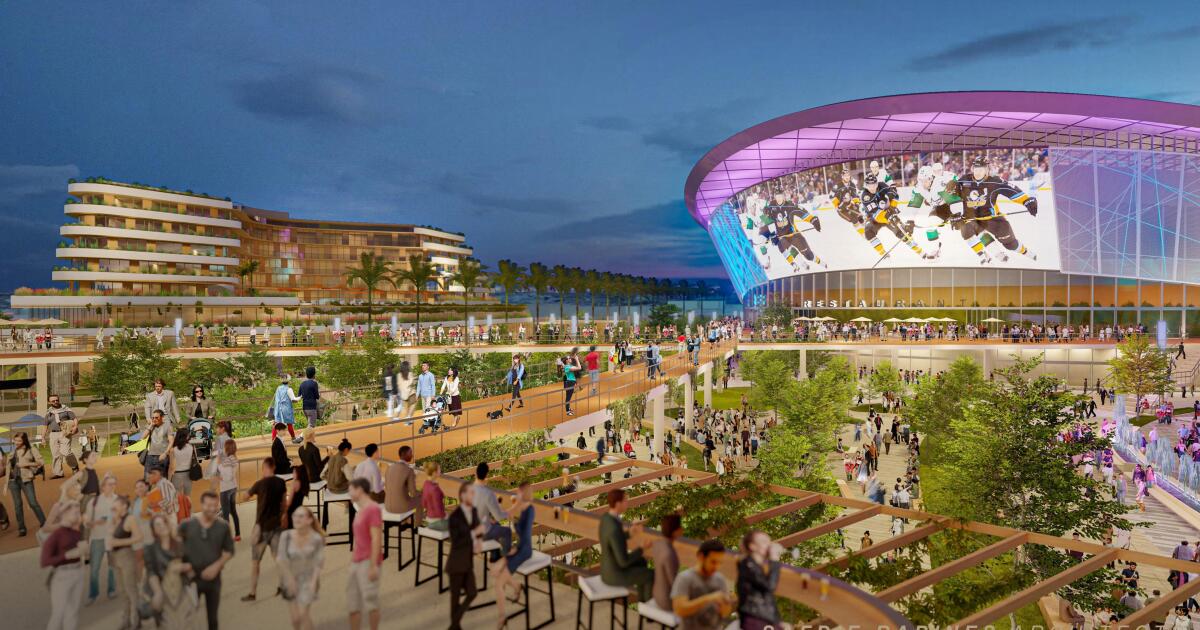
The proposed project will replace the decades-old Pechanga Arena, and includes a new 16,000-seat facility, 4,254 homes, including up to 2,000 affordable units, and commercial and outdoor space. The site is south of Mission Bay.
Weber Pierson sought the environmental exemption in the final weeks of the legislative session through a process called “gut and amend,” which allows a lawmaker to completely rewrite a bill and avoid the normal process of having the bill reviewed by legislative committees during public hearings.
Her bill, Senate Bill 344, deems Midway Rising in full compliance with the state’s landmark California Environmental Quality Act, known was CEQA. The act, adopted in 1970, has been credited for protecting California’s natural resources and minimizing pollution. It also has been criticized for sometimes being weaponized by opponents of a project, including housing developments.
After the state Legislature’s vote, Weber Pierson called the legislation “an important step forward for San Diego and for the future of the Midway District.”
“At a time when families are struggling to find affordable places to live, Midway Rising can deliver much-needed affordable housing, permanent jobs, community spaces, and health resources in a part of our city that is ready for investment,” Weber Pierson said.
Former San Diego Assemblymember Lori Saldaña, a longtime critic of the proposal, called Senate Bill 344 “reckless and rushed” because it didn’t allow the public to weigh in. Saldaña said the site isn’t suitable for development because of sea-level rise that she said is causing street flooding in the area.
Another Weber Pierson bill, Senate Bill 958, states that a project’s increased building height, and any related noise, shadows, or the potential to attract wildlife, shall not be considered significant environmental impacts.
Assemblymember Tasha Boerner (D-Encinitas), who represents the region, expressed frustration with the legislation in a statement on social media.
“If we want to address California’s housing crisis, we need to allow for public scrutiny and the public to sue when appropriate to correct legitimate concerns and mistakes when assessing impacts,” said Boerner, who didn’t vote on either bill.
State lawmakers routinely carve out environmental exemptions for proposed sports stadiums, sometimes in the closing days of the legislative session.
Former Senate leader Darrell Steinberg (D-Sacramento) led his colleagues in passing a bill in 2013 that helped the Sacramento Kings arena by limiting environmental lawsuits. The new arena for the Golden State Warriors basketball team in San Francisco also benefited from CEQA reforms passed by state lawmakers in 2011.
Jeff Meyer, a spokesperson for Midway Rising, said Monday that Weber Pierson’s legislation “provides greater certainty” for the developer.
“At a time when California desperately needs more housing, we should be removing unnecessary delays and turning plans into homes,” Meyer said.
Cathy Kenton, chair of the Midway-Pacific Highway Community Planning Group, which advises the city, said she’s glad to see the proposal move forward.
“The entire community needs revitalization,” she said. “We have tremendous amounts of crime and we have a lack of infrastructure. Everyone is waiting for something to happen.”
SB 344 contained an urgency clause, which allows the legislation to take effect immediately if Gov. Gavin Newsom signs the bill into law.
The San Diego City Council still needs to approve the project.

SACRAMENTO — California state lawmakers on Sunday voted to fast-track a San Diego stadium and housing project by helping it avoid lawsuits over its impacts to the environment.
State Sen. Akilah Weber Pierson (D-La Mesa) led the push for two bills to help Midway Rising, a project backed by Los Angeles Rams owner Stan Kroenke.
The proposed project will replace the decades-old Pechanga Arena, and includes a new 16,000-seat facility, 4,254 homes, including up to 2,000 affordable units, and commercial and outdoor space. The site is south of Mission Bay.
Weber Pierson sought the environmental exemption in the final weeks of the legislative session through a process called “gut and amend,” which allows a lawmaker to completely rewrite a bill and avoid the normal process of having the bill reviewed by legislative committees during public hearings.
Her bill, Senate Bill 344, deems Midway Rising in full compliance with the state’s landmark California Environmental Quality Act, known was CEQA. The act, adopted in 1970, has been credited for protecting California’s natural resources and minimizing pollution. It also has been criticized for sometimes being weaponized by opponents of a project, including housing developments.
After the state Legislature’s vote, Weber Pierson called the legislation “an important step forward for San Diego and for the future of the Midway District.”
“At a time when families are struggling to find affordable places to live, Midway Rising can deliver much-needed affordable housing, permanent jobs, community spaces, and health resources in a part of our city that is ready for investment,” Weber Pierson said.
Former San Diego Assemblymember Lori Saldaña, a longtime critic of the proposal, called Senate Bill 344 “reckless and rushed” because it didn’t allow the public to weigh in. Saldaña said the site isn’t suitable for development because of sea-level rise that she said is causing street flooding in the area.
Another Weber Pierson bill, Senate Bill 958, states that a project’s increased building height, and any related noise, shadows, or the potential to attract wildlife, shall not be considered significant environmental impacts.
Assemblymember Tasha Boerner (D-Encinitas), who represents the region, expressed frustration with the legislation in a statement on social media.
“If we want to address California’s housing crisis, we need to allow for public scrutiny and the public to sue when appropriate to correct legitimate concerns and mistakes when assessing impacts,” said Boerner, who didn’t vote on either bill.
State lawmakers routinely carve out environmental exemptions for proposed sports stadiums, sometimes in the closing days of the legislative session.
Former Senate leader Darrell Steinberg (D-Sacramento) led his colleagues in passing a bill in 2013 that helped the Sacramento Kings arena by limiting environmental lawsuits. The new arena for the Golden State Warriors basketball team in San Francisco also benefited from CEQA reforms passed by state lawmakers in 2011.
Jeff Meyer, a spokesperson for Midway Rising, said Monday that Weber Pierson’s legislation “provides greater certainty” for the developer.
“At a time when California desperately needs more housing, we should be removing unnecessary delays and turning plans into homes,” Meyer said.
Cathy Kenton, chair of the Midway-Pacific Highway Community Planning Group, which advises the city, said she’s glad to see the proposal move forward.
“The entire community needs revitalization,” she said. “We have tremendous amounts of crime and we have a lack of infrastructure. Everyone is waiting for something to happen.”
SB 344 contained an urgency clause, which allows the legislation to take effect immediately if Gov. Gavin Newsom signs the bill into law.
The San Diego City Council still needs to approve the project.

SACRAMENTO — California state lawmakers on Sunday voted to fast-track a San Diego stadium and housing project by helping it avoid lawsuits over its impacts to the environment.
State Sen. Akilah Weber Pierson (D-La Mesa) led the push for two bills to help Midway Rising, a project backed by Los Angeles Rams owner Stan Kroenke.
The proposed project will replace the decades-old Pechanga Arena, and includes a new 16,000-seat facility, 4,254 homes, including up to 2,000 affordable units, and commercial and outdoor space. The site is south of Mission Bay.
Weber Pierson sought the environmental exemption in the final weeks of the legislative session through a process called “gut and amend,” which allows a lawmaker to completely rewrite a bill and avoid the normal process of having the bill reviewed by legislative committees during public hearings.
Her bill, Senate Bill 344, deems Midway Rising in full compliance with the state’s landmark California Environmental Quality Act, known was CEQA. The act, adopted in 1970, has been credited for protecting California’s natural resources and minimizing pollution. It also has been criticized for sometimes being weaponized by opponents of a project, including housing developments.
After the state Legislature’s vote, Weber Pierson called the legislation “an important step forward for San Diego and for the future of the Midway District.”
“At a time when families are struggling to find affordable places to live, Midway Rising can deliver much-needed affordable housing, permanent jobs, community spaces, and health resources in a part of our city that is ready for investment,” Weber Pierson said.
Former San Diego Assemblymember Lori Saldaña, a longtime critic of the proposal, called Senate Bill 344 “reckless and rushed” because it didn’t allow the public to weigh in. Saldaña said the site isn’t suitable for development because of sea-level rise that she said is causing street flooding in the area.
Another Weber Pierson bill, Senate Bill 958, states that a project’s increased building height, and any related noise, shadows, or the potential to attract wildlife, shall not be considered significant environmental impacts.
Assemblymember Tasha Boerner (D-Encinitas), who represents the region, expressed frustration with the legislation in a statement on social media.
“If we want to address California’s housing crisis, we need to allow for public scrutiny and the public to sue when appropriate to correct legitimate concerns and mistakes when assessing impacts,” said Boerner, who didn’t vote on either bill.
State lawmakers routinely carve out environmental exemptions for proposed sports stadiums, sometimes in the closing days of the legislative session.
Former Senate leader Darrell Steinberg (D-Sacramento) led his colleagues in passing a bill in 2013 that helped the Sacramento Kings arena by limiting environmental lawsuits. The new arena for the Golden State Warriors basketball team in San Francisco also benefited from CEQA reforms passed by state lawmakers in 2011.
Jeff Meyer, a spokesperson for Midway Rising, said Monday that Weber Pierson’s legislation “provides greater certainty” for the developer.
“At a time when California desperately needs more housing, we should be removing unnecessary delays and turning plans into homes,” Meyer said.
Cathy Kenton, chair of the Midway-Pacific Highway Community Planning Group, which advises the city, said she’s glad to see the proposal move forward.
“The entire community needs revitalization,” she said. “We have tremendous amounts of crime and we have a lack of infrastructure. Everyone is waiting for something to happen.”
SB 344 contained an urgency clause, which allows the legislation to take effect immediately if Gov. Gavin Newsom signs the bill into law.
The San Diego City Council still needs to approve the project.
SACRAMENTO — California state lawmakers on Sunday voted to fast-track a San Diego stadium and housing project by helping it avoid lawsuits over its impacts to the environment.
State Sen. Akilah Weber Pierson (D-La Mesa) led the push for two bills to help Midway Rising, a project backed by Los Angeles Rams owner Stan Kroenke.
The proposed project will replace the decades-old Pechanga Arena, and includes a new 16,000-seat facility, 4,254 homes, including up to 2,000 affordable units, and commercial and outdoor space. The site is south of Mission Bay.
Weber Pierson sought the environmental exemption in the final weeks of the legislative session through a process called “gut and amend,” which allows a lawmaker to completely rewrite a bill and avoid the normal process of having the bill reviewed by legislative committees during public hearings.
Her bill, Senate Bill 344, deems Midway Rising in full compliance with the state’s landmark California Environmental Quality Act, known was CEQA. The act, adopted in 1970, has been credited for protecting California’s natural resources and minimizing pollution. It also has been criticized for sometimes being weaponized by opponents of a project, including housing developments.
After the state Legislature’s vote, Weber Pierson called the legislation “an important step forward for San Diego and for the future of the Midway District.”
“At a time when families are struggling to find affordable places to live, Midway Rising can deliver much-needed affordable housing, permanent jobs, community spaces, and health resources in a part of our city that is ready for investment,” Weber Pierson said.
Former San Diego Assemblymember Lori Saldaña, a longtime critic of the proposal, called Senate Bill 344 “reckless and rushed” because it didn’t allow the public to weigh in. Saldaña said the site isn’t suitable for development because of sea-level rise that she said is causing street flooding in the area.
Another Weber Pierson bill, Senate Bill 958, states that a project’s increased building height, and any related noise, shadows, or the potential to attract wildlife, shall not be considered significant environmental impacts.
Assemblymember Tasha Boerner (D-Encinitas), who represents the region, expressed frustration with the legislation in a statement on social media.
“If we want to address California’s housing crisis, we need to allow for public scrutiny and the public to sue when appropriate to correct legitimate concerns and mistakes when assessing impacts,” said Boerner, who didn’t vote on either bill.
State lawmakers routinely carve out environmental exemptions for proposed sports stadiums, sometimes in the closing days of the legislative session.
Former Senate leader Darrell Steinberg (D-Sacramento) led his colleagues in passing a bill in 2013 that helped the Sacramento Kings arena by limiting environmental lawsuits. The new arena for the Golden State Warriors basketball team in San Francisco also benefited from CEQA reforms passed by state lawmakers in 2011.
Jeff Meyer, a spokesperson for Midway Rising, said Monday that Weber Pierson’s legislation “provides greater certainty” for the developer.
“At a time when California desperately needs more housing, we should be removing unnecessary delays and turning plans into homes,” Meyer said.
Cathy Kenton, chair of the Midway-Pacific Highway Community Planning Group, which advises the city, said she’s glad to see the proposal move forward.
“The entire community needs revitalization,” she said. “We have tremendous amounts of crime and we have a lack of infrastructure. Everyone is waiting for something to happen.”
SB 344 contained an urgency clause, which allows the legislation to take effect immediately if Gov. Gavin Newsom signs the bill into law.
The San Diego City Council still needs to approve the project.

SACRAMENTO — California state lawmakers on Sunday voted to fast-track a San Diego stadium and housing project by helping it avoid lawsuits over its impacts to the environment.
State Sen. Akilah Weber Pierson (D-La Mesa) led the push for two bills to help Midway Rising, a project backed by Los Angeles Rams owner Stan Kroenke.
The proposed project will replace the decades-old Pechanga Arena, and includes a new 16,000-seat facility, 4,254 homes, including up to 2,000 affordable units, and commercial and outdoor space. The site is south of Mission Bay.
Weber Pierson sought the environmental exemption in the final weeks of the legislative session through a process called “gut and amend,” which allows a lawmaker to completely rewrite a bill and avoid the normal process of having the bill reviewed by legislative committees during public hearings.
Her bill, Senate Bill 344, deems Midway Rising in full compliance with the state’s landmark California Environmental Quality Act, known was CEQA. The act, adopted in 1970, has been credited for protecting California’s natural resources and minimizing pollution. It also has been criticized for sometimes being weaponized by opponents of a project, including housing developments.
After the state Legislature’s vote, Weber Pierson called the legislation “an important step forward for San Diego and for the future of the Midway District.”
“At a time when families are struggling to find affordable places to live, Midway Rising can deliver much-needed affordable housing, permanent jobs, community spaces, and health resources in a part of our city that is ready for investment,” Weber Pierson said.
Former San Diego Assemblymember Lori Saldaña, a longtime critic of the proposal, called Senate Bill 344 “reckless and rushed” because it didn’t allow the public to weigh in. Saldaña said the site isn’t suitable for development because of sea-level rise that she said is causing street flooding in the area.
Another Weber Pierson bill, Senate Bill 958, states that a project’s increased building height, and any related noise, shadows, or the potential to attract wildlife, shall not be considered significant environmental impacts.
Assemblymember Tasha Boerner (D-Encinitas), who represents the region, expressed frustration with the legislation in a statement on social media.
“If we want to address California’s housing crisis, we need to allow for public scrutiny and the public to sue when appropriate to correct legitimate concerns and mistakes when assessing impacts,” said Boerner, who didn’t vote on either bill.
State lawmakers routinely carve out environmental exemptions for proposed sports stadiums, sometimes in the closing days of the legislative session.
Former Senate leader Darrell Steinberg (D-Sacramento) led his colleagues in passing a bill in 2013 that helped the Sacramento Kings arena by limiting environmental lawsuits. The new arena for the Golden State Warriors basketball team in San Francisco also benefited from CEQA reforms passed by state lawmakers in 2011.
Jeff Meyer, a spokesperson for Midway Rising, said Monday that Weber Pierson’s legislation “provides greater certainty” for the developer.
“At a time when California desperately needs more housing, we should be removing unnecessary delays and turning plans into homes,” Meyer said.
Cathy Kenton, chair of the Midway-Pacific Highway Community Planning Group, which advises the city, said she’s glad to see the proposal move forward.
“The entire community needs revitalization,” she said. “We have tremendous amounts of crime and we have a lack of infrastructure. Everyone is waiting for something to happen.”
SB 344 contained an urgency clause, which allows the legislation to take effect immediately if Gov. Gavin Newsom signs the bill into law.
The San Diego City Council still needs to approve the project.
SACRAMENTO — California state lawmakers on Sunday voted to fast-track a San Diego stadium and housing project by helping it avoid lawsuits over its impacts to the environment.
State Sen. Akilah Weber Pierson (D-La Mesa) led the push for two bills to help Midway Rising, a project backed by Los Angeles Rams owner Stan Kroenke.
The proposed project will replace the decades-old Pechanga Arena, and includes a new 16,000-seat facility, 4,254 homes, including up to 2,000 affordable units, and commercial and outdoor space. The site is south of Mission Bay.
Weber Pierson sought the environmental exemption in the final weeks of the legislative session through a process called “gut and amend,” which allows a lawmaker to completely rewrite a bill and avoid the normal process of having the bill reviewed by legislative committees during public hearings.
Her bill, Senate Bill 344, deems Midway Rising in full compliance with the state’s landmark California Environmental Quality Act, known was CEQA. The act, adopted in 1970, has been credited for protecting California’s natural resources and minimizing pollution. It also has been criticized for sometimes being weaponized by opponents of a project, including housing developments.
After the state Legislature’s vote, Weber Pierson called the legislation “an important step forward for San Diego and for the future of the Midway District.”
“At a time when families are struggling to find affordable places to live, Midway Rising can deliver much-needed affordable housing, permanent jobs, community spaces, and health resources in a part of our city that is ready for investment,” Weber Pierson said.
Former San Diego Assemblymember Lori Saldaña, a longtime critic of the proposal, called Senate Bill 344 “reckless and rushed” because it didn’t allow the public to weigh in. Saldaña said the site isn’t suitable for development because of sea-level rise that she said is causing street flooding in the area.
Another Weber Pierson bill, Senate Bill 958, states that a project’s increased building height, and any related noise, shadows, or the potential to attract wildlife, shall not be considered significant environmental impacts.
Assemblymember Tasha Boerner (D-Encinitas), who represents the region, expressed frustration with the legislation in a statement on social media.
“If we want to address California’s housing crisis, we need to allow for public scrutiny and the public to sue when appropriate to correct legitimate concerns and mistakes when assessing impacts,” said Boerner, who didn’t vote on either bill.
State lawmakers routinely carve out environmental exemptions for proposed sports stadiums, sometimes in the closing days of the legislative session.
Former Senate leader Darrell Steinberg (D-Sacramento) led his colleagues in passing a bill in 2013 that helped the Sacramento Kings arena by limiting environmental lawsuits. The new arena for the Golden State Warriors basketball team in San Francisco also benefited from CEQA reforms passed by state lawmakers in 2011.
Jeff Meyer, a spokesperson for Midway Rising, said Monday that Weber Pierson’s legislation “provides greater certainty” for the developer.
“At a time when California desperately needs more housing, we should be removing unnecessary delays and turning plans into homes,” Meyer said.
Cathy Kenton, chair of the Midway-Pacific Highway Community Planning Group, which advises the city, said she’s glad to see the proposal move forward.
“The entire community needs revitalization,” she said. “We have tremendous amounts of crime and we have a lack of infrastructure. Everyone is waiting for something to happen.”
SB 344 contained an urgency clause, which allows the legislation to take effect immediately if Gov. Gavin Newsom signs the bill into law.
The San Diego City Council still needs to approve the project.
SACRAMENTO — California state lawmakers on Sunday voted to fast-track a San Diego stadium and housing project by helping it avoid lawsuits over its impacts to the environment.
State Sen. Akilah Weber Pierson (D-La Mesa) led the push for two bills to help Midway Rising, a project backed by Los Angeles Rams owner Stan Kroenke.
The proposed project will replace the decades-old Pechanga Arena, and includes a new 16,000-seat facility, 4,254 homes, including up to 2,000 affordable units, and commercial and outdoor space. The site is south of Mission Bay.
Weber Pierson sought the environmental exemption in the final weeks of the legislative session through a process called “gut and amend,” which allows a lawmaker to completely rewrite a bill and avoid the normal process of having the bill reviewed by legislative committees during public hearings.
Her bill, Senate Bill 344, deems Midway Rising in full compliance with the state’s landmark California Environmental Quality Act, known was CEQA. The act, adopted in 1970, has been credited for protecting California’s natural resources and minimizing pollution. It also has been criticized for sometimes being weaponized by opponents of a project, including housing developments.
After the state Legislature’s vote, Weber Pierson called the legislation “an important step forward for San Diego and for the future of the Midway District.”
“At a time when families are struggling to find affordable places to live, Midway Rising can deliver much-needed affordable housing, permanent jobs, community spaces, and health resources in a part of our city that is ready for investment,” Weber Pierson said.
Former San Diego Assemblymember Lori Saldaña, a longtime critic of the proposal, called Senate Bill 344 “reckless and rushed” because it didn’t allow the public to weigh in. Saldaña said the site isn’t suitable for development because of sea-level rise that she said is causing street flooding in the area.
Another Weber Pierson bill, Senate Bill 958, states that a project’s increased building height, and any related noise, shadows, or the potential to attract wildlife, shall not be considered significant environmental impacts.
Assemblymember Tasha Boerner (D-Encinitas), who represents the region, expressed frustration with the legislation in a statement on social media.
“If we want to address California’s housing crisis, we need to allow for public scrutiny and the public to sue when appropriate to correct legitimate concerns and mistakes when assessing impacts,” said Boerner, who didn’t vote on either bill.
State lawmakers routinely carve out environmental exemptions for proposed sports stadiums, sometimes in the closing days of the legislative session.
Former Senate leader Darrell Steinberg (D-Sacramento) led his colleagues in passing a bill in 2013 that helped the Sacramento Kings arena by limiting environmental lawsuits. The new arena for the Golden State Warriors basketball team in San Francisco also benefited from CEQA reforms passed by state lawmakers in 2011.
Jeff Meyer, a spokesperson for Midway Rising, said Monday that Weber Pierson’s legislation “provides greater certainty” for the developer.
“At a time when California desperately needs more housing, we should be removing unnecessary delays and turning plans into homes,” Meyer said.
Cathy Kenton, chair of the Midway-Pacific Highway Community Planning Group, which advises the city, said she’s glad to see the proposal move forward.
“The entire community needs revitalization,” she said. “We have tremendous amounts of crime and we have a lack of infrastructure. Everyone is waiting for something to happen.”
SB 344 contained an urgency clause, which allows the legislation to take effect immediately if Gov. Gavin Newsom signs the bill into law.
The San Diego City Council still needs to approve the project.
SACRAMENTO — California state lawmakers on Sunday voted to fast-track a San Diego stadium and housing project by helping it avoid lawsuits over its impacts to the environment.
State Sen. Akilah Weber Pierson (D-La Mesa) led the push for two bills to help Midway Rising, a project backed by Los Angeles Rams owner Stan Kroenke.
The proposed project will replace the decades-old Pechanga Arena, and includes a new 16,000-seat facility, 4,254 homes, including up to 2,000 affordable units, and commercial and outdoor space. The site is south of Mission Bay.
Weber Pierson sought the environmental exemption in the final weeks of the legislative session through a process called “gut and amend,” which allows a lawmaker to completely rewrite a bill and avoid the normal process of having the bill reviewed by legislative committees during public hearings.
Her bill, Senate Bill 344, deems Midway Rising in full compliance with the state’s landmark California Environmental Quality Act, known was CEQA. The act, adopted in 1970, has been credited for protecting California’s natural resources and minimizing pollution. It also has been criticized for sometimes being weaponized by opponents of a project, including housing developments.
After the state Legislature’s vote, Weber Pierson called the legislation “an important step forward for San Diego and for the future of the Midway District.”
“At a time when families are struggling to find affordable places to live, Midway Rising can deliver much-needed affordable housing, permanent jobs, community spaces, and health resources in a part of our city that is ready for investment,” Weber Pierson said.
Former San Diego Assemblymember Lori Saldaña, a longtime critic of the proposal, called Senate Bill 344 “reckless and rushed” because it didn’t allow the public to weigh in. Saldaña said the site isn’t suitable for development because of sea-level rise that she said is causing street flooding in the area.
Another Weber Pierson bill, Senate Bill 958, states that a project’s increased building height, and any related noise, shadows, or the potential to attract wildlife, shall not be considered significant environmental impacts.
Assemblymember Tasha Boerner (D-Encinitas), who represents the region, expressed frustration with the legislation in a statement on social media.
“If we want to address California’s housing crisis, we need to allow for public scrutiny and the public to sue when appropriate to correct legitimate concerns and mistakes when assessing impacts,” said Boerner, who didn’t vote on either bill.
State lawmakers routinely carve out environmental exemptions for proposed sports stadiums, sometimes in the closing days of the legislative session.
Former Senate leader Darrell Steinberg (D-Sacramento) led his colleagues in passing a bill in 2013 that helped the Sacramento Kings arena by limiting environmental lawsuits. The new arena for the Golden State Warriors basketball team in San Francisco also benefited from CEQA reforms passed by state lawmakers in 2011.
Jeff Meyer, a spokesperson for Midway Rising, said Monday that Weber Pierson’s legislation “provides greater certainty” for the developer.
“At a time when California desperately needs more housing, we should be removing unnecessary delays and turning plans into homes,” Meyer said.
Cathy Kenton, chair of the Midway-Pacific Highway Community Planning Group, which advises the city, said she’s glad to see the proposal move forward.
“The entire community needs revitalization,” she said. “We have tremendous amounts of crime and we have a lack of infrastructure. Everyone is waiting for something to happen.”
SB 344 contained an urgency clause, which allows the legislation to take effect immediately if Gov. Gavin Newsom signs the bill into law.
The San Diego City Council still needs to approve the project.

SACRAMENTO — California state lawmakers on Sunday voted to fast-track a San Diego stadium and housing project by helping it avoid lawsuits over its impacts to the environment.
State Sen. Akilah Weber Pierson (D-La Mesa) led the push for two bills to help Midway Rising, a project backed by Los Angeles Rams owner Stan Kroenke.
The proposed project will replace the decades-old Pechanga Arena, and includes a new 16,000-seat facility, 4,254 homes, including up to 2,000 affordable units, and commercial and outdoor space. The site is south of Mission Bay.
Weber Pierson sought the environmental exemption in the final weeks of the legislative session through a process called “gut and amend,” which allows a lawmaker to completely rewrite a bill and avoid the normal process of having the bill reviewed by legislative committees during public hearings.
Her bill, Senate Bill 344, deems Midway Rising in full compliance with the state’s landmark California Environmental Quality Act, known was CEQA. The act, adopted in 1970, has been credited for protecting California’s natural resources and minimizing pollution. It also has been criticized for sometimes being weaponized by opponents of a project, including housing developments.
After the state Legislature’s vote, Weber Pierson called the legislation “an important step forward for San Diego and for the future of the Midway District.”
“At a time when families are struggling to find affordable places to live, Midway Rising can deliver much-needed affordable housing, permanent jobs, community spaces, and health resources in a part of our city that is ready for investment,” Weber Pierson said.
Former San Diego Assemblymember Lori Saldaña, a longtime critic of the proposal, called Senate Bill 344 “reckless and rushed” because it didn’t allow the public to weigh in. Saldaña said the site isn’t suitable for development because of sea-level rise that she said is causing street flooding in the area.
Another Weber Pierson bill, Senate Bill 958, states that a project’s increased building height, and any related noise, shadows, or the potential to attract wildlife, shall not be considered significant environmental impacts.
Assemblymember Tasha Boerner (D-Encinitas), who represents the region, expressed frustration with the legislation in a statement on social media.
“If we want to address California’s housing crisis, we need to allow for public scrutiny and the public to sue when appropriate to correct legitimate concerns and mistakes when assessing impacts,” said Boerner, who didn’t vote on either bill.
State lawmakers routinely carve out environmental exemptions for proposed sports stadiums, sometimes in the closing days of the legislative session.
Former Senate leader Darrell Steinberg (D-Sacramento) led his colleagues in passing a bill in 2013 that helped the Sacramento Kings arena by limiting environmental lawsuits. The new arena for the Golden State Warriors basketball team in San Francisco also benefited from CEQA reforms passed by state lawmakers in 2011.
Jeff Meyer, a spokesperson for Midway Rising, said Monday that Weber Pierson’s legislation “provides greater certainty” for the developer.
“At a time when California desperately needs more housing, we should be removing unnecessary delays and turning plans into homes,” Meyer said.
Cathy Kenton, chair of the Midway-Pacific Highway Community Planning Group, which advises the city, said she’s glad to see the proposal move forward.
“The entire community needs revitalization,” she said. “We have tremendous amounts of crime and we have a lack of infrastructure. Everyone is waiting for something to happen.”
SB 344 contained an urgency clause, which allows the legislation to take effect immediately if Gov. Gavin Newsom signs the bill into law.
The San Diego City Council still needs to approve the project.
SACRAMENTO — California state lawmakers on Sunday voted to fast-track a San Diego stadium and housing project by helping it avoid lawsuits over its impacts to the environment.
State Sen. Akilah Weber Pierson (D-La Mesa) led the push for two bills to help Midway Rising, a project backed by Los Angeles Rams owner Stan Kroenke.
The proposed project will replace the decades-old Pechanga Arena, and includes a new 16,000-seat facility, 4,254 homes, including up to 2,000 affordable units, and commercial and outdoor space. The site is south of Mission Bay.
Weber Pierson sought the environmental exemption in the final weeks of the legislative session through a process called “gut and amend,” which allows a lawmaker to completely rewrite a bill and avoid the normal process of having the bill reviewed by legislative committees during public hearings.
Her bill, Senate Bill 344, deems Midway Rising in full compliance with the state’s landmark California Environmental Quality Act, known was CEQA. The act, adopted in 1970, has been credited for protecting California’s natural resources and minimizing pollution. It also has been criticized for sometimes being weaponized by opponents of a project, including housing developments.
After the state Legislature’s vote, Weber Pierson called the legislation “an important step forward for San Diego and for the future of the Midway District.”
“At a time when families are struggling to find affordable places to live, Midway Rising can deliver much-needed affordable housing, permanent jobs, community spaces, and health resources in a part of our city that is ready for investment,” Weber Pierson said.
Former San Diego Assemblymember Lori Saldaña, a longtime critic of the proposal, called Senate Bill 344 “reckless and rushed” because it didn’t allow the public to weigh in. Saldaña said the site isn’t suitable for development because of sea-level rise that she said is causing street flooding in the area.
Another Weber Pierson bill, Senate Bill 958, states that a project’s increased building height, and any related noise, shadows, or the potential to attract wildlife, shall not be considered significant environmental impacts.
Assemblymember Tasha Boerner (D-Encinitas), who represents the region, expressed frustration with the legislation in a statement on social media.
“If we want to address California’s housing crisis, we need to allow for public scrutiny and the public to sue when appropriate to correct legitimate concerns and mistakes when assessing impacts,” said Boerner, who didn’t vote on either bill.
State lawmakers routinely carve out environmental exemptions for proposed sports stadiums, sometimes in the closing days of the legislative session.
Former Senate leader Darrell Steinberg (D-Sacramento) led his colleagues in passing a bill in 2013 that helped the Sacramento Kings arena by limiting environmental lawsuits. The new arena for the Golden State Warriors basketball team in San Francisco also benefited from CEQA reforms passed by state lawmakers in 2011.
Jeff Meyer, a spokesperson for Midway Rising, said Monday that Weber Pierson’s legislation “provides greater certainty” for the developer.
“At a time when California desperately needs more housing, we should be removing unnecessary delays and turning plans into homes,” Meyer said.
Cathy Kenton, chair of the Midway-Pacific Highway Community Planning Group, which advises the city, said she’s glad to see the proposal move forward.
“The entire community needs revitalization,” she said. “We have tremendous amounts of crime and we have a lack of infrastructure. Everyone is waiting for something to happen.”
SB 344 contained an urgency clause, which allows the legislation to take effect immediately if Gov. Gavin Newsom signs the bill into law.
The San Diego City Council still needs to approve the project.
SACRAMENTO — California state lawmakers on Sunday voted to fast-track a San Diego stadium and housing project by helping it avoid lawsuits over its impacts to the environment.
State Sen. Akilah Weber Pierson (D-La Mesa) led the push for two bills to help Midway Rising, a project backed by Los Angeles Rams owner Stan Kroenke.
The proposed project will replace the decades-old Pechanga Arena, and includes a new 16,000-seat facility, 4,254 homes, including up to 2,000 affordable units, and commercial and outdoor space. The site is south of Mission Bay.
Weber Pierson sought the environmental exemption in the final weeks of the legislative session through a process called “gut and amend,” which allows a lawmaker to completely rewrite a bill and avoid the normal process of having the bill reviewed by legislative committees during public hearings.
Her bill, Senate Bill 344, deems Midway Rising in full compliance with the state’s landmark California Environmental Quality Act, known was CEQA. The act, adopted in 1970, has been credited for protecting California’s natural resources and minimizing pollution. It also has been criticized for sometimes being weaponized by opponents of a project, including housing developments.
After the state Legislature’s vote, Weber Pierson called the legislation “an important step forward for San Diego and for the future of the Midway District.”
“At a time when families are struggling to find affordable places to live, Midway Rising can deliver much-needed affordable housing, permanent jobs, community spaces, and health resources in a part of our city that is ready for investment,” Weber Pierson said.
Former San Diego Assemblymember Lori Saldaña, a longtime critic of the proposal, called Senate Bill 344 “reckless and rushed” because it didn’t allow the public to weigh in. Saldaña said the site isn’t suitable for development because of sea-level rise that she said is causing street flooding in the area.
Another Weber Pierson bill, Senate Bill 958, states that a project’s increased building height, and any related noise, shadows, or the potential to attract wildlife, shall not be considered significant environmental impacts.
Assemblymember Tasha Boerner (D-Encinitas), who represents the region, expressed frustration with the legislation in a statement on social media.
“If we want to address California’s housing crisis, we need to allow for public scrutiny and the public to sue when appropriate to correct legitimate concerns and mistakes when assessing impacts,” said Boerner, who didn’t vote on either bill.
State lawmakers routinely carve out environmental exemptions for proposed sports stadiums, sometimes in the closing days of the legislative session.
Former Senate leader Darrell Steinberg (D-Sacramento) led his colleagues in passing a bill in 2013 that helped the Sacramento Kings arena by limiting environmental lawsuits. The new arena for the Golden State Warriors basketball team in San Francisco also benefited from CEQA reforms passed by state lawmakers in 2011.
Jeff Meyer, a spokesperson for Midway Rising, said Monday that Weber Pierson’s legislation “provides greater certainty” for the developer.
“At a time when California desperately needs more housing, we should be removing unnecessary delays and turning plans into homes,” Meyer said.
Cathy Kenton, chair of the Midway-Pacific Highway Community Planning Group, which advises the city, said she’s glad to see the proposal move forward.
“The entire community needs revitalization,” she said. “We have tremendous amounts of crime and we have a lack of infrastructure. Everyone is waiting for something to happen.”
SB 344 contained an urgency clause, which allows the legislation to take effect immediately if Gov. Gavin Newsom signs the bill into law.
The San Diego City Council still needs to approve the project.
SACRAMENTO — California state lawmakers on Sunday voted to fast-track a San Diego stadium and housing project by helping it avoid lawsuits over its impacts to the environment.
State Sen. Akilah Weber Pierson (D-La Mesa) led the push for two bills to help Midway Rising, a project backed by Los Angeles Rams owner Stan Kroenke.
The proposed project will replace the decades-old Pechanga Arena, and includes a new 16,000-seat facility, 4,254 homes, including up to 2,000 affordable units, and commercial and outdoor space. The site is south of Mission Bay.
Weber Pierson sought the environmental exemption in the final weeks of the legislative session through a process called “gut and amend,” which allows a lawmaker to completely rewrite a bill and avoid the normal process of having the bill reviewed by legislative committees during public hearings.
Her bill, Senate Bill 344, deems Midway Rising in full compliance with the state’s landmark California Environmental Quality Act, known was CEQA. The act, adopted in 1970, has been credited for protecting California’s natural resources and minimizing pollution. It also has been criticized for sometimes being weaponized by opponents of a project, including housing developments.
After the state Legislature’s vote, Weber Pierson called the legislation “an important step forward for San Diego and for the future of the Midway District.”
“At a time when families are struggling to find affordable places to live, Midway Rising can deliver much-needed affordable housing, permanent jobs, community spaces, and health resources in a part of our city that is ready for investment,” Weber Pierson said.
Former San Diego Assemblymember Lori Saldaña, a longtime critic of the proposal, called Senate Bill 344 “reckless and rushed” because it didn’t allow the public to weigh in. Saldaña said the site isn’t suitable for development because of sea-level rise that she said is causing street flooding in the area.
Another Weber Pierson bill, Senate Bill 958, states that a project’s increased building height, and any related noise, shadows, or the potential to attract wildlife, shall not be considered significant environmental impacts.
Assemblymember Tasha Boerner (D-Encinitas), who represents the region, expressed frustration with the legislation in a statement on social media.
“If we want to address California’s housing crisis, we need to allow for public scrutiny and the public to sue when appropriate to correct legitimate concerns and mistakes when assessing impacts,” said Boerner, who didn’t vote on either bill.
State lawmakers routinely carve out environmental exemptions for proposed sports stadiums, sometimes in the closing days of the legislative session.
Former Senate leader Darrell Steinberg (D-Sacramento) led his colleagues in passing a bill in 2013 that helped the Sacramento Kings arena by limiting environmental lawsuits. The new arena for the Golden State Warriors basketball team in San Francisco also benefited from CEQA reforms passed by state lawmakers in 2011.
Jeff Meyer, a spokesperson for Midway Rising, said Monday that Weber Pierson’s legislation “provides greater certainty” for the developer.
“At a time when California desperately needs more housing, we should be removing unnecessary delays and turning plans into homes,” Meyer said.
Cathy Kenton, chair of the Midway-Pacific Highway Community Planning Group, which advises the city, said she’s glad to see the proposal move forward.
“The entire community needs revitalization,” she said. “We have tremendous amounts of crime and we have a lack of infrastructure. Everyone is waiting for something to happen.”
SB 344 contained an urgency clause, which allows the legislation to take effect immediately if Gov. Gavin Newsom signs the bill into law.
The San Diego City Council still needs to approve the project.
SACRAMENTO — California state lawmakers on Sunday voted to fast-track a San Diego stadium and housing project by helping it avoid lawsuits over its impacts to the environment.
State Sen. Akilah Weber Pierson (D-La Mesa) led the push for two bills to help Midway Rising, a project backed by Los Angeles Rams owner Stan Kroenke.
The proposed project will replace the decades-old Pechanga Arena, and includes a new 16,000-seat facility, 4,254 homes, including up to 2,000 affordable units, and commercial and outdoor space. The site is south of Mission Bay.
Weber Pierson sought the environmental exemption in the final weeks of the legislative session through a process called “gut and amend,” which allows a lawmaker to completely rewrite a bill and avoid the normal process of having the bill reviewed by legislative committees during public hearings.
Her bill, Senate Bill 344, deems Midway Rising in full compliance with the state’s landmark California Environmental Quality Act, known was CEQA. The act, adopted in 1970, has been credited for protecting California’s natural resources and minimizing pollution. It also has been criticized for sometimes being weaponized by opponents of a project, including housing developments.
After the state Legislature’s vote, Weber Pierson called the legislation “an important step forward for San Diego and for the future of the Midway District.”
“At a time when families are struggling to find affordable places to live, Midway Rising can deliver much-needed affordable housing, permanent jobs, community spaces, and health resources in a part of our city that is ready for investment,” Weber Pierson said.
Former San Diego Assemblymember Lori Saldaña, a longtime critic of the proposal, called Senate Bill 344 “reckless and rushed” because it didn’t allow the public to weigh in. Saldaña said the site isn’t suitable for development because of sea-level rise that she said is causing street flooding in the area.
Another Weber Pierson bill, Senate Bill 958, states that a project’s increased building height, and any related noise, shadows, or the potential to attract wildlife, shall not be considered significant environmental impacts.
Assemblymember Tasha Boerner (D-Encinitas), who represents the region, expressed frustration with the legislation in a statement on social media.
“If we want to address California’s housing crisis, we need to allow for public scrutiny and the public to sue when appropriate to correct legitimate concerns and mistakes when assessing impacts,” said Boerner, who didn’t vote on either bill.
State lawmakers routinely carve out environmental exemptions for proposed sports stadiums, sometimes in the closing days of the legislative session.
Former Senate leader Darrell Steinberg (D-Sacramento) led his colleagues in passing a bill in 2013 that helped the Sacramento Kings arena by limiting environmental lawsuits. The new arena for the Golden State Warriors basketball team in San Francisco also benefited from CEQA reforms passed by state lawmakers in 2011.
Jeff Meyer, a spokesperson for Midway Rising, said Monday that Weber Pierson’s legislation “provides greater certainty” for the developer.
“At a time when California desperately needs more housing, we should be removing unnecessary delays and turning plans into homes,” Meyer said.
Cathy Kenton, chair of the Midway-Pacific Highway Community Planning Group, which advises the city, said she’s glad to see the proposal move forward.
“The entire community needs revitalization,” she said. “We have tremendous amounts of crime and we have a lack of infrastructure. Everyone is waiting for something to happen.”
SB 344 contained an urgency clause, which allows the legislation to take effect immediately if Gov. Gavin Newsom signs the bill into law.
The San Diego City Council still needs to approve the project.
SACRAMENTO — California state lawmakers on Sunday voted to fast-track a San Diego stadium and housing project by helping it avoid lawsuits over its impacts to the environment.
State Sen. Akilah Weber Pierson (D-La Mesa) led the push for two bills to help Midway Rising, a project backed by Los Angeles Rams owner Stan Kroenke.
The proposed project will replace the decades-old Pechanga Arena, and includes a new 16,000-seat facility, 4,254 homes, including up to 2,000 affordable units, and commercial and outdoor space. The site is south of Mission Bay.
Weber Pierson sought the environmental exemption in the final weeks of the legislative session through a process called “gut and amend,” which allows a lawmaker to completely rewrite a bill and avoid the normal process of having the bill reviewed by legislative committees during public hearings.
Her bill, Senate Bill 344, deems Midway Rising in full compliance with the state’s landmark California Environmental Quality Act, known was CEQA. The act, adopted in 1970, has been credited for protecting California’s natural resources and minimizing pollution. It also has been criticized for sometimes being weaponized by opponents of a project, including housing developments.
After the state Legislature’s vote, Weber Pierson called the legislation “an important step forward for San Diego and for the future of the Midway District.”
“At a time when families are struggling to find affordable places to live, Midway Rising can deliver much-needed affordable housing, permanent jobs, community spaces, and health resources in a part of our city that is ready for investment,” Weber Pierson said.
Former San Diego Assemblymember Lori Saldaña, a longtime critic of the proposal, called Senate Bill 344 “reckless and rushed” because it didn’t allow the public to weigh in. Saldaña said the site isn’t suitable for development because of sea-level rise that she said is causing street flooding in the area.
Another Weber Pierson bill, Senate Bill 958, states that a project’s increased building height, and any related noise, shadows, or the potential to attract wildlife, shall not be considered significant environmental impacts.
Assemblymember Tasha Boerner (D-Encinitas), who represents the region, expressed frustration with the legislation in a statement on social media.
“If we want to address California’s housing crisis, we need to allow for public scrutiny and the public to sue when appropriate to correct legitimate concerns and mistakes when assessing impacts,” said Boerner, who didn’t vote on either bill.
State lawmakers routinely carve out environmental exemptions for proposed sports stadiums, sometimes in the closing days of the legislative session.
Former Senate leader Darrell Steinberg (D-Sacramento) led his colleagues in passing a bill in 2013 that helped the Sacramento Kings arena by limiting environmental lawsuits. The new arena for the Golden State Warriors basketball team in San Francisco also benefited from CEQA reforms passed by state lawmakers in 2011.
Jeff Meyer, a spokesperson for Midway Rising, said Monday that Weber Pierson’s legislation “provides greater certainty” for the developer.
“At a time when California desperately needs more housing, we should be removing unnecessary delays and turning plans into homes,” Meyer said.
Cathy Kenton, chair of the Midway-Pacific Highway Community Planning Group, which advises the city, said she’s glad to see the proposal move forward.
“The entire community needs revitalization,” she said. “We have tremendous amounts of crime and we have a lack of infrastructure. Everyone is waiting for something to happen.”
SB 344 contained an urgency clause, which allows the legislation to take effect immediately if Gov. Gavin Newsom signs the bill into law.
The San Diego City Council still needs to approve the project.
SACRAMENTO — California state lawmakers on Sunday voted to fast-track a San Diego stadium and housing project by helping it avoid lawsuits over its impacts to the environment.
State Sen. Akilah Weber Pierson (D-La Mesa) led the push for two bills to help Midway Rising, a project backed by Los Angeles Rams owner Stan Kroenke.
The proposed project will replace the decades-old Pechanga Arena, and includes a new 16,000-seat facility, 4,254 homes, including up to 2,000 affordable units, and commercial and outdoor space. The site is south of Mission Bay.
Weber Pierson sought the environmental exemption in the final weeks of the legislative session through a process called “gut and amend,” which allows a lawmaker to completely rewrite a bill and avoid the normal process of having the bill reviewed by legislative committees during public hearings.
Her bill, Senate Bill 344, deems Midway Rising in full compliance with the state’s landmark California Environmental Quality Act, known was CEQA. The act, adopted in 1970, has been credited for protecting California’s natural resources and minimizing pollution. It also has been criticized for sometimes being weaponized by opponents of a project, including housing developments.
After the state Legislature’s vote, Weber Pierson called the legislation “an important step forward for San Diego and for the future of the Midway District.”
“At a time when families are struggling to find affordable places to live, Midway Rising can deliver much-needed affordable housing, permanent jobs, community spaces, and health resources in a part of our city that is ready for investment,” Weber Pierson said.
Former San Diego Assemblymember Lori Saldaña, a longtime critic of the proposal, called Senate Bill 344 “reckless and rushed” because it didn’t allow the public to weigh in. Saldaña said the site isn’t suitable for development because of sea-level rise that she said is causing street flooding in the area.
Another Weber Pierson bill, Senate Bill 958, states that a project’s increased building height, and any related noise, shadows, or the potential to attract wildlife, shall not be considered significant environmental impacts.
Assemblymember Tasha Boerner (D-Encinitas), who represents the region, expressed frustration with the legislation in a statement on social media.
“If we want to address California’s housing crisis, we need to allow for public scrutiny and the public to sue when appropriate to correct legitimate concerns and mistakes when assessing impacts,” said Boerner, who didn’t vote on either bill.
State lawmakers routinely carve out environmental exemptions for proposed sports stadiums, sometimes in the closing days of the legislative session.
Former Senate leader Darrell Steinberg (D-Sacramento) led his colleagues in passing a bill in 2013 that helped the Sacramento Kings arena by limiting environmental lawsuits. The new arena for the Golden State Warriors basketball team in San Francisco also benefited from CEQA reforms passed by state lawmakers in 2011.
Jeff Meyer, a spokesperson for Midway Rising, said Monday that Weber Pierson’s legislation “provides greater certainty” for the developer.
“At a time when California desperately needs more housing, we should be removing unnecessary delays and turning plans into homes,” Meyer said.
Cathy Kenton, chair of the Midway-Pacific Highway Community Planning Group, which advises the city, said she’s glad to see the proposal move forward.
“The entire community needs revitalization,” she said. “We have tremendous amounts of crime and we have a lack of infrastructure. Everyone is waiting for something to happen.”
SB 344 contained an urgency clause, which allows the legislation to take effect immediately if Gov. Gavin Newsom signs the bill into law.
The San Diego City Council still needs to approve the project.
SACRAMENTO — California state lawmakers on Sunday voted to fast-track a San Diego stadium and housing project by helping it avoid lawsuits over its impacts to the environment.
State Sen. Akilah Weber Pierson (D-La Mesa) led the push for two bills to help Midway Rising, a project backed by Los Angeles Rams owner Stan Kroenke.
The proposed project will replace the decades-old Pechanga Arena, and includes a new 16,000-seat facility, 4,254 homes, including up to 2,000 affordable units, and commercial and outdoor space. The site is south of Mission Bay.
Weber Pierson sought the environmental exemption in the final weeks of the legislative session through a process called “gut and amend,” which allows a lawmaker to completely rewrite a bill and avoid the normal process of having the bill reviewed by legislative committees during public hearings.
Her bill, Senate Bill 344, deems Midway Rising in full compliance with the state’s landmark California Environmental Quality Act, known was CEQA. The act, adopted in 1970, has been credited for protecting California’s natural resources and minimizing pollution. It also has been criticized for sometimes being weaponized by opponents of a project, including housing developments.
After the state Legislature’s vote, Weber Pierson called the legislation “an important step forward for San Diego and for the future of the Midway District.”
“At a time when families are struggling to find affordable places to live, Midway Rising can deliver much-needed affordable housing, permanent jobs, community spaces, and health resources in a part of our city that is ready for investment,” Weber Pierson said.
Former San Diego Assemblymember Lori Saldaña, a longtime critic of the proposal, called Senate Bill 344 “reckless and rushed” because it didn’t allow the public to weigh in. Saldaña said the site isn’t suitable for development because of sea-level rise that she said is causing street flooding in the area.
Another Weber Pierson bill, Senate Bill 958, states that a project’s increased building height, and any related noise, shadows, or the potential to attract wildlife, shall not be considered significant environmental impacts.
Assemblymember Tasha Boerner (D-Encinitas), who represents the region, expressed frustration with the legislation in a statement on social media.
“If we want to address California’s housing crisis, we need to allow for public scrutiny and the public to sue when appropriate to correct legitimate concerns and mistakes when assessing impacts,” said Boerner, who didn’t vote on either bill.
State lawmakers routinely carve out environmental exemptions for proposed sports stadiums, sometimes in the closing days of the legislative session.
Former Senate leader Darrell Steinberg (D-Sacramento) led his colleagues in passing a bill in 2013 that helped the Sacramento Kings arena by limiting environmental lawsuits. The new arena for the Golden State Warriors basketball team in San Francisco also benefited from CEQA reforms passed by state lawmakers in 2011.
Jeff Meyer, a spokesperson for Midway Rising, said Monday that Weber Pierson’s legislation “provides greater certainty” for the developer.
“At a time when California desperately needs more housing, we should be removing unnecessary delays and turning plans into homes,” Meyer said.
Cathy Kenton, chair of the Midway-Pacific Highway Community Planning Group, which advises the city, said she’s glad to see the proposal move forward.
“The entire community needs revitalization,” she said. “We have tremendous amounts of crime and we have a lack of infrastructure. Everyone is waiting for something to happen.”
SB 344 contained an urgency clause, which allows the legislation to take effect immediately if Gov. Gavin Newsom signs the bill into law.
The San Diego City Council still needs to approve the project.

