

South Korea’s transport minister Park Sang-woo said on Tuesday that he intends to step down from his position to take responsibility for the deadly crash of Jeju Air’s Boeing jet on December 29, which killed 179 people on board.
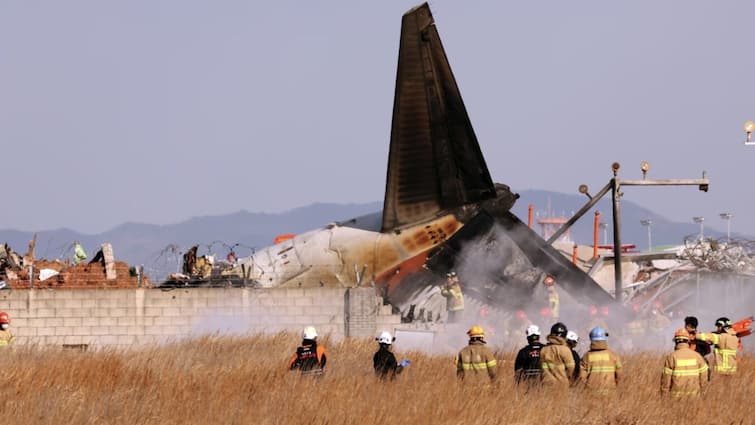
Jeju Air 7C2216 exploded into flames after overshoting the airport’s runway following a belly-landing and hitting an embankment. The plane had departed Thailand’s capital of Bangkok for Muan in southwestern South Korea.
During a press briefing, Park Sang-woo said, “I feel heavy responsibility for this disaster,” and that he will try to find the right time to resign after the ongoing situation is addressed properly, news agecy Reuters reported.
The transport ministry also stated that it will take all necessary measures to ensure the safety of airport landing systems is improved, which the experts said contributed to the catastrophic accident.
According to the safety experts, the embankment which is designed to prop up the “localizer” antenna in case of poor visibility during landing, was too rigid and too close to the runway’s end.
South Korea’s deputy transport minister for civil aviation, Joo Jong-wan, also acknowledged that the safety measures at the airport were insufficient when embankment was being built. However, he added that it was done as per regulations in Korea and overseas and that the police are now investigating how the embankment was built, the report said.
Last week, the police raided Jeju Air and the operator of Muan International Airport. During the investigation, feathers were found on one of the engines recovered from the crash site, the lead investigator Lee Seung-yeol said. He also stated that video footage showed the one of the engines was hit by a bird.
In another development, two Korean investigators left for the United States to work with the U.S. National Transportation Safety Board and recover and analyse a damaged flight data recorder, which contains key information about the crash.
It is likely to take around three days to extract files from the flight data recorder, follwed by another two days to conduct a preliminary analysis of the basic information including whether more than one engines failed.
As of now it is unclear why the landing gear was not deployed by the aircraft and what caused the pilot to rush into a second landing attempt after telling air traffic control that the plane had suffered a bird strike and also declaring an emergency, the report said.
ALSO READ| Video: Smoke Pours Out From Gaping Hole As Plane Crashes Into Warehouse In California, 2 Dead

South Korea’s transport minister Park Sang-woo said on Tuesday that he intends to step down from his position to take responsibility for the deadly crash of Jeju Air’s Boeing jet on December 29, which killed 179 people on board.
Jeju Air 7C2216 exploded into flames after overshoting the airport’s runway following a belly-landing and hitting an embankment. The plane had departed Thailand’s capital of Bangkok for Muan in southwestern South Korea.
During a press briefing, Park Sang-woo said, “I feel heavy responsibility for this disaster,” and that he will try to find the right time to resign after the ongoing situation is addressed properly, news agecy Reuters reported.
The transport ministry also stated that it will take all necessary measures to ensure the safety of airport landing systems is improved, which the experts said contributed to the catastrophic accident.
According to the safety experts, the embankment which is designed to prop up the “localizer” antenna in case of poor visibility during landing, was too rigid and too close to the runway’s end.
South Korea’s deputy transport minister for civil aviation, Joo Jong-wan, also acknowledged that the safety measures at the airport were insufficient when embankment was being built. However, he added that it was done as per regulations in Korea and overseas and that the police are now investigating how the embankment was built, the report said.
Last week, the police raided Jeju Air and the operator of Muan International Airport. During the investigation, feathers were found on one of the engines recovered from the crash site, the lead investigator Lee Seung-yeol said. He also stated that video footage showed the one of the engines was hit by a bird.
In another development, two Korean investigators left for the United States to work with the U.S. National Transportation Safety Board and recover and analyse a damaged flight data recorder, which contains key information about the crash.
It is likely to take around three days to extract files from the flight data recorder, follwed by another two days to conduct a preliminary analysis of the basic information including whether more than one engines failed.
As of now it is unclear why the landing gear was not deployed by the aircraft and what caused the pilot to rush into a second landing attempt after telling air traffic control that the plane had suffered a bird strike and also declaring an emergency, the report said.
ALSO READ| Video: Smoke Pours Out From Gaping Hole As Plane Crashes Into Warehouse In California, 2 Dead

South Korea’s transport minister Park Sang-woo said on Tuesday that he intends to step down from his position to take responsibility for the deadly crash of Jeju Air’s Boeing jet on December 29, which killed 179 people on board.
Jeju Air 7C2216 exploded into flames after overshoting the airport’s runway following a belly-landing and hitting an embankment. The plane had departed Thailand’s capital of Bangkok for Muan in southwestern South Korea.
During a press briefing, Park Sang-woo said, “I feel heavy responsibility for this disaster,” and that he will try to find the right time to resign after the ongoing situation is addressed properly, news agecy Reuters reported.
The transport ministry also stated that it will take all necessary measures to ensure the safety of airport landing systems is improved, which the experts said contributed to the catastrophic accident.
According to the safety experts, the embankment which is designed to prop up the “localizer” antenna in case of poor visibility during landing, was too rigid and too close to the runway’s end.
South Korea’s deputy transport minister for civil aviation, Joo Jong-wan, also acknowledged that the safety measures at the airport were insufficient when embankment was being built. However, he added that it was done as per regulations in Korea and overseas and that the police are now investigating how the embankment was built, the report said.
Last week, the police raided Jeju Air and the operator of Muan International Airport. During the investigation, feathers were found on one of the engines recovered from the crash site, the lead investigator Lee Seung-yeol said. He also stated that video footage showed the one of the engines was hit by a bird.
In another development, two Korean investigators left for the United States to work with the U.S. National Transportation Safety Board and recover and analyse a damaged flight data recorder, which contains key information about the crash.
It is likely to take around three days to extract files from the flight data recorder, follwed by another two days to conduct a preliminary analysis of the basic information including whether more than one engines failed.
As of now it is unclear why the landing gear was not deployed by the aircraft and what caused the pilot to rush into a second landing attempt after telling air traffic control that the plane had suffered a bird strike and also declaring an emergency, the report said.
ALSO READ| Video: Smoke Pours Out From Gaping Hole As Plane Crashes Into Warehouse In California, 2 Dead
South Korea’s transport minister Park Sang-woo said on Tuesday that he intends to step down from his position to take responsibility for the deadly crash of Jeju Air’s Boeing jet on December 29, which killed 179 people on board.
Jeju Air 7C2216 exploded into flames after overshoting the airport’s runway following a belly-landing and hitting an embankment. The plane had departed Thailand’s capital of Bangkok for Muan in southwestern South Korea.
During a press briefing, Park Sang-woo said, “I feel heavy responsibility for this disaster,” and that he will try to find the right time to resign after the ongoing situation is addressed properly, news agecy Reuters reported.
The transport ministry also stated that it will take all necessary measures to ensure the safety of airport landing systems is improved, which the experts said contributed to the catastrophic accident.
According to the safety experts, the embankment which is designed to prop up the “localizer” antenna in case of poor visibility during landing, was too rigid and too close to the runway’s end.
South Korea’s deputy transport minister for civil aviation, Joo Jong-wan, also acknowledged that the safety measures at the airport were insufficient when embankment was being built. However, he added that it was done as per regulations in Korea and overseas and that the police are now investigating how the embankment was built, the report said.
Last week, the police raided Jeju Air and the operator of Muan International Airport. During the investigation, feathers were found on one of the engines recovered from the crash site, the lead investigator Lee Seung-yeol said. He also stated that video footage showed the one of the engines was hit by a bird.
In another development, two Korean investigators left for the United States to work with the U.S. National Transportation Safety Board and recover and analyse a damaged flight data recorder, which contains key information about the crash.
It is likely to take around three days to extract files from the flight data recorder, follwed by another two days to conduct a preliminary analysis of the basic information including whether more than one engines failed.
As of now it is unclear why the landing gear was not deployed by the aircraft and what caused the pilot to rush into a second landing attempt after telling air traffic control that the plane had suffered a bird strike and also declaring an emergency, the report said.
ALSO READ| Video: Smoke Pours Out From Gaping Hole As Plane Crashes Into Warehouse In California, 2 Dead

South Korea’s transport minister Park Sang-woo said on Tuesday that he intends to step down from his position to take responsibility for the deadly crash of Jeju Air’s Boeing jet on December 29, which killed 179 people on board.
Jeju Air 7C2216 exploded into flames after overshoting the airport’s runway following a belly-landing and hitting an embankment. The plane had departed Thailand’s capital of Bangkok for Muan in southwestern South Korea.
During a press briefing, Park Sang-woo said, “I feel heavy responsibility for this disaster,” and that he will try to find the right time to resign after the ongoing situation is addressed properly, news agecy Reuters reported.
The transport ministry also stated that it will take all necessary measures to ensure the safety of airport landing systems is improved, which the experts said contributed to the catastrophic accident.
According to the safety experts, the embankment which is designed to prop up the “localizer” antenna in case of poor visibility during landing, was too rigid and too close to the runway’s end.
South Korea’s deputy transport minister for civil aviation, Joo Jong-wan, also acknowledged that the safety measures at the airport were insufficient when embankment was being built. However, he added that it was done as per regulations in Korea and overseas and that the police are now investigating how the embankment was built, the report said.
Last week, the police raided Jeju Air and the operator of Muan International Airport. During the investigation, feathers were found on one of the engines recovered from the crash site, the lead investigator Lee Seung-yeol said. He also stated that video footage showed the one of the engines was hit by a bird.
In another development, two Korean investigators left for the United States to work with the U.S. National Transportation Safety Board and recover and analyse a damaged flight data recorder, which contains key information about the crash.
It is likely to take around three days to extract files from the flight data recorder, follwed by another two days to conduct a preliminary analysis of the basic information including whether more than one engines failed.
As of now it is unclear why the landing gear was not deployed by the aircraft and what caused the pilot to rush into a second landing attempt after telling air traffic control that the plane had suffered a bird strike and also declaring an emergency, the report said.
ALSO READ| Video: Smoke Pours Out From Gaping Hole As Plane Crashes Into Warehouse In California, 2 Dead
South Korea’s transport minister Park Sang-woo said on Tuesday that he intends to step down from his position to take responsibility for the deadly crash of Jeju Air’s Boeing jet on December 29, which killed 179 people on board.
Jeju Air 7C2216 exploded into flames after overshoting the airport’s runway following a belly-landing and hitting an embankment. The plane had departed Thailand’s capital of Bangkok for Muan in southwestern South Korea.
During a press briefing, Park Sang-woo said, “I feel heavy responsibility for this disaster,” and that he will try to find the right time to resign after the ongoing situation is addressed properly, news agecy Reuters reported.
The transport ministry also stated that it will take all necessary measures to ensure the safety of airport landing systems is improved, which the experts said contributed to the catastrophic accident.
According to the safety experts, the embankment which is designed to prop up the “localizer” antenna in case of poor visibility during landing, was too rigid and too close to the runway’s end.
South Korea’s deputy transport minister for civil aviation, Joo Jong-wan, also acknowledged that the safety measures at the airport were insufficient when embankment was being built. However, he added that it was done as per regulations in Korea and overseas and that the police are now investigating how the embankment was built, the report said.
Last week, the police raided Jeju Air and the operator of Muan International Airport. During the investigation, feathers were found on one of the engines recovered from the crash site, the lead investigator Lee Seung-yeol said. He also stated that video footage showed the one of the engines was hit by a bird.
In another development, two Korean investigators left for the United States to work with the U.S. National Transportation Safety Board and recover and analyse a damaged flight data recorder, which contains key information about the crash.
It is likely to take around three days to extract files from the flight data recorder, follwed by another two days to conduct a preliminary analysis of the basic information including whether more than one engines failed.
As of now it is unclear why the landing gear was not deployed by the aircraft and what caused the pilot to rush into a second landing attempt after telling air traffic control that the plane had suffered a bird strike and also declaring an emergency, the report said.
ALSO READ| Video: Smoke Pours Out From Gaping Hole As Plane Crashes Into Warehouse In California, 2 Dead
South Korea’s transport minister Park Sang-woo said on Tuesday that he intends to step down from his position to take responsibility for the deadly crash of Jeju Air’s Boeing jet on December 29, which killed 179 people on board.
Jeju Air 7C2216 exploded into flames after overshoting the airport’s runway following a belly-landing and hitting an embankment. The plane had departed Thailand’s capital of Bangkok for Muan in southwestern South Korea.
During a press briefing, Park Sang-woo said, “I feel heavy responsibility for this disaster,” and that he will try to find the right time to resign after the ongoing situation is addressed properly, news agecy Reuters reported.
The transport ministry also stated that it will take all necessary measures to ensure the safety of airport landing systems is improved, which the experts said contributed to the catastrophic accident.
According to the safety experts, the embankment which is designed to prop up the “localizer” antenna in case of poor visibility during landing, was too rigid and too close to the runway’s end.
South Korea’s deputy transport minister for civil aviation, Joo Jong-wan, also acknowledged that the safety measures at the airport were insufficient when embankment was being built. However, he added that it was done as per regulations in Korea and overseas and that the police are now investigating how the embankment was built, the report said.
Last week, the police raided Jeju Air and the operator of Muan International Airport. During the investigation, feathers were found on one of the engines recovered from the crash site, the lead investigator Lee Seung-yeol said. He also stated that video footage showed the one of the engines was hit by a bird.
In another development, two Korean investigators left for the United States to work with the U.S. National Transportation Safety Board and recover and analyse a damaged flight data recorder, which contains key information about the crash.
It is likely to take around three days to extract files from the flight data recorder, follwed by another two days to conduct a preliminary analysis of the basic information including whether more than one engines failed.
As of now it is unclear why the landing gear was not deployed by the aircraft and what caused the pilot to rush into a second landing attempt after telling air traffic control that the plane had suffered a bird strike and also declaring an emergency, the report said.
ALSO READ| Video: Smoke Pours Out From Gaping Hole As Plane Crashes Into Warehouse In California, 2 Dead
South Korea’s transport minister Park Sang-woo said on Tuesday that he intends to step down from his position to take responsibility for the deadly crash of Jeju Air’s Boeing jet on December 29, which killed 179 people on board.
Jeju Air 7C2216 exploded into flames after overshoting the airport’s runway following a belly-landing and hitting an embankment. The plane had departed Thailand’s capital of Bangkok for Muan in southwestern South Korea.
During a press briefing, Park Sang-woo said, “I feel heavy responsibility for this disaster,” and that he will try to find the right time to resign after the ongoing situation is addressed properly, news agecy Reuters reported.
The transport ministry also stated that it will take all necessary measures to ensure the safety of airport landing systems is improved, which the experts said contributed to the catastrophic accident.
According to the safety experts, the embankment which is designed to prop up the “localizer” antenna in case of poor visibility during landing, was too rigid and too close to the runway’s end.
South Korea’s deputy transport minister for civil aviation, Joo Jong-wan, also acknowledged that the safety measures at the airport were insufficient when embankment was being built. However, he added that it was done as per regulations in Korea and overseas and that the police are now investigating how the embankment was built, the report said.
Last week, the police raided Jeju Air and the operator of Muan International Airport. During the investigation, feathers were found on one of the engines recovered from the crash site, the lead investigator Lee Seung-yeol said. He also stated that video footage showed the one of the engines was hit by a bird.
In another development, two Korean investigators left for the United States to work with the U.S. National Transportation Safety Board and recover and analyse a damaged flight data recorder, which contains key information about the crash.
It is likely to take around three days to extract files from the flight data recorder, follwed by another two days to conduct a preliminary analysis of the basic information including whether more than one engines failed.
As of now it is unclear why the landing gear was not deployed by the aircraft and what caused the pilot to rush into a second landing attempt after telling air traffic control that the plane had suffered a bird strike and also declaring an emergency, the report said.
ALSO READ| Video: Smoke Pours Out From Gaping Hole As Plane Crashes Into Warehouse In California, 2 Dead

South Korea’s transport minister Park Sang-woo said on Tuesday that he intends to step down from his position to take responsibility for the deadly crash of Jeju Air’s Boeing jet on December 29, which killed 179 people on board.
Jeju Air 7C2216 exploded into flames after overshoting the airport’s runway following a belly-landing and hitting an embankment. The plane had departed Thailand’s capital of Bangkok for Muan in southwestern South Korea.
During a press briefing, Park Sang-woo said, “I feel heavy responsibility for this disaster,” and that he will try to find the right time to resign after the ongoing situation is addressed properly, news agecy Reuters reported.
The transport ministry also stated that it will take all necessary measures to ensure the safety of airport landing systems is improved, which the experts said contributed to the catastrophic accident.
According to the safety experts, the embankment which is designed to prop up the “localizer” antenna in case of poor visibility during landing, was too rigid and too close to the runway’s end.
South Korea’s deputy transport minister for civil aviation, Joo Jong-wan, also acknowledged that the safety measures at the airport were insufficient when embankment was being built. However, he added that it was done as per regulations in Korea and overseas and that the police are now investigating how the embankment was built, the report said.
Last week, the police raided Jeju Air and the operator of Muan International Airport. During the investigation, feathers were found on one of the engines recovered from the crash site, the lead investigator Lee Seung-yeol said. He also stated that video footage showed the one of the engines was hit by a bird.
In another development, two Korean investigators left for the United States to work with the U.S. National Transportation Safety Board and recover and analyse a damaged flight data recorder, which contains key information about the crash.
It is likely to take around three days to extract files from the flight data recorder, follwed by another two days to conduct a preliminary analysis of the basic information including whether more than one engines failed.
As of now it is unclear why the landing gear was not deployed by the aircraft and what caused the pilot to rush into a second landing attempt after telling air traffic control that the plane had suffered a bird strike and also declaring an emergency, the report said.
ALSO READ| Video: Smoke Pours Out From Gaping Hole As Plane Crashes Into Warehouse In California, 2 Dead
South Korea’s transport minister Park Sang-woo said on Tuesday that he intends to step down from his position to take responsibility for the deadly crash of Jeju Air’s Boeing jet on December 29, which killed 179 people on board.
Jeju Air 7C2216 exploded into flames after overshoting the airport’s runway following a belly-landing and hitting an embankment. The plane had departed Thailand’s capital of Bangkok for Muan in southwestern South Korea.
During a press briefing, Park Sang-woo said, “I feel heavy responsibility for this disaster,” and that he will try to find the right time to resign after the ongoing situation is addressed properly, news agecy Reuters reported.
The transport ministry also stated that it will take all necessary measures to ensure the safety of airport landing systems is improved, which the experts said contributed to the catastrophic accident.
According to the safety experts, the embankment which is designed to prop up the “localizer” antenna in case of poor visibility during landing, was too rigid and too close to the runway’s end.
South Korea’s deputy transport minister for civil aviation, Joo Jong-wan, also acknowledged that the safety measures at the airport were insufficient when embankment was being built. However, he added that it was done as per regulations in Korea and overseas and that the police are now investigating how the embankment was built, the report said.
Last week, the police raided Jeju Air and the operator of Muan International Airport. During the investigation, feathers were found on one of the engines recovered from the crash site, the lead investigator Lee Seung-yeol said. He also stated that video footage showed the one of the engines was hit by a bird.
In another development, two Korean investigators left for the United States to work with the U.S. National Transportation Safety Board and recover and analyse a damaged flight data recorder, which contains key information about the crash.
It is likely to take around three days to extract files from the flight data recorder, follwed by another two days to conduct a preliminary analysis of the basic information including whether more than one engines failed.
As of now it is unclear why the landing gear was not deployed by the aircraft and what caused the pilot to rush into a second landing attempt after telling air traffic control that the plane had suffered a bird strike and also declaring an emergency, the report said.
ALSO READ| Video: Smoke Pours Out From Gaping Hole As Plane Crashes Into Warehouse In California, 2 Dead
South Korea’s transport minister Park Sang-woo said on Tuesday that he intends to step down from his position to take responsibility for the deadly crash of Jeju Air’s Boeing jet on December 29, which killed 179 people on board.
Jeju Air 7C2216 exploded into flames after overshoting the airport’s runway following a belly-landing and hitting an embankment. The plane had departed Thailand’s capital of Bangkok for Muan in southwestern South Korea.
During a press briefing, Park Sang-woo said, “I feel heavy responsibility for this disaster,” and that he will try to find the right time to resign after the ongoing situation is addressed properly, news agecy Reuters reported.
The transport ministry also stated that it will take all necessary measures to ensure the safety of airport landing systems is improved, which the experts said contributed to the catastrophic accident.
According to the safety experts, the embankment which is designed to prop up the “localizer” antenna in case of poor visibility during landing, was too rigid and too close to the runway’s end.
South Korea’s deputy transport minister for civil aviation, Joo Jong-wan, also acknowledged that the safety measures at the airport were insufficient when embankment was being built. However, he added that it was done as per regulations in Korea and overseas and that the police are now investigating how the embankment was built, the report said.
Last week, the police raided Jeju Air and the operator of Muan International Airport. During the investigation, feathers were found on one of the engines recovered from the crash site, the lead investigator Lee Seung-yeol said. He also stated that video footage showed the one of the engines was hit by a bird.
In another development, two Korean investigators left for the United States to work with the U.S. National Transportation Safety Board and recover and analyse a damaged flight data recorder, which contains key information about the crash.
It is likely to take around three days to extract files from the flight data recorder, follwed by another two days to conduct a preliminary analysis of the basic information including whether more than one engines failed.
As of now it is unclear why the landing gear was not deployed by the aircraft and what caused the pilot to rush into a second landing attempt after telling air traffic control that the plane had suffered a bird strike and also declaring an emergency, the report said.
ALSO READ| Video: Smoke Pours Out From Gaping Hole As Plane Crashes Into Warehouse In California, 2 Dead
South Korea’s transport minister Park Sang-woo said on Tuesday that he intends to step down from his position to take responsibility for the deadly crash of Jeju Air’s Boeing jet on December 29, which killed 179 people on board.
Jeju Air 7C2216 exploded into flames after overshoting the airport’s runway following a belly-landing and hitting an embankment. The plane had departed Thailand’s capital of Bangkok for Muan in southwestern South Korea.
During a press briefing, Park Sang-woo said, “I feel heavy responsibility for this disaster,” and that he will try to find the right time to resign after the ongoing situation is addressed properly, news agecy Reuters reported.
The transport ministry also stated that it will take all necessary measures to ensure the safety of airport landing systems is improved, which the experts said contributed to the catastrophic accident.
According to the safety experts, the embankment which is designed to prop up the “localizer” antenna in case of poor visibility during landing, was too rigid and too close to the runway’s end.
South Korea’s deputy transport minister for civil aviation, Joo Jong-wan, also acknowledged that the safety measures at the airport were insufficient when embankment was being built. However, he added that it was done as per regulations in Korea and overseas and that the police are now investigating how the embankment was built, the report said.
Last week, the police raided Jeju Air and the operator of Muan International Airport. During the investigation, feathers were found on one of the engines recovered from the crash site, the lead investigator Lee Seung-yeol said. He also stated that video footage showed the one of the engines was hit by a bird.
In another development, two Korean investigators left for the United States to work with the U.S. National Transportation Safety Board and recover and analyse a damaged flight data recorder, which contains key information about the crash.
It is likely to take around three days to extract files from the flight data recorder, follwed by another two days to conduct a preliminary analysis of the basic information including whether more than one engines failed.
As of now it is unclear why the landing gear was not deployed by the aircraft and what caused the pilot to rush into a second landing attempt after telling air traffic control that the plane had suffered a bird strike and also declaring an emergency, the report said.
ALSO READ| Video: Smoke Pours Out From Gaping Hole As Plane Crashes Into Warehouse In California, 2 Dead
South Korea’s transport minister Park Sang-woo said on Tuesday that he intends to step down from his position to take responsibility for the deadly crash of Jeju Air’s Boeing jet on December 29, which killed 179 people on board.
Jeju Air 7C2216 exploded into flames after overshoting the airport’s runway following a belly-landing and hitting an embankment. The plane had departed Thailand’s capital of Bangkok for Muan in southwestern South Korea.
During a press briefing, Park Sang-woo said, “I feel heavy responsibility for this disaster,” and that he will try to find the right time to resign after the ongoing situation is addressed properly, news agecy Reuters reported.
The transport ministry also stated that it will take all necessary measures to ensure the safety of airport landing systems is improved, which the experts said contributed to the catastrophic accident.
According to the safety experts, the embankment which is designed to prop up the “localizer” antenna in case of poor visibility during landing, was too rigid and too close to the runway’s end.
South Korea’s deputy transport minister for civil aviation, Joo Jong-wan, also acknowledged that the safety measures at the airport were insufficient when embankment was being built. However, he added that it was done as per regulations in Korea and overseas and that the police are now investigating how the embankment was built, the report said.
Last week, the police raided Jeju Air and the operator of Muan International Airport. During the investigation, feathers were found on one of the engines recovered from the crash site, the lead investigator Lee Seung-yeol said. He also stated that video footage showed the one of the engines was hit by a bird.
In another development, two Korean investigators left for the United States to work with the U.S. National Transportation Safety Board and recover and analyse a damaged flight data recorder, which contains key information about the crash.
It is likely to take around three days to extract files from the flight data recorder, follwed by another two days to conduct a preliminary analysis of the basic information including whether more than one engines failed.
As of now it is unclear why the landing gear was not deployed by the aircraft and what caused the pilot to rush into a second landing attempt after telling air traffic control that the plane had suffered a bird strike and also declaring an emergency, the report said.
ALSO READ| Video: Smoke Pours Out From Gaping Hole As Plane Crashes Into Warehouse In California, 2 Dead
South Korea’s transport minister Park Sang-woo said on Tuesday that he intends to step down from his position to take responsibility for the deadly crash of Jeju Air’s Boeing jet on December 29, which killed 179 people on board.
Jeju Air 7C2216 exploded into flames after overshoting the airport’s runway following a belly-landing and hitting an embankment. The plane had departed Thailand’s capital of Bangkok for Muan in southwestern South Korea.
During a press briefing, Park Sang-woo said, “I feel heavy responsibility for this disaster,” and that he will try to find the right time to resign after the ongoing situation is addressed properly, news agecy Reuters reported.
The transport ministry also stated that it will take all necessary measures to ensure the safety of airport landing systems is improved, which the experts said contributed to the catastrophic accident.
According to the safety experts, the embankment which is designed to prop up the “localizer” antenna in case of poor visibility during landing, was too rigid and too close to the runway’s end.
South Korea’s deputy transport minister for civil aviation, Joo Jong-wan, also acknowledged that the safety measures at the airport were insufficient when embankment was being built. However, he added that it was done as per regulations in Korea and overseas and that the police are now investigating how the embankment was built, the report said.
Last week, the police raided Jeju Air and the operator of Muan International Airport. During the investigation, feathers were found on one of the engines recovered from the crash site, the lead investigator Lee Seung-yeol said. He also stated that video footage showed the one of the engines was hit by a bird.
In another development, two Korean investigators left for the United States to work with the U.S. National Transportation Safety Board and recover and analyse a damaged flight data recorder, which contains key information about the crash.
It is likely to take around three days to extract files from the flight data recorder, follwed by another two days to conduct a preliminary analysis of the basic information including whether more than one engines failed.
As of now it is unclear why the landing gear was not deployed by the aircraft and what caused the pilot to rush into a second landing attempt after telling air traffic control that the plane had suffered a bird strike and also declaring an emergency, the report said.
ALSO READ| Video: Smoke Pours Out From Gaping Hole As Plane Crashes Into Warehouse In California, 2 Dead
South Korea’s transport minister Park Sang-woo said on Tuesday that he intends to step down from his position to take responsibility for the deadly crash of Jeju Air’s Boeing jet on December 29, which killed 179 people on board.
Jeju Air 7C2216 exploded into flames after overshoting the airport’s runway following a belly-landing and hitting an embankment. The plane had departed Thailand’s capital of Bangkok for Muan in southwestern South Korea.
During a press briefing, Park Sang-woo said, “I feel heavy responsibility for this disaster,” and that he will try to find the right time to resign after the ongoing situation is addressed properly, news agecy Reuters reported.
The transport ministry also stated that it will take all necessary measures to ensure the safety of airport landing systems is improved, which the experts said contributed to the catastrophic accident.
According to the safety experts, the embankment which is designed to prop up the “localizer” antenna in case of poor visibility during landing, was too rigid and too close to the runway’s end.
South Korea’s deputy transport minister for civil aviation, Joo Jong-wan, also acknowledged that the safety measures at the airport were insufficient when embankment was being built. However, he added that it was done as per regulations in Korea and overseas and that the police are now investigating how the embankment was built, the report said.
Last week, the police raided Jeju Air and the operator of Muan International Airport. During the investigation, feathers were found on one of the engines recovered from the crash site, the lead investigator Lee Seung-yeol said. He also stated that video footage showed the one of the engines was hit by a bird.
In another development, two Korean investigators left for the United States to work with the U.S. National Transportation Safety Board and recover and analyse a damaged flight data recorder, which contains key information about the crash.
It is likely to take around three days to extract files from the flight data recorder, follwed by another two days to conduct a preliminary analysis of the basic information including whether more than one engines failed.
As of now it is unclear why the landing gear was not deployed by the aircraft and what caused the pilot to rush into a second landing attempt after telling air traffic control that the plane had suffered a bird strike and also declaring an emergency, the report said.
ALSO READ| Video: Smoke Pours Out From Gaping Hole As Plane Crashes Into Warehouse In California, 2 Dead
South Korea’s transport minister Park Sang-woo said on Tuesday that he intends to step down from his position to take responsibility for the deadly crash of Jeju Air’s Boeing jet on December 29, which killed 179 people on board.
Jeju Air 7C2216 exploded into flames after overshoting the airport’s runway following a belly-landing and hitting an embankment. The plane had departed Thailand’s capital of Bangkok for Muan in southwestern South Korea.
During a press briefing, Park Sang-woo said, “I feel heavy responsibility for this disaster,” and that he will try to find the right time to resign after the ongoing situation is addressed properly, news agecy Reuters reported.
The transport ministry also stated that it will take all necessary measures to ensure the safety of airport landing systems is improved, which the experts said contributed to the catastrophic accident.
According to the safety experts, the embankment which is designed to prop up the “localizer” antenna in case of poor visibility during landing, was too rigid and too close to the runway’s end.
South Korea’s deputy transport minister for civil aviation, Joo Jong-wan, also acknowledged that the safety measures at the airport were insufficient when embankment was being built. However, he added that it was done as per regulations in Korea and overseas and that the police are now investigating how the embankment was built, the report said.
Last week, the police raided Jeju Air and the operator of Muan International Airport. During the investigation, feathers were found on one of the engines recovered from the crash site, the lead investigator Lee Seung-yeol said. He also stated that video footage showed the one of the engines was hit by a bird.
In another development, two Korean investigators left for the United States to work with the U.S. National Transportation Safety Board and recover and analyse a damaged flight data recorder, which contains key information about the crash.
It is likely to take around three days to extract files from the flight data recorder, follwed by another two days to conduct a preliminary analysis of the basic information including whether more than one engines failed.
As of now it is unclear why the landing gear was not deployed by the aircraft and what caused the pilot to rush into a second landing attempt after telling air traffic control that the plane had suffered a bird strike and also declaring an emergency, the report said.
ALSO READ| Video: Smoke Pours Out From Gaping Hole As Plane Crashes Into Warehouse In California, 2 Dead

