

South Korean Prime Minister Han Duck-soo was reinstated as acting president on Monday after the country’s Constitutional Court dismissed the impeachment motion passed by the National Assembly late last year.
Han was handed the reins to the country after lawmakers impeached conservative President Yoon Suk Yeol on Dec. 14 for his short-lived declaration of martial law earlier that month.
Although the declaration was quickly overturned by a legislative vote, Yoon sent special forces soldiers to storm the National Assembly and National Election Commission, an act that opponents say violated the country’s constitution.
But Han, who is not an elected official, soon faced accusations from the country’s liberal opposition that he had also been complicit in the martial law declaration — and for refusing to fill critical vacancies at the country’s Constitutional Court by appointing three National Assembly-nominated justices. Two of those vacancies were filled while Han was impeached and suspended.
At least six of the court’s nine justices must vote in favor for Yoon’s impeachment to be confirmed, making Yoon’s ouster more likely if all nine seats are filled.
Since Han’s own impeachment and suspension on Dec. 27, finance minister Choi Sang-mok had been serving as acting president.
In its ruling Monday, the Constitutional Court said Han’s refusal to appoint the justices was unconstitutional but not serious enough to justify impeachment.
The Constitutional Court has not yet announced when it would rule on the impeachment of Yoon, who is also facing criminal insurrection charges. If his impeachment is upheld, the country will have 60 days to elect a new president.
The court’s deliberation on Yoon’s impeachment has already exceeded those of South Korea’s two other impeached presidents, who were reinstated after 63 days and ousted after 91 days, respectively.
The months-long leadership vacuum has led to anxieties that South Korea is adrift at a time of deep political disorder and uncertainty, fueled by the Trump administration’s trade wars and the domestic partisan divides amplified by Yoon’s impeachment.
Many South Koreans now describe their fears that Yoon might be reinstated with a new coinage: “insurrection insomnia.”
“Given that the entire country watched his illegal and unconstitutional declaration of martial law on TV in real time, I cannot understand why Yoon’s impeachment trial is taking so long,” said Chun Hyeon-joo, a 50-year-old teacher.
“The stress I’ve felt since the martial law declaration is maybe the worst I’ve felt in my life.”
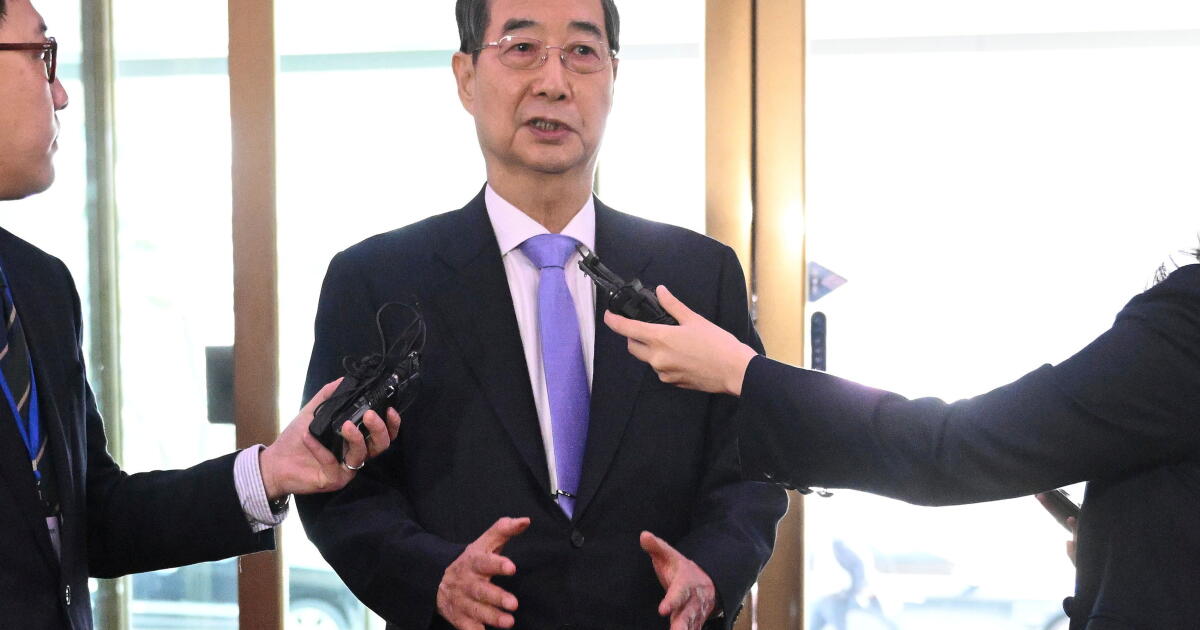
On his first day back to work as acting president on Monday, Han assured reporters that he would try to provide a steady hand.
“I will make sure to take care of the most urgent matters first,” he said.
“I think the South Korean people are looking at the deeply confrontational political landscape and making it clear that ‘we shouldn’t do that.’”
When asked whether he would appoint the last remaining nominee for the Constitutional Court as opposition legislators have been demanding, Han evaded the question.

South Korean Prime Minister Han Duck-soo was reinstated as acting president on Monday after the country’s Constitutional Court dismissed the impeachment motion passed by the National Assembly late last year.
Han was handed the reins to the country after lawmakers impeached conservative President Yoon Suk Yeol on Dec. 14 for his short-lived declaration of martial law earlier that month.
Although the declaration was quickly overturned by a legislative vote, Yoon sent special forces soldiers to storm the National Assembly and National Election Commission, an act that opponents say violated the country’s constitution.
But Han, who is not an elected official, soon faced accusations from the country’s liberal opposition that he had also been complicit in the martial law declaration — and for refusing to fill critical vacancies at the country’s Constitutional Court by appointing three National Assembly-nominated justices. Two of those vacancies were filled while Han was impeached and suspended.
At least six of the court’s nine justices must vote in favor for Yoon’s impeachment to be confirmed, making Yoon’s ouster more likely if all nine seats are filled.
Since Han’s own impeachment and suspension on Dec. 27, finance minister Choi Sang-mok had been serving as acting president.
In its ruling Monday, the Constitutional Court said Han’s refusal to appoint the justices was unconstitutional but not serious enough to justify impeachment.
The Constitutional Court has not yet announced when it would rule on the impeachment of Yoon, who is also facing criminal insurrection charges. If his impeachment is upheld, the country will have 60 days to elect a new president.
The court’s deliberation on Yoon’s impeachment has already exceeded those of South Korea’s two other impeached presidents, who were reinstated after 63 days and ousted after 91 days, respectively.
The months-long leadership vacuum has led to anxieties that South Korea is adrift at a time of deep political disorder and uncertainty, fueled by the Trump administration’s trade wars and the domestic partisan divides amplified by Yoon’s impeachment.
Many South Koreans now describe their fears that Yoon might be reinstated with a new coinage: “insurrection insomnia.”
“Given that the entire country watched his illegal and unconstitutional declaration of martial law on TV in real time, I cannot understand why Yoon’s impeachment trial is taking so long,” said Chun Hyeon-joo, a 50-year-old teacher.
“The stress I’ve felt since the martial law declaration is maybe the worst I’ve felt in my life.”
On his first day back to work as acting president on Monday, Han assured reporters that he would try to provide a steady hand.
“I will make sure to take care of the most urgent matters first,” he said.
“I think the South Korean people are looking at the deeply confrontational political landscape and making it clear that ‘we shouldn’t do that.’”
When asked whether he would appoint the last remaining nominee for the Constitutional Court as opposition legislators have been demanding, Han evaded the question.

South Korean Prime Minister Han Duck-soo was reinstated as acting president on Monday after the country’s Constitutional Court dismissed the impeachment motion passed by the National Assembly late last year.
Han was handed the reins to the country after lawmakers impeached conservative President Yoon Suk Yeol on Dec. 14 for his short-lived declaration of martial law earlier that month.
Although the declaration was quickly overturned by a legislative vote, Yoon sent special forces soldiers to storm the National Assembly and National Election Commission, an act that opponents say violated the country’s constitution.
But Han, who is not an elected official, soon faced accusations from the country’s liberal opposition that he had also been complicit in the martial law declaration — and for refusing to fill critical vacancies at the country’s Constitutional Court by appointing three National Assembly-nominated justices. Two of those vacancies were filled while Han was impeached and suspended.
At least six of the court’s nine justices must vote in favor for Yoon’s impeachment to be confirmed, making Yoon’s ouster more likely if all nine seats are filled.
Since Han’s own impeachment and suspension on Dec. 27, finance minister Choi Sang-mok had been serving as acting president.
In its ruling Monday, the Constitutional Court said Han’s refusal to appoint the justices was unconstitutional but not serious enough to justify impeachment.
The Constitutional Court has not yet announced when it would rule on the impeachment of Yoon, who is also facing criminal insurrection charges. If his impeachment is upheld, the country will have 60 days to elect a new president.
The court’s deliberation on Yoon’s impeachment has already exceeded those of South Korea’s two other impeached presidents, who were reinstated after 63 days and ousted after 91 days, respectively.
The months-long leadership vacuum has led to anxieties that South Korea is adrift at a time of deep political disorder and uncertainty, fueled by the Trump administration’s trade wars and the domestic partisan divides amplified by Yoon’s impeachment.
Many South Koreans now describe their fears that Yoon might be reinstated with a new coinage: “insurrection insomnia.”
“Given that the entire country watched his illegal and unconstitutional declaration of martial law on TV in real time, I cannot understand why Yoon’s impeachment trial is taking so long,” said Chun Hyeon-joo, a 50-year-old teacher.
“The stress I’ve felt since the martial law declaration is maybe the worst I’ve felt in my life.”
On his first day back to work as acting president on Monday, Han assured reporters that he would try to provide a steady hand.
“I will make sure to take care of the most urgent matters first,” he said.
“I think the South Korean people are looking at the deeply confrontational political landscape and making it clear that ‘we shouldn’t do that.’”
When asked whether he would appoint the last remaining nominee for the Constitutional Court as opposition legislators have been demanding, Han evaded the question.

South Korean Prime Minister Han Duck-soo was reinstated as acting president on Monday after the country’s Constitutional Court dismissed the impeachment motion passed by the National Assembly late last year.
Han was handed the reins to the country after lawmakers impeached conservative President Yoon Suk Yeol on Dec. 14 for his short-lived declaration of martial law earlier that month.
Although the declaration was quickly overturned by a legislative vote, Yoon sent special forces soldiers to storm the National Assembly and National Election Commission, an act that opponents say violated the country’s constitution.
But Han, who is not an elected official, soon faced accusations from the country’s liberal opposition that he had also been complicit in the martial law declaration — and for refusing to fill critical vacancies at the country’s Constitutional Court by appointing three National Assembly-nominated justices. Two of those vacancies were filled while Han was impeached and suspended.
At least six of the court’s nine justices must vote in favor for Yoon’s impeachment to be confirmed, making Yoon’s ouster more likely if all nine seats are filled.
Since Han’s own impeachment and suspension on Dec. 27, finance minister Choi Sang-mok had been serving as acting president.
In its ruling Monday, the Constitutional Court said Han’s refusal to appoint the justices was unconstitutional but not serious enough to justify impeachment.
The Constitutional Court has not yet announced when it would rule on the impeachment of Yoon, who is also facing criminal insurrection charges. If his impeachment is upheld, the country will have 60 days to elect a new president.
The court’s deliberation on Yoon’s impeachment has already exceeded those of South Korea’s two other impeached presidents, who were reinstated after 63 days and ousted after 91 days, respectively.
The months-long leadership vacuum has led to anxieties that South Korea is adrift at a time of deep political disorder and uncertainty, fueled by the Trump administration’s trade wars and the domestic partisan divides amplified by Yoon’s impeachment.
Many South Koreans now describe their fears that Yoon might be reinstated with a new coinage: “insurrection insomnia.”
“Given that the entire country watched his illegal and unconstitutional declaration of martial law on TV in real time, I cannot understand why Yoon’s impeachment trial is taking so long,” said Chun Hyeon-joo, a 50-year-old teacher.
“The stress I’ve felt since the martial law declaration is maybe the worst I’ve felt in my life.”
On his first day back to work as acting president on Monday, Han assured reporters that he would try to provide a steady hand.
“I will make sure to take care of the most urgent matters first,” he said.
“I think the South Korean people are looking at the deeply confrontational political landscape and making it clear that ‘we shouldn’t do that.’”
When asked whether he would appoint the last remaining nominee for the Constitutional Court as opposition legislators have been demanding, Han evaded the question.

South Korean Prime Minister Han Duck-soo was reinstated as acting president on Monday after the country’s Constitutional Court dismissed the impeachment motion passed by the National Assembly late last year.
Han was handed the reins to the country after lawmakers impeached conservative President Yoon Suk Yeol on Dec. 14 for his short-lived declaration of martial law earlier that month.
Although the declaration was quickly overturned by a legislative vote, Yoon sent special forces soldiers to storm the National Assembly and National Election Commission, an act that opponents say violated the country’s constitution.
But Han, who is not an elected official, soon faced accusations from the country’s liberal opposition that he had also been complicit in the martial law declaration — and for refusing to fill critical vacancies at the country’s Constitutional Court by appointing three National Assembly-nominated justices. Two of those vacancies were filled while Han was impeached and suspended.
At least six of the court’s nine justices must vote in favor for Yoon’s impeachment to be confirmed, making Yoon’s ouster more likely if all nine seats are filled.
Since Han’s own impeachment and suspension on Dec. 27, finance minister Choi Sang-mok had been serving as acting president.
In its ruling Monday, the Constitutional Court said Han’s refusal to appoint the justices was unconstitutional but not serious enough to justify impeachment.
The Constitutional Court has not yet announced when it would rule on the impeachment of Yoon, who is also facing criminal insurrection charges. If his impeachment is upheld, the country will have 60 days to elect a new president.
The court’s deliberation on Yoon’s impeachment has already exceeded those of South Korea’s two other impeached presidents, who were reinstated after 63 days and ousted after 91 days, respectively.
The months-long leadership vacuum has led to anxieties that South Korea is adrift at a time of deep political disorder and uncertainty, fueled by the Trump administration’s trade wars and the domestic partisan divides amplified by Yoon’s impeachment.
Many South Koreans now describe their fears that Yoon might be reinstated with a new coinage: “insurrection insomnia.”
“Given that the entire country watched his illegal and unconstitutional declaration of martial law on TV in real time, I cannot understand why Yoon’s impeachment trial is taking so long,” said Chun Hyeon-joo, a 50-year-old teacher.
“The stress I’ve felt since the martial law declaration is maybe the worst I’ve felt in my life.”
On his first day back to work as acting president on Monday, Han assured reporters that he would try to provide a steady hand.
“I will make sure to take care of the most urgent matters first,” he said.
“I think the South Korean people are looking at the deeply confrontational political landscape and making it clear that ‘we shouldn’t do that.’”
When asked whether he would appoint the last remaining nominee for the Constitutional Court as opposition legislators have been demanding, Han evaded the question.

