

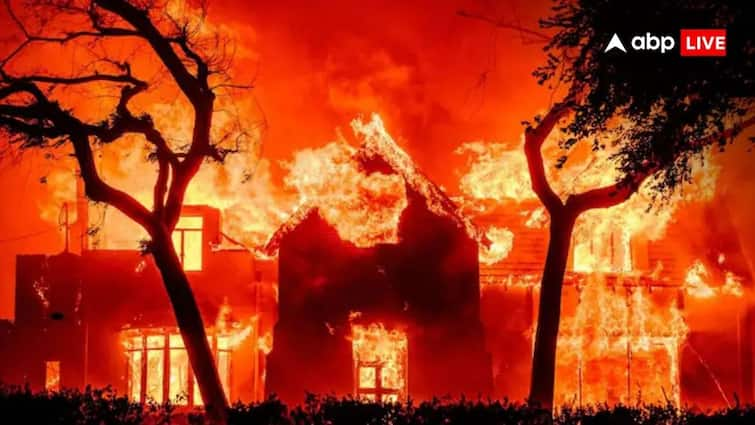


As South Korea scrambled to contain worsening wildfires, a historic Buddhist temple burnt to the ground, and a UNESCO-listed village was ordered to evacuate. According to news agency AFP, over a dozen different blazes broke out over the weekend, with four people killed as dry, windy weather hampered the efforts to contain one of the country’s worst-ever fire outbreaks.
According to AFP, acting Interior and Safety Minister Ko Ki-dong said the wildfires had “so far affected approximately 14,694 hectares (36,310 acres) with damage continuing to grow.” The report states that the extent of damage makes the fires collectively the third largest in the history of South Korea. The worst was in April 2000, which scorched 23,913 hectares (59,090 acres) across the east coast.
“Strong winds, dry weather, and haze are hampering firefighting efforts,” Ko told a disaster and safety meeting.
He also said that the government is mobilising all the available resources. A state of emergency was declared by the government in four regions citing “the extensive damage caused by simultaneous wildfires”. Thousands of people have been ordered to evacuate.
On Tuesday, the authorities in Andong issued an emergency alert to the residents of the historic Hahoe Folk Village, which is a UNESCO-listed world heritage site and is popular with the tourists.
“The Uiseong Angye wildfire is moving in the direction,” of the area, the alert said. “Residents are requested to evacuate immediately.”
According to AFP, the sky was full in Uiseong with the Korea Forest Service saying the containment rate for the fire in that area had decreased from 60 to 55 percent Tuesday. The workers at the Gounsa Temple were attempting to move the valuable artefacts and cover up the Buddhist statues to protect them from the possible damage.
“We used fire retardant blankets,” Joo Jung-wan, Gyeongbuk Seobu Cultural Heritage Care Center worker told AFP, saying that a giant gilded Buddha statue was too large to move so had been carefully covered.

As South Korea scrambled to contain worsening wildfires, a historic Buddhist temple burnt to the ground, and a UNESCO-listed village was ordered to evacuate. According to news agency AFP, over a dozen different blazes broke out over the weekend, with four people killed as dry, windy weather hampered the efforts to contain one of the country’s worst-ever fire outbreaks.
According to AFP, acting Interior and Safety Minister Ko Ki-dong said the wildfires had “so far affected approximately 14,694 hectares (36,310 acres) with damage continuing to grow.” The report states that the extent of damage makes the fires collectively the third largest in the history of South Korea. The worst was in April 2000, which scorched 23,913 hectares (59,090 acres) across the east coast.
“Strong winds, dry weather, and haze are hampering firefighting efforts,” Ko told a disaster and safety meeting.
He also said that the government is mobilising all the available resources. A state of emergency was declared by the government in four regions citing “the extensive damage caused by simultaneous wildfires”. Thousands of people have been ordered to evacuate.
On Tuesday, the authorities in Andong issued an emergency alert to the residents of the historic Hahoe Folk Village, which is a UNESCO-listed world heritage site and is popular with the tourists.
“The Uiseong Angye wildfire is moving in the direction,” of the area, the alert said. “Residents are requested to evacuate immediately.”
According to AFP, the sky was full in Uiseong with the Korea Forest Service saying the containment rate for the fire in that area had decreased from 60 to 55 percent Tuesday. The workers at the Gounsa Temple were attempting to move the valuable artefacts and cover up the Buddhist statues to protect them from the possible damage.
“We used fire retardant blankets,” Joo Jung-wan, Gyeongbuk Seobu Cultural Heritage Care Center worker told AFP, saying that a giant gilded Buddha statue was too large to move so had been carefully covered.

As South Korea scrambled to contain worsening wildfires, a historic Buddhist temple burnt to the ground, and a UNESCO-listed village was ordered to evacuate. According to news agency AFP, over a dozen different blazes broke out over the weekend, with four people killed as dry, windy weather hampered the efforts to contain one of the country’s worst-ever fire outbreaks.
According to AFP, acting Interior and Safety Minister Ko Ki-dong said the wildfires had “so far affected approximately 14,694 hectares (36,310 acres) with damage continuing to grow.” The report states that the extent of damage makes the fires collectively the third largest in the history of South Korea. The worst was in April 2000, which scorched 23,913 hectares (59,090 acres) across the east coast.
“Strong winds, dry weather, and haze are hampering firefighting efforts,” Ko told a disaster and safety meeting.
He also said that the government is mobilising all the available resources. A state of emergency was declared by the government in four regions citing “the extensive damage caused by simultaneous wildfires”. Thousands of people have been ordered to evacuate.
On Tuesday, the authorities in Andong issued an emergency alert to the residents of the historic Hahoe Folk Village, which is a UNESCO-listed world heritage site and is popular with the tourists.
“The Uiseong Angye wildfire is moving in the direction,” of the area, the alert said. “Residents are requested to evacuate immediately.”
According to AFP, the sky was full in Uiseong with the Korea Forest Service saying the containment rate for the fire in that area had decreased from 60 to 55 percent Tuesday. The workers at the Gounsa Temple were attempting to move the valuable artefacts and cover up the Buddhist statues to protect them from the possible damage.
“We used fire retardant blankets,” Joo Jung-wan, Gyeongbuk Seobu Cultural Heritage Care Center worker told AFP, saying that a giant gilded Buddha statue was too large to move so had been carefully covered.
As South Korea scrambled to contain worsening wildfires, a historic Buddhist temple burnt to the ground, and a UNESCO-listed village was ordered to evacuate. According to news agency AFP, over a dozen different blazes broke out over the weekend, with four people killed as dry, windy weather hampered the efforts to contain one of the country’s worst-ever fire outbreaks.
According to AFP, acting Interior and Safety Minister Ko Ki-dong said the wildfires had “so far affected approximately 14,694 hectares (36,310 acres) with damage continuing to grow.” The report states that the extent of damage makes the fires collectively the third largest in the history of South Korea. The worst was in April 2000, which scorched 23,913 hectares (59,090 acres) across the east coast.
“Strong winds, dry weather, and haze are hampering firefighting efforts,” Ko told a disaster and safety meeting.
He also said that the government is mobilising all the available resources. A state of emergency was declared by the government in four regions citing “the extensive damage caused by simultaneous wildfires”. Thousands of people have been ordered to evacuate.
On Tuesday, the authorities in Andong issued an emergency alert to the residents of the historic Hahoe Folk Village, which is a UNESCO-listed world heritage site and is popular with the tourists.
“The Uiseong Angye wildfire is moving in the direction,” of the area, the alert said. “Residents are requested to evacuate immediately.”
According to AFP, the sky was full in Uiseong with the Korea Forest Service saying the containment rate for the fire in that area had decreased from 60 to 55 percent Tuesday. The workers at the Gounsa Temple were attempting to move the valuable artefacts and cover up the Buddhist statues to protect them from the possible damage.
“We used fire retardant blankets,” Joo Jung-wan, Gyeongbuk Seobu Cultural Heritage Care Center worker told AFP, saying that a giant gilded Buddha statue was too large to move so had been carefully covered.

