


Although he knows that the silkworm breeding craft has almost gone extinct in war-torn Syria, Muhammad Saud, one of the very few silk farmers in the country, has turned part of his house into a silk museum, paying his respect to the old-school breeding of his ancestors.
Though the traditional trade can’t feed the family amid the tough economic situation in Syria after 11 years of war, Saud, his wife, and children, who live in the mountainous village of Deir Mama in the central province of Hama, are still interested in silkworm farming and silk making.
For the Syrian family, who inherited the ancient craft from their ancestors, raising silkworms and watching them build their cocoons on mulberry trees is an unmatched joy.
It runs down in the family, Saud told Xinhua at his private silk museum, and he still uses the 180-year-old loom to create silk clothes and a 120-year-old wooden spinning wheel to reel the silk.
The 68-year-old man acknowledged that silkworm farming is disappearing in Syria. The decline had taken place long before the outbreak of the Syrian war, particularly as mulberry trees were chopped down in his town of Deir Mama, a town famous for silk over past centuries before farmers started planting olives to make more money.
Saud recalled that back in 1991, Deir Mama produced 10 tons of cocoons a year, but the number plummeted to only 150 kg in 2004, a steep decline hinting that this craft would not survive as a business in modern Syria.
Facing the decline in the silk business in Syria, Saud and his family remained loyal to their history and heritage and created the museum in the courtyard of their home in 2008, relying on tourists to make a living and telling them stories about Syrian sericulture with a history of 2,000 years.
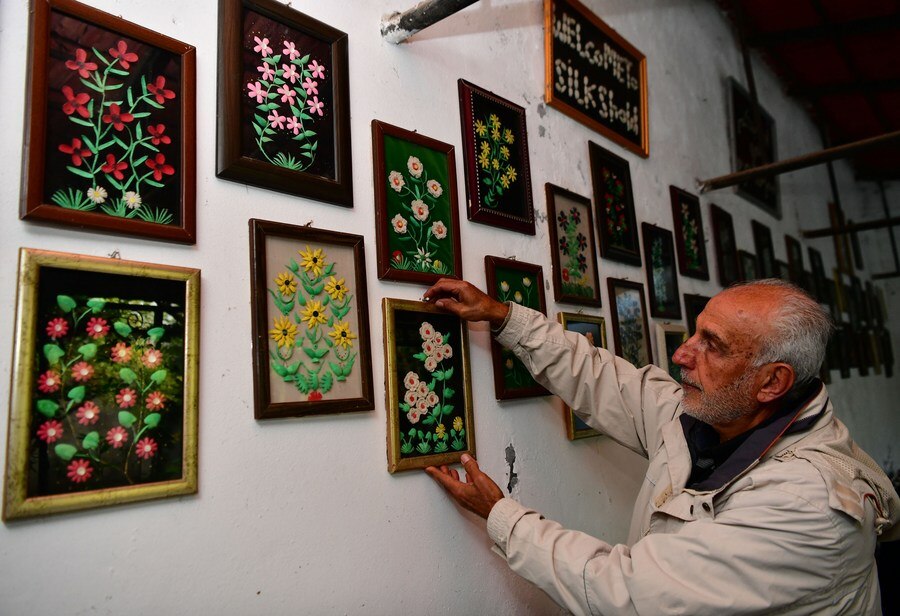
When the crisis erupted in 2011, the Saud family faced a harder situation, but he managed to survive along with three other silkworm farmers, the last remaining breeders in Deir Mama.
“As a silkworm breeder who still has mulberry trees and has been conducting the silk reeling and working on the loom, which is a 180-year-old loom that belonged to my great-grandfather, I am so attached to silk,” he told Xinhua.
“I hope that one day life could reward us for all the hard work we put in and preserve this old profession which is on the way to distinction,” he said.
(Apart from the headline, no editing has been done in the report by ABP Live.)

Although he knows that the silkworm breeding craft has almost gone extinct in war-torn Syria, Muhammad Saud, one of the very few silk farmers in the country, has turned part of his house into a silk museum, paying his respect to the old-school breeding of his ancestors.
Though the traditional trade can’t feed the family amid the tough economic situation in Syria after 11 years of war, Saud, his wife, and children, who live in the mountainous village of Deir Mama in the central province of Hama, are still interested in silkworm farming and silk making.
For the Syrian family, who inherited the ancient craft from their ancestors, raising silkworms and watching them build their cocoons on mulberry trees is an unmatched joy.
It runs down in the family, Saud told Xinhua at his private silk museum, and he still uses the 180-year-old loom to create silk clothes and a 120-year-old wooden spinning wheel to reel the silk.
The 68-year-old man acknowledged that silkworm farming is disappearing in Syria. The decline had taken place long before the outbreak of the Syrian war, particularly as mulberry trees were chopped down in his town of Deir Mama, a town famous for silk over past centuries before farmers started planting olives to make more money.
Saud recalled that back in 1991, Deir Mama produced 10 tons of cocoons a year, but the number plummeted to only 150 kg in 2004, a steep decline hinting that this craft would not survive as a business in modern Syria.
Facing the decline in the silk business in Syria, Saud and his family remained loyal to their history and heritage and created the museum in the courtyard of their home in 2008, relying on tourists to make a living and telling them stories about Syrian sericulture with a history of 2,000 years.
When the crisis erupted in 2011, the Saud family faced a harder situation, but he managed to survive along with three other silkworm farmers, the last remaining breeders in Deir Mama.
“As a silkworm breeder who still has mulberry trees and has been conducting the silk reeling and working on the loom, which is a 180-year-old loom that belonged to my great-grandfather, I am so attached to silk,” he told Xinhua.
“I hope that one day life could reward us for all the hard work we put in and preserve this old profession which is on the way to distinction,” he said.
(Apart from the headline, no editing has been done in the report by ABP Live.)

Although he knows that the silkworm breeding craft has almost gone extinct in war-torn Syria, Muhammad Saud, one of the very few silk farmers in the country, has turned part of his house into a silk museum, paying his respect to the old-school breeding of his ancestors.
Though the traditional trade can’t feed the family amid the tough economic situation in Syria after 11 years of war, Saud, his wife, and children, who live in the mountainous village of Deir Mama in the central province of Hama, are still interested in silkworm farming and silk making.
For the Syrian family, who inherited the ancient craft from their ancestors, raising silkworms and watching them build their cocoons on mulberry trees is an unmatched joy.
It runs down in the family, Saud told Xinhua at his private silk museum, and he still uses the 180-year-old loom to create silk clothes and a 120-year-old wooden spinning wheel to reel the silk.
The 68-year-old man acknowledged that silkworm farming is disappearing in Syria. The decline had taken place long before the outbreak of the Syrian war, particularly as mulberry trees were chopped down in his town of Deir Mama, a town famous for silk over past centuries before farmers started planting olives to make more money.
Saud recalled that back in 1991, Deir Mama produced 10 tons of cocoons a year, but the number plummeted to only 150 kg in 2004, a steep decline hinting that this craft would not survive as a business in modern Syria.
Facing the decline in the silk business in Syria, Saud and his family remained loyal to their history and heritage and created the museum in the courtyard of their home in 2008, relying on tourists to make a living and telling them stories about Syrian sericulture with a history of 2,000 years.
When the crisis erupted in 2011, the Saud family faced a harder situation, but he managed to survive along with three other silkworm farmers, the last remaining breeders in Deir Mama.
“As a silkworm breeder who still has mulberry trees and has been conducting the silk reeling and working on the loom, which is a 180-year-old loom that belonged to my great-grandfather, I am so attached to silk,” he told Xinhua.
“I hope that one day life could reward us for all the hard work we put in and preserve this old profession which is on the way to distinction,” he said.
(Apart from the headline, no editing has been done in the report by ABP Live.)
Although he knows that the silkworm breeding craft has almost gone extinct in war-torn Syria, Muhammad Saud, one of the very few silk farmers in the country, has turned part of his house into a silk museum, paying his respect to the old-school breeding of his ancestors.
Though the traditional trade can’t feed the family amid the tough economic situation in Syria after 11 years of war, Saud, his wife, and children, who live in the mountainous village of Deir Mama in the central province of Hama, are still interested in silkworm farming and silk making.
For the Syrian family, who inherited the ancient craft from their ancestors, raising silkworms and watching them build their cocoons on mulberry trees is an unmatched joy.
It runs down in the family, Saud told Xinhua at his private silk museum, and he still uses the 180-year-old loom to create silk clothes and a 120-year-old wooden spinning wheel to reel the silk.
The 68-year-old man acknowledged that silkworm farming is disappearing in Syria. The decline had taken place long before the outbreak of the Syrian war, particularly as mulberry trees were chopped down in his town of Deir Mama, a town famous for silk over past centuries before farmers started planting olives to make more money.
Saud recalled that back in 1991, Deir Mama produced 10 tons of cocoons a year, but the number plummeted to only 150 kg in 2004, a steep decline hinting that this craft would not survive as a business in modern Syria.
Facing the decline in the silk business in Syria, Saud and his family remained loyal to their history and heritage and created the museum in the courtyard of their home in 2008, relying on tourists to make a living and telling them stories about Syrian sericulture with a history of 2,000 years.
When the crisis erupted in 2011, the Saud family faced a harder situation, but he managed to survive along with three other silkworm farmers, the last remaining breeders in Deir Mama.
“As a silkworm breeder who still has mulberry trees and has been conducting the silk reeling and working on the loom, which is a 180-year-old loom that belonged to my great-grandfather, I am so attached to silk,” he told Xinhua.
“I hope that one day life could reward us for all the hard work we put in and preserve this old profession which is on the way to distinction,” he said.
(Apart from the headline, no editing has been done in the report by ABP Live.)

Although he knows that the silkworm breeding craft has almost gone extinct in war-torn Syria, Muhammad Saud, one of the very few silk farmers in the country, has turned part of his house into a silk museum, paying his respect to the old-school breeding of his ancestors.
Though the traditional trade can’t feed the family amid the tough economic situation in Syria after 11 years of war, Saud, his wife, and children, who live in the mountainous village of Deir Mama in the central province of Hama, are still interested in silkworm farming and silk making.
For the Syrian family, who inherited the ancient craft from their ancestors, raising silkworms and watching them build their cocoons on mulberry trees is an unmatched joy.
It runs down in the family, Saud told Xinhua at his private silk museum, and he still uses the 180-year-old loom to create silk clothes and a 120-year-old wooden spinning wheel to reel the silk.
The 68-year-old man acknowledged that silkworm farming is disappearing in Syria. The decline had taken place long before the outbreak of the Syrian war, particularly as mulberry trees were chopped down in his town of Deir Mama, a town famous for silk over past centuries before farmers started planting olives to make more money.
Saud recalled that back in 1991, Deir Mama produced 10 tons of cocoons a year, but the number plummeted to only 150 kg in 2004, a steep decline hinting that this craft would not survive as a business in modern Syria.
Facing the decline in the silk business in Syria, Saud and his family remained loyal to their history and heritage and created the museum in the courtyard of their home in 2008, relying on tourists to make a living and telling them stories about Syrian sericulture with a history of 2,000 years.
When the crisis erupted in 2011, the Saud family faced a harder situation, but he managed to survive along with three other silkworm farmers, the last remaining breeders in Deir Mama.
“As a silkworm breeder who still has mulberry trees and has been conducting the silk reeling and working on the loom, which is a 180-year-old loom that belonged to my great-grandfather, I am so attached to silk,” he told Xinhua.
“I hope that one day life could reward us for all the hard work we put in and preserve this old profession which is on the way to distinction,” he said.
(Apart from the headline, no editing has been done in the report by ABP Live.)
Although he knows that the silkworm breeding craft has almost gone extinct in war-torn Syria, Muhammad Saud, one of the very few silk farmers in the country, has turned part of his house into a silk museum, paying his respect to the old-school breeding of his ancestors.
Though the traditional trade can’t feed the family amid the tough economic situation in Syria after 11 years of war, Saud, his wife, and children, who live in the mountainous village of Deir Mama in the central province of Hama, are still interested in silkworm farming and silk making.
For the Syrian family, who inherited the ancient craft from their ancestors, raising silkworms and watching them build their cocoons on mulberry trees is an unmatched joy.
It runs down in the family, Saud told Xinhua at his private silk museum, and he still uses the 180-year-old loom to create silk clothes and a 120-year-old wooden spinning wheel to reel the silk.
The 68-year-old man acknowledged that silkworm farming is disappearing in Syria. The decline had taken place long before the outbreak of the Syrian war, particularly as mulberry trees were chopped down in his town of Deir Mama, a town famous for silk over past centuries before farmers started planting olives to make more money.
Saud recalled that back in 1991, Deir Mama produced 10 tons of cocoons a year, but the number plummeted to only 150 kg in 2004, a steep decline hinting that this craft would not survive as a business in modern Syria.
Facing the decline in the silk business in Syria, Saud and his family remained loyal to their history and heritage and created the museum in the courtyard of their home in 2008, relying on tourists to make a living and telling them stories about Syrian sericulture with a history of 2,000 years.
When the crisis erupted in 2011, the Saud family faced a harder situation, but he managed to survive along with three other silkworm farmers, the last remaining breeders in Deir Mama.
“As a silkworm breeder who still has mulberry trees and has been conducting the silk reeling and working on the loom, which is a 180-year-old loom that belonged to my great-grandfather, I am so attached to silk,” he told Xinhua.
“I hope that one day life could reward us for all the hard work we put in and preserve this old profession which is on the way to distinction,” he said.
(Apart from the headline, no editing has been done in the report by ABP Live.)
Although he knows that the silkworm breeding craft has almost gone extinct in war-torn Syria, Muhammad Saud, one of the very few silk farmers in the country, has turned part of his house into a silk museum, paying his respect to the old-school breeding of his ancestors.
Though the traditional trade can’t feed the family amid the tough economic situation in Syria after 11 years of war, Saud, his wife, and children, who live in the mountainous village of Deir Mama in the central province of Hama, are still interested in silkworm farming and silk making.
For the Syrian family, who inherited the ancient craft from their ancestors, raising silkworms and watching them build their cocoons on mulberry trees is an unmatched joy.
It runs down in the family, Saud told Xinhua at his private silk museum, and he still uses the 180-year-old loom to create silk clothes and a 120-year-old wooden spinning wheel to reel the silk.
The 68-year-old man acknowledged that silkworm farming is disappearing in Syria. The decline had taken place long before the outbreak of the Syrian war, particularly as mulberry trees were chopped down in his town of Deir Mama, a town famous for silk over past centuries before farmers started planting olives to make more money.
Saud recalled that back in 1991, Deir Mama produced 10 tons of cocoons a year, but the number plummeted to only 150 kg in 2004, a steep decline hinting that this craft would not survive as a business in modern Syria.
Facing the decline in the silk business in Syria, Saud and his family remained loyal to their history and heritage and created the museum in the courtyard of their home in 2008, relying on tourists to make a living and telling them stories about Syrian sericulture with a history of 2,000 years.
When the crisis erupted in 2011, the Saud family faced a harder situation, but he managed to survive along with three other silkworm farmers, the last remaining breeders in Deir Mama.
“As a silkworm breeder who still has mulberry trees and has been conducting the silk reeling and working on the loom, which is a 180-year-old loom that belonged to my great-grandfather, I am so attached to silk,” he told Xinhua.
“I hope that one day life could reward us for all the hard work we put in and preserve this old profession which is on the way to distinction,” he said.
(Apart from the headline, no editing has been done in the report by ABP Live.)
Although he knows that the silkworm breeding craft has almost gone extinct in war-torn Syria, Muhammad Saud, one of the very few silk farmers in the country, has turned part of his house into a silk museum, paying his respect to the old-school breeding of his ancestors.
Though the traditional trade can’t feed the family amid the tough economic situation in Syria after 11 years of war, Saud, his wife, and children, who live in the mountainous village of Deir Mama in the central province of Hama, are still interested in silkworm farming and silk making.
For the Syrian family, who inherited the ancient craft from their ancestors, raising silkworms and watching them build their cocoons on mulberry trees is an unmatched joy.
It runs down in the family, Saud told Xinhua at his private silk museum, and he still uses the 180-year-old loom to create silk clothes and a 120-year-old wooden spinning wheel to reel the silk.
The 68-year-old man acknowledged that silkworm farming is disappearing in Syria. The decline had taken place long before the outbreak of the Syrian war, particularly as mulberry trees were chopped down in his town of Deir Mama, a town famous for silk over past centuries before farmers started planting olives to make more money.
Saud recalled that back in 1991, Deir Mama produced 10 tons of cocoons a year, but the number plummeted to only 150 kg in 2004, a steep decline hinting that this craft would not survive as a business in modern Syria.
Facing the decline in the silk business in Syria, Saud and his family remained loyal to their history and heritage and created the museum in the courtyard of their home in 2008, relying on tourists to make a living and telling them stories about Syrian sericulture with a history of 2,000 years.
When the crisis erupted in 2011, the Saud family faced a harder situation, but he managed to survive along with three other silkworm farmers, the last remaining breeders in Deir Mama.
“As a silkworm breeder who still has mulberry trees and has been conducting the silk reeling and working on the loom, which is a 180-year-old loom that belonged to my great-grandfather, I am so attached to silk,” he told Xinhua.
“I hope that one day life could reward us for all the hard work we put in and preserve this old profession which is on the way to distinction,” he said.
(Apart from the headline, no editing has been done in the report by ABP Live.)

Although he knows that the silkworm breeding craft has almost gone extinct in war-torn Syria, Muhammad Saud, one of the very few silk farmers in the country, has turned part of his house into a silk museum, paying his respect to the old-school breeding of his ancestors.
Though the traditional trade can’t feed the family amid the tough economic situation in Syria after 11 years of war, Saud, his wife, and children, who live in the mountainous village of Deir Mama in the central province of Hama, are still interested in silkworm farming and silk making.
For the Syrian family, who inherited the ancient craft from their ancestors, raising silkworms and watching them build their cocoons on mulberry trees is an unmatched joy.
It runs down in the family, Saud told Xinhua at his private silk museum, and he still uses the 180-year-old loom to create silk clothes and a 120-year-old wooden spinning wheel to reel the silk.
The 68-year-old man acknowledged that silkworm farming is disappearing in Syria. The decline had taken place long before the outbreak of the Syrian war, particularly as mulberry trees were chopped down in his town of Deir Mama, a town famous for silk over past centuries before farmers started planting olives to make more money.
Saud recalled that back in 1991, Deir Mama produced 10 tons of cocoons a year, but the number plummeted to only 150 kg in 2004, a steep decline hinting that this craft would not survive as a business in modern Syria.
Facing the decline in the silk business in Syria, Saud and his family remained loyal to their history and heritage and created the museum in the courtyard of their home in 2008, relying on tourists to make a living and telling them stories about Syrian sericulture with a history of 2,000 years.
When the crisis erupted in 2011, the Saud family faced a harder situation, but he managed to survive along with three other silkworm farmers, the last remaining breeders in Deir Mama.
“As a silkworm breeder who still has mulberry trees and has been conducting the silk reeling and working on the loom, which is a 180-year-old loom that belonged to my great-grandfather, I am so attached to silk,” he told Xinhua.
“I hope that one day life could reward us for all the hard work we put in and preserve this old profession which is on the way to distinction,” he said.
(Apart from the headline, no editing has been done in the report by ABP Live.)
Although he knows that the silkworm breeding craft has almost gone extinct in war-torn Syria, Muhammad Saud, one of the very few silk farmers in the country, has turned part of his house into a silk museum, paying his respect to the old-school breeding of his ancestors.
Though the traditional trade can’t feed the family amid the tough economic situation in Syria after 11 years of war, Saud, his wife, and children, who live in the mountainous village of Deir Mama in the central province of Hama, are still interested in silkworm farming and silk making.
For the Syrian family, who inherited the ancient craft from their ancestors, raising silkworms and watching them build their cocoons on mulberry trees is an unmatched joy.
It runs down in the family, Saud told Xinhua at his private silk museum, and he still uses the 180-year-old loom to create silk clothes and a 120-year-old wooden spinning wheel to reel the silk.
The 68-year-old man acknowledged that silkworm farming is disappearing in Syria. The decline had taken place long before the outbreak of the Syrian war, particularly as mulberry trees were chopped down in his town of Deir Mama, a town famous for silk over past centuries before farmers started planting olives to make more money.
Saud recalled that back in 1991, Deir Mama produced 10 tons of cocoons a year, but the number plummeted to only 150 kg in 2004, a steep decline hinting that this craft would not survive as a business in modern Syria.
Facing the decline in the silk business in Syria, Saud and his family remained loyal to their history and heritage and created the museum in the courtyard of their home in 2008, relying on tourists to make a living and telling them stories about Syrian sericulture with a history of 2,000 years.
When the crisis erupted in 2011, the Saud family faced a harder situation, but he managed to survive along with three other silkworm farmers, the last remaining breeders in Deir Mama.
“As a silkworm breeder who still has mulberry trees and has been conducting the silk reeling and working on the loom, which is a 180-year-old loom that belonged to my great-grandfather, I am so attached to silk,” he told Xinhua.
“I hope that one day life could reward us for all the hard work we put in and preserve this old profession which is on the way to distinction,” he said.
(Apart from the headline, no editing has been done in the report by ABP Live.)
Although he knows that the silkworm breeding craft has almost gone extinct in war-torn Syria, Muhammad Saud, one of the very few silk farmers in the country, has turned part of his house into a silk museum, paying his respect to the old-school breeding of his ancestors.
Though the traditional trade can’t feed the family amid the tough economic situation in Syria after 11 years of war, Saud, his wife, and children, who live in the mountainous village of Deir Mama in the central province of Hama, are still interested in silkworm farming and silk making.
For the Syrian family, who inherited the ancient craft from their ancestors, raising silkworms and watching them build their cocoons on mulberry trees is an unmatched joy.
It runs down in the family, Saud told Xinhua at his private silk museum, and he still uses the 180-year-old loom to create silk clothes and a 120-year-old wooden spinning wheel to reel the silk.
The 68-year-old man acknowledged that silkworm farming is disappearing in Syria. The decline had taken place long before the outbreak of the Syrian war, particularly as mulberry trees were chopped down in his town of Deir Mama, a town famous for silk over past centuries before farmers started planting olives to make more money.
Saud recalled that back in 1991, Deir Mama produced 10 tons of cocoons a year, but the number plummeted to only 150 kg in 2004, a steep decline hinting that this craft would not survive as a business in modern Syria.
Facing the decline in the silk business in Syria, Saud and his family remained loyal to their history and heritage and created the museum in the courtyard of their home in 2008, relying on tourists to make a living and telling them stories about Syrian sericulture with a history of 2,000 years.
When the crisis erupted in 2011, the Saud family faced a harder situation, but he managed to survive along with three other silkworm farmers, the last remaining breeders in Deir Mama.
“As a silkworm breeder who still has mulberry trees and has been conducting the silk reeling and working on the loom, which is a 180-year-old loom that belonged to my great-grandfather, I am so attached to silk,” he told Xinhua.
“I hope that one day life could reward us for all the hard work we put in and preserve this old profession which is on the way to distinction,” he said.
(Apart from the headline, no editing has been done in the report by ABP Live.)
Although he knows that the silkworm breeding craft has almost gone extinct in war-torn Syria, Muhammad Saud, one of the very few silk farmers in the country, has turned part of his house into a silk museum, paying his respect to the old-school breeding of his ancestors.
Though the traditional trade can’t feed the family amid the tough economic situation in Syria after 11 years of war, Saud, his wife, and children, who live in the mountainous village of Deir Mama in the central province of Hama, are still interested in silkworm farming and silk making.
For the Syrian family, who inherited the ancient craft from their ancestors, raising silkworms and watching them build their cocoons on mulberry trees is an unmatched joy.
It runs down in the family, Saud told Xinhua at his private silk museum, and he still uses the 180-year-old loom to create silk clothes and a 120-year-old wooden spinning wheel to reel the silk.
The 68-year-old man acknowledged that silkworm farming is disappearing in Syria. The decline had taken place long before the outbreak of the Syrian war, particularly as mulberry trees were chopped down in his town of Deir Mama, a town famous for silk over past centuries before farmers started planting olives to make more money.
Saud recalled that back in 1991, Deir Mama produced 10 tons of cocoons a year, but the number plummeted to only 150 kg in 2004, a steep decline hinting that this craft would not survive as a business in modern Syria.
Facing the decline in the silk business in Syria, Saud and his family remained loyal to their history and heritage and created the museum in the courtyard of their home in 2008, relying on tourists to make a living and telling them stories about Syrian sericulture with a history of 2,000 years.
When the crisis erupted in 2011, the Saud family faced a harder situation, but he managed to survive along with three other silkworm farmers, the last remaining breeders in Deir Mama.
“As a silkworm breeder who still has mulberry trees and has been conducting the silk reeling and working on the loom, which is a 180-year-old loom that belonged to my great-grandfather, I am so attached to silk,” he told Xinhua.
“I hope that one day life could reward us for all the hard work we put in and preserve this old profession which is on the way to distinction,” he said.
(Apart from the headline, no editing has been done in the report by ABP Live.)
Although he knows that the silkworm breeding craft has almost gone extinct in war-torn Syria, Muhammad Saud, one of the very few silk farmers in the country, has turned part of his house into a silk museum, paying his respect to the old-school breeding of his ancestors.
Though the traditional trade can’t feed the family amid the tough economic situation in Syria after 11 years of war, Saud, his wife, and children, who live in the mountainous village of Deir Mama in the central province of Hama, are still interested in silkworm farming and silk making.
For the Syrian family, who inherited the ancient craft from their ancestors, raising silkworms and watching them build their cocoons on mulberry trees is an unmatched joy.
It runs down in the family, Saud told Xinhua at his private silk museum, and he still uses the 180-year-old loom to create silk clothes and a 120-year-old wooden spinning wheel to reel the silk.
The 68-year-old man acknowledged that silkworm farming is disappearing in Syria. The decline had taken place long before the outbreak of the Syrian war, particularly as mulberry trees were chopped down in his town of Deir Mama, a town famous for silk over past centuries before farmers started planting olives to make more money.
Saud recalled that back in 1991, Deir Mama produced 10 tons of cocoons a year, but the number plummeted to only 150 kg in 2004, a steep decline hinting that this craft would not survive as a business in modern Syria.
Facing the decline in the silk business in Syria, Saud and his family remained loyal to their history and heritage and created the museum in the courtyard of their home in 2008, relying on tourists to make a living and telling them stories about Syrian sericulture with a history of 2,000 years.
When the crisis erupted in 2011, the Saud family faced a harder situation, but he managed to survive along with three other silkworm farmers, the last remaining breeders in Deir Mama.
“As a silkworm breeder who still has mulberry trees and has been conducting the silk reeling and working on the loom, which is a 180-year-old loom that belonged to my great-grandfather, I am so attached to silk,” he told Xinhua.
“I hope that one day life could reward us for all the hard work we put in and preserve this old profession which is on the way to distinction,” he said.
(Apart from the headline, no editing has been done in the report by ABP Live.)
Although he knows that the silkworm breeding craft has almost gone extinct in war-torn Syria, Muhammad Saud, one of the very few silk farmers in the country, has turned part of his house into a silk museum, paying his respect to the old-school breeding of his ancestors.
Though the traditional trade can’t feed the family amid the tough economic situation in Syria after 11 years of war, Saud, his wife, and children, who live in the mountainous village of Deir Mama in the central province of Hama, are still interested in silkworm farming and silk making.
For the Syrian family, who inherited the ancient craft from their ancestors, raising silkworms and watching them build their cocoons on mulberry trees is an unmatched joy.
It runs down in the family, Saud told Xinhua at his private silk museum, and he still uses the 180-year-old loom to create silk clothes and a 120-year-old wooden spinning wheel to reel the silk.
The 68-year-old man acknowledged that silkworm farming is disappearing in Syria. The decline had taken place long before the outbreak of the Syrian war, particularly as mulberry trees were chopped down in his town of Deir Mama, a town famous for silk over past centuries before farmers started planting olives to make more money.
Saud recalled that back in 1991, Deir Mama produced 10 tons of cocoons a year, but the number plummeted to only 150 kg in 2004, a steep decline hinting that this craft would not survive as a business in modern Syria.
Facing the decline in the silk business in Syria, Saud and his family remained loyal to their history and heritage and created the museum in the courtyard of their home in 2008, relying on tourists to make a living and telling them stories about Syrian sericulture with a history of 2,000 years.
When the crisis erupted in 2011, the Saud family faced a harder situation, but he managed to survive along with three other silkworm farmers, the last remaining breeders in Deir Mama.
“As a silkworm breeder who still has mulberry trees and has been conducting the silk reeling and working on the loom, which is a 180-year-old loom that belonged to my great-grandfather, I am so attached to silk,” he told Xinhua.
“I hope that one day life could reward us for all the hard work we put in and preserve this old profession which is on the way to distinction,” he said.
(Apart from the headline, no editing has been done in the report by ABP Live.)
Although he knows that the silkworm breeding craft has almost gone extinct in war-torn Syria, Muhammad Saud, one of the very few silk farmers in the country, has turned part of his house into a silk museum, paying his respect to the old-school breeding of his ancestors.
Though the traditional trade can’t feed the family amid the tough economic situation in Syria after 11 years of war, Saud, his wife, and children, who live in the mountainous village of Deir Mama in the central province of Hama, are still interested in silkworm farming and silk making.
For the Syrian family, who inherited the ancient craft from their ancestors, raising silkworms and watching them build their cocoons on mulberry trees is an unmatched joy.
It runs down in the family, Saud told Xinhua at his private silk museum, and he still uses the 180-year-old loom to create silk clothes and a 120-year-old wooden spinning wheel to reel the silk.
The 68-year-old man acknowledged that silkworm farming is disappearing in Syria. The decline had taken place long before the outbreak of the Syrian war, particularly as mulberry trees were chopped down in his town of Deir Mama, a town famous for silk over past centuries before farmers started planting olives to make more money.
Saud recalled that back in 1991, Deir Mama produced 10 tons of cocoons a year, but the number plummeted to only 150 kg in 2004, a steep decline hinting that this craft would not survive as a business in modern Syria.
Facing the decline in the silk business in Syria, Saud and his family remained loyal to their history and heritage and created the museum in the courtyard of their home in 2008, relying on tourists to make a living and telling them stories about Syrian sericulture with a history of 2,000 years.
When the crisis erupted in 2011, the Saud family faced a harder situation, but he managed to survive along with three other silkworm farmers, the last remaining breeders in Deir Mama.
“As a silkworm breeder who still has mulberry trees and has been conducting the silk reeling and working on the loom, which is a 180-year-old loom that belonged to my great-grandfather, I am so attached to silk,” he told Xinhua.
“I hope that one day life could reward us for all the hard work we put in and preserve this old profession which is on the way to distinction,” he said.
(Apart from the headline, no editing has been done in the report by ABP Live.)
Although he knows that the silkworm breeding craft has almost gone extinct in war-torn Syria, Muhammad Saud, one of the very few silk farmers in the country, has turned part of his house into a silk museum, paying his respect to the old-school breeding of his ancestors.
Though the traditional trade can’t feed the family amid the tough economic situation in Syria after 11 years of war, Saud, his wife, and children, who live in the mountainous village of Deir Mama in the central province of Hama, are still interested in silkworm farming and silk making.
For the Syrian family, who inherited the ancient craft from their ancestors, raising silkworms and watching them build their cocoons on mulberry trees is an unmatched joy.
It runs down in the family, Saud told Xinhua at his private silk museum, and he still uses the 180-year-old loom to create silk clothes and a 120-year-old wooden spinning wheel to reel the silk.
The 68-year-old man acknowledged that silkworm farming is disappearing in Syria. The decline had taken place long before the outbreak of the Syrian war, particularly as mulberry trees were chopped down in his town of Deir Mama, a town famous for silk over past centuries before farmers started planting olives to make more money.
Saud recalled that back in 1991, Deir Mama produced 10 tons of cocoons a year, but the number plummeted to only 150 kg in 2004, a steep decline hinting that this craft would not survive as a business in modern Syria.
Facing the decline in the silk business in Syria, Saud and his family remained loyal to their history and heritage and created the museum in the courtyard of their home in 2008, relying on tourists to make a living and telling them stories about Syrian sericulture with a history of 2,000 years.
When the crisis erupted in 2011, the Saud family faced a harder situation, but he managed to survive along with three other silkworm farmers, the last remaining breeders in Deir Mama.
“As a silkworm breeder who still has mulberry trees and has been conducting the silk reeling and working on the loom, which is a 180-year-old loom that belonged to my great-grandfather, I am so attached to silk,” he told Xinhua.
“I hope that one day life could reward us for all the hard work we put in and preserve this old profession which is on the way to distinction,” he said.
(Apart from the headline, no editing has been done in the report by ABP Live.)

