

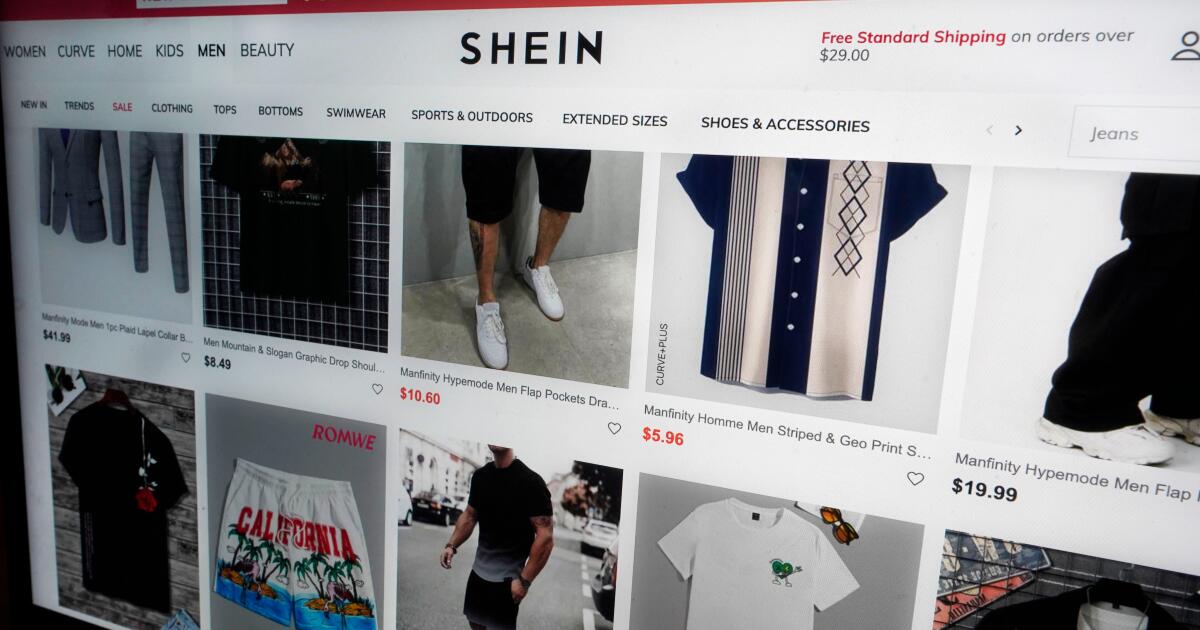
Fast-fashion retailer Shein has agreed to pay $100 million to resolve Federal Trade Commission allegations that it misled American consumers.
The FTC said the company misled consumers with inaccurate delivery times, fake customer reviews, misleading supplier standards, and claims about the origin of its cotton.
“Shein attracted consumers with promises of affordable clothing, fast delivery and use of suppliers that earned above-average ratings on standards related to child and forced labor, among other representations,” Christopher Mufarrige, director of the FTC’s Bureau of Consumer Protection, said in a statement.
“In reality, the company misled millions of consumers about its products, its suppliers and the authenticity of its customer reviews,” Mufarrige’s statement continued. “Shein further compounded consumer harm by making it extraordinarily difficult to obtain customer service.”
A complaint filed by the FTC in federal court in Los Angeles said Shein accounts for nearly half of U.S. fast-fashion sales. But the FTC has accused the retail giant of several failures, spanning misrepresentations of its supply chain and breaches of rules on delivery delays, customer service and handling of reviews.
A Shein spokesperson confirmed the agreement but said it “does not constitute an admission of liability.”
“We continue to disagree with aspects of the FTC’s characterization of our business and compliance practices,” the spokesperson said.
With origins in China and headquartered in Singapore, Shein went public in Hong Kong in September at a valuation of about $26 billion — a fraction of its $100-billion private valuation in 2022.
From 2021 to 2024, Shein’s internal analyses showed logistics problems at times made up as much as 54% of complaints. Yet the FTC alleges the company often failed to offer shoppers the chance to cancel and get a prompt refund, as federal rules require.
Shein also relied on email and chatbots, which provided canned responses and were often left unanswered.
“Even though Shein ships nearly 1 million packages into the U.S. every day, for years Shein had no customer service via phone, and as of September 2025 had only five agents,” the complaint says.
The FTC also claims Shein manipulated its review system.
The complaint says four- or five-star reviews containing positive terms such as “comfy” or “as pictured” were approved automatically, while one- to three-star reviews with similar wording underwent added screening that could delay or prevent publication.
The complaint says reviews tied to returned items were also suppressed.
Shein also marketed its “evoluSHEIN” line as made by suppliers with above-average social compliance audit scores. But the FTC says the company has not handed over a single audit to date.
The agency claims Shein’s boast of “robust cotton traceability” was also unsupported. Testing found that cotton that suppliers described as U.S.-grown was sometimes from China. More than 7% of samples could not be traced to any country of origin.
Shein has been subject to scrutiny in the past over reports of cotton from China’s Xinjiang region, where U.S. officials and rights groups say Uyghurs have been subjected to forced labor.
Shein’s spokesperson said the company will make investments in strengthening its consumer practices and compliance efforts.

Fast-fashion retailer Shein has agreed to pay $100 million to resolve Federal Trade Commission allegations that it misled American consumers.
The FTC said the company misled consumers with inaccurate delivery times, fake customer reviews, misleading supplier standards, and claims about the origin of its cotton.
“Shein attracted consumers with promises of affordable clothing, fast delivery and use of suppliers that earned above-average ratings on standards related to child and forced labor, among other representations,” Christopher Mufarrige, director of the FTC’s Bureau of Consumer Protection, said in a statement.
“In reality, the company misled millions of consumers about its products, its suppliers and the authenticity of its customer reviews,” Mufarrige’s statement continued. “Shein further compounded consumer harm by making it extraordinarily difficult to obtain customer service.”
A complaint filed by the FTC in federal court in Los Angeles said Shein accounts for nearly half of U.S. fast-fashion sales. But the FTC has accused the retail giant of several failures, spanning misrepresentations of its supply chain and breaches of rules on delivery delays, customer service and handling of reviews.
A Shein spokesperson confirmed the agreement but said it “does not constitute an admission of liability.”
“We continue to disagree with aspects of the FTC’s characterization of our business and compliance practices,” the spokesperson said.
With origins in China and headquartered in Singapore, Shein went public in Hong Kong in September at a valuation of about $26 billion — a fraction of its $100-billion private valuation in 2022.
From 2021 to 2024, Shein’s internal analyses showed logistics problems at times made up as much as 54% of complaints. Yet the FTC alleges the company often failed to offer shoppers the chance to cancel and get a prompt refund, as federal rules require.
Shein also relied on email and chatbots, which provided canned responses and were often left unanswered.
“Even though Shein ships nearly 1 million packages into the U.S. every day, for years Shein had no customer service via phone, and as of September 2025 had only five agents,” the complaint says.
The FTC also claims Shein manipulated its review system.
The complaint says four- or five-star reviews containing positive terms such as “comfy” or “as pictured” were approved automatically, while one- to three-star reviews with similar wording underwent added screening that could delay or prevent publication.
The complaint says reviews tied to returned items were also suppressed.
Shein also marketed its “evoluSHEIN” line as made by suppliers with above-average social compliance audit scores. But the FTC says the company has not handed over a single audit to date.
The agency claims Shein’s boast of “robust cotton traceability” was also unsupported. Testing found that cotton that suppliers described as U.S.-grown was sometimes from China. More than 7% of samples could not be traced to any country of origin.
Shein has been subject to scrutiny in the past over reports of cotton from China’s Xinjiang region, where U.S. officials and rights groups say Uyghurs have been subjected to forced labor.
Shein’s spokesperson said the company will make investments in strengthening its consumer practices and compliance efforts.

Fast-fashion retailer Shein has agreed to pay $100 million to resolve Federal Trade Commission allegations that it misled American consumers.
The FTC said the company misled consumers with inaccurate delivery times, fake customer reviews, misleading supplier standards, and claims about the origin of its cotton.
“Shein attracted consumers with promises of affordable clothing, fast delivery and use of suppliers that earned above-average ratings on standards related to child and forced labor, among other representations,” Christopher Mufarrige, director of the FTC’s Bureau of Consumer Protection, said in a statement.
“In reality, the company misled millions of consumers about its products, its suppliers and the authenticity of its customer reviews,” Mufarrige’s statement continued. “Shein further compounded consumer harm by making it extraordinarily difficult to obtain customer service.”
A complaint filed by the FTC in federal court in Los Angeles said Shein accounts for nearly half of U.S. fast-fashion sales. But the FTC has accused the retail giant of several failures, spanning misrepresentations of its supply chain and breaches of rules on delivery delays, customer service and handling of reviews.
A Shein spokesperson confirmed the agreement but said it “does not constitute an admission of liability.”
“We continue to disagree with aspects of the FTC’s characterization of our business and compliance practices,” the spokesperson said.
With origins in China and headquartered in Singapore, Shein went public in Hong Kong in September at a valuation of about $26 billion — a fraction of its $100-billion private valuation in 2022.
From 2021 to 2024, Shein’s internal analyses showed logistics problems at times made up as much as 54% of complaints. Yet the FTC alleges the company often failed to offer shoppers the chance to cancel and get a prompt refund, as federal rules require.
Shein also relied on email and chatbots, which provided canned responses and were often left unanswered.
“Even though Shein ships nearly 1 million packages into the U.S. every day, for years Shein had no customer service via phone, and as of September 2025 had only five agents,” the complaint says.
The FTC also claims Shein manipulated its review system.
The complaint says four- or five-star reviews containing positive terms such as “comfy” or “as pictured” were approved automatically, while one- to three-star reviews with similar wording underwent added screening that could delay or prevent publication.
The complaint says reviews tied to returned items were also suppressed.
Shein also marketed its “evoluSHEIN” line as made by suppliers with above-average social compliance audit scores. But the FTC says the company has not handed over a single audit to date.
The agency claims Shein’s boast of “robust cotton traceability” was also unsupported. Testing found that cotton that suppliers described as U.S.-grown was sometimes from China. More than 7% of samples could not be traced to any country of origin.
Shein has been subject to scrutiny in the past over reports of cotton from China’s Xinjiang region, where U.S. officials and rights groups say Uyghurs have been subjected to forced labor.
Shein’s spokesperson said the company will make investments in strengthening its consumer practices and compliance efforts.

Fast-fashion retailer Shein has agreed to pay $100 million to resolve Federal Trade Commission allegations that it misled American consumers.
The FTC said the company misled consumers with inaccurate delivery times, fake customer reviews, misleading supplier standards, and claims about the origin of its cotton.
“Shein attracted consumers with promises of affordable clothing, fast delivery and use of suppliers that earned above-average ratings on standards related to child and forced labor, among other representations,” Christopher Mufarrige, director of the FTC’s Bureau of Consumer Protection, said in a statement.
“In reality, the company misled millions of consumers about its products, its suppliers and the authenticity of its customer reviews,” Mufarrige’s statement continued. “Shein further compounded consumer harm by making it extraordinarily difficult to obtain customer service.”
A complaint filed by the FTC in federal court in Los Angeles said Shein accounts for nearly half of U.S. fast-fashion sales. But the FTC has accused the retail giant of several failures, spanning misrepresentations of its supply chain and breaches of rules on delivery delays, customer service and handling of reviews.
A Shein spokesperson confirmed the agreement but said it “does not constitute an admission of liability.”
“We continue to disagree with aspects of the FTC’s characterization of our business and compliance practices,” the spokesperson said.
With origins in China and headquartered in Singapore, Shein went public in Hong Kong in September at a valuation of about $26 billion — a fraction of its $100-billion private valuation in 2022.
From 2021 to 2024, Shein’s internal analyses showed logistics problems at times made up as much as 54% of complaints. Yet the FTC alleges the company often failed to offer shoppers the chance to cancel and get a prompt refund, as federal rules require.
Shein also relied on email and chatbots, which provided canned responses and were often left unanswered.
“Even though Shein ships nearly 1 million packages into the U.S. every day, for years Shein had no customer service via phone, and as of September 2025 had only five agents,” the complaint says.
The FTC also claims Shein manipulated its review system.
The complaint says four- or five-star reviews containing positive terms such as “comfy” or “as pictured” were approved automatically, while one- to three-star reviews with similar wording underwent added screening that could delay or prevent publication.
The complaint says reviews tied to returned items were also suppressed.
Shein also marketed its “evoluSHEIN” line as made by suppliers with above-average social compliance audit scores. But the FTC says the company has not handed over a single audit to date.
The agency claims Shein’s boast of “robust cotton traceability” was also unsupported. Testing found that cotton that suppliers described as U.S.-grown was sometimes from China. More than 7% of samples could not be traced to any country of origin.
Shein has been subject to scrutiny in the past over reports of cotton from China’s Xinjiang region, where U.S. officials and rights groups say Uyghurs have been subjected to forced labor.
Shein’s spokesperson said the company will make investments in strengthening its consumer practices and compliance efforts.

Fast-fashion retailer Shein has agreed to pay $100 million to resolve Federal Trade Commission allegations that it misled American consumers.
The FTC said the company misled consumers with inaccurate delivery times, fake customer reviews, misleading supplier standards, and claims about the origin of its cotton.
“Shein attracted consumers with promises of affordable clothing, fast delivery and use of suppliers that earned above-average ratings on standards related to child and forced labor, among other representations,” Christopher Mufarrige, director of the FTC’s Bureau of Consumer Protection, said in a statement.
“In reality, the company misled millions of consumers about its products, its suppliers and the authenticity of its customer reviews,” Mufarrige’s statement continued. “Shein further compounded consumer harm by making it extraordinarily difficult to obtain customer service.”
A complaint filed by the FTC in federal court in Los Angeles said Shein accounts for nearly half of U.S. fast-fashion sales. But the FTC has accused the retail giant of several failures, spanning misrepresentations of its supply chain and breaches of rules on delivery delays, customer service and handling of reviews.
A Shein spokesperson confirmed the agreement but said it “does not constitute an admission of liability.”
“We continue to disagree with aspects of the FTC’s characterization of our business and compliance practices,” the spokesperson said.
With origins in China and headquartered in Singapore, Shein went public in Hong Kong in September at a valuation of about $26 billion — a fraction of its $100-billion private valuation in 2022.
From 2021 to 2024, Shein’s internal analyses showed logistics problems at times made up as much as 54% of complaints. Yet the FTC alleges the company often failed to offer shoppers the chance to cancel and get a prompt refund, as federal rules require.
Shein also relied on email and chatbots, which provided canned responses and were often left unanswered.
“Even though Shein ships nearly 1 million packages into the U.S. every day, for years Shein had no customer service via phone, and as of September 2025 had only five agents,” the complaint says.
The FTC also claims Shein manipulated its review system.
The complaint says four- or five-star reviews containing positive terms such as “comfy” or “as pictured” were approved automatically, while one- to three-star reviews with similar wording underwent added screening that could delay or prevent publication.
The complaint says reviews tied to returned items were also suppressed.
Shein also marketed its “evoluSHEIN” line as made by suppliers with above-average social compliance audit scores. But the FTC says the company has not handed over a single audit to date.
The agency claims Shein’s boast of “robust cotton traceability” was also unsupported. Testing found that cotton that suppliers described as U.S.-grown was sometimes from China. More than 7% of samples could not be traced to any country of origin.
Shein has been subject to scrutiny in the past over reports of cotton from China’s Xinjiang region, where U.S. officials and rights groups say Uyghurs have been subjected to forced labor.
Shein’s spokesperson said the company will make investments in strengthening its consumer practices and compliance efforts.