



Washington DC
New York
Toronto
Distribution: (800) 510 9863
Press ID
  • Login
Binghamton Herald
Advertisement
Friday, May 8, 2026
  • Home
  • World
  • Politics
  • Business
  • Technology
  • Culture
  • Health
  • Entertainment
  • Trending
No Result
View All Result
Binghamton Herald
No Result
View All Result
Home Entertainment

Sean Baker’s ‘Anora’ wins Palme d’Or at Cannes Film Festival

by Binghamton Herald Report
May 25, 2024
in Entertainment
Share on FacebookShare on Twitter
CANNES, France — 

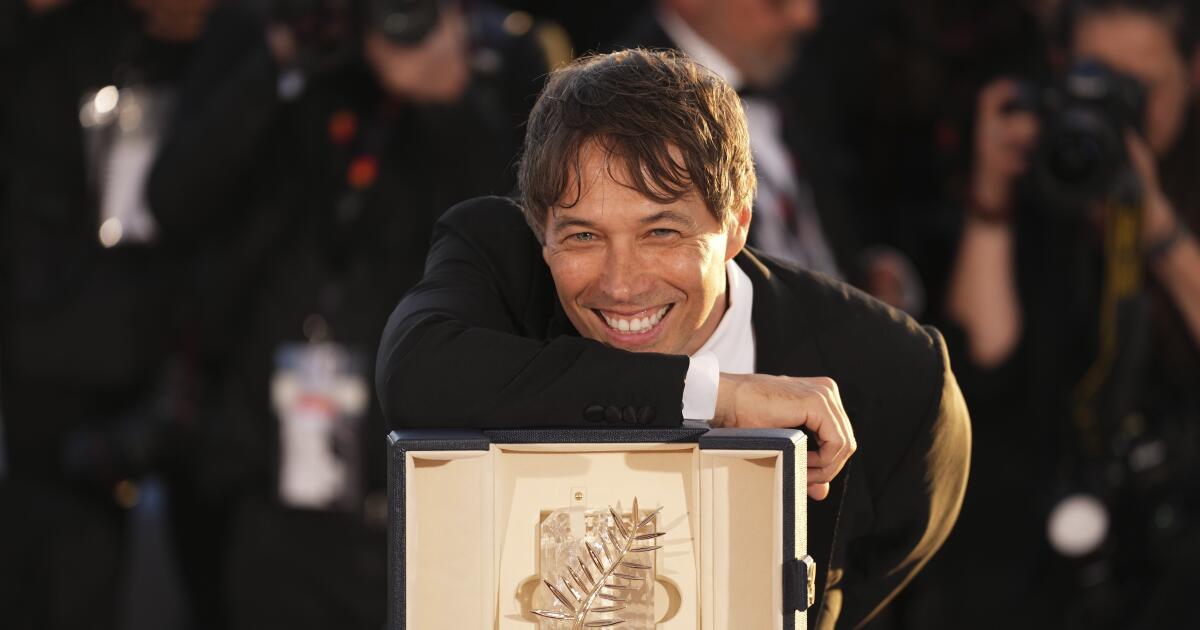
“Anora,” a widely admired knockabout comedy about a New York strip-club dancer (Mikey Madison) and her impulsive affair with a Russian oligarch’s wealthy son (Mark Eydelshteyn), has won the Palme d’Or, the most prestigious award granted by the Cannes Film Festival.

Directed by Sean Baker, whose prior two features, 2017’s “The Florida Project” and 2021’s “Red Rocket,” also debuted at Cannes, “Anora” represents the first Palme victory by an American filmmaker since Terrence Malick’s “The Tree of Life” took the prize in 2011.

Writing about “Anora” from the festival, Times deputy entertainment & arts editor Matt Brennan described the movie as “so electric, it’s liable to leave you levitating.”

Accepting the award, Baker was forthright in his love of the theatrical experience and scathing in his appraisal of “half-paying attention” on streaming, which he called “just not the way, although some tech companies would like us to think so.” He added, “The future of cinema is where it started — in a movie theater.”

This year’s Cannes jury was headed by “Barbie” and “Lady Bird” filmmaker Greta Gerwig, a proud cinephile who was anticipated to spread the wealth generously. She did so, in collaboration with her jury, a group that included the actors Lily Gladstone (“Killers of the Flower Moon”) and Eva Green (“Casino Royale”) and directors Hirokazu Kore-eda and Spain’s Juan Antonio Bayona.

The Grand Prix, Cannes’ runner-up award, went to Payal Kapadia’s “All We Imagine as Light,” India’s first film to compete in three decades. A special prize was created for Iran’s Mohammad Rasoulof, whose political thriller “The Seed of the Sacred Fig,” a daring effort made in secret, was predicted to prevail in many quarters. “Grand Tour,” an evocative period drama set in several Asian countries, took the directing prize for Portugal’s Miguel Gomes.

Cannes’ acting awards, which don’t typically honor supporting performances, were also bestowed generously this year. The best actress prize went to the women of “Emilia Pérez,” co-starring Selena Gomez, Zoe Saldaña and trans lead Karla Sofía Gascón, who shared the honor jointly. The best actor prize was won by Jesse Plemons for his work in Yorgos Lanthimos’ “Kinds of Kindness.”

Demi Moore, a strong acting contender for her nightmarish Hollywood aging fantasia “The Substance,” did not prevail, although her film, a festival-rousing standout, won the screenwriting prize for its director and writer, France’s Coralie Fargeat.

CANNES, France — 

“Anora,” a widely admired knockabout comedy about a New York strip-club dancer (Mikey Madison) and her impulsive affair with a Russian oligarch’s wealthy son (Mark Eydelshteyn), has won the Palme d’Or, the most prestigious award granted by the Cannes Film Festival.

Directed by Sean Baker, whose prior two features, 2017’s “The Florida Project” and 2021’s “Red Rocket,” also debuted at Cannes, “Anora” represents the first Palme victory by an American filmmaker since Terrence Malick’s “The Tree of Life” took the prize in 2011.

Writing about “Anora” from the festival, Times deputy entertainment & arts editor Matt Brennan described the movie as “so electric, it’s liable to leave you levitating.”

Accepting the award, Baker was forthright in his love of the theatrical experience and scathing in his appraisal of “half-paying attention” on streaming, which he called “just not the way, although some tech companies would like us to think so.” He added, “The future of cinema is where it started — in a movie theater.”

This year’s Cannes jury was headed by “Barbie” and “Lady Bird” filmmaker Greta Gerwig, a proud cinephile who was anticipated to spread the wealth generously. She did so, in collaboration with her jury, a group that included the actors Lily Gladstone (“Killers of the Flower Moon”) and Eva Green (“Casino Royale”) and directors Hirokazu Kore-eda and Spain’s Juan Antonio Bayona.

The Grand Prix, Cannes’ runner-up award, went to Payal Kapadia’s “All We Imagine as Light,” India’s first film to compete in three decades. A special prize was created for Iran’s Mohammad Rasoulof, whose political thriller “The Seed of the Sacred Fig,” a daring effort made in secret, was predicted to prevail in many quarters. “Grand Tour,” an evocative period drama set in several Asian countries, took the directing prize for Portugal’s Miguel Gomes.

Cannes’ acting awards, which don’t typically honor supporting performances, were also bestowed generously this year. The best actress prize went to the women of “Emilia Pérez,” co-starring Selena Gomez, Zoe Saldaña and trans lead Karla Sofía Gascón, who shared the honor jointly. The best actor prize was won by Jesse Plemons for his work in Yorgos Lanthimos’ “Kinds of Kindness.”

Demi Moore, a strong acting contender for her nightmarish Hollywood aging fantasia “The Substance,” did not prevail, although her film, a festival-rousing standout, won the screenwriting prize for its director and writer, France’s Coralie Fargeat.

CANNES, France — 

“Anora,” a widely admired knockabout comedy about a New York strip-club dancer (Mikey Madison) and her impulsive affair with a Russian oligarch’s wealthy son (Mark Eydelshteyn), has won the Palme d’Or, the most prestigious award granted by the Cannes Film Festival.

Directed by Sean Baker, whose prior two features, 2017’s “The Florida Project” and 2021’s “Red Rocket,” also debuted at Cannes, “Anora” represents the first Palme victory by an American filmmaker since Terrence Malick’s “The Tree of Life” took the prize in 2011.

Writing about “Anora” from the festival, Times deputy entertainment & arts editor Matt Brennan described the movie as “so electric, it’s liable to leave you levitating.”

Accepting the award, Baker was forthright in his love of the theatrical experience and scathing in his appraisal of “half-paying attention” on streaming, which he called “just not the way, although some tech companies would like us to think so.” He added, “The future of cinema is where it started — in a movie theater.”

This year’s Cannes jury was headed by “Barbie” and “Lady Bird” filmmaker Greta Gerwig, a proud cinephile who was anticipated to spread the wealth generously. She did so, in collaboration with her jury, a group that included the actors Lily Gladstone (“Killers of the Flower Moon”) and Eva Green (“Casino Royale”) and directors Hirokazu Kore-eda and Spain’s Juan Antonio Bayona.

The Grand Prix, Cannes’ runner-up award, went to Payal Kapadia’s “All We Imagine as Light,” India’s first film to compete in three decades. A special prize was created for Iran’s Mohammad Rasoulof, whose political thriller “The Seed of the Sacred Fig,” a daring effort made in secret, was predicted to prevail in many quarters. “Grand Tour,” an evocative period drama set in several Asian countries, took the directing prize for Portugal’s Miguel Gomes.

Cannes’ acting awards, which don’t typically honor supporting performances, were also bestowed generously this year. The best actress prize went to the women of “Emilia Pérez,” co-starring Selena Gomez, Zoe Saldaña and trans lead Karla Sofía Gascón, who shared the honor jointly. The best actor prize was won by Jesse Plemons for his work in Yorgos Lanthimos’ “Kinds of Kindness.”

Demi Moore, a strong acting contender for her nightmarish Hollywood aging fantasia “The Substance,” did not prevail, although her film, a festival-rousing standout, won the screenwriting prize for its director and writer, France’s Coralie Fargeat.


CANNES, France — 

“Anora,” a widely admired knockabout comedy about a New York strip-club dancer (Mikey Madison) and her impulsive affair with a Russian oligarch’s wealthy son (Mark Eydelshteyn), has won the Palme d’Or, the most prestigious award granted by the Cannes Film Festival.

Directed by Sean Baker, whose prior two features, 2017’s “The Florida Project” and 2021’s “Red Rocket,” also debuted at Cannes, “Anora” represents the first Palme victory by an American filmmaker since Terrence Malick’s “The Tree of Life” took the prize in 2011.

Writing about “Anora” from the festival, Times deputy entertainment & arts editor Matt Brennan described the movie as “so electric, it’s liable to leave you levitating.”

Accepting the award, Baker was forthright in his love of the theatrical experience and scathing in his appraisal of “half-paying attention” on streaming, which he called “just not the way, although some tech companies would like us to think so.” He added, “The future of cinema is where it started — in a movie theater.”

This year’s Cannes jury was headed by “Barbie” and “Lady Bird” filmmaker Greta Gerwig, a proud cinephile who was anticipated to spread the wealth generously. She did so, in collaboration with her jury, a group that included the actors Lily Gladstone (“Killers of the Flower Moon”) and Eva Green (“Casino Royale”) and directors Hirokazu Kore-eda and Spain’s Juan Antonio Bayona.

The Grand Prix, Cannes’ runner-up award, went to Payal Kapadia’s “All We Imagine as Light,” India’s first film to compete in three decades. A special prize was created for Iran’s Mohammad Rasoulof, whose political thriller “The Seed of the Sacred Fig,” a daring effort made in secret, was predicted to prevail in many quarters. “Grand Tour,” an evocative period drama set in several Asian countries, took the directing prize for Portugal’s Miguel Gomes.

Cannes’ acting awards, which don’t typically honor supporting performances, were also bestowed generously this year. The best actress prize went to the women of “Emilia Pérez,” co-starring Selena Gomez, Zoe Saldaña and trans lead Karla Sofía Gascón, who shared the honor jointly. The best actor prize was won by Jesse Plemons for his work in Yorgos Lanthimos’ “Kinds of Kindness.”

Demi Moore, a strong acting contender for her nightmarish Hollywood aging fantasia “The Substance,” did not prevail, although her film, a festival-rousing standout, won the screenwriting prize for its director and writer, France’s Coralie Fargeat.

CANNES, France — 

“Anora,” a widely admired knockabout comedy about a New York strip-club dancer (Mikey Madison) and her impulsive affair with a Russian oligarch’s wealthy son (Mark Eydelshteyn), has won the Palme d’Or, the most prestigious award granted by the Cannes Film Festival.

Directed by Sean Baker, whose prior two features, 2017’s “The Florida Project” and 2021’s “Red Rocket,” also debuted at Cannes, “Anora” represents the first Palme victory by an American filmmaker since Terrence Malick’s “The Tree of Life” took the prize in 2011.

Writing about “Anora” from the festival, Times deputy entertainment & arts editor Matt Brennan described the movie as “so electric, it’s liable to leave you levitating.”

Accepting the award, Baker was forthright in his love of the theatrical experience and scathing in his appraisal of “half-paying attention” on streaming, which he called “just not the way, although some tech companies would like us to think so.” He added, “The future of cinema is where it started — in a movie theater.”

This year’s Cannes jury was headed by “Barbie” and “Lady Bird” filmmaker Greta Gerwig, a proud cinephile who was anticipated to spread the wealth generously. She did so, in collaboration with her jury, a group that included the actors Lily Gladstone (“Killers of the Flower Moon”) and Eva Green (“Casino Royale”) and directors Hirokazu Kore-eda and Spain’s Juan Antonio Bayona.

The Grand Prix, Cannes’ runner-up award, went to Payal Kapadia’s “All We Imagine as Light,” India’s first film to compete in three decades. A special prize was created for Iran’s Mohammad Rasoulof, whose political thriller “The Seed of the Sacred Fig,” a daring effort made in secret, was predicted to prevail in many quarters. “Grand Tour,” an evocative period drama set in several Asian countries, took the directing prize for Portugal’s Miguel Gomes.

Cannes’ acting awards, which don’t typically honor supporting performances, were also bestowed generously this year. The best actress prize went to the women of “Emilia Pérez,” co-starring Selena Gomez, Zoe Saldaña and trans lead Karla Sofía Gascón, who shared the honor jointly. The best actor prize was won by Jesse Plemons for his work in Yorgos Lanthimos’ “Kinds of Kindness.”

Demi Moore, a strong acting contender for her nightmarish Hollywood aging fantasia “The Substance,” did not prevail, although her film, a festival-rousing standout, won the screenwriting prize for its director and writer, France’s Coralie Fargeat.

CANNES, France — 

“Anora,” a widely admired knockabout comedy about a New York strip-club dancer (Mikey Madison) and her impulsive affair with a Russian oligarch’s wealthy son (Mark Eydelshteyn), has won the Palme d’Or, the most prestigious award granted by the Cannes Film Festival.

Directed by Sean Baker, whose prior two features, 2017’s “The Florida Project” and 2021’s “Red Rocket,” also debuted at Cannes, “Anora” represents the first Palme victory by an American filmmaker since Terrence Malick’s “The Tree of Life” took the prize in 2011.

Writing about “Anora” from the festival, Times deputy entertainment & arts editor Matt Brennan described the movie as “so electric, it’s liable to leave you levitating.”

Accepting the award, Baker was forthright in his love of the theatrical experience and scathing in his appraisal of “half-paying attention” on streaming, which he called “just not the way, although some tech companies would like us to think so.” He added, “The future of cinema is where it started — in a movie theater.”

This year’s Cannes jury was headed by “Barbie” and “Lady Bird” filmmaker Greta Gerwig, a proud cinephile who was anticipated to spread the wealth generously. She did so, in collaboration with her jury, a group that included the actors Lily Gladstone (“Killers of the Flower Moon”) and Eva Green (“Casino Royale”) and directors Hirokazu Kore-eda and Spain’s Juan Antonio Bayona.

The Grand Prix, Cannes’ runner-up award, went to Payal Kapadia’s “All We Imagine as Light,” India’s first film to compete in three decades. A special prize was created for Iran’s Mohammad Rasoulof, whose political thriller “The Seed of the Sacred Fig,” a daring effort made in secret, was predicted to prevail in many quarters. “Grand Tour,” an evocative period drama set in several Asian countries, took the directing prize for Portugal’s Miguel Gomes.

Cannes’ acting awards, which don’t typically honor supporting performances, were also bestowed generously this year. The best actress prize went to the women of “Emilia Pérez,” co-starring Selena Gomez, Zoe Saldaña and trans lead Karla Sofía Gascón, who shared the honor jointly. The best actor prize was won by Jesse Plemons for his work in Yorgos Lanthimos’ “Kinds of Kindness.”

Demi Moore, a strong acting contender for her nightmarish Hollywood aging fantasia “The Substance,” did not prevail, although her film, a festival-rousing standout, won the screenwriting prize for its director and writer, France’s Coralie Fargeat.

CANNES, France — 

“Anora,” a widely admired knockabout comedy about a New York strip-club dancer (Mikey Madison) and her impulsive affair with a Russian oligarch’s wealthy son (Mark Eydelshteyn), has won the Palme d’Or, the most prestigious award granted by the Cannes Film Festival.

Directed by Sean Baker, whose prior two features, 2017’s “The Florida Project” and 2021’s “Red Rocket,” also debuted at Cannes, “Anora” represents the first Palme victory by an American filmmaker since Terrence Malick’s “The Tree of Life” took the prize in 2011.

Writing about “Anora” from the festival, Times deputy entertainment & arts editor Matt Brennan described the movie as “so electric, it’s liable to leave you levitating.”

Accepting the award, Baker was forthright in his love of the theatrical experience and scathing in his appraisal of “half-paying attention” on streaming, which he called “just not the way, although some tech companies would like us to think so.” He added, “The future of cinema is where it started — in a movie theater.”

This year’s Cannes jury was headed by “Barbie” and “Lady Bird” filmmaker Greta Gerwig, a proud cinephile who was anticipated to spread the wealth generously. She did so, in collaboration with her jury, a group that included the actors Lily Gladstone (“Killers of the Flower Moon”) and Eva Green (“Casino Royale”) and directors Hirokazu Kore-eda and Spain’s Juan Antonio Bayona.

The Grand Prix, Cannes’ runner-up award, went to Payal Kapadia’s “All We Imagine as Light,” India’s first film to compete in three decades. A special prize was created for Iran’s Mohammad Rasoulof, whose political thriller “The Seed of the Sacred Fig,” a daring effort made in secret, was predicted to prevail in many quarters. “Grand Tour,” an evocative period drama set in several Asian countries, took the directing prize for Portugal’s Miguel Gomes.

Cannes’ acting awards, which don’t typically honor supporting performances, were also bestowed generously this year. The best actress prize went to the women of “Emilia Pérez,” co-starring Selena Gomez, Zoe Saldaña and trans lead Karla Sofía Gascón, who shared the honor jointly. The best actor prize was won by Jesse Plemons for his work in Yorgos Lanthimos’ “Kinds of Kindness.”

Demi Moore, a strong acting contender for her nightmarish Hollywood aging fantasia “The Substance,” did not prevail, although her film, a festival-rousing standout, won the screenwriting prize for its director and writer, France’s Coralie Fargeat.

CANNES, France — 

“Anora,” a widely admired knockabout comedy about a New York strip-club dancer (Mikey Madison) and her impulsive affair with a Russian oligarch’s wealthy son (Mark Eydelshteyn), has won the Palme d’Or, the most prestigious award granted by the Cannes Film Festival.

Directed by Sean Baker, whose prior two features, 2017’s “The Florida Project” and 2021’s “Red Rocket,” also debuted at Cannes, “Anora” represents the first Palme victory by an American filmmaker since Terrence Malick’s “The Tree of Life” took the prize in 2011.

Writing about “Anora” from the festival, Times deputy entertainment & arts editor Matt Brennan described the movie as “so electric, it’s liable to leave you levitating.”

Accepting the award, Baker was forthright in his love of the theatrical experience and scathing in his appraisal of “half-paying attention” on streaming, which he called “just not the way, although some tech companies would like us to think so.” He added, “The future of cinema is where it started — in a movie theater.”

This year’s Cannes jury was headed by “Barbie” and “Lady Bird” filmmaker Greta Gerwig, a proud cinephile who was anticipated to spread the wealth generously. She did so, in collaboration with her jury, a group that included the actors Lily Gladstone (“Killers of the Flower Moon”) and Eva Green (“Casino Royale”) and directors Hirokazu Kore-eda and Spain’s Juan Antonio Bayona.

The Grand Prix, Cannes’ runner-up award, went to Payal Kapadia’s “All We Imagine as Light,” India’s first film to compete in three decades. A special prize was created for Iran’s Mohammad Rasoulof, whose political thriller “The Seed of the Sacred Fig,” a daring effort made in secret, was predicted to prevail in many quarters. “Grand Tour,” an evocative period drama set in several Asian countries, took the directing prize for Portugal’s Miguel Gomes.

Cannes’ acting awards, which don’t typically honor supporting performances, were also bestowed generously this year. The best actress prize went to the women of “Emilia Pérez,” co-starring Selena Gomez, Zoe Saldaña and trans lead Karla Sofía Gascón, who shared the honor jointly. The best actor prize was won by Jesse Plemons for his work in Yorgos Lanthimos’ “Kinds of Kindness.”

Demi Moore, a strong acting contender for her nightmarish Hollywood aging fantasia “The Substance,” did not prevail, although her film, a festival-rousing standout, won the screenwriting prize for its director and writer, France’s Coralie Fargeat.

Previous Post

Nicki Minaj apparently arrested in Netherlands on suspicion of drug possession

Next Post

Richard Sherman, one-half of the Sherman brothers, has died

Leave a Reply Cancel reply

Your email address will not be published. Required fields are marked *

BROWSE BY CATEGORIES

  • Business
  • Culture
  • Entertainment
  • Health
  • Politics
  • Technology
  • Trending
  • Uncategorized
  • World
Binghamton Herald

© 2024 Binghamton Herald or its affiliated companies.

Navigate Site

  • About
  • Advertise
  • Terms & Conditions
  • Privacy Policy
  • Disclaimer
  • Contact

Follow Us

No Result
View All Result
  • Home
  • World
  • Politics
  • Business
  • Technology
  • Culture
  • Health
  • Entertainment
  • Trending

© 2024 Binghamton Herald or its affiliated companies.

Welcome Back!

Login to your account below

Forgotten Password?

Retrieve your password

Please enter your username or email address to reset your password.

Log In