

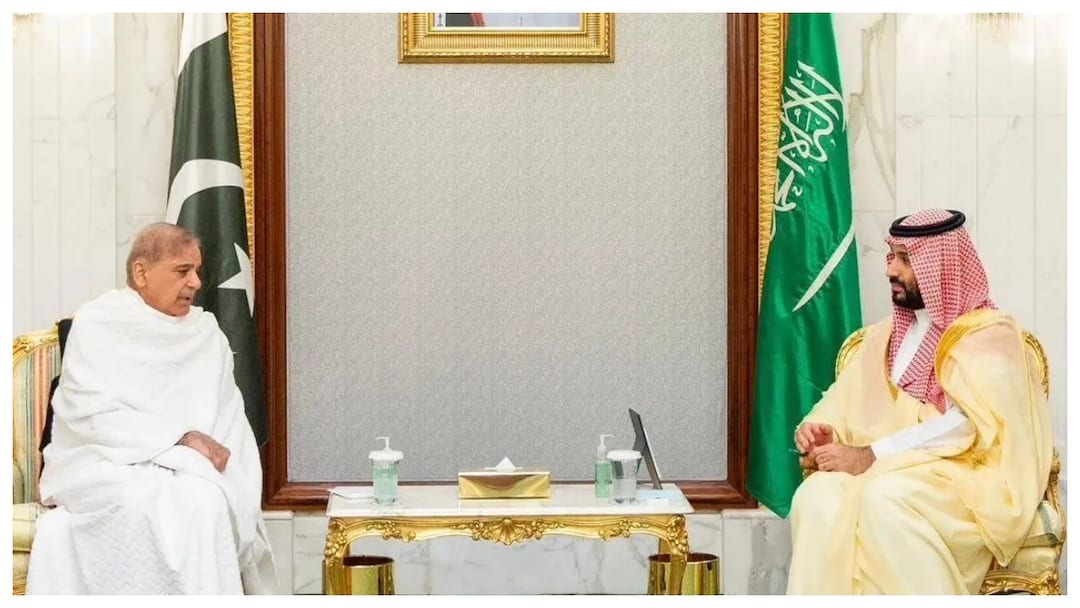
Saudi Arabia seemed to support India’s stand on the issue of Jammu and Kashmir in a joint statement signed with Pakistan, urging both nations to address their “outstanding issues” through dialogue. The joint statement was issued after a meeting between Pakistan’s Prime Minister Shehbaz Sharif and Saudi Arabia’s Crown Prince Mohammed bin Salman, on April 7 at Al-Safa Palace in Mecca.
“The two sides stressed the importance of dialogue between Pakistan and India to resolve the outstanding issues between the two countries, especially the Jammu and Kashmir dispute to ensure peace and stability in the region,” the statement reads.
India has consistently maintained that the Kashmir dispute is a bilateral matter between India and Pakistan, refuting any mediation or intervention by third parties.
Despite India and Pakistan both enjoying friendly relations with Arab nations, particularly Saudi Arabia, relations between New Delhi and Riyadh have notably strengthened under Prime Minister Narendra Modi.
Saudi Arabia has adopted a balanced approach regarding the Kashmir dispute. While expressing concern over India’s abrogation of Article 370 in August 2019, Saudi refrained from explicitly condemning the action, acknowledging it as an internal matter of India.
In 2019, Pakistan asked United States to intervene and ask India to engage in talks for a peaceful resolution of the Kashmir dispute. This request came after then US President Donald Trump offered to mediate between the two nations regarding Kashmir.
However, India’s External Affairs Minister, S Jaishankar, clarified that any discussions on the matter, if deemed necessary, would solely occur bilaterally between India and Pakistan.
India has consistently reiterated that Jammu and Kashmir is an integral part of the country, both historically and legally.
New Delhi has expressed its desire for normal and friendly relations with Pakistan, provided that it refrains from supporting terrorism and hostile actions against India.
Pakistan’s Economy
The joint statement further underscored Saudi Arabia’s supportive role in Pakistan’s economy, highlighting mutual efforts to enhance trade and investment ties between the two nations.
“Both parties affirmed their commitment to expediting the first wave of investment package worth $ 5 billion which was discussed previously,” the statement reads.

Saudi Arabia seemed to support India’s stand on the issue of Jammu and Kashmir in a joint statement signed with Pakistan, urging both nations to address their “outstanding issues” through dialogue. The joint statement was issued after a meeting between Pakistan’s Prime Minister Shehbaz Sharif and Saudi Arabia’s Crown Prince Mohammed bin Salman, on April 7 at Al-Safa Palace in Mecca.
“The two sides stressed the importance of dialogue between Pakistan and India to resolve the outstanding issues between the two countries, especially the Jammu and Kashmir dispute to ensure peace and stability in the region,” the statement reads.
India has consistently maintained that the Kashmir dispute is a bilateral matter between India and Pakistan, refuting any mediation or intervention by third parties.
Despite India and Pakistan both enjoying friendly relations with Arab nations, particularly Saudi Arabia, relations between New Delhi and Riyadh have notably strengthened under Prime Minister Narendra Modi.
Saudi Arabia has adopted a balanced approach regarding the Kashmir dispute. While expressing concern over India’s abrogation of Article 370 in August 2019, Saudi refrained from explicitly condemning the action, acknowledging it as an internal matter of India.
In 2019, Pakistan asked United States to intervene and ask India to engage in talks for a peaceful resolution of the Kashmir dispute. This request came after then US President Donald Trump offered to mediate between the two nations regarding Kashmir.
However, India’s External Affairs Minister, S Jaishankar, clarified that any discussions on the matter, if deemed necessary, would solely occur bilaterally between India and Pakistan.
India has consistently reiterated that Jammu and Kashmir is an integral part of the country, both historically and legally.
New Delhi has expressed its desire for normal and friendly relations with Pakistan, provided that it refrains from supporting terrorism and hostile actions against India.
Pakistan’s Economy
The joint statement further underscored Saudi Arabia’s supportive role in Pakistan’s economy, highlighting mutual efforts to enhance trade and investment ties between the two nations.
“Both parties affirmed their commitment to expediting the first wave of investment package worth $ 5 billion which was discussed previously,” the statement reads.

Saudi Arabia seemed to support India’s stand on the issue of Jammu and Kashmir in a joint statement signed with Pakistan, urging both nations to address their “outstanding issues” through dialogue. The joint statement was issued after a meeting between Pakistan’s Prime Minister Shehbaz Sharif and Saudi Arabia’s Crown Prince Mohammed bin Salman, on April 7 at Al-Safa Palace in Mecca.
“The two sides stressed the importance of dialogue between Pakistan and India to resolve the outstanding issues between the two countries, especially the Jammu and Kashmir dispute to ensure peace and stability in the region,” the statement reads.
India has consistently maintained that the Kashmir dispute is a bilateral matter between India and Pakistan, refuting any mediation or intervention by third parties.
Despite India and Pakistan both enjoying friendly relations with Arab nations, particularly Saudi Arabia, relations between New Delhi and Riyadh have notably strengthened under Prime Minister Narendra Modi.
Saudi Arabia has adopted a balanced approach regarding the Kashmir dispute. While expressing concern over India’s abrogation of Article 370 in August 2019, Saudi refrained from explicitly condemning the action, acknowledging it as an internal matter of India.
In 2019, Pakistan asked United States to intervene and ask India to engage in talks for a peaceful resolution of the Kashmir dispute. This request came after then US President Donald Trump offered to mediate between the two nations regarding Kashmir.
However, India’s External Affairs Minister, S Jaishankar, clarified that any discussions on the matter, if deemed necessary, would solely occur bilaterally between India and Pakistan.
India has consistently reiterated that Jammu and Kashmir is an integral part of the country, both historically and legally.
New Delhi has expressed its desire for normal and friendly relations with Pakistan, provided that it refrains from supporting terrorism and hostile actions against India.
Pakistan’s Economy
The joint statement further underscored Saudi Arabia’s supportive role in Pakistan’s economy, highlighting mutual efforts to enhance trade and investment ties between the two nations.
“Both parties affirmed their commitment to expediting the first wave of investment package worth $ 5 billion which was discussed previously,” the statement reads.
Saudi Arabia seemed to support India’s stand on the issue of Jammu and Kashmir in a joint statement signed with Pakistan, urging both nations to address their “outstanding issues” through dialogue. The joint statement was issued after a meeting between Pakistan’s Prime Minister Shehbaz Sharif and Saudi Arabia’s Crown Prince Mohammed bin Salman, on April 7 at Al-Safa Palace in Mecca.
“The two sides stressed the importance of dialogue between Pakistan and India to resolve the outstanding issues between the two countries, especially the Jammu and Kashmir dispute to ensure peace and stability in the region,” the statement reads.
India has consistently maintained that the Kashmir dispute is a bilateral matter between India and Pakistan, refuting any mediation or intervention by third parties.
Despite India and Pakistan both enjoying friendly relations with Arab nations, particularly Saudi Arabia, relations between New Delhi and Riyadh have notably strengthened under Prime Minister Narendra Modi.
Saudi Arabia has adopted a balanced approach regarding the Kashmir dispute. While expressing concern over India’s abrogation of Article 370 in August 2019, Saudi refrained from explicitly condemning the action, acknowledging it as an internal matter of India.
In 2019, Pakistan asked United States to intervene and ask India to engage in talks for a peaceful resolution of the Kashmir dispute. This request came after then US President Donald Trump offered to mediate between the two nations regarding Kashmir.
However, India’s External Affairs Minister, S Jaishankar, clarified that any discussions on the matter, if deemed necessary, would solely occur bilaterally between India and Pakistan.
India has consistently reiterated that Jammu and Kashmir is an integral part of the country, both historically and legally.
New Delhi has expressed its desire for normal and friendly relations with Pakistan, provided that it refrains from supporting terrorism and hostile actions against India.
Pakistan’s Economy
The joint statement further underscored Saudi Arabia’s supportive role in Pakistan’s economy, highlighting mutual efforts to enhance trade and investment ties between the two nations.
“Both parties affirmed their commitment to expediting the first wave of investment package worth $ 5 billion which was discussed previously,” the statement reads.

Saudi Arabia seemed to support India’s stand on the issue of Jammu and Kashmir in a joint statement signed with Pakistan, urging both nations to address their “outstanding issues” through dialogue. The joint statement was issued after a meeting between Pakistan’s Prime Minister Shehbaz Sharif and Saudi Arabia’s Crown Prince Mohammed bin Salman, on April 7 at Al-Safa Palace in Mecca.
“The two sides stressed the importance of dialogue between Pakistan and India to resolve the outstanding issues between the two countries, especially the Jammu and Kashmir dispute to ensure peace and stability in the region,” the statement reads.
India has consistently maintained that the Kashmir dispute is a bilateral matter between India and Pakistan, refuting any mediation or intervention by third parties.
Despite India and Pakistan both enjoying friendly relations with Arab nations, particularly Saudi Arabia, relations between New Delhi and Riyadh have notably strengthened under Prime Minister Narendra Modi.
Saudi Arabia has adopted a balanced approach regarding the Kashmir dispute. While expressing concern over India’s abrogation of Article 370 in August 2019, Saudi refrained from explicitly condemning the action, acknowledging it as an internal matter of India.
In 2019, Pakistan asked United States to intervene and ask India to engage in talks for a peaceful resolution of the Kashmir dispute. This request came after then US President Donald Trump offered to mediate between the two nations regarding Kashmir.
However, India’s External Affairs Minister, S Jaishankar, clarified that any discussions on the matter, if deemed necessary, would solely occur bilaterally between India and Pakistan.
India has consistently reiterated that Jammu and Kashmir is an integral part of the country, both historically and legally.
New Delhi has expressed its desire for normal and friendly relations with Pakistan, provided that it refrains from supporting terrorism and hostile actions against India.
Pakistan’s Economy
The joint statement further underscored Saudi Arabia’s supportive role in Pakistan’s economy, highlighting mutual efforts to enhance trade and investment ties between the two nations.
“Both parties affirmed their commitment to expediting the first wave of investment package worth $ 5 billion which was discussed previously,” the statement reads.
Saudi Arabia seemed to support India’s stand on the issue of Jammu and Kashmir in a joint statement signed with Pakistan, urging both nations to address their “outstanding issues” through dialogue. The joint statement was issued after a meeting between Pakistan’s Prime Minister Shehbaz Sharif and Saudi Arabia’s Crown Prince Mohammed bin Salman, on April 7 at Al-Safa Palace in Mecca.
“The two sides stressed the importance of dialogue between Pakistan and India to resolve the outstanding issues between the two countries, especially the Jammu and Kashmir dispute to ensure peace and stability in the region,” the statement reads.
India has consistently maintained that the Kashmir dispute is a bilateral matter between India and Pakistan, refuting any mediation or intervention by third parties.
Despite India and Pakistan both enjoying friendly relations with Arab nations, particularly Saudi Arabia, relations between New Delhi and Riyadh have notably strengthened under Prime Minister Narendra Modi.
Saudi Arabia has adopted a balanced approach regarding the Kashmir dispute. While expressing concern over India’s abrogation of Article 370 in August 2019, Saudi refrained from explicitly condemning the action, acknowledging it as an internal matter of India.
In 2019, Pakistan asked United States to intervene and ask India to engage in talks for a peaceful resolution of the Kashmir dispute. This request came after then US President Donald Trump offered to mediate between the two nations regarding Kashmir.
However, India’s External Affairs Minister, S Jaishankar, clarified that any discussions on the matter, if deemed necessary, would solely occur bilaterally between India and Pakistan.
India has consistently reiterated that Jammu and Kashmir is an integral part of the country, both historically and legally.
New Delhi has expressed its desire for normal and friendly relations with Pakistan, provided that it refrains from supporting terrorism and hostile actions against India.
Pakistan’s Economy
The joint statement further underscored Saudi Arabia’s supportive role in Pakistan’s economy, highlighting mutual efforts to enhance trade and investment ties between the two nations.
“Both parties affirmed their commitment to expediting the first wave of investment package worth $ 5 billion which was discussed previously,” the statement reads.
Saudi Arabia seemed to support India’s stand on the issue of Jammu and Kashmir in a joint statement signed with Pakistan, urging both nations to address their “outstanding issues” through dialogue. The joint statement was issued after a meeting between Pakistan’s Prime Minister Shehbaz Sharif and Saudi Arabia’s Crown Prince Mohammed bin Salman, on April 7 at Al-Safa Palace in Mecca.
“The two sides stressed the importance of dialogue between Pakistan and India to resolve the outstanding issues between the two countries, especially the Jammu and Kashmir dispute to ensure peace and stability in the region,” the statement reads.
India has consistently maintained that the Kashmir dispute is a bilateral matter between India and Pakistan, refuting any mediation or intervention by third parties.
Despite India and Pakistan both enjoying friendly relations with Arab nations, particularly Saudi Arabia, relations between New Delhi and Riyadh have notably strengthened under Prime Minister Narendra Modi.
Saudi Arabia has adopted a balanced approach regarding the Kashmir dispute. While expressing concern over India’s abrogation of Article 370 in August 2019, Saudi refrained from explicitly condemning the action, acknowledging it as an internal matter of India.
In 2019, Pakistan asked United States to intervene and ask India to engage in talks for a peaceful resolution of the Kashmir dispute. This request came after then US President Donald Trump offered to mediate between the two nations regarding Kashmir.
However, India’s External Affairs Minister, S Jaishankar, clarified that any discussions on the matter, if deemed necessary, would solely occur bilaterally between India and Pakistan.
India has consistently reiterated that Jammu and Kashmir is an integral part of the country, both historically and legally.
New Delhi has expressed its desire for normal and friendly relations with Pakistan, provided that it refrains from supporting terrorism and hostile actions against India.
Pakistan’s Economy
The joint statement further underscored Saudi Arabia’s supportive role in Pakistan’s economy, highlighting mutual efforts to enhance trade and investment ties between the two nations.
“Both parties affirmed their commitment to expediting the first wave of investment package worth $ 5 billion which was discussed previously,” the statement reads.
Saudi Arabia seemed to support India’s stand on the issue of Jammu and Kashmir in a joint statement signed with Pakistan, urging both nations to address their “outstanding issues” through dialogue. The joint statement was issued after a meeting between Pakistan’s Prime Minister Shehbaz Sharif and Saudi Arabia’s Crown Prince Mohammed bin Salman, on April 7 at Al-Safa Palace in Mecca.
“The two sides stressed the importance of dialogue between Pakistan and India to resolve the outstanding issues between the two countries, especially the Jammu and Kashmir dispute to ensure peace and stability in the region,” the statement reads.
India has consistently maintained that the Kashmir dispute is a bilateral matter between India and Pakistan, refuting any mediation or intervention by third parties.
Despite India and Pakistan both enjoying friendly relations with Arab nations, particularly Saudi Arabia, relations between New Delhi and Riyadh have notably strengthened under Prime Minister Narendra Modi.
Saudi Arabia has adopted a balanced approach regarding the Kashmir dispute. While expressing concern over India’s abrogation of Article 370 in August 2019, Saudi refrained from explicitly condemning the action, acknowledging it as an internal matter of India.
In 2019, Pakistan asked United States to intervene and ask India to engage in talks for a peaceful resolution of the Kashmir dispute. This request came after then US President Donald Trump offered to mediate between the two nations regarding Kashmir.
However, India’s External Affairs Minister, S Jaishankar, clarified that any discussions on the matter, if deemed necessary, would solely occur bilaterally between India and Pakistan.
India has consistently reiterated that Jammu and Kashmir is an integral part of the country, both historically and legally.
New Delhi has expressed its desire for normal and friendly relations with Pakistan, provided that it refrains from supporting terrorism and hostile actions against India.
Pakistan’s Economy
The joint statement further underscored Saudi Arabia’s supportive role in Pakistan’s economy, highlighting mutual efforts to enhance trade and investment ties between the two nations.
“Both parties affirmed their commitment to expediting the first wave of investment package worth $ 5 billion which was discussed previously,” the statement reads.

Saudi Arabia seemed to support India’s stand on the issue of Jammu and Kashmir in a joint statement signed with Pakistan, urging both nations to address their “outstanding issues” through dialogue. The joint statement was issued after a meeting between Pakistan’s Prime Minister Shehbaz Sharif and Saudi Arabia’s Crown Prince Mohammed bin Salman, on April 7 at Al-Safa Palace in Mecca.
“The two sides stressed the importance of dialogue between Pakistan and India to resolve the outstanding issues between the two countries, especially the Jammu and Kashmir dispute to ensure peace and stability in the region,” the statement reads.
India has consistently maintained that the Kashmir dispute is a bilateral matter between India and Pakistan, refuting any mediation or intervention by third parties.
Despite India and Pakistan both enjoying friendly relations with Arab nations, particularly Saudi Arabia, relations between New Delhi and Riyadh have notably strengthened under Prime Minister Narendra Modi.
Saudi Arabia has adopted a balanced approach regarding the Kashmir dispute. While expressing concern over India’s abrogation of Article 370 in August 2019, Saudi refrained from explicitly condemning the action, acknowledging it as an internal matter of India.
In 2019, Pakistan asked United States to intervene and ask India to engage in talks for a peaceful resolution of the Kashmir dispute. This request came after then US President Donald Trump offered to mediate between the two nations regarding Kashmir.
However, India’s External Affairs Minister, S Jaishankar, clarified that any discussions on the matter, if deemed necessary, would solely occur bilaterally between India and Pakistan.
India has consistently reiterated that Jammu and Kashmir is an integral part of the country, both historically and legally.
New Delhi has expressed its desire for normal and friendly relations with Pakistan, provided that it refrains from supporting terrorism and hostile actions against India.
Pakistan’s Economy
The joint statement further underscored Saudi Arabia’s supportive role in Pakistan’s economy, highlighting mutual efforts to enhance trade and investment ties between the two nations.
“Both parties affirmed their commitment to expediting the first wave of investment package worth $ 5 billion which was discussed previously,” the statement reads.
Saudi Arabia seemed to support India’s stand on the issue of Jammu and Kashmir in a joint statement signed with Pakistan, urging both nations to address their “outstanding issues” through dialogue. The joint statement was issued after a meeting between Pakistan’s Prime Minister Shehbaz Sharif and Saudi Arabia’s Crown Prince Mohammed bin Salman, on April 7 at Al-Safa Palace in Mecca.
“The two sides stressed the importance of dialogue between Pakistan and India to resolve the outstanding issues between the two countries, especially the Jammu and Kashmir dispute to ensure peace and stability in the region,” the statement reads.
India has consistently maintained that the Kashmir dispute is a bilateral matter between India and Pakistan, refuting any mediation or intervention by third parties.
Despite India and Pakistan both enjoying friendly relations with Arab nations, particularly Saudi Arabia, relations between New Delhi and Riyadh have notably strengthened under Prime Minister Narendra Modi.
Saudi Arabia has adopted a balanced approach regarding the Kashmir dispute. While expressing concern over India’s abrogation of Article 370 in August 2019, Saudi refrained from explicitly condemning the action, acknowledging it as an internal matter of India.
In 2019, Pakistan asked United States to intervene and ask India to engage in talks for a peaceful resolution of the Kashmir dispute. This request came after then US President Donald Trump offered to mediate between the two nations regarding Kashmir.
However, India’s External Affairs Minister, S Jaishankar, clarified that any discussions on the matter, if deemed necessary, would solely occur bilaterally between India and Pakistan.
India has consistently reiterated that Jammu and Kashmir is an integral part of the country, both historically and legally.
New Delhi has expressed its desire for normal and friendly relations with Pakistan, provided that it refrains from supporting terrorism and hostile actions against India.
Pakistan’s Economy
The joint statement further underscored Saudi Arabia’s supportive role in Pakistan’s economy, highlighting mutual efforts to enhance trade and investment ties between the two nations.
“Both parties affirmed their commitment to expediting the first wave of investment package worth $ 5 billion which was discussed previously,” the statement reads.
Saudi Arabia seemed to support India’s stand on the issue of Jammu and Kashmir in a joint statement signed with Pakistan, urging both nations to address their “outstanding issues” through dialogue. The joint statement was issued after a meeting between Pakistan’s Prime Minister Shehbaz Sharif and Saudi Arabia’s Crown Prince Mohammed bin Salman, on April 7 at Al-Safa Palace in Mecca.
“The two sides stressed the importance of dialogue between Pakistan and India to resolve the outstanding issues between the two countries, especially the Jammu and Kashmir dispute to ensure peace and stability in the region,” the statement reads.
India has consistently maintained that the Kashmir dispute is a bilateral matter between India and Pakistan, refuting any mediation or intervention by third parties.
Despite India and Pakistan both enjoying friendly relations with Arab nations, particularly Saudi Arabia, relations between New Delhi and Riyadh have notably strengthened under Prime Minister Narendra Modi.
Saudi Arabia has adopted a balanced approach regarding the Kashmir dispute. While expressing concern over India’s abrogation of Article 370 in August 2019, Saudi refrained from explicitly condemning the action, acknowledging it as an internal matter of India.
In 2019, Pakistan asked United States to intervene and ask India to engage in talks for a peaceful resolution of the Kashmir dispute. This request came after then US President Donald Trump offered to mediate between the two nations regarding Kashmir.
However, India’s External Affairs Minister, S Jaishankar, clarified that any discussions on the matter, if deemed necessary, would solely occur bilaterally between India and Pakistan.
India has consistently reiterated that Jammu and Kashmir is an integral part of the country, both historically and legally.
New Delhi has expressed its desire for normal and friendly relations with Pakistan, provided that it refrains from supporting terrorism and hostile actions against India.
Pakistan’s Economy
The joint statement further underscored Saudi Arabia’s supportive role in Pakistan’s economy, highlighting mutual efforts to enhance trade and investment ties between the two nations.
“Both parties affirmed their commitment to expediting the first wave of investment package worth $ 5 billion which was discussed previously,” the statement reads.
Saudi Arabia seemed to support India’s stand on the issue of Jammu and Kashmir in a joint statement signed with Pakistan, urging both nations to address their “outstanding issues” through dialogue. The joint statement was issued after a meeting between Pakistan’s Prime Minister Shehbaz Sharif and Saudi Arabia’s Crown Prince Mohammed bin Salman, on April 7 at Al-Safa Palace in Mecca.
“The two sides stressed the importance of dialogue between Pakistan and India to resolve the outstanding issues between the two countries, especially the Jammu and Kashmir dispute to ensure peace and stability in the region,” the statement reads.
India has consistently maintained that the Kashmir dispute is a bilateral matter between India and Pakistan, refuting any mediation or intervention by third parties.
Despite India and Pakistan both enjoying friendly relations with Arab nations, particularly Saudi Arabia, relations between New Delhi and Riyadh have notably strengthened under Prime Minister Narendra Modi.
Saudi Arabia has adopted a balanced approach regarding the Kashmir dispute. While expressing concern over India’s abrogation of Article 370 in August 2019, Saudi refrained from explicitly condemning the action, acknowledging it as an internal matter of India.
In 2019, Pakistan asked United States to intervene and ask India to engage in talks for a peaceful resolution of the Kashmir dispute. This request came after then US President Donald Trump offered to mediate between the two nations regarding Kashmir.
However, India’s External Affairs Minister, S Jaishankar, clarified that any discussions on the matter, if deemed necessary, would solely occur bilaterally between India and Pakistan.
India has consistently reiterated that Jammu and Kashmir is an integral part of the country, both historically and legally.
New Delhi has expressed its desire for normal and friendly relations with Pakistan, provided that it refrains from supporting terrorism and hostile actions against India.
Pakistan’s Economy
The joint statement further underscored Saudi Arabia’s supportive role in Pakistan’s economy, highlighting mutual efforts to enhance trade and investment ties between the two nations.
“Both parties affirmed their commitment to expediting the first wave of investment package worth $ 5 billion which was discussed previously,” the statement reads.
Saudi Arabia seemed to support India’s stand on the issue of Jammu and Kashmir in a joint statement signed with Pakistan, urging both nations to address their “outstanding issues” through dialogue. The joint statement was issued after a meeting between Pakistan’s Prime Minister Shehbaz Sharif and Saudi Arabia’s Crown Prince Mohammed bin Salman, on April 7 at Al-Safa Palace in Mecca.
“The two sides stressed the importance of dialogue between Pakistan and India to resolve the outstanding issues between the two countries, especially the Jammu and Kashmir dispute to ensure peace and stability in the region,” the statement reads.
India has consistently maintained that the Kashmir dispute is a bilateral matter between India and Pakistan, refuting any mediation or intervention by third parties.
Despite India and Pakistan both enjoying friendly relations with Arab nations, particularly Saudi Arabia, relations between New Delhi and Riyadh have notably strengthened under Prime Minister Narendra Modi.
Saudi Arabia has adopted a balanced approach regarding the Kashmir dispute. While expressing concern over India’s abrogation of Article 370 in August 2019, Saudi refrained from explicitly condemning the action, acknowledging it as an internal matter of India.
In 2019, Pakistan asked United States to intervene and ask India to engage in talks for a peaceful resolution of the Kashmir dispute. This request came after then US President Donald Trump offered to mediate between the two nations regarding Kashmir.
However, India’s External Affairs Minister, S Jaishankar, clarified that any discussions on the matter, if deemed necessary, would solely occur bilaterally between India and Pakistan.
India has consistently reiterated that Jammu and Kashmir is an integral part of the country, both historically and legally.
New Delhi has expressed its desire for normal and friendly relations with Pakistan, provided that it refrains from supporting terrorism and hostile actions against India.
Pakistan’s Economy
The joint statement further underscored Saudi Arabia’s supportive role in Pakistan’s economy, highlighting mutual efforts to enhance trade and investment ties between the two nations.
“Both parties affirmed their commitment to expediting the first wave of investment package worth $ 5 billion which was discussed previously,” the statement reads.
Saudi Arabia seemed to support India’s stand on the issue of Jammu and Kashmir in a joint statement signed with Pakistan, urging both nations to address their “outstanding issues” through dialogue. The joint statement was issued after a meeting between Pakistan’s Prime Minister Shehbaz Sharif and Saudi Arabia’s Crown Prince Mohammed bin Salman, on April 7 at Al-Safa Palace in Mecca.
“The two sides stressed the importance of dialogue between Pakistan and India to resolve the outstanding issues between the two countries, especially the Jammu and Kashmir dispute to ensure peace and stability in the region,” the statement reads.
India has consistently maintained that the Kashmir dispute is a bilateral matter between India and Pakistan, refuting any mediation or intervention by third parties.
Despite India and Pakistan both enjoying friendly relations with Arab nations, particularly Saudi Arabia, relations between New Delhi and Riyadh have notably strengthened under Prime Minister Narendra Modi.
Saudi Arabia has adopted a balanced approach regarding the Kashmir dispute. While expressing concern over India’s abrogation of Article 370 in August 2019, Saudi refrained from explicitly condemning the action, acknowledging it as an internal matter of India.
In 2019, Pakistan asked United States to intervene and ask India to engage in talks for a peaceful resolution of the Kashmir dispute. This request came after then US President Donald Trump offered to mediate between the two nations regarding Kashmir.
However, India’s External Affairs Minister, S Jaishankar, clarified that any discussions on the matter, if deemed necessary, would solely occur bilaterally between India and Pakistan.
India has consistently reiterated that Jammu and Kashmir is an integral part of the country, both historically and legally.
New Delhi has expressed its desire for normal and friendly relations with Pakistan, provided that it refrains from supporting terrorism and hostile actions against India.
Pakistan’s Economy
The joint statement further underscored Saudi Arabia’s supportive role in Pakistan’s economy, highlighting mutual efforts to enhance trade and investment ties between the two nations.
“Both parties affirmed their commitment to expediting the first wave of investment package worth $ 5 billion which was discussed previously,” the statement reads.
Saudi Arabia seemed to support India’s stand on the issue of Jammu and Kashmir in a joint statement signed with Pakistan, urging both nations to address their “outstanding issues” through dialogue. The joint statement was issued after a meeting between Pakistan’s Prime Minister Shehbaz Sharif and Saudi Arabia’s Crown Prince Mohammed bin Salman, on April 7 at Al-Safa Palace in Mecca.
“The two sides stressed the importance of dialogue between Pakistan and India to resolve the outstanding issues between the two countries, especially the Jammu and Kashmir dispute to ensure peace and stability in the region,” the statement reads.
India has consistently maintained that the Kashmir dispute is a bilateral matter between India and Pakistan, refuting any mediation or intervention by third parties.
Despite India and Pakistan both enjoying friendly relations with Arab nations, particularly Saudi Arabia, relations between New Delhi and Riyadh have notably strengthened under Prime Minister Narendra Modi.
Saudi Arabia has adopted a balanced approach regarding the Kashmir dispute. While expressing concern over India’s abrogation of Article 370 in August 2019, Saudi refrained from explicitly condemning the action, acknowledging it as an internal matter of India.
In 2019, Pakistan asked United States to intervene and ask India to engage in talks for a peaceful resolution of the Kashmir dispute. This request came after then US President Donald Trump offered to mediate between the two nations regarding Kashmir.
However, India’s External Affairs Minister, S Jaishankar, clarified that any discussions on the matter, if deemed necessary, would solely occur bilaterally between India and Pakistan.
India has consistently reiterated that Jammu and Kashmir is an integral part of the country, both historically and legally.
New Delhi has expressed its desire for normal and friendly relations with Pakistan, provided that it refrains from supporting terrorism and hostile actions against India.
Pakistan’s Economy
The joint statement further underscored Saudi Arabia’s supportive role in Pakistan’s economy, highlighting mutual efforts to enhance trade and investment ties between the two nations.
“Both parties affirmed their commitment to expediting the first wave of investment package worth $ 5 billion which was discussed previously,” the statement reads.
Saudi Arabia seemed to support India’s stand on the issue of Jammu and Kashmir in a joint statement signed with Pakistan, urging both nations to address their “outstanding issues” through dialogue. The joint statement was issued after a meeting between Pakistan’s Prime Minister Shehbaz Sharif and Saudi Arabia’s Crown Prince Mohammed bin Salman, on April 7 at Al-Safa Palace in Mecca.
“The two sides stressed the importance of dialogue between Pakistan and India to resolve the outstanding issues between the two countries, especially the Jammu and Kashmir dispute to ensure peace and stability in the region,” the statement reads.
India has consistently maintained that the Kashmir dispute is a bilateral matter between India and Pakistan, refuting any mediation or intervention by third parties.
Despite India and Pakistan both enjoying friendly relations with Arab nations, particularly Saudi Arabia, relations between New Delhi and Riyadh have notably strengthened under Prime Minister Narendra Modi.
Saudi Arabia has adopted a balanced approach regarding the Kashmir dispute. While expressing concern over India’s abrogation of Article 370 in August 2019, Saudi refrained from explicitly condemning the action, acknowledging it as an internal matter of India.
In 2019, Pakistan asked United States to intervene and ask India to engage in talks for a peaceful resolution of the Kashmir dispute. This request came after then US President Donald Trump offered to mediate between the two nations regarding Kashmir.
However, India’s External Affairs Minister, S Jaishankar, clarified that any discussions on the matter, if deemed necessary, would solely occur bilaterally between India and Pakistan.
India has consistently reiterated that Jammu and Kashmir is an integral part of the country, both historically and legally.
New Delhi has expressed its desire for normal and friendly relations with Pakistan, provided that it refrains from supporting terrorism and hostile actions against India.
Pakistan’s Economy
The joint statement further underscored Saudi Arabia’s supportive role in Pakistan’s economy, highlighting mutual efforts to enhance trade and investment ties between the two nations.
“Both parties affirmed their commitment to expediting the first wave of investment package worth $ 5 billion which was discussed previously,” the statement reads.

