

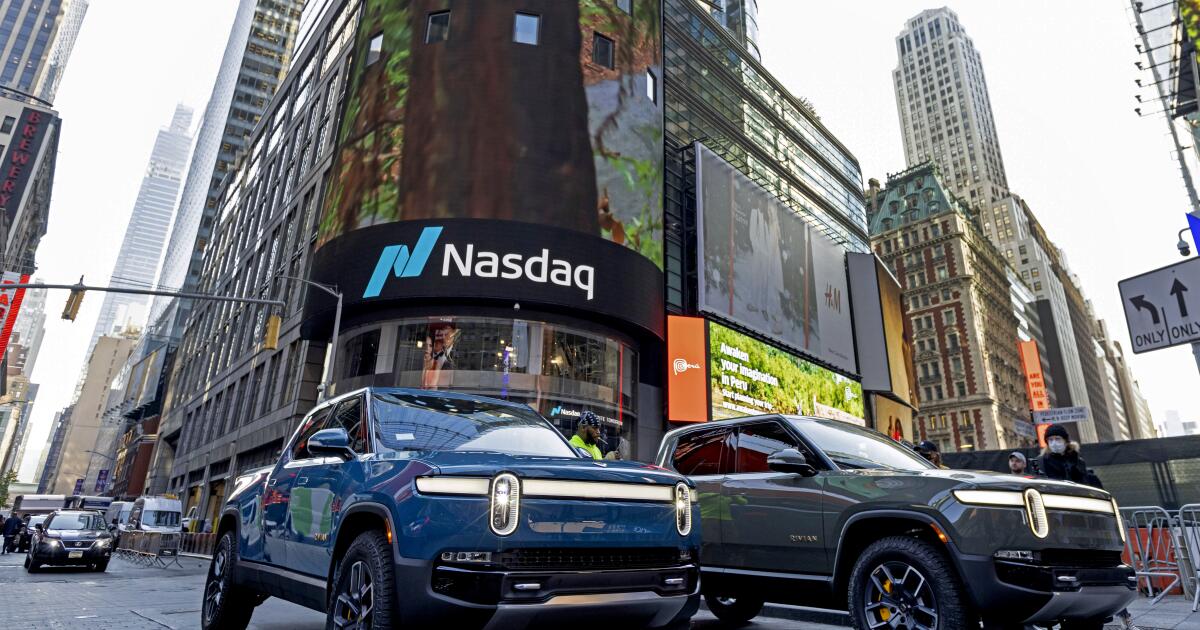

Electric vehicle maker Rivian saw its shares dip Friday after the Irvine-based company cut its production targets amid ongoing supply issues.
Citing a shortage of a component used to build its electric pickups, sport utility vehicles and vans, Rivian said production could drop as much as 18% this year at its lone U.S. assembly plant.
Rivian did not specify the part that is in low supply but noted that the shortage has become more acute in recent weeks.
The company now forecasts its full-year production will be between 47,000 and 49,000 vehicles, down from an earlier estimate of 57,000. During the most recent quarter, Rivian produced 13,157 vehicles and delivered 10,018, falling short of analysts’ expectations.
Shares of Rivian ended the day at $10.44, down 3.2%. The company’s stock has been battered since the start of the year, falling by more than 50% amid underwhelming financial reports. In the second quarter this year, Rivian posted a net loss of $1.46 billion compared with a loss of about $1.12 billion during the same period a year earlier. The company is scheduled to announce its third-quarter earnings next month.
Rivian received a lifeline in June when Volkswagen agreed to a massive investment in the company that is expected to total $5 billion. Rivan has nonetheless continued to struggle in the face of dropping demand for electric vehicles and other supply chain issues that forced the company to pause its production of commercial vans for Amazon.com in August.
Early this year, the automaker announced a 10% cut in its workforce that sent stocks plummeting 25% in one day. The pool of interested wealthy buyers who don’t already own an electric vehicle is shrinking, analysts said, while the broader market weighs the advantages and feasibility of switching to electric.
The average car buyer is not likely to be able to afford a Rivian vehicle, and concerns remain about charging infrastructure and the distance vehicles can drive on a single charge. Rivian’s R1T electric pickup truck starts at around $70,000; its R1S SUV starts at nearly $75,000.
With sleek design and outdoorsy features, Rivian’s vehicles garnered much attention from analysts and attracted investors such as Amazon and Volkswagen. The company exceeded expectations during its initial public offering of stock in 2021, ending its first day of trading valued at nearly $88 billion.
The production issues announced this week could get in the way of Rivian’s goal of achieving positive gross profits by the fourth quarter of this year. According to analysts, the company’s gross margins are expected to remain in negative territory in the final three months of 2024.

Electric vehicle maker Rivian saw its shares dip Friday after the Irvine-based company cut its production targets amid ongoing supply issues.
Citing a shortage of a component used to build its electric pickups, sport utility vehicles and vans, Rivian said production could drop as much as 18% this year at its lone U.S. assembly plant.
Rivian did not specify the part that is in low supply but noted that the shortage has become more acute in recent weeks.
The company now forecasts its full-year production will be between 47,000 and 49,000 vehicles, down from an earlier estimate of 57,000. During the most recent quarter, Rivian produced 13,157 vehicles and delivered 10,018, falling short of analysts’ expectations.
Shares of Rivian ended the day at $10.44, down 3.2%. The company’s stock has been battered since the start of the year, falling by more than 50% amid underwhelming financial reports. In the second quarter this year, Rivian posted a net loss of $1.46 billion compared with a loss of about $1.12 billion during the same period a year earlier. The company is scheduled to announce its third-quarter earnings next month.
Rivian received a lifeline in June when Volkswagen agreed to a massive investment in the company that is expected to total $5 billion. Rivan has nonetheless continued to struggle in the face of dropping demand for electric vehicles and other supply chain issues that forced the company to pause its production of commercial vans for Amazon.com in August.
Early this year, the automaker announced a 10% cut in its workforce that sent stocks plummeting 25% in one day. The pool of interested wealthy buyers who don’t already own an electric vehicle is shrinking, analysts said, while the broader market weighs the advantages and feasibility of switching to electric.
The average car buyer is not likely to be able to afford a Rivian vehicle, and concerns remain about charging infrastructure and the distance vehicles can drive on a single charge. Rivian’s R1T electric pickup truck starts at around $70,000; its R1S SUV starts at nearly $75,000.
With sleek design and outdoorsy features, Rivian’s vehicles garnered much attention from analysts and attracted investors such as Amazon and Volkswagen. The company exceeded expectations during its initial public offering of stock in 2021, ending its first day of trading valued at nearly $88 billion.
The production issues announced this week could get in the way of Rivian’s goal of achieving positive gross profits by the fourth quarter of this year. According to analysts, the company’s gross margins are expected to remain in negative territory in the final three months of 2024.

Electric vehicle maker Rivian saw its shares dip Friday after the Irvine-based company cut its production targets amid ongoing supply issues.
Citing a shortage of a component used to build its electric pickups, sport utility vehicles and vans, Rivian said production could drop as much as 18% this year at its lone U.S. assembly plant.
Rivian did not specify the part that is in low supply but noted that the shortage has become more acute in recent weeks.
The company now forecasts its full-year production will be between 47,000 and 49,000 vehicles, down from an earlier estimate of 57,000. During the most recent quarter, Rivian produced 13,157 vehicles and delivered 10,018, falling short of analysts’ expectations.
Shares of Rivian ended the day at $10.44, down 3.2%. The company’s stock has been battered since the start of the year, falling by more than 50% amid underwhelming financial reports. In the second quarter this year, Rivian posted a net loss of $1.46 billion compared with a loss of about $1.12 billion during the same period a year earlier. The company is scheduled to announce its third-quarter earnings next month.
Rivian received a lifeline in June when Volkswagen agreed to a massive investment in the company that is expected to total $5 billion. Rivan has nonetheless continued to struggle in the face of dropping demand for electric vehicles and other supply chain issues that forced the company to pause its production of commercial vans for Amazon.com in August.
Early this year, the automaker announced a 10% cut in its workforce that sent stocks plummeting 25% in one day. The pool of interested wealthy buyers who don’t already own an electric vehicle is shrinking, analysts said, while the broader market weighs the advantages and feasibility of switching to electric.
The average car buyer is not likely to be able to afford a Rivian vehicle, and concerns remain about charging infrastructure and the distance vehicles can drive on a single charge. Rivian’s R1T electric pickup truck starts at around $70,000; its R1S SUV starts at nearly $75,000.
With sleek design and outdoorsy features, Rivian’s vehicles garnered much attention from analysts and attracted investors such as Amazon and Volkswagen. The company exceeded expectations during its initial public offering of stock in 2021, ending its first day of trading valued at nearly $88 billion.
The production issues announced this week could get in the way of Rivian’s goal of achieving positive gross profits by the fourth quarter of this year. According to analysts, the company’s gross margins are expected to remain in negative territory in the final three months of 2024.
Electric vehicle maker Rivian saw its shares dip Friday after the Irvine-based company cut its production targets amid ongoing supply issues.
Citing a shortage of a component used to build its electric pickups, sport utility vehicles and vans, Rivian said production could drop as much as 18% this year at its lone U.S. assembly plant.
Rivian did not specify the part that is in low supply but noted that the shortage has become more acute in recent weeks.
The company now forecasts its full-year production will be between 47,000 and 49,000 vehicles, down from an earlier estimate of 57,000. During the most recent quarter, Rivian produced 13,157 vehicles and delivered 10,018, falling short of analysts’ expectations.
Shares of Rivian ended the day at $10.44, down 3.2%. The company’s stock has been battered since the start of the year, falling by more than 50% amid underwhelming financial reports. In the second quarter this year, Rivian posted a net loss of $1.46 billion compared with a loss of about $1.12 billion during the same period a year earlier. The company is scheduled to announce its third-quarter earnings next month.
Rivian received a lifeline in June when Volkswagen agreed to a massive investment in the company that is expected to total $5 billion. Rivan has nonetheless continued to struggle in the face of dropping demand for electric vehicles and other supply chain issues that forced the company to pause its production of commercial vans for Amazon.com in August.
Early this year, the automaker announced a 10% cut in its workforce that sent stocks plummeting 25% in one day. The pool of interested wealthy buyers who don’t already own an electric vehicle is shrinking, analysts said, while the broader market weighs the advantages and feasibility of switching to electric.
The average car buyer is not likely to be able to afford a Rivian vehicle, and concerns remain about charging infrastructure and the distance vehicles can drive on a single charge. Rivian’s R1T electric pickup truck starts at around $70,000; its R1S SUV starts at nearly $75,000.
With sleek design and outdoorsy features, Rivian’s vehicles garnered much attention from analysts and attracted investors such as Amazon and Volkswagen. The company exceeded expectations during its initial public offering of stock in 2021, ending its first day of trading valued at nearly $88 billion.
The production issues announced this week could get in the way of Rivian’s goal of achieving positive gross profits by the fourth quarter of this year. According to analysts, the company’s gross margins are expected to remain in negative territory in the final three months of 2024.

Electric vehicle maker Rivian saw its shares dip Friday after the Irvine-based company cut its production targets amid ongoing supply issues.
Citing a shortage of a component used to build its electric pickups, sport utility vehicles and vans, Rivian said production could drop as much as 18% this year at its lone U.S. assembly plant.
Rivian did not specify the part that is in low supply but noted that the shortage has become more acute in recent weeks.
The company now forecasts its full-year production will be between 47,000 and 49,000 vehicles, down from an earlier estimate of 57,000. During the most recent quarter, Rivian produced 13,157 vehicles and delivered 10,018, falling short of analysts’ expectations.
Shares of Rivian ended the day at $10.44, down 3.2%. The company’s stock has been battered since the start of the year, falling by more than 50% amid underwhelming financial reports. In the second quarter this year, Rivian posted a net loss of $1.46 billion compared with a loss of about $1.12 billion during the same period a year earlier. The company is scheduled to announce its third-quarter earnings next month.
Rivian received a lifeline in June when Volkswagen agreed to a massive investment in the company that is expected to total $5 billion. Rivan has nonetheless continued to struggle in the face of dropping demand for electric vehicles and other supply chain issues that forced the company to pause its production of commercial vans for Amazon.com in August.
Early this year, the automaker announced a 10% cut in its workforce that sent stocks plummeting 25% in one day. The pool of interested wealthy buyers who don’t already own an electric vehicle is shrinking, analysts said, while the broader market weighs the advantages and feasibility of switching to electric.
The average car buyer is not likely to be able to afford a Rivian vehicle, and concerns remain about charging infrastructure and the distance vehicles can drive on a single charge. Rivian’s R1T electric pickup truck starts at around $70,000; its R1S SUV starts at nearly $75,000.
With sleek design and outdoorsy features, Rivian’s vehicles garnered much attention from analysts and attracted investors such as Amazon and Volkswagen. The company exceeded expectations during its initial public offering of stock in 2021, ending its first day of trading valued at nearly $88 billion.
The production issues announced this week could get in the way of Rivian’s goal of achieving positive gross profits by the fourth quarter of this year. According to analysts, the company’s gross margins are expected to remain in negative territory in the final three months of 2024.
Electric vehicle maker Rivian saw its shares dip Friday after the Irvine-based company cut its production targets amid ongoing supply issues.
Citing a shortage of a component used to build its electric pickups, sport utility vehicles and vans, Rivian said production could drop as much as 18% this year at its lone U.S. assembly plant.
Rivian did not specify the part that is in low supply but noted that the shortage has become more acute in recent weeks.
The company now forecasts its full-year production will be between 47,000 and 49,000 vehicles, down from an earlier estimate of 57,000. During the most recent quarter, Rivian produced 13,157 vehicles and delivered 10,018, falling short of analysts’ expectations.
Shares of Rivian ended the day at $10.44, down 3.2%. The company’s stock has been battered since the start of the year, falling by more than 50% amid underwhelming financial reports. In the second quarter this year, Rivian posted a net loss of $1.46 billion compared with a loss of about $1.12 billion during the same period a year earlier. The company is scheduled to announce its third-quarter earnings next month.
Rivian received a lifeline in June when Volkswagen agreed to a massive investment in the company that is expected to total $5 billion. Rivan has nonetheless continued to struggle in the face of dropping demand for electric vehicles and other supply chain issues that forced the company to pause its production of commercial vans for Amazon.com in August.
Early this year, the automaker announced a 10% cut in its workforce that sent stocks plummeting 25% in one day. The pool of interested wealthy buyers who don’t already own an electric vehicle is shrinking, analysts said, while the broader market weighs the advantages and feasibility of switching to electric.
The average car buyer is not likely to be able to afford a Rivian vehicle, and concerns remain about charging infrastructure and the distance vehicles can drive on a single charge. Rivian’s R1T electric pickup truck starts at around $70,000; its R1S SUV starts at nearly $75,000.
With sleek design and outdoorsy features, Rivian’s vehicles garnered much attention from analysts and attracted investors such as Amazon and Volkswagen. The company exceeded expectations during its initial public offering of stock in 2021, ending its first day of trading valued at nearly $88 billion.
The production issues announced this week could get in the way of Rivian’s goal of achieving positive gross profits by the fourth quarter of this year. According to analysts, the company’s gross margins are expected to remain in negative territory in the final three months of 2024.
Electric vehicle maker Rivian saw its shares dip Friday after the Irvine-based company cut its production targets amid ongoing supply issues.
Citing a shortage of a component used to build its electric pickups, sport utility vehicles and vans, Rivian said production could drop as much as 18% this year at its lone U.S. assembly plant.
Rivian did not specify the part that is in low supply but noted that the shortage has become more acute in recent weeks.
The company now forecasts its full-year production will be between 47,000 and 49,000 vehicles, down from an earlier estimate of 57,000. During the most recent quarter, Rivian produced 13,157 vehicles and delivered 10,018, falling short of analysts’ expectations.
Shares of Rivian ended the day at $10.44, down 3.2%. The company’s stock has been battered since the start of the year, falling by more than 50% amid underwhelming financial reports. In the second quarter this year, Rivian posted a net loss of $1.46 billion compared with a loss of about $1.12 billion during the same period a year earlier. The company is scheduled to announce its third-quarter earnings next month.
Rivian received a lifeline in June when Volkswagen agreed to a massive investment in the company that is expected to total $5 billion. Rivan has nonetheless continued to struggle in the face of dropping demand for electric vehicles and other supply chain issues that forced the company to pause its production of commercial vans for Amazon.com in August.
Early this year, the automaker announced a 10% cut in its workforce that sent stocks plummeting 25% in one day. The pool of interested wealthy buyers who don’t already own an electric vehicle is shrinking, analysts said, while the broader market weighs the advantages and feasibility of switching to electric.
The average car buyer is not likely to be able to afford a Rivian vehicle, and concerns remain about charging infrastructure and the distance vehicles can drive on a single charge. Rivian’s R1T electric pickup truck starts at around $70,000; its R1S SUV starts at nearly $75,000.
With sleek design and outdoorsy features, Rivian’s vehicles garnered much attention from analysts and attracted investors such as Amazon and Volkswagen. The company exceeded expectations during its initial public offering of stock in 2021, ending its first day of trading valued at nearly $88 billion.
The production issues announced this week could get in the way of Rivian’s goal of achieving positive gross profits by the fourth quarter of this year. According to analysts, the company’s gross margins are expected to remain in negative territory in the final three months of 2024.
Electric vehicle maker Rivian saw its shares dip Friday after the Irvine-based company cut its production targets amid ongoing supply issues.
Citing a shortage of a component used to build its electric pickups, sport utility vehicles and vans, Rivian said production could drop as much as 18% this year at its lone U.S. assembly plant.
Rivian did not specify the part that is in low supply but noted that the shortage has become more acute in recent weeks.
The company now forecasts its full-year production will be between 47,000 and 49,000 vehicles, down from an earlier estimate of 57,000. During the most recent quarter, Rivian produced 13,157 vehicles and delivered 10,018, falling short of analysts’ expectations.
Shares of Rivian ended the day at $10.44, down 3.2%. The company’s stock has been battered since the start of the year, falling by more than 50% amid underwhelming financial reports. In the second quarter this year, Rivian posted a net loss of $1.46 billion compared with a loss of about $1.12 billion during the same period a year earlier. The company is scheduled to announce its third-quarter earnings next month.
Rivian received a lifeline in June when Volkswagen agreed to a massive investment in the company that is expected to total $5 billion. Rivan has nonetheless continued to struggle in the face of dropping demand for electric vehicles and other supply chain issues that forced the company to pause its production of commercial vans for Amazon.com in August.
Early this year, the automaker announced a 10% cut in its workforce that sent stocks plummeting 25% in one day. The pool of interested wealthy buyers who don’t already own an electric vehicle is shrinking, analysts said, while the broader market weighs the advantages and feasibility of switching to electric.
The average car buyer is not likely to be able to afford a Rivian vehicle, and concerns remain about charging infrastructure and the distance vehicles can drive on a single charge. Rivian’s R1T electric pickup truck starts at around $70,000; its R1S SUV starts at nearly $75,000.
With sleek design and outdoorsy features, Rivian’s vehicles garnered much attention from analysts and attracted investors such as Amazon and Volkswagen. The company exceeded expectations during its initial public offering of stock in 2021, ending its first day of trading valued at nearly $88 billion.
The production issues announced this week could get in the way of Rivian’s goal of achieving positive gross profits by the fourth quarter of this year. According to analysts, the company’s gross margins are expected to remain in negative territory in the final three months of 2024.

