

From the silent opening moments of “Causeway,”the feature debut of acclaimed theater director Lila Neugebauer, it’s clear that this spare drama is a return to the stripped-down indie roots of Oscar-winning star Jennifer Lawrence, whose breakout performance in Debra Granik’s harsh and scrappy 2010 film “Winter’s Bone” earned the actor her first Academy Award nomination at age 20.
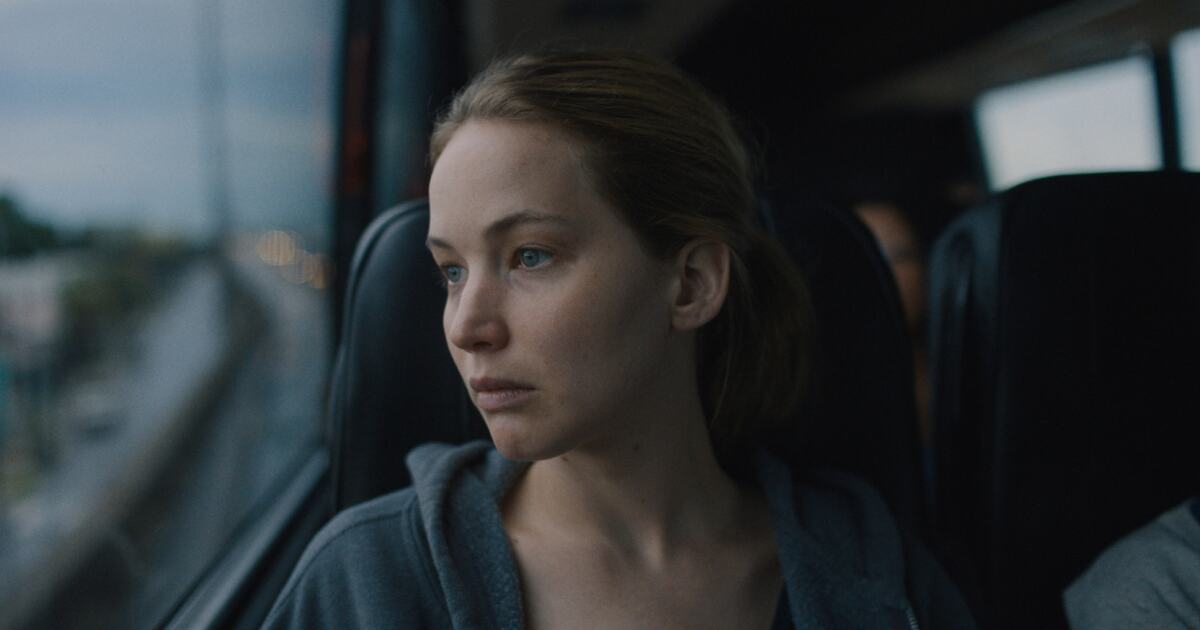
Barefaced, looking wan and thin, her hair lank, Lawrence seems as young as she did 12 years ago in “Winter’s Bone,” and her performance is a far cry from the steely Katniss Everdeen of “The Hunger Games” trilogy or the operatic goddesses she portrayed in three films directed by David O. Russell (“Silver Linings Playbook,” “American Hustle,” “Joy”). Her profile in an out-of-focus close-up is enough to instantly recognize, but as we meet her character Lynsey, Lawrence is almost unrecognizable.
Lynsey has just returned from Afghanistan, where she suffered a traumatic brain injury in an IED explosion. On the outside, her body is unmarred, the injury internal, her bleeding brain unseen, and she needs to relearn how to stand, walk, bathe, hold things and remember, which she does under the patient care of her nurse, Sharon (Jayne Houdyshell). Soon, she’s well enough to go home, but Lynsey can only think of going back, of getting to work.
It’s clear Lynsey wants to run away rather than return home, and her arrival at her mother’s home in New Orleans is tentative and anticlimactic. Her face stiff with the effort to appear normal, her limbs loose and untrustworthy, she moves about the world gingerly, hesitantly. Lawrence is often rigid and dead-eyed (unnervingly, she rarely blinks), but there is intention with that choice, playing a person recovering from a brain injury using all of her ability to present as normal. And the actor’s small, detailed physical performance is indeed a wonder to study.
Lynsey goes through the motions, showing up to her pool cleaning job, avoiding her mother (Linda Emond) and badgering her neurologist (Stephen McKinley Henderson) for work clearance. The remote “Causeway” warms up at the entrance of Brian Tyree Henry, playing James, a mechanic with whom Lynsey finds a halting friendship. The two bond over burgers and beer and the commonalities in their traumatic pasts: James lost a leg in a car accident.
Brian Tyree Henry in the movie “Causeway.”
(Wilson Webb/Apple TV+)
Henry is such an earthy, captivating presence that he holds the center of gravity in “Causeway” — when he’s not on screen, the film drifts, rudderless, as Lynsey does. The screenplay, originally written by Elizabeth Sanders, with additional work by Ottessa Moshfegh and Luke Goebel, implicates much, but says very little about Lynsey’s past and the ghosts that haunt her in New Orleans. While her doctor frets about the trauma Lynsey suffered in Afghanistan, she obliquely suggests that the traumatic memories of her hometown are worse.
Neugebauer’s stylistic approach is the gritty, dim, digital look that is de rigueur in independent cinema these days, the camerawork as inert and staid as our protagonist’s face. New Orleans offers a lively backdrop, with peeks into the backyards of the stately mansions where Lynsey cleans iridescent turquoise pools. The sheen of dripping sweat indicates the humid environment; the snatches of patchwork music vibrating with the energy of this place.
Lynsey had been working on a dam in Afghanistan with the Army Corps of Engineers when she was injured, and it’s a fascinating metaphor for this character who keeps everything bottled up. One keeps waiting for “Causeway” to break open, for the tightly held secrets to come flooding out. That the film takes its title from the location of James’ accident, “a raised road or track across low or wet ground,” indicates that the film would rather skim along the surface, never allowing us to get that deep.
‘Causeway’
Running time: 1 hour, 34 minutes
Rated: R, for some language, sexual references and drug use
Playing: Starts Oct. 28, Laemmle Monica, Santa Monica; available Nov. 4 on Apple TV+

From the silent opening moments of “Causeway,”the feature debut of acclaimed theater director Lila Neugebauer, it’s clear that this spare drama is a return to the stripped-down indie roots of Oscar-winning star Jennifer Lawrence, whose breakout performance in Debra Granik’s harsh and scrappy 2010 film “Winter’s Bone” earned the actor her first Academy Award nomination at age 20.
Barefaced, looking wan and thin, her hair lank, Lawrence seems as young as she did 12 years ago in “Winter’s Bone,” and her performance is a far cry from the steely Katniss Everdeen of “The Hunger Games” trilogy or the operatic goddesses she portrayed in three films directed by David O. Russell (“Silver Linings Playbook,” “American Hustle,” “Joy”). Her profile in an out-of-focus close-up is enough to instantly recognize, but as we meet her character Lynsey, Lawrence is almost unrecognizable.
Lynsey has just returned from Afghanistan, where she suffered a traumatic brain injury in an IED explosion. On the outside, her body is unmarred, the injury internal, her bleeding brain unseen, and she needs to relearn how to stand, walk, bathe, hold things and remember, which she does under the patient care of her nurse, Sharon (Jayne Houdyshell). Soon, she’s well enough to go home, but Lynsey can only think of going back, of getting to work.
It’s clear Lynsey wants to run away rather than return home, and her arrival at her mother’s home in New Orleans is tentative and anticlimactic. Her face stiff with the effort to appear normal, her limbs loose and untrustworthy, she moves about the world gingerly, hesitantly. Lawrence is often rigid and dead-eyed (unnervingly, she rarely blinks), but there is intention with that choice, playing a person recovering from a brain injury using all of her ability to present as normal. And the actor’s small, detailed physical performance is indeed a wonder to study.
Lynsey goes through the motions, showing up to her pool cleaning job, avoiding her mother (Linda Emond) and badgering her neurologist (Stephen McKinley Henderson) for work clearance. The remote “Causeway” warms up at the entrance of Brian Tyree Henry, playing James, a mechanic with whom Lynsey finds a halting friendship. The two bond over burgers and beer and the commonalities in their traumatic pasts: James lost a leg in a car accident.
Brian Tyree Henry in the movie “Causeway.”
(Wilson Webb/Apple TV+)
Henry is such an earthy, captivating presence that he holds the center of gravity in “Causeway” — when he’s not on screen, the film drifts, rudderless, as Lynsey does. The screenplay, originally written by Elizabeth Sanders, with additional work by Ottessa Moshfegh and Luke Goebel, implicates much, but says very little about Lynsey’s past and the ghosts that haunt her in New Orleans. While her doctor frets about the trauma Lynsey suffered in Afghanistan, she obliquely suggests that the traumatic memories of her hometown are worse.
Neugebauer’s stylistic approach is the gritty, dim, digital look that is de rigueur in independent cinema these days, the camerawork as inert and staid as our protagonist’s face. New Orleans offers a lively backdrop, with peeks into the backyards of the stately mansions where Lynsey cleans iridescent turquoise pools. The sheen of dripping sweat indicates the humid environment; the snatches of patchwork music vibrating with the energy of this place.
Lynsey had been working on a dam in Afghanistan with the Army Corps of Engineers when she was injured, and it’s a fascinating metaphor for this character who keeps everything bottled up. One keeps waiting for “Causeway” to break open, for the tightly held secrets to come flooding out. That the film takes its title from the location of James’ accident, “a raised road or track across low or wet ground,” indicates that the film would rather skim along the surface, never allowing us to get that deep.
‘Causeway’
Running time: 1 hour, 34 minutes
Rated: R, for some language, sexual references and drug use
Playing: Starts Oct. 28, Laemmle Monica, Santa Monica; available Nov. 4 on Apple TV+

From the silent opening moments of “Causeway,”the feature debut of acclaimed theater director Lila Neugebauer, it’s clear that this spare drama is a return to the stripped-down indie roots of Oscar-winning star Jennifer Lawrence, whose breakout performance in Debra Granik’s harsh and scrappy 2010 film “Winter’s Bone” earned the actor her first Academy Award nomination at age 20.
Barefaced, looking wan and thin, her hair lank, Lawrence seems as young as she did 12 years ago in “Winter’s Bone,” and her performance is a far cry from the steely Katniss Everdeen of “The Hunger Games” trilogy or the operatic goddesses she portrayed in three films directed by David O. Russell (“Silver Linings Playbook,” “American Hustle,” “Joy”). Her profile in an out-of-focus close-up is enough to instantly recognize, but as we meet her character Lynsey, Lawrence is almost unrecognizable.
Lynsey has just returned from Afghanistan, where she suffered a traumatic brain injury in an IED explosion. On the outside, her body is unmarred, the injury internal, her bleeding brain unseen, and she needs to relearn how to stand, walk, bathe, hold things and remember, which she does under the patient care of her nurse, Sharon (Jayne Houdyshell). Soon, she’s well enough to go home, but Lynsey can only think of going back, of getting to work.
It’s clear Lynsey wants to run away rather than return home, and her arrival at her mother’s home in New Orleans is tentative and anticlimactic. Her face stiff with the effort to appear normal, her limbs loose and untrustworthy, she moves about the world gingerly, hesitantly. Lawrence is often rigid and dead-eyed (unnervingly, she rarely blinks), but there is intention with that choice, playing a person recovering from a brain injury using all of her ability to present as normal. And the actor’s small, detailed physical performance is indeed a wonder to study.
Lynsey goes through the motions, showing up to her pool cleaning job, avoiding her mother (Linda Emond) and badgering her neurologist (Stephen McKinley Henderson) for work clearance. The remote “Causeway” warms up at the entrance of Brian Tyree Henry, playing James, a mechanic with whom Lynsey finds a halting friendship. The two bond over burgers and beer and the commonalities in their traumatic pasts: James lost a leg in a car accident.
Brian Tyree Henry in the movie “Causeway.”
(Wilson Webb/Apple TV+)
Henry is such an earthy, captivating presence that he holds the center of gravity in “Causeway” — when he’s not on screen, the film drifts, rudderless, as Lynsey does. The screenplay, originally written by Elizabeth Sanders, with additional work by Ottessa Moshfegh and Luke Goebel, implicates much, but says very little about Lynsey’s past and the ghosts that haunt her in New Orleans. While her doctor frets about the trauma Lynsey suffered in Afghanistan, she obliquely suggests that the traumatic memories of her hometown are worse.
Neugebauer’s stylistic approach is the gritty, dim, digital look that is de rigueur in independent cinema these days, the camerawork as inert and staid as our protagonist’s face. New Orleans offers a lively backdrop, with peeks into the backyards of the stately mansions where Lynsey cleans iridescent turquoise pools. The sheen of dripping sweat indicates the humid environment; the snatches of patchwork music vibrating with the energy of this place.
Lynsey had been working on a dam in Afghanistan with the Army Corps of Engineers when she was injured, and it’s a fascinating metaphor for this character who keeps everything bottled up. One keeps waiting for “Causeway” to break open, for the tightly held secrets to come flooding out. That the film takes its title from the location of James’ accident, “a raised road or track across low or wet ground,” indicates that the film would rather skim along the surface, never allowing us to get that deep.
‘Causeway’
Running time: 1 hour, 34 minutes
Rated: R, for some language, sexual references and drug use
Playing: Starts Oct. 28, Laemmle Monica, Santa Monica; available Nov. 4 on Apple TV+
From the silent opening moments of “Causeway,”the feature debut of acclaimed theater director Lila Neugebauer, it’s clear that this spare drama is a return to the stripped-down indie roots of Oscar-winning star Jennifer Lawrence, whose breakout performance in Debra Granik’s harsh and scrappy 2010 film “Winter’s Bone” earned the actor her first Academy Award nomination at age 20.
Barefaced, looking wan and thin, her hair lank, Lawrence seems as young as she did 12 years ago in “Winter’s Bone,” and her performance is a far cry from the steely Katniss Everdeen of “The Hunger Games” trilogy or the operatic goddesses she portrayed in three films directed by David O. Russell (“Silver Linings Playbook,” “American Hustle,” “Joy”). Her profile in an out-of-focus close-up is enough to instantly recognize, but as we meet her character Lynsey, Lawrence is almost unrecognizable.
Lynsey has just returned from Afghanistan, where she suffered a traumatic brain injury in an IED explosion. On the outside, her body is unmarred, the injury internal, her bleeding brain unseen, and she needs to relearn how to stand, walk, bathe, hold things and remember, which she does under the patient care of her nurse, Sharon (Jayne Houdyshell). Soon, she’s well enough to go home, but Lynsey can only think of going back, of getting to work.
It’s clear Lynsey wants to run away rather than return home, and her arrival at her mother’s home in New Orleans is tentative and anticlimactic. Her face stiff with the effort to appear normal, her limbs loose and untrustworthy, she moves about the world gingerly, hesitantly. Lawrence is often rigid and dead-eyed (unnervingly, she rarely blinks), but there is intention with that choice, playing a person recovering from a brain injury using all of her ability to present as normal. And the actor’s small, detailed physical performance is indeed a wonder to study.
Lynsey goes through the motions, showing up to her pool cleaning job, avoiding her mother (Linda Emond) and badgering her neurologist (Stephen McKinley Henderson) for work clearance. The remote “Causeway” warms up at the entrance of Brian Tyree Henry, playing James, a mechanic with whom Lynsey finds a halting friendship. The two bond over burgers and beer and the commonalities in their traumatic pasts: James lost a leg in a car accident.
Brian Tyree Henry in the movie “Causeway.”
(Wilson Webb/Apple TV+)
Henry is such an earthy, captivating presence that he holds the center of gravity in “Causeway” — when he’s not on screen, the film drifts, rudderless, as Lynsey does. The screenplay, originally written by Elizabeth Sanders, with additional work by Ottessa Moshfegh and Luke Goebel, implicates much, but says very little about Lynsey’s past and the ghosts that haunt her in New Orleans. While her doctor frets about the trauma Lynsey suffered in Afghanistan, she obliquely suggests that the traumatic memories of her hometown are worse.
Neugebauer’s stylistic approach is the gritty, dim, digital look that is de rigueur in independent cinema these days, the camerawork as inert and staid as our protagonist’s face. New Orleans offers a lively backdrop, with peeks into the backyards of the stately mansions where Lynsey cleans iridescent turquoise pools. The sheen of dripping sweat indicates the humid environment; the snatches of patchwork music vibrating with the energy of this place.
Lynsey had been working on a dam in Afghanistan with the Army Corps of Engineers when she was injured, and it’s a fascinating metaphor for this character who keeps everything bottled up. One keeps waiting for “Causeway” to break open, for the tightly held secrets to come flooding out. That the film takes its title from the location of James’ accident, “a raised road or track across low or wet ground,” indicates that the film would rather skim along the surface, never allowing us to get that deep.
‘Causeway’
Running time: 1 hour, 34 minutes
Rated: R, for some language, sexual references and drug use
Playing: Starts Oct. 28, Laemmle Monica, Santa Monica; available Nov. 4 on Apple TV+

From the silent opening moments of “Causeway,”the feature debut of acclaimed theater director Lila Neugebauer, it’s clear that this spare drama is a return to the stripped-down indie roots of Oscar-winning star Jennifer Lawrence, whose breakout performance in Debra Granik’s harsh and scrappy 2010 film “Winter’s Bone” earned the actor her first Academy Award nomination at age 20.
Barefaced, looking wan and thin, her hair lank, Lawrence seems as young as she did 12 years ago in “Winter’s Bone,” and her performance is a far cry from the steely Katniss Everdeen of “The Hunger Games” trilogy or the operatic goddesses she portrayed in three films directed by David O. Russell (“Silver Linings Playbook,” “American Hustle,” “Joy”). Her profile in an out-of-focus close-up is enough to instantly recognize, but as we meet her character Lynsey, Lawrence is almost unrecognizable.
Lynsey has just returned from Afghanistan, where she suffered a traumatic brain injury in an IED explosion. On the outside, her body is unmarred, the injury internal, her bleeding brain unseen, and she needs to relearn how to stand, walk, bathe, hold things and remember, which she does under the patient care of her nurse, Sharon (Jayne Houdyshell). Soon, she’s well enough to go home, but Lynsey can only think of going back, of getting to work.
It’s clear Lynsey wants to run away rather than return home, and her arrival at her mother’s home in New Orleans is tentative and anticlimactic. Her face stiff with the effort to appear normal, her limbs loose and untrustworthy, she moves about the world gingerly, hesitantly. Lawrence is often rigid and dead-eyed (unnervingly, she rarely blinks), but there is intention with that choice, playing a person recovering from a brain injury using all of her ability to present as normal. And the actor’s small, detailed physical performance is indeed a wonder to study.
Lynsey goes through the motions, showing up to her pool cleaning job, avoiding her mother (Linda Emond) and badgering her neurologist (Stephen McKinley Henderson) for work clearance. The remote “Causeway” warms up at the entrance of Brian Tyree Henry, playing James, a mechanic with whom Lynsey finds a halting friendship. The two bond over burgers and beer and the commonalities in their traumatic pasts: James lost a leg in a car accident.
Brian Tyree Henry in the movie “Causeway.”
(Wilson Webb/Apple TV+)
Henry is such an earthy, captivating presence that he holds the center of gravity in “Causeway” — when he’s not on screen, the film drifts, rudderless, as Lynsey does. The screenplay, originally written by Elizabeth Sanders, with additional work by Ottessa Moshfegh and Luke Goebel, implicates much, but says very little about Lynsey’s past and the ghosts that haunt her in New Orleans. While her doctor frets about the trauma Lynsey suffered in Afghanistan, she obliquely suggests that the traumatic memories of her hometown are worse.
Neugebauer’s stylistic approach is the gritty, dim, digital look that is de rigueur in independent cinema these days, the camerawork as inert and staid as our protagonist’s face. New Orleans offers a lively backdrop, with peeks into the backyards of the stately mansions where Lynsey cleans iridescent turquoise pools. The sheen of dripping sweat indicates the humid environment; the snatches of patchwork music vibrating with the energy of this place.
Lynsey had been working on a dam in Afghanistan with the Army Corps of Engineers when she was injured, and it’s a fascinating metaphor for this character who keeps everything bottled up. One keeps waiting for “Causeway” to break open, for the tightly held secrets to come flooding out. That the film takes its title from the location of James’ accident, “a raised road or track across low or wet ground,” indicates that the film would rather skim along the surface, never allowing us to get that deep.
‘Causeway’
Running time: 1 hour, 34 minutes
Rated: R, for some language, sexual references and drug use
Playing: Starts Oct. 28, Laemmle Monica, Santa Monica; available Nov. 4 on Apple TV+
From the silent opening moments of “Causeway,”the feature debut of acclaimed theater director Lila Neugebauer, it’s clear that this spare drama is a return to the stripped-down indie roots of Oscar-winning star Jennifer Lawrence, whose breakout performance in Debra Granik’s harsh and scrappy 2010 film “Winter’s Bone” earned the actor her first Academy Award nomination at age 20.
Barefaced, looking wan and thin, her hair lank, Lawrence seems as young as she did 12 years ago in “Winter’s Bone,” and her performance is a far cry from the steely Katniss Everdeen of “The Hunger Games” trilogy or the operatic goddesses she portrayed in three films directed by David O. Russell (“Silver Linings Playbook,” “American Hustle,” “Joy”). Her profile in an out-of-focus close-up is enough to instantly recognize, but as we meet her character Lynsey, Lawrence is almost unrecognizable.
Lynsey has just returned from Afghanistan, where she suffered a traumatic brain injury in an IED explosion. On the outside, her body is unmarred, the injury internal, her bleeding brain unseen, and she needs to relearn how to stand, walk, bathe, hold things and remember, which she does under the patient care of her nurse, Sharon (Jayne Houdyshell). Soon, she’s well enough to go home, but Lynsey can only think of going back, of getting to work.
It’s clear Lynsey wants to run away rather than return home, and her arrival at her mother’s home in New Orleans is tentative and anticlimactic. Her face stiff with the effort to appear normal, her limbs loose and untrustworthy, she moves about the world gingerly, hesitantly. Lawrence is often rigid and dead-eyed (unnervingly, she rarely blinks), but there is intention with that choice, playing a person recovering from a brain injury using all of her ability to present as normal. And the actor’s small, detailed physical performance is indeed a wonder to study.
Lynsey goes through the motions, showing up to her pool cleaning job, avoiding her mother (Linda Emond) and badgering her neurologist (Stephen McKinley Henderson) for work clearance. The remote “Causeway” warms up at the entrance of Brian Tyree Henry, playing James, a mechanic with whom Lynsey finds a halting friendship. The two bond over burgers and beer and the commonalities in their traumatic pasts: James lost a leg in a car accident.
Brian Tyree Henry in the movie “Causeway.”
(Wilson Webb/Apple TV+)
Henry is such an earthy, captivating presence that he holds the center of gravity in “Causeway” — when he’s not on screen, the film drifts, rudderless, as Lynsey does. The screenplay, originally written by Elizabeth Sanders, with additional work by Ottessa Moshfegh and Luke Goebel, implicates much, but says very little about Lynsey’s past and the ghosts that haunt her in New Orleans. While her doctor frets about the trauma Lynsey suffered in Afghanistan, she obliquely suggests that the traumatic memories of her hometown are worse.
Neugebauer’s stylistic approach is the gritty, dim, digital look that is de rigueur in independent cinema these days, the camerawork as inert and staid as our protagonist’s face. New Orleans offers a lively backdrop, with peeks into the backyards of the stately mansions where Lynsey cleans iridescent turquoise pools. The sheen of dripping sweat indicates the humid environment; the snatches of patchwork music vibrating with the energy of this place.
Lynsey had been working on a dam in Afghanistan with the Army Corps of Engineers when she was injured, and it’s a fascinating metaphor for this character who keeps everything bottled up. One keeps waiting for “Causeway” to break open, for the tightly held secrets to come flooding out. That the film takes its title from the location of James’ accident, “a raised road or track across low or wet ground,” indicates that the film would rather skim along the surface, never allowing us to get that deep.
‘Causeway’
Running time: 1 hour, 34 minutes
Rated: R, for some language, sexual references and drug use
Playing: Starts Oct. 28, Laemmle Monica, Santa Monica; available Nov. 4 on Apple TV+
From the silent opening moments of “Causeway,”the feature debut of acclaimed theater director Lila Neugebauer, it’s clear that this spare drama is a return to the stripped-down indie roots of Oscar-winning star Jennifer Lawrence, whose breakout performance in Debra Granik’s harsh and scrappy 2010 film “Winter’s Bone” earned the actor her first Academy Award nomination at age 20.
Barefaced, looking wan and thin, her hair lank, Lawrence seems as young as she did 12 years ago in “Winter’s Bone,” and her performance is a far cry from the steely Katniss Everdeen of “The Hunger Games” trilogy or the operatic goddesses she portrayed in three films directed by David O. Russell (“Silver Linings Playbook,” “American Hustle,” “Joy”). Her profile in an out-of-focus close-up is enough to instantly recognize, but as we meet her character Lynsey, Lawrence is almost unrecognizable.
Lynsey has just returned from Afghanistan, where she suffered a traumatic brain injury in an IED explosion. On the outside, her body is unmarred, the injury internal, her bleeding brain unseen, and she needs to relearn how to stand, walk, bathe, hold things and remember, which she does under the patient care of her nurse, Sharon (Jayne Houdyshell). Soon, she’s well enough to go home, but Lynsey can only think of going back, of getting to work.
It’s clear Lynsey wants to run away rather than return home, and her arrival at her mother’s home in New Orleans is tentative and anticlimactic. Her face stiff with the effort to appear normal, her limbs loose and untrustworthy, she moves about the world gingerly, hesitantly. Lawrence is often rigid and dead-eyed (unnervingly, she rarely blinks), but there is intention with that choice, playing a person recovering from a brain injury using all of her ability to present as normal. And the actor’s small, detailed physical performance is indeed a wonder to study.
Lynsey goes through the motions, showing up to her pool cleaning job, avoiding her mother (Linda Emond) and badgering her neurologist (Stephen McKinley Henderson) for work clearance. The remote “Causeway” warms up at the entrance of Brian Tyree Henry, playing James, a mechanic with whom Lynsey finds a halting friendship. The two bond over burgers and beer and the commonalities in their traumatic pasts: James lost a leg in a car accident.
Brian Tyree Henry in the movie “Causeway.”
(Wilson Webb/Apple TV+)
Henry is such an earthy, captivating presence that he holds the center of gravity in “Causeway” — when he’s not on screen, the film drifts, rudderless, as Lynsey does. The screenplay, originally written by Elizabeth Sanders, with additional work by Ottessa Moshfegh and Luke Goebel, implicates much, but says very little about Lynsey’s past and the ghosts that haunt her in New Orleans. While her doctor frets about the trauma Lynsey suffered in Afghanistan, she obliquely suggests that the traumatic memories of her hometown are worse.
Neugebauer’s stylistic approach is the gritty, dim, digital look that is de rigueur in independent cinema these days, the camerawork as inert and staid as our protagonist’s face. New Orleans offers a lively backdrop, with peeks into the backyards of the stately mansions where Lynsey cleans iridescent turquoise pools. The sheen of dripping sweat indicates the humid environment; the snatches of patchwork music vibrating with the energy of this place.
Lynsey had been working on a dam in Afghanistan with the Army Corps of Engineers when she was injured, and it’s a fascinating metaphor for this character who keeps everything bottled up. One keeps waiting for “Causeway” to break open, for the tightly held secrets to come flooding out. That the film takes its title from the location of James’ accident, “a raised road or track across low or wet ground,” indicates that the film would rather skim along the surface, never allowing us to get that deep.
‘Causeway’
Running time: 1 hour, 34 minutes
Rated: R, for some language, sexual references and drug use
Playing: Starts Oct. 28, Laemmle Monica, Santa Monica; available Nov. 4 on Apple TV+
From the silent opening moments of “Causeway,”the feature debut of acclaimed theater director Lila Neugebauer, it’s clear that this spare drama is a return to the stripped-down indie roots of Oscar-winning star Jennifer Lawrence, whose breakout performance in Debra Granik’s harsh and scrappy 2010 film “Winter’s Bone” earned the actor her first Academy Award nomination at age 20.
Barefaced, looking wan and thin, her hair lank, Lawrence seems as young as she did 12 years ago in “Winter’s Bone,” and her performance is a far cry from the steely Katniss Everdeen of “The Hunger Games” trilogy or the operatic goddesses she portrayed in three films directed by David O. Russell (“Silver Linings Playbook,” “American Hustle,” “Joy”). Her profile in an out-of-focus close-up is enough to instantly recognize, but as we meet her character Lynsey, Lawrence is almost unrecognizable.
Lynsey has just returned from Afghanistan, where she suffered a traumatic brain injury in an IED explosion. On the outside, her body is unmarred, the injury internal, her bleeding brain unseen, and she needs to relearn how to stand, walk, bathe, hold things and remember, which she does under the patient care of her nurse, Sharon (Jayne Houdyshell). Soon, she’s well enough to go home, but Lynsey can only think of going back, of getting to work.
It’s clear Lynsey wants to run away rather than return home, and her arrival at her mother’s home in New Orleans is tentative and anticlimactic. Her face stiff with the effort to appear normal, her limbs loose and untrustworthy, she moves about the world gingerly, hesitantly. Lawrence is often rigid and dead-eyed (unnervingly, she rarely blinks), but there is intention with that choice, playing a person recovering from a brain injury using all of her ability to present as normal. And the actor’s small, detailed physical performance is indeed a wonder to study.
Lynsey goes through the motions, showing up to her pool cleaning job, avoiding her mother (Linda Emond) and badgering her neurologist (Stephen McKinley Henderson) for work clearance. The remote “Causeway” warms up at the entrance of Brian Tyree Henry, playing James, a mechanic with whom Lynsey finds a halting friendship. The two bond over burgers and beer and the commonalities in their traumatic pasts: James lost a leg in a car accident.
Brian Tyree Henry in the movie “Causeway.”
(Wilson Webb/Apple TV+)
Henry is such an earthy, captivating presence that he holds the center of gravity in “Causeway” — when he’s not on screen, the film drifts, rudderless, as Lynsey does. The screenplay, originally written by Elizabeth Sanders, with additional work by Ottessa Moshfegh and Luke Goebel, implicates much, but says very little about Lynsey’s past and the ghosts that haunt her in New Orleans. While her doctor frets about the trauma Lynsey suffered in Afghanistan, she obliquely suggests that the traumatic memories of her hometown are worse.
Neugebauer’s stylistic approach is the gritty, dim, digital look that is de rigueur in independent cinema these days, the camerawork as inert and staid as our protagonist’s face. New Orleans offers a lively backdrop, with peeks into the backyards of the stately mansions where Lynsey cleans iridescent turquoise pools. The sheen of dripping sweat indicates the humid environment; the snatches of patchwork music vibrating with the energy of this place.
Lynsey had been working on a dam in Afghanistan with the Army Corps of Engineers when she was injured, and it’s a fascinating metaphor for this character who keeps everything bottled up. One keeps waiting for “Causeway” to break open, for the tightly held secrets to come flooding out. That the film takes its title from the location of James’ accident, “a raised road or track across low or wet ground,” indicates that the film would rather skim along the surface, never allowing us to get that deep.
‘Causeway’
Running time: 1 hour, 34 minutes
Rated: R, for some language, sexual references and drug use
Playing: Starts Oct. 28, Laemmle Monica, Santa Monica; available Nov. 4 on Apple TV+

From the silent opening moments of “Causeway,”the feature debut of acclaimed theater director Lila Neugebauer, it’s clear that this spare drama is a return to the stripped-down indie roots of Oscar-winning star Jennifer Lawrence, whose breakout performance in Debra Granik’s harsh and scrappy 2010 film “Winter’s Bone” earned the actor her first Academy Award nomination at age 20.
Barefaced, looking wan and thin, her hair lank, Lawrence seems as young as she did 12 years ago in “Winter’s Bone,” and her performance is a far cry from the steely Katniss Everdeen of “The Hunger Games” trilogy or the operatic goddesses she portrayed in three films directed by David O. Russell (“Silver Linings Playbook,” “American Hustle,” “Joy”). Her profile in an out-of-focus close-up is enough to instantly recognize, but as we meet her character Lynsey, Lawrence is almost unrecognizable.
Lynsey has just returned from Afghanistan, where she suffered a traumatic brain injury in an IED explosion. On the outside, her body is unmarred, the injury internal, her bleeding brain unseen, and she needs to relearn how to stand, walk, bathe, hold things and remember, which she does under the patient care of her nurse, Sharon (Jayne Houdyshell). Soon, she’s well enough to go home, but Lynsey can only think of going back, of getting to work.
It’s clear Lynsey wants to run away rather than return home, and her arrival at her mother’s home in New Orleans is tentative and anticlimactic. Her face stiff with the effort to appear normal, her limbs loose and untrustworthy, she moves about the world gingerly, hesitantly. Lawrence is often rigid and dead-eyed (unnervingly, she rarely blinks), but there is intention with that choice, playing a person recovering from a brain injury using all of her ability to present as normal. And the actor’s small, detailed physical performance is indeed a wonder to study.
Lynsey goes through the motions, showing up to her pool cleaning job, avoiding her mother (Linda Emond) and badgering her neurologist (Stephen McKinley Henderson) for work clearance. The remote “Causeway” warms up at the entrance of Brian Tyree Henry, playing James, a mechanic with whom Lynsey finds a halting friendship. The two bond over burgers and beer and the commonalities in their traumatic pasts: James lost a leg in a car accident.
Brian Tyree Henry in the movie “Causeway.”
(Wilson Webb/Apple TV+)
Henry is such an earthy, captivating presence that he holds the center of gravity in “Causeway” — when he’s not on screen, the film drifts, rudderless, as Lynsey does. The screenplay, originally written by Elizabeth Sanders, with additional work by Ottessa Moshfegh and Luke Goebel, implicates much, but says very little about Lynsey’s past and the ghosts that haunt her in New Orleans. While her doctor frets about the trauma Lynsey suffered in Afghanistan, she obliquely suggests that the traumatic memories of her hometown are worse.
Neugebauer’s stylistic approach is the gritty, dim, digital look that is de rigueur in independent cinema these days, the camerawork as inert and staid as our protagonist’s face. New Orleans offers a lively backdrop, with peeks into the backyards of the stately mansions where Lynsey cleans iridescent turquoise pools. The sheen of dripping sweat indicates the humid environment; the snatches of patchwork music vibrating with the energy of this place.
Lynsey had been working on a dam in Afghanistan with the Army Corps of Engineers when she was injured, and it’s a fascinating metaphor for this character who keeps everything bottled up. One keeps waiting for “Causeway” to break open, for the tightly held secrets to come flooding out. That the film takes its title from the location of James’ accident, “a raised road or track across low or wet ground,” indicates that the film would rather skim along the surface, never allowing us to get that deep.
‘Causeway’
Running time: 1 hour, 34 minutes
Rated: R, for some language, sexual references and drug use
Playing: Starts Oct. 28, Laemmle Monica, Santa Monica; available Nov. 4 on Apple TV+
From the silent opening moments of “Causeway,”the feature debut of acclaimed theater director Lila Neugebauer, it’s clear that this spare drama is a return to the stripped-down indie roots of Oscar-winning star Jennifer Lawrence, whose breakout performance in Debra Granik’s harsh and scrappy 2010 film “Winter’s Bone” earned the actor her first Academy Award nomination at age 20.
Barefaced, looking wan and thin, her hair lank, Lawrence seems as young as she did 12 years ago in “Winter’s Bone,” and her performance is a far cry from the steely Katniss Everdeen of “The Hunger Games” trilogy or the operatic goddesses she portrayed in three films directed by David O. Russell (“Silver Linings Playbook,” “American Hustle,” “Joy”). Her profile in an out-of-focus close-up is enough to instantly recognize, but as we meet her character Lynsey, Lawrence is almost unrecognizable.
Lynsey has just returned from Afghanistan, where she suffered a traumatic brain injury in an IED explosion. On the outside, her body is unmarred, the injury internal, her bleeding brain unseen, and she needs to relearn how to stand, walk, bathe, hold things and remember, which she does under the patient care of her nurse, Sharon (Jayne Houdyshell). Soon, she’s well enough to go home, but Lynsey can only think of going back, of getting to work.
It’s clear Lynsey wants to run away rather than return home, and her arrival at her mother’s home in New Orleans is tentative and anticlimactic. Her face stiff with the effort to appear normal, her limbs loose and untrustworthy, she moves about the world gingerly, hesitantly. Lawrence is often rigid and dead-eyed (unnervingly, she rarely blinks), but there is intention with that choice, playing a person recovering from a brain injury using all of her ability to present as normal. And the actor’s small, detailed physical performance is indeed a wonder to study.
Lynsey goes through the motions, showing up to her pool cleaning job, avoiding her mother (Linda Emond) and badgering her neurologist (Stephen McKinley Henderson) for work clearance. The remote “Causeway” warms up at the entrance of Brian Tyree Henry, playing James, a mechanic with whom Lynsey finds a halting friendship. The two bond over burgers and beer and the commonalities in their traumatic pasts: James lost a leg in a car accident.
Brian Tyree Henry in the movie “Causeway.”
(Wilson Webb/Apple TV+)
Henry is such an earthy, captivating presence that he holds the center of gravity in “Causeway” — when he’s not on screen, the film drifts, rudderless, as Lynsey does. The screenplay, originally written by Elizabeth Sanders, with additional work by Ottessa Moshfegh and Luke Goebel, implicates much, but says very little about Lynsey’s past and the ghosts that haunt her in New Orleans. While her doctor frets about the trauma Lynsey suffered in Afghanistan, she obliquely suggests that the traumatic memories of her hometown are worse.
Neugebauer’s stylistic approach is the gritty, dim, digital look that is de rigueur in independent cinema these days, the camerawork as inert and staid as our protagonist’s face. New Orleans offers a lively backdrop, with peeks into the backyards of the stately mansions where Lynsey cleans iridescent turquoise pools. The sheen of dripping sweat indicates the humid environment; the snatches of patchwork music vibrating with the energy of this place.
Lynsey had been working on a dam in Afghanistan with the Army Corps of Engineers when she was injured, and it’s a fascinating metaphor for this character who keeps everything bottled up. One keeps waiting for “Causeway” to break open, for the tightly held secrets to come flooding out. That the film takes its title from the location of James’ accident, “a raised road or track across low or wet ground,” indicates that the film would rather skim along the surface, never allowing us to get that deep.
‘Causeway’
Running time: 1 hour, 34 minutes
Rated: R, for some language, sexual references and drug use
Playing: Starts Oct. 28, Laemmle Monica, Santa Monica; available Nov. 4 on Apple TV+
From the silent opening moments of “Causeway,”the feature debut of acclaimed theater director Lila Neugebauer, it’s clear that this spare drama is a return to the stripped-down indie roots of Oscar-winning star Jennifer Lawrence, whose breakout performance in Debra Granik’s harsh and scrappy 2010 film “Winter’s Bone” earned the actor her first Academy Award nomination at age 20.
Barefaced, looking wan and thin, her hair lank, Lawrence seems as young as she did 12 years ago in “Winter’s Bone,” and her performance is a far cry from the steely Katniss Everdeen of “The Hunger Games” trilogy or the operatic goddesses she portrayed in three films directed by David O. Russell (“Silver Linings Playbook,” “American Hustle,” “Joy”). Her profile in an out-of-focus close-up is enough to instantly recognize, but as we meet her character Lynsey, Lawrence is almost unrecognizable.
Lynsey has just returned from Afghanistan, where she suffered a traumatic brain injury in an IED explosion. On the outside, her body is unmarred, the injury internal, her bleeding brain unseen, and she needs to relearn how to stand, walk, bathe, hold things and remember, which she does under the patient care of her nurse, Sharon (Jayne Houdyshell). Soon, she’s well enough to go home, but Lynsey can only think of going back, of getting to work.
It’s clear Lynsey wants to run away rather than return home, and her arrival at her mother’s home in New Orleans is tentative and anticlimactic. Her face stiff with the effort to appear normal, her limbs loose and untrustworthy, she moves about the world gingerly, hesitantly. Lawrence is often rigid and dead-eyed (unnervingly, she rarely blinks), but there is intention with that choice, playing a person recovering from a brain injury using all of her ability to present as normal. And the actor’s small, detailed physical performance is indeed a wonder to study.
Lynsey goes through the motions, showing up to her pool cleaning job, avoiding her mother (Linda Emond) and badgering her neurologist (Stephen McKinley Henderson) for work clearance. The remote “Causeway” warms up at the entrance of Brian Tyree Henry, playing James, a mechanic with whom Lynsey finds a halting friendship. The two bond over burgers and beer and the commonalities in their traumatic pasts: James lost a leg in a car accident.
Brian Tyree Henry in the movie “Causeway.”
(Wilson Webb/Apple TV+)
Henry is such an earthy, captivating presence that he holds the center of gravity in “Causeway” — when he’s not on screen, the film drifts, rudderless, as Lynsey does. The screenplay, originally written by Elizabeth Sanders, with additional work by Ottessa Moshfegh and Luke Goebel, implicates much, but says very little about Lynsey’s past and the ghosts that haunt her in New Orleans. While her doctor frets about the trauma Lynsey suffered in Afghanistan, she obliquely suggests that the traumatic memories of her hometown are worse.
Neugebauer’s stylistic approach is the gritty, dim, digital look that is de rigueur in independent cinema these days, the camerawork as inert and staid as our protagonist’s face. New Orleans offers a lively backdrop, with peeks into the backyards of the stately mansions where Lynsey cleans iridescent turquoise pools. The sheen of dripping sweat indicates the humid environment; the snatches of patchwork music vibrating with the energy of this place.
Lynsey had been working on a dam in Afghanistan with the Army Corps of Engineers when she was injured, and it’s a fascinating metaphor for this character who keeps everything bottled up. One keeps waiting for “Causeway” to break open, for the tightly held secrets to come flooding out. That the film takes its title from the location of James’ accident, “a raised road or track across low or wet ground,” indicates that the film would rather skim along the surface, never allowing us to get that deep.
‘Causeway’
Running time: 1 hour, 34 minutes
Rated: R, for some language, sexual references and drug use
Playing: Starts Oct. 28, Laemmle Monica, Santa Monica; available Nov. 4 on Apple TV+
From the silent opening moments of “Causeway,”the feature debut of acclaimed theater director Lila Neugebauer, it’s clear that this spare drama is a return to the stripped-down indie roots of Oscar-winning star Jennifer Lawrence, whose breakout performance in Debra Granik’s harsh and scrappy 2010 film “Winter’s Bone” earned the actor her first Academy Award nomination at age 20.
Barefaced, looking wan and thin, her hair lank, Lawrence seems as young as she did 12 years ago in “Winter’s Bone,” and her performance is a far cry from the steely Katniss Everdeen of “The Hunger Games” trilogy or the operatic goddesses she portrayed in three films directed by David O. Russell (“Silver Linings Playbook,” “American Hustle,” “Joy”). Her profile in an out-of-focus close-up is enough to instantly recognize, but as we meet her character Lynsey, Lawrence is almost unrecognizable.
Lynsey has just returned from Afghanistan, where she suffered a traumatic brain injury in an IED explosion. On the outside, her body is unmarred, the injury internal, her bleeding brain unseen, and she needs to relearn how to stand, walk, bathe, hold things and remember, which she does under the patient care of her nurse, Sharon (Jayne Houdyshell). Soon, she’s well enough to go home, but Lynsey can only think of going back, of getting to work.
It’s clear Lynsey wants to run away rather than return home, and her arrival at her mother’s home in New Orleans is tentative and anticlimactic. Her face stiff with the effort to appear normal, her limbs loose and untrustworthy, she moves about the world gingerly, hesitantly. Lawrence is often rigid and dead-eyed (unnervingly, she rarely blinks), but there is intention with that choice, playing a person recovering from a brain injury using all of her ability to present as normal. And the actor’s small, detailed physical performance is indeed a wonder to study.
Lynsey goes through the motions, showing up to her pool cleaning job, avoiding her mother (Linda Emond) and badgering her neurologist (Stephen McKinley Henderson) for work clearance. The remote “Causeway” warms up at the entrance of Brian Tyree Henry, playing James, a mechanic with whom Lynsey finds a halting friendship. The two bond over burgers and beer and the commonalities in their traumatic pasts: James lost a leg in a car accident.
Brian Tyree Henry in the movie “Causeway.”
(Wilson Webb/Apple TV+)
Henry is such an earthy, captivating presence that he holds the center of gravity in “Causeway” — when he’s not on screen, the film drifts, rudderless, as Lynsey does. The screenplay, originally written by Elizabeth Sanders, with additional work by Ottessa Moshfegh and Luke Goebel, implicates much, but says very little about Lynsey’s past and the ghosts that haunt her in New Orleans. While her doctor frets about the trauma Lynsey suffered in Afghanistan, she obliquely suggests that the traumatic memories of her hometown are worse.
Neugebauer’s stylistic approach is the gritty, dim, digital look that is de rigueur in independent cinema these days, the camerawork as inert and staid as our protagonist’s face. New Orleans offers a lively backdrop, with peeks into the backyards of the stately mansions where Lynsey cleans iridescent turquoise pools. The sheen of dripping sweat indicates the humid environment; the snatches of patchwork music vibrating with the energy of this place.
Lynsey had been working on a dam in Afghanistan with the Army Corps of Engineers when she was injured, and it’s a fascinating metaphor for this character who keeps everything bottled up. One keeps waiting for “Causeway” to break open, for the tightly held secrets to come flooding out. That the film takes its title from the location of James’ accident, “a raised road or track across low or wet ground,” indicates that the film would rather skim along the surface, never allowing us to get that deep.
‘Causeway’
Running time: 1 hour, 34 minutes
Rated: R, for some language, sexual references and drug use
Playing: Starts Oct. 28, Laemmle Monica, Santa Monica; available Nov. 4 on Apple TV+
From the silent opening moments of “Causeway,”the feature debut of acclaimed theater director Lila Neugebauer, it’s clear that this spare drama is a return to the stripped-down indie roots of Oscar-winning star Jennifer Lawrence, whose breakout performance in Debra Granik’s harsh and scrappy 2010 film “Winter’s Bone” earned the actor her first Academy Award nomination at age 20.
Barefaced, looking wan and thin, her hair lank, Lawrence seems as young as she did 12 years ago in “Winter’s Bone,” and her performance is a far cry from the steely Katniss Everdeen of “The Hunger Games” trilogy or the operatic goddesses she portrayed in three films directed by David O. Russell (“Silver Linings Playbook,” “American Hustle,” “Joy”). Her profile in an out-of-focus close-up is enough to instantly recognize, but as we meet her character Lynsey, Lawrence is almost unrecognizable.
Lynsey has just returned from Afghanistan, where she suffered a traumatic brain injury in an IED explosion. On the outside, her body is unmarred, the injury internal, her bleeding brain unseen, and she needs to relearn how to stand, walk, bathe, hold things and remember, which she does under the patient care of her nurse, Sharon (Jayne Houdyshell). Soon, she’s well enough to go home, but Lynsey can only think of going back, of getting to work.
It’s clear Lynsey wants to run away rather than return home, and her arrival at her mother’s home in New Orleans is tentative and anticlimactic. Her face stiff with the effort to appear normal, her limbs loose and untrustworthy, she moves about the world gingerly, hesitantly. Lawrence is often rigid and dead-eyed (unnervingly, she rarely blinks), but there is intention with that choice, playing a person recovering from a brain injury using all of her ability to present as normal. And the actor’s small, detailed physical performance is indeed a wonder to study.
Lynsey goes through the motions, showing up to her pool cleaning job, avoiding her mother (Linda Emond) and badgering her neurologist (Stephen McKinley Henderson) for work clearance. The remote “Causeway” warms up at the entrance of Brian Tyree Henry, playing James, a mechanic with whom Lynsey finds a halting friendship. The two bond over burgers and beer and the commonalities in their traumatic pasts: James lost a leg in a car accident.
Brian Tyree Henry in the movie “Causeway.”
(Wilson Webb/Apple TV+)
Henry is such an earthy, captivating presence that he holds the center of gravity in “Causeway” — when he’s not on screen, the film drifts, rudderless, as Lynsey does. The screenplay, originally written by Elizabeth Sanders, with additional work by Ottessa Moshfegh and Luke Goebel, implicates much, but says very little about Lynsey’s past and the ghosts that haunt her in New Orleans. While her doctor frets about the trauma Lynsey suffered in Afghanistan, she obliquely suggests that the traumatic memories of her hometown are worse.
Neugebauer’s stylistic approach is the gritty, dim, digital look that is de rigueur in independent cinema these days, the camerawork as inert and staid as our protagonist’s face. New Orleans offers a lively backdrop, with peeks into the backyards of the stately mansions where Lynsey cleans iridescent turquoise pools. The sheen of dripping sweat indicates the humid environment; the snatches of patchwork music vibrating with the energy of this place.
Lynsey had been working on a dam in Afghanistan with the Army Corps of Engineers when she was injured, and it’s a fascinating metaphor for this character who keeps everything bottled up. One keeps waiting for “Causeway” to break open, for the tightly held secrets to come flooding out. That the film takes its title from the location of James’ accident, “a raised road or track across low or wet ground,” indicates that the film would rather skim along the surface, never allowing us to get that deep.
‘Causeway’
Running time: 1 hour, 34 minutes
Rated: R, for some language, sexual references and drug use
Playing: Starts Oct. 28, Laemmle Monica, Santa Monica; available Nov. 4 on Apple TV+
From the silent opening moments of “Causeway,”the feature debut of acclaimed theater director Lila Neugebauer, it’s clear that this spare drama is a return to the stripped-down indie roots of Oscar-winning star Jennifer Lawrence, whose breakout performance in Debra Granik’s harsh and scrappy 2010 film “Winter’s Bone” earned the actor her first Academy Award nomination at age 20.
Barefaced, looking wan and thin, her hair lank, Lawrence seems as young as she did 12 years ago in “Winter’s Bone,” and her performance is a far cry from the steely Katniss Everdeen of “The Hunger Games” trilogy or the operatic goddesses she portrayed in three films directed by David O. Russell (“Silver Linings Playbook,” “American Hustle,” “Joy”). Her profile in an out-of-focus close-up is enough to instantly recognize, but as we meet her character Lynsey, Lawrence is almost unrecognizable.
Lynsey has just returned from Afghanistan, where she suffered a traumatic brain injury in an IED explosion. On the outside, her body is unmarred, the injury internal, her bleeding brain unseen, and she needs to relearn how to stand, walk, bathe, hold things and remember, which she does under the patient care of her nurse, Sharon (Jayne Houdyshell). Soon, she’s well enough to go home, but Lynsey can only think of going back, of getting to work.
It’s clear Lynsey wants to run away rather than return home, and her arrival at her mother’s home in New Orleans is tentative and anticlimactic. Her face stiff with the effort to appear normal, her limbs loose and untrustworthy, she moves about the world gingerly, hesitantly. Lawrence is often rigid and dead-eyed (unnervingly, she rarely blinks), but there is intention with that choice, playing a person recovering from a brain injury using all of her ability to present as normal. And the actor’s small, detailed physical performance is indeed a wonder to study.
Lynsey goes through the motions, showing up to her pool cleaning job, avoiding her mother (Linda Emond) and badgering her neurologist (Stephen McKinley Henderson) for work clearance. The remote “Causeway” warms up at the entrance of Brian Tyree Henry, playing James, a mechanic with whom Lynsey finds a halting friendship. The two bond over burgers and beer and the commonalities in their traumatic pasts: James lost a leg in a car accident.
Brian Tyree Henry in the movie “Causeway.”
(Wilson Webb/Apple TV+)
Henry is such an earthy, captivating presence that he holds the center of gravity in “Causeway” — when he’s not on screen, the film drifts, rudderless, as Lynsey does. The screenplay, originally written by Elizabeth Sanders, with additional work by Ottessa Moshfegh and Luke Goebel, implicates much, but says very little about Lynsey’s past and the ghosts that haunt her in New Orleans. While her doctor frets about the trauma Lynsey suffered in Afghanistan, she obliquely suggests that the traumatic memories of her hometown are worse.
Neugebauer’s stylistic approach is the gritty, dim, digital look that is de rigueur in independent cinema these days, the camerawork as inert and staid as our protagonist’s face. New Orleans offers a lively backdrop, with peeks into the backyards of the stately mansions where Lynsey cleans iridescent turquoise pools. The sheen of dripping sweat indicates the humid environment; the snatches of patchwork music vibrating with the energy of this place.
Lynsey had been working on a dam in Afghanistan with the Army Corps of Engineers when she was injured, and it’s a fascinating metaphor for this character who keeps everything bottled up. One keeps waiting for “Causeway” to break open, for the tightly held secrets to come flooding out. That the film takes its title from the location of James’ accident, “a raised road or track across low or wet ground,” indicates that the film would rather skim along the surface, never allowing us to get that deep.
‘Causeway’
Running time: 1 hour, 34 minutes
Rated: R, for some language, sexual references and drug use
Playing: Starts Oct. 28, Laemmle Monica, Santa Monica; available Nov. 4 on Apple TV+
From the silent opening moments of “Causeway,”the feature debut of acclaimed theater director Lila Neugebauer, it’s clear that this spare drama is a return to the stripped-down indie roots of Oscar-winning star Jennifer Lawrence, whose breakout performance in Debra Granik’s harsh and scrappy 2010 film “Winter’s Bone” earned the actor her first Academy Award nomination at age 20.
Barefaced, looking wan and thin, her hair lank, Lawrence seems as young as she did 12 years ago in “Winter’s Bone,” and her performance is a far cry from the steely Katniss Everdeen of “The Hunger Games” trilogy or the operatic goddesses she portrayed in three films directed by David O. Russell (“Silver Linings Playbook,” “American Hustle,” “Joy”). Her profile in an out-of-focus close-up is enough to instantly recognize, but as we meet her character Lynsey, Lawrence is almost unrecognizable.
Lynsey has just returned from Afghanistan, where she suffered a traumatic brain injury in an IED explosion. On the outside, her body is unmarred, the injury internal, her bleeding brain unseen, and she needs to relearn how to stand, walk, bathe, hold things and remember, which she does under the patient care of her nurse, Sharon (Jayne Houdyshell). Soon, she’s well enough to go home, but Lynsey can only think of going back, of getting to work.
It’s clear Lynsey wants to run away rather than return home, and her arrival at her mother’s home in New Orleans is tentative and anticlimactic. Her face stiff with the effort to appear normal, her limbs loose and untrustworthy, she moves about the world gingerly, hesitantly. Lawrence is often rigid and dead-eyed (unnervingly, she rarely blinks), but there is intention with that choice, playing a person recovering from a brain injury using all of her ability to present as normal. And the actor’s small, detailed physical performance is indeed a wonder to study.
Lynsey goes through the motions, showing up to her pool cleaning job, avoiding her mother (Linda Emond) and badgering her neurologist (Stephen McKinley Henderson) for work clearance. The remote “Causeway” warms up at the entrance of Brian Tyree Henry, playing James, a mechanic with whom Lynsey finds a halting friendship. The two bond over burgers and beer and the commonalities in their traumatic pasts: James lost a leg in a car accident.
Brian Tyree Henry in the movie “Causeway.”
(Wilson Webb/Apple TV+)
Henry is such an earthy, captivating presence that he holds the center of gravity in “Causeway” — when he’s not on screen, the film drifts, rudderless, as Lynsey does. The screenplay, originally written by Elizabeth Sanders, with additional work by Ottessa Moshfegh and Luke Goebel, implicates much, but says very little about Lynsey’s past and the ghosts that haunt her in New Orleans. While her doctor frets about the trauma Lynsey suffered in Afghanistan, she obliquely suggests that the traumatic memories of her hometown are worse.
Neugebauer’s stylistic approach is the gritty, dim, digital look that is de rigueur in independent cinema these days, the camerawork as inert and staid as our protagonist’s face. New Orleans offers a lively backdrop, with peeks into the backyards of the stately mansions where Lynsey cleans iridescent turquoise pools. The sheen of dripping sweat indicates the humid environment; the snatches of patchwork music vibrating with the energy of this place.
Lynsey had been working on a dam in Afghanistan with the Army Corps of Engineers when she was injured, and it’s a fascinating metaphor for this character who keeps everything bottled up. One keeps waiting for “Causeway” to break open, for the tightly held secrets to come flooding out. That the film takes its title from the location of James’ accident, “a raised road or track across low or wet ground,” indicates that the film would rather skim along the surface, never allowing us to get that deep.
‘Causeway’
Running time: 1 hour, 34 minutes
Rated: R, for some language, sexual references and drug use
Playing: Starts Oct. 28, Laemmle Monica, Santa Monica; available Nov. 4 on Apple TV+
From the silent opening moments of “Causeway,”the feature debut of acclaimed theater director Lila Neugebauer, it’s clear that this spare drama is a return to the stripped-down indie roots of Oscar-winning star Jennifer Lawrence, whose breakout performance in Debra Granik’s harsh and scrappy 2010 film “Winter’s Bone” earned the actor her first Academy Award nomination at age 20.
Barefaced, looking wan and thin, her hair lank, Lawrence seems as young as she did 12 years ago in “Winter’s Bone,” and her performance is a far cry from the steely Katniss Everdeen of “The Hunger Games” trilogy or the operatic goddesses she portrayed in three films directed by David O. Russell (“Silver Linings Playbook,” “American Hustle,” “Joy”). Her profile in an out-of-focus close-up is enough to instantly recognize, but as we meet her character Lynsey, Lawrence is almost unrecognizable.
Lynsey has just returned from Afghanistan, where she suffered a traumatic brain injury in an IED explosion. On the outside, her body is unmarred, the injury internal, her bleeding brain unseen, and she needs to relearn how to stand, walk, bathe, hold things and remember, which she does under the patient care of her nurse, Sharon (Jayne Houdyshell). Soon, she’s well enough to go home, but Lynsey can only think of going back, of getting to work.
It’s clear Lynsey wants to run away rather than return home, and her arrival at her mother’s home in New Orleans is tentative and anticlimactic. Her face stiff with the effort to appear normal, her limbs loose and untrustworthy, she moves about the world gingerly, hesitantly. Lawrence is often rigid and dead-eyed (unnervingly, she rarely blinks), but there is intention with that choice, playing a person recovering from a brain injury using all of her ability to present as normal. And the actor’s small, detailed physical performance is indeed a wonder to study.
Lynsey goes through the motions, showing up to her pool cleaning job, avoiding her mother (Linda Emond) and badgering her neurologist (Stephen McKinley Henderson) for work clearance. The remote “Causeway” warms up at the entrance of Brian Tyree Henry, playing James, a mechanic with whom Lynsey finds a halting friendship. The two bond over burgers and beer and the commonalities in their traumatic pasts: James lost a leg in a car accident.
Brian Tyree Henry in the movie “Causeway.”
(Wilson Webb/Apple TV+)
Henry is such an earthy, captivating presence that he holds the center of gravity in “Causeway” — when he’s not on screen, the film drifts, rudderless, as Lynsey does. The screenplay, originally written by Elizabeth Sanders, with additional work by Ottessa Moshfegh and Luke Goebel, implicates much, but says very little about Lynsey’s past and the ghosts that haunt her in New Orleans. While her doctor frets about the trauma Lynsey suffered in Afghanistan, she obliquely suggests that the traumatic memories of her hometown are worse.
Neugebauer’s stylistic approach is the gritty, dim, digital look that is de rigueur in independent cinema these days, the camerawork as inert and staid as our protagonist’s face. New Orleans offers a lively backdrop, with peeks into the backyards of the stately mansions where Lynsey cleans iridescent turquoise pools. The sheen of dripping sweat indicates the humid environment; the snatches of patchwork music vibrating with the energy of this place.
Lynsey had been working on a dam in Afghanistan with the Army Corps of Engineers when she was injured, and it’s a fascinating metaphor for this character who keeps everything bottled up. One keeps waiting for “Causeway” to break open, for the tightly held secrets to come flooding out. That the film takes its title from the location of James’ accident, “a raised road or track across low or wet ground,” indicates that the film would rather skim along the surface, never allowing us to get that deep.
‘Causeway’
Running time: 1 hour, 34 minutes
Rated: R, for some language, sexual references and drug use
Playing: Starts Oct. 28, Laemmle Monica, Santa Monica; available Nov. 4 on Apple TV+

