



Washington DC
New York
Toronto
Distribution: (800) 510 9863
Press ID
  • Login
Binghamton Herald
Advertisement
Saturday, July 4, 2026
  • Home
  • World
  • Politics
  • Business
  • Technology
  • Culture
  • Health
  • Entertainment
  • Trending
No Result
View All Result
Binghamton Herald
No Result
View All Result
Home Entertainment

Review: ‘Kim’s Video’ is a meandering shrine to a shuttered media palace with an afterlife

by Binghamton Herald Report
April 5, 2024
in Entertainment
Share on FacebookShare on Twitter

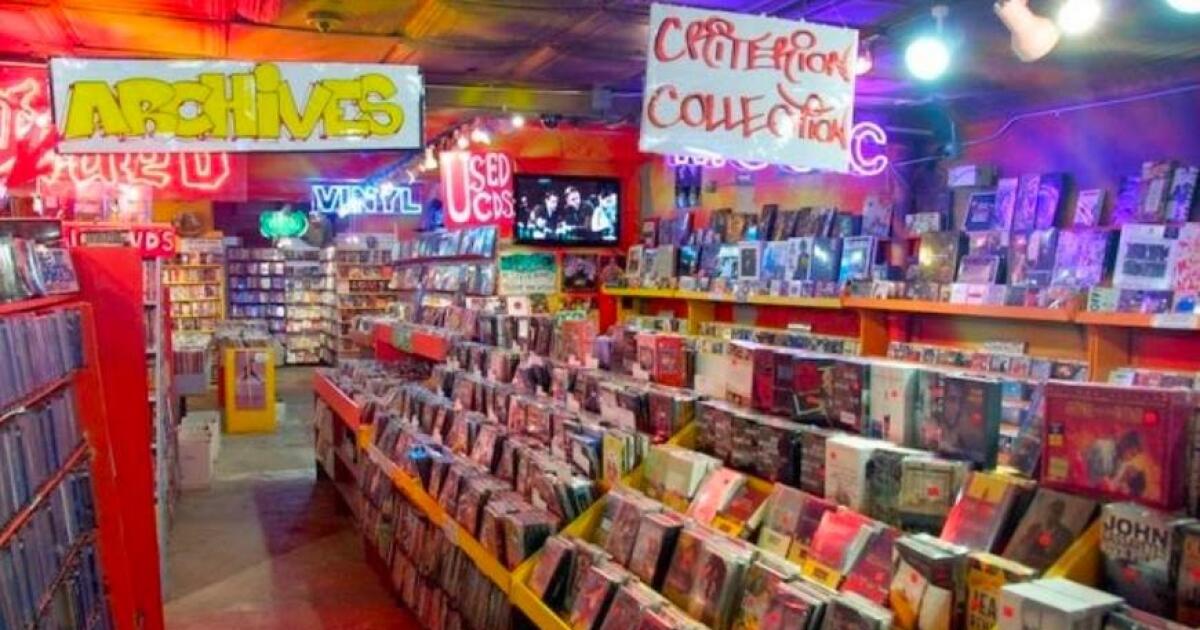
The impermanence of movies amid the rise of streaming services is a worrisome phenomenon. Online, a film can either completely vanish or be altered at the discretion of corporations. Only a physical copy can ensure one’s access to a title in its original form — or sometimes at all. In such a dire landscape, the world’s remaining video stores occupy an imperative position as archives of our endangered collective memory.

Nestled somewhere at the intersection between fiction and reality, David Redmon and Ashley Sabin’s well-intentioned, at times riveting but ultimately scatterbrained documentary “Kim’s Video” attempts to eulogize and eventually resurrect the mythical New York City chain of video stores that took its last breath in 2014.

While Kim’s shrines to cinephilia serve as the connective tissue, the tale also touches on, among other things, Redmon’s own quasi-spiritual musings about cinema, an Italian politician’s plausible mafia ties and facts about the video stores’ former owner. Behind the physical-media empire was Yongman Kim, a Korean immigrant who ditched his dry-cleaning business for the allure of movies on VHS and, eventually, DVD.

At the peak of his success, Kim owned seven video stores around the city. The flagship establishment on the Lower East Side, Mondo Kim’s, housed 55,000 titles, including bootleg copies of films otherwise unavailable in the U.S. and a plethora of obscure DIY projects. Kim’s practice of illicitly obtaining movies resulted in FBI raids and a cease-and-desist letter from Jean-Luc Godard’s lawyers after Kim rented out a pirated version of the auteur’s multipart “Histoire(s) du cinéma.”

Founder Yongman Kim, as seen in the documentary “Kim’s Video.”

(Drafthouse Films)

The filmmakers don’t spend much time on Kim’s punk acts in the name of cultural accessibility. Rather, they stumble into a web of mysterious, possibly nefarious characters when they investigate what happened after Mondo Kim’s closed for good. It was decided that the precious collection be shipped to the small Italian town of Salemi in Sicily, where enthusiastic local authorities, namely the mayor at the time, Vittorio Sgarbi, promised to make good use of it.

Redmon’s loving devotion for the overseas tapes — his “white whale,” he says — comes through when he visits Salemi on multiple occasions, first to unveil the damage caused to some of the tapes because of neglect, and later to learn more about those responsible. There’s inevitably some overlap here with Karina Longworth’s thorough 2012 piece for the Village Voice about the fate of Kim’s Video, but the globetrotting doc (which at one point takes Redmon to Kim’s native South Korea) suffers from a lack of focus. And yet, that’s also what makes it come across as an undeniably sincere love letter.

When the co-directors zero in on creating phantasmagorical imagery around Redmon’s symbolic transfiguration — the movies in the collection speak to him until he becomes one with them — “Kim’s Video” becomes affecting and relatable to equally obsessed movie lovers. He rationalizes every situation through a correlating scene in a film he’s watched and, when he needs them, summons the ghosts of master directors, dead and alive, who manifest themselves in masks that his nameless accomplices wear to rescue the collection.

It’s only the documentary’s straightforward title, which suggests something more comprehensively objective, that hurts it the most. “Kim’s Video” opens multiple doors but doesn’t step into any of the rooms with its whole body. It’s about a lot of ideas that converge around the concept of the video store and its significance, but works more as a primer than a definitive text. Still, this caper-slash-personal essay is an admirable endeavor that honors, above all, a filmmaker’s fixation on a medium that makes him whole.

‘Kim’s Video’

Not rated

Running time: 1 hour, 25 minutes

Playing: In limited release Friday, April 5

The impermanence of movies amid the rise of streaming services is a worrisome phenomenon. Online, a film can either completely vanish or be altered at the discretion of corporations. Only a physical copy can ensure one’s access to a title in its original form — or sometimes at all. In such a dire landscape, the world’s remaining video stores occupy an imperative position as archives of our endangered collective memory.

Nestled somewhere at the intersection between fiction and reality, David Redmon and Ashley Sabin’s well-intentioned, at times riveting but ultimately scatterbrained documentary “Kim’s Video” attempts to eulogize and eventually resurrect the mythical New York City chain of video stores that took its last breath in 2014.

While Kim’s shrines to cinephilia serve as the connective tissue, the tale also touches on, among other things, Redmon’s own quasi-spiritual musings about cinema, an Italian politician’s plausible mafia ties and facts about the video stores’ former owner. Behind the physical-media empire was Yongman Kim, a Korean immigrant who ditched his dry-cleaning business for the allure of movies on VHS and, eventually, DVD.

At the peak of his success, Kim owned seven video stores around the city. The flagship establishment on the Lower East Side, Mondo Kim’s, housed 55,000 titles, including bootleg copies of films otherwise unavailable in the U.S. and a plethora of obscure DIY projects. Kim’s practice of illicitly obtaining movies resulted in FBI raids and a cease-and-desist letter from Jean-Luc Godard’s lawyers after Kim rented out a pirated version of the auteur’s multipart “Histoire(s) du cinéma.”

Founder Yongman Kim, as seen in the documentary “Kim’s Video.”

(Drafthouse Films)

The filmmakers don’t spend much time on Kim’s punk acts in the name of cultural accessibility. Rather, they stumble into a web of mysterious, possibly nefarious characters when they investigate what happened after Mondo Kim’s closed for good. It was decided that the precious collection be shipped to the small Italian town of Salemi in Sicily, where enthusiastic local authorities, namely the mayor at the time, Vittorio Sgarbi, promised to make good use of it.

Redmon’s loving devotion for the overseas tapes — his “white whale,” he says — comes through when he visits Salemi on multiple occasions, first to unveil the damage caused to some of the tapes because of neglect, and later to learn more about those responsible. There’s inevitably some overlap here with Karina Longworth’s thorough 2012 piece for the Village Voice about the fate of Kim’s Video, but the globetrotting doc (which at one point takes Redmon to Kim’s native South Korea) suffers from a lack of focus. And yet, that’s also what makes it come across as an undeniably sincere love letter.

When the co-directors zero in on creating phantasmagorical imagery around Redmon’s symbolic transfiguration — the movies in the collection speak to him until he becomes one with them — “Kim’s Video” becomes affecting and relatable to equally obsessed movie lovers. He rationalizes every situation through a correlating scene in a film he’s watched and, when he needs them, summons the ghosts of master directors, dead and alive, who manifest themselves in masks that his nameless accomplices wear to rescue the collection.

It’s only the documentary’s straightforward title, which suggests something more comprehensively objective, that hurts it the most. “Kim’s Video” opens multiple doors but doesn’t step into any of the rooms with its whole body. It’s about a lot of ideas that converge around the concept of the video store and its significance, but works more as a primer than a definitive text. Still, this caper-slash-personal essay is an admirable endeavor that honors, above all, a filmmaker’s fixation on a medium that makes him whole.

‘Kim’s Video’

Not rated

Running time: 1 hour, 25 minutes

Playing: In limited release Friday, April 5

The impermanence of movies amid the rise of streaming services is a worrisome phenomenon. Online, a film can either completely vanish or be altered at the discretion of corporations. Only a physical copy can ensure one’s access to a title in its original form — or sometimes at all. In such a dire landscape, the world’s remaining video stores occupy an imperative position as archives of our endangered collective memory.

Nestled somewhere at the intersection between fiction and reality, David Redmon and Ashley Sabin’s well-intentioned, at times riveting but ultimately scatterbrained documentary “Kim’s Video” attempts to eulogize and eventually resurrect the mythical New York City chain of video stores that took its last breath in 2014.

While Kim’s shrines to cinephilia serve as the connective tissue, the tale also touches on, among other things, Redmon’s own quasi-spiritual musings about cinema, an Italian politician’s plausible mafia ties and facts about the video stores’ former owner. Behind the physical-media empire was Yongman Kim, a Korean immigrant who ditched his dry-cleaning business for the allure of movies on VHS and, eventually, DVD.

At the peak of his success, Kim owned seven video stores around the city. The flagship establishment on the Lower East Side, Mondo Kim’s, housed 55,000 titles, including bootleg copies of films otherwise unavailable in the U.S. and a plethora of obscure DIY projects. Kim’s practice of illicitly obtaining movies resulted in FBI raids and a cease-and-desist letter from Jean-Luc Godard’s lawyers after Kim rented out a pirated version of the auteur’s multipart “Histoire(s) du cinéma.”

Founder Yongman Kim, as seen in the documentary “Kim’s Video.”

(Drafthouse Films)

The filmmakers don’t spend much time on Kim’s punk acts in the name of cultural accessibility. Rather, they stumble into a web of mysterious, possibly nefarious characters when they investigate what happened after Mondo Kim’s closed for good. It was decided that the precious collection be shipped to the small Italian town of Salemi in Sicily, where enthusiastic local authorities, namely the mayor at the time, Vittorio Sgarbi, promised to make good use of it.

Redmon’s loving devotion for the overseas tapes — his “white whale,” he says — comes through when he visits Salemi on multiple occasions, first to unveil the damage caused to some of the tapes because of neglect, and later to learn more about those responsible. There’s inevitably some overlap here with Karina Longworth’s thorough 2012 piece for the Village Voice about the fate of Kim’s Video, but the globetrotting doc (which at one point takes Redmon to Kim’s native South Korea) suffers from a lack of focus. And yet, that’s also what makes it come across as an undeniably sincere love letter.

When the co-directors zero in on creating phantasmagorical imagery around Redmon’s symbolic transfiguration — the movies in the collection speak to him until he becomes one with them — “Kim’s Video” becomes affecting and relatable to equally obsessed movie lovers. He rationalizes every situation through a correlating scene in a film he’s watched and, when he needs them, summons the ghosts of master directors, dead and alive, who manifest themselves in masks that his nameless accomplices wear to rescue the collection.

It’s only the documentary’s straightforward title, which suggests something more comprehensively objective, that hurts it the most. “Kim’s Video” opens multiple doors but doesn’t step into any of the rooms with its whole body. It’s about a lot of ideas that converge around the concept of the video store and its significance, but works more as a primer than a definitive text. Still, this caper-slash-personal essay is an admirable endeavor that honors, above all, a filmmaker’s fixation on a medium that makes him whole.

‘Kim’s Video’

Not rated

Running time: 1 hour, 25 minutes

Playing: In limited release Friday, April 5

The impermanence of movies amid the rise of streaming services is a worrisome phenomenon. Online, a film can either completely vanish or be altered at the discretion of corporations. Only a physical copy can ensure one’s access to a title in its original form — or sometimes at all. In such a dire landscape, the world’s remaining video stores occupy an imperative position as archives of our endangered collective memory.

Nestled somewhere at the intersection between fiction and reality, David Redmon and Ashley Sabin’s well-intentioned, at times riveting but ultimately scatterbrained documentary “Kim’s Video” attempts to eulogize and eventually resurrect the mythical New York City chain of video stores that took its last breath in 2014.

While Kim’s shrines to cinephilia serve as the connective tissue, the tale also touches on, among other things, Redmon’s own quasi-spiritual musings about cinema, an Italian politician’s plausible mafia ties and facts about the video stores’ former owner. Behind the physical-media empire was Yongman Kim, a Korean immigrant who ditched his dry-cleaning business for the allure of movies on VHS and, eventually, DVD.

At the peak of his success, Kim owned seven video stores around the city. The flagship establishment on the Lower East Side, Mondo Kim’s, housed 55,000 titles, including bootleg copies of films otherwise unavailable in the U.S. and a plethora of obscure DIY projects. Kim’s practice of illicitly obtaining movies resulted in FBI raids and a cease-and-desist letter from Jean-Luc Godard’s lawyers after Kim rented out a pirated version of the auteur’s multipart “Histoire(s) du cinéma.”

Founder Yongman Kim, as seen in the documentary “Kim’s Video.”

(Drafthouse Films)

The filmmakers don’t spend much time on Kim’s punk acts in the name of cultural accessibility. Rather, they stumble into a web of mysterious, possibly nefarious characters when they investigate what happened after Mondo Kim’s closed for good. It was decided that the precious collection be shipped to the small Italian town of Salemi in Sicily, where enthusiastic local authorities, namely the mayor at the time, Vittorio Sgarbi, promised to make good use of it.

Redmon’s loving devotion for the overseas tapes — his “white whale,” he says — comes through when he visits Salemi on multiple occasions, first to unveil the damage caused to some of the tapes because of neglect, and later to learn more about those responsible. There’s inevitably some overlap here with Karina Longworth’s thorough 2012 piece for the Village Voice about the fate of Kim’s Video, but the globetrotting doc (which at one point takes Redmon to Kim’s native South Korea) suffers from a lack of focus. And yet, that’s also what makes it come across as an undeniably sincere love letter.

When the co-directors zero in on creating phantasmagorical imagery around Redmon’s symbolic transfiguration — the movies in the collection speak to him until he becomes one with them — “Kim’s Video” becomes affecting and relatable to equally obsessed movie lovers. He rationalizes every situation through a correlating scene in a film he’s watched and, when he needs them, summons the ghosts of master directors, dead and alive, who manifest themselves in masks that his nameless accomplices wear to rescue the collection.

It’s only the documentary’s straightforward title, which suggests something more comprehensively objective, that hurts it the most. “Kim’s Video” opens multiple doors but doesn’t step into any of the rooms with its whole body. It’s about a lot of ideas that converge around the concept of the video store and its significance, but works more as a primer than a definitive text. Still, this caper-slash-personal essay is an admirable endeavor that honors, above all, a filmmaker’s fixation on a medium that makes him whole.

‘Kim’s Video’

Not rated

Running time: 1 hour, 25 minutes

Playing: In limited release Friday, April 5

The impermanence of movies amid the rise of streaming services is a worrisome phenomenon. Online, a film can either completely vanish or be altered at the discretion of corporations. Only a physical copy can ensure one’s access to a title in its original form — or sometimes at all. In such a dire landscape, the world’s remaining video stores occupy an imperative position as archives of our endangered collective memory.

Nestled somewhere at the intersection between fiction and reality, David Redmon and Ashley Sabin’s well-intentioned, at times riveting but ultimately scatterbrained documentary “Kim’s Video” attempts to eulogize and eventually resurrect the mythical New York City chain of video stores that took its last breath in 2014.

While Kim’s shrines to cinephilia serve as the connective tissue, the tale also touches on, among other things, Redmon’s own quasi-spiritual musings about cinema, an Italian politician’s plausible mafia ties and facts about the video stores’ former owner. Behind the physical-media empire was Yongman Kim, a Korean immigrant who ditched his dry-cleaning business for the allure of movies on VHS and, eventually, DVD.

At the peak of his success, Kim owned seven video stores around the city. The flagship establishment on the Lower East Side, Mondo Kim’s, housed 55,000 titles, including bootleg copies of films otherwise unavailable in the U.S. and a plethora of obscure DIY projects. Kim’s practice of illicitly obtaining movies resulted in FBI raids and a cease-and-desist letter from Jean-Luc Godard’s lawyers after Kim rented out a pirated version of the auteur’s multipart “Histoire(s) du cinéma.”

Founder Yongman Kim, as seen in the documentary “Kim’s Video.”

(Drafthouse Films)

The filmmakers don’t spend much time on Kim’s punk acts in the name of cultural accessibility. Rather, they stumble into a web of mysterious, possibly nefarious characters when they investigate what happened after Mondo Kim’s closed for good. It was decided that the precious collection be shipped to the small Italian town of Salemi in Sicily, where enthusiastic local authorities, namely the mayor at the time, Vittorio Sgarbi, promised to make good use of it.

Redmon’s loving devotion for the overseas tapes — his “white whale,” he says — comes through when he visits Salemi on multiple occasions, first to unveil the damage caused to some of the tapes because of neglect, and later to learn more about those responsible. There’s inevitably some overlap here with Karina Longworth’s thorough 2012 piece for the Village Voice about the fate of Kim’s Video, but the globetrotting doc (which at one point takes Redmon to Kim’s native South Korea) suffers from a lack of focus. And yet, that’s also what makes it come across as an undeniably sincere love letter.

When the co-directors zero in on creating phantasmagorical imagery around Redmon’s symbolic transfiguration — the movies in the collection speak to him until he becomes one with them — “Kim’s Video” becomes affecting and relatable to equally obsessed movie lovers. He rationalizes every situation through a correlating scene in a film he’s watched and, when he needs them, summons the ghosts of master directors, dead and alive, who manifest themselves in masks that his nameless accomplices wear to rescue the collection.

It’s only the documentary’s straightforward title, which suggests something more comprehensively objective, that hurts it the most. “Kim’s Video” opens multiple doors but doesn’t step into any of the rooms with its whole body. It’s about a lot of ideas that converge around the concept of the video store and its significance, but works more as a primer than a definitive text. Still, this caper-slash-personal essay is an admirable endeavor that honors, above all, a filmmaker’s fixation on a medium that makes him whole.

‘Kim’s Video’

Not rated

Running time: 1 hour, 25 minutes

Playing: In limited release Friday, April 5

The impermanence of movies amid the rise of streaming services is a worrisome phenomenon. Online, a film can either completely vanish or be altered at the discretion of corporations. Only a physical copy can ensure one’s access to a title in its original form — or sometimes at all. In such a dire landscape, the world’s remaining video stores occupy an imperative position as archives of our endangered collective memory.

Nestled somewhere at the intersection between fiction and reality, David Redmon and Ashley Sabin’s well-intentioned, at times riveting but ultimately scatterbrained documentary “Kim’s Video” attempts to eulogize and eventually resurrect the mythical New York City chain of video stores that took its last breath in 2014.

While Kim’s shrines to cinephilia serve as the connective tissue, the tale also touches on, among other things, Redmon’s own quasi-spiritual musings about cinema, an Italian politician’s plausible mafia ties and facts about the video stores’ former owner. Behind the physical-media empire was Yongman Kim, a Korean immigrant who ditched his dry-cleaning business for the allure of movies on VHS and, eventually, DVD.

At the peak of his success, Kim owned seven video stores around the city. The flagship establishment on the Lower East Side, Mondo Kim’s, housed 55,000 titles, including bootleg copies of films otherwise unavailable in the U.S. and a plethora of obscure DIY projects. Kim’s practice of illicitly obtaining movies resulted in FBI raids and a cease-and-desist letter from Jean-Luc Godard’s lawyers after Kim rented out a pirated version of the auteur’s multipart “Histoire(s) du cinéma.”

Founder Yongman Kim, as seen in the documentary “Kim’s Video.”

(Drafthouse Films)

The filmmakers don’t spend much time on Kim’s punk acts in the name of cultural accessibility. Rather, they stumble into a web of mysterious, possibly nefarious characters when they investigate what happened after Mondo Kim’s closed for good. It was decided that the precious collection be shipped to the small Italian town of Salemi in Sicily, where enthusiastic local authorities, namely the mayor at the time, Vittorio Sgarbi, promised to make good use of it.

Redmon’s loving devotion for the overseas tapes — his “white whale,” he says — comes through when he visits Salemi on multiple occasions, first to unveil the damage caused to some of the tapes because of neglect, and later to learn more about those responsible. There’s inevitably some overlap here with Karina Longworth’s thorough 2012 piece for the Village Voice about the fate of Kim’s Video, but the globetrotting doc (which at one point takes Redmon to Kim’s native South Korea) suffers from a lack of focus. And yet, that’s also what makes it come across as an undeniably sincere love letter.

When the co-directors zero in on creating phantasmagorical imagery around Redmon’s symbolic transfiguration — the movies in the collection speak to him until he becomes one with them — “Kim’s Video” becomes affecting and relatable to equally obsessed movie lovers. He rationalizes every situation through a correlating scene in a film he’s watched and, when he needs them, summons the ghosts of master directors, dead and alive, who manifest themselves in masks that his nameless accomplices wear to rescue the collection.

It’s only the documentary’s straightforward title, which suggests something more comprehensively objective, that hurts it the most. “Kim’s Video” opens multiple doors but doesn’t step into any of the rooms with its whole body. It’s about a lot of ideas that converge around the concept of the video store and its significance, but works more as a primer than a definitive text. Still, this caper-slash-personal essay is an admirable endeavor that honors, above all, a filmmaker’s fixation on a medium that makes him whole.

‘Kim’s Video’

Not rated

Running time: 1 hour, 25 minutes

Playing: In limited release Friday, April 5

The impermanence of movies amid the rise of streaming services is a worrisome phenomenon. Online, a film can either completely vanish or be altered at the discretion of corporations. Only a physical copy can ensure one’s access to a title in its original form — or sometimes at all. In such a dire landscape, the world’s remaining video stores occupy an imperative position as archives of our endangered collective memory.

Nestled somewhere at the intersection between fiction and reality, David Redmon and Ashley Sabin’s well-intentioned, at times riveting but ultimately scatterbrained documentary “Kim’s Video” attempts to eulogize and eventually resurrect the mythical New York City chain of video stores that took its last breath in 2014.

While Kim’s shrines to cinephilia serve as the connective tissue, the tale also touches on, among other things, Redmon’s own quasi-spiritual musings about cinema, an Italian politician’s plausible mafia ties and facts about the video stores’ former owner. Behind the physical-media empire was Yongman Kim, a Korean immigrant who ditched his dry-cleaning business for the allure of movies on VHS and, eventually, DVD.

At the peak of his success, Kim owned seven video stores around the city. The flagship establishment on the Lower East Side, Mondo Kim’s, housed 55,000 titles, including bootleg copies of films otherwise unavailable in the U.S. and a plethora of obscure DIY projects. Kim’s practice of illicitly obtaining movies resulted in FBI raids and a cease-and-desist letter from Jean-Luc Godard’s lawyers after Kim rented out a pirated version of the auteur’s multipart “Histoire(s) du cinéma.”

Founder Yongman Kim, as seen in the documentary “Kim’s Video.”

(Drafthouse Films)

The filmmakers don’t spend much time on Kim’s punk acts in the name of cultural accessibility. Rather, they stumble into a web of mysterious, possibly nefarious characters when they investigate what happened after Mondo Kim’s closed for good. It was decided that the precious collection be shipped to the small Italian town of Salemi in Sicily, where enthusiastic local authorities, namely the mayor at the time, Vittorio Sgarbi, promised to make good use of it.

Redmon’s loving devotion for the overseas tapes — his “white whale,” he says — comes through when he visits Salemi on multiple occasions, first to unveil the damage caused to some of the tapes because of neglect, and later to learn more about those responsible. There’s inevitably some overlap here with Karina Longworth’s thorough 2012 piece for the Village Voice about the fate of Kim’s Video, but the globetrotting doc (which at one point takes Redmon to Kim’s native South Korea) suffers from a lack of focus. And yet, that’s also what makes it come across as an undeniably sincere love letter.

When the co-directors zero in on creating phantasmagorical imagery around Redmon’s symbolic transfiguration — the movies in the collection speak to him until he becomes one with them — “Kim’s Video” becomes affecting and relatable to equally obsessed movie lovers. He rationalizes every situation through a correlating scene in a film he’s watched and, when he needs them, summons the ghosts of master directors, dead and alive, who manifest themselves in masks that his nameless accomplices wear to rescue the collection.

It’s only the documentary’s straightforward title, which suggests something more comprehensively objective, that hurts it the most. “Kim’s Video” opens multiple doors but doesn’t step into any of the rooms with its whole body. It’s about a lot of ideas that converge around the concept of the video store and its significance, but works more as a primer than a definitive text. Still, this caper-slash-personal essay is an admirable endeavor that honors, above all, a filmmaker’s fixation on a medium that makes him whole.

‘Kim’s Video’

Not rated

Running time: 1 hour, 25 minutes

Playing: In limited release Friday, April 5

The impermanence of movies amid the rise of streaming services is a worrisome phenomenon. Online, a film can either completely vanish or be altered at the discretion of corporations. Only a physical copy can ensure one’s access to a title in its original form — or sometimes at all. In such a dire landscape, the world’s remaining video stores occupy an imperative position as archives of our endangered collective memory.

Nestled somewhere at the intersection between fiction and reality, David Redmon and Ashley Sabin’s well-intentioned, at times riveting but ultimately scatterbrained documentary “Kim’s Video” attempts to eulogize and eventually resurrect the mythical New York City chain of video stores that took its last breath in 2014.

While Kim’s shrines to cinephilia serve as the connective tissue, the tale also touches on, among other things, Redmon’s own quasi-spiritual musings about cinema, an Italian politician’s plausible mafia ties and facts about the video stores’ former owner. Behind the physical-media empire was Yongman Kim, a Korean immigrant who ditched his dry-cleaning business for the allure of movies on VHS and, eventually, DVD.

At the peak of his success, Kim owned seven video stores around the city. The flagship establishment on the Lower East Side, Mondo Kim’s, housed 55,000 titles, including bootleg copies of films otherwise unavailable in the U.S. and a plethora of obscure DIY projects. Kim’s practice of illicitly obtaining movies resulted in FBI raids and a cease-and-desist letter from Jean-Luc Godard’s lawyers after Kim rented out a pirated version of the auteur’s multipart “Histoire(s) du cinéma.”

Founder Yongman Kim, as seen in the documentary “Kim’s Video.”

(Drafthouse Films)

The filmmakers don’t spend much time on Kim’s punk acts in the name of cultural accessibility. Rather, they stumble into a web of mysterious, possibly nefarious characters when they investigate what happened after Mondo Kim’s closed for good. It was decided that the precious collection be shipped to the small Italian town of Salemi in Sicily, where enthusiastic local authorities, namely the mayor at the time, Vittorio Sgarbi, promised to make good use of it.

Redmon’s loving devotion for the overseas tapes — his “white whale,” he says — comes through when he visits Salemi on multiple occasions, first to unveil the damage caused to some of the tapes because of neglect, and later to learn more about those responsible. There’s inevitably some overlap here with Karina Longworth’s thorough 2012 piece for the Village Voice about the fate of Kim’s Video, but the globetrotting doc (which at one point takes Redmon to Kim’s native South Korea) suffers from a lack of focus. And yet, that’s also what makes it come across as an undeniably sincere love letter.

When the co-directors zero in on creating phantasmagorical imagery around Redmon’s symbolic transfiguration — the movies in the collection speak to him until he becomes one with them — “Kim’s Video” becomes affecting and relatable to equally obsessed movie lovers. He rationalizes every situation through a correlating scene in a film he’s watched and, when he needs them, summons the ghosts of master directors, dead and alive, who manifest themselves in masks that his nameless accomplices wear to rescue the collection.

It’s only the documentary’s straightforward title, which suggests something more comprehensively objective, that hurts it the most. “Kim’s Video” opens multiple doors but doesn’t step into any of the rooms with its whole body. It’s about a lot of ideas that converge around the concept of the video store and its significance, but works more as a primer than a definitive text. Still, this caper-slash-personal essay is an admirable endeavor that honors, above all, a filmmaker’s fixation on a medium that makes him whole.

‘Kim’s Video’

Not rated

Running time: 1 hour, 25 minutes

Playing: In limited release Friday, April 5

Previous Post

Elon Musk’s X restores free blue check marks. Here’s what it means.

Next Post

99 Cents Only to close all 371 stores and wind down its business

Leave a Reply Cancel reply

Your email address will not be published. Required fields are marked *

BROWSE BY CATEGORIES

  • Business
  • Culture
  • Entertainment
  • Health
  • Politics
  • Technology
  • Trending
  • Uncategorized
  • World
Binghamton Herald

© 2024 Binghamton Herald or its affiliated companies.

Navigate Site

  • About
  • Advertise
  • Terms & Conditions
  • Privacy Policy
  • Disclaimer
  • Contact

Follow Us

No Result
View All Result
  • Home
  • World
  • Politics
  • Business
  • Technology
  • Culture
  • Health
  • Entertainment
  • Trending

© 2024 Binghamton Herald or its affiliated companies.

Welcome Back!

Login to your account below

Forgotten Password?

Retrieve your password

Please enter your username or email address to reset your password.

Log In