

Propositions 26 and 27 appeared to be losing in early returns Tuesday night, despite a half-billion dollars in spending to convince Californians to legalizing sports gaming.
Campaigns for the two competing measures flooded the airwaves with a constant barrage of attack ads, which some California political poll directors criticized for driving up opposition and confusing voters.
Proposition 26 would have allowed in-person sports betting at tribal casinos and horse racing tracks. Leaders of four of California’s most successful Native American tribes with gaming interests are the original proponents of Proposition 26, which would impose a 10% tax on sports betting to fund gambling addiction treatment and enforcement programs.
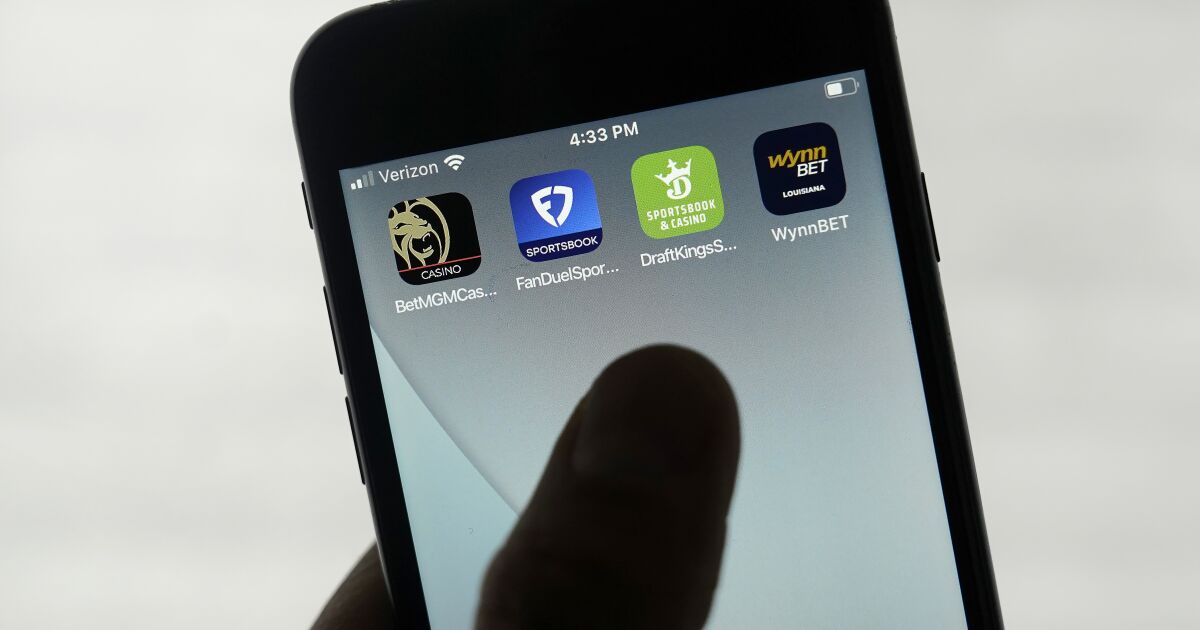
Proposition 27 would have allowed online sports wagering, including on cellphones and tablets, and was funded by gambling corporations, including sports gaming companies DraftKings and FanDuel. If the measure passed, tribes and gambling companies with sports betting licenses would pay 10% of their take from sports bets each month to the state, after subtracting some expenses and losses, to fund programs for homelessness and gambling addiction.
The Associated Press called the race, though official results will take longer.
Backers of the measures have inundated voters with ads and blown away previous state spending records, but they faced an uphill battle from the start. A UC Berkeley Institute of Governmental Studies poll, co-sponsored by The Times, in February showed Californians were open to the idea of legal sports betting, but the presence of two competing initiatives often makes it more difficult for either to pass, said poll director Mark DiCamillo.
“They should have gotten their act together. They should have only had one initiative,” DiCamillo said.
Sacramento State political scientist Kimberly Nalder agrees that many voters probably decided to just “throw up their hands” after being enveloped by a constant stream of ads.
“It just feels like overkill,” Nalder said. “There’s just so much money being poured into these, and people are rightfully suspicious of campaign ads because they’re often misleading or outright incorrect.”

Propositions 26 and 27 appeared to be losing in early returns Tuesday night, despite a half-billion dollars in spending to convince Californians to legalizing sports gaming.
Campaigns for the two competing measures flooded the airwaves with a constant barrage of attack ads, which some California political poll directors criticized for driving up opposition and confusing voters.
Proposition 26 would have allowed in-person sports betting at tribal casinos and horse racing tracks. Leaders of four of California’s most successful Native American tribes with gaming interests are the original proponents of Proposition 26, which would impose a 10% tax on sports betting to fund gambling addiction treatment and enforcement programs.
Proposition 27 would have allowed online sports wagering, including on cellphones and tablets, and was funded by gambling corporations, including sports gaming companies DraftKings and FanDuel. If the measure passed, tribes and gambling companies with sports betting licenses would pay 10% of their take from sports bets each month to the state, after subtracting some expenses and losses, to fund programs for homelessness and gambling addiction.
The Associated Press called the race, though official results will take longer.
Backers of the measures have inundated voters with ads and blown away previous state spending records, but they faced an uphill battle from the start. A UC Berkeley Institute of Governmental Studies poll, co-sponsored by The Times, in February showed Californians were open to the idea of legal sports betting, but the presence of two competing initiatives often makes it more difficult for either to pass, said poll director Mark DiCamillo.
“They should have gotten their act together. They should have only had one initiative,” DiCamillo said.
Sacramento State political scientist Kimberly Nalder agrees that many voters probably decided to just “throw up their hands” after being enveloped by a constant stream of ads.
“It just feels like overkill,” Nalder said. “There’s just so much money being poured into these, and people are rightfully suspicious of campaign ads because they’re often misleading or outright incorrect.”

Propositions 26 and 27 appeared to be losing in early returns Tuesday night, despite a half-billion dollars in spending to convince Californians to legalizing sports gaming.
Campaigns for the two competing measures flooded the airwaves with a constant barrage of attack ads, which some California political poll directors criticized for driving up opposition and confusing voters.
Proposition 26 would have allowed in-person sports betting at tribal casinos and horse racing tracks. Leaders of four of California’s most successful Native American tribes with gaming interests are the original proponents of Proposition 26, which would impose a 10% tax on sports betting to fund gambling addiction treatment and enforcement programs.
Proposition 27 would have allowed online sports wagering, including on cellphones and tablets, and was funded by gambling corporations, including sports gaming companies DraftKings and FanDuel. If the measure passed, tribes and gambling companies with sports betting licenses would pay 10% of their take from sports bets each month to the state, after subtracting some expenses and losses, to fund programs for homelessness and gambling addiction.
The Associated Press called the race, though official results will take longer.
Backers of the measures have inundated voters with ads and blown away previous state spending records, but they faced an uphill battle from the start. A UC Berkeley Institute of Governmental Studies poll, co-sponsored by The Times, in February showed Californians were open to the idea of legal sports betting, but the presence of two competing initiatives often makes it more difficult for either to pass, said poll director Mark DiCamillo.
“They should have gotten their act together. They should have only had one initiative,” DiCamillo said.
Sacramento State political scientist Kimberly Nalder agrees that many voters probably decided to just “throw up their hands” after being enveloped by a constant stream of ads.
“It just feels like overkill,” Nalder said. “There’s just so much money being poured into these, and people are rightfully suspicious of campaign ads because they’re often misleading or outright incorrect.”
Propositions 26 and 27 appeared to be losing in early returns Tuesday night, despite a half-billion dollars in spending to convince Californians to legalizing sports gaming.
Campaigns for the two competing measures flooded the airwaves with a constant barrage of attack ads, which some California political poll directors criticized for driving up opposition and confusing voters.
Proposition 26 would have allowed in-person sports betting at tribal casinos and horse racing tracks. Leaders of four of California’s most successful Native American tribes with gaming interests are the original proponents of Proposition 26, which would impose a 10% tax on sports betting to fund gambling addiction treatment and enforcement programs.
Proposition 27 would have allowed online sports wagering, including on cellphones and tablets, and was funded by gambling corporations, including sports gaming companies DraftKings and FanDuel. If the measure passed, tribes and gambling companies with sports betting licenses would pay 10% of their take from sports bets each month to the state, after subtracting some expenses and losses, to fund programs for homelessness and gambling addiction.
The Associated Press called the race, though official results will take longer.
Backers of the measures have inundated voters with ads and blown away previous state spending records, but they faced an uphill battle from the start. A UC Berkeley Institute of Governmental Studies poll, co-sponsored by The Times, in February showed Californians were open to the idea of legal sports betting, but the presence of two competing initiatives often makes it more difficult for either to pass, said poll director Mark DiCamillo.
“They should have gotten their act together. They should have only had one initiative,” DiCamillo said.
Sacramento State political scientist Kimberly Nalder agrees that many voters probably decided to just “throw up their hands” after being enveloped by a constant stream of ads.
“It just feels like overkill,” Nalder said. “There’s just so much money being poured into these, and people are rightfully suspicious of campaign ads because they’re often misleading or outright incorrect.”

Propositions 26 and 27 appeared to be losing in early returns Tuesday night, despite a half-billion dollars in spending to convince Californians to legalizing sports gaming.
Campaigns for the two competing measures flooded the airwaves with a constant barrage of attack ads, which some California political poll directors criticized for driving up opposition and confusing voters.
Proposition 26 would have allowed in-person sports betting at tribal casinos and horse racing tracks. Leaders of four of California’s most successful Native American tribes with gaming interests are the original proponents of Proposition 26, which would impose a 10% tax on sports betting to fund gambling addiction treatment and enforcement programs.
Proposition 27 would have allowed online sports wagering, including on cellphones and tablets, and was funded by gambling corporations, including sports gaming companies DraftKings and FanDuel. If the measure passed, tribes and gambling companies with sports betting licenses would pay 10% of their take from sports bets each month to the state, after subtracting some expenses and losses, to fund programs for homelessness and gambling addiction.
The Associated Press called the race, though official results will take longer.
Backers of the measures have inundated voters with ads and blown away previous state spending records, but they faced an uphill battle from the start. A UC Berkeley Institute of Governmental Studies poll, co-sponsored by The Times, in February showed Californians were open to the idea of legal sports betting, but the presence of two competing initiatives often makes it more difficult for either to pass, said poll director Mark DiCamillo.
“They should have gotten their act together. They should have only had one initiative,” DiCamillo said.
Sacramento State political scientist Kimberly Nalder agrees that many voters probably decided to just “throw up their hands” after being enveloped by a constant stream of ads.
“It just feels like overkill,” Nalder said. “There’s just so much money being poured into these, and people are rightfully suspicious of campaign ads because they’re often misleading or outright incorrect.”
Propositions 26 and 27 appeared to be losing in early returns Tuesday night, despite a half-billion dollars in spending to convince Californians to legalizing sports gaming.
Campaigns for the two competing measures flooded the airwaves with a constant barrage of attack ads, which some California political poll directors criticized for driving up opposition and confusing voters.
Proposition 26 would have allowed in-person sports betting at tribal casinos and horse racing tracks. Leaders of four of California’s most successful Native American tribes with gaming interests are the original proponents of Proposition 26, which would impose a 10% tax on sports betting to fund gambling addiction treatment and enforcement programs.
Proposition 27 would have allowed online sports wagering, including on cellphones and tablets, and was funded by gambling corporations, including sports gaming companies DraftKings and FanDuel. If the measure passed, tribes and gambling companies with sports betting licenses would pay 10% of their take from sports bets each month to the state, after subtracting some expenses and losses, to fund programs for homelessness and gambling addiction.
The Associated Press called the race, though official results will take longer.
Backers of the measures have inundated voters with ads and blown away previous state spending records, but they faced an uphill battle from the start. A UC Berkeley Institute of Governmental Studies poll, co-sponsored by The Times, in February showed Californians were open to the idea of legal sports betting, but the presence of two competing initiatives often makes it more difficult for either to pass, said poll director Mark DiCamillo.
“They should have gotten their act together. They should have only had one initiative,” DiCamillo said.
Sacramento State political scientist Kimberly Nalder agrees that many voters probably decided to just “throw up their hands” after being enveloped by a constant stream of ads.
“It just feels like overkill,” Nalder said. “There’s just so much money being poured into these, and people are rightfully suspicious of campaign ads because they’re often misleading or outright incorrect.”
Propositions 26 and 27 appeared to be losing in early returns Tuesday night, despite a half-billion dollars in spending to convince Californians to legalizing sports gaming.
Campaigns for the two competing measures flooded the airwaves with a constant barrage of attack ads, which some California political poll directors criticized for driving up opposition and confusing voters.
Proposition 26 would have allowed in-person sports betting at tribal casinos and horse racing tracks. Leaders of four of California’s most successful Native American tribes with gaming interests are the original proponents of Proposition 26, which would impose a 10% tax on sports betting to fund gambling addiction treatment and enforcement programs.
Proposition 27 would have allowed online sports wagering, including on cellphones and tablets, and was funded by gambling corporations, including sports gaming companies DraftKings and FanDuel. If the measure passed, tribes and gambling companies with sports betting licenses would pay 10% of their take from sports bets each month to the state, after subtracting some expenses and losses, to fund programs for homelessness and gambling addiction.
The Associated Press called the race, though official results will take longer.
Backers of the measures have inundated voters with ads and blown away previous state spending records, but they faced an uphill battle from the start. A UC Berkeley Institute of Governmental Studies poll, co-sponsored by The Times, in February showed Californians were open to the idea of legal sports betting, but the presence of two competing initiatives often makes it more difficult for either to pass, said poll director Mark DiCamillo.
“They should have gotten their act together. They should have only had one initiative,” DiCamillo said.
Sacramento State political scientist Kimberly Nalder agrees that many voters probably decided to just “throw up their hands” after being enveloped by a constant stream of ads.
“It just feels like overkill,” Nalder said. “There’s just so much money being poured into these, and people are rightfully suspicious of campaign ads because they’re often misleading or outright incorrect.”
Propositions 26 and 27 appeared to be losing in early returns Tuesday night, despite a half-billion dollars in spending to convince Californians to legalizing sports gaming.
Campaigns for the two competing measures flooded the airwaves with a constant barrage of attack ads, which some California political poll directors criticized for driving up opposition and confusing voters.
Proposition 26 would have allowed in-person sports betting at tribal casinos and horse racing tracks. Leaders of four of California’s most successful Native American tribes with gaming interests are the original proponents of Proposition 26, which would impose a 10% tax on sports betting to fund gambling addiction treatment and enforcement programs.
Proposition 27 would have allowed online sports wagering, including on cellphones and tablets, and was funded by gambling corporations, including sports gaming companies DraftKings and FanDuel. If the measure passed, tribes and gambling companies with sports betting licenses would pay 10% of their take from sports bets each month to the state, after subtracting some expenses and losses, to fund programs for homelessness and gambling addiction.
The Associated Press called the race, though official results will take longer.
Backers of the measures have inundated voters with ads and blown away previous state spending records, but they faced an uphill battle from the start. A UC Berkeley Institute of Governmental Studies poll, co-sponsored by The Times, in February showed Californians were open to the idea of legal sports betting, but the presence of two competing initiatives often makes it more difficult for either to pass, said poll director Mark DiCamillo.
“They should have gotten their act together. They should have only had one initiative,” DiCamillo said.
Sacramento State political scientist Kimberly Nalder agrees that many voters probably decided to just “throw up their hands” after being enveloped by a constant stream of ads.
“It just feels like overkill,” Nalder said. “There’s just so much money being poured into these, and people are rightfully suspicious of campaign ads because they’re often misleading or outright incorrect.”

Propositions 26 and 27 appeared to be losing in early returns Tuesday night, despite a half-billion dollars in spending to convince Californians to legalizing sports gaming.
Campaigns for the two competing measures flooded the airwaves with a constant barrage of attack ads, which some California political poll directors criticized for driving up opposition and confusing voters.
Proposition 26 would have allowed in-person sports betting at tribal casinos and horse racing tracks. Leaders of four of California’s most successful Native American tribes with gaming interests are the original proponents of Proposition 26, which would impose a 10% tax on sports betting to fund gambling addiction treatment and enforcement programs.
Proposition 27 would have allowed online sports wagering, including on cellphones and tablets, and was funded by gambling corporations, including sports gaming companies DraftKings and FanDuel. If the measure passed, tribes and gambling companies with sports betting licenses would pay 10% of their take from sports bets each month to the state, after subtracting some expenses and losses, to fund programs for homelessness and gambling addiction.
The Associated Press called the race, though official results will take longer.
Backers of the measures have inundated voters with ads and blown away previous state spending records, but they faced an uphill battle from the start. A UC Berkeley Institute of Governmental Studies poll, co-sponsored by The Times, in February showed Californians were open to the idea of legal sports betting, but the presence of two competing initiatives often makes it more difficult for either to pass, said poll director Mark DiCamillo.
“They should have gotten their act together. They should have only had one initiative,” DiCamillo said.
Sacramento State political scientist Kimberly Nalder agrees that many voters probably decided to just “throw up their hands” after being enveloped by a constant stream of ads.
“It just feels like overkill,” Nalder said. “There’s just so much money being poured into these, and people are rightfully suspicious of campaign ads because they’re often misleading or outright incorrect.”
Propositions 26 and 27 appeared to be losing in early returns Tuesday night, despite a half-billion dollars in spending to convince Californians to legalizing sports gaming.
Campaigns for the two competing measures flooded the airwaves with a constant barrage of attack ads, which some California political poll directors criticized for driving up opposition and confusing voters.
Proposition 26 would have allowed in-person sports betting at tribal casinos and horse racing tracks. Leaders of four of California’s most successful Native American tribes with gaming interests are the original proponents of Proposition 26, which would impose a 10% tax on sports betting to fund gambling addiction treatment and enforcement programs.
Proposition 27 would have allowed online sports wagering, including on cellphones and tablets, and was funded by gambling corporations, including sports gaming companies DraftKings and FanDuel. If the measure passed, tribes and gambling companies with sports betting licenses would pay 10% of their take from sports bets each month to the state, after subtracting some expenses and losses, to fund programs for homelessness and gambling addiction.
The Associated Press called the race, though official results will take longer.
Backers of the measures have inundated voters with ads and blown away previous state spending records, but they faced an uphill battle from the start. A UC Berkeley Institute of Governmental Studies poll, co-sponsored by The Times, in February showed Californians were open to the idea of legal sports betting, but the presence of two competing initiatives often makes it more difficult for either to pass, said poll director Mark DiCamillo.
“They should have gotten their act together. They should have only had one initiative,” DiCamillo said.
Sacramento State political scientist Kimberly Nalder agrees that many voters probably decided to just “throw up their hands” after being enveloped by a constant stream of ads.
“It just feels like overkill,” Nalder said. “There’s just so much money being poured into these, and people are rightfully suspicious of campaign ads because they’re often misleading or outright incorrect.”
Propositions 26 and 27 appeared to be losing in early returns Tuesday night, despite a half-billion dollars in spending to convince Californians to legalizing sports gaming.
Campaigns for the two competing measures flooded the airwaves with a constant barrage of attack ads, which some California political poll directors criticized for driving up opposition and confusing voters.
Proposition 26 would have allowed in-person sports betting at tribal casinos and horse racing tracks. Leaders of four of California’s most successful Native American tribes with gaming interests are the original proponents of Proposition 26, which would impose a 10% tax on sports betting to fund gambling addiction treatment and enforcement programs.
Proposition 27 would have allowed online sports wagering, including on cellphones and tablets, and was funded by gambling corporations, including sports gaming companies DraftKings and FanDuel. If the measure passed, tribes and gambling companies with sports betting licenses would pay 10% of their take from sports bets each month to the state, after subtracting some expenses and losses, to fund programs for homelessness and gambling addiction.
The Associated Press called the race, though official results will take longer.
Backers of the measures have inundated voters with ads and blown away previous state spending records, but they faced an uphill battle from the start. A UC Berkeley Institute of Governmental Studies poll, co-sponsored by The Times, in February showed Californians were open to the idea of legal sports betting, but the presence of two competing initiatives often makes it more difficult for either to pass, said poll director Mark DiCamillo.
“They should have gotten their act together. They should have only had one initiative,” DiCamillo said.
Sacramento State political scientist Kimberly Nalder agrees that many voters probably decided to just “throw up their hands” after being enveloped by a constant stream of ads.
“It just feels like overkill,” Nalder said. “There’s just so much money being poured into these, and people are rightfully suspicious of campaign ads because they’re often misleading or outright incorrect.”
Propositions 26 and 27 appeared to be losing in early returns Tuesday night, despite a half-billion dollars in spending to convince Californians to legalizing sports gaming.
Campaigns for the two competing measures flooded the airwaves with a constant barrage of attack ads, which some California political poll directors criticized for driving up opposition and confusing voters.
Proposition 26 would have allowed in-person sports betting at tribal casinos and horse racing tracks. Leaders of four of California’s most successful Native American tribes with gaming interests are the original proponents of Proposition 26, which would impose a 10% tax on sports betting to fund gambling addiction treatment and enforcement programs.
Proposition 27 would have allowed online sports wagering, including on cellphones and tablets, and was funded by gambling corporations, including sports gaming companies DraftKings and FanDuel. If the measure passed, tribes and gambling companies with sports betting licenses would pay 10% of their take from sports bets each month to the state, after subtracting some expenses and losses, to fund programs for homelessness and gambling addiction.
The Associated Press called the race, though official results will take longer.
Backers of the measures have inundated voters with ads and blown away previous state spending records, but they faced an uphill battle from the start. A UC Berkeley Institute of Governmental Studies poll, co-sponsored by The Times, in February showed Californians were open to the idea of legal sports betting, but the presence of two competing initiatives often makes it more difficult for either to pass, said poll director Mark DiCamillo.
“They should have gotten their act together. They should have only had one initiative,” DiCamillo said.
Sacramento State political scientist Kimberly Nalder agrees that many voters probably decided to just “throw up their hands” after being enveloped by a constant stream of ads.
“It just feels like overkill,” Nalder said. “There’s just so much money being poured into these, and people are rightfully suspicious of campaign ads because they’re often misleading or outright incorrect.”
Propositions 26 and 27 appeared to be losing in early returns Tuesday night, despite a half-billion dollars in spending to convince Californians to legalizing sports gaming.
Campaigns for the two competing measures flooded the airwaves with a constant barrage of attack ads, which some California political poll directors criticized for driving up opposition and confusing voters.
Proposition 26 would have allowed in-person sports betting at tribal casinos and horse racing tracks. Leaders of four of California’s most successful Native American tribes with gaming interests are the original proponents of Proposition 26, which would impose a 10% tax on sports betting to fund gambling addiction treatment and enforcement programs.
Proposition 27 would have allowed online sports wagering, including on cellphones and tablets, and was funded by gambling corporations, including sports gaming companies DraftKings and FanDuel. If the measure passed, tribes and gambling companies with sports betting licenses would pay 10% of their take from sports bets each month to the state, after subtracting some expenses and losses, to fund programs for homelessness and gambling addiction.
The Associated Press called the race, though official results will take longer.
Backers of the measures have inundated voters with ads and blown away previous state spending records, but they faced an uphill battle from the start. A UC Berkeley Institute of Governmental Studies poll, co-sponsored by The Times, in February showed Californians were open to the idea of legal sports betting, but the presence of two competing initiatives often makes it more difficult for either to pass, said poll director Mark DiCamillo.
“They should have gotten their act together. They should have only had one initiative,” DiCamillo said.
Sacramento State political scientist Kimberly Nalder agrees that many voters probably decided to just “throw up their hands” after being enveloped by a constant stream of ads.
“It just feels like overkill,” Nalder said. “There’s just so much money being poured into these, and people are rightfully suspicious of campaign ads because they’re often misleading or outright incorrect.”
Propositions 26 and 27 appeared to be losing in early returns Tuesday night, despite a half-billion dollars in spending to convince Californians to legalizing sports gaming.
Campaigns for the two competing measures flooded the airwaves with a constant barrage of attack ads, which some California political poll directors criticized for driving up opposition and confusing voters.
Proposition 26 would have allowed in-person sports betting at tribal casinos and horse racing tracks. Leaders of four of California’s most successful Native American tribes with gaming interests are the original proponents of Proposition 26, which would impose a 10% tax on sports betting to fund gambling addiction treatment and enforcement programs.
Proposition 27 would have allowed online sports wagering, including on cellphones and tablets, and was funded by gambling corporations, including sports gaming companies DraftKings and FanDuel. If the measure passed, tribes and gambling companies with sports betting licenses would pay 10% of their take from sports bets each month to the state, after subtracting some expenses and losses, to fund programs for homelessness and gambling addiction.
The Associated Press called the race, though official results will take longer.
Backers of the measures have inundated voters with ads and blown away previous state spending records, but they faced an uphill battle from the start. A UC Berkeley Institute of Governmental Studies poll, co-sponsored by The Times, in February showed Californians were open to the idea of legal sports betting, but the presence of two competing initiatives often makes it more difficult for either to pass, said poll director Mark DiCamillo.
“They should have gotten their act together. They should have only had one initiative,” DiCamillo said.
Sacramento State political scientist Kimberly Nalder agrees that many voters probably decided to just “throw up their hands” after being enveloped by a constant stream of ads.
“It just feels like overkill,” Nalder said. “There’s just so much money being poured into these, and people are rightfully suspicious of campaign ads because they’re often misleading or outright incorrect.”
Propositions 26 and 27 appeared to be losing in early returns Tuesday night, despite a half-billion dollars in spending to convince Californians to legalizing sports gaming.
Campaigns for the two competing measures flooded the airwaves with a constant barrage of attack ads, which some California political poll directors criticized for driving up opposition and confusing voters.
Proposition 26 would have allowed in-person sports betting at tribal casinos and horse racing tracks. Leaders of four of California’s most successful Native American tribes with gaming interests are the original proponents of Proposition 26, which would impose a 10% tax on sports betting to fund gambling addiction treatment and enforcement programs.
Proposition 27 would have allowed online sports wagering, including on cellphones and tablets, and was funded by gambling corporations, including sports gaming companies DraftKings and FanDuel. If the measure passed, tribes and gambling companies with sports betting licenses would pay 10% of their take from sports bets each month to the state, after subtracting some expenses and losses, to fund programs for homelessness and gambling addiction.
The Associated Press called the race, though official results will take longer.
Backers of the measures have inundated voters with ads and blown away previous state spending records, but they faced an uphill battle from the start. A UC Berkeley Institute of Governmental Studies poll, co-sponsored by The Times, in February showed Californians were open to the idea of legal sports betting, but the presence of two competing initiatives often makes it more difficult for either to pass, said poll director Mark DiCamillo.
“They should have gotten their act together. They should have only had one initiative,” DiCamillo said.
Sacramento State political scientist Kimberly Nalder agrees that many voters probably decided to just “throw up their hands” after being enveloped by a constant stream of ads.
“It just feels like overkill,” Nalder said. “There’s just so much money being poured into these, and people are rightfully suspicious of campaign ads because they’re often misleading or outright incorrect.”
Propositions 26 and 27 appeared to be losing in early returns Tuesday night, despite a half-billion dollars in spending to convince Californians to legalizing sports gaming.
Campaigns for the two competing measures flooded the airwaves with a constant barrage of attack ads, which some California political poll directors criticized for driving up opposition and confusing voters.
Proposition 26 would have allowed in-person sports betting at tribal casinos and horse racing tracks. Leaders of four of California’s most successful Native American tribes with gaming interests are the original proponents of Proposition 26, which would impose a 10% tax on sports betting to fund gambling addiction treatment and enforcement programs.
Proposition 27 would have allowed online sports wagering, including on cellphones and tablets, and was funded by gambling corporations, including sports gaming companies DraftKings and FanDuel. If the measure passed, tribes and gambling companies with sports betting licenses would pay 10% of their take from sports bets each month to the state, after subtracting some expenses and losses, to fund programs for homelessness and gambling addiction.
The Associated Press called the race, though official results will take longer.
Backers of the measures have inundated voters with ads and blown away previous state spending records, but they faced an uphill battle from the start. A UC Berkeley Institute of Governmental Studies poll, co-sponsored by The Times, in February showed Californians were open to the idea of legal sports betting, but the presence of two competing initiatives often makes it more difficult for either to pass, said poll director Mark DiCamillo.
“They should have gotten their act together. They should have only had one initiative,” DiCamillo said.
Sacramento State political scientist Kimberly Nalder agrees that many voters probably decided to just “throw up their hands” after being enveloped by a constant stream of ads.
“It just feels like overkill,” Nalder said. “There’s just so much money being poured into these, and people are rightfully suspicious of campaign ads because they’re often misleading or outright incorrect.”

