

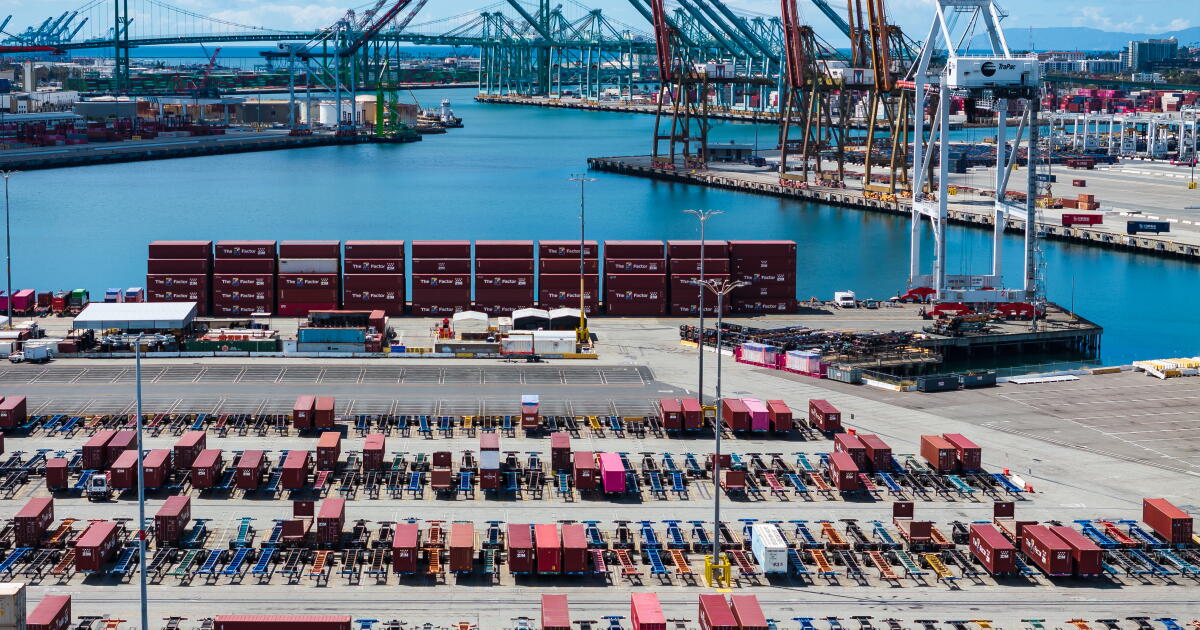

The Port of Los Angeles moved a record amount of cargo in September as lower tariffs and the upcoming holiday season drive shipments.
The record-setting month comes at the end of the port’s busiest quarter in its history, from July through September.
The port moved more than 1 million 20-foot-equivalent container units last month, topping its previous record set in July of last year by 23,000 units.
It handled 546,000 loaded imports, up 19% from last September and 26% above its five-year average.
“A few things came together all at once,” the port’s executive director, Gene Seroka, said in a recent media briefing. “Tariffs are lower than the levels we saw earlier this year and last, giving importers more certainty on cost and allowing them to replenish inventories at a quicker rate.”
Major retailers also are preparing for increased demand around the holidays and are stocking up and replenishing inventories, Seroka said.
Meanwhile, security and environmental challenges along the Suez and Panama canals are directing more shipments through Southern California.
L.A. is “the fastest and most reliable route from Asia to markets across the United States,” Seroka said.
The port’s record September — totalling 1,042,652 containers — also represents the most volume ever moved through any port in the Western Hemisphere.
The port handled 371,000 empty containers last month and exported 126,000 loaded containers. Loaded exports are up 10% from last September, but are still weaker than imports.
“Outbound volumes remain softer than normal, which reflects the ongoing challenges facing American farmers and manufacturers,” Seroka said.
The Port of Long Beach, which neighbors the Port of Los Angeles in the San Pedro Bay port complex, has not yet announced its cargo numbers for September. It handled nearly 920,000 container units in August, 2% higher than a year earlier. Among those containers, 456,100 were loaded imports.
The San Pedro Bay port complex is the busiest in the world. Combined, the two ports handled around 31% of all international waterborne container trade in the U.S. in 2025.
“The Port of Los Angeles remains an incredible economic engine both locally and nationally, creating good-paying, union jobs for Angelenos and maintaining Los Angeles’ status as a global competitor for trade and commerce,” Los Angeles Mayor Karen Bass said in a statement.

The Port of Los Angeles moved a record amount of cargo in September as lower tariffs and the upcoming holiday season drive shipments.
The record-setting month comes at the end of the port’s busiest quarter in its history, from July through September.
The port moved more than 1 million 20-foot-equivalent container units last month, topping its previous record set in July of last year by 23,000 units.
It handled 546,000 loaded imports, up 19% from last September and 26% above its five-year average.
“A few things came together all at once,” the port’s executive director, Gene Seroka, said in a recent media briefing. “Tariffs are lower than the levels we saw earlier this year and last, giving importers more certainty on cost and allowing them to replenish inventories at a quicker rate.”
Major retailers also are preparing for increased demand around the holidays and are stocking up and replenishing inventories, Seroka said.
Meanwhile, security and environmental challenges along the Suez and Panama canals are directing more shipments through Southern California.
L.A. is “the fastest and most reliable route from Asia to markets across the United States,” Seroka said.
The port’s record September — totalling 1,042,652 containers — also represents the most volume ever moved through any port in the Western Hemisphere.
The port handled 371,000 empty containers last month and exported 126,000 loaded containers. Loaded exports are up 10% from last September, but are still weaker than imports.
“Outbound volumes remain softer than normal, which reflects the ongoing challenges facing American farmers and manufacturers,” Seroka said.
The Port of Long Beach, which neighbors the Port of Los Angeles in the San Pedro Bay port complex, has not yet announced its cargo numbers for September. It handled nearly 920,000 container units in August, 2% higher than a year earlier. Among those containers, 456,100 were loaded imports.
The San Pedro Bay port complex is the busiest in the world. Combined, the two ports handled around 31% of all international waterborne container trade in the U.S. in 2025.
“The Port of Los Angeles remains an incredible economic engine both locally and nationally, creating good-paying, union jobs for Angelenos and maintaining Los Angeles’ status as a global competitor for trade and commerce,” Los Angeles Mayor Karen Bass said in a statement.

The Port of Los Angeles moved a record amount of cargo in September as lower tariffs and the upcoming holiday season drive shipments.
The record-setting month comes at the end of the port’s busiest quarter in its history, from July through September.
The port moved more than 1 million 20-foot-equivalent container units last month, topping its previous record set in July of last year by 23,000 units.
It handled 546,000 loaded imports, up 19% from last September and 26% above its five-year average.
“A few things came together all at once,” the port’s executive director, Gene Seroka, said in a recent media briefing. “Tariffs are lower than the levels we saw earlier this year and last, giving importers more certainty on cost and allowing them to replenish inventories at a quicker rate.”
Major retailers also are preparing for increased demand around the holidays and are stocking up and replenishing inventories, Seroka said.
Meanwhile, security and environmental challenges along the Suez and Panama canals are directing more shipments through Southern California.
L.A. is “the fastest and most reliable route from Asia to markets across the United States,” Seroka said.
The port’s record September — totalling 1,042,652 containers — also represents the most volume ever moved through any port in the Western Hemisphere.
The port handled 371,000 empty containers last month and exported 126,000 loaded containers. Loaded exports are up 10% from last September, but are still weaker than imports.
“Outbound volumes remain softer than normal, which reflects the ongoing challenges facing American farmers and manufacturers,” Seroka said.
The Port of Long Beach, which neighbors the Port of Los Angeles in the San Pedro Bay port complex, has not yet announced its cargo numbers for September. It handled nearly 920,000 container units in August, 2% higher than a year earlier. Among those containers, 456,100 were loaded imports.
The San Pedro Bay port complex is the busiest in the world. Combined, the two ports handled around 31% of all international waterborne container trade in the U.S. in 2025.
“The Port of Los Angeles remains an incredible economic engine both locally and nationally, creating good-paying, union jobs for Angelenos and maintaining Los Angeles’ status as a global competitor for trade and commerce,” Los Angeles Mayor Karen Bass said in a statement.
The Port of Los Angeles moved a record amount of cargo in September as lower tariffs and the upcoming holiday season drive shipments.
The record-setting month comes at the end of the port’s busiest quarter in its history, from July through September.
The port moved more than 1 million 20-foot-equivalent container units last month, topping its previous record set in July of last year by 23,000 units.
It handled 546,000 loaded imports, up 19% from last September and 26% above its five-year average.
“A few things came together all at once,” the port’s executive director, Gene Seroka, said in a recent media briefing. “Tariffs are lower than the levels we saw earlier this year and last, giving importers more certainty on cost and allowing them to replenish inventories at a quicker rate.”
Major retailers also are preparing for increased demand around the holidays and are stocking up and replenishing inventories, Seroka said.
Meanwhile, security and environmental challenges along the Suez and Panama canals are directing more shipments through Southern California.
L.A. is “the fastest and most reliable route from Asia to markets across the United States,” Seroka said.
The port’s record September — totalling 1,042,652 containers — also represents the most volume ever moved through any port in the Western Hemisphere.
The port handled 371,000 empty containers last month and exported 126,000 loaded containers. Loaded exports are up 10% from last September, but are still weaker than imports.
“Outbound volumes remain softer than normal, which reflects the ongoing challenges facing American farmers and manufacturers,” Seroka said.
The Port of Long Beach, which neighbors the Port of Los Angeles in the San Pedro Bay port complex, has not yet announced its cargo numbers for September. It handled nearly 920,000 container units in August, 2% higher than a year earlier. Among those containers, 456,100 were loaded imports.
The San Pedro Bay port complex is the busiest in the world. Combined, the two ports handled around 31% of all international waterborne container trade in the U.S. in 2025.
“The Port of Los Angeles remains an incredible economic engine both locally and nationally, creating good-paying, union jobs for Angelenos and maintaining Los Angeles’ status as a global competitor for trade and commerce,” Los Angeles Mayor Karen Bass said in a statement.

The Port of Los Angeles moved a record amount of cargo in September as lower tariffs and the upcoming holiday season drive shipments.
The record-setting month comes at the end of the port’s busiest quarter in its history, from July through September.
The port moved more than 1 million 20-foot-equivalent container units last month, topping its previous record set in July of last year by 23,000 units.
It handled 546,000 loaded imports, up 19% from last September and 26% above its five-year average.
“A few things came together all at once,” the port’s executive director, Gene Seroka, said in a recent media briefing. “Tariffs are lower than the levels we saw earlier this year and last, giving importers more certainty on cost and allowing them to replenish inventories at a quicker rate.”
Major retailers also are preparing for increased demand around the holidays and are stocking up and replenishing inventories, Seroka said.
Meanwhile, security and environmental challenges along the Suez and Panama canals are directing more shipments through Southern California.
L.A. is “the fastest and most reliable route from Asia to markets across the United States,” Seroka said.
The port’s record September — totalling 1,042,652 containers — also represents the most volume ever moved through any port in the Western Hemisphere.
The port handled 371,000 empty containers last month and exported 126,000 loaded containers. Loaded exports are up 10% from last September, but are still weaker than imports.
“Outbound volumes remain softer than normal, which reflects the ongoing challenges facing American farmers and manufacturers,” Seroka said.
The Port of Long Beach, which neighbors the Port of Los Angeles in the San Pedro Bay port complex, has not yet announced its cargo numbers for September. It handled nearly 920,000 container units in August, 2% higher than a year earlier. Among those containers, 456,100 were loaded imports.
The San Pedro Bay port complex is the busiest in the world. Combined, the two ports handled around 31% of all international waterborne container trade in the U.S. in 2025.
“The Port of Los Angeles remains an incredible economic engine both locally and nationally, creating good-paying, union jobs for Angelenos and maintaining Los Angeles’ status as a global competitor for trade and commerce,” Los Angeles Mayor Karen Bass said in a statement.
The Port of Los Angeles moved a record amount of cargo in September as lower tariffs and the upcoming holiday season drive shipments.
The record-setting month comes at the end of the port’s busiest quarter in its history, from July through September.
The port moved more than 1 million 20-foot-equivalent container units last month, topping its previous record set in July of last year by 23,000 units.
It handled 546,000 loaded imports, up 19% from last September and 26% above its five-year average.
“A few things came together all at once,” the port’s executive director, Gene Seroka, said in a recent media briefing. “Tariffs are lower than the levels we saw earlier this year and last, giving importers more certainty on cost and allowing them to replenish inventories at a quicker rate.”
Major retailers also are preparing for increased demand around the holidays and are stocking up and replenishing inventories, Seroka said.
Meanwhile, security and environmental challenges along the Suez and Panama canals are directing more shipments through Southern California.
L.A. is “the fastest and most reliable route from Asia to markets across the United States,” Seroka said.
The port’s record September — totalling 1,042,652 containers — also represents the most volume ever moved through any port in the Western Hemisphere.
The port handled 371,000 empty containers last month and exported 126,000 loaded containers. Loaded exports are up 10% from last September, but are still weaker than imports.
“Outbound volumes remain softer than normal, which reflects the ongoing challenges facing American farmers and manufacturers,” Seroka said.
The Port of Long Beach, which neighbors the Port of Los Angeles in the San Pedro Bay port complex, has not yet announced its cargo numbers for September. It handled nearly 920,000 container units in August, 2% higher than a year earlier. Among those containers, 456,100 were loaded imports.
The San Pedro Bay port complex is the busiest in the world. Combined, the two ports handled around 31% of all international waterborne container trade in the U.S. in 2025.
“The Port of Los Angeles remains an incredible economic engine both locally and nationally, creating good-paying, union jobs for Angelenos and maintaining Los Angeles’ status as a global competitor for trade and commerce,” Los Angeles Mayor Karen Bass said in a statement.
The Port of Los Angeles moved a record amount of cargo in September as lower tariffs and the upcoming holiday season drive shipments.
The record-setting month comes at the end of the port’s busiest quarter in its history, from July through September.
The port moved more than 1 million 20-foot-equivalent container units last month, topping its previous record set in July of last year by 23,000 units.
It handled 546,000 loaded imports, up 19% from last September and 26% above its five-year average.
“A few things came together all at once,” the port’s executive director, Gene Seroka, said in a recent media briefing. “Tariffs are lower than the levels we saw earlier this year and last, giving importers more certainty on cost and allowing them to replenish inventories at a quicker rate.”
Major retailers also are preparing for increased demand around the holidays and are stocking up and replenishing inventories, Seroka said.
Meanwhile, security and environmental challenges along the Suez and Panama canals are directing more shipments through Southern California.
L.A. is “the fastest and most reliable route from Asia to markets across the United States,” Seroka said.
The port’s record September — totalling 1,042,652 containers — also represents the most volume ever moved through any port in the Western Hemisphere.
The port handled 371,000 empty containers last month and exported 126,000 loaded containers. Loaded exports are up 10% from last September, but are still weaker than imports.
“Outbound volumes remain softer than normal, which reflects the ongoing challenges facing American farmers and manufacturers,” Seroka said.
The Port of Long Beach, which neighbors the Port of Los Angeles in the San Pedro Bay port complex, has not yet announced its cargo numbers for September. It handled nearly 920,000 container units in August, 2% higher than a year earlier. Among those containers, 456,100 were loaded imports.
The San Pedro Bay port complex is the busiest in the world. Combined, the two ports handled around 31% of all international waterborne container trade in the U.S. in 2025.
“The Port of Los Angeles remains an incredible economic engine both locally and nationally, creating good-paying, union jobs for Angelenos and maintaining Los Angeles’ status as a global competitor for trade and commerce,” Los Angeles Mayor Karen Bass said in a statement.
The Port of Los Angeles moved a record amount of cargo in September as lower tariffs and the upcoming holiday season drive shipments.
The record-setting month comes at the end of the port’s busiest quarter in its history, from July through September.
The port moved more than 1 million 20-foot-equivalent container units last month, topping its previous record set in July of last year by 23,000 units.
It handled 546,000 loaded imports, up 19% from last September and 26% above its five-year average.
“A few things came together all at once,” the port’s executive director, Gene Seroka, said in a recent media briefing. “Tariffs are lower than the levels we saw earlier this year and last, giving importers more certainty on cost and allowing them to replenish inventories at a quicker rate.”
Major retailers also are preparing for increased demand around the holidays and are stocking up and replenishing inventories, Seroka said.
Meanwhile, security and environmental challenges along the Suez and Panama canals are directing more shipments through Southern California.
L.A. is “the fastest and most reliable route from Asia to markets across the United States,” Seroka said.
The port’s record September — totalling 1,042,652 containers — also represents the most volume ever moved through any port in the Western Hemisphere.
The port handled 371,000 empty containers last month and exported 126,000 loaded containers. Loaded exports are up 10% from last September, but are still weaker than imports.
“Outbound volumes remain softer than normal, which reflects the ongoing challenges facing American farmers and manufacturers,” Seroka said.
The Port of Long Beach, which neighbors the Port of Los Angeles in the San Pedro Bay port complex, has not yet announced its cargo numbers for September. It handled nearly 920,000 container units in August, 2% higher than a year earlier. Among those containers, 456,100 were loaded imports.
The San Pedro Bay port complex is the busiest in the world. Combined, the two ports handled around 31% of all international waterborne container trade in the U.S. in 2025.
“The Port of Los Angeles remains an incredible economic engine both locally and nationally, creating good-paying, union jobs for Angelenos and maintaining Los Angeles’ status as a global competitor for trade and commerce,” Los Angeles Mayor Karen Bass said in a statement.