



Washington DC
New York
Toronto
Distribution: (800) 510 9863
Press ID
  • Login
Binghamton Herald
Advertisement
Sunday, May 17, 2026
  • Home
  • World
  • Politics
  • Business
  • Technology
  • Culture
  • Health
  • Entertainment
  • Trending
No Result
View All Result
Binghamton Herald
No Result
View All Result
Home World

Opinion: Reality check — intifada has nothing to do with genocide of Jews

by Binghamton Herald Report
December 12, 2023
in World
Share on FacebookShare on Twitter

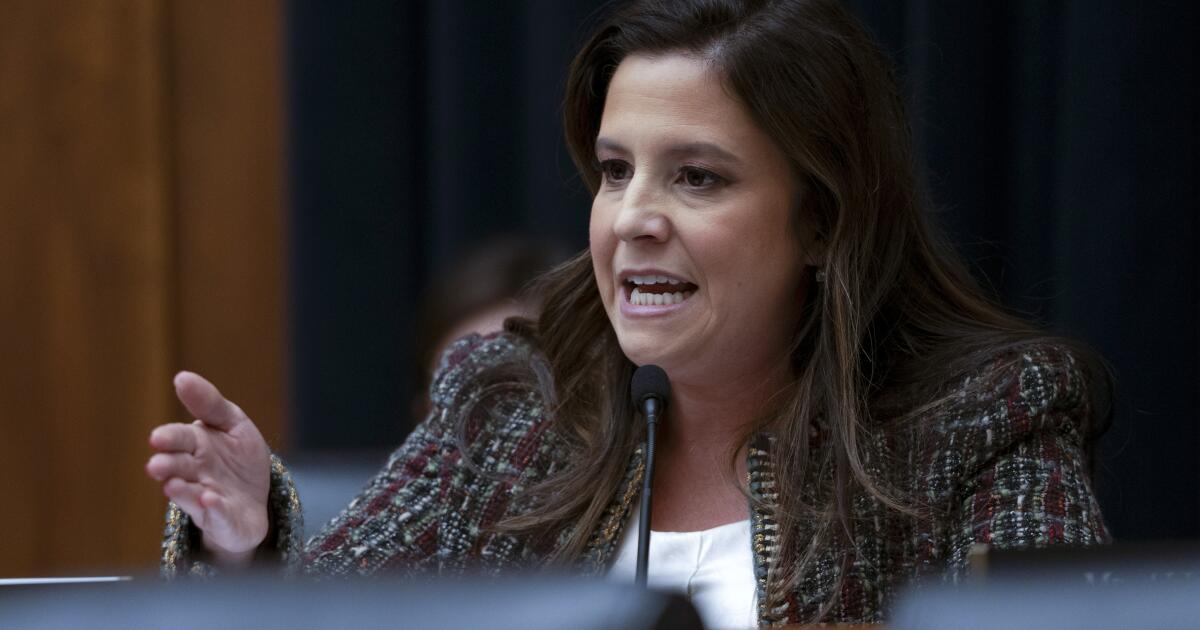
When New York Rep. Elise Stefanik repeatedly — and now infamously — badgered three college presidents about the nuances of free speech last week, she attempted to push her narrative that elite schools are antisemitic by equating “chants for intifada” with “genocide of Jews.”

The three presidents fell for the trap that a Palestinian uprising could be connected to crimes against humanity.

I was a journalist for Al Fajr, a Palestinian weekly, in the late 1980s, when the first intifada began. The word appeared on leaflets in the title of a Palestinian Liberation Organization-backed group: the Underground Unified National Leadership of the Intifada.

Dan Fisher, then the Jerusalem bureau chief for the Los Angeles Times, asked me to translate it. “Intifada” means “shaking off,” I told him, a reference to the demand for freedom from occupation. Palestinians opposed the occupation, not Israel. Palestinians’ aspirations were for an independent state alongside Israel, not instead of Israel.

Initially, the intifada included the methods of resistance practiced by Martin Luther King Jr., Mahatma Gandhi and Nelson Mandela. My cousin Mubarak Awad was deported by Israeli Prime Minister Yitzhak Shamir for crisscrossing the occupied Palestinian territories and distributing the Arabic translation of Harvard professor Gene Sharp’s writings on nonviolence. Mubarak advocated boycotts of Israeli products, work refusals and building up the Palestinian economy to prepare for independence.

To equate the call for an end to the Israeli occupation with a call for the genocide of Jews is a bizarre reversal that turns victims into aggressors.

Six years of civil disobedience and protest brought about the Oslo Accords and the signing of the Declaration of Principles between Israel and the PLO on Sept. 13, 1993. On the eve of that important agreement, the PLO recognized Israel and Israel recognized the PLO as the representative of the Palestinian people. Unfortunately, that important event, sealed with a White House handshake between PLO Chairman Yasir Arafat and Israeli Prime Minister Yitzhak Rabin, was upended when a radical Israeli settler named Yigal Amir assassinated Rabin in 1995 as he was departing from a peace rally in Tel Aviv.

The courageous Rabin was succeeded by Benjamin Netanyahu in his first term as Israeli prime minister. Then as now, Netanyahu multiplied illegal settlements in the occupied Palestinian territories. Since Oslo, the number of Israeli settlers has quadrupled in the West Bank, the very territory that was supposed to be an independent Palestinian state alongside Israel.

As part of the Oslo Accords, Israel agreed to open a safe passage between Gaza and the West Bank. That passageway was opened in 1999 but lasted one year and has been closed since.

In the winter of 2000, Israeli prime minister candidate Ariel Sharon staged a deliberately provocative campaign visit to Al Aqsa Mosque. The Palestinian protests that followed were violently and fatally put down, and so began the second intifada, a recognition that negotiation and nonviolence had failed to end the occupation and create an independent Palestinian state.

Dan Fisher in 1988 was one of the first to make “intifada” a household word in America and the English-speaking world. The term has never meant genocide, and its target is not Jews but Israel’s illegal occupation — “the inadmissibility of the acquisition of land by war,” as U.N. Security Council Resolution 242, adopted in 1967, puts it.

In response to Stefanik’s congressional bluster, the three presidents of the University of Pennsylvania, Harvard and MIT should have stated clearly that genocide against Jews or any other people is unacceptable. They could have added that intifada is in no way equivalent to that heinous act.

Daoud Kuttab is a Palestinian journalist, a former professor of journalism at Princeton University and a columnist with Al-Monitor. X: @daoudkuttab Threads: @Daoud.Kuttab

When New York Rep. Elise Stefanik repeatedly — and now infamously — badgered three college presidents about the nuances of free speech last week, she attempted to push her narrative that elite schools are antisemitic by equating “chants for intifada” with “genocide of Jews.”

The three presidents fell for the trap that a Palestinian uprising could be connected to crimes against humanity.

I was a journalist for Al Fajr, a Palestinian weekly, in the late 1980s, when the first intifada began. The word appeared on leaflets in the title of a Palestinian Liberation Organization-backed group: the Underground Unified National Leadership of the Intifada.

Dan Fisher, then the Jerusalem bureau chief for the Los Angeles Times, asked me to translate it. “Intifada” means “shaking off,” I told him, a reference to the demand for freedom from occupation. Palestinians opposed the occupation, not Israel. Palestinians’ aspirations were for an independent state alongside Israel, not instead of Israel.

Initially, the intifada included the methods of resistance practiced by Martin Luther King Jr., Mahatma Gandhi and Nelson Mandela. My cousin Mubarak Awad was deported by Israeli Prime Minister Yitzhak Shamir for crisscrossing the occupied Palestinian territories and distributing the Arabic translation of Harvard professor Gene Sharp’s writings on nonviolence. Mubarak advocated boycotts of Israeli products, work refusals and building up the Palestinian economy to prepare for independence.

To equate the call for an end to the Israeli occupation with a call for the genocide of Jews is a bizarre reversal that turns victims into aggressors.

Six years of civil disobedience and protest brought about the Oslo Accords and the signing of the Declaration of Principles between Israel and the PLO on Sept. 13, 1993. On the eve of that important agreement, the PLO recognized Israel and Israel recognized the PLO as the representative of the Palestinian people. Unfortunately, that important event, sealed with a White House handshake between PLO Chairman Yasir Arafat and Israeli Prime Minister Yitzhak Rabin, was upended when a radical Israeli settler named Yigal Amir assassinated Rabin in 1995 as he was departing from a peace rally in Tel Aviv.

The courageous Rabin was succeeded by Benjamin Netanyahu in his first term as Israeli prime minister. Then as now, Netanyahu multiplied illegal settlements in the occupied Palestinian territories. Since Oslo, the number of Israeli settlers has quadrupled in the West Bank, the very territory that was supposed to be an independent Palestinian state alongside Israel.

As part of the Oslo Accords, Israel agreed to open a safe passage between Gaza and the West Bank. That passageway was opened in 1999 but lasted one year and has been closed since.

In the winter of 2000, Israeli prime minister candidate Ariel Sharon staged a deliberately provocative campaign visit to Al Aqsa Mosque. The Palestinian protests that followed were violently and fatally put down, and so began the second intifada, a recognition that negotiation and nonviolence had failed to end the occupation and create an independent Palestinian state.

Dan Fisher in 1988 was one of the first to make “intifada” a household word in America and the English-speaking world. The term has never meant genocide, and its target is not Jews but Israel’s illegal occupation — “the inadmissibility of the acquisition of land by war,” as U.N. Security Council Resolution 242, adopted in 1967, puts it.

In response to Stefanik’s congressional bluster, the three presidents of the University of Pennsylvania, Harvard and MIT should have stated clearly that genocide against Jews or any other people is unacceptable. They could have added that intifada is in no way equivalent to that heinous act.

Daoud Kuttab is a Palestinian journalist, a former professor of journalism at Princeton University and a columnist with Al-Monitor. X: @daoudkuttab Threads: @Daoud.Kuttab

When New York Rep. Elise Stefanik repeatedly — and now infamously — badgered three college presidents about the nuances of free speech last week, she attempted to push her narrative that elite schools are antisemitic by equating “chants for intifada” with “genocide of Jews.”

The three presidents fell for the trap that a Palestinian uprising could be connected to crimes against humanity.

I was a journalist for Al Fajr, a Palestinian weekly, in the late 1980s, when the first intifada began. The word appeared on leaflets in the title of a Palestinian Liberation Organization-backed group: the Underground Unified National Leadership of the Intifada.

Dan Fisher, then the Jerusalem bureau chief for the Los Angeles Times, asked me to translate it. “Intifada” means “shaking off,” I told him, a reference to the demand for freedom from occupation. Palestinians opposed the occupation, not Israel. Palestinians’ aspirations were for an independent state alongside Israel, not instead of Israel.

Initially, the intifada included the methods of resistance practiced by Martin Luther King Jr., Mahatma Gandhi and Nelson Mandela. My cousin Mubarak Awad was deported by Israeli Prime Minister Yitzhak Shamir for crisscrossing the occupied Palestinian territories and distributing the Arabic translation of Harvard professor Gene Sharp’s writings on nonviolence. Mubarak advocated boycotts of Israeli products, work refusals and building up the Palestinian economy to prepare for independence.

To equate the call for an end to the Israeli occupation with a call for the genocide of Jews is a bizarre reversal that turns victims into aggressors.

Six years of civil disobedience and protest brought about the Oslo Accords and the signing of the Declaration of Principles between Israel and the PLO on Sept. 13, 1993. On the eve of that important agreement, the PLO recognized Israel and Israel recognized the PLO as the representative of the Palestinian people. Unfortunately, that important event, sealed with a White House handshake between PLO Chairman Yasir Arafat and Israeli Prime Minister Yitzhak Rabin, was upended when a radical Israeli settler named Yigal Amir assassinated Rabin in 1995 as he was departing from a peace rally in Tel Aviv.

The courageous Rabin was succeeded by Benjamin Netanyahu in his first term as Israeli prime minister. Then as now, Netanyahu multiplied illegal settlements in the occupied Palestinian territories. Since Oslo, the number of Israeli settlers has quadrupled in the West Bank, the very territory that was supposed to be an independent Palestinian state alongside Israel.

As part of the Oslo Accords, Israel agreed to open a safe passage between Gaza and the West Bank. That passageway was opened in 1999 but lasted one year and has been closed since.

In the winter of 2000, Israeli prime minister candidate Ariel Sharon staged a deliberately provocative campaign visit to Al Aqsa Mosque. The Palestinian protests that followed were violently and fatally put down, and so began the second intifada, a recognition that negotiation and nonviolence had failed to end the occupation and create an independent Palestinian state.

Dan Fisher in 1988 was one of the first to make “intifada” a household word in America and the English-speaking world. The term has never meant genocide, and its target is not Jews but Israel’s illegal occupation — “the inadmissibility of the acquisition of land by war,” as U.N. Security Council Resolution 242, adopted in 1967, puts it.

In response to Stefanik’s congressional bluster, the three presidents of the University of Pennsylvania, Harvard and MIT should have stated clearly that genocide against Jews or any other people is unacceptable. They could have added that intifada is in no way equivalent to that heinous act.

Daoud Kuttab is a Palestinian journalist, a former professor of journalism at Princeton University and a columnist with Al-Monitor. X: @daoudkuttab Threads: @Daoud.Kuttab


When New York Rep. Elise Stefanik repeatedly — and now infamously — badgered three college presidents about the nuances of free speech last week, she attempted to push her narrative that elite schools are antisemitic by equating “chants for intifada” with “genocide of Jews.”

The three presidents fell for the trap that a Palestinian uprising could be connected to crimes against humanity.

I was a journalist for Al Fajr, a Palestinian weekly, in the late 1980s, when the first intifada began. The word appeared on leaflets in the title of a Palestinian Liberation Organization-backed group: the Underground Unified National Leadership of the Intifada.

Dan Fisher, then the Jerusalem bureau chief for the Los Angeles Times, asked me to translate it. “Intifada” means “shaking off,” I told him, a reference to the demand for freedom from occupation. Palestinians opposed the occupation, not Israel. Palestinians’ aspirations were for an independent state alongside Israel, not instead of Israel.

Initially, the intifada included the methods of resistance practiced by Martin Luther King Jr., Mahatma Gandhi and Nelson Mandela. My cousin Mubarak Awad was deported by Israeli Prime Minister Yitzhak Shamir for crisscrossing the occupied Palestinian territories and distributing the Arabic translation of Harvard professor Gene Sharp’s writings on nonviolence. Mubarak advocated boycotts of Israeli products, work refusals and building up the Palestinian economy to prepare for independence.

To equate the call for an end to the Israeli occupation with a call for the genocide of Jews is a bizarre reversal that turns victims into aggressors.

Six years of civil disobedience and protest brought about the Oslo Accords and the signing of the Declaration of Principles between Israel and the PLO on Sept. 13, 1993. On the eve of that important agreement, the PLO recognized Israel and Israel recognized the PLO as the representative of the Palestinian people. Unfortunately, that important event, sealed with a White House handshake between PLO Chairman Yasir Arafat and Israeli Prime Minister Yitzhak Rabin, was upended when a radical Israeli settler named Yigal Amir assassinated Rabin in 1995 as he was departing from a peace rally in Tel Aviv.

The courageous Rabin was succeeded by Benjamin Netanyahu in his first term as Israeli prime minister. Then as now, Netanyahu multiplied illegal settlements in the occupied Palestinian territories. Since Oslo, the number of Israeli settlers has quadrupled in the West Bank, the very territory that was supposed to be an independent Palestinian state alongside Israel.

As part of the Oslo Accords, Israel agreed to open a safe passage between Gaza and the West Bank. That passageway was opened in 1999 but lasted one year and has been closed since.

In the winter of 2000, Israeli prime minister candidate Ariel Sharon staged a deliberately provocative campaign visit to Al Aqsa Mosque. The Palestinian protests that followed were violently and fatally put down, and so began the second intifada, a recognition that negotiation and nonviolence had failed to end the occupation and create an independent Palestinian state.

Dan Fisher in 1988 was one of the first to make “intifada” a household word in America and the English-speaking world. The term has never meant genocide, and its target is not Jews but Israel’s illegal occupation — “the inadmissibility of the acquisition of land by war,” as U.N. Security Council Resolution 242, adopted in 1967, puts it.

In response to Stefanik’s congressional bluster, the three presidents of the University of Pennsylvania, Harvard and MIT should have stated clearly that genocide against Jews or any other people is unacceptable. They could have added that intifada is in no way equivalent to that heinous act.

Daoud Kuttab is a Palestinian journalist, a former professor of journalism at Princeton University and a columnist with Al-Monitor. X: @daoudkuttab Threads: @Daoud.Kuttab

When New York Rep. Elise Stefanik repeatedly — and now infamously — badgered three college presidents about the nuances of free speech last week, she attempted to push her narrative that elite schools are antisemitic by equating “chants for intifada” with “genocide of Jews.”

The three presidents fell for the trap that a Palestinian uprising could be connected to crimes against humanity.

I was a journalist for Al Fajr, a Palestinian weekly, in the late 1980s, when the first intifada began. The word appeared on leaflets in the title of a Palestinian Liberation Organization-backed group: the Underground Unified National Leadership of the Intifada.

Dan Fisher, then the Jerusalem bureau chief for the Los Angeles Times, asked me to translate it. “Intifada” means “shaking off,” I told him, a reference to the demand for freedom from occupation. Palestinians opposed the occupation, not Israel. Palestinians’ aspirations were for an independent state alongside Israel, not instead of Israel.

Initially, the intifada included the methods of resistance practiced by Martin Luther King Jr., Mahatma Gandhi and Nelson Mandela. My cousin Mubarak Awad was deported by Israeli Prime Minister Yitzhak Shamir for crisscrossing the occupied Palestinian territories and distributing the Arabic translation of Harvard professor Gene Sharp’s writings on nonviolence. Mubarak advocated boycotts of Israeli products, work refusals and building up the Palestinian economy to prepare for independence.

To equate the call for an end to the Israeli occupation with a call for the genocide of Jews is a bizarre reversal that turns victims into aggressors.

Six years of civil disobedience and protest brought about the Oslo Accords and the signing of the Declaration of Principles between Israel and the PLO on Sept. 13, 1993. On the eve of that important agreement, the PLO recognized Israel and Israel recognized the PLO as the representative of the Palestinian people. Unfortunately, that important event, sealed with a White House handshake between PLO Chairman Yasir Arafat and Israeli Prime Minister Yitzhak Rabin, was upended when a radical Israeli settler named Yigal Amir assassinated Rabin in 1995 as he was departing from a peace rally in Tel Aviv.

The courageous Rabin was succeeded by Benjamin Netanyahu in his first term as Israeli prime minister. Then as now, Netanyahu multiplied illegal settlements in the occupied Palestinian territories. Since Oslo, the number of Israeli settlers has quadrupled in the West Bank, the very territory that was supposed to be an independent Palestinian state alongside Israel.

As part of the Oslo Accords, Israel agreed to open a safe passage between Gaza and the West Bank. That passageway was opened in 1999 but lasted one year and has been closed since.

In the winter of 2000, Israeli prime minister candidate Ariel Sharon staged a deliberately provocative campaign visit to Al Aqsa Mosque. The Palestinian protests that followed were violently and fatally put down, and so began the second intifada, a recognition that negotiation and nonviolence had failed to end the occupation and create an independent Palestinian state.

Dan Fisher in 1988 was one of the first to make “intifada” a household word in America and the English-speaking world. The term has never meant genocide, and its target is not Jews but Israel’s illegal occupation — “the inadmissibility of the acquisition of land by war,” as U.N. Security Council Resolution 242, adopted in 1967, puts it.

In response to Stefanik’s congressional bluster, the three presidents of the University of Pennsylvania, Harvard and MIT should have stated clearly that genocide against Jews or any other people is unacceptable. They could have added that intifada is in no way equivalent to that heinous act.

Daoud Kuttab is a Palestinian journalist, a former professor of journalism at Princeton University and a columnist with Al-Monitor. X: @daoudkuttab Threads: @Daoud.Kuttab

When New York Rep. Elise Stefanik repeatedly — and now infamously — badgered three college presidents about the nuances of free speech last week, she attempted to push her narrative that elite schools are antisemitic by equating “chants for intifada” with “genocide of Jews.”

The three presidents fell for the trap that a Palestinian uprising could be connected to crimes against humanity.

I was a journalist for Al Fajr, a Palestinian weekly, in the late 1980s, when the first intifada began. The word appeared on leaflets in the title of a Palestinian Liberation Organization-backed group: the Underground Unified National Leadership of the Intifada.

Dan Fisher, then the Jerusalem bureau chief for the Los Angeles Times, asked me to translate it. “Intifada” means “shaking off,” I told him, a reference to the demand for freedom from occupation. Palestinians opposed the occupation, not Israel. Palestinians’ aspirations were for an independent state alongside Israel, not instead of Israel.

Initially, the intifada included the methods of resistance practiced by Martin Luther King Jr., Mahatma Gandhi and Nelson Mandela. My cousin Mubarak Awad was deported by Israeli Prime Minister Yitzhak Shamir for crisscrossing the occupied Palestinian territories and distributing the Arabic translation of Harvard professor Gene Sharp’s writings on nonviolence. Mubarak advocated boycotts of Israeli products, work refusals and building up the Palestinian economy to prepare for independence.

To equate the call for an end to the Israeli occupation with a call for the genocide of Jews is a bizarre reversal that turns victims into aggressors.

Six years of civil disobedience and protest brought about the Oslo Accords and the signing of the Declaration of Principles between Israel and the PLO on Sept. 13, 1993. On the eve of that important agreement, the PLO recognized Israel and Israel recognized the PLO as the representative of the Palestinian people. Unfortunately, that important event, sealed with a White House handshake between PLO Chairman Yasir Arafat and Israeli Prime Minister Yitzhak Rabin, was upended when a radical Israeli settler named Yigal Amir assassinated Rabin in 1995 as he was departing from a peace rally in Tel Aviv.

The courageous Rabin was succeeded by Benjamin Netanyahu in his first term as Israeli prime minister. Then as now, Netanyahu multiplied illegal settlements in the occupied Palestinian territories. Since Oslo, the number of Israeli settlers has quadrupled in the West Bank, the very territory that was supposed to be an independent Palestinian state alongside Israel.

As part of the Oslo Accords, Israel agreed to open a safe passage between Gaza and the West Bank. That passageway was opened in 1999 but lasted one year and has been closed since.

In the winter of 2000, Israeli prime minister candidate Ariel Sharon staged a deliberately provocative campaign visit to Al Aqsa Mosque. The Palestinian protests that followed were violently and fatally put down, and so began the second intifada, a recognition that negotiation and nonviolence had failed to end the occupation and create an independent Palestinian state.

Dan Fisher in 1988 was one of the first to make “intifada” a household word in America and the English-speaking world. The term has never meant genocide, and its target is not Jews but Israel’s illegal occupation — “the inadmissibility of the acquisition of land by war,” as U.N. Security Council Resolution 242, adopted in 1967, puts it.

In response to Stefanik’s congressional bluster, the three presidents of the University of Pennsylvania, Harvard and MIT should have stated clearly that genocide against Jews or any other people is unacceptable. They could have added that intifada is in no way equivalent to that heinous act.

Daoud Kuttab is a Palestinian journalist, a former professor of journalism at Princeton University and a columnist with Al-Monitor. X: @daoudkuttab Threads: @Daoud.Kuttab

When New York Rep. Elise Stefanik repeatedly — and now infamously — badgered three college presidents about the nuances of free speech last week, she attempted to push her narrative that elite schools are antisemitic by equating “chants for intifada” with “genocide of Jews.”

The three presidents fell for the trap that a Palestinian uprising could be connected to crimes against humanity.

I was a journalist for Al Fajr, a Palestinian weekly, in the late 1980s, when the first intifada began. The word appeared on leaflets in the title of a Palestinian Liberation Organization-backed group: the Underground Unified National Leadership of the Intifada.

Dan Fisher, then the Jerusalem bureau chief for the Los Angeles Times, asked me to translate it. “Intifada” means “shaking off,” I told him, a reference to the demand for freedom from occupation. Palestinians opposed the occupation, not Israel. Palestinians’ aspirations were for an independent state alongside Israel, not instead of Israel.

Initially, the intifada included the methods of resistance practiced by Martin Luther King Jr., Mahatma Gandhi and Nelson Mandela. My cousin Mubarak Awad was deported by Israeli Prime Minister Yitzhak Shamir for crisscrossing the occupied Palestinian territories and distributing the Arabic translation of Harvard professor Gene Sharp’s writings on nonviolence. Mubarak advocated boycotts of Israeli products, work refusals and building up the Palestinian economy to prepare for independence.

To equate the call for an end to the Israeli occupation with a call for the genocide of Jews is a bizarre reversal that turns victims into aggressors.

Six years of civil disobedience and protest brought about the Oslo Accords and the signing of the Declaration of Principles between Israel and the PLO on Sept. 13, 1993. On the eve of that important agreement, the PLO recognized Israel and Israel recognized the PLO as the representative of the Palestinian people. Unfortunately, that important event, sealed with a White House handshake between PLO Chairman Yasir Arafat and Israeli Prime Minister Yitzhak Rabin, was upended when a radical Israeli settler named Yigal Amir assassinated Rabin in 1995 as he was departing from a peace rally in Tel Aviv.

The courageous Rabin was succeeded by Benjamin Netanyahu in his first term as Israeli prime minister. Then as now, Netanyahu multiplied illegal settlements in the occupied Palestinian territories. Since Oslo, the number of Israeli settlers has quadrupled in the West Bank, the very territory that was supposed to be an independent Palestinian state alongside Israel.

As part of the Oslo Accords, Israel agreed to open a safe passage between Gaza and the West Bank. That passageway was opened in 1999 but lasted one year and has been closed since.

In the winter of 2000, Israeli prime minister candidate Ariel Sharon staged a deliberately provocative campaign visit to Al Aqsa Mosque. The Palestinian protests that followed were violently and fatally put down, and so began the second intifada, a recognition that negotiation and nonviolence had failed to end the occupation and create an independent Palestinian state.

Dan Fisher in 1988 was one of the first to make “intifada” a household word in America and the English-speaking world. The term has never meant genocide, and its target is not Jews but Israel’s illegal occupation — “the inadmissibility of the acquisition of land by war,” as U.N. Security Council Resolution 242, adopted in 1967, puts it.

In response to Stefanik’s congressional bluster, the three presidents of the University of Pennsylvania, Harvard and MIT should have stated clearly that genocide against Jews or any other people is unacceptable. They could have added that intifada is in no way equivalent to that heinous act.

Daoud Kuttab is a Palestinian journalist, a former professor of journalism at Princeton University and a columnist with Al-Monitor. X: @daoudkuttab Threads: @Daoud.Kuttab

When New York Rep. Elise Stefanik repeatedly — and now infamously — badgered three college presidents about the nuances of free speech last week, she attempted to push her narrative that elite schools are antisemitic by equating “chants for intifada” with “genocide of Jews.”

The three presidents fell for the trap that a Palestinian uprising could be connected to crimes against humanity.

I was a journalist for Al Fajr, a Palestinian weekly, in the late 1980s, when the first intifada began. The word appeared on leaflets in the title of a Palestinian Liberation Organization-backed group: the Underground Unified National Leadership of the Intifada.

Dan Fisher, then the Jerusalem bureau chief for the Los Angeles Times, asked me to translate it. “Intifada” means “shaking off,” I told him, a reference to the demand for freedom from occupation. Palestinians opposed the occupation, not Israel. Palestinians’ aspirations were for an independent state alongside Israel, not instead of Israel.

Initially, the intifada included the methods of resistance practiced by Martin Luther King Jr., Mahatma Gandhi and Nelson Mandela. My cousin Mubarak Awad was deported by Israeli Prime Minister Yitzhak Shamir for crisscrossing the occupied Palestinian territories and distributing the Arabic translation of Harvard professor Gene Sharp’s writings on nonviolence. Mubarak advocated boycotts of Israeli products, work refusals and building up the Palestinian economy to prepare for independence.

To equate the call for an end to the Israeli occupation with a call for the genocide of Jews is a bizarre reversal that turns victims into aggressors.

Six years of civil disobedience and protest brought about the Oslo Accords and the signing of the Declaration of Principles between Israel and the PLO on Sept. 13, 1993. On the eve of that important agreement, the PLO recognized Israel and Israel recognized the PLO as the representative of the Palestinian people. Unfortunately, that important event, sealed with a White House handshake between PLO Chairman Yasir Arafat and Israeli Prime Minister Yitzhak Rabin, was upended when a radical Israeli settler named Yigal Amir assassinated Rabin in 1995 as he was departing from a peace rally in Tel Aviv.

The courageous Rabin was succeeded by Benjamin Netanyahu in his first term as Israeli prime minister. Then as now, Netanyahu multiplied illegal settlements in the occupied Palestinian territories. Since Oslo, the number of Israeli settlers has quadrupled in the West Bank, the very territory that was supposed to be an independent Palestinian state alongside Israel.

As part of the Oslo Accords, Israel agreed to open a safe passage between Gaza and the West Bank. That passageway was opened in 1999 but lasted one year and has been closed since.

In the winter of 2000, Israeli prime minister candidate Ariel Sharon staged a deliberately provocative campaign visit to Al Aqsa Mosque. The Palestinian protests that followed were violently and fatally put down, and so began the second intifada, a recognition that negotiation and nonviolence had failed to end the occupation and create an independent Palestinian state.

Dan Fisher in 1988 was one of the first to make “intifada” a household word in America and the English-speaking world. The term has never meant genocide, and its target is not Jews but Israel’s illegal occupation — “the inadmissibility of the acquisition of land by war,” as U.N. Security Council Resolution 242, adopted in 1967, puts it.

In response to Stefanik’s congressional bluster, the three presidents of the University of Pennsylvania, Harvard and MIT should have stated clearly that genocide against Jews or any other people is unacceptable. They could have added that intifada is in no way equivalent to that heinous act.

Daoud Kuttab is a Palestinian journalist, a former professor of journalism at Princeton University and a columnist with Al-Monitor. X: @daoudkuttab Threads: @Daoud.Kuttab

Previous Post

Raven-Symoné says brother Blaize Pearman died of colon cancer: ‘He is loved and missed’

Next Post

This retro 1940s filling station now serves buttery lobster rolls in Koreatown

Leave a Reply Cancel reply

Your email address will not be published. Required fields are marked *

BROWSE BY CATEGORIES

  • Business
  • Culture
  • Entertainment
  • Health
  • Politics
  • Technology
  • Trending
  • Uncategorized
  • World
Binghamton Herald

© 2024 Binghamton Herald or its affiliated companies.

Navigate Site

  • About
  • Advertise
  • Terms & Conditions
  • Privacy Policy
  • Disclaimer
  • Contact

Follow Us

No Result
View All Result
  • Home
  • World
  • Politics
  • Business
  • Technology
  • Culture
  • Health
  • Entertainment
  • Trending

© 2024 Binghamton Herald or its affiliated companies.

Welcome Back!

Login to your account below

Forgotten Password?

Retrieve your password

Please enter your username or email address to reset your password.

Log In