

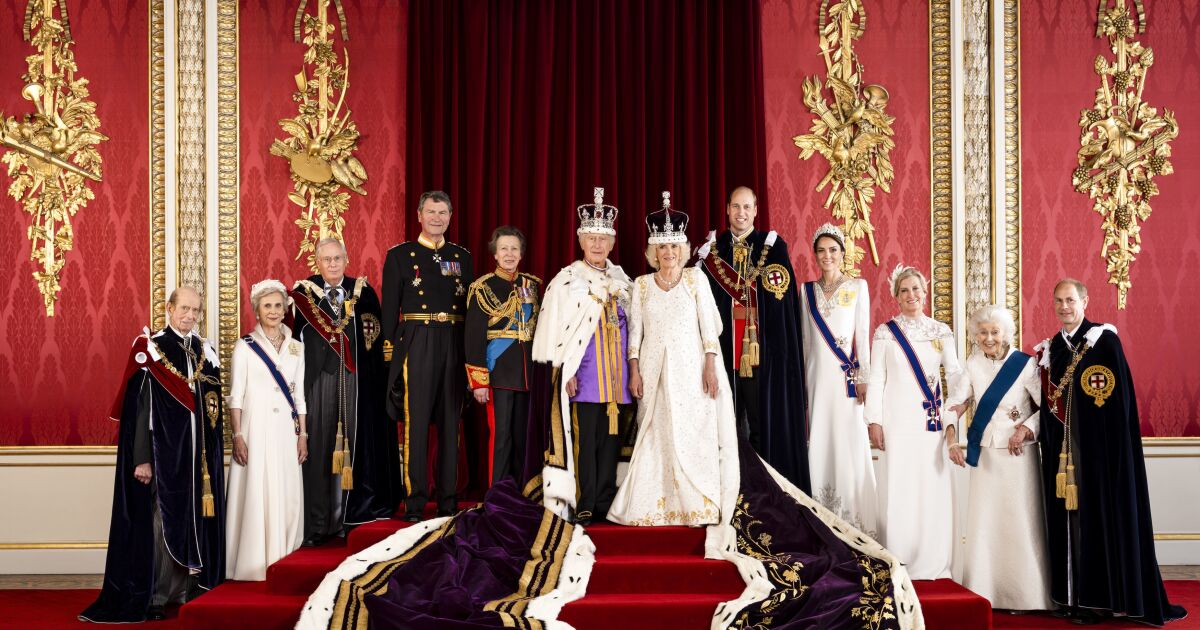
As King Charles walked through Westminster Abbey clad in an ermine-trimmed robe last weekend, it was hard to imagine him as the monarchy’s great modernizer. Despite the many promises made to that effect ahead of the ceremony, they appeared all the more remote while a sapphire crown was being placed atop the new king’s head.
Gen Z Britons took to TikTok (where else?) to express their distaste in song. Demonstrators also took to the streets nearby, holding up yellow placards proclaiming, “Not my king.” Peaceful protesters were promptly cuffed and carted off by police, which did nothing to salvage relations between the royals and their growing ranks of young detractors.
As a cost-of-living crisis, record inflation and crumbling health, education and transportation services hit Britain hard, Gen Z-ers are both crucial to the royals’ future and likely to hasten their downfall. A recent poll by YouGov found that 38% of the country’s 18-to-24-year-olds would abolish the monarchy given a choice, more than in any other age group, while only 32% expressed support for the institution.
Dismissing the concerns of young people is a political given in the U.K. and beyond. But the royals are bankrolled by British taxpayers, making the consternation of its youngest working generation hard to ignore. YouGov also found that more than 60% of Britain’s young people opposed paying for the coronation. The weekend’s gilded display, in which billions of dollars worth of jewels were wheeled out of the family vaults, surely frayed public patience further.
Such parades of crowns, scepters and swords have been vaunted by older generations as showcasing a uniquely British flair for pomp and ceremony. But to many teens and 20-somethings, these are unpalatable anachronisms.
Promises that this would be a “pared back” affair from a newly “slimmed down” royal family were meant to signal that the monarchy is attuned to the concerns of the people. Ditto the retreat, following public outcry, from calling on Brits to swear allegiance to the king from their sofas. Yet it didn’t appear as though anything beyond the most superficial of changes had been made.
A letter in the Guardian newspaper last week underscored the occasion for outrage by suggesting that a local food bank’s application for government funding had been turned down because public money was being diverted to “events celebrating the coronation.” The king’s estimated $2.3-billion personal fortune was apparently unavailable for either cause.
Food banks, the use of which has reached record highs in the U.K. over the past year, are typical of the social priorities of a generation often accused of being more puritanical than punk. The monarchy evidently hopes that vague talk of “modernizing” will keep their anger beneath the boiling point.
They ignore Gen Z’s steadily rising dissatisfaction at their peril. Netflix’s “The Crown” offered many young people the closest insight they have had about the breakdown of Charles and Diana’s relationship, tarnishing the monarchy anew. The flames were fanned by the $16 million paid to settle allegations of impropriety against Prince Andrew, the loss of the globally revered queen and Prince Harry’s splashy tell-all. While Elizabeth II had hoped that a newer generation of bluebloods would help drum up support among the young, the implosion of relations between her warring grandsons and their wives has shattered that notion.
The royals’ international reach as agents of soft power is flagging, too. Of the 14 Commonwealth countries where the monarch serves as head of state, at least half are debating ditching Charles to become republics.
Britain’s youngest adults share that failure to understand what these unelected pensioners cloaked in fur and entire economies’ worth of diamonds have to offer them. Without their support, the prospect that this coronation could be the last threatens to grow from a murmur into a mushroom cloud.
Charlotte Lytton is a journalist based in London.

As King Charles walked through Westminster Abbey clad in an ermine-trimmed robe last weekend, it was hard to imagine him as the monarchy’s great modernizer. Despite the many promises made to that effect ahead of the ceremony, they appeared all the more remote while a sapphire crown was being placed atop the new king’s head.
Gen Z Britons took to TikTok (where else?) to express their distaste in song. Demonstrators also took to the streets nearby, holding up yellow placards proclaiming, “Not my king.” Peaceful protesters were promptly cuffed and carted off by police, which did nothing to salvage relations between the royals and their growing ranks of young detractors.
As a cost-of-living crisis, record inflation and crumbling health, education and transportation services hit Britain hard, Gen Z-ers are both crucial to the royals’ future and likely to hasten their downfall. A recent poll by YouGov found that 38% of the country’s 18-to-24-year-olds would abolish the monarchy given a choice, more than in any other age group, while only 32% expressed support for the institution.
Dismissing the concerns of young people is a political given in the U.K. and beyond. But the royals are bankrolled by British taxpayers, making the consternation of its youngest working generation hard to ignore. YouGov also found that more than 60% of Britain’s young people opposed paying for the coronation. The weekend’s gilded display, in which billions of dollars worth of jewels were wheeled out of the family vaults, surely frayed public patience further.
Such parades of crowns, scepters and swords have been vaunted by older generations as showcasing a uniquely British flair for pomp and ceremony. But to many teens and 20-somethings, these are unpalatable anachronisms.
Promises that this would be a “pared back” affair from a newly “slimmed down” royal family were meant to signal that the monarchy is attuned to the concerns of the people. Ditto the retreat, following public outcry, from calling on Brits to swear allegiance to the king from their sofas. Yet it didn’t appear as though anything beyond the most superficial of changes had been made.
A letter in the Guardian newspaper last week underscored the occasion for outrage by suggesting that a local food bank’s application for government funding had been turned down because public money was being diverted to “events celebrating the coronation.” The king’s estimated $2.3-billion personal fortune was apparently unavailable for either cause.
Food banks, the use of which has reached record highs in the U.K. over the past year, are typical of the social priorities of a generation often accused of being more puritanical than punk. The monarchy evidently hopes that vague talk of “modernizing” will keep their anger beneath the boiling point.
They ignore Gen Z’s steadily rising dissatisfaction at their peril. Netflix’s “The Crown” offered many young people the closest insight they have had about the breakdown of Charles and Diana’s relationship, tarnishing the monarchy anew. The flames were fanned by the $16 million paid to settle allegations of impropriety against Prince Andrew, the loss of the globally revered queen and Prince Harry’s splashy tell-all. While Elizabeth II had hoped that a newer generation of bluebloods would help drum up support among the young, the implosion of relations between her warring grandsons and their wives has shattered that notion.
The royals’ international reach as agents of soft power is flagging, too. Of the 14 Commonwealth countries where the monarch serves as head of state, at least half are debating ditching Charles to become republics.
Britain’s youngest adults share that failure to understand what these unelected pensioners cloaked in fur and entire economies’ worth of diamonds have to offer them. Without their support, the prospect that this coronation could be the last threatens to grow from a murmur into a mushroom cloud.
Charlotte Lytton is a journalist based in London.

As King Charles walked through Westminster Abbey clad in an ermine-trimmed robe last weekend, it was hard to imagine him as the monarchy’s great modernizer. Despite the many promises made to that effect ahead of the ceremony, they appeared all the more remote while a sapphire crown was being placed atop the new king’s head.
Gen Z Britons took to TikTok (where else?) to express their distaste in song. Demonstrators also took to the streets nearby, holding up yellow placards proclaiming, “Not my king.” Peaceful protesters were promptly cuffed and carted off by police, which did nothing to salvage relations between the royals and their growing ranks of young detractors.
As a cost-of-living crisis, record inflation and crumbling health, education and transportation services hit Britain hard, Gen Z-ers are both crucial to the royals’ future and likely to hasten their downfall. A recent poll by YouGov found that 38% of the country’s 18-to-24-year-olds would abolish the monarchy given a choice, more than in any other age group, while only 32% expressed support for the institution.
Dismissing the concerns of young people is a political given in the U.K. and beyond. But the royals are bankrolled by British taxpayers, making the consternation of its youngest working generation hard to ignore. YouGov also found that more than 60% of Britain’s young people opposed paying for the coronation. The weekend’s gilded display, in which billions of dollars worth of jewels were wheeled out of the family vaults, surely frayed public patience further.
Such parades of crowns, scepters and swords have been vaunted by older generations as showcasing a uniquely British flair for pomp and ceremony. But to many teens and 20-somethings, these are unpalatable anachronisms.
Promises that this would be a “pared back” affair from a newly “slimmed down” royal family were meant to signal that the monarchy is attuned to the concerns of the people. Ditto the retreat, following public outcry, from calling on Brits to swear allegiance to the king from their sofas. Yet it didn’t appear as though anything beyond the most superficial of changes had been made.
A letter in the Guardian newspaper last week underscored the occasion for outrage by suggesting that a local food bank’s application for government funding had been turned down because public money was being diverted to “events celebrating the coronation.” The king’s estimated $2.3-billion personal fortune was apparently unavailable for either cause.
Food banks, the use of which has reached record highs in the U.K. over the past year, are typical of the social priorities of a generation often accused of being more puritanical than punk. The monarchy evidently hopes that vague talk of “modernizing” will keep their anger beneath the boiling point.
They ignore Gen Z’s steadily rising dissatisfaction at their peril. Netflix’s “The Crown” offered many young people the closest insight they have had about the breakdown of Charles and Diana’s relationship, tarnishing the monarchy anew. The flames were fanned by the $16 million paid to settle allegations of impropriety against Prince Andrew, the loss of the globally revered queen and Prince Harry’s splashy tell-all. While Elizabeth II had hoped that a newer generation of bluebloods would help drum up support among the young, the implosion of relations between her warring grandsons and their wives has shattered that notion.
The royals’ international reach as agents of soft power is flagging, too. Of the 14 Commonwealth countries where the monarch serves as head of state, at least half are debating ditching Charles to become republics.
Britain’s youngest adults share that failure to understand what these unelected pensioners cloaked in fur and entire economies’ worth of diamonds have to offer them. Without their support, the prospect that this coronation could be the last threatens to grow from a murmur into a mushroom cloud.
Charlotte Lytton is a journalist based in London.
As King Charles walked through Westminster Abbey clad in an ermine-trimmed robe last weekend, it was hard to imagine him as the monarchy’s great modernizer. Despite the many promises made to that effect ahead of the ceremony, they appeared all the more remote while a sapphire crown was being placed atop the new king’s head.
Gen Z Britons took to TikTok (where else?) to express their distaste in song. Demonstrators also took to the streets nearby, holding up yellow placards proclaiming, “Not my king.” Peaceful protesters were promptly cuffed and carted off by police, which did nothing to salvage relations between the royals and their growing ranks of young detractors.
As a cost-of-living crisis, record inflation and crumbling health, education and transportation services hit Britain hard, Gen Z-ers are both crucial to the royals’ future and likely to hasten their downfall. A recent poll by YouGov found that 38% of the country’s 18-to-24-year-olds would abolish the monarchy given a choice, more than in any other age group, while only 32% expressed support for the institution.
Dismissing the concerns of young people is a political given in the U.K. and beyond. But the royals are bankrolled by British taxpayers, making the consternation of its youngest working generation hard to ignore. YouGov also found that more than 60% of Britain’s young people opposed paying for the coronation. The weekend’s gilded display, in which billions of dollars worth of jewels were wheeled out of the family vaults, surely frayed public patience further.
Such parades of crowns, scepters and swords have been vaunted by older generations as showcasing a uniquely British flair for pomp and ceremony. But to many teens and 20-somethings, these are unpalatable anachronisms.
Promises that this would be a “pared back” affair from a newly “slimmed down” royal family were meant to signal that the monarchy is attuned to the concerns of the people. Ditto the retreat, following public outcry, from calling on Brits to swear allegiance to the king from their sofas. Yet it didn’t appear as though anything beyond the most superficial of changes had been made.
A letter in the Guardian newspaper last week underscored the occasion for outrage by suggesting that a local food bank’s application for government funding had been turned down because public money was being diverted to “events celebrating the coronation.” The king’s estimated $2.3-billion personal fortune was apparently unavailable for either cause.
Food banks, the use of which has reached record highs in the U.K. over the past year, are typical of the social priorities of a generation often accused of being more puritanical than punk. The monarchy evidently hopes that vague talk of “modernizing” will keep their anger beneath the boiling point.
They ignore Gen Z’s steadily rising dissatisfaction at their peril. Netflix’s “The Crown” offered many young people the closest insight they have had about the breakdown of Charles and Diana’s relationship, tarnishing the monarchy anew. The flames were fanned by the $16 million paid to settle allegations of impropriety against Prince Andrew, the loss of the globally revered queen and Prince Harry’s splashy tell-all. While Elizabeth II had hoped that a newer generation of bluebloods would help drum up support among the young, the implosion of relations between her warring grandsons and their wives has shattered that notion.
The royals’ international reach as agents of soft power is flagging, too. Of the 14 Commonwealth countries where the monarch serves as head of state, at least half are debating ditching Charles to become republics.
Britain’s youngest adults share that failure to understand what these unelected pensioners cloaked in fur and entire economies’ worth of diamonds have to offer them. Without their support, the prospect that this coronation could be the last threatens to grow from a murmur into a mushroom cloud.
Charlotte Lytton is a journalist based in London.

As King Charles walked through Westminster Abbey clad in an ermine-trimmed robe last weekend, it was hard to imagine him as the monarchy’s great modernizer. Despite the many promises made to that effect ahead of the ceremony, they appeared all the more remote while a sapphire crown was being placed atop the new king’s head.
Gen Z Britons took to TikTok (where else?) to express their distaste in song. Demonstrators also took to the streets nearby, holding up yellow placards proclaiming, “Not my king.” Peaceful protesters were promptly cuffed and carted off by police, which did nothing to salvage relations between the royals and their growing ranks of young detractors.
As a cost-of-living crisis, record inflation and crumbling health, education and transportation services hit Britain hard, Gen Z-ers are both crucial to the royals’ future and likely to hasten their downfall. A recent poll by YouGov found that 38% of the country’s 18-to-24-year-olds would abolish the monarchy given a choice, more than in any other age group, while only 32% expressed support for the institution.
Dismissing the concerns of young people is a political given in the U.K. and beyond. But the royals are bankrolled by British taxpayers, making the consternation of its youngest working generation hard to ignore. YouGov also found that more than 60% of Britain’s young people opposed paying for the coronation. The weekend’s gilded display, in which billions of dollars worth of jewels were wheeled out of the family vaults, surely frayed public patience further.
Such parades of crowns, scepters and swords have been vaunted by older generations as showcasing a uniquely British flair for pomp and ceremony. But to many teens and 20-somethings, these are unpalatable anachronisms.
Promises that this would be a “pared back” affair from a newly “slimmed down” royal family were meant to signal that the monarchy is attuned to the concerns of the people. Ditto the retreat, following public outcry, from calling on Brits to swear allegiance to the king from their sofas. Yet it didn’t appear as though anything beyond the most superficial of changes had been made.
A letter in the Guardian newspaper last week underscored the occasion for outrage by suggesting that a local food bank’s application for government funding had been turned down because public money was being diverted to “events celebrating the coronation.” The king’s estimated $2.3-billion personal fortune was apparently unavailable for either cause.
Food banks, the use of which has reached record highs in the U.K. over the past year, are typical of the social priorities of a generation often accused of being more puritanical than punk. The monarchy evidently hopes that vague talk of “modernizing” will keep their anger beneath the boiling point.
They ignore Gen Z’s steadily rising dissatisfaction at their peril. Netflix’s “The Crown” offered many young people the closest insight they have had about the breakdown of Charles and Diana’s relationship, tarnishing the monarchy anew. The flames were fanned by the $16 million paid to settle allegations of impropriety against Prince Andrew, the loss of the globally revered queen and Prince Harry’s splashy tell-all. While Elizabeth II had hoped that a newer generation of bluebloods would help drum up support among the young, the implosion of relations between her warring grandsons and their wives has shattered that notion.
The royals’ international reach as agents of soft power is flagging, too. Of the 14 Commonwealth countries where the monarch serves as head of state, at least half are debating ditching Charles to become republics.
Britain’s youngest adults share that failure to understand what these unelected pensioners cloaked in fur and entire economies’ worth of diamonds have to offer them. Without their support, the prospect that this coronation could be the last threatens to grow from a murmur into a mushroom cloud.
Charlotte Lytton is a journalist based in London.
As King Charles walked through Westminster Abbey clad in an ermine-trimmed robe last weekend, it was hard to imagine him as the monarchy’s great modernizer. Despite the many promises made to that effect ahead of the ceremony, they appeared all the more remote while a sapphire crown was being placed atop the new king’s head.
Gen Z Britons took to TikTok (where else?) to express their distaste in song. Demonstrators also took to the streets nearby, holding up yellow placards proclaiming, “Not my king.” Peaceful protesters were promptly cuffed and carted off by police, which did nothing to salvage relations between the royals and their growing ranks of young detractors.
As a cost-of-living crisis, record inflation and crumbling health, education and transportation services hit Britain hard, Gen Z-ers are both crucial to the royals’ future and likely to hasten their downfall. A recent poll by YouGov found that 38% of the country’s 18-to-24-year-olds would abolish the monarchy given a choice, more than in any other age group, while only 32% expressed support for the institution.
Dismissing the concerns of young people is a political given in the U.K. and beyond. But the royals are bankrolled by British taxpayers, making the consternation of its youngest working generation hard to ignore. YouGov also found that more than 60% of Britain’s young people opposed paying for the coronation. The weekend’s gilded display, in which billions of dollars worth of jewels were wheeled out of the family vaults, surely frayed public patience further.
Such parades of crowns, scepters and swords have been vaunted by older generations as showcasing a uniquely British flair for pomp and ceremony. But to many teens and 20-somethings, these are unpalatable anachronisms.
Promises that this would be a “pared back” affair from a newly “slimmed down” royal family were meant to signal that the monarchy is attuned to the concerns of the people. Ditto the retreat, following public outcry, from calling on Brits to swear allegiance to the king from their sofas. Yet it didn’t appear as though anything beyond the most superficial of changes had been made.
A letter in the Guardian newspaper last week underscored the occasion for outrage by suggesting that a local food bank’s application for government funding had been turned down because public money was being diverted to “events celebrating the coronation.” The king’s estimated $2.3-billion personal fortune was apparently unavailable for either cause.
Food banks, the use of which has reached record highs in the U.K. over the past year, are typical of the social priorities of a generation often accused of being more puritanical than punk. The monarchy evidently hopes that vague talk of “modernizing” will keep their anger beneath the boiling point.
They ignore Gen Z’s steadily rising dissatisfaction at their peril. Netflix’s “The Crown” offered many young people the closest insight they have had about the breakdown of Charles and Diana’s relationship, tarnishing the monarchy anew. The flames were fanned by the $16 million paid to settle allegations of impropriety against Prince Andrew, the loss of the globally revered queen and Prince Harry’s splashy tell-all. While Elizabeth II had hoped that a newer generation of bluebloods would help drum up support among the young, the implosion of relations between her warring grandsons and their wives has shattered that notion.
The royals’ international reach as agents of soft power is flagging, too. Of the 14 Commonwealth countries where the monarch serves as head of state, at least half are debating ditching Charles to become republics.
Britain’s youngest adults share that failure to understand what these unelected pensioners cloaked in fur and entire economies’ worth of diamonds have to offer them. Without their support, the prospect that this coronation could be the last threatens to grow from a murmur into a mushroom cloud.
Charlotte Lytton is a journalist based in London.
As King Charles walked through Westminster Abbey clad in an ermine-trimmed robe last weekend, it was hard to imagine him as the monarchy’s great modernizer. Despite the many promises made to that effect ahead of the ceremony, they appeared all the more remote while a sapphire crown was being placed atop the new king’s head.
Gen Z Britons took to TikTok (where else?) to express their distaste in song. Demonstrators also took to the streets nearby, holding up yellow placards proclaiming, “Not my king.” Peaceful protesters were promptly cuffed and carted off by police, which did nothing to salvage relations between the royals and their growing ranks of young detractors.
As a cost-of-living crisis, record inflation and crumbling health, education and transportation services hit Britain hard, Gen Z-ers are both crucial to the royals’ future and likely to hasten their downfall. A recent poll by YouGov found that 38% of the country’s 18-to-24-year-olds would abolish the monarchy given a choice, more than in any other age group, while only 32% expressed support for the institution.
Dismissing the concerns of young people is a political given in the U.K. and beyond. But the royals are bankrolled by British taxpayers, making the consternation of its youngest working generation hard to ignore. YouGov also found that more than 60% of Britain’s young people opposed paying for the coronation. The weekend’s gilded display, in which billions of dollars worth of jewels were wheeled out of the family vaults, surely frayed public patience further.
Such parades of crowns, scepters and swords have been vaunted by older generations as showcasing a uniquely British flair for pomp and ceremony. But to many teens and 20-somethings, these are unpalatable anachronisms.
Promises that this would be a “pared back” affair from a newly “slimmed down” royal family were meant to signal that the monarchy is attuned to the concerns of the people. Ditto the retreat, following public outcry, from calling on Brits to swear allegiance to the king from their sofas. Yet it didn’t appear as though anything beyond the most superficial of changes had been made.
A letter in the Guardian newspaper last week underscored the occasion for outrage by suggesting that a local food bank’s application for government funding had been turned down because public money was being diverted to “events celebrating the coronation.” The king’s estimated $2.3-billion personal fortune was apparently unavailable for either cause.
Food banks, the use of which has reached record highs in the U.K. over the past year, are typical of the social priorities of a generation often accused of being more puritanical than punk. The monarchy evidently hopes that vague talk of “modernizing” will keep their anger beneath the boiling point.
They ignore Gen Z’s steadily rising dissatisfaction at their peril. Netflix’s “The Crown” offered many young people the closest insight they have had about the breakdown of Charles and Diana’s relationship, tarnishing the monarchy anew. The flames were fanned by the $16 million paid to settle allegations of impropriety against Prince Andrew, the loss of the globally revered queen and Prince Harry’s splashy tell-all. While Elizabeth II had hoped that a newer generation of bluebloods would help drum up support among the young, the implosion of relations between her warring grandsons and their wives has shattered that notion.
The royals’ international reach as agents of soft power is flagging, too. Of the 14 Commonwealth countries where the monarch serves as head of state, at least half are debating ditching Charles to become republics.
Britain’s youngest adults share that failure to understand what these unelected pensioners cloaked in fur and entire economies’ worth of diamonds have to offer them. Without their support, the prospect that this coronation could be the last threatens to grow from a murmur into a mushroom cloud.
Charlotte Lytton is a journalist based in London.
As King Charles walked through Westminster Abbey clad in an ermine-trimmed robe last weekend, it was hard to imagine him as the monarchy’s great modernizer. Despite the many promises made to that effect ahead of the ceremony, they appeared all the more remote while a sapphire crown was being placed atop the new king’s head.
Gen Z Britons took to TikTok (where else?) to express their distaste in song. Demonstrators also took to the streets nearby, holding up yellow placards proclaiming, “Not my king.” Peaceful protesters were promptly cuffed and carted off by police, which did nothing to salvage relations between the royals and their growing ranks of young detractors.
As a cost-of-living crisis, record inflation and crumbling health, education and transportation services hit Britain hard, Gen Z-ers are both crucial to the royals’ future and likely to hasten their downfall. A recent poll by YouGov found that 38% of the country’s 18-to-24-year-olds would abolish the monarchy given a choice, more than in any other age group, while only 32% expressed support for the institution.
Dismissing the concerns of young people is a political given in the U.K. and beyond. But the royals are bankrolled by British taxpayers, making the consternation of its youngest working generation hard to ignore. YouGov also found that more than 60% of Britain’s young people opposed paying for the coronation. The weekend’s gilded display, in which billions of dollars worth of jewels were wheeled out of the family vaults, surely frayed public patience further.
Such parades of crowns, scepters and swords have been vaunted by older generations as showcasing a uniquely British flair for pomp and ceremony. But to many teens and 20-somethings, these are unpalatable anachronisms.
Promises that this would be a “pared back” affair from a newly “slimmed down” royal family were meant to signal that the monarchy is attuned to the concerns of the people. Ditto the retreat, following public outcry, from calling on Brits to swear allegiance to the king from their sofas. Yet it didn’t appear as though anything beyond the most superficial of changes had been made.
A letter in the Guardian newspaper last week underscored the occasion for outrage by suggesting that a local food bank’s application for government funding had been turned down because public money was being diverted to “events celebrating the coronation.” The king’s estimated $2.3-billion personal fortune was apparently unavailable for either cause.
Food banks, the use of which has reached record highs in the U.K. over the past year, are typical of the social priorities of a generation often accused of being more puritanical than punk. The monarchy evidently hopes that vague talk of “modernizing” will keep their anger beneath the boiling point.
They ignore Gen Z’s steadily rising dissatisfaction at their peril. Netflix’s “The Crown” offered many young people the closest insight they have had about the breakdown of Charles and Diana’s relationship, tarnishing the monarchy anew. The flames were fanned by the $16 million paid to settle allegations of impropriety against Prince Andrew, the loss of the globally revered queen and Prince Harry’s splashy tell-all. While Elizabeth II had hoped that a newer generation of bluebloods would help drum up support among the young, the implosion of relations between her warring grandsons and their wives has shattered that notion.
The royals’ international reach as agents of soft power is flagging, too. Of the 14 Commonwealth countries where the monarch serves as head of state, at least half are debating ditching Charles to become republics.
Britain’s youngest adults share that failure to understand what these unelected pensioners cloaked in fur and entire economies’ worth of diamonds have to offer them. Without their support, the prospect that this coronation could be the last threatens to grow from a murmur into a mushroom cloud.
Charlotte Lytton is a journalist based in London.

As King Charles walked through Westminster Abbey clad in an ermine-trimmed robe last weekend, it was hard to imagine him as the monarchy’s great modernizer. Despite the many promises made to that effect ahead of the ceremony, they appeared all the more remote while a sapphire crown was being placed atop the new king’s head.
Gen Z Britons took to TikTok (where else?) to express their distaste in song. Demonstrators also took to the streets nearby, holding up yellow placards proclaiming, “Not my king.” Peaceful protesters were promptly cuffed and carted off by police, which did nothing to salvage relations between the royals and their growing ranks of young detractors.
As a cost-of-living crisis, record inflation and crumbling health, education and transportation services hit Britain hard, Gen Z-ers are both crucial to the royals’ future and likely to hasten their downfall. A recent poll by YouGov found that 38% of the country’s 18-to-24-year-olds would abolish the monarchy given a choice, more than in any other age group, while only 32% expressed support for the institution.
Dismissing the concerns of young people is a political given in the U.K. and beyond. But the royals are bankrolled by British taxpayers, making the consternation of its youngest working generation hard to ignore. YouGov also found that more than 60% of Britain’s young people opposed paying for the coronation. The weekend’s gilded display, in which billions of dollars worth of jewels were wheeled out of the family vaults, surely frayed public patience further.
Such parades of crowns, scepters and swords have been vaunted by older generations as showcasing a uniquely British flair for pomp and ceremony. But to many teens and 20-somethings, these are unpalatable anachronisms.
Promises that this would be a “pared back” affair from a newly “slimmed down” royal family were meant to signal that the monarchy is attuned to the concerns of the people. Ditto the retreat, following public outcry, from calling on Brits to swear allegiance to the king from their sofas. Yet it didn’t appear as though anything beyond the most superficial of changes had been made.
A letter in the Guardian newspaper last week underscored the occasion for outrage by suggesting that a local food bank’s application for government funding had been turned down because public money was being diverted to “events celebrating the coronation.” The king’s estimated $2.3-billion personal fortune was apparently unavailable for either cause.
Food banks, the use of which has reached record highs in the U.K. over the past year, are typical of the social priorities of a generation often accused of being more puritanical than punk. The monarchy evidently hopes that vague talk of “modernizing” will keep their anger beneath the boiling point.
They ignore Gen Z’s steadily rising dissatisfaction at their peril. Netflix’s “The Crown” offered many young people the closest insight they have had about the breakdown of Charles and Diana’s relationship, tarnishing the monarchy anew. The flames were fanned by the $16 million paid to settle allegations of impropriety against Prince Andrew, the loss of the globally revered queen and Prince Harry’s splashy tell-all. While Elizabeth II had hoped that a newer generation of bluebloods would help drum up support among the young, the implosion of relations between her warring grandsons and their wives has shattered that notion.
The royals’ international reach as agents of soft power is flagging, too. Of the 14 Commonwealth countries where the monarch serves as head of state, at least half are debating ditching Charles to become republics.
Britain’s youngest adults share that failure to understand what these unelected pensioners cloaked in fur and entire economies’ worth of diamonds have to offer them. Without their support, the prospect that this coronation could be the last threatens to grow from a murmur into a mushroom cloud.
Charlotte Lytton is a journalist based in London.
As King Charles walked through Westminster Abbey clad in an ermine-trimmed robe last weekend, it was hard to imagine him as the monarchy’s great modernizer. Despite the many promises made to that effect ahead of the ceremony, they appeared all the more remote while a sapphire crown was being placed atop the new king’s head.
Gen Z Britons took to TikTok (where else?) to express their distaste in song. Demonstrators also took to the streets nearby, holding up yellow placards proclaiming, “Not my king.” Peaceful protesters were promptly cuffed and carted off by police, which did nothing to salvage relations between the royals and their growing ranks of young detractors.
As a cost-of-living crisis, record inflation and crumbling health, education and transportation services hit Britain hard, Gen Z-ers are both crucial to the royals’ future and likely to hasten their downfall. A recent poll by YouGov found that 38% of the country’s 18-to-24-year-olds would abolish the monarchy given a choice, more than in any other age group, while only 32% expressed support for the institution.
Dismissing the concerns of young people is a political given in the U.K. and beyond. But the royals are bankrolled by British taxpayers, making the consternation of its youngest working generation hard to ignore. YouGov also found that more than 60% of Britain’s young people opposed paying for the coronation. The weekend’s gilded display, in which billions of dollars worth of jewels were wheeled out of the family vaults, surely frayed public patience further.
Such parades of crowns, scepters and swords have been vaunted by older generations as showcasing a uniquely British flair for pomp and ceremony. But to many teens and 20-somethings, these are unpalatable anachronisms.
Promises that this would be a “pared back” affair from a newly “slimmed down” royal family were meant to signal that the monarchy is attuned to the concerns of the people. Ditto the retreat, following public outcry, from calling on Brits to swear allegiance to the king from their sofas. Yet it didn’t appear as though anything beyond the most superficial of changes had been made.
A letter in the Guardian newspaper last week underscored the occasion for outrage by suggesting that a local food bank’s application for government funding had been turned down because public money was being diverted to “events celebrating the coronation.” The king’s estimated $2.3-billion personal fortune was apparently unavailable for either cause.
Food banks, the use of which has reached record highs in the U.K. over the past year, are typical of the social priorities of a generation often accused of being more puritanical than punk. The monarchy evidently hopes that vague talk of “modernizing” will keep their anger beneath the boiling point.
They ignore Gen Z’s steadily rising dissatisfaction at their peril. Netflix’s “The Crown” offered many young people the closest insight they have had about the breakdown of Charles and Diana’s relationship, tarnishing the monarchy anew. The flames were fanned by the $16 million paid to settle allegations of impropriety against Prince Andrew, the loss of the globally revered queen and Prince Harry’s splashy tell-all. While Elizabeth II had hoped that a newer generation of bluebloods would help drum up support among the young, the implosion of relations between her warring grandsons and their wives has shattered that notion.
The royals’ international reach as agents of soft power is flagging, too. Of the 14 Commonwealth countries where the monarch serves as head of state, at least half are debating ditching Charles to become republics.
Britain’s youngest adults share that failure to understand what these unelected pensioners cloaked in fur and entire economies’ worth of diamonds have to offer them. Without their support, the prospect that this coronation could be the last threatens to grow from a murmur into a mushroom cloud.
Charlotte Lytton is a journalist based in London.
As King Charles walked through Westminster Abbey clad in an ermine-trimmed robe last weekend, it was hard to imagine him as the monarchy’s great modernizer. Despite the many promises made to that effect ahead of the ceremony, they appeared all the more remote while a sapphire crown was being placed atop the new king’s head.
Gen Z Britons took to TikTok (where else?) to express their distaste in song. Demonstrators also took to the streets nearby, holding up yellow placards proclaiming, “Not my king.” Peaceful protesters were promptly cuffed and carted off by police, which did nothing to salvage relations between the royals and their growing ranks of young detractors.
As a cost-of-living crisis, record inflation and crumbling health, education and transportation services hit Britain hard, Gen Z-ers are both crucial to the royals’ future and likely to hasten their downfall. A recent poll by YouGov found that 38% of the country’s 18-to-24-year-olds would abolish the monarchy given a choice, more than in any other age group, while only 32% expressed support for the institution.
Dismissing the concerns of young people is a political given in the U.K. and beyond. But the royals are bankrolled by British taxpayers, making the consternation of its youngest working generation hard to ignore. YouGov also found that more than 60% of Britain’s young people opposed paying for the coronation. The weekend’s gilded display, in which billions of dollars worth of jewels were wheeled out of the family vaults, surely frayed public patience further.
Such parades of crowns, scepters and swords have been vaunted by older generations as showcasing a uniquely British flair for pomp and ceremony. But to many teens and 20-somethings, these are unpalatable anachronisms.
Promises that this would be a “pared back” affair from a newly “slimmed down” royal family were meant to signal that the monarchy is attuned to the concerns of the people. Ditto the retreat, following public outcry, from calling on Brits to swear allegiance to the king from their sofas. Yet it didn’t appear as though anything beyond the most superficial of changes had been made.
A letter in the Guardian newspaper last week underscored the occasion for outrage by suggesting that a local food bank’s application for government funding had been turned down because public money was being diverted to “events celebrating the coronation.” The king’s estimated $2.3-billion personal fortune was apparently unavailable for either cause.
Food banks, the use of which has reached record highs in the U.K. over the past year, are typical of the social priorities of a generation often accused of being more puritanical than punk. The monarchy evidently hopes that vague talk of “modernizing” will keep their anger beneath the boiling point.
They ignore Gen Z’s steadily rising dissatisfaction at their peril. Netflix’s “The Crown” offered many young people the closest insight they have had about the breakdown of Charles and Diana’s relationship, tarnishing the monarchy anew. The flames were fanned by the $16 million paid to settle allegations of impropriety against Prince Andrew, the loss of the globally revered queen and Prince Harry’s splashy tell-all. While Elizabeth II had hoped that a newer generation of bluebloods would help drum up support among the young, the implosion of relations between her warring grandsons and their wives has shattered that notion.
The royals’ international reach as agents of soft power is flagging, too. Of the 14 Commonwealth countries where the monarch serves as head of state, at least half are debating ditching Charles to become republics.
Britain’s youngest adults share that failure to understand what these unelected pensioners cloaked in fur and entire economies’ worth of diamonds have to offer them. Without their support, the prospect that this coronation could be the last threatens to grow from a murmur into a mushroom cloud.
Charlotte Lytton is a journalist based in London.
As King Charles walked through Westminster Abbey clad in an ermine-trimmed robe last weekend, it was hard to imagine him as the monarchy’s great modernizer. Despite the many promises made to that effect ahead of the ceremony, they appeared all the more remote while a sapphire crown was being placed atop the new king’s head.
Gen Z Britons took to TikTok (where else?) to express their distaste in song. Demonstrators also took to the streets nearby, holding up yellow placards proclaiming, “Not my king.” Peaceful protesters were promptly cuffed and carted off by police, which did nothing to salvage relations between the royals and their growing ranks of young detractors.
As a cost-of-living crisis, record inflation and crumbling health, education and transportation services hit Britain hard, Gen Z-ers are both crucial to the royals’ future and likely to hasten their downfall. A recent poll by YouGov found that 38% of the country’s 18-to-24-year-olds would abolish the monarchy given a choice, more than in any other age group, while only 32% expressed support for the institution.
Dismissing the concerns of young people is a political given in the U.K. and beyond. But the royals are bankrolled by British taxpayers, making the consternation of its youngest working generation hard to ignore. YouGov also found that more than 60% of Britain’s young people opposed paying for the coronation. The weekend’s gilded display, in which billions of dollars worth of jewels were wheeled out of the family vaults, surely frayed public patience further.
Such parades of crowns, scepters and swords have been vaunted by older generations as showcasing a uniquely British flair for pomp and ceremony. But to many teens and 20-somethings, these are unpalatable anachronisms.
Promises that this would be a “pared back” affair from a newly “slimmed down” royal family were meant to signal that the monarchy is attuned to the concerns of the people. Ditto the retreat, following public outcry, from calling on Brits to swear allegiance to the king from their sofas. Yet it didn’t appear as though anything beyond the most superficial of changes had been made.
A letter in the Guardian newspaper last week underscored the occasion for outrage by suggesting that a local food bank’s application for government funding had been turned down because public money was being diverted to “events celebrating the coronation.” The king’s estimated $2.3-billion personal fortune was apparently unavailable for either cause.
Food banks, the use of which has reached record highs in the U.K. over the past year, are typical of the social priorities of a generation often accused of being more puritanical than punk. The monarchy evidently hopes that vague talk of “modernizing” will keep their anger beneath the boiling point.
They ignore Gen Z’s steadily rising dissatisfaction at their peril. Netflix’s “The Crown” offered many young people the closest insight they have had about the breakdown of Charles and Diana’s relationship, tarnishing the monarchy anew. The flames were fanned by the $16 million paid to settle allegations of impropriety against Prince Andrew, the loss of the globally revered queen and Prince Harry’s splashy tell-all. While Elizabeth II had hoped that a newer generation of bluebloods would help drum up support among the young, the implosion of relations between her warring grandsons and their wives has shattered that notion.
The royals’ international reach as agents of soft power is flagging, too. Of the 14 Commonwealth countries where the monarch serves as head of state, at least half are debating ditching Charles to become republics.
Britain’s youngest adults share that failure to understand what these unelected pensioners cloaked in fur and entire economies’ worth of diamonds have to offer them. Without their support, the prospect that this coronation could be the last threatens to grow from a murmur into a mushroom cloud.
Charlotte Lytton is a journalist based in London.
As King Charles walked through Westminster Abbey clad in an ermine-trimmed robe last weekend, it was hard to imagine him as the monarchy’s great modernizer. Despite the many promises made to that effect ahead of the ceremony, they appeared all the more remote while a sapphire crown was being placed atop the new king’s head.
Gen Z Britons took to TikTok (where else?) to express their distaste in song. Demonstrators also took to the streets nearby, holding up yellow placards proclaiming, “Not my king.” Peaceful protesters were promptly cuffed and carted off by police, which did nothing to salvage relations between the royals and their growing ranks of young detractors.
As a cost-of-living crisis, record inflation and crumbling health, education and transportation services hit Britain hard, Gen Z-ers are both crucial to the royals’ future and likely to hasten their downfall. A recent poll by YouGov found that 38% of the country’s 18-to-24-year-olds would abolish the monarchy given a choice, more than in any other age group, while only 32% expressed support for the institution.
Dismissing the concerns of young people is a political given in the U.K. and beyond. But the royals are bankrolled by British taxpayers, making the consternation of its youngest working generation hard to ignore. YouGov also found that more than 60% of Britain’s young people opposed paying for the coronation. The weekend’s gilded display, in which billions of dollars worth of jewels were wheeled out of the family vaults, surely frayed public patience further.
Such parades of crowns, scepters and swords have been vaunted by older generations as showcasing a uniquely British flair for pomp and ceremony. But to many teens and 20-somethings, these are unpalatable anachronisms.
Promises that this would be a “pared back” affair from a newly “slimmed down” royal family were meant to signal that the monarchy is attuned to the concerns of the people. Ditto the retreat, following public outcry, from calling on Brits to swear allegiance to the king from their sofas. Yet it didn’t appear as though anything beyond the most superficial of changes had been made.
A letter in the Guardian newspaper last week underscored the occasion for outrage by suggesting that a local food bank’s application for government funding had been turned down because public money was being diverted to “events celebrating the coronation.” The king’s estimated $2.3-billion personal fortune was apparently unavailable for either cause.
Food banks, the use of which has reached record highs in the U.K. over the past year, are typical of the social priorities of a generation often accused of being more puritanical than punk. The monarchy evidently hopes that vague talk of “modernizing” will keep their anger beneath the boiling point.
They ignore Gen Z’s steadily rising dissatisfaction at their peril. Netflix’s “The Crown” offered many young people the closest insight they have had about the breakdown of Charles and Diana’s relationship, tarnishing the monarchy anew. The flames were fanned by the $16 million paid to settle allegations of impropriety against Prince Andrew, the loss of the globally revered queen and Prince Harry’s splashy tell-all. While Elizabeth II had hoped that a newer generation of bluebloods would help drum up support among the young, the implosion of relations between her warring grandsons and their wives has shattered that notion.
The royals’ international reach as agents of soft power is flagging, too. Of the 14 Commonwealth countries where the monarch serves as head of state, at least half are debating ditching Charles to become republics.
Britain’s youngest adults share that failure to understand what these unelected pensioners cloaked in fur and entire economies’ worth of diamonds have to offer them. Without their support, the prospect that this coronation could be the last threatens to grow from a murmur into a mushroom cloud.
Charlotte Lytton is a journalist based in London.
As King Charles walked through Westminster Abbey clad in an ermine-trimmed robe last weekend, it was hard to imagine him as the monarchy’s great modernizer. Despite the many promises made to that effect ahead of the ceremony, they appeared all the more remote while a sapphire crown was being placed atop the new king’s head.
Gen Z Britons took to TikTok (where else?) to express their distaste in song. Demonstrators also took to the streets nearby, holding up yellow placards proclaiming, “Not my king.” Peaceful protesters were promptly cuffed and carted off by police, which did nothing to salvage relations between the royals and their growing ranks of young detractors.
As a cost-of-living crisis, record inflation and crumbling health, education and transportation services hit Britain hard, Gen Z-ers are both crucial to the royals’ future and likely to hasten their downfall. A recent poll by YouGov found that 38% of the country’s 18-to-24-year-olds would abolish the monarchy given a choice, more than in any other age group, while only 32% expressed support for the institution.
Dismissing the concerns of young people is a political given in the U.K. and beyond. But the royals are bankrolled by British taxpayers, making the consternation of its youngest working generation hard to ignore. YouGov also found that more than 60% of Britain’s young people opposed paying for the coronation. The weekend’s gilded display, in which billions of dollars worth of jewels were wheeled out of the family vaults, surely frayed public patience further.
Such parades of crowns, scepters and swords have been vaunted by older generations as showcasing a uniquely British flair for pomp and ceremony. But to many teens and 20-somethings, these are unpalatable anachronisms.
Promises that this would be a “pared back” affair from a newly “slimmed down” royal family were meant to signal that the monarchy is attuned to the concerns of the people. Ditto the retreat, following public outcry, from calling on Brits to swear allegiance to the king from their sofas. Yet it didn’t appear as though anything beyond the most superficial of changes had been made.
A letter in the Guardian newspaper last week underscored the occasion for outrage by suggesting that a local food bank’s application for government funding had been turned down because public money was being diverted to “events celebrating the coronation.” The king’s estimated $2.3-billion personal fortune was apparently unavailable for either cause.
Food banks, the use of which has reached record highs in the U.K. over the past year, are typical of the social priorities of a generation often accused of being more puritanical than punk. The monarchy evidently hopes that vague talk of “modernizing” will keep their anger beneath the boiling point.
They ignore Gen Z’s steadily rising dissatisfaction at their peril. Netflix’s “The Crown” offered many young people the closest insight they have had about the breakdown of Charles and Diana’s relationship, tarnishing the monarchy anew. The flames were fanned by the $16 million paid to settle allegations of impropriety against Prince Andrew, the loss of the globally revered queen and Prince Harry’s splashy tell-all. While Elizabeth II had hoped that a newer generation of bluebloods would help drum up support among the young, the implosion of relations between her warring grandsons and their wives has shattered that notion.
The royals’ international reach as agents of soft power is flagging, too. Of the 14 Commonwealth countries where the monarch serves as head of state, at least half are debating ditching Charles to become republics.
Britain’s youngest adults share that failure to understand what these unelected pensioners cloaked in fur and entire economies’ worth of diamonds have to offer them. Without their support, the prospect that this coronation could be the last threatens to grow from a murmur into a mushroom cloud.
Charlotte Lytton is a journalist based in London.
As King Charles walked through Westminster Abbey clad in an ermine-trimmed robe last weekend, it was hard to imagine him as the monarchy’s great modernizer. Despite the many promises made to that effect ahead of the ceremony, they appeared all the more remote while a sapphire crown was being placed atop the new king’s head.
Gen Z Britons took to TikTok (where else?) to express their distaste in song. Demonstrators also took to the streets nearby, holding up yellow placards proclaiming, “Not my king.” Peaceful protesters were promptly cuffed and carted off by police, which did nothing to salvage relations between the royals and their growing ranks of young detractors.
As a cost-of-living crisis, record inflation and crumbling health, education and transportation services hit Britain hard, Gen Z-ers are both crucial to the royals’ future and likely to hasten their downfall. A recent poll by YouGov found that 38% of the country’s 18-to-24-year-olds would abolish the monarchy given a choice, more than in any other age group, while only 32% expressed support for the institution.
Dismissing the concerns of young people is a political given in the U.K. and beyond. But the royals are bankrolled by British taxpayers, making the consternation of its youngest working generation hard to ignore. YouGov also found that more than 60% of Britain’s young people opposed paying for the coronation. The weekend’s gilded display, in which billions of dollars worth of jewels were wheeled out of the family vaults, surely frayed public patience further.
Such parades of crowns, scepters and swords have been vaunted by older generations as showcasing a uniquely British flair for pomp and ceremony. But to many teens and 20-somethings, these are unpalatable anachronisms.
Promises that this would be a “pared back” affair from a newly “slimmed down” royal family were meant to signal that the monarchy is attuned to the concerns of the people. Ditto the retreat, following public outcry, from calling on Brits to swear allegiance to the king from their sofas. Yet it didn’t appear as though anything beyond the most superficial of changes had been made.
A letter in the Guardian newspaper last week underscored the occasion for outrage by suggesting that a local food bank’s application for government funding had been turned down because public money was being diverted to “events celebrating the coronation.” The king’s estimated $2.3-billion personal fortune was apparently unavailable for either cause.
Food banks, the use of which has reached record highs in the U.K. over the past year, are typical of the social priorities of a generation often accused of being more puritanical than punk. The monarchy evidently hopes that vague talk of “modernizing” will keep their anger beneath the boiling point.
They ignore Gen Z’s steadily rising dissatisfaction at their peril. Netflix’s “The Crown” offered many young people the closest insight they have had about the breakdown of Charles and Diana’s relationship, tarnishing the monarchy anew. The flames were fanned by the $16 million paid to settle allegations of impropriety against Prince Andrew, the loss of the globally revered queen and Prince Harry’s splashy tell-all. While Elizabeth II had hoped that a newer generation of bluebloods would help drum up support among the young, the implosion of relations between her warring grandsons and their wives has shattered that notion.
The royals’ international reach as agents of soft power is flagging, too. Of the 14 Commonwealth countries where the monarch serves as head of state, at least half are debating ditching Charles to become republics.
Britain’s youngest adults share that failure to understand what these unelected pensioners cloaked in fur and entire economies’ worth of diamonds have to offer them. Without their support, the prospect that this coronation could be the last threatens to grow from a murmur into a mushroom cloud.
Charlotte Lytton is a journalist based in London.
As King Charles walked through Westminster Abbey clad in an ermine-trimmed robe last weekend, it was hard to imagine him as the monarchy’s great modernizer. Despite the many promises made to that effect ahead of the ceremony, they appeared all the more remote while a sapphire crown was being placed atop the new king’s head.
Gen Z Britons took to TikTok (where else?) to express their distaste in song. Demonstrators also took to the streets nearby, holding up yellow placards proclaiming, “Not my king.” Peaceful protesters were promptly cuffed and carted off by police, which did nothing to salvage relations between the royals and their growing ranks of young detractors.
As a cost-of-living crisis, record inflation and crumbling health, education and transportation services hit Britain hard, Gen Z-ers are both crucial to the royals’ future and likely to hasten their downfall. A recent poll by YouGov found that 38% of the country’s 18-to-24-year-olds would abolish the monarchy given a choice, more than in any other age group, while only 32% expressed support for the institution.
Dismissing the concerns of young people is a political given in the U.K. and beyond. But the royals are bankrolled by British taxpayers, making the consternation of its youngest working generation hard to ignore. YouGov also found that more than 60% of Britain’s young people opposed paying for the coronation. The weekend’s gilded display, in which billions of dollars worth of jewels were wheeled out of the family vaults, surely frayed public patience further.
Such parades of crowns, scepters and swords have been vaunted by older generations as showcasing a uniquely British flair for pomp and ceremony. But to many teens and 20-somethings, these are unpalatable anachronisms.
Promises that this would be a “pared back” affair from a newly “slimmed down” royal family were meant to signal that the monarchy is attuned to the concerns of the people. Ditto the retreat, following public outcry, from calling on Brits to swear allegiance to the king from their sofas. Yet it didn’t appear as though anything beyond the most superficial of changes had been made.
A letter in the Guardian newspaper last week underscored the occasion for outrage by suggesting that a local food bank’s application for government funding had been turned down because public money was being diverted to “events celebrating the coronation.” The king’s estimated $2.3-billion personal fortune was apparently unavailable for either cause.
Food banks, the use of which has reached record highs in the U.K. over the past year, are typical of the social priorities of a generation often accused of being more puritanical than punk. The monarchy evidently hopes that vague talk of “modernizing” will keep their anger beneath the boiling point.
They ignore Gen Z’s steadily rising dissatisfaction at their peril. Netflix’s “The Crown” offered many young people the closest insight they have had about the breakdown of Charles and Diana’s relationship, tarnishing the monarchy anew. The flames were fanned by the $16 million paid to settle allegations of impropriety against Prince Andrew, the loss of the globally revered queen and Prince Harry’s splashy tell-all. While Elizabeth II had hoped that a newer generation of bluebloods would help drum up support among the young, the implosion of relations between her warring grandsons and their wives has shattered that notion.
The royals’ international reach as agents of soft power is flagging, too. Of the 14 Commonwealth countries where the monarch serves as head of state, at least half are debating ditching Charles to become republics.
Britain’s youngest adults share that failure to understand what these unelected pensioners cloaked in fur and entire economies’ worth of diamonds have to offer them. Without their support, the prospect that this coronation could be the last threatens to grow from a murmur into a mushroom cloud.
Charlotte Lytton is a journalist based in London.

