


I first read Diana Nyad’s memoir, “Find a Way,” when our producers, Teddy Schwarzman and Andrew Lazar, sent it to me in 2020. The Oscar-winning documentarians Elizabeth Chai Vasarhelyi and Jimmy Chin were on board to direct, ready to make their narrative debut. It was the beginning of the pandemic, and I sat cloistered in my office, riveted by the words of this incredible woman who had battled her way through the sea.
I remembered following her story as a fan. In 2013, 64-year-old Diana Nyad swam 110 miles from Cuba to Florida, traversing the world’s most dangerous ocean without a shark cage. It was the realization of a dream she had abandoned at 28, after she’d tried the same swim and failed. More than three decades later, with the help of her best friend, Bonnie Stoll, she finally made it.
The details of her athletic feat were astounding. I made notes of the harrowing and the bizarre. Deadly jellyfish, tiny and iridescent, like sugar cubes. Eddies in the middle of the ocean, frothing with foam. A Simon & Garfunkel song repeated hundreds of times to occupy the mind.
Diana’s quest was epic. But what struck me most were the characters. There was an opportunity here to create a film about friendship and an unflinching portrait of a fiercely self-confident woman.
What a gift, as a writer, to be bestowed with a subject like Diana. A woman bursting with life force, who is unabashedly herself, a powerhouse. We met on Zoom. Hyper-articulate and funny, she overflowed with thoughts and opinions. Her spirit vibrated through the screen. I liked her immediately. What would I do, I thought, with even 5% or 10% of her gumption? Who would we all be, if we knew what we wanted so clearly?
We spent many sessions talking, but at a point I had to leave Diana, the woman, for a time, and give myself over to Diana, the character. They are distinct.
A screenplay can never capture all of the nuance and texture of an actual human being. Our character has some rough edges, as extraordinary people often do. It was important to me, Chai and the rest of the team to embrace that. She can be single-minded. She has blind spots. But she also has room to grow. As a culture, we’re endlessly curious about complicated men. Don’t powerful women, before they’re dismissed as difficult or unlikable, deserve our curiosity, too?
As a writer, I’m not particularly interested in “likable.” “Likable” doesn’t move us or make us think. I’m interested in “fascinating.” I’m interested in vulnerability in all its forms. Like wanting something so badly you’re willing to try and fail in front of the world, again and again.
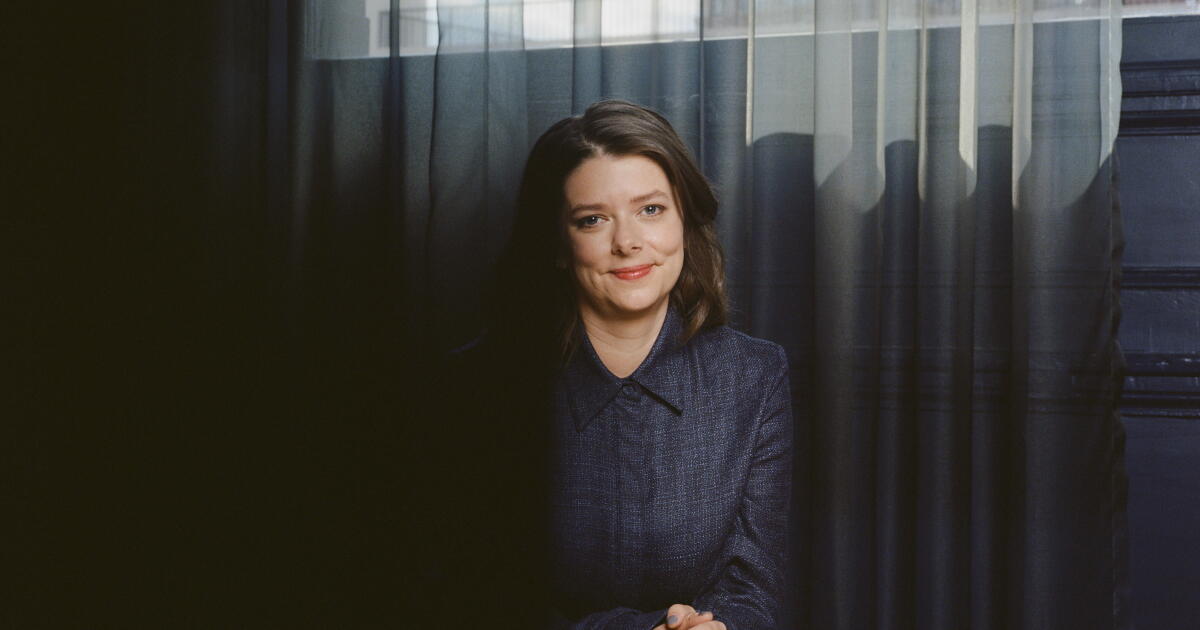
“If I had allowed myself to dream, I would have dreamed of Annette Bening and Jodie Foster,” “Nyad” screenwriter Julia Cox says.
(Liz Parkinson / Netflix)
There’s a scene that didn’t make the final cut of the film in which Diana tangles with an apathetic cashier. A customer service squabble escalates, growing philosophical. Diana asks this bored teenager, “Don’t you want to do better?” Diana’s fiery, but it’s an earnest question, a rallying cry: Everyone should wake up. Everyone should be the star of their own life. It felt like a radical act, writing a woman who knew this to be true.
I don’t picture actors in my head while composing a script. Instead, I imagine made-up people, the way you conjure an image when you’re reading a novel. If I had allowed myself to dream, I would have dreamed of Annette Bening and Jodie Foster.
They were astonishing.
Over many table reads, I honed the screenplay for them, paring down and furrowing deeper. Their notes were brilliant, and their chemistry was infectious. The dynamic I’d tried to capture on the page, a broken-in love between best friends, bloomed before us. Imbued with the essence of Annette — her humanity, her wisdom, her coolness and her humor — the character of Diana transformed yet again.
A dozen drafts later, I arrived on set in the Dominican Republic where I would stay for the entirety of production. We shot at a tank, a giant infinity pool overlooking the ocean. I remember peering out over all the trucks, awed by the magnitude of the operation.
I had spent the last 10 years of my life writing screenplays that never got made.
You have to love the act of writing to do this job. You have to find value in completing something literary, even if — especially if — it will never evolve past that state. But at a certain point, a defense mechanism switches on: You don’t dare dream about getting all the way to the finish line.
And now, here I am.
It is Diana, in all her forms — the real woman, and the one who occupied my mind for years, and the one who belongs to Annette on our screens; these audacious, complicated, fascinating women — who brought me here.
I can never thank them enough.

I first read Diana Nyad’s memoir, “Find a Way,” when our producers, Teddy Schwarzman and Andrew Lazar, sent it to me in 2020. The Oscar-winning documentarians Elizabeth Chai Vasarhelyi and Jimmy Chin were on board to direct, ready to make their narrative debut. It was the beginning of the pandemic, and I sat cloistered in my office, riveted by the words of this incredible woman who had battled her way through the sea.
I remembered following her story as a fan. In 2013, 64-year-old Diana Nyad swam 110 miles from Cuba to Florida, traversing the world’s most dangerous ocean without a shark cage. It was the realization of a dream she had abandoned at 28, after she’d tried the same swim and failed. More than three decades later, with the help of her best friend, Bonnie Stoll, she finally made it.
The details of her athletic feat were astounding. I made notes of the harrowing and the bizarre. Deadly jellyfish, tiny and iridescent, like sugar cubes. Eddies in the middle of the ocean, frothing with foam. A Simon & Garfunkel song repeated hundreds of times to occupy the mind.
Diana’s quest was epic. But what struck me most were the characters. There was an opportunity here to create a film about friendship and an unflinching portrait of a fiercely self-confident woman.
What a gift, as a writer, to be bestowed with a subject like Diana. A woman bursting with life force, who is unabashedly herself, a powerhouse. We met on Zoom. Hyper-articulate and funny, she overflowed with thoughts and opinions. Her spirit vibrated through the screen. I liked her immediately. What would I do, I thought, with even 5% or 10% of her gumption? Who would we all be, if we knew what we wanted so clearly?
We spent many sessions talking, but at a point I had to leave Diana, the woman, for a time, and give myself over to Diana, the character. They are distinct.
A screenplay can never capture all of the nuance and texture of an actual human being. Our character has some rough edges, as extraordinary people often do. It was important to me, Chai and the rest of the team to embrace that. She can be single-minded. She has blind spots. But she also has room to grow. As a culture, we’re endlessly curious about complicated men. Don’t powerful women, before they’re dismissed as difficult or unlikable, deserve our curiosity, too?
As a writer, I’m not particularly interested in “likable.” “Likable” doesn’t move us or make us think. I’m interested in “fascinating.” I’m interested in vulnerability in all its forms. Like wanting something so badly you’re willing to try and fail in front of the world, again and again.
“If I had allowed myself to dream, I would have dreamed of Annette Bening and Jodie Foster,” “Nyad” screenwriter Julia Cox says.
(Liz Parkinson / Netflix)
There’s a scene that didn’t make the final cut of the film in which Diana tangles with an apathetic cashier. A customer service squabble escalates, growing philosophical. Diana asks this bored teenager, “Don’t you want to do better?” Diana’s fiery, but it’s an earnest question, a rallying cry: Everyone should wake up. Everyone should be the star of their own life. It felt like a radical act, writing a woman who knew this to be true.
I don’t picture actors in my head while composing a script. Instead, I imagine made-up people, the way you conjure an image when you’re reading a novel. If I had allowed myself to dream, I would have dreamed of Annette Bening and Jodie Foster.
They were astonishing.
Over many table reads, I honed the screenplay for them, paring down and furrowing deeper. Their notes were brilliant, and their chemistry was infectious. The dynamic I’d tried to capture on the page, a broken-in love between best friends, bloomed before us. Imbued with the essence of Annette — her humanity, her wisdom, her coolness and her humor — the character of Diana transformed yet again.
A dozen drafts later, I arrived on set in the Dominican Republic where I would stay for the entirety of production. We shot at a tank, a giant infinity pool overlooking the ocean. I remember peering out over all the trucks, awed by the magnitude of the operation.
I had spent the last 10 years of my life writing screenplays that never got made.
You have to love the act of writing to do this job. You have to find value in completing something literary, even if — especially if — it will never evolve past that state. But at a certain point, a defense mechanism switches on: You don’t dare dream about getting all the way to the finish line.
And now, here I am.
It is Diana, in all her forms — the real woman, and the one who occupied my mind for years, and the one who belongs to Annette on our screens; these audacious, complicated, fascinating women — who brought me here.
I can never thank them enough.

I first read Diana Nyad’s memoir, “Find a Way,” when our producers, Teddy Schwarzman and Andrew Lazar, sent it to me in 2020. The Oscar-winning documentarians Elizabeth Chai Vasarhelyi and Jimmy Chin were on board to direct, ready to make their narrative debut. It was the beginning of the pandemic, and I sat cloistered in my office, riveted by the words of this incredible woman who had battled her way through the sea.
I remembered following her story as a fan. In 2013, 64-year-old Diana Nyad swam 110 miles from Cuba to Florida, traversing the world’s most dangerous ocean without a shark cage. It was the realization of a dream she had abandoned at 28, after she’d tried the same swim and failed. More than three decades later, with the help of her best friend, Bonnie Stoll, she finally made it.
The details of her athletic feat were astounding. I made notes of the harrowing and the bizarre. Deadly jellyfish, tiny and iridescent, like sugar cubes. Eddies in the middle of the ocean, frothing with foam. A Simon & Garfunkel song repeated hundreds of times to occupy the mind.
Diana’s quest was epic. But what struck me most were the characters. There was an opportunity here to create a film about friendship and an unflinching portrait of a fiercely self-confident woman.
What a gift, as a writer, to be bestowed with a subject like Diana. A woman bursting with life force, who is unabashedly herself, a powerhouse. We met on Zoom. Hyper-articulate and funny, she overflowed with thoughts and opinions. Her spirit vibrated through the screen. I liked her immediately. What would I do, I thought, with even 5% or 10% of her gumption? Who would we all be, if we knew what we wanted so clearly?
We spent many sessions talking, but at a point I had to leave Diana, the woman, for a time, and give myself over to Diana, the character. They are distinct.
A screenplay can never capture all of the nuance and texture of an actual human being. Our character has some rough edges, as extraordinary people often do. It was important to me, Chai and the rest of the team to embrace that. She can be single-minded. She has blind spots. But she also has room to grow. As a culture, we’re endlessly curious about complicated men. Don’t powerful women, before they’re dismissed as difficult or unlikable, deserve our curiosity, too?
As a writer, I’m not particularly interested in “likable.” “Likable” doesn’t move us or make us think. I’m interested in “fascinating.” I’m interested in vulnerability in all its forms. Like wanting something so badly you’re willing to try and fail in front of the world, again and again.
“If I had allowed myself to dream, I would have dreamed of Annette Bening and Jodie Foster,” “Nyad” screenwriter Julia Cox says.
(Liz Parkinson / Netflix)
There’s a scene that didn’t make the final cut of the film in which Diana tangles with an apathetic cashier. A customer service squabble escalates, growing philosophical. Diana asks this bored teenager, “Don’t you want to do better?” Diana’s fiery, but it’s an earnest question, a rallying cry: Everyone should wake up. Everyone should be the star of their own life. It felt like a radical act, writing a woman who knew this to be true.
I don’t picture actors in my head while composing a script. Instead, I imagine made-up people, the way you conjure an image when you’re reading a novel. If I had allowed myself to dream, I would have dreamed of Annette Bening and Jodie Foster.
They were astonishing.
Over many table reads, I honed the screenplay for them, paring down and furrowing deeper. Their notes were brilliant, and their chemistry was infectious. The dynamic I’d tried to capture on the page, a broken-in love between best friends, bloomed before us. Imbued with the essence of Annette — her humanity, her wisdom, her coolness and her humor — the character of Diana transformed yet again.
A dozen drafts later, I arrived on set in the Dominican Republic where I would stay for the entirety of production. We shot at a tank, a giant infinity pool overlooking the ocean. I remember peering out over all the trucks, awed by the magnitude of the operation.
I had spent the last 10 years of my life writing screenplays that never got made.
You have to love the act of writing to do this job. You have to find value in completing something literary, even if — especially if — it will never evolve past that state. But at a certain point, a defense mechanism switches on: You don’t dare dream about getting all the way to the finish line.
And now, here I am.
It is Diana, in all her forms — the real woman, and the one who occupied my mind for years, and the one who belongs to Annette on our screens; these audacious, complicated, fascinating women — who brought me here.
I can never thank them enough.

I first read Diana Nyad’s memoir, “Find a Way,” when our producers, Teddy Schwarzman and Andrew Lazar, sent it to me in 2020. The Oscar-winning documentarians Elizabeth Chai Vasarhelyi and Jimmy Chin were on board to direct, ready to make their narrative debut. It was the beginning of the pandemic, and I sat cloistered in my office, riveted by the words of this incredible woman who had battled her way through the sea.
I remembered following her story as a fan. In 2013, 64-year-old Diana Nyad swam 110 miles from Cuba to Florida, traversing the world’s most dangerous ocean without a shark cage. It was the realization of a dream she had abandoned at 28, after she’d tried the same swim and failed. More than three decades later, with the help of her best friend, Bonnie Stoll, she finally made it.
The details of her athletic feat were astounding. I made notes of the harrowing and the bizarre. Deadly jellyfish, tiny and iridescent, like sugar cubes. Eddies in the middle of the ocean, frothing with foam. A Simon & Garfunkel song repeated hundreds of times to occupy the mind.
Diana’s quest was epic. But what struck me most were the characters. There was an opportunity here to create a film about friendship and an unflinching portrait of a fiercely self-confident woman.
What a gift, as a writer, to be bestowed with a subject like Diana. A woman bursting with life force, who is unabashedly herself, a powerhouse. We met on Zoom. Hyper-articulate and funny, she overflowed with thoughts and opinions. Her spirit vibrated through the screen. I liked her immediately. What would I do, I thought, with even 5% or 10% of her gumption? Who would we all be, if we knew what we wanted so clearly?
We spent many sessions talking, but at a point I had to leave Diana, the woman, for a time, and give myself over to Diana, the character. They are distinct.
A screenplay can never capture all of the nuance and texture of an actual human being. Our character has some rough edges, as extraordinary people often do. It was important to me, Chai and the rest of the team to embrace that. She can be single-minded. She has blind spots. But she also has room to grow. As a culture, we’re endlessly curious about complicated men. Don’t powerful women, before they’re dismissed as difficult or unlikable, deserve our curiosity, too?
As a writer, I’m not particularly interested in “likable.” “Likable” doesn’t move us or make us think. I’m interested in “fascinating.” I’m interested in vulnerability in all its forms. Like wanting something so badly you’re willing to try and fail in front of the world, again and again.
“If I had allowed myself to dream, I would have dreamed of Annette Bening and Jodie Foster,” “Nyad” screenwriter Julia Cox says.
(Liz Parkinson / Netflix)
There’s a scene that didn’t make the final cut of the film in which Diana tangles with an apathetic cashier. A customer service squabble escalates, growing philosophical. Diana asks this bored teenager, “Don’t you want to do better?” Diana’s fiery, but it’s an earnest question, a rallying cry: Everyone should wake up. Everyone should be the star of their own life. It felt like a radical act, writing a woman who knew this to be true.
I don’t picture actors in my head while composing a script. Instead, I imagine made-up people, the way you conjure an image when you’re reading a novel. If I had allowed myself to dream, I would have dreamed of Annette Bening and Jodie Foster.
They were astonishing.
Over many table reads, I honed the screenplay for them, paring down and furrowing deeper. Their notes were brilliant, and their chemistry was infectious. The dynamic I’d tried to capture on the page, a broken-in love between best friends, bloomed before us. Imbued with the essence of Annette — her humanity, her wisdom, her coolness and her humor — the character of Diana transformed yet again.
A dozen drafts later, I arrived on set in the Dominican Republic where I would stay for the entirety of production. We shot at a tank, a giant infinity pool overlooking the ocean. I remember peering out over all the trucks, awed by the magnitude of the operation.
I had spent the last 10 years of my life writing screenplays that never got made.
You have to love the act of writing to do this job. You have to find value in completing something literary, even if — especially if — it will never evolve past that state. But at a certain point, a defense mechanism switches on: You don’t dare dream about getting all the way to the finish line.
And now, here I am.
It is Diana, in all her forms — the real woman, and the one who occupied my mind for years, and the one who belongs to Annette on our screens; these audacious, complicated, fascinating women — who brought me here.
I can never thank them enough.

