

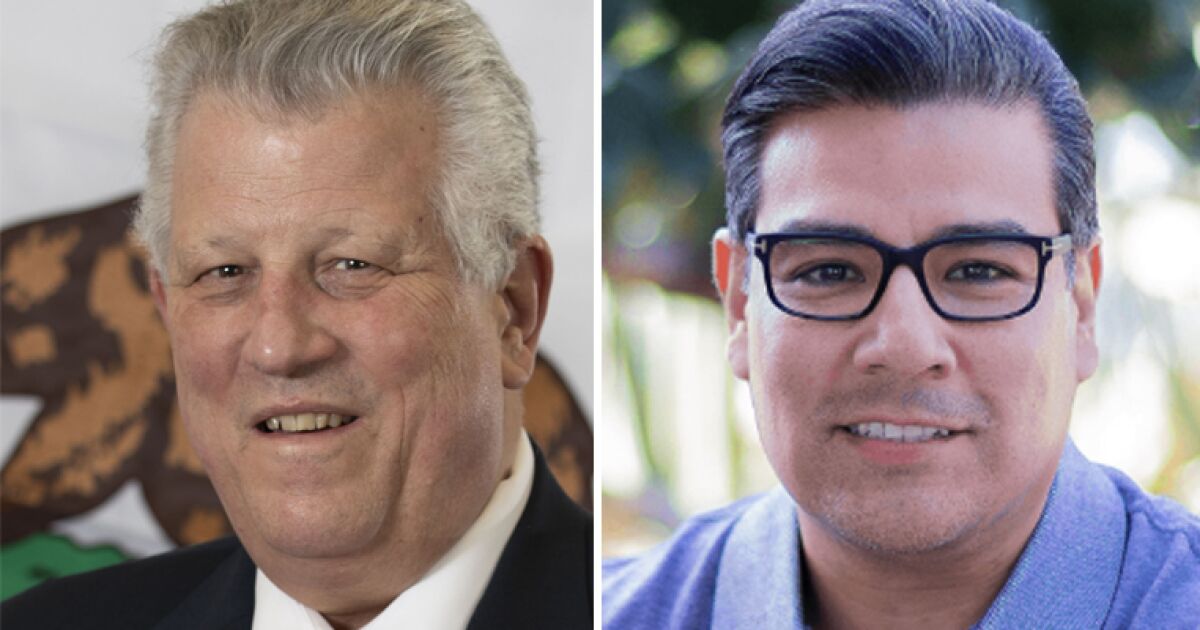
California voters will decide this November who will lead a state agency that wields significant power over home, auto and other insurance policies, selecting between an incumbent Democrat embroiled in controversy and his novice Republican challenger.
The state’s insurance commissioner regulates a $310-billion industry and is particularly influential in helping homeowners in wildfire-prone areas maintain their insurance. The regulator also has the power to approve or reject rate increases and investigate fraud.
Ricardo Lara, a Democrat from Los Angeles, is widely favored to win the race in November, even as he faces criticism for accepting campaign donations from insurance executives during his first term as commissioner after pledging not to take industry money. Lara’s challenger, Robert Howell, is a cybersecurity equipment manufacturer who has never held public office and concedes he knows little about the insurance commissioner job or the industry he would be regulating.
“This position is the consumer champion for the largest consumer protection agency in the state,” Lara said. “And experience is critical, not only to address the issues of holding insurance companies accountable, but making sure that there is an advocate that is going to look out for every Californian.”
Howell countered that a person with no experience is better than Lara, whom he called “a poster child for California corruption.”
“It’s an executive position, the people that work for this organization, they should have all the background on all the various issues,” Howell said. “And insurance commissioners should be focused on the people of California.”
Nine candidates ran for the position in the June primary, with Lara’s fiercest challenge coming from a fellow Democrat, San Rafael Assemblymember Marc Levine, who launched a bare-knuckles campaign against Lara that included a website called ricardolarascandal.com. Levine finished third with 18% to Howell’s 18.1%. Lara won 36% of the vote.
Lara is backed by the California Democratic Party, Gov. Gavin Newsom and legislative leaders. He was elected to the Assembly in 2010 before terming out of the state Senate in 2019.
During his first year as insurance commissioner in 2019, Lara was criticized for billing taxpayers for a Sacramento apartment while living in Los Angeles. That same year, Lara also apologized after news reports detailed how he accepted campaign donations from insurance industry representatives and their spouses, then soon after made decisions that favored the executives.
Lara said his campaign accepted the contributions “that didn’t reflect my values” and that he fired his fundraiser.
“I am proud of the fact that I’ve implemented a rigorous review process to really catch any incoming contributions that don’t reflect my values,” Lara said. “I made mistakes, I fixed it.”
Lara is currently facing an investigation by the Fair Political Practices Commission into a series of donations by the insurance industry this year to groups that later donated similar amounts to his reelection campaign. The investigation was prompted by a complaint filed by the advocacy group Consumer Watchdog in May.
California’s major newspaper editorial boards cited Lara’s ethical blunders when handing their coveted endorsements to Levine in the primary. For the general election in November, editorial boards have noted that they are begrudgingly endorsing Lara, saying they “wish voters had better choices,” but that Howell is not only inexperienced but “clueless” about the job.
Howell said he doesn’t know the ins and outs of the insurance industry and only chose the post because initially there were no Republicans in the race and he thought that gave him a shot. He said Lara’s well-documented fundraising issues were “a Christmas present when I looked into the guy I’m up against.”
Lara said his opponent is not just unqualified, but that his views on abortion are “completely out of touch with the values of California.” The Department of Insurance, under Lara’s direction, has helped consumers understand what obligations their health insurers have for covering abortions, which will include eliminating the cost of copays beginning in January.
Howell said he supports stricter restrictions on abortions than allowed under California law currently, saying they should be limited to the first trimester only and in cases where the mother’s life is in danger. He said he opposes Proposition 1, the November ballot measure that enshrines abortion rights into the California Constitution.
Howell said “it’s a lie” that the state’s Department of Insurance has any role in abortion-related matters and that he hopes voters focus on his track record as a small business owner instead of voting strictly with their party affiliation.
“If people just vote for an R or D then all of our conversations are a waste of time,” Howell said.
Lara’s campaign highlighted his work to save California drivers $2.4 billion by requiring auto insurance companies to refund some of the premiums they collected from customers who largely stayed home during the pandemic, which reduced car accident claims. He issued new rules that required home insurers to offer discounts if homeowners show they have done work to reduce their risk of fire, although critics contend that they did not go far enough since insurance companies can still opt to not cover a home.
Lara has issued temporary moratoriums preventing home insurers from dropping policies in certain fire-prone areas of the state using a law he wrote as a state senator in 2018.
“I’m proud of the work that we’re doing to really lead us in these difficult times,” Lara said.

California voters will decide this November who will lead a state agency that wields significant power over home, auto and other insurance policies, selecting between an incumbent Democrat embroiled in controversy and his novice Republican challenger.
The state’s insurance commissioner regulates a $310-billion industry and is particularly influential in helping homeowners in wildfire-prone areas maintain their insurance. The regulator also has the power to approve or reject rate increases and investigate fraud.
Ricardo Lara, a Democrat from Los Angeles, is widely favored to win the race in November, even as he faces criticism for accepting campaign donations from insurance executives during his first term as commissioner after pledging not to take industry money. Lara’s challenger, Robert Howell, is a cybersecurity equipment manufacturer who has never held public office and concedes he knows little about the insurance commissioner job or the industry he would be regulating.
“This position is the consumer champion for the largest consumer protection agency in the state,” Lara said. “And experience is critical, not only to address the issues of holding insurance companies accountable, but making sure that there is an advocate that is going to look out for every Californian.”
Howell countered that a person with no experience is better than Lara, whom he called “a poster child for California corruption.”
“It’s an executive position, the people that work for this organization, they should have all the background on all the various issues,” Howell said. “And insurance commissioners should be focused on the people of California.”
Nine candidates ran for the position in the June primary, with Lara’s fiercest challenge coming from a fellow Democrat, San Rafael Assemblymember Marc Levine, who launched a bare-knuckles campaign against Lara that included a website called ricardolarascandal.com. Levine finished third with 18% to Howell’s 18.1%. Lara won 36% of the vote.
Lara is backed by the California Democratic Party, Gov. Gavin Newsom and legislative leaders. He was elected to the Assembly in 2010 before terming out of the state Senate in 2019.
During his first year as insurance commissioner in 2019, Lara was criticized for billing taxpayers for a Sacramento apartment while living in Los Angeles. That same year, Lara also apologized after news reports detailed how he accepted campaign donations from insurance industry representatives and their spouses, then soon after made decisions that favored the executives.
Lara said his campaign accepted the contributions “that didn’t reflect my values” and that he fired his fundraiser.
“I am proud of the fact that I’ve implemented a rigorous review process to really catch any incoming contributions that don’t reflect my values,” Lara said. “I made mistakes, I fixed it.”
Lara is currently facing an investigation by the Fair Political Practices Commission into a series of donations by the insurance industry this year to groups that later donated similar amounts to his reelection campaign. The investigation was prompted by a complaint filed by the advocacy group Consumer Watchdog in May.
California’s major newspaper editorial boards cited Lara’s ethical blunders when handing their coveted endorsements to Levine in the primary. For the general election in November, editorial boards have noted that they are begrudgingly endorsing Lara, saying they “wish voters had better choices,” but that Howell is not only inexperienced but “clueless” about the job.
Howell said he doesn’t know the ins and outs of the insurance industry and only chose the post because initially there were no Republicans in the race and he thought that gave him a shot. He said Lara’s well-documented fundraising issues were “a Christmas present when I looked into the guy I’m up against.”
Lara said his opponent is not just unqualified, but that his views on abortion are “completely out of touch with the values of California.” The Department of Insurance, under Lara’s direction, has helped consumers understand what obligations their health insurers have for covering abortions, which will include eliminating the cost of copays beginning in January.
Howell said he supports stricter restrictions on abortions than allowed under California law currently, saying they should be limited to the first trimester only and in cases where the mother’s life is in danger. He said he opposes Proposition 1, the November ballot measure that enshrines abortion rights into the California Constitution.
Howell said “it’s a lie” that the state’s Department of Insurance has any role in abortion-related matters and that he hopes voters focus on his track record as a small business owner instead of voting strictly with their party affiliation.
“If people just vote for an R or D then all of our conversations are a waste of time,” Howell said.
Lara’s campaign highlighted his work to save California drivers $2.4 billion by requiring auto insurance companies to refund some of the premiums they collected from customers who largely stayed home during the pandemic, which reduced car accident claims. He issued new rules that required home insurers to offer discounts if homeowners show they have done work to reduce their risk of fire, although critics contend that they did not go far enough since insurance companies can still opt to not cover a home.
Lara has issued temporary moratoriums preventing home insurers from dropping policies in certain fire-prone areas of the state using a law he wrote as a state senator in 2018.
“I’m proud of the work that we’re doing to really lead us in these difficult times,” Lara said.

California voters will decide this November who will lead a state agency that wields significant power over home, auto and other insurance policies, selecting between an incumbent Democrat embroiled in controversy and his novice Republican challenger.
The state’s insurance commissioner regulates a $310-billion industry and is particularly influential in helping homeowners in wildfire-prone areas maintain their insurance. The regulator also has the power to approve or reject rate increases and investigate fraud.
Ricardo Lara, a Democrat from Los Angeles, is widely favored to win the race in November, even as he faces criticism for accepting campaign donations from insurance executives during his first term as commissioner after pledging not to take industry money. Lara’s challenger, Robert Howell, is a cybersecurity equipment manufacturer who has never held public office and concedes he knows little about the insurance commissioner job or the industry he would be regulating.
“This position is the consumer champion for the largest consumer protection agency in the state,” Lara said. “And experience is critical, not only to address the issues of holding insurance companies accountable, but making sure that there is an advocate that is going to look out for every Californian.”
Howell countered that a person with no experience is better than Lara, whom he called “a poster child for California corruption.”
“It’s an executive position, the people that work for this organization, they should have all the background on all the various issues,” Howell said. “And insurance commissioners should be focused on the people of California.”
Nine candidates ran for the position in the June primary, with Lara’s fiercest challenge coming from a fellow Democrat, San Rafael Assemblymember Marc Levine, who launched a bare-knuckles campaign against Lara that included a website called ricardolarascandal.com. Levine finished third with 18% to Howell’s 18.1%. Lara won 36% of the vote.
Lara is backed by the California Democratic Party, Gov. Gavin Newsom and legislative leaders. He was elected to the Assembly in 2010 before terming out of the state Senate in 2019.
During his first year as insurance commissioner in 2019, Lara was criticized for billing taxpayers for a Sacramento apartment while living in Los Angeles. That same year, Lara also apologized after news reports detailed how he accepted campaign donations from insurance industry representatives and their spouses, then soon after made decisions that favored the executives.
Lara said his campaign accepted the contributions “that didn’t reflect my values” and that he fired his fundraiser.
“I am proud of the fact that I’ve implemented a rigorous review process to really catch any incoming contributions that don’t reflect my values,” Lara said. “I made mistakes, I fixed it.”
Lara is currently facing an investigation by the Fair Political Practices Commission into a series of donations by the insurance industry this year to groups that later donated similar amounts to his reelection campaign. The investigation was prompted by a complaint filed by the advocacy group Consumer Watchdog in May.
California’s major newspaper editorial boards cited Lara’s ethical blunders when handing their coveted endorsements to Levine in the primary. For the general election in November, editorial boards have noted that they are begrudgingly endorsing Lara, saying they “wish voters had better choices,” but that Howell is not only inexperienced but “clueless” about the job.
Howell said he doesn’t know the ins and outs of the insurance industry and only chose the post because initially there were no Republicans in the race and he thought that gave him a shot. He said Lara’s well-documented fundraising issues were “a Christmas present when I looked into the guy I’m up against.”
Lara said his opponent is not just unqualified, but that his views on abortion are “completely out of touch with the values of California.” The Department of Insurance, under Lara’s direction, has helped consumers understand what obligations their health insurers have for covering abortions, which will include eliminating the cost of copays beginning in January.
Howell said he supports stricter restrictions on abortions than allowed under California law currently, saying they should be limited to the first trimester only and in cases where the mother’s life is in danger. He said he opposes Proposition 1, the November ballot measure that enshrines abortion rights into the California Constitution.
Howell said “it’s a lie” that the state’s Department of Insurance has any role in abortion-related matters and that he hopes voters focus on his track record as a small business owner instead of voting strictly with their party affiliation.
“If people just vote for an R or D then all of our conversations are a waste of time,” Howell said.
Lara’s campaign highlighted his work to save California drivers $2.4 billion by requiring auto insurance companies to refund some of the premiums they collected from customers who largely stayed home during the pandemic, which reduced car accident claims. He issued new rules that required home insurers to offer discounts if homeowners show they have done work to reduce their risk of fire, although critics contend that they did not go far enough since insurance companies can still opt to not cover a home.
Lara has issued temporary moratoriums preventing home insurers from dropping policies in certain fire-prone areas of the state using a law he wrote as a state senator in 2018.
“I’m proud of the work that we’re doing to really lead us in these difficult times,” Lara said.
California voters will decide this November who will lead a state agency that wields significant power over home, auto and other insurance policies, selecting between an incumbent Democrat embroiled in controversy and his novice Republican challenger.
The state’s insurance commissioner regulates a $310-billion industry and is particularly influential in helping homeowners in wildfire-prone areas maintain their insurance. The regulator also has the power to approve or reject rate increases and investigate fraud.
Ricardo Lara, a Democrat from Los Angeles, is widely favored to win the race in November, even as he faces criticism for accepting campaign donations from insurance executives during his first term as commissioner after pledging not to take industry money. Lara’s challenger, Robert Howell, is a cybersecurity equipment manufacturer who has never held public office and concedes he knows little about the insurance commissioner job or the industry he would be regulating.
“This position is the consumer champion for the largest consumer protection agency in the state,” Lara said. “And experience is critical, not only to address the issues of holding insurance companies accountable, but making sure that there is an advocate that is going to look out for every Californian.”
Howell countered that a person with no experience is better than Lara, whom he called “a poster child for California corruption.”
“It’s an executive position, the people that work for this organization, they should have all the background on all the various issues,” Howell said. “And insurance commissioners should be focused on the people of California.”
Nine candidates ran for the position in the June primary, with Lara’s fiercest challenge coming from a fellow Democrat, San Rafael Assemblymember Marc Levine, who launched a bare-knuckles campaign against Lara that included a website called ricardolarascandal.com. Levine finished third with 18% to Howell’s 18.1%. Lara won 36% of the vote.
Lara is backed by the California Democratic Party, Gov. Gavin Newsom and legislative leaders. He was elected to the Assembly in 2010 before terming out of the state Senate in 2019.
During his first year as insurance commissioner in 2019, Lara was criticized for billing taxpayers for a Sacramento apartment while living in Los Angeles. That same year, Lara also apologized after news reports detailed how he accepted campaign donations from insurance industry representatives and their spouses, then soon after made decisions that favored the executives.
Lara said his campaign accepted the contributions “that didn’t reflect my values” and that he fired his fundraiser.
“I am proud of the fact that I’ve implemented a rigorous review process to really catch any incoming contributions that don’t reflect my values,” Lara said. “I made mistakes, I fixed it.”
Lara is currently facing an investigation by the Fair Political Practices Commission into a series of donations by the insurance industry this year to groups that later donated similar amounts to his reelection campaign. The investigation was prompted by a complaint filed by the advocacy group Consumer Watchdog in May.
California’s major newspaper editorial boards cited Lara’s ethical blunders when handing their coveted endorsements to Levine in the primary. For the general election in November, editorial boards have noted that they are begrudgingly endorsing Lara, saying they “wish voters had better choices,” but that Howell is not only inexperienced but “clueless” about the job.
Howell said he doesn’t know the ins and outs of the insurance industry and only chose the post because initially there were no Republicans in the race and he thought that gave him a shot. He said Lara’s well-documented fundraising issues were “a Christmas present when I looked into the guy I’m up against.”
Lara said his opponent is not just unqualified, but that his views on abortion are “completely out of touch with the values of California.” The Department of Insurance, under Lara’s direction, has helped consumers understand what obligations their health insurers have for covering abortions, which will include eliminating the cost of copays beginning in January.
Howell said he supports stricter restrictions on abortions than allowed under California law currently, saying they should be limited to the first trimester only and in cases where the mother’s life is in danger. He said he opposes Proposition 1, the November ballot measure that enshrines abortion rights into the California Constitution.
Howell said “it’s a lie” that the state’s Department of Insurance has any role in abortion-related matters and that he hopes voters focus on his track record as a small business owner instead of voting strictly with their party affiliation.
“If people just vote for an R or D then all of our conversations are a waste of time,” Howell said.
Lara’s campaign highlighted his work to save California drivers $2.4 billion by requiring auto insurance companies to refund some of the premiums they collected from customers who largely stayed home during the pandemic, which reduced car accident claims. He issued new rules that required home insurers to offer discounts if homeowners show they have done work to reduce their risk of fire, although critics contend that they did not go far enough since insurance companies can still opt to not cover a home.
Lara has issued temporary moratoriums preventing home insurers from dropping policies in certain fire-prone areas of the state using a law he wrote as a state senator in 2018.
“I’m proud of the work that we’re doing to really lead us in these difficult times,” Lara said.

California voters will decide this November who will lead a state agency that wields significant power over home, auto and other insurance policies, selecting between an incumbent Democrat embroiled in controversy and his novice Republican challenger.
The state’s insurance commissioner regulates a $310-billion industry and is particularly influential in helping homeowners in wildfire-prone areas maintain their insurance. The regulator also has the power to approve or reject rate increases and investigate fraud.
Ricardo Lara, a Democrat from Los Angeles, is widely favored to win the race in November, even as he faces criticism for accepting campaign donations from insurance executives during his first term as commissioner after pledging not to take industry money. Lara’s challenger, Robert Howell, is a cybersecurity equipment manufacturer who has never held public office and concedes he knows little about the insurance commissioner job or the industry he would be regulating.
“This position is the consumer champion for the largest consumer protection agency in the state,” Lara said. “And experience is critical, not only to address the issues of holding insurance companies accountable, but making sure that there is an advocate that is going to look out for every Californian.”
Howell countered that a person with no experience is better than Lara, whom he called “a poster child for California corruption.”
“It’s an executive position, the people that work for this organization, they should have all the background on all the various issues,” Howell said. “And insurance commissioners should be focused on the people of California.”
Nine candidates ran for the position in the June primary, with Lara’s fiercest challenge coming from a fellow Democrat, San Rafael Assemblymember Marc Levine, who launched a bare-knuckles campaign against Lara that included a website called ricardolarascandal.com. Levine finished third with 18% to Howell’s 18.1%. Lara won 36% of the vote.
Lara is backed by the California Democratic Party, Gov. Gavin Newsom and legislative leaders. He was elected to the Assembly in 2010 before terming out of the state Senate in 2019.
During his first year as insurance commissioner in 2019, Lara was criticized for billing taxpayers for a Sacramento apartment while living in Los Angeles. That same year, Lara also apologized after news reports detailed how he accepted campaign donations from insurance industry representatives and their spouses, then soon after made decisions that favored the executives.
Lara said his campaign accepted the contributions “that didn’t reflect my values” and that he fired his fundraiser.
“I am proud of the fact that I’ve implemented a rigorous review process to really catch any incoming contributions that don’t reflect my values,” Lara said. “I made mistakes, I fixed it.”
Lara is currently facing an investigation by the Fair Political Practices Commission into a series of donations by the insurance industry this year to groups that later donated similar amounts to his reelection campaign. The investigation was prompted by a complaint filed by the advocacy group Consumer Watchdog in May.
California’s major newspaper editorial boards cited Lara’s ethical blunders when handing their coveted endorsements to Levine in the primary. For the general election in November, editorial boards have noted that they are begrudgingly endorsing Lara, saying they “wish voters had better choices,” but that Howell is not only inexperienced but “clueless” about the job.
Howell said he doesn’t know the ins and outs of the insurance industry and only chose the post because initially there were no Republicans in the race and he thought that gave him a shot. He said Lara’s well-documented fundraising issues were “a Christmas present when I looked into the guy I’m up against.”
Lara said his opponent is not just unqualified, but that his views on abortion are “completely out of touch with the values of California.” The Department of Insurance, under Lara’s direction, has helped consumers understand what obligations their health insurers have for covering abortions, which will include eliminating the cost of copays beginning in January.
Howell said he supports stricter restrictions on abortions than allowed under California law currently, saying they should be limited to the first trimester only and in cases where the mother’s life is in danger. He said he opposes Proposition 1, the November ballot measure that enshrines abortion rights into the California Constitution.
Howell said “it’s a lie” that the state’s Department of Insurance has any role in abortion-related matters and that he hopes voters focus on his track record as a small business owner instead of voting strictly with their party affiliation.
“If people just vote for an R or D then all of our conversations are a waste of time,” Howell said.
Lara’s campaign highlighted his work to save California drivers $2.4 billion by requiring auto insurance companies to refund some of the premiums they collected from customers who largely stayed home during the pandemic, which reduced car accident claims. He issued new rules that required home insurers to offer discounts if homeowners show they have done work to reduce their risk of fire, although critics contend that they did not go far enough since insurance companies can still opt to not cover a home.
Lara has issued temporary moratoriums preventing home insurers from dropping policies in certain fire-prone areas of the state using a law he wrote as a state senator in 2018.
“I’m proud of the work that we’re doing to really lead us in these difficult times,” Lara said.
California voters will decide this November who will lead a state agency that wields significant power over home, auto and other insurance policies, selecting between an incumbent Democrat embroiled in controversy and his novice Republican challenger.
The state’s insurance commissioner regulates a $310-billion industry and is particularly influential in helping homeowners in wildfire-prone areas maintain their insurance. The regulator also has the power to approve or reject rate increases and investigate fraud.
Ricardo Lara, a Democrat from Los Angeles, is widely favored to win the race in November, even as he faces criticism for accepting campaign donations from insurance executives during his first term as commissioner after pledging not to take industry money. Lara’s challenger, Robert Howell, is a cybersecurity equipment manufacturer who has never held public office and concedes he knows little about the insurance commissioner job or the industry he would be regulating.
“This position is the consumer champion for the largest consumer protection agency in the state,” Lara said. “And experience is critical, not only to address the issues of holding insurance companies accountable, but making sure that there is an advocate that is going to look out for every Californian.”
Howell countered that a person with no experience is better than Lara, whom he called “a poster child for California corruption.”
“It’s an executive position, the people that work for this organization, they should have all the background on all the various issues,” Howell said. “And insurance commissioners should be focused on the people of California.”
Nine candidates ran for the position in the June primary, with Lara’s fiercest challenge coming from a fellow Democrat, San Rafael Assemblymember Marc Levine, who launched a bare-knuckles campaign against Lara that included a website called ricardolarascandal.com. Levine finished third with 18% to Howell’s 18.1%. Lara won 36% of the vote.
Lara is backed by the California Democratic Party, Gov. Gavin Newsom and legislative leaders. He was elected to the Assembly in 2010 before terming out of the state Senate in 2019.
During his first year as insurance commissioner in 2019, Lara was criticized for billing taxpayers for a Sacramento apartment while living in Los Angeles. That same year, Lara also apologized after news reports detailed how he accepted campaign donations from insurance industry representatives and their spouses, then soon after made decisions that favored the executives.
Lara said his campaign accepted the contributions “that didn’t reflect my values” and that he fired his fundraiser.
“I am proud of the fact that I’ve implemented a rigorous review process to really catch any incoming contributions that don’t reflect my values,” Lara said. “I made mistakes, I fixed it.”
Lara is currently facing an investigation by the Fair Political Practices Commission into a series of donations by the insurance industry this year to groups that later donated similar amounts to his reelection campaign. The investigation was prompted by a complaint filed by the advocacy group Consumer Watchdog in May.
California’s major newspaper editorial boards cited Lara’s ethical blunders when handing their coveted endorsements to Levine in the primary. For the general election in November, editorial boards have noted that they are begrudgingly endorsing Lara, saying they “wish voters had better choices,” but that Howell is not only inexperienced but “clueless” about the job.
Howell said he doesn’t know the ins and outs of the insurance industry and only chose the post because initially there were no Republicans in the race and he thought that gave him a shot. He said Lara’s well-documented fundraising issues were “a Christmas present when I looked into the guy I’m up against.”
Lara said his opponent is not just unqualified, but that his views on abortion are “completely out of touch with the values of California.” The Department of Insurance, under Lara’s direction, has helped consumers understand what obligations their health insurers have for covering abortions, which will include eliminating the cost of copays beginning in January.
Howell said he supports stricter restrictions on abortions than allowed under California law currently, saying they should be limited to the first trimester only and in cases where the mother’s life is in danger. He said he opposes Proposition 1, the November ballot measure that enshrines abortion rights into the California Constitution.
Howell said “it’s a lie” that the state’s Department of Insurance has any role in abortion-related matters and that he hopes voters focus on his track record as a small business owner instead of voting strictly with their party affiliation.
“If people just vote for an R or D then all of our conversations are a waste of time,” Howell said.
Lara’s campaign highlighted his work to save California drivers $2.4 billion by requiring auto insurance companies to refund some of the premiums they collected from customers who largely stayed home during the pandemic, which reduced car accident claims. He issued new rules that required home insurers to offer discounts if homeowners show they have done work to reduce their risk of fire, although critics contend that they did not go far enough since insurance companies can still opt to not cover a home.
Lara has issued temporary moratoriums preventing home insurers from dropping policies in certain fire-prone areas of the state using a law he wrote as a state senator in 2018.
“I’m proud of the work that we’re doing to really lead us in these difficult times,” Lara said.
California voters will decide this November who will lead a state agency that wields significant power over home, auto and other insurance policies, selecting between an incumbent Democrat embroiled in controversy and his novice Republican challenger.
The state’s insurance commissioner regulates a $310-billion industry and is particularly influential in helping homeowners in wildfire-prone areas maintain their insurance. The regulator also has the power to approve or reject rate increases and investigate fraud.
Ricardo Lara, a Democrat from Los Angeles, is widely favored to win the race in November, even as he faces criticism for accepting campaign donations from insurance executives during his first term as commissioner after pledging not to take industry money. Lara’s challenger, Robert Howell, is a cybersecurity equipment manufacturer who has never held public office and concedes he knows little about the insurance commissioner job or the industry he would be regulating.
“This position is the consumer champion for the largest consumer protection agency in the state,” Lara said. “And experience is critical, not only to address the issues of holding insurance companies accountable, but making sure that there is an advocate that is going to look out for every Californian.”
Howell countered that a person with no experience is better than Lara, whom he called “a poster child for California corruption.”
“It’s an executive position, the people that work for this organization, they should have all the background on all the various issues,” Howell said. “And insurance commissioners should be focused on the people of California.”
Nine candidates ran for the position in the June primary, with Lara’s fiercest challenge coming from a fellow Democrat, San Rafael Assemblymember Marc Levine, who launched a bare-knuckles campaign against Lara that included a website called ricardolarascandal.com. Levine finished third with 18% to Howell’s 18.1%. Lara won 36% of the vote.
Lara is backed by the California Democratic Party, Gov. Gavin Newsom and legislative leaders. He was elected to the Assembly in 2010 before terming out of the state Senate in 2019.
During his first year as insurance commissioner in 2019, Lara was criticized for billing taxpayers for a Sacramento apartment while living in Los Angeles. That same year, Lara also apologized after news reports detailed how he accepted campaign donations from insurance industry representatives and their spouses, then soon after made decisions that favored the executives.
Lara said his campaign accepted the contributions “that didn’t reflect my values” and that he fired his fundraiser.
“I am proud of the fact that I’ve implemented a rigorous review process to really catch any incoming contributions that don’t reflect my values,” Lara said. “I made mistakes, I fixed it.”
Lara is currently facing an investigation by the Fair Political Practices Commission into a series of donations by the insurance industry this year to groups that later donated similar amounts to his reelection campaign. The investigation was prompted by a complaint filed by the advocacy group Consumer Watchdog in May.
California’s major newspaper editorial boards cited Lara’s ethical blunders when handing their coveted endorsements to Levine in the primary. For the general election in November, editorial boards have noted that they are begrudgingly endorsing Lara, saying they “wish voters had better choices,” but that Howell is not only inexperienced but “clueless” about the job.
Howell said he doesn’t know the ins and outs of the insurance industry and only chose the post because initially there were no Republicans in the race and he thought that gave him a shot. He said Lara’s well-documented fundraising issues were “a Christmas present when I looked into the guy I’m up against.”
Lara said his opponent is not just unqualified, but that his views on abortion are “completely out of touch with the values of California.” The Department of Insurance, under Lara’s direction, has helped consumers understand what obligations their health insurers have for covering abortions, which will include eliminating the cost of copays beginning in January.
Howell said he supports stricter restrictions on abortions than allowed under California law currently, saying they should be limited to the first trimester only and in cases where the mother’s life is in danger. He said he opposes Proposition 1, the November ballot measure that enshrines abortion rights into the California Constitution.
Howell said “it’s a lie” that the state’s Department of Insurance has any role in abortion-related matters and that he hopes voters focus on his track record as a small business owner instead of voting strictly with their party affiliation.
“If people just vote for an R or D then all of our conversations are a waste of time,” Howell said.
Lara’s campaign highlighted his work to save California drivers $2.4 billion by requiring auto insurance companies to refund some of the premiums they collected from customers who largely stayed home during the pandemic, which reduced car accident claims. He issued new rules that required home insurers to offer discounts if homeowners show they have done work to reduce their risk of fire, although critics contend that they did not go far enough since insurance companies can still opt to not cover a home.
Lara has issued temporary moratoriums preventing home insurers from dropping policies in certain fire-prone areas of the state using a law he wrote as a state senator in 2018.
“I’m proud of the work that we’re doing to really lead us in these difficult times,” Lara said.
California voters will decide this November who will lead a state agency that wields significant power over home, auto and other insurance policies, selecting between an incumbent Democrat embroiled in controversy and his novice Republican challenger.
The state’s insurance commissioner regulates a $310-billion industry and is particularly influential in helping homeowners in wildfire-prone areas maintain their insurance. The regulator also has the power to approve or reject rate increases and investigate fraud.
Ricardo Lara, a Democrat from Los Angeles, is widely favored to win the race in November, even as he faces criticism for accepting campaign donations from insurance executives during his first term as commissioner after pledging not to take industry money. Lara’s challenger, Robert Howell, is a cybersecurity equipment manufacturer who has never held public office and concedes he knows little about the insurance commissioner job or the industry he would be regulating.
“This position is the consumer champion for the largest consumer protection agency in the state,” Lara said. “And experience is critical, not only to address the issues of holding insurance companies accountable, but making sure that there is an advocate that is going to look out for every Californian.”
Howell countered that a person with no experience is better than Lara, whom he called “a poster child for California corruption.”
“It’s an executive position, the people that work for this organization, they should have all the background on all the various issues,” Howell said. “And insurance commissioners should be focused on the people of California.”
Nine candidates ran for the position in the June primary, with Lara’s fiercest challenge coming from a fellow Democrat, San Rafael Assemblymember Marc Levine, who launched a bare-knuckles campaign against Lara that included a website called ricardolarascandal.com. Levine finished third with 18% to Howell’s 18.1%. Lara won 36% of the vote.
Lara is backed by the California Democratic Party, Gov. Gavin Newsom and legislative leaders. He was elected to the Assembly in 2010 before terming out of the state Senate in 2019.
During his first year as insurance commissioner in 2019, Lara was criticized for billing taxpayers for a Sacramento apartment while living in Los Angeles. That same year, Lara also apologized after news reports detailed how he accepted campaign donations from insurance industry representatives and their spouses, then soon after made decisions that favored the executives.
Lara said his campaign accepted the contributions “that didn’t reflect my values” and that he fired his fundraiser.
“I am proud of the fact that I’ve implemented a rigorous review process to really catch any incoming contributions that don’t reflect my values,” Lara said. “I made mistakes, I fixed it.”
Lara is currently facing an investigation by the Fair Political Practices Commission into a series of donations by the insurance industry this year to groups that later donated similar amounts to his reelection campaign. The investigation was prompted by a complaint filed by the advocacy group Consumer Watchdog in May.
California’s major newspaper editorial boards cited Lara’s ethical blunders when handing their coveted endorsements to Levine in the primary. For the general election in November, editorial boards have noted that they are begrudgingly endorsing Lara, saying they “wish voters had better choices,” but that Howell is not only inexperienced but “clueless” about the job.
Howell said he doesn’t know the ins and outs of the insurance industry and only chose the post because initially there were no Republicans in the race and he thought that gave him a shot. He said Lara’s well-documented fundraising issues were “a Christmas present when I looked into the guy I’m up against.”
Lara said his opponent is not just unqualified, but that his views on abortion are “completely out of touch with the values of California.” The Department of Insurance, under Lara’s direction, has helped consumers understand what obligations their health insurers have for covering abortions, which will include eliminating the cost of copays beginning in January.
Howell said he supports stricter restrictions on abortions than allowed under California law currently, saying they should be limited to the first trimester only and in cases where the mother’s life is in danger. He said he opposes Proposition 1, the November ballot measure that enshrines abortion rights into the California Constitution.
Howell said “it’s a lie” that the state’s Department of Insurance has any role in abortion-related matters and that he hopes voters focus on his track record as a small business owner instead of voting strictly with their party affiliation.
“If people just vote for an R or D then all of our conversations are a waste of time,” Howell said.
Lara’s campaign highlighted his work to save California drivers $2.4 billion by requiring auto insurance companies to refund some of the premiums they collected from customers who largely stayed home during the pandemic, which reduced car accident claims. He issued new rules that required home insurers to offer discounts if homeowners show they have done work to reduce their risk of fire, although critics contend that they did not go far enough since insurance companies can still opt to not cover a home.
Lara has issued temporary moratoriums preventing home insurers from dropping policies in certain fire-prone areas of the state using a law he wrote as a state senator in 2018.
“I’m proud of the work that we’re doing to really lead us in these difficult times,” Lara said.

California voters will decide this November who will lead a state agency that wields significant power over home, auto and other insurance policies, selecting between an incumbent Democrat embroiled in controversy and his novice Republican challenger.
The state’s insurance commissioner regulates a $310-billion industry and is particularly influential in helping homeowners in wildfire-prone areas maintain their insurance. The regulator also has the power to approve or reject rate increases and investigate fraud.
Ricardo Lara, a Democrat from Los Angeles, is widely favored to win the race in November, even as he faces criticism for accepting campaign donations from insurance executives during his first term as commissioner after pledging not to take industry money. Lara’s challenger, Robert Howell, is a cybersecurity equipment manufacturer who has never held public office and concedes he knows little about the insurance commissioner job or the industry he would be regulating.
“This position is the consumer champion for the largest consumer protection agency in the state,” Lara said. “And experience is critical, not only to address the issues of holding insurance companies accountable, but making sure that there is an advocate that is going to look out for every Californian.”
Howell countered that a person with no experience is better than Lara, whom he called “a poster child for California corruption.”
“It’s an executive position, the people that work for this organization, they should have all the background on all the various issues,” Howell said. “And insurance commissioners should be focused on the people of California.”
Nine candidates ran for the position in the June primary, with Lara’s fiercest challenge coming from a fellow Democrat, San Rafael Assemblymember Marc Levine, who launched a bare-knuckles campaign against Lara that included a website called ricardolarascandal.com. Levine finished third with 18% to Howell’s 18.1%. Lara won 36% of the vote.
Lara is backed by the California Democratic Party, Gov. Gavin Newsom and legislative leaders. He was elected to the Assembly in 2010 before terming out of the state Senate in 2019.
During his first year as insurance commissioner in 2019, Lara was criticized for billing taxpayers for a Sacramento apartment while living in Los Angeles. That same year, Lara also apologized after news reports detailed how he accepted campaign donations from insurance industry representatives and their spouses, then soon after made decisions that favored the executives.
Lara said his campaign accepted the contributions “that didn’t reflect my values” and that he fired his fundraiser.
“I am proud of the fact that I’ve implemented a rigorous review process to really catch any incoming contributions that don’t reflect my values,” Lara said. “I made mistakes, I fixed it.”
Lara is currently facing an investigation by the Fair Political Practices Commission into a series of donations by the insurance industry this year to groups that later donated similar amounts to his reelection campaign. The investigation was prompted by a complaint filed by the advocacy group Consumer Watchdog in May.
California’s major newspaper editorial boards cited Lara’s ethical blunders when handing their coveted endorsements to Levine in the primary. For the general election in November, editorial boards have noted that they are begrudgingly endorsing Lara, saying they “wish voters had better choices,” but that Howell is not only inexperienced but “clueless” about the job.
Howell said he doesn’t know the ins and outs of the insurance industry and only chose the post because initially there were no Republicans in the race and he thought that gave him a shot. He said Lara’s well-documented fundraising issues were “a Christmas present when I looked into the guy I’m up against.”
Lara said his opponent is not just unqualified, but that his views on abortion are “completely out of touch with the values of California.” The Department of Insurance, under Lara’s direction, has helped consumers understand what obligations their health insurers have for covering abortions, which will include eliminating the cost of copays beginning in January.
Howell said he supports stricter restrictions on abortions than allowed under California law currently, saying they should be limited to the first trimester only and in cases where the mother’s life is in danger. He said he opposes Proposition 1, the November ballot measure that enshrines abortion rights into the California Constitution.
Howell said “it’s a lie” that the state’s Department of Insurance has any role in abortion-related matters and that he hopes voters focus on his track record as a small business owner instead of voting strictly with their party affiliation.
“If people just vote for an R or D then all of our conversations are a waste of time,” Howell said.
Lara’s campaign highlighted his work to save California drivers $2.4 billion by requiring auto insurance companies to refund some of the premiums they collected from customers who largely stayed home during the pandemic, which reduced car accident claims. He issued new rules that required home insurers to offer discounts if homeowners show they have done work to reduce their risk of fire, although critics contend that they did not go far enough since insurance companies can still opt to not cover a home.
Lara has issued temporary moratoriums preventing home insurers from dropping policies in certain fire-prone areas of the state using a law he wrote as a state senator in 2018.
“I’m proud of the work that we’re doing to really lead us in these difficult times,” Lara said.
California voters will decide this November who will lead a state agency that wields significant power over home, auto and other insurance policies, selecting between an incumbent Democrat embroiled in controversy and his novice Republican challenger.
The state’s insurance commissioner regulates a $310-billion industry and is particularly influential in helping homeowners in wildfire-prone areas maintain their insurance. The regulator also has the power to approve or reject rate increases and investigate fraud.
Ricardo Lara, a Democrat from Los Angeles, is widely favored to win the race in November, even as he faces criticism for accepting campaign donations from insurance executives during his first term as commissioner after pledging not to take industry money. Lara’s challenger, Robert Howell, is a cybersecurity equipment manufacturer who has never held public office and concedes he knows little about the insurance commissioner job or the industry he would be regulating.
“This position is the consumer champion for the largest consumer protection agency in the state,” Lara said. “And experience is critical, not only to address the issues of holding insurance companies accountable, but making sure that there is an advocate that is going to look out for every Californian.”
Howell countered that a person with no experience is better than Lara, whom he called “a poster child for California corruption.”
“It’s an executive position, the people that work for this organization, they should have all the background on all the various issues,” Howell said. “And insurance commissioners should be focused on the people of California.”
Nine candidates ran for the position in the June primary, with Lara’s fiercest challenge coming from a fellow Democrat, San Rafael Assemblymember Marc Levine, who launched a bare-knuckles campaign against Lara that included a website called ricardolarascandal.com. Levine finished third with 18% to Howell’s 18.1%. Lara won 36% of the vote.
Lara is backed by the California Democratic Party, Gov. Gavin Newsom and legislative leaders. He was elected to the Assembly in 2010 before terming out of the state Senate in 2019.
During his first year as insurance commissioner in 2019, Lara was criticized for billing taxpayers for a Sacramento apartment while living in Los Angeles. That same year, Lara also apologized after news reports detailed how he accepted campaign donations from insurance industry representatives and their spouses, then soon after made decisions that favored the executives.
Lara said his campaign accepted the contributions “that didn’t reflect my values” and that he fired his fundraiser.
“I am proud of the fact that I’ve implemented a rigorous review process to really catch any incoming contributions that don’t reflect my values,” Lara said. “I made mistakes, I fixed it.”
Lara is currently facing an investigation by the Fair Political Practices Commission into a series of donations by the insurance industry this year to groups that later donated similar amounts to his reelection campaign. The investigation was prompted by a complaint filed by the advocacy group Consumer Watchdog in May.
California’s major newspaper editorial boards cited Lara’s ethical blunders when handing their coveted endorsements to Levine in the primary. For the general election in November, editorial boards have noted that they are begrudgingly endorsing Lara, saying they “wish voters had better choices,” but that Howell is not only inexperienced but “clueless” about the job.
Howell said he doesn’t know the ins and outs of the insurance industry and only chose the post because initially there were no Republicans in the race and he thought that gave him a shot. He said Lara’s well-documented fundraising issues were “a Christmas present when I looked into the guy I’m up against.”
Lara said his opponent is not just unqualified, but that his views on abortion are “completely out of touch with the values of California.” The Department of Insurance, under Lara’s direction, has helped consumers understand what obligations their health insurers have for covering abortions, which will include eliminating the cost of copays beginning in January.
Howell said he supports stricter restrictions on abortions than allowed under California law currently, saying they should be limited to the first trimester only and in cases where the mother’s life is in danger. He said he opposes Proposition 1, the November ballot measure that enshrines abortion rights into the California Constitution.
Howell said “it’s a lie” that the state’s Department of Insurance has any role in abortion-related matters and that he hopes voters focus on his track record as a small business owner instead of voting strictly with their party affiliation.
“If people just vote for an R or D then all of our conversations are a waste of time,” Howell said.
Lara’s campaign highlighted his work to save California drivers $2.4 billion by requiring auto insurance companies to refund some of the premiums they collected from customers who largely stayed home during the pandemic, which reduced car accident claims. He issued new rules that required home insurers to offer discounts if homeowners show they have done work to reduce their risk of fire, although critics contend that they did not go far enough since insurance companies can still opt to not cover a home.
Lara has issued temporary moratoriums preventing home insurers from dropping policies in certain fire-prone areas of the state using a law he wrote as a state senator in 2018.
“I’m proud of the work that we’re doing to really lead us in these difficult times,” Lara said.
California voters will decide this November who will lead a state agency that wields significant power over home, auto and other insurance policies, selecting between an incumbent Democrat embroiled in controversy and his novice Republican challenger.
The state’s insurance commissioner regulates a $310-billion industry and is particularly influential in helping homeowners in wildfire-prone areas maintain their insurance. The regulator also has the power to approve or reject rate increases and investigate fraud.
Ricardo Lara, a Democrat from Los Angeles, is widely favored to win the race in November, even as he faces criticism for accepting campaign donations from insurance executives during his first term as commissioner after pledging not to take industry money. Lara’s challenger, Robert Howell, is a cybersecurity equipment manufacturer who has never held public office and concedes he knows little about the insurance commissioner job or the industry he would be regulating.
“This position is the consumer champion for the largest consumer protection agency in the state,” Lara said. “And experience is critical, not only to address the issues of holding insurance companies accountable, but making sure that there is an advocate that is going to look out for every Californian.”
Howell countered that a person with no experience is better than Lara, whom he called “a poster child for California corruption.”
“It’s an executive position, the people that work for this organization, they should have all the background on all the various issues,” Howell said. “And insurance commissioners should be focused on the people of California.”
Nine candidates ran for the position in the June primary, with Lara’s fiercest challenge coming from a fellow Democrat, San Rafael Assemblymember Marc Levine, who launched a bare-knuckles campaign against Lara that included a website called ricardolarascandal.com. Levine finished third with 18% to Howell’s 18.1%. Lara won 36% of the vote.
Lara is backed by the California Democratic Party, Gov. Gavin Newsom and legislative leaders. He was elected to the Assembly in 2010 before terming out of the state Senate in 2019.
During his first year as insurance commissioner in 2019, Lara was criticized for billing taxpayers for a Sacramento apartment while living in Los Angeles. That same year, Lara also apologized after news reports detailed how he accepted campaign donations from insurance industry representatives and their spouses, then soon after made decisions that favored the executives.
Lara said his campaign accepted the contributions “that didn’t reflect my values” and that he fired his fundraiser.
“I am proud of the fact that I’ve implemented a rigorous review process to really catch any incoming contributions that don’t reflect my values,” Lara said. “I made mistakes, I fixed it.”
Lara is currently facing an investigation by the Fair Political Practices Commission into a series of donations by the insurance industry this year to groups that later donated similar amounts to his reelection campaign. The investigation was prompted by a complaint filed by the advocacy group Consumer Watchdog in May.
California’s major newspaper editorial boards cited Lara’s ethical blunders when handing their coveted endorsements to Levine in the primary. For the general election in November, editorial boards have noted that they are begrudgingly endorsing Lara, saying they “wish voters had better choices,” but that Howell is not only inexperienced but “clueless” about the job.
Howell said he doesn’t know the ins and outs of the insurance industry and only chose the post because initially there were no Republicans in the race and he thought that gave him a shot. He said Lara’s well-documented fundraising issues were “a Christmas present when I looked into the guy I’m up against.”
Lara said his opponent is not just unqualified, but that his views on abortion are “completely out of touch with the values of California.” The Department of Insurance, under Lara’s direction, has helped consumers understand what obligations their health insurers have for covering abortions, which will include eliminating the cost of copays beginning in January.
Howell said he supports stricter restrictions on abortions than allowed under California law currently, saying they should be limited to the first trimester only and in cases where the mother’s life is in danger. He said he opposes Proposition 1, the November ballot measure that enshrines abortion rights into the California Constitution.
Howell said “it’s a lie” that the state’s Department of Insurance has any role in abortion-related matters and that he hopes voters focus on his track record as a small business owner instead of voting strictly with their party affiliation.
“If people just vote for an R or D then all of our conversations are a waste of time,” Howell said.
Lara’s campaign highlighted his work to save California drivers $2.4 billion by requiring auto insurance companies to refund some of the premiums they collected from customers who largely stayed home during the pandemic, which reduced car accident claims. He issued new rules that required home insurers to offer discounts if homeowners show they have done work to reduce their risk of fire, although critics contend that they did not go far enough since insurance companies can still opt to not cover a home.
Lara has issued temporary moratoriums preventing home insurers from dropping policies in certain fire-prone areas of the state using a law he wrote as a state senator in 2018.
“I’m proud of the work that we’re doing to really lead us in these difficult times,” Lara said.
California voters will decide this November who will lead a state agency that wields significant power over home, auto and other insurance policies, selecting between an incumbent Democrat embroiled in controversy and his novice Republican challenger.
The state’s insurance commissioner regulates a $310-billion industry and is particularly influential in helping homeowners in wildfire-prone areas maintain their insurance. The regulator also has the power to approve or reject rate increases and investigate fraud.
Ricardo Lara, a Democrat from Los Angeles, is widely favored to win the race in November, even as he faces criticism for accepting campaign donations from insurance executives during his first term as commissioner after pledging not to take industry money. Lara’s challenger, Robert Howell, is a cybersecurity equipment manufacturer who has never held public office and concedes he knows little about the insurance commissioner job or the industry he would be regulating.
“This position is the consumer champion for the largest consumer protection agency in the state,” Lara said. “And experience is critical, not only to address the issues of holding insurance companies accountable, but making sure that there is an advocate that is going to look out for every Californian.”
Howell countered that a person with no experience is better than Lara, whom he called “a poster child for California corruption.”
“It’s an executive position, the people that work for this organization, they should have all the background on all the various issues,” Howell said. “And insurance commissioners should be focused on the people of California.”
Nine candidates ran for the position in the June primary, with Lara’s fiercest challenge coming from a fellow Democrat, San Rafael Assemblymember Marc Levine, who launched a bare-knuckles campaign against Lara that included a website called ricardolarascandal.com. Levine finished third with 18% to Howell’s 18.1%. Lara won 36% of the vote.
Lara is backed by the California Democratic Party, Gov. Gavin Newsom and legislative leaders. He was elected to the Assembly in 2010 before terming out of the state Senate in 2019.
During his first year as insurance commissioner in 2019, Lara was criticized for billing taxpayers for a Sacramento apartment while living in Los Angeles. That same year, Lara also apologized after news reports detailed how he accepted campaign donations from insurance industry representatives and their spouses, then soon after made decisions that favored the executives.
Lara said his campaign accepted the contributions “that didn’t reflect my values” and that he fired his fundraiser.
“I am proud of the fact that I’ve implemented a rigorous review process to really catch any incoming contributions that don’t reflect my values,” Lara said. “I made mistakes, I fixed it.”
Lara is currently facing an investigation by the Fair Political Practices Commission into a series of donations by the insurance industry this year to groups that later donated similar amounts to his reelection campaign. The investigation was prompted by a complaint filed by the advocacy group Consumer Watchdog in May.
California’s major newspaper editorial boards cited Lara’s ethical blunders when handing their coveted endorsements to Levine in the primary. For the general election in November, editorial boards have noted that they are begrudgingly endorsing Lara, saying they “wish voters had better choices,” but that Howell is not only inexperienced but “clueless” about the job.
Howell said he doesn’t know the ins and outs of the insurance industry and only chose the post because initially there were no Republicans in the race and he thought that gave him a shot. He said Lara’s well-documented fundraising issues were “a Christmas present when I looked into the guy I’m up against.”
Lara said his opponent is not just unqualified, but that his views on abortion are “completely out of touch with the values of California.” The Department of Insurance, under Lara’s direction, has helped consumers understand what obligations their health insurers have for covering abortions, which will include eliminating the cost of copays beginning in January.
Howell said he supports stricter restrictions on abortions than allowed under California law currently, saying they should be limited to the first trimester only and in cases where the mother’s life is in danger. He said he opposes Proposition 1, the November ballot measure that enshrines abortion rights into the California Constitution.
Howell said “it’s a lie” that the state’s Department of Insurance has any role in abortion-related matters and that he hopes voters focus on his track record as a small business owner instead of voting strictly with their party affiliation.
“If people just vote for an R or D then all of our conversations are a waste of time,” Howell said.
Lara’s campaign highlighted his work to save California drivers $2.4 billion by requiring auto insurance companies to refund some of the premiums they collected from customers who largely stayed home during the pandemic, which reduced car accident claims. He issued new rules that required home insurers to offer discounts if homeowners show they have done work to reduce their risk of fire, although critics contend that they did not go far enough since insurance companies can still opt to not cover a home.
Lara has issued temporary moratoriums preventing home insurers from dropping policies in certain fire-prone areas of the state using a law he wrote as a state senator in 2018.
“I’m proud of the work that we’re doing to really lead us in these difficult times,” Lara said.
California voters will decide this November who will lead a state agency that wields significant power over home, auto and other insurance policies, selecting between an incumbent Democrat embroiled in controversy and his novice Republican challenger.
The state’s insurance commissioner regulates a $310-billion industry and is particularly influential in helping homeowners in wildfire-prone areas maintain their insurance. The regulator also has the power to approve or reject rate increases and investigate fraud.
Ricardo Lara, a Democrat from Los Angeles, is widely favored to win the race in November, even as he faces criticism for accepting campaign donations from insurance executives during his first term as commissioner after pledging not to take industry money. Lara’s challenger, Robert Howell, is a cybersecurity equipment manufacturer who has never held public office and concedes he knows little about the insurance commissioner job or the industry he would be regulating.
“This position is the consumer champion for the largest consumer protection agency in the state,” Lara said. “And experience is critical, not only to address the issues of holding insurance companies accountable, but making sure that there is an advocate that is going to look out for every Californian.”
Howell countered that a person with no experience is better than Lara, whom he called “a poster child for California corruption.”
“It’s an executive position, the people that work for this organization, they should have all the background on all the various issues,” Howell said. “And insurance commissioners should be focused on the people of California.”
Nine candidates ran for the position in the June primary, with Lara’s fiercest challenge coming from a fellow Democrat, San Rafael Assemblymember Marc Levine, who launched a bare-knuckles campaign against Lara that included a website called ricardolarascandal.com. Levine finished third with 18% to Howell’s 18.1%. Lara won 36% of the vote.
Lara is backed by the California Democratic Party, Gov. Gavin Newsom and legislative leaders. He was elected to the Assembly in 2010 before terming out of the state Senate in 2019.
During his first year as insurance commissioner in 2019, Lara was criticized for billing taxpayers for a Sacramento apartment while living in Los Angeles. That same year, Lara also apologized after news reports detailed how he accepted campaign donations from insurance industry representatives and their spouses, then soon after made decisions that favored the executives.
Lara said his campaign accepted the contributions “that didn’t reflect my values” and that he fired his fundraiser.
“I am proud of the fact that I’ve implemented a rigorous review process to really catch any incoming contributions that don’t reflect my values,” Lara said. “I made mistakes, I fixed it.”
Lara is currently facing an investigation by the Fair Political Practices Commission into a series of donations by the insurance industry this year to groups that later donated similar amounts to his reelection campaign. The investigation was prompted by a complaint filed by the advocacy group Consumer Watchdog in May.
California’s major newspaper editorial boards cited Lara’s ethical blunders when handing their coveted endorsements to Levine in the primary. For the general election in November, editorial boards have noted that they are begrudgingly endorsing Lara, saying they “wish voters had better choices,” but that Howell is not only inexperienced but “clueless” about the job.
Howell said he doesn’t know the ins and outs of the insurance industry and only chose the post because initially there were no Republicans in the race and he thought that gave him a shot. He said Lara’s well-documented fundraising issues were “a Christmas present when I looked into the guy I’m up against.”
Lara said his opponent is not just unqualified, but that his views on abortion are “completely out of touch with the values of California.” The Department of Insurance, under Lara’s direction, has helped consumers understand what obligations their health insurers have for covering abortions, which will include eliminating the cost of copays beginning in January.
Howell said he supports stricter restrictions on abortions than allowed under California law currently, saying they should be limited to the first trimester only and in cases where the mother’s life is in danger. He said he opposes Proposition 1, the November ballot measure that enshrines abortion rights into the California Constitution.
Howell said “it’s a lie” that the state’s Department of Insurance has any role in abortion-related matters and that he hopes voters focus on his track record as a small business owner instead of voting strictly with their party affiliation.
“If people just vote for an R or D then all of our conversations are a waste of time,” Howell said.
Lara’s campaign highlighted his work to save California drivers $2.4 billion by requiring auto insurance companies to refund some of the premiums they collected from customers who largely stayed home during the pandemic, which reduced car accident claims. He issued new rules that required home insurers to offer discounts if homeowners show they have done work to reduce their risk of fire, although critics contend that they did not go far enough since insurance companies can still opt to not cover a home.
Lara has issued temporary moratoriums preventing home insurers from dropping policies in certain fire-prone areas of the state using a law he wrote as a state senator in 2018.
“I’m proud of the work that we’re doing to really lead us in these difficult times,” Lara said.
California voters will decide this November who will lead a state agency that wields significant power over home, auto and other insurance policies, selecting between an incumbent Democrat embroiled in controversy and his novice Republican challenger.
The state’s insurance commissioner regulates a $310-billion industry and is particularly influential in helping homeowners in wildfire-prone areas maintain their insurance. The regulator also has the power to approve or reject rate increases and investigate fraud.
Ricardo Lara, a Democrat from Los Angeles, is widely favored to win the race in November, even as he faces criticism for accepting campaign donations from insurance executives during his first term as commissioner after pledging not to take industry money. Lara’s challenger, Robert Howell, is a cybersecurity equipment manufacturer who has never held public office and concedes he knows little about the insurance commissioner job or the industry he would be regulating.
“This position is the consumer champion for the largest consumer protection agency in the state,” Lara said. “And experience is critical, not only to address the issues of holding insurance companies accountable, but making sure that there is an advocate that is going to look out for every Californian.”
Howell countered that a person with no experience is better than Lara, whom he called “a poster child for California corruption.”
“It’s an executive position, the people that work for this organization, they should have all the background on all the various issues,” Howell said. “And insurance commissioners should be focused on the people of California.”
Nine candidates ran for the position in the June primary, with Lara’s fiercest challenge coming from a fellow Democrat, San Rafael Assemblymember Marc Levine, who launched a bare-knuckles campaign against Lara that included a website called ricardolarascandal.com. Levine finished third with 18% to Howell’s 18.1%. Lara won 36% of the vote.
Lara is backed by the California Democratic Party, Gov. Gavin Newsom and legislative leaders. He was elected to the Assembly in 2010 before terming out of the state Senate in 2019.
During his first year as insurance commissioner in 2019, Lara was criticized for billing taxpayers for a Sacramento apartment while living in Los Angeles. That same year, Lara also apologized after news reports detailed how he accepted campaign donations from insurance industry representatives and their spouses, then soon after made decisions that favored the executives.
Lara said his campaign accepted the contributions “that didn’t reflect my values” and that he fired his fundraiser.
“I am proud of the fact that I’ve implemented a rigorous review process to really catch any incoming contributions that don’t reflect my values,” Lara said. “I made mistakes, I fixed it.”
Lara is currently facing an investigation by the Fair Political Practices Commission into a series of donations by the insurance industry this year to groups that later donated similar amounts to his reelection campaign. The investigation was prompted by a complaint filed by the advocacy group Consumer Watchdog in May.
California’s major newspaper editorial boards cited Lara’s ethical blunders when handing their coveted endorsements to Levine in the primary. For the general election in November, editorial boards have noted that they are begrudgingly endorsing Lara, saying they “wish voters had better choices,” but that Howell is not only inexperienced but “clueless” about the job.
Howell said he doesn’t know the ins and outs of the insurance industry and only chose the post because initially there were no Republicans in the race and he thought that gave him a shot. He said Lara’s well-documented fundraising issues were “a Christmas present when I looked into the guy I’m up against.”
Lara said his opponent is not just unqualified, but that his views on abortion are “completely out of touch with the values of California.” The Department of Insurance, under Lara’s direction, has helped consumers understand what obligations their health insurers have for covering abortions, which will include eliminating the cost of copays beginning in January.
Howell said he supports stricter restrictions on abortions than allowed under California law currently, saying they should be limited to the first trimester only and in cases where the mother’s life is in danger. He said he opposes Proposition 1, the November ballot measure that enshrines abortion rights into the California Constitution.
Howell said “it’s a lie” that the state’s Department of Insurance has any role in abortion-related matters and that he hopes voters focus on his track record as a small business owner instead of voting strictly with their party affiliation.
“If people just vote for an R or D then all of our conversations are a waste of time,” Howell said.
Lara’s campaign highlighted his work to save California drivers $2.4 billion by requiring auto insurance companies to refund some of the premiums they collected from customers who largely stayed home during the pandemic, which reduced car accident claims. He issued new rules that required home insurers to offer discounts if homeowners show they have done work to reduce their risk of fire, although critics contend that they did not go far enough since insurance companies can still opt to not cover a home.
Lara has issued temporary moratoriums preventing home insurers from dropping policies in certain fire-prone areas of the state using a law he wrote as a state senator in 2018.
“I’m proud of the work that we’re doing to really lead us in these difficult times,” Lara said.
California voters will decide this November who will lead a state agency that wields significant power over home, auto and other insurance policies, selecting between an incumbent Democrat embroiled in controversy and his novice Republican challenger.
The state’s insurance commissioner regulates a $310-billion industry and is particularly influential in helping homeowners in wildfire-prone areas maintain their insurance. The regulator also has the power to approve or reject rate increases and investigate fraud.
Ricardo Lara, a Democrat from Los Angeles, is widely favored to win the race in November, even as he faces criticism for accepting campaign donations from insurance executives during his first term as commissioner after pledging not to take industry money. Lara’s challenger, Robert Howell, is a cybersecurity equipment manufacturer who has never held public office and concedes he knows little about the insurance commissioner job or the industry he would be regulating.
“This position is the consumer champion for the largest consumer protection agency in the state,” Lara said. “And experience is critical, not only to address the issues of holding insurance companies accountable, but making sure that there is an advocate that is going to look out for every Californian.”
Howell countered that a person with no experience is better than Lara, whom he called “a poster child for California corruption.”
“It’s an executive position, the people that work for this organization, they should have all the background on all the various issues,” Howell said. “And insurance commissioners should be focused on the people of California.”
Nine candidates ran for the position in the June primary, with Lara’s fiercest challenge coming from a fellow Democrat, San Rafael Assemblymember Marc Levine, who launched a bare-knuckles campaign against Lara that included a website called ricardolarascandal.com. Levine finished third with 18% to Howell’s 18.1%. Lara won 36% of the vote.
Lara is backed by the California Democratic Party, Gov. Gavin Newsom and legislative leaders. He was elected to the Assembly in 2010 before terming out of the state Senate in 2019.
During his first year as insurance commissioner in 2019, Lara was criticized for billing taxpayers for a Sacramento apartment while living in Los Angeles. That same year, Lara also apologized after news reports detailed how he accepted campaign donations from insurance industry representatives and their spouses, then soon after made decisions that favored the executives.
Lara said his campaign accepted the contributions “that didn’t reflect my values” and that he fired his fundraiser.
“I am proud of the fact that I’ve implemented a rigorous review process to really catch any incoming contributions that don’t reflect my values,” Lara said. “I made mistakes, I fixed it.”
Lara is currently facing an investigation by the Fair Political Practices Commission into a series of donations by the insurance industry this year to groups that later donated similar amounts to his reelection campaign. The investigation was prompted by a complaint filed by the advocacy group Consumer Watchdog in May.
California’s major newspaper editorial boards cited Lara’s ethical blunders when handing their coveted endorsements to Levine in the primary. For the general election in November, editorial boards have noted that they are begrudgingly endorsing Lara, saying they “wish voters had better choices,” but that Howell is not only inexperienced but “clueless” about the job.
Howell said he doesn’t know the ins and outs of the insurance industry and only chose the post because initially there were no Republicans in the race and he thought that gave him a shot. He said Lara’s well-documented fundraising issues were “a Christmas present when I looked into the guy I’m up against.”
Lara said his opponent is not just unqualified, but that his views on abortion are “completely out of touch with the values of California.” The Department of Insurance, under Lara’s direction, has helped consumers understand what obligations their health insurers have for covering abortions, which will include eliminating the cost of copays beginning in January.
Howell said he supports stricter restrictions on abortions than allowed under California law currently, saying they should be limited to the first trimester only and in cases where the mother’s life is in danger. He said he opposes Proposition 1, the November ballot measure that enshrines abortion rights into the California Constitution.
Howell said “it’s a lie” that the state’s Department of Insurance has any role in abortion-related matters and that he hopes voters focus on his track record as a small business owner instead of voting strictly with their party affiliation.
“If people just vote for an R or D then all of our conversations are a waste of time,” Howell said.
Lara’s campaign highlighted his work to save California drivers $2.4 billion by requiring auto insurance companies to refund some of the premiums they collected from customers who largely stayed home during the pandemic, which reduced car accident claims. He issued new rules that required home insurers to offer discounts if homeowners show they have done work to reduce their risk of fire, although critics contend that they did not go far enough since insurance companies can still opt to not cover a home.
Lara has issued temporary moratoriums preventing home insurers from dropping policies in certain fire-prone areas of the state using a law he wrote as a state senator in 2018.
“I’m proud of the work that we’re doing to really lead us in these difficult times,” Lara said.
California voters will decide this November who will lead a state agency that wields significant power over home, auto and other insurance policies, selecting between an incumbent Democrat embroiled in controversy and his novice Republican challenger.
The state’s insurance commissioner regulates a $310-billion industry and is particularly influential in helping homeowners in wildfire-prone areas maintain their insurance. The regulator also has the power to approve or reject rate increases and investigate fraud.
Ricardo Lara, a Democrat from Los Angeles, is widely favored to win the race in November, even as he faces criticism for accepting campaign donations from insurance executives during his first term as commissioner after pledging not to take industry money. Lara’s challenger, Robert Howell, is a cybersecurity equipment manufacturer who has never held public office and concedes he knows little about the insurance commissioner job or the industry he would be regulating.
“This position is the consumer champion for the largest consumer protection agency in the state,” Lara said. “And experience is critical, not only to address the issues of holding insurance companies accountable, but making sure that there is an advocate that is going to look out for every Californian.”
Howell countered that a person with no experience is better than Lara, whom he called “a poster child for California corruption.”
“It’s an executive position, the people that work for this organization, they should have all the background on all the various issues,” Howell said. “And insurance commissioners should be focused on the people of California.”
Nine candidates ran for the position in the June primary, with Lara’s fiercest challenge coming from a fellow Democrat, San Rafael Assemblymember Marc Levine, who launched a bare-knuckles campaign against Lara that included a website called ricardolarascandal.com. Levine finished third with 18% to Howell’s 18.1%. Lara won 36% of the vote.
Lara is backed by the California Democratic Party, Gov. Gavin Newsom and legislative leaders. He was elected to the Assembly in 2010 before terming out of the state Senate in 2019.
During his first year as insurance commissioner in 2019, Lara was criticized for billing taxpayers for a Sacramento apartment while living in Los Angeles. That same year, Lara also apologized after news reports detailed how he accepted campaign donations from insurance industry representatives and their spouses, then soon after made decisions that favored the executives.
Lara said his campaign accepted the contributions “that didn’t reflect my values” and that he fired his fundraiser.
“I am proud of the fact that I’ve implemented a rigorous review process to really catch any incoming contributions that don’t reflect my values,” Lara said. “I made mistakes, I fixed it.”
Lara is currently facing an investigation by the Fair Political Practices Commission into a series of donations by the insurance industry this year to groups that later donated similar amounts to his reelection campaign. The investigation was prompted by a complaint filed by the advocacy group Consumer Watchdog in May.
California’s major newspaper editorial boards cited Lara’s ethical blunders when handing their coveted endorsements to Levine in the primary. For the general election in November, editorial boards have noted that they are begrudgingly endorsing Lara, saying they “wish voters had better choices,” but that Howell is not only inexperienced but “clueless” about the job.
Howell said he doesn’t know the ins and outs of the insurance industry and only chose the post because initially there were no Republicans in the race and he thought that gave him a shot. He said Lara’s well-documented fundraising issues were “a Christmas present when I looked into the guy I’m up against.”
Lara said his opponent is not just unqualified, but that his views on abortion are “completely out of touch with the values of California.” The Department of Insurance, under Lara’s direction, has helped consumers understand what obligations their health insurers have for covering abortions, which will include eliminating the cost of copays beginning in January.
Howell said he supports stricter restrictions on abortions than allowed under California law currently, saying they should be limited to the first trimester only and in cases where the mother’s life is in danger. He said he opposes Proposition 1, the November ballot measure that enshrines abortion rights into the California Constitution.
Howell said “it’s a lie” that the state’s Department of Insurance has any role in abortion-related matters and that he hopes voters focus on his track record as a small business owner instead of voting strictly with their party affiliation.
“If people just vote for an R or D then all of our conversations are a waste of time,” Howell said.
Lara’s campaign highlighted his work to save California drivers $2.4 billion by requiring auto insurance companies to refund some of the premiums they collected from customers who largely stayed home during the pandemic, which reduced car accident claims. He issued new rules that required home insurers to offer discounts if homeowners show they have done work to reduce their risk of fire, although critics contend that they did not go far enough since insurance companies can still opt to not cover a home.
Lara has issued temporary moratoriums preventing home insurers from dropping policies in certain fire-prone areas of the state using a law he wrote as a state senator in 2018.
“I’m proud of the work that we’re doing to really lead us in these difficult times,” Lara said.

