


In the first salvo of what could become a court battle over Colorado River water, the state of Nevada has sued to challenge the Trump administration’s plan for mandatory water cutbacks.
The state filed the lawsuit on Monday, just three days after the Trump administration released the plan, which requires Nevada, Arizona and California to cut water use by about 20% for the next two years. The plan allows for much larger mandatory cuts over the next decade if necessary to prevent the river’s drought-depleted reservoirs from reaching critically low levels.
Announcing the lawsuit, Nevada Gov. Joe Lombardo said that under the plan issued by the Interior Department, “southern Nevada could lose more than 70 percent of its already meager Colorado River allocation,” while four other states — Colorado, Utah, New Mexico, and Wyoming — “are not required to contribute a drop.”
“This isn’t about political posturing,” said Lombardo, a Republican. “This is a matter of survival for a community that represents about two-thirds of our state’s citizens and the lion’s share of its economy.”
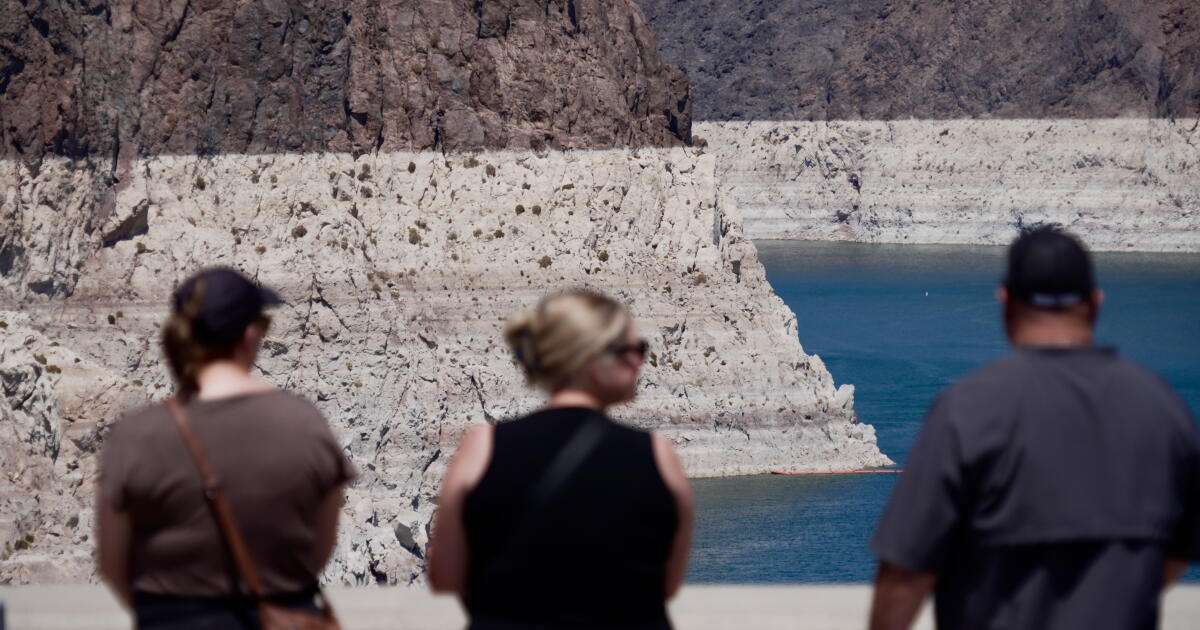
The Colorado River’s reservoirs have dropped dramatically over the last 26 years during a historic drought that research shows is being intensified by global warming. The largest reservoirs, Lake Mead and Lake Powell, have fallen to their lowest levels on record.
Arizona’s leaders have also warned that they could sue to challenge the mandatory water cutbacks.
A legal fight could end up before the U.S. Supreme Court and further complicate efforts among the states to negotiate a solution to the worsening crisis.
Nevada filed the lawsuit in federal district court challenging the Trump administration’s 10-year plan. State leaders noted that under the plan, Nevada’s annual allotment of 300,000 acre-feet could be slashed to as little as 86,500 acre-feet, which they said would be devastating for Las Vegas and surrounding cities.
Southern Nevada has already dramatically reduced its use of Colorado River water by about 40% over the last 25 years, including by aggressively promoting the removal of thirsty grass and outlawing front-yard lawns for new subdivisions.
“We have clearly demonstrated our ability to adapt and do more with less,” said John Entsminger, general manager of the Southern Nevada Water Authority. “However, conservation has its limits, and there is just no way to meet even the basic needs of this community with the volume of water Interior has proposed.”

In the first salvo of what could become a court battle over Colorado River water, the state of Nevada has sued to challenge the Trump administration’s plan for mandatory water cutbacks.
The state filed the lawsuit on Monday, just three days after the Trump administration released the plan, which requires Nevada, Arizona and California to cut water use by about 20% for the next two years. The plan allows for much larger mandatory cuts over the next decade if necessary to prevent the river’s drought-depleted reservoirs from reaching critically low levels.
Announcing the lawsuit, Nevada Gov. Joe Lombardo said that under the plan issued by the Interior Department, “southern Nevada could lose more than 70 percent of its already meager Colorado River allocation,” while four other states — Colorado, Utah, New Mexico, and Wyoming — “are not required to contribute a drop.”
“This isn’t about political posturing,” said Lombardo, a Republican. “This is a matter of survival for a community that represents about two-thirds of our state’s citizens and the lion’s share of its economy.”
The Colorado River’s reservoirs have dropped dramatically over the last 26 years during a historic drought that research shows is being intensified by global warming. The largest reservoirs, Lake Mead and Lake Powell, have fallen to their lowest levels on record.
Arizona’s leaders have also warned that they could sue to challenge the mandatory water cutbacks.
A legal fight could end up before the U.S. Supreme Court and further complicate efforts among the states to negotiate a solution to the worsening crisis.
Nevada filed the lawsuit in federal district court challenging the Trump administration’s 10-year plan. State leaders noted that under the plan, Nevada’s annual allotment of 300,000 acre-feet could be slashed to as little as 86,500 acre-feet, which they said would be devastating for Las Vegas and surrounding cities.
Southern Nevada has already dramatically reduced its use of Colorado River water by about 40% over the last 25 years, including by aggressively promoting the removal of thirsty grass and outlawing front-yard lawns for new subdivisions.
“We have clearly demonstrated our ability to adapt and do more with less,” said John Entsminger, general manager of the Southern Nevada Water Authority. “However, conservation has its limits, and there is just no way to meet even the basic needs of this community with the volume of water Interior has proposed.”

In the first salvo of what could become a court battle over Colorado River water, the state of Nevada has sued to challenge the Trump administration’s plan for mandatory water cutbacks.
The state filed the lawsuit on Monday, just three days after the Trump administration released the plan, which requires Nevada, Arizona and California to cut water use by about 20% for the next two years. The plan allows for much larger mandatory cuts over the next decade if necessary to prevent the river’s drought-depleted reservoirs from reaching critically low levels.
Announcing the lawsuit, Nevada Gov. Joe Lombardo said that under the plan issued by the Interior Department, “southern Nevada could lose more than 70 percent of its already meager Colorado River allocation,” while four other states — Colorado, Utah, New Mexico, and Wyoming — “are not required to contribute a drop.”
“This isn’t about political posturing,” said Lombardo, a Republican. “This is a matter of survival for a community that represents about two-thirds of our state’s citizens and the lion’s share of its economy.”
The Colorado River’s reservoirs have dropped dramatically over the last 26 years during a historic drought that research shows is being intensified by global warming. The largest reservoirs, Lake Mead and Lake Powell, have fallen to their lowest levels on record.
Arizona’s leaders have also warned that they could sue to challenge the mandatory water cutbacks.
A legal fight could end up before the U.S. Supreme Court and further complicate efforts among the states to negotiate a solution to the worsening crisis.
Nevada filed the lawsuit in federal district court challenging the Trump administration’s 10-year plan. State leaders noted that under the plan, Nevada’s annual allotment of 300,000 acre-feet could be slashed to as little as 86,500 acre-feet, which they said would be devastating for Las Vegas and surrounding cities.
Southern Nevada has already dramatically reduced its use of Colorado River water by about 40% over the last 25 years, including by aggressively promoting the removal of thirsty grass and outlawing front-yard lawns for new subdivisions.
“We have clearly demonstrated our ability to adapt and do more with less,” said John Entsminger, general manager of the Southern Nevada Water Authority. “However, conservation has its limits, and there is just no way to meet even the basic needs of this community with the volume of water Interior has proposed.”

In the first salvo of what could become a court battle over Colorado River water, the state of Nevada has sued to challenge the Trump administration’s plan for mandatory water cutbacks.
The state filed the lawsuit on Monday, just three days after the Trump administration released the plan, which requires Nevada, Arizona and California to cut water use by about 20% for the next two years. The plan allows for much larger mandatory cuts over the next decade if necessary to prevent the river’s drought-depleted reservoirs from reaching critically low levels.
Announcing the lawsuit, Nevada Gov. Joe Lombardo said that under the plan issued by the Interior Department, “southern Nevada could lose more than 70 percent of its already meager Colorado River allocation,” while four other states — Colorado, Utah, New Mexico, and Wyoming — “are not required to contribute a drop.”
“This isn’t about political posturing,” said Lombardo, a Republican. “This is a matter of survival for a community that represents about two-thirds of our state’s citizens and the lion’s share of its economy.”
The Colorado River’s reservoirs have dropped dramatically over the last 26 years during a historic drought that research shows is being intensified by global warming. The largest reservoirs, Lake Mead and Lake Powell, have fallen to their lowest levels on record.
Arizona’s leaders have also warned that they could sue to challenge the mandatory water cutbacks.
A legal fight could end up before the U.S. Supreme Court and further complicate efforts among the states to negotiate a solution to the worsening crisis.
Nevada filed the lawsuit in federal district court challenging the Trump administration’s 10-year plan. State leaders noted that under the plan, Nevada’s annual allotment of 300,000 acre-feet could be slashed to as little as 86,500 acre-feet, which they said would be devastating for Las Vegas and surrounding cities.
Southern Nevada has already dramatically reduced its use of Colorado River water by about 40% over the last 25 years, including by aggressively promoting the removal of thirsty grass and outlawing front-yard lawns for new subdivisions.
“We have clearly demonstrated our ability to adapt and do more with less,” said John Entsminger, general manager of the Southern Nevada Water Authority. “However, conservation has its limits, and there is just no way to meet even the basic needs of this community with the volume of water Interior has proposed.”

