

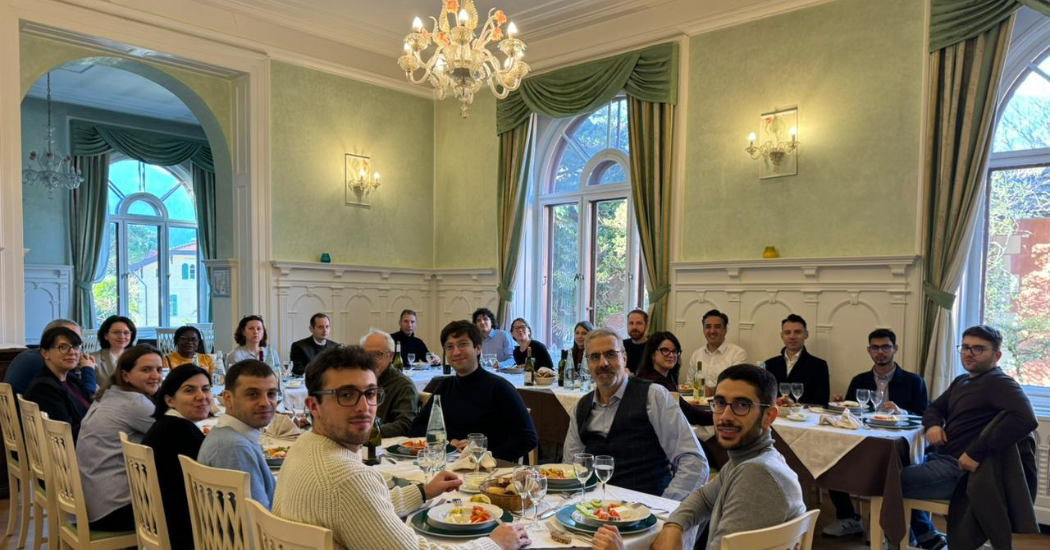
At the Scientific Retreat MAGI in Precision Medicine and Omics Sciences held at Villa Hoffmann in Merano (17–21 November 2025), ophthalmology represented one of the most clinically oriented areas of discussion. MAGI has developed long-standing collaborations with ophthalmology units at the University of Milan, the San Paolo and Sacco Hospitals in Milan, and the Gemelli Polyclinic in Rome, and the retreat provided an opportunity to revisit these partnerships in the light of recent advances in genomics and multi-omics. Clinicians and scientists reflected together on how shared expertise might progressively contribute to a more systematic characterisation of inherited retinal dystrophies (IRDs), while maintaining a cautious attitude towards the translation of research findings into clinical practice.

IRD was taken as an exemplary model of genetic and phenotypic complexity. Participants recalled that more than 280 genes have been associated with conditions such as retinitis pigmentosa, cone–rod dystrophy, Leber congenital amaurosis and macular dystrophies, and that new loci continue to be identified. This heterogeneity, combined with variable age at onset and overlapping clinical pictures, often results in lengthy diagnostic pathways for patients and families. Against this background, MAGI researchers – including Jurgen Kaftalli, Alessandro Macchia and Luca Ferrari, and colleagues involved in metabolomics and proteomics such as Ekaterina and Kristjana – joined forces with ophthalmologists from Milan and Rome to examine how genomics, imaging and other omics data might be integrated in a more coherent and transparent way.



Several contributions focused on experience with next-generation sequencing panels and, in selected cases, exome or genome analysis for IRDs. The MAGI team described variant-interpretation pipelines designed to detect both single-nucleotide variants and copy-number changes in a large set of retinal genes, and to classify variants according to international guidelines. Ophthalmologists from the University of Milan and the San Paolo and Sacco Hospitals shared case-based reflections on how these molecular reports are used in everyday practice, particularly when results remain inconclusive or when variants of uncertain significance are identified. Rather than proposing definitive rules, the discussion centred on the need for joint re-evaluation of difficult cases, iterative communication between laboratory and clinic, and shared documentation strategies that allow variant classifications to be updated as new evidence accumulates.

A second line of debate concerned how molecular data relate to the wealth of information obtained from modern ophthalmic imaging and electrophysiology, particularly in work from the University of Udine and the Gemelli Polyclinic in Rome, represented by Dr Giorgio Placidi. Clinicians showed cases in which optical coherence tomography, fundus autofluorescence and electroretinography reveal distinct patterns of retinal involvement, sometimes even within the same family. MAGI’s data-science group presented early attempts to encode these imaging and functional findings in quantitative form, so that they can be analysed alongside genotypes and, in future, proteomic or metabolomic profiles. These models were clearly described as exploratory, and participants stressed the need for rigorous data curation, cautious handling of small cohorts and careful preservation of clinical interpretability when applying machine-learning methods.
The Gemelli Polyclinic in Rome also contributed its experience with patients in whom retinal disease forms part of broader syndromic conditions, often involving neurological, metabolic or immunological manifestations. This perspective reinforced the idea that IRDs should frequently be viewed within a systemic framework.

Throughout these exchanges, the concept of “precision ophthalmology” was approached with measured expectations. Participants acknowledged that gene and cell therapies are rapidly evolving and already available for a limited number of indications, but agreed that such interventions remain exceptional and require stringent selection criteria. Consequently, the immediate priority was framed in more incremental terms: improving the quality and consistency of molecular diagnosis; strengthening communication between ophthalmologists and multi-omics laboratories; and developing shared registries that can support future clinical trials when appropriate.
In this sense, the ophthalmology sessions at the MAGI Scientific Retreat did not seek to announce new treatments or definitive solutions. Instead, they highlighted how collaborations between MAGI and the ophthalmology units of the University of Milan, the San Paolo and Sacco Hospitals, and the Gemelli Polyclinic in Rome – supported by the work of clinicians and researchers such as Paola Salvetti, Leonardo Colombo and Giorgio Placidi – can provide a platform for gradual, methodologically rigorous progress. By articulating shared questions, comparing complementary approaches and identifying realistic opportunities for joint projects, the retreat contributed to shaping a multi-omics vision-science agenda that remains firmly anchored in the concrete needs of individuals and families living with inherited retinal dystrophies.

