

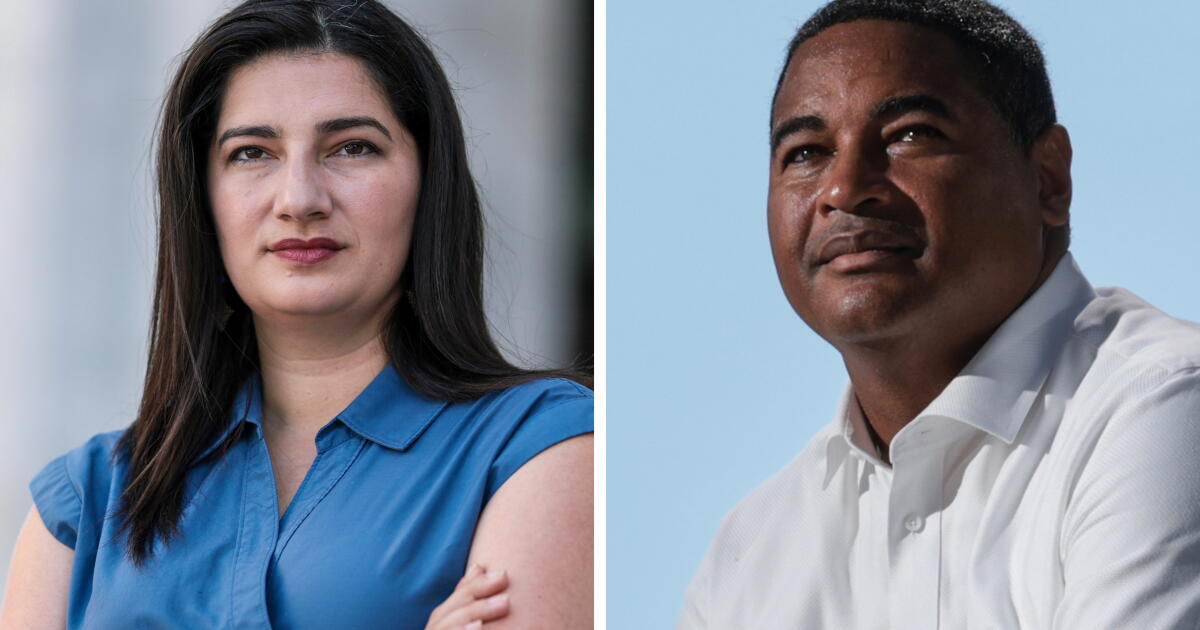
California Deputy Atty. Gen. Marissa Roy has nearly doubled her lead in the race to replace Los Angeles City Atty. Hydee Feldstein Soto, even as the mayor’s race has narrowed dramatically since September, new polling showed.
Both Roy and her rival, Los Angeles County Deputy Dist. Atty. John McKinney, made significant inroads among likely Los Angeles voters in October, winnowing the number of undecideds down to 45% from 70% last month, according to a poll released this week by UC Berkeley’s Institute of Governmental Studies and co-sponsored by The Times.
But while the race for mayor is now a dead heat, the contest for the city’s second-most-powerful elected position has widened, with Roy leading McKinney by 17 points in the final days of voting ahead of the Nov. 3 election.
Some 36% of likely voters say they’ve marked their ballot for Roy or will soon, versus 19% who say they’ve bubbled in for McKinney or plan to. About 45% remain undecided — far more than are still mulling the mayor’s race, but far fewer than were on the fence a month ago.
Experts said it’s not uncommon for voters to have uncertainty about city attorney races, since few people realize the question of who should fill the office will be on their ballot and many elect not to answer. About 15% fewer Angelenos voted in the last city attorney’s contest than voted for mayor, data show. Other cities saw a similar slump in returns.
The Los Angeles city attorney controls a budget of nearly $200 million and a staff of 1,000, serving as lawyer for L.A.’s City Council and general counsel for its myriad municipal agencies.
Increasingly, city attorneys around the state also pursue so-called “affirmative litigation” against exploitative corporations or punitive federal policy — a role Los Angeles pioneered, but which Feldstein Soto largely eschewed during her tenure at City Hall.
Roy has built her career on affirmative litigation, making it a centerpiece of her campaign. McKinney has characterized it as grandstanding and “out of alignment” with voters.
The two have also knocked heads over how the city attorney should charge and prosecute misdemeanors, work that accounts for about a third of the job.
Polls show voters split on who is best to address what 43% named as their top issue: street homelessness. Both McKinney and Roy have vowed to use the office to stem encampments — Roy by keeping more Angelenos housed through attacks on wage theft and renter harassment, McKinney by inducing more chronically homeless residents into treatment through individual prosecutions.
On runner-up concerns — building more affordable housing and ensuring public safety — similar percentages of likely voters trust Roy and McKinney, respectively.
McKinney, who has taken pains to highlight himself as a Democrat, retains a commanding lead among registered Republicans and self-identified MAGA voters, as well as the much-sought-after supporters of former mayoral hopeful Spencer Pratt, who will likely decide the contest between Mayor Karen Bass and Councilmember Nithya Raman.
Roy was way ahead among renters, who make up nearly two-thirds of the electorate, as well as progressives and self-described Democratic Socialists.
Independent expenditure groups behind both continue to pump money into the race, with Roy’s supporters seeking to paint McKinney as closely aligned with President Trump, and McKinney’s boosters looking to tar Roy as the second coming of former Los Angeles Dist. Atty. George Gascón.

California Deputy Atty. Gen. Marissa Roy has nearly doubled her lead in the race to replace Los Angeles City Atty. Hydee Feldstein Soto, even as the mayor’s race has narrowed dramatically since September, new polling showed.
Both Roy and her rival, Los Angeles County Deputy Dist. Atty. John McKinney, made significant inroads among likely Los Angeles voters in October, winnowing the number of undecideds down to 45% from 70% last month, according to a poll released this week by UC Berkeley’s Institute of Governmental Studies and co-sponsored by The Times.
But while the race for mayor is now a dead heat, the contest for the city’s second-most-powerful elected position has widened, with Roy leading McKinney by 17 points in the final days of voting ahead of the Nov. 3 election.
Some 36% of likely voters say they’ve marked their ballot for Roy or will soon, versus 19% who say they’ve bubbled in for McKinney or plan to. About 45% remain undecided — far more than are still mulling the mayor’s race, but far fewer than were on the fence a month ago.
Experts said it’s not uncommon for voters to have uncertainty about city attorney races, since few people realize the question of who should fill the office will be on their ballot and many elect not to answer. About 15% fewer Angelenos voted in the last city attorney’s contest than voted for mayor, data show. Other cities saw a similar slump in returns.
The Los Angeles city attorney controls a budget of nearly $200 million and a staff of 1,000, serving as lawyer for L.A.’s City Council and general counsel for its myriad municipal agencies.
Increasingly, city attorneys around the state also pursue so-called “affirmative litigation” against exploitative corporations or punitive federal policy — a role Los Angeles pioneered, but which Feldstein Soto largely eschewed during her tenure at City Hall.
Roy has built her career on affirmative litigation, making it a centerpiece of her campaign. McKinney has characterized it as grandstanding and “out of alignment” with voters.
The two have also knocked heads over how the city attorney should charge and prosecute misdemeanors, work that accounts for about a third of the job.
Polls show voters split on who is best to address what 43% named as their top issue: street homelessness. Both McKinney and Roy have vowed to use the office to stem encampments — Roy by keeping more Angelenos housed through attacks on wage theft and renter harassment, McKinney by inducing more chronically homeless residents into treatment through individual prosecutions.
On runner-up concerns — building more affordable housing and ensuring public safety — similar percentages of likely voters trust Roy and McKinney, respectively.
McKinney, who has taken pains to highlight himself as a Democrat, retains a commanding lead among registered Republicans and self-identified MAGA voters, as well as the much-sought-after supporters of former mayoral hopeful Spencer Pratt, who will likely decide the contest between Mayor Karen Bass and Councilmember Nithya Raman.
Roy was way ahead among renters, who make up nearly two-thirds of the electorate, as well as progressives and self-described Democratic Socialists.
Independent expenditure groups behind both continue to pump money into the race, with Roy’s supporters seeking to paint McKinney as closely aligned with President Trump, and McKinney’s boosters looking to tar Roy as the second coming of former Los Angeles Dist. Atty. George Gascón.

California Deputy Atty. Gen. Marissa Roy has nearly doubled her lead in the race to replace Los Angeles City Atty. Hydee Feldstein Soto, even as the mayor’s race has narrowed dramatically since September, new polling showed.
Both Roy and her rival, Los Angeles County Deputy Dist. Atty. John McKinney, made significant inroads among likely Los Angeles voters in October, winnowing the number of undecideds down to 45% from 70% last month, according to a poll released this week by UC Berkeley’s Institute of Governmental Studies and co-sponsored by The Times.
But while the race for mayor is now a dead heat, the contest for the city’s second-most-powerful elected position has widened, with Roy leading McKinney by 17 points in the final days of voting ahead of the Nov. 3 election.
Some 36% of likely voters say they’ve marked their ballot for Roy or will soon, versus 19% who say they’ve bubbled in for McKinney or plan to. About 45% remain undecided — far more than are still mulling the mayor’s race, but far fewer than were on the fence a month ago.
Experts said it’s not uncommon for voters to have uncertainty about city attorney races, since few people realize the question of who should fill the office will be on their ballot and many elect not to answer. About 15% fewer Angelenos voted in the last city attorney’s contest than voted for mayor, data show. Other cities saw a similar slump in returns.
The Los Angeles city attorney controls a budget of nearly $200 million and a staff of 1,000, serving as lawyer for L.A.’s City Council and general counsel for its myriad municipal agencies.
Increasingly, city attorneys around the state also pursue so-called “affirmative litigation” against exploitative corporations or punitive federal policy — a role Los Angeles pioneered, but which Feldstein Soto largely eschewed during her tenure at City Hall.
Roy has built her career on affirmative litigation, making it a centerpiece of her campaign. McKinney has characterized it as grandstanding and “out of alignment” with voters.
The two have also knocked heads over how the city attorney should charge and prosecute misdemeanors, work that accounts for about a third of the job.
Polls show voters split on who is best to address what 43% named as their top issue: street homelessness. Both McKinney and Roy have vowed to use the office to stem encampments — Roy by keeping more Angelenos housed through attacks on wage theft and renter harassment, McKinney by inducing more chronically homeless residents into treatment through individual prosecutions.
On runner-up concerns — building more affordable housing and ensuring public safety — similar percentages of likely voters trust Roy and McKinney, respectively.
McKinney, who has taken pains to highlight himself as a Democrat, retains a commanding lead among registered Republicans and self-identified MAGA voters, as well as the much-sought-after supporters of former mayoral hopeful Spencer Pratt, who will likely decide the contest between Mayor Karen Bass and Councilmember Nithya Raman.
Roy was way ahead among renters, who make up nearly two-thirds of the electorate, as well as progressives and self-described Democratic Socialists.
Independent expenditure groups behind both continue to pump money into the race, with Roy’s supporters seeking to paint McKinney as closely aligned with President Trump, and McKinney’s boosters looking to tar Roy as the second coming of former Los Angeles Dist. Atty. George Gascón.

California Deputy Atty. Gen. Marissa Roy has nearly doubled her lead in the race to replace Los Angeles City Atty. Hydee Feldstein Soto, even as the mayor’s race has narrowed dramatically since September, new polling showed.
Both Roy and her rival, Los Angeles County Deputy Dist. Atty. John McKinney, made significant inroads among likely Los Angeles voters in October, winnowing the number of undecideds down to 45% from 70% last month, according to a poll released this week by UC Berkeley’s Institute of Governmental Studies and co-sponsored by The Times.
But while the race for mayor is now a dead heat, the contest for the city’s second-most-powerful elected position has widened, with Roy leading McKinney by 17 points in the final days of voting ahead of the Nov. 3 election.
Some 36% of likely voters say they’ve marked their ballot for Roy or will soon, versus 19% who say they’ve bubbled in for McKinney or plan to. About 45% remain undecided — far more than are still mulling the mayor’s race, but far fewer than were on the fence a month ago.
Experts said it’s not uncommon for voters to have uncertainty about city attorney races, since few people realize the question of who should fill the office will be on their ballot and many elect not to answer. About 15% fewer Angelenos voted in the last city attorney’s contest than voted for mayor, data show. Other cities saw a similar slump in returns.
The Los Angeles city attorney controls a budget of nearly $200 million and a staff of 1,000, serving as lawyer for L.A.’s City Council and general counsel for its myriad municipal agencies.
Increasingly, city attorneys around the state also pursue so-called “affirmative litigation” against exploitative corporations or punitive federal policy — a role Los Angeles pioneered, but which Feldstein Soto largely eschewed during her tenure at City Hall.
Roy has built her career on affirmative litigation, making it a centerpiece of her campaign. McKinney has characterized it as grandstanding and “out of alignment” with voters.
The two have also knocked heads over how the city attorney should charge and prosecute misdemeanors, work that accounts for about a third of the job.
Polls show voters split on who is best to address what 43% named as their top issue: street homelessness. Both McKinney and Roy have vowed to use the office to stem encampments — Roy by keeping more Angelenos housed through attacks on wage theft and renter harassment, McKinney by inducing more chronically homeless residents into treatment through individual prosecutions.
On runner-up concerns — building more affordable housing and ensuring public safety — similar percentages of likely voters trust Roy and McKinney, respectively.
McKinney, who has taken pains to highlight himself as a Democrat, retains a commanding lead among registered Republicans and self-identified MAGA voters, as well as the much-sought-after supporters of former mayoral hopeful Spencer Pratt, who will likely decide the contest between Mayor Karen Bass and Councilmember Nithya Raman.
Roy was way ahead among renters, who make up nearly two-thirds of the electorate, as well as progressives and self-described Democratic Socialists.
Independent expenditure groups behind both continue to pump money into the race, with Roy’s supporters seeking to paint McKinney as closely aligned with President Trump, and McKinney’s boosters looking to tar Roy as the second coming of former Los Angeles Dist. Atty. George Gascón.

California Deputy Atty. Gen. Marissa Roy has nearly doubled her lead in the race to replace Los Angeles City Atty. Hydee Feldstein Soto, even as the mayor’s race has narrowed dramatically since September, new polling showed.
Both Roy and her rival, Los Angeles County Deputy Dist. Atty. John McKinney, made significant inroads among likely Los Angeles voters in October, winnowing the number of undecideds down to 45% from 70% last month, according to a poll released this week by UC Berkeley’s Institute of Governmental Studies and co-sponsored by The Times.
But while the race for mayor is now a dead heat, the contest for the city’s second-most-powerful elected position has widened, with Roy leading McKinney by 17 points in the final days of voting ahead of the Nov. 3 election.
Some 36% of likely voters say they’ve marked their ballot for Roy or will soon, versus 19% who say they’ve bubbled in for McKinney or plan to. About 45% remain undecided — far more than are still mulling the mayor’s race, but far fewer than were on the fence a month ago.
Experts said it’s not uncommon for voters to have uncertainty about city attorney races, since few people realize the question of who should fill the office will be on their ballot and many elect not to answer. About 15% fewer Angelenos voted in the last city attorney’s contest than voted for mayor, data show. Other cities saw a similar slump in returns.
The Los Angeles city attorney controls a budget of nearly $200 million and a staff of 1,000, serving as lawyer for L.A.’s City Council and general counsel for its myriad municipal agencies.
Increasingly, city attorneys around the state also pursue so-called “affirmative litigation” against exploitative corporations or punitive federal policy — a role Los Angeles pioneered, but which Feldstein Soto largely eschewed during her tenure at City Hall.
Roy has built her career on affirmative litigation, making it a centerpiece of her campaign. McKinney has characterized it as grandstanding and “out of alignment” with voters.
The two have also knocked heads over how the city attorney should charge and prosecute misdemeanors, work that accounts for about a third of the job.
Polls show voters split on who is best to address what 43% named as their top issue: street homelessness. Both McKinney and Roy have vowed to use the office to stem encampments — Roy by keeping more Angelenos housed through attacks on wage theft and renter harassment, McKinney by inducing more chronically homeless residents into treatment through individual prosecutions.
On runner-up concerns — building more affordable housing and ensuring public safety — similar percentages of likely voters trust Roy and McKinney, respectively.
McKinney, who has taken pains to highlight himself as a Democrat, retains a commanding lead among registered Republicans and self-identified MAGA voters, as well as the much-sought-after supporters of former mayoral hopeful Spencer Pratt, who will likely decide the contest between Mayor Karen Bass and Councilmember Nithya Raman.
Roy was way ahead among renters, who make up nearly two-thirds of the electorate, as well as progressives and self-described Democratic Socialists.
Independent expenditure groups behind both continue to pump money into the race, with Roy’s supporters seeking to paint McKinney as closely aligned with President Trump, and McKinney’s boosters looking to tar Roy as the second coming of former Los Angeles Dist. Atty. George Gascón.

