

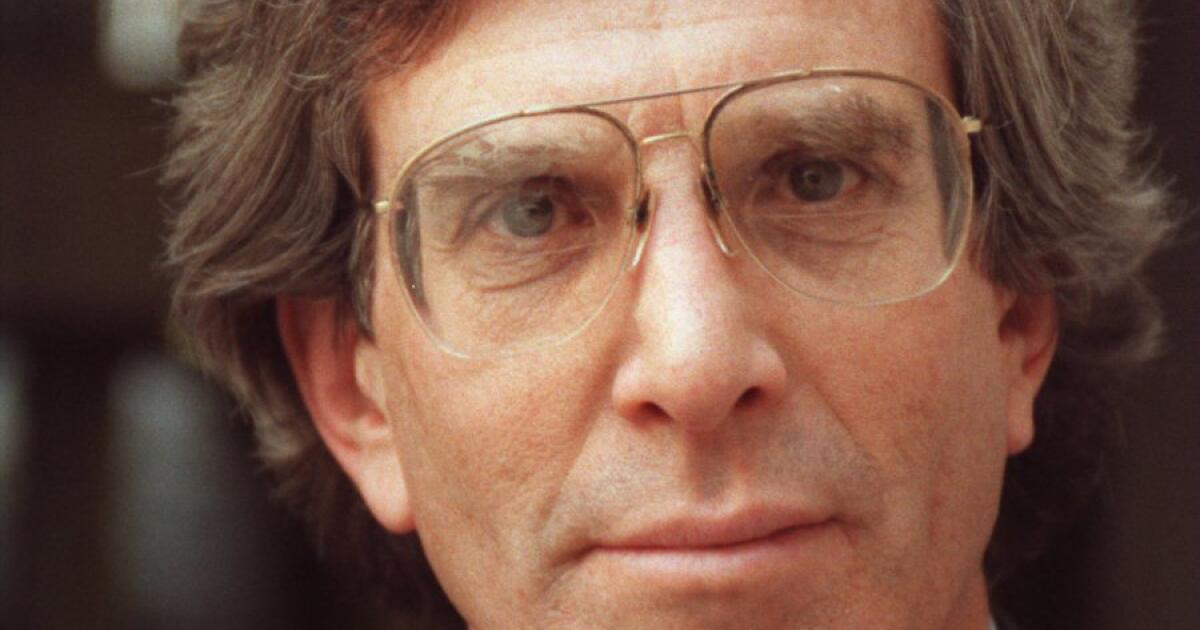
Benjamin Bycel, a civil rights attorney, law school dean and university president who took on the task of cleaning up Los Angeles politics as the city’s first ethics officer, died Aug. 2 in Santa Barbara. He was 84.
His son, Josh Bycel, said the death was due to complications from Parkinson’s disease.
Born in Brooklyn in 1942, Bycel moved to Huntington Park when he was 5. The son of a boxing manager and a teacher, he spent much of his childhood accompanying his father to downtown boxing gyms and the Olympic Auditorium. After graduating from Huntington Park High School, he earned a master’s in history from San José State University.
Bycel served with the Peace Corps in Uganda, taught at Manual Arts High School in L.A. and reported for the Associated Press in New York. As a law student at UC Davis, he was a press aide for San Francisco Mayor George Moscone’s campaign for governor of California.
After earning his law degree, Bycel worked as an attorney for the American Civil Liberties Union in Sacramento. As a civil rights lawyer in Santa Barbara, he successfully argued a landmark California Supreme Court case, which upheld the right of adults unrelated by blood, marriage or adoption to live together as a family. In 1986, Bycel took on the role of dean for the Santa Barbara and Ventura Colleges of Law, helping steer the ship after the former dean was accused of misappropriating funds.
Five years later, he took on his most high-profile role as founding director of the Los Angeles Ethics Commission.
The Times called it “a Herculean task.” The commission was created in 1990 after a wave of political corruption scandals engulfed Mayor Tom Bradley’s administration. When the City Council initially declined to pass tough anti-corruption laws, voters overwhelmingly passed Proposition H to create an independent watchdog tasked with enforcing a tough new set of regulations governing city officials’ conduct.
“The idea of getting paid to reform the system and make it better is a thrill,” Bycel told The Times when he was selected. He vowed not to “conduct any witch hunts.”
There was controversy from the get-go. In the commission’s first year, The Times reported, investigators raided the offices of City Attorney James K. Hahn after getting a tip that city workers were engaged in political activities. When the district attorney later dropped the investigation, citing lack of evidence, Hahn publicly condemned Bycel.
Zev Yaroslavsky, a former L.A. politician who served then as a City Council member representing district 5, said the new ethics role represented a “dramatic, profound cultural change in municipal government.” Bycel, he said, rose to the occasion.
“Institutionally, he was a new power, a new person with influence over the vitals of elected officialdom, and I thought he did an excellent job,” Yaroslavsky said, noting that Bycel did not go in with guns blazing. “He was very judicious and even-handed and he gave the new institutional credibility out of the starting gate.”
Still, some complained Bycel was a publicity hound, and he made powerful enemies. In 1995, Bycel told The Times that he feared for his job: Mayor Richard Riordan’s new appointee as the ethics commission president, UCLA law lecturer Raquelle de la Rocha, he said, had told him that she had decided he should be fired. De la Rocha denied his claim, but said that she had called a closed personnel hearing on Bycel’s status.
A few weeks later, the commission fired Bycel, taking a vote in closed session. They refused to say why.
“Though outspoken and at times overly aggressive, Bycel has made an important contribution to political reform here in Los Angeles,” The Times said in an editorial. “Under his tenure, the commission staff has worked rigorously to enforce the toughest local ethics laws in the nation, including a gift ban and restrictions on lobbyists.”
Josh Bycel said his father reveled in the challenge of cleaning up L.A. politics and was frustrated by his abrupt ouster.
“Even though he felt he made great progress and they were doing good things, I think he felt that the job was not done … There were forces that did not want him to do the job.”
In 1997, Bycel was appointed president of the University of West Los Angeles, and in 2001 he moved to Washington to serve as the vice president of Common Cause, the national advocacy group. Later, he served as the executive director of the Connecticut Office of State Ethics before moving back to Santa Barbara to practice law.
Bycel died at a memory center in Santa Barbara he had moved into just a few weeks earlier, Josh Bycel said. He was surrounded by his beloved longtime partner, children, grandchildren and dog, he said, in a room filled with photos and quotes of his longtime hero, boxing champion, Muhammad Ali.
“For good or for bad, my dad was a fighter and someone who would speak his mind,” Josh Bycel said, noting that was probably what got him in trouble at the ethics commission. “He always believed that you had to fight the righteous fight.”

Benjamin Bycel, a civil rights attorney, law school dean and university president who took on the task of cleaning up Los Angeles politics as the city’s first ethics officer, died Aug. 2 in Santa Barbara. He was 84.
His son, Josh Bycel, said the death was due to complications from Parkinson’s disease.
Born in Brooklyn in 1942, Bycel moved to Huntington Park when he was 5. The son of a boxing manager and a teacher, he spent much of his childhood accompanying his father to downtown boxing gyms and the Olympic Auditorium. After graduating from Huntington Park High School, he earned a master’s in history from San José State University.
Bycel served with the Peace Corps in Uganda, taught at Manual Arts High School in L.A. and reported for the Associated Press in New York. As a law student at UC Davis, he was a press aide for San Francisco Mayor George Moscone’s campaign for governor of California.
After earning his law degree, Bycel worked as an attorney for the American Civil Liberties Union in Sacramento. As a civil rights lawyer in Santa Barbara, he successfully argued a landmark California Supreme Court case, which upheld the right of adults unrelated by blood, marriage or adoption to live together as a family. In 1986, Bycel took on the role of dean for the Santa Barbara and Ventura Colleges of Law, helping steer the ship after the former dean was accused of misappropriating funds.
Five years later, he took on his most high-profile role as founding director of the Los Angeles Ethics Commission.
The Times called it “a Herculean task.” The commission was created in 1990 after a wave of political corruption scandals engulfed Mayor Tom Bradley’s administration. When the City Council initially declined to pass tough anti-corruption laws, voters overwhelmingly passed Proposition H to create an independent watchdog tasked with enforcing a tough new set of regulations governing city officials’ conduct.
“The idea of getting paid to reform the system and make it better is a thrill,” Bycel told The Times when he was selected. He vowed not to “conduct any witch hunts.”
There was controversy from the get-go. In the commission’s first year, The Times reported, investigators raided the offices of City Attorney James K. Hahn after getting a tip that city workers were engaged in political activities. When the district attorney later dropped the investigation, citing lack of evidence, Hahn publicly condemned Bycel.
Zev Yaroslavsky, a former L.A. politician who served then as a City Council member representing district 5, said the new ethics role represented a “dramatic, profound cultural change in municipal government.” Bycel, he said, rose to the occasion.
“Institutionally, he was a new power, a new person with influence over the vitals of elected officialdom, and I thought he did an excellent job,” Yaroslavsky said, noting that Bycel did not go in with guns blazing. “He was very judicious and even-handed and he gave the new institutional credibility out of the starting gate.”
Still, some complained Bycel was a publicity hound, and he made powerful enemies. In 1995, Bycel told The Times that he feared for his job: Mayor Richard Riordan’s new appointee as the ethics commission president, UCLA law lecturer Raquelle de la Rocha, he said, had told him that she had decided he should be fired. De la Rocha denied his claim, but said that she had called a closed personnel hearing on Bycel’s status.
A few weeks later, the commission fired Bycel, taking a vote in closed session. They refused to say why.
“Though outspoken and at times overly aggressive, Bycel has made an important contribution to political reform here in Los Angeles,” The Times said in an editorial. “Under his tenure, the commission staff has worked rigorously to enforce the toughest local ethics laws in the nation, including a gift ban and restrictions on lobbyists.”
Josh Bycel said his father reveled in the challenge of cleaning up L.A. politics and was frustrated by his abrupt ouster.
“Even though he felt he made great progress and they were doing good things, I think he felt that the job was not done … There were forces that did not want him to do the job.”
In 1997, Bycel was appointed president of the University of West Los Angeles, and in 2001 he moved to Washington to serve as the vice president of Common Cause, the national advocacy group. Later, he served as the executive director of the Connecticut Office of State Ethics before moving back to Santa Barbara to practice law.
Bycel died at a memory center in Santa Barbara he had moved into just a few weeks earlier, Josh Bycel said. He was surrounded by his beloved longtime partner, children, grandchildren and dog, he said, in a room filled with photos and quotes of his longtime hero, boxing champion, Muhammad Ali.
“For good or for bad, my dad was a fighter and someone who would speak his mind,” Josh Bycel said, noting that was probably what got him in trouble at the ethics commission. “He always believed that you had to fight the righteous fight.”

Benjamin Bycel, a civil rights attorney, law school dean and university president who took on the task of cleaning up Los Angeles politics as the city’s first ethics officer, died Aug. 2 in Santa Barbara. He was 84.
His son, Josh Bycel, said the death was due to complications from Parkinson’s disease.
Born in Brooklyn in 1942, Bycel moved to Huntington Park when he was 5. The son of a boxing manager and a teacher, he spent much of his childhood accompanying his father to downtown boxing gyms and the Olympic Auditorium. After graduating from Huntington Park High School, he earned a master’s in history from San José State University.
Bycel served with the Peace Corps in Uganda, taught at Manual Arts High School in L.A. and reported for the Associated Press in New York. As a law student at UC Davis, he was a press aide for San Francisco Mayor George Moscone’s campaign for governor of California.
After earning his law degree, Bycel worked as an attorney for the American Civil Liberties Union in Sacramento. As a civil rights lawyer in Santa Barbara, he successfully argued a landmark California Supreme Court case, which upheld the right of adults unrelated by blood, marriage or adoption to live together as a family. In 1986, Bycel took on the role of dean for the Santa Barbara and Ventura Colleges of Law, helping steer the ship after the former dean was accused of misappropriating funds.
Five years later, he took on his most high-profile role as founding director of the Los Angeles Ethics Commission.
The Times called it “a Herculean task.” The commission was created in 1990 after a wave of political corruption scandals engulfed Mayor Tom Bradley’s administration. When the City Council initially declined to pass tough anti-corruption laws, voters overwhelmingly passed Proposition H to create an independent watchdog tasked with enforcing a tough new set of regulations governing city officials’ conduct.
“The idea of getting paid to reform the system and make it better is a thrill,” Bycel told The Times when he was selected. He vowed not to “conduct any witch hunts.”
There was controversy from the get-go. In the commission’s first year, The Times reported, investigators raided the offices of City Attorney James K. Hahn after getting a tip that city workers were engaged in political activities. When the district attorney later dropped the investigation, citing lack of evidence, Hahn publicly condemned Bycel.
Zev Yaroslavsky, a former L.A. politician who served then as a City Council member representing district 5, said the new ethics role represented a “dramatic, profound cultural change in municipal government.” Bycel, he said, rose to the occasion.
“Institutionally, he was a new power, a new person with influence over the vitals of elected officialdom, and I thought he did an excellent job,” Yaroslavsky said, noting that Bycel did not go in with guns blazing. “He was very judicious and even-handed and he gave the new institutional credibility out of the starting gate.”
Still, some complained Bycel was a publicity hound, and he made powerful enemies. In 1995, Bycel told The Times that he feared for his job: Mayor Richard Riordan’s new appointee as the ethics commission president, UCLA law lecturer Raquelle de la Rocha, he said, had told him that she had decided he should be fired. De la Rocha denied his claim, but said that she had called a closed personnel hearing on Bycel’s status.
A few weeks later, the commission fired Bycel, taking a vote in closed session. They refused to say why.
“Though outspoken and at times overly aggressive, Bycel has made an important contribution to political reform here in Los Angeles,” The Times said in an editorial. “Under his tenure, the commission staff has worked rigorously to enforce the toughest local ethics laws in the nation, including a gift ban and restrictions on lobbyists.”
Josh Bycel said his father reveled in the challenge of cleaning up L.A. politics and was frustrated by his abrupt ouster.
“Even though he felt he made great progress and they were doing good things, I think he felt that the job was not done … There were forces that did not want him to do the job.”
In 1997, Bycel was appointed president of the University of West Los Angeles, and in 2001 he moved to Washington to serve as the vice president of Common Cause, the national advocacy group. Later, he served as the executive director of the Connecticut Office of State Ethics before moving back to Santa Barbara to practice law.
Bycel died at a memory center in Santa Barbara he had moved into just a few weeks earlier, Josh Bycel said. He was surrounded by his beloved longtime partner, children, grandchildren and dog, he said, in a room filled with photos and quotes of his longtime hero, boxing champion, Muhammad Ali.
“For good or for bad, my dad was a fighter and someone who would speak his mind,” Josh Bycel said, noting that was probably what got him in trouble at the ethics commission. “He always believed that you had to fight the righteous fight.”
Benjamin Bycel, a civil rights attorney, law school dean and university president who took on the task of cleaning up Los Angeles politics as the city’s first ethics officer, died Aug. 2 in Santa Barbara. He was 84.
His son, Josh Bycel, said the death was due to complications from Parkinson’s disease.
Born in Brooklyn in 1942, Bycel moved to Huntington Park when he was 5. The son of a boxing manager and a teacher, he spent much of his childhood accompanying his father to downtown boxing gyms and the Olympic Auditorium. After graduating from Huntington Park High School, he earned a master’s in history from San José State University.
Bycel served with the Peace Corps in Uganda, taught at Manual Arts High School in L.A. and reported for the Associated Press in New York. As a law student at UC Davis, he was a press aide for San Francisco Mayor George Moscone’s campaign for governor of California.
After earning his law degree, Bycel worked as an attorney for the American Civil Liberties Union in Sacramento. As a civil rights lawyer in Santa Barbara, he successfully argued a landmark California Supreme Court case, which upheld the right of adults unrelated by blood, marriage or adoption to live together as a family. In 1986, Bycel took on the role of dean for the Santa Barbara and Ventura Colleges of Law, helping steer the ship after the former dean was accused of misappropriating funds.
Five years later, he took on his most high-profile role as founding director of the Los Angeles Ethics Commission.
The Times called it “a Herculean task.” The commission was created in 1990 after a wave of political corruption scandals engulfed Mayor Tom Bradley’s administration. When the City Council initially declined to pass tough anti-corruption laws, voters overwhelmingly passed Proposition H to create an independent watchdog tasked with enforcing a tough new set of regulations governing city officials’ conduct.
“The idea of getting paid to reform the system and make it better is a thrill,” Bycel told The Times when he was selected. He vowed not to “conduct any witch hunts.”
There was controversy from the get-go. In the commission’s first year, The Times reported, investigators raided the offices of City Attorney James K. Hahn after getting a tip that city workers were engaged in political activities. When the district attorney later dropped the investigation, citing lack of evidence, Hahn publicly condemned Bycel.
Zev Yaroslavsky, a former L.A. politician who served then as a City Council member representing district 5, said the new ethics role represented a “dramatic, profound cultural change in municipal government.” Bycel, he said, rose to the occasion.
“Institutionally, he was a new power, a new person with influence over the vitals of elected officialdom, and I thought he did an excellent job,” Yaroslavsky said, noting that Bycel did not go in with guns blazing. “He was very judicious and even-handed and he gave the new institutional credibility out of the starting gate.”
Still, some complained Bycel was a publicity hound, and he made powerful enemies. In 1995, Bycel told The Times that he feared for his job: Mayor Richard Riordan’s new appointee as the ethics commission president, UCLA law lecturer Raquelle de la Rocha, he said, had told him that she had decided he should be fired. De la Rocha denied his claim, but said that she had called a closed personnel hearing on Bycel’s status.
A few weeks later, the commission fired Bycel, taking a vote in closed session. They refused to say why.
“Though outspoken and at times overly aggressive, Bycel has made an important contribution to political reform here in Los Angeles,” The Times said in an editorial. “Under his tenure, the commission staff has worked rigorously to enforce the toughest local ethics laws in the nation, including a gift ban and restrictions on lobbyists.”
Josh Bycel said his father reveled in the challenge of cleaning up L.A. politics and was frustrated by his abrupt ouster.
“Even though he felt he made great progress and they were doing good things, I think he felt that the job was not done … There were forces that did not want him to do the job.”
In 1997, Bycel was appointed president of the University of West Los Angeles, and in 2001 he moved to Washington to serve as the vice president of Common Cause, the national advocacy group. Later, he served as the executive director of the Connecticut Office of State Ethics before moving back to Santa Barbara to practice law.
Bycel died at a memory center in Santa Barbara he had moved into just a few weeks earlier, Josh Bycel said. He was surrounded by his beloved longtime partner, children, grandchildren and dog, he said, in a room filled with photos and quotes of his longtime hero, boxing champion, Muhammad Ali.
“For good or for bad, my dad was a fighter and someone who would speak his mind,” Josh Bycel said, noting that was probably what got him in trouble at the ethics commission. “He always believed that you had to fight the righteous fight.”

Benjamin Bycel, a civil rights attorney, law school dean and university president who took on the task of cleaning up Los Angeles politics as the city’s first ethics officer, died Aug. 2 in Santa Barbara. He was 84.
His son, Josh Bycel, said the death was due to complications from Parkinson’s disease.
Born in Brooklyn in 1942, Bycel moved to Huntington Park when he was 5. The son of a boxing manager and a teacher, he spent much of his childhood accompanying his father to downtown boxing gyms and the Olympic Auditorium. After graduating from Huntington Park High School, he earned a master’s in history from San José State University.
Bycel served with the Peace Corps in Uganda, taught at Manual Arts High School in L.A. and reported for the Associated Press in New York. As a law student at UC Davis, he was a press aide for San Francisco Mayor George Moscone’s campaign for governor of California.
After earning his law degree, Bycel worked as an attorney for the American Civil Liberties Union in Sacramento. As a civil rights lawyer in Santa Barbara, he successfully argued a landmark California Supreme Court case, which upheld the right of adults unrelated by blood, marriage or adoption to live together as a family. In 1986, Bycel took on the role of dean for the Santa Barbara and Ventura Colleges of Law, helping steer the ship after the former dean was accused of misappropriating funds.
Five years later, he took on his most high-profile role as founding director of the Los Angeles Ethics Commission.
The Times called it “a Herculean task.” The commission was created in 1990 after a wave of political corruption scandals engulfed Mayor Tom Bradley’s administration. When the City Council initially declined to pass tough anti-corruption laws, voters overwhelmingly passed Proposition H to create an independent watchdog tasked with enforcing a tough new set of regulations governing city officials’ conduct.
“The idea of getting paid to reform the system and make it better is a thrill,” Bycel told The Times when he was selected. He vowed not to “conduct any witch hunts.”
There was controversy from the get-go. In the commission’s first year, The Times reported, investigators raided the offices of City Attorney James K. Hahn after getting a tip that city workers were engaged in political activities. When the district attorney later dropped the investigation, citing lack of evidence, Hahn publicly condemned Bycel.
Zev Yaroslavsky, a former L.A. politician who served then as a City Council member representing district 5, said the new ethics role represented a “dramatic, profound cultural change in municipal government.” Bycel, he said, rose to the occasion.
“Institutionally, he was a new power, a new person with influence over the vitals of elected officialdom, and I thought he did an excellent job,” Yaroslavsky said, noting that Bycel did not go in with guns blazing. “He was very judicious and even-handed and he gave the new institutional credibility out of the starting gate.”
Still, some complained Bycel was a publicity hound, and he made powerful enemies. In 1995, Bycel told The Times that he feared for his job: Mayor Richard Riordan’s new appointee as the ethics commission president, UCLA law lecturer Raquelle de la Rocha, he said, had told him that she had decided he should be fired. De la Rocha denied his claim, but said that she had called a closed personnel hearing on Bycel’s status.
A few weeks later, the commission fired Bycel, taking a vote in closed session. They refused to say why.
“Though outspoken and at times overly aggressive, Bycel has made an important contribution to political reform here in Los Angeles,” The Times said in an editorial. “Under his tenure, the commission staff has worked rigorously to enforce the toughest local ethics laws in the nation, including a gift ban and restrictions on lobbyists.”
Josh Bycel said his father reveled in the challenge of cleaning up L.A. politics and was frustrated by his abrupt ouster.
“Even though he felt he made great progress and they were doing good things, I think he felt that the job was not done … There were forces that did not want him to do the job.”
In 1997, Bycel was appointed president of the University of West Los Angeles, and in 2001 he moved to Washington to serve as the vice president of Common Cause, the national advocacy group. Later, he served as the executive director of the Connecticut Office of State Ethics before moving back to Santa Barbara to practice law.
Bycel died at a memory center in Santa Barbara he had moved into just a few weeks earlier, Josh Bycel said. He was surrounded by his beloved longtime partner, children, grandchildren and dog, he said, in a room filled with photos and quotes of his longtime hero, boxing champion, Muhammad Ali.
“For good or for bad, my dad was a fighter and someone who would speak his mind,” Josh Bycel said, noting that was probably what got him in trouble at the ethics commission. “He always believed that you had to fight the righteous fight.”
Benjamin Bycel, a civil rights attorney, law school dean and university president who took on the task of cleaning up Los Angeles politics as the city’s first ethics officer, died Aug. 2 in Santa Barbara. He was 84.
His son, Josh Bycel, said the death was due to complications from Parkinson’s disease.
Born in Brooklyn in 1942, Bycel moved to Huntington Park when he was 5. The son of a boxing manager and a teacher, he spent much of his childhood accompanying his father to downtown boxing gyms and the Olympic Auditorium. After graduating from Huntington Park High School, he earned a master’s in history from San José State University.
Bycel served with the Peace Corps in Uganda, taught at Manual Arts High School in L.A. and reported for the Associated Press in New York. As a law student at UC Davis, he was a press aide for San Francisco Mayor George Moscone’s campaign for governor of California.
After earning his law degree, Bycel worked as an attorney for the American Civil Liberties Union in Sacramento. As a civil rights lawyer in Santa Barbara, he successfully argued a landmark California Supreme Court case, which upheld the right of adults unrelated by blood, marriage or adoption to live together as a family. In 1986, Bycel took on the role of dean for the Santa Barbara and Ventura Colleges of Law, helping steer the ship after the former dean was accused of misappropriating funds.
Five years later, he took on his most high-profile role as founding director of the Los Angeles Ethics Commission.
The Times called it “a Herculean task.” The commission was created in 1990 after a wave of political corruption scandals engulfed Mayor Tom Bradley’s administration. When the City Council initially declined to pass tough anti-corruption laws, voters overwhelmingly passed Proposition H to create an independent watchdog tasked with enforcing a tough new set of regulations governing city officials’ conduct.
“The idea of getting paid to reform the system and make it better is a thrill,” Bycel told The Times when he was selected. He vowed not to “conduct any witch hunts.”
There was controversy from the get-go. In the commission’s first year, The Times reported, investigators raided the offices of City Attorney James K. Hahn after getting a tip that city workers were engaged in political activities. When the district attorney later dropped the investigation, citing lack of evidence, Hahn publicly condemned Bycel.
Zev Yaroslavsky, a former L.A. politician who served then as a City Council member representing district 5, said the new ethics role represented a “dramatic, profound cultural change in municipal government.” Bycel, he said, rose to the occasion.
“Institutionally, he was a new power, a new person with influence over the vitals of elected officialdom, and I thought he did an excellent job,” Yaroslavsky said, noting that Bycel did not go in with guns blazing. “He was very judicious and even-handed and he gave the new institutional credibility out of the starting gate.”
Still, some complained Bycel was a publicity hound, and he made powerful enemies. In 1995, Bycel told The Times that he feared for his job: Mayor Richard Riordan’s new appointee as the ethics commission president, UCLA law lecturer Raquelle de la Rocha, he said, had told him that she had decided he should be fired. De la Rocha denied his claim, but said that she had called a closed personnel hearing on Bycel’s status.
A few weeks later, the commission fired Bycel, taking a vote in closed session. They refused to say why.
“Though outspoken and at times overly aggressive, Bycel has made an important contribution to political reform here in Los Angeles,” The Times said in an editorial. “Under his tenure, the commission staff has worked rigorously to enforce the toughest local ethics laws in the nation, including a gift ban and restrictions on lobbyists.”
Josh Bycel said his father reveled in the challenge of cleaning up L.A. politics and was frustrated by his abrupt ouster.
“Even though he felt he made great progress and they were doing good things, I think he felt that the job was not done … There were forces that did not want him to do the job.”
In 1997, Bycel was appointed president of the University of West Los Angeles, and in 2001 he moved to Washington to serve as the vice president of Common Cause, the national advocacy group. Later, he served as the executive director of the Connecticut Office of State Ethics before moving back to Santa Barbara to practice law.
Bycel died at a memory center in Santa Barbara he had moved into just a few weeks earlier, Josh Bycel said. He was surrounded by his beloved longtime partner, children, grandchildren and dog, he said, in a room filled with photos and quotes of his longtime hero, boxing champion, Muhammad Ali.
“For good or for bad, my dad was a fighter and someone who would speak his mind,” Josh Bycel said, noting that was probably what got him in trouble at the ethics commission. “He always believed that you had to fight the righteous fight.”
Benjamin Bycel, a civil rights attorney, law school dean and university president who took on the task of cleaning up Los Angeles politics as the city’s first ethics officer, died Aug. 2 in Santa Barbara. He was 84.
His son, Josh Bycel, said the death was due to complications from Parkinson’s disease.
Born in Brooklyn in 1942, Bycel moved to Huntington Park when he was 5. The son of a boxing manager and a teacher, he spent much of his childhood accompanying his father to downtown boxing gyms and the Olympic Auditorium. After graduating from Huntington Park High School, he earned a master’s in history from San José State University.
Bycel served with the Peace Corps in Uganda, taught at Manual Arts High School in L.A. and reported for the Associated Press in New York. As a law student at UC Davis, he was a press aide for San Francisco Mayor George Moscone’s campaign for governor of California.
After earning his law degree, Bycel worked as an attorney for the American Civil Liberties Union in Sacramento. As a civil rights lawyer in Santa Barbara, he successfully argued a landmark California Supreme Court case, which upheld the right of adults unrelated by blood, marriage or adoption to live together as a family. In 1986, Bycel took on the role of dean for the Santa Barbara and Ventura Colleges of Law, helping steer the ship after the former dean was accused of misappropriating funds.
Five years later, he took on his most high-profile role as founding director of the Los Angeles Ethics Commission.
The Times called it “a Herculean task.” The commission was created in 1990 after a wave of political corruption scandals engulfed Mayor Tom Bradley’s administration. When the City Council initially declined to pass tough anti-corruption laws, voters overwhelmingly passed Proposition H to create an independent watchdog tasked with enforcing a tough new set of regulations governing city officials’ conduct.
“The idea of getting paid to reform the system and make it better is a thrill,” Bycel told The Times when he was selected. He vowed not to “conduct any witch hunts.”
There was controversy from the get-go. In the commission’s first year, The Times reported, investigators raided the offices of City Attorney James K. Hahn after getting a tip that city workers were engaged in political activities. When the district attorney later dropped the investigation, citing lack of evidence, Hahn publicly condemned Bycel.
Zev Yaroslavsky, a former L.A. politician who served then as a City Council member representing district 5, said the new ethics role represented a “dramatic, profound cultural change in municipal government.” Bycel, he said, rose to the occasion.
“Institutionally, he was a new power, a new person with influence over the vitals of elected officialdom, and I thought he did an excellent job,” Yaroslavsky said, noting that Bycel did not go in with guns blazing. “He was very judicious and even-handed and he gave the new institutional credibility out of the starting gate.”
Still, some complained Bycel was a publicity hound, and he made powerful enemies. In 1995, Bycel told The Times that he feared for his job: Mayor Richard Riordan’s new appointee as the ethics commission president, UCLA law lecturer Raquelle de la Rocha, he said, had told him that she had decided he should be fired. De la Rocha denied his claim, but said that she had called a closed personnel hearing on Bycel’s status.
A few weeks later, the commission fired Bycel, taking a vote in closed session. They refused to say why.
“Though outspoken and at times overly aggressive, Bycel has made an important contribution to political reform here in Los Angeles,” The Times said in an editorial. “Under his tenure, the commission staff has worked rigorously to enforce the toughest local ethics laws in the nation, including a gift ban and restrictions on lobbyists.”
Josh Bycel said his father reveled in the challenge of cleaning up L.A. politics and was frustrated by his abrupt ouster.
“Even though he felt he made great progress and they were doing good things, I think he felt that the job was not done … There were forces that did not want him to do the job.”
In 1997, Bycel was appointed president of the University of West Los Angeles, and in 2001 he moved to Washington to serve as the vice president of Common Cause, the national advocacy group. Later, he served as the executive director of the Connecticut Office of State Ethics before moving back to Santa Barbara to practice law.
Bycel died at a memory center in Santa Barbara he had moved into just a few weeks earlier, Josh Bycel said. He was surrounded by his beloved longtime partner, children, grandchildren and dog, he said, in a room filled with photos and quotes of his longtime hero, boxing champion, Muhammad Ali.
“For good or for bad, my dad was a fighter and someone who would speak his mind,” Josh Bycel said, noting that was probably what got him in trouble at the ethics commission. “He always believed that you had to fight the righteous fight.”
Benjamin Bycel, a civil rights attorney, law school dean and university president who took on the task of cleaning up Los Angeles politics as the city’s first ethics officer, died Aug. 2 in Santa Barbara. He was 84.
His son, Josh Bycel, said the death was due to complications from Parkinson’s disease.
Born in Brooklyn in 1942, Bycel moved to Huntington Park when he was 5. The son of a boxing manager and a teacher, he spent much of his childhood accompanying his father to downtown boxing gyms and the Olympic Auditorium. After graduating from Huntington Park High School, he earned a master’s in history from San José State University.
Bycel served with the Peace Corps in Uganda, taught at Manual Arts High School in L.A. and reported for the Associated Press in New York. As a law student at UC Davis, he was a press aide for San Francisco Mayor George Moscone’s campaign for governor of California.
After earning his law degree, Bycel worked as an attorney for the American Civil Liberties Union in Sacramento. As a civil rights lawyer in Santa Barbara, he successfully argued a landmark California Supreme Court case, which upheld the right of adults unrelated by blood, marriage or adoption to live together as a family. In 1986, Bycel took on the role of dean for the Santa Barbara and Ventura Colleges of Law, helping steer the ship after the former dean was accused of misappropriating funds.
Five years later, he took on his most high-profile role as founding director of the Los Angeles Ethics Commission.
The Times called it “a Herculean task.” The commission was created in 1990 after a wave of political corruption scandals engulfed Mayor Tom Bradley’s administration. When the City Council initially declined to pass tough anti-corruption laws, voters overwhelmingly passed Proposition H to create an independent watchdog tasked with enforcing a tough new set of regulations governing city officials’ conduct.
“The idea of getting paid to reform the system and make it better is a thrill,” Bycel told The Times when he was selected. He vowed not to “conduct any witch hunts.”
There was controversy from the get-go. In the commission’s first year, The Times reported, investigators raided the offices of City Attorney James K. Hahn after getting a tip that city workers were engaged in political activities. When the district attorney later dropped the investigation, citing lack of evidence, Hahn publicly condemned Bycel.
Zev Yaroslavsky, a former L.A. politician who served then as a City Council member representing district 5, said the new ethics role represented a “dramatic, profound cultural change in municipal government.” Bycel, he said, rose to the occasion.
“Institutionally, he was a new power, a new person with influence over the vitals of elected officialdom, and I thought he did an excellent job,” Yaroslavsky said, noting that Bycel did not go in with guns blazing. “He was very judicious and even-handed and he gave the new institutional credibility out of the starting gate.”
Still, some complained Bycel was a publicity hound, and he made powerful enemies. In 1995, Bycel told The Times that he feared for his job: Mayor Richard Riordan’s new appointee as the ethics commission president, UCLA law lecturer Raquelle de la Rocha, he said, had told him that she had decided he should be fired. De la Rocha denied his claim, but said that she had called a closed personnel hearing on Bycel’s status.
A few weeks later, the commission fired Bycel, taking a vote in closed session. They refused to say why.
“Though outspoken and at times overly aggressive, Bycel has made an important contribution to political reform here in Los Angeles,” The Times said in an editorial. “Under his tenure, the commission staff has worked rigorously to enforce the toughest local ethics laws in the nation, including a gift ban and restrictions on lobbyists.”
Josh Bycel said his father reveled in the challenge of cleaning up L.A. politics and was frustrated by his abrupt ouster.
“Even though he felt he made great progress and they were doing good things, I think he felt that the job was not done … There were forces that did not want him to do the job.”
In 1997, Bycel was appointed president of the University of West Los Angeles, and in 2001 he moved to Washington to serve as the vice president of Common Cause, the national advocacy group. Later, he served as the executive director of the Connecticut Office of State Ethics before moving back to Santa Barbara to practice law.
Bycel died at a memory center in Santa Barbara he had moved into just a few weeks earlier, Josh Bycel said. He was surrounded by his beloved longtime partner, children, grandchildren and dog, he said, in a room filled with photos and quotes of his longtime hero, boxing champion, Muhammad Ali.
“For good or for bad, my dad was a fighter and someone who would speak his mind,” Josh Bycel said, noting that was probably what got him in trouble at the ethics commission. “He always believed that you had to fight the righteous fight.”

Benjamin Bycel, a civil rights attorney, law school dean and university president who took on the task of cleaning up Los Angeles politics as the city’s first ethics officer, died Aug. 2 in Santa Barbara. He was 84.
His son, Josh Bycel, said the death was due to complications from Parkinson’s disease.
Born in Brooklyn in 1942, Bycel moved to Huntington Park when he was 5. The son of a boxing manager and a teacher, he spent much of his childhood accompanying his father to downtown boxing gyms and the Olympic Auditorium. After graduating from Huntington Park High School, he earned a master’s in history from San José State University.
Bycel served with the Peace Corps in Uganda, taught at Manual Arts High School in L.A. and reported for the Associated Press in New York. As a law student at UC Davis, he was a press aide for San Francisco Mayor George Moscone’s campaign for governor of California.
After earning his law degree, Bycel worked as an attorney for the American Civil Liberties Union in Sacramento. As a civil rights lawyer in Santa Barbara, he successfully argued a landmark California Supreme Court case, which upheld the right of adults unrelated by blood, marriage or adoption to live together as a family. In 1986, Bycel took on the role of dean for the Santa Barbara and Ventura Colleges of Law, helping steer the ship after the former dean was accused of misappropriating funds.
Five years later, he took on his most high-profile role as founding director of the Los Angeles Ethics Commission.
The Times called it “a Herculean task.” The commission was created in 1990 after a wave of political corruption scandals engulfed Mayor Tom Bradley’s administration. When the City Council initially declined to pass tough anti-corruption laws, voters overwhelmingly passed Proposition H to create an independent watchdog tasked with enforcing a tough new set of regulations governing city officials’ conduct.
“The idea of getting paid to reform the system and make it better is a thrill,” Bycel told The Times when he was selected. He vowed not to “conduct any witch hunts.”
There was controversy from the get-go. In the commission’s first year, The Times reported, investigators raided the offices of City Attorney James K. Hahn after getting a tip that city workers were engaged in political activities. When the district attorney later dropped the investigation, citing lack of evidence, Hahn publicly condemned Bycel.
Zev Yaroslavsky, a former L.A. politician who served then as a City Council member representing district 5, said the new ethics role represented a “dramatic, profound cultural change in municipal government.” Bycel, he said, rose to the occasion.
“Institutionally, he was a new power, a new person with influence over the vitals of elected officialdom, and I thought he did an excellent job,” Yaroslavsky said, noting that Bycel did not go in with guns blazing. “He was very judicious and even-handed and he gave the new institutional credibility out of the starting gate.”
Still, some complained Bycel was a publicity hound, and he made powerful enemies. In 1995, Bycel told The Times that he feared for his job: Mayor Richard Riordan’s new appointee as the ethics commission president, UCLA law lecturer Raquelle de la Rocha, he said, had told him that she had decided he should be fired. De la Rocha denied his claim, but said that she had called a closed personnel hearing on Bycel’s status.
A few weeks later, the commission fired Bycel, taking a vote in closed session. They refused to say why.
“Though outspoken and at times overly aggressive, Bycel has made an important contribution to political reform here in Los Angeles,” The Times said in an editorial. “Under his tenure, the commission staff has worked rigorously to enforce the toughest local ethics laws in the nation, including a gift ban and restrictions on lobbyists.”
Josh Bycel said his father reveled in the challenge of cleaning up L.A. politics and was frustrated by his abrupt ouster.
“Even though he felt he made great progress and they were doing good things, I think he felt that the job was not done … There were forces that did not want him to do the job.”
In 1997, Bycel was appointed president of the University of West Los Angeles, and in 2001 he moved to Washington to serve as the vice president of Common Cause, the national advocacy group. Later, he served as the executive director of the Connecticut Office of State Ethics before moving back to Santa Barbara to practice law.
Bycel died at a memory center in Santa Barbara he had moved into just a few weeks earlier, Josh Bycel said. He was surrounded by his beloved longtime partner, children, grandchildren and dog, he said, in a room filled with photos and quotes of his longtime hero, boxing champion, Muhammad Ali.
“For good or for bad, my dad was a fighter and someone who would speak his mind,” Josh Bycel said, noting that was probably what got him in trouble at the ethics commission. “He always believed that you had to fight the righteous fight.”
Benjamin Bycel, a civil rights attorney, law school dean and university president who took on the task of cleaning up Los Angeles politics as the city’s first ethics officer, died Aug. 2 in Santa Barbara. He was 84.
His son, Josh Bycel, said the death was due to complications from Parkinson’s disease.
Born in Brooklyn in 1942, Bycel moved to Huntington Park when he was 5. The son of a boxing manager and a teacher, he spent much of his childhood accompanying his father to downtown boxing gyms and the Olympic Auditorium. After graduating from Huntington Park High School, he earned a master’s in history from San José State University.
Bycel served with the Peace Corps in Uganda, taught at Manual Arts High School in L.A. and reported for the Associated Press in New York. As a law student at UC Davis, he was a press aide for San Francisco Mayor George Moscone’s campaign for governor of California.
After earning his law degree, Bycel worked as an attorney for the American Civil Liberties Union in Sacramento. As a civil rights lawyer in Santa Barbara, he successfully argued a landmark California Supreme Court case, which upheld the right of adults unrelated by blood, marriage or adoption to live together as a family. In 1986, Bycel took on the role of dean for the Santa Barbara and Ventura Colleges of Law, helping steer the ship after the former dean was accused of misappropriating funds.
Five years later, he took on his most high-profile role as founding director of the Los Angeles Ethics Commission.
The Times called it “a Herculean task.” The commission was created in 1990 after a wave of political corruption scandals engulfed Mayor Tom Bradley’s administration. When the City Council initially declined to pass tough anti-corruption laws, voters overwhelmingly passed Proposition H to create an independent watchdog tasked with enforcing a tough new set of regulations governing city officials’ conduct.
“The idea of getting paid to reform the system and make it better is a thrill,” Bycel told The Times when he was selected. He vowed not to “conduct any witch hunts.”
There was controversy from the get-go. In the commission’s first year, The Times reported, investigators raided the offices of City Attorney James K. Hahn after getting a tip that city workers were engaged in political activities. When the district attorney later dropped the investigation, citing lack of evidence, Hahn publicly condemned Bycel.
Zev Yaroslavsky, a former L.A. politician who served then as a City Council member representing district 5, said the new ethics role represented a “dramatic, profound cultural change in municipal government.” Bycel, he said, rose to the occasion.
“Institutionally, he was a new power, a new person with influence over the vitals of elected officialdom, and I thought he did an excellent job,” Yaroslavsky said, noting that Bycel did not go in with guns blazing. “He was very judicious and even-handed and he gave the new institutional credibility out of the starting gate.”
Still, some complained Bycel was a publicity hound, and he made powerful enemies. In 1995, Bycel told The Times that he feared for his job: Mayor Richard Riordan’s new appointee as the ethics commission president, UCLA law lecturer Raquelle de la Rocha, he said, had told him that she had decided he should be fired. De la Rocha denied his claim, but said that she had called a closed personnel hearing on Bycel’s status.
A few weeks later, the commission fired Bycel, taking a vote in closed session. They refused to say why.
“Though outspoken and at times overly aggressive, Bycel has made an important contribution to political reform here in Los Angeles,” The Times said in an editorial. “Under his tenure, the commission staff has worked rigorously to enforce the toughest local ethics laws in the nation, including a gift ban and restrictions on lobbyists.”
Josh Bycel said his father reveled in the challenge of cleaning up L.A. politics and was frustrated by his abrupt ouster.
“Even though he felt he made great progress and they were doing good things, I think he felt that the job was not done … There were forces that did not want him to do the job.”
In 1997, Bycel was appointed president of the University of West Los Angeles, and in 2001 he moved to Washington to serve as the vice president of Common Cause, the national advocacy group. Later, he served as the executive director of the Connecticut Office of State Ethics before moving back to Santa Barbara to practice law.
Bycel died at a memory center in Santa Barbara he had moved into just a few weeks earlier, Josh Bycel said. He was surrounded by his beloved longtime partner, children, grandchildren and dog, he said, in a room filled with photos and quotes of his longtime hero, boxing champion, Muhammad Ali.
“For good or for bad, my dad was a fighter and someone who would speak his mind,” Josh Bycel said, noting that was probably what got him in trouble at the ethics commission. “He always believed that you had to fight the righteous fight.”
Benjamin Bycel, a civil rights attorney, law school dean and university president who took on the task of cleaning up Los Angeles politics as the city’s first ethics officer, died Aug. 2 in Santa Barbara. He was 84.
His son, Josh Bycel, said the death was due to complications from Parkinson’s disease.
Born in Brooklyn in 1942, Bycel moved to Huntington Park when he was 5. The son of a boxing manager and a teacher, he spent much of his childhood accompanying his father to downtown boxing gyms and the Olympic Auditorium. After graduating from Huntington Park High School, he earned a master’s in history from San José State University.
Bycel served with the Peace Corps in Uganda, taught at Manual Arts High School in L.A. and reported for the Associated Press in New York. As a law student at UC Davis, he was a press aide for San Francisco Mayor George Moscone’s campaign for governor of California.
After earning his law degree, Bycel worked as an attorney for the American Civil Liberties Union in Sacramento. As a civil rights lawyer in Santa Barbara, he successfully argued a landmark California Supreme Court case, which upheld the right of adults unrelated by blood, marriage or adoption to live together as a family. In 1986, Bycel took on the role of dean for the Santa Barbara and Ventura Colleges of Law, helping steer the ship after the former dean was accused of misappropriating funds.
Five years later, he took on his most high-profile role as founding director of the Los Angeles Ethics Commission.
The Times called it “a Herculean task.” The commission was created in 1990 after a wave of political corruption scandals engulfed Mayor Tom Bradley’s administration. When the City Council initially declined to pass tough anti-corruption laws, voters overwhelmingly passed Proposition H to create an independent watchdog tasked with enforcing a tough new set of regulations governing city officials’ conduct.
“The idea of getting paid to reform the system and make it better is a thrill,” Bycel told The Times when he was selected. He vowed not to “conduct any witch hunts.”
There was controversy from the get-go. In the commission’s first year, The Times reported, investigators raided the offices of City Attorney James K. Hahn after getting a tip that city workers were engaged in political activities. When the district attorney later dropped the investigation, citing lack of evidence, Hahn publicly condemned Bycel.
Zev Yaroslavsky, a former L.A. politician who served then as a City Council member representing district 5, said the new ethics role represented a “dramatic, profound cultural change in municipal government.” Bycel, he said, rose to the occasion.
“Institutionally, he was a new power, a new person with influence over the vitals of elected officialdom, and I thought he did an excellent job,” Yaroslavsky said, noting that Bycel did not go in with guns blazing. “He was very judicious and even-handed and he gave the new institutional credibility out of the starting gate.”
Still, some complained Bycel was a publicity hound, and he made powerful enemies. In 1995, Bycel told The Times that he feared for his job: Mayor Richard Riordan’s new appointee as the ethics commission president, UCLA law lecturer Raquelle de la Rocha, he said, had told him that she had decided he should be fired. De la Rocha denied his claim, but said that she had called a closed personnel hearing on Bycel’s status.
A few weeks later, the commission fired Bycel, taking a vote in closed session. They refused to say why.
“Though outspoken and at times overly aggressive, Bycel has made an important contribution to political reform here in Los Angeles,” The Times said in an editorial. “Under his tenure, the commission staff has worked rigorously to enforce the toughest local ethics laws in the nation, including a gift ban and restrictions on lobbyists.”
Josh Bycel said his father reveled in the challenge of cleaning up L.A. politics and was frustrated by his abrupt ouster.
“Even though he felt he made great progress and they were doing good things, I think he felt that the job was not done … There were forces that did not want him to do the job.”
In 1997, Bycel was appointed president of the University of West Los Angeles, and in 2001 he moved to Washington to serve as the vice president of Common Cause, the national advocacy group. Later, he served as the executive director of the Connecticut Office of State Ethics before moving back to Santa Barbara to practice law.
Bycel died at a memory center in Santa Barbara he had moved into just a few weeks earlier, Josh Bycel said. He was surrounded by his beloved longtime partner, children, grandchildren and dog, he said, in a room filled with photos and quotes of his longtime hero, boxing champion, Muhammad Ali.
“For good or for bad, my dad was a fighter and someone who would speak his mind,” Josh Bycel said, noting that was probably what got him in trouble at the ethics commission. “He always believed that you had to fight the righteous fight.”
Benjamin Bycel, a civil rights attorney, law school dean and university president who took on the task of cleaning up Los Angeles politics as the city’s first ethics officer, died Aug. 2 in Santa Barbara. He was 84.
His son, Josh Bycel, said the death was due to complications from Parkinson’s disease.
Born in Brooklyn in 1942, Bycel moved to Huntington Park when he was 5. The son of a boxing manager and a teacher, he spent much of his childhood accompanying his father to downtown boxing gyms and the Olympic Auditorium. After graduating from Huntington Park High School, he earned a master’s in history from San José State University.
Bycel served with the Peace Corps in Uganda, taught at Manual Arts High School in L.A. and reported for the Associated Press in New York. As a law student at UC Davis, he was a press aide for San Francisco Mayor George Moscone’s campaign for governor of California.
After earning his law degree, Bycel worked as an attorney for the American Civil Liberties Union in Sacramento. As a civil rights lawyer in Santa Barbara, he successfully argued a landmark California Supreme Court case, which upheld the right of adults unrelated by blood, marriage or adoption to live together as a family. In 1986, Bycel took on the role of dean for the Santa Barbara and Ventura Colleges of Law, helping steer the ship after the former dean was accused of misappropriating funds.
Five years later, he took on his most high-profile role as founding director of the Los Angeles Ethics Commission.
The Times called it “a Herculean task.” The commission was created in 1990 after a wave of political corruption scandals engulfed Mayor Tom Bradley’s administration. When the City Council initially declined to pass tough anti-corruption laws, voters overwhelmingly passed Proposition H to create an independent watchdog tasked with enforcing a tough new set of regulations governing city officials’ conduct.
“The idea of getting paid to reform the system and make it better is a thrill,” Bycel told The Times when he was selected. He vowed not to “conduct any witch hunts.”
There was controversy from the get-go. In the commission’s first year, The Times reported, investigators raided the offices of City Attorney James K. Hahn after getting a tip that city workers were engaged in political activities. When the district attorney later dropped the investigation, citing lack of evidence, Hahn publicly condemned Bycel.
Zev Yaroslavsky, a former L.A. politician who served then as a City Council member representing district 5, said the new ethics role represented a “dramatic, profound cultural change in municipal government.” Bycel, he said, rose to the occasion.
“Institutionally, he was a new power, a new person with influence over the vitals of elected officialdom, and I thought he did an excellent job,” Yaroslavsky said, noting that Bycel did not go in with guns blazing. “He was very judicious and even-handed and he gave the new institutional credibility out of the starting gate.”
Still, some complained Bycel was a publicity hound, and he made powerful enemies. In 1995, Bycel told The Times that he feared for his job: Mayor Richard Riordan’s new appointee as the ethics commission president, UCLA law lecturer Raquelle de la Rocha, he said, had told him that she had decided he should be fired. De la Rocha denied his claim, but said that she had called a closed personnel hearing on Bycel’s status.
A few weeks later, the commission fired Bycel, taking a vote in closed session. They refused to say why.
“Though outspoken and at times overly aggressive, Bycel has made an important contribution to political reform here in Los Angeles,” The Times said in an editorial. “Under his tenure, the commission staff has worked rigorously to enforce the toughest local ethics laws in the nation, including a gift ban and restrictions on lobbyists.”
Josh Bycel said his father reveled in the challenge of cleaning up L.A. politics and was frustrated by his abrupt ouster.
“Even though he felt he made great progress and they were doing good things, I think he felt that the job was not done … There were forces that did not want him to do the job.”
In 1997, Bycel was appointed president of the University of West Los Angeles, and in 2001 he moved to Washington to serve as the vice president of Common Cause, the national advocacy group. Later, he served as the executive director of the Connecticut Office of State Ethics before moving back to Santa Barbara to practice law.
Bycel died at a memory center in Santa Barbara he had moved into just a few weeks earlier, Josh Bycel said. He was surrounded by his beloved longtime partner, children, grandchildren and dog, he said, in a room filled with photos and quotes of his longtime hero, boxing champion, Muhammad Ali.
“For good or for bad, my dad was a fighter and someone who would speak his mind,” Josh Bycel said, noting that was probably what got him in trouble at the ethics commission. “He always believed that you had to fight the righteous fight.”
Benjamin Bycel, a civil rights attorney, law school dean and university president who took on the task of cleaning up Los Angeles politics as the city’s first ethics officer, died Aug. 2 in Santa Barbara. He was 84.
His son, Josh Bycel, said the death was due to complications from Parkinson’s disease.
Born in Brooklyn in 1942, Bycel moved to Huntington Park when he was 5. The son of a boxing manager and a teacher, he spent much of his childhood accompanying his father to downtown boxing gyms and the Olympic Auditorium. After graduating from Huntington Park High School, he earned a master’s in history from San José State University.
Bycel served with the Peace Corps in Uganda, taught at Manual Arts High School in L.A. and reported for the Associated Press in New York. As a law student at UC Davis, he was a press aide for San Francisco Mayor George Moscone’s campaign for governor of California.
After earning his law degree, Bycel worked as an attorney for the American Civil Liberties Union in Sacramento. As a civil rights lawyer in Santa Barbara, he successfully argued a landmark California Supreme Court case, which upheld the right of adults unrelated by blood, marriage or adoption to live together as a family. In 1986, Bycel took on the role of dean for the Santa Barbara and Ventura Colleges of Law, helping steer the ship after the former dean was accused of misappropriating funds.
Five years later, he took on his most high-profile role as founding director of the Los Angeles Ethics Commission.
The Times called it “a Herculean task.” The commission was created in 1990 after a wave of political corruption scandals engulfed Mayor Tom Bradley’s administration. When the City Council initially declined to pass tough anti-corruption laws, voters overwhelmingly passed Proposition H to create an independent watchdog tasked with enforcing a tough new set of regulations governing city officials’ conduct.
“The idea of getting paid to reform the system and make it better is a thrill,” Bycel told The Times when he was selected. He vowed not to “conduct any witch hunts.”
There was controversy from the get-go. In the commission’s first year, The Times reported, investigators raided the offices of City Attorney James K. Hahn after getting a tip that city workers were engaged in political activities. When the district attorney later dropped the investigation, citing lack of evidence, Hahn publicly condemned Bycel.
Zev Yaroslavsky, a former L.A. politician who served then as a City Council member representing district 5, said the new ethics role represented a “dramatic, profound cultural change in municipal government.” Bycel, he said, rose to the occasion.
“Institutionally, he was a new power, a new person with influence over the vitals of elected officialdom, and I thought he did an excellent job,” Yaroslavsky said, noting that Bycel did not go in with guns blazing. “He was very judicious and even-handed and he gave the new institutional credibility out of the starting gate.”
Still, some complained Bycel was a publicity hound, and he made powerful enemies. In 1995, Bycel told The Times that he feared for his job: Mayor Richard Riordan’s new appointee as the ethics commission president, UCLA law lecturer Raquelle de la Rocha, he said, had told him that she had decided he should be fired. De la Rocha denied his claim, but said that she had called a closed personnel hearing on Bycel’s status.
A few weeks later, the commission fired Bycel, taking a vote in closed session. They refused to say why.
“Though outspoken and at times overly aggressive, Bycel has made an important contribution to political reform here in Los Angeles,” The Times said in an editorial. “Under his tenure, the commission staff has worked rigorously to enforce the toughest local ethics laws in the nation, including a gift ban and restrictions on lobbyists.”
Josh Bycel said his father reveled in the challenge of cleaning up L.A. politics and was frustrated by his abrupt ouster.
“Even though he felt he made great progress and they were doing good things, I think he felt that the job was not done … There were forces that did not want him to do the job.”
In 1997, Bycel was appointed president of the University of West Los Angeles, and in 2001 he moved to Washington to serve as the vice president of Common Cause, the national advocacy group. Later, he served as the executive director of the Connecticut Office of State Ethics before moving back to Santa Barbara to practice law.
Bycel died at a memory center in Santa Barbara he had moved into just a few weeks earlier, Josh Bycel said. He was surrounded by his beloved longtime partner, children, grandchildren and dog, he said, in a room filled with photos and quotes of his longtime hero, boxing champion, Muhammad Ali.
“For good or for bad, my dad was a fighter and someone who would speak his mind,” Josh Bycel said, noting that was probably what got him in trouble at the ethics commission. “He always believed that you had to fight the righteous fight.”
Benjamin Bycel, a civil rights attorney, law school dean and university president who took on the task of cleaning up Los Angeles politics as the city’s first ethics officer, died Aug. 2 in Santa Barbara. He was 84.
His son, Josh Bycel, said the death was due to complications from Parkinson’s disease.
Born in Brooklyn in 1942, Bycel moved to Huntington Park when he was 5. The son of a boxing manager and a teacher, he spent much of his childhood accompanying his father to downtown boxing gyms and the Olympic Auditorium. After graduating from Huntington Park High School, he earned a master’s in history from San José State University.
Bycel served with the Peace Corps in Uganda, taught at Manual Arts High School in L.A. and reported for the Associated Press in New York. As a law student at UC Davis, he was a press aide for San Francisco Mayor George Moscone’s campaign for governor of California.
After earning his law degree, Bycel worked as an attorney for the American Civil Liberties Union in Sacramento. As a civil rights lawyer in Santa Barbara, he successfully argued a landmark California Supreme Court case, which upheld the right of adults unrelated by blood, marriage or adoption to live together as a family. In 1986, Bycel took on the role of dean for the Santa Barbara and Ventura Colleges of Law, helping steer the ship after the former dean was accused of misappropriating funds.
Five years later, he took on his most high-profile role as founding director of the Los Angeles Ethics Commission.
The Times called it “a Herculean task.” The commission was created in 1990 after a wave of political corruption scandals engulfed Mayor Tom Bradley’s administration. When the City Council initially declined to pass tough anti-corruption laws, voters overwhelmingly passed Proposition H to create an independent watchdog tasked with enforcing a tough new set of regulations governing city officials’ conduct.
“The idea of getting paid to reform the system and make it better is a thrill,” Bycel told The Times when he was selected. He vowed not to “conduct any witch hunts.”
There was controversy from the get-go. In the commission’s first year, The Times reported, investigators raided the offices of City Attorney James K. Hahn after getting a tip that city workers were engaged in political activities. When the district attorney later dropped the investigation, citing lack of evidence, Hahn publicly condemned Bycel.
Zev Yaroslavsky, a former L.A. politician who served then as a City Council member representing district 5, said the new ethics role represented a “dramatic, profound cultural change in municipal government.” Bycel, he said, rose to the occasion.
“Institutionally, he was a new power, a new person with influence over the vitals of elected officialdom, and I thought he did an excellent job,” Yaroslavsky said, noting that Bycel did not go in with guns blazing. “He was very judicious and even-handed and he gave the new institutional credibility out of the starting gate.”
Still, some complained Bycel was a publicity hound, and he made powerful enemies. In 1995, Bycel told The Times that he feared for his job: Mayor Richard Riordan’s new appointee as the ethics commission president, UCLA law lecturer Raquelle de la Rocha, he said, had told him that she had decided he should be fired. De la Rocha denied his claim, but said that she had called a closed personnel hearing on Bycel’s status.
A few weeks later, the commission fired Bycel, taking a vote in closed session. They refused to say why.
“Though outspoken and at times overly aggressive, Bycel has made an important contribution to political reform here in Los Angeles,” The Times said in an editorial. “Under his tenure, the commission staff has worked rigorously to enforce the toughest local ethics laws in the nation, including a gift ban and restrictions on lobbyists.”
Josh Bycel said his father reveled in the challenge of cleaning up L.A. politics and was frustrated by his abrupt ouster.
“Even though he felt he made great progress and they were doing good things, I think he felt that the job was not done … There were forces that did not want him to do the job.”
In 1997, Bycel was appointed president of the University of West Los Angeles, and in 2001 he moved to Washington to serve as the vice president of Common Cause, the national advocacy group. Later, he served as the executive director of the Connecticut Office of State Ethics before moving back to Santa Barbara to practice law.
Bycel died at a memory center in Santa Barbara he had moved into just a few weeks earlier, Josh Bycel said. He was surrounded by his beloved longtime partner, children, grandchildren and dog, he said, in a room filled with photos and quotes of his longtime hero, boxing champion, Muhammad Ali.
“For good or for bad, my dad was a fighter and someone who would speak his mind,” Josh Bycel said, noting that was probably what got him in trouble at the ethics commission. “He always believed that you had to fight the righteous fight.”
Benjamin Bycel, a civil rights attorney, law school dean and university president who took on the task of cleaning up Los Angeles politics as the city’s first ethics officer, died Aug. 2 in Santa Barbara. He was 84.
His son, Josh Bycel, said the death was due to complications from Parkinson’s disease.
Born in Brooklyn in 1942, Bycel moved to Huntington Park when he was 5. The son of a boxing manager and a teacher, he spent much of his childhood accompanying his father to downtown boxing gyms and the Olympic Auditorium. After graduating from Huntington Park High School, he earned a master’s in history from San José State University.
Bycel served with the Peace Corps in Uganda, taught at Manual Arts High School in L.A. and reported for the Associated Press in New York. As a law student at UC Davis, he was a press aide for San Francisco Mayor George Moscone’s campaign for governor of California.
After earning his law degree, Bycel worked as an attorney for the American Civil Liberties Union in Sacramento. As a civil rights lawyer in Santa Barbara, he successfully argued a landmark California Supreme Court case, which upheld the right of adults unrelated by blood, marriage or adoption to live together as a family. In 1986, Bycel took on the role of dean for the Santa Barbara and Ventura Colleges of Law, helping steer the ship after the former dean was accused of misappropriating funds.
Five years later, he took on his most high-profile role as founding director of the Los Angeles Ethics Commission.
The Times called it “a Herculean task.” The commission was created in 1990 after a wave of political corruption scandals engulfed Mayor Tom Bradley’s administration. When the City Council initially declined to pass tough anti-corruption laws, voters overwhelmingly passed Proposition H to create an independent watchdog tasked with enforcing a tough new set of regulations governing city officials’ conduct.
“The idea of getting paid to reform the system and make it better is a thrill,” Bycel told The Times when he was selected. He vowed not to “conduct any witch hunts.”
There was controversy from the get-go. In the commission’s first year, The Times reported, investigators raided the offices of City Attorney James K. Hahn after getting a tip that city workers were engaged in political activities. When the district attorney later dropped the investigation, citing lack of evidence, Hahn publicly condemned Bycel.
Zev Yaroslavsky, a former L.A. politician who served then as a City Council member representing district 5, said the new ethics role represented a “dramatic, profound cultural change in municipal government.” Bycel, he said, rose to the occasion.
“Institutionally, he was a new power, a new person with influence over the vitals of elected officialdom, and I thought he did an excellent job,” Yaroslavsky said, noting that Bycel did not go in with guns blazing. “He was very judicious and even-handed and he gave the new institutional credibility out of the starting gate.”
Still, some complained Bycel was a publicity hound, and he made powerful enemies. In 1995, Bycel told The Times that he feared for his job: Mayor Richard Riordan’s new appointee as the ethics commission president, UCLA law lecturer Raquelle de la Rocha, he said, had told him that she had decided he should be fired. De la Rocha denied his claim, but said that she had called a closed personnel hearing on Bycel’s status.
A few weeks later, the commission fired Bycel, taking a vote in closed session. They refused to say why.
“Though outspoken and at times overly aggressive, Bycel has made an important contribution to political reform here in Los Angeles,” The Times said in an editorial. “Under his tenure, the commission staff has worked rigorously to enforce the toughest local ethics laws in the nation, including a gift ban and restrictions on lobbyists.”
Josh Bycel said his father reveled in the challenge of cleaning up L.A. politics and was frustrated by his abrupt ouster.
“Even though he felt he made great progress and they were doing good things, I think he felt that the job was not done … There were forces that did not want him to do the job.”
In 1997, Bycel was appointed president of the University of West Los Angeles, and in 2001 he moved to Washington to serve as the vice president of Common Cause, the national advocacy group. Later, he served as the executive director of the Connecticut Office of State Ethics before moving back to Santa Barbara to practice law.
Bycel died at a memory center in Santa Barbara he had moved into just a few weeks earlier, Josh Bycel said. He was surrounded by his beloved longtime partner, children, grandchildren and dog, he said, in a room filled with photos and quotes of his longtime hero, boxing champion, Muhammad Ali.
“For good or for bad, my dad was a fighter and someone who would speak his mind,” Josh Bycel said, noting that was probably what got him in trouble at the ethics commission. “He always believed that you had to fight the righteous fight.”
Benjamin Bycel, a civil rights attorney, law school dean and university president who took on the task of cleaning up Los Angeles politics as the city’s first ethics officer, died Aug. 2 in Santa Barbara. He was 84.
His son, Josh Bycel, said the death was due to complications from Parkinson’s disease.
Born in Brooklyn in 1942, Bycel moved to Huntington Park when he was 5. The son of a boxing manager and a teacher, he spent much of his childhood accompanying his father to downtown boxing gyms and the Olympic Auditorium. After graduating from Huntington Park High School, he earned a master’s in history from San José State University.
Bycel served with the Peace Corps in Uganda, taught at Manual Arts High School in L.A. and reported for the Associated Press in New York. As a law student at UC Davis, he was a press aide for San Francisco Mayor George Moscone’s campaign for governor of California.
After earning his law degree, Bycel worked as an attorney for the American Civil Liberties Union in Sacramento. As a civil rights lawyer in Santa Barbara, he successfully argued a landmark California Supreme Court case, which upheld the right of adults unrelated by blood, marriage or adoption to live together as a family. In 1986, Bycel took on the role of dean for the Santa Barbara and Ventura Colleges of Law, helping steer the ship after the former dean was accused of misappropriating funds.
Five years later, he took on his most high-profile role as founding director of the Los Angeles Ethics Commission.
The Times called it “a Herculean task.” The commission was created in 1990 after a wave of political corruption scandals engulfed Mayor Tom Bradley’s administration. When the City Council initially declined to pass tough anti-corruption laws, voters overwhelmingly passed Proposition H to create an independent watchdog tasked with enforcing a tough new set of regulations governing city officials’ conduct.
“The idea of getting paid to reform the system and make it better is a thrill,” Bycel told The Times when he was selected. He vowed not to “conduct any witch hunts.”
There was controversy from the get-go. In the commission’s first year, The Times reported, investigators raided the offices of City Attorney James K. Hahn after getting a tip that city workers were engaged in political activities. When the district attorney later dropped the investigation, citing lack of evidence, Hahn publicly condemned Bycel.
Zev Yaroslavsky, a former L.A. politician who served then as a City Council member representing district 5, said the new ethics role represented a “dramatic, profound cultural change in municipal government.” Bycel, he said, rose to the occasion.
“Institutionally, he was a new power, a new person with influence over the vitals of elected officialdom, and I thought he did an excellent job,” Yaroslavsky said, noting that Bycel did not go in with guns blazing. “He was very judicious and even-handed and he gave the new institutional credibility out of the starting gate.”
Still, some complained Bycel was a publicity hound, and he made powerful enemies. In 1995, Bycel told The Times that he feared for his job: Mayor Richard Riordan’s new appointee as the ethics commission president, UCLA law lecturer Raquelle de la Rocha, he said, had told him that she had decided he should be fired. De la Rocha denied his claim, but said that she had called a closed personnel hearing on Bycel’s status.
A few weeks later, the commission fired Bycel, taking a vote in closed session. They refused to say why.
“Though outspoken and at times overly aggressive, Bycel has made an important contribution to political reform here in Los Angeles,” The Times said in an editorial. “Under his tenure, the commission staff has worked rigorously to enforce the toughest local ethics laws in the nation, including a gift ban and restrictions on lobbyists.”
Josh Bycel said his father reveled in the challenge of cleaning up L.A. politics and was frustrated by his abrupt ouster.
“Even though he felt he made great progress and they were doing good things, I think he felt that the job was not done … There were forces that did not want him to do the job.”
In 1997, Bycel was appointed president of the University of West Los Angeles, and in 2001 he moved to Washington to serve as the vice president of Common Cause, the national advocacy group. Later, he served as the executive director of the Connecticut Office of State Ethics before moving back to Santa Barbara to practice law.
Bycel died at a memory center in Santa Barbara he had moved into just a few weeks earlier, Josh Bycel said. He was surrounded by his beloved longtime partner, children, grandchildren and dog, he said, in a room filled with photos and quotes of his longtime hero, boxing champion, Muhammad Ali.
“For good or for bad, my dad was a fighter and someone who would speak his mind,” Josh Bycel said, noting that was probably what got him in trouble at the ethics commission. “He always believed that you had to fight the righteous fight.”

