

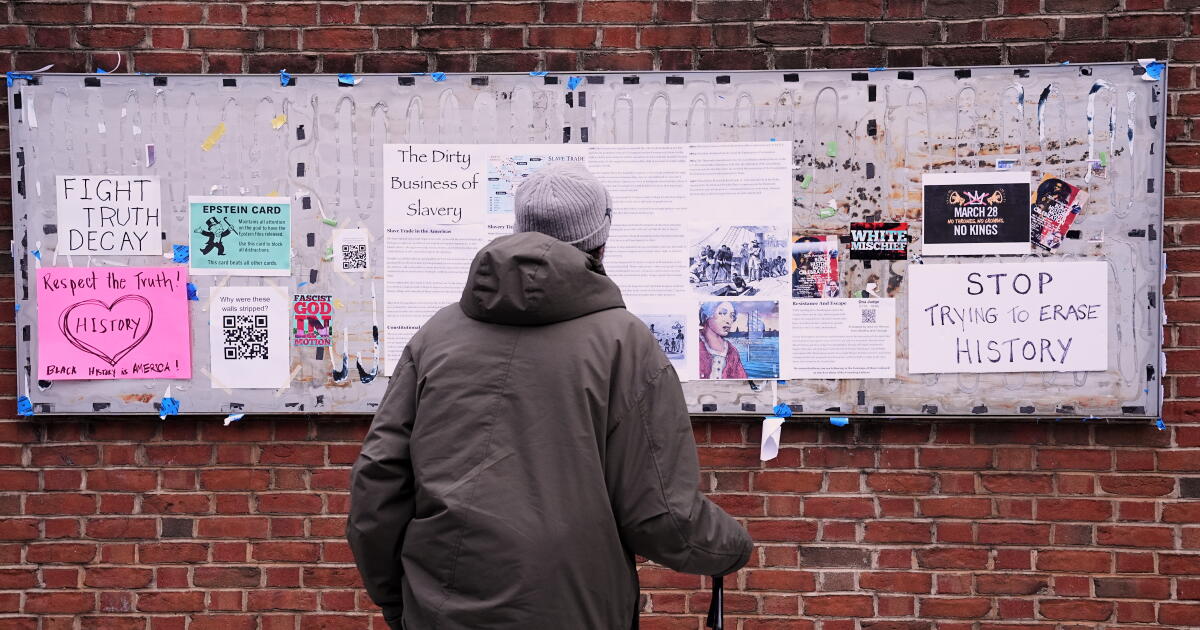
PHILADELPHIA — A federal judge on Monday ordered the Trump administration to restore exhibits on slavery that the National Park Service had removed from the President’s House last month.
U.S. District Judge Cynthia M. Rufe’s ruling requires the federal government to restore the site “to its physical status as of January 21, 2026,” the day before the exhibits were removed.
The order did not set a deadline for restoration, but required the National Park Service to take steps to maintain the site and ensure the safety of the exhibits that memorialize the enslaved people who lived in George Washington’s Philadelphia home during his presidency.
Rufe, a George W. Bush appointee, compared the Trump administration’s argument that it can unilaterally control the exhibits in national parks to the Ministry of Truth in George Orwell’s “1984,” a novel about a dystopian totalitarian regime.
“This Court is now asked to determine whether the federal government has the power it claims — to dissemble and disassemble historical truths when it has some domain over historical facts,” Rufe wrote. “It does not.”
The administration’s attempt to alter the President’s House is part of a nationwide initiative to remove content displays from national parks that “inappropriately disparage Americans past or living,” under orders issued by President Trump and Interior Secretary Doug Burgum last year. For instance, Park Service employees removed signage from the Grand Canyon about the mistreatment of Native Americans.
Philadelphia filed a federal lawsuit against Burgum, acting National Park Service Director Jessica Bowron and their agencies the day the exhibits were dismantled.
The federal government has the option to appeal the judge’s order. The Interior Department, National Park Service and U.S. Attorney’s Office did not immediately comment on the ruling, which fell on Presidents’ Day, a federal holiday.
During a hearing last month, Rufe called the argument that a president could unilaterally change the exhibits displayed in national parks “horrifying” and “dangerous.” She ordered the federal government to ensure the panels’ safekeeping after an inspection and a visit to the President’s House earlier this month.
Monday’s ruling followed an updated injunction request from the city that asked for the full restoration of the site — not merely that the exhibits be maintained safely. In response, the federal government’s brief argued that the National Park Service has discretion over the exhibits and that the city’s lawsuit should be dismissed on procedural grounds.
The federal government also argued there could be no irreparable harm from the removal of the exhibits because they are documented online and replacement panels would cost $20,000.
But the judge found the city met its burden.
“If the President’s House is left dismembered throughout this dispute, so too is the history it recounts, and the City’s relationship to that history,” Rufe wrote.
The injunction itself does not resolve the underlying lawsuit, and is in effect for the duration of the litigation.
Avenging the Ancestors Coalition, the main advocacy organization leading the fight to protect the President’s House, was a little less than an hour into its Presidents’ Day event at the site when leaders got wind of their victory.
Michael Coard, a leader of the Black-led advocacy group that helped develop the site before it opened in 2010, told the crowd of about 100 people gathered at the President’s House: “Thanks to you all, your presence and your activism, I have great news: We just won in federal court.”
But the fight is not over, advocates said, with Coard expecting the Trump administration to appeal or ignore any future rulings.
“This is a lawless administration. The people are going to have to take over to force them to do the right thing,” Coard said.
Gutman and Roth write for the Philadelphia Inquirer.

PHILADELPHIA — A federal judge on Monday ordered the Trump administration to restore exhibits on slavery that the National Park Service had removed from the President’s House last month.
U.S. District Judge Cynthia M. Rufe’s ruling requires the federal government to restore the site “to its physical status as of January 21, 2026,” the day before the exhibits were removed.
The order did not set a deadline for restoration, but required the National Park Service to take steps to maintain the site and ensure the safety of the exhibits that memorialize the enslaved people who lived in George Washington’s Philadelphia home during his presidency.
Rufe, a George W. Bush appointee, compared the Trump administration’s argument that it can unilaterally control the exhibits in national parks to the Ministry of Truth in George Orwell’s “1984,” a novel about a dystopian totalitarian regime.
“This Court is now asked to determine whether the federal government has the power it claims — to dissemble and disassemble historical truths when it has some domain over historical facts,” Rufe wrote. “It does not.”
The administration’s attempt to alter the President’s House is part of a nationwide initiative to remove content displays from national parks that “inappropriately disparage Americans past or living,” under orders issued by President Trump and Interior Secretary Doug Burgum last year. For instance, Park Service employees removed signage from the Grand Canyon about the mistreatment of Native Americans.
Philadelphia filed a federal lawsuit against Burgum, acting National Park Service Director Jessica Bowron and their agencies the day the exhibits were dismantled.
The federal government has the option to appeal the judge’s order. The Interior Department, National Park Service and U.S. Attorney’s Office did not immediately comment on the ruling, which fell on Presidents’ Day, a federal holiday.
During a hearing last month, Rufe called the argument that a president could unilaterally change the exhibits displayed in national parks “horrifying” and “dangerous.” She ordered the federal government to ensure the panels’ safekeeping after an inspection and a visit to the President’s House earlier this month.
Monday’s ruling followed an updated injunction request from the city that asked for the full restoration of the site — not merely that the exhibits be maintained safely. In response, the federal government’s brief argued that the National Park Service has discretion over the exhibits and that the city’s lawsuit should be dismissed on procedural grounds.
The federal government also argued there could be no irreparable harm from the removal of the exhibits because they are documented online and replacement panels would cost $20,000.
But the judge found the city met its burden.
“If the President’s House is left dismembered throughout this dispute, so too is the history it recounts, and the City’s relationship to that history,” Rufe wrote.
The injunction itself does not resolve the underlying lawsuit, and is in effect for the duration of the litigation.
Avenging the Ancestors Coalition, the main advocacy organization leading the fight to protect the President’s House, was a little less than an hour into its Presidents’ Day event at the site when leaders got wind of their victory.
Michael Coard, a leader of the Black-led advocacy group that helped develop the site before it opened in 2010, told the crowd of about 100 people gathered at the President’s House: “Thanks to you all, your presence and your activism, I have great news: We just won in federal court.”
But the fight is not over, advocates said, with Coard expecting the Trump administration to appeal or ignore any future rulings.
“This is a lawless administration. The people are going to have to take over to force them to do the right thing,” Coard said.
Gutman and Roth write for the Philadelphia Inquirer.

PHILADELPHIA — A federal judge on Monday ordered the Trump administration to restore exhibits on slavery that the National Park Service had removed from the President’s House last month.
U.S. District Judge Cynthia M. Rufe’s ruling requires the federal government to restore the site “to its physical status as of January 21, 2026,” the day before the exhibits were removed.
The order did not set a deadline for restoration, but required the National Park Service to take steps to maintain the site and ensure the safety of the exhibits that memorialize the enslaved people who lived in George Washington’s Philadelphia home during his presidency.
Rufe, a George W. Bush appointee, compared the Trump administration’s argument that it can unilaterally control the exhibits in national parks to the Ministry of Truth in George Orwell’s “1984,” a novel about a dystopian totalitarian regime.
“This Court is now asked to determine whether the federal government has the power it claims — to dissemble and disassemble historical truths when it has some domain over historical facts,” Rufe wrote. “It does not.”
The administration’s attempt to alter the President’s House is part of a nationwide initiative to remove content displays from national parks that “inappropriately disparage Americans past or living,” under orders issued by President Trump and Interior Secretary Doug Burgum last year. For instance, Park Service employees removed signage from the Grand Canyon about the mistreatment of Native Americans.
Philadelphia filed a federal lawsuit against Burgum, acting National Park Service Director Jessica Bowron and their agencies the day the exhibits were dismantled.
The federal government has the option to appeal the judge’s order. The Interior Department, National Park Service and U.S. Attorney’s Office did not immediately comment on the ruling, which fell on Presidents’ Day, a federal holiday.
During a hearing last month, Rufe called the argument that a president could unilaterally change the exhibits displayed in national parks “horrifying” and “dangerous.” She ordered the federal government to ensure the panels’ safekeeping after an inspection and a visit to the President’s House earlier this month.
Monday’s ruling followed an updated injunction request from the city that asked for the full restoration of the site — not merely that the exhibits be maintained safely. In response, the federal government’s brief argued that the National Park Service has discretion over the exhibits and that the city’s lawsuit should be dismissed on procedural grounds.
The federal government also argued there could be no irreparable harm from the removal of the exhibits because they are documented online and replacement panels would cost $20,000.
But the judge found the city met its burden.
“If the President’s House is left dismembered throughout this dispute, so too is the history it recounts, and the City’s relationship to that history,” Rufe wrote.
The injunction itself does not resolve the underlying lawsuit, and is in effect for the duration of the litigation.
Avenging the Ancestors Coalition, the main advocacy organization leading the fight to protect the President’s House, was a little less than an hour into its Presidents’ Day event at the site when leaders got wind of their victory.
Michael Coard, a leader of the Black-led advocacy group that helped develop the site before it opened in 2010, told the crowd of about 100 people gathered at the President’s House: “Thanks to you all, your presence and your activism, I have great news: We just won in federal court.”
But the fight is not over, advocates said, with Coard expecting the Trump administration to appeal or ignore any future rulings.
“This is a lawless administration. The people are going to have to take over to force them to do the right thing,” Coard said.
Gutman and Roth write for the Philadelphia Inquirer.

PHILADELPHIA — A federal judge on Monday ordered the Trump administration to restore exhibits on slavery that the National Park Service had removed from the President’s House last month.
U.S. District Judge Cynthia M. Rufe’s ruling requires the federal government to restore the site “to its physical status as of January 21, 2026,” the day before the exhibits were removed.
The order did not set a deadline for restoration, but required the National Park Service to take steps to maintain the site and ensure the safety of the exhibits that memorialize the enslaved people who lived in George Washington’s Philadelphia home during his presidency.
Rufe, a George W. Bush appointee, compared the Trump administration’s argument that it can unilaterally control the exhibits in national parks to the Ministry of Truth in George Orwell’s “1984,” a novel about a dystopian totalitarian regime.
“This Court is now asked to determine whether the federal government has the power it claims — to dissemble and disassemble historical truths when it has some domain over historical facts,” Rufe wrote. “It does not.”
The administration’s attempt to alter the President’s House is part of a nationwide initiative to remove content displays from national parks that “inappropriately disparage Americans past or living,” under orders issued by President Trump and Interior Secretary Doug Burgum last year. For instance, Park Service employees removed signage from the Grand Canyon about the mistreatment of Native Americans.
Philadelphia filed a federal lawsuit against Burgum, acting National Park Service Director Jessica Bowron and their agencies the day the exhibits were dismantled.
The federal government has the option to appeal the judge’s order. The Interior Department, National Park Service and U.S. Attorney’s Office did not immediately comment on the ruling, which fell on Presidents’ Day, a federal holiday.
During a hearing last month, Rufe called the argument that a president could unilaterally change the exhibits displayed in national parks “horrifying” and “dangerous.” She ordered the federal government to ensure the panels’ safekeeping after an inspection and a visit to the President’s House earlier this month.
Monday’s ruling followed an updated injunction request from the city that asked for the full restoration of the site — not merely that the exhibits be maintained safely. In response, the federal government’s brief argued that the National Park Service has discretion over the exhibits and that the city’s lawsuit should be dismissed on procedural grounds.
The federal government also argued there could be no irreparable harm from the removal of the exhibits because they are documented online and replacement panels would cost $20,000.
But the judge found the city met its burden.
“If the President’s House is left dismembered throughout this dispute, so too is the history it recounts, and the City’s relationship to that history,” Rufe wrote.
The injunction itself does not resolve the underlying lawsuit, and is in effect for the duration of the litigation.
Avenging the Ancestors Coalition, the main advocacy organization leading the fight to protect the President’s House, was a little less than an hour into its Presidents’ Day event at the site when leaders got wind of their victory.
Michael Coard, a leader of the Black-led advocacy group that helped develop the site before it opened in 2010, told the crowd of about 100 people gathered at the President’s House: “Thanks to you all, your presence and your activism, I have great news: We just won in federal court.”
But the fight is not over, advocates said, with Coard expecting the Trump administration to appeal or ignore any future rulings.
“This is a lawless administration. The people are going to have to take over to force them to do the right thing,” Coard said.
Gutman and Roth write for the Philadelphia Inquirer.

PHILADELPHIA — A federal judge on Monday ordered the Trump administration to restore exhibits on slavery that the National Park Service had removed from the President’s House last month.
U.S. District Judge Cynthia M. Rufe’s ruling requires the federal government to restore the site “to its physical status as of January 21, 2026,” the day before the exhibits were removed.
The order did not set a deadline for restoration, but required the National Park Service to take steps to maintain the site and ensure the safety of the exhibits that memorialize the enslaved people who lived in George Washington’s Philadelphia home during his presidency.
Rufe, a George W. Bush appointee, compared the Trump administration’s argument that it can unilaterally control the exhibits in national parks to the Ministry of Truth in George Orwell’s “1984,” a novel about a dystopian totalitarian regime.
“This Court is now asked to determine whether the federal government has the power it claims — to dissemble and disassemble historical truths when it has some domain over historical facts,” Rufe wrote. “It does not.”
The administration’s attempt to alter the President’s House is part of a nationwide initiative to remove content displays from national parks that “inappropriately disparage Americans past or living,” under orders issued by President Trump and Interior Secretary Doug Burgum last year. For instance, Park Service employees removed signage from the Grand Canyon about the mistreatment of Native Americans.
Philadelphia filed a federal lawsuit against Burgum, acting National Park Service Director Jessica Bowron and their agencies the day the exhibits were dismantled.
The federal government has the option to appeal the judge’s order. The Interior Department, National Park Service and U.S. Attorney’s Office did not immediately comment on the ruling, which fell on Presidents’ Day, a federal holiday.
During a hearing last month, Rufe called the argument that a president could unilaterally change the exhibits displayed in national parks “horrifying” and “dangerous.” She ordered the federal government to ensure the panels’ safekeeping after an inspection and a visit to the President’s House earlier this month.
Monday’s ruling followed an updated injunction request from the city that asked for the full restoration of the site — not merely that the exhibits be maintained safely. In response, the federal government’s brief argued that the National Park Service has discretion over the exhibits and that the city’s lawsuit should be dismissed on procedural grounds.
The federal government also argued there could be no irreparable harm from the removal of the exhibits because they are documented online and replacement panels would cost $20,000.
But the judge found the city met its burden.
“If the President’s House is left dismembered throughout this dispute, so too is the history it recounts, and the City’s relationship to that history,” Rufe wrote.
The injunction itself does not resolve the underlying lawsuit, and is in effect for the duration of the litigation.
Avenging the Ancestors Coalition, the main advocacy organization leading the fight to protect the President’s House, was a little less than an hour into its Presidents’ Day event at the site when leaders got wind of their victory.
Michael Coard, a leader of the Black-led advocacy group that helped develop the site before it opened in 2010, told the crowd of about 100 people gathered at the President’s House: “Thanks to you all, your presence and your activism, I have great news: We just won in federal court.”
But the fight is not over, advocates said, with Coard expecting the Trump administration to appeal or ignore any future rulings.
“This is a lawless administration. The people are going to have to take over to force them to do the right thing,” Coard said.
Gutman and Roth write for the Philadelphia Inquirer.

