


Washington DC
New York
Toronto
Distribution: (800) 510 9863
Press ID
  • Login
Binghamton Herald
Advertisement
Sunday, May 17, 2026
  • Home
  • World
  • Politics
  • Business
  • Technology
  • Culture
  • Health
  • Entertainment
  • Trending
No Result
View All Result
Binghamton Herald
No Result
View All Result
Home World

Jordan Chiles’ bronze medal snatched by head of panel who represents Romanian interests

by Binghamton Herald Report
August 14, 2024
in World
Share on FacebookShare on Twitter

Like any world-class gymnast, Jordan Chiles is familiar with contortions and flips. But what she has endured since giving her all in the floor exercise at the Paris Olympics makes the most difficult routine seem like child’s play.

The latest: It appears that the head of the three-person Court of Arbitration for Sport panel that snatched her bronze medal has a conflict of interest because he is a lawyer who has represented Romanian interests for years.

Hamid G. Gharavi, president of the panel that also included Philippe Sands and Song Lu, is currently serving as legal counsel to Romania in disputes at the World Bank’s International Centre for the Settlement of Investment Disputes, according to documents first reported by the International Institute for Conflict Prevention & Resolution. Gharavi’s work on behalf of Romania dates back at least to 2011, according to his resume.

USA Gymnastics said it had been notified by the court that under its rules, the decision cannot be reconsidered “even when conclusive new evidence is presented.” The CAS verdict was cloaked in secrecy and the court published a terse, one-page statement confirming the decision, saying a detailed document outlining the reasoning behind the outcome eventually will be distributed.

Nevertheless, USAG said it would “continue to pursue every possible avenue and appeal process, including to the Swiss Federal Tribunal, to ensure the just scoring, placement, and medal award for Jordan.”

There is precedent for a CAS decision to be overturned because of bias. In 2021, the Swiss Federal Tribunal — the only body that can appeal a decision by CAS — requested a new hearing for a doping case involving Chinese swimmer Sun Yang, a three-time Olympic champion, because one of the panelists may have had an anti-Chinese bias based on his social media posts. The Swiss tribunal upheld the challenge and lifted Yang’s eight-year ban from swimming.

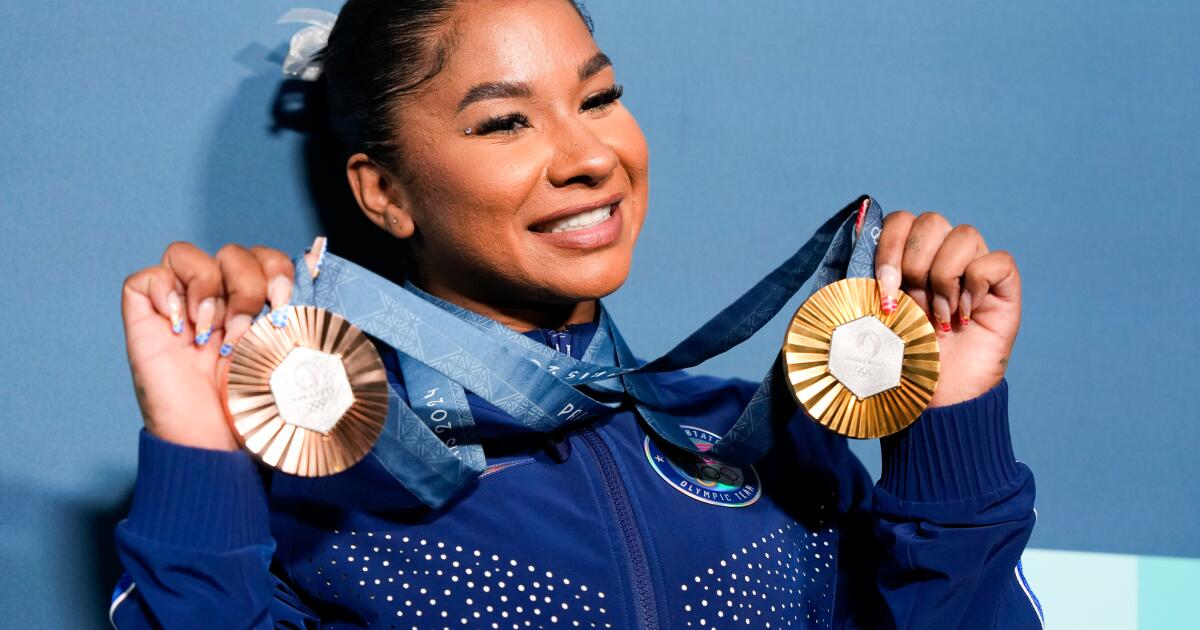
Jordan Chiles’ gold and bronze medals from the Paris Olympics.

(Charlie Riedel / Associated Press)

The Chiles case does not allege doping or cheating. The bronze medal in the floor exercise at the Paris Olympics was mistakenly denied her because judges calculated her score wrong, then awarded to her, then taken away and given to Romanian Ana Barbosu because CAS ruled the U.S. appeal was filed four seconds late.

The U.S. says it has video evidence that the appeal was filed within the allowed one-minute window, but that would fall under “new evidence” that the CAS panel refuses to consider. The Swiss Federal Tribunal only considers appeals that allege breaches of process, and whether Ghavari’s conflict of interest with respect to Romania falls into that category is unknown.

What is clear is that the appeal process is opaque. Experts say a foundation of arbitration is that members of a panel should be unbiased.

“The idea that those who decide disputes must be free of bias and able to render an award in favor of either side is a cornerstone of arbitration,” wrote Katherine Simpson, a professor at Cornell University who teaches conflict resolution. “This matter puts on the global stage the question of what, if any, restrictions are or must be placed on CAS arbitrators with respect to their independence and impartiality in the eyes of the parties.

“An arbitration is only as good as the arbitrators. There would appear to be a need for closer examination of this case, for the benefit of both Jordan Chiles and Ana Maria Barbosu.”

The Romanian Gymnastics Federation says it pushed for the bronze medal to be shared by Chiles, Barbosu and Romanian fourth-place finisher Sabrina Maneca-Voinea, whom the federation alleged was unfairly penalized for stepping out of bounds.

The Romanian federation and USAG also called for social media attacks against the gymnasts to cease. Chiles, who is Black, has been the target of a barrage of racist comments on social media. Her mother and sister responded in her defense and Chiles posted a trio of broken hearts on her Instagram story Saturday, announcing that she will be off social media for the time being for her mental health.

USAG issued a statement saying Chiles has been on the receiving end of “consistent, utterly baseless and extremely hurtful attacks on social media. … No athlete should be subject to such treatment. … We commend Jordan for conducting herself with integrity both on and off the competition floor, and we continue to stand by and support her.”

Like any world-class gymnast, Jordan Chiles is familiar with contortions and flips. But what she has endured since giving her all in the floor exercise at the Paris Olympics makes the most difficult routine seem like child’s play.

The latest: It appears that the head of the three-person Court of Arbitration for Sport panel that snatched her bronze medal has a conflict of interest because he is a lawyer who has represented Romanian interests for years.

Hamid G. Gharavi, president of the panel that also included Philippe Sands and Song Lu, is currently serving as legal counsel to Romania in disputes at the World Bank’s International Centre for the Settlement of Investment Disputes, according to documents first reported by the International Institute for Conflict Prevention & Resolution. Gharavi’s work on behalf of Romania dates back at least to 2011, according to his resume.

USA Gymnastics said it had been notified by the court that under its rules, the decision cannot be reconsidered “even when conclusive new evidence is presented.” The CAS verdict was cloaked in secrecy and the court published a terse, one-page statement confirming the decision, saying a detailed document outlining the reasoning behind the outcome eventually will be distributed.

Nevertheless, USAG said it would “continue to pursue every possible avenue and appeal process, including to the Swiss Federal Tribunal, to ensure the just scoring, placement, and medal award for Jordan.”

There is precedent for a CAS decision to be overturned because of bias. In 2021, the Swiss Federal Tribunal — the only body that can appeal a decision by CAS — requested a new hearing for a doping case involving Chinese swimmer Sun Yang, a three-time Olympic champion, because one of the panelists may have had an anti-Chinese bias based on his social media posts. The Swiss tribunal upheld the challenge and lifted Yang’s eight-year ban from swimming.

Jordan Chiles’ gold and bronze medals from the Paris Olympics.

(Charlie Riedel / Associated Press)

The Chiles case does not allege doping or cheating. The bronze medal in the floor exercise at the Paris Olympics was mistakenly denied her because judges calculated her score wrong, then awarded to her, then taken away and given to Romanian Ana Barbosu because CAS ruled the U.S. appeal was filed four seconds late.

The U.S. says it has video evidence that the appeal was filed within the allowed one-minute window, but that would fall under “new evidence” that the CAS panel refuses to consider. The Swiss Federal Tribunal only considers appeals that allege breaches of process, and whether Ghavari’s conflict of interest with respect to Romania falls into that category is unknown.

What is clear is that the appeal process is opaque. Experts say a foundation of arbitration is that members of a panel should be unbiased.

“The idea that those who decide disputes must be free of bias and able to render an award in favor of either side is a cornerstone of arbitration,” wrote Katherine Simpson, a professor at Cornell University who teaches conflict resolution. “This matter puts on the global stage the question of what, if any, restrictions are or must be placed on CAS arbitrators with respect to their independence and impartiality in the eyes of the parties.

“An arbitration is only as good as the arbitrators. There would appear to be a need for closer examination of this case, for the benefit of both Jordan Chiles and Ana Maria Barbosu.”

The Romanian Gymnastics Federation says it pushed for the bronze medal to be shared by Chiles, Barbosu and Romanian fourth-place finisher Sabrina Maneca-Voinea, whom the federation alleged was unfairly penalized for stepping out of bounds.

The Romanian federation and USAG also called for social media attacks against the gymnasts to cease. Chiles, who is Black, has been the target of a barrage of racist comments on social media. Her mother and sister responded in her defense and Chiles posted a trio of broken hearts on her Instagram story Saturday, announcing that she will be off social media for the time being for her mental health.

USAG issued a statement saying Chiles has been on the receiving end of “consistent, utterly baseless and extremely hurtful attacks on social media. … No athlete should be subject to such treatment. … We commend Jordan for conducting herself with integrity both on and off the competition floor, and we continue to stand by and support her.”

Like any world-class gymnast, Jordan Chiles is familiar with contortions and flips. But what she has endured since giving her all in the floor exercise at the Paris Olympics makes the most difficult routine seem like child’s play.

The latest: It appears that the head of the three-person Court of Arbitration for Sport panel that snatched her bronze medal has a conflict of interest because he is a lawyer who has represented Romanian interests for years.

Hamid G. Gharavi, president of the panel that also included Philippe Sands and Song Lu, is currently serving as legal counsel to Romania in disputes at the World Bank’s International Centre for the Settlement of Investment Disputes, according to documents first reported by the International Institute for Conflict Prevention & Resolution. Gharavi’s work on behalf of Romania dates back at least to 2011, according to his resume.

USA Gymnastics said it had been notified by the court that under its rules, the decision cannot be reconsidered “even when conclusive new evidence is presented.” The CAS verdict was cloaked in secrecy and the court published a terse, one-page statement confirming the decision, saying a detailed document outlining the reasoning behind the outcome eventually will be distributed.

Nevertheless, USAG said it would “continue to pursue every possible avenue and appeal process, including to the Swiss Federal Tribunal, to ensure the just scoring, placement, and medal award for Jordan.”

There is precedent for a CAS decision to be overturned because of bias. In 2021, the Swiss Federal Tribunal — the only body that can appeal a decision by CAS — requested a new hearing for a doping case involving Chinese swimmer Sun Yang, a three-time Olympic champion, because one of the panelists may have had an anti-Chinese bias based on his social media posts. The Swiss tribunal upheld the challenge and lifted Yang’s eight-year ban from swimming.

Jordan Chiles’ gold and bronze medals from the Paris Olympics.

(Charlie Riedel / Associated Press)

The Chiles case does not allege doping or cheating. The bronze medal in the floor exercise at the Paris Olympics was mistakenly denied her because judges calculated her score wrong, then awarded to her, then taken away and given to Romanian Ana Barbosu because CAS ruled the U.S. appeal was filed four seconds late.

The U.S. says it has video evidence that the appeal was filed within the allowed one-minute window, but that would fall under “new evidence” that the CAS panel refuses to consider. The Swiss Federal Tribunal only considers appeals that allege breaches of process, and whether Ghavari’s conflict of interest with respect to Romania falls into that category is unknown.

What is clear is that the appeal process is opaque. Experts say a foundation of arbitration is that members of a panel should be unbiased.

“The idea that those who decide disputes must be free of bias and able to render an award in favor of either side is a cornerstone of arbitration,” wrote Katherine Simpson, a professor at Cornell University who teaches conflict resolution. “This matter puts on the global stage the question of what, if any, restrictions are or must be placed on CAS arbitrators with respect to their independence and impartiality in the eyes of the parties.

“An arbitration is only as good as the arbitrators. There would appear to be a need for closer examination of this case, for the benefit of both Jordan Chiles and Ana Maria Barbosu.”

The Romanian Gymnastics Federation says it pushed for the bronze medal to be shared by Chiles, Barbosu and Romanian fourth-place finisher Sabrina Maneca-Voinea, whom the federation alleged was unfairly penalized for stepping out of bounds.

The Romanian federation and USAG also called for social media attacks against the gymnasts to cease. Chiles, who is Black, has been the target of a barrage of racist comments on social media. Her mother and sister responded in her defense and Chiles posted a trio of broken hearts on her Instagram story Saturday, announcing that she will be off social media for the time being for her mental health.

USAG issued a statement saying Chiles has been on the receiving end of “consistent, utterly baseless and extremely hurtful attacks on social media. … No athlete should be subject to such treatment. … We commend Jordan for conducting herself with integrity both on and off the competition floor, and we continue to stand by and support her.”

Like any world-class gymnast, Jordan Chiles is familiar with contortions and flips. But what she has endured since giving her all in the floor exercise at the Paris Olympics makes the most difficult routine seem like child’s play.

The latest: It appears that the head of the three-person Court of Arbitration for Sport panel that snatched her bronze medal has a conflict of interest because he is a lawyer who has represented Romanian interests for years.

Hamid G. Gharavi, president of the panel that also included Philippe Sands and Song Lu, is currently serving as legal counsel to Romania in disputes at the World Bank’s International Centre for the Settlement of Investment Disputes, according to documents first reported by the International Institute for Conflict Prevention & Resolution. Gharavi’s work on behalf of Romania dates back at least to 2011, according to his resume.

USA Gymnastics said it had been notified by the court that under its rules, the decision cannot be reconsidered “even when conclusive new evidence is presented.” The CAS verdict was cloaked in secrecy and the court published a terse, one-page statement confirming the decision, saying a detailed document outlining the reasoning behind the outcome eventually will be distributed.

Nevertheless, USAG said it would “continue to pursue every possible avenue and appeal process, including to the Swiss Federal Tribunal, to ensure the just scoring, placement, and medal award for Jordan.”

There is precedent for a CAS decision to be overturned because of bias. In 2021, the Swiss Federal Tribunal — the only body that can appeal a decision by CAS — requested a new hearing for a doping case involving Chinese swimmer Sun Yang, a three-time Olympic champion, because one of the panelists may have had an anti-Chinese bias based on his social media posts. The Swiss tribunal upheld the challenge and lifted Yang’s eight-year ban from swimming.

Jordan Chiles’ gold and bronze medals from the Paris Olympics.

(Charlie Riedel / Associated Press)

The Chiles case does not allege doping or cheating. The bronze medal in the floor exercise at the Paris Olympics was mistakenly denied her because judges calculated her score wrong, then awarded to her, then taken away and given to Romanian Ana Barbosu because CAS ruled the U.S. appeal was filed four seconds late.

The U.S. says it has video evidence that the appeal was filed within the allowed one-minute window, but that would fall under “new evidence” that the CAS panel refuses to consider. The Swiss Federal Tribunal only considers appeals that allege breaches of process, and whether Ghavari’s conflict of interest with respect to Romania falls into that category is unknown.

What is clear is that the appeal process is opaque. Experts say a foundation of arbitration is that members of a panel should be unbiased.

“The idea that those who decide disputes must be free of bias and able to render an award in favor of either side is a cornerstone of arbitration,” wrote Katherine Simpson, a professor at Cornell University who teaches conflict resolution. “This matter puts on the global stage the question of what, if any, restrictions are or must be placed on CAS arbitrators with respect to their independence and impartiality in the eyes of the parties.

“An arbitration is only as good as the arbitrators. There would appear to be a need for closer examination of this case, for the benefit of both Jordan Chiles and Ana Maria Barbosu.”

The Romanian Gymnastics Federation says it pushed for the bronze medal to be shared by Chiles, Barbosu and Romanian fourth-place finisher Sabrina Maneca-Voinea, whom the federation alleged was unfairly penalized for stepping out of bounds.

The Romanian federation and USAG also called for social media attacks against the gymnasts to cease. Chiles, who is Black, has been the target of a barrage of racist comments on social media. Her mother and sister responded in her defense and Chiles posted a trio of broken hearts on her Instagram story Saturday, announcing that she will be off social media for the time being for her mental health.

USAG issued a statement saying Chiles has been on the receiving end of “consistent, utterly baseless and extremely hurtful attacks on social media. … No athlete should be subject to such treatment. … We commend Jordan for conducting herself with integrity both on and off the competition floor, and we continue to stand by and support her.”


Like any world-class gymnast, Jordan Chiles is familiar with contortions and flips. But what she has endured since giving her all in the floor exercise at the Paris Olympics makes the most difficult routine seem like child’s play.

The latest: It appears that the head of the three-person Court of Arbitration for Sport panel that snatched her bronze medal has a conflict of interest because he is a lawyer who has represented Romanian interests for years.

Hamid G. Gharavi, president of the panel that also included Philippe Sands and Song Lu, is currently serving as legal counsel to Romania in disputes at the World Bank’s International Centre for the Settlement of Investment Disputes, according to documents first reported by the International Institute for Conflict Prevention & Resolution. Gharavi’s work on behalf of Romania dates back at least to 2011, according to his resume.

USA Gymnastics said it had been notified by the court that under its rules, the decision cannot be reconsidered “even when conclusive new evidence is presented.” The CAS verdict was cloaked in secrecy and the court published a terse, one-page statement confirming the decision, saying a detailed document outlining the reasoning behind the outcome eventually will be distributed.

Nevertheless, USAG said it would “continue to pursue every possible avenue and appeal process, including to the Swiss Federal Tribunal, to ensure the just scoring, placement, and medal award for Jordan.”

There is precedent for a CAS decision to be overturned because of bias. In 2021, the Swiss Federal Tribunal — the only body that can appeal a decision by CAS — requested a new hearing for a doping case involving Chinese swimmer Sun Yang, a three-time Olympic champion, because one of the panelists may have had an anti-Chinese bias based on his social media posts. The Swiss tribunal upheld the challenge and lifted Yang’s eight-year ban from swimming.

Jordan Chiles’ gold and bronze medals from the Paris Olympics.

(Charlie Riedel / Associated Press)

The Chiles case does not allege doping or cheating. The bronze medal in the floor exercise at the Paris Olympics was mistakenly denied her because judges calculated her score wrong, then awarded to her, then taken away and given to Romanian Ana Barbosu because CAS ruled the U.S. appeal was filed four seconds late.

The U.S. says it has video evidence that the appeal was filed within the allowed one-minute window, but that would fall under “new evidence” that the CAS panel refuses to consider. The Swiss Federal Tribunal only considers appeals that allege breaches of process, and whether Ghavari’s conflict of interest with respect to Romania falls into that category is unknown.

What is clear is that the appeal process is opaque. Experts say a foundation of arbitration is that members of a panel should be unbiased.

“The idea that those who decide disputes must be free of bias and able to render an award in favor of either side is a cornerstone of arbitration,” wrote Katherine Simpson, a professor at Cornell University who teaches conflict resolution. “This matter puts on the global stage the question of what, if any, restrictions are or must be placed on CAS arbitrators with respect to their independence and impartiality in the eyes of the parties.

“An arbitration is only as good as the arbitrators. There would appear to be a need for closer examination of this case, for the benefit of both Jordan Chiles and Ana Maria Barbosu.”

The Romanian Gymnastics Federation says it pushed for the bronze medal to be shared by Chiles, Barbosu and Romanian fourth-place finisher Sabrina Maneca-Voinea, whom the federation alleged was unfairly penalized for stepping out of bounds.

The Romanian federation and USAG also called for social media attacks against the gymnasts to cease. Chiles, who is Black, has been the target of a barrage of racist comments on social media. Her mother and sister responded in her defense and Chiles posted a trio of broken hearts on her Instagram story Saturday, announcing that she will be off social media for the time being for her mental health.

USAG issued a statement saying Chiles has been on the receiving end of “consistent, utterly baseless and extremely hurtful attacks on social media. … No athlete should be subject to such treatment. … We commend Jordan for conducting herself with integrity both on and off the competition floor, and we continue to stand by and support her.”

Like any world-class gymnast, Jordan Chiles is familiar with contortions and flips. But what she has endured since giving her all in the floor exercise at the Paris Olympics makes the most difficult routine seem like child’s play.

The latest: It appears that the head of the three-person Court of Arbitration for Sport panel that snatched her bronze medal has a conflict of interest because he is a lawyer who has represented Romanian interests for years.

Hamid G. Gharavi, president of the panel that also included Philippe Sands and Song Lu, is currently serving as legal counsel to Romania in disputes at the World Bank’s International Centre for the Settlement of Investment Disputes, according to documents first reported by the International Institute for Conflict Prevention & Resolution. Gharavi’s work on behalf of Romania dates back at least to 2011, according to his resume.

USA Gymnastics said it had been notified by the court that under its rules, the decision cannot be reconsidered “even when conclusive new evidence is presented.” The CAS verdict was cloaked in secrecy and the court published a terse, one-page statement confirming the decision, saying a detailed document outlining the reasoning behind the outcome eventually will be distributed.

Nevertheless, USAG said it would “continue to pursue every possible avenue and appeal process, including to the Swiss Federal Tribunal, to ensure the just scoring, placement, and medal award for Jordan.”

There is precedent for a CAS decision to be overturned because of bias. In 2021, the Swiss Federal Tribunal — the only body that can appeal a decision by CAS — requested a new hearing for a doping case involving Chinese swimmer Sun Yang, a three-time Olympic champion, because one of the panelists may have had an anti-Chinese bias based on his social media posts. The Swiss tribunal upheld the challenge and lifted Yang’s eight-year ban from swimming.

Jordan Chiles’ gold and bronze medals from the Paris Olympics.

(Charlie Riedel / Associated Press)

The Chiles case does not allege doping or cheating. The bronze medal in the floor exercise at the Paris Olympics was mistakenly denied her because judges calculated her score wrong, then awarded to her, then taken away and given to Romanian Ana Barbosu because CAS ruled the U.S. appeal was filed four seconds late.

The U.S. says it has video evidence that the appeal was filed within the allowed one-minute window, but that would fall under “new evidence” that the CAS panel refuses to consider. The Swiss Federal Tribunal only considers appeals that allege breaches of process, and whether Ghavari’s conflict of interest with respect to Romania falls into that category is unknown.

What is clear is that the appeal process is opaque. Experts say a foundation of arbitration is that members of a panel should be unbiased.

“The idea that those who decide disputes must be free of bias and able to render an award in favor of either side is a cornerstone of arbitration,” wrote Katherine Simpson, a professor at Cornell University who teaches conflict resolution. “This matter puts on the global stage the question of what, if any, restrictions are or must be placed on CAS arbitrators with respect to their independence and impartiality in the eyes of the parties.

“An arbitration is only as good as the arbitrators. There would appear to be a need for closer examination of this case, for the benefit of both Jordan Chiles and Ana Maria Barbosu.”

The Romanian Gymnastics Federation says it pushed for the bronze medal to be shared by Chiles, Barbosu and Romanian fourth-place finisher Sabrina Maneca-Voinea, whom the federation alleged was unfairly penalized for stepping out of bounds.

The Romanian federation and USAG also called for social media attacks against the gymnasts to cease. Chiles, who is Black, has been the target of a barrage of racist comments on social media. Her mother and sister responded in her defense and Chiles posted a trio of broken hearts on her Instagram story Saturday, announcing that she will be off social media for the time being for her mental health.

USAG issued a statement saying Chiles has been on the receiving end of “consistent, utterly baseless and extremely hurtful attacks on social media. … No athlete should be subject to such treatment. … We commend Jordan for conducting herself with integrity both on and off the competition floor, and we continue to stand by and support her.”

Like any world-class gymnast, Jordan Chiles is familiar with contortions and flips. But what she has endured since giving her all in the floor exercise at the Paris Olympics makes the most difficult routine seem like child’s play.

The latest: It appears that the head of the three-person Court of Arbitration for Sport panel that snatched her bronze medal has a conflict of interest because he is a lawyer who has represented Romanian interests for years.

Hamid G. Gharavi, president of the panel that also included Philippe Sands and Song Lu, is currently serving as legal counsel to Romania in disputes at the World Bank’s International Centre for the Settlement of Investment Disputes, according to documents first reported by the International Institute for Conflict Prevention & Resolution. Gharavi’s work on behalf of Romania dates back at least to 2011, according to his resume.

USA Gymnastics said it had been notified by the court that under its rules, the decision cannot be reconsidered “even when conclusive new evidence is presented.” The CAS verdict was cloaked in secrecy and the court published a terse, one-page statement confirming the decision, saying a detailed document outlining the reasoning behind the outcome eventually will be distributed.

Nevertheless, USAG said it would “continue to pursue every possible avenue and appeal process, including to the Swiss Federal Tribunal, to ensure the just scoring, placement, and medal award for Jordan.”

There is precedent for a CAS decision to be overturned because of bias. In 2021, the Swiss Federal Tribunal — the only body that can appeal a decision by CAS — requested a new hearing for a doping case involving Chinese swimmer Sun Yang, a three-time Olympic champion, because one of the panelists may have had an anti-Chinese bias based on his social media posts. The Swiss tribunal upheld the challenge and lifted Yang’s eight-year ban from swimming.

Jordan Chiles’ gold and bronze medals from the Paris Olympics.

(Charlie Riedel / Associated Press)

The Chiles case does not allege doping or cheating. The bronze medal in the floor exercise at the Paris Olympics was mistakenly denied her because judges calculated her score wrong, then awarded to her, then taken away and given to Romanian Ana Barbosu because CAS ruled the U.S. appeal was filed four seconds late.

The U.S. says it has video evidence that the appeal was filed within the allowed one-minute window, but that would fall under “new evidence” that the CAS panel refuses to consider. The Swiss Federal Tribunal only considers appeals that allege breaches of process, and whether Ghavari’s conflict of interest with respect to Romania falls into that category is unknown.

What is clear is that the appeal process is opaque. Experts say a foundation of arbitration is that members of a panel should be unbiased.

“The idea that those who decide disputes must be free of bias and able to render an award in favor of either side is a cornerstone of arbitration,” wrote Katherine Simpson, a professor at Cornell University who teaches conflict resolution. “This matter puts on the global stage the question of what, if any, restrictions are or must be placed on CAS arbitrators with respect to their independence and impartiality in the eyes of the parties.

“An arbitration is only as good as the arbitrators. There would appear to be a need for closer examination of this case, for the benefit of both Jordan Chiles and Ana Maria Barbosu.”

The Romanian Gymnastics Federation says it pushed for the bronze medal to be shared by Chiles, Barbosu and Romanian fourth-place finisher Sabrina Maneca-Voinea, whom the federation alleged was unfairly penalized for stepping out of bounds.

The Romanian federation and USAG also called for social media attacks against the gymnasts to cease. Chiles, who is Black, has been the target of a barrage of racist comments on social media. Her mother and sister responded in her defense and Chiles posted a trio of broken hearts on her Instagram story Saturday, announcing that she will be off social media for the time being for her mental health.

USAG issued a statement saying Chiles has been on the receiving end of “consistent, utterly baseless and extremely hurtful attacks on social media. … No athlete should be subject to such treatment. … We commend Jordan for conducting herself with integrity both on and off the competition floor, and we continue to stand by and support her.”

Like any world-class gymnast, Jordan Chiles is familiar with contortions and flips. But what she has endured since giving her all in the floor exercise at the Paris Olympics makes the most difficult routine seem like child’s play.

The latest: It appears that the head of the three-person Court of Arbitration for Sport panel that snatched her bronze medal has a conflict of interest because he is a lawyer who has represented Romanian interests for years.

Hamid G. Gharavi, president of the panel that also included Philippe Sands and Song Lu, is currently serving as legal counsel to Romania in disputes at the World Bank’s International Centre for the Settlement of Investment Disputes, according to documents first reported by the International Institute for Conflict Prevention & Resolution. Gharavi’s work on behalf of Romania dates back at least to 2011, according to his resume.

USA Gymnastics said it had been notified by the court that under its rules, the decision cannot be reconsidered “even when conclusive new evidence is presented.” The CAS verdict was cloaked in secrecy and the court published a terse, one-page statement confirming the decision, saying a detailed document outlining the reasoning behind the outcome eventually will be distributed.

Nevertheless, USAG said it would “continue to pursue every possible avenue and appeal process, including to the Swiss Federal Tribunal, to ensure the just scoring, placement, and medal award for Jordan.”

There is precedent for a CAS decision to be overturned because of bias. In 2021, the Swiss Federal Tribunal — the only body that can appeal a decision by CAS — requested a new hearing for a doping case involving Chinese swimmer Sun Yang, a three-time Olympic champion, because one of the panelists may have had an anti-Chinese bias based on his social media posts. The Swiss tribunal upheld the challenge and lifted Yang’s eight-year ban from swimming.

Jordan Chiles’ gold and bronze medals from the Paris Olympics.

(Charlie Riedel / Associated Press)

The Chiles case does not allege doping or cheating. The bronze medal in the floor exercise at the Paris Olympics was mistakenly denied her because judges calculated her score wrong, then awarded to her, then taken away and given to Romanian Ana Barbosu because CAS ruled the U.S. appeal was filed four seconds late.

The U.S. says it has video evidence that the appeal was filed within the allowed one-minute window, but that would fall under “new evidence” that the CAS panel refuses to consider. The Swiss Federal Tribunal only considers appeals that allege breaches of process, and whether Ghavari’s conflict of interest with respect to Romania falls into that category is unknown.

What is clear is that the appeal process is opaque. Experts say a foundation of arbitration is that members of a panel should be unbiased.

“The idea that those who decide disputes must be free of bias and able to render an award in favor of either side is a cornerstone of arbitration,” wrote Katherine Simpson, a professor at Cornell University who teaches conflict resolution. “This matter puts on the global stage the question of what, if any, restrictions are or must be placed on CAS arbitrators with respect to their independence and impartiality in the eyes of the parties.

“An arbitration is only as good as the arbitrators. There would appear to be a need for closer examination of this case, for the benefit of both Jordan Chiles and Ana Maria Barbosu.”

The Romanian Gymnastics Federation says it pushed for the bronze medal to be shared by Chiles, Barbosu and Romanian fourth-place finisher Sabrina Maneca-Voinea, whom the federation alleged was unfairly penalized for stepping out of bounds.

The Romanian federation and USAG also called for social media attacks against the gymnasts to cease. Chiles, who is Black, has been the target of a barrage of racist comments on social media. Her mother and sister responded in her defense and Chiles posted a trio of broken hearts on her Instagram story Saturday, announcing that she will be off social media for the time being for her mental health.

USAG issued a statement saying Chiles has been on the receiving end of “consistent, utterly baseless and extremely hurtful attacks on social media. … No athlete should be subject to such treatment. … We commend Jordan for conducting herself with integrity both on and off the competition floor, and we continue to stand by and support her.”

Like any world-class gymnast, Jordan Chiles is familiar with contortions and flips. But what she has endured since giving her all in the floor exercise at the Paris Olympics makes the most difficult routine seem like child’s play.

The latest: It appears that the head of the three-person Court of Arbitration for Sport panel that snatched her bronze medal has a conflict of interest because he is a lawyer who has represented Romanian interests for years.

Hamid G. Gharavi, president of the panel that also included Philippe Sands and Song Lu, is currently serving as legal counsel to Romania in disputes at the World Bank’s International Centre for the Settlement of Investment Disputes, according to documents first reported by the International Institute for Conflict Prevention & Resolution. Gharavi’s work on behalf of Romania dates back at least to 2011, according to his resume.

USA Gymnastics said it had been notified by the court that under its rules, the decision cannot be reconsidered “even when conclusive new evidence is presented.” The CAS verdict was cloaked in secrecy and the court published a terse, one-page statement confirming the decision, saying a detailed document outlining the reasoning behind the outcome eventually will be distributed.

Nevertheless, USAG said it would “continue to pursue every possible avenue and appeal process, including to the Swiss Federal Tribunal, to ensure the just scoring, placement, and medal award for Jordan.”

There is precedent for a CAS decision to be overturned because of bias. In 2021, the Swiss Federal Tribunal — the only body that can appeal a decision by CAS — requested a new hearing for a doping case involving Chinese swimmer Sun Yang, a three-time Olympic champion, because one of the panelists may have had an anti-Chinese bias based on his social media posts. The Swiss tribunal upheld the challenge and lifted Yang’s eight-year ban from swimming.

Jordan Chiles’ gold and bronze medals from the Paris Olympics.

(Charlie Riedel / Associated Press)

The Chiles case does not allege doping or cheating. The bronze medal in the floor exercise at the Paris Olympics was mistakenly denied her because judges calculated her score wrong, then awarded to her, then taken away and given to Romanian Ana Barbosu because CAS ruled the U.S. appeal was filed four seconds late.

The U.S. says it has video evidence that the appeal was filed within the allowed one-minute window, but that would fall under “new evidence” that the CAS panel refuses to consider. The Swiss Federal Tribunal only considers appeals that allege breaches of process, and whether Ghavari’s conflict of interest with respect to Romania falls into that category is unknown.

What is clear is that the appeal process is opaque. Experts say a foundation of arbitration is that members of a panel should be unbiased.

“The idea that those who decide disputes must be free of bias and able to render an award in favor of either side is a cornerstone of arbitration,” wrote Katherine Simpson, a professor at Cornell University who teaches conflict resolution. “This matter puts on the global stage the question of what, if any, restrictions are or must be placed on CAS arbitrators with respect to their independence and impartiality in the eyes of the parties.

“An arbitration is only as good as the arbitrators. There would appear to be a need for closer examination of this case, for the benefit of both Jordan Chiles and Ana Maria Barbosu.”

The Romanian Gymnastics Federation says it pushed for the bronze medal to be shared by Chiles, Barbosu and Romanian fourth-place finisher Sabrina Maneca-Voinea, whom the federation alleged was unfairly penalized for stepping out of bounds.

The Romanian federation and USAG also called for social media attacks against the gymnasts to cease. Chiles, who is Black, has been the target of a barrage of racist comments on social media. Her mother and sister responded in her defense and Chiles posted a trio of broken hearts on her Instagram story Saturday, announcing that she will be off social media for the time being for her mental health.

USAG issued a statement saying Chiles has been on the receiving end of “consistent, utterly baseless and extremely hurtful attacks on social media. … No athlete should be subject to such treatment. … We commend Jordan for conducting herself with integrity both on and off the competition floor, and we continue to stand by and support her.”

Like any world-class gymnast, Jordan Chiles is familiar with contortions and flips. But what she has endured since giving her all in the floor exercise at the Paris Olympics makes the most difficult routine seem like child’s play.

The latest: It appears that the head of the three-person Court of Arbitration for Sport panel that snatched her bronze medal has a conflict of interest because he is a lawyer who has represented Romanian interests for years.

Hamid G. Gharavi, president of the panel that also included Philippe Sands and Song Lu, is currently serving as legal counsel to Romania in disputes at the World Bank’s International Centre for the Settlement of Investment Disputes, according to documents first reported by the International Institute for Conflict Prevention & Resolution. Gharavi’s work on behalf of Romania dates back at least to 2011, according to his resume.

USA Gymnastics said it had been notified by the court that under its rules, the decision cannot be reconsidered “even when conclusive new evidence is presented.” The CAS verdict was cloaked in secrecy and the court published a terse, one-page statement confirming the decision, saying a detailed document outlining the reasoning behind the outcome eventually will be distributed.

Nevertheless, USAG said it would “continue to pursue every possible avenue and appeal process, including to the Swiss Federal Tribunal, to ensure the just scoring, placement, and medal award for Jordan.”

There is precedent for a CAS decision to be overturned because of bias. In 2021, the Swiss Federal Tribunal — the only body that can appeal a decision by CAS — requested a new hearing for a doping case involving Chinese swimmer Sun Yang, a three-time Olympic champion, because one of the panelists may have had an anti-Chinese bias based on his social media posts. The Swiss tribunal upheld the challenge and lifted Yang’s eight-year ban from swimming.

Jordan Chiles’ gold and bronze medals from the Paris Olympics.

(Charlie Riedel / Associated Press)

The Chiles case does not allege doping or cheating. The bronze medal in the floor exercise at the Paris Olympics was mistakenly denied her because judges calculated her score wrong, then awarded to her, then taken away and given to Romanian Ana Barbosu because CAS ruled the U.S. appeal was filed four seconds late.

The U.S. says it has video evidence that the appeal was filed within the allowed one-minute window, but that would fall under “new evidence” that the CAS panel refuses to consider. The Swiss Federal Tribunal only considers appeals that allege breaches of process, and whether Ghavari’s conflict of interest with respect to Romania falls into that category is unknown.

What is clear is that the appeal process is opaque. Experts say a foundation of arbitration is that members of a panel should be unbiased.

“The idea that those who decide disputes must be free of bias and able to render an award in favor of either side is a cornerstone of arbitration,” wrote Katherine Simpson, a professor at Cornell University who teaches conflict resolution. “This matter puts on the global stage the question of what, if any, restrictions are or must be placed on CAS arbitrators with respect to their independence and impartiality in the eyes of the parties.

“An arbitration is only as good as the arbitrators. There would appear to be a need for closer examination of this case, for the benefit of both Jordan Chiles and Ana Maria Barbosu.”

The Romanian Gymnastics Federation says it pushed for the bronze medal to be shared by Chiles, Barbosu and Romanian fourth-place finisher Sabrina Maneca-Voinea, whom the federation alleged was unfairly penalized for stepping out of bounds.

The Romanian federation and USAG also called for social media attacks against the gymnasts to cease. Chiles, who is Black, has been the target of a barrage of racist comments on social media. Her mother and sister responded in her defense and Chiles posted a trio of broken hearts on her Instagram story Saturday, announcing that she will be off social media for the time being for her mental health.

USAG issued a statement saying Chiles has been on the receiving end of “consistent, utterly baseless and extremely hurtful attacks on social media. … No athlete should be subject to such treatment. … We commend Jordan for conducting herself with integrity both on and off the competition floor, and we continue to stand by and support her.”

Like any world-class gymnast, Jordan Chiles is familiar with contortions and flips. But what she has endured since giving her all in the floor exercise at the Paris Olympics makes the most difficult routine seem like child’s play.

The latest: It appears that the head of the three-person Court of Arbitration for Sport panel that snatched her bronze medal has a conflict of interest because he is a lawyer who has represented Romanian interests for years.

Hamid G. Gharavi, president of the panel that also included Philippe Sands and Song Lu, is currently serving as legal counsel to Romania in disputes at the World Bank’s International Centre for the Settlement of Investment Disputes, according to documents first reported by the International Institute for Conflict Prevention & Resolution. Gharavi’s work on behalf of Romania dates back at least to 2011, according to his resume.

USA Gymnastics said it had been notified by the court that under its rules, the decision cannot be reconsidered “even when conclusive new evidence is presented.” The CAS verdict was cloaked in secrecy and the court published a terse, one-page statement confirming the decision, saying a detailed document outlining the reasoning behind the outcome eventually will be distributed.

Nevertheless, USAG said it would “continue to pursue every possible avenue and appeal process, including to the Swiss Federal Tribunal, to ensure the just scoring, placement, and medal award for Jordan.”

There is precedent for a CAS decision to be overturned because of bias. In 2021, the Swiss Federal Tribunal — the only body that can appeal a decision by CAS — requested a new hearing for a doping case involving Chinese swimmer Sun Yang, a three-time Olympic champion, because one of the panelists may have had an anti-Chinese bias based on his social media posts. The Swiss tribunal upheld the challenge and lifted Yang’s eight-year ban from swimming.

Jordan Chiles’ gold and bronze medals from the Paris Olympics.

(Charlie Riedel / Associated Press)

The Chiles case does not allege doping or cheating. The bronze medal in the floor exercise at the Paris Olympics was mistakenly denied her because judges calculated her score wrong, then awarded to her, then taken away and given to Romanian Ana Barbosu because CAS ruled the U.S. appeal was filed four seconds late.

The U.S. says it has video evidence that the appeal was filed within the allowed one-minute window, but that would fall under “new evidence” that the CAS panel refuses to consider. The Swiss Federal Tribunal only considers appeals that allege breaches of process, and whether Ghavari’s conflict of interest with respect to Romania falls into that category is unknown.

What is clear is that the appeal process is opaque. Experts say a foundation of arbitration is that members of a panel should be unbiased.

“The idea that those who decide disputes must be free of bias and able to render an award in favor of either side is a cornerstone of arbitration,” wrote Katherine Simpson, a professor at Cornell University who teaches conflict resolution. “This matter puts on the global stage the question of what, if any, restrictions are or must be placed on CAS arbitrators with respect to their independence and impartiality in the eyes of the parties.

“An arbitration is only as good as the arbitrators. There would appear to be a need for closer examination of this case, for the benefit of both Jordan Chiles and Ana Maria Barbosu.”

The Romanian Gymnastics Federation says it pushed for the bronze medal to be shared by Chiles, Barbosu and Romanian fourth-place finisher Sabrina Maneca-Voinea, whom the federation alleged was unfairly penalized for stepping out of bounds.

The Romanian federation and USAG also called for social media attacks against the gymnasts to cease. Chiles, who is Black, has been the target of a barrage of racist comments on social media. Her mother and sister responded in her defense and Chiles posted a trio of broken hearts on her Instagram story Saturday, announcing that she will be off social media for the time being for her mental health.

USAG issued a statement saying Chiles has been on the receiving end of “consistent, utterly baseless and extremely hurtful attacks on social media. … No athlete should be subject to such treatment. … We commend Jordan for conducting herself with integrity both on and off the competition floor, and we continue to stand by and support her.”

Like any world-class gymnast, Jordan Chiles is familiar with contortions and flips. But what she has endured since giving her all in the floor exercise at the Paris Olympics makes the most difficult routine seem like child’s play.

The latest: It appears that the head of the three-person Court of Arbitration for Sport panel that snatched her bronze medal has a conflict of interest because he is a lawyer who has represented Romanian interests for years.

Hamid G. Gharavi, president of the panel that also included Philippe Sands and Song Lu, is currently serving as legal counsel to Romania in disputes at the World Bank’s International Centre for the Settlement of Investment Disputes, according to documents first reported by the International Institute for Conflict Prevention & Resolution. Gharavi’s work on behalf of Romania dates back at least to 2011, according to his resume.

USA Gymnastics said it had been notified by the court that under its rules, the decision cannot be reconsidered “even when conclusive new evidence is presented.” The CAS verdict was cloaked in secrecy and the court published a terse, one-page statement confirming the decision, saying a detailed document outlining the reasoning behind the outcome eventually will be distributed.

Nevertheless, USAG said it would “continue to pursue every possible avenue and appeal process, including to the Swiss Federal Tribunal, to ensure the just scoring, placement, and medal award for Jordan.”

There is precedent for a CAS decision to be overturned because of bias. In 2021, the Swiss Federal Tribunal — the only body that can appeal a decision by CAS — requested a new hearing for a doping case involving Chinese swimmer Sun Yang, a three-time Olympic champion, because one of the panelists may have had an anti-Chinese bias based on his social media posts. The Swiss tribunal upheld the challenge and lifted Yang’s eight-year ban from swimming.

Jordan Chiles’ gold and bronze medals from the Paris Olympics.

(Charlie Riedel / Associated Press)

The Chiles case does not allege doping or cheating. The bronze medal in the floor exercise at the Paris Olympics was mistakenly denied her because judges calculated her score wrong, then awarded to her, then taken away and given to Romanian Ana Barbosu because CAS ruled the U.S. appeal was filed four seconds late.

The U.S. says it has video evidence that the appeal was filed within the allowed one-minute window, but that would fall under “new evidence” that the CAS panel refuses to consider. The Swiss Federal Tribunal only considers appeals that allege breaches of process, and whether Ghavari’s conflict of interest with respect to Romania falls into that category is unknown.

What is clear is that the appeal process is opaque. Experts say a foundation of arbitration is that members of a panel should be unbiased.

“The idea that those who decide disputes must be free of bias and able to render an award in favor of either side is a cornerstone of arbitration,” wrote Katherine Simpson, a professor at Cornell University who teaches conflict resolution. “This matter puts on the global stage the question of what, if any, restrictions are or must be placed on CAS arbitrators with respect to their independence and impartiality in the eyes of the parties.

“An arbitration is only as good as the arbitrators. There would appear to be a need for closer examination of this case, for the benefit of both Jordan Chiles and Ana Maria Barbosu.”

The Romanian Gymnastics Federation says it pushed for the bronze medal to be shared by Chiles, Barbosu and Romanian fourth-place finisher Sabrina Maneca-Voinea, whom the federation alleged was unfairly penalized for stepping out of bounds.

The Romanian federation and USAG also called for social media attacks against the gymnasts to cease. Chiles, who is Black, has been the target of a barrage of racist comments on social media. Her mother and sister responded in her defense and Chiles posted a trio of broken hearts on her Instagram story Saturday, announcing that she will be off social media for the time being for her mental health.

USAG issued a statement saying Chiles has been on the receiving end of “consistent, utterly baseless and extremely hurtful attacks on social media. … No athlete should be subject to such treatment. … We commend Jordan for conducting herself with integrity both on and off the competition floor, and we continue to stand by and support her.”

Like any world-class gymnast, Jordan Chiles is familiar with contortions and flips. But what she has endured since giving her all in the floor exercise at the Paris Olympics makes the most difficult routine seem like child’s play.

The latest: It appears that the head of the three-person Court of Arbitration for Sport panel that snatched her bronze medal has a conflict of interest because he is a lawyer who has represented Romanian interests for years.

Hamid G. Gharavi, president of the panel that also included Philippe Sands and Song Lu, is currently serving as legal counsel to Romania in disputes at the World Bank’s International Centre for the Settlement of Investment Disputes, according to documents first reported by the International Institute for Conflict Prevention & Resolution. Gharavi’s work on behalf of Romania dates back at least to 2011, according to his resume.

USA Gymnastics said it had been notified by the court that under its rules, the decision cannot be reconsidered “even when conclusive new evidence is presented.” The CAS verdict was cloaked in secrecy and the court published a terse, one-page statement confirming the decision, saying a detailed document outlining the reasoning behind the outcome eventually will be distributed.

Nevertheless, USAG said it would “continue to pursue every possible avenue and appeal process, including to the Swiss Federal Tribunal, to ensure the just scoring, placement, and medal award for Jordan.”

There is precedent for a CAS decision to be overturned because of bias. In 2021, the Swiss Federal Tribunal — the only body that can appeal a decision by CAS — requested a new hearing for a doping case involving Chinese swimmer Sun Yang, a three-time Olympic champion, because one of the panelists may have had an anti-Chinese bias based on his social media posts. The Swiss tribunal upheld the challenge and lifted Yang’s eight-year ban from swimming.

Jordan Chiles’ gold and bronze medals from the Paris Olympics.

(Charlie Riedel / Associated Press)

The Chiles case does not allege doping or cheating. The bronze medal in the floor exercise at the Paris Olympics was mistakenly denied her because judges calculated her score wrong, then awarded to her, then taken away and given to Romanian Ana Barbosu because CAS ruled the U.S. appeal was filed four seconds late.

The U.S. says it has video evidence that the appeal was filed within the allowed one-minute window, but that would fall under “new evidence” that the CAS panel refuses to consider. The Swiss Federal Tribunal only considers appeals that allege breaches of process, and whether Ghavari’s conflict of interest with respect to Romania falls into that category is unknown.

What is clear is that the appeal process is opaque. Experts say a foundation of arbitration is that members of a panel should be unbiased.

“The idea that those who decide disputes must be free of bias and able to render an award in favor of either side is a cornerstone of arbitration,” wrote Katherine Simpson, a professor at Cornell University who teaches conflict resolution. “This matter puts on the global stage the question of what, if any, restrictions are or must be placed on CAS arbitrators with respect to their independence and impartiality in the eyes of the parties.

“An arbitration is only as good as the arbitrators. There would appear to be a need for closer examination of this case, for the benefit of both Jordan Chiles and Ana Maria Barbosu.”

The Romanian Gymnastics Federation says it pushed for the bronze medal to be shared by Chiles, Barbosu and Romanian fourth-place finisher Sabrina Maneca-Voinea, whom the federation alleged was unfairly penalized for stepping out of bounds.

The Romanian federation and USAG also called for social media attacks against the gymnasts to cease. Chiles, who is Black, has been the target of a barrage of racist comments on social media. Her mother and sister responded in her defense and Chiles posted a trio of broken hearts on her Instagram story Saturday, announcing that she will be off social media for the time being for her mental health.

USAG issued a statement saying Chiles has been on the receiving end of “consistent, utterly baseless and extremely hurtful attacks on social media. … No athlete should be subject to such treatment. … We commend Jordan for conducting herself with integrity both on and off the competition floor, and we continue to stand by and support her.”

Like any world-class gymnast, Jordan Chiles is familiar with contortions and flips. But what she has endured since giving her all in the floor exercise at the Paris Olympics makes the most difficult routine seem like child’s play.

The latest: It appears that the head of the three-person Court of Arbitration for Sport panel that snatched her bronze medal has a conflict of interest because he is a lawyer who has represented Romanian interests for years.

Hamid G. Gharavi, president of the panel that also included Philippe Sands and Song Lu, is currently serving as legal counsel to Romania in disputes at the World Bank’s International Centre for the Settlement of Investment Disputes, according to documents first reported by the International Institute for Conflict Prevention & Resolution. Gharavi’s work on behalf of Romania dates back at least to 2011, according to his resume.

USA Gymnastics said it had been notified by the court that under its rules, the decision cannot be reconsidered “even when conclusive new evidence is presented.” The CAS verdict was cloaked in secrecy and the court published a terse, one-page statement confirming the decision, saying a detailed document outlining the reasoning behind the outcome eventually will be distributed.

Nevertheless, USAG said it would “continue to pursue every possible avenue and appeal process, including to the Swiss Federal Tribunal, to ensure the just scoring, placement, and medal award for Jordan.”

There is precedent for a CAS decision to be overturned because of bias. In 2021, the Swiss Federal Tribunal — the only body that can appeal a decision by CAS — requested a new hearing for a doping case involving Chinese swimmer Sun Yang, a three-time Olympic champion, because one of the panelists may have had an anti-Chinese bias based on his social media posts. The Swiss tribunal upheld the challenge and lifted Yang’s eight-year ban from swimming.

Jordan Chiles’ gold and bronze medals from the Paris Olympics.

(Charlie Riedel / Associated Press)

The Chiles case does not allege doping or cheating. The bronze medal in the floor exercise at the Paris Olympics was mistakenly denied her because judges calculated her score wrong, then awarded to her, then taken away and given to Romanian Ana Barbosu because CAS ruled the U.S. appeal was filed four seconds late.

The U.S. says it has video evidence that the appeal was filed within the allowed one-minute window, but that would fall under “new evidence” that the CAS panel refuses to consider. The Swiss Federal Tribunal only considers appeals that allege breaches of process, and whether Ghavari’s conflict of interest with respect to Romania falls into that category is unknown.

What is clear is that the appeal process is opaque. Experts say a foundation of arbitration is that members of a panel should be unbiased.

“The idea that those who decide disputes must be free of bias and able to render an award in favor of either side is a cornerstone of arbitration,” wrote Katherine Simpson, a professor at Cornell University who teaches conflict resolution. “This matter puts on the global stage the question of what, if any, restrictions are or must be placed on CAS arbitrators with respect to their independence and impartiality in the eyes of the parties.

“An arbitration is only as good as the arbitrators. There would appear to be a need for closer examination of this case, for the benefit of both Jordan Chiles and Ana Maria Barbosu.”

The Romanian Gymnastics Federation says it pushed for the bronze medal to be shared by Chiles, Barbosu and Romanian fourth-place finisher Sabrina Maneca-Voinea, whom the federation alleged was unfairly penalized for stepping out of bounds.

The Romanian federation and USAG also called for social media attacks against the gymnasts to cease. Chiles, who is Black, has been the target of a barrage of racist comments on social media. Her mother and sister responded in her defense and Chiles posted a trio of broken hearts on her Instagram story Saturday, announcing that she will be off social media for the time being for her mental health.

USAG issued a statement saying Chiles has been on the receiving end of “consistent, utterly baseless and extremely hurtful attacks on social media. … No athlete should be subject to such treatment. … We commend Jordan for conducting herself with integrity both on and off the competition floor, and we continue to stand by and support her.”

Like any world-class gymnast, Jordan Chiles is familiar with contortions and flips. But what she has endured since giving her all in the floor exercise at the Paris Olympics makes the most difficult routine seem like child’s play.

The latest: It appears that the head of the three-person Court of Arbitration for Sport panel that snatched her bronze medal has a conflict of interest because he is a lawyer who has represented Romanian interests for years.

Hamid G. Gharavi, president of the panel that also included Philippe Sands and Song Lu, is currently serving as legal counsel to Romania in disputes at the World Bank’s International Centre for the Settlement of Investment Disputes, according to documents first reported by the International Institute for Conflict Prevention & Resolution. Gharavi’s work on behalf of Romania dates back at least to 2011, according to his resume.

USA Gymnastics said it had been notified by the court that under its rules, the decision cannot be reconsidered “even when conclusive new evidence is presented.” The CAS verdict was cloaked in secrecy and the court published a terse, one-page statement confirming the decision, saying a detailed document outlining the reasoning behind the outcome eventually will be distributed.

Nevertheless, USAG said it would “continue to pursue every possible avenue and appeal process, including to the Swiss Federal Tribunal, to ensure the just scoring, placement, and medal award for Jordan.”

There is precedent for a CAS decision to be overturned because of bias. In 2021, the Swiss Federal Tribunal — the only body that can appeal a decision by CAS — requested a new hearing for a doping case involving Chinese swimmer Sun Yang, a three-time Olympic champion, because one of the panelists may have had an anti-Chinese bias based on his social media posts. The Swiss tribunal upheld the challenge and lifted Yang’s eight-year ban from swimming.

Jordan Chiles’ gold and bronze medals from the Paris Olympics.

(Charlie Riedel / Associated Press)

The Chiles case does not allege doping or cheating. The bronze medal in the floor exercise at the Paris Olympics was mistakenly denied her because judges calculated her score wrong, then awarded to her, then taken away and given to Romanian Ana Barbosu because CAS ruled the U.S. appeal was filed four seconds late.

The U.S. says it has video evidence that the appeal was filed within the allowed one-minute window, but that would fall under “new evidence” that the CAS panel refuses to consider. The Swiss Federal Tribunal only considers appeals that allege breaches of process, and whether Ghavari’s conflict of interest with respect to Romania falls into that category is unknown.

What is clear is that the appeal process is opaque. Experts say a foundation of arbitration is that members of a panel should be unbiased.

“The idea that those who decide disputes must be free of bias and able to render an award in favor of either side is a cornerstone of arbitration,” wrote Katherine Simpson, a professor at Cornell University who teaches conflict resolution. “This matter puts on the global stage the question of what, if any, restrictions are or must be placed on CAS arbitrators with respect to their independence and impartiality in the eyes of the parties.

“An arbitration is only as good as the arbitrators. There would appear to be a need for closer examination of this case, for the benefit of both Jordan Chiles and Ana Maria Barbosu.”

The Romanian Gymnastics Federation says it pushed for the bronze medal to be shared by Chiles, Barbosu and Romanian fourth-place finisher Sabrina Maneca-Voinea, whom the federation alleged was unfairly penalized for stepping out of bounds.

The Romanian federation and USAG also called for social media attacks against the gymnasts to cease. Chiles, who is Black, has been the target of a barrage of racist comments on social media. Her mother and sister responded in her defense and Chiles posted a trio of broken hearts on her Instagram story Saturday, announcing that she will be off social media for the time being for her mental health.

USAG issued a statement saying Chiles has been on the receiving end of “consistent, utterly baseless and extremely hurtful attacks on social media. … No athlete should be subject to such treatment. … We commend Jordan for conducting herself with integrity both on and off the competition floor, and we continue to stand by and support her.”

Like any world-class gymnast, Jordan Chiles is familiar with contortions and flips. But what she has endured since giving her all in the floor exercise at the Paris Olympics makes the most difficult routine seem like child’s play.

The latest: It appears that the head of the three-person Court of Arbitration for Sport panel that snatched her bronze medal has a conflict of interest because he is a lawyer who has represented Romanian interests for years.

Hamid G. Gharavi, president of the panel that also included Philippe Sands and Song Lu, is currently serving as legal counsel to Romania in disputes at the World Bank’s International Centre for the Settlement of Investment Disputes, according to documents first reported by the International Institute for Conflict Prevention & Resolution. Gharavi’s work on behalf of Romania dates back at least to 2011, according to his resume.

USA Gymnastics said it had been notified by the court that under its rules, the decision cannot be reconsidered “even when conclusive new evidence is presented.” The CAS verdict was cloaked in secrecy and the court published a terse, one-page statement confirming the decision, saying a detailed document outlining the reasoning behind the outcome eventually will be distributed.

Nevertheless, USAG said it would “continue to pursue every possible avenue and appeal process, including to the Swiss Federal Tribunal, to ensure the just scoring, placement, and medal award for Jordan.”

There is precedent for a CAS decision to be overturned because of bias. In 2021, the Swiss Federal Tribunal — the only body that can appeal a decision by CAS — requested a new hearing for a doping case involving Chinese swimmer Sun Yang, a three-time Olympic champion, because one of the panelists may have had an anti-Chinese bias based on his social media posts. The Swiss tribunal upheld the challenge and lifted Yang’s eight-year ban from swimming.

Jordan Chiles’ gold and bronze medals from the Paris Olympics.

(Charlie Riedel / Associated Press)

The Chiles case does not allege doping or cheating. The bronze medal in the floor exercise at the Paris Olympics was mistakenly denied her because judges calculated her score wrong, then awarded to her, then taken away and given to Romanian Ana Barbosu because CAS ruled the U.S. appeal was filed four seconds late.

The U.S. says it has video evidence that the appeal was filed within the allowed one-minute window, but that would fall under “new evidence” that the CAS panel refuses to consider. The Swiss Federal Tribunal only considers appeals that allege breaches of process, and whether Ghavari’s conflict of interest with respect to Romania falls into that category is unknown.

What is clear is that the appeal process is opaque. Experts say a foundation of arbitration is that members of a panel should be unbiased.

“The idea that those who decide disputes must be free of bias and able to render an award in favor of either side is a cornerstone of arbitration,” wrote Katherine Simpson, a professor at Cornell University who teaches conflict resolution. “This matter puts on the global stage the question of what, if any, restrictions are or must be placed on CAS arbitrators with respect to their independence and impartiality in the eyes of the parties.

“An arbitration is only as good as the arbitrators. There would appear to be a need for closer examination of this case, for the benefit of both Jordan Chiles and Ana Maria Barbosu.”

The Romanian Gymnastics Federation says it pushed for the bronze medal to be shared by Chiles, Barbosu and Romanian fourth-place finisher Sabrina Maneca-Voinea, whom the federation alleged was unfairly penalized for stepping out of bounds.

The Romanian federation and USAG also called for social media attacks against the gymnasts to cease. Chiles, who is Black, has been the target of a barrage of racist comments on social media. Her mother and sister responded in her defense and Chiles posted a trio of broken hearts on her Instagram story Saturday, announcing that she will be off social media for the time being for her mental health.

USAG issued a statement saying Chiles has been on the receiving end of “consistent, utterly baseless and extremely hurtful attacks on social media. … No athlete should be subject to such treatment. … We commend Jordan for conducting herself with integrity both on and off the competition floor, and we continue to stand by and support her.”

Previous Post

Fashion model Peggy Moffitt has died

Next Post

A high school student’s paper on the Mexican repatriation could lead to a new statue in L.A.

Leave a Reply Cancel reply

Your email address will not be published. Required fields are marked *

BROWSE BY CATEGORIES

  • Business
  • Culture
  • Entertainment
  • Health
  • Politics
  • Technology
  • Trending
  • Uncategorized
  • World
Binghamton Herald

© 2024 Binghamton Herald or its affiliated companies.

Navigate Site

  • About
  • Advertise
  • Terms & Conditions
  • Privacy Policy
  • Disclaimer
  • Contact

Follow Us

No Result
View All Result
  • Home
  • World
  • Politics
  • Business
  • Technology
  • Culture
  • Health
  • Entertainment
  • Trending

© 2024 Binghamton Herald or its affiliated companies.

Welcome Back!

Login to your account below

Forgotten Password?

Retrieve your password

Please enter your username or email address to reset your password.

Log In