

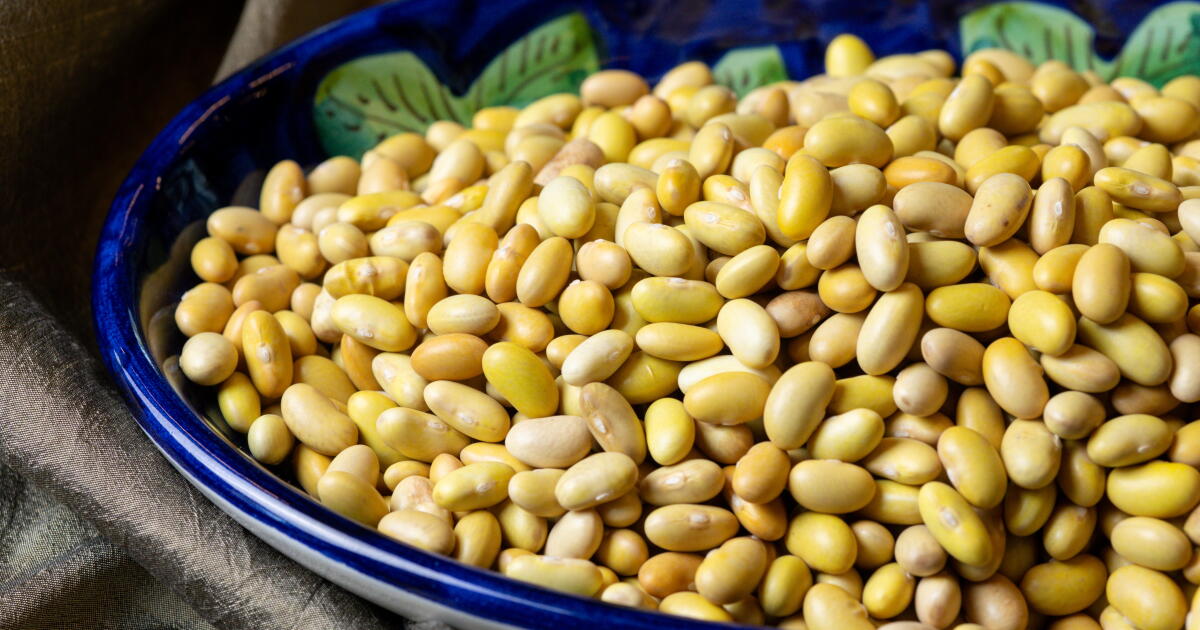
When Pizzana’s Daniele Uditi opened Lele Dinner Club, the pop-up supper series he held in a West Adams warehouse last year, one standout dish — “the crowning glory,” as restaurant critic Jenn Harris put it — was a wonderfully thick pasta e fagioli, ladled out to each diner from a gigantic clay pot.
What piqued my interest about Uditi’s slow-cooked broken pasta-and-beans stew was that instead of traditional white cannellini beans — Italy’s most well-known legume — the chef used pale yellow Peruanos, a bean that comes from Mexico by way of Peru.
One of the goals behind the Lele pop-up for Uditi, who grew up in Caserta, outside of Naples, was to highlight the cuisine of his native Campania. So using a Mexican bean in a staple of Italian home cooking was surprising, almost like an act of rebellion.
But for Uditi, it was all about his discovering a bean that came closest to the pasta e fagioli he ate as a child.
“I’m married to a beautiful Mexican woman from Guadalajara, Jalisco,” Uditi said recently by phone. “The refried beans her grandmother makes for breakfast reminded me of the beans from Naples that my mom used to make pasta e fagioli.”
No Italian beans were used in the making of this pasta e fagioli. Chef Daniele Uditi prefers peruano beans over cannellini beans.
(Kayla Bartkowski / Los Angeles Times)
Since then, Uditi’s become a Peruano convert, incorporating them into his minestrone, into salads and wood-fired prawns with uni bisque and Peruano puree.
“They’re so smooth and creamy,” he said. “When you cook them, there’s a sweetness behind these beans. Cannellini beans are more on the plain side, like, nice and bright. But these have an oomph to them, a depth of flavor. That’s why I love these beans.”


1. Chef Uditi prepared multiple pasta dishes during his 2025 Lele Dinner Club series. 2. But the “crowning glory” at Lele Dinner Club was pasta e fagioli, served from a clay pot. (Red Gaskell / For The Times)
Uditi is not alone in his adoration of these small, oval, pale yellow legumes. At my local Northgate González Market, where they sell at least six types of beans in the bulk goods section, the Peruanos, at less than $2 a pound, are in such demand that they’re the only variety that require not one, but two rectangular bins. To keep them in stock, a Northgate employee told me that four to six 15-pound bags of Peruanos arrive every day. This seemed like an enormous amount of dried beans until I reached out to the same department at the 70,000-square foot Mercado González Market and Food Hall in Costa Mesa and was told that its daily delivery consisted of two to three 50-pound bags of Peruanos.
When it comes to Peruanos, people agree on a lot of things: how good they taste, how quickly they cook and how versatile they are. Most also agree on the origin of the beans, which are said to come from the low valleys and mountain slopes of the Andes in Peru. But there’s not much consensus about how they ended up in Mexico.
Steve Sando, founder of the heirloom bean company Rancho Gordo and author of “The Bean Book,” says that’s because beans are the free spirits of the edible crop world.
“They’re easy to transport,” says Sando. “You can take a handful and basically you’ve got seed stock. You can put them in your pocket and go to Madagascar and [plant them], then go to Timbuktu. They want to grow.”
Sando’s Peruano fields are located in California’s Central Valley and he sells roughly 78,000 pounds of them annually — but he calls them Mayocoba beans, as do other sellers, often in reference to the town of Mayocoba in Mexico’s Sinaloa state.
“I think people find it more recognizable,” Sando says. “We have the same problem with cranberry beans. People want [to call them] borlotti. And it’s like, it’s the same thing.”
Peruanos and Mayocobas are also known as canary (or canario) beans, Mexican yellow beans, frijol de Peru, mantequillas and, for a time, Enola beans until DNA testing showed that the bean named and patented by a Colorado grower was identical to beans grown in Mexico.
In 2024, a drought-resistant variety of the bean, called Mayocoba Oro, was introduced in Mexico and has been called by some “the bean of the future.”
For most cooks, this yellow bean sold by many names is essentially the same legume. However, Mexico City-raised cookbook author and PBS TV cooking host Pati Jinich has detected some differences.
“If you go to certain markets, they are considered different varieties,” she says. “You’ll find Peruanos as well as Mayocobas as well as mantequillas and they all look [and taste] slightly different.”
Jinich also adds that while Peruanos are all the rage in central Mexico, in the south they swear by black beans and northerners tend to prefer pintos.
None of this is to say that Jinich doesn’t love Peruanos, which are more difficult to find in markets near her Washington, D.C., home than they are in Southern California. She often returns from visiting relatives in Mexico with bags of Peruanos in her luggage (which are legal to transport internationally in limited quanities for home use).
She uses them in frijoles de la olla, refries them and serves them charro-style, browning a bit of bacon or chorizo, then sauteing onions and jalapeños in the rendered fat before adding chopped tomatoes and cooked Peruanos. Sometimes her Peruanos show up in roasted tomato and bean soup or slightly al dente in a cold salad.


1. Cookbook author and TV host Pati Jinich. (Jason Armond / Los Angeles Times) 2. Peruano beans ready to cook. (Kayla Bartkowski / Los Angeles Times) 3. Jinich’s Refried Peruano Beans. (Kayla Bartkowski/Los Angeles Times)
“They take on seasonings really nicely,” she says. “They’re forgiving, but still have a distinct taste. They’re earthy, buttery.”
Jinich isn’t kidding when she says Peruanos are adaptable. While on the way to my friend and movie publicist Chris Libby’s house for dinner, he texted me that he’d put up a pot of Peruanos, Italian-style, with water, onion, garlic, a chile pod, a carrot and a sprig or two of rosemary, then left the kitchen for a bit too long. When he walked back in, the beans, which cook quickly because of their thin skin, had exploded. Slipping into troubleshooting mode, he removed the chile, vegetables, herbs, most of the garlic and onion, and poured the remaining contents into a Vitamix.

A bowl of Emergency Bean Soup made with peruano beans.
(Kayla Bartkowski / Los Angeles Times)
The beans, which originally had been intended as a side dish, were now a beautiful, beige soup topped with a drizzle of olive oil and a splash of vinegar. The soup had a warm, rich flavor with a nice hint of fire at the end. After a couple of spoonfuls, the dinner conversation volume had lowered considerably. By the time it cranked up again, every bowl had been scraped clean.
The recipes
Time 4 1/2 to 5 1/2 hours (includes 1 to 2 hours bean resting)
Yields Serves 4
Time 2 hours
Yields Serves 6 to 8
Time 2 1/2 to 3 1/2 hours
Yields Serves 6 to 10

When Pizzana’s Daniele Uditi opened Lele Dinner Club, the pop-up supper series he held in a West Adams warehouse last year, one standout dish — “the crowning glory,” as restaurant critic Jenn Harris put it — was a wonderfully thick pasta e fagioli, ladled out to each diner from a gigantic clay pot.
What piqued my interest about Uditi’s slow-cooked broken pasta-and-beans stew was that instead of traditional white cannellini beans — Italy’s most well-known legume — the chef used pale yellow Peruanos, a bean that comes from Mexico by way of Peru.
One of the goals behind the Lele pop-up for Uditi, who grew up in Caserta, outside of Naples, was to highlight the cuisine of his native Campania. So using a Mexican bean in a staple of Italian home cooking was surprising, almost like an act of rebellion.
But for Uditi, it was all about his discovering a bean that came closest to the pasta e fagioli he ate as a child.
“I’m married to a beautiful Mexican woman from Guadalajara, Jalisco,” Uditi said recently by phone. “The refried beans her grandmother makes for breakfast reminded me of the beans from Naples that my mom used to make pasta e fagioli.”
No Italian beans were used in the making of this pasta e fagioli. Chef Daniele Uditi prefers peruano beans over cannellini beans.
(Kayla Bartkowski / Los Angeles Times)
Since then, Uditi’s become a Peruano convert, incorporating them into his minestrone, into salads and wood-fired prawns with uni bisque and Peruano puree.
“They’re so smooth and creamy,” he said. “When you cook them, there’s a sweetness behind these beans. Cannellini beans are more on the plain side, like, nice and bright. But these have an oomph to them, a depth of flavor. That’s why I love these beans.”
1. Chef Uditi prepared multiple pasta dishes during his 2025 Lele Dinner Club series. 2. But the “crowning glory” at Lele Dinner Club was pasta e fagioli, served from a clay pot. (Red Gaskell / For The Times)
Uditi is not alone in his adoration of these small, oval, pale yellow legumes. At my local Northgate González Market, where they sell at least six types of beans in the bulk goods section, the Peruanos, at less than $2 a pound, are in such demand that they’re the only variety that require not one, but two rectangular bins. To keep them in stock, a Northgate employee told me that four to six 15-pound bags of Peruanos arrive every day. This seemed like an enormous amount of dried beans until I reached out to the same department at the 70,000-square foot Mercado González Market and Food Hall in Costa Mesa and was told that its daily delivery consisted of two to three 50-pound bags of Peruanos.
When it comes to Peruanos, people agree on a lot of things: how good they taste, how quickly they cook and how versatile they are. Most also agree on the origin of the beans, which are said to come from the low valleys and mountain slopes of the Andes in Peru. But there’s not much consensus about how they ended up in Mexico.
Steve Sando, founder of the heirloom bean company Rancho Gordo and author of “The Bean Book,” says that’s because beans are the free spirits of the edible crop world.
“They’re easy to transport,” says Sando. “You can take a handful and basically you’ve got seed stock. You can put them in your pocket and go to Madagascar and [plant them], then go to Timbuktu. They want to grow.”
Sando’s Peruano fields are located in California’s Central Valley and he sells roughly 78,000 pounds of them annually — but he calls them Mayocoba beans, as do other sellers, often in reference to the town of Mayocoba in Mexico’s Sinaloa state.
“I think people find it more recognizable,” Sando says. “We have the same problem with cranberry beans. People want [to call them] borlotti. And it’s like, it’s the same thing.”
Peruanos and Mayocobas are also known as canary (or canario) beans, Mexican yellow beans, frijol de Peru, mantequillas and, for a time, Enola beans until DNA testing showed that the bean named and patented by a Colorado grower was identical to beans grown in Mexico.
In 2024, a drought-resistant variety of the bean, called Mayocoba Oro, was introduced in Mexico and has been called by some “the bean of the future.”
For most cooks, this yellow bean sold by many names is essentially the same legume. However, Mexico City-raised cookbook author and PBS TV cooking host Pati Jinich has detected some differences.
“If you go to certain markets, they are considered different varieties,” she says. “You’ll find Peruanos as well as Mayocobas as well as mantequillas and they all look [and taste] slightly different.”
Jinich also adds that while Peruanos are all the rage in central Mexico, in the south they swear by black beans and northerners tend to prefer pintos.
None of this is to say that Jinich doesn’t love Peruanos, which are more difficult to find in markets near her Washington, D.C., home than they are in Southern California. She often returns from visiting relatives in Mexico with bags of Peruanos in her luggage (which are legal to transport internationally in limited quanities for home use).
She uses them in frijoles de la olla, refries them and serves them charro-style, browning a bit of bacon or chorizo, then sauteing onions and jalapeños in the rendered fat before adding chopped tomatoes and cooked Peruanos. Sometimes her Peruanos show up in roasted tomato and bean soup or slightly al dente in a cold salad.
1. Cookbook author and TV host Pati Jinich. (Jason Armond / Los Angeles Times) 2. Peruano beans ready to cook. (Kayla Bartkowski / Los Angeles Times) 3. Jinich’s Refried Peruano Beans. (Kayla Bartkowski/Los Angeles Times)
“They take on seasonings really nicely,” she says. “They’re forgiving, but still have a distinct taste. They’re earthy, buttery.”
Jinich isn’t kidding when she says Peruanos are adaptable. While on the way to my friend and movie publicist Chris Libby’s house for dinner, he texted me that he’d put up a pot of Peruanos, Italian-style, with water, onion, garlic, a chile pod, a carrot and a sprig or two of rosemary, then left the kitchen for a bit too long. When he walked back in, the beans, which cook quickly because of their thin skin, had exploded. Slipping into troubleshooting mode, he removed the chile, vegetables, herbs, most of the garlic and onion, and poured the remaining contents into a Vitamix.
A bowl of Emergency Bean Soup made with peruano beans.
(Kayla Bartkowski / Los Angeles Times)
The beans, which originally had been intended as a side dish, were now a beautiful, beige soup topped with a drizzle of olive oil and a splash of vinegar. The soup had a warm, rich flavor with a nice hint of fire at the end. After a couple of spoonfuls, the dinner conversation volume had lowered considerably. By the time it cranked up again, every bowl had been scraped clean.
The recipes
Time 4 1/2 to 5 1/2 hours (includes 1 to 2 hours bean resting)
Yields Serves 4
Time 2 hours
Yields Serves 6 to 8
Time 2 1/2 to 3 1/2 hours
Yields Serves 6 to 10

When Pizzana’s Daniele Uditi opened Lele Dinner Club, the pop-up supper series he held in a West Adams warehouse last year, one standout dish — “the crowning glory,” as restaurant critic Jenn Harris put it — was a wonderfully thick pasta e fagioli, ladled out to each diner from a gigantic clay pot.
What piqued my interest about Uditi’s slow-cooked broken pasta-and-beans stew was that instead of traditional white cannellini beans — Italy’s most well-known legume — the chef used pale yellow Peruanos, a bean that comes from Mexico by way of Peru.
One of the goals behind the Lele pop-up for Uditi, who grew up in Caserta, outside of Naples, was to highlight the cuisine of his native Campania. So using a Mexican bean in a staple of Italian home cooking was surprising, almost like an act of rebellion.
But for Uditi, it was all about his discovering a bean that came closest to the pasta e fagioli he ate as a child.
“I’m married to a beautiful Mexican woman from Guadalajara, Jalisco,” Uditi said recently by phone. “The refried beans her grandmother makes for breakfast reminded me of the beans from Naples that my mom used to make pasta e fagioli.”
No Italian beans were used in the making of this pasta e fagioli. Chef Daniele Uditi prefers peruano beans over cannellini beans.
(Kayla Bartkowski / Los Angeles Times)
Since then, Uditi’s become a Peruano convert, incorporating them into his minestrone, into salads and wood-fired prawns with uni bisque and Peruano puree.
“They’re so smooth and creamy,” he said. “When you cook them, there’s a sweetness behind these beans. Cannellini beans are more on the plain side, like, nice and bright. But these have an oomph to them, a depth of flavor. That’s why I love these beans.”
1. Chef Uditi prepared multiple pasta dishes during his 2025 Lele Dinner Club series. 2. But the “crowning glory” at Lele Dinner Club was pasta e fagioli, served from a clay pot. (Red Gaskell / For The Times)
Uditi is not alone in his adoration of these small, oval, pale yellow legumes. At my local Northgate González Market, where they sell at least six types of beans in the bulk goods section, the Peruanos, at less than $2 a pound, are in such demand that they’re the only variety that require not one, but two rectangular bins. To keep them in stock, a Northgate employee told me that four to six 15-pound bags of Peruanos arrive every day. This seemed like an enormous amount of dried beans until I reached out to the same department at the 70,000-square foot Mercado González Market and Food Hall in Costa Mesa and was told that its daily delivery consisted of two to three 50-pound bags of Peruanos.
When it comes to Peruanos, people agree on a lot of things: how good they taste, how quickly they cook and how versatile they are. Most also agree on the origin of the beans, which are said to come from the low valleys and mountain slopes of the Andes in Peru. But there’s not much consensus about how they ended up in Mexico.
Steve Sando, founder of the heirloom bean company Rancho Gordo and author of “The Bean Book,” says that’s because beans are the free spirits of the edible crop world.
“They’re easy to transport,” says Sando. “You can take a handful and basically you’ve got seed stock. You can put them in your pocket and go to Madagascar and [plant them], then go to Timbuktu. They want to grow.”
Sando’s Peruano fields are located in California’s Central Valley and he sells roughly 78,000 pounds of them annually — but he calls them Mayocoba beans, as do other sellers, often in reference to the town of Mayocoba in Mexico’s Sinaloa state.
“I think people find it more recognizable,” Sando says. “We have the same problem with cranberry beans. People want [to call them] borlotti. And it’s like, it’s the same thing.”
Peruanos and Mayocobas are also known as canary (or canario) beans, Mexican yellow beans, frijol de Peru, mantequillas and, for a time, Enola beans until DNA testing showed that the bean named and patented by a Colorado grower was identical to beans grown in Mexico.
In 2024, a drought-resistant variety of the bean, called Mayocoba Oro, was introduced in Mexico and has been called by some “the bean of the future.”
For most cooks, this yellow bean sold by many names is essentially the same legume. However, Mexico City-raised cookbook author and PBS TV cooking host Pati Jinich has detected some differences.
“If you go to certain markets, they are considered different varieties,” she says. “You’ll find Peruanos as well as Mayocobas as well as mantequillas and they all look [and taste] slightly different.”
Jinich also adds that while Peruanos are all the rage in central Mexico, in the south they swear by black beans and northerners tend to prefer pintos.
None of this is to say that Jinich doesn’t love Peruanos, which are more difficult to find in markets near her Washington, D.C., home than they are in Southern California. She often returns from visiting relatives in Mexico with bags of Peruanos in her luggage (which are legal to transport internationally in limited quanities for home use).
She uses them in frijoles de la olla, refries them and serves them charro-style, browning a bit of bacon or chorizo, then sauteing onions and jalapeños in the rendered fat before adding chopped tomatoes and cooked Peruanos. Sometimes her Peruanos show up in roasted tomato and bean soup or slightly al dente in a cold salad.
1. Cookbook author and TV host Pati Jinich. (Jason Armond / Los Angeles Times) 2. Peruano beans ready to cook. (Kayla Bartkowski / Los Angeles Times) 3. Jinich’s Refried Peruano Beans. (Kayla Bartkowski/Los Angeles Times)
“They take on seasonings really nicely,” she says. “They’re forgiving, but still have a distinct taste. They’re earthy, buttery.”
Jinich isn’t kidding when she says Peruanos are adaptable. While on the way to my friend and movie publicist Chris Libby’s house for dinner, he texted me that he’d put up a pot of Peruanos, Italian-style, with water, onion, garlic, a chile pod, a carrot and a sprig or two of rosemary, then left the kitchen for a bit too long. When he walked back in, the beans, which cook quickly because of their thin skin, had exploded. Slipping into troubleshooting mode, he removed the chile, vegetables, herbs, most of the garlic and onion, and poured the remaining contents into a Vitamix.
A bowl of Emergency Bean Soup made with peruano beans.
(Kayla Bartkowski / Los Angeles Times)
The beans, which originally had been intended as a side dish, were now a beautiful, beige soup topped with a drizzle of olive oil and a splash of vinegar. The soup had a warm, rich flavor with a nice hint of fire at the end. After a couple of spoonfuls, the dinner conversation volume had lowered considerably. By the time it cranked up again, every bowl had been scraped clean.
The recipes
Time 4 1/2 to 5 1/2 hours (includes 1 to 2 hours bean resting)
Yields Serves 4
Time 2 hours
Yields Serves 6 to 8
Time 2 1/2 to 3 1/2 hours
Yields Serves 6 to 10
When Pizzana’s Daniele Uditi opened Lele Dinner Club, the pop-up supper series he held in a West Adams warehouse last year, one standout dish — “the crowning glory,” as restaurant critic Jenn Harris put it — was a wonderfully thick pasta e fagioli, ladled out to each diner from a gigantic clay pot.
What piqued my interest about Uditi’s slow-cooked broken pasta-and-beans stew was that instead of traditional white cannellini beans — Italy’s most well-known legume — the chef used pale yellow Peruanos, a bean that comes from Mexico by way of Peru.
One of the goals behind the Lele pop-up for Uditi, who grew up in Caserta, outside of Naples, was to highlight the cuisine of his native Campania. So using a Mexican bean in a staple of Italian home cooking was surprising, almost like an act of rebellion.
But for Uditi, it was all about his discovering a bean that came closest to the pasta e fagioli he ate as a child.
“I’m married to a beautiful Mexican woman from Guadalajara, Jalisco,” Uditi said recently by phone. “The refried beans her grandmother makes for breakfast reminded me of the beans from Naples that my mom used to make pasta e fagioli.”
No Italian beans were used in the making of this pasta e fagioli. Chef Daniele Uditi prefers peruano beans over cannellini beans.
(Kayla Bartkowski / Los Angeles Times)
Since then, Uditi’s become a Peruano convert, incorporating them into his minestrone, into salads and wood-fired prawns with uni bisque and Peruano puree.
“They’re so smooth and creamy,” he said. “When you cook them, there’s a sweetness behind these beans. Cannellini beans are more on the plain side, like, nice and bright. But these have an oomph to them, a depth of flavor. That’s why I love these beans.”
1. Chef Uditi prepared multiple pasta dishes during his 2025 Lele Dinner Club series. 2. But the “crowning glory” at Lele Dinner Club was pasta e fagioli, served from a clay pot. (Red Gaskell / For The Times)
Uditi is not alone in his adoration of these small, oval, pale yellow legumes. At my local Northgate González Market, where they sell at least six types of beans in the bulk goods section, the Peruanos, at less than $2 a pound, are in such demand that they’re the only variety that require not one, but two rectangular bins. To keep them in stock, a Northgate employee told me that four to six 15-pound bags of Peruanos arrive every day. This seemed like an enormous amount of dried beans until I reached out to the same department at the 70,000-square foot Mercado González Market and Food Hall in Costa Mesa and was told that its daily delivery consisted of two to three 50-pound bags of Peruanos.
When it comes to Peruanos, people agree on a lot of things: how good they taste, how quickly they cook and how versatile they are. Most also agree on the origin of the beans, which are said to come from the low valleys and mountain slopes of the Andes in Peru. But there’s not much consensus about how they ended up in Mexico.
Steve Sando, founder of the heirloom bean company Rancho Gordo and author of “The Bean Book,” says that’s because beans are the free spirits of the edible crop world.
“They’re easy to transport,” says Sando. “You can take a handful and basically you’ve got seed stock. You can put them in your pocket and go to Madagascar and [plant them], then go to Timbuktu. They want to grow.”
Sando’s Peruano fields are located in California’s Central Valley and he sells roughly 78,000 pounds of them annually — but he calls them Mayocoba beans, as do other sellers, often in reference to the town of Mayocoba in Mexico’s Sinaloa state.
“I think people find it more recognizable,” Sando says. “We have the same problem with cranberry beans. People want [to call them] borlotti. And it’s like, it’s the same thing.”
Peruanos and Mayocobas are also known as canary (or canario) beans, Mexican yellow beans, frijol de Peru, mantequillas and, for a time, Enola beans until DNA testing showed that the bean named and patented by a Colorado grower was identical to beans grown in Mexico.
In 2024, a drought-resistant variety of the bean, called Mayocoba Oro, was introduced in Mexico and has been called by some “the bean of the future.”
For most cooks, this yellow bean sold by many names is essentially the same legume. However, Mexico City-raised cookbook author and PBS TV cooking host Pati Jinich has detected some differences.
“If you go to certain markets, they are considered different varieties,” she says. “You’ll find Peruanos as well as Mayocobas as well as mantequillas and they all look [and taste] slightly different.”
Jinich also adds that while Peruanos are all the rage in central Mexico, in the south they swear by black beans and northerners tend to prefer pintos.
None of this is to say that Jinich doesn’t love Peruanos, which are more difficult to find in markets near her Washington, D.C., home than they are in Southern California. She often returns from visiting relatives in Mexico with bags of Peruanos in her luggage (which are legal to transport internationally in limited quanities for home use).
She uses them in frijoles de la olla, refries them and serves them charro-style, browning a bit of bacon or chorizo, then sauteing onions and jalapeños in the rendered fat before adding chopped tomatoes and cooked Peruanos. Sometimes her Peruanos show up in roasted tomato and bean soup or slightly al dente in a cold salad.
1. Cookbook author and TV host Pati Jinich. (Jason Armond / Los Angeles Times) 2. Peruano beans ready to cook. (Kayla Bartkowski / Los Angeles Times) 3. Jinich’s Refried Peruano Beans. (Kayla Bartkowski/Los Angeles Times)
“They take on seasonings really nicely,” she says. “They’re forgiving, but still have a distinct taste. They’re earthy, buttery.”
Jinich isn’t kidding when she says Peruanos are adaptable. While on the way to my friend and movie publicist Chris Libby’s house for dinner, he texted me that he’d put up a pot of Peruanos, Italian-style, with water, onion, garlic, a chile pod, a carrot and a sprig or two of rosemary, then left the kitchen for a bit too long. When he walked back in, the beans, which cook quickly because of their thin skin, had exploded. Slipping into troubleshooting mode, he removed the chile, vegetables, herbs, most of the garlic and onion, and poured the remaining contents into a Vitamix.
A bowl of Emergency Bean Soup made with peruano beans.
(Kayla Bartkowski / Los Angeles Times)
The beans, which originally had been intended as a side dish, were now a beautiful, beige soup topped with a drizzle of olive oil and a splash of vinegar. The soup had a warm, rich flavor with a nice hint of fire at the end. After a couple of spoonfuls, the dinner conversation volume had lowered considerably. By the time it cranked up again, every bowl had been scraped clean.
The recipes
Time 4 1/2 to 5 1/2 hours (includes 1 to 2 hours bean resting)
Yields Serves 4
Time 2 hours
Yields Serves 6 to 8
Time 2 1/2 to 3 1/2 hours
Yields Serves 6 to 10

When Pizzana’s Daniele Uditi opened Lele Dinner Club, the pop-up supper series he held in a West Adams warehouse last year, one standout dish — “the crowning glory,” as restaurant critic Jenn Harris put it — was a wonderfully thick pasta e fagioli, ladled out to each diner from a gigantic clay pot.
What piqued my interest about Uditi’s slow-cooked broken pasta-and-beans stew was that instead of traditional white cannellini beans — Italy’s most well-known legume — the chef used pale yellow Peruanos, a bean that comes from Mexico by way of Peru.
One of the goals behind the Lele pop-up for Uditi, who grew up in Caserta, outside of Naples, was to highlight the cuisine of his native Campania. So using a Mexican bean in a staple of Italian home cooking was surprising, almost like an act of rebellion.
But for Uditi, it was all about his discovering a bean that came closest to the pasta e fagioli he ate as a child.
“I’m married to a beautiful Mexican woman from Guadalajara, Jalisco,” Uditi said recently by phone. “The refried beans her grandmother makes for breakfast reminded me of the beans from Naples that my mom used to make pasta e fagioli.”
No Italian beans were used in the making of this pasta e fagioli. Chef Daniele Uditi prefers peruano beans over cannellini beans.
(Kayla Bartkowski / Los Angeles Times)
Since then, Uditi’s become a Peruano convert, incorporating them into his minestrone, into salads and wood-fired prawns with uni bisque and Peruano puree.
“They’re so smooth and creamy,” he said. “When you cook them, there’s a sweetness behind these beans. Cannellini beans are more on the plain side, like, nice and bright. But these have an oomph to them, a depth of flavor. That’s why I love these beans.”
1. Chef Uditi prepared multiple pasta dishes during his 2025 Lele Dinner Club series. 2. But the “crowning glory” at Lele Dinner Club was pasta e fagioli, served from a clay pot. (Red Gaskell / For The Times)
Uditi is not alone in his adoration of these small, oval, pale yellow legumes. At my local Northgate González Market, where they sell at least six types of beans in the bulk goods section, the Peruanos, at less than $2 a pound, are in such demand that they’re the only variety that require not one, but two rectangular bins. To keep them in stock, a Northgate employee told me that four to six 15-pound bags of Peruanos arrive every day. This seemed like an enormous amount of dried beans until I reached out to the same department at the 70,000-square foot Mercado González Market and Food Hall in Costa Mesa and was told that its daily delivery consisted of two to three 50-pound bags of Peruanos.
When it comes to Peruanos, people agree on a lot of things: how good they taste, how quickly they cook and how versatile they are. Most also agree on the origin of the beans, which are said to come from the low valleys and mountain slopes of the Andes in Peru. But there’s not much consensus about how they ended up in Mexico.
Steve Sando, founder of the heirloom bean company Rancho Gordo and author of “The Bean Book,” says that’s because beans are the free spirits of the edible crop world.
“They’re easy to transport,” says Sando. “You can take a handful and basically you’ve got seed stock. You can put them in your pocket and go to Madagascar and [plant them], then go to Timbuktu. They want to grow.”
Sando’s Peruano fields are located in California’s Central Valley and he sells roughly 78,000 pounds of them annually — but he calls them Mayocoba beans, as do other sellers, often in reference to the town of Mayocoba in Mexico’s Sinaloa state.
“I think people find it more recognizable,” Sando says. “We have the same problem with cranberry beans. People want [to call them] borlotti. And it’s like, it’s the same thing.”
Peruanos and Mayocobas are also known as canary (or canario) beans, Mexican yellow beans, frijol de Peru, mantequillas and, for a time, Enola beans until DNA testing showed that the bean named and patented by a Colorado grower was identical to beans grown in Mexico.
In 2024, a drought-resistant variety of the bean, called Mayocoba Oro, was introduced in Mexico and has been called by some “the bean of the future.”
For most cooks, this yellow bean sold by many names is essentially the same legume. However, Mexico City-raised cookbook author and PBS TV cooking host Pati Jinich has detected some differences.
“If you go to certain markets, they are considered different varieties,” she says. “You’ll find Peruanos as well as Mayocobas as well as mantequillas and they all look [and taste] slightly different.”
Jinich also adds that while Peruanos are all the rage in central Mexico, in the south they swear by black beans and northerners tend to prefer pintos.
None of this is to say that Jinich doesn’t love Peruanos, which are more difficult to find in markets near her Washington, D.C., home than they are in Southern California. She often returns from visiting relatives in Mexico with bags of Peruanos in her luggage (which are legal to transport internationally in limited quanities for home use).
She uses them in frijoles de la olla, refries them and serves them charro-style, browning a bit of bacon or chorizo, then sauteing onions and jalapeños in the rendered fat before adding chopped tomatoes and cooked Peruanos. Sometimes her Peruanos show up in roasted tomato and bean soup or slightly al dente in a cold salad.
1. Cookbook author and TV host Pati Jinich. (Jason Armond / Los Angeles Times) 2. Peruano beans ready to cook. (Kayla Bartkowski / Los Angeles Times) 3. Jinich’s Refried Peruano Beans. (Kayla Bartkowski/Los Angeles Times)
“They take on seasonings really nicely,” she says. “They’re forgiving, but still have a distinct taste. They’re earthy, buttery.”
Jinich isn’t kidding when she says Peruanos are adaptable. While on the way to my friend and movie publicist Chris Libby’s house for dinner, he texted me that he’d put up a pot of Peruanos, Italian-style, with water, onion, garlic, a chile pod, a carrot and a sprig or two of rosemary, then left the kitchen for a bit too long. When he walked back in, the beans, which cook quickly because of their thin skin, had exploded. Slipping into troubleshooting mode, he removed the chile, vegetables, herbs, most of the garlic and onion, and poured the remaining contents into a Vitamix.
A bowl of Emergency Bean Soup made with peruano beans.
(Kayla Bartkowski / Los Angeles Times)
The beans, which originally had been intended as a side dish, were now a beautiful, beige soup topped with a drizzle of olive oil and a splash of vinegar. The soup had a warm, rich flavor with a nice hint of fire at the end. After a couple of spoonfuls, the dinner conversation volume had lowered considerably. By the time it cranked up again, every bowl had been scraped clean.
The recipes
Time 4 1/2 to 5 1/2 hours (includes 1 to 2 hours bean resting)
Yields Serves 4
Time 2 hours
Yields Serves 6 to 8
Time 2 1/2 to 3 1/2 hours
Yields Serves 6 to 10
When Pizzana’s Daniele Uditi opened Lele Dinner Club, the pop-up supper series he held in a West Adams warehouse last year, one standout dish — “the crowning glory,” as restaurant critic Jenn Harris put it — was a wonderfully thick pasta e fagioli, ladled out to each diner from a gigantic clay pot.
What piqued my interest about Uditi’s slow-cooked broken pasta-and-beans stew was that instead of traditional white cannellini beans — Italy’s most well-known legume — the chef used pale yellow Peruanos, a bean that comes from Mexico by way of Peru.
One of the goals behind the Lele pop-up for Uditi, who grew up in Caserta, outside of Naples, was to highlight the cuisine of his native Campania. So using a Mexican bean in a staple of Italian home cooking was surprising, almost like an act of rebellion.
But for Uditi, it was all about his discovering a bean that came closest to the pasta e fagioli he ate as a child.
“I’m married to a beautiful Mexican woman from Guadalajara, Jalisco,” Uditi said recently by phone. “The refried beans her grandmother makes for breakfast reminded me of the beans from Naples that my mom used to make pasta e fagioli.”
No Italian beans were used in the making of this pasta e fagioli. Chef Daniele Uditi prefers peruano beans over cannellini beans.
(Kayla Bartkowski / Los Angeles Times)
Since then, Uditi’s become a Peruano convert, incorporating them into his minestrone, into salads and wood-fired prawns with uni bisque and Peruano puree.
“They’re so smooth and creamy,” he said. “When you cook them, there’s a sweetness behind these beans. Cannellini beans are more on the plain side, like, nice and bright. But these have an oomph to them, a depth of flavor. That’s why I love these beans.”
1. Chef Uditi prepared multiple pasta dishes during his 2025 Lele Dinner Club series. 2. But the “crowning glory” at Lele Dinner Club was pasta e fagioli, served from a clay pot. (Red Gaskell / For The Times)
Uditi is not alone in his adoration of these small, oval, pale yellow legumes. At my local Northgate González Market, where they sell at least six types of beans in the bulk goods section, the Peruanos, at less than $2 a pound, are in such demand that they’re the only variety that require not one, but two rectangular bins. To keep them in stock, a Northgate employee told me that four to six 15-pound bags of Peruanos arrive every day. This seemed like an enormous amount of dried beans until I reached out to the same department at the 70,000-square foot Mercado González Market and Food Hall in Costa Mesa and was told that its daily delivery consisted of two to three 50-pound bags of Peruanos.
When it comes to Peruanos, people agree on a lot of things: how good they taste, how quickly they cook and how versatile they are. Most also agree on the origin of the beans, which are said to come from the low valleys and mountain slopes of the Andes in Peru. But there’s not much consensus about how they ended up in Mexico.
Steve Sando, founder of the heirloom bean company Rancho Gordo and author of “The Bean Book,” says that’s because beans are the free spirits of the edible crop world.
“They’re easy to transport,” says Sando. “You can take a handful and basically you’ve got seed stock. You can put them in your pocket and go to Madagascar and [plant them], then go to Timbuktu. They want to grow.”
Sando’s Peruano fields are located in California’s Central Valley and he sells roughly 78,000 pounds of them annually — but he calls them Mayocoba beans, as do other sellers, often in reference to the town of Mayocoba in Mexico’s Sinaloa state.
“I think people find it more recognizable,” Sando says. “We have the same problem with cranberry beans. People want [to call them] borlotti. And it’s like, it’s the same thing.”
Peruanos and Mayocobas are also known as canary (or canario) beans, Mexican yellow beans, frijol de Peru, mantequillas and, for a time, Enola beans until DNA testing showed that the bean named and patented by a Colorado grower was identical to beans grown in Mexico.
In 2024, a drought-resistant variety of the bean, called Mayocoba Oro, was introduced in Mexico and has been called by some “the bean of the future.”
For most cooks, this yellow bean sold by many names is essentially the same legume. However, Mexico City-raised cookbook author and PBS TV cooking host Pati Jinich has detected some differences.
“If you go to certain markets, they are considered different varieties,” she says. “You’ll find Peruanos as well as Mayocobas as well as mantequillas and they all look [and taste] slightly different.”
Jinich also adds that while Peruanos are all the rage in central Mexico, in the south they swear by black beans and northerners tend to prefer pintos.
None of this is to say that Jinich doesn’t love Peruanos, which are more difficult to find in markets near her Washington, D.C., home than they are in Southern California. She often returns from visiting relatives in Mexico with bags of Peruanos in her luggage (which are legal to transport internationally in limited quanities for home use).
She uses them in frijoles de la olla, refries them and serves them charro-style, browning a bit of bacon or chorizo, then sauteing onions and jalapeños in the rendered fat before adding chopped tomatoes and cooked Peruanos. Sometimes her Peruanos show up in roasted tomato and bean soup or slightly al dente in a cold salad.
1. Cookbook author and TV host Pati Jinich. (Jason Armond / Los Angeles Times) 2. Peruano beans ready to cook. (Kayla Bartkowski / Los Angeles Times) 3. Jinich’s Refried Peruano Beans. (Kayla Bartkowski/Los Angeles Times)
“They take on seasonings really nicely,” she says. “They’re forgiving, but still have a distinct taste. They’re earthy, buttery.”
Jinich isn’t kidding when she says Peruanos are adaptable. While on the way to my friend and movie publicist Chris Libby’s house for dinner, he texted me that he’d put up a pot of Peruanos, Italian-style, with water, onion, garlic, a chile pod, a carrot and a sprig or two of rosemary, then left the kitchen for a bit too long. When he walked back in, the beans, which cook quickly because of their thin skin, had exploded. Slipping into troubleshooting mode, he removed the chile, vegetables, herbs, most of the garlic and onion, and poured the remaining contents into a Vitamix.
A bowl of Emergency Bean Soup made with peruano beans.
(Kayla Bartkowski / Los Angeles Times)
The beans, which originally had been intended as a side dish, were now a beautiful, beige soup topped with a drizzle of olive oil and a splash of vinegar. The soup had a warm, rich flavor with a nice hint of fire at the end. After a couple of spoonfuls, the dinner conversation volume had lowered considerably. By the time it cranked up again, every bowl had been scraped clean.
The recipes
Time 4 1/2 to 5 1/2 hours (includes 1 to 2 hours bean resting)
Yields Serves 4
Time 2 hours
Yields Serves 6 to 8
Time 2 1/2 to 3 1/2 hours
Yields Serves 6 to 10
When Pizzana’s Daniele Uditi opened Lele Dinner Club, the pop-up supper series he held in a West Adams warehouse last year, one standout dish — “the crowning glory,” as restaurant critic Jenn Harris put it — was a wonderfully thick pasta e fagioli, ladled out to each diner from a gigantic clay pot.
What piqued my interest about Uditi’s slow-cooked broken pasta-and-beans stew was that instead of traditional white cannellini beans — Italy’s most well-known legume — the chef used pale yellow Peruanos, a bean that comes from Mexico by way of Peru.
One of the goals behind the Lele pop-up for Uditi, who grew up in Caserta, outside of Naples, was to highlight the cuisine of his native Campania. So using a Mexican bean in a staple of Italian home cooking was surprising, almost like an act of rebellion.
But for Uditi, it was all about his discovering a bean that came closest to the pasta e fagioli he ate as a child.
“I’m married to a beautiful Mexican woman from Guadalajara, Jalisco,” Uditi said recently by phone. “The refried beans her grandmother makes for breakfast reminded me of the beans from Naples that my mom used to make pasta e fagioli.”
No Italian beans were used in the making of this pasta e fagioli. Chef Daniele Uditi prefers peruano beans over cannellini beans.
(Kayla Bartkowski / Los Angeles Times)
Since then, Uditi’s become a Peruano convert, incorporating them into his minestrone, into salads and wood-fired prawns with uni bisque and Peruano puree.
“They’re so smooth and creamy,” he said. “When you cook them, there’s a sweetness behind these beans. Cannellini beans are more on the plain side, like, nice and bright. But these have an oomph to them, a depth of flavor. That’s why I love these beans.”
1. Chef Uditi prepared multiple pasta dishes during his 2025 Lele Dinner Club series. 2. But the “crowning glory” at Lele Dinner Club was pasta e fagioli, served from a clay pot. (Red Gaskell / For The Times)
Uditi is not alone in his adoration of these small, oval, pale yellow legumes. At my local Northgate González Market, where they sell at least six types of beans in the bulk goods section, the Peruanos, at less than $2 a pound, are in such demand that they’re the only variety that require not one, but two rectangular bins. To keep them in stock, a Northgate employee told me that four to six 15-pound bags of Peruanos arrive every day. This seemed like an enormous amount of dried beans until I reached out to the same department at the 70,000-square foot Mercado González Market and Food Hall in Costa Mesa and was told that its daily delivery consisted of two to three 50-pound bags of Peruanos.
When it comes to Peruanos, people agree on a lot of things: how good they taste, how quickly they cook and how versatile they are. Most also agree on the origin of the beans, which are said to come from the low valleys and mountain slopes of the Andes in Peru. But there’s not much consensus about how they ended up in Mexico.
Steve Sando, founder of the heirloom bean company Rancho Gordo and author of “The Bean Book,” says that’s because beans are the free spirits of the edible crop world.
“They’re easy to transport,” says Sando. “You can take a handful and basically you’ve got seed stock. You can put them in your pocket and go to Madagascar and [plant them], then go to Timbuktu. They want to grow.”
Sando’s Peruano fields are located in California’s Central Valley and he sells roughly 78,000 pounds of them annually — but he calls them Mayocoba beans, as do other sellers, often in reference to the town of Mayocoba in Mexico’s Sinaloa state.
“I think people find it more recognizable,” Sando says. “We have the same problem with cranberry beans. People want [to call them] borlotti. And it’s like, it’s the same thing.”
Peruanos and Mayocobas are also known as canary (or canario) beans, Mexican yellow beans, frijol de Peru, mantequillas and, for a time, Enola beans until DNA testing showed that the bean named and patented by a Colorado grower was identical to beans grown in Mexico.
In 2024, a drought-resistant variety of the bean, called Mayocoba Oro, was introduced in Mexico and has been called by some “the bean of the future.”
For most cooks, this yellow bean sold by many names is essentially the same legume. However, Mexico City-raised cookbook author and PBS TV cooking host Pati Jinich has detected some differences.
“If you go to certain markets, they are considered different varieties,” she says. “You’ll find Peruanos as well as Mayocobas as well as mantequillas and they all look [and taste] slightly different.”
Jinich also adds that while Peruanos are all the rage in central Mexico, in the south they swear by black beans and northerners tend to prefer pintos.
None of this is to say that Jinich doesn’t love Peruanos, which are more difficult to find in markets near her Washington, D.C., home than they are in Southern California. She often returns from visiting relatives in Mexico with bags of Peruanos in her luggage (which are legal to transport internationally in limited quanities for home use).
She uses them in frijoles de la olla, refries them and serves them charro-style, browning a bit of bacon or chorizo, then sauteing onions and jalapeños in the rendered fat before adding chopped tomatoes and cooked Peruanos. Sometimes her Peruanos show up in roasted tomato and bean soup or slightly al dente in a cold salad.
1. Cookbook author and TV host Pati Jinich. (Jason Armond / Los Angeles Times) 2. Peruano beans ready to cook. (Kayla Bartkowski / Los Angeles Times) 3. Jinich’s Refried Peruano Beans. (Kayla Bartkowski/Los Angeles Times)
“They take on seasonings really nicely,” she says. “They’re forgiving, but still have a distinct taste. They’re earthy, buttery.”
Jinich isn’t kidding when she says Peruanos are adaptable. While on the way to my friend and movie publicist Chris Libby’s house for dinner, he texted me that he’d put up a pot of Peruanos, Italian-style, with water, onion, garlic, a chile pod, a carrot and a sprig or two of rosemary, then left the kitchen for a bit too long. When he walked back in, the beans, which cook quickly because of their thin skin, had exploded. Slipping into troubleshooting mode, he removed the chile, vegetables, herbs, most of the garlic and onion, and poured the remaining contents into a Vitamix.
A bowl of Emergency Bean Soup made with peruano beans.
(Kayla Bartkowski / Los Angeles Times)
The beans, which originally had been intended as a side dish, were now a beautiful, beige soup topped with a drizzle of olive oil and a splash of vinegar. The soup had a warm, rich flavor with a nice hint of fire at the end. After a couple of spoonfuls, the dinner conversation volume had lowered considerably. By the time it cranked up again, every bowl had been scraped clean.
The recipes
Time 4 1/2 to 5 1/2 hours (includes 1 to 2 hours bean resting)
Yields Serves 4
Time 2 hours
Yields Serves 6 to 8
Time 2 1/2 to 3 1/2 hours
Yields Serves 6 to 10
When Pizzana’s Daniele Uditi opened Lele Dinner Club, the pop-up supper series he held in a West Adams warehouse last year, one standout dish — “the crowning glory,” as restaurant critic Jenn Harris put it — was a wonderfully thick pasta e fagioli, ladled out to each diner from a gigantic clay pot.
What piqued my interest about Uditi’s slow-cooked broken pasta-and-beans stew was that instead of traditional white cannellini beans — Italy’s most well-known legume — the chef used pale yellow Peruanos, a bean that comes from Mexico by way of Peru.
One of the goals behind the Lele pop-up for Uditi, who grew up in Caserta, outside of Naples, was to highlight the cuisine of his native Campania. So using a Mexican bean in a staple of Italian home cooking was surprising, almost like an act of rebellion.
But for Uditi, it was all about his discovering a bean that came closest to the pasta e fagioli he ate as a child.
“I’m married to a beautiful Mexican woman from Guadalajara, Jalisco,” Uditi said recently by phone. “The refried beans her grandmother makes for breakfast reminded me of the beans from Naples that my mom used to make pasta e fagioli.”
No Italian beans were used in the making of this pasta e fagioli. Chef Daniele Uditi prefers peruano beans over cannellini beans.
(Kayla Bartkowski / Los Angeles Times)
Since then, Uditi’s become a Peruano convert, incorporating them into his minestrone, into salads and wood-fired prawns with uni bisque and Peruano puree.
“They’re so smooth and creamy,” he said. “When you cook them, there’s a sweetness behind these beans. Cannellini beans are more on the plain side, like, nice and bright. But these have an oomph to them, a depth of flavor. That’s why I love these beans.”
1. Chef Uditi prepared multiple pasta dishes during his 2025 Lele Dinner Club series. 2. But the “crowning glory” at Lele Dinner Club was pasta e fagioli, served from a clay pot. (Red Gaskell / For The Times)
Uditi is not alone in his adoration of these small, oval, pale yellow legumes. At my local Northgate González Market, where they sell at least six types of beans in the bulk goods section, the Peruanos, at less than $2 a pound, are in such demand that they’re the only variety that require not one, but two rectangular bins. To keep them in stock, a Northgate employee told me that four to six 15-pound bags of Peruanos arrive every day. This seemed like an enormous amount of dried beans until I reached out to the same department at the 70,000-square foot Mercado González Market and Food Hall in Costa Mesa and was told that its daily delivery consisted of two to three 50-pound bags of Peruanos.
When it comes to Peruanos, people agree on a lot of things: how good they taste, how quickly they cook and how versatile they are. Most also agree on the origin of the beans, which are said to come from the low valleys and mountain slopes of the Andes in Peru. But there’s not much consensus about how they ended up in Mexico.
Steve Sando, founder of the heirloom bean company Rancho Gordo and author of “The Bean Book,” says that’s because beans are the free spirits of the edible crop world.
“They’re easy to transport,” says Sando. “You can take a handful and basically you’ve got seed stock. You can put them in your pocket and go to Madagascar and [plant them], then go to Timbuktu. They want to grow.”
Sando’s Peruano fields are located in California’s Central Valley and he sells roughly 78,000 pounds of them annually — but he calls them Mayocoba beans, as do other sellers, often in reference to the town of Mayocoba in Mexico’s Sinaloa state.
“I think people find it more recognizable,” Sando says. “We have the same problem with cranberry beans. People want [to call them] borlotti. And it’s like, it’s the same thing.”
Peruanos and Mayocobas are also known as canary (or canario) beans, Mexican yellow beans, frijol de Peru, mantequillas and, for a time, Enola beans until DNA testing showed that the bean named and patented by a Colorado grower was identical to beans grown in Mexico.
In 2024, a drought-resistant variety of the bean, called Mayocoba Oro, was introduced in Mexico and has been called by some “the bean of the future.”
For most cooks, this yellow bean sold by many names is essentially the same legume. However, Mexico City-raised cookbook author and PBS TV cooking host Pati Jinich has detected some differences.
“If you go to certain markets, they are considered different varieties,” she says. “You’ll find Peruanos as well as Mayocobas as well as mantequillas and they all look [and taste] slightly different.”
Jinich also adds that while Peruanos are all the rage in central Mexico, in the south they swear by black beans and northerners tend to prefer pintos.
None of this is to say that Jinich doesn’t love Peruanos, which are more difficult to find in markets near her Washington, D.C., home than they are in Southern California. She often returns from visiting relatives in Mexico with bags of Peruanos in her luggage (which are legal to transport internationally in limited quanities for home use).
She uses them in frijoles de la olla, refries them and serves them charro-style, browning a bit of bacon or chorizo, then sauteing onions and jalapeños in the rendered fat before adding chopped tomatoes and cooked Peruanos. Sometimes her Peruanos show up in roasted tomato and bean soup or slightly al dente in a cold salad.
1. Cookbook author and TV host Pati Jinich. (Jason Armond / Los Angeles Times) 2. Peruano beans ready to cook. (Kayla Bartkowski / Los Angeles Times) 3. Jinich’s Refried Peruano Beans. (Kayla Bartkowski/Los Angeles Times)
“They take on seasonings really nicely,” she says. “They’re forgiving, but still have a distinct taste. They’re earthy, buttery.”
Jinich isn’t kidding when she says Peruanos are adaptable. While on the way to my friend and movie publicist Chris Libby’s house for dinner, he texted me that he’d put up a pot of Peruanos, Italian-style, with water, onion, garlic, a chile pod, a carrot and a sprig or two of rosemary, then left the kitchen for a bit too long. When he walked back in, the beans, which cook quickly because of their thin skin, had exploded. Slipping into troubleshooting mode, he removed the chile, vegetables, herbs, most of the garlic and onion, and poured the remaining contents into a Vitamix.
A bowl of Emergency Bean Soup made with peruano beans.
(Kayla Bartkowski / Los Angeles Times)
The beans, which originally had been intended as a side dish, were now a beautiful, beige soup topped with a drizzle of olive oil and a splash of vinegar. The soup had a warm, rich flavor with a nice hint of fire at the end. After a couple of spoonfuls, the dinner conversation volume had lowered considerably. By the time it cranked up again, every bowl had been scraped clean.
The recipes
Time 4 1/2 to 5 1/2 hours (includes 1 to 2 hours bean resting)
Yields Serves 4
Time 2 hours
Yields Serves 6 to 8
Time 2 1/2 to 3 1/2 hours
Yields Serves 6 to 10

When Pizzana’s Daniele Uditi opened Lele Dinner Club, the pop-up supper series he held in a West Adams warehouse last year, one standout dish — “the crowning glory,” as restaurant critic Jenn Harris put it — was a wonderfully thick pasta e fagioli, ladled out to each diner from a gigantic clay pot.
What piqued my interest about Uditi’s slow-cooked broken pasta-and-beans stew was that instead of traditional white cannellini beans — Italy’s most well-known legume — the chef used pale yellow Peruanos, a bean that comes from Mexico by way of Peru.
One of the goals behind the Lele pop-up for Uditi, who grew up in Caserta, outside of Naples, was to highlight the cuisine of his native Campania. So using a Mexican bean in a staple of Italian home cooking was surprising, almost like an act of rebellion.
But for Uditi, it was all about his discovering a bean that came closest to the pasta e fagioli he ate as a child.
“I’m married to a beautiful Mexican woman from Guadalajara, Jalisco,” Uditi said recently by phone. “The refried beans her grandmother makes for breakfast reminded me of the beans from Naples that my mom used to make pasta e fagioli.”
No Italian beans were used in the making of this pasta e fagioli. Chef Daniele Uditi prefers peruano beans over cannellini beans.
(Kayla Bartkowski / Los Angeles Times)
Since then, Uditi’s become a Peruano convert, incorporating them into his minestrone, into salads and wood-fired prawns with uni bisque and Peruano puree.
“They’re so smooth and creamy,” he said. “When you cook them, there’s a sweetness behind these beans. Cannellini beans are more on the plain side, like, nice and bright. But these have an oomph to them, a depth of flavor. That’s why I love these beans.”
1. Chef Uditi prepared multiple pasta dishes during his 2025 Lele Dinner Club series. 2. But the “crowning glory” at Lele Dinner Club was pasta e fagioli, served from a clay pot. (Red Gaskell / For The Times)
Uditi is not alone in his adoration of these small, oval, pale yellow legumes. At my local Northgate González Market, where they sell at least six types of beans in the bulk goods section, the Peruanos, at less than $2 a pound, are in such demand that they’re the only variety that require not one, but two rectangular bins. To keep them in stock, a Northgate employee told me that four to six 15-pound bags of Peruanos arrive every day. This seemed like an enormous amount of dried beans until I reached out to the same department at the 70,000-square foot Mercado González Market and Food Hall in Costa Mesa and was told that its daily delivery consisted of two to three 50-pound bags of Peruanos.
When it comes to Peruanos, people agree on a lot of things: how good they taste, how quickly they cook and how versatile they are. Most also agree on the origin of the beans, which are said to come from the low valleys and mountain slopes of the Andes in Peru. But there’s not much consensus about how they ended up in Mexico.
Steve Sando, founder of the heirloom bean company Rancho Gordo and author of “The Bean Book,” says that’s because beans are the free spirits of the edible crop world.
“They’re easy to transport,” says Sando. “You can take a handful and basically you’ve got seed stock. You can put them in your pocket and go to Madagascar and [plant them], then go to Timbuktu. They want to grow.”
Sando’s Peruano fields are located in California’s Central Valley and he sells roughly 78,000 pounds of them annually — but he calls them Mayocoba beans, as do other sellers, often in reference to the town of Mayocoba in Mexico’s Sinaloa state.
“I think people find it more recognizable,” Sando says. “We have the same problem with cranberry beans. People want [to call them] borlotti. And it’s like, it’s the same thing.”
Peruanos and Mayocobas are also known as canary (or canario) beans, Mexican yellow beans, frijol de Peru, mantequillas and, for a time, Enola beans until DNA testing showed that the bean named and patented by a Colorado grower was identical to beans grown in Mexico.
In 2024, a drought-resistant variety of the bean, called Mayocoba Oro, was introduced in Mexico and has been called by some “the bean of the future.”
For most cooks, this yellow bean sold by many names is essentially the same legume. However, Mexico City-raised cookbook author and PBS TV cooking host Pati Jinich has detected some differences.
“If you go to certain markets, they are considered different varieties,” she says. “You’ll find Peruanos as well as Mayocobas as well as mantequillas and they all look [and taste] slightly different.”
Jinich also adds that while Peruanos are all the rage in central Mexico, in the south they swear by black beans and northerners tend to prefer pintos.
None of this is to say that Jinich doesn’t love Peruanos, which are more difficult to find in markets near her Washington, D.C., home than they are in Southern California. She often returns from visiting relatives in Mexico with bags of Peruanos in her luggage (which are legal to transport internationally in limited quanities for home use).
She uses them in frijoles de la olla, refries them and serves them charro-style, browning a bit of bacon or chorizo, then sauteing onions and jalapeños in the rendered fat before adding chopped tomatoes and cooked Peruanos. Sometimes her Peruanos show up in roasted tomato and bean soup or slightly al dente in a cold salad.
1. Cookbook author and TV host Pati Jinich. (Jason Armond / Los Angeles Times) 2. Peruano beans ready to cook. (Kayla Bartkowski / Los Angeles Times) 3. Jinich’s Refried Peruano Beans. (Kayla Bartkowski/Los Angeles Times)
“They take on seasonings really nicely,” she says. “They’re forgiving, but still have a distinct taste. They’re earthy, buttery.”
Jinich isn’t kidding when she says Peruanos are adaptable. While on the way to my friend and movie publicist Chris Libby’s house for dinner, he texted me that he’d put up a pot of Peruanos, Italian-style, with water, onion, garlic, a chile pod, a carrot and a sprig or two of rosemary, then left the kitchen for a bit too long. When he walked back in, the beans, which cook quickly because of their thin skin, had exploded. Slipping into troubleshooting mode, he removed the chile, vegetables, herbs, most of the garlic and onion, and poured the remaining contents into a Vitamix.
A bowl of Emergency Bean Soup made with peruano beans.
(Kayla Bartkowski / Los Angeles Times)
The beans, which originally had been intended as a side dish, were now a beautiful, beige soup topped with a drizzle of olive oil and a splash of vinegar. The soup had a warm, rich flavor with a nice hint of fire at the end. After a couple of spoonfuls, the dinner conversation volume had lowered considerably. By the time it cranked up again, every bowl had been scraped clean.
The recipes
Time 4 1/2 to 5 1/2 hours (includes 1 to 2 hours bean resting)
Yields Serves 4
Time 2 hours
Yields Serves 6 to 8
Time 2 1/2 to 3 1/2 hours
Yields Serves 6 to 10
When Pizzana’s Daniele Uditi opened Lele Dinner Club, the pop-up supper series he held in a West Adams warehouse last year, one standout dish — “the crowning glory,” as restaurant critic Jenn Harris put it — was a wonderfully thick pasta e fagioli, ladled out to each diner from a gigantic clay pot.
What piqued my interest about Uditi’s slow-cooked broken pasta-and-beans stew was that instead of traditional white cannellini beans — Italy’s most well-known legume — the chef used pale yellow Peruanos, a bean that comes from Mexico by way of Peru.
One of the goals behind the Lele pop-up for Uditi, who grew up in Caserta, outside of Naples, was to highlight the cuisine of his native Campania. So using a Mexican bean in a staple of Italian home cooking was surprising, almost like an act of rebellion.
But for Uditi, it was all about his discovering a bean that came closest to the pasta e fagioli he ate as a child.
“I’m married to a beautiful Mexican woman from Guadalajara, Jalisco,” Uditi said recently by phone. “The refried beans her grandmother makes for breakfast reminded me of the beans from Naples that my mom used to make pasta e fagioli.”
No Italian beans were used in the making of this pasta e fagioli. Chef Daniele Uditi prefers peruano beans over cannellini beans.
(Kayla Bartkowski / Los Angeles Times)
Since then, Uditi’s become a Peruano convert, incorporating them into his minestrone, into salads and wood-fired prawns with uni bisque and Peruano puree.
“They’re so smooth and creamy,” he said. “When you cook them, there’s a sweetness behind these beans. Cannellini beans are more on the plain side, like, nice and bright. But these have an oomph to them, a depth of flavor. That’s why I love these beans.”
1. Chef Uditi prepared multiple pasta dishes during his 2025 Lele Dinner Club series. 2. But the “crowning glory” at Lele Dinner Club was pasta e fagioli, served from a clay pot. (Red Gaskell / For The Times)
Uditi is not alone in his adoration of these small, oval, pale yellow legumes. At my local Northgate González Market, where they sell at least six types of beans in the bulk goods section, the Peruanos, at less than $2 a pound, are in such demand that they’re the only variety that require not one, but two rectangular bins. To keep them in stock, a Northgate employee told me that four to six 15-pound bags of Peruanos arrive every day. This seemed like an enormous amount of dried beans until I reached out to the same department at the 70,000-square foot Mercado González Market and Food Hall in Costa Mesa and was told that its daily delivery consisted of two to three 50-pound bags of Peruanos.
When it comes to Peruanos, people agree on a lot of things: how good they taste, how quickly they cook and how versatile they are. Most also agree on the origin of the beans, which are said to come from the low valleys and mountain slopes of the Andes in Peru. But there’s not much consensus about how they ended up in Mexico.
Steve Sando, founder of the heirloom bean company Rancho Gordo and author of “The Bean Book,” says that’s because beans are the free spirits of the edible crop world.
“They’re easy to transport,” says Sando. “You can take a handful and basically you’ve got seed stock. You can put them in your pocket and go to Madagascar and [plant them], then go to Timbuktu. They want to grow.”
Sando’s Peruano fields are located in California’s Central Valley and he sells roughly 78,000 pounds of them annually — but he calls them Mayocoba beans, as do other sellers, often in reference to the town of Mayocoba in Mexico’s Sinaloa state.
“I think people find it more recognizable,” Sando says. “We have the same problem with cranberry beans. People want [to call them] borlotti. And it’s like, it’s the same thing.”
Peruanos and Mayocobas are also known as canary (or canario) beans, Mexican yellow beans, frijol de Peru, mantequillas and, for a time, Enola beans until DNA testing showed that the bean named and patented by a Colorado grower was identical to beans grown in Mexico.
In 2024, a drought-resistant variety of the bean, called Mayocoba Oro, was introduced in Mexico and has been called by some “the bean of the future.”
For most cooks, this yellow bean sold by many names is essentially the same legume. However, Mexico City-raised cookbook author and PBS TV cooking host Pati Jinich has detected some differences.
“If you go to certain markets, they are considered different varieties,” she says. “You’ll find Peruanos as well as Mayocobas as well as mantequillas and they all look [and taste] slightly different.”
Jinich also adds that while Peruanos are all the rage in central Mexico, in the south they swear by black beans and northerners tend to prefer pintos.
None of this is to say that Jinich doesn’t love Peruanos, which are more difficult to find in markets near her Washington, D.C., home than they are in Southern California. She often returns from visiting relatives in Mexico with bags of Peruanos in her luggage (which are legal to transport internationally in limited quanities for home use).
She uses them in frijoles de la olla, refries them and serves them charro-style, browning a bit of bacon or chorizo, then sauteing onions and jalapeños in the rendered fat before adding chopped tomatoes and cooked Peruanos. Sometimes her Peruanos show up in roasted tomato and bean soup or slightly al dente in a cold salad.
1. Cookbook author and TV host Pati Jinich. (Jason Armond / Los Angeles Times) 2. Peruano beans ready to cook. (Kayla Bartkowski / Los Angeles Times) 3. Jinich’s Refried Peruano Beans. (Kayla Bartkowski/Los Angeles Times)
“They take on seasonings really nicely,” she says. “They’re forgiving, but still have a distinct taste. They’re earthy, buttery.”
Jinich isn’t kidding when she says Peruanos are adaptable. While on the way to my friend and movie publicist Chris Libby’s house for dinner, he texted me that he’d put up a pot of Peruanos, Italian-style, with water, onion, garlic, a chile pod, a carrot and a sprig or two of rosemary, then left the kitchen for a bit too long. When he walked back in, the beans, which cook quickly because of their thin skin, had exploded. Slipping into troubleshooting mode, he removed the chile, vegetables, herbs, most of the garlic and onion, and poured the remaining contents into a Vitamix.
A bowl of Emergency Bean Soup made with peruano beans.
(Kayla Bartkowski / Los Angeles Times)
The beans, which originally had been intended as a side dish, were now a beautiful, beige soup topped with a drizzle of olive oil and a splash of vinegar. The soup had a warm, rich flavor with a nice hint of fire at the end. After a couple of spoonfuls, the dinner conversation volume had lowered considerably. By the time it cranked up again, every bowl had been scraped clean.
The recipes
Time 4 1/2 to 5 1/2 hours (includes 1 to 2 hours bean resting)
Yields Serves 4
Time 2 hours
Yields Serves 6 to 8
Time 2 1/2 to 3 1/2 hours
Yields Serves 6 to 10
When Pizzana’s Daniele Uditi opened Lele Dinner Club, the pop-up supper series he held in a West Adams warehouse last year, one standout dish — “the crowning glory,” as restaurant critic Jenn Harris put it — was a wonderfully thick pasta e fagioli, ladled out to each diner from a gigantic clay pot.
What piqued my interest about Uditi’s slow-cooked broken pasta-and-beans stew was that instead of traditional white cannellini beans — Italy’s most well-known legume — the chef used pale yellow Peruanos, a bean that comes from Mexico by way of Peru.
One of the goals behind the Lele pop-up for Uditi, who grew up in Caserta, outside of Naples, was to highlight the cuisine of his native Campania. So using a Mexican bean in a staple of Italian home cooking was surprising, almost like an act of rebellion.
But for Uditi, it was all about his discovering a bean that came closest to the pasta e fagioli he ate as a child.
“I’m married to a beautiful Mexican woman from Guadalajara, Jalisco,” Uditi said recently by phone. “The refried beans her grandmother makes for breakfast reminded me of the beans from Naples that my mom used to make pasta e fagioli.”
No Italian beans were used in the making of this pasta e fagioli. Chef Daniele Uditi prefers peruano beans over cannellini beans.
(Kayla Bartkowski / Los Angeles Times)
Since then, Uditi’s become a Peruano convert, incorporating them into his minestrone, into salads and wood-fired prawns with uni bisque and Peruano puree.
“They’re so smooth and creamy,” he said. “When you cook them, there’s a sweetness behind these beans. Cannellini beans are more on the plain side, like, nice and bright. But these have an oomph to them, a depth of flavor. That’s why I love these beans.”
1. Chef Uditi prepared multiple pasta dishes during his 2025 Lele Dinner Club series. 2. But the “crowning glory” at Lele Dinner Club was pasta e fagioli, served from a clay pot. (Red Gaskell / For The Times)
Uditi is not alone in his adoration of these small, oval, pale yellow legumes. At my local Northgate González Market, where they sell at least six types of beans in the bulk goods section, the Peruanos, at less than $2 a pound, are in such demand that they’re the only variety that require not one, but two rectangular bins. To keep them in stock, a Northgate employee told me that four to six 15-pound bags of Peruanos arrive every day. This seemed like an enormous amount of dried beans until I reached out to the same department at the 70,000-square foot Mercado González Market and Food Hall in Costa Mesa and was told that its daily delivery consisted of two to three 50-pound bags of Peruanos.
When it comes to Peruanos, people agree on a lot of things: how good they taste, how quickly they cook and how versatile they are. Most also agree on the origin of the beans, which are said to come from the low valleys and mountain slopes of the Andes in Peru. But there’s not much consensus about how they ended up in Mexico.
Steve Sando, founder of the heirloom bean company Rancho Gordo and author of “The Bean Book,” says that’s because beans are the free spirits of the edible crop world.
“They’re easy to transport,” says Sando. “You can take a handful and basically you’ve got seed stock. You can put them in your pocket and go to Madagascar and [plant them], then go to Timbuktu. They want to grow.”
Sando’s Peruano fields are located in California’s Central Valley and he sells roughly 78,000 pounds of them annually — but he calls them Mayocoba beans, as do other sellers, often in reference to the town of Mayocoba in Mexico’s Sinaloa state.
“I think people find it more recognizable,” Sando says. “We have the same problem with cranberry beans. People want [to call them] borlotti. And it’s like, it’s the same thing.”
Peruanos and Mayocobas are also known as canary (or canario) beans, Mexican yellow beans, frijol de Peru, mantequillas and, for a time, Enola beans until DNA testing showed that the bean named and patented by a Colorado grower was identical to beans grown in Mexico.
In 2024, a drought-resistant variety of the bean, called Mayocoba Oro, was introduced in Mexico and has been called by some “the bean of the future.”
For most cooks, this yellow bean sold by many names is essentially the same legume. However, Mexico City-raised cookbook author and PBS TV cooking host Pati Jinich has detected some differences.
“If you go to certain markets, they are considered different varieties,” she says. “You’ll find Peruanos as well as Mayocobas as well as mantequillas and they all look [and taste] slightly different.”
Jinich also adds that while Peruanos are all the rage in central Mexico, in the south they swear by black beans and northerners tend to prefer pintos.
None of this is to say that Jinich doesn’t love Peruanos, which are more difficult to find in markets near her Washington, D.C., home than they are in Southern California. She often returns from visiting relatives in Mexico with bags of Peruanos in her luggage (which are legal to transport internationally in limited quanities for home use).
She uses them in frijoles de la olla, refries them and serves them charro-style, browning a bit of bacon or chorizo, then sauteing onions and jalapeños in the rendered fat before adding chopped tomatoes and cooked Peruanos. Sometimes her Peruanos show up in roasted tomato and bean soup or slightly al dente in a cold salad.
1. Cookbook author and TV host Pati Jinich. (Jason Armond / Los Angeles Times) 2. Peruano beans ready to cook. (Kayla Bartkowski / Los Angeles Times) 3. Jinich’s Refried Peruano Beans. (Kayla Bartkowski/Los Angeles Times)
“They take on seasonings really nicely,” she says. “They’re forgiving, but still have a distinct taste. They’re earthy, buttery.”
Jinich isn’t kidding when she says Peruanos are adaptable. While on the way to my friend and movie publicist Chris Libby’s house for dinner, he texted me that he’d put up a pot of Peruanos, Italian-style, with water, onion, garlic, a chile pod, a carrot and a sprig or two of rosemary, then left the kitchen for a bit too long. When he walked back in, the beans, which cook quickly because of their thin skin, had exploded. Slipping into troubleshooting mode, he removed the chile, vegetables, herbs, most of the garlic and onion, and poured the remaining contents into a Vitamix.
A bowl of Emergency Bean Soup made with peruano beans.
(Kayla Bartkowski / Los Angeles Times)
The beans, which originally had been intended as a side dish, were now a beautiful, beige soup topped with a drizzle of olive oil and a splash of vinegar. The soup had a warm, rich flavor with a nice hint of fire at the end. After a couple of spoonfuls, the dinner conversation volume had lowered considerably. By the time it cranked up again, every bowl had been scraped clean.
The recipes
Time 4 1/2 to 5 1/2 hours (includes 1 to 2 hours bean resting)
Yields Serves 4
Time 2 hours
Yields Serves 6 to 8
Time 2 1/2 to 3 1/2 hours
Yields Serves 6 to 10
When Pizzana’s Daniele Uditi opened Lele Dinner Club, the pop-up supper series he held in a West Adams warehouse last year, one standout dish — “the crowning glory,” as restaurant critic Jenn Harris put it — was a wonderfully thick pasta e fagioli, ladled out to each diner from a gigantic clay pot.
What piqued my interest about Uditi’s slow-cooked broken pasta-and-beans stew was that instead of traditional white cannellini beans — Italy’s most well-known legume — the chef used pale yellow Peruanos, a bean that comes from Mexico by way of Peru.
One of the goals behind the Lele pop-up for Uditi, who grew up in Caserta, outside of Naples, was to highlight the cuisine of his native Campania. So using a Mexican bean in a staple of Italian home cooking was surprising, almost like an act of rebellion.
But for Uditi, it was all about his discovering a bean that came closest to the pasta e fagioli he ate as a child.
“I’m married to a beautiful Mexican woman from Guadalajara, Jalisco,” Uditi said recently by phone. “The refried beans her grandmother makes for breakfast reminded me of the beans from Naples that my mom used to make pasta e fagioli.”
No Italian beans were used in the making of this pasta e fagioli. Chef Daniele Uditi prefers peruano beans over cannellini beans.
(Kayla Bartkowski / Los Angeles Times)
Since then, Uditi’s become a Peruano convert, incorporating them into his minestrone, into salads and wood-fired prawns with uni bisque and Peruano puree.
“They’re so smooth and creamy,” he said. “When you cook them, there’s a sweetness behind these beans. Cannellini beans are more on the plain side, like, nice and bright. But these have an oomph to them, a depth of flavor. That’s why I love these beans.”
1. Chef Uditi prepared multiple pasta dishes during his 2025 Lele Dinner Club series. 2. But the “crowning glory” at Lele Dinner Club was pasta e fagioli, served from a clay pot. (Red Gaskell / For The Times)
Uditi is not alone in his adoration of these small, oval, pale yellow legumes. At my local Northgate González Market, where they sell at least six types of beans in the bulk goods section, the Peruanos, at less than $2 a pound, are in such demand that they’re the only variety that require not one, but two rectangular bins. To keep them in stock, a Northgate employee told me that four to six 15-pound bags of Peruanos arrive every day. This seemed like an enormous amount of dried beans until I reached out to the same department at the 70,000-square foot Mercado González Market and Food Hall in Costa Mesa and was told that its daily delivery consisted of two to three 50-pound bags of Peruanos.
When it comes to Peruanos, people agree on a lot of things: how good they taste, how quickly they cook and how versatile they are. Most also agree on the origin of the beans, which are said to come from the low valleys and mountain slopes of the Andes in Peru. But there’s not much consensus about how they ended up in Mexico.
Steve Sando, founder of the heirloom bean company Rancho Gordo and author of “The Bean Book,” says that’s because beans are the free spirits of the edible crop world.
“They’re easy to transport,” says Sando. “You can take a handful and basically you’ve got seed stock. You can put them in your pocket and go to Madagascar and [plant them], then go to Timbuktu. They want to grow.”
Sando’s Peruano fields are located in California’s Central Valley and he sells roughly 78,000 pounds of them annually — but he calls them Mayocoba beans, as do other sellers, often in reference to the town of Mayocoba in Mexico’s Sinaloa state.
“I think people find it more recognizable,” Sando says. “We have the same problem with cranberry beans. People want [to call them] borlotti. And it’s like, it’s the same thing.”
Peruanos and Mayocobas are also known as canary (or canario) beans, Mexican yellow beans, frijol de Peru, mantequillas and, for a time, Enola beans until DNA testing showed that the bean named and patented by a Colorado grower was identical to beans grown in Mexico.
In 2024, a drought-resistant variety of the bean, called Mayocoba Oro, was introduced in Mexico and has been called by some “the bean of the future.”
For most cooks, this yellow bean sold by many names is essentially the same legume. However, Mexico City-raised cookbook author and PBS TV cooking host Pati Jinich has detected some differences.
“If you go to certain markets, they are considered different varieties,” she says. “You’ll find Peruanos as well as Mayocobas as well as mantequillas and they all look [and taste] slightly different.”
Jinich also adds that while Peruanos are all the rage in central Mexico, in the south they swear by black beans and northerners tend to prefer pintos.
None of this is to say that Jinich doesn’t love Peruanos, which are more difficult to find in markets near her Washington, D.C., home than they are in Southern California. She often returns from visiting relatives in Mexico with bags of Peruanos in her luggage (which are legal to transport internationally in limited quanities for home use).
She uses them in frijoles de la olla, refries them and serves them charro-style, browning a bit of bacon or chorizo, then sauteing onions and jalapeños in the rendered fat before adding chopped tomatoes and cooked Peruanos. Sometimes her Peruanos show up in roasted tomato and bean soup or slightly al dente in a cold salad.
1. Cookbook author and TV host Pati Jinich. (Jason Armond / Los Angeles Times) 2. Peruano beans ready to cook. (Kayla Bartkowski / Los Angeles Times) 3. Jinich’s Refried Peruano Beans. (Kayla Bartkowski/Los Angeles Times)
“They take on seasonings really nicely,” she says. “They’re forgiving, but still have a distinct taste. They’re earthy, buttery.”
Jinich isn’t kidding when she says Peruanos are adaptable. While on the way to my friend and movie publicist Chris Libby’s house for dinner, he texted me that he’d put up a pot of Peruanos, Italian-style, with water, onion, garlic, a chile pod, a carrot and a sprig or two of rosemary, then left the kitchen for a bit too long. When he walked back in, the beans, which cook quickly because of their thin skin, had exploded. Slipping into troubleshooting mode, he removed the chile, vegetables, herbs, most of the garlic and onion, and poured the remaining contents into a Vitamix.
A bowl of Emergency Bean Soup made with peruano beans.
(Kayla Bartkowski / Los Angeles Times)
The beans, which originally had been intended as a side dish, were now a beautiful, beige soup topped with a drizzle of olive oil and a splash of vinegar. The soup had a warm, rich flavor with a nice hint of fire at the end. After a couple of spoonfuls, the dinner conversation volume had lowered considerably. By the time it cranked up again, every bowl had been scraped clean.
The recipes
Time 4 1/2 to 5 1/2 hours (includes 1 to 2 hours bean resting)
Yields Serves 4
Time 2 hours
Yields Serves 6 to 8
Time 2 1/2 to 3 1/2 hours
Yields Serves 6 to 10
When Pizzana’s Daniele Uditi opened Lele Dinner Club, the pop-up supper series he held in a West Adams warehouse last year, one standout dish — “the crowning glory,” as restaurant critic Jenn Harris put it — was a wonderfully thick pasta e fagioli, ladled out to each diner from a gigantic clay pot.
What piqued my interest about Uditi’s slow-cooked broken pasta-and-beans stew was that instead of traditional white cannellini beans — Italy’s most well-known legume — the chef used pale yellow Peruanos, a bean that comes from Mexico by way of Peru.
One of the goals behind the Lele pop-up for Uditi, who grew up in Caserta, outside of Naples, was to highlight the cuisine of his native Campania. So using a Mexican bean in a staple of Italian home cooking was surprising, almost like an act of rebellion.
But for Uditi, it was all about his discovering a bean that came closest to the pasta e fagioli he ate as a child.
“I’m married to a beautiful Mexican woman from Guadalajara, Jalisco,” Uditi said recently by phone. “The refried beans her grandmother makes for breakfast reminded me of the beans from Naples that my mom used to make pasta e fagioli.”
No Italian beans were used in the making of this pasta e fagioli. Chef Daniele Uditi prefers peruano beans over cannellini beans.
(Kayla Bartkowski / Los Angeles Times)
Since then, Uditi’s become a Peruano convert, incorporating them into his minestrone, into salads and wood-fired prawns with uni bisque and Peruano puree.
“They’re so smooth and creamy,” he said. “When you cook them, there’s a sweetness behind these beans. Cannellini beans are more on the plain side, like, nice and bright. But these have an oomph to them, a depth of flavor. That’s why I love these beans.”
1. Chef Uditi prepared multiple pasta dishes during his 2025 Lele Dinner Club series. 2. But the “crowning glory” at Lele Dinner Club was pasta e fagioli, served from a clay pot. (Red Gaskell / For The Times)
Uditi is not alone in his adoration of these small, oval, pale yellow legumes. At my local Northgate González Market, where they sell at least six types of beans in the bulk goods section, the Peruanos, at less than $2 a pound, are in such demand that they’re the only variety that require not one, but two rectangular bins. To keep them in stock, a Northgate employee told me that four to six 15-pound bags of Peruanos arrive every day. This seemed like an enormous amount of dried beans until I reached out to the same department at the 70,000-square foot Mercado González Market and Food Hall in Costa Mesa and was told that its daily delivery consisted of two to three 50-pound bags of Peruanos.
When it comes to Peruanos, people agree on a lot of things: how good they taste, how quickly they cook and how versatile they are. Most also agree on the origin of the beans, which are said to come from the low valleys and mountain slopes of the Andes in Peru. But there’s not much consensus about how they ended up in Mexico.
Steve Sando, founder of the heirloom bean company Rancho Gordo and author of “The Bean Book,” says that’s because beans are the free spirits of the edible crop world.
“They’re easy to transport,” says Sando. “You can take a handful and basically you’ve got seed stock. You can put them in your pocket and go to Madagascar and [plant them], then go to Timbuktu. They want to grow.”
Sando’s Peruano fields are located in California’s Central Valley and he sells roughly 78,000 pounds of them annually — but he calls them Mayocoba beans, as do other sellers, often in reference to the town of Mayocoba in Mexico’s Sinaloa state.
“I think people find it more recognizable,” Sando says. “We have the same problem with cranberry beans. People want [to call them] borlotti. And it’s like, it’s the same thing.”
Peruanos and Mayocobas are also known as canary (or canario) beans, Mexican yellow beans, frijol de Peru, mantequillas and, for a time, Enola beans until DNA testing showed that the bean named and patented by a Colorado grower was identical to beans grown in Mexico.
In 2024, a drought-resistant variety of the bean, called Mayocoba Oro, was introduced in Mexico and has been called by some “the bean of the future.”
For most cooks, this yellow bean sold by many names is essentially the same legume. However, Mexico City-raised cookbook author and PBS TV cooking host Pati Jinich has detected some differences.
“If you go to certain markets, they are considered different varieties,” she says. “You’ll find Peruanos as well as Mayocobas as well as mantequillas and they all look [and taste] slightly different.”
Jinich also adds that while Peruanos are all the rage in central Mexico, in the south they swear by black beans and northerners tend to prefer pintos.
None of this is to say that Jinich doesn’t love Peruanos, which are more difficult to find in markets near her Washington, D.C., home than they are in Southern California. She often returns from visiting relatives in Mexico with bags of Peruanos in her luggage (which are legal to transport internationally in limited quanities for home use).
She uses them in frijoles de la olla, refries them and serves them charro-style, browning a bit of bacon or chorizo, then sauteing onions and jalapeños in the rendered fat before adding chopped tomatoes and cooked Peruanos. Sometimes her Peruanos show up in roasted tomato and bean soup or slightly al dente in a cold salad.
1. Cookbook author and TV host Pati Jinich. (Jason Armond / Los Angeles Times) 2. Peruano beans ready to cook. (Kayla Bartkowski / Los Angeles Times) 3. Jinich’s Refried Peruano Beans. (Kayla Bartkowski/Los Angeles Times)
“They take on seasonings really nicely,” she says. “They’re forgiving, but still have a distinct taste. They’re earthy, buttery.”
Jinich isn’t kidding when she says Peruanos are adaptable. While on the way to my friend and movie publicist Chris Libby’s house for dinner, he texted me that he’d put up a pot of Peruanos, Italian-style, with water, onion, garlic, a chile pod, a carrot and a sprig or two of rosemary, then left the kitchen for a bit too long. When he walked back in, the beans, which cook quickly because of their thin skin, had exploded. Slipping into troubleshooting mode, he removed the chile, vegetables, herbs, most of the garlic and onion, and poured the remaining contents into a Vitamix.
A bowl of Emergency Bean Soup made with peruano beans.
(Kayla Bartkowski / Los Angeles Times)
The beans, which originally had been intended as a side dish, were now a beautiful, beige soup topped with a drizzle of olive oil and a splash of vinegar. The soup had a warm, rich flavor with a nice hint of fire at the end. After a couple of spoonfuls, the dinner conversation volume had lowered considerably. By the time it cranked up again, every bowl had been scraped clean.
The recipes
Time 4 1/2 to 5 1/2 hours (includes 1 to 2 hours bean resting)
Yields Serves 4
Time 2 hours
Yields Serves 6 to 8
Time 2 1/2 to 3 1/2 hours
Yields Serves 6 to 10
When Pizzana’s Daniele Uditi opened Lele Dinner Club, the pop-up supper series he held in a West Adams warehouse last year, one standout dish — “the crowning glory,” as restaurant critic Jenn Harris put it — was a wonderfully thick pasta e fagioli, ladled out to each diner from a gigantic clay pot.
What piqued my interest about Uditi’s slow-cooked broken pasta-and-beans stew was that instead of traditional white cannellini beans — Italy’s most well-known legume — the chef used pale yellow Peruanos, a bean that comes from Mexico by way of Peru.
One of the goals behind the Lele pop-up for Uditi, who grew up in Caserta, outside of Naples, was to highlight the cuisine of his native Campania. So using a Mexican bean in a staple of Italian home cooking was surprising, almost like an act of rebellion.
But for Uditi, it was all about his discovering a bean that came closest to the pasta e fagioli he ate as a child.
“I’m married to a beautiful Mexican woman from Guadalajara, Jalisco,” Uditi said recently by phone. “The refried beans her grandmother makes for breakfast reminded me of the beans from Naples that my mom used to make pasta e fagioli.”
No Italian beans were used in the making of this pasta e fagioli. Chef Daniele Uditi prefers peruano beans over cannellini beans.
(Kayla Bartkowski / Los Angeles Times)
Since then, Uditi’s become a Peruano convert, incorporating them into his minestrone, into salads and wood-fired prawns with uni bisque and Peruano puree.
“They’re so smooth and creamy,” he said. “When you cook them, there’s a sweetness behind these beans. Cannellini beans are more on the plain side, like, nice and bright. But these have an oomph to them, a depth of flavor. That’s why I love these beans.”
1. Chef Uditi prepared multiple pasta dishes during his 2025 Lele Dinner Club series. 2. But the “crowning glory” at Lele Dinner Club was pasta e fagioli, served from a clay pot. (Red Gaskell / For The Times)
Uditi is not alone in his adoration of these small, oval, pale yellow legumes. At my local Northgate González Market, where they sell at least six types of beans in the bulk goods section, the Peruanos, at less than $2 a pound, are in such demand that they’re the only variety that require not one, but two rectangular bins. To keep them in stock, a Northgate employee told me that four to six 15-pound bags of Peruanos arrive every day. This seemed like an enormous amount of dried beans until I reached out to the same department at the 70,000-square foot Mercado González Market and Food Hall in Costa Mesa and was told that its daily delivery consisted of two to three 50-pound bags of Peruanos.
When it comes to Peruanos, people agree on a lot of things: how good they taste, how quickly they cook and how versatile they are. Most also agree on the origin of the beans, which are said to come from the low valleys and mountain slopes of the Andes in Peru. But there’s not much consensus about how they ended up in Mexico.
Steve Sando, founder of the heirloom bean company Rancho Gordo and author of “The Bean Book,” says that’s because beans are the free spirits of the edible crop world.
“They’re easy to transport,” says Sando. “You can take a handful and basically you’ve got seed stock. You can put them in your pocket and go to Madagascar and [plant them], then go to Timbuktu. They want to grow.”
Sando’s Peruano fields are located in California’s Central Valley and he sells roughly 78,000 pounds of them annually — but he calls them Mayocoba beans, as do other sellers, often in reference to the town of Mayocoba in Mexico’s Sinaloa state.
“I think people find it more recognizable,” Sando says. “We have the same problem with cranberry beans. People want [to call them] borlotti. And it’s like, it’s the same thing.”
Peruanos and Mayocobas are also known as canary (or canario) beans, Mexican yellow beans, frijol de Peru, mantequillas and, for a time, Enola beans until DNA testing showed that the bean named and patented by a Colorado grower was identical to beans grown in Mexico.
In 2024, a drought-resistant variety of the bean, called Mayocoba Oro, was introduced in Mexico and has been called by some “the bean of the future.”
For most cooks, this yellow bean sold by many names is essentially the same legume. However, Mexico City-raised cookbook author and PBS TV cooking host Pati Jinich has detected some differences.
“If you go to certain markets, they are considered different varieties,” she says. “You’ll find Peruanos as well as Mayocobas as well as mantequillas and they all look [and taste] slightly different.”
Jinich also adds that while Peruanos are all the rage in central Mexico, in the south they swear by black beans and northerners tend to prefer pintos.
None of this is to say that Jinich doesn’t love Peruanos, which are more difficult to find in markets near her Washington, D.C., home than they are in Southern California. She often returns from visiting relatives in Mexico with bags of Peruanos in her luggage (which are legal to transport internationally in limited quanities for home use).
She uses them in frijoles de la olla, refries them and serves them charro-style, browning a bit of bacon or chorizo, then sauteing onions and jalapeños in the rendered fat before adding chopped tomatoes and cooked Peruanos. Sometimes her Peruanos show up in roasted tomato and bean soup or slightly al dente in a cold salad.
1. Cookbook author and TV host Pati Jinich. (Jason Armond / Los Angeles Times) 2. Peruano beans ready to cook. (Kayla Bartkowski / Los Angeles Times) 3. Jinich’s Refried Peruano Beans. (Kayla Bartkowski/Los Angeles Times)
“They take on seasonings really nicely,” she says. “They’re forgiving, but still have a distinct taste. They’re earthy, buttery.”
Jinich isn’t kidding when she says Peruanos are adaptable. While on the way to my friend and movie publicist Chris Libby’s house for dinner, he texted me that he’d put up a pot of Peruanos, Italian-style, with water, onion, garlic, a chile pod, a carrot and a sprig or two of rosemary, then left the kitchen for a bit too long. When he walked back in, the beans, which cook quickly because of their thin skin, had exploded. Slipping into troubleshooting mode, he removed the chile, vegetables, herbs, most of the garlic and onion, and poured the remaining contents into a Vitamix.
A bowl of Emergency Bean Soup made with peruano beans.
(Kayla Bartkowski / Los Angeles Times)
The beans, which originally had been intended as a side dish, were now a beautiful, beige soup topped with a drizzle of olive oil and a splash of vinegar. The soup had a warm, rich flavor with a nice hint of fire at the end. After a couple of spoonfuls, the dinner conversation volume had lowered considerably. By the time it cranked up again, every bowl had been scraped clean.
The recipes
Time 4 1/2 to 5 1/2 hours (includes 1 to 2 hours bean resting)
Yields Serves 4
Time 2 hours
Yields Serves 6 to 8
Time 2 1/2 to 3 1/2 hours
Yields Serves 6 to 10
When Pizzana’s Daniele Uditi opened Lele Dinner Club, the pop-up supper series he held in a West Adams warehouse last year, one standout dish — “the crowning glory,” as restaurant critic Jenn Harris put it — was a wonderfully thick pasta e fagioli, ladled out to each diner from a gigantic clay pot.
What piqued my interest about Uditi’s slow-cooked broken pasta-and-beans stew was that instead of traditional white cannellini beans — Italy’s most well-known legume — the chef used pale yellow Peruanos, a bean that comes from Mexico by way of Peru.
One of the goals behind the Lele pop-up for Uditi, who grew up in Caserta, outside of Naples, was to highlight the cuisine of his native Campania. So using a Mexican bean in a staple of Italian home cooking was surprising, almost like an act of rebellion.
But for Uditi, it was all about his discovering a bean that came closest to the pasta e fagioli he ate as a child.
“I’m married to a beautiful Mexican woman from Guadalajara, Jalisco,” Uditi said recently by phone. “The refried beans her grandmother makes for breakfast reminded me of the beans from Naples that my mom used to make pasta e fagioli.”
No Italian beans were used in the making of this pasta e fagioli. Chef Daniele Uditi prefers peruano beans over cannellini beans.
(Kayla Bartkowski / Los Angeles Times)
Since then, Uditi’s become a Peruano convert, incorporating them into his minestrone, into salads and wood-fired prawns with uni bisque and Peruano puree.
“They’re so smooth and creamy,” he said. “When you cook them, there’s a sweetness behind these beans. Cannellini beans are more on the plain side, like, nice and bright. But these have an oomph to them, a depth of flavor. That’s why I love these beans.”
1. Chef Uditi prepared multiple pasta dishes during his 2025 Lele Dinner Club series. 2. But the “crowning glory” at Lele Dinner Club was pasta e fagioli, served from a clay pot. (Red Gaskell / For The Times)
Uditi is not alone in his adoration of these small, oval, pale yellow legumes. At my local Northgate González Market, where they sell at least six types of beans in the bulk goods section, the Peruanos, at less than $2 a pound, are in such demand that they’re the only variety that require not one, but two rectangular bins. To keep them in stock, a Northgate employee told me that four to six 15-pound bags of Peruanos arrive every day. This seemed like an enormous amount of dried beans until I reached out to the same department at the 70,000-square foot Mercado González Market and Food Hall in Costa Mesa and was told that its daily delivery consisted of two to three 50-pound bags of Peruanos.
When it comes to Peruanos, people agree on a lot of things: how good they taste, how quickly they cook and how versatile they are. Most also agree on the origin of the beans, which are said to come from the low valleys and mountain slopes of the Andes in Peru. But there’s not much consensus about how they ended up in Mexico.
Steve Sando, founder of the heirloom bean company Rancho Gordo and author of “The Bean Book,” says that’s because beans are the free spirits of the edible crop world.
“They’re easy to transport,” says Sando. “You can take a handful and basically you’ve got seed stock. You can put them in your pocket and go to Madagascar and [plant them], then go to Timbuktu. They want to grow.”
Sando’s Peruano fields are located in California’s Central Valley and he sells roughly 78,000 pounds of them annually — but he calls them Mayocoba beans, as do other sellers, often in reference to the town of Mayocoba in Mexico’s Sinaloa state.
“I think people find it more recognizable,” Sando says. “We have the same problem with cranberry beans. People want [to call them] borlotti. And it’s like, it’s the same thing.”
Peruanos and Mayocobas are also known as canary (or canario) beans, Mexican yellow beans, frijol de Peru, mantequillas and, for a time, Enola beans until DNA testing showed that the bean named and patented by a Colorado grower was identical to beans grown in Mexico.
In 2024, a drought-resistant variety of the bean, called Mayocoba Oro, was introduced in Mexico and has been called by some “the bean of the future.”
For most cooks, this yellow bean sold by many names is essentially the same legume. However, Mexico City-raised cookbook author and PBS TV cooking host Pati Jinich has detected some differences.
“If you go to certain markets, they are considered different varieties,” she says. “You’ll find Peruanos as well as Mayocobas as well as mantequillas and they all look [and taste] slightly different.”
Jinich also adds that while Peruanos are all the rage in central Mexico, in the south they swear by black beans and northerners tend to prefer pintos.
None of this is to say that Jinich doesn’t love Peruanos, which are more difficult to find in markets near her Washington, D.C., home than they are in Southern California. She often returns from visiting relatives in Mexico with bags of Peruanos in her luggage (which are legal to transport internationally in limited quanities for home use).
She uses them in frijoles de la olla, refries them and serves them charro-style, browning a bit of bacon or chorizo, then sauteing onions and jalapeños in the rendered fat before adding chopped tomatoes and cooked Peruanos. Sometimes her Peruanos show up in roasted tomato and bean soup or slightly al dente in a cold salad.
1. Cookbook author and TV host Pati Jinich. (Jason Armond / Los Angeles Times) 2. Peruano beans ready to cook. (Kayla Bartkowski / Los Angeles Times) 3. Jinich’s Refried Peruano Beans. (Kayla Bartkowski/Los Angeles Times)
“They take on seasonings really nicely,” she says. “They’re forgiving, but still have a distinct taste. They’re earthy, buttery.”
Jinich isn’t kidding when she says Peruanos are adaptable. While on the way to my friend and movie publicist Chris Libby’s house for dinner, he texted me that he’d put up a pot of Peruanos, Italian-style, with water, onion, garlic, a chile pod, a carrot and a sprig or two of rosemary, then left the kitchen for a bit too long. When he walked back in, the beans, which cook quickly because of their thin skin, had exploded. Slipping into troubleshooting mode, he removed the chile, vegetables, herbs, most of the garlic and onion, and poured the remaining contents into a Vitamix.
A bowl of Emergency Bean Soup made with peruano beans.
(Kayla Bartkowski / Los Angeles Times)
The beans, which originally had been intended as a side dish, were now a beautiful, beige soup topped with a drizzle of olive oil and a splash of vinegar. The soup had a warm, rich flavor with a nice hint of fire at the end. After a couple of spoonfuls, the dinner conversation volume had lowered considerably. By the time it cranked up again, every bowl had been scraped clean.
The recipes
Time 4 1/2 to 5 1/2 hours (includes 1 to 2 hours bean resting)
Yields Serves 4
Time 2 hours
Yields Serves 6 to 8
Time 2 1/2 to 3 1/2 hours
Yields Serves 6 to 10
When Pizzana’s Daniele Uditi opened Lele Dinner Club, the pop-up supper series he held in a West Adams warehouse last year, one standout dish — “the crowning glory,” as restaurant critic Jenn Harris put it — was a wonderfully thick pasta e fagioli, ladled out to each diner from a gigantic clay pot.
What piqued my interest about Uditi’s slow-cooked broken pasta-and-beans stew was that instead of traditional white cannellini beans — Italy’s most well-known legume — the chef used pale yellow Peruanos, a bean that comes from Mexico by way of Peru.
One of the goals behind the Lele pop-up for Uditi, who grew up in Caserta, outside of Naples, was to highlight the cuisine of his native Campania. So using a Mexican bean in a staple of Italian home cooking was surprising, almost like an act of rebellion.
But for Uditi, it was all about his discovering a bean that came closest to the pasta e fagioli he ate as a child.
“I’m married to a beautiful Mexican woman from Guadalajara, Jalisco,” Uditi said recently by phone. “The refried beans her grandmother makes for breakfast reminded me of the beans from Naples that my mom used to make pasta e fagioli.”
No Italian beans were used in the making of this pasta e fagioli. Chef Daniele Uditi prefers peruano beans over cannellini beans.
(Kayla Bartkowski / Los Angeles Times)
Since then, Uditi’s become a Peruano convert, incorporating them into his minestrone, into salads and wood-fired prawns with uni bisque and Peruano puree.
“They’re so smooth and creamy,” he said. “When you cook them, there’s a sweetness behind these beans. Cannellini beans are more on the plain side, like, nice and bright. But these have an oomph to them, a depth of flavor. That’s why I love these beans.”
1. Chef Uditi prepared multiple pasta dishes during his 2025 Lele Dinner Club series. 2. But the “crowning glory” at Lele Dinner Club was pasta e fagioli, served from a clay pot. (Red Gaskell / For The Times)
Uditi is not alone in his adoration of these small, oval, pale yellow legumes. At my local Northgate González Market, where they sell at least six types of beans in the bulk goods section, the Peruanos, at less than $2 a pound, are in such demand that they’re the only variety that require not one, but two rectangular bins. To keep them in stock, a Northgate employee told me that four to six 15-pound bags of Peruanos arrive every day. This seemed like an enormous amount of dried beans until I reached out to the same department at the 70,000-square foot Mercado González Market and Food Hall in Costa Mesa and was told that its daily delivery consisted of two to three 50-pound bags of Peruanos.
When it comes to Peruanos, people agree on a lot of things: how good they taste, how quickly they cook and how versatile they are. Most also agree on the origin of the beans, which are said to come from the low valleys and mountain slopes of the Andes in Peru. But there’s not much consensus about how they ended up in Mexico.
Steve Sando, founder of the heirloom bean company Rancho Gordo and author of “The Bean Book,” says that’s because beans are the free spirits of the edible crop world.
“They’re easy to transport,” says Sando. “You can take a handful and basically you’ve got seed stock. You can put them in your pocket and go to Madagascar and [plant them], then go to Timbuktu. They want to grow.”
Sando’s Peruano fields are located in California’s Central Valley and he sells roughly 78,000 pounds of them annually — but he calls them Mayocoba beans, as do other sellers, often in reference to the town of Mayocoba in Mexico’s Sinaloa state.
“I think people find it more recognizable,” Sando says. “We have the same problem with cranberry beans. People want [to call them] borlotti. And it’s like, it’s the same thing.”
Peruanos and Mayocobas are also known as canary (or canario) beans, Mexican yellow beans, frijol de Peru, mantequillas and, for a time, Enola beans until DNA testing showed that the bean named and patented by a Colorado grower was identical to beans grown in Mexico.
In 2024, a drought-resistant variety of the bean, called Mayocoba Oro, was introduced in Mexico and has been called by some “the bean of the future.”
For most cooks, this yellow bean sold by many names is essentially the same legume. However, Mexico City-raised cookbook author and PBS TV cooking host Pati Jinich has detected some differences.
“If you go to certain markets, they are considered different varieties,” she says. “You’ll find Peruanos as well as Mayocobas as well as mantequillas and they all look [and taste] slightly different.”
Jinich also adds that while Peruanos are all the rage in central Mexico, in the south they swear by black beans and northerners tend to prefer pintos.
None of this is to say that Jinich doesn’t love Peruanos, which are more difficult to find in markets near her Washington, D.C., home than they are in Southern California. She often returns from visiting relatives in Mexico with bags of Peruanos in her luggage (which are legal to transport internationally in limited quanities for home use).
She uses them in frijoles de la olla, refries them and serves them charro-style, browning a bit of bacon or chorizo, then sauteing onions and jalapeños in the rendered fat before adding chopped tomatoes and cooked Peruanos. Sometimes her Peruanos show up in roasted tomato and bean soup or slightly al dente in a cold salad.
1. Cookbook author and TV host Pati Jinich. (Jason Armond / Los Angeles Times) 2. Peruano beans ready to cook. (Kayla Bartkowski / Los Angeles Times) 3. Jinich’s Refried Peruano Beans. (Kayla Bartkowski/Los Angeles Times)
“They take on seasonings really nicely,” she says. “They’re forgiving, but still have a distinct taste. They’re earthy, buttery.”
Jinich isn’t kidding when she says Peruanos are adaptable. While on the way to my friend and movie publicist Chris Libby’s house for dinner, he texted me that he’d put up a pot of Peruanos, Italian-style, with water, onion, garlic, a chile pod, a carrot and a sprig or two of rosemary, then left the kitchen for a bit too long. When he walked back in, the beans, which cook quickly because of their thin skin, had exploded. Slipping into troubleshooting mode, he removed the chile, vegetables, herbs, most of the garlic and onion, and poured the remaining contents into a Vitamix.
A bowl of Emergency Bean Soup made with peruano beans.
(Kayla Bartkowski / Los Angeles Times)
The beans, which originally had been intended as a side dish, were now a beautiful, beige soup topped with a drizzle of olive oil and a splash of vinegar. The soup had a warm, rich flavor with a nice hint of fire at the end. After a couple of spoonfuls, the dinner conversation volume had lowered considerably. By the time it cranked up again, every bowl had been scraped clean.
The recipes
Time 4 1/2 to 5 1/2 hours (includes 1 to 2 hours bean resting)
Yields Serves 4
Time 2 hours
Yields Serves 6 to 8
Time 2 1/2 to 3 1/2 hours
Yields Serves 6 to 10

