



Washington DC
New York
Toronto
Distribution: (800) 510 9863
Press ID
  • Login
Binghamton Herald
Advertisement
Tuesday, May 12, 2026
  • Home
  • World
  • Politics
  • Business
  • Technology
  • Culture
  • Health
  • Entertainment
  • Trending
No Result
View All Result
Binghamton Herald
No Result
View All Result
Home Politics

Granderson: DeSantis is reckless to dangle pardons for Trump and the Jan. 6 rioters

by Binghamton Herald Report
May 27, 2023
in Politics
Share on FacebookShare on Twitter

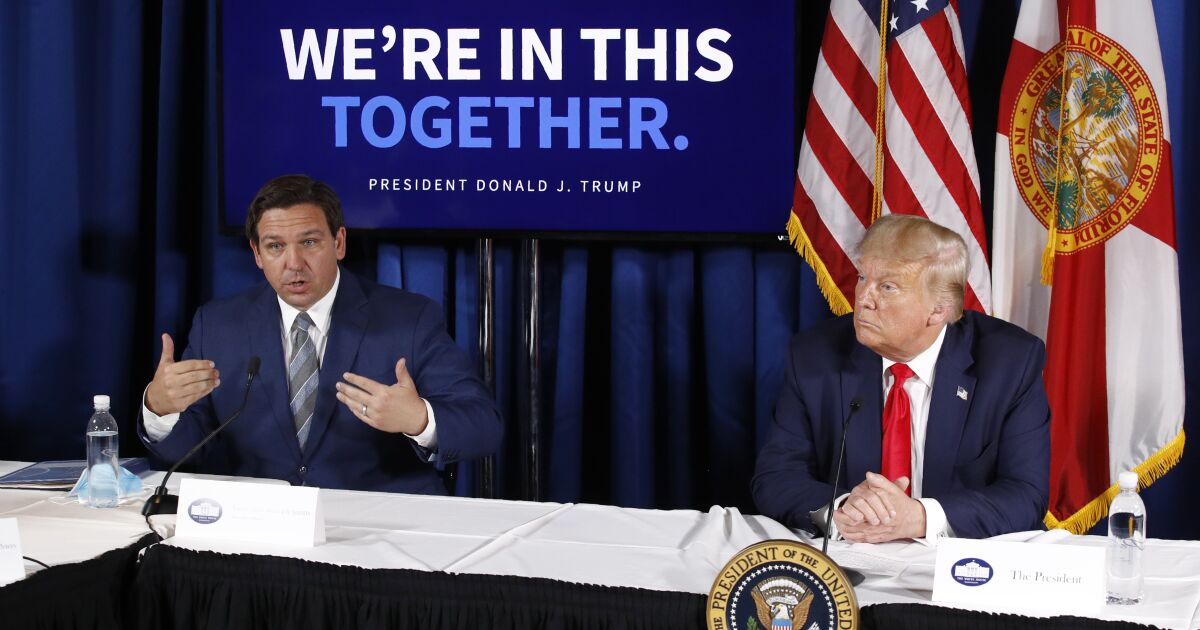
This week, Gov. Ron DeSantis of Florida fielded what should have been an easy question. He gave a dangerous answer.

On a conservative podcast, DeSantis was asked whether, if elected president, he would consider pardoning former President Donald Trump and the Jan. 6 rioters. Instead of saying “no,” he dangled carrots — the first in the direction of conspiracy theorists, as he said a DeSantis administration would look for “any example of disfavoured treatment based on politics or weaponization.”

The second carrot was for any racists listening.

“If there are other people who did the same thing, but just in a context like [Black Lives Matter], and they don’t get prosecuted at all, that is uneven application of justice, and so we’re going to find ways where that did not happen. And then we will use the pardon power — and I will do that at the front end,” he said.

There is only one reason for DeSantis to bring up Black Lives Matter in a conversation about Trump and Jan. 6: the false-equivalency shell game. Which, sure, is generally an effective political tool, but I think Republicans forfeited this particular maneuver when Senate Minority Leader Mitch McConnell said in December: “The entire nation knows who is responsible for that day.”

Even Tucker Carlson knew Trump had crossed a line. He may have intended to say that only in private, but he did say it, in texts that have since come to light.

So is DeSantis positioning himself further out in the fringe than Carlson? The governor’s lukewarm defense of democracy and the rule of law was not only a message to Trump supporters but to Trump himself: a warning to the former president that if he gets on DeSantis’ bad side, and DeSantis makes it to the White House, that pardon might not come to fruition.

Ultimately, what DeSantis is dangling is less like a carrot and more like a ticking bomb. Pardoning domestic terrorists is setting up the nation for decades of pain that ought to be put behind us. How do we know? Because it’s been done before.

After the Civil War, President Andrew Johnson pardoned Confederate soldiers, and you know what happened? Let’s just say the spirit of the rebellion lived on. Or rather, lives on. There was a veteran of the Confederacy serving in the Senate as late as 1921, the same year as the Tulsa race massacre. A century later, on Jan. 6, 2021, a Confederate battle flag was carried into the Capitol — a place that flag had not reached during the actual war. Johnson’s pardon did not bring healing or justice. It brought Jim Crow laws. Not that Johnson cared. He vetoed a bill guaranteeing the citizenship of Black people immediately after the Civil War. Congress had to override him. That’s not “critical race theory,” by the way. That’s just what happened.

So no, Gov. DeSantis, this nation can’t appease insurrectionists and racists in an effort to kumbaya its way past Jan. 6. If it isn’t rooted out ruthlessly, that kind of cancer will always return.

This week, Gov. Ron DeSantis of Florida fielded what should have been an easy question. He gave a dangerous answer.

On a conservative podcast, DeSantis was asked whether, if elected president, he would consider pardoning former President Donald Trump and the Jan. 6 rioters. Instead of saying “no,” he dangled carrots — the first in the direction of conspiracy theorists, as he said a DeSantis administration would look for “any example of disfavoured treatment based on politics or weaponization.”

The second carrot was for any racists listening.

“If there are other people who did the same thing, but just in a context like [Black Lives Matter], and they don’t get prosecuted at all, that is uneven application of justice, and so we’re going to find ways where that did not happen. And then we will use the pardon power — and I will do that at the front end,” he said.

There is only one reason for DeSantis to bring up Black Lives Matter in a conversation about Trump and Jan. 6: the false-equivalency shell game. Which, sure, is generally an effective political tool, but I think Republicans forfeited this particular maneuver when Senate Minority Leader Mitch McConnell said in December: “The entire nation knows who is responsible for that day.”

Even Tucker Carlson knew Trump had crossed a line. He may have intended to say that only in private, but he did say it, in texts that have since come to light.

So is DeSantis positioning himself further out in the fringe than Carlson? The governor’s lukewarm defense of democracy and the rule of law was not only a message to Trump supporters but to Trump himself: a warning to the former president that if he gets on DeSantis’ bad side, and DeSantis makes it to the White House, that pardon might not come to fruition.

Ultimately, what DeSantis is dangling is less like a carrot and more like a ticking bomb. Pardoning domestic terrorists is setting up the nation for decades of pain that ought to be put behind us. How do we know? Because it’s been done before.

After the Civil War, President Andrew Johnson pardoned Confederate soldiers, and you know what happened? Let’s just say the spirit of the rebellion lived on. Or rather, lives on. There was a veteran of the Confederacy serving in the Senate as late as 1921, the same year as the Tulsa race massacre. A century later, on Jan. 6, 2021, a Confederate battle flag was carried into the Capitol — a place that flag had not reached during the actual war. Johnson’s pardon did not bring healing or justice. It brought Jim Crow laws. Not that Johnson cared. He vetoed a bill guaranteeing the citizenship of Black people immediately after the Civil War. Congress had to override him. That’s not “critical race theory,” by the way. That’s just what happened.

So no, Gov. DeSantis, this nation can’t appease insurrectionists and racists in an effort to kumbaya its way past Jan. 6. If it isn’t rooted out ruthlessly, that kind of cancer will always return.

This week, Gov. Ron DeSantis of Florida fielded what should have been an easy question. He gave a dangerous answer.

On a conservative podcast, DeSantis was asked whether, if elected president, he would consider pardoning former President Donald Trump and the Jan. 6 rioters. Instead of saying “no,” he dangled carrots — the first in the direction of conspiracy theorists, as he said a DeSantis administration would look for “any example of disfavoured treatment based on politics or weaponization.”

The second carrot was for any racists listening.

“If there are other people who did the same thing, but just in a context like [Black Lives Matter], and they don’t get prosecuted at all, that is uneven application of justice, and so we’re going to find ways where that did not happen. And then we will use the pardon power — and I will do that at the front end,” he said.

There is only one reason for DeSantis to bring up Black Lives Matter in a conversation about Trump and Jan. 6: the false-equivalency shell game. Which, sure, is generally an effective political tool, but I think Republicans forfeited this particular maneuver when Senate Minority Leader Mitch McConnell said in December: “The entire nation knows who is responsible for that day.”

Even Tucker Carlson knew Trump had crossed a line. He may have intended to say that only in private, but he did say it, in texts that have since come to light.

So is DeSantis positioning himself further out in the fringe than Carlson? The governor’s lukewarm defense of democracy and the rule of law was not only a message to Trump supporters but to Trump himself: a warning to the former president that if he gets on DeSantis’ bad side, and DeSantis makes it to the White House, that pardon might not come to fruition.

Ultimately, what DeSantis is dangling is less like a carrot and more like a ticking bomb. Pardoning domestic terrorists is setting up the nation for decades of pain that ought to be put behind us. How do we know? Because it’s been done before.

After the Civil War, President Andrew Johnson pardoned Confederate soldiers, and you know what happened? Let’s just say the spirit of the rebellion lived on. Or rather, lives on. There was a veteran of the Confederacy serving in the Senate as late as 1921, the same year as the Tulsa race massacre. A century later, on Jan. 6, 2021, a Confederate battle flag was carried into the Capitol — a place that flag had not reached during the actual war. Johnson’s pardon did not bring healing or justice. It brought Jim Crow laws. Not that Johnson cared. He vetoed a bill guaranteeing the citizenship of Black people immediately after the Civil War. Congress had to override him. That’s not “critical race theory,” by the way. That’s just what happened.

So no, Gov. DeSantis, this nation can’t appease insurrectionists and racists in an effort to kumbaya its way past Jan. 6. If it isn’t rooted out ruthlessly, that kind of cancer will always return.


This week, Gov. Ron DeSantis of Florida fielded what should have been an easy question. He gave a dangerous answer.

On a conservative podcast, DeSantis was asked whether, if elected president, he would consider pardoning former President Donald Trump and the Jan. 6 rioters. Instead of saying “no,” he dangled carrots — the first in the direction of conspiracy theorists, as he said a DeSantis administration would look for “any example of disfavoured treatment based on politics or weaponization.”

The second carrot was for any racists listening.

“If there are other people who did the same thing, but just in a context like [Black Lives Matter], and they don’t get prosecuted at all, that is uneven application of justice, and so we’re going to find ways where that did not happen. And then we will use the pardon power — and I will do that at the front end,” he said.

There is only one reason for DeSantis to bring up Black Lives Matter in a conversation about Trump and Jan. 6: the false-equivalency shell game. Which, sure, is generally an effective political tool, but I think Republicans forfeited this particular maneuver when Senate Minority Leader Mitch McConnell said in December: “The entire nation knows who is responsible for that day.”

Even Tucker Carlson knew Trump had crossed a line. He may have intended to say that only in private, but he did say it, in texts that have since come to light.

So is DeSantis positioning himself further out in the fringe than Carlson? The governor’s lukewarm defense of democracy and the rule of law was not only a message to Trump supporters but to Trump himself: a warning to the former president that if he gets on DeSantis’ bad side, and DeSantis makes it to the White House, that pardon might not come to fruition.

Ultimately, what DeSantis is dangling is less like a carrot and more like a ticking bomb. Pardoning domestic terrorists is setting up the nation for decades of pain that ought to be put behind us. How do we know? Because it’s been done before.

After the Civil War, President Andrew Johnson pardoned Confederate soldiers, and you know what happened? Let’s just say the spirit of the rebellion lived on. Or rather, lives on. There was a veteran of the Confederacy serving in the Senate as late as 1921, the same year as the Tulsa race massacre. A century later, on Jan. 6, 2021, a Confederate battle flag was carried into the Capitol — a place that flag had not reached during the actual war. Johnson’s pardon did not bring healing or justice. It brought Jim Crow laws. Not that Johnson cared. He vetoed a bill guaranteeing the citizenship of Black people immediately after the Civil War. Congress had to override him. That’s not “critical race theory,” by the way. That’s just what happened.

So no, Gov. DeSantis, this nation can’t appease insurrectionists and racists in an effort to kumbaya its way past Jan. 6. If it isn’t rooted out ruthlessly, that kind of cancer will always return.

This week, Gov. Ron DeSantis of Florida fielded what should have been an easy question. He gave a dangerous answer.

On a conservative podcast, DeSantis was asked whether, if elected president, he would consider pardoning former President Donald Trump and the Jan. 6 rioters. Instead of saying “no,” he dangled carrots — the first in the direction of conspiracy theorists, as he said a DeSantis administration would look for “any example of disfavoured treatment based on politics or weaponization.”

The second carrot was for any racists listening.

“If there are other people who did the same thing, but just in a context like [Black Lives Matter], and they don’t get prosecuted at all, that is uneven application of justice, and so we’re going to find ways where that did not happen. And then we will use the pardon power — and I will do that at the front end,” he said.

There is only one reason for DeSantis to bring up Black Lives Matter in a conversation about Trump and Jan. 6: the false-equivalency shell game. Which, sure, is generally an effective political tool, but I think Republicans forfeited this particular maneuver when Senate Minority Leader Mitch McConnell said in December: “The entire nation knows who is responsible for that day.”

Even Tucker Carlson knew Trump had crossed a line. He may have intended to say that only in private, but he did say it, in texts that have since come to light.

So is DeSantis positioning himself further out in the fringe than Carlson? The governor’s lukewarm defense of democracy and the rule of law was not only a message to Trump supporters but to Trump himself: a warning to the former president that if he gets on DeSantis’ bad side, and DeSantis makes it to the White House, that pardon might not come to fruition.

Ultimately, what DeSantis is dangling is less like a carrot and more like a ticking bomb. Pardoning domestic terrorists is setting up the nation for decades of pain that ought to be put behind us. How do we know? Because it’s been done before.

After the Civil War, President Andrew Johnson pardoned Confederate soldiers, and you know what happened? Let’s just say the spirit of the rebellion lived on. Or rather, lives on. There was a veteran of the Confederacy serving in the Senate as late as 1921, the same year as the Tulsa race massacre. A century later, on Jan. 6, 2021, a Confederate battle flag was carried into the Capitol — a place that flag had not reached during the actual war. Johnson’s pardon did not bring healing or justice. It brought Jim Crow laws. Not that Johnson cared. He vetoed a bill guaranteeing the citizenship of Black people immediately after the Civil War. Congress had to override him. That’s not “critical race theory,” by the way. That’s just what happened.

So no, Gov. DeSantis, this nation can’t appease insurrectionists and racists in an effort to kumbaya its way past Jan. 6. If it isn’t rooted out ruthlessly, that kind of cancer will always return.

This week, Gov. Ron DeSantis of Florida fielded what should have been an easy question. He gave a dangerous answer.

On a conservative podcast, DeSantis was asked whether, if elected president, he would consider pardoning former President Donald Trump and the Jan. 6 rioters. Instead of saying “no,” he dangled carrots — the first in the direction of conspiracy theorists, as he said a DeSantis administration would look for “any example of disfavoured treatment based on politics or weaponization.”

The second carrot was for any racists listening.

“If there are other people who did the same thing, but just in a context like [Black Lives Matter], and they don’t get prosecuted at all, that is uneven application of justice, and so we’re going to find ways where that did not happen. And then we will use the pardon power — and I will do that at the front end,” he said.

There is only one reason for DeSantis to bring up Black Lives Matter in a conversation about Trump and Jan. 6: the false-equivalency shell game. Which, sure, is generally an effective political tool, but I think Republicans forfeited this particular maneuver when Senate Minority Leader Mitch McConnell said in December: “The entire nation knows who is responsible for that day.”

Even Tucker Carlson knew Trump had crossed a line. He may have intended to say that only in private, but he did say it, in texts that have since come to light.

So is DeSantis positioning himself further out in the fringe than Carlson? The governor’s lukewarm defense of democracy and the rule of law was not only a message to Trump supporters but to Trump himself: a warning to the former president that if he gets on DeSantis’ bad side, and DeSantis makes it to the White House, that pardon might not come to fruition.

Ultimately, what DeSantis is dangling is less like a carrot and more like a ticking bomb. Pardoning domestic terrorists is setting up the nation for decades of pain that ought to be put behind us. How do we know? Because it’s been done before.

After the Civil War, President Andrew Johnson pardoned Confederate soldiers, and you know what happened? Let’s just say the spirit of the rebellion lived on. Or rather, lives on. There was a veteran of the Confederacy serving in the Senate as late as 1921, the same year as the Tulsa race massacre. A century later, on Jan. 6, 2021, a Confederate battle flag was carried into the Capitol — a place that flag had not reached during the actual war. Johnson’s pardon did not bring healing or justice. It brought Jim Crow laws. Not that Johnson cared. He vetoed a bill guaranteeing the citizenship of Black people immediately after the Civil War. Congress had to override him. That’s not “critical race theory,” by the way. That’s just what happened.

So no, Gov. DeSantis, this nation can’t appease insurrectionists and racists in an effort to kumbaya its way past Jan. 6. If it isn’t rooted out ruthlessly, that kind of cancer will always return.

This week, Gov. Ron DeSantis of Florida fielded what should have been an easy question. He gave a dangerous answer.

On a conservative podcast, DeSantis was asked whether, if elected president, he would consider pardoning former President Donald Trump and the Jan. 6 rioters. Instead of saying “no,” he dangled carrots — the first in the direction of conspiracy theorists, as he said a DeSantis administration would look for “any example of disfavoured treatment based on politics or weaponization.”

The second carrot was for any racists listening.

“If there are other people who did the same thing, but just in a context like [Black Lives Matter], and they don’t get prosecuted at all, that is uneven application of justice, and so we’re going to find ways where that did not happen. And then we will use the pardon power — and I will do that at the front end,” he said.

There is only one reason for DeSantis to bring up Black Lives Matter in a conversation about Trump and Jan. 6: the false-equivalency shell game. Which, sure, is generally an effective political tool, but I think Republicans forfeited this particular maneuver when Senate Minority Leader Mitch McConnell said in December: “The entire nation knows who is responsible for that day.”

Even Tucker Carlson knew Trump had crossed a line. He may have intended to say that only in private, but he did say it, in texts that have since come to light.

So is DeSantis positioning himself further out in the fringe than Carlson? The governor’s lukewarm defense of democracy and the rule of law was not only a message to Trump supporters but to Trump himself: a warning to the former president that if he gets on DeSantis’ bad side, and DeSantis makes it to the White House, that pardon might not come to fruition.

Ultimately, what DeSantis is dangling is less like a carrot and more like a ticking bomb. Pardoning domestic terrorists is setting up the nation for decades of pain that ought to be put behind us. How do we know? Because it’s been done before.

After the Civil War, President Andrew Johnson pardoned Confederate soldiers, and you know what happened? Let’s just say the spirit of the rebellion lived on. Or rather, lives on. There was a veteran of the Confederacy serving in the Senate as late as 1921, the same year as the Tulsa race massacre. A century later, on Jan. 6, 2021, a Confederate battle flag was carried into the Capitol — a place that flag had not reached during the actual war. Johnson’s pardon did not bring healing or justice. It brought Jim Crow laws. Not that Johnson cared. He vetoed a bill guaranteeing the citizenship of Black people immediately after the Civil War. Congress had to override him. That’s not “critical race theory,” by the way. That’s just what happened.

So no, Gov. DeSantis, this nation can’t appease insurrectionists and racists in an effort to kumbaya its way past Jan. 6. If it isn’t rooted out ruthlessly, that kind of cancer will always return.

This week, Gov. Ron DeSantis of Florida fielded what should have been an easy question. He gave a dangerous answer.

On a conservative podcast, DeSantis was asked whether, if elected president, he would consider pardoning former President Donald Trump and the Jan. 6 rioters. Instead of saying “no,” he dangled carrots — the first in the direction of conspiracy theorists, as he said a DeSantis administration would look for “any example of disfavoured treatment based on politics or weaponization.”

The second carrot was for any racists listening.

“If there are other people who did the same thing, but just in a context like [Black Lives Matter], and they don’t get prosecuted at all, that is uneven application of justice, and so we’re going to find ways where that did not happen. And then we will use the pardon power — and I will do that at the front end,” he said.

There is only one reason for DeSantis to bring up Black Lives Matter in a conversation about Trump and Jan. 6: the false-equivalency shell game. Which, sure, is generally an effective political tool, but I think Republicans forfeited this particular maneuver when Senate Minority Leader Mitch McConnell said in December: “The entire nation knows who is responsible for that day.”

Even Tucker Carlson knew Trump had crossed a line. He may have intended to say that only in private, but he did say it, in texts that have since come to light.

So is DeSantis positioning himself further out in the fringe than Carlson? The governor’s lukewarm defense of democracy and the rule of law was not only a message to Trump supporters but to Trump himself: a warning to the former president that if he gets on DeSantis’ bad side, and DeSantis makes it to the White House, that pardon might not come to fruition.

Ultimately, what DeSantis is dangling is less like a carrot and more like a ticking bomb. Pardoning domestic terrorists is setting up the nation for decades of pain that ought to be put behind us. How do we know? Because it’s been done before.

After the Civil War, President Andrew Johnson pardoned Confederate soldiers, and you know what happened? Let’s just say the spirit of the rebellion lived on. Or rather, lives on. There was a veteran of the Confederacy serving in the Senate as late as 1921, the same year as the Tulsa race massacre. A century later, on Jan. 6, 2021, a Confederate battle flag was carried into the Capitol — a place that flag had not reached during the actual war. Johnson’s pardon did not bring healing or justice. It brought Jim Crow laws. Not that Johnson cared. He vetoed a bill guaranteeing the citizenship of Black people immediately after the Civil War. Congress had to override him. That’s not “critical race theory,” by the way. That’s just what happened.

So no, Gov. DeSantis, this nation can’t appease insurrectionists and racists in an effort to kumbaya its way past Jan. 6. If it isn’t rooted out ruthlessly, that kind of cancer will always return.

This week, Gov. Ron DeSantis of Florida fielded what should have been an easy question. He gave a dangerous answer.

On a conservative podcast, DeSantis was asked whether, if elected president, he would consider pardoning former President Donald Trump and the Jan. 6 rioters. Instead of saying “no,” he dangled carrots — the first in the direction of conspiracy theorists, as he said a DeSantis administration would look for “any example of disfavoured treatment based on politics or weaponization.”

The second carrot was for any racists listening.

“If there are other people who did the same thing, but just in a context like [Black Lives Matter], and they don’t get prosecuted at all, that is uneven application of justice, and so we’re going to find ways where that did not happen. And then we will use the pardon power — and I will do that at the front end,” he said.

There is only one reason for DeSantis to bring up Black Lives Matter in a conversation about Trump and Jan. 6: the false-equivalency shell game. Which, sure, is generally an effective political tool, but I think Republicans forfeited this particular maneuver when Senate Minority Leader Mitch McConnell said in December: “The entire nation knows who is responsible for that day.”

Even Tucker Carlson knew Trump had crossed a line. He may have intended to say that only in private, but he did say it, in texts that have since come to light.

So is DeSantis positioning himself further out in the fringe than Carlson? The governor’s lukewarm defense of democracy and the rule of law was not only a message to Trump supporters but to Trump himself: a warning to the former president that if he gets on DeSantis’ bad side, and DeSantis makes it to the White House, that pardon might not come to fruition.

Ultimately, what DeSantis is dangling is less like a carrot and more like a ticking bomb. Pardoning domestic terrorists is setting up the nation for decades of pain that ought to be put behind us. How do we know? Because it’s been done before.

After the Civil War, President Andrew Johnson pardoned Confederate soldiers, and you know what happened? Let’s just say the spirit of the rebellion lived on. Or rather, lives on. There was a veteran of the Confederacy serving in the Senate as late as 1921, the same year as the Tulsa race massacre. A century later, on Jan. 6, 2021, a Confederate battle flag was carried into the Capitol — a place that flag had not reached during the actual war. Johnson’s pardon did not bring healing or justice. It brought Jim Crow laws. Not that Johnson cared. He vetoed a bill guaranteeing the citizenship of Black people immediately after the Civil War. Congress had to override him. That’s not “critical race theory,” by the way. That’s just what happened.

So no, Gov. DeSantis, this nation can’t appease insurrectionists and racists in an effort to kumbaya its way past Jan. 6. If it isn’t rooted out ruthlessly, that kind of cancer will always return.

This week, Gov. Ron DeSantis of Florida fielded what should have been an easy question. He gave a dangerous answer.

On a conservative podcast, DeSantis was asked whether, if elected president, he would consider pardoning former President Donald Trump and the Jan. 6 rioters. Instead of saying “no,” he dangled carrots — the first in the direction of conspiracy theorists, as he said a DeSantis administration would look for “any example of disfavoured treatment based on politics or weaponization.”

The second carrot was for any racists listening.

“If there are other people who did the same thing, but just in a context like [Black Lives Matter], and they don’t get prosecuted at all, that is uneven application of justice, and so we’re going to find ways where that did not happen. And then we will use the pardon power — and I will do that at the front end,” he said.

There is only one reason for DeSantis to bring up Black Lives Matter in a conversation about Trump and Jan. 6: the false-equivalency shell game. Which, sure, is generally an effective political tool, but I think Republicans forfeited this particular maneuver when Senate Minority Leader Mitch McConnell said in December: “The entire nation knows who is responsible for that day.”

Even Tucker Carlson knew Trump had crossed a line. He may have intended to say that only in private, but he did say it, in texts that have since come to light.

So is DeSantis positioning himself further out in the fringe than Carlson? The governor’s lukewarm defense of democracy and the rule of law was not only a message to Trump supporters but to Trump himself: a warning to the former president that if he gets on DeSantis’ bad side, and DeSantis makes it to the White House, that pardon might not come to fruition.

Ultimately, what DeSantis is dangling is less like a carrot and more like a ticking bomb. Pardoning domestic terrorists is setting up the nation for decades of pain that ought to be put behind us. How do we know? Because it’s been done before.

After the Civil War, President Andrew Johnson pardoned Confederate soldiers, and you know what happened? Let’s just say the spirit of the rebellion lived on. Or rather, lives on. There was a veteran of the Confederacy serving in the Senate as late as 1921, the same year as the Tulsa race massacre. A century later, on Jan. 6, 2021, a Confederate battle flag was carried into the Capitol — a place that flag had not reached during the actual war. Johnson’s pardon did not bring healing or justice. It brought Jim Crow laws. Not that Johnson cared. He vetoed a bill guaranteeing the citizenship of Black people immediately after the Civil War. Congress had to override him. That’s not “critical race theory,” by the way. That’s just what happened.

So no, Gov. DeSantis, this nation can’t appease insurrectionists and racists in an effort to kumbaya its way past Jan. 6. If it isn’t rooted out ruthlessly, that kind of cancer will always return.

This week, Gov. Ron DeSantis of Florida fielded what should have been an easy question. He gave a dangerous answer.

On a conservative podcast, DeSantis was asked whether, if elected president, he would consider pardoning former President Donald Trump and the Jan. 6 rioters. Instead of saying “no,” he dangled carrots — the first in the direction of conspiracy theorists, as he said a DeSantis administration would look for “any example of disfavoured treatment based on politics or weaponization.”

The second carrot was for any racists listening.

“If there are other people who did the same thing, but just in a context like [Black Lives Matter], and they don’t get prosecuted at all, that is uneven application of justice, and so we’re going to find ways where that did not happen. And then we will use the pardon power — and I will do that at the front end,” he said.

There is only one reason for DeSantis to bring up Black Lives Matter in a conversation about Trump and Jan. 6: the false-equivalency shell game. Which, sure, is generally an effective political tool, but I think Republicans forfeited this particular maneuver when Senate Minority Leader Mitch McConnell said in December: “The entire nation knows who is responsible for that day.”

Even Tucker Carlson knew Trump had crossed a line. He may have intended to say that only in private, but he did say it, in texts that have since come to light.

So is DeSantis positioning himself further out in the fringe than Carlson? The governor’s lukewarm defense of democracy and the rule of law was not only a message to Trump supporters but to Trump himself: a warning to the former president that if he gets on DeSantis’ bad side, and DeSantis makes it to the White House, that pardon might not come to fruition.

Ultimately, what DeSantis is dangling is less like a carrot and more like a ticking bomb. Pardoning domestic terrorists is setting up the nation for decades of pain that ought to be put behind us. How do we know? Because it’s been done before.

After the Civil War, President Andrew Johnson pardoned Confederate soldiers, and you know what happened? Let’s just say the spirit of the rebellion lived on. Or rather, lives on. There was a veteran of the Confederacy serving in the Senate as late as 1921, the same year as the Tulsa race massacre. A century later, on Jan. 6, 2021, a Confederate battle flag was carried into the Capitol — a place that flag had not reached during the actual war. Johnson’s pardon did not bring healing or justice. It brought Jim Crow laws. Not that Johnson cared. He vetoed a bill guaranteeing the citizenship of Black people immediately after the Civil War. Congress had to override him. That’s not “critical race theory,” by the way. That’s just what happened.

So no, Gov. DeSantis, this nation can’t appease insurrectionists and racists in an effort to kumbaya its way past Jan. 6. If it isn’t rooted out ruthlessly, that kind of cancer will always return.

This week, Gov. Ron DeSantis of Florida fielded what should have been an easy question. He gave a dangerous answer.

On a conservative podcast, DeSantis was asked whether, if elected president, he would consider pardoning former President Donald Trump and the Jan. 6 rioters. Instead of saying “no,” he dangled carrots — the first in the direction of conspiracy theorists, as he said a DeSantis administration would look for “any example of disfavoured treatment based on politics or weaponization.”

The second carrot was for any racists listening.

“If there are other people who did the same thing, but just in a context like [Black Lives Matter], and they don’t get prosecuted at all, that is uneven application of justice, and so we’re going to find ways where that did not happen. And then we will use the pardon power — and I will do that at the front end,” he said.

There is only one reason for DeSantis to bring up Black Lives Matter in a conversation about Trump and Jan. 6: the false-equivalency shell game. Which, sure, is generally an effective political tool, but I think Republicans forfeited this particular maneuver when Senate Minority Leader Mitch McConnell said in December: “The entire nation knows who is responsible for that day.”

Even Tucker Carlson knew Trump had crossed a line. He may have intended to say that only in private, but he did say it, in texts that have since come to light.

So is DeSantis positioning himself further out in the fringe than Carlson? The governor’s lukewarm defense of democracy and the rule of law was not only a message to Trump supporters but to Trump himself: a warning to the former president that if he gets on DeSantis’ bad side, and DeSantis makes it to the White House, that pardon might not come to fruition.

Ultimately, what DeSantis is dangling is less like a carrot and more like a ticking bomb. Pardoning domestic terrorists is setting up the nation for decades of pain that ought to be put behind us. How do we know? Because it’s been done before.

After the Civil War, President Andrew Johnson pardoned Confederate soldiers, and you know what happened? Let’s just say the spirit of the rebellion lived on. Or rather, lives on. There was a veteran of the Confederacy serving in the Senate as late as 1921, the same year as the Tulsa race massacre. A century later, on Jan. 6, 2021, a Confederate battle flag was carried into the Capitol — a place that flag had not reached during the actual war. Johnson’s pardon did not bring healing or justice. It brought Jim Crow laws. Not that Johnson cared. He vetoed a bill guaranteeing the citizenship of Black people immediately after the Civil War. Congress had to override him. That’s not “critical race theory,” by the way. That’s just what happened.

So no, Gov. DeSantis, this nation can’t appease insurrectionists and racists in an effort to kumbaya its way past Jan. 6. If it isn’t rooted out ruthlessly, that kind of cancer will always return.

This week, Gov. Ron DeSantis of Florida fielded what should have been an easy question. He gave a dangerous answer.

On a conservative podcast, DeSantis was asked whether, if elected president, he would consider pardoning former President Donald Trump and the Jan. 6 rioters. Instead of saying “no,” he dangled carrots — the first in the direction of conspiracy theorists, as he said a DeSantis administration would look for “any example of disfavoured treatment based on politics or weaponization.”

The second carrot was for any racists listening.

“If there are other people who did the same thing, but just in a context like [Black Lives Matter], and they don’t get prosecuted at all, that is uneven application of justice, and so we’re going to find ways where that did not happen. And then we will use the pardon power — and I will do that at the front end,” he said.

There is only one reason for DeSantis to bring up Black Lives Matter in a conversation about Trump and Jan. 6: the false-equivalency shell game. Which, sure, is generally an effective political tool, but I think Republicans forfeited this particular maneuver when Senate Minority Leader Mitch McConnell said in December: “The entire nation knows who is responsible for that day.”

Even Tucker Carlson knew Trump had crossed a line. He may have intended to say that only in private, but he did say it, in texts that have since come to light.

So is DeSantis positioning himself further out in the fringe than Carlson? The governor’s lukewarm defense of democracy and the rule of law was not only a message to Trump supporters but to Trump himself: a warning to the former president that if he gets on DeSantis’ bad side, and DeSantis makes it to the White House, that pardon might not come to fruition.

Ultimately, what DeSantis is dangling is less like a carrot and more like a ticking bomb. Pardoning domestic terrorists is setting up the nation for decades of pain that ought to be put behind us. How do we know? Because it’s been done before.

After the Civil War, President Andrew Johnson pardoned Confederate soldiers, and you know what happened? Let’s just say the spirit of the rebellion lived on. Or rather, lives on. There was a veteran of the Confederacy serving in the Senate as late as 1921, the same year as the Tulsa race massacre. A century later, on Jan. 6, 2021, a Confederate battle flag was carried into the Capitol — a place that flag had not reached during the actual war. Johnson’s pardon did not bring healing or justice. It brought Jim Crow laws. Not that Johnson cared. He vetoed a bill guaranteeing the citizenship of Black people immediately after the Civil War. Congress had to override him. That’s not “critical race theory,” by the way. That’s just what happened.

So no, Gov. DeSantis, this nation can’t appease insurrectionists and racists in an effort to kumbaya its way past Jan. 6. If it isn’t rooted out ruthlessly, that kind of cancer will always return.

This week, Gov. Ron DeSantis of Florida fielded what should have been an easy question. He gave a dangerous answer.

On a conservative podcast, DeSantis was asked whether, if elected president, he would consider pardoning former President Donald Trump and the Jan. 6 rioters. Instead of saying “no,” he dangled carrots — the first in the direction of conspiracy theorists, as he said a DeSantis administration would look for “any example of disfavoured treatment based on politics or weaponization.”

The second carrot was for any racists listening.

“If there are other people who did the same thing, but just in a context like [Black Lives Matter], and they don’t get prosecuted at all, that is uneven application of justice, and so we’re going to find ways where that did not happen. And then we will use the pardon power — and I will do that at the front end,” he said.

There is only one reason for DeSantis to bring up Black Lives Matter in a conversation about Trump and Jan. 6: the false-equivalency shell game. Which, sure, is generally an effective political tool, but I think Republicans forfeited this particular maneuver when Senate Minority Leader Mitch McConnell said in December: “The entire nation knows who is responsible for that day.”

Even Tucker Carlson knew Trump had crossed a line. He may have intended to say that only in private, but he did say it, in texts that have since come to light.

So is DeSantis positioning himself further out in the fringe than Carlson? The governor’s lukewarm defense of democracy and the rule of law was not only a message to Trump supporters but to Trump himself: a warning to the former president that if he gets on DeSantis’ bad side, and DeSantis makes it to the White House, that pardon might not come to fruition.

Ultimately, what DeSantis is dangling is less like a carrot and more like a ticking bomb. Pardoning domestic terrorists is setting up the nation for decades of pain that ought to be put behind us. How do we know? Because it’s been done before.

After the Civil War, President Andrew Johnson pardoned Confederate soldiers, and you know what happened? Let’s just say the spirit of the rebellion lived on. Or rather, lives on. There was a veteran of the Confederacy serving in the Senate as late as 1921, the same year as the Tulsa race massacre. A century later, on Jan. 6, 2021, a Confederate battle flag was carried into the Capitol — a place that flag had not reached during the actual war. Johnson’s pardon did not bring healing or justice. It brought Jim Crow laws. Not that Johnson cared. He vetoed a bill guaranteeing the citizenship of Black people immediately after the Civil War. Congress had to override him. That’s not “critical race theory,” by the way. That’s just what happened.

So no, Gov. DeSantis, this nation can’t appease insurrectionists and racists in an effort to kumbaya its way past Jan. 6. If it isn’t rooted out ruthlessly, that kind of cancer will always return.

This week, Gov. Ron DeSantis of Florida fielded what should have been an easy question. He gave a dangerous answer.

On a conservative podcast, DeSantis was asked whether, if elected president, he would consider pardoning former President Donald Trump and the Jan. 6 rioters. Instead of saying “no,” he dangled carrots — the first in the direction of conspiracy theorists, as he said a DeSantis administration would look for “any example of disfavoured treatment based on politics or weaponization.”

The second carrot was for any racists listening.

“If there are other people who did the same thing, but just in a context like [Black Lives Matter], and they don’t get prosecuted at all, that is uneven application of justice, and so we’re going to find ways where that did not happen. And then we will use the pardon power — and I will do that at the front end,” he said.

There is only one reason for DeSantis to bring up Black Lives Matter in a conversation about Trump and Jan. 6: the false-equivalency shell game. Which, sure, is generally an effective political tool, but I think Republicans forfeited this particular maneuver when Senate Minority Leader Mitch McConnell said in December: “The entire nation knows who is responsible for that day.”

Even Tucker Carlson knew Trump had crossed a line. He may have intended to say that only in private, but he did say it, in texts that have since come to light.

So is DeSantis positioning himself further out in the fringe than Carlson? The governor’s lukewarm defense of democracy and the rule of law was not only a message to Trump supporters but to Trump himself: a warning to the former president that if he gets on DeSantis’ bad side, and DeSantis makes it to the White House, that pardon might not come to fruition.

Ultimately, what DeSantis is dangling is less like a carrot and more like a ticking bomb. Pardoning domestic terrorists is setting up the nation for decades of pain that ought to be put behind us. How do we know? Because it’s been done before.

After the Civil War, President Andrew Johnson pardoned Confederate soldiers, and you know what happened? Let’s just say the spirit of the rebellion lived on. Or rather, lives on. There was a veteran of the Confederacy serving in the Senate as late as 1921, the same year as the Tulsa race massacre. A century later, on Jan. 6, 2021, a Confederate battle flag was carried into the Capitol — a place that flag had not reached during the actual war. Johnson’s pardon did not bring healing or justice. It brought Jim Crow laws. Not that Johnson cared. He vetoed a bill guaranteeing the citizenship of Black people immediately after the Civil War. Congress had to override him. That’s not “critical race theory,” by the way. That’s just what happened.

So no, Gov. DeSantis, this nation can’t appease insurrectionists and racists in an effort to kumbaya its way past Jan. 6. If it isn’t rooted out ruthlessly, that kind of cancer will always return.

This week, Gov. Ron DeSantis of Florida fielded what should have been an easy question. He gave a dangerous answer.

On a conservative podcast, DeSantis was asked whether, if elected president, he would consider pardoning former President Donald Trump and the Jan. 6 rioters. Instead of saying “no,” he dangled carrots — the first in the direction of conspiracy theorists, as he said a DeSantis administration would look for “any example of disfavoured treatment based on politics or weaponization.”

The second carrot was for any racists listening.

“If there are other people who did the same thing, but just in a context like [Black Lives Matter], and they don’t get prosecuted at all, that is uneven application of justice, and so we’re going to find ways where that did not happen. And then we will use the pardon power — and I will do that at the front end,” he said.

There is only one reason for DeSantis to bring up Black Lives Matter in a conversation about Trump and Jan. 6: the false-equivalency shell game. Which, sure, is generally an effective political tool, but I think Republicans forfeited this particular maneuver when Senate Minority Leader Mitch McConnell said in December: “The entire nation knows who is responsible for that day.”

Even Tucker Carlson knew Trump had crossed a line. He may have intended to say that only in private, but he did say it, in texts that have since come to light.

So is DeSantis positioning himself further out in the fringe than Carlson? The governor’s lukewarm defense of democracy and the rule of law was not only a message to Trump supporters but to Trump himself: a warning to the former president that if he gets on DeSantis’ bad side, and DeSantis makes it to the White House, that pardon might not come to fruition.

Ultimately, what DeSantis is dangling is less like a carrot and more like a ticking bomb. Pardoning domestic terrorists is setting up the nation for decades of pain that ought to be put behind us. How do we know? Because it’s been done before.

After the Civil War, President Andrew Johnson pardoned Confederate soldiers, and you know what happened? Let’s just say the spirit of the rebellion lived on. Or rather, lives on. There was a veteran of the Confederacy serving in the Senate as late as 1921, the same year as the Tulsa race massacre. A century later, on Jan. 6, 2021, a Confederate battle flag was carried into the Capitol — a place that flag had not reached during the actual war. Johnson’s pardon did not bring healing or justice. It brought Jim Crow laws. Not that Johnson cared. He vetoed a bill guaranteeing the citizenship of Black people immediately after the Civil War. Congress had to override him. That’s not “critical race theory,” by the way. That’s just what happened.

So no, Gov. DeSantis, this nation can’t appease insurrectionists and racists in an effort to kumbaya its way past Jan. 6. If it isn’t rooted out ruthlessly, that kind of cancer will always return.

Previous Post

Kim Kardashian gifted Karen Bass a Skims swag bag. But L.A.’s mayor said no thanks

Next Post

A Pixar-themed hotel is coming to Disneyland Resort. Here’s a sneak peek

Leave a Reply Cancel reply

Your email address will not be published. Required fields are marked *

BROWSE BY CATEGORIES

  • Business
  • Culture
  • Entertainment
  • Health
  • Politics
  • Technology
  • Trending
  • Uncategorized
  • World
Binghamton Herald

© 2024 Binghamton Herald or its affiliated companies.

Navigate Site

  • About
  • Advertise
  • Terms & Conditions
  • Privacy Policy
  • Disclaimer
  • Contact

Follow Us

No Result
View All Result
  • Home
  • World
  • Politics
  • Business
  • Technology
  • Culture
  • Health
  • Entertainment
  • Trending

© 2024 Binghamton Herald or its affiliated companies.

Welcome Back!

Login to your account below

Forgotten Password?

Retrieve your password

Please enter your username or email address to reset your password.

Log In