

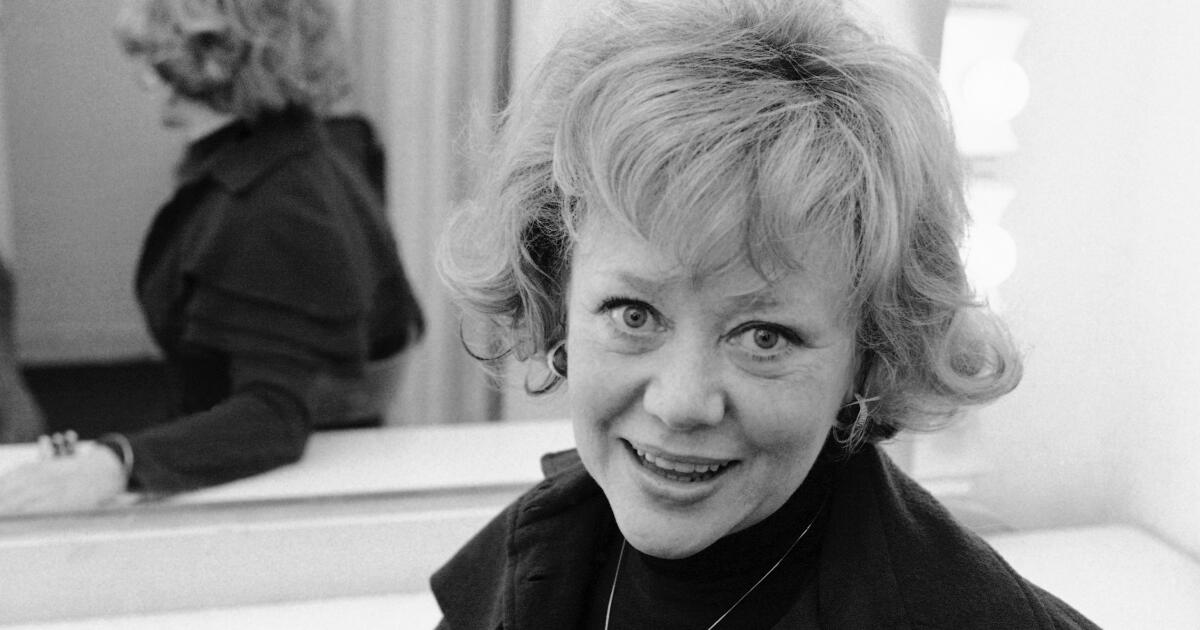
Glynis Johns, the Oscar-nominated and Tony-winning actor, dancer and singer who most notably played Mrs. Banks in Disney’s 1964 movie musical “Mary Poppins,” died Thursday in Los Angeles, her manager confirmed to The Times. She was 100.
“My heart is heavy today with the passing of my beloved client Glynis Johns,” Mitch Clem, Johns’ manager of 25 years, wrote Thursday on Facebook. “Glynis powered her way through life with intelligence, wit, and a love for performance, affecting millions of lives. … Her light shined very brightly for 100 years. She had a wit that could stop you in your tracks powered by a heart that loved deeply and purely. Today is a somber day for Hollywood. Not only do we mourn the passing of our dear Glynis, but we mourn the end of the golden age of Hollywood.”
Known for her breathy yet husky voice, Johns graced both the silver screen and the Broadway stage for more than six decades. She won a Tony Award for actress in a musical when she originated the role of Desiree Armfeldt in Stephen Sondheim’s 1973 “A Little Night Music.” In the musical, Johns performed the now-classic Broadway tune “Send in the Clowns.”
In a 2003 New York Times interview, the legendary Broadway composer and lyricist said he crafted “Send in the Clowns” specifically for Johns.
“Glynis had a lovely, crystal voice, but sustaining notes was not her thing,” Sondheim said. “I wanted to write short phrases, so I wrote a song full of questions.”
In 1964, Johns starred as the silly and jovial Winifred Banks in Disney’s “Mary Poppins,” alongside Julie Andrews and Dick Van Dyke. Playing a strident ally to the women’s movement of the early 20th century, Johns got a breakout song in the classic film with the tune “Sister Suffragette.”
Born Glynis Margaret Payne Johns in 1923 in what is now South Africa to British parents , Johns got her start in the performing world as a dancer at the age of 5. She was considered a child prodigy in dance and by age 10 received a degree to begin teaching dance. She ultimately pursued acting at 12, a choice she said was made by her parents.
“They were situations that were hard for parents to turn down,” Johns told the Los Angeles Times in 1991. “It’s difficult to turn down a chance to star with Laurence Olivier, to say, ‘No, she has to go to school.’ They had a big decision to make; I don’t know if I would’ve done any better than they did.”
In that interview she also expressed that she had longed to explore other careers. “As a youngster, I was interested in everything,” Johns said wistfully. “I wanted to be a scientist. I would’ve loved to go on and on and on at the university. But you can’t do everything in life. And I didn’t have any choice at the time.”
The British actor worked steadily on the London stage until late 1938, when she landed her first film role in the drama “South Riding,” starring famed English actor Ralph Richardson.
In 1963, Johns starred in the TV comedy series “Glynis,” in which she played an easily distracted mystery fiction writer who attempts to solve real-life mysteries alongside her lawyer husband.
Johns received an Academy Award nomination for supporting actress for 1960’s comedy-drama “The Sundowners.”
Throughout her career, Johns appeared in more than 50 films and had credits in more than 30 television series.
She is survived by her grandson, Thomas, and her three great-grandchildren. Johns will be buried next to her father in the U.K.

Glynis Johns, the Oscar-nominated and Tony-winning actor, dancer and singer who most notably played Mrs. Banks in Disney’s 1964 movie musical “Mary Poppins,” died Thursday in Los Angeles, her manager confirmed to The Times. She was 100.
“My heart is heavy today with the passing of my beloved client Glynis Johns,” Mitch Clem, Johns’ manager of 25 years, wrote Thursday on Facebook. “Glynis powered her way through life with intelligence, wit, and a love for performance, affecting millions of lives. … Her light shined very brightly for 100 years. She had a wit that could stop you in your tracks powered by a heart that loved deeply and purely. Today is a somber day for Hollywood. Not only do we mourn the passing of our dear Glynis, but we mourn the end of the golden age of Hollywood.”
Known for her breathy yet husky voice, Johns graced both the silver screen and the Broadway stage for more than six decades. She won a Tony Award for actress in a musical when she originated the role of Desiree Armfeldt in Stephen Sondheim’s 1973 “A Little Night Music.” In the musical, Johns performed the now-classic Broadway tune “Send in the Clowns.”
In a 2003 New York Times interview, the legendary Broadway composer and lyricist said he crafted “Send in the Clowns” specifically for Johns.
“Glynis had a lovely, crystal voice, but sustaining notes was not her thing,” Sondheim said. “I wanted to write short phrases, so I wrote a song full of questions.”
In 1964, Johns starred as the silly and jovial Winifred Banks in Disney’s “Mary Poppins,” alongside Julie Andrews and Dick Van Dyke. Playing a strident ally to the women’s movement of the early 20th century, Johns got a breakout song in the classic film with the tune “Sister Suffragette.”
Born Glynis Margaret Payne Johns in 1923 in what is now South Africa to British parents , Johns got her start in the performing world as a dancer at the age of 5. She was considered a child prodigy in dance and by age 10 received a degree to begin teaching dance. She ultimately pursued acting at 12, a choice she said was made by her parents.
“They were situations that were hard for parents to turn down,” Johns told the Los Angeles Times in 1991. “It’s difficult to turn down a chance to star with Laurence Olivier, to say, ‘No, she has to go to school.’ They had a big decision to make; I don’t know if I would’ve done any better than they did.”
In that interview she also expressed that she had longed to explore other careers. “As a youngster, I was interested in everything,” Johns said wistfully. “I wanted to be a scientist. I would’ve loved to go on and on and on at the university. But you can’t do everything in life. And I didn’t have any choice at the time.”
The British actor worked steadily on the London stage until late 1938, when she landed her first film role in the drama “South Riding,” starring famed English actor Ralph Richardson.
In 1963, Johns starred in the TV comedy series “Glynis,” in which she played an easily distracted mystery fiction writer who attempts to solve real-life mysteries alongside her lawyer husband.
Johns received an Academy Award nomination for supporting actress for 1960’s comedy-drama “The Sundowners.”
Throughout her career, Johns appeared in more than 50 films and had credits in more than 30 television series.
She is survived by her grandson, Thomas, and her three great-grandchildren. Johns will be buried next to her father in the U.K.

Glynis Johns, the Oscar-nominated and Tony-winning actor, dancer and singer who most notably played Mrs. Banks in Disney’s 1964 movie musical “Mary Poppins,” died Thursday in Los Angeles, her manager confirmed to The Times. She was 100.
“My heart is heavy today with the passing of my beloved client Glynis Johns,” Mitch Clem, Johns’ manager of 25 years, wrote Thursday on Facebook. “Glynis powered her way through life with intelligence, wit, and a love for performance, affecting millions of lives. … Her light shined very brightly for 100 years. She had a wit that could stop you in your tracks powered by a heart that loved deeply and purely. Today is a somber day for Hollywood. Not only do we mourn the passing of our dear Glynis, but we mourn the end of the golden age of Hollywood.”
Known for her breathy yet husky voice, Johns graced both the silver screen and the Broadway stage for more than six decades. She won a Tony Award for actress in a musical when she originated the role of Desiree Armfeldt in Stephen Sondheim’s 1973 “A Little Night Music.” In the musical, Johns performed the now-classic Broadway tune “Send in the Clowns.”
In a 2003 New York Times interview, the legendary Broadway composer and lyricist said he crafted “Send in the Clowns” specifically for Johns.
“Glynis had a lovely, crystal voice, but sustaining notes was not her thing,” Sondheim said. “I wanted to write short phrases, so I wrote a song full of questions.”
In 1964, Johns starred as the silly and jovial Winifred Banks in Disney’s “Mary Poppins,” alongside Julie Andrews and Dick Van Dyke. Playing a strident ally to the women’s movement of the early 20th century, Johns got a breakout song in the classic film with the tune “Sister Suffragette.”
Born Glynis Margaret Payne Johns in 1923 in what is now South Africa to British parents , Johns got her start in the performing world as a dancer at the age of 5. She was considered a child prodigy in dance and by age 10 received a degree to begin teaching dance. She ultimately pursued acting at 12, a choice she said was made by her parents.
“They were situations that were hard for parents to turn down,” Johns told the Los Angeles Times in 1991. “It’s difficult to turn down a chance to star with Laurence Olivier, to say, ‘No, she has to go to school.’ They had a big decision to make; I don’t know if I would’ve done any better than they did.”
In that interview she also expressed that she had longed to explore other careers. “As a youngster, I was interested in everything,” Johns said wistfully. “I wanted to be a scientist. I would’ve loved to go on and on and on at the university. But you can’t do everything in life. And I didn’t have any choice at the time.”
The British actor worked steadily on the London stage until late 1938, when she landed her first film role in the drama “South Riding,” starring famed English actor Ralph Richardson.
In 1963, Johns starred in the TV comedy series “Glynis,” in which she played an easily distracted mystery fiction writer who attempts to solve real-life mysteries alongside her lawyer husband.
Johns received an Academy Award nomination for supporting actress for 1960’s comedy-drama “The Sundowners.”
Throughout her career, Johns appeared in more than 50 films and had credits in more than 30 television series.
She is survived by her grandson, Thomas, and her three great-grandchildren. Johns will be buried next to her father in the U.K.
Glynis Johns, the Oscar-nominated and Tony-winning actor, dancer and singer who most notably played Mrs. Banks in Disney’s 1964 movie musical “Mary Poppins,” died Thursday in Los Angeles, her manager confirmed to The Times. She was 100.
“My heart is heavy today with the passing of my beloved client Glynis Johns,” Mitch Clem, Johns’ manager of 25 years, wrote Thursday on Facebook. “Glynis powered her way through life with intelligence, wit, and a love for performance, affecting millions of lives. … Her light shined very brightly for 100 years. She had a wit that could stop you in your tracks powered by a heart that loved deeply and purely. Today is a somber day for Hollywood. Not only do we mourn the passing of our dear Glynis, but we mourn the end of the golden age of Hollywood.”
Known for her breathy yet husky voice, Johns graced both the silver screen and the Broadway stage for more than six decades. She won a Tony Award for actress in a musical when she originated the role of Desiree Armfeldt in Stephen Sondheim’s 1973 “A Little Night Music.” In the musical, Johns performed the now-classic Broadway tune “Send in the Clowns.”
In a 2003 New York Times interview, the legendary Broadway composer and lyricist said he crafted “Send in the Clowns” specifically for Johns.
“Glynis had a lovely, crystal voice, but sustaining notes was not her thing,” Sondheim said. “I wanted to write short phrases, so I wrote a song full of questions.”
In 1964, Johns starred as the silly and jovial Winifred Banks in Disney’s “Mary Poppins,” alongside Julie Andrews and Dick Van Dyke. Playing a strident ally to the women’s movement of the early 20th century, Johns got a breakout song in the classic film with the tune “Sister Suffragette.”
Born Glynis Margaret Payne Johns in 1923 in what is now South Africa to British parents , Johns got her start in the performing world as a dancer at the age of 5. She was considered a child prodigy in dance and by age 10 received a degree to begin teaching dance. She ultimately pursued acting at 12, a choice she said was made by her parents.
“They were situations that were hard for parents to turn down,” Johns told the Los Angeles Times in 1991. “It’s difficult to turn down a chance to star with Laurence Olivier, to say, ‘No, she has to go to school.’ They had a big decision to make; I don’t know if I would’ve done any better than they did.”
In that interview she also expressed that she had longed to explore other careers. “As a youngster, I was interested in everything,” Johns said wistfully. “I wanted to be a scientist. I would’ve loved to go on and on and on at the university. But you can’t do everything in life. And I didn’t have any choice at the time.”
The British actor worked steadily on the London stage until late 1938, when she landed her first film role in the drama “South Riding,” starring famed English actor Ralph Richardson.
In 1963, Johns starred in the TV comedy series “Glynis,” in which she played an easily distracted mystery fiction writer who attempts to solve real-life mysteries alongside her lawyer husband.
Johns received an Academy Award nomination for supporting actress for 1960’s comedy-drama “The Sundowners.”
Throughout her career, Johns appeared in more than 50 films and had credits in more than 30 television series.
She is survived by her grandson, Thomas, and her three great-grandchildren. Johns will be buried next to her father in the U.K.

Glynis Johns, the Oscar-nominated and Tony-winning actor, dancer and singer who most notably played Mrs. Banks in Disney’s 1964 movie musical “Mary Poppins,” died Thursday in Los Angeles, her manager confirmed to The Times. She was 100.
“My heart is heavy today with the passing of my beloved client Glynis Johns,” Mitch Clem, Johns’ manager of 25 years, wrote Thursday on Facebook. “Glynis powered her way through life with intelligence, wit, and a love for performance, affecting millions of lives. … Her light shined very brightly for 100 years. She had a wit that could stop you in your tracks powered by a heart that loved deeply and purely. Today is a somber day for Hollywood. Not only do we mourn the passing of our dear Glynis, but we mourn the end of the golden age of Hollywood.”
Known for her breathy yet husky voice, Johns graced both the silver screen and the Broadway stage for more than six decades. She won a Tony Award for actress in a musical when she originated the role of Desiree Armfeldt in Stephen Sondheim’s 1973 “A Little Night Music.” In the musical, Johns performed the now-classic Broadway tune “Send in the Clowns.”
In a 2003 New York Times interview, the legendary Broadway composer and lyricist said he crafted “Send in the Clowns” specifically for Johns.
“Glynis had a lovely, crystal voice, but sustaining notes was not her thing,” Sondheim said. “I wanted to write short phrases, so I wrote a song full of questions.”
In 1964, Johns starred as the silly and jovial Winifred Banks in Disney’s “Mary Poppins,” alongside Julie Andrews and Dick Van Dyke. Playing a strident ally to the women’s movement of the early 20th century, Johns got a breakout song in the classic film with the tune “Sister Suffragette.”
Born Glynis Margaret Payne Johns in 1923 in what is now South Africa to British parents , Johns got her start in the performing world as a dancer at the age of 5. She was considered a child prodigy in dance and by age 10 received a degree to begin teaching dance. She ultimately pursued acting at 12, a choice she said was made by her parents.
“They were situations that were hard for parents to turn down,” Johns told the Los Angeles Times in 1991. “It’s difficult to turn down a chance to star with Laurence Olivier, to say, ‘No, she has to go to school.’ They had a big decision to make; I don’t know if I would’ve done any better than they did.”
In that interview she also expressed that she had longed to explore other careers. “As a youngster, I was interested in everything,” Johns said wistfully. “I wanted to be a scientist. I would’ve loved to go on and on and on at the university. But you can’t do everything in life. And I didn’t have any choice at the time.”
The British actor worked steadily on the London stage until late 1938, when she landed her first film role in the drama “South Riding,” starring famed English actor Ralph Richardson.
In 1963, Johns starred in the TV comedy series “Glynis,” in which she played an easily distracted mystery fiction writer who attempts to solve real-life mysteries alongside her lawyer husband.
Johns received an Academy Award nomination for supporting actress for 1960’s comedy-drama “The Sundowners.”
Throughout her career, Johns appeared in more than 50 films and had credits in more than 30 television series.
She is survived by her grandson, Thomas, and her three great-grandchildren. Johns will be buried next to her father in the U.K.
Glynis Johns, the Oscar-nominated and Tony-winning actor, dancer and singer who most notably played Mrs. Banks in Disney’s 1964 movie musical “Mary Poppins,” died Thursday in Los Angeles, her manager confirmed to The Times. She was 100.
“My heart is heavy today with the passing of my beloved client Glynis Johns,” Mitch Clem, Johns’ manager of 25 years, wrote Thursday on Facebook. “Glynis powered her way through life with intelligence, wit, and a love for performance, affecting millions of lives. … Her light shined very brightly for 100 years. She had a wit that could stop you in your tracks powered by a heart that loved deeply and purely. Today is a somber day for Hollywood. Not only do we mourn the passing of our dear Glynis, but we mourn the end of the golden age of Hollywood.”
Known for her breathy yet husky voice, Johns graced both the silver screen and the Broadway stage for more than six decades. She won a Tony Award for actress in a musical when she originated the role of Desiree Armfeldt in Stephen Sondheim’s 1973 “A Little Night Music.” In the musical, Johns performed the now-classic Broadway tune “Send in the Clowns.”
In a 2003 New York Times interview, the legendary Broadway composer and lyricist said he crafted “Send in the Clowns” specifically for Johns.
“Glynis had a lovely, crystal voice, but sustaining notes was not her thing,” Sondheim said. “I wanted to write short phrases, so I wrote a song full of questions.”
In 1964, Johns starred as the silly and jovial Winifred Banks in Disney’s “Mary Poppins,” alongside Julie Andrews and Dick Van Dyke. Playing a strident ally to the women’s movement of the early 20th century, Johns got a breakout song in the classic film with the tune “Sister Suffragette.”
Born Glynis Margaret Payne Johns in 1923 in what is now South Africa to British parents , Johns got her start in the performing world as a dancer at the age of 5. She was considered a child prodigy in dance and by age 10 received a degree to begin teaching dance. She ultimately pursued acting at 12, a choice she said was made by her parents.
“They were situations that were hard for parents to turn down,” Johns told the Los Angeles Times in 1991. “It’s difficult to turn down a chance to star with Laurence Olivier, to say, ‘No, she has to go to school.’ They had a big decision to make; I don’t know if I would’ve done any better than they did.”
In that interview she also expressed that she had longed to explore other careers. “As a youngster, I was interested in everything,” Johns said wistfully. “I wanted to be a scientist. I would’ve loved to go on and on and on at the university. But you can’t do everything in life. And I didn’t have any choice at the time.”
The British actor worked steadily on the London stage until late 1938, when she landed her first film role in the drama “South Riding,” starring famed English actor Ralph Richardson.
In 1963, Johns starred in the TV comedy series “Glynis,” in which she played an easily distracted mystery fiction writer who attempts to solve real-life mysteries alongside her lawyer husband.
Johns received an Academy Award nomination for supporting actress for 1960’s comedy-drama “The Sundowners.”
Throughout her career, Johns appeared in more than 50 films and had credits in more than 30 television series.
She is survived by her grandson, Thomas, and her three great-grandchildren. Johns will be buried next to her father in the U.K.
Glynis Johns, the Oscar-nominated and Tony-winning actor, dancer and singer who most notably played Mrs. Banks in Disney’s 1964 movie musical “Mary Poppins,” died Thursday in Los Angeles, her manager confirmed to The Times. She was 100.
“My heart is heavy today with the passing of my beloved client Glynis Johns,” Mitch Clem, Johns’ manager of 25 years, wrote Thursday on Facebook. “Glynis powered her way through life with intelligence, wit, and a love for performance, affecting millions of lives. … Her light shined very brightly for 100 years. She had a wit that could stop you in your tracks powered by a heart that loved deeply and purely. Today is a somber day for Hollywood. Not only do we mourn the passing of our dear Glynis, but we mourn the end of the golden age of Hollywood.”
Known for her breathy yet husky voice, Johns graced both the silver screen and the Broadway stage for more than six decades. She won a Tony Award for actress in a musical when she originated the role of Desiree Armfeldt in Stephen Sondheim’s 1973 “A Little Night Music.” In the musical, Johns performed the now-classic Broadway tune “Send in the Clowns.”
In a 2003 New York Times interview, the legendary Broadway composer and lyricist said he crafted “Send in the Clowns” specifically for Johns.
“Glynis had a lovely, crystal voice, but sustaining notes was not her thing,” Sondheim said. “I wanted to write short phrases, so I wrote a song full of questions.”
In 1964, Johns starred as the silly and jovial Winifred Banks in Disney’s “Mary Poppins,” alongside Julie Andrews and Dick Van Dyke. Playing a strident ally to the women’s movement of the early 20th century, Johns got a breakout song in the classic film with the tune “Sister Suffragette.”
Born Glynis Margaret Payne Johns in 1923 in what is now South Africa to British parents , Johns got her start in the performing world as a dancer at the age of 5. She was considered a child prodigy in dance and by age 10 received a degree to begin teaching dance. She ultimately pursued acting at 12, a choice she said was made by her parents.
“They were situations that were hard for parents to turn down,” Johns told the Los Angeles Times in 1991. “It’s difficult to turn down a chance to star with Laurence Olivier, to say, ‘No, she has to go to school.’ They had a big decision to make; I don’t know if I would’ve done any better than they did.”
In that interview she also expressed that she had longed to explore other careers. “As a youngster, I was interested in everything,” Johns said wistfully. “I wanted to be a scientist. I would’ve loved to go on and on and on at the university. But you can’t do everything in life. And I didn’t have any choice at the time.”
The British actor worked steadily on the London stage until late 1938, when she landed her first film role in the drama “South Riding,” starring famed English actor Ralph Richardson.
In 1963, Johns starred in the TV comedy series “Glynis,” in which she played an easily distracted mystery fiction writer who attempts to solve real-life mysteries alongside her lawyer husband.
Johns received an Academy Award nomination for supporting actress for 1960’s comedy-drama “The Sundowners.”
Throughout her career, Johns appeared in more than 50 films and had credits in more than 30 television series.
She is survived by her grandson, Thomas, and her three great-grandchildren. Johns will be buried next to her father in the U.K.
Glynis Johns, the Oscar-nominated and Tony-winning actor, dancer and singer who most notably played Mrs. Banks in Disney’s 1964 movie musical “Mary Poppins,” died Thursday in Los Angeles, her manager confirmed to The Times. She was 100.
“My heart is heavy today with the passing of my beloved client Glynis Johns,” Mitch Clem, Johns’ manager of 25 years, wrote Thursday on Facebook. “Glynis powered her way through life with intelligence, wit, and a love for performance, affecting millions of lives. … Her light shined very brightly for 100 years. She had a wit that could stop you in your tracks powered by a heart that loved deeply and purely. Today is a somber day for Hollywood. Not only do we mourn the passing of our dear Glynis, but we mourn the end of the golden age of Hollywood.”
Known for her breathy yet husky voice, Johns graced both the silver screen and the Broadway stage for more than six decades. She won a Tony Award for actress in a musical when she originated the role of Desiree Armfeldt in Stephen Sondheim’s 1973 “A Little Night Music.” In the musical, Johns performed the now-classic Broadway tune “Send in the Clowns.”
In a 2003 New York Times interview, the legendary Broadway composer and lyricist said he crafted “Send in the Clowns” specifically for Johns.
“Glynis had a lovely, crystal voice, but sustaining notes was not her thing,” Sondheim said. “I wanted to write short phrases, so I wrote a song full of questions.”
In 1964, Johns starred as the silly and jovial Winifred Banks in Disney’s “Mary Poppins,” alongside Julie Andrews and Dick Van Dyke. Playing a strident ally to the women’s movement of the early 20th century, Johns got a breakout song in the classic film with the tune “Sister Suffragette.”
Born Glynis Margaret Payne Johns in 1923 in what is now South Africa to British parents , Johns got her start in the performing world as a dancer at the age of 5. She was considered a child prodigy in dance and by age 10 received a degree to begin teaching dance. She ultimately pursued acting at 12, a choice she said was made by her parents.
“They were situations that were hard for parents to turn down,” Johns told the Los Angeles Times in 1991. “It’s difficult to turn down a chance to star with Laurence Olivier, to say, ‘No, she has to go to school.’ They had a big decision to make; I don’t know if I would’ve done any better than they did.”
In that interview she also expressed that she had longed to explore other careers. “As a youngster, I was interested in everything,” Johns said wistfully. “I wanted to be a scientist. I would’ve loved to go on and on and on at the university. But you can’t do everything in life. And I didn’t have any choice at the time.”
The British actor worked steadily on the London stage until late 1938, when she landed her first film role in the drama “South Riding,” starring famed English actor Ralph Richardson.
In 1963, Johns starred in the TV comedy series “Glynis,” in which she played an easily distracted mystery fiction writer who attempts to solve real-life mysteries alongside her lawyer husband.
Johns received an Academy Award nomination for supporting actress for 1960’s comedy-drama “The Sundowners.”
Throughout her career, Johns appeared in more than 50 films and had credits in more than 30 television series.
She is survived by her grandson, Thomas, and her three great-grandchildren. Johns will be buried next to her father in the U.K.

Glynis Johns, the Oscar-nominated and Tony-winning actor, dancer and singer who most notably played Mrs. Banks in Disney’s 1964 movie musical “Mary Poppins,” died Thursday in Los Angeles, her manager confirmed to The Times. She was 100.
“My heart is heavy today with the passing of my beloved client Glynis Johns,” Mitch Clem, Johns’ manager of 25 years, wrote Thursday on Facebook. “Glynis powered her way through life with intelligence, wit, and a love for performance, affecting millions of lives. … Her light shined very brightly for 100 years. She had a wit that could stop you in your tracks powered by a heart that loved deeply and purely. Today is a somber day for Hollywood. Not only do we mourn the passing of our dear Glynis, but we mourn the end of the golden age of Hollywood.”
Known for her breathy yet husky voice, Johns graced both the silver screen and the Broadway stage for more than six decades. She won a Tony Award for actress in a musical when she originated the role of Desiree Armfeldt in Stephen Sondheim’s 1973 “A Little Night Music.” In the musical, Johns performed the now-classic Broadway tune “Send in the Clowns.”
In a 2003 New York Times interview, the legendary Broadway composer and lyricist said he crafted “Send in the Clowns” specifically for Johns.
“Glynis had a lovely, crystal voice, but sustaining notes was not her thing,” Sondheim said. “I wanted to write short phrases, so I wrote a song full of questions.”
In 1964, Johns starred as the silly and jovial Winifred Banks in Disney’s “Mary Poppins,” alongside Julie Andrews and Dick Van Dyke. Playing a strident ally to the women’s movement of the early 20th century, Johns got a breakout song in the classic film with the tune “Sister Suffragette.”
Born Glynis Margaret Payne Johns in 1923 in what is now South Africa to British parents , Johns got her start in the performing world as a dancer at the age of 5. She was considered a child prodigy in dance and by age 10 received a degree to begin teaching dance. She ultimately pursued acting at 12, a choice she said was made by her parents.
“They were situations that were hard for parents to turn down,” Johns told the Los Angeles Times in 1991. “It’s difficult to turn down a chance to star with Laurence Olivier, to say, ‘No, she has to go to school.’ They had a big decision to make; I don’t know if I would’ve done any better than they did.”
In that interview she also expressed that she had longed to explore other careers. “As a youngster, I was interested in everything,” Johns said wistfully. “I wanted to be a scientist. I would’ve loved to go on and on and on at the university. But you can’t do everything in life. And I didn’t have any choice at the time.”
The British actor worked steadily on the London stage until late 1938, when she landed her first film role in the drama “South Riding,” starring famed English actor Ralph Richardson.
In 1963, Johns starred in the TV comedy series “Glynis,” in which she played an easily distracted mystery fiction writer who attempts to solve real-life mysteries alongside her lawyer husband.
Johns received an Academy Award nomination for supporting actress for 1960’s comedy-drama “The Sundowners.”
Throughout her career, Johns appeared in more than 50 films and had credits in more than 30 television series.
She is survived by her grandson, Thomas, and her three great-grandchildren. Johns will be buried next to her father in the U.K.
Glynis Johns, the Oscar-nominated and Tony-winning actor, dancer and singer who most notably played Mrs. Banks in Disney’s 1964 movie musical “Mary Poppins,” died Thursday in Los Angeles, her manager confirmed to The Times. She was 100.
“My heart is heavy today with the passing of my beloved client Glynis Johns,” Mitch Clem, Johns’ manager of 25 years, wrote Thursday on Facebook. “Glynis powered her way through life with intelligence, wit, and a love for performance, affecting millions of lives. … Her light shined very brightly for 100 years. She had a wit that could stop you in your tracks powered by a heart that loved deeply and purely. Today is a somber day for Hollywood. Not only do we mourn the passing of our dear Glynis, but we mourn the end of the golden age of Hollywood.”
Known for her breathy yet husky voice, Johns graced both the silver screen and the Broadway stage for more than six decades. She won a Tony Award for actress in a musical when she originated the role of Desiree Armfeldt in Stephen Sondheim’s 1973 “A Little Night Music.” In the musical, Johns performed the now-classic Broadway tune “Send in the Clowns.”
In a 2003 New York Times interview, the legendary Broadway composer and lyricist said he crafted “Send in the Clowns” specifically for Johns.
“Glynis had a lovely, crystal voice, but sustaining notes was not her thing,” Sondheim said. “I wanted to write short phrases, so I wrote a song full of questions.”
In 1964, Johns starred as the silly and jovial Winifred Banks in Disney’s “Mary Poppins,” alongside Julie Andrews and Dick Van Dyke. Playing a strident ally to the women’s movement of the early 20th century, Johns got a breakout song in the classic film with the tune “Sister Suffragette.”
Born Glynis Margaret Payne Johns in 1923 in what is now South Africa to British parents , Johns got her start in the performing world as a dancer at the age of 5. She was considered a child prodigy in dance and by age 10 received a degree to begin teaching dance. She ultimately pursued acting at 12, a choice she said was made by her parents.
“They were situations that were hard for parents to turn down,” Johns told the Los Angeles Times in 1991. “It’s difficult to turn down a chance to star with Laurence Olivier, to say, ‘No, she has to go to school.’ They had a big decision to make; I don’t know if I would’ve done any better than they did.”
In that interview she also expressed that she had longed to explore other careers. “As a youngster, I was interested in everything,” Johns said wistfully. “I wanted to be a scientist. I would’ve loved to go on and on and on at the university. But you can’t do everything in life. And I didn’t have any choice at the time.”
The British actor worked steadily on the London stage until late 1938, when she landed her first film role in the drama “South Riding,” starring famed English actor Ralph Richardson.
In 1963, Johns starred in the TV comedy series “Glynis,” in which she played an easily distracted mystery fiction writer who attempts to solve real-life mysteries alongside her lawyer husband.
Johns received an Academy Award nomination for supporting actress for 1960’s comedy-drama “The Sundowners.”
Throughout her career, Johns appeared in more than 50 films and had credits in more than 30 television series.
She is survived by her grandson, Thomas, and her three great-grandchildren. Johns will be buried next to her father in the U.K.
Glynis Johns, the Oscar-nominated and Tony-winning actor, dancer and singer who most notably played Mrs. Banks in Disney’s 1964 movie musical “Mary Poppins,” died Thursday in Los Angeles, her manager confirmed to The Times. She was 100.
“My heart is heavy today with the passing of my beloved client Glynis Johns,” Mitch Clem, Johns’ manager of 25 years, wrote Thursday on Facebook. “Glynis powered her way through life with intelligence, wit, and a love for performance, affecting millions of lives. … Her light shined very brightly for 100 years. She had a wit that could stop you in your tracks powered by a heart that loved deeply and purely. Today is a somber day for Hollywood. Not only do we mourn the passing of our dear Glynis, but we mourn the end of the golden age of Hollywood.”
Known for her breathy yet husky voice, Johns graced both the silver screen and the Broadway stage for more than six decades. She won a Tony Award for actress in a musical when she originated the role of Desiree Armfeldt in Stephen Sondheim’s 1973 “A Little Night Music.” In the musical, Johns performed the now-classic Broadway tune “Send in the Clowns.”
In a 2003 New York Times interview, the legendary Broadway composer and lyricist said he crafted “Send in the Clowns” specifically for Johns.
“Glynis had a lovely, crystal voice, but sustaining notes was not her thing,” Sondheim said. “I wanted to write short phrases, so I wrote a song full of questions.”
In 1964, Johns starred as the silly and jovial Winifred Banks in Disney’s “Mary Poppins,” alongside Julie Andrews and Dick Van Dyke. Playing a strident ally to the women’s movement of the early 20th century, Johns got a breakout song in the classic film with the tune “Sister Suffragette.”
Born Glynis Margaret Payne Johns in 1923 in what is now South Africa to British parents , Johns got her start in the performing world as a dancer at the age of 5. She was considered a child prodigy in dance and by age 10 received a degree to begin teaching dance. She ultimately pursued acting at 12, a choice she said was made by her parents.
“They were situations that were hard for parents to turn down,” Johns told the Los Angeles Times in 1991. “It’s difficult to turn down a chance to star with Laurence Olivier, to say, ‘No, she has to go to school.’ They had a big decision to make; I don’t know if I would’ve done any better than they did.”
In that interview she also expressed that she had longed to explore other careers. “As a youngster, I was interested in everything,” Johns said wistfully. “I wanted to be a scientist. I would’ve loved to go on and on and on at the university. But you can’t do everything in life. And I didn’t have any choice at the time.”
The British actor worked steadily on the London stage until late 1938, when she landed her first film role in the drama “South Riding,” starring famed English actor Ralph Richardson.
In 1963, Johns starred in the TV comedy series “Glynis,” in which she played an easily distracted mystery fiction writer who attempts to solve real-life mysteries alongside her lawyer husband.
Johns received an Academy Award nomination for supporting actress for 1960’s comedy-drama “The Sundowners.”
Throughout her career, Johns appeared in more than 50 films and had credits in more than 30 television series.
She is survived by her grandson, Thomas, and her three great-grandchildren. Johns will be buried next to her father in the U.K.
Glynis Johns, the Oscar-nominated and Tony-winning actor, dancer and singer who most notably played Mrs. Banks in Disney’s 1964 movie musical “Mary Poppins,” died Thursday in Los Angeles, her manager confirmed to The Times. She was 100.
“My heart is heavy today with the passing of my beloved client Glynis Johns,” Mitch Clem, Johns’ manager of 25 years, wrote Thursday on Facebook. “Glynis powered her way through life with intelligence, wit, and a love for performance, affecting millions of lives. … Her light shined very brightly for 100 years. She had a wit that could stop you in your tracks powered by a heart that loved deeply and purely. Today is a somber day for Hollywood. Not only do we mourn the passing of our dear Glynis, but we mourn the end of the golden age of Hollywood.”
Known for her breathy yet husky voice, Johns graced both the silver screen and the Broadway stage for more than six decades. She won a Tony Award for actress in a musical when she originated the role of Desiree Armfeldt in Stephen Sondheim’s 1973 “A Little Night Music.” In the musical, Johns performed the now-classic Broadway tune “Send in the Clowns.”
In a 2003 New York Times interview, the legendary Broadway composer and lyricist said he crafted “Send in the Clowns” specifically for Johns.
“Glynis had a lovely, crystal voice, but sustaining notes was not her thing,” Sondheim said. “I wanted to write short phrases, so I wrote a song full of questions.”
In 1964, Johns starred as the silly and jovial Winifred Banks in Disney’s “Mary Poppins,” alongside Julie Andrews and Dick Van Dyke. Playing a strident ally to the women’s movement of the early 20th century, Johns got a breakout song in the classic film with the tune “Sister Suffragette.”
Born Glynis Margaret Payne Johns in 1923 in what is now South Africa to British parents , Johns got her start in the performing world as a dancer at the age of 5. She was considered a child prodigy in dance and by age 10 received a degree to begin teaching dance. She ultimately pursued acting at 12, a choice she said was made by her parents.
“They were situations that were hard for parents to turn down,” Johns told the Los Angeles Times in 1991. “It’s difficult to turn down a chance to star with Laurence Olivier, to say, ‘No, she has to go to school.’ They had a big decision to make; I don’t know if I would’ve done any better than they did.”
In that interview she also expressed that she had longed to explore other careers. “As a youngster, I was interested in everything,” Johns said wistfully. “I wanted to be a scientist. I would’ve loved to go on and on and on at the university. But you can’t do everything in life. And I didn’t have any choice at the time.”
The British actor worked steadily on the London stage until late 1938, when she landed her first film role in the drama “South Riding,” starring famed English actor Ralph Richardson.
In 1963, Johns starred in the TV comedy series “Glynis,” in which she played an easily distracted mystery fiction writer who attempts to solve real-life mysteries alongside her lawyer husband.
Johns received an Academy Award nomination for supporting actress for 1960’s comedy-drama “The Sundowners.”
Throughout her career, Johns appeared in more than 50 films and had credits in more than 30 television series.
She is survived by her grandson, Thomas, and her three great-grandchildren. Johns will be buried next to her father in the U.K.
Glynis Johns, the Oscar-nominated and Tony-winning actor, dancer and singer who most notably played Mrs. Banks in Disney’s 1964 movie musical “Mary Poppins,” died Thursday in Los Angeles, her manager confirmed to The Times. She was 100.
“My heart is heavy today with the passing of my beloved client Glynis Johns,” Mitch Clem, Johns’ manager of 25 years, wrote Thursday on Facebook. “Glynis powered her way through life with intelligence, wit, and a love for performance, affecting millions of lives. … Her light shined very brightly for 100 years. She had a wit that could stop you in your tracks powered by a heart that loved deeply and purely. Today is a somber day for Hollywood. Not only do we mourn the passing of our dear Glynis, but we mourn the end of the golden age of Hollywood.”
Known for her breathy yet husky voice, Johns graced both the silver screen and the Broadway stage for more than six decades. She won a Tony Award for actress in a musical when she originated the role of Desiree Armfeldt in Stephen Sondheim’s 1973 “A Little Night Music.” In the musical, Johns performed the now-classic Broadway tune “Send in the Clowns.”
In a 2003 New York Times interview, the legendary Broadway composer and lyricist said he crafted “Send in the Clowns” specifically for Johns.
“Glynis had a lovely, crystal voice, but sustaining notes was not her thing,” Sondheim said. “I wanted to write short phrases, so I wrote a song full of questions.”
In 1964, Johns starred as the silly and jovial Winifred Banks in Disney’s “Mary Poppins,” alongside Julie Andrews and Dick Van Dyke. Playing a strident ally to the women’s movement of the early 20th century, Johns got a breakout song in the classic film with the tune “Sister Suffragette.”
Born Glynis Margaret Payne Johns in 1923 in what is now South Africa to British parents , Johns got her start in the performing world as a dancer at the age of 5. She was considered a child prodigy in dance and by age 10 received a degree to begin teaching dance. She ultimately pursued acting at 12, a choice she said was made by her parents.
“They were situations that were hard for parents to turn down,” Johns told the Los Angeles Times in 1991. “It’s difficult to turn down a chance to star with Laurence Olivier, to say, ‘No, she has to go to school.’ They had a big decision to make; I don’t know if I would’ve done any better than they did.”
In that interview she also expressed that she had longed to explore other careers. “As a youngster, I was interested in everything,” Johns said wistfully. “I wanted to be a scientist. I would’ve loved to go on and on and on at the university. But you can’t do everything in life. And I didn’t have any choice at the time.”
The British actor worked steadily on the London stage until late 1938, when she landed her first film role in the drama “South Riding,” starring famed English actor Ralph Richardson.
In 1963, Johns starred in the TV comedy series “Glynis,” in which she played an easily distracted mystery fiction writer who attempts to solve real-life mysteries alongside her lawyer husband.
Johns received an Academy Award nomination for supporting actress for 1960’s comedy-drama “The Sundowners.”
Throughout her career, Johns appeared in more than 50 films and had credits in more than 30 television series.
She is survived by her grandson, Thomas, and her three great-grandchildren. Johns will be buried next to her father in the U.K.
Glynis Johns, the Oscar-nominated and Tony-winning actor, dancer and singer who most notably played Mrs. Banks in Disney’s 1964 movie musical “Mary Poppins,” died Thursday in Los Angeles, her manager confirmed to The Times. She was 100.
“My heart is heavy today with the passing of my beloved client Glynis Johns,” Mitch Clem, Johns’ manager of 25 years, wrote Thursday on Facebook. “Glynis powered her way through life with intelligence, wit, and a love for performance, affecting millions of lives. … Her light shined very brightly for 100 years. She had a wit that could stop you in your tracks powered by a heart that loved deeply and purely. Today is a somber day for Hollywood. Not only do we mourn the passing of our dear Glynis, but we mourn the end of the golden age of Hollywood.”
Known for her breathy yet husky voice, Johns graced both the silver screen and the Broadway stage for more than six decades. She won a Tony Award for actress in a musical when she originated the role of Desiree Armfeldt in Stephen Sondheim’s 1973 “A Little Night Music.” In the musical, Johns performed the now-classic Broadway tune “Send in the Clowns.”
In a 2003 New York Times interview, the legendary Broadway composer and lyricist said he crafted “Send in the Clowns” specifically for Johns.
“Glynis had a lovely, crystal voice, but sustaining notes was not her thing,” Sondheim said. “I wanted to write short phrases, so I wrote a song full of questions.”
In 1964, Johns starred as the silly and jovial Winifred Banks in Disney’s “Mary Poppins,” alongside Julie Andrews and Dick Van Dyke. Playing a strident ally to the women’s movement of the early 20th century, Johns got a breakout song in the classic film with the tune “Sister Suffragette.”
Born Glynis Margaret Payne Johns in 1923 in what is now South Africa to British parents , Johns got her start in the performing world as a dancer at the age of 5. She was considered a child prodigy in dance and by age 10 received a degree to begin teaching dance. She ultimately pursued acting at 12, a choice she said was made by her parents.
“They were situations that were hard for parents to turn down,” Johns told the Los Angeles Times in 1991. “It’s difficult to turn down a chance to star with Laurence Olivier, to say, ‘No, she has to go to school.’ They had a big decision to make; I don’t know if I would’ve done any better than they did.”
In that interview she also expressed that she had longed to explore other careers. “As a youngster, I was interested in everything,” Johns said wistfully. “I wanted to be a scientist. I would’ve loved to go on and on and on at the university. But you can’t do everything in life. And I didn’t have any choice at the time.”
The British actor worked steadily on the London stage until late 1938, when she landed her first film role in the drama “South Riding,” starring famed English actor Ralph Richardson.
In 1963, Johns starred in the TV comedy series “Glynis,” in which she played an easily distracted mystery fiction writer who attempts to solve real-life mysteries alongside her lawyer husband.
Johns received an Academy Award nomination for supporting actress for 1960’s comedy-drama “The Sundowners.”
Throughout her career, Johns appeared in more than 50 films and had credits in more than 30 television series.
She is survived by her grandson, Thomas, and her three great-grandchildren. Johns will be buried next to her father in the U.K.
Glynis Johns, the Oscar-nominated and Tony-winning actor, dancer and singer who most notably played Mrs. Banks in Disney’s 1964 movie musical “Mary Poppins,” died Thursday in Los Angeles, her manager confirmed to The Times. She was 100.
“My heart is heavy today with the passing of my beloved client Glynis Johns,” Mitch Clem, Johns’ manager of 25 years, wrote Thursday on Facebook. “Glynis powered her way through life with intelligence, wit, and a love for performance, affecting millions of lives. … Her light shined very brightly for 100 years. She had a wit that could stop you in your tracks powered by a heart that loved deeply and purely. Today is a somber day for Hollywood. Not only do we mourn the passing of our dear Glynis, but we mourn the end of the golden age of Hollywood.”
Known for her breathy yet husky voice, Johns graced both the silver screen and the Broadway stage for more than six decades. She won a Tony Award for actress in a musical when she originated the role of Desiree Armfeldt in Stephen Sondheim’s 1973 “A Little Night Music.” In the musical, Johns performed the now-classic Broadway tune “Send in the Clowns.”
In a 2003 New York Times interview, the legendary Broadway composer and lyricist said he crafted “Send in the Clowns” specifically for Johns.
“Glynis had a lovely, crystal voice, but sustaining notes was not her thing,” Sondheim said. “I wanted to write short phrases, so I wrote a song full of questions.”
In 1964, Johns starred as the silly and jovial Winifred Banks in Disney’s “Mary Poppins,” alongside Julie Andrews and Dick Van Dyke. Playing a strident ally to the women’s movement of the early 20th century, Johns got a breakout song in the classic film with the tune “Sister Suffragette.”
Born Glynis Margaret Payne Johns in 1923 in what is now South Africa to British parents , Johns got her start in the performing world as a dancer at the age of 5. She was considered a child prodigy in dance and by age 10 received a degree to begin teaching dance. She ultimately pursued acting at 12, a choice she said was made by her parents.
“They were situations that were hard for parents to turn down,” Johns told the Los Angeles Times in 1991. “It’s difficult to turn down a chance to star with Laurence Olivier, to say, ‘No, she has to go to school.’ They had a big decision to make; I don’t know if I would’ve done any better than they did.”
In that interview she also expressed that she had longed to explore other careers. “As a youngster, I was interested in everything,” Johns said wistfully. “I wanted to be a scientist. I would’ve loved to go on and on and on at the university. But you can’t do everything in life. And I didn’t have any choice at the time.”
The British actor worked steadily on the London stage until late 1938, when she landed her first film role in the drama “South Riding,” starring famed English actor Ralph Richardson.
In 1963, Johns starred in the TV comedy series “Glynis,” in which she played an easily distracted mystery fiction writer who attempts to solve real-life mysteries alongside her lawyer husband.
Johns received an Academy Award nomination for supporting actress for 1960’s comedy-drama “The Sundowners.”
Throughout her career, Johns appeared in more than 50 films and had credits in more than 30 television series.
She is survived by her grandson, Thomas, and her three great-grandchildren. Johns will be buried next to her father in the U.K.
Glynis Johns, the Oscar-nominated and Tony-winning actor, dancer and singer who most notably played Mrs. Banks in Disney’s 1964 movie musical “Mary Poppins,” died Thursday in Los Angeles, her manager confirmed to The Times. She was 100.
“My heart is heavy today with the passing of my beloved client Glynis Johns,” Mitch Clem, Johns’ manager of 25 years, wrote Thursday on Facebook. “Glynis powered her way through life with intelligence, wit, and a love for performance, affecting millions of lives. … Her light shined very brightly for 100 years. She had a wit that could stop you in your tracks powered by a heart that loved deeply and purely. Today is a somber day for Hollywood. Not only do we mourn the passing of our dear Glynis, but we mourn the end of the golden age of Hollywood.”
Known for her breathy yet husky voice, Johns graced both the silver screen and the Broadway stage for more than six decades. She won a Tony Award for actress in a musical when she originated the role of Desiree Armfeldt in Stephen Sondheim’s 1973 “A Little Night Music.” In the musical, Johns performed the now-classic Broadway tune “Send in the Clowns.”
In a 2003 New York Times interview, the legendary Broadway composer and lyricist said he crafted “Send in the Clowns” specifically for Johns.
“Glynis had a lovely, crystal voice, but sustaining notes was not her thing,” Sondheim said. “I wanted to write short phrases, so I wrote a song full of questions.”
In 1964, Johns starred as the silly and jovial Winifred Banks in Disney’s “Mary Poppins,” alongside Julie Andrews and Dick Van Dyke. Playing a strident ally to the women’s movement of the early 20th century, Johns got a breakout song in the classic film with the tune “Sister Suffragette.”
Born Glynis Margaret Payne Johns in 1923 in what is now South Africa to British parents , Johns got her start in the performing world as a dancer at the age of 5. She was considered a child prodigy in dance and by age 10 received a degree to begin teaching dance. She ultimately pursued acting at 12, a choice she said was made by her parents.
“They were situations that were hard for parents to turn down,” Johns told the Los Angeles Times in 1991. “It’s difficult to turn down a chance to star with Laurence Olivier, to say, ‘No, she has to go to school.’ They had a big decision to make; I don’t know if I would’ve done any better than they did.”
In that interview she also expressed that she had longed to explore other careers. “As a youngster, I was interested in everything,” Johns said wistfully. “I wanted to be a scientist. I would’ve loved to go on and on and on at the university. But you can’t do everything in life. And I didn’t have any choice at the time.”
The British actor worked steadily on the London stage until late 1938, when she landed her first film role in the drama “South Riding,” starring famed English actor Ralph Richardson.
In 1963, Johns starred in the TV comedy series “Glynis,” in which she played an easily distracted mystery fiction writer who attempts to solve real-life mysteries alongside her lawyer husband.
Johns received an Academy Award nomination for supporting actress for 1960’s comedy-drama “The Sundowners.”
Throughout her career, Johns appeared in more than 50 films and had credits in more than 30 television series.
She is survived by her grandson, Thomas, and her three great-grandchildren. Johns will be buried next to her father in the U.K.

