

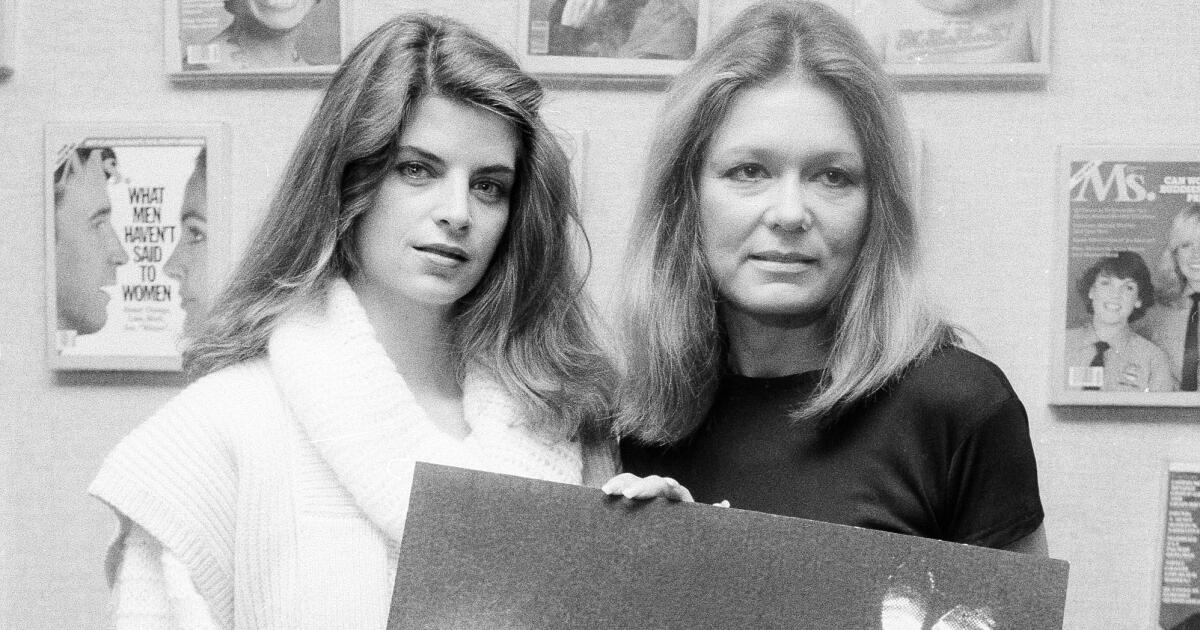

It was 1963 and up-and-coming freelance journalist Gloria Steinem had been a working writer in New York City for roughly three years when Show magazine sent her on an undercover assignment which she was uniquely qualified for: to infiltrate Manhattan’s “greatest new showbiz gimmick,” The Playboy Club. She already had the beauty and brains, all she’d need was an alias, a leotard and a notebook. The assignment would change the course of her career, but not in the way that she’d hoped.
“GIRLS:
Do Playboy Club Bunnies Really
Have Glamorous Jobs,
Meet Celebrities, And
Make Top Money?
Yes, it’s true! Attractive young girls can now earn $200-$300 a week at the fabulous New York Playboy Club, enjoy the glamorous and exciting aura of show business, and have the opportunity to travel to other Playboy Clubs throughout the world.”
Armed with the above ad and welcomed by a grinning private guard calling, “Here bunny, bunny, bunny!” Steinem set out to expose the working conditions and interior lives of the bunnies slinging booze to the playboys who patronized the club. She subjected herself to the wardrobe fittings, which included getting her bunny suit stuffed to boost her breast size; she was poked and prodded during an invasive physical exam; she strutted through the club near-naked with sore feet and a suit so tight, she had to wrap gauze around her midsection where her skin had been rubbed raw; and various other indignities she swallowed for the sake of journalism.
Documenting a lunch shift at the club, Steinem wrote, “Somehow, the usual tail pullings and propositions and pinching and ogling seemed all the more depressing when, outside this windowless room of perpetual night, the sun was shining.”
Steinem’s article accomplished what it set out to do, and not only were the working conditions at the club exposed, but some were subsequently improved because of her work. In her essay collection “Outrageous Acts and Everyday Rebellions,” Steinem wrote that in response to the story, Hugh Hefner wrote her a letter saying that her “beef about the physical given [to] the girls before they start work at the club prompted my eliminating it.”
Also as a result of her piece, she was slapped with a one-million-dollar libel suit, subpoenaed as a witness in a liquor laws case against the Playboy Club, and received “obscene and threatening” calls.
Most notably, of the short term results of the story, was the immediate impact it had on her career. Sure, in a lot of ways it had put her on the map, but she struggled to land serious journalistic assignments because, as she put it, “I had now become a Bunny–and it didn’t matter why.”
Steinem, a feminist icon and one of the most widely recognized leaders of the second-wave women’s movement, died on Wednesday at 92. Since she shed the bunny suit after her 11-day stint on the job at the Playboy Club, she went on to co-found New York Magazine and Ms. Magazine, which changed the course of the abortion rights movement with its “We Have Had Abortions” petition in which high profile women admitted to having illegal abortions, Steinem among them. She played a pivotal role in spearheading some of the most influential and successful women’s rights efforts. And in 2013, she was awarded the Presidential Medal of Freedom for her lifetime of work as a journalist and activist.
Still, with all the aforementioned accomplishments, and decades later, Steinem said that her naysayers used her bunny work in an attempt to discredit her. For decades she considered the story a “professional error of gigantic proportions.” But later, she changed her tune.
“I’m not sorry I did it,” she told Ronan Farrow in 2020, when she was 86-years old. “But it is true that as old as I am, when anybody wants to put me down, they say, ‘Well, she was once a bunny.’”
In Steinem’s “Famous Last Words” interview, released on Netflix following her death, she closed the segment by addressing the audience. “Please tell your own story,” she said. “This is the most important thing we can do for each other: is to know each other through stories.”
I was hesitant to tell this story, and stewed over the potential risks I would be taking by telling it, but then I thought of the risk Steinem took. She dealt with fallout and she grappled with the ways the article may have hurt her career more than helped. But of the ample wisdom she imparted, its the power of women’s stories to shift culture, change policy and empower other women that feels most resonant.
I didn’t discover Steinem’s “I was a Playboy Bunny” exposé until I was in college. I was in my late twenties at the time because I’d taken a few detours after I left high school, most of them dead ends.
One such detour led me through the massive hedge lined gates of the Playboy Mansion. I was 18, and the E! reality series “The Girls Next Door” sparked renewed interest in Playboy bunnies. I wish I could say that I’d arrived at the mansion on an undercover magazine assignment, but the reality was different. I’d been watching a rerun of the E! show from a bedbug-ridden townhome in Downtown Los Angeles, and earlier that day I grappled with whether I should pay my parking debt or buy a burrito.
I watched as the girls bounced around the mansion, appearing carefree, bedbug free and parking ticket-free. Their lives, produced and edited as they were, appeared to be stable and glamorous, and I thought, “Hm, maybe I should do that.” If Hefner was good at anything, it was creating a facade.
Like Steinem found, applying to be a Playboy bunny was surprisingly simple. I emailed a photo of myself in a swimsuit and shortly afterward, an invitation to a casting call at the mansion arrived.
At the casting call, I was handed a satin robe and pointed toward a small tent where I could change and a large tent with the photo crew inside. Steinem had likened wearing the bunny suit to feeling like meat on a hook. I, too, couldn’t shake the thought of a meat factory and almost instantly, realized I wanted off the conveyor belt.
My trip to the mansion and endeavor to become a bunny was short lived. I’d driven there feeling like a femme fatale, and left feeling naive and out of my depth. Worse, it was just another humiliating misadventure that I’d carry around for years with shame.
That is until I came across her story in her essay collection “Outrageous Acts and Everyday Rebellions.”
Steinem said that she was pigeonholed because of the story. She struggled afterward to be taken seriously and that may be true, but I’d argue an opposite point. Because Steinem was ultimately held in such high-regard as a journalist and activist, and because she was an undercover bunny along the way, she helped the Bunnies of the world to take themselves a little more seriously, to see that beyond the Bunny suit, there is a world of possibilities waiting for them.
In the collection, originally published in 1983 and reprinted several times, Steinem wrote that after a town-hall meeting in New Bedford, Massachusetts, a little girl of six or seven gave her a crayon drawing of her in the Bunny costume copied from a photo that had circulated online. “‘Even if a girl looks silly,’ she said, ‘boys should know that’s she’s smart.’”
“This story may outlast me,” she wrote. “but it’s not going to outlast or outsmart that little girl.”
In the book, Steinem wrote that one longer-term result of the article was “realizing that all women are Bunnies. After feminism arrived in my life, I stopped regretting that I had written the article.”
The line “All women are bunnies,” stands out. But what I imagine she meant is, bunnies are just women.

It was 1963 and up-and-coming freelance journalist Gloria Steinem had been a working writer in New York City for roughly three years when Show magazine sent her on an undercover assignment which she was uniquely qualified for: to infiltrate Manhattan’s “greatest new showbiz gimmick,” The Playboy Club. She already had the beauty and brains, all she’d need was an alias, a leotard and a notebook. The assignment would change the course of her career, but not in the way that she’d hoped.
“GIRLS:
Do Playboy Club Bunnies Really
Have Glamorous Jobs,
Meet Celebrities, And
Make Top Money?
Yes, it’s true! Attractive young girls can now earn $200-$300 a week at the fabulous New York Playboy Club, enjoy the glamorous and exciting aura of show business, and have the opportunity to travel to other Playboy Clubs throughout the world.”
Armed with the above ad and welcomed by a grinning private guard calling, “Here bunny, bunny, bunny!” Steinem set out to expose the working conditions and interior lives of the bunnies slinging booze to the playboys who patronized the club. She subjected herself to the wardrobe fittings, which included getting her bunny suit stuffed to boost her breast size; she was poked and prodded during an invasive physical exam; she strutted through the club near-naked with sore feet and a suit so tight, she had to wrap gauze around her midsection where her skin had been rubbed raw; and various other indignities she swallowed for the sake of journalism.
Documenting a lunch shift at the club, Steinem wrote, “Somehow, the usual tail pullings and propositions and pinching and ogling seemed all the more depressing when, outside this windowless room of perpetual night, the sun was shining.”
Steinem’s article accomplished what it set out to do, and not only were the working conditions at the club exposed, but some were subsequently improved because of her work. In her essay collection “Outrageous Acts and Everyday Rebellions,” Steinem wrote that in response to the story, Hugh Hefner wrote her a letter saying that her “beef about the physical given [to] the girls before they start work at the club prompted my eliminating it.”
Also as a result of her piece, she was slapped with a one-million-dollar libel suit, subpoenaed as a witness in a liquor laws case against the Playboy Club, and received “obscene and threatening” calls.
Most notably, of the short term results of the story, was the immediate impact it had on her career. Sure, in a lot of ways it had put her on the map, but she struggled to land serious journalistic assignments because, as she put it, “I had now become a Bunny–and it didn’t matter why.”
Steinem, a feminist icon and one of the most widely recognized leaders of the second-wave women’s movement, died on Wednesday at 92. Since she shed the bunny suit after her 11-day stint on the job at the Playboy Club, she went on to co-found New York Magazine and Ms. Magazine, which changed the course of the abortion rights movement with its “We Have Had Abortions” petition in which high profile women admitted to having illegal abortions, Steinem among them. She played a pivotal role in spearheading some of the most influential and successful women’s rights efforts. And in 2013, she was awarded the Presidential Medal of Freedom for her lifetime of work as a journalist and activist.
Still, with all the aforementioned accomplishments, and decades later, Steinem said that her naysayers used her bunny work in an attempt to discredit her. For decades she considered the story a “professional error of gigantic proportions.” But later, she changed her tune.
“I’m not sorry I did it,” she told Ronan Farrow in 2020, when she was 86-years old. “But it is true that as old as I am, when anybody wants to put me down, they say, ‘Well, she was once a bunny.’”
In Steinem’s “Famous Last Words” interview, released on Netflix following her death, she closed the segment by addressing the audience. “Please tell your own story,” she said. “This is the most important thing we can do for each other: is to know each other through stories.”
I was hesitant to tell this story, and stewed over the potential risks I would be taking by telling it, but then I thought of the risk Steinem took. She dealt with fallout and she grappled with the ways the article may have hurt her career more than helped. But of the ample wisdom she imparted, its the power of women’s stories to shift culture, change policy and empower other women that feels most resonant.
I didn’t discover Steinem’s “I was a Playboy Bunny” exposé until I was in college. I was in my late twenties at the time because I’d taken a few detours after I left high school, most of them dead ends.
One such detour led me through the massive hedge lined gates of the Playboy Mansion. I was 18, and the E! reality series “The Girls Next Door” sparked renewed interest in Playboy bunnies. I wish I could say that I’d arrived at the mansion on an undercover magazine assignment, but the reality was different. I’d been watching a rerun of the E! show from a bedbug-ridden townhome in Downtown Los Angeles, and earlier that day I grappled with whether I should pay my parking debt or buy a burrito.
I watched as the girls bounced around the mansion, appearing carefree, bedbug free and parking ticket-free. Their lives, produced and edited as they were, appeared to be stable and glamorous, and I thought, “Hm, maybe I should do that.” If Hefner was good at anything, it was creating a facade.
Like Steinem found, applying to be a Playboy bunny was surprisingly simple. I emailed a photo of myself in a swimsuit and shortly afterward, an invitation to a casting call at the mansion arrived.
At the casting call, I was handed a satin robe and pointed toward a small tent where I could change and a large tent with the photo crew inside. Steinem had likened wearing the bunny suit to feeling like meat on a hook. I, too, couldn’t shake the thought of a meat factory and almost instantly, realized I wanted off the conveyor belt.
My trip to the mansion and endeavor to become a bunny was short lived. I’d driven there feeling like a femme fatale, and left feeling naive and out of my depth. Worse, it was just another humiliating misadventure that I’d carry around for years with shame.
That is until I came across her story in her essay collection “Outrageous Acts and Everyday Rebellions.”
Steinem said that she was pigeonholed because of the story. She struggled afterward to be taken seriously and that may be true, but I’d argue an opposite point. Because Steinem was ultimately held in such high-regard as a journalist and activist, and because she was an undercover bunny along the way, she helped the Bunnies of the world to take themselves a little more seriously, to see that beyond the Bunny suit, there is a world of possibilities waiting for them.
In the collection, originally published in 1983 and reprinted several times, Steinem wrote that after a town-hall meeting in New Bedford, Massachusetts, a little girl of six or seven gave her a crayon drawing of her in the Bunny costume copied from a photo that had circulated online. “‘Even if a girl looks silly,’ she said, ‘boys should know that’s she’s smart.’”
“This story may outlast me,” she wrote. “but it’s not going to outlast or outsmart that little girl.”
In the book, Steinem wrote that one longer-term result of the article was “realizing that all women are Bunnies. After feminism arrived in my life, I stopped regretting that I had written the article.”
The line “All women are bunnies,” stands out. But what I imagine she meant is, bunnies are just women.

It was 1963 and up-and-coming freelance journalist Gloria Steinem had been a working writer in New York City for roughly three years when Show magazine sent her on an undercover assignment which she was uniquely qualified for: to infiltrate Manhattan’s “greatest new showbiz gimmick,” The Playboy Club. She already had the beauty and brains, all she’d need was an alias, a leotard and a notebook. The assignment would change the course of her career, but not in the way that she’d hoped.
“GIRLS:
Do Playboy Club Bunnies Really
Have Glamorous Jobs,
Meet Celebrities, And
Make Top Money?
Yes, it’s true! Attractive young girls can now earn $200-$300 a week at the fabulous New York Playboy Club, enjoy the glamorous and exciting aura of show business, and have the opportunity to travel to other Playboy Clubs throughout the world.”
Armed with the above ad and welcomed by a grinning private guard calling, “Here bunny, bunny, bunny!” Steinem set out to expose the working conditions and interior lives of the bunnies slinging booze to the playboys who patronized the club. She subjected herself to the wardrobe fittings, which included getting her bunny suit stuffed to boost her breast size; she was poked and prodded during an invasive physical exam; she strutted through the club near-naked with sore feet and a suit so tight, she had to wrap gauze around her midsection where her skin had been rubbed raw; and various other indignities she swallowed for the sake of journalism.
Documenting a lunch shift at the club, Steinem wrote, “Somehow, the usual tail pullings and propositions and pinching and ogling seemed all the more depressing when, outside this windowless room of perpetual night, the sun was shining.”
Steinem’s article accomplished what it set out to do, and not only were the working conditions at the club exposed, but some were subsequently improved because of her work. In her essay collection “Outrageous Acts and Everyday Rebellions,” Steinem wrote that in response to the story, Hugh Hefner wrote her a letter saying that her “beef about the physical given [to] the girls before they start work at the club prompted my eliminating it.”
Also as a result of her piece, she was slapped with a one-million-dollar libel suit, subpoenaed as a witness in a liquor laws case against the Playboy Club, and received “obscene and threatening” calls.
Most notably, of the short term results of the story, was the immediate impact it had on her career. Sure, in a lot of ways it had put her on the map, but she struggled to land serious journalistic assignments because, as she put it, “I had now become a Bunny–and it didn’t matter why.”
Steinem, a feminist icon and one of the most widely recognized leaders of the second-wave women’s movement, died on Wednesday at 92. Since she shed the bunny suit after her 11-day stint on the job at the Playboy Club, she went on to co-found New York Magazine and Ms. Magazine, which changed the course of the abortion rights movement with its “We Have Had Abortions” petition in which high profile women admitted to having illegal abortions, Steinem among them. She played a pivotal role in spearheading some of the most influential and successful women’s rights efforts. And in 2013, she was awarded the Presidential Medal of Freedom for her lifetime of work as a journalist and activist.
Still, with all the aforementioned accomplishments, and decades later, Steinem said that her naysayers used her bunny work in an attempt to discredit her. For decades she considered the story a “professional error of gigantic proportions.” But later, she changed her tune.
“I’m not sorry I did it,” she told Ronan Farrow in 2020, when she was 86-years old. “But it is true that as old as I am, when anybody wants to put me down, they say, ‘Well, she was once a bunny.’”
In Steinem’s “Famous Last Words” interview, released on Netflix following her death, she closed the segment by addressing the audience. “Please tell your own story,” she said. “This is the most important thing we can do for each other: is to know each other through stories.”
I was hesitant to tell this story, and stewed over the potential risks I would be taking by telling it, but then I thought of the risk Steinem took. She dealt with fallout and she grappled with the ways the article may have hurt her career more than helped. But of the ample wisdom she imparted, its the power of women’s stories to shift culture, change policy and empower other women that feels most resonant.
I didn’t discover Steinem’s “I was a Playboy Bunny” exposé until I was in college. I was in my late twenties at the time because I’d taken a few detours after I left high school, most of them dead ends.
One such detour led me through the massive hedge lined gates of the Playboy Mansion. I was 18, and the E! reality series “The Girls Next Door” sparked renewed interest in Playboy bunnies. I wish I could say that I’d arrived at the mansion on an undercover magazine assignment, but the reality was different. I’d been watching a rerun of the E! show from a bedbug-ridden townhome in Downtown Los Angeles, and earlier that day I grappled with whether I should pay my parking debt or buy a burrito.
I watched as the girls bounced around the mansion, appearing carefree, bedbug free and parking ticket-free. Their lives, produced and edited as they were, appeared to be stable and glamorous, and I thought, “Hm, maybe I should do that.” If Hefner was good at anything, it was creating a facade.
Like Steinem found, applying to be a Playboy bunny was surprisingly simple. I emailed a photo of myself in a swimsuit and shortly afterward, an invitation to a casting call at the mansion arrived.
At the casting call, I was handed a satin robe and pointed toward a small tent where I could change and a large tent with the photo crew inside. Steinem had likened wearing the bunny suit to feeling like meat on a hook. I, too, couldn’t shake the thought of a meat factory and almost instantly, realized I wanted off the conveyor belt.
My trip to the mansion and endeavor to become a bunny was short lived. I’d driven there feeling like a femme fatale, and left feeling naive and out of my depth. Worse, it was just another humiliating misadventure that I’d carry around for years with shame.
That is until I came across her story in her essay collection “Outrageous Acts and Everyday Rebellions.”
Steinem said that she was pigeonholed because of the story. She struggled afterward to be taken seriously and that may be true, but I’d argue an opposite point. Because Steinem was ultimately held in such high-regard as a journalist and activist, and because she was an undercover bunny along the way, she helped the Bunnies of the world to take themselves a little more seriously, to see that beyond the Bunny suit, there is a world of possibilities waiting for them.
In the collection, originally published in 1983 and reprinted several times, Steinem wrote that after a town-hall meeting in New Bedford, Massachusetts, a little girl of six or seven gave her a crayon drawing of her in the Bunny costume copied from a photo that had circulated online. “‘Even if a girl looks silly,’ she said, ‘boys should know that’s she’s smart.’”
“This story may outlast me,” she wrote. “but it’s not going to outlast or outsmart that little girl.”
In the book, Steinem wrote that one longer-term result of the article was “realizing that all women are Bunnies. After feminism arrived in my life, I stopped regretting that I had written the article.”
The line “All women are bunnies,” stands out. But what I imagine she meant is, bunnies are just women.
It was 1963 and up-and-coming freelance journalist Gloria Steinem had been a working writer in New York City for roughly three years when Show magazine sent her on an undercover assignment which she was uniquely qualified for: to infiltrate Manhattan’s “greatest new showbiz gimmick,” The Playboy Club. She already had the beauty and brains, all she’d need was an alias, a leotard and a notebook. The assignment would change the course of her career, but not in the way that she’d hoped.
“GIRLS:
Do Playboy Club Bunnies Really
Have Glamorous Jobs,
Meet Celebrities, And
Make Top Money?
Yes, it’s true! Attractive young girls can now earn $200-$300 a week at the fabulous New York Playboy Club, enjoy the glamorous and exciting aura of show business, and have the opportunity to travel to other Playboy Clubs throughout the world.”
Armed with the above ad and welcomed by a grinning private guard calling, “Here bunny, bunny, bunny!” Steinem set out to expose the working conditions and interior lives of the bunnies slinging booze to the playboys who patronized the club. She subjected herself to the wardrobe fittings, which included getting her bunny suit stuffed to boost her breast size; she was poked and prodded during an invasive physical exam; she strutted through the club near-naked with sore feet and a suit so tight, she had to wrap gauze around her midsection where her skin had been rubbed raw; and various other indignities she swallowed for the sake of journalism.
Documenting a lunch shift at the club, Steinem wrote, “Somehow, the usual tail pullings and propositions and pinching and ogling seemed all the more depressing when, outside this windowless room of perpetual night, the sun was shining.”
Steinem’s article accomplished what it set out to do, and not only were the working conditions at the club exposed, but some were subsequently improved because of her work. In her essay collection “Outrageous Acts and Everyday Rebellions,” Steinem wrote that in response to the story, Hugh Hefner wrote her a letter saying that her “beef about the physical given [to] the girls before they start work at the club prompted my eliminating it.”
Also as a result of her piece, she was slapped with a one-million-dollar libel suit, subpoenaed as a witness in a liquor laws case against the Playboy Club, and received “obscene and threatening” calls.
Most notably, of the short term results of the story, was the immediate impact it had on her career. Sure, in a lot of ways it had put her on the map, but she struggled to land serious journalistic assignments because, as she put it, “I had now become a Bunny–and it didn’t matter why.”
Steinem, a feminist icon and one of the most widely recognized leaders of the second-wave women’s movement, died on Wednesday at 92. Since she shed the bunny suit after her 11-day stint on the job at the Playboy Club, she went on to co-found New York Magazine and Ms. Magazine, which changed the course of the abortion rights movement with its “We Have Had Abortions” petition in which high profile women admitted to having illegal abortions, Steinem among them. She played a pivotal role in spearheading some of the most influential and successful women’s rights efforts. And in 2013, she was awarded the Presidential Medal of Freedom for her lifetime of work as a journalist and activist.
Still, with all the aforementioned accomplishments, and decades later, Steinem said that her naysayers used her bunny work in an attempt to discredit her. For decades she considered the story a “professional error of gigantic proportions.” But later, she changed her tune.
“I’m not sorry I did it,” she told Ronan Farrow in 2020, when she was 86-years old. “But it is true that as old as I am, when anybody wants to put me down, they say, ‘Well, she was once a bunny.’”
In Steinem’s “Famous Last Words” interview, released on Netflix following her death, she closed the segment by addressing the audience. “Please tell your own story,” she said. “This is the most important thing we can do for each other: is to know each other through stories.”
I was hesitant to tell this story, and stewed over the potential risks I would be taking by telling it, but then I thought of the risk Steinem took. She dealt with fallout and she grappled with the ways the article may have hurt her career more than helped. But of the ample wisdom she imparted, its the power of women’s stories to shift culture, change policy and empower other women that feels most resonant.
I didn’t discover Steinem’s “I was a Playboy Bunny” exposé until I was in college. I was in my late twenties at the time because I’d taken a few detours after I left high school, most of them dead ends.
One such detour led me through the massive hedge lined gates of the Playboy Mansion. I was 18, and the E! reality series “The Girls Next Door” sparked renewed interest in Playboy bunnies. I wish I could say that I’d arrived at the mansion on an undercover magazine assignment, but the reality was different. I’d been watching a rerun of the E! show from a bedbug-ridden townhome in Downtown Los Angeles, and earlier that day I grappled with whether I should pay my parking debt or buy a burrito.
I watched as the girls bounced around the mansion, appearing carefree, bedbug free and parking ticket-free. Their lives, produced and edited as they were, appeared to be stable and glamorous, and I thought, “Hm, maybe I should do that.” If Hefner was good at anything, it was creating a facade.
Like Steinem found, applying to be a Playboy bunny was surprisingly simple. I emailed a photo of myself in a swimsuit and shortly afterward, an invitation to a casting call at the mansion arrived.
At the casting call, I was handed a satin robe and pointed toward a small tent where I could change and a large tent with the photo crew inside. Steinem had likened wearing the bunny suit to feeling like meat on a hook. I, too, couldn’t shake the thought of a meat factory and almost instantly, realized I wanted off the conveyor belt.
My trip to the mansion and endeavor to become a bunny was short lived. I’d driven there feeling like a femme fatale, and left feeling naive and out of my depth. Worse, it was just another humiliating misadventure that I’d carry around for years with shame.
That is until I came across her story in her essay collection “Outrageous Acts and Everyday Rebellions.”
Steinem said that she was pigeonholed because of the story. She struggled afterward to be taken seriously and that may be true, but I’d argue an opposite point. Because Steinem was ultimately held in such high-regard as a journalist and activist, and because she was an undercover bunny along the way, she helped the Bunnies of the world to take themselves a little more seriously, to see that beyond the Bunny suit, there is a world of possibilities waiting for them.
In the collection, originally published in 1983 and reprinted several times, Steinem wrote that after a town-hall meeting in New Bedford, Massachusetts, a little girl of six or seven gave her a crayon drawing of her in the Bunny costume copied from a photo that had circulated online. “‘Even if a girl looks silly,’ she said, ‘boys should know that’s she’s smart.’”
“This story may outlast me,” she wrote. “but it’s not going to outlast or outsmart that little girl.”
In the book, Steinem wrote that one longer-term result of the article was “realizing that all women are Bunnies. After feminism arrived in my life, I stopped regretting that I had written the article.”
The line “All women are bunnies,” stands out. But what I imagine she meant is, bunnies are just women.

It was 1963 and up-and-coming freelance journalist Gloria Steinem had been a working writer in New York City for roughly three years when Show magazine sent her on an undercover assignment which she was uniquely qualified for: to infiltrate Manhattan’s “greatest new showbiz gimmick,” The Playboy Club. She already had the beauty and brains, all she’d need was an alias, a leotard and a notebook. The assignment would change the course of her career, but not in the way that she’d hoped.
“GIRLS:
Do Playboy Club Bunnies Really
Have Glamorous Jobs,
Meet Celebrities, And
Make Top Money?
Yes, it’s true! Attractive young girls can now earn $200-$300 a week at the fabulous New York Playboy Club, enjoy the glamorous and exciting aura of show business, and have the opportunity to travel to other Playboy Clubs throughout the world.”
Armed with the above ad and welcomed by a grinning private guard calling, “Here bunny, bunny, bunny!” Steinem set out to expose the working conditions and interior lives of the bunnies slinging booze to the playboys who patronized the club. She subjected herself to the wardrobe fittings, which included getting her bunny suit stuffed to boost her breast size; she was poked and prodded during an invasive physical exam; she strutted through the club near-naked with sore feet and a suit so tight, she had to wrap gauze around her midsection where her skin had been rubbed raw; and various other indignities she swallowed for the sake of journalism.
Documenting a lunch shift at the club, Steinem wrote, “Somehow, the usual tail pullings and propositions and pinching and ogling seemed all the more depressing when, outside this windowless room of perpetual night, the sun was shining.”
Steinem’s article accomplished what it set out to do, and not only were the working conditions at the club exposed, but some were subsequently improved because of her work. In her essay collection “Outrageous Acts and Everyday Rebellions,” Steinem wrote that in response to the story, Hugh Hefner wrote her a letter saying that her “beef about the physical given [to] the girls before they start work at the club prompted my eliminating it.”
Also as a result of her piece, she was slapped with a one-million-dollar libel suit, subpoenaed as a witness in a liquor laws case against the Playboy Club, and received “obscene and threatening” calls.
Most notably, of the short term results of the story, was the immediate impact it had on her career. Sure, in a lot of ways it had put her on the map, but she struggled to land serious journalistic assignments because, as she put it, “I had now become a Bunny–and it didn’t matter why.”
Steinem, a feminist icon and one of the most widely recognized leaders of the second-wave women’s movement, died on Wednesday at 92. Since she shed the bunny suit after her 11-day stint on the job at the Playboy Club, she went on to co-found New York Magazine and Ms. Magazine, which changed the course of the abortion rights movement with its “We Have Had Abortions” petition in which high profile women admitted to having illegal abortions, Steinem among them. She played a pivotal role in spearheading some of the most influential and successful women’s rights efforts. And in 2013, she was awarded the Presidential Medal of Freedom for her lifetime of work as a journalist and activist.
Still, with all the aforementioned accomplishments, and decades later, Steinem said that her naysayers used her bunny work in an attempt to discredit her. For decades she considered the story a “professional error of gigantic proportions.” But later, she changed her tune.
“I’m not sorry I did it,” she told Ronan Farrow in 2020, when she was 86-years old. “But it is true that as old as I am, when anybody wants to put me down, they say, ‘Well, she was once a bunny.’”
In Steinem’s “Famous Last Words” interview, released on Netflix following her death, she closed the segment by addressing the audience. “Please tell your own story,” she said. “This is the most important thing we can do for each other: is to know each other through stories.”
I was hesitant to tell this story, and stewed over the potential risks I would be taking by telling it, but then I thought of the risk Steinem took. She dealt with fallout and she grappled with the ways the article may have hurt her career more than helped. But of the ample wisdom she imparted, its the power of women’s stories to shift culture, change policy and empower other women that feels most resonant.
I didn’t discover Steinem’s “I was a Playboy Bunny” exposé until I was in college. I was in my late twenties at the time because I’d taken a few detours after I left high school, most of them dead ends.
One such detour led me through the massive hedge lined gates of the Playboy Mansion. I was 18, and the E! reality series “The Girls Next Door” sparked renewed interest in Playboy bunnies. I wish I could say that I’d arrived at the mansion on an undercover magazine assignment, but the reality was different. I’d been watching a rerun of the E! show from a bedbug-ridden townhome in Downtown Los Angeles, and earlier that day I grappled with whether I should pay my parking debt or buy a burrito.
I watched as the girls bounced around the mansion, appearing carefree, bedbug free and parking ticket-free. Their lives, produced and edited as they were, appeared to be stable and glamorous, and I thought, “Hm, maybe I should do that.” If Hefner was good at anything, it was creating a facade.
Like Steinem found, applying to be a Playboy bunny was surprisingly simple. I emailed a photo of myself in a swimsuit and shortly afterward, an invitation to a casting call at the mansion arrived.
At the casting call, I was handed a satin robe and pointed toward a small tent where I could change and a large tent with the photo crew inside. Steinem had likened wearing the bunny suit to feeling like meat on a hook. I, too, couldn’t shake the thought of a meat factory and almost instantly, realized I wanted off the conveyor belt.
My trip to the mansion and endeavor to become a bunny was short lived. I’d driven there feeling like a femme fatale, and left feeling naive and out of my depth. Worse, it was just another humiliating misadventure that I’d carry around for years with shame.
That is until I came across her story in her essay collection “Outrageous Acts and Everyday Rebellions.”
Steinem said that she was pigeonholed because of the story. She struggled afterward to be taken seriously and that may be true, but I’d argue an opposite point. Because Steinem was ultimately held in such high-regard as a journalist and activist, and because she was an undercover bunny along the way, she helped the Bunnies of the world to take themselves a little more seriously, to see that beyond the Bunny suit, there is a world of possibilities waiting for them.
In the collection, originally published in 1983 and reprinted several times, Steinem wrote that after a town-hall meeting in New Bedford, Massachusetts, a little girl of six or seven gave her a crayon drawing of her in the Bunny costume copied from a photo that had circulated online. “‘Even if a girl looks silly,’ she said, ‘boys should know that’s she’s smart.’”
“This story may outlast me,” she wrote. “but it’s not going to outlast or outsmart that little girl.”
In the book, Steinem wrote that one longer-term result of the article was “realizing that all women are Bunnies. After feminism arrived in my life, I stopped regretting that I had written the article.”
The line “All women are bunnies,” stands out. But what I imagine she meant is, bunnies are just women.
It was 1963 and up-and-coming freelance journalist Gloria Steinem had been a working writer in New York City for roughly three years when Show magazine sent her on an undercover assignment which she was uniquely qualified for: to infiltrate Manhattan’s “greatest new showbiz gimmick,” The Playboy Club. She already had the beauty and brains, all she’d need was an alias, a leotard and a notebook. The assignment would change the course of her career, but not in the way that she’d hoped.
“GIRLS:
Do Playboy Club Bunnies Really
Have Glamorous Jobs,
Meet Celebrities, And
Make Top Money?
Yes, it’s true! Attractive young girls can now earn $200-$300 a week at the fabulous New York Playboy Club, enjoy the glamorous and exciting aura of show business, and have the opportunity to travel to other Playboy Clubs throughout the world.”
Armed with the above ad and welcomed by a grinning private guard calling, “Here bunny, bunny, bunny!” Steinem set out to expose the working conditions and interior lives of the bunnies slinging booze to the playboys who patronized the club. She subjected herself to the wardrobe fittings, which included getting her bunny suit stuffed to boost her breast size; she was poked and prodded during an invasive physical exam; she strutted through the club near-naked with sore feet and a suit so tight, she had to wrap gauze around her midsection where her skin had been rubbed raw; and various other indignities she swallowed for the sake of journalism.
Documenting a lunch shift at the club, Steinem wrote, “Somehow, the usual tail pullings and propositions and pinching and ogling seemed all the more depressing when, outside this windowless room of perpetual night, the sun was shining.”
Steinem’s article accomplished what it set out to do, and not only were the working conditions at the club exposed, but some were subsequently improved because of her work. In her essay collection “Outrageous Acts and Everyday Rebellions,” Steinem wrote that in response to the story, Hugh Hefner wrote her a letter saying that her “beef about the physical given [to] the girls before they start work at the club prompted my eliminating it.”
Also as a result of her piece, she was slapped with a one-million-dollar libel suit, subpoenaed as a witness in a liquor laws case against the Playboy Club, and received “obscene and threatening” calls.
Most notably, of the short term results of the story, was the immediate impact it had on her career. Sure, in a lot of ways it had put her on the map, but she struggled to land serious journalistic assignments because, as she put it, “I had now become a Bunny–and it didn’t matter why.”
Steinem, a feminist icon and one of the most widely recognized leaders of the second-wave women’s movement, died on Wednesday at 92. Since she shed the bunny suit after her 11-day stint on the job at the Playboy Club, she went on to co-found New York Magazine and Ms. Magazine, which changed the course of the abortion rights movement with its “We Have Had Abortions” petition in which high profile women admitted to having illegal abortions, Steinem among them. She played a pivotal role in spearheading some of the most influential and successful women’s rights efforts. And in 2013, she was awarded the Presidential Medal of Freedom for her lifetime of work as a journalist and activist.
Still, with all the aforementioned accomplishments, and decades later, Steinem said that her naysayers used her bunny work in an attempt to discredit her. For decades she considered the story a “professional error of gigantic proportions.” But later, she changed her tune.
“I’m not sorry I did it,” she told Ronan Farrow in 2020, when she was 86-years old. “But it is true that as old as I am, when anybody wants to put me down, they say, ‘Well, she was once a bunny.’”
In Steinem’s “Famous Last Words” interview, released on Netflix following her death, she closed the segment by addressing the audience. “Please tell your own story,” she said. “This is the most important thing we can do for each other: is to know each other through stories.”
I was hesitant to tell this story, and stewed over the potential risks I would be taking by telling it, but then I thought of the risk Steinem took. She dealt with fallout and she grappled with the ways the article may have hurt her career more than helped. But of the ample wisdom she imparted, its the power of women’s stories to shift culture, change policy and empower other women that feels most resonant.
I didn’t discover Steinem’s “I was a Playboy Bunny” exposé until I was in college. I was in my late twenties at the time because I’d taken a few detours after I left high school, most of them dead ends.
One such detour led me through the massive hedge lined gates of the Playboy Mansion. I was 18, and the E! reality series “The Girls Next Door” sparked renewed interest in Playboy bunnies. I wish I could say that I’d arrived at the mansion on an undercover magazine assignment, but the reality was different. I’d been watching a rerun of the E! show from a bedbug-ridden townhome in Downtown Los Angeles, and earlier that day I grappled with whether I should pay my parking debt or buy a burrito.
I watched as the girls bounced around the mansion, appearing carefree, bedbug free and parking ticket-free. Their lives, produced and edited as they were, appeared to be stable and glamorous, and I thought, “Hm, maybe I should do that.” If Hefner was good at anything, it was creating a facade.
Like Steinem found, applying to be a Playboy bunny was surprisingly simple. I emailed a photo of myself in a swimsuit and shortly afterward, an invitation to a casting call at the mansion arrived.
At the casting call, I was handed a satin robe and pointed toward a small tent where I could change and a large tent with the photo crew inside. Steinem had likened wearing the bunny suit to feeling like meat on a hook. I, too, couldn’t shake the thought of a meat factory and almost instantly, realized I wanted off the conveyor belt.
My trip to the mansion and endeavor to become a bunny was short lived. I’d driven there feeling like a femme fatale, and left feeling naive and out of my depth. Worse, it was just another humiliating misadventure that I’d carry around for years with shame.
That is until I came across her story in her essay collection “Outrageous Acts and Everyday Rebellions.”
Steinem said that she was pigeonholed because of the story. She struggled afterward to be taken seriously and that may be true, but I’d argue an opposite point. Because Steinem was ultimately held in such high-regard as a journalist and activist, and because she was an undercover bunny along the way, she helped the Bunnies of the world to take themselves a little more seriously, to see that beyond the Bunny suit, there is a world of possibilities waiting for them.
In the collection, originally published in 1983 and reprinted several times, Steinem wrote that after a town-hall meeting in New Bedford, Massachusetts, a little girl of six or seven gave her a crayon drawing of her in the Bunny costume copied from a photo that had circulated online. “‘Even if a girl looks silly,’ she said, ‘boys should know that’s she’s smart.’”
“This story may outlast me,” she wrote. “but it’s not going to outlast or outsmart that little girl.”
In the book, Steinem wrote that one longer-term result of the article was “realizing that all women are Bunnies. After feminism arrived in my life, I stopped regretting that I had written the article.”
The line “All women are bunnies,” stands out. But what I imagine she meant is, bunnies are just women.
It was 1963 and up-and-coming freelance journalist Gloria Steinem had been a working writer in New York City for roughly three years when Show magazine sent her on an undercover assignment which she was uniquely qualified for: to infiltrate Manhattan’s “greatest new showbiz gimmick,” The Playboy Club. She already had the beauty and brains, all she’d need was an alias, a leotard and a notebook. The assignment would change the course of her career, but not in the way that she’d hoped.
“GIRLS:
Do Playboy Club Bunnies Really
Have Glamorous Jobs,
Meet Celebrities, And
Make Top Money?
Yes, it’s true! Attractive young girls can now earn $200-$300 a week at the fabulous New York Playboy Club, enjoy the glamorous and exciting aura of show business, and have the opportunity to travel to other Playboy Clubs throughout the world.”
Armed with the above ad and welcomed by a grinning private guard calling, “Here bunny, bunny, bunny!” Steinem set out to expose the working conditions and interior lives of the bunnies slinging booze to the playboys who patronized the club. She subjected herself to the wardrobe fittings, which included getting her bunny suit stuffed to boost her breast size; she was poked and prodded during an invasive physical exam; she strutted through the club near-naked with sore feet and a suit so tight, she had to wrap gauze around her midsection where her skin had been rubbed raw; and various other indignities she swallowed for the sake of journalism.
Documenting a lunch shift at the club, Steinem wrote, “Somehow, the usual tail pullings and propositions and pinching and ogling seemed all the more depressing when, outside this windowless room of perpetual night, the sun was shining.”
Steinem’s article accomplished what it set out to do, and not only were the working conditions at the club exposed, but some were subsequently improved because of her work. In her essay collection “Outrageous Acts and Everyday Rebellions,” Steinem wrote that in response to the story, Hugh Hefner wrote her a letter saying that her “beef about the physical given [to] the girls before they start work at the club prompted my eliminating it.”
Also as a result of her piece, she was slapped with a one-million-dollar libel suit, subpoenaed as a witness in a liquor laws case against the Playboy Club, and received “obscene and threatening” calls.
Most notably, of the short term results of the story, was the immediate impact it had on her career. Sure, in a lot of ways it had put her on the map, but she struggled to land serious journalistic assignments because, as she put it, “I had now become a Bunny–and it didn’t matter why.”
Steinem, a feminist icon and one of the most widely recognized leaders of the second-wave women’s movement, died on Wednesday at 92. Since she shed the bunny suit after her 11-day stint on the job at the Playboy Club, she went on to co-found New York Magazine and Ms. Magazine, which changed the course of the abortion rights movement with its “We Have Had Abortions” petition in which high profile women admitted to having illegal abortions, Steinem among them. She played a pivotal role in spearheading some of the most influential and successful women’s rights efforts. And in 2013, she was awarded the Presidential Medal of Freedom for her lifetime of work as a journalist and activist.
Still, with all the aforementioned accomplishments, and decades later, Steinem said that her naysayers used her bunny work in an attempt to discredit her. For decades she considered the story a “professional error of gigantic proportions.” But later, she changed her tune.
“I’m not sorry I did it,” she told Ronan Farrow in 2020, when she was 86-years old. “But it is true that as old as I am, when anybody wants to put me down, they say, ‘Well, she was once a bunny.’”
In Steinem’s “Famous Last Words” interview, released on Netflix following her death, she closed the segment by addressing the audience. “Please tell your own story,” she said. “This is the most important thing we can do for each other: is to know each other through stories.”
I was hesitant to tell this story, and stewed over the potential risks I would be taking by telling it, but then I thought of the risk Steinem took. She dealt with fallout and she grappled with the ways the article may have hurt her career more than helped. But of the ample wisdom she imparted, its the power of women’s stories to shift culture, change policy and empower other women that feels most resonant.
I didn’t discover Steinem’s “I was a Playboy Bunny” exposé until I was in college. I was in my late twenties at the time because I’d taken a few detours after I left high school, most of them dead ends.
One such detour led me through the massive hedge lined gates of the Playboy Mansion. I was 18, and the E! reality series “The Girls Next Door” sparked renewed interest in Playboy bunnies. I wish I could say that I’d arrived at the mansion on an undercover magazine assignment, but the reality was different. I’d been watching a rerun of the E! show from a bedbug-ridden townhome in Downtown Los Angeles, and earlier that day I grappled with whether I should pay my parking debt or buy a burrito.
I watched as the girls bounced around the mansion, appearing carefree, bedbug free and parking ticket-free. Their lives, produced and edited as they were, appeared to be stable and glamorous, and I thought, “Hm, maybe I should do that.” If Hefner was good at anything, it was creating a facade.
Like Steinem found, applying to be a Playboy bunny was surprisingly simple. I emailed a photo of myself in a swimsuit and shortly afterward, an invitation to a casting call at the mansion arrived.
At the casting call, I was handed a satin robe and pointed toward a small tent where I could change and a large tent with the photo crew inside. Steinem had likened wearing the bunny suit to feeling like meat on a hook. I, too, couldn’t shake the thought of a meat factory and almost instantly, realized I wanted off the conveyor belt.
My trip to the mansion and endeavor to become a bunny was short lived. I’d driven there feeling like a femme fatale, and left feeling naive and out of my depth. Worse, it was just another humiliating misadventure that I’d carry around for years with shame.
That is until I came across her story in her essay collection “Outrageous Acts and Everyday Rebellions.”
Steinem said that she was pigeonholed because of the story. She struggled afterward to be taken seriously and that may be true, but I’d argue an opposite point. Because Steinem was ultimately held in such high-regard as a journalist and activist, and because she was an undercover bunny along the way, she helped the Bunnies of the world to take themselves a little more seriously, to see that beyond the Bunny suit, there is a world of possibilities waiting for them.
In the collection, originally published in 1983 and reprinted several times, Steinem wrote that after a town-hall meeting in New Bedford, Massachusetts, a little girl of six or seven gave her a crayon drawing of her in the Bunny costume copied from a photo that had circulated online. “‘Even if a girl looks silly,’ she said, ‘boys should know that’s she’s smart.’”
“This story may outlast me,” she wrote. “but it’s not going to outlast or outsmart that little girl.”
In the book, Steinem wrote that one longer-term result of the article was “realizing that all women are Bunnies. After feminism arrived in my life, I stopped regretting that I had written the article.”
The line “All women are bunnies,” stands out. But what I imagine she meant is, bunnies are just women.
It was 1963 and up-and-coming freelance journalist Gloria Steinem had been a working writer in New York City for roughly three years when Show magazine sent her on an undercover assignment which she was uniquely qualified for: to infiltrate Manhattan’s “greatest new showbiz gimmick,” The Playboy Club. She already had the beauty and brains, all she’d need was an alias, a leotard and a notebook. The assignment would change the course of her career, but not in the way that she’d hoped.
“GIRLS:
Do Playboy Club Bunnies Really
Have Glamorous Jobs,
Meet Celebrities, And
Make Top Money?
Yes, it’s true! Attractive young girls can now earn $200-$300 a week at the fabulous New York Playboy Club, enjoy the glamorous and exciting aura of show business, and have the opportunity to travel to other Playboy Clubs throughout the world.”
Armed with the above ad and welcomed by a grinning private guard calling, “Here bunny, bunny, bunny!” Steinem set out to expose the working conditions and interior lives of the bunnies slinging booze to the playboys who patronized the club. She subjected herself to the wardrobe fittings, which included getting her bunny suit stuffed to boost her breast size; she was poked and prodded during an invasive physical exam; she strutted through the club near-naked with sore feet and a suit so tight, she had to wrap gauze around her midsection where her skin had been rubbed raw; and various other indignities she swallowed for the sake of journalism.
Documenting a lunch shift at the club, Steinem wrote, “Somehow, the usual tail pullings and propositions and pinching and ogling seemed all the more depressing when, outside this windowless room of perpetual night, the sun was shining.”
Steinem’s article accomplished what it set out to do, and not only were the working conditions at the club exposed, but some were subsequently improved because of her work. In her essay collection “Outrageous Acts and Everyday Rebellions,” Steinem wrote that in response to the story, Hugh Hefner wrote her a letter saying that her “beef about the physical given [to] the girls before they start work at the club prompted my eliminating it.”
Also as a result of her piece, she was slapped with a one-million-dollar libel suit, subpoenaed as a witness in a liquor laws case against the Playboy Club, and received “obscene and threatening” calls.
Most notably, of the short term results of the story, was the immediate impact it had on her career. Sure, in a lot of ways it had put her on the map, but she struggled to land serious journalistic assignments because, as she put it, “I had now become a Bunny–and it didn’t matter why.”
Steinem, a feminist icon and one of the most widely recognized leaders of the second-wave women’s movement, died on Wednesday at 92. Since she shed the bunny suit after her 11-day stint on the job at the Playboy Club, she went on to co-found New York Magazine and Ms. Magazine, which changed the course of the abortion rights movement with its “We Have Had Abortions” petition in which high profile women admitted to having illegal abortions, Steinem among them. She played a pivotal role in spearheading some of the most influential and successful women’s rights efforts. And in 2013, she was awarded the Presidential Medal of Freedom for her lifetime of work as a journalist and activist.
Still, with all the aforementioned accomplishments, and decades later, Steinem said that her naysayers used her bunny work in an attempt to discredit her. For decades she considered the story a “professional error of gigantic proportions.” But later, she changed her tune.
“I’m not sorry I did it,” she told Ronan Farrow in 2020, when she was 86-years old. “But it is true that as old as I am, when anybody wants to put me down, they say, ‘Well, she was once a bunny.’”
In Steinem’s “Famous Last Words” interview, released on Netflix following her death, she closed the segment by addressing the audience. “Please tell your own story,” she said. “This is the most important thing we can do for each other: is to know each other through stories.”
I was hesitant to tell this story, and stewed over the potential risks I would be taking by telling it, but then I thought of the risk Steinem took. She dealt with fallout and she grappled with the ways the article may have hurt her career more than helped. But of the ample wisdom she imparted, its the power of women’s stories to shift culture, change policy and empower other women that feels most resonant.
I didn’t discover Steinem’s “I was a Playboy Bunny” exposé until I was in college. I was in my late twenties at the time because I’d taken a few detours after I left high school, most of them dead ends.
One such detour led me through the massive hedge lined gates of the Playboy Mansion. I was 18, and the E! reality series “The Girls Next Door” sparked renewed interest in Playboy bunnies. I wish I could say that I’d arrived at the mansion on an undercover magazine assignment, but the reality was different. I’d been watching a rerun of the E! show from a bedbug-ridden townhome in Downtown Los Angeles, and earlier that day I grappled with whether I should pay my parking debt or buy a burrito.
I watched as the girls bounced around the mansion, appearing carefree, bedbug free and parking ticket-free. Their lives, produced and edited as they were, appeared to be stable and glamorous, and I thought, “Hm, maybe I should do that.” If Hefner was good at anything, it was creating a facade.
Like Steinem found, applying to be a Playboy bunny was surprisingly simple. I emailed a photo of myself in a swimsuit and shortly afterward, an invitation to a casting call at the mansion arrived.
At the casting call, I was handed a satin robe and pointed toward a small tent where I could change and a large tent with the photo crew inside. Steinem had likened wearing the bunny suit to feeling like meat on a hook. I, too, couldn’t shake the thought of a meat factory and almost instantly, realized I wanted off the conveyor belt.
My trip to the mansion and endeavor to become a bunny was short lived. I’d driven there feeling like a femme fatale, and left feeling naive and out of my depth. Worse, it was just another humiliating misadventure that I’d carry around for years with shame.
That is until I came across her story in her essay collection “Outrageous Acts and Everyday Rebellions.”
Steinem said that she was pigeonholed because of the story. She struggled afterward to be taken seriously and that may be true, but I’d argue an opposite point. Because Steinem was ultimately held in such high-regard as a journalist and activist, and because she was an undercover bunny along the way, she helped the Bunnies of the world to take themselves a little more seriously, to see that beyond the Bunny suit, there is a world of possibilities waiting for them.
In the collection, originally published in 1983 and reprinted several times, Steinem wrote that after a town-hall meeting in New Bedford, Massachusetts, a little girl of six or seven gave her a crayon drawing of her in the Bunny costume copied from a photo that had circulated online. “‘Even if a girl looks silly,’ she said, ‘boys should know that’s she’s smart.’”
“This story may outlast me,” she wrote. “but it’s not going to outlast or outsmart that little girl.”
In the book, Steinem wrote that one longer-term result of the article was “realizing that all women are Bunnies. After feminism arrived in my life, I stopped regretting that I had written the article.”
The line “All women are bunnies,” stands out. But what I imagine she meant is, bunnies are just women.

