

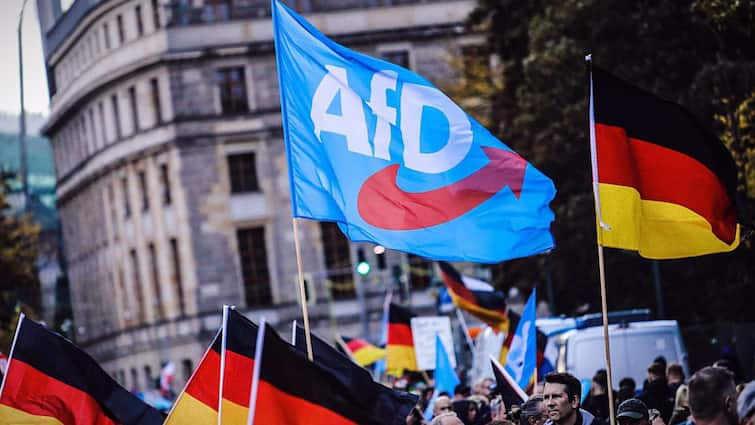

The far-right Alternative für Deutschland (AfD) party is set to win a state election for the first time since World War 2, projections showed on Sunday. Meanwhile, a new populist force on the left has secured a strong position in the country’s political landscape.
The AfD emerged in the top spot in Thuringia, with 32.8% of the vote, and second place in Saxony, with 30.6%, according to preliminary results, AFP reported. Speaking about the results, Alice Weidel, the AfD’s co-leader, said that it was a “historic success”, and that the party had become the biggest force in a state election for the first time. “It is a requiem for this coalition [in Berlin],” she said, as quoted by The Guardian.
The conservative Christian Democratic Union of Germany (CDU) got the second place with around 24.5% of the vote. In neighbouring Saxony, projections put support for the CDU — which has led the state since German reunification in 1990 — at 31.7%, according to an Associated Press report.
However, the AfD is unlikely to gain power in the state as other parties have ruled out working with the far-right group to form a government.
The results in Saxony and Thuringia were disastrous for the three ruling parties in Chancellor Olaf Scholz’s centre-left-led federal government, each securing only single-digit percentage shares of the vote in both states, just one year before Germany’s next general elections.
On account of the AfD’s strong showing, its exclusion will make it challenging to form a new state government, potentially leading to “exotic” coalitions, reported AP. The emergence of the Sahra Wagenknecht Alliance, or BSW, with up to 16% of the vote in Thuringia and 12% in Saxony, further complicates the political landscape.
The CDU’s national general secretary, Carsten Linnemann, said his party will stick to its longstanding refusal to work with the far right. He said that voters in both states were aware that CDU would never form a coalition with AfD, “and it will stay that way — we are very, very clear on this”, Linnemann added. Reacting to this, Weidel said it was “pure ignorance”, adding that “voters want AfD to participate in a government”.
AfD Campaigning With Nazi Slogans
According to AFP, during the election campaign, the AfD had capitalised on dissatisfaction with the government, tapping into anger over migration policies, and concerns about support for Ukraine. Aside from this, Bjoern Hoecke, the controversial head of the AfD in the state, reportedly told the ARD broadcaster his party was the “people’s party in Thuringia”, as per an AFP report.
“We need change and change will only come with the AfD,” he said, hailing the “historic result”. Hoecke who caused outrage over his outspoken statements, has often used banned Nazi slogans and was fined twice for the same, reported AFP.

The far-right Alternative für Deutschland (AfD) party is set to win a state election for the first time since World War 2, projections showed on Sunday. Meanwhile, a new populist force on the left has secured a strong position in the country’s political landscape.
The AfD emerged in the top spot in Thuringia, with 32.8% of the vote, and second place in Saxony, with 30.6%, according to preliminary results, AFP reported. Speaking about the results, Alice Weidel, the AfD’s co-leader, said that it was a “historic success”, and that the party had become the biggest force in a state election for the first time. “It is a requiem for this coalition [in Berlin],” she said, as quoted by The Guardian.
The conservative Christian Democratic Union of Germany (CDU) got the second place with around 24.5% of the vote. In neighbouring Saxony, projections put support for the CDU — which has led the state since German reunification in 1990 — at 31.7%, according to an Associated Press report.
However, the AfD is unlikely to gain power in the state as other parties have ruled out working with the far-right group to form a government.
The results in Saxony and Thuringia were disastrous for the three ruling parties in Chancellor Olaf Scholz’s centre-left-led federal government, each securing only single-digit percentage shares of the vote in both states, just one year before Germany’s next general elections.
On account of the AfD’s strong showing, its exclusion will make it challenging to form a new state government, potentially leading to “exotic” coalitions, reported AP. The emergence of the Sahra Wagenknecht Alliance, or BSW, with up to 16% of the vote in Thuringia and 12% in Saxony, further complicates the political landscape.
The CDU’s national general secretary, Carsten Linnemann, said his party will stick to its longstanding refusal to work with the far right. He said that voters in both states were aware that CDU would never form a coalition with AfD, “and it will stay that way — we are very, very clear on this”, Linnemann added. Reacting to this, Weidel said it was “pure ignorance”, adding that “voters want AfD to participate in a government”.
AfD Campaigning With Nazi Slogans
According to AFP, during the election campaign, the AfD had capitalised on dissatisfaction with the government, tapping into anger over migration policies, and concerns about support for Ukraine. Aside from this, Bjoern Hoecke, the controversial head of the AfD in the state, reportedly told the ARD broadcaster his party was the “people’s party in Thuringia”, as per an AFP report.
“We need change and change will only come with the AfD,” he said, hailing the “historic result”. Hoecke who caused outrage over his outspoken statements, has often used banned Nazi slogans and was fined twice for the same, reported AFP.

The far-right Alternative für Deutschland (AfD) party is set to win a state election for the first time since World War 2, projections showed on Sunday. Meanwhile, a new populist force on the left has secured a strong position in the country’s political landscape.
The AfD emerged in the top spot in Thuringia, with 32.8% of the vote, and second place in Saxony, with 30.6%, according to preliminary results, AFP reported. Speaking about the results, Alice Weidel, the AfD’s co-leader, said that it was a “historic success”, and that the party had become the biggest force in a state election for the first time. “It is a requiem for this coalition [in Berlin],” she said, as quoted by The Guardian.
The conservative Christian Democratic Union of Germany (CDU) got the second place with around 24.5% of the vote. In neighbouring Saxony, projections put support for the CDU — which has led the state since German reunification in 1990 — at 31.7%, according to an Associated Press report.
However, the AfD is unlikely to gain power in the state as other parties have ruled out working with the far-right group to form a government.
The results in Saxony and Thuringia were disastrous for the three ruling parties in Chancellor Olaf Scholz’s centre-left-led federal government, each securing only single-digit percentage shares of the vote in both states, just one year before Germany’s next general elections.
On account of the AfD’s strong showing, its exclusion will make it challenging to form a new state government, potentially leading to “exotic” coalitions, reported AP. The emergence of the Sahra Wagenknecht Alliance, or BSW, with up to 16% of the vote in Thuringia and 12% in Saxony, further complicates the political landscape.
The CDU’s national general secretary, Carsten Linnemann, said his party will stick to its longstanding refusal to work with the far right. He said that voters in both states were aware that CDU would never form a coalition with AfD, “and it will stay that way — we are very, very clear on this”, Linnemann added. Reacting to this, Weidel said it was “pure ignorance”, adding that “voters want AfD to participate in a government”.
AfD Campaigning With Nazi Slogans
According to AFP, during the election campaign, the AfD had capitalised on dissatisfaction with the government, tapping into anger over migration policies, and concerns about support for Ukraine. Aside from this, Bjoern Hoecke, the controversial head of the AfD in the state, reportedly told the ARD broadcaster his party was the “people’s party in Thuringia”, as per an AFP report.
“We need change and change will only come with the AfD,” he said, hailing the “historic result”. Hoecke who caused outrage over his outspoken statements, has often used banned Nazi slogans and was fined twice for the same, reported AFP.
The far-right Alternative für Deutschland (AfD) party is set to win a state election for the first time since World War 2, projections showed on Sunday. Meanwhile, a new populist force on the left has secured a strong position in the country’s political landscape.
The AfD emerged in the top spot in Thuringia, with 32.8% of the vote, and second place in Saxony, with 30.6%, according to preliminary results, AFP reported. Speaking about the results, Alice Weidel, the AfD’s co-leader, said that it was a “historic success”, and that the party had become the biggest force in a state election for the first time. “It is a requiem for this coalition [in Berlin],” she said, as quoted by The Guardian.
The conservative Christian Democratic Union of Germany (CDU) got the second place with around 24.5% of the vote. In neighbouring Saxony, projections put support for the CDU — which has led the state since German reunification in 1990 — at 31.7%, according to an Associated Press report.
However, the AfD is unlikely to gain power in the state as other parties have ruled out working with the far-right group to form a government.
The results in Saxony and Thuringia were disastrous for the three ruling parties in Chancellor Olaf Scholz’s centre-left-led federal government, each securing only single-digit percentage shares of the vote in both states, just one year before Germany’s next general elections.
On account of the AfD’s strong showing, its exclusion will make it challenging to form a new state government, potentially leading to “exotic” coalitions, reported AP. The emergence of the Sahra Wagenknecht Alliance, or BSW, with up to 16% of the vote in Thuringia and 12% in Saxony, further complicates the political landscape.
The CDU’s national general secretary, Carsten Linnemann, said his party will stick to its longstanding refusal to work with the far right. He said that voters in both states were aware that CDU would never form a coalition with AfD, “and it will stay that way — we are very, very clear on this”, Linnemann added. Reacting to this, Weidel said it was “pure ignorance”, adding that “voters want AfD to participate in a government”.
AfD Campaigning With Nazi Slogans
According to AFP, during the election campaign, the AfD had capitalised on dissatisfaction with the government, tapping into anger over migration policies, and concerns about support for Ukraine. Aside from this, Bjoern Hoecke, the controversial head of the AfD in the state, reportedly told the ARD broadcaster his party was the “people’s party in Thuringia”, as per an AFP report.
“We need change and change will only come with the AfD,” he said, hailing the “historic result”. Hoecke who caused outrage over his outspoken statements, has often used banned Nazi slogans and was fined twice for the same, reported AFP.

The far-right Alternative für Deutschland (AfD) party is set to win a state election for the first time since World War 2, projections showed on Sunday. Meanwhile, a new populist force on the left has secured a strong position in the country’s political landscape.
The AfD emerged in the top spot in Thuringia, with 32.8% of the vote, and second place in Saxony, with 30.6%, according to preliminary results, AFP reported. Speaking about the results, Alice Weidel, the AfD’s co-leader, said that it was a “historic success”, and that the party had become the biggest force in a state election for the first time. “It is a requiem for this coalition [in Berlin],” she said, as quoted by The Guardian.
The conservative Christian Democratic Union of Germany (CDU) got the second place with around 24.5% of the vote. In neighbouring Saxony, projections put support for the CDU — which has led the state since German reunification in 1990 — at 31.7%, according to an Associated Press report.
However, the AfD is unlikely to gain power in the state as other parties have ruled out working with the far-right group to form a government.
The results in Saxony and Thuringia were disastrous for the three ruling parties in Chancellor Olaf Scholz’s centre-left-led federal government, each securing only single-digit percentage shares of the vote in both states, just one year before Germany’s next general elections.
On account of the AfD’s strong showing, its exclusion will make it challenging to form a new state government, potentially leading to “exotic” coalitions, reported AP. The emergence of the Sahra Wagenknecht Alliance, or BSW, with up to 16% of the vote in Thuringia and 12% in Saxony, further complicates the political landscape.
The CDU’s national general secretary, Carsten Linnemann, said his party will stick to its longstanding refusal to work with the far right. He said that voters in both states were aware that CDU would never form a coalition with AfD, “and it will stay that way — we are very, very clear on this”, Linnemann added. Reacting to this, Weidel said it was “pure ignorance”, adding that “voters want AfD to participate in a government”.
AfD Campaigning With Nazi Slogans
According to AFP, during the election campaign, the AfD had capitalised on dissatisfaction with the government, tapping into anger over migration policies, and concerns about support for Ukraine. Aside from this, Bjoern Hoecke, the controversial head of the AfD in the state, reportedly told the ARD broadcaster his party was the “people’s party in Thuringia”, as per an AFP report.
“We need change and change will only come with the AfD,” he said, hailing the “historic result”. Hoecke who caused outrage over his outspoken statements, has often used banned Nazi slogans and was fined twice for the same, reported AFP.
The far-right Alternative für Deutschland (AfD) party is set to win a state election for the first time since World War 2, projections showed on Sunday. Meanwhile, a new populist force on the left has secured a strong position in the country’s political landscape.
The AfD emerged in the top spot in Thuringia, with 32.8% of the vote, and second place in Saxony, with 30.6%, according to preliminary results, AFP reported. Speaking about the results, Alice Weidel, the AfD’s co-leader, said that it was a “historic success”, and that the party had become the biggest force in a state election for the first time. “It is a requiem for this coalition [in Berlin],” she said, as quoted by The Guardian.
The conservative Christian Democratic Union of Germany (CDU) got the second place with around 24.5% of the vote. In neighbouring Saxony, projections put support for the CDU — which has led the state since German reunification in 1990 — at 31.7%, according to an Associated Press report.
However, the AfD is unlikely to gain power in the state as other parties have ruled out working with the far-right group to form a government.
The results in Saxony and Thuringia were disastrous for the three ruling parties in Chancellor Olaf Scholz’s centre-left-led federal government, each securing only single-digit percentage shares of the vote in both states, just one year before Germany’s next general elections.
On account of the AfD’s strong showing, its exclusion will make it challenging to form a new state government, potentially leading to “exotic” coalitions, reported AP. The emergence of the Sahra Wagenknecht Alliance, or BSW, with up to 16% of the vote in Thuringia and 12% in Saxony, further complicates the political landscape.
The CDU’s national general secretary, Carsten Linnemann, said his party will stick to its longstanding refusal to work with the far right. He said that voters in both states were aware that CDU would never form a coalition with AfD, “and it will stay that way — we are very, very clear on this”, Linnemann added. Reacting to this, Weidel said it was “pure ignorance”, adding that “voters want AfD to participate in a government”.
AfD Campaigning With Nazi Slogans
According to AFP, during the election campaign, the AfD had capitalised on dissatisfaction with the government, tapping into anger over migration policies, and concerns about support for Ukraine. Aside from this, Bjoern Hoecke, the controversial head of the AfD in the state, reportedly told the ARD broadcaster his party was the “people’s party in Thuringia”, as per an AFP report.
“We need change and change will only come with the AfD,” he said, hailing the “historic result”. Hoecke who caused outrage over his outspoken statements, has often used banned Nazi slogans and was fined twice for the same, reported AFP.
The far-right Alternative für Deutschland (AfD) party is set to win a state election for the first time since World War 2, projections showed on Sunday. Meanwhile, a new populist force on the left has secured a strong position in the country’s political landscape.
The AfD emerged in the top spot in Thuringia, with 32.8% of the vote, and second place in Saxony, with 30.6%, according to preliminary results, AFP reported. Speaking about the results, Alice Weidel, the AfD’s co-leader, said that it was a “historic success”, and that the party had become the biggest force in a state election for the first time. “It is a requiem for this coalition [in Berlin],” she said, as quoted by The Guardian.
The conservative Christian Democratic Union of Germany (CDU) got the second place with around 24.5% of the vote. In neighbouring Saxony, projections put support for the CDU — which has led the state since German reunification in 1990 — at 31.7%, according to an Associated Press report.
However, the AfD is unlikely to gain power in the state as other parties have ruled out working with the far-right group to form a government.
The results in Saxony and Thuringia were disastrous for the three ruling parties in Chancellor Olaf Scholz’s centre-left-led federal government, each securing only single-digit percentage shares of the vote in both states, just one year before Germany’s next general elections.
On account of the AfD’s strong showing, its exclusion will make it challenging to form a new state government, potentially leading to “exotic” coalitions, reported AP. The emergence of the Sahra Wagenknecht Alliance, or BSW, with up to 16% of the vote in Thuringia and 12% in Saxony, further complicates the political landscape.
The CDU’s national general secretary, Carsten Linnemann, said his party will stick to its longstanding refusal to work with the far right. He said that voters in both states were aware that CDU would never form a coalition with AfD, “and it will stay that way — we are very, very clear on this”, Linnemann added. Reacting to this, Weidel said it was “pure ignorance”, adding that “voters want AfD to participate in a government”.
AfD Campaigning With Nazi Slogans
According to AFP, during the election campaign, the AfD had capitalised on dissatisfaction with the government, tapping into anger over migration policies, and concerns about support for Ukraine. Aside from this, Bjoern Hoecke, the controversial head of the AfD in the state, reportedly told the ARD broadcaster his party was the “people’s party in Thuringia”, as per an AFP report.
“We need change and change will only come with the AfD,” he said, hailing the “historic result”. Hoecke who caused outrage over his outspoken statements, has often used banned Nazi slogans and was fined twice for the same, reported AFP.
The far-right Alternative für Deutschland (AfD) party is set to win a state election for the first time since World War 2, projections showed on Sunday. Meanwhile, a new populist force on the left has secured a strong position in the country’s political landscape.
The AfD emerged in the top spot in Thuringia, with 32.8% of the vote, and second place in Saxony, with 30.6%, according to preliminary results, AFP reported. Speaking about the results, Alice Weidel, the AfD’s co-leader, said that it was a “historic success”, and that the party had become the biggest force in a state election for the first time. “It is a requiem for this coalition [in Berlin],” she said, as quoted by The Guardian.
The conservative Christian Democratic Union of Germany (CDU) got the second place with around 24.5% of the vote. In neighbouring Saxony, projections put support for the CDU — which has led the state since German reunification in 1990 — at 31.7%, according to an Associated Press report.
However, the AfD is unlikely to gain power in the state as other parties have ruled out working with the far-right group to form a government.
The results in Saxony and Thuringia were disastrous for the three ruling parties in Chancellor Olaf Scholz’s centre-left-led federal government, each securing only single-digit percentage shares of the vote in both states, just one year before Germany’s next general elections.
On account of the AfD’s strong showing, its exclusion will make it challenging to form a new state government, potentially leading to “exotic” coalitions, reported AP. The emergence of the Sahra Wagenknecht Alliance, or BSW, with up to 16% of the vote in Thuringia and 12% in Saxony, further complicates the political landscape.
The CDU’s national general secretary, Carsten Linnemann, said his party will stick to its longstanding refusal to work with the far right. He said that voters in both states were aware that CDU would never form a coalition with AfD, “and it will stay that way — we are very, very clear on this”, Linnemann added. Reacting to this, Weidel said it was “pure ignorance”, adding that “voters want AfD to participate in a government”.
AfD Campaigning With Nazi Slogans
According to AFP, during the election campaign, the AfD had capitalised on dissatisfaction with the government, tapping into anger over migration policies, and concerns about support for Ukraine. Aside from this, Bjoern Hoecke, the controversial head of the AfD in the state, reportedly told the ARD broadcaster his party was the “people’s party in Thuringia”, as per an AFP report.
“We need change and change will only come with the AfD,” he said, hailing the “historic result”. Hoecke who caused outrage over his outspoken statements, has often used banned Nazi slogans and was fined twice for the same, reported AFP.

